
It’s easy to overlook your outboard motor fuel line. It’s just a simple hose, right? Well, not quite. Think of it less like a hose and more like the critical artery delivering lifeblood to your engine. For Aussie families and anglers, this single part is the foundation for every single moment out on the water. A cracked or dodgy line can flip a perfect day into a dangerous one in a heartbeat.

Whether you’re exploring in one of the best inflatable boats for recreational use available near you or enjoying the quiet stability of an inflatable catamaran, your engine’s reliability starts right here. This seemingly basic component does more than just move fuel from A to B; it guarantees a consistent, air-free supply that is absolutely essential for your motor’s performance and long-term health.
A quality outboard motor fuel line is your first line of defence against a whole host of frustrating and potentially hazardous problems. From hard starting and stalling to catastrophic engine failure or even fire, many issues can be traced straight back to a compromised hose, a tired primer bulb, or a leaky connector. A weak or damaged line is a direct threat to your safety and the health of your motor.
Your fuel system is like a chain—every single link has to be strong. Even a top-tier Hidea outboard can’t run properly if it’s being starved of fuel or sucking in air through a tiny crack. A solid, reliable fuel line assembly is non-negotiable. It ensures:
Your fuel line is an active part of your boat’s safety system. A failure isn’t just an inconvenience; it’s a major risk that can be easily avoided with the right parts and a bit of care.
Understanding this vital component demystifies a key part of boat ownership. It gives you the confidence to make smart choices, ensuring your outboard runs smoothly and reliably every single time you push off from shore. To round out your knowledge, you can also check out our guide on essential boating safety equipment.
When it comes to your outboard motor’s fuel line, not all hoses are created equal. Far from it. Grabbing a generic hose from a hardware store might seem like a quick, cheap fix, but it’s one of the most dangerous shortcuts you can take.
Think of it like trying to cross the Aussie outback on standard road tyres—they simply aren’t built for the job and are guaranteed to fail when you need them most.

A proper marine-rated fuel line isn’t just a tube; it’s an engineered safety component. It’s specifically designed to meet strict Australian and international standards, ensuring it can handle the harsh and unique demands of a boating environment.
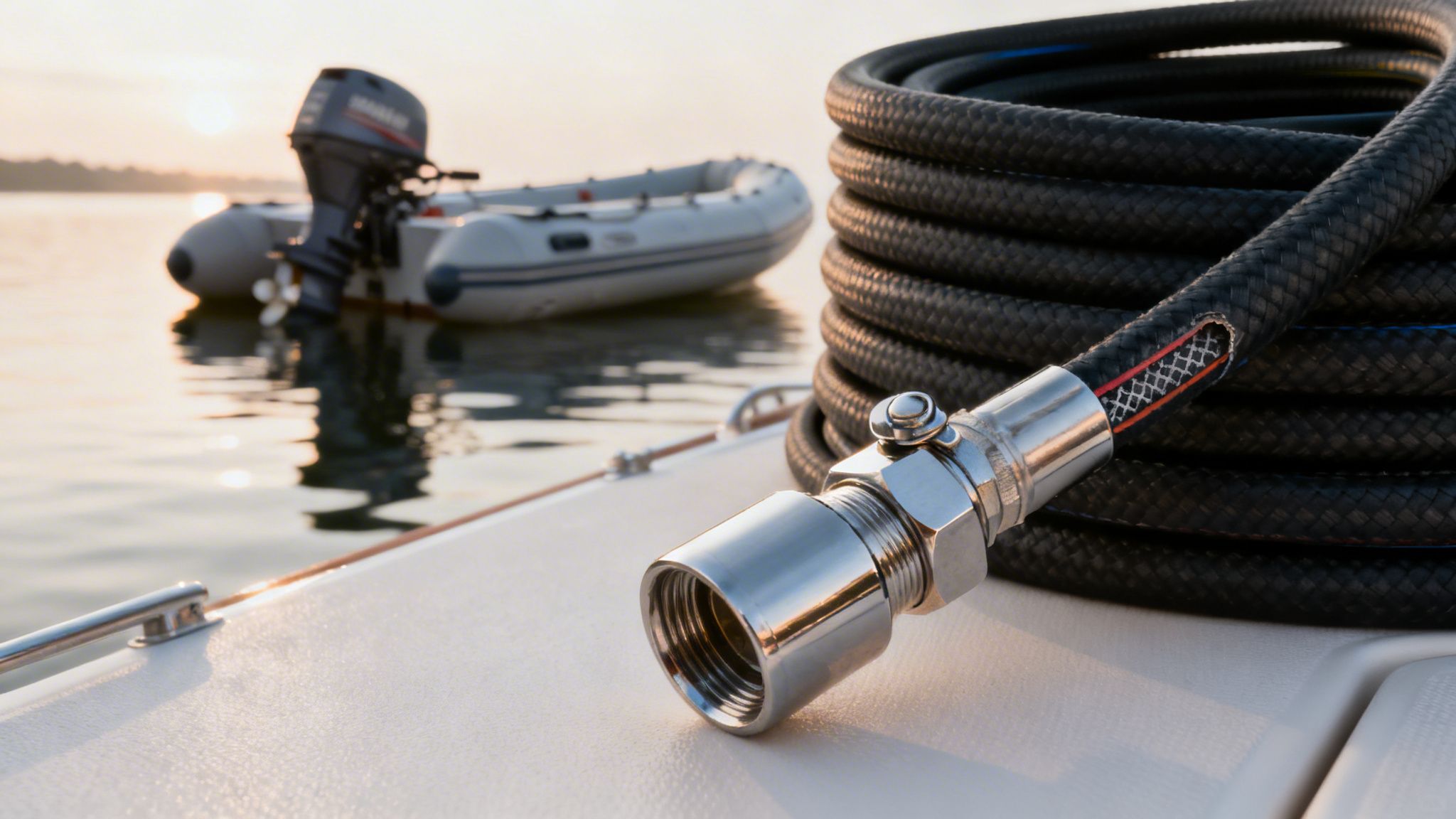
A certified marine fuel line is a multi-layered system built for one purpose: keeping you safe and your engine running smoothly. Each layer plays a critical role that generic hoses completely ignore. Understanding this construction makes it crystal clear why investing in a quality line is a non-negotiable.
A proper outboard motor fuel line is made of three key layers:
To really drive home the difference, let’s compare a proper marine hose to the cheap alternative you might find at a hardware or automotive store.
| Feature | Marine-Rated Fuel Line (e.g., ISO 7840 A1-15) | Generic/Automotive Hose |
|---|---|---|
| Material Construction | Multi-layer with ethanol-resistant inner core, reinforced braid, and UV-proof jacket. | Often single-layer rubber or basic plastic. Not designed for ethanol or marine exposure. |
| Ethanol Resistance | High. Specifically formulated to handle E10 and higher ethanol blends. | Low to None. Degrades quickly, becoming brittle, cracking, and leading to fuel leaks. |
| Fire Resistance | Mandatory. Tested to withstand fire for at least 2.5 minutes without leaking. | Not fire-rated. Can melt or burst almost instantly in a fire, feeding the flames. |
| UV & Saltwater Resistance | Excellent. Outer jacket is designed to resist sun, salt, and oil exposure. | Poor. Becomes brittle and cracks when exposed to the sun and marine environment. |
| Permeation (Fuel Vapour Leaks) | Very Low. A1-15 rating means it’s designed to contain flammable vapours. | High. Allows fuel vapours to escape, creating a serious fire and explosion hazard. |
| Safety Certification | Marked with ISO 7840, SAE J1527, or similar marine standards. | No marine certification. May have automotive ratings, but these are not for boat use. |
As you can see, the choice is clear. The “savings” from a generic hose are an illusion when you factor in the massive risks to your safety and your engine’s health.
When you choose a certified marine fuel line, you’re not just buying a hose; you’re buying peace of mind. Compliance with standards like ISO 7840 means the product has been rigorously tested for fire resistance and low fuel permeation, directly addressing the biggest risks in a boat’s fuel system.
This robust construction is what separates a reliable, long-lasting part from a ticking time bomb. While the initial cost might be a few dollars more, the safety and performance benefits are priceless.
For a deeper dive into maintenance schedules, you can learn more about when and why you should consider a fuel hose replacement in our detailed guide.
Getting the right size for your outboard motor fuel line isn’t a guessing game—it’s absolutely critical to keep your engine running smoothly. Think of it like a garden hose: a tiny hose can’t deliver enough water for a big sprinkler, and your outboard is no different. The wrong size line can starve your engine of fuel, causing it to bog down or stall right when you need power the most.
This is a classic problem known as fuel starvation. It often happens at high RPMs when the engine is working hard but simply can’t suck enough petrol through a restrictive line. Your engine’s horsepower directly dictates the diameter of the fuel line you need.
For most recreational boaters in Australia, especially those with inflatables, the choice usually boils down to two standard sizes. When looking to compare prices and features of inflatable boats in your area, it’s important to know what options do you have for fuel systems as well.
5/16″ (8mm) Fuel Line: This is the workhorse of the boating world. It’s the perfect size for the vast majority of portable and small-to-mid-range outboards. Engines like the popular Hidea 2.5HP all the way up to a 15HP model will run beautifully on an 8mm line, as it delivers more than enough fuel to keep them happy.
3/8″ (10mm) Fuel Line: When you step up to bigger, thirstier outboards, you need a wider pipe. These high-horsepower engines gulp down fuel at full throttle, and a 10mm line ensures they get an unrestricted flow to maintain peak performance.
If you’re ever in doubt, your outboard’s manual is the ultimate source of truth. But for almost any portable setup you’d put on an inflatable boat or tender, the 5/16″ (8mm) size is your go-to.
Once you’ve sorted the hose, the fittings are the next critical link in the chain. These little parts are what create the secure, leak-proof connections between your fuel tank, the hose, and your engine. Mismatched or low-quality parts here are a fast track to performance-killing air leaks or, far worse, dangerous fuel spills.
An airtight seal is non-negotiable. Even a microscopic air leak can prevent a primer bulb from getting firm, making your engine a nightmare to start and causing it to run rough as it sucks in air instead of pure fuel.
When picking your fittings, always go for materials designed for the harsh marine environment. For anyone boating in Australia’s coastal waters, corrosion-resistant materials like stainless steel or high-quality composite plastics are essential. They’ll stand up to saltwater spray and sun exposure, ensuring a long and reliable life.
Your complete outboard motor fuel line assembly will have a few key players:
Engine Connector: This piece clicks directly onto your outboard. It must be an exact match for your engine’s brand and model (e.g., Yamaha, Mercury, Hidea) to lock in securely and prevent any leaks.
Tank Connector: This fitting attaches to your fuel tank. Just like the engine connector, it has to be the right type for your specific tank to create a perfect seal.
Primer Bulb: This is the heart of your manual fuel system, letting you pump petrol up to the engine before starting. A good quality bulb will have strong internal check valves that hold pressure and won’t go soft over time.
Building a reliable fuel system means every single component has to be up to the job. It all starts with the right hose diameter, matched with top-notch, corrosion-resistant fittings. For more tips on choosing the right tank to go with your new line, check out our guide on selecting a petrol tank for your outboard engine.
Picking the right outboard motor fuel line is only half the battle. Getting it installed correctly is just as important. A poorly routed hose can cause just as many headaches as a cheap, low-quality one, leading to everything from fuel starvation and dangerous kinks to hazardous leaks.
The goal here is to create a clean, safe, and unobstructed path from your fuel tank to the engine. Think of it like running an extension cord at a campsite—you wouldn’t leave it tangled up, run it under a sharp table leg, or drape it over the hot barbecue. The same logic applies to your fuel line, especially on an inflatable boat where every centimetre of space counts.
When you’re routing your new fuel line, you’re basically trying to avoid three main troublemakers: kinking, chafing, and heat. A kinked line is like a blocked artery; it chokes off the fuel supply, causing your engine to bog down or stall right when you need it most.
Chafing is what happens when the hose constantly rubs against a rough surface, eventually wearing through the outer layer and causing a dangerous fuel leak. And of course, running the line too close to a hot engine block will slowly cook the material, making it brittle and prone to failure.
Here are a few best practices for a professional and safe installation:
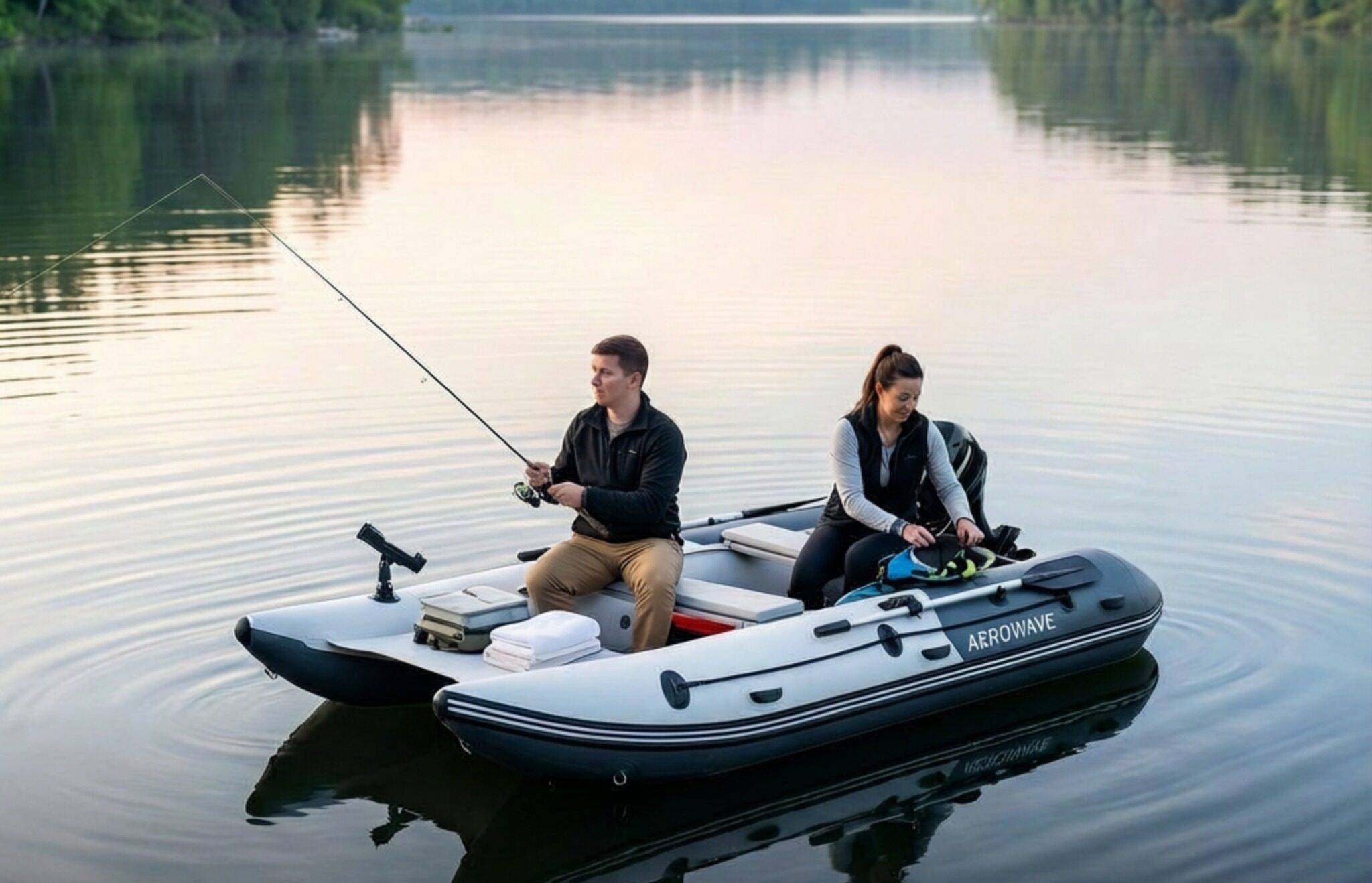
For anyone with one of our ‘boat-in-a-bag’ models, like the popular Aerowave inflatables, pay close attention when connecting and disconnecting. You should always hear and feel a solid ‘click’ to know the connectors are securely locked. When it’s time to pack up, press the release tab firmly and pull straight out. This prevents damage to the o-rings that create the seal, ensuring a leak-free connection every time you head out.
Taking a few extra minutes to route your outboard motor fuel line with care is one of the simplest things you can do to boost the safety and reliability of your boat. For more great advice on getting your vessel ready for the water, check out our inflatable boat setup tips for safety. It’s a small step that pays off with massive peace of mind.
Even the most carefully installed fuel line is a hard-working part that will eventually show signs of wear. Knowing how to spot the common culprits behind fuel line issues can save you a trip to the mechanic and, more importantly, get you back on the water faster. Most problems you’ll encounter boil down to a few usual suspects.
A sudden, strong smell of petrol is the most urgent red flag. If you catch a whiff of fuel, your first move should always be to stop the engine and get some air circulating. This smell points to one of two things: a physical leak somewhere in the system or an old, degraded hose that’s allowing fuel to permeate right through the material. Start by carefully checking all your connection points and the entire length of the hose for any wet spots, drips, or visible cracks.
Many of those frustrating engine problems that seem to come out of nowhere can be traced straight back to the fuel line. If your motor is suddenly a pain to start or it keeps stalling at idle, an air leak is almost always the culprit. This is often caused by something as simple as a tired primer bulb or a connector that isn’t fully seated.
CRITICAL SAFETY WARNING: If you smell petrol, do not start your engine or use any electronics. Immediately extinguish all open flames, including cigarettes. Ventilate the area by opening hatches or canopies and investigate the source only after the vapours have cleared.
Getting the installation right from the start is your best line of defence against these headaches. This simple diagram breaks down the core steps.

Following this basic Secure, Route, and Connect process helps you avoid the most common failure points, like annoying kinks and loose fittings, right from day one.
If you run into trouble, don’t panic. Just work your way through this simple checklist. It’s a process of elimination that will help you find the source of the problem quickly and safely.
By methodically checking each part, you can often pinpoint the issue yourself. For more detailed information on specific parts and setups, you might find our complete guide to the outboard engine fuel line system helpful. Honestly, more often than not, the simplest and safest fix is to just replace the whole fuel line assembly. It’s an inexpensive and easy job that gives you total peace of mind.

Let’s be honest, the technical bits and pieces of your outboard motor fuel line aren’t just specs on a page—they directly translate into how good, and how long, your adventures will be. A reliable fuel system is what turns a plan into a fantastic memory, making everything from a quick fishing trip to a full day of family fun possible.
It’s the difference between nervously sticking close to the boat ramp and confidently heading out to explore remote beaches or those perfect, secluded fishing spots that are just a little further out. Having confidence in your gear is everything.
Thinking in litres and hose diameters is one thing, but what does it actually mean for your time on the water? Here in Australia, with over 905,000 registered boats and a booming $2.6 billion marine gear industry, making the most of that time is what it’s all about. If you’re wondering what are the best inflatable boats for recreational use available near me, pairing one with a reliable fuel system is key to maximizing your fun.
For an Aussie family, a standard 12-litre tank hooked up to a 2.5-6HP Hidea outboard on an Aerowave inflatable can deliver 4-6+ hours of runtime. That’s plenty of time for exploring an estuary. RV travellers with a larger 25-litre tank and a 20-40HP motor can expect 2-4 hours of adventure, easily reaching those hidden coastal gems. You can get more insights on outboard fuel tank choices on our blog.
This shows how a well-chosen setup transforms a boat into a genuine exploration tool. Your fuel system’s reliability is your ticket to freedom, whether you’re navigating Sydney Harbour or launching from a Great Barrier Reef campsite. A dependable fuel line ensures your day is defined by discovery, not by frustrating mechanical troubles.
Your fuel system is the heart of your boat’s potential. A quality outboard motor fuel line and tank setup means more exploration, greater reliability, and ultimate confidence to take on any Australian adventure you have in mind.
It’s all about making sure your gear is always ready for the journey. Of course, the fuel line is just one part of the engine. For broader mechanical issues that might be affecting your outboard, looking over some general small engine repair tips can be a useful starting point for diagnosis beyond the fuel line itself.
When it comes to your outboard motor fuel line, a few common questions always pop up. Getting the right answers is key to keeping your boat running smoothly and safely. Here are some straightforward, practical answers to help Aussie boaters like you.
As a solid rule of thumb, you should give your fuel line a good inspection at the start of every season and plan on replacing the whole assembly—hose, primer bulb, and connectors—every 2-3 years. This is especially important here in Australia, where the harsh sun and UV rays can make the hose brittle and cause tiny, hidden cracks, even if it looks fine on the surface.
If you spot any sign of trouble, it’s time for an immediate replacement, no matter how old it is. If you see any cracks, feel unusual stiffness, notice a constant fuel smell, or find the primer bulb won’t stay firm, don’t put it off.
Absolutely not. You should never, ever use an automotive fuel line on a boat. Marine-grade fuel lines are specifically built to meet strict safety standards like ISO 7840, which cover fire resistance and low fuel permeation—things a regular car hose just isn’t designed for. If you’re seeking a place in Australia to hire inflatable boats for a family outing, you can trust that their equipment meets these high safety standards.
Putting a non-compliant hose in the enclosed, vibration-heavy environment of a boat is a major safety risk. On top of that, it would almost certainly void your boat insurance if something went wrong.
A primer bulb that goes soft after you’ve squeezed it firm is the classic giveaway of an air leak somewhere in your fuel system. The system just can’t hold its pressure, which means your engine is probably sucking in air along with its fuel.
The usual culprits are:
Start by double-checking that all your connections are securely snapped into place. If that doesn’t fix it, the safest, simplest, and most reliable solution is to just replace the entire fuel line assembly.
For a complete, reliable, and adventure-ready setup for your vessel, explore the range of high-quality marine accessories at Easy Inflatables. Find the perfect outboard motor fuel line and other essentials by visiting https://easyinflatables.com.au.