
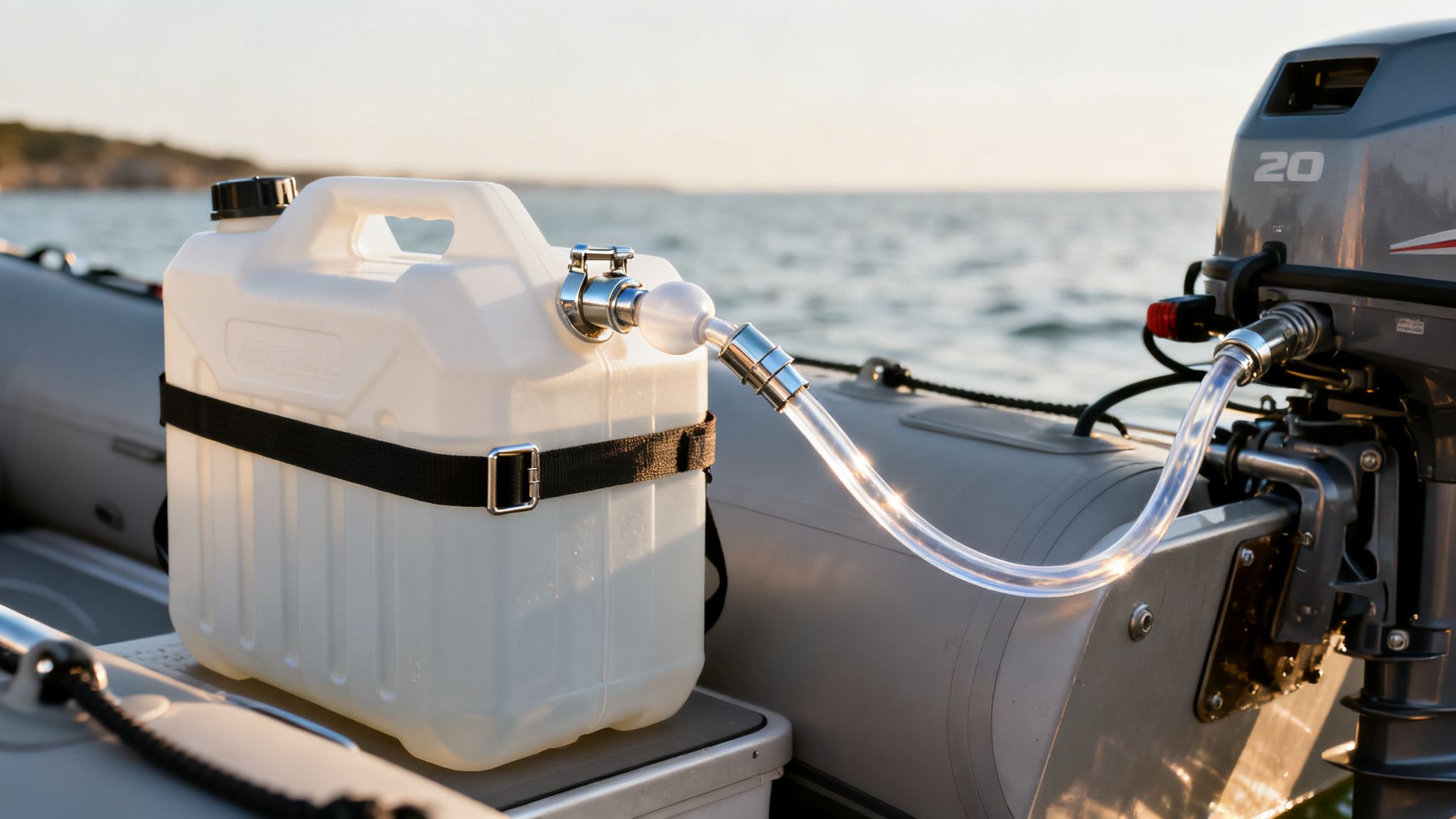
Think of your petrol tank as the heart of your outboard engine. A reliable fuel tank is what gets you out on the water and, more importantly, gets you home again. For anyone with an inflatable boat or catamaran in Australia, picking the right one isn’t just a small detail—it’s a critical choice that affects your range, safety, and how much fun you can have.
Every great day on the water, whether you’re exploring a secluded cove near Sydney or chasing the perfect catch up in Queensland, starts with a dependable fuel source. Your outboard’s petrol tank is more than just a plastic box; it’s your ticket to worry-free boating and extended adventures. This guide is written for Aussie boating lovers who need gear that’s both safe and efficient for their recreational outings.
We’ll walk you through the essential choices, from grabbing a convenient portable tank for an Inflatable Catamaran to understanding the more permanent built-in systems. This is especially important when you’re looking to compare prices and features of inflatable boats in your area, as the fuel setup is a key part of the whole package.
This is a complete, buyer-friendly guide designed to build your knowledge from the ground up. We’ll start with the basics and work our way to the finer details, so you’ll feel confident choosing the right tank for your boat.
By the end of this guide, you’ll know exactly how to select, install, and maintain the perfect petrol tank for your outboard engine, ensuring countless hours of reliable fun on the water. Let’s dive in.
When you’re rigging up your boat, one of the first big decisions is the fuel system. It’s a choice that shapes everything from how far you can go to how you’ll spend your time at the end of the day. For most inflatable boat, tender, and RIB owners, it comes down to two main options: portable or built-in.
Think of it like choosing between a backpack for a day hike and a built-in hydration system for an ultramarathon. Both get the job done, but they’re designed for totally different adventures.
A portable fuel tank is your boat’s best mate—a rugged, marine-grade jerry can designed for grab-and-go freedom. This makes it a perfect match for the versatile nature of inflatable boats and RIBs.
The real beauty of a portable tank is its sheer practicality. You can lift it right out of the boat and fill it up at any petrol station, skipping the often higher prices and queues at marina fuel docks. At the end of the day, you can remove the tank completely for safe storage and security.
For the vast majority of boaties exploring local waterways, estuaries, or coastal spots, a portable tank is a no-brainer. It just clicks with the lightweight, easy-to-manage spirit of inflatable boating.
Here’s why they work so well:
This kind of adaptability is a huge reason why petrol outboards are king in the recreational boating world. In fact, petrol outboards dominate over 80% of the global market—a stat that’s especially true in Australia, where their awesome power-to-weight ratio is perfect for inflatable boats.
On the other end of the spectrum, a built-in fuel tank is a permanent part of the boat’s structure, just like the one in your car. You’ll typically find these in larger, rigid-hull boats where massive capacity and a clean, uncluttered deck are the main priorities.
While built-in tanks can hold a huge amount of fuel—often 100 litres or more—their fixed nature makes them a poor fit for most inflatables. The installation is a major job, it adds a lot of permanent weight, and it completely removes the flexibility that makes inflatable boats so appealing in the first place.
A portable petrol tank gives you a level of freedom and convenience that just perfectly matches the spirit of inflatable boating. For almost every use—from family days out to serious fishing trips—it strikes the ideal balance of capacity, safety, and practicality.
To make the choice even clearer, here’s a quick side-by-side look at the two options. Thinking about how you’ll use your boat will quickly tell you which system is right for your adventures. For a closer look at the models we trust, check out our range of portable petrol tanks.
Here’s a side-by-side look at the key differences to help you choose the right fuel tank type for your inflatable boat.
| Feature | Portable Petrol Tank | Built-In Petrol Tank |
|---|---|---|
| Best For | Inflatable boats, tenders, RIBs, small tinnies | Larger fibreglass or aluminium boats (over 5m) |
| Capacity | Typically 12L to 25L | Usually 50L to 200L+ |
| Convenience | Highly convenient; removable for refuelling and storage | Fixed installation; requires refuelling at a marina |
| Installation | Simple; place and secure with straps | Complex and permanent; requires professional fitting |
| Weight | Lightweight and easy to handle when full | Adds significant permanent weight to the vessel |
As you can see, for the world of inflatable boating, the portable tank isn’t just an option—it’s the smart choice that keeps things simple, affordable, and fun.
Knowing how much fuel your boat needs is the key to unlocking bigger and better adventures on the water. It’s the difference between hopeful guesswork and confident navigation, ensuring you always have enough petrol to get out, have fun, and get home safely. One of the most trusted principles in boating is the ‘rule of thirds’.
The Rule of Thirds for Fuel Planning
This simple yet vital rule breaks down your fuel usage: one-third of your tank to get where you’re going, one-third to get back, and the final one-third held in reserve. That last third is your safety net for emergencies like unexpected currents, strong winds, or a spontaneous change of plans.
Sticking to this rule gives you a crucial safety margin. It’s what separates a relaxing day from a stressful one spent anxiously watching the fuel gauge drop.
The perfect capacity for a petrol tank for an outboard engine comes down to your motor’s horsepower and how you plan to use it. A small 5HP outboard might just sip fuel, while a gutsy 30HP motor will drink it down much faster, especially when you open up the throttle.
To help you get a real-world idea of your potential adventure radius, we’ve put together a practical table. It lays out some honest estimates for common outboard sizes paired with the standard 12-litre and 25-litre portable tanks—by far the most popular choices for inflatable boats in Australia.
This table will help you get a feel for how far you can travel, matching popular outboard motors with standard portable tank sizes.
| Outboard Horsepower | Avg. Fuel Consumption (Litres/Hour) | Approx. Range with 12L Tank (km) | Approx. Range with 25L Tank (km) |
|---|---|---|---|
| 5 HP | 1.9 L/hr | ~65-75 km | ~135-155 km |
| 10 HP | 3.8 L/hr | ~35-45 km | ~70-90 km |
| 20 HP | 7.6 L/hr | ~20-25 km | ~40-50 km |
| 30 HP | 11.4 L/hr | ~10-15 km | ~25-30 km |
Note: These figures are just estimates. Your actual range will vary based on your boat’s load, water conditions, and how you use the throttle.
This data makes it much easier to weigh up different engine packages. Just remember to apply the ‘rule of thirds’ to these maximum range estimates when planning your trips to ensure you always have that fuel reserve.
The material your fuel tank is made from has a massive impact on its durability, weight, and suitability for the harsh marine environment. While big, built-in systems often use heavy-duty metals, the world of portable tanks is dominated by advanced plastics for some very good reasons.
The chart below shows just how dominant petrol-powered outboards are in the market, which is exactly why getting the right fuel tank is so important.
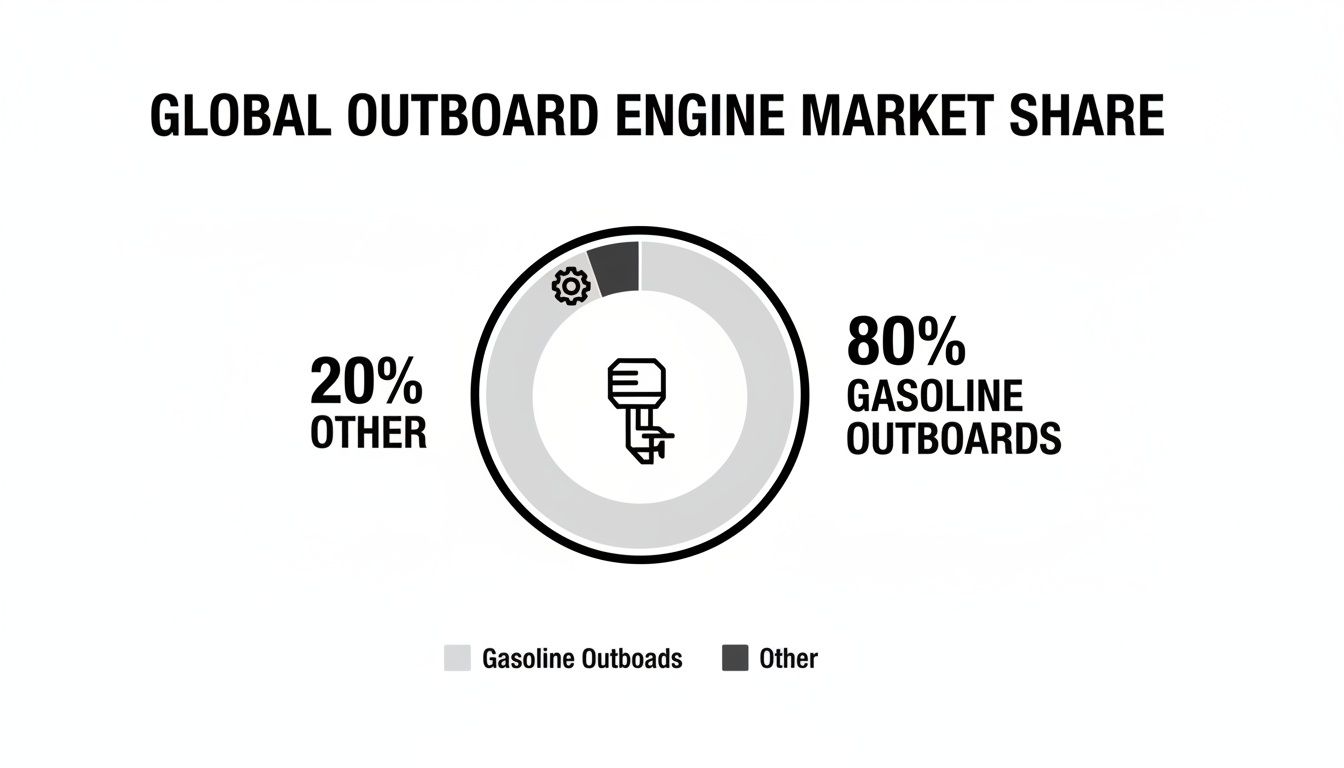
With petrol outboards making up a massive 80% of the market, it’s clear that high-quality, compatible tanks are an essential piece of kit for the vast majority of boaters.
When it comes to portable tanks, High-Density Polyethylene (HDPE) is the undisputed champion. This tough, modern plastic offers the perfect blend of features for the dynamic needs of inflatable boat owners.
While aluminium and stainless steel are fantastic for larger, permanent fuel systems, their weight and cost make them impractical for portable use. For the kind of adventures you’ll have with an inflatable, an HDPE tank delivers the ideal mix of rugged performance and user-friendly convenience. If you want more guidance on pairing a tank and motor with the right vessel, check out our guide on the best inflatable boats in Australia.
Your fuel system is the lifeline between the petrol tank and your outboard. Think of it as the circulatory system for your boat—if any part of it fails, the whole operation grinds to a halt. Every single component in that line plays a vital role, and a small leak or a weak connection can quickly turn a great day on the water into a frustrating one.
Understanding how these parts work together is key to building a reliable, safe, and efficient fuel delivery system that won’t let you down.
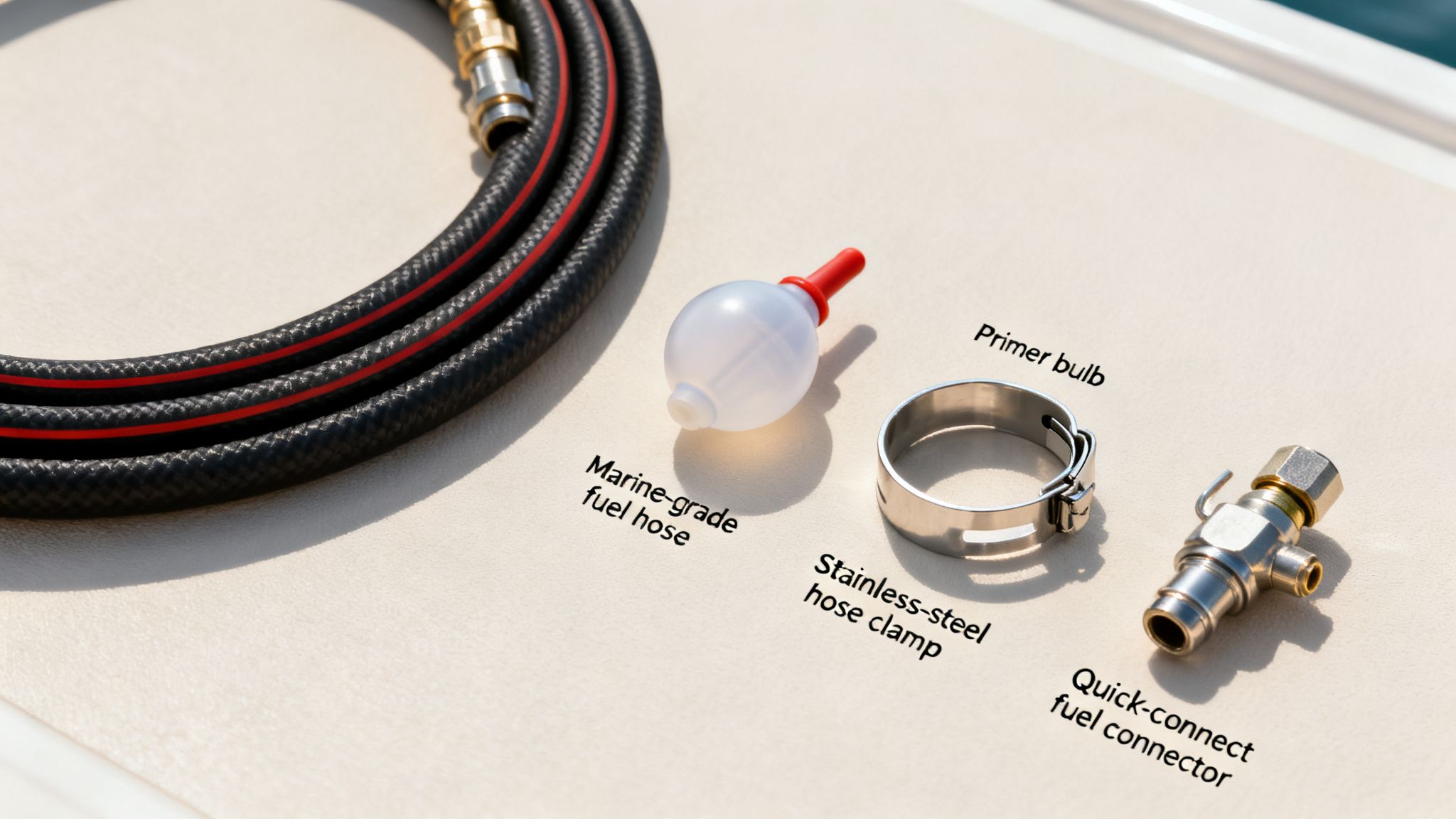
The fuel hose is your primary connection, and it needs to be tough. It’s constantly exposed to petrol, oil, and the harsh Aussie marine environment, so modern hoses are made from multi-layer, alcohol-resistant rubber or synthetics designed to prevent kinking and cracking.
Just as important is the hose’s internal diameter. A hose that’s too narrow can starve the engine of fuel, especially when you open up the throttle, leading to poor performance and even engine damage. On the other hand, one that’s too wide can make priming the engine a real chore.
When in doubt, always check what your outboard’s manufacturer recommends. It’s the surest way to get it right.
That little rubber bulb in the fuel line? It’s a small but mighty component. The primer bulb is a manual pump that lets you draw fuel from the tank, through the hose, and right into the engine’s carburettor before you even think about pulling the starter cord.
Give it a few squeezes until it feels firm, and you’ll know the engine has fuel ready to fire up instantly. A good primer bulb has an internal check valve—usually marked with an arrow showing fuel direction—to stop petrol from draining back into the tank. If your bulb ever feels mushy or just won’t firm up, that’s a dead giveaway it’s time for a new one.
A reliable primer bulb is your first line of defence against hard starting. It’s a simple, inexpensive part that can save you a world of frustration at the boat ramp.
Fuel connectors are the quick-release fittings that clip the hose to your tank and engine. They create a secure, leak-proof seal that you can easily disconnect for refuelling or packing up. It’s absolutely crucial to use connectors designed specifically for your brand of outboard (like Yamaha, Mercury, or Hidea) to ensure a perfect, snug fit.
Just as important are the humble hose clamps. These small metal rings are what really secure the hose onto the barbed fittings of the connectors and primer bulb. In a saltwater environment, using 316 stainless steel clamps is non-negotiable. Cheaper ones will rust out in no time, creating a dangerous fuel leak. Always tighten clamps firmly, but not so hard that they bite into the hose itself.
Getting these details right is what makes for a dependable setup. It’s this demand for reliability that’s fuelling growth in the boating world, with the global outboard motor market projected to jump from $10.21B to $13.12B by 2029. Here in Australia, our booming leisure boating scene is driving strong demand for the kind of dependable, portable outboards perfect for inflatable boats.
For a deep dive into every component, check out our complete guide on the outboard engine fuel line.
When you’re out on the water, safety isn’t just a suggestion—it’s everything. It all starts with how you handle and secure your fuel system. A petrol tank sliding around the deck or a tangled fuel line isn’t just an inconvenience; it can become a serious hazard, especially when the water gets choppy.
Running through a quick installation checklist before you launch doesn’t just make your boat safer. It also keeps you on the right side of Australian maritime rules, so you can focus on enjoying your day without any worries.
Think of your boat’s floor as a dynamic space where anything not tied down is a problem waiting to happen. This is especially true for a portable petrol tank for an outboard engine. If it’s free to slide around, it can create a tripping hazard, damage the fuel line, or even tip over.
Before you even think about starting the engine, make running through these simple steps a habit—just like checking you have enough life jackets for everyone on board.
Strap That Tank Down: Your fuel tank needs to be anchored securely. Use proper tank straps or heavy-duty bungee cords to fasten it to a strong point on your inflatable. The goal is to make sure it can’t slide, shift, or tip over, even if you hit a big wake from another boat. A stable tank is a safe tank.
Let it Breathe: Modern petrol tanks are designed to manage pressure changes from the heat of the sun. Always remember to loosen the little vent screw on the fuel cap before you start the engine and keep it open while running. This allows air to get in as fuel is used, preventing a vacuum that could stall your motor. It also lets any vapour pressure escape safely.
Route the Fuel Line Smartly: Your fuel hose should be kept out of the way where it won’t be stepped on, kinked, or snagged by fishing gear. A great tip is to run it neatly along the side of the boat, using clips to hold it in place if needed. This keeps your main deck area clear and protects the hose from getting damaged.
Following these steps is just part of being a responsible skipper. It’s about creating a safe, predictable setup on your boat every single time.
Here in Australia, boating safety is managed by state authorities, guided by the Australian Maritime Safety Authority (AMSA). While the rules might have slight differences from state to state, the core principles for handling fuel on a recreational boat are the same everywhere—and they’re based on pure common sense.
AMSA guidelines are clear: fuel must be stored in approved, well-secured containers in a spot that’s well-ventilated to stop flammable vapours from building up. For inflatable boat owners, this just reinforces how crucial it is to strap down your portable tank and use that vent screw properly.
The great news is that Australia has a strong local market for boating gear, making it easy to find high-quality, compliant equipment. With a robust outboard motor market, you can find reliable, warrantied setups that meet all the necessary standards. This is a massive plus for anyone looking to hire inflatable boats for a family outing or for RV travellers and yachties who rely on compact, lightweight boats for their adventures.
At the end of the day, these rules aren’t about bureaucracy; they’re about preventing accidents. A properly secured petrol tank is one of the cornerstones of a safe and stress-free day on the water. For a closer look at other must-have gear, check out our guide on boating safety equipment.
A well-maintained petrol tank is a reliable one. It gives you the confidence to explore further without that nagging worry about fuel issues popping up miles from shore. Think of it like your car—a little bit of regular attention goes a long way in keeping the fuel system in top condition.
This proactive approach is all about preventing small, fixable problems from turning into trip-ending disasters. A simple seasonal check-up is your best defence. Running through a quick inspection before the boating season kicks off, and again before you store it for winter, can save you a world of headaches down the track.
Before you head out, just take five minutes. That’s all it takes to inspect your entire fuel system, from the tank right through to the engine. This simple routine is the best way to catch potential issues before they leave you stranded.
A critical part of fuel care is making sure the petrol itself is clean. Understanding how to handle potential contamination is vital for a healthy engine. This includes knowing how to go about identifying and addressing water in the petrol tank to prevent engine damage before it happens.
If your outboard starts to sputter, stalls, or just plain refuses to start, don’t immediately assume the worst. More often than not, the culprit is a simple fuel delivery issue, not a major engine catastrophe. Knowing what to look for can get you back up and running in minutes.
Before you start pulling the engine cowling off, work your way through these common trouble spots.
Problem 1: The Engine Sputters or Loses Power
This is the classic symptom of fuel starvation. Your engine is trying its best to run but just isn’t getting a consistent supply of petrol.
Problem 2: The Engine Won’t Start at All
If the engine won’t even fire up, it’s a good sign it isn’t getting any fuel to begin with.
Proper maintenance of all your boat’s systems is key to safety and reliability. For more on keeping your vessel in top shape, you can find valuable information in our essential bilge pump float switch guide.
Got a few lingering questions? You’re not alone. Here are some quick answers to the most common queries we get about petrol tanks for outboard motors. We want to clear up any final uncertainties so you can feel confident you’ve got the right gear for your inflatable.
Getting the fuel setup right is a huge part of a great day out, whether you’re just getting into boating or upgrading your current rig. It’s all about safety, reliability, and maximising your time on the water.
This is the million-dollar question, and the honest answer is: it depends. Your range is a mix of your outboard’s horsepower, the boat’s total weight (people and gear included), and what the water and wind are doing on the day. A small, efficient motor might happily cruise for hours on a 12L tank, whereas a bigger, thirstier engine could drain that same tank in under an hour if you’re going flat out.
For a good starting point, check the range table we covered back in the ‘Matching Tank Size’ section. But more importantly, always live by the ‘rule of thirds’ – use one-third of your fuel to get out, one-third to get back, and keep one-third in reserve. It’s the golden rule for stress-free boating and ensures you’re never caught short.
Proper storage is non-negotiable for both safety and keeping your fuel fresh. Always keep your portable tank in a well-ventilated spot, far away from direct sunlight and anything that could create a spark. A garage or shed is perfect, but never store it inside your house or car where fumes could build up.
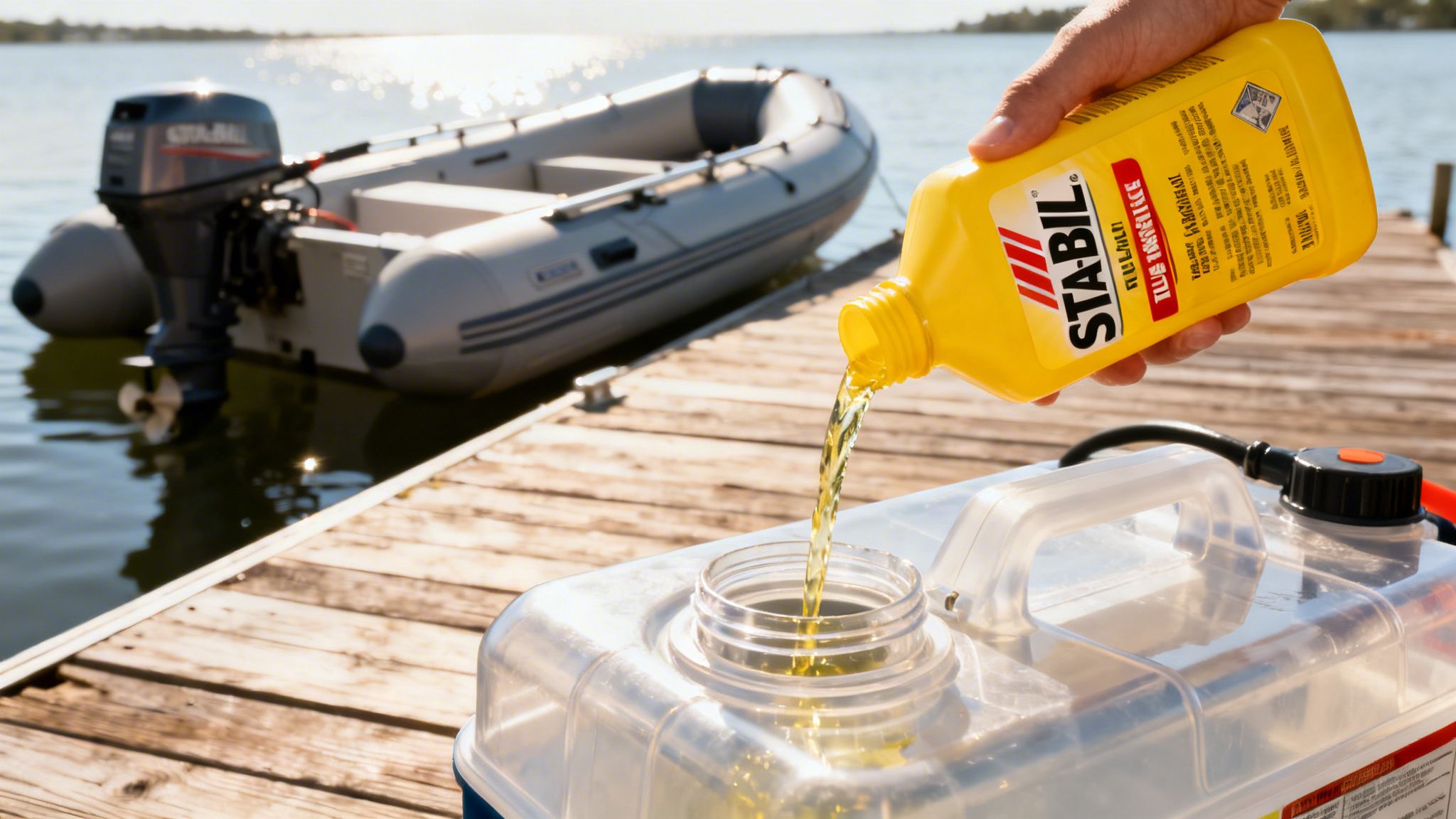
If you’re packing the boat away for a few months, it’s a great idea to add a quality fuel stabiliser. This stops the petrol from going stale and gumming up your engine. The other option is to run the tank and motor completely dry, which is a foolproof way to prevent old fuel from causing headaches down the track.
It can be a bit unnerving to see your plastic fuel tank puff up on a hot day, but don’t worry—it’s completely normal. As the temperature climbs, some of the petrol turns into vapour, building up pressure inside the tank. Modern marine fuel tanks are made from tough, flexible materials specifically designed to handle this expansion without any issues.
To release this pressure, just slightly loosen the vent screw on the cap when you’re not moving. You’ll hear a little hiss as the vapour escapes, and the tank will shrink back to its normal shape. Just make sure you tighten it up again before you get going!
While many fuel line kits look similar and use “universal” fittings, it’s always best to stick with a kit made specifically for your outboard’s brand (like Yamaha, Mercury, or Hidea). This is something we see people overlook when they’re trying to save a few dollars, but it’s a crucial detail.
Using a brand-specific connector ensures you get a perfect, leak-proof seal where the hose meets the engine. A snug fit isn’t just about performance—preventing your engine from starving for fuel—it’s a massive safety factor, as it eliminates the risk of petrol leaks. It’s one of those small things that makes a huge difference.
Ready to gear up for your next adventure? At Easy Inflatables, we stock a complete range of high-quality, durable petrol tanks and accessories perfectly suited for our inflatable catamarans and boats. Find the ideal setup for your needs and enjoy reliable performance on the water. Check out our full range of boating gear.