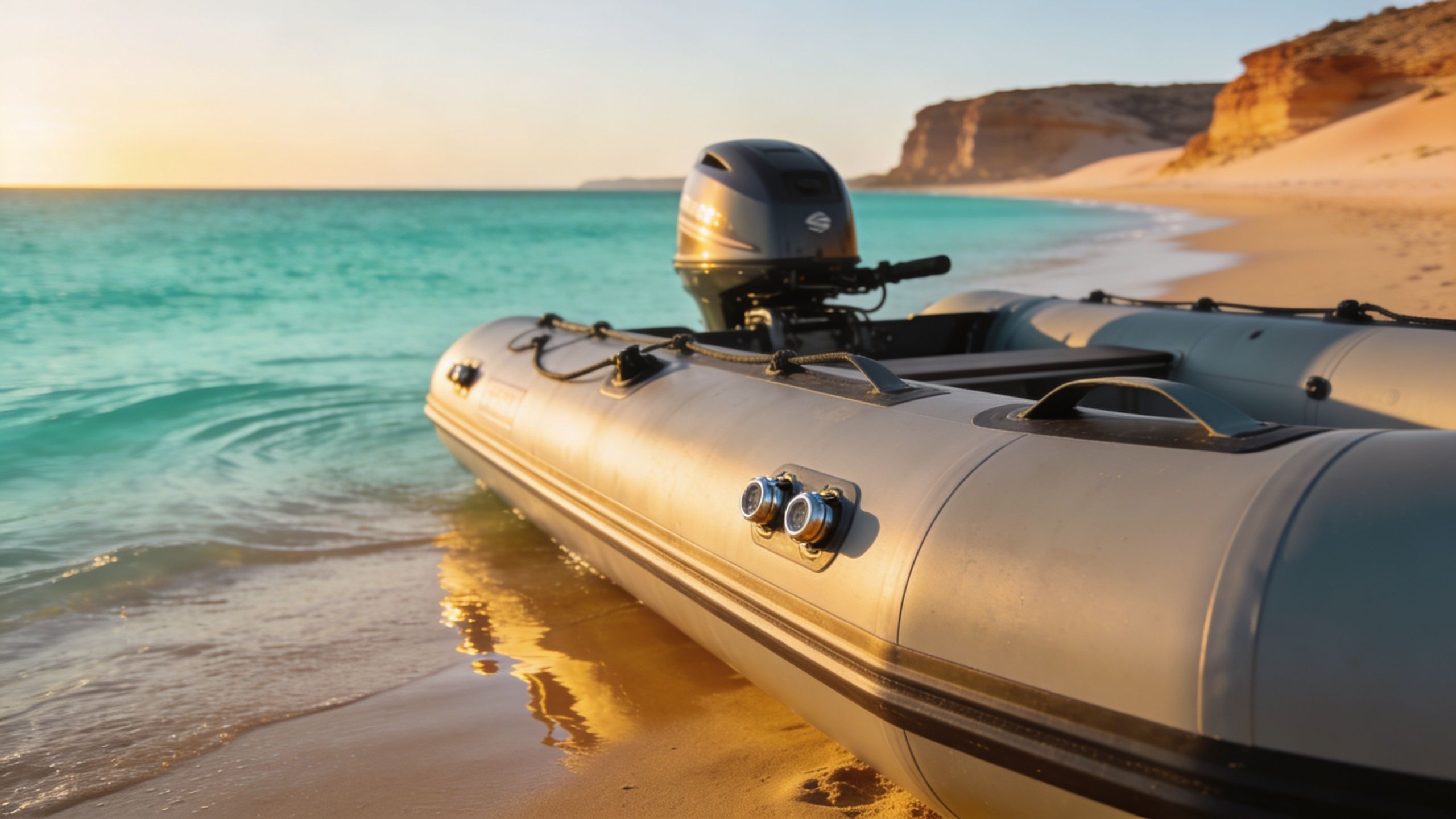

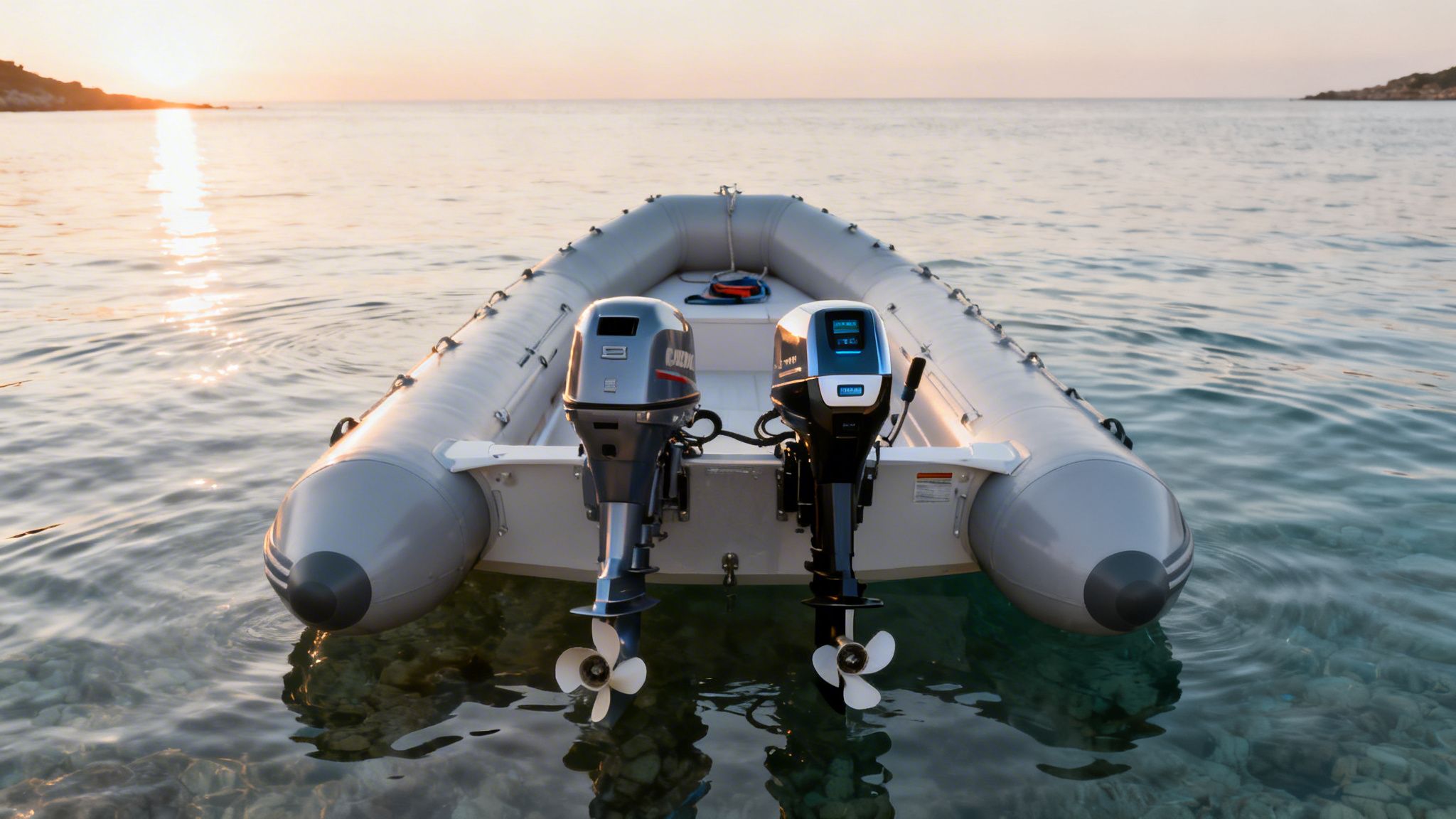
Getting your inflatable boat paired with the right motor is probably the most crucial choice you’ll make for your time on the water. It’s the difference between a perfect day and a frustrating one. The best engine for an inflatable boat is all about balancing power, weight, and what you actually plan to do. While modern petrol outboards give you unmatched range and grunt, the new electric motors offer quiet, clean convenience. Honestly, the right choice comes down to you—how and where you want to hit the water.
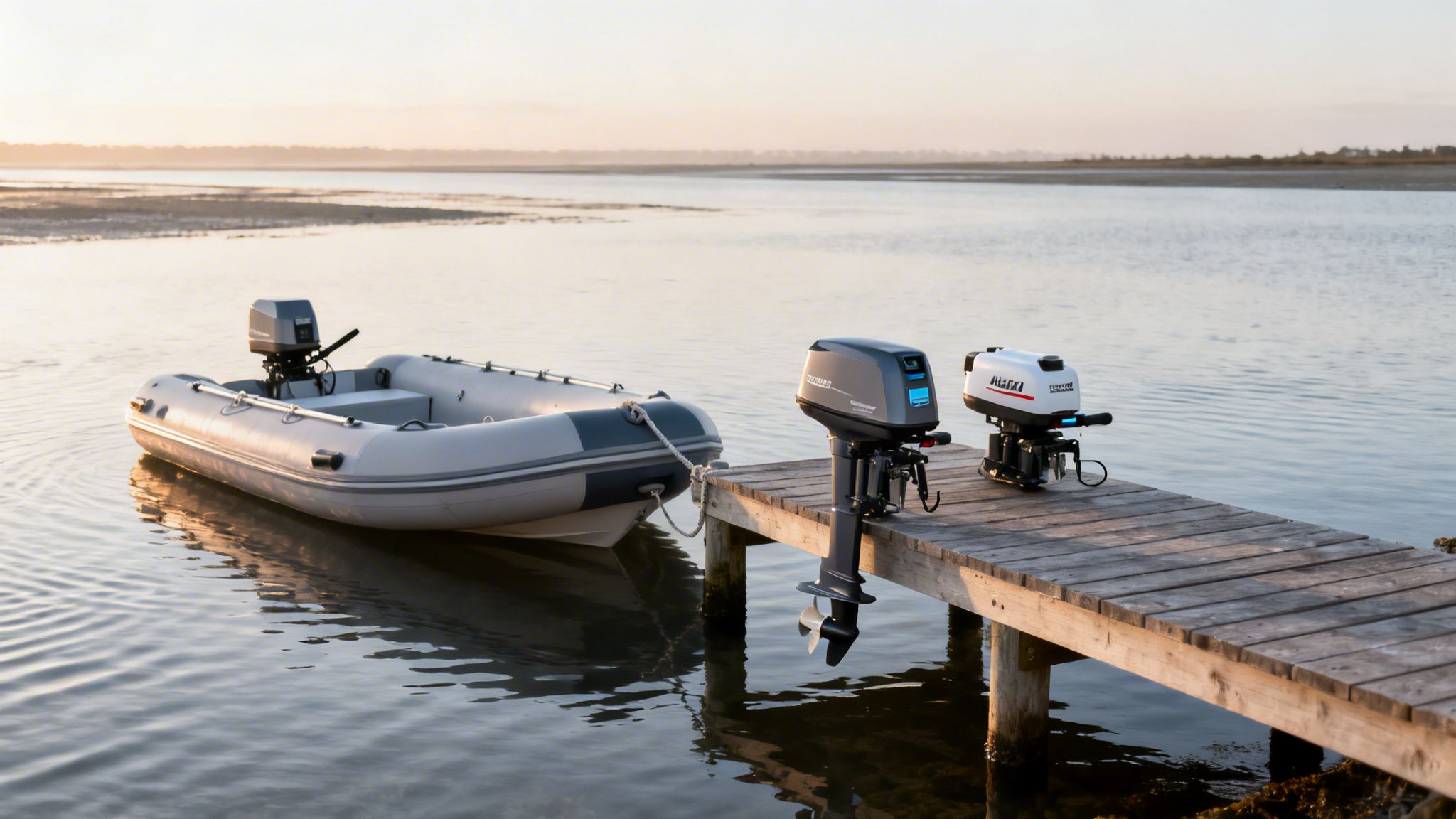
Picking your first engine can feel a bit overwhelming, but it really just comes down to a few key questions. Think of it like buying a car—you wouldn’t take a zippy little sports car on a rugged 4WD camping trip. It’s the same with boats. The motor that’s perfect for a quiet family paddle on a calm lake is completely different from the one you need to push a loaded inflatable catamaran through some coastal chop.
The whole journey starts with a good, honest look at your needs. Are you after something quiet and light for exploring serene inland rivers? Or do you need some serious power to haul the family, the dog, and all your fishing gear across a big bay? Whether you’re looking for the best inflatable boats for recreational use available near you or need to hire inflatable boats for a family outing in Australia, figuring that out is the first big step.
Your first major fork in the road is choosing between a classic petrol outboard and a modern electric motor. Petrol engines are the undeniable workhorses of the boating world. They’re known for their fantastic power-to-weight ratio and the ability to go the distance. For most Aussie boaters planning anything more than a short jaunt, a petrol engine is still the most practical choice.
On the other hand, electric outboards are really finding their place, and for good reason. They have some massive advantages:
But, and it’s a big but, their main drawbacks are a limited range and the time it takes to recharge. This makes them brilliant for shorter, more relaxed trips. With a petrol motor, you can just carry a spare jerry can and refuel in a minute, keeping your adventure going all day.
Your engine choice really sets the tone for your whole day out. It dictates how fast you go, how far you can explore, and how much gear you can comfortably carry. Nailing this decision from the start means every trip is a good one.
The outboard market is in the middle of a huge shake-up. For years, a few big brands dominated, but that’s changing fast. Innovative manufacturers are now using smart tech and efficient production to build top-quality engines at prices that are hard to beat. The Chinese are currently leading the way with this tech, and they make great outboards that are changing the game. A perfect example is the growing popularity of Hidea outboards, a major competitor in the market known for its exceptional price, design, and quality.
As an authorised Australian dealer, we’ve seen firsthand how their focus on solid design, quality parts, and genuine affordability is making powerful boating accessible to more people. This trend means you no longer need a massive budget to get a fantastic outboard. For more tips, check out our guide on what to look for when choosing a motor for inflatable boats. This new wave of competition is a massive win for Aussie families and fishos looking to get out on the water.
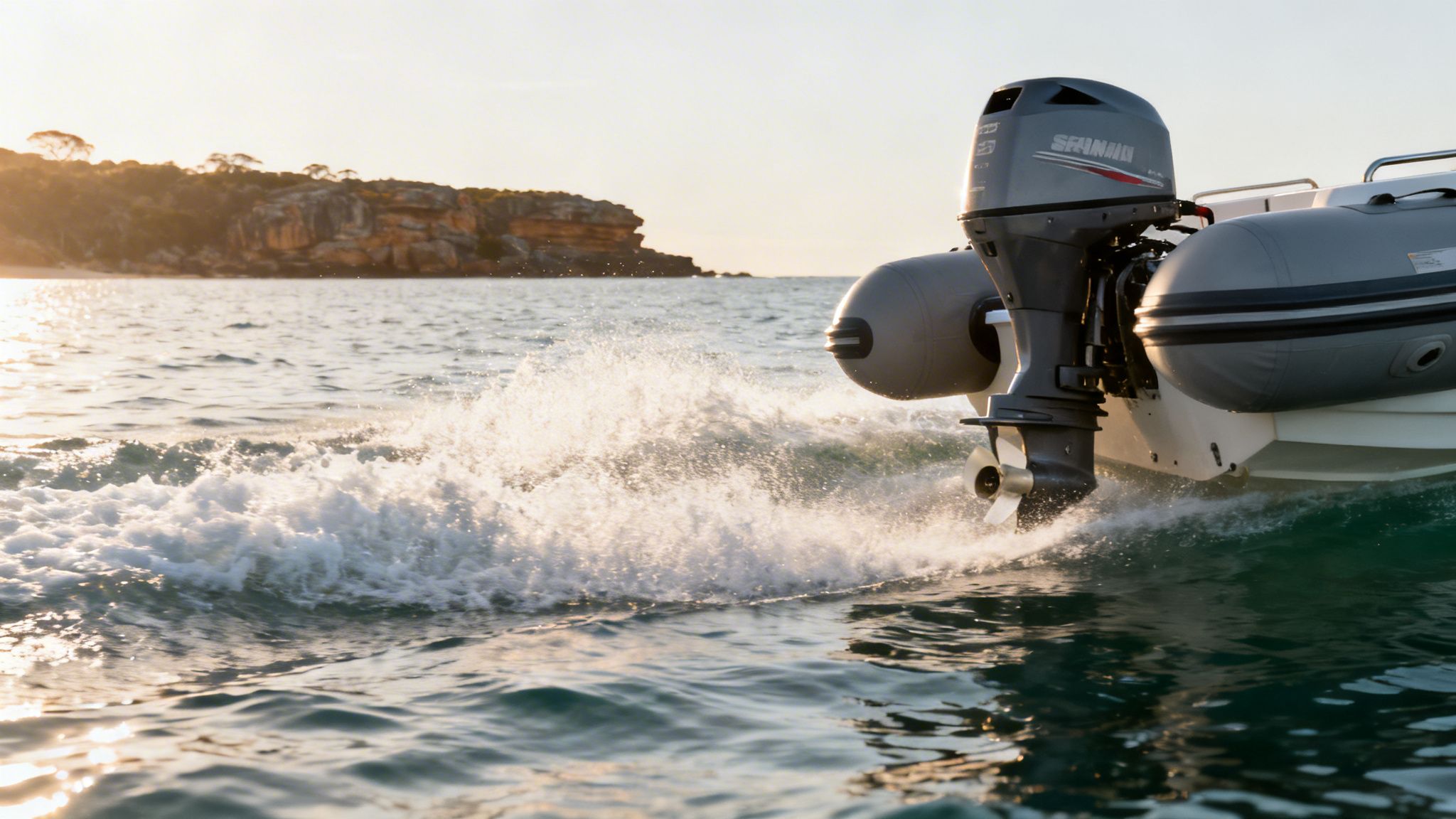
While there’s a lot of excitement around electric motors, the reality for most inflatable boat owners across Australia is that petrol outboards are still king. This isn’t just about old habits; it’s about raw, practical power that you can rely on when you’re miles from the boat ramp.
If you’re planning a full day out with family, heading to a remote fishing spot, or exploring a distant coastline, petrol simply delivers.
The secret to their performance is the incredible power-to-weight ratio. This is what gives your boat the grunt it needs to get up “on plane”—that amazing moment when the hull lifts and skims across the water instead of ploughing through it. Getting on plane isn’t just for thrills; it dramatically boosts your speed and fuel efficiency, turning a slow chug into an exhilarating ride. It’s a total game-changer, especially when you’re loaded with gear and a few passengers.
And forget the noisy, smoky two-strokes you might remember from years ago. Today’s four-stroke petrol engines are a completely different beast, engineered for a far better experience on the water.
For a long time, the outboard market was dominated by a handful of big-name brands with price tags to match. Thankfully, that era is well and truly over. We’re seeing a massive shift, led by advanced Chinese manufacturing that delivers brilliant engineering and outstanding value.
Brands like Hidea are leading this charge as a major competitor, proving that you don’t need to spend a fortune to get a top-tier outboard. These aren’t just cheap copies. These companies are using sophisticated technology and efficient production to build tough, reliable outboards that can compete with the established players on every level—from performance and quality to sleek, modern design. As an authorised Australian dealer, we see their reliability firsthand with our customers every day.
The rise of brands like Hidea is one of the best things to happen for Aussie boaters. It means that a powerful, modern, and reliable engine for an inflatable boat is now within reach for more families and anglers than ever before.
At the end of the day, this new competition puts you in the driver’s seat. You can now get an engine with the latest four-stroke technology, fantastic fuel economy, and plenty of power without having to drain your savings account.
It makes powering up an inflatable catamaran or a good-sized family boat a genuinely affordable option. Whether you are looking to compare prices and features of inflatable boats in your area or just want the best value, this industry shake-up has forced everyone to offer better products and sharper prices, which is a win for all boaters.
You’ll find these newer brands are backing up their quality claims with impressive warranty periods and strong local support. For a deeper dive into getting the best bang for your buck, check out our guide on finding affordable outboard motors. Ultimately, this healthy competition means you can finally choose an engine based on real-world performance and value, ensuring you get the perfect power plant for your adventures.
While petrol has long been the king for raw grunt and long-distance adventures, a new wave of electric outboards is making serious waves in the inflatable boat world. These aren’t just beefed-up trolling motors anymore. Modern electrics have grown into powerful, convenient, and seriously appealing propulsion systems.
For many boaters, the practical advantages are just too good to pass up.
Imagine gliding across a glassy estuary at dawn, with the only sound being the water lapping against your inflatable’s hull. That’s the magic of electric power. It delivers a near-silent boating experience that lets you sneak up on easily spooked fish or just soak in the natural sounds of the Aussie bush without an engine’s drone.
Beyond the peace and quiet, electric outboards make a compelling case for sheer convenience and environmental responsibility. They completely do away with the hassles of petrol motors, making your day on the water cleaner, simpler, and more enjoyable.
Here’s what makes them so attractive:
So, where does an electric engine for an inflatable boat really shine? Their lightweight designs, often with integrated lithium batteries, make them a perfect fit for specific scenarios. If you value ease of use for shorter trips above all else, an electric motor could be your ideal match.
Think of an electric outboard as the perfect tool for specific jobs. It excels in situations where silence, portability, and simplicity are more valuable than outright speed and unlimited range.
They are an outstanding choice for:
Of course, it’s important to be realistic about their current limitations. The main challenge is still range anxiety. Unlike a petrol motor where you can simply carry extra fuel, an electric motor’s range is dictated by its battery capacity. Recharging also takes hours, not minutes.
For this reason, they aren’t the best pick for long-distance coastal runs or for boaters who need to cover a lot of water in a single day. However, as battery technology keeps getting better, these limitations are shrinking every year.
If your boating style fits within their current capabilities, the silent, clean, and maintenance-free experience is truly hard to beat. To explore the options available in Australia, you can learn more about electric outboard motors in our detailed guide.
Choosing the right horsepower (HP) for your inflatable is a bit like picking the right-sized hiking boots for a long trek. Get it wrong, and the whole experience suffers. Nailing the horsepower match ensures your boat performs exactly as you expect, whether you’re after a relaxing troll or a quick zip across the bay.
The single most important piece of information you need is found right on your boat. Every reputable inflatable has an Australian Builders Plate (or capacity plate) fixed to the transom. This small plate is your bible for safety and performance, listing critical details like the maximum number of passengers, maximum weight capacity, and—most importantly—the maximum horsepower rating.
Ignoring that maximum horsepower rating isn’t just a bad idea; it’s genuinely dangerous and can be illegal. An overpowered boat is tough to control, can sit dangerously low at the stern, and puts incredible stress on the transom, risking catastrophic failure. You should always stay within the manufacturer’s specified limits.
On the other hand, an underpowered boat can be just as frustrating. It will struggle to get on plane, feel sluggish, and battle against wind and currents, turning what should be a fun day into a slow, inefficient crawl. The goal is to find that perfect balance.
Horsepower directly translates to what you can do on the water. Even a small increase in power can completely transform how your boat feels and what it’s capable of. Using our Aerowave range as an example, you can see how different power levels suit different activities.
More power isn’t always the answer. You need to think about the trade-offs. A higher horsepower engine gives you more speed and a greater carrying capacity, but it will also be heavier, thirstier on fuel, and more expensive. A lower horsepower motor is lighter, more portable, and sips fuel, but it won’t deliver thrilling performance.
To make the right choice, think about your typical day out. Do a quick calculation of the total weight you’ll be carrying:
Add it all up. If your total load is pushing the boat’s maximum capacity, you’ll want an engine closer to the maximum HP rating to get decent performance. If you typically travel light, you can easily get away with a smaller, more economical motor.
This decision tree can help you visualise whether a quiet electric motor or a powerful petrol engine is the right fit for what you do most.
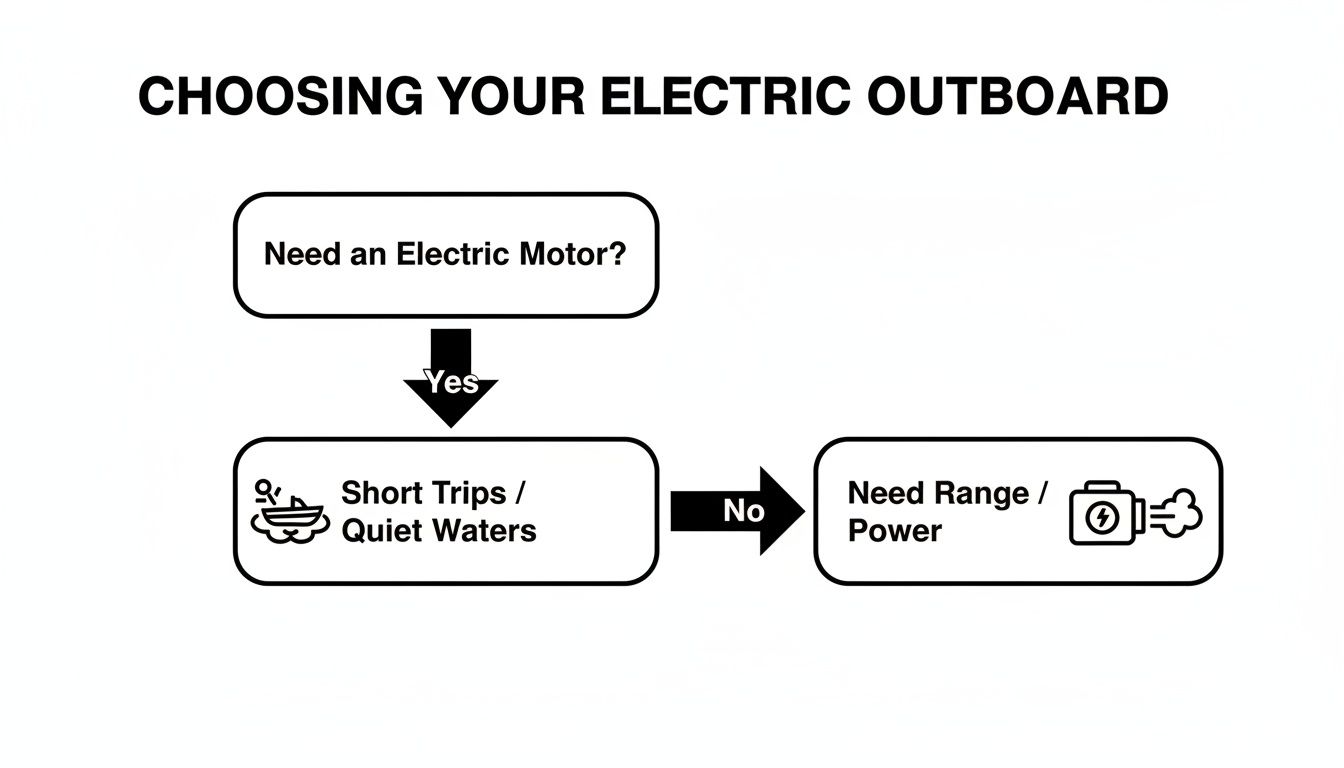
As you can see, for short, quiet trips, electric is a strong contender. But for greater range and power, petrol is still the go-to choice for most boaties.
This preference for powerful outboards is clear right across the market. In Australia, outboard engines dominate the propulsion choice for rigid inflatable boats (RIBs), holding the largest market share. This trend is set to continue, with outboards projected as the fastest-growing segment globally from 2026-2034.
The entire RIB market, which hit USD 1.61 billion in 2025, is expected to grow to USD 2.67 billion by 2034. It’s clear proof of the sustained popularity of these versatile, outboard-powered boats.
Choosing your horsepower is exciting, but it’s only half the story. The technical details—like shaft length, engine weight, and proper installation—are what truly make an engine for an inflatable boat perform like it should. Get these wrong, and even the best motor will let you down.
Think of it like this: your boat and engine are a team. For them to work together seamlessly, they have to be a perfect match. Nailing these finer points ensures your setup is efficient, safe, and ready for whatever the water throws at you.
The shaft is the part of the outboard that runs from the powerhead down to the propeller. Outboards generally come in two standard sizes: short shaft (about 15 inches) and long shaft (about 20 inches). Choosing the right one isn’t just a recommendation; it’s non-negotiable for performance.
To get the right fit, you simply need to measure your boat’s transom height. Grab a tape measure and run it from the very top of the transom (where the engine’s clamp will sit) straight down to the bottom of the hull. For most inflatable boats and inflatable catamarans, this will measure around 15 inches, which means a short shaft motor is what you need.
Getting the shaft length wrong is one of the most common—and costly—mistakes new boaters make. A mismatch causes poor performance, risks engine damage, and creates an unsafe ride. It’s a simple measurement that makes all the difference.
So, what happens if you get it wrong?
Weight is a massive deal for inflatable boats, especially if you value portability. An engine that’s too heavy will make the stern of your boat squat low in the water, completely throwing off its balance and ruining its handling. Not to mention, it turns the simple task of carrying and mounting the motor into a back-breaking chore.
Thankfully, modern engineering has come a long way. Brands like Hidea have mastered the art of balancing power with a lightweight design, creating powerful outboards that don’t weigh a tonne. The goal is always to find that sweet spot: an engine with enough grunt to get you moving but light enough to handle easily.
This push for quality is being seen right across the industry. In Australia, the average import price for inflatable vessels hit $326 per unit in 2024, marking an 11% increase from the year before. This shows a clear trend towards premium boats, like our Aerowave models made from tough German Valmex PVC, which deserve an equally reliable and perfectly matched outboard.
Safely mounting your engine for an inflatable boat is the last, crucial step before you can hit the water. It’s a simple process, but you need to get it right every single time. Run through this pre-launch checklist before every trip.
By running through these checks, you can be confident your motor is secure, your setup is safe, and you’re ready to power up your next adventure.
Alright, you’ve waded through the technical details, weighed up petrol against electric, and you’re close to making a choice. Now it’s time to pull it all together. This is your final pre-flight check before you commit, making sure the engine you pick is a perfect match for your boat and your adventures on Australian waters.
But before you sign on the dotted line, a quick heads-up on the rules. Australian boating regulations can differ from state to state. As a rule of thumb, if your engine is more powerful than 4-6HP, you’ll likely need to have your boat registered and hold a recreational boat licence. It’s always best to check with your local authority, like Transport for NSW or Maritime Safety Queensland, to be 100% sure of the requirements in your area.
Run through these points for any engine for an inflatable boat you’re considering. It’s the best way to make sure you’re asking the right questions and getting a motor that’s ready for years of service with your Easy Inflatables boat.
This isn’t just a list to tick off. It’s about building confidence. When you work through these points, you remove the guesswork. You guarantee the engine you bring home will be a reliable partner for your boat, not a source of endless frustration.
Now for the final piece of the puzzle: choosing a brand that aligns with your budget and expectations.
Using this checklist, you can confidently walk into any store or browse our package deals online. You’ll know exactly what to look for, helping you find an engine that will power countless family trips and fishing weekends across Australia for years to come.
Choosing the right engine for your inflatable can feel like the final, tricky piece of the puzzle. We get it. To help clear things up, we’ve put together answers to the questions we hear most often from fellow Aussie boaters.
This really comes down to how you plan to use your boat. For all-around freedom exploring Australian coastlines or big rivers, a modern four-stroke petrol outboard is tough to beat. They give you the power and range to go further and carry more gear.
On the other hand, if you’re into quiet fishing on restricted waterways, need a simple motor for a tender, or just want to cruise silently, an electric outboard is a fantastic choice. They offer silent, fuss-free boating with practically zero maintenance. For most families wanting a mix of performance and practicality, a reliable petrol engine is often the sweet spot.
Consistent maintenance is your ticket to a long-lasting, reliable motor. As a rule of thumb, get your outboard professionally serviced at least once a year or after every 100 hours of use—whichever comes first.
Before every single trip, it’s also a great habit to run through a quick pre-launch check yourself:
This simple routine can stop a small niggle from turning into a trip-ending headache out on the water.
Absolutely not. You must never go over the maximum horsepower (HP) rating stamped on your boat’s Australian Builders Plate. Overpowering an inflatable is incredibly dangerous. It creates poor handling, puts massive stress on the transom which can lead to failure, and will likely void both your warranty and your insurance policy.
For a safe and compliant setup in Australian waters, it’s always worth double-checking your gear against an ultimate boat safety checklist before you buy.
Your boat’s capacity plate isn’t just a suggestion; it’s a critical safety limit. Sticking to the maximum horsepower rating ensures your boat stays stable, controllable, and safe for everyone on board.
Getting this right from the start is the key to unlocking countless memorable days out on the water.
Ready to power up your adventure? Easy Inflatables offers perfectly matched, value-packed boat and Hidea outboard packages designed for Australian waters. Explore our complete range and find your perfect setup today at https://easyinflatables.com.au.