Inflatable Boats Australia Sale: The Ultimate 2026 Guide
Find your perfect vessel in our inflatable boats Australia sale guide. Compare PVC vs Hypalon, sizes, Hidea outboards & pricing to buy with confidence.
🇺🇸 Boats shipping to United States
See landed prices in USD before you bounce.
Door-to-door delivery to United States in 7–14 days. Choose a boat, see local-currency pricing, or request a fixed landed quote from the sales team.
A lot of buyers start in the same place. They want a simple way onto the water without buying a full trailer boat, fighting for storage space, or turning every weekend outing into a major launch operation. They want something they can pack in the SUV, keep at the caravan, run as a tender, or launch quickly for a fish before the wind comes up.
That’s exactly why searches around inflatable boats australia sale keep growing in intent. People aren’t just browsing for a cheap hull. They’re looking for a boat that fits Australian conditions, family habits, travel setups, and local waters, from sheltered estuaries to choppy bays.
Your Guide to an Inflatable Boats Australia Sale Event
Australia has embraced inflatable boating for a practical reason. It suits how many people get on the water. In 2023, Australia reported sales of over 120,000 soft hull inflatable boats, and the 3.3m to 4.0m segment dominated because it hits the balance between portability and capability that most boaters want for local adventures, according to Australian inflatable boat sales data.
That tells you something useful straight away. Most buyers aren’t chasing the biggest boat possible. They’re chasing the boat they’ll use.
A good inflatable can open up creek runs, sandbar picnics, yacht tender duties, quiet fishing sessions, and easy family boating without the usual friction of a larger rig. It can also be the difference between going boating often and just talking about it.
For anyone comparing models, materials, and package deals, the biggest mistake is shopping by headline price alone. A low ticket price can hide the wrong floor, weak fabric, poor warranty support, or a hull shape that doesn’t suit your water. A smarter starting point is to browse the broader range of inflatable boats in Australia and narrow the field by use case first.
Practical rule: Buy for the trip you’ll do most weekends, not the fantasy trip you might do once a year.
The boats that earn their keep in Australia are the ones that launch easily, carry the right load, handle the local chop you see, and store without drama at home or on the road.
Match the Boat to Your Adventure Not Just the Specs
Some buyers read a spec sheet and assume the decision is obvious. It usually isn’t. Two boats can look similar on paper and feel completely different once you add kids, fishing gear, an outboard, a wet esky, and a windy afternoon at the ramp.
The best way to choose is to think like a user, not like a catalogue.
The weekend family explorer
This is the classic buyer. Mum, dad, a couple of kids, maybe a dog, maybe a bag of snacks and beach gear. The plan is simple: launch fast, stay dry enough, and keep everyone comfortable without fuss.
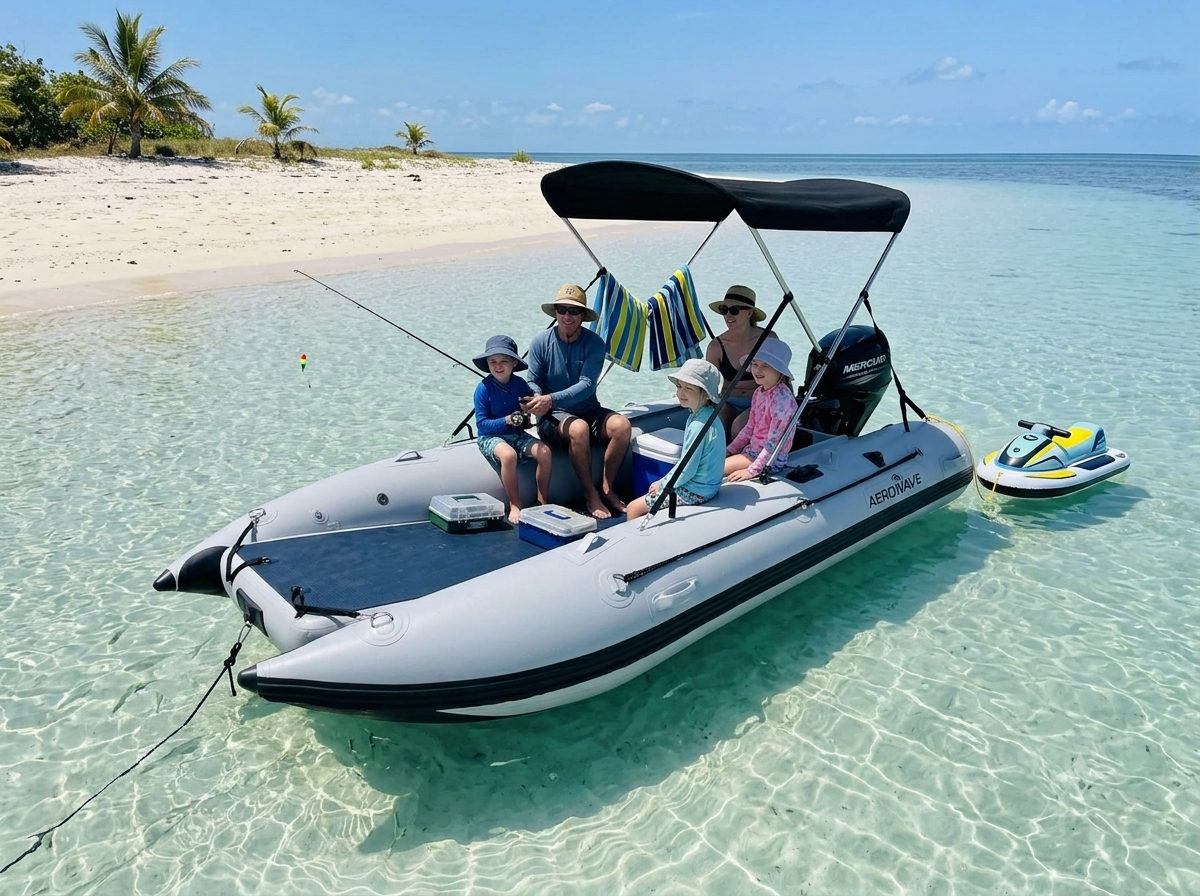
For this kind of boating, floor stability matters more than flashy extras. You want easy boarding from a beach, predictable handling, and enough room that people aren’t climbing over each other every five minutes. A soft-hull inflatable or inflatable catamaran can both work well, but the right one depends on how exposed your local water is.
If your family boating happens in sheltered rivers, lakes, and calm bays, a lightweight all-rounder usually makes more sense than a heavy setup. If you regularly deal with harbour chop, afternoon wind, or boat wash, a more substantial hull starts to pay for itself in comfort and confidence.
The dedicated angler
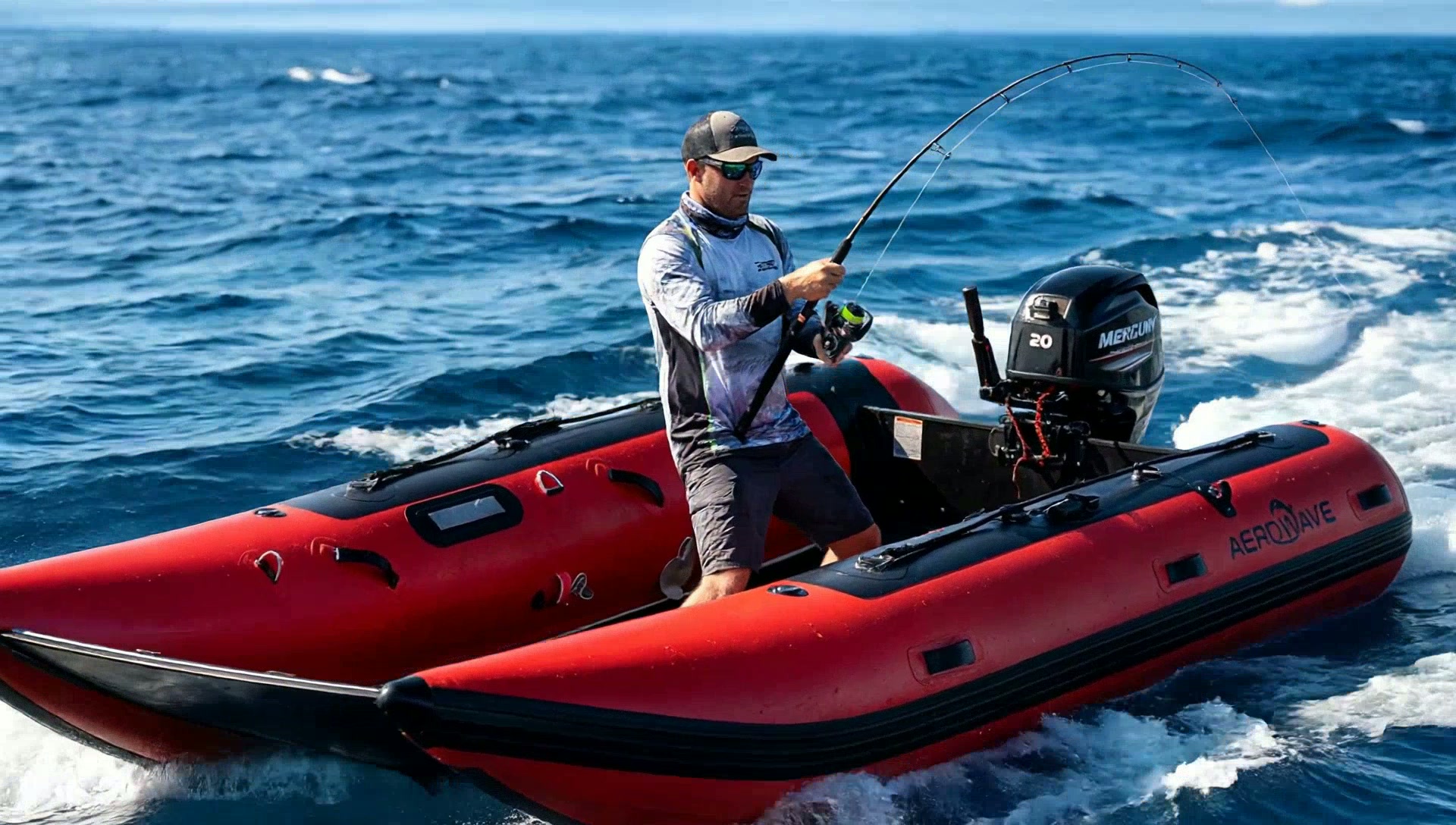
Fishing changes the brief. Suddenly, the things that matter are standing stability, deck space, mounting points, and how the boat behaves when everyone shifts weight to one side.
Anglers often focus too hard on top-end speed and not enough on fishability. A stable platform beats a fast one if you’re casting lures, setting bait, or leaning over to land fish. Tube diameter, floor rigidity, and hull shape all matter more than glossy brochure language.
The useful way to compare options is by asking:
- Can you stand and cast confidently: A twitchy hull gets old fast when you’re moving around with rods and tackle.
- Does it carry gear cleanly: Tackle trays, landing nets, dry bags, and batteries take up room quickly.
- Will the transom suit your engine plan: A boat that’s underpowered or mismatched with the outboard will feel sluggish and inefficient.
- Can you launch it solo: Plenty of fishing sessions happen before work or at short notice.
A lot of anglers end up choosing a tougher inflatable or compact RIB because it handles rougher treatment, beach landings, and repeated loading better over time.
The RV and SUV traveller
Travellers have a different problem. They don’t want a boat that lives in the garage. They want one that fits the trip.
A proper boat-in-a-bag setup is hard to beat if you’re touring, towing a van, or packing around limited storage. Weight, folded size, inflation speed, and setup simplicity matter more than having every possible feature. If the boat is awkward to unpack and inflate, it won’t get used enough.
That’s where it helps to compare the different types of boats you can buy through the lens of storage and travel rather than just on-water performance.
A portable boat should reduce friction, not add another job to the trip.
For travellers, the winning setup is usually the one that can be carried, inflated, launched, and packed away without burning half the day. That’s what turns an inflatable from a purchase into a habit.
Decoding Boat Materials PVC vs Hypalon and Catamaran Hulls
Materials decide how an inflatable ages in Australia. That matters more here than in milder climates because heat, UV, salt, and rough launch spots punish weak construction quickly.
A cheap boat can look fine in a product photo. Its ultimate test starts after repeated summers, regular inflation cycles, beach drag, salt exposure, and storage in a hot shed or under caravan travel conditions.
What premium PVC actually means
Not all PVC is the same. That’s the first point buyers need to understand.
In Australian conditions, budget PVC boats can develop seam leaks within 2 years due to 40°C+ heat, while premium materials such as 1.2mm 2000D German Valmex PVC with thermo-welded seams offer much stronger heat and UV resistance and are backed by 3 to 5 year warranties, as noted in this Australian RIB and inflatable boat market reference.
That difference changes ownership. Budget PVC is often bought on price and regretted on longevity. Premium PVC is for buyers who still want portability and value, but don’t want to treat the boat as disposable.
The easiest analogy is this. Basic PVC is like an entry-level rain jacket. It’ll do the job for light use. Premium PVC is closer to expedition gear. It’s built for repeated use in harsher conditions and holds its shape better under load and pressure.
Where Hypalon earns its reputation
Hypalon sits in a different lane. It’s the material many experienced buyers move toward when the boat will see hard sun, serious salt exposure, regular mooring, or long-term coastal use.
It usually comes with a higher entry cost and often pairs with more premium hull designs, but the appeal is straightforward. It’s tough, stable in harsh conditions, and better suited to buyers who want to keep the boat for years rather than replace it after a short ownership cycle.
That doesn’t mean everyone should automatically buy Hypalon. If your boating is occasional, sheltered, and storage is careful, premium PVC can be an excellent fit. But if your use is coastal, frequent, and demanding, Hypalon starts to make much more sense.
Here’s the practical comparison buyers need.
PVC vs Hypalon inflatable boats
| Feature | Premium PVC (e.g., German Valmex) | Hypalon (e.g., ORCA) |
|---|---|---|
| Material feel | Lighter and well suited to portable, packable boats | More premium-duty feel for long-term hard use |
| Heat and UV resistance | Strong when using quality fabric and thermo-welded seams | Strong choice for prolonged sun and coastal exposure |
| Weight and packability | Better for buyers prioritising storage and transport | Usually less about compactness, more about durability |
| Best fit | Family recreation, travel, tenders, general use | Coastal use, frequent use, buyers wanting longer-term toughness |
| Cost position | Usually lower than Hypalon in comparable classes | Usually higher, especially in rigid and premium builds |
For buyers weighing both, the detailed Hypalon vs German Mehler 1.2mm PVC comparison is worth reading because the decision often comes down to how and where the boat will live.
Why catamaran inflatables feel different on the water
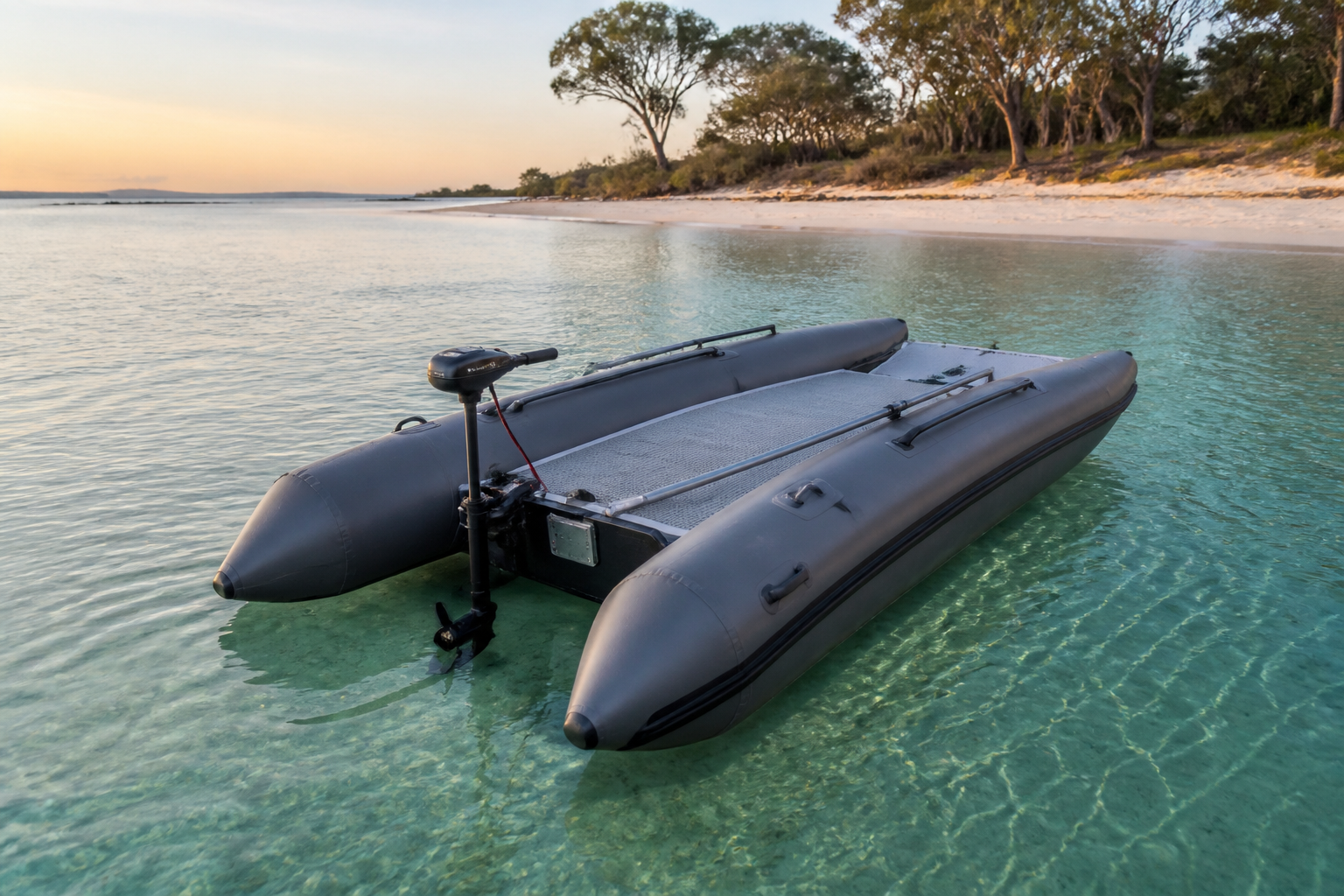
Hull design changes far more than many first-time buyers expect. A catamaran-style inflatable doesn’t just look different. It behaves differently.
In Australian conditions, catamaran-style inflatables can reduce roll by up to 50% compared with monohulls, creating a notably steadier platform. That matters for family balance, standing to cast, moving around the boat, and handling local chop.
If you’ve ever watched kids shift suddenly to one side, or had two adults lean over the same gunwale while dealing with a fish or anchor line, you already understand why that matters.
On-water reality: Stability isn’t a luxury feature. It changes whether people feel relaxed or tense for the whole trip.
Catamaran inflatables are particularly useful for:
- Family boating in mixed conditions: Less side-to-side movement helps nervous passengers settle in faster.
- Estuary and lure fishing: A stable platform makes repeated casting and standing work more comfortable.
- Tender use: Boarding from a yacht or pontoon feels more predictable.
- Photography and cruising: Smoother balance helps when passengers move around.
What doesn’t work well in Australia
The weak point in many sale listings is that the boat looks attractive on paper but is wrong for the environment. Common trouble spots include:
- Thin, budget materials: They may struggle with heat, folding fatigue, and ongoing UV exposure.
- Poor seam quality: Many low-cost boats often show age first in this area.
- Underbuilt floors: A soft or flexy floor affects comfort, tracking, and confidence under power.
- Buying solely on “lightweight” claims: Sometimes the lighter boat is lighter because it uses less material.
A smart buyer doesn’t just compare prices. They compare how long the boat is likely to stay reliable in real Australian use.
Choosing the Right Size and Capacity for Your Crew
Size is where many buyers either get the perfect all-rounder or end up with a boat that feels cramped, underpowered, or annoying to transport.
The right length depends less on ego and more on your normal crew, your launch style, and the kind of water you run most often. If the boat is mainly for one or two people and light gear, a compact tender-style setup may be enough. If it’s for a family or regular fishing use, moving up in size usually improves comfort more than buyers expect.
Under 3 metres
These boats suit tender duties, quick solo missions, and buyers with very limited storage. They’re practical, but they can feel tight once you add a second adult, gear, and an outboard.
For calm water and short runs, they do the job well. For all-day family use, they are quickly outgrown.
The all-rounder zone
For most Australian buyers, the useful middle ground is the multi-purpose boat that can still be packed, launched, and powered without becoming a chore. This is also where many buyers find the best balance between room and portability.
You can get a feel for how a family-friendly inflatable behaves in this size category here:
These boats make sense for people who want one craft to do several jobs reasonably well. Family beach runs, estuary fishing, caravan travel, and tender use all become more realistic when there’s enough deck room and carrying ability to avoid overloading the boat.
When a compact RIB makes more sense
A RIB is a different proposition from a boat-in-a-bag model. It’s less about folding into the smallest possible footprint and more about ride quality, rigidity, and confidence in rougher water.
The Swift Marine Deluxe 2.9m is a good example. It uses a powder-coated aluminium hull and 40cm Hypalon tubes, supports a 480kg max load, and takes up to a 20hp engine, according to the Swift Marine Deluxe 2.9m specifications. The trade-off is obvious. You add hull weight compared with a soft-hull inflatable. The payoff is a drier, more stable ride in choppy coastal conditions.
If your local boating regularly includes harbour chop, exposed ramps, or messy afternoon conditions, a compact RIB often feels like money well spent.
A simple way to choose the right size
Use this shortlist before buying:
- Count real passengers, not brochure passengers: A boat that technically carries a crowd may feel unpleasant with that load in practice.
- Include gear weight from the start: Fuel, safety gear, tackle, dry bags, and an esky all count.
- Match the boat to your tow or storage reality: If it’s too awkward to move, you won’t launch it often.
- Think about your launch crew: Solo loading is different from launching with two adults every time.
- Be honest about your usual water: Calm rivers forgive small boats. Open bays don’t.
The right size is the one that keeps the day easy from driveway to ramp to pack-down.
Building Your Perfect Rig With Packages and Outboards
A bare inflatable hull isn’t always the smartest buy. In many cases, a complete package is the cleaner decision because the engine, transom load, inflation system, and accessories have already been matched to the boat’s intended use.
That matters most for first-time buyers, but experienced boaters benefit too. A package saves the usual back-and-forth of checking shaft length, working out whether the transom and floor suit the engine choice, and then buying half a dozen accessories separately.
Why matched packages work better
A factory-matched setup reduces guesswork. The outboard is chosen to suit the hull, the inflation gear is appropriate for the floor and chambers, and the accessories support how the boat will be used.
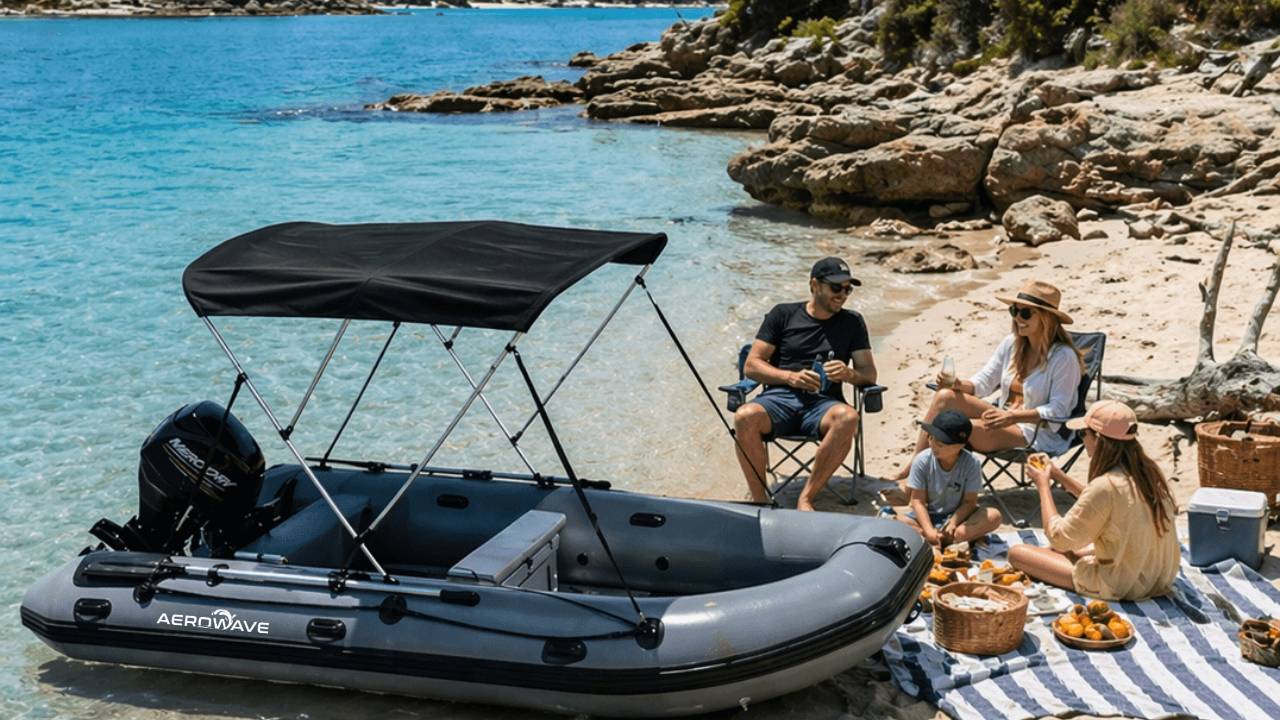
That can mean a more straightforward family setup with a fitted Bimini and practical storage. It can also mean a fishing-oriented layout with rod mounts, pump, and outboard selected as one usable combination rather than a pile of parts that still need sorting.
For outboard matching, it helps to compare options designed specifically as an engine for an inflatable boat rather than treating all small motors as interchangeable.
The accessories worth paying for
Some add-ons are nice to have. Others solve real problems from day one.
A complete rig often becomes much more usable when it includes:
- A high-pressure pump: Proper floor and chamber pressure affects rigidity, ride, and safety.
- A fitted Bimini or sunshade: This matters in Australian sun, especially for kids and long sessions.
- Rod holders: Anglers use them constantly, and retrofitting later isn’t always neat.
- Carry bags and storage solutions: These make transport and pack-down cleaner and faster.
- Pressure monitoring gear: Correct pressure helps the hull perform as intended.
One factual market option is Easy Inflatables, which offers bundled inflatable boat packages with features such as fitted Biminis, 22 PSI lithium pumps, bags, rod mounts, local after-sales support, and matched Hidea outboards as part of turnkey rigs for Australian buyers.
What usually goes wrong with pieced-together rigs
The piecemeal route can work, but it often creates avoidable problems:
- The motor is oversized or mismatched
- The pump can’t reach the floor’s intended pressure
- Important accessories get skipped at purchase
- The final cost creeps up across multiple suppliers
- Nothing feels fully sorted on the first launch
A rig should be ready to use, not ready to troubleshoot.
That’s why many buyers doing serious comparison shopping in an inflatable boats australia sale event end up looking beyond the hull alone. Value is in the setup that gets them on the water quickly, safely, and without annoying compatibility issues.
Navigating Price Warranty and Delivery in Australia
A good buying experience isn’t just about the boat. It’s also about knowing what the quoted price includes, what support exists after delivery, and how long you’ll wait before the boat arrives.
The inflatable market has become more serious, and buyer expectations have lifted with it. That lines up with the broader category trend. The global rigid inflatable boats market is projected to grow from $1.55 billion in 2025 to $2.26 billion by 2030, according to the global rigid inflatable boats market report. More buyers are treating these boats as durable, long-term purchases rather than novelty gear.
What to check in the advertised price
A low advertised number can be misleading if it excludes the practical costs that turn the purchase into a delivered, usable boat. Australian buyers should confirm whether the final amount includes tax treatment, import-related costs, and shipping conditions.
The cleaner transaction is one where the total is transparent upfront. For many buyers, uncertainty around landed cost creates more stress than the boat choice itself.
Why warranty matters more than brochure language
Warranty length isn’t everything, but it tells you how a seller views the product. A serious inflatable boat purchase should come with clear terms, realistic coverage, and after-sales support that’s accessible in Australia.
It’s worth reading the inflatable boat warranty policy details carefully because warranty support often matters most when the boat has already been used through heat, salt, transport, and repeated inflation cycles.
A worthwhile warranty should help answer:
- What materials and seams are covered
- How support is handled for Australian customers
- What counts as normal wear versus product fault
- How claims are initiated and resolved
Delivery timing and custom builds
Delivery should match the buyer’s season and use case. If you need a boat for an upcoming trip, “available soon” isn’t a useful answer.
Some boats are ready to ship quickly if they’re in stock. Others are custom-built and take longer. Neither is fundamentally superior. It depends on whether you want speed or a more customized configuration. What matters is being told clearly, before payment, what the likely delivery path looks like.
Clear delivery expectations prevent rushed purchases and disappointed launch dates.
For regional buyers, logistics matter just as much as metro delivery. A good supplier should be able to explain how the boat gets to your door, what arrives with it, and what setup is needed once it lands.
Essential Maintenance for a Long Life on the Water
Inflatable boats last well when owners stay on top of the basics. They age badly when they’re packed away salty, left baking at full pressure in hard sun, or dragged over rough ground as if the tubes are indestructible.
After each trip
Start with freshwater. A proper rinse removes salt, sand, fish slime, and residue that wear down fabric, fittings, and hardware over time.
Pay attention to the transom area, floor joins, valves, and any metal fittings. These are the spots where grime and salt like to sit. Let the boat dry before storing it, especially if it’s going back into a bag.
A simple post-trip routine helps:
- Rinse thoroughly: Don’t just splash the tubes. Flush the whole boat.
- Dry before storage: Trapped moisture leads to mould, smells, and fabric stress.
- Check valves and seams: Catching small issues early is easier than repairing a bigger problem later.
- Remove gear and fuel items: Don’t leave clutter pressing into folded material.
Storage in Australian conditions
Heat is the enemy if the boat is stored carelessly. If the boat is inflated on a trailer or in a shed, keep an eye on pressure in hot weather. If it’s bag-stored, fold it neatly and avoid crushing the same crease points aggressively every time.
Shade helps. Covers help. Clean storage helps more than most buyers realise.
For longer-term care, focus on these habits:
- Use UV protectant suited to the material
Sun exposure is relentless in Australia, especially in coastal areas.
- Store off rough concrete where possible
Repeated abrasion during storage and handling wears the underside fast.
- Support the hull properly if trailer-stored
Poor support can create stress where the hull or floor carries weight unevenly.
- Clean before long layups
Don’t store bait residue, salt spray, or sand inside seams and fittings.
A premium inflatable still needs disciplined care. Good materials forgive more mistakes, but they don’t cancel them.
Small habits that preserve resale and reliability
Owners who clean, dry, protect, and store their boats properly usually avoid the most common headaches. Their boats also present better when it’s time to sell, trade, or step up to a larger model.
Maintenance doesn’t need to be complicated. It just needs to be consistent.
Frequently Asked Questions About Inflatable Boats
Can I hire an inflatable boat in Australia instead of buying one
Yes, in some areas you can hire one, especially around tourist and marina precincts. But hiring only suits occasional use and limited flexibility. If you want regular access for fishing, family outings, caravan travel, or tender duties, ownership usually gives you far more freedom because the boat is set up your way and available when conditions are right.
Are inflatable boats suitable for Australian bays and coastal chop
Some are, some aren’t. The answer depends on material quality, floor rigidity, hull design, and the kind of water you’re boating on. Better-built inflatables and compact RIBs cope far better with chop than lightweight entry-level boats, particularly when the weather changes quickly or you’re running in busy harbour wash.
Do I need to think differently about maintenance if I travel with the boat
Yes. Travel boats get folded, moved, unpacked, and exposed to mixed conditions more often, so routine checks matter more. If you’re keeping the boat with a caravan or touring setup, a printable checklist like this RVupgrades.com maintenance PDF can be a handy way to keep packing, cleaning, and inspection habits consistent between trips.
What makes a good yacht tender
A good tender boards easily, feels stable alongside the mothership, stores without too much fuss, and handles repeated short trips confidently. Buyers usually value dependable floor rigidity, practical tube design, and material quality more than outright speed in this role.
Should I buy the cheapest boat in a sale
Usually not. Sale pricing is useful, but only when the boat still suits your conditions and ownership plan. The right buy is the boat that stays reliable, easy to use, and fit for purpose after the sale banner is gone.
If you’re comparing options and want a practical setup for family boating, fishing, travel, or tender use, take a closer look at Easy Inflatables. The range covers portable inflatables, catamarans, RIBs, accessories, and matched outboard packages for Australian buyers who want a boat that fits how they use the water.
Share the post now
Set Sail with Easy Inflatables
Experience the ultimate freedom on the water with our top-quality inflatable boats and accessories. Easy Inflatables is your trusted partner, providing everything you need for a safe and unforgettable adventure.
Categories
- Accessories & Gear (84)
- Adventure Destinations (63)
- Boat Accessories & Setup (25)
- Boat Comparisons (7)
- Boat Trailers (12)
- Boating Safety Gear (5)
- Catamaran Boats (12)
- Customer Stories & Experiences (4)
- Inflatable Boat Guides (47)
- Inflatable Boats & Kayaks (149)
- Inflatable Catamarans (12)
- Maintenance & Care (114)
- Outboard Motors (53)
- Outdoor Activities (26)
- Product Comparisons & Reviews (108)
- Setup & Safety Tips (52)
- Special Offers & Promotions (2)
- Sustainability Tips (13)
- Types of Boats (47)
Related Post
Your Guide to the Best Waterproof Battery Box of 2026
Sea Trail Boat Trailers A Complete Australian Guide
Choosing the Best Electric Trolling Engine: 2026 Guide
Inflatable Motorised Boat A Buyer’s Guide for Australia
Stay Connected
Join our community of water adventure enthusiasts! Sign up for Easy Inflatables' monthly newsletter for exclusive tips, product updates, and insights to make the most of your outdoor adventures.
Shop gear featured in this guide
Aerowave WaveRunner 380 Series 3 Catamaran Package
The WaveRunner 380 Series 3 is a premium 3.8m inflatable catamaran package built for Australian and worldwide families, fishing, and coastal day boating — ideal for snorkeling and spearfishing — offering serious stability and premium German Valmex® construction.
Aerowave Viper 400 Sovereign
Flagship 4m enclosed-bow inflatable catamaran. German VALMEX® 7321 Heavy Plus 1.2mm commercial-grade fabric, 10 PSI high-pressure drop-stitch air deck floor with VALMEX non-slip surface, LockPro wheels, full Bimini and FREE express delivery Australia-wide delivery included. Winter special — save $1,000 until 31 August 2026.
AeroWave AeroCat 360 Inflatable Catamaran
Same proven hull design, shape and look as our flagship Aerowave Viper catamarans — built lighter using 0.9mm Valmex® fabric instead of the Viper's 1.2mm. The AeroWave AeroCat 360 is our 3.6m inflatable catamaran built from 0.9mm Valmex® fabric — intentionally lighter than our 1.2mm Viper hulls so it folds smaller, packs lighter and is easy to handle solo. Twin-hull stability, 5-Year Warranty with global support and priced ~$500 below comparable 0.9mm imports.
Not sure which suits you? Talk to a real boat owner.
Ready to set sail?
Premium German-fabric inflatable catamarans with FREE Sea Freight or Express Air Delivery — your choice at cart. Talk to our team or browse the fleet.
Like this guide? Get the next one in your inbox.
Owner-tested tips, gear deep-dives and Aussie boating know-how — no spam.