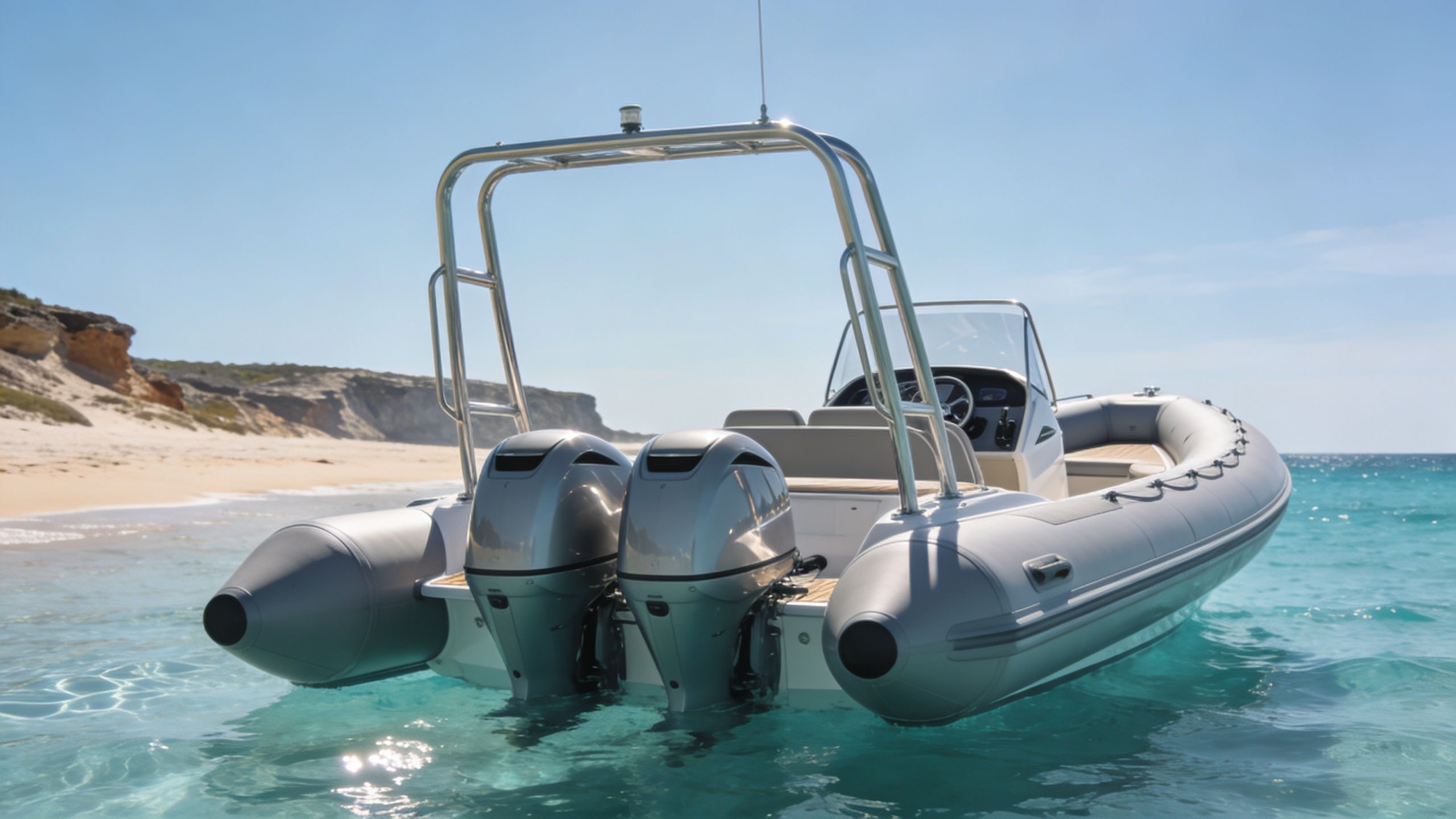

You’re probably in the same spot most first-time buyers hit. You want a boat that gets used, not one that sits in the driveway because towing, storage, setup, and maintenance become a chore. That’s exactly why so many Australians start searching for rigid inflatable boats for sale australia instead of jumping straight into a heavier trailer boat.
The right inflatable setup can cover a lot of ground. A family can use it for beach days and estuary runs. An angler can launch quickly and reach spots that are awkward with a larger rig. An RV traveller can carry a capable boat without turning the trip into a logistics exercise. The trick is buying for your real use, not for a brochure fantasy.
Saturday morning on an estuary ramp, the pattern is easy to spot. The boats that hit the water first are usually the ones with less fuss around towing, launching, and retrieval. For many Australian buyers, that convenience matters just as much as speed or top-end finish.
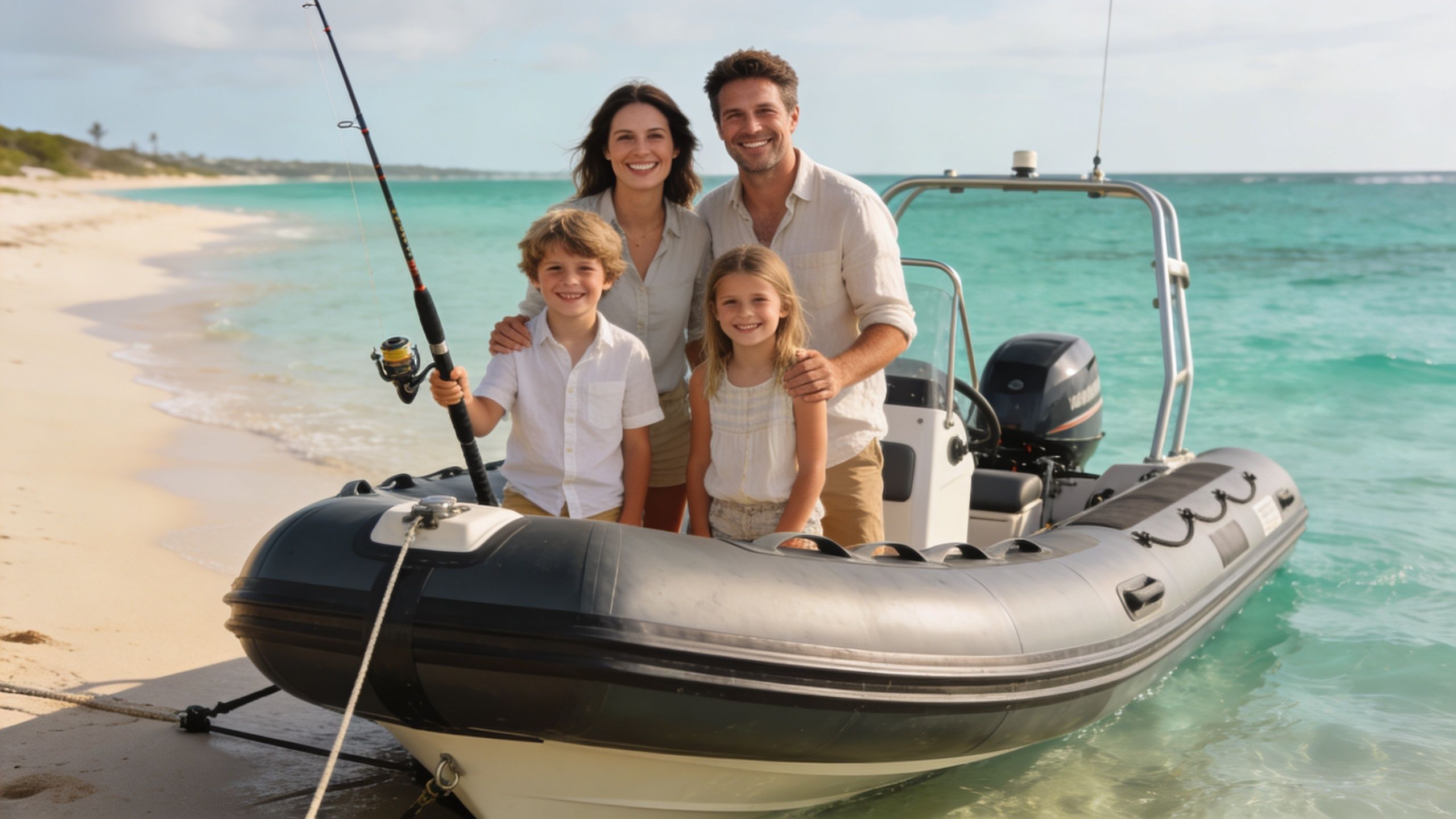
That is a big reason rigid inflatables keep gaining ground here. They suit the way a lot of Australians boat. Quick beach runs, river fishing, tender work, caravan trips, and family days on sheltered coastal water all reward a boat that is lighter, easier to store, and less work to own.
The sticker price is only part of the decision. In Australia, total cost of ownership separates a smart buy from an expensive mistake. A cheaper PVC boat can make sense for occasional use, undercover storage, and freshwater work. In hard sun, salt, and year-round exposure, Hypalon usually costs more upfront but often ages better and can be the cheaper choice over the long term because repairs, tube fatigue, and early replacement are less likely.
That is also why many first-time buyers start by learning what a RIB boat is. Once you understand how the rigid hull and inflatable tubes work together, the appeal becomes practical rather than theoretical. You get a boat that is easier to live with than many conventional trailer boats, while still feeling capable enough for regular use.
Usage matters more than hype.
A buyer planning coastal camping trips has different needs from someone fishing freshwater impoundments or using a yacht tender around the marina. The right inflatable setup depends on launch conditions, storage, tow vehicle, passenger load, and how often the boat will sit in the sun. I always tell first-time buyers to price the whole ownership cycle, not just the package on day one.
Australian conditions are hard on gear. UV, salt, hot trailers, rough ramps, and long road miles all add wear. That is why inflatable boats are not popular here just because they are fun. They are popular because the right one can lower the effort of owning a boat, and boats that are easy to own tend to get used more often.
Buyers often lump all inflatables together. That’s a mistake. A RIB, a SIB, and an inflatable catamaran can all be the right choice, but not for the same owner.
A Rigid Inflatable Boat has a solid hull underneath the inflatable tubes. The easiest way to think about it is a sneaker with a firm sole. It keeps its shape, tracks better, and feels more decisive in turns and chop.
That rigid hull changes how the boat behaves. You get better handling, cleaner planing, and a ride that usually feels more composed in open water. If you want a boat for coastal exploring, regular fishing runs, tender work, or family outings where ride quality matters, a RIB is usually where I’d start.
A Soft Inflatable Boat is closer to a flexible moccasin. It packs smaller, stores easier, and usually appeals to buyers who care most about compact transport and simple storage.
A SIB can be the right answer when:
The trade-off is straightforward. You gain portability, but you generally give away some of the sharper handling and planted feel that buyers like in a rigid hull.
Then there’s the third option that many first-time buyers overlook. Inflatable catamarans deserve a serious look if your priority is stability at rest.
Their hull form gives them a more settled platform for activities where side-to-side movement matters. That makes them appealing for anglers casting, families managing kids on board, and buyers who dislike the twitchier feel some boats have when people move around.
If stability is your deciding factor, it’s worth browsing inflatable catamarans designed for Australian boating.
Practical rule: Don’t choose by boat category first. Choose by how you’ll spend most of your time on the water.
Buyers usually find clarity as follows:
| Boat type | Best fit | Main compromise |
|---|---|---|
| RIB | Coastal runs, family boating, fishing, tenders, higher-speed use | Less compact than a basic soft inflatable |
| SIB | Occasional use, storage-limited owners, sheltered water | Less crisp handling and less rigid underfoot |
| Inflatable catamaran | Stability-focused fishing, family supervision, steady platform use | Different ride feel and layout preference than a conventional RIB |
The mistake I see most often is buying the most portable boat when the owner really wants better ride quality, or buying for offshore aspirations when the actual use will be slow family trips in calm water. Be honest about the main job. The right boat becomes obvious much faster.
A first-time buyer often compares two boats on price, then misses the spec that will cost more over the next five summers. In Australia, sun, salt, heat, and rough ramps expose weak choices fast. The better question is not just what the boat costs today. It is what it will cost to own, store, repair, and keep usable for the kind of boating you do.
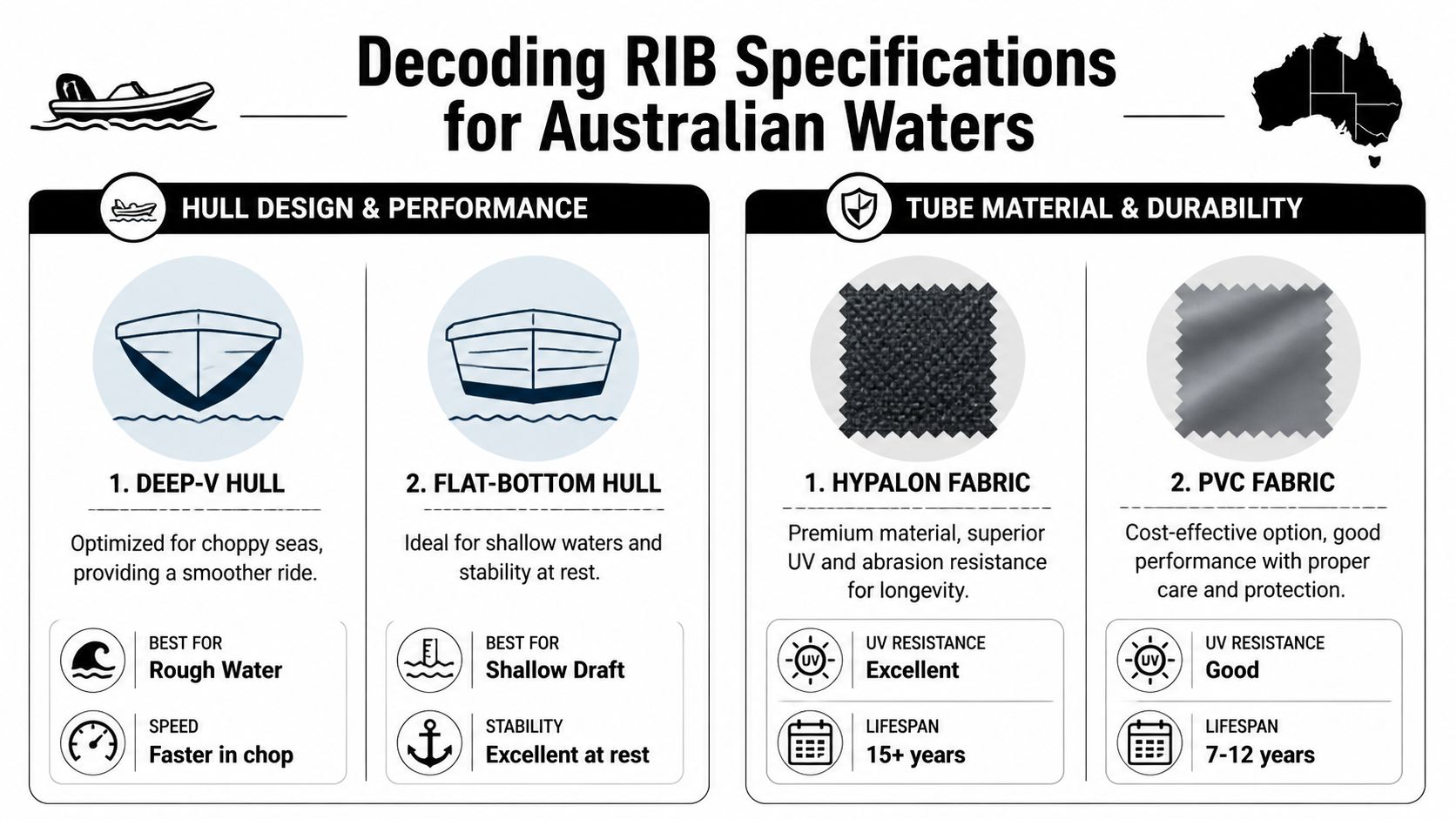
This choice shapes long-term value more than any brochure feature.
PVC suits a lot of Australian owners. It keeps the buy-in lower, packs down well, and makes sense for weekend use when the boat is washed, dried, and stored out of the sun. For river trips, holiday use, and buyers who want good value without committing to a premium tube material, quality PVC is often the sensible call.
Hypalon earns its higher price in harder service. If the boat will spend long periods inflated, live near the coast, sit on a trailer between trips, or see regular exposure to strong sun, Hypalon usually holds its condition better over time. The upfront spend is higher. The payoff is often fewer headaches with ageing fabric, seams, and surface wear in harsh Australian conditions.
| Feature | German Valmex PVC (1.2mm) | French Hypalon |
|---|---|---|
| Best fit | Recreational owners who want strong value and lighter upfront spend | Buyers keeping the boat in harsher sun, heat, and coastal exposure |
| UV and heat resistance | Good with proper care and cover use | Stronger long-term resistance in harsh Australian conditions |
| Typical ownership pattern | Better for covered storage and moderate use | Better for frequent use and long exposure |
| Repair costs | Usually lower and simpler for minor patch work | Often higher, but the material tends to age better |
| Ownership view | Lower entry cost, sensible for many weekend users | Higher upfront spend, often better long-run value for heavy exposure |
The trade-off is straightforward. PVC often wins on purchase price. Hypalon often wins on lifecycle value if the boat lives a hard Australian life.
Hull design decides whether a boat feels planted and predictable or harsh and tiring after an hour in chop.
For estuaries, rivers, and short sheltered runs, a simpler hull can do the job well and keep cost and weight down. For open bays, coastal hops, and places where afternoon wind chop builds quickly, a deeper V usually gives a softer, more controlled ride. The penalty is that deeper hulls can need more power, draw a bit more water, and feel less settled at rest than flatter forms.
That trade-off matters. A family doing calm-water picnic trips may prefer the easier boarding feel and steadier rest position of a simpler hull. A buyer planning regular coastal runs usually ends up happier with a hull that cuts through chop properly, even if it costs more and asks more from the engine.
Portable inflatables are heavily influenced by the floor. An air-deck that is inflated properly can feel impressively firm underfoot and keeps setup simple. An underinflated one feels vague, flexy, and harder to drive well.
Pressure matters more than many buyers expect. Side tubes and floor chambers do different jobs, so the boat only performs as intended when each chamber is brought up to the maker’s recommended pressure. Before choosing a motor, it helps to read a practical guide on choosing the right engine for an inflatable boat, because horsepower, load, and floor stiffness all affect how the boat lifts onto the plane and carries weight.
Owners who launch alone usually appreciate air-deck boats for one reason. They are easier to handle off the water. Buyers who want the firmest possible platform underfoot may still prefer aluminium or fibreglass floor structures, accepting the extra weight and setup time.
Capacity figures on a listing are only a starting point. The boat has to work with your real crew, your gear, and your launch routine.
A 3.3 metre boat can sound generous until two adults, two kids, lifejackets, fishing gear, water, and a small esky are aboard. A compact RIB can be brilliant for one or two people lure fishing a river, then feel cramped for coastal camping gear. Inflatable catamarans can be a smart option for buyers who value deck stability and carrying space for slower-paced trips, but they still need to match the distance, speed, and storage limits of the owner.
Use these questions before focusing on headline specs:
The best spec sheet is the one that still makes sense after a season of Australian use. That usually means buying for your real conditions, not the best-case day on the brochure.
The right boat earns its keep on an ordinary Saturday. It launches without drama, carries the gear you bring, and still feels like a good buy after a few Australian summers. That matters more than buying the biggest hull you can afford on day one.
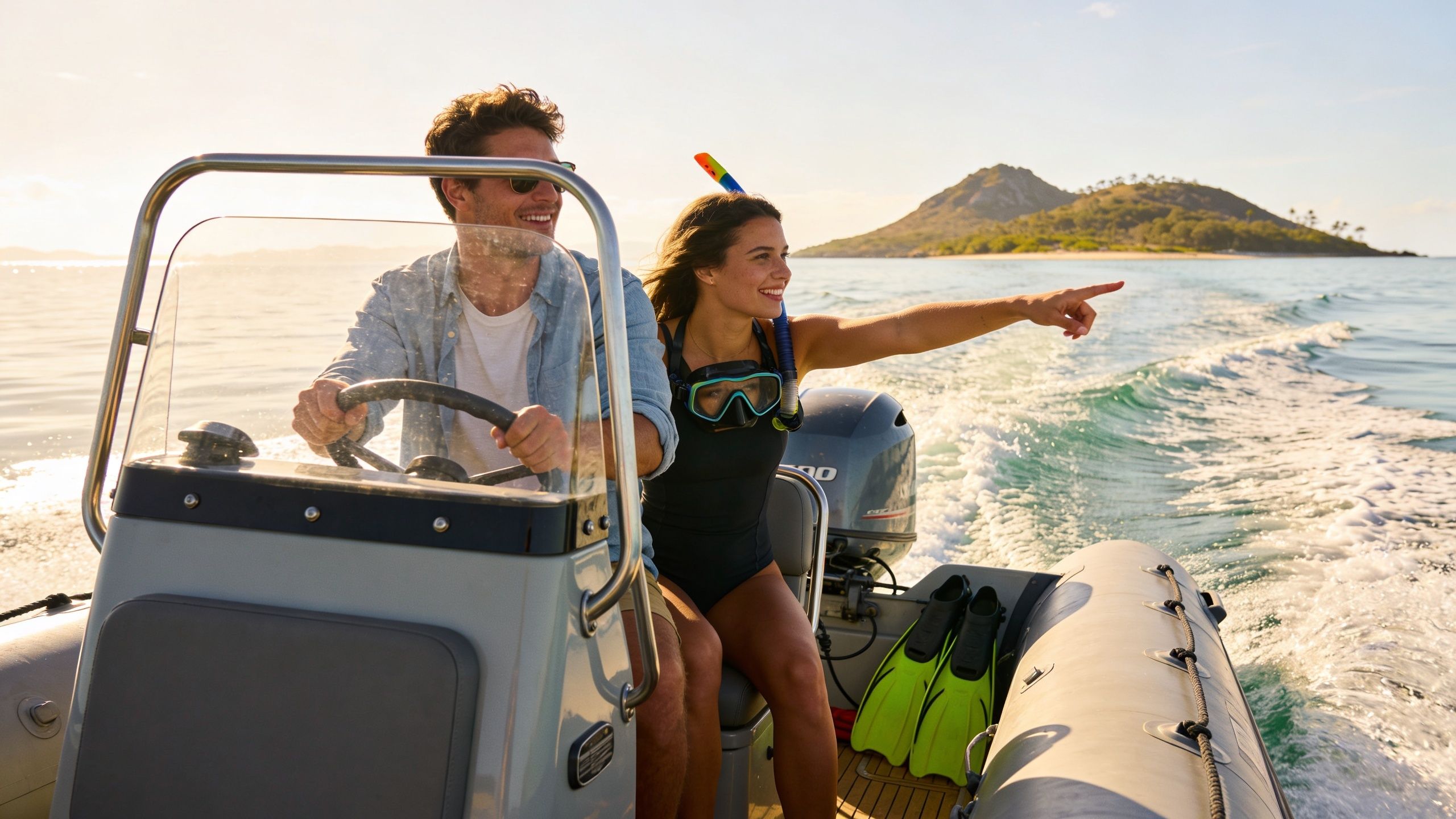
A fishing boat has to leave room to fish. That sounds obvious, but many first-time buyers fill a small boat with passengers, tackle trays, an esky, safety gear, and a larger fuel tank, then wonder why it feels cramped and unstable at rest.
For river fishing, estuaries, and shorter solo sessions, a compact RIB or SIB can make good sense. They are easier to launch, cheaper to store, and less painful to fuel. For offshore snapper runs or chasing pelagics along the coast, buyers are usually happier in a larger RIB with more internal space, a drier ride, and enough reserve buoyancy to carry ice, bait, and extra fuel without feeling overloaded.
The cost side matters too. Hooks, sinkers, knife tips, and fish spines are hard on tubes. PVC can be a sensible entry point if the boat lives under cover and gets lighter use. Hypalon usually costs more upfront, but in high-UV Australian conditions it often makes better long-term sense for buyers who fish often and store the boat outside.
Family buyers should judge the boat by the least confident person on board. If boarding feels awkward, seating is cramped, or there is nowhere to stash towels and snacks, the boat gets used less.
A family-friendly setup usually includes:
A slightly larger boat can cost more to buy and register, but it often saves regret later if your normal crew includes two adults and children. Too small is the expensive mistake, because owners replace it sooner.
Touring buyers need a boat that still feels manageable at the end of a long drive. Pack size, setup time, total weight with motor and fuel, and how dirty the job gets all matter.
That is why many travellers compare inflatable boats suited to Australian adventures before choosing between a RIB, a SIB, or an inflatable catamaran. A foldable boat can suit campers who launch occasionally and want to keep trailer costs out of the budget. A small RIB suits buyers who want faster setup at the ramp and are happy to tow. Inflatable catamarans deserve a look for relaxed coastal camping and load-carrying duties, especially where deck stability matters more than outright speed.
Storage also changes the value equation. A cheaper boat that needs a trailer bay, more fuel, and more setup effort can end up costing more in real life than a simpler package you use twice as often.
Tender work is repetitive and hard on a boat in a different way. The job is short runs, regular boarding, marina bumps, wet gear, and plenty of sun. Reliability matters more than looks.
Choose materials and layout for that routine. Hypalon often suits tender owners who expect constant UV exposure and regular abrasion against pontoons or mothership topsides. PVC can still work well for occasional use or boats stored under cover. A lightweight SIB may suit a smaller yacht where deck storage and lifting weight are the main limits. A compact RIB is usually the better choice where carrying groceries, fuel, or two to four adults safely is part of the job.
The best match is the boat that fits your actual Australian use pattern, your storage setup, and the ownership cost you can live with for years, not just the sale price on the listing.
A first-time buyer in Queensland orders a boat from interstate, adds an outboard later, then finds the paperwork does not line up with local registration requirements. It happens more often than it should. The boat may be right, but the buying process was loose, and that usually costs time, money, or both.
This part of the purchase affects total ownership cost more than many buyers expect. Freight, registration documents, warranty handling, and accessory compliance can turn a sharp deal into an expensive one if they are not sorted before payment.
Registration rules differ across Australia, and small details matter. Hull type, engine size, intended use, and even where the boat lives can change what is required. A tender used occasionally in one state is not always treated the same way as a fishing package used every weekend in another.
Check three things before you commit:
Ask for those documents before the boat ships, not after it lands in your driveway. That avoids delays at registration counters and helps if you ever sell the boat later.
Freight can shift the value equation quickly, especially for buyers in regional Australia. A lower sticker price does not help much if delivery is expensive, the crate arrives without key accessories, or the boat needs workshop time before first launch.
Get the full landed figure in writing. That should include:
Imported inflatables can look competitive on a product page and less convincing once freight and wait times are added. For many Australian buyers, local stock and clear delivery terms are worth paying for because they reduce downtime and uncertainty.
A long warranty looks good in an ad. An important question is who stands behind it in Australia and how claims are handled.
Read the warranty with a practical eye:
Material choice matters here too. In Australian sun, Hypalon often costs more up front and less over the long run for owners who keep the boat inflated outdoors or use it hard year after year. PVC can still be excellent value, especially for buyers who store the boat under cover and use it seasonally, but warranty terms and expected service life should be judged against that real use pattern.
A cheap boat with weak local support often becomes the expensive option the first time a valve, seam, or fitting needs attention.
More packages now include electric pumps, trolling motors, fish-finder batteries, or electric outboards. Those add convenience, but they also add another compliance and warranty layer that buyers should check before sale.
Do not rely on a general claim from a listing. Ask the seller exactly what battery equipment is included, what approvals or documentation come with it, and whether changing that equipment affects warranty on the boat or accessories. For official safety guidance on lithium batteries in domestic commercial vessels and marine settings, check the Australian Maritime Safety Authority information on lithium-ion batteries carried on board vessels.
For a buyer, the practical questions are simple:
Good sellers answer those questions clearly. They should also be able to point you toward basic care routines. A short guide on inflatable boat maintenance and storage in Australian conditions helps you protect both the boat and any powered accessories that travel with it.
Sorting these details early gives you a package that is easier to register, easier to insure, and easier to live with after the excitement of purchase wears off.
A boat that looks cheap on day one can cost more over three summers in Australia. UV, salt, trailer miles, and storage conditions decide whether you bought well. That is why the smart questions are about ownership, not just price.
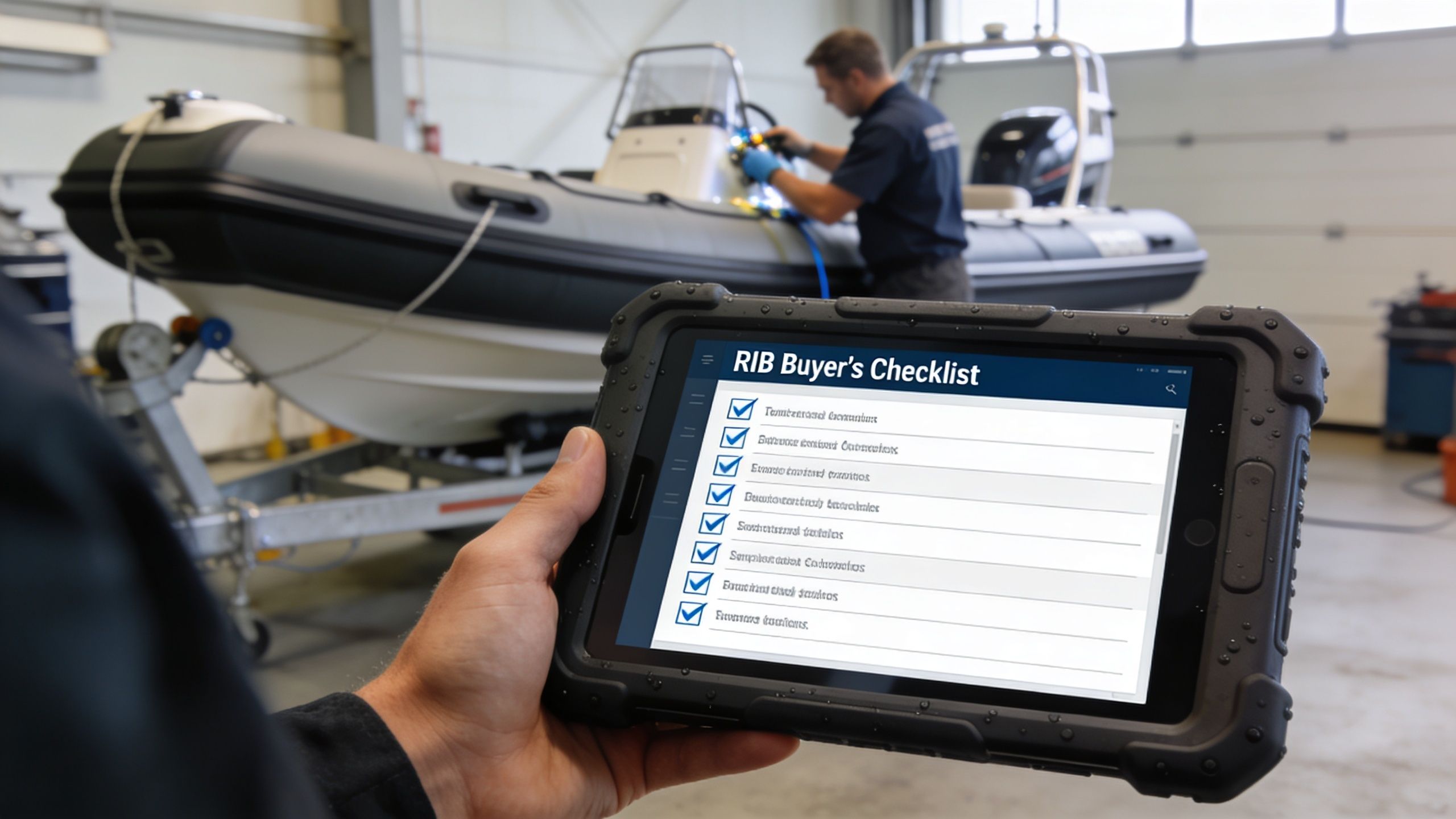
Ask the seller what the boat will cost you to own in Australian conditions, not just what it costs to take home.
Material choice deserves a hard look. For a family using the boat a few times over summer and storing it under cover, PVC can be the sensible buy. For an owner planning coastal camping trips, regular fishing, or year-round use in strong sun, Hypalon often makes better long-term sense even with the higher buy-in.
Good maintenance is simple. It just needs to happen every time.
Owners who want a practical routine can use this inflatable boat maintenance guide for Australian conditions as a reference.
Keep it clean, dry, correctly inflated, and out of the sun when you can. Those four habits do more for resale and service life than any fancy accessory.
The expensive problems usually start with small shortcuts. Leaving salt on stainless fittings, folding tubes while damp, dragging the hull up the ramp, or storing the boat inflated hard in hot weather all shorten its useful life.
This is also where lifestyle fit matters. A rigid inflatable that lives on a trailer under cover has a different maintenance profile from a portable inflatable catamaran packed into a vehicle for river trips, or a tender left on a mooring through summer. Buyers who match the boat to their real routine usually spend less over time because the boat gets used and cared for the way it was meant to be.
A well-bought inflatable is not just cheaper to run. It is easier to own, easier to trust, and easier to sell later.
A first boat often looks affordable on the screen, then gets expensive once freight, setup, warranty headaches, and the wrong material choice start catching up with you. For Australian buyers, especially those storing a boat in heat, towing long distances, or using it on saltwater, the supplier matters almost as much as the boat itself.
Easy Inflatables appeals to practical buyers for a simple reason. The range is set up around ownership in Australia, not just a low entry price. That matters if you are choosing between PVC and Hypalon, trying to match an outboard properly, or working out whether a portable tender, family runabout, fishing setup, or inflatable catamaran suits how you will use the boat.
The product specs point in the right direction. Boats in the range use 1.2mm 2000D German Valmex PVC or French Hypalon, with thermo-welded seams and aluminium transoms. Those details affect service life, storage tolerance, and how well the boat copes with repeated launching, packing down, and regular use in Australian sun and salt.
For a first-time buyer, that has a direct cost effect. A cheaper package can stop looking cheap if the material does not suit high-UV conditions or the boat needs more attention than your routine allows. PVC can make good sense for occasional use, covered storage, and tighter budgets. Hypalon usually costs more upfront, but for harsh sun, frequent use, and longer ownership, it often proves cheaper over the life of the boat.
Easy Inflatables also makes buying simpler in the areas that often cause trouble. Package options with Hidea outboards reduce mismatch between boat and motor. Clearer warranty terms, Australian-based support, and straightforward delivery expectations help buyers avoid the usual confusion around imported inflatables.
That matters more than many first-time owners expect.
Free nationwide shipping, duties and GST included for Australian residents, and set warranty periods all help you judge the true landed cost before you commit. In-stock boats arriving faster than a custom order also gives buyers a realistic choice between getting on the water sooner or waiting for a more customized setup.
A specialist supplier earns its place after the sale. Buyers need honest guidance on whether to spend more on Hypalon, whether an inflatable catamaran is a better fit for load-carrying stability, or whether a simpler SIB package will do the job for river fishing and family trips. General marine retailers do not always give that level of inflatable-specific advice.
Easy Inflatables is strongest when the goal is lifestyle fit. A coastal camper needs something different from a yacht owner looking for a tender. A family towing to holiday spots has different priorities again, usually storage, launch effort, and repair practicality. Matching the boat to that reality is what keeps ownership enjoyable and resale stronger later.
If you’re ready to compare boats that suit family outings, fishing, RV travel, yacht tender duties, or inflatable catamaran stability, explore Easy Inflatables. You’ll find Australian-owned support, quality materials, turnkey packages, and practical advice that helps you choose the right setup the first time.