
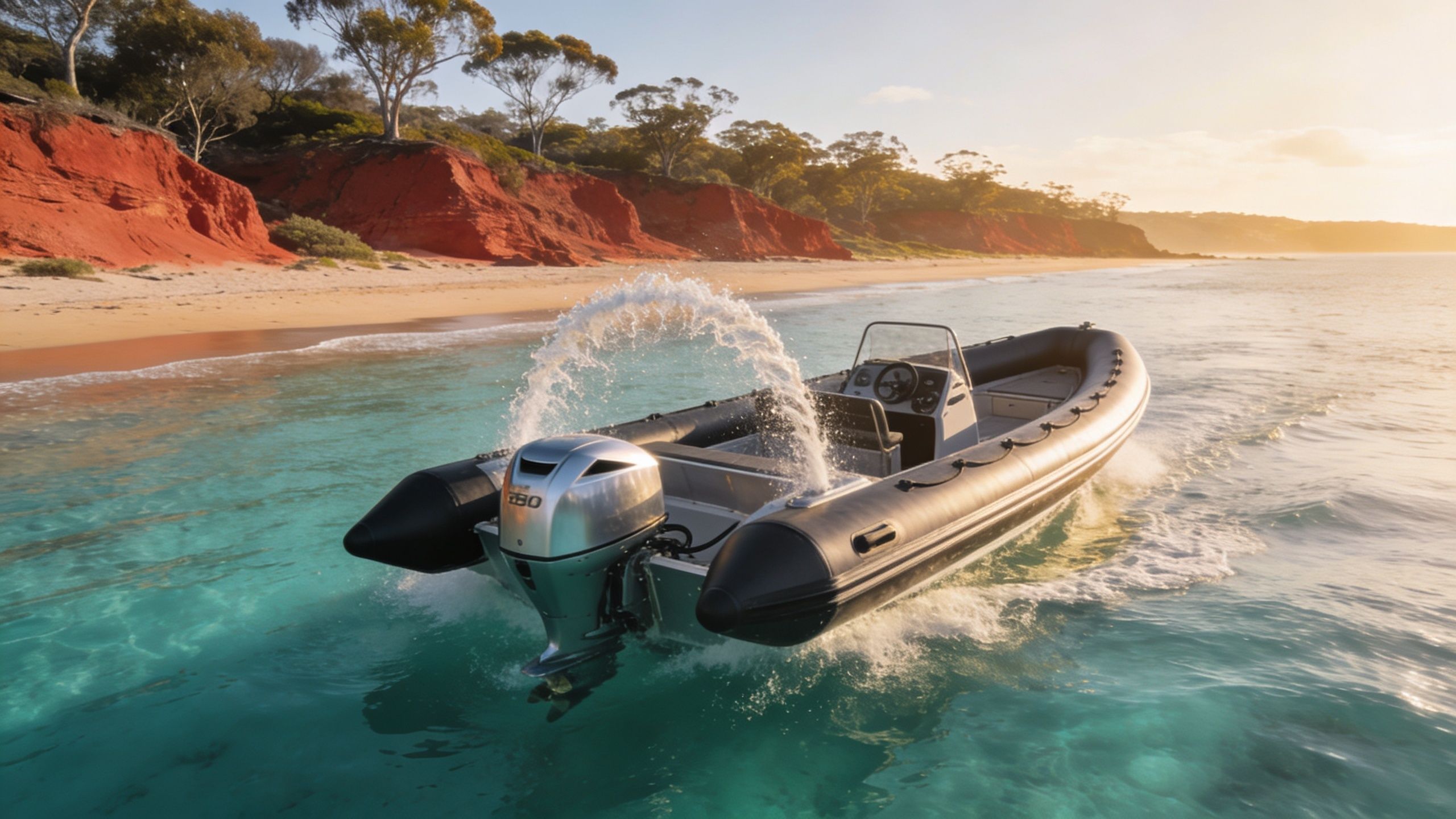
You’re probably here because you want more freedom on the water without stepping into the usual headaches. A tinnie can feel harsh and wet in chop. A soft inflatable is easy to store but often feels underdone once conditions get messy. A larger hard boat gives you confidence, but it also brings more towing, storage, and setup drama than many weekend boaters want.
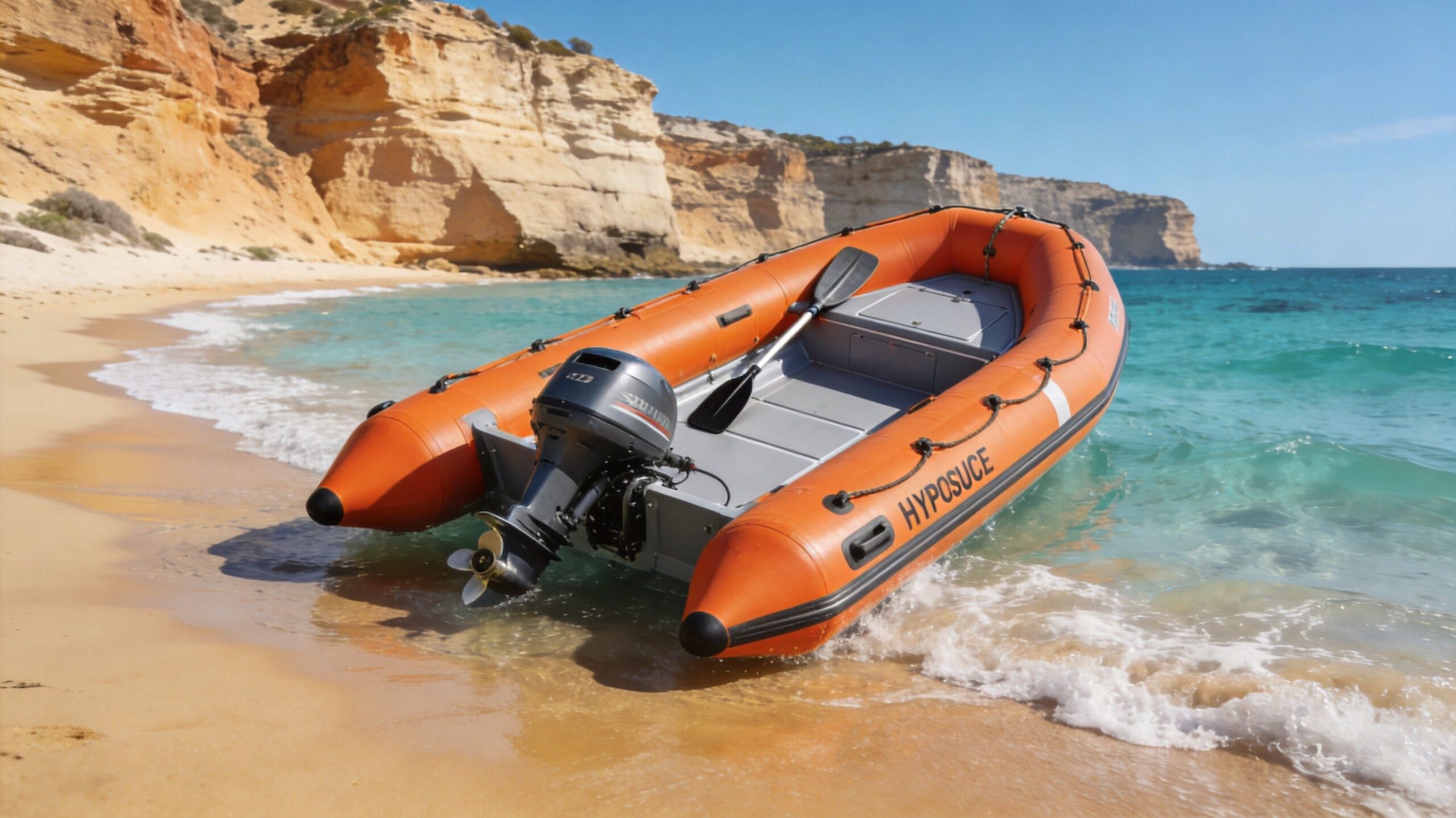
That’s where a rigid inflatable boat makes sense for Australia. It suits the way people boat here. Quick beach launches, family runs across a bay, a fishing mission before sunrise, a yacht tender that won’t mark up the mothership, or a compact setup that can travel with the caravan.
A good RIB gives you three things at once. Stability, portability, and durability. That combination is why so many experienced boaters end up in one after trying other formats first.
A lot of Australian adventures sit just out of reach from the sand. There’s the cove around the headland. The beach you can only reach by water. The reef edge that looks fishy but needs a proper platform to get there safely. Standing on shore, you can see it all, but you can’t access it properly without a boat that’s practical enough to own and easy enough to use often.
That’s the trap many buyers fall into. They chase the cheapest inflatable and outgrow it. Or they buy a heavier boat and realise the effort of storing, towing, launching, and maintaining it means it stays parked more than it gets used.
A rigid inflatable boat sits in the sweet spot. It behaves like a serious boat on the water, but it still fits the needs of families, anglers, campers, and travellers who want flexibility.
Our boating conditions aren’t gentle for long. Morning glass can turn into afternoon chop. UV is relentless. Salt gets into everything. Many launch spots are informal, and many of the best destinations reward a boat that’s easy to move, beach, and recover.
What works here is gear that doesn’t ask for too much fuss:
If you’re already dreaming up launch spots, island runs, and beach-camping weekends, it’s worth browsing these top Australian inflatable boating destinations. The right boat changes what feels realistic for a weekend.
Practical rule: The best boat isn’t the one with the biggest spec sheet. It’s the one you’ll launch without hesitation on an ordinary Saturday.
A rigid inflatable boat is the marine equivalent of a capable 4WD. It blends two design ideas that solve opposite problems. The rigid hull gives you tracking, handling, and wave-cutting ability. The inflatable tubes, often called sponsons or collars, add buoyancy, stability, and impact cushioning.
That hybrid design is the reason a RIB feels different from the first minute you step aboard.
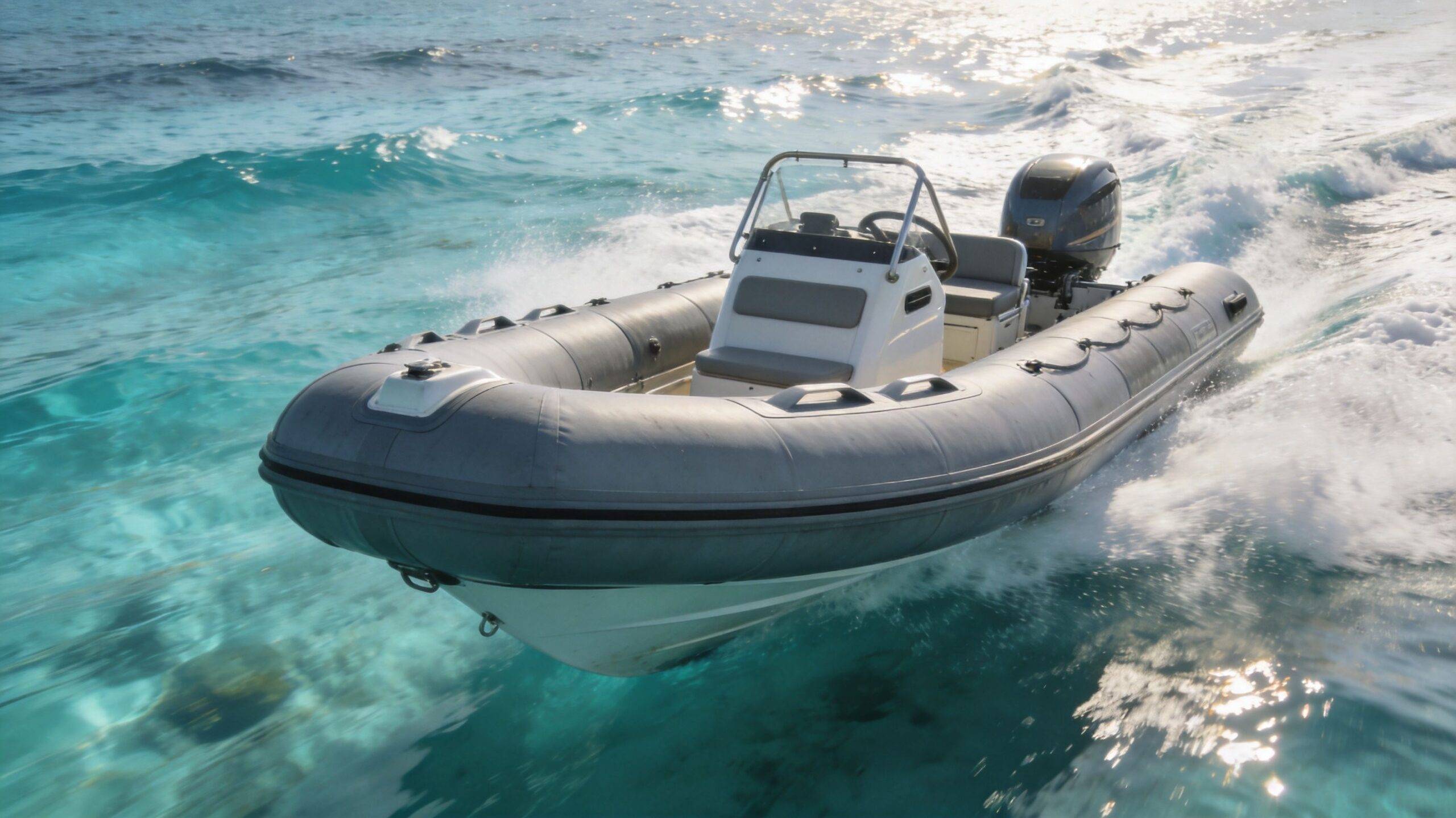
A standard inflatable boat can be handy for sheltered water, tender duties, and simple transport. But once there’s chop, weight onboard, or distance to cover, you start to notice its limits. Without a rigid V-hull, it tends to slap, wander, and lose its composure sooner.
A RIB fixes that by giving the hull a proper shape. That shape bites into the water, tracks cleanly, and keeps the ride more predictable.
A conventional hard-sided boat can perform well, but it’s less forgiving around docks, pontoons, and beaches. It’s also generally less portable and less friendly when you’re loading kids, dive gear, fishing tackle, or camping gear.
The collar on a RIB changes the character of the boat. It softens contact. It helps the boat sit securely. It also gives passengers a more relaxed feeling because there’s buoyancy and support around the perimeter rather than just hard gunwales.
This isn’t just a recreational trend. According to the history of rigid inflatable boats and their Australian rescue adoption, although the RIB originated in the UK in the 1960s, its adoption in Australia was a fundamental shift for coastal rescue. Surf Life Saving Australia embraced RIB technology in the 1980s, and by 1990 deep-V RIBs were integral to operations from Sydney’s beaches to Queensland’s reefs.
That matters because rescue groups don’t choose platforms for marketing reasons. They choose them because they work in surf, chop, urgency, and unpredictable coastal weather.
For a clearer breakdown of the format itself, this guide on what a RIB boat is is useful if you’re still comparing categories.
A RIB isn’t magic. You still need to pick the right hull, tube material, floor, and engine package. A poor one can still feel average. A well-built one, though, gives you an unusual combination of comfort and capability that’s hard to match in other compact boats.
Not all RIBs deserve the name in the same way. Some are built to survive Australian use. Some are built to look good in a product photo and little else. The difference usually comes down to three parts. Tube material, seam construction, and the hard structure underneath.
The tubes are not decoration. They’re a major part of the boat’s safety and handling. In the Australian maritime context, RIBs must provide buoyancy tubes accounting for at least 60% of the vessel’s full-load displaced volume under ISO 6185, and premium Hypalon tubes have been shown in trials to maintain 80% buoyancy even with multiple chamber punctures, with up to 30% higher flotation retention than standard PVC alternatives in abrasion tests according to this RIB construction and buoyancy overview.
That’s the technical reason serious buyers pay attention to tube material instead of treating it as a cosmetic option.
Both have a place. The wrong move is pretending they’re interchangeable in every use case.
| Feature | German Valmex® PVC | French ORCA® Hypalon |
|---|---|---|
| Best fit | Budget-conscious buyers, occasional use, portable family boating | Heavy use, harsh sun, rough coastlines, long-term ownership |
| UV resistance | Good when quality material is used | Better suited to long exposure in strong sun |
| Abrasion resistance | Solid for general use | Better choice around coral, rock, and frequent beaching |
| Weight | Usually lighter | Often a touch heavier |
| Cost | More affordable | Higher initial spend |
| Who it suits | Travellers, tender owners, weekend users | Offshore-minded users, commercial-style duty, buyers keeping the boat for years |
If you’re weighing up material choices in more detail, this breakdown of Hypalon versus German Mehler 1.2mm PVC material gives a practical buyer’s view.
Good PVC can be a smart buy. Cheap PVC usually becomes an expensive lesson.
A tube is only as trustworthy as the way it’s joined. In local conditions, thermo-welded seams are worth chasing because they create a cleaner, more consistent bond than low-grade glued construction. That matters when the boat lives with heat, salt, inflation cycles, and beach use.
This is one of those details inexperienced buyers skip because it isn’t glamorous. Experienced buyers usually ask about it early.
Under the tubes, the rigid hull decides how the boat behaves. A proper V-shape gives you cleaner entry into chop and a more planted feeling in turns. It’s the reason one RIB feels composed while another feels busy and nervous.
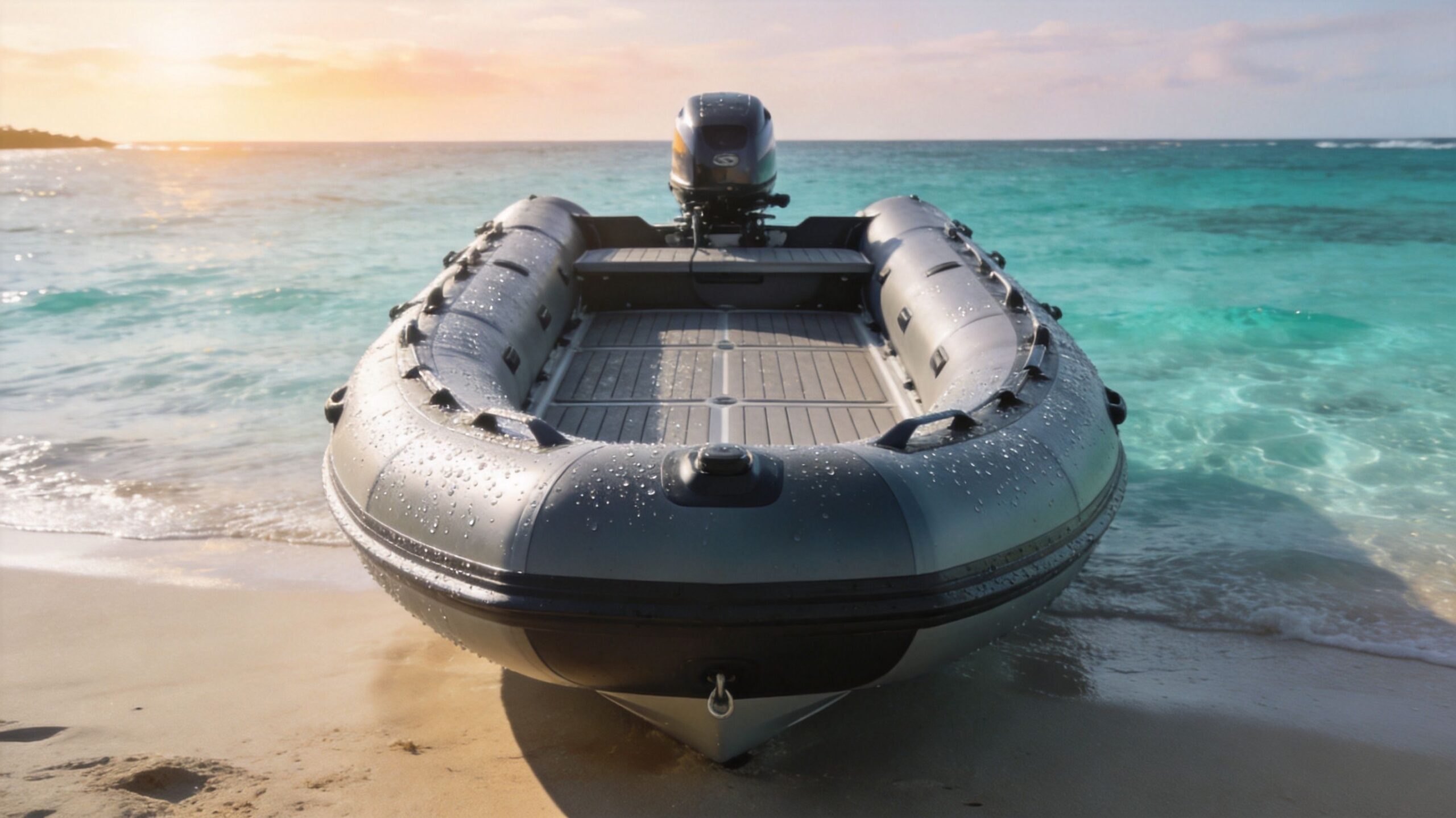
The transom deserves the same scrutiny. If you’re hanging an outboard on the back, the transom must be solid, well-finished, and matched to the rated power. Aluminium transoms are popular for good reason. They’re tough, stable, and better suited to repeated engine loads and saltwater use than flimsy alternatives.
Two buyers can choose the same length RIB and have very different ownership experiences depending on the floor system.
What works best depends on whether your boat spends more time in a garage, on a davit, on a trailer, or in the back of a vehicle headed for a beach launch.
If you’ve ever had passengers tense up in a small boat, you know stability isn’t an abstract feature. It changes how people move, where they sit, whether they enjoy the trip, and how safe the day feels when the weather sharpens.
A rigid inflatable boat earns its reputation because the design solves several problems at once.
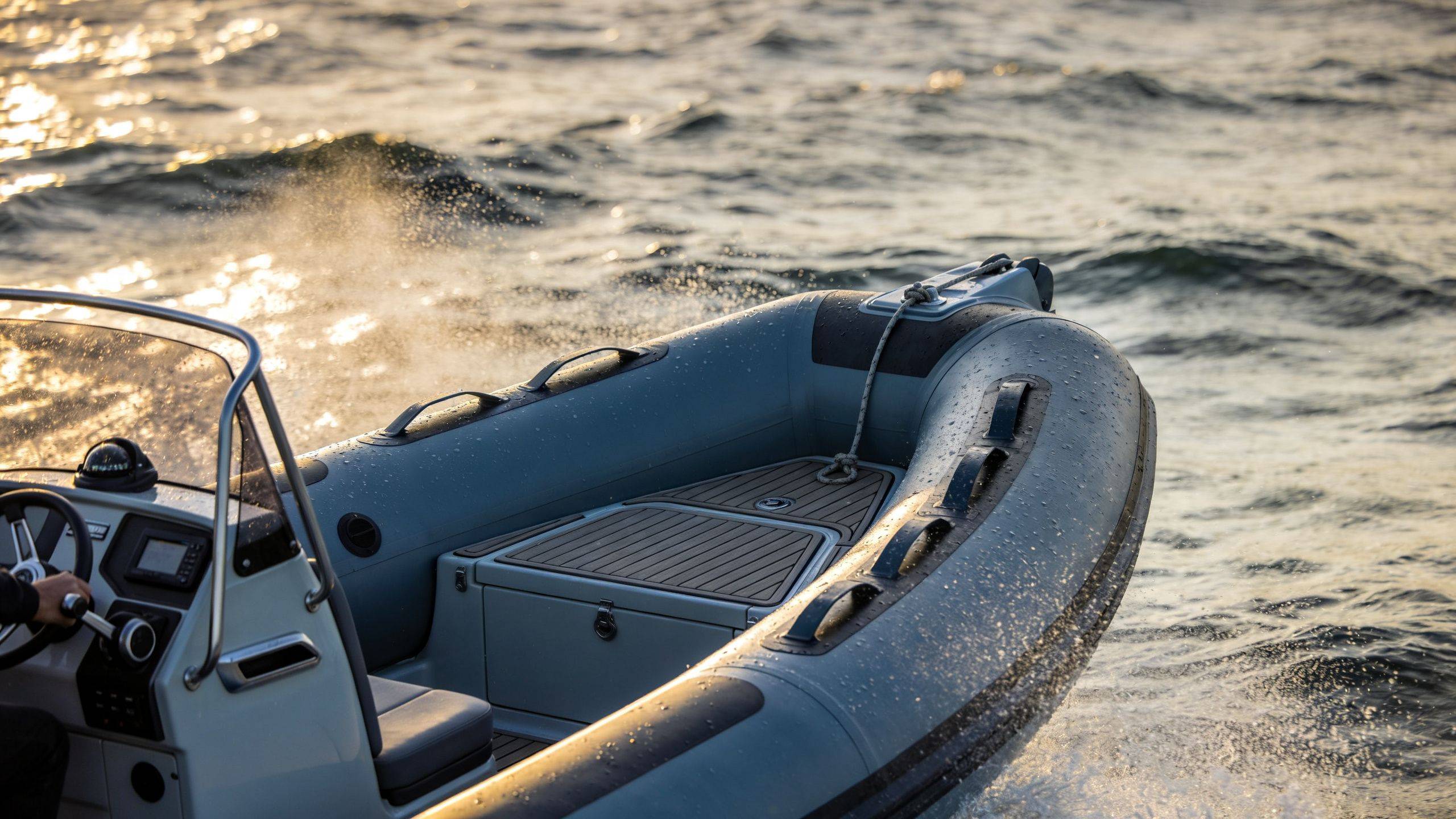
The rigid V-hull does the cutting. It parts chop instead of slapping flat against it. The inflatable tubes do the damping. They add reserve buoyancy out wide, which helps the boat stay level and settled when people shift around or waves hit from odd angles.
That combination has measurable results. Australian trials mirroring USCG standards found that a rigid V-hull with inflatable sponsons can reduce rolling motion by up to 50% in 2-metre seas and lower the risk of capsizing by an estimated 30% in dynamic coastal conditions, according to this RHIB trial-based technical document.
For family boating, fishing, and diving, those aren’t abstract engineering points. They translate to a boat that feels calmer underfoot.
On the water, the practical benefits show up quickly:
A stable boat doesn’t just feel nicer. It gives people the confidence to move properly, fish properly, and enjoy the day instead of bracing for the next wave.
One underrated advantage of a RIB is reduced fatigue. When a boat pounds, rolls, and throws spray, the crew gets tired faster and loses confidence sooner. That’s when simple family outings start ending early.
A good RIB tends to ride drier and softer because the hull shape manages wave entry while the tubes help knock down spray and absorb the slap of side impacts. It won’t erase bad weather, but it often turns an uncomfortable trip into a manageable one.
This short on-water look helps show the ride attitude in real conditions.
The people who notice first are usually not the skipper. It’s kids, partners, older passengers, and anyone new to boating. They don’t care about hull jargon. They care whether the boat feels secure.
That’s why a rigid inflatable boat often becomes the sensible all-rounder. It gives experienced boaters capability and gives less experienced passengers reassurance. That’s a combination worth paying for.
The best thing about a rigid inflatable boat is that it doesn’t force you into one style of boating. One weekend it’s a fishing rig. The next, it’s a beach shuttle. Then it’s carrying dive gear or doing tender duties.
That flexibility matters in Australia because most owners don’t want a single-purpose boat. They want one platform that can adapt.
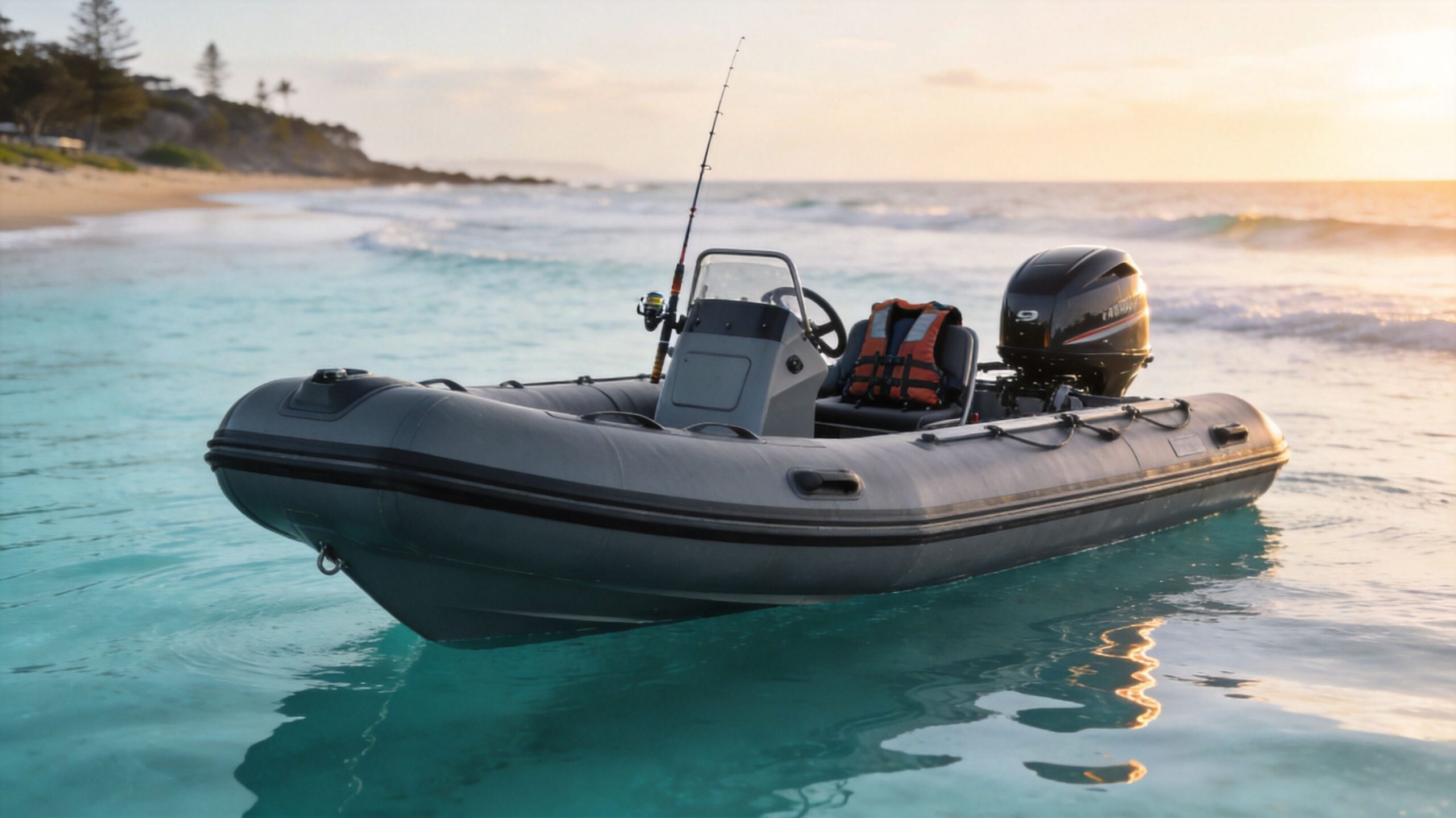
Early launch. Two anglers aboard. Tackle bag, net, esky, and a bit of chop after sunrise. A RIB feels more serious than a standard inflatable in these conditions.
The tubes give you confidence when leaning out on a fish or moving around the boat. The hull gives you proper tracking on the run out. If you’re poking into shallow areas, beaching briefly, or hopping from one patch to another, the format suits that stop-start style of fishing well.
For anglers, the practical wins are easy to appreciate:
RIB ownership makes emotional sense in these moments. You load picnic gear, dry bags, towels, and a few kids who want the trip to feel like part of the day out, not a rough commute.
A RIB suits that role because boarding is simple, the tubes feel reassuring, and beach landings are less stressful than with a hard-sided hull alone.
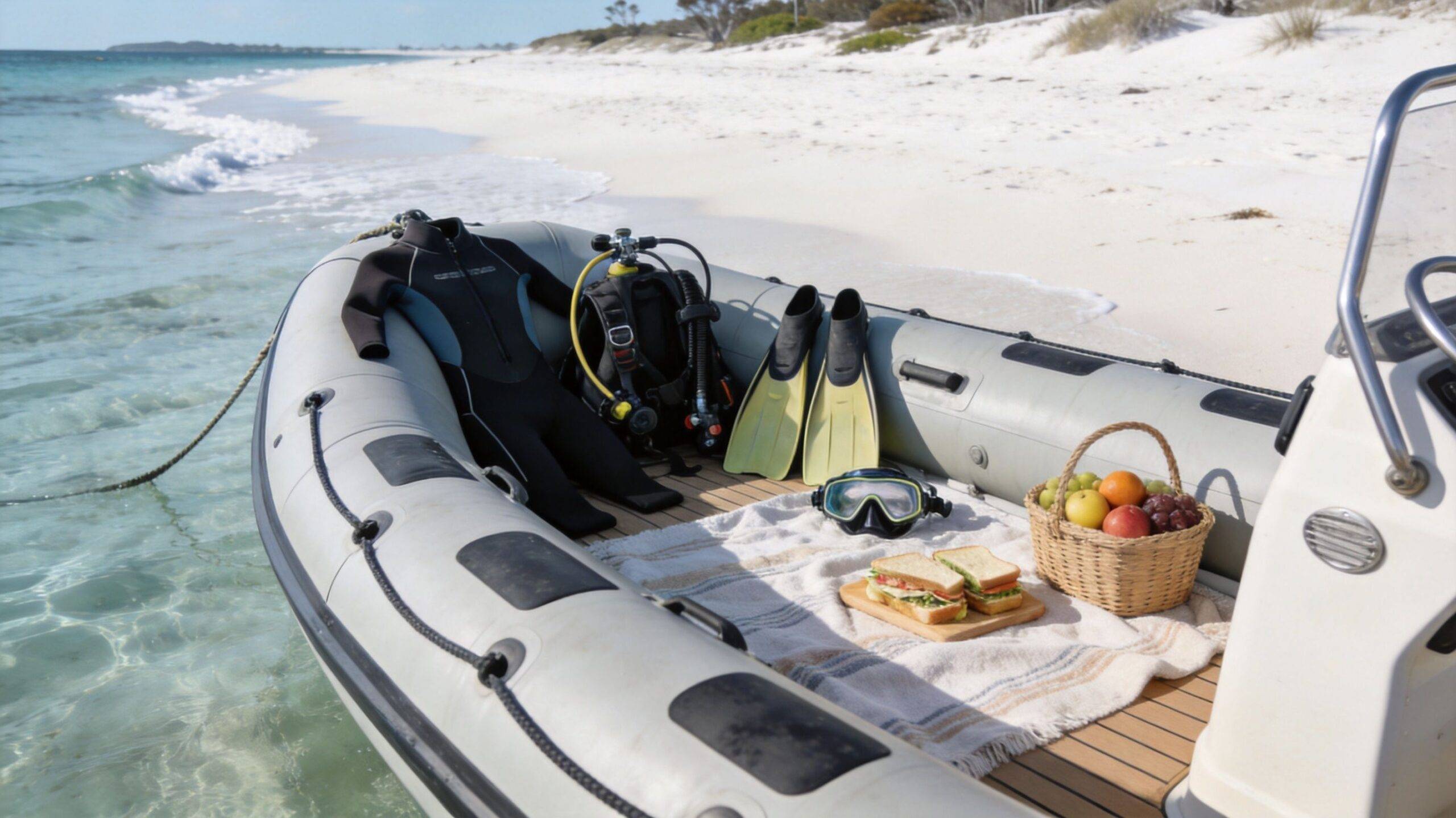
The boat becomes part transport, part basecamp. You run the gear ashore, leave it pulled up safely, then head back out for a snorkel or a lazy cruise.
Many people first notice good RIBs around marinas and moorings. There’s a reason. As tenders, they’re hard to beat.
The collar is gentle against topsides and docks. The hull rows and motors more predictably than a soft inflatable. Loading groceries, ferrying guests, and doing quick shore runs all feel easier when the boat doesn’t wobble every time someone steps in.
For yacht owners, the right tender needs to be three things:
A RIB checks those boxes better than most alternatives.
Divers and snorkellers tend to appreciate practical design details more than glossy features. They want easy re-entry, stable kitting up, and enough room to organise gear without feeling cramped.
A rigid inflatable boat works well here because the low-profile tubes make it easier to get back aboard than climbing over a high hard side. Fins, tanks, dry bags, and masks are also less likely to bang against a punishing edge.
If your boating plans change month to month, a versatile platform matters more than a specialised one.
Some buyers looking at recreational inflatables should also consider inflatable catamarans. They can offer a different style of stability and deck layout that appeals to some users, especially those prioritising open deck feel. But for the broadest mix of performance, portability, and rough-water confidence, the rigid inflatable boat remains the stronger all-round choice for most local owners.
Most buying mistakes happen before the first launch. People either buy too small for their real load, or they overpower the boat because they’re shopping with ego instead of use case.
The smarter approach is simpler. Choose around the way you will use the boat most often.
If the boat will spend most of its life as a tender or for solo exploration, a compact model makes sense. It’s easier to move, store, and launch, and it keeps the whole ownership experience light.
If you’re planning regular family boating, fishing with a mate, or general bay and coastal exploring, a mid-size RIB is usually the sweet spot. You gain room, range, and confidence without tipping into a setup that becomes hard work.
Larger RIBs suit buyers who want more offshore assurance, more carrying ability, or a platform that feels closer to a conventional serious boat. The trade-off is obvious. More boat means more logistics.
A rigid inflatable boat only works properly when the outboard matches the transom rating and the hull’s intended job. Too little motor and the boat feels sluggish when loaded. Too much and you can ruin the balance, safety margin, and drivability.
Use this checklist before choosing an outboard:
If you’re comparing outboards, this guide to choosing an engine for an inflatable boat helps make sense of matching motor size to boat size.
One of the strongest reasons people move toward a RIB is practical transport. Some setups can travel far more easily than a typical hard boat, which opens up weekends that would otherwise never happen.
That matters for:
A buyer who does one offshore run a year shouldn’t build their whole setup around that one day. Buy for the trip you’ll do often. If your boating is mostly beach runs, casual fishing, and family exploring, optimise for ease and frequency of use.
That’s what keeps a rigid inflatable boat from becoming another expensive object sitting in the shed.
Buying a boat in Australia isn’t just about hull shape and motor size. Ownership gets easier or harder based on what happens after payment. Compliance, registration, local advice, transport, and support all matter far more than many first-time buyers realise.
A powered RIB in Australia must be legally set up for local use. One critical requirement is the Australian Builders Plate. It sets out the boat’s load and power limits, and it affects how safely and legally the vessel can be operated.
According to this Australian RIB market and compliance summary, all powered RIBs must have an ABP, non-compliance can lead to fines of up to $11,000 in states like NSW and can void insurance, and NSW had over 15,000 RIBs registered by 2025. Those aren’t details to sort out later. They should shape where and how you buy.
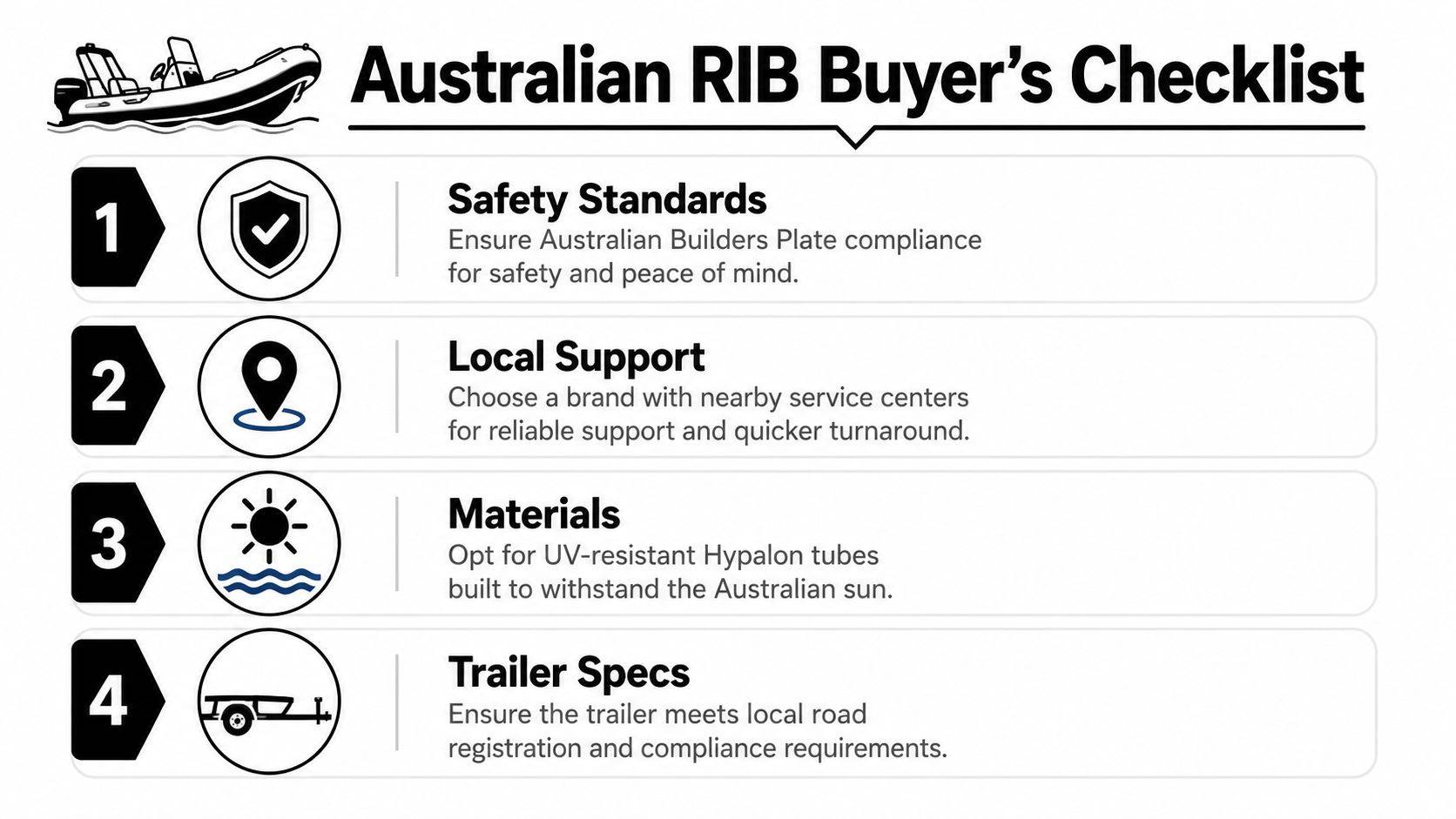
A practical ownership checklist looks like this:
For buyers sorting out towing and setup details together, this guide on boat and trailer considerations is useful.
On paper, an overseas listing can look attractive. The photos are glossy. The price looks sharp. Then reality arrives. You may need local compliance answers, replacement parts, warranty support, or advice on registering and operating the boat in your state.
That’s where local expertise matters. Australian conditions are hard on materials, and local regulations are specific enough that generic advice often isn’t enough.
Buying advice: Ask who handles after-sales questions before you ask about colour options. That answer tells you a lot about what ownership will feel like.
Good ownership includes the full package:
| Ownership factor | What to look for |
|---|---|
| Warranty | Clear local terms and a realistic support path |
| Shipping | Transparent delivery process and no guesswork about arrival |
| Parts and accessories | Pumps, bags, fittings, and replacement items that are easy to source |
| Engine support | Outboard servicing and practical advice when pairing motor to hull |
| Use-case fit | Family use, fishing, tender duties, camping, or travel |
There’s also a niche for inflatable catamarans, particularly if your priority is broad deck space and a different style of stability. They can be a smart option for some owners. But if you want one platform that handles the widest range of Australian boating jobs well, a rigid inflatable boat is usually the more versatile ownership choice.
The main point is simple. Buy the boat from a source that understands local waters, local rules, and the experience of life after delivery.
A rigid inflatable boat solves a problem many Australian boaters know well. You want something compact enough to own without drama, but capable enough to trust when conditions stop being perfect. Very few boat types do both well.
That’s why the format has such lasting appeal. It gives you a hull that behaves properly in chop, tubes that add confidence and forgiveness, and a layout that suits everything from family beach days to fishing missions, diving, tender work, and road-trip boating.
The smartest buyers don’t choose a RIB because it sounds exciting. They choose it because it removes friction. It makes spontaneous boating more realistic. It makes passengers more comfortable. It gives you access to places that are awkward to reach with bulkier boats and frustrating to reach with softer, less capable inflatables.
If you’re comparing options now, focus on the fundamentals. Good materials. A sound hull. Sensible engine pairing. Australian compliance. Local support. Get those right and a rigid inflatable boat can become the most used piece of gear you own.
If you’re ready to compare practical packages, explore local-ready models, or look at options for RIBs, yacht tenders, and inflatable catamarans, take a look at Easy Inflatables. They’re an Australian-owned specialist focused on portable performance, premium materials, bundled outboards, and nationwide support that makes getting on the water simpler.