Inflatable Rescue Boat The Ultimate Australian Buyer's Guide
A lot of Australians want the same thing from a boat. They want to throw it in the back of the SUV, head for the coast, river, or dam, and get on the water without dealing with a trailer, a crowded ramp, or a permanent s…
A lot of Australians want the same thing from a boat. They want to throw it in the back of the SUV, head for the coast, river, or dam, and get on the water without dealing with a trailer, a crowded ramp, or a permanent storage problem.
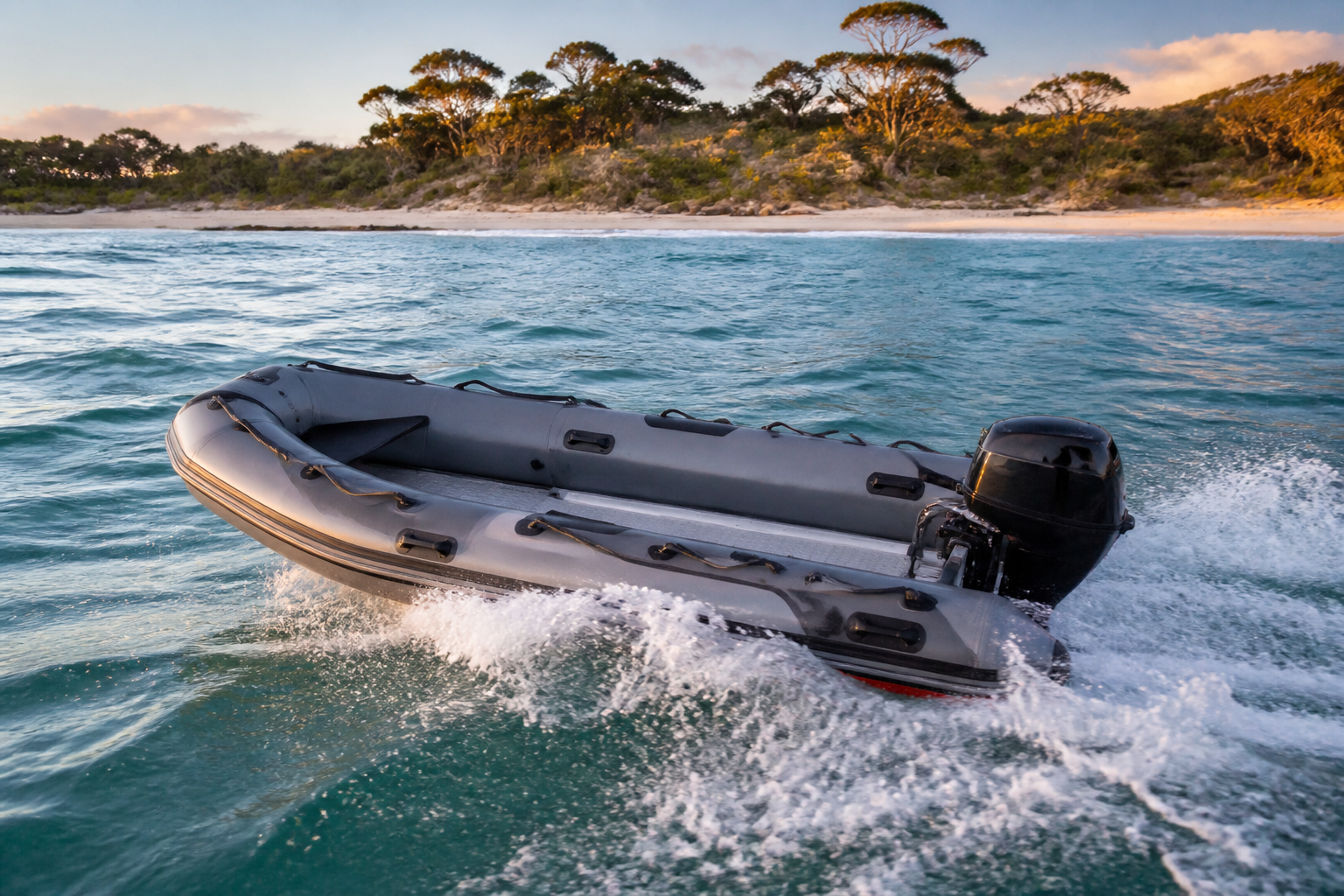
That's where the inflatable rescue boat category earns respect far beyond surf clubs and emergency work. A good inflatable isn't a novelty. It's a practical platform for fishing, family exploring, yacht tender duties, camp-based boating, and the kind of spur-of-the-moment trips that hard-shell boats often make harder than they need to be.
The trick is knowing which inflatables are capable and which ones are built to hit a price point. In Australia, that matters more because our conditions are hard on gear. Sun, salt, beach launches, long towing days, and rough entries punish poor materials quickly. A smart buyer looks past the brochure and judges fabric, seams, hull design, transom construction, safety layout, and how the boat will be used.
More Than Just a Boat Your Gateway to Australian Waters
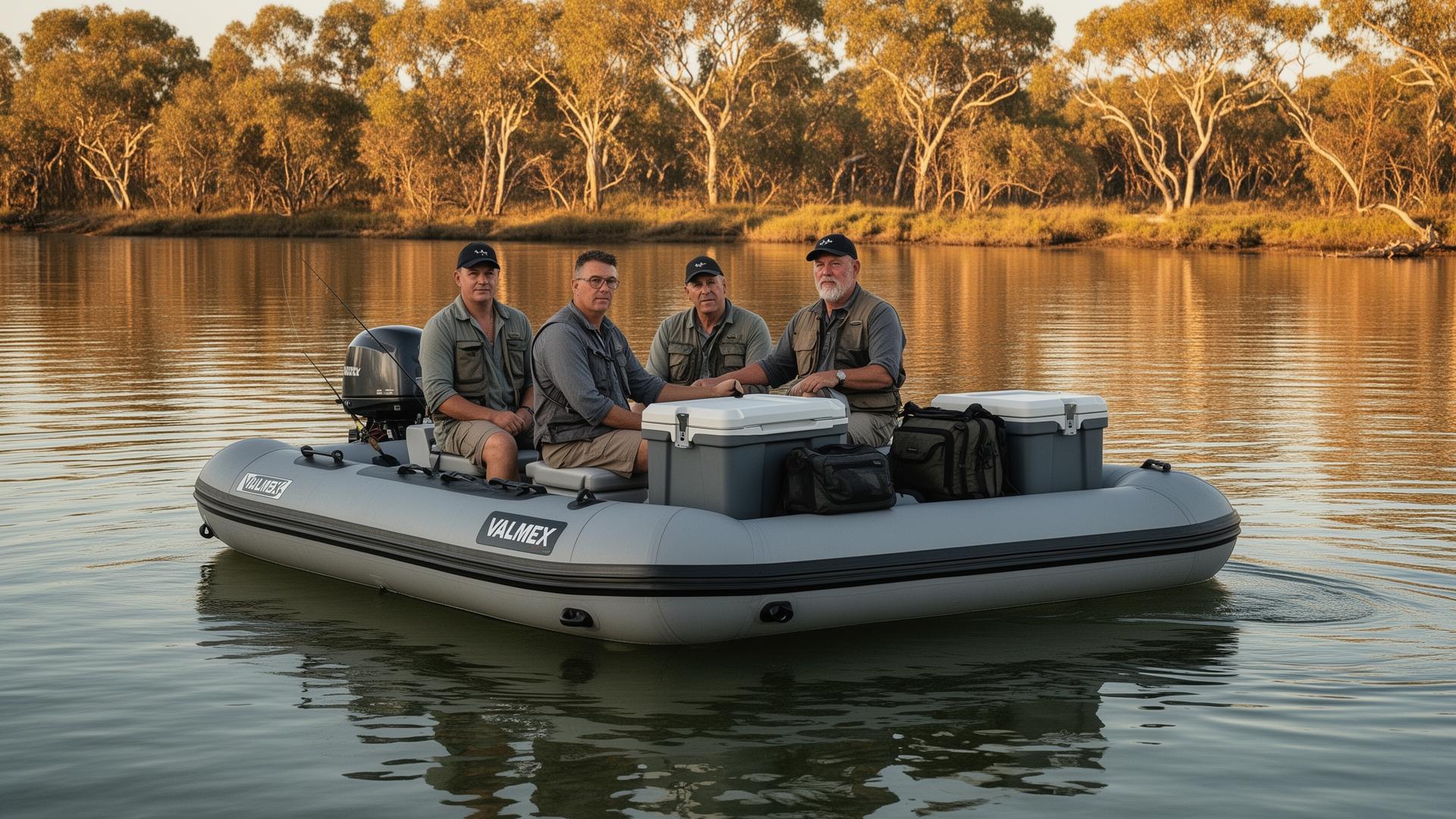
The appeal is simple. You can keep a capable boat at home without needing a full-sized trailer rig, and you can launch from places where a larger boat is awkward or impossible. For families, that means easier beach days. For anglers, it means access to quiet edges, estuaries, and tucked-away shorelines. For caravan and motorhome travellers, it means bringing real boating capability without dragging another vehicle behind you.
That freedom didn't come from nowhere. In Australia, the inflatable rescue boat earned its reputation the hard way, through rescue work in real surf.
In 1969, Warren Mitchell OAM of Avalon Beach Surf Life Saving Club introduced the concept after a trip to the UK, and the first documented IRB rescue in Australia that same year saved eight people, proving the craft's value early on, as outlined in the history of the inflatable rescue boat in Australia.
Why rescue heritage still matters
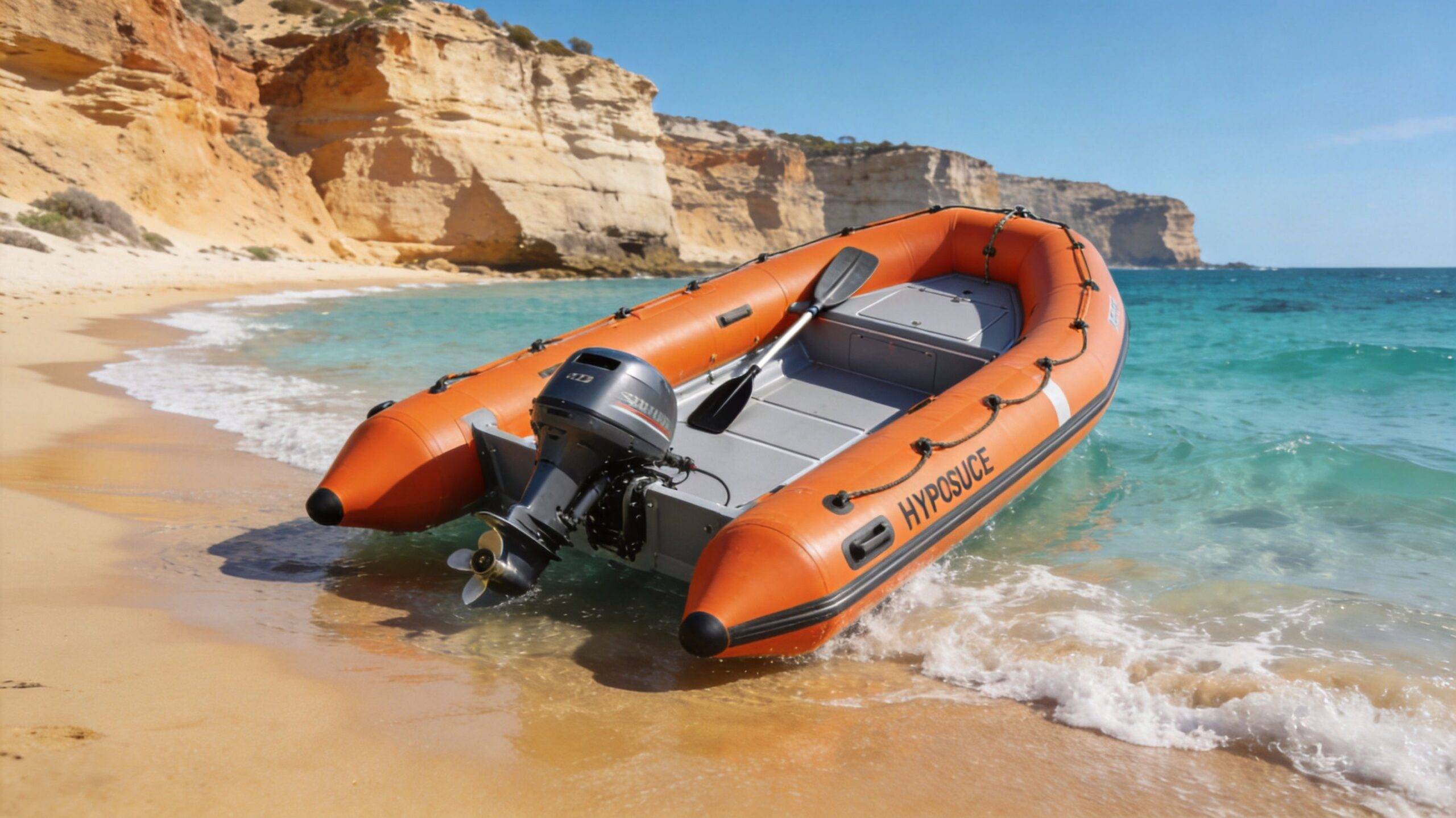
Rescue origins don't automatically make every recreational inflatable a serious boat. But they do explain why the format works so well. Inflatable tubes give you buoyancy, stability, and soft contact points when boarding, beaching, or coming alongside another vessel. That's useful whether you're pulling someone from surf or helping kids climb aboard after a swim.
The better recreational models borrow that same practical logic. They're easy to launch, forgiving around jetties and shorelines, and far less intimidating for first-time skippers than many rigid boats.
Good inflatable design removes friction. If a boat is easier to carry, launch, recover, and store, owners use it more often.
The boat-in-a-bag lifestyle
For many buyers, the breakthrough isn't speed. It's access. A packed inflatable can live in a garage corner, caravan storage hatch, ute canopy, or yacht locker. You're not committed to marina fees, trailer parking, or a large hard-shell footprint at home.
That changes who boating suits:
- Young families who want simple water access without a major setup.
- Holiday travellers who move between coastal stops and inland waterways.
- Yacht owners who need a tender that's easier to stow and handle.
- Fishers who value shallow-water access and a stable platform close inshore.
A proper inflatable rescue boat or rescue-inspired tender isn't trying to replace every boat category. It solves a specific problem exceptionally well. It gives ordinary people easier entry into boating, and it does it with a design Australians have trusted in demanding coastal conditions for decades.
Built to Last Construction Materials and Design Explained
A boat that spends its life in Australian conditions gets judged fast. Leave it rolled in the back of an SUV between trips, drag it up a shelly beach at low tide, then inflate it again after weeks in heat, salt, and dust. Cheap construction shows up early in the seams, valves, and wear patches.
If you want an inflatable rescue boat or rescue-style tender to last, start with the tube fabric, seam quality, and reinforcement layout. Those three areas decide how well the boat handles UV, abrasion, repeated packing, and the sort of knocks that come with real use around ramps, riverbanks, and yacht moorings.
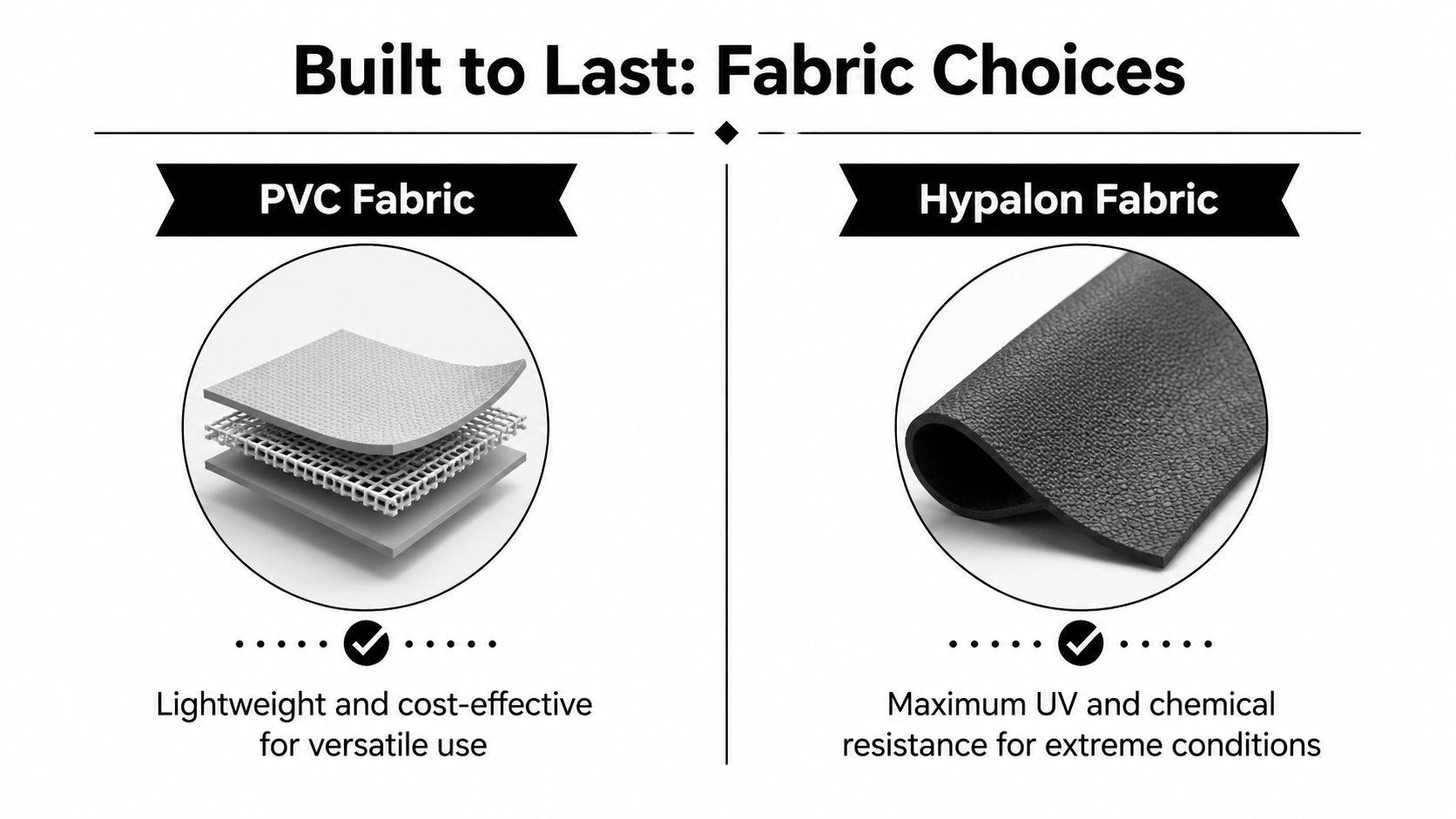
The two materials buyers compare most often are PVC and Hypalon. Both have a place. The right choice depends on how often the boat will be used, where it will live, and how much punishment it will take between services.
PVC versus Hypalon in real use
PVC suits plenty of private owners. It keeps weight and cost down, packs well, and works well for family boating, holiday use, estuary fishing, and occasional inshore runs. The catch is quality spread. A well-made PVC boat from a reputable builder is a very different product from a bargain import with thin fabric and poor welds.
Hypalon costs more, but there is a reason commercial operators, yacht owners, and buyers in high-UV areas keep asking for it. It handles long exposure, repeated inflation cycles, and harsh storage conditions better over time. For boats left on davits, stored outdoors, or used heavily through the season, that extra spend often pays back in service life and fewer repairs.
A practical comparison looks like this:
| Material | Best fit | Strengths | Trade-offs |
|---|---|---|---|
| PVC | Family boating, occasional fishing trips, travellers who pack and unpack regularly | Lighter, more affordable, widely available | Build quality varies a lot, and lower-grade PVC ages faster in heat and sun |
| Hypalon | Yacht tenders, frequent coastal use, commercial or high-use owners | Better long-term resistance to UV, heat, and abrasion | Higher purchase price |
If you are comparing tube materials, this guide to Hypalon versus German Mehler 1.2mm PVC material gives useful background, but always match the material choice to your storage habits and use pattern.
Chamber layout and reinforcement decide how forgiving the boat is
Material gets the headline. Construction decides whether the boat keeps working after years of hard use.
A properly built inflatable uses multiple separate air chambers, so one puncture does not leave you with a useless boat. That matters on local waters where oyster-covered ramps, mangrove roots, rough concrete, and coral rubble can all damage a tube. Buyers focused on the boat-in-a-bag lifestyle should care about this even more, because frequent folding, loading, and relaunching puts extra stress on seams and attachment points.
Look closely at high-wear areas. The best boats have reinforcement where owners abuse them: under the keel, around the bow, at towing points, around lifting handles, and where the transom meets the tubes. Those are the places that fail first on lightly built boats.
Practical rule: Ask how many separate chambers the boat has, how the seams are joined, and where the builder has added wear protection. Sales language means little if those answers are vague.
The details experienced buyers check
I tell customers to stop staring at the brochure photo and start checking the finish work. A clean-looking boat can still have weak hardware, poor glue lines, or thin protection strips that will not last a season of regular launching.
Check these areas before you buy:
- Seam construction: Welded or well-finished bonded seams should look consistent, clean, and properly aligned.
- Wear strips and keel guards: These protect the parts that get dragged over sand, ramps, and gravel.
- Handles and grab lines: They should feel secure in the hand and properly anchored, not stuck on as an afterthought.
- Valve quality: Good valves seal reliably and are easy to service.
- Transom bonding: This join carries motor load and repeated vibration. Any sign of flex, poor finish, or gaps is a warning.
- Floor fit: Air-deck and sectional floors both work, but they must sit firmly and install without a fight.
Small details matter more in Australia because many owners store these boats in hot sheds, caravan compartments, ute canopies, and on yacht decks. Heat builds pressure. UV hardens lower-grade materials. Sand gets into everything.
A good inflatable is not just made from decent fabric. It is built properly in the places that wear out first. That is what separates a boat you trust for family trips, inshore fishing, or tender work from one that becomes a repair job waiting to happen.
The Foundation of Performance Hulls Transoms and Power
A boat's fabric tells you how it will last. The hull tells you how it will behave.
That's where many buyers make a costly mistake. They focus on length and motor size but ignore the shape under the boat. On the water, hull design affects ride comfort, stability at rest, planning behaviour, beach-launch practicality, and how confident you feel when conditions turn sloppy.
Why hull evolution changed everything
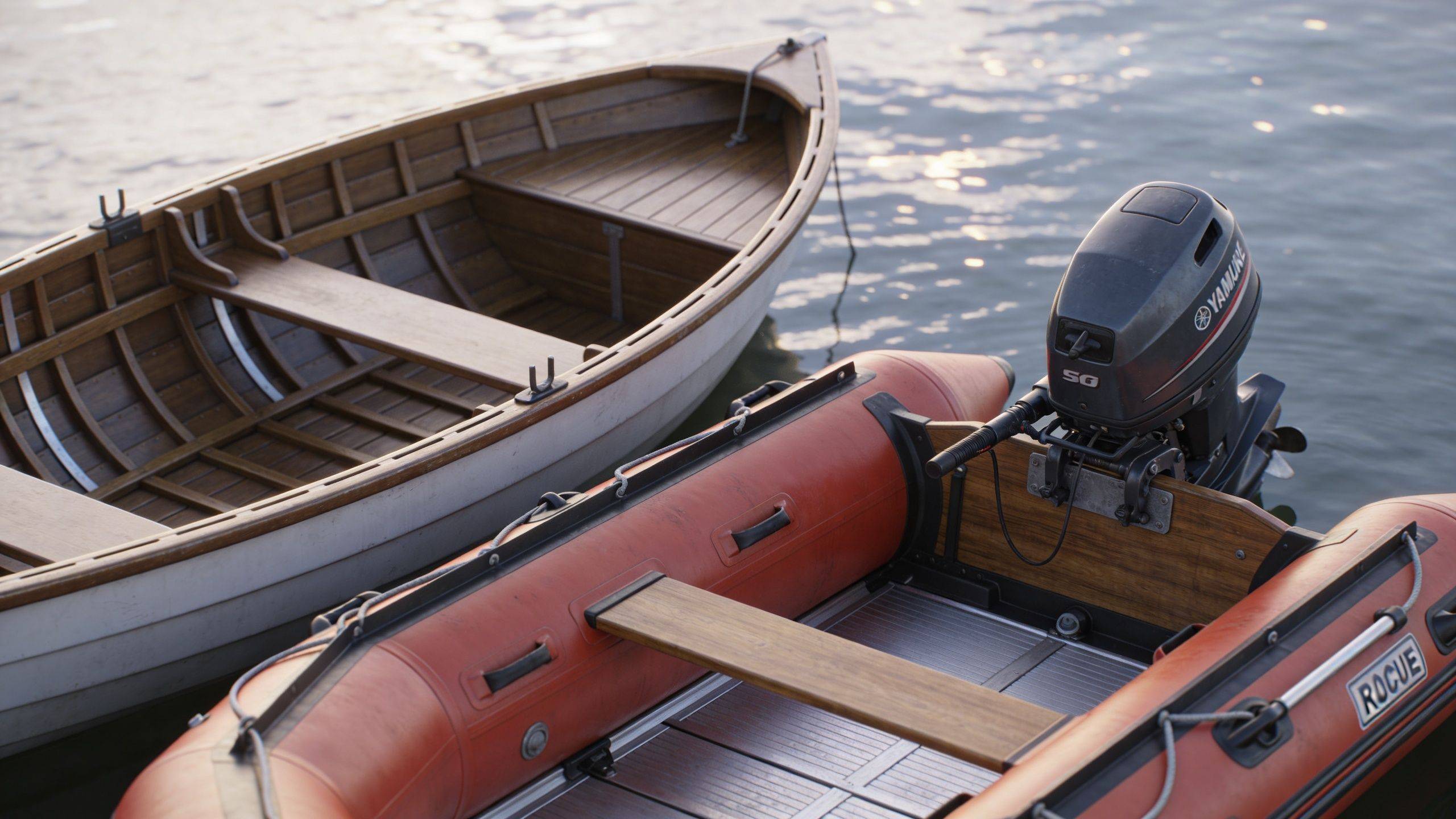
Early flat-bottomed inflatables were useful, but they rode harshly and wore badly in demanding use. The major leap came when designers combined a rigid deep-V hull with inflatable tubes. That format, developed from rescue needs and pushed forward by groups including the RNLI in the 1960s, transformed ride quality and durability by letting the hull cut through waves while the tubes preserved buoyancy and stability, as covered in this account of the evolution of rigid inflatable boats.
That history still explains today's buying choices.
Matching hull type to the job
Different hull types suit different owners. There isn't one universal winner.
| Hull type | Best for | Limitation to watch |
|---|---|---|
| Soft flat-bottom inflatable | Maximum portability, short trips, calm water | Rougher ride in chop |
| Inflatable V-hull or air-keel design | Better all-round use, improved tracking | Still not a true rigid-hull ride |
| RIB | Higher performance, better chop handling, confident coastal work | Less compact to store |
| Inflatable catamaran | Excellent stability and deck utility, especially for fishing and family boarding | Different handling feel from a V-hull |
If you're considering the rigid-hull route, it helps to compare layouts and use cases in a dedicated guide to rigid hull inflatable boats.
Flat-bottom, V-hull, RIB, or catamaran
A flat-bottom inflatable works well when storage is the top priority and trips are short. It's easy to pack and simple to launch. For tenders and casual use in calm water, that can be enough.
A V-hull inflatable or inflated-keel boat is a smarter all-rounder for many recreational owners. It tracks better and softens the ride compared with a pure flat floor design.
A RIB suits boaters who want a more planted feel, stronger rough-water manners, and cleaner performance under power. It's often the closest inflatable equivalent to a conventional runabout in how it handles.
An inflatable catamaran deserves serious attention from anglers and families. Twin-hull geometry gives strong lateral stability and a useful working platform. If you stand to cast, board with kids, or load gear often, that stability is worth a lot.
A boat that feels slightly oversized for your real-world load is usually the better choice than one that only works when conditions are ideal.
Don't ignore the transom
The transom is the backbone of the whole package. It carries the outboard, absorbs thrust, and deals with repeated vibration. If it flexes, water ingress and structural issues tend to follow.
For Australian use, a marine-grade aluminium transom is a strong choice because it resists the swelling, rot, and fatigue issues that cheaper plywood-backed arrangements can develop over time. It also suits owners who launch often and don't baby their gear.
Getting power right
Motor matching isn't about bolting on the biggest outboard that fits. It's about balance.
Use this practical thinking:
- For tender duties: keep the setup easy to handle, easy to tilt, and easy to remove.
- For fishing loads: account for fuel, batteries, tackle, and the fact that anglers rarely travel light.
- For family use: prioritise predictable handling over headline speed.
- For coastal work: leave yourself enough power for current, wind, and a loaded return trip.
What doesn't work is underpowering a boat you'll regularly load up, or overpowering a small hull until the handling becomes nervous. The best inflatable rescue boat setup feels composed, not dramatic.
Boating with Confidence Safety Standards and Regulations
A rescue boat only earns trust after something goes wrong. In Australian conditions, that can mean a tube brushing oyster racks on an estuary, a hard beach launch through shorebreak, or a long run home into afternoon chop with kids, fishing gear, or dive bottles onboard. The boat needs built-in fault tolerance, and the skipper needs to understand the rules that apply where the boat will be used.
A well-made inflatable gives you that margin through separated air chambers and practical deck hardware. If one chamber is damaged, the boat should still stay afloat and give you time to recover people, control the situation, and get clear safely. That matters a lot more in practice than glossy claims about top speed.
Required safety features
Some features are optional. Some should be treated as standard equipment on any inflatable rescue boat or serious recreational inflatable.
Look for:
- Multiple independent chambers: You want reserve buoyancy if a tube is cut or a valve fails.
- Quality valves: They need to hold pressure properly in heat, cold, and repeated use.
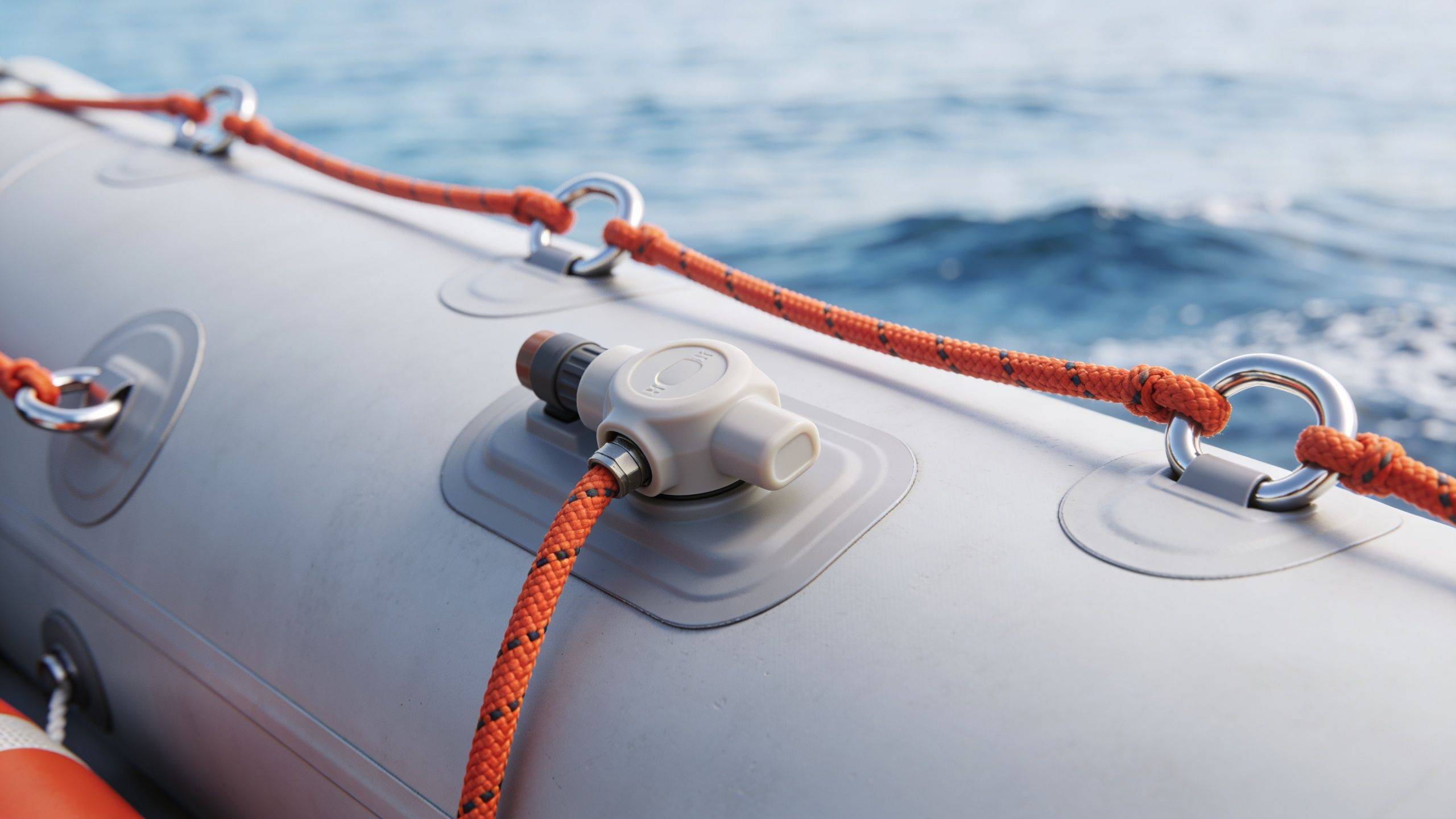
- Grab lines and solid carrying handles: These help with boarding, beach handling, passenger security, and man-overboard recovery.
- A floor and keel setup that keeps the boat predictable: Safe handling starts with a hull that tracks properly and stays composed when weight shifts.
- A transom built for the engine and operating load: Poor transoms create safety problems long before they create warranty claims.
If you are setting up a new boat, this guide to boat safety equipment for Australian boating is a practical starting point.
Standards and labels. Ask what they actually cover.
Buyers regularly see terms like SOLAS, rescue specification, or surf-rated style and assume they all describe the same level of capability. They do not. Some refer to formal standards. Some describe a style of boat. Some are just sales language.
The fix is simple. Ask direct questions and get direct answers.
- Is the boat intended for recreational use, rescue work, or both?
- How many air chambers are fully independent?
- What pressure range does the manufacturer specify, and how sensitive is the boat to underinflation?
- What operating load is the boat designed around?
- What fittings are included for safe use, not just convenience?
That last point matters for the Australian market. A boat-in-a-bag setup for RV or SUV travel needs more discipline than a boat that lives inflated on a trailer or davits. You need to know what must be fitted every trip, what can stay packed, and what tends to get forgotten when launch time is rushed.
Australian regulations are not one-size-fits-all
Rules vary by state, by waterway, and by how the boat is powered. A small tender used close to a mooring may be treated differently from a powered inflatable heading across an open bay. Add offshore use, night operation, or commercial work, and the requirements can change again.
Check the details before you buy, not after the first launch.
Use this short checklist:
- Confirm registration requirements for the hull and outboard in your state
- Check the compulsory safety gear for enclosed waters, coastal use, or offshore runs
- Make sure your lifejackets match the crew size, age range, and operating area
- Review licence requirements for the skipper
- Re-check the rules if your use changes from tender work to fishing, towing, or longer coastal trips
Owners get caught out here all the time. The boat itself may be suitable, but the planned use pushes it into a different regulatory category.
Safe boating starts before launch
Most avoidable problems show up on land. Underinflated tubes, loose fuel tanks, badly distributed loads, unsecured batteries, and missing safety gear are common issues. In hot Australian weather, pressure management matters even more. A boat inflated correctly at dawn can be over-pressured after hours in full sun, while a boat packed away damp and dirty will age faster than it should.
Good habits are simple. Inflate to the recommended pressure. Check every valve. Secure heavy gear low and central. Test the motor before departure. Review the weather, tide, and local ramp or beach conditions. For yacht owners, families, and travelling anglers using a portable inflatable, that routine is part of owning the boat properly.
Finding Your Perfect Inflatable A Buyer's Checklist
A family pulling up at a Gippsland ramp needs a very different boat from a yacht owner ferrying groceries ashore in the Whitsundays, or an RV traveller unpacking a boat from the back of an SUV on the Murray. That is why finding the right inflatable boat starts with your real use, your storage limits, and the way you boat in Australia.
Buyers often get distracted by length, horsepower, or the biggest discount. The better approach is simpler. Match the boat to the job, then check whether you can live with its weight, setup time, and storage footprint every trip.
For families who want easy, forgiving boating
Family buyers usually do best with a stable layout, predictable handling, and enough room for the gear that always comes along. A boat can look spacious online and still feel cramped once you add lifejackets, towels, lunch, and a couple of kids moving around.
Check these points before you buy:
- Boarding height: Easy in and out matters more than top speed for family use.
- Usable internal space: Tube diameter affects comfort and carrying room.
- Ride softness: A forgiving hull makes short bay runs and river cruising more pleasant.
- Shade options: In Australian summer conditions, a Bimini is often worth planning for early.
- Pack-up effort: If it is awkward to inflate, clean, dry, and store, it will get used less.
I often tell family buyers to size for the crew they will have in six months, not the crew they have on the first day. A boat that feels slightly generous is usually the better long-term choice.
For anglers who need a practical fishing platform
Fishing puts different demands on an inflatable. Stability at rest, sensible layout, easy launch access, and room for tackle matter more than polished brochure features.
Here is a useful way to sort the options:
| Angler priority | Best direction |
|---|---|
| Standing stability | Inflatable catamaran or a broad, stable hull |
| Quick pack-down | Portable inflatable with a floor system you can manage alone |
| Room for gear | Open layout with sensible storage options |
| Beach or shallow launch access | Lightweight hull that is easy to drag, launch, and recover |
Catamarans deserve a close look for lure casting, estuary work, and fishing with one other person. They carry their beam well and stay settled when weight shifts. The trade-off is that some anglers prefer a different layout if they need more conventional seating or a particular transom setup.
For yacht owners choosing a tender
Tender buyers should be ruthless about practicality. The right tender stores where it needs to store, launches without drama, and survives constant contact with pontoons, hull sides, and jetties.
Focus on what happens every day:
- Packed size or deck footprint: Measure the actual storage space first.
- Hull weight: Davit and foredeck handling get old fast if the boat is too heavy.
- Tube durability: Chafe protection matters on tenders.
- Transom support: Even a small outboard puts real load on the back of the boat.
- Boarding security: Guests, kids, and older passengers need an easy step across.
A tender that is slightly slower but easier to hoist is often the smarter buy. Owners use the boat that is easy to launch.
For rescue, support, and hard-use operators
Club boats, support craft, and hard-working inflatables should be judged on durability, layout, and readiness. Cheap fittings, thin materials, poor handle placement, and weak towing points show up quickly in this kind of work.
Look closely at:
- Tube material for UV and abrasion exposure
- Air chamber layout and redundancy
- Grab lines, carry handles, and towing hardware
- Deck grip and footing when the floor is wet
- How quickly the boat can be deployed and recovered
For regular surf, sun, and hard commercial-style use, premium materials and proven construction are worth paying for. The cheapest boat in the yard can become the most expensive one to own.
The shortlist test
Before you commit, run through these questions:
- Where will the boat live between trips. Garage, yacht deck, caravan storage box, or trailer?
- Who will set it up and launch it most often?
- Will you mostly carry people, camping gear, fishing gear, or dive gear?
- Do you want a true boat-in-a-bag setup, or are you happy with a trailer package?
- Are you using it on sheltered rivers and estuaries, or in mixed coastal conditions?
- How much sun exposure will it get when stored inflated?
That last point matters more in Australia than many buyers realise. Materials, covers, and storage habits have a big effect on service life.
The right inflatable rescue boat is the one that suits your workload, your crew, your vehicle, and your local conditions. Get those basics right, and the spec sheet becomes much easier to read.
The Easy Inflatables Advantage Your Partner in Adventure
Once you know what to look for, the shortlist gets much easier. You're not comparing vague promises anymore. You're comparing construction quality, material choices, hull design, support, and whether the package suits the way Australians really boat.
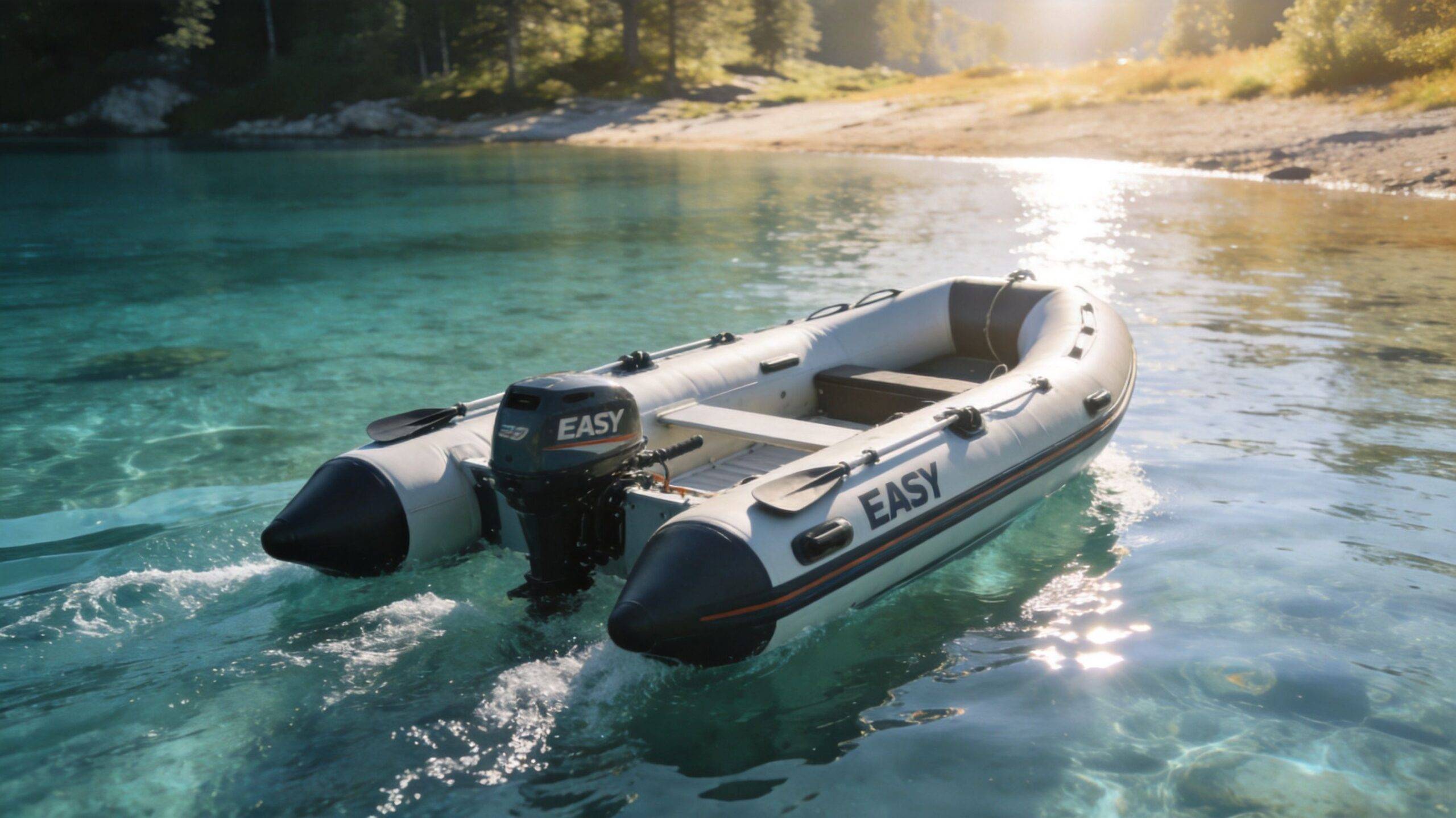
Easy Inflatables is built around that practical approach. The range is aimed at owners who want portable, lightweight performance without cutting corners on the fundamentals. That includes Aerowave inflatable boats, catamarans, RIBs, yacht tenders, kayaks, and accessories designed for family use, fishing, travelling, and tender duties.
Why the build spec matters
The material and construction details line up with what experienced buyers already know to check. Easy Inflatables offers premium 1.2mm 2000D German Valmex PVC or French Hypalon, with thermo-welded seams, double-stitched air-decks, and aluminium transoms as standard on key models.
That matters because Australian owners don't need a boat that only looks good on delivery day. They need one that handles repeated setup, salt exposure, beach use, and practical ownership without becoming delicate.
Turnkey rigs make life easier
A lot of buyers don't want to piece together a boat, outboard, pump, and accessories from multiple suppliers. They want a complete setup that works.
That's another strength here. Packages can include an Aerowave boat, a Hidea outboard, pump, bags, and useful accessories, which makes the path from purchase to first launch much simpler. It suits first-time buyers, but it's just as valuable for experienced owners who'd rather not waste time building a package from scratch.
Local support still counts
Being Australian-owned matters for a reason. Local after-sales support is easier. Warranty discussions are more direct. Advice is grounded in the way Australians use their boats, whether that's in coastal holiday towns, inland waterways, or as yacht tenders.
The result is a boating setup that feels more practical from the start. Better materials, sensible package options, and local backup remove a lot of the uncertainty that usually comes with buying an inflatable online.
Frequently Asked Questions About Inflatable Boats
Is it better to hire or buy an inflatable boat for family outings
If you only expect occasional holiday use, hiring can make sense. It lets you test the experience without committing to storage, setup gear, and ownership responsibilities.
Buying becomes the better option when you know you'll use the boat regularly, want your own layout and accessories, or need the flexibility to launch on your own schedule. Families who travel often, camp near water, or like spontaneous day trips usually get more value from owning the right inflatable.
Are inflatable catamarans good for fishing and family use
Yes, and often better than many first-time buyers expect. The main advantage is stability. An inflatable catamaran gives a very settled feel when people move around, board from shallow water, or stand to cast.
For anglers, that means a more comfortable platform. For families, it means easier boarding and less side-to-side drama when everyone shifts at once. They're especially attractive for buyers who want portability but don't want the twitchier feel some narrow boats can have.
How much maintenance does an inflatable rescue boat need
Less than many people think, but regular care still matters. Rinse salt off after use. Let the boat dry before long-term storage. Keep an eye on valves, seams, rubbing areas, and the transom connection. If the boat is packed away damp for too long, problems follow.
For longer life, store it clean, out of harsh exposure when possible, and avoid dragging it unnecessarily across rough ground.
What's the first sign of a poor-quality inflatable
Usually, it's not a dramatic failure. It's the small stuff. Hardware feels flimsy, seams look inconsistent, the floor fit is sloppy, or the transom area doesn't inspire confidence.
Those warning signs usually tell you the builder has compromised elsewhere too. If you need help once the boat is in service, a proper inflatable boat repair resource is useful to have on hand.
Can a portable inflatable still be a serious boat
Absolutely, if it's built properly and matched to the job. Portability doesn't mean fragility. The primary question is whether the materials, chamber layout, hull design, and transom construction are up to the conditions you'll use it in.
That's why the best buyers start with use case, not marketing language. A portable boat can be a very capable fishing platform, family runabout, yacht tender, or support craft when the fundamentals are right.
If you're ready to choose an inflatable that suits Australian conditions, Easy Inflatables is a strong place to start. You'll find portable tenders, inflatable catamarans, RIBs, fishing-ready packages, and practical advice backed by local support, so you can buy with confidence and spend more time on the water.
Shop gear featured in this guide
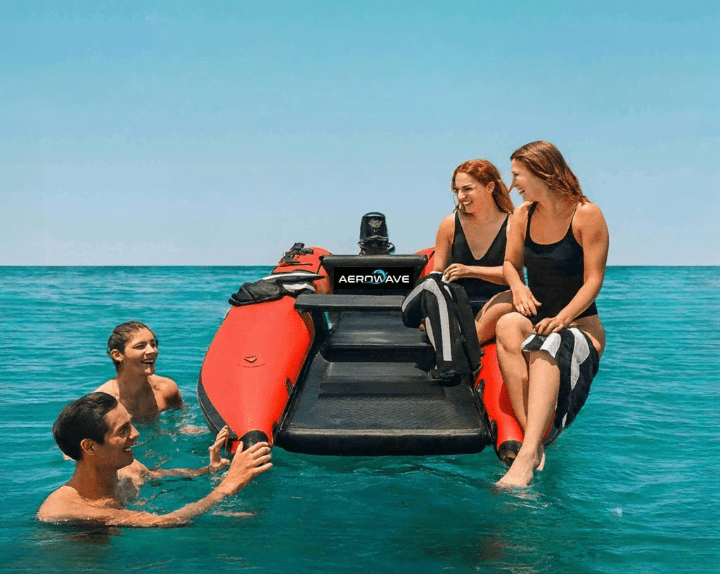
Aerowave WaveRunner 380 Series 3 Catamaran Package
The WaveRunner 380 Series 3 is a premium 3.8m inflatable catamaran package built for Australian families, fishing, and coastal day boating — ideal for snorkeling and spearfishing — offering serious stability and premium German Valmex® construction.
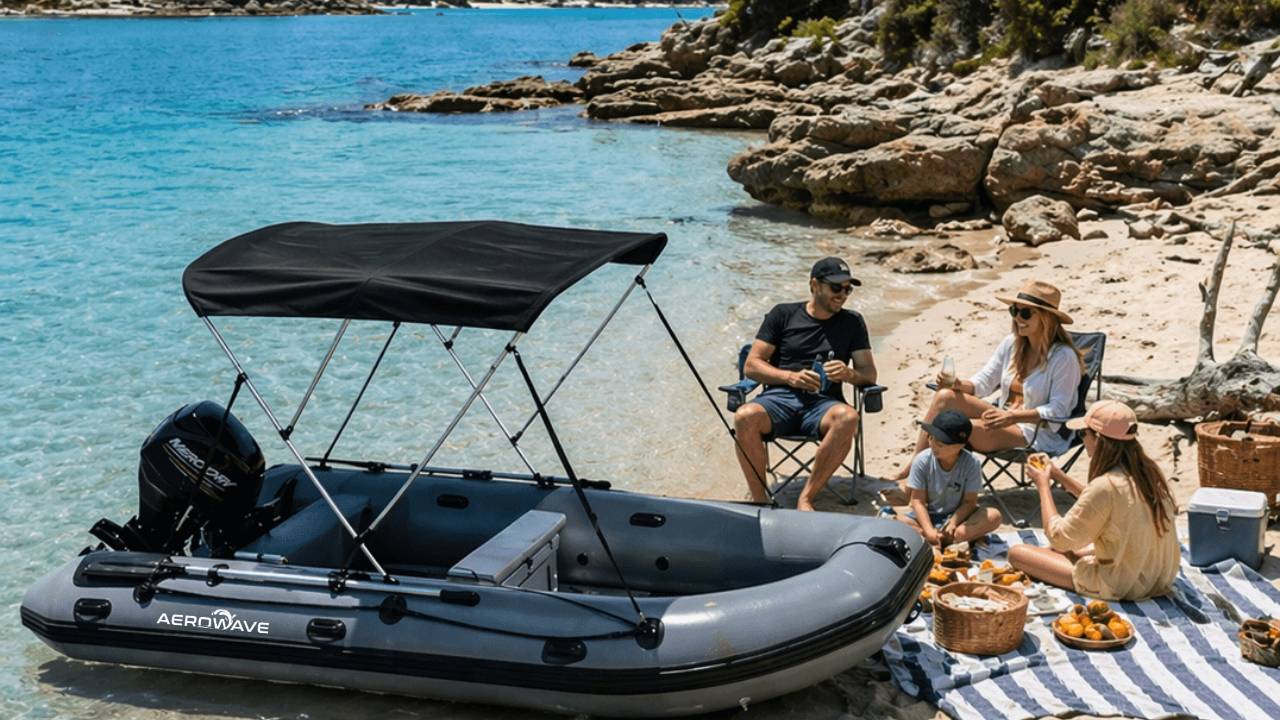
Aerowave Viper 400 Sovereign
Flagship 4m enclosed-bow inflatable catamaran. German VALMEX® 7321 Heavy Plus 1.2mm commercial-grade fabric, 8-10 PSI maximum air deck, LockPro wheels, full Bimini and FREE express delivery Australia-wide delivery included. Winter special — save $1,000 until 31 August 2026.
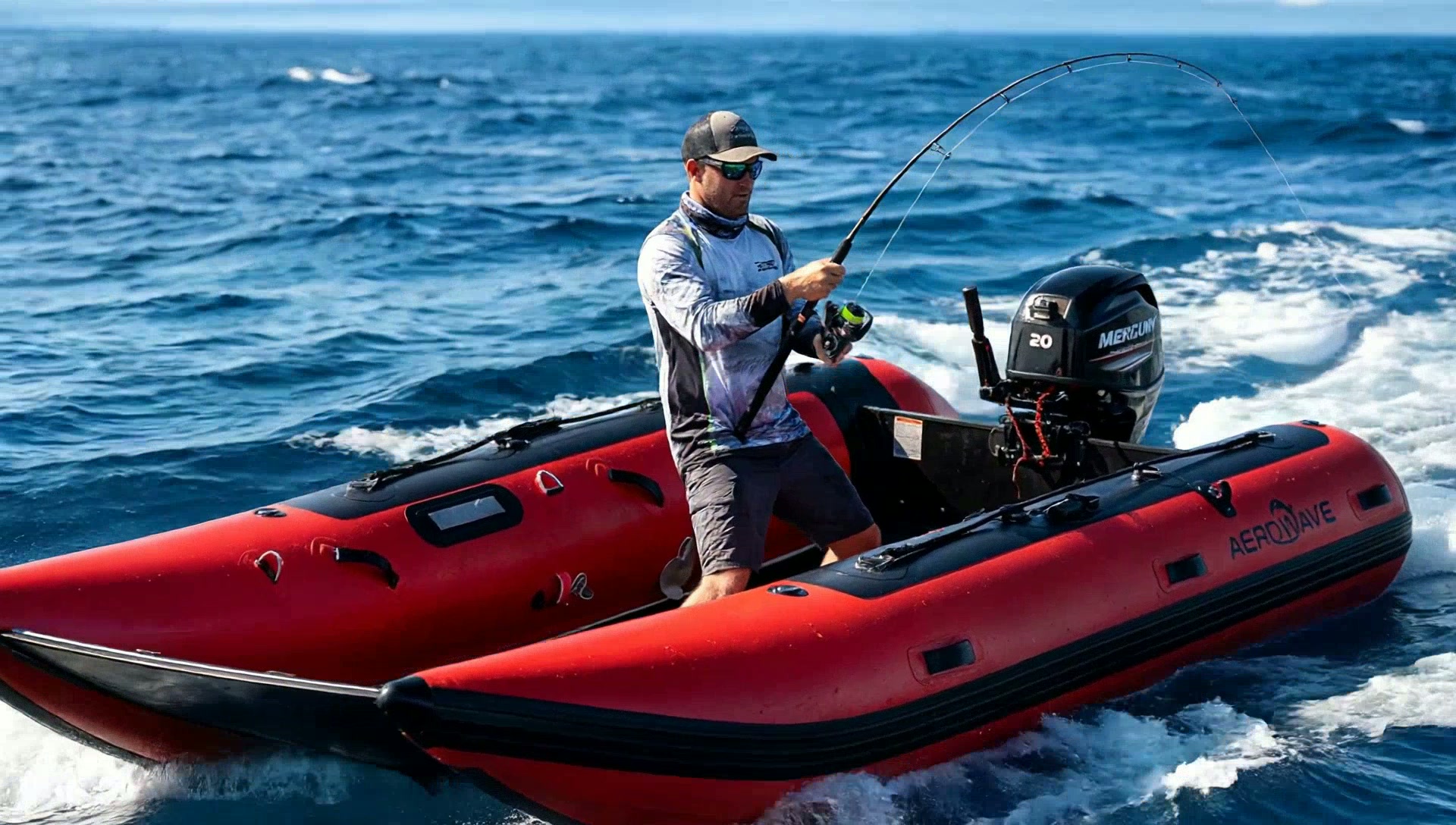
AeroWave AeroCat 360 Inflatable Catamaran
Same proven hull design, shape and look as our flagship Aerowave Viper catamarans — built lighter using 0.9mm Valmex® fabric instead of the Viper's 1.2mm. The AeroWave AeroCat 360 is our 3.6m inflatable catamaran built from 0.9mm Valmex® fabric — intentionally lighter than our 1.2mm Viper hulls so it folds smaller, packs lighter and is easy to handle solo. Twin-hull stability, 5-Year Australian Warranty and priced ~$500 below comparable 0.9mm imports.
Not sure which suits you? Talk to a real boat owner.
Ready to set sail?
Premium German-fabric inflatable catamarans with FREE Sea Freight or Express Air Delivery — your choice at cart. Talk to our team or browse the fleet.
Like this guide? Get the next one in your inbox.
Owner-tested tips, gear deep-dives and Aussie boating know-how — no spam.