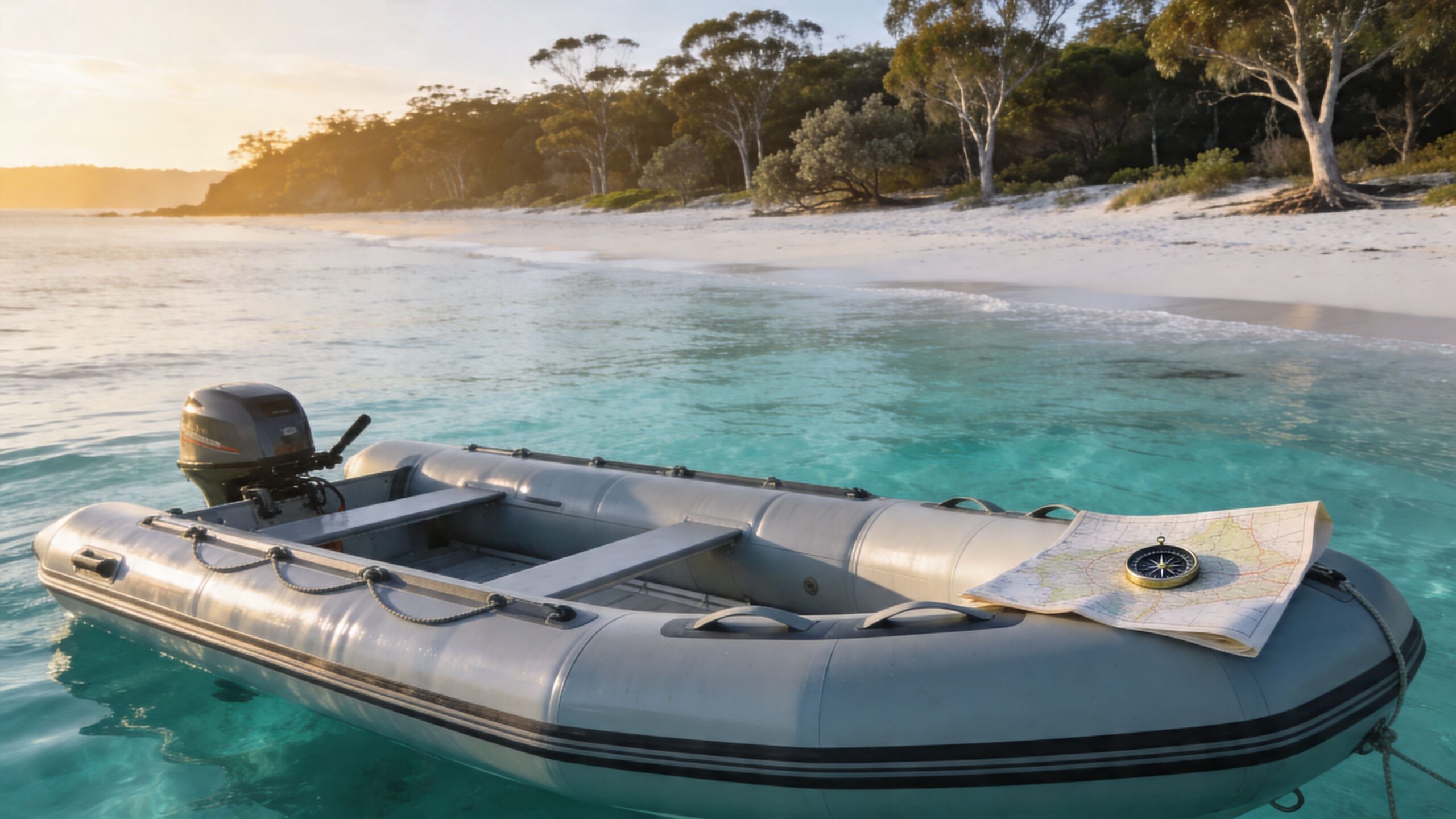
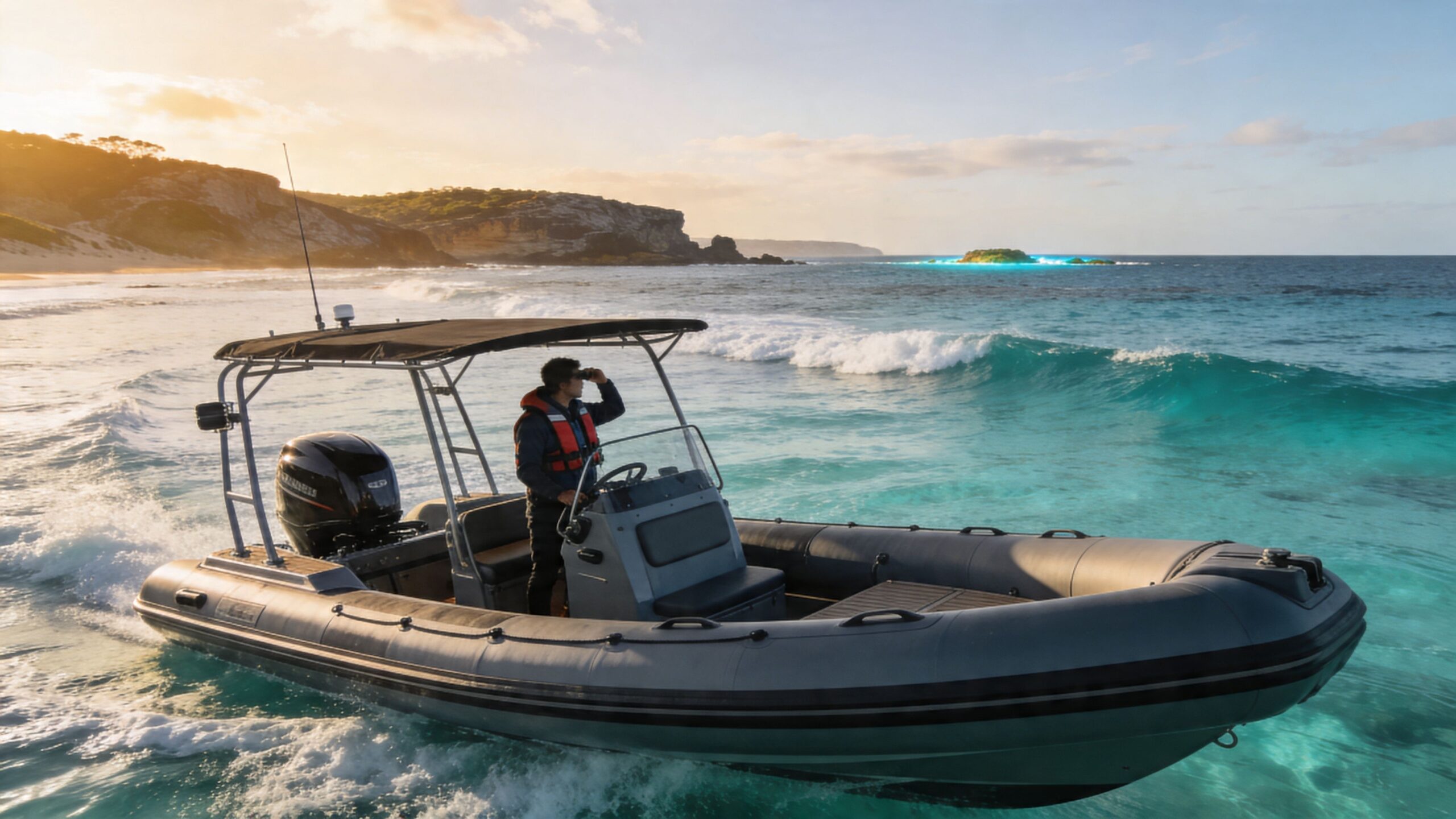

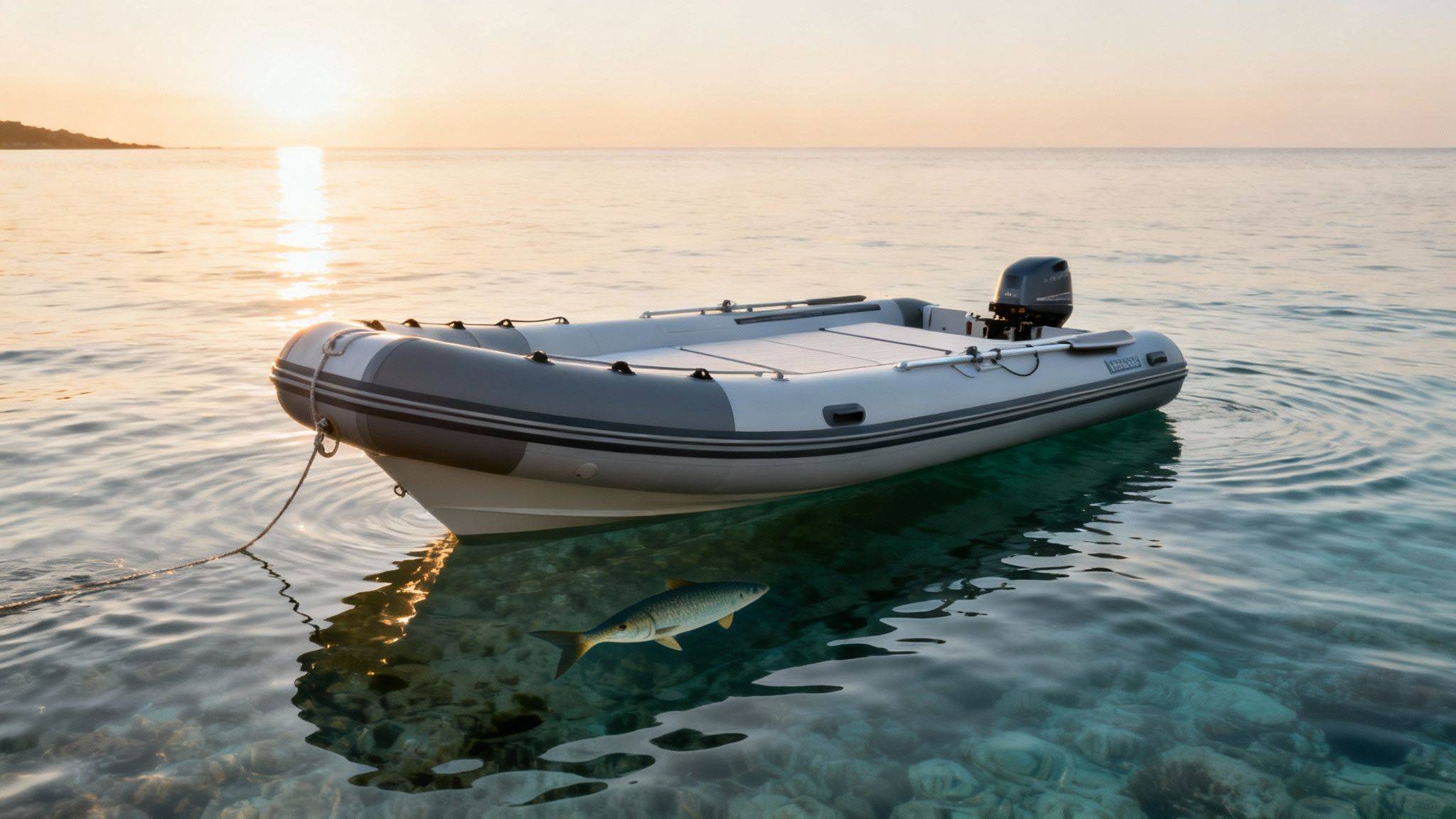
If you’re looking to explore Australia’s incredible waterways, inflatable boats are one of the most accessible and versatile ways to get out there. The options are huge, from compact models perfect for solo fishing trips to larger vessels built for a full day of family fun. The best choice really comes down to what you need—whether it’s a tough Rigid Inflatable Boat (RIB) for coastal adventures or a portable soft-hull you can chuck in the back of the car.
Welcome to the exciting world of inflatable boats! These vessels are your ticket to discovering everything from serene inland rivers to stunning hidden coves along the coast. Their popularity isn’t a fluke; it’s a testament to their incredible flexibility and ease of use, making them a top choice for seasoned boaters and total beginners alike.
This growing interest has turned the Australian inflatable boat market into a significant industry, recently valued at $25 million. It’s clear that Aussies have embraced the freedom and fun that these boats offer. You can find more details on this trend over at IndexBox.
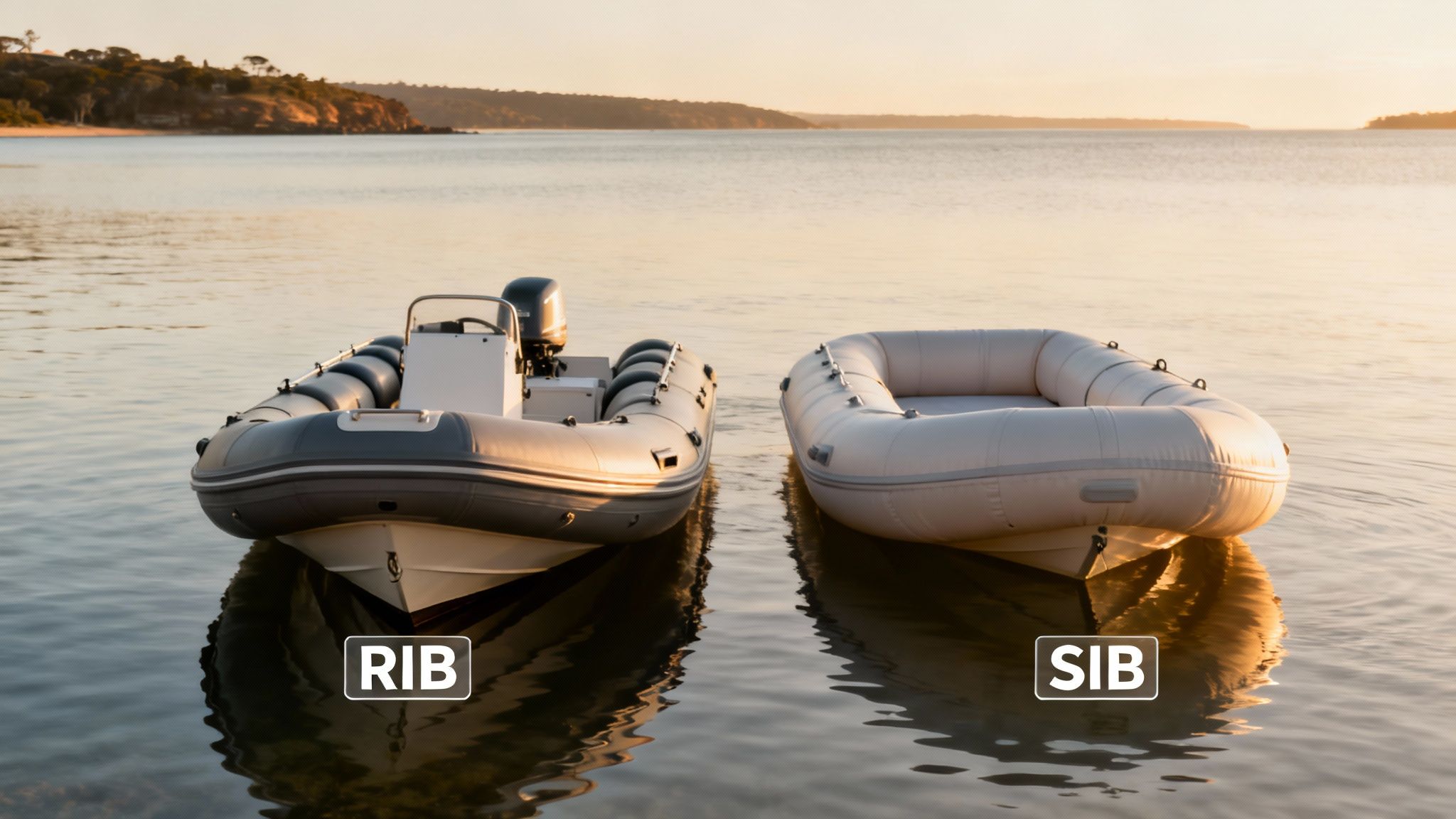
Thinking about inflatable boats is a bit like choosing between a rugged 4WD and a convenient city car. Both will get you places, but they’re built for completely different journeys. The two main categories you’ll come across are Rigid Inflatable Boats (RIBs) and Soft Inflatable Boats (SIBs).
To make it even clearer, here’s a quick breakdown to help you match the boat type to your adventure plans.
| Boat Type | Common Name | Key Feature | Best For |
|---|---|---|---|
| Rigid Inflatable Boat | RIB | Solid hull with inflatable tubes | Ocean cruising, choppy water, high-speed performance |
| Soft Inflatable Boat | SIB | Fully collapsible and portable | Calm rivers, lakes, camping trips, easy transport |
Choosing between a RIB and a SIB really just depends on where you plan to go and how you want to get there.
The appeal of inflatable boats goes far beyond their simple construction. They offer a unique mix of benefits that traditional boats often can’t match.
For many Australians, the true value of an inflatable boat lies in its freedom. It’s the ability to decide on a Friday to explore a remote beach on Saturday, pack the boat in the car, and just go.
This convenience is backed by seriously impressive on-water performance. Modern inflatables are built from tough materials like advanced PVC or Hypalon, giving them excellent durability and safety.
Before you head out, it’s always smart to get familiar with the essentials. You can learn more about this in our article on inflatable boat setup tips for safety. Understanding these basics is the first step toward countless memorable days on the water.
What separates an inflatable boat that lasts a couple of seasons from one that serves you faithfully for over a decade? It all comes down to its DNA—the materials it’s made from and the quality of the craftsmanship. If you know what to look for, you can see past the flashy marketing and truly understand the value and longevity of any boat you’re considering.
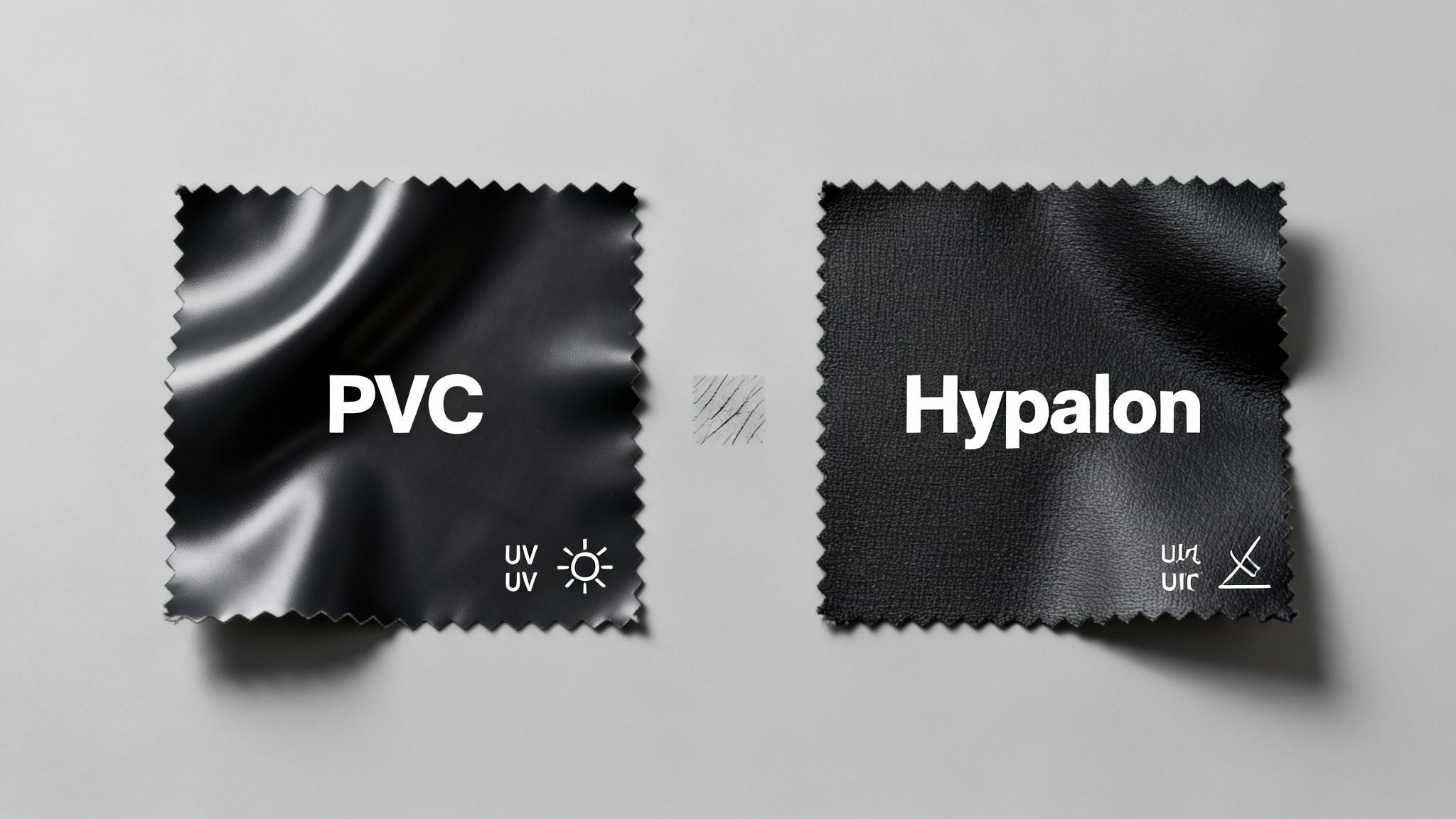
At the heart of every inflatable are high-tech fabrics engineered to be both airtight and incredibly tough. The two main players you’ll come across are Polyvinyl Chloride (PVC) and Hypalon (a brand name for a type of synthetic rubber).
Think of it like choosing a high-performance rain jacket. A basic plastic poncho will keep you dry in a light shower, but a premium GORE-TEX jacket offers superior durability and protection in a serious storm. Inflatable boat fabrics work on a similar principle: PVC is the versatile, reliable poncho, while Hypalon is the premium, expedition-grade shell.
PVC is the most common material you’ll find in recreational inflatable boats, and for good reason. It’s affordable, relatively lightweight, and can be manufactured with thermo-welded seams. This process creates an incredibly strong molecular bond that’s often even stronger than the fabric itself.
This makes PVC a fantastic choice for most boaters, especially if you’re looking for a portable, wallet-friendly option for weekend adventures on lakes, rivers, and calm coastal bays. Modern, high-quality PVC, like the German-made Valmex fabric, offers excellent performance and durability for its price.
The main trade-off? PVC’s biggest weakness is long-term exposure to ultraviolet (UV) radiation. Over many years, the intense Australian sun can break down the plasticisers in the material, eventually making it brittle.
Hypalon is the gold standard in inflatable boat fabrics, hands down. It’s a synthetic rubber coating that is exceptionally resistant to just about everything: UV rays, extreme temperatures, chemicals, and abrasion. This incredible toughness is why it’s the go-to material for commercial, military, and rescue boats that have to perform in the harshest conditions imaginable.
While it costs a fair bit more, a Hypalon boat is a true long-term investment. With proper care, these boats can easily last 15 years or more, even under the punishing Australian sun. Unlike PVC, Hypalon seams can’t be welded; they must be meticulously glued by hand, a process that speaks to the premium, hands-on nature of the material.
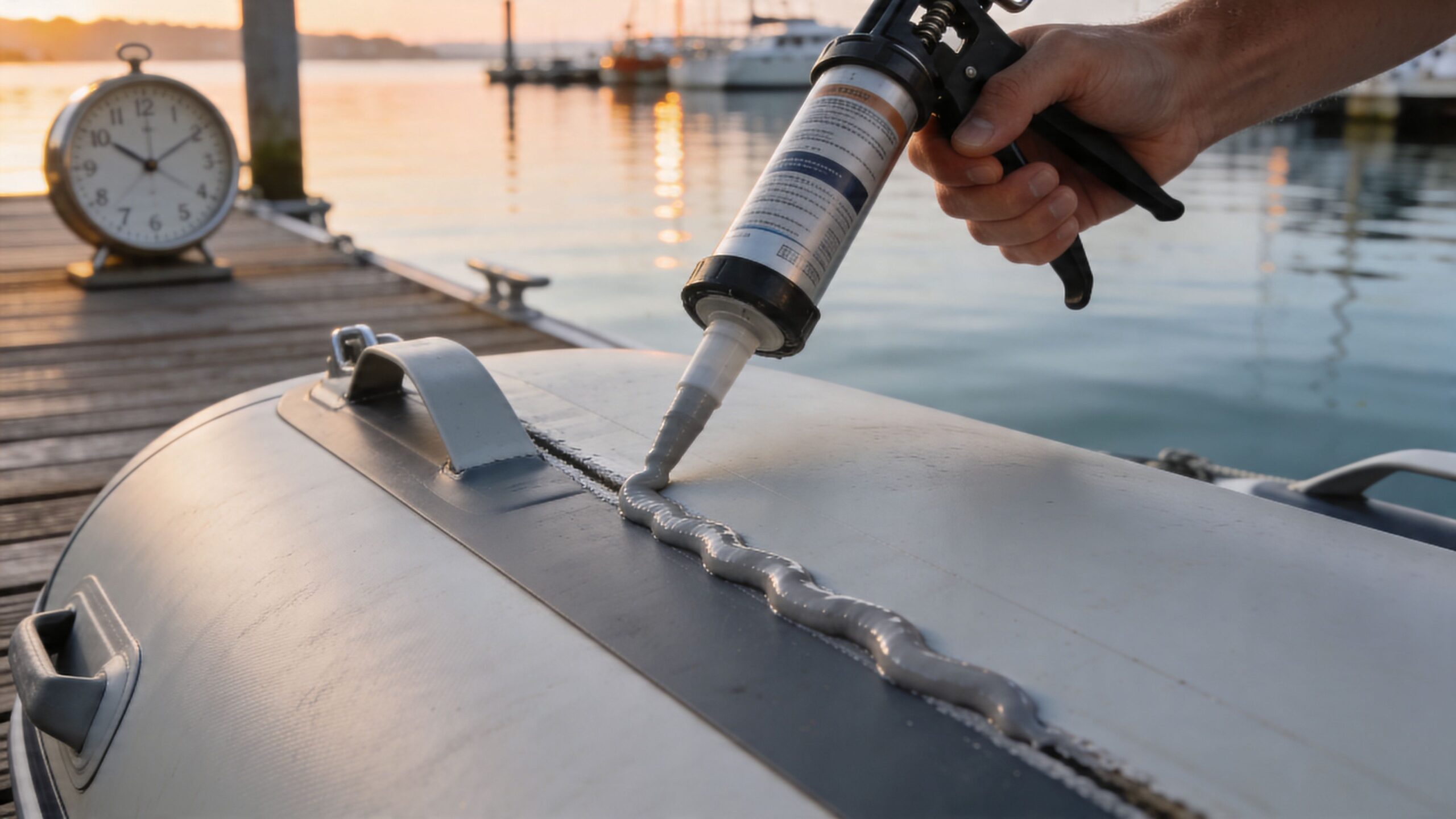
A boat’s construction quality is often revealed in its seams. A well-made boat, whether glued or welded, will have clean, consistent seam lines with no signs of excess adhesive or uneven edges. This small detail is a powerful clue about the manufacturer’s commitment to quality.
How the fabric panels are joined together is just as important as the fabric itself. This is where the boat’s structural integrity is forged, and it’s not something to overlook.
There are two main methods for joining the panels:
When you’re inspecting any inflatable boat, run your fingers along the seams. They should feel smooth and solid, with no peeling edges or messy glue lines. This simple check can tell you a lot about the boat’s overall build quality.
For a deeper dive into these materials, you can explore the benefits of Hypalon vs German Mehler 1.2mm PVC material in our detailed guide. Choosing the right fabric is the first big step toward finding a reliable boat that will give you years of adventures.
Picking the right inflatable boat isn’t about the price tag or a long list of features. It’s about matching the boat to your life, your plans, and the water you want to explore. A boat that’s perfect for solo fishing trips on a calm lake could be all wrong for a family day out on a choppy coastal bay.
Think of this as your guide to asking the right questions. By thinking through how you’ll actually use your boat, you can figure out what really matters and find the perfect vessel for your adventures.
First things first: what are you going to be doing most of the time? A boat designed for towing a tube is built differently from one made for quiet angling. Answering this honestly is the key to getting a boat you’ll love.
Think about your go-to activities:
And Aussies love getting out on the water. In fact, Australia stands out in the global market, with over 120,000 soft hull inflatables sold for water sports in recent years alone. That’s a lot of people enjoying everything from fishing to family cruising.
Where you plan to boat is just as important as what you plan to do. The difference between a sheltered estuary and open coastal waters is huge, and your boat has to be up for the challenge.
Next up are the practicalities. How many people will you typically have on board? Always check the manufacturer’s capacity plate and never, ever exceed it. Remember that “capacity” isn’t just people—it includes the engine, fuel, and all your gear.
Storage is the other big one. Got a garage and a vehicle that can tow a trailer? A larger RIB is a fantastic option. If you’re in an apartment or need to pack your boat into the back of an SUV, a fully collapsible SIB is the clear winner. The “boat-in-a-bag” concept is one of the biggest perks of going inflatable.
To make things a bit clearer, here’s a quick guide to matching boat features to common activities around Australia.
This table compares key boat features like hull type, size, and material against popular recreational activities in Australia to help you find the best match.
| Activity | Recommended Hull Type | Ideal Size Range (Metres) | Preferred Material | Key Considerations |
|---|---|---|---|---|
| Family Cruising (Sheltered) | Flat Bottom or V-Hull SIB | 3.0m – 4.2m | High-quality PVC | Stability, seating space, optional bimini for sun protection. |
| Coastal Exploration | Deep V-Hull RIB | 3.5m – 5.0m+ | Hypalon or PVC | Seaworthiness in chop, higher horsepower rating, fuel capacity. |
| Freshwater Fishing | Flat Bottom or Catamaran | 2.7m – 3.8m | Heavy-duty PVC | Casting stability, space for tackle, option for electric motor. |
| Tender for a Yacht | Small RIB or Air Deck SIB | 2.4m – 3.0m | PVC with rubbing strakes | Lightweight for lifting, durable rubbing strips, compact storage. |
| Watersports (Tubing/Skiing) | Rigid V-Hull RIB | 4.0m+ | Hypalon or premium PVC | Strong transom, high horsepower capacity (40hp+), secure grab lines. |
Ultimately, the best boat is the one that ticks the most boxes for your specific needs. Use this table as a starting point to narrow down what’s most important for your adventures.
Finally, don’t forget the local regulations, which vary from state to state in Australia. Generally, if you plan on putting a motor on your boat, you’ll need to register it and get yourself a recreational boat licence.
A boat licence isn’t just a bit of paper. It ensures you understand the fundamental rules of the water, from navigation lights to right-of-way protocols. It’s a crucial step in becoming a responsible and safe boat owner.
Always check with your local maritime authority (like NSW Maritime or Maritime Safety Queensland) for the specific rules on licensing, registration, and the safety gear you need for your boat’s size and engine power. Choosing the right motor is a big decision, and you can learn more by checking out our guide on selecting an engine for your inflatable boat. When you’re deciding on a boat, it’s smart to apply the same critical thinking you’d use for any important gear, examining the principles for choosing durable materials and quality design to make sure you get a product that’s built to last.
Alright, you’ve figured out what type of inflatable boat you need. Now for the fun part: finding one. Whether you’re looking for the best inflatable boats for recreational use available near you or want to compare prices and features, Australia has a fantastic market. The options range from sprawling online marketplaces to specialist local dealers who live and breathe this stuff.
Knowing where to look is half the battle. The other half is knowing what to look for to get a great vessel at a fair price. Think of the search as part of the adventure—whether you’re after a shiny new model with all the bells and whistles or a pre-loved boat ready for its next chapter.
Your hunt for the perfect inflatable can take you to a few key places, both online and in the real world. Each has its pros and cons, so it pays to explore a mix of options to see what’s out there.
This diagram helps break down how to narrow your choice based on what you’ll be doing, where you’ll be doing it, and how you plan to store it.
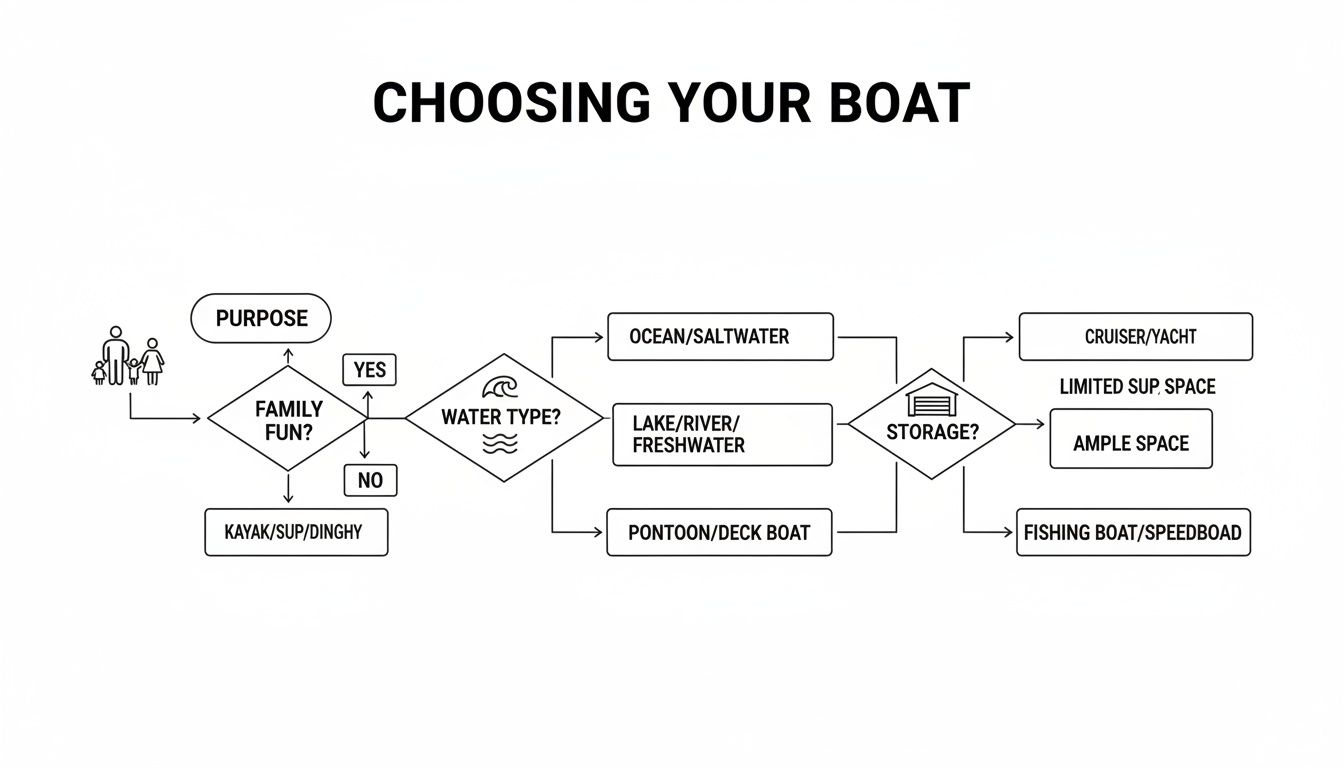
As you can see, matching the boat’s design to your main activities and the local conditions is the surest way to a purchase you’ll be happy with for years to come.
One of the smartest things you can do is hire an inflatable boat for a day. It’s the ultimate “try before you buy” experience, giving you real-world insights that no online review ever could. You might discover that a certain size is a bit too snug for your family, or that you much prefer the solid feel of a RIB over a SIB.
If you’re looking to hire inflatable boats for a family outing in Australia, numerous companies along the coastline and near major waterways offer this service. Popular locations like Sydney Harbour, the Gold Coast Broadwater, and the Whitsundays have multiple rental operators. A quick search for “inflatable boat hire + [your location]” will show you the best local options for a hassle-free day on the water without the commitment of owning.
Buying secondhand can save you a serious amount of cash, but it does require a bit of homework. A thorough inspection can uncover potential problems that could turn your great deal into a costly headache down the track.
When you’re looking over a used boat, zero in on the seams and the transom. These are the high-stress areas where wear and tear, delamination, or dodgy repairs will show up first. They tell the true story of the boat’s history and condition.
Here’s a practical checklist to run through:
With this knowledge in your back pocket, you’re ready to find your ideal boat. For a closer look at some top-rated models, check out our guide to the best inflatable boats in Australia, which breaks down specific options available right now.
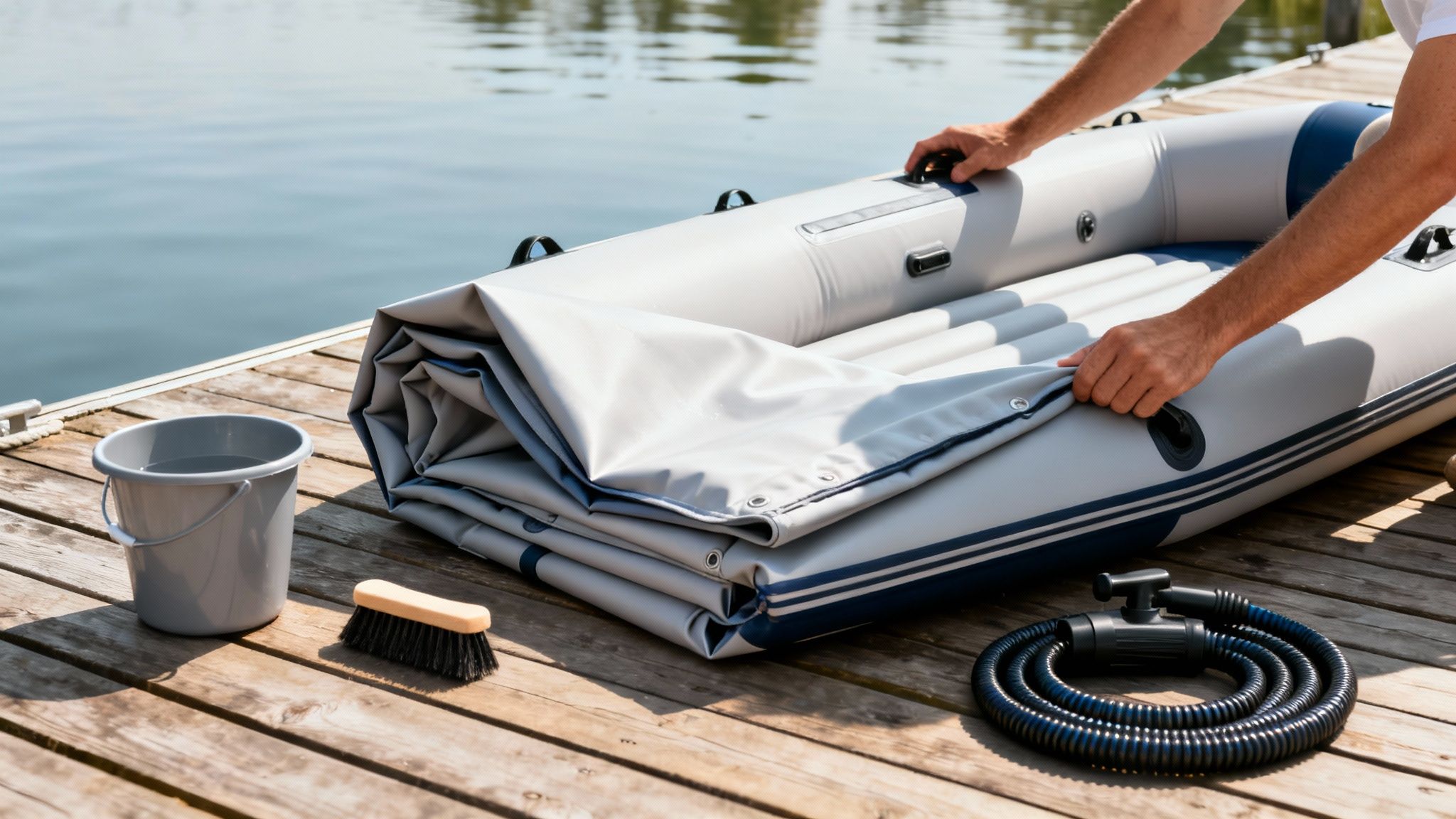
A well-cared-for inflatable boat isn’t just a vessel; it’s a reliable partner for your adventures. Like any good bit of gear, it performs best when you give it consistent attention. Simple, routine maintenance is the absolute key to protecting your investment, making sure your boat lasts for years and is always ready when the water calls.
This isn’t about complicated mechanical work. It’s about building easy habits that stop the common enemies of inflatables—salt, sun, and moisture—from causing long-term damage. Following these steps will dramatically extend your boat’s lifespan and keep it looking its best.
After every trip, especially in saltwater, a thorough clean is non-negotiable. Salt is incredibly corrosive and, if left to dry, will slowly eat away at the fabric, glue, and accessories. Think of it like washing road salt off your car in winter; it’s a simple action that prevents serious decay down the line.
Just follow this simple five-step process:
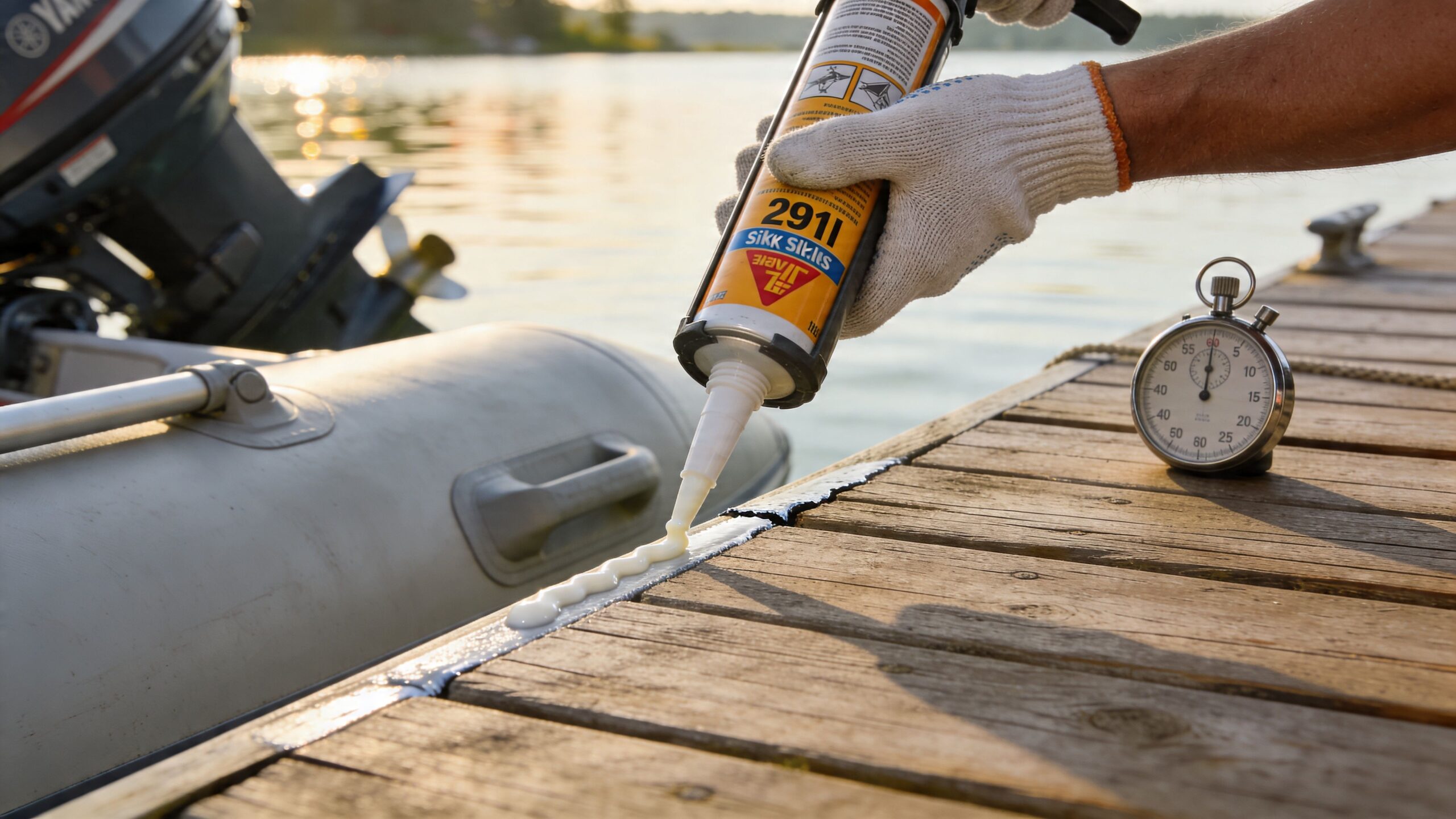
Discovering a slow leak is a common part of owning an inflatable boat, but it’s usually an easy fix. Honestly, the hardest part is often just finding the tiny puncture.
To locate a leak, mix some dish soap and water in a spray bottle to create a bubbly solution. Inflate the boat to its recommended pressure and spray the solution over the tubes, paying close attention to the seams and around the valves. Any escaping air will create a cluster of bubbles, pinpointing the source of your leak.
Most small punctures (pinholes or tiny cuts) can be easily handled with a quality patch kit designed for your boat’s material (PVC or Hypalon). A good patch job is a permanent solution, not just a temporary fix.
For more complex issues or larger tears, it’s often best to call in the professionals. You can find expert advice and services by looking up local specialists who handle inflatable boat repairs to ensure the job is done right.
How you store your inflatable boat has a massive impact on its lifespan. Improper folding can create permanent creases that weaken the fabric, while prolonged sun exposure is the fastest way to degrade PVC or Hypalon.
Follow these storage best practices:
Of course, looking after your gear extends beyond the boat itself. For anglers, this includes learning the best practices for maintaining your fishing reels to keep them casting smoothly. By adopting these simple maintenance habits for all your gear, you ensure every part of your setup is in top condition and ready for your next trip out.
As we wrap things up, let’s tackle a few of the questions that always pop up for people new to the world of inflatable boats. Getting straight answers is the best way to feel confident about choosing, owning, and getting the most out of your boat. These are the key queries we hear from adventurers just like you.
Absolutely. A lot of modern inflatables, especially Rigid Inflatable Boats (RIBs), are engineered from the ground up to be brilliant performers in ocean conditions. The big inflatable tubes wrapped around the hull give them incredible buoyancy and stability, making them surprisingly capable when the water gets a bit choppy. They pretty much act like giant shock absorbers, softening the ride and keeping the boat steady.
But remember, safety is never just about the boat—it’s about making smart calls. That means always choosing a boat rated for open water, carrying all the mandatory safety gear (life jackets, flares, a marine radio), and, most importantly, checking the marine weather forecast before you even think about heading out. While a tough RIB can handle a lot, the smaller, flat-bottomed inflatables should definitely stick to calmer, more protected waters like estuaries, rivers, and lakes.
How long an inflatable boat lasts really boils down to two things: what it’s made of and how well you look after it.
A high-quality Hypalon boat, with its top-notch resistance to UV rays and scrapes, can easily last 15 years or more if it’s properly cared for. On the flip side, PVC models generally have a shorter life, typically somewhere in the 5 to 10-year range. The intense Aussie sun is the biggest enemy for both materials, no question.
Think of a boat cover as sunscreen for your vessel. Using one consistently is the single best thing you can do to protect the fabric from UV damage. It will dramatically extend its life and preserve its value, whether it’s PVC or Hypalon.
Hitting it with a specialised UV protectant spray a few times a season also makes a huge difference in stopping the fabric from getting brittle and faded over time.
This is a big one, and the answer hinges entirely on the motor you put on the back. Boating rules vary a little from state to state here in Australia, but there’s a general rule of thumb that applies almost everywhere.
If your boat has any kind of motor and can hit 10 knots (about 18.5 km/h) or more, you will almost certainly need a recreational boat licence. For instance, in key states like New South Wales and Queensland, a licence is mandatory for any vessel with an engine, no matter its size or speed.
Before you launch, it’s completely on you to check with your local maritime authority—like Transport for NSW (Maritime) or Maritime Safety Queensland—to get the exact rules on licensing, registration, and safety gear for your area. Don’t get caught out.
This is where soft-hull inflatable boats (SIBs) are in a league of their own—portability is their superpower. Most are cleverly designed to be deflated, rolled or folded into a surprisingly small carry bag, and tucked away in the boot of a car, a caravan, or a cupboard at home.
The whole process of getting a medium-sized SIB from the car to fully inflated and water-ready can be done by one or two people in about 15-20 minutes with a decent electric pump. This incredible convenience means you don’t need a trailer, a tow vehicle, or even a boat ramp. It’s this “boat-in-a-bag” freedom that makes inflatables the perfect choice for anyone with limited storage, or for those who love the spontaneity of exploring a new waterway whenever the mood strikes.
Ready to start your on-water adventure with a vessel that matches your lifestyle? At Easy Inflatables, we specialise in high-quality, durable, and portable inflatable boats designed for Australian conditions. Explore our range of customisable boats and complete packages, and find the perfect setup for your next fishing trip, family outing, or coastal exploration. Visit us online to learn more and take advantage of our Australia-wide shipping.