Stable Inflatable Boat Australia: Top 2026 Guide
You’re usually looking at inflatable boats for one reason. You want an easy way onto the water without trailer drama, heavy storage demands, or the hassle of launching a hard hull just to fish a bay, run the kids to a be…
At a glance
You’re usually looking at inflatable boats for one reason. You want an easy way onto the water without trailer drama, heavy storage demands, or the hassle of launching a hard hull just to fish a bay, run the kids to a be…
- Why Stability is the First Thing to Look for in an Inflatable Boat
- Why this matters more in Australia
- What stable feels like on the water
- The Science of a Stable Inflatable Boat Hull
What we'd put you in
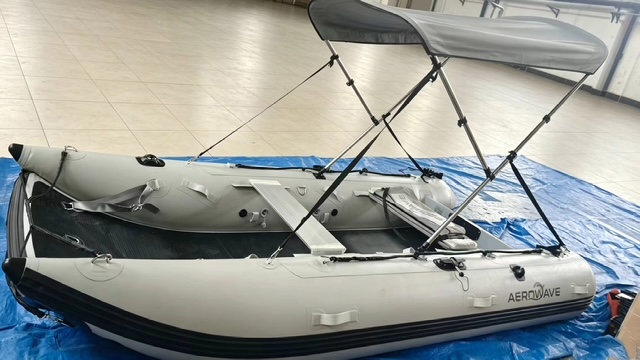
Aerowave Viper 400 Sovereign
Our best-selling boat: 4.0 m, 1.2 mm VALMEX hull, 7-year hull warranty.
US$3,167 USD
Delivered to your door, today's rate
- Free freight to United States · local taxes payable on arrival
- 7-year hull warranty
🇺🇸 Shipping to United States · landed price quoted in writing
Yes — we ship the Aerowave Viper 400 Sovereign to United States. Here's the landed price.
Our best-selling boat: 4.0 m, 1.2 mm VALMEX hull, 7-year hull warranty.
Written for Australian readers — but the boat ships to you. We are an Australian builder and this article is written from Australian waters. That changes nothing about what you can order: the same hull, the same 7-year warranty and the same certification go out to United States every week.
Aerowave Viper 400 Sovereign
- Boat package (export price)
- US$3,726
- 15% tariff relief credit
- − US$559
- Express air freight to United States
- Included
- Import duty, taxes & customs clearance
- Payable on arrival
- Estimated landed, USD
- US$3,167
Indicative, converted at today's rate, before local duty and tax on arrival. Ask below and we'll put a fixed figure in writing, valid 30 days.
- 7-year hull warranty
- 1500 GSM / 1.2 mm VALMEX® Heavy Plus hull
- CE certified to ISO 6185-3 and EU Directive 2013/53/EU
- Door-to-door, tracked the whole way
Your price, delivered to your door — freight included.
We email the full PDF quote (spec, freight, finance, WavePay) to your inbox in under 60 seconds. No spam — one quote, one follow-up.
See it for yourself
Real boats. Real owners. Real people behind them.
Plenty of what you read online these days is generated. Check us out properly — the factory, the reviews and the owners are all one click away. Why we use AI, and how to check we’re real
How our boats are built
Walk the production line: thermo-welded seams, 1.2 mm VALMEX Heavy Plus hulls, over-pressure relief valves on every chamber.
See the buildGoogle Maps reviews
Real Australian owners, five stars, published on our Google Business Profile with the map — read them there, not just on our own site.
Open Google Maps reviewsOwner stories
Boats in use — offshore, on rivers, on rescue duty. Photos and words from the people who actually own them.
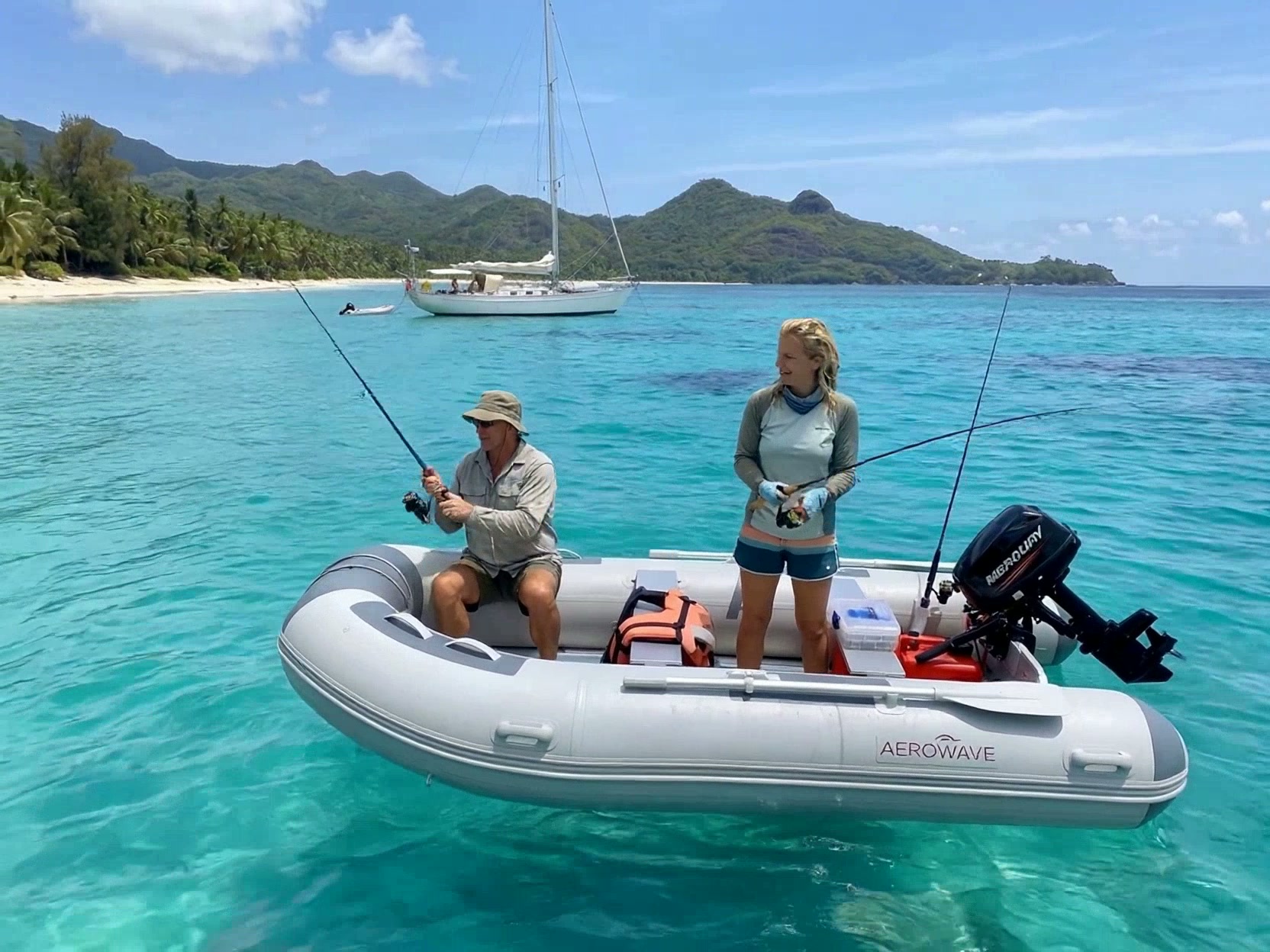
Read owner storiesYou’re usually looking at inflatable boats for one reason. You want an easy way onto the water without trailer drama, heavy storage demands, or the hassle of launching a hard-hull just to fish a bay, run the kids to a beach, or explore a creek for half a day.
That’s exactly where most buyers get distracted by the wrong features. They focus on packed size, motor rating, or the sales pitch around speed. In Australian conditions, the thing that changes whether you enjoy the boat is much simpler. It has to feel planted under you when the breeze picks up, when someone shifts their weight, and when chop starts bouncing back off a shoreline.
A good stable inflatable boat australia buyers can rely on isn’t just one that floats. It’s one that stays predictable. That matters far more than flashy specs.
Why Stability is the First Thing to Look for in an Inflatable Boat
A stable boat makes everything easier. Boarding from a beach is easier. Standing up to cast is easier. Moving a child, tackle box, esky, or fuel tank without the whole boat lurching sideways is easier.
That sounds obvious, but plenty of buyers still treat stability like a bonus feature. It isn’t. On local waters, it’s the difference between a boat you use all the time and one that feels a bit too twitchy once the novelty wears off.
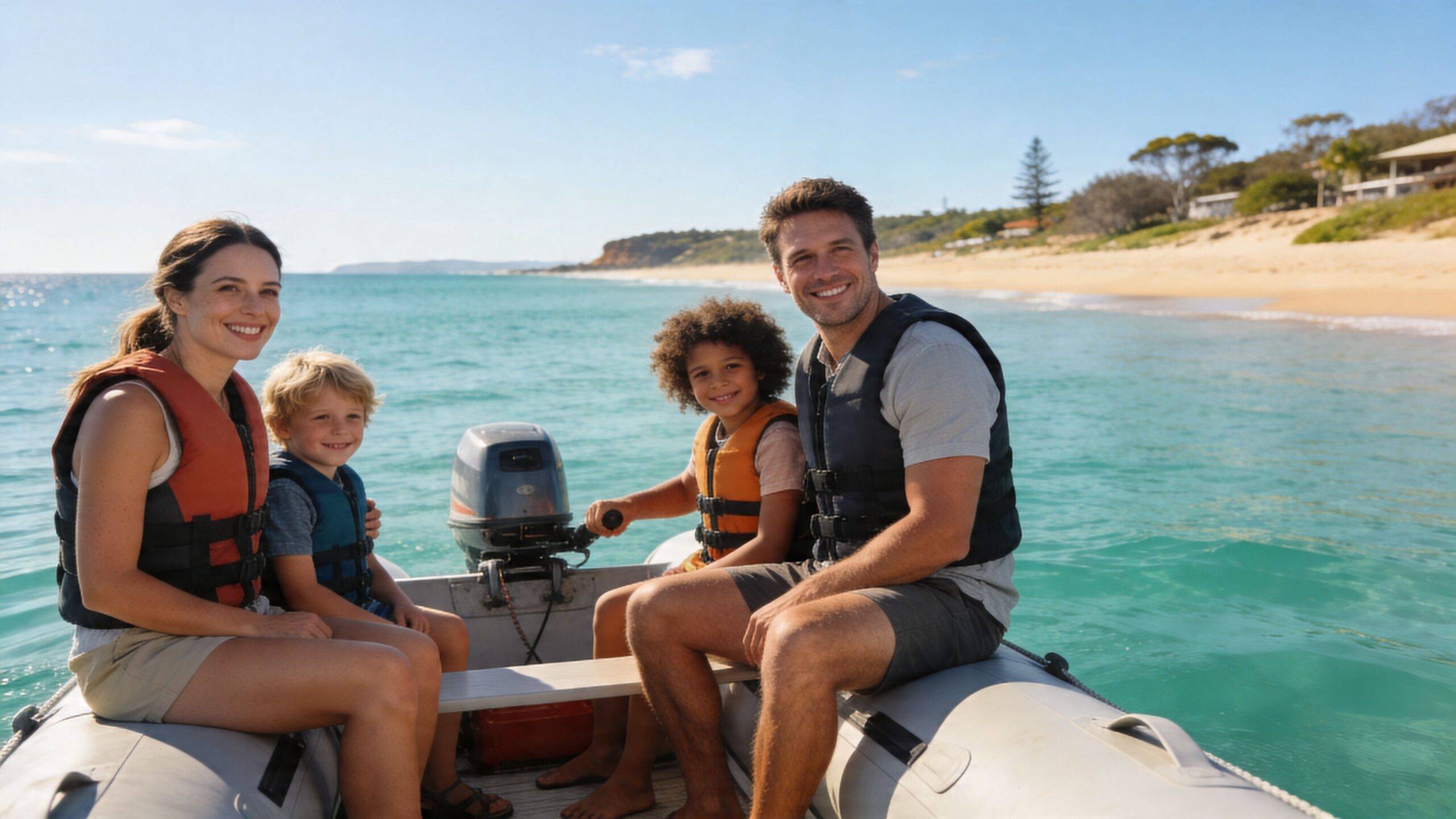
Why this matters more in Australia
Australian buyers aren’t using inflatables in a single neat environment. One weekend it’s a calm river. The next it’s a bay with messy wind chop. Then it’s an estuary mouth, a camping trip, or a tender run off a mooring.
That broad use case is one reason inflatables have become such a serious category locally. Australia accounts for 82% of all inflatable vessel sales across Australia and Oceania, boat licence registrations are up +29% in 2024 compared with 2019, and about 1 in 10 Australians hold a boat licence, according to Easy Inflatables' inflatable catamaran market overview.
What stable feels like on the water
The feeling of instability is unmistakable. The bow wanders. The deck flexes. Someone leans to one side and everyone else compensates. You stop thinking about where the fish are and start thinking about your footing.
A stable inflatable does the opposite:
- It settles quickly: small shifts in weight don’t turn into a long side-to-side wobble.
- It inspires movement: passengers can reposition themselves without drama.
- It keeps tasks simple: casting, loading gear, beach landings, and boarding feel controlled.
- It reduces fatigue: less bracing means more comfort over a full session.
Practical rule: If a boat feels nervous at rest, it usually won’t become more enjoyable once you add wind, passengers, and gear.
That’s why buyers comparing inflatable catamarans, compact tenders, and small RIBs should start with hull behaviour first. Speed, storage, and accessories matter after that. Stability is what lets you use the boat the way you imagined when you started shopping.
The Science of a Stable Inflatable Boat Hull
Stability isn’t magic and it isn’t branding. It comes from a handful of design decisions that you can spot once you know what to look for.
The three big ones are hull shape, beam, and tube volume. Get those right and the boat feels calm underfoot. Get them wrong and even a decent motor won’t fix the basic character of the hull.
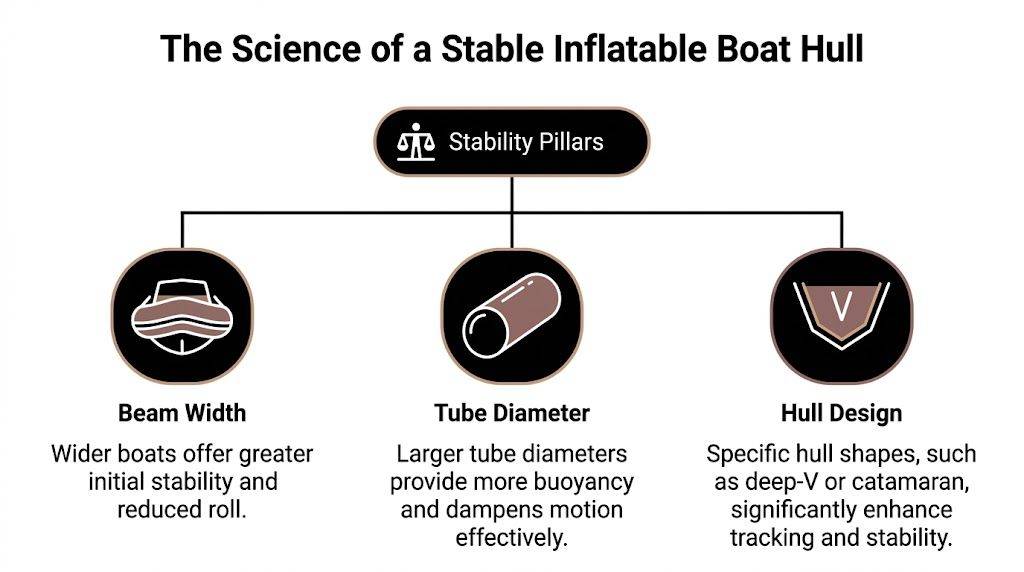
Beam width gives you a wider stance
Think of beam like your stance on a wet boat ramp. Feet close together feels less secure. Feet further apart feels stronger and more balanced.
The same applies on the water. A wider footprint gives the hull more resistance to side-to-side movement. That matters most when passengers shift positions, when you’re loading from one side, or when the boat is sitting in short chop.
A narrow inflatable may pack neatly and feel lively, but it usually asks more from the operator. A wider hull is more forgiving.
Tube diameter acts like built-in support
Large tubes do more than keep the boat afloat. They provide buoyancy outboard, where it helps resist roll.
That’s why tube diameter has such a strong effect on first impressions. Boats with fuller tubes often feel more settled as soon as you step in. They dampen motion and make the boat less twitchy when weight moves suddenly.
For practical buyers, this is one of the easiest visual checks. If the tubes look skimpy, don’t expect a planted feel once the boat is loaded.
Hull shape decides how the boat behaves
The biggest differences appear here.
A flat-bottom inflatable can feel steady in very calm water, but once chop builds, the ride often becomes slappy and less composed. A deep-V shape improves ride quality through chop and helps tracking, but it can feel different at rest depending on the overall layout.
Then there’s the inflatable catamaran approach. Instead of relying on one central hull shape, it uses twin channels beneath the tubes to create a broader, more supported platform.
Competitor designs such as AB Inflatables use a deep-V forward hull that can plane with 20-30% less horsepower, while inflatable catamaran designs use twin hulls to create a wide, air-cushioned platform that can reduce roll by up to 50% compared to monohulls, according to Runboats' overview of AB Inflatables and hull behaviour.
For buyers comparing formats, that’s the key trade-off. Deep-V layouts reward you in chop and efficiency. Catamaran-style inflatables prioritise lateral steadiness, especially for fishing, family use, and any situation where people move around a lot.
What works and what doesn’t
Not every “stable” inflatable is stable in the same way. Some feel stable underway but lively at rest. Others feel rock solid at rest but less refined once speed and chop increase.
A simple way to judge the main layouts:
| Hull type | What it does well | Where it falls short |
|---|---|---|
| Flat bottom | Simple, predictable in calm water, easy beach use | Rougher ride in chop, can slap and drift more |
| Deep-V monohull | Better cut through chop, efficient planing behaviour | Can feel narrower in lateral stability depending on design |
| Inflatable catamaran | Strong lateral stability, good for standing and family movement | Bulkier footprint, not always the lightest option |
| Small RIB | More rigid ride and stronger tracking | Less packable than a full boat-in-a-bag inflatable |
One good reference point when comparing formats is the range of rigid hull inflatable options now available alongside softer-floor and catamaran layouts. They suit different jobs. The mistake is assuming one hull style does everything equally well.
A boat that feels stable for a solo runabout isn’t automatically the right boat for two adults, two kids, and a full day’s gear.
That’s why experienced buyers don’t ask only whether a boat is stable. They ask when it is stable. At rest, underway, loaded, turning, boarding from the side, and sitting in wind chop. Those are the moments that tell you what the hull is really made for.
Durability Meets Design Valmex PVC vs Hypalon
A stable hull has to stay rigid to stay trustworthy. If the material softens, the seams age poorly, or the floor flexes too much, the boat gradually loses the planted feel that made it attractive in the first place.
That’s where construction matters. In Australia, UV, salt, hot storage conditions, sandy launches, and rough shorelines punish cheap fabric and weak seam work faster than many first-time buyers expect.
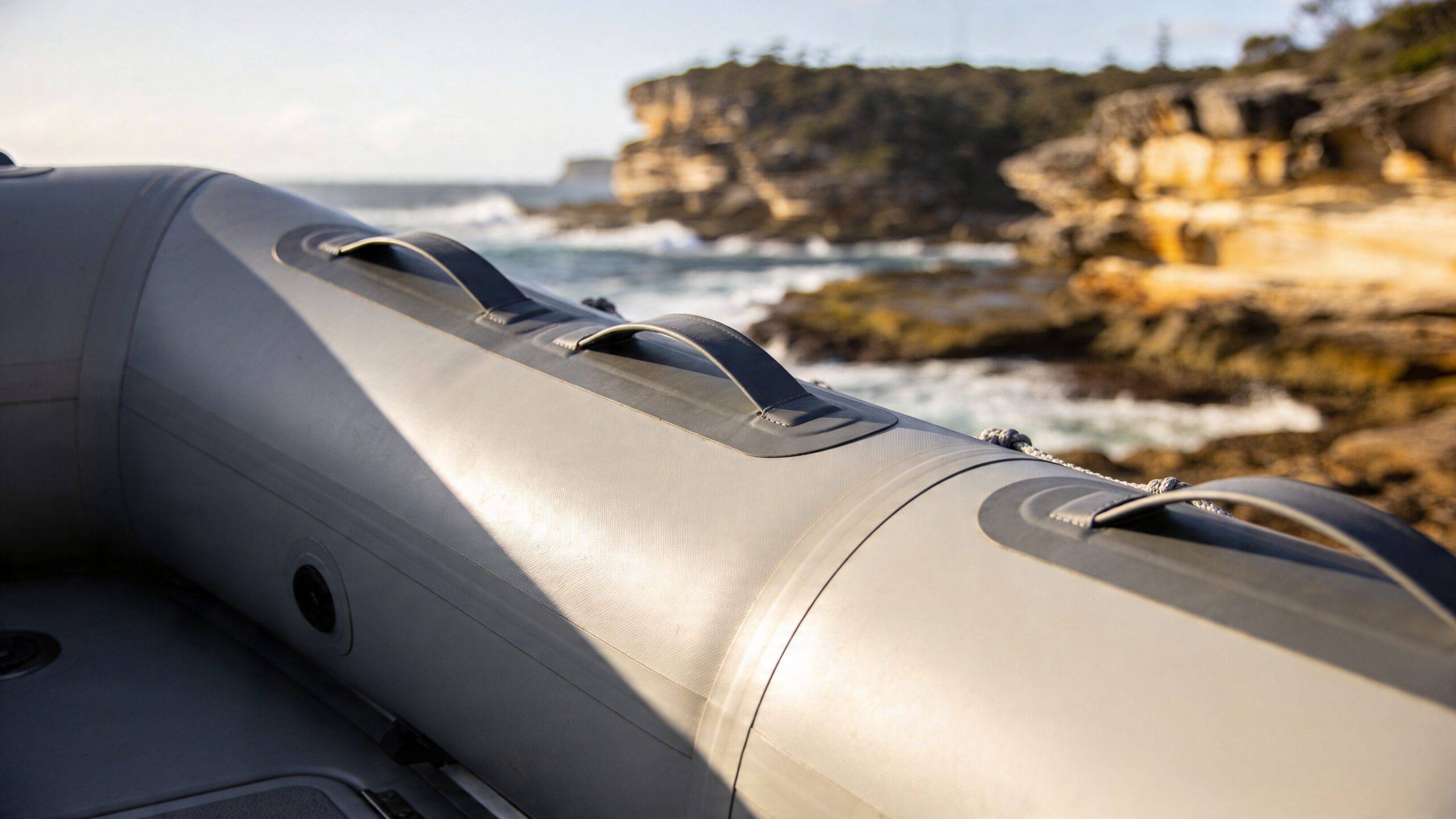
Why premium PVC matters
Not all PVC is equal. The quality gap between entry-level fabric and premium marine-grade material shows up in abrasion resistance, rigidity, and how well the boat holds its shape under pressure.
In Aerowave-style Australian inflatable designs, 1.2mm 2000D German Valmex PVC with thermo-welded seams delivers tensile strength exceeding 3000 N/5cm, resists abrasion 40% better than standard 1100D PVC, and helps the hull maintain rigidity under 22 PSI air deck pressure for minimal flex and roll, according to Easy Inflatables' buyer guide on materials and construction.
Those numbers matter because stiffness changes the whole feel of the boat. A properly pressurised, well-built air deck doesn’t feel like a soft compromise. It feels closer to a structured platform, especially for fishing, stepping around children, or loading gear over the side.
Valmex PVC and Hypalon serve different buyers
The Valmex PVC versus Hypalon discussion often gets oversimplified. It isn’t really about one material being automatically right and the other wrong. It’s about where and how the boat will be used, how it will be stored, and how much the buyer wants to spend.
Here’s the practical comparison.
| Material | Strong points | Trade-offs |
|---|---|---|
| Valmex PVC | Strong rigidity, clean finish, good value, suits thermo-welded construction | Heat and UV exposure still demand good storage habits |
| Hypalon | Long-standing reputation for harsh marine environments and repairability | Higher cost, often chosen when budget matters less than long-term exposure priorities |
If you want a deeper look at those trade-offs, the clearest side-by-side explanation is in this guide on Hypalon vs German Mehler 1.2mm PVC material.
Thermo-welded seams are worth chasing
Seams are one of the first places poor construction shows itself. On a budget inflatable, they may hold for a while, but heat, pressure cycles, and repeated packing eventually expose shortcuts.
Thermo-welded seams matter because they give the boat a more durable join than a glue-only build. In Australian conditions, that’s a practical advantage, not a brochure line. Boats sit in the sun, they’re inflated on hot sand, and they spend time wet, salty, and folded.
What usually works well:
- Thermo-welded joins: better suited to repeated heat cycles and regular use.
- Multiple air chambers: more safety and more controlled structure.
- High-pressure air decks: firmer underfoot and less prone to that spongey feel.
- Solid transoms: important if you plan to run an outboard properly rather than just potter around.
What usually disappoints:
- Thin generic PVC: lighter on paper, but more vulnerable on abrasive beaches and ramps.
- Soft low-pressure floors: portable, but they can feel vague and flexy under load.
- Poor seam finishing: often the hidden weakness in cheap imports.
- Underbuilt transoms: they show movement when power is added.
Workshop reality: The boat doesn’t need to be indestructible. It needs to stay stiff, predictable, and easy to trust after repeated launches, pack-downs, and time in salt.
Stability depends on the whole structure
This is the part buyers often miss. Stability isn’t just the hull outline. It’s also how much the platform twists when you step near the tube, whether the floor bounces when passengers move, and whether the transom stays planted when the motor pushes hard.
That’s why premium catamaran lines such as the Aerowave Waverunner and Viper series get attention from serious buyers looking for stable inflatable boat australia options. The appeal isn’t only shape. It’s the combination of hull design, material weight, welded construction, air deck pressure, and transom support.
A boat can have the right silhouette and still feel average if the materials let it down. The best-performing inflatables keep their shape, hold pressure properly, and stay consistent from the first launch through years of routine use.
Choosing the Right Size Inflatable for Your Adventure
Most buyers don’t choose the wrong boat because they misunderstand boats. They choose the wrong boat because they underestimate how quickly real-world use grows. One extra passenger, one tackle crate, one fuel tank, one dry bag, one child who doesn’t want to sit still, and suddenly the compact model feels less clever than it did in the showroom photos.
Size is where stability, portability, and comfort collide. You can’t maximise all three at once, so you need to choose based on how you’ll use the boat.
Start with the real trade-off
The biggest blind spot for inflatable buyers is the portability versus stability trade-off. A lighter boat is easier to carry, launch, and pack. A larger boat is usually calmer, more forgiving, and more capable once weather, passengers, and gear enter the picture.
As Swift Marine’s Ultralite overview notes, a 2.9m boat weighing 45kg is manageable for one person, while boats in the 3.3m to 4.0m range offer the best balance of portability, stability, and performance for family use or fishing.
That aligns closely with what many Aussie buyers discover after a season on the water. Small boats are handy. Mid-size inflatables are often the more satisfying long-term choice.
The Family Weekender
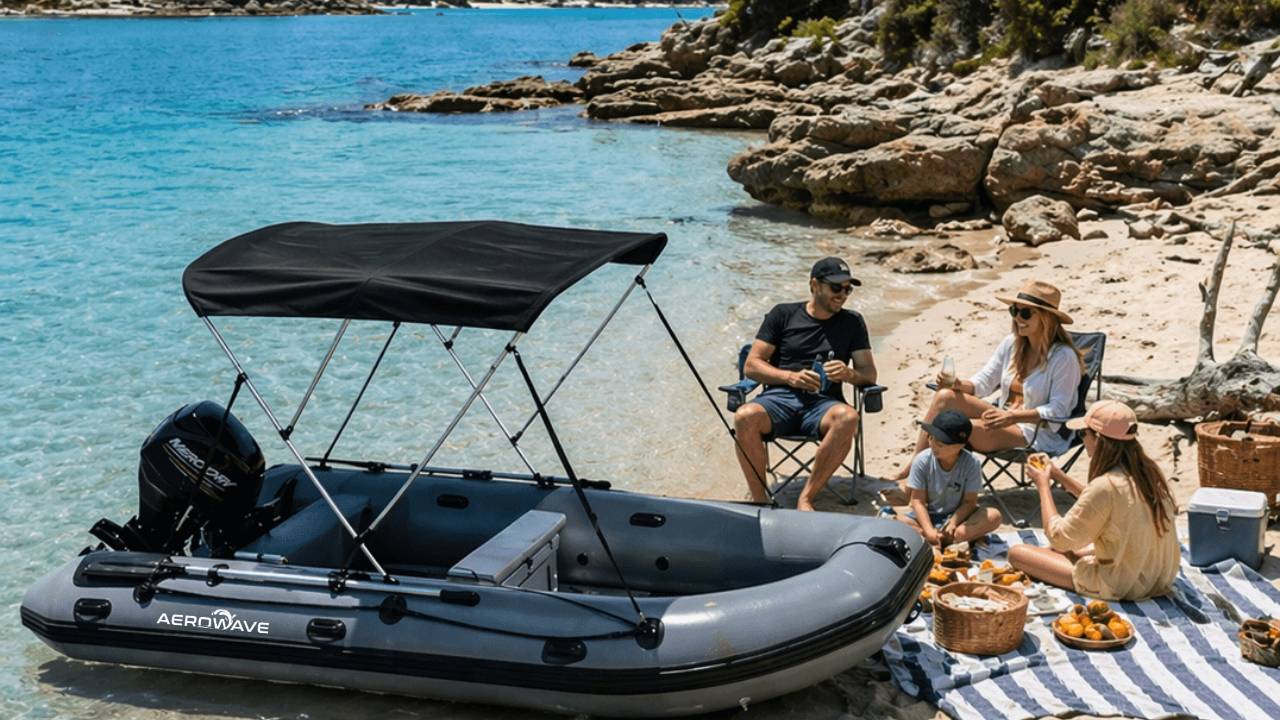
This buyer wants easy beach days, creek exploring, calm-water sightseeing, and enough steadiness that kids and adults aren’t constantly upsetting the trim.
For that job, the sweet spot is often in the mid-size category. You want enough internal space for bodies and bags, enough hull under you to soften movement, and enough stability that boarding doesn’t become a balancing act.
What works:
- A mid-size inflatable or catamaran-style hull
- A high-pressure floor
- Room for gear without crowding passengers
- An engine match that gets the boat moving cleanly without over-powering it
What usually doesn’t:
- Buying too short because it’s easier to store
- Prioritising bare hull weight over useable room
- Cramping family loads into a solo-friendly layout
The Dedicated Angler
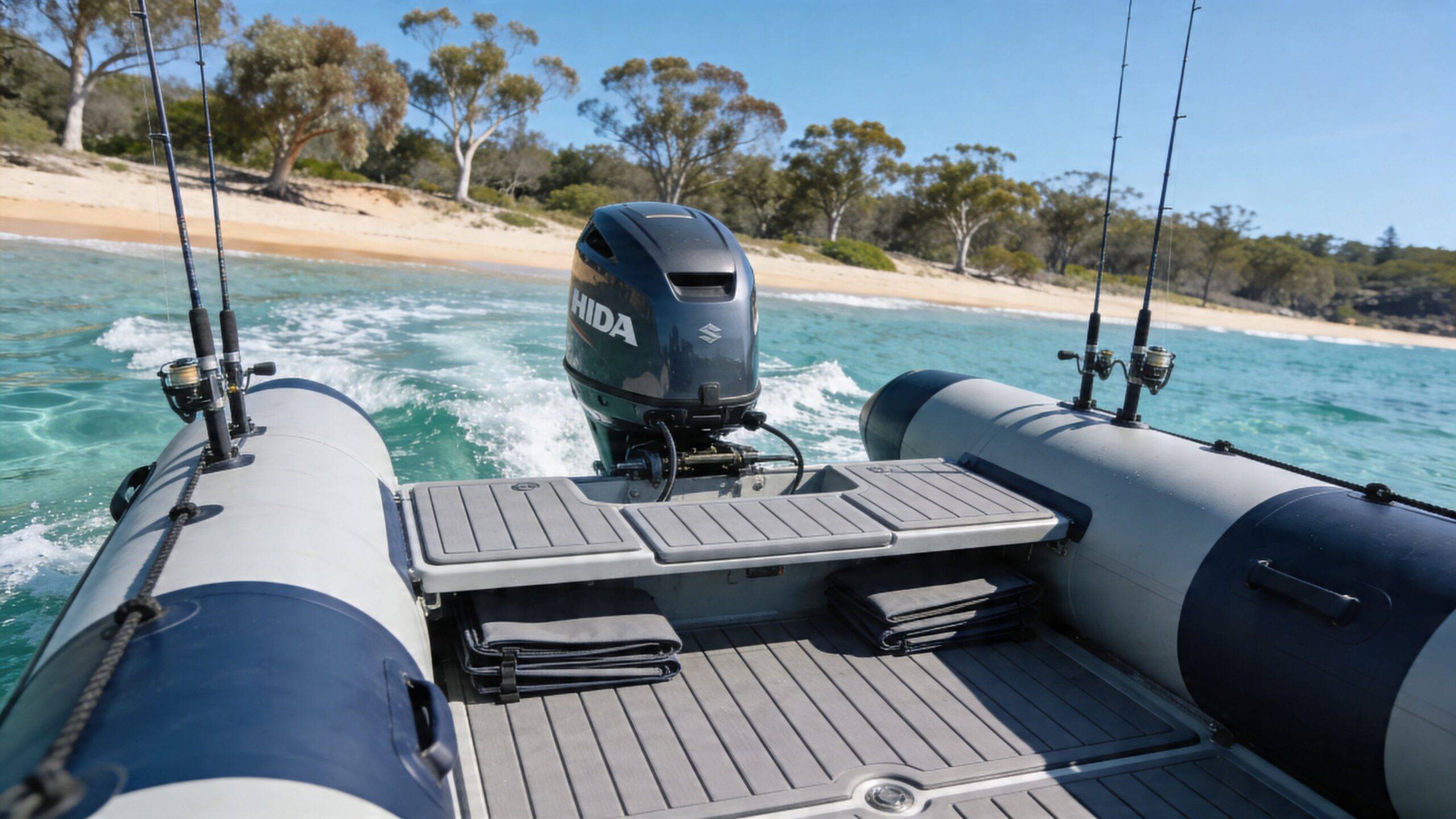
Anglers care about a different kind of stability. Not just ride comfort, but lateral stability. They want to turn, reach, cast, net fish, sort tackle, and maybe stand briefly without the boat feeling nervous.
That’s where catamaran-style inflatables have a strong argument. Their wider stance and reduced roll suit inshore lure casting, bait fishing, and long sessions where constant movement happens inside the boat.
A practical fishing setup usually benefits from:
- Enough length to separate people from gear
- Tube volume that keeps the boat settled at rest
- A rigid floor that won’t bounce
- A hull style that resists side roll
The SUV and RV Traveller
This buyer has a different headache. Payload, packed volume, and launch simplicity matter almost as much as on-water manners.
A compact boat is attractive because it’s easier to fit around camping gear, annex walls, tools, and recovery equipment. But going too small can mean a boat that’s tiring in exposed water and cramped once a second person gets aboard.
Honest self-assessment matters. If the boat is mostly for solo use in protected water, a lighter hull can make sense. If it’s for regular two-person use, coastal camping, or mixed conditions, stepping up a size usually pays off in comfort and confidence.
Buy for the roughest day you’ll still choose to launch, not the calmest day in the brochure.
The Yachtsman or Tender Owner
Tender buyers need reliability, compact storage, clean boarding, and enough composure to deal with marina wash, moorings, and transfer runs with bags or groceries.
A short inflatable can do that job well, but the right answer depends on whether the tender is purely a shuttle or also a runabout. If you’ll explore anchorages, fish from it, or carry more than one adult regularly, don’t choose the smallest option just because it fits the locker easiest.
Which Easy Inflatables Boat is Right for You
The exact model choice depends on layout and intended load, but this table gives a practical framework based on common buyer types.
| Use Case | Recommended Model | Length | Capacity | Ideal HP (Hidea) | Key Feature |
|---|---|---|---|---|---|
| Solo exploring and tender duties | Compact tender style boat | 2.9m class | Best for lighter solo or light two-person use | Lower HP setup for easy handling | Easy launch and pack-down |
| Family day trips | Mid-size inflatable | 3.3m to 3.6m class | Better suited to family loads | Mid-range HP for balanced use | Better comfort and stability |
| Inshore fishing | Catamaran-style inflatable | 3.6m class | Suits anglers plus gear | Moderate HP with strong low-end push | Strong lateral stability |
| RV and SUV travel | Portable mid-size boat | 3.3m class | Enough room without becoming cumbersome | Practical all-round motor pairing | Balance of packability and useability |
| Tender plus adventure use | Larger tender or catamaran | 4.0m class | Better for heavier loads and mixed duties | Higher HP within rating | More waterline and carrying confidence |
A simple way to decide
If you’re still stuck between sizes, use this filter:
- Count real passengers, not ideal passengers. If two adults and children are part of the plan, choose around that reality.
- List your usual gear. Fuel, safety gear, fishing equipment, dry bags, and an esky add up quickly.
- Think about launch style. Beach launch, ramp launch, yacht deck storage, and caravan travel all change the right answer.
- Consider your confidence level. Newer operators usually enjoy a slightly larger, calmer platform more.
- Be honest about conditions. Calm lakes and sheltered estuaries allow smaller boats. Open bays expose compromises fast.
A lot of buyer regret comes from shopping around the smallest acceptable hull. In practice, many people end up happier in the size bracket just above it, because the boat feels easier to live with once the whole crew is aboard and conditions stop being perfect.
Motors Transport and Australian Boating Rules
The hull gets most of the attention, but the way the boat is powered, packed, and operated matters just as much. A stable inflatable can still feel average with the wrong motor on the back or the wrong expectations around transport and legal requirements.
Australia’s inflatable market is also growing in a way that supports long-term ownership. The broader inflatable boat market is projected to grow from USD 2.07 billion in 2024 to USD 3.04 billion by 2034, with the Asia-Pacific region expected to grow fastest, according to Fortune Business Insights’ inflatable boat market projection. For buyers, that points to continued product development, accessory support, and more options across the category.
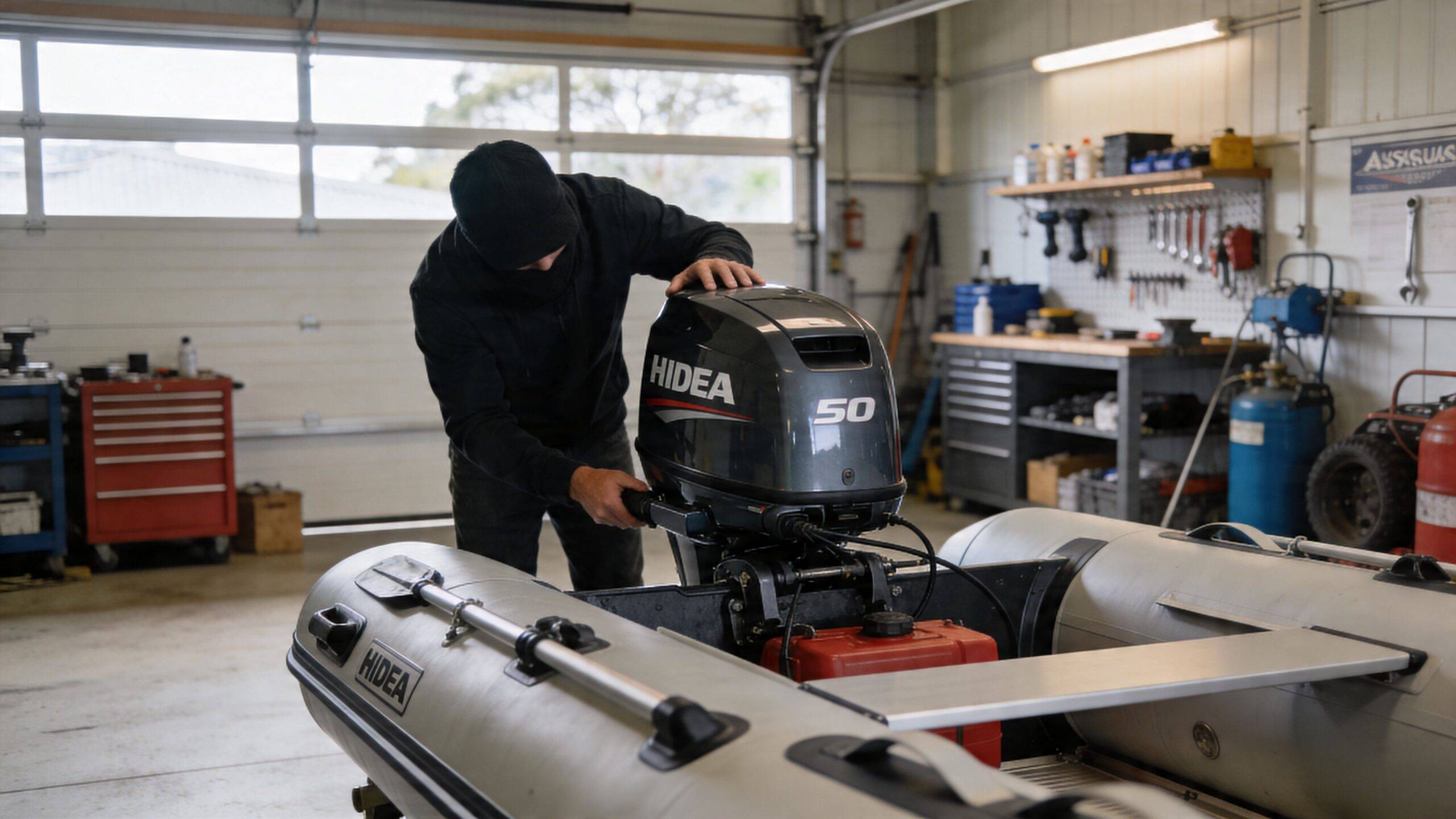
Match the motor to the hull, not your ego
Overpowering a small inflatable rarely improves the experience. It often makes trim fussier, stresses the transom, and turns a pleasant boat into one that feels busy.
For most buyers, the better approach is simple:
- Use the boat’s rated range: stay within the transom recommendation.
- Choose for the job: trolling, creek exploring, family planing, and tender duties need different outputs.
- Think about shaft fit: correct shaft length matters for thrust and handling.
- Balance the load: fuel tank, passenger position, and battery placement change performance quickly.
A practical place to compare pairings is this guide to choosing an engine for an inflatable boat.
Transport is one of the biggest real advantages
The utility of inflatables becomes clear. A boat-in-a-bag setup impacts how often people use their boat. If it fits in the back of an SUV, slides into caravan storage, or lives in a garage corner without a trailer, it comes out more often.
That said, packed convenience can be oversold. Some larger inflatables are portable in the technical sense, but they’re still substantial once rolled, bagged, and lifted. Buyers should think in terms of real handling, not brochure portability.
A good transport setup usually means:
- Hull weight you can manage safely
- A packed shape that fits your vehicle
- Pump and floor setup that doesn’t turn launch day into a chore
- Enough boat once inflated to justify the pack-down effort
Keep the legal side simple
Rules vary by state and territory, so buyers should always check their local marine authority before launching. The practical baseline is straightforward. If the boat uses a motor, assume licensing, safety gear, and operating rules matter from day one.
The video below gives a useful visual reference for new owners thinking about setup and operation.
A sensible starting checklist includes:
- Licence and registration checks: verify state requirements before buying the motor package you want.
- Lifejackets: carry the correct type and size for every person aboard.
- Basic safety gear: check local requirements for signalling, lighting, and communications.
- Capacity discipline: don’t load to the edge of what sounds possible.
- Weather awareness: small boats reward conservative decisions.
The safest inflatable operators aren’t the ones with the most gear. They’re the ones who launch within the boat’s limits and their own.
Your Partner on the Water The Easy Inflatables Advantage
A stable inflatable earns its place by being easy to trust. It should launch without fuss, carry the load you really bring, and stay composed when the conditions stop being neat. That comes from the right hull style, proper materials, firm floor construction, and a motor match that suits the job.
It also helps to buy from a business that understands the difference between brochure stability and real stability. That’s where local knowledge matters. Australian buyers aren’t all using their boats the same way, and they don’t need the same setup.
For people comparing inflatable catamarans, tenders, and small RIB packages, Easy Inflatables is one local option that covers those categories with Aerowave boats, Hidea motor packages, custom build choices, and local after-sales support. For many buyers, that’s useful because the decision usually isn’t just about a hull. It’s about the complete setup, from storage and launch method to engine pairing and long-term maintenance.
A solid ownership experience also depends on the practical details. Warranty terms matter. Replacement advice matters. So does being able to ask sensible questions before you buy, especially if you’re torn between a lighter portable rig and a larger, steadier platform.
The best outcome is simple. You end up with a boat you’ll use, not one you keep postponing because setup, transport, or on-water behaviour is harder work than expected. For Aussie families, anglers, caravan travellers, and tender owners, that usually starts with choosing stability first and shopping from there.
Frequently Asked Questions About Inflatable Boats
Are inflatable catamarans more stable than regular inflatable boats?
In many fishing and family-use situations, yes. Their twin-hull layout generally gives better lateral stability and a steadier feel when people move around onboard.
What size inflatable boat suits family use?
For many buyers, mid-size boats are the practical sweet spot because they balance portability with enough room and steadiness for passengers and gear. A tiny tender can work, but it often feels cramped once the whole family is aboard.
Can I compare inflatable boats near me without relying only on price?
Yes. Compare hull type, floor rigidity, fabric quality, seam construction, packed handling, and motor pairing. Price matters, but a cheaper boat that flexes or feels nervous on the water often isn’t the better buy.
Where can I start if I’m looking at inflatable boats in Australia?
A sensible first step is to compare local models, layouts, and use cases through an Australian-focused range such as inflatable boats in Australia.
Can I hire inflatable boats for a family outing?
Hire availability depends on your area and the operator. Some locations focus on larger tourism craft or tinnies rather than portable inflatables, so it’s worth checking local marine hire businesses directly.
If you're weighing up a stable inflatable boat for fishing, family trips, RV travel, or tender duties, Easy Inflatables is a practical place to compare Aerowave catamarans, inflatable boat packages, and motor-ready setups built for Australian conditions.
Explore the Aerowave range
Weekend-Proof Score 17 questions · about 2 minutes
Will the boat you're about to buy survive an Australian summer?
Seventeen straight questions about where you'll use it, what you'll ask of it and the boat you're weighing up. You get a score out of 100, the exact weak points in your plan, and the one boat that genuinely fits.
Free · your result shows on screen · no email required
So which one is yours?
Pick how you'll actually use it and we'll take you straight to the right hull.
I want to fish it
Open bow, rod holders, deck space you can stand and cast from.
Viper Sport 400Family, diving and the beach
3.8 m Series 3 catamaran — low bow to climb back in wearing fins or a tank.
WaveRunner 380Tender / one-person launch
3.3 m hard-floor boat that packs into a bag and still takes a beach landing.
Viper 330Shop gear featured in this guide
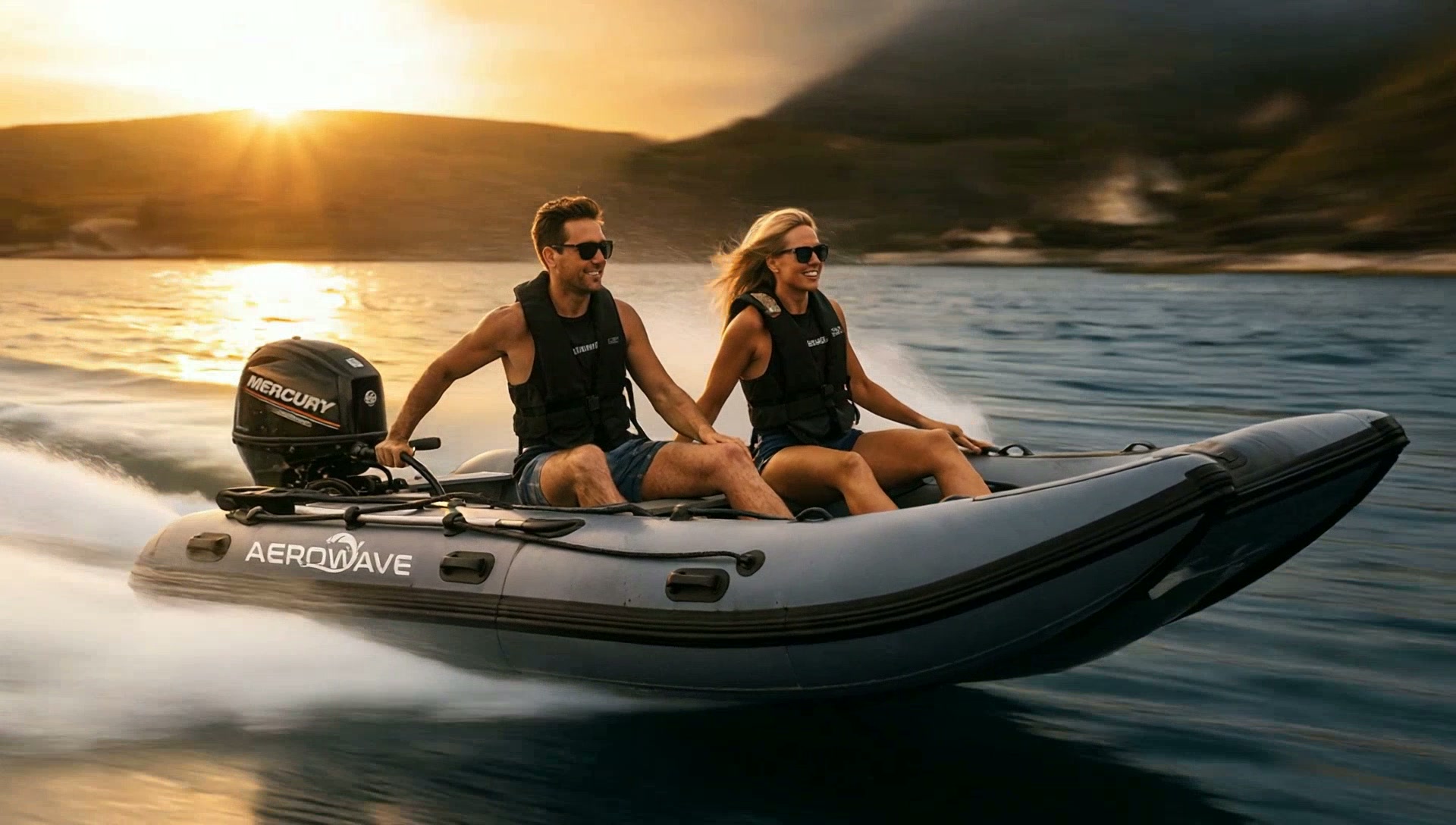
Aerowave WaveRunner 380 Series 3 Catamaran Package
The WaveRunner 380 Series 3 is a premium 3.8m inflatable catamaran package built for Australian and worldwide families, fishing, and coastal day boating — ideal for snorkeling and spearfishing — offering serious stability and premium German Valmex® construction.
Free freight to United States · local taxes payable on arrival
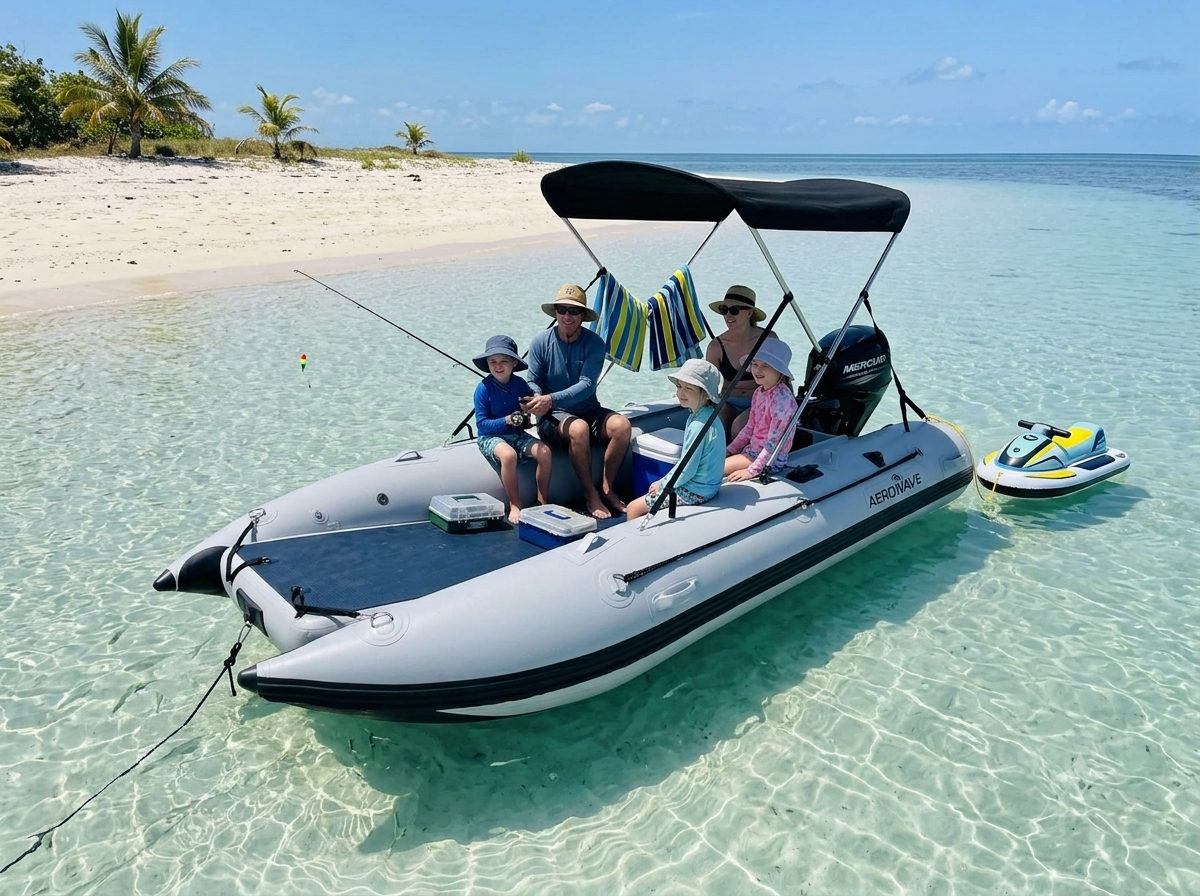
Aerowave Viper 400 Sovereign
Flagship 4m enclosed-bow inflatable catamaran. German VALMEX® 7321 Heavy Plus 1.2mm commercial-grade fabric, 10 PSI high-pressure drop-stitch air deck floor with VALMEX non-slip surface, LockPro wheels, full Bimini and FREE express delivery Australia-wide included. Winter special — save $1,000 until 31 August 2026.
Free freight to United States · local taxes payable on arrival
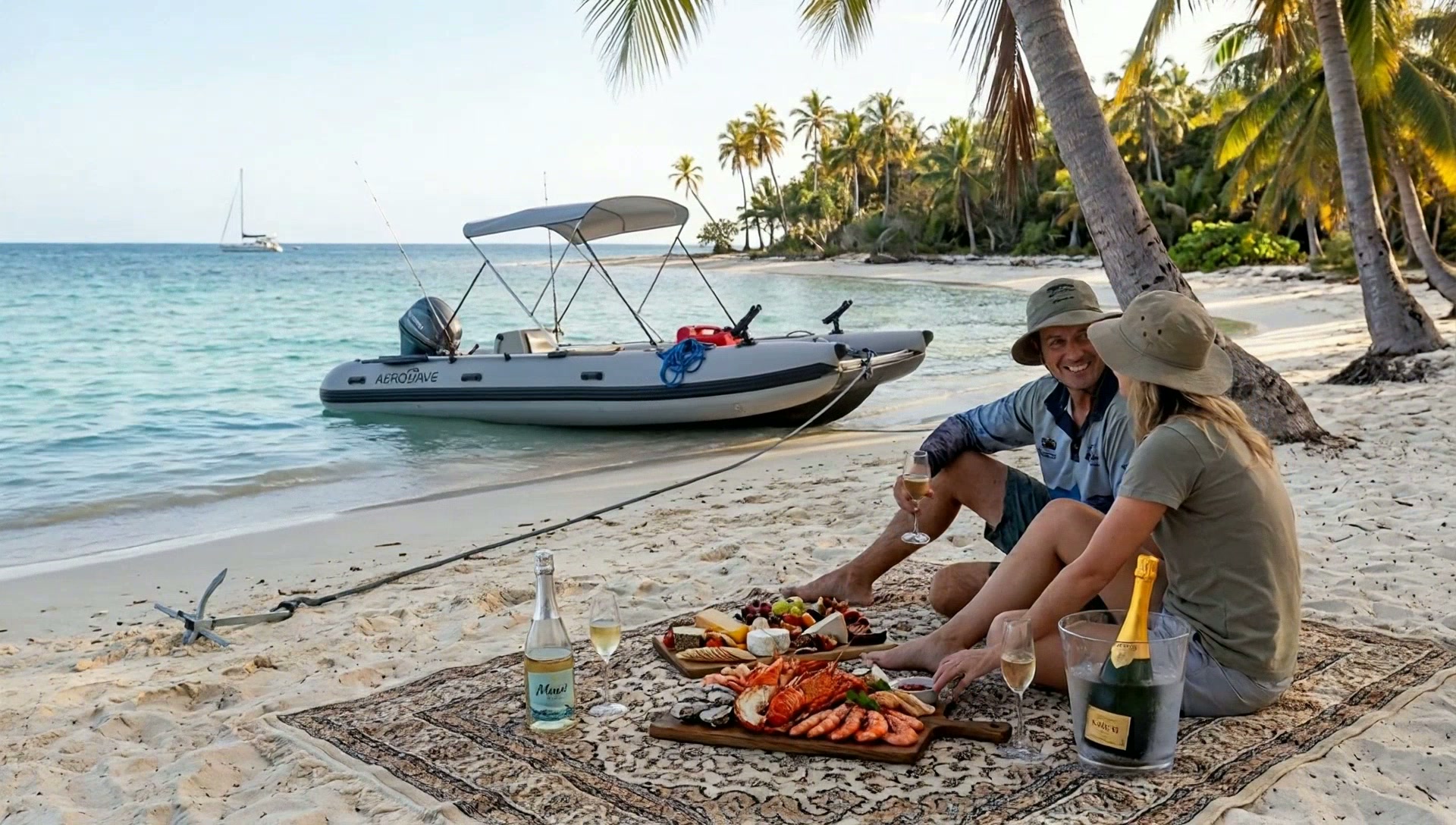
Aerowave Viper 365 Open Bow
Premium 3.65m Inflatable catamaran — built the same way as our flagship Viper 400 sports boat, just 35cm shorter. German VALMEX® 7321 Heavy Plus 1.2mm commercial-grade fabric, 10 PSI high-pressure drop-stitch air deck floor with VALMEX non-slip surface, LockPro wheels, full Bimini and FREE express delivery Australia-wide included.
Free freight to United States · local taxes payable on arrival
Not sure which suits you? Talk to a real boat owner.
Before you spend a cent
Buying from Australia, delivered to United States
You have never heard of us, we are on the other side of the world, and the internet is full of fakes. Fair enough. Here is everything you would need to check us out, in one place — no forms, no chat bot.
Australian designed business
Easy Inflatables, Avoca Beach NSW 2251. ABN 96 856 548 613. International orders ship from our Hong Kong hub.
222 owner reviews, 4.8 average
Read them in full, good and bad, on our reviews page.
CE certified, 7-year hull warranty
ISO 6185-3 and EU Directive 2013/53/EU. Warranty honoured worldwide.
Tracked, insured, door to door
FREE freight to United States · local tax/duty on arrival.
- Who am I actually buying from?
- Easy Inflatables, Avoca Beach NSW 2251, Australia. ABN 96 856 548 613. Sean is the owner and skipper, Gary Stewart handles sales on +61 2 4335 1603, Karen Matthews handles email. The boats are Australian designed; international orders ship from our Hong Kong dispatch hub so your landed price stays competitive. Phone us before you pay a cent — a real person answers.
- Is this really an Australian product?
- Yes — Australian designed and engineered on the NSW Central Coast. Manufacturing is done offshore to our spec, and international orders ship direct from our Hong Kong dispatch hub. If we routed every boat through Australia first, the freight alone would roughly double or triple your cost for the same hull.
- What do I pay, and what is not included?
- The delivery and import terms depend on your country. EU, UK, New Zealand and named Asia/Pacific lanes include duty and tax; US freight is free but US buyers pay import charges on arrival. Other destinations show their terms before payment.
- How do I pay safely?
- Card through Stripe (Visa, Mastercard, Amex, Apple Pay, Google Pay) or bank transfer. Card payments carry your bank's own dispute protection. We never ask for crypto, gift cards or payment to a personal account.
- What if it arrives damaged?
- Every boat ships fully tracked and insured door to door. Photograph the carton and the boat on arrival and email us — transit damage is claimed and replaced through us, not left with you and the courier.
- Is the warranty real outside Australia?
- Yes. The 7-year hull warranty on 1.2 mm VALMEX Heavy Plus and Orca Hypalon hulls applies wherever you are. Replacement parts are held in Australia and at our overseas hub and go out by express courier to your door.
- Is the boat actually certified?
- All Aerowave catamarans are CE certified to ISO 6185-3 and EU Directive 2013/53/EU. Certification paperwork is supplied with the boat — ask and we will send it before you order.
Ready to set sail?
Premium German-fabric inflatable catamarans, built to order and delivered to your door. Talk to our team or browse the fleet.
Like this guide? Get the next one in your inbox.
Owner-tested tips, gear deep-dives and Aussie boating know-how — no spam.