Best Stable Inflatable Boat Australia: 2026 Guide
A lot of Australians start in the same place. They want a boat for weekends, but they don’t want the cost, storage headaches, trailer hassle, or awkward launch routine that comes with a larger hard boat. They want someth…
🇺🇸 Boats shipping to United States
See landed prices in USD before you bounce.
Door-to-door delivery to United States in 7–14 days. Choose a boat, see local-currency pricing, or request a fixed landed quote from the sales team.
A lot of Australians start in the same place. They want a boat for weekends, but they don’t want the cost, storage headaches, trailer hassle, or awkward launch routine that comes with a larger hard boat. They want something they can pack, transport, launch with less fuss, and still trust when the kids move around, when a mate leans over to land a fish, or when the afternoon chop builds.
That’s where the search for a stable inflatable boat australia buyers can rely on begins. Stability isn’t a marketing extra. It’s what decides whether a day on the water feels relaxed or constantly unsettled.
Why a Stable Inflatable Boat is Your Ticket to Australian Adventures
A stable inflatable changes what’s practical. It opens up quick coastal runs, river sessions, camping trips with a boat in the back of the ute, and family days where loading in and launching doesn’t become the hardest part of the outing.
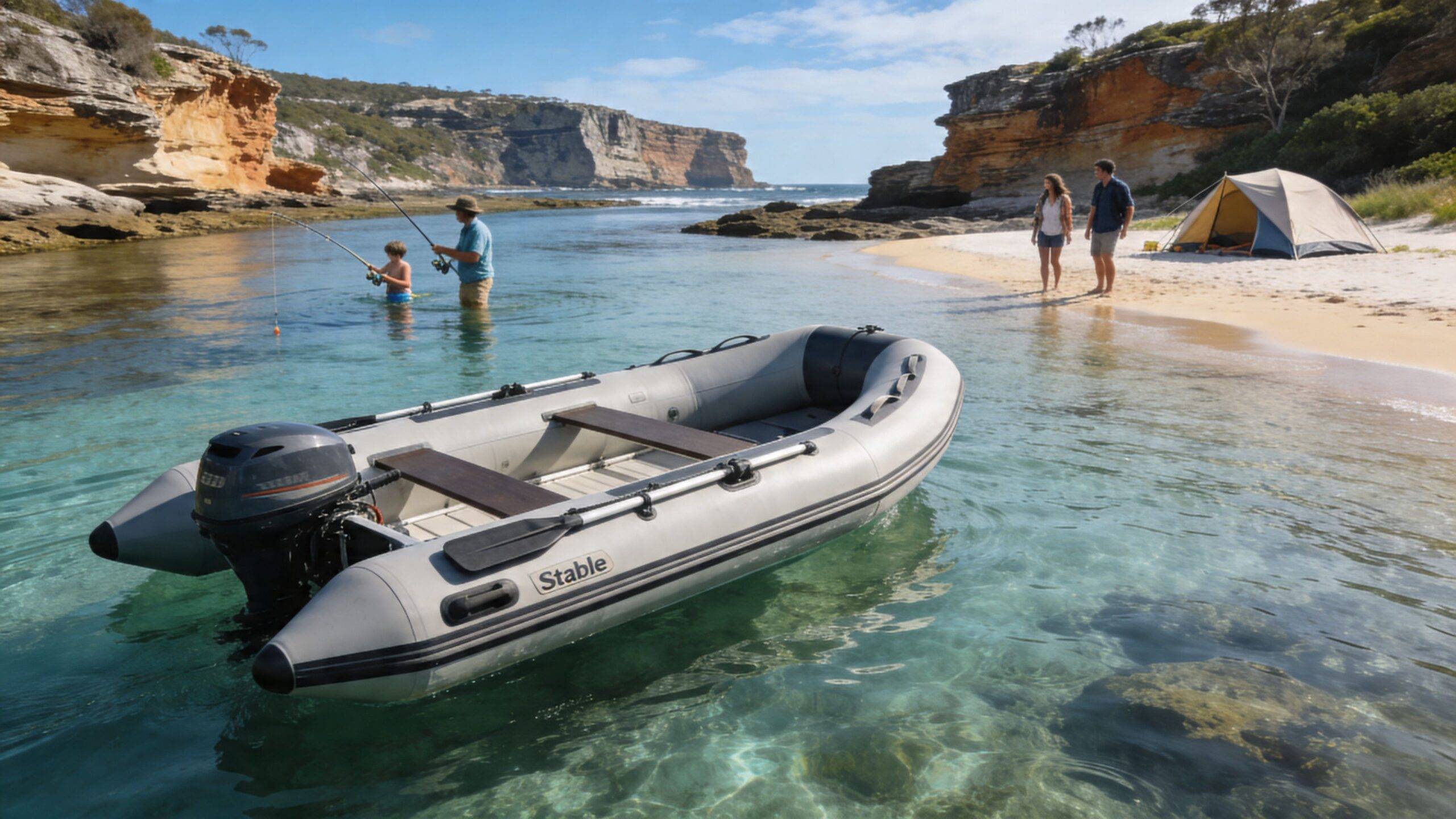
For a lot of people, the appeal is simple. You can leave home in the morning, reach a beach, estuary, lake, or sheltered coastal spot, and be on the water without needing a full marina setup. That matters in Australia because our boating isn’t limited to one style. One week it’s a family run to a quiet beach. The next it’s lure casting in a river mouth or using the boat as a tender on a holiday.
The broader shift is real, not niche. Australia accounts for 82% of all inflatable vessel sales across the Australia and Oceania region, and boat licence registrations were up 29% in 2024 compared with 2019, with about 1 in 10 Australians now holding a boat licence, according to Easy Inflatables’ Australian inflatable catamaran market overview.
Why more Australians are choosing inflatables
People aren’t just buying inflatables because they’re cheaper to store. They’re choosing them because modern designs solve older compromises.
- Portability matters: A boat-in-a-bag setup suits apartments, caravans, garages, and travellers who don’t want a trailer.
- Family use demands confidence: Parents want something that doesn’t feel twitchy every time someone shifts their weight.
- Fishing needs a platform: Anglers need room to move, stand, and work around each other without the hull feeling nervous.
- Australia punishes poor design: UV, salt, beach launches, and rougher coastal textures expose weak materials quickly.
A stable inflatable isn’t just easier to own. It gets used more often because the barrier to launching it is lower.
What a good stable inflatable changes
The difference shows up in ordinary moments. Boarding from a beach feels calmer. Kids climbing in doesn’t unsettle everyone. Reaching for gear at the side tube doesn’t make the whole boat lean hard. Even loading an esky, tackle bag, and safety gear feels more manageable when the hull starts with good balance.
That’s why stability should be your first filter, not an afterthought. Size, motor, floor type, and material all matter, but if the boat feels unsettled under normal use, the ownership experience wears thin fast.
Understanding Inflatable Boat Stability from Hull to Transom
Most buyers look at length first. That’s understandable, but it’s not the best place to start. Stability comes from how the boat carries weight, how rigid the structure stays under load, and how the hull shape behaves once people start moving around.
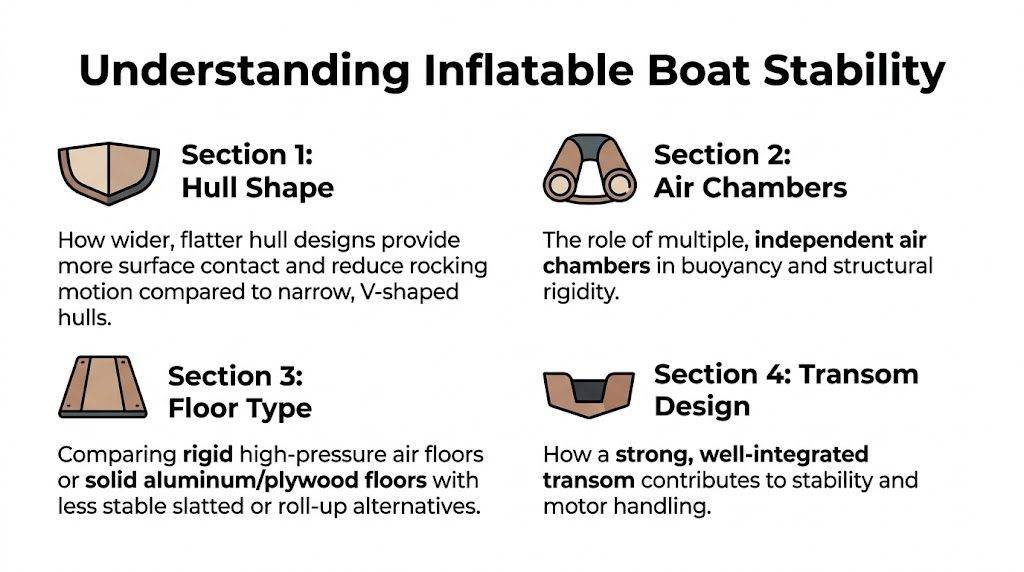
A soft, narrow inflatable can feel fine at rest with one person in flat water. Add a second person, a motor, gear, and a bit of side chop, and the weaknesses show up quickly. A better-built boat feels planted from the start.
Hull shape decides the ride
Think of a basic monohull inflatable as one central platform. It can work well, but the balance point is more sensitive. When someone moves to one side, the hull responds more obviously.
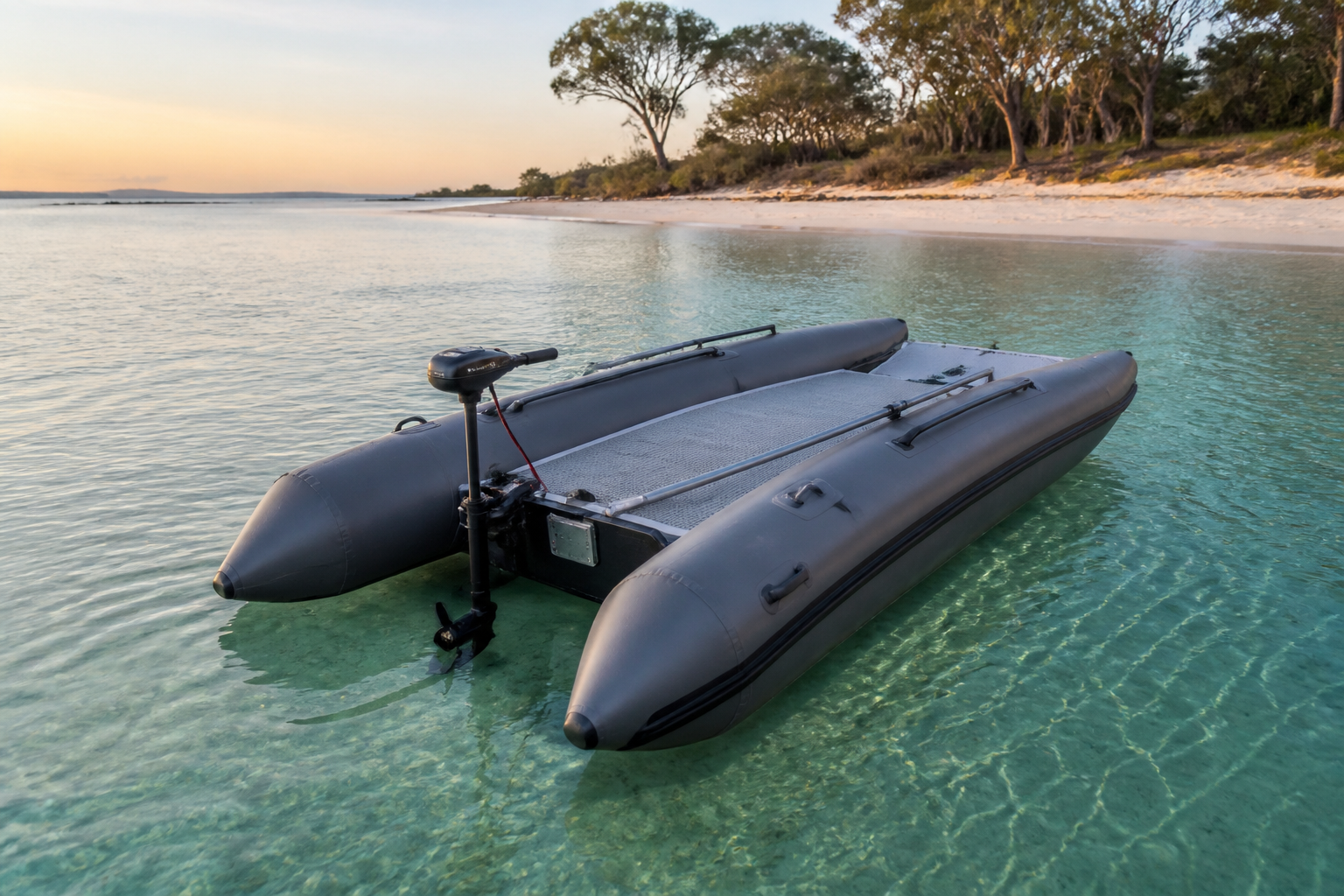
A catamaran inflatable spreads that support across two channels. That wider stance is the reason many buyers notice the difference immediately. In Australian designs like Aerowave models, catamaran hull variants reduce roll by 40 to 50% compared to monohull inflatables and data from Australian anglers shows these boats maintain less than 5° heel angles when standing or casting, as noted in this inflatable boat buyer’s guide for Australia.
That matters if you fish standing up, bring children aboard, or regularly launch in moving water where side-to-side steadiness keeps everyone more comfortable.
Material rigidity matters more than many buyers realise
A stable shape still needs structural integrity. If the fabric flexes too much, seams are weak, or the floor lacks rigidity, the hull won’t hold its intended form properly under load.
The same buyer’s guide notes that Aerowave models use 1.2mm 2000D German Valmex PVC for exceptional puncture resistance. In practice, that tougher construction helps the boat maintain its working shape when exposed to typical Australian abuse such as beach dragging, sharp shells, gear movement, and repeated inflation cycles.
Four things I’d check before buying
- Hull configuration: Catamaran hulls usually suit buyers who prioritise stand-up stability and family confidence.
- Floor structure: A high-pressure air deck or more rigid floor gives a firmer underfoot feel than soft entry-level setups.
- Tube layout: Multiple chambers improve buoyancy and help the boat keep shape.
- Transom build: The rear end must handle motor load without flexing or twisting.
Practical rule: If you can feel the floor sag, the tubes deform, or the stern looks stressed with an outboard fitted, the boat isn’t properly matched to the job.
The transom is part of stability
A lot of people treat the transom as just the place where the motor bolts on. It’s more important than that. A weak transom changes how the stern carries power, how the boat trims, and how confidently it handles acceleration.
Purpose-built models separate themselves from cheap inflatables that are fine with paddles but become unsettled once you add an outboard. If you’re also comparing more rigid setups, it’s worth looking at rigid hull inflatable options because they show how much stern structure and hull stiffness influence handling.
Stability isn’t one feature
Buyers often ask whether width is the main answer. Width helps, but stable handling comes from a combination of design choices working together.
A practical way to think about it is this:
| Stability factor | What it affects on the water | What usually works better |
|---|---|---|
| Hull shape | Roll resistance and tracking | Catamaran or well-designed V hull |
| Floor rigidity | Footing and load support | High-pressure air deck or rigid floor |
| Tube construction | Buoyancy and shape retention | Quality multi-chamber build |
| Transom strength | Motor handling and stern balance | Reinforced, properly rated transom |
If your main goal is a calm, confidence-inspiring ride, the science points in one direction. Prioritise hull shape and structural rigidity before accessories, cosmetic finishes, or bundled extras.
Valmex PVC vs Hypalon Which Boat Material is Right for You
Material choice affects more than durability. It changes ownership. It shapes how often you’ll use the boat, how carefully you’ll need to store it, and how comfortable you can feel about regular Australian conditions.
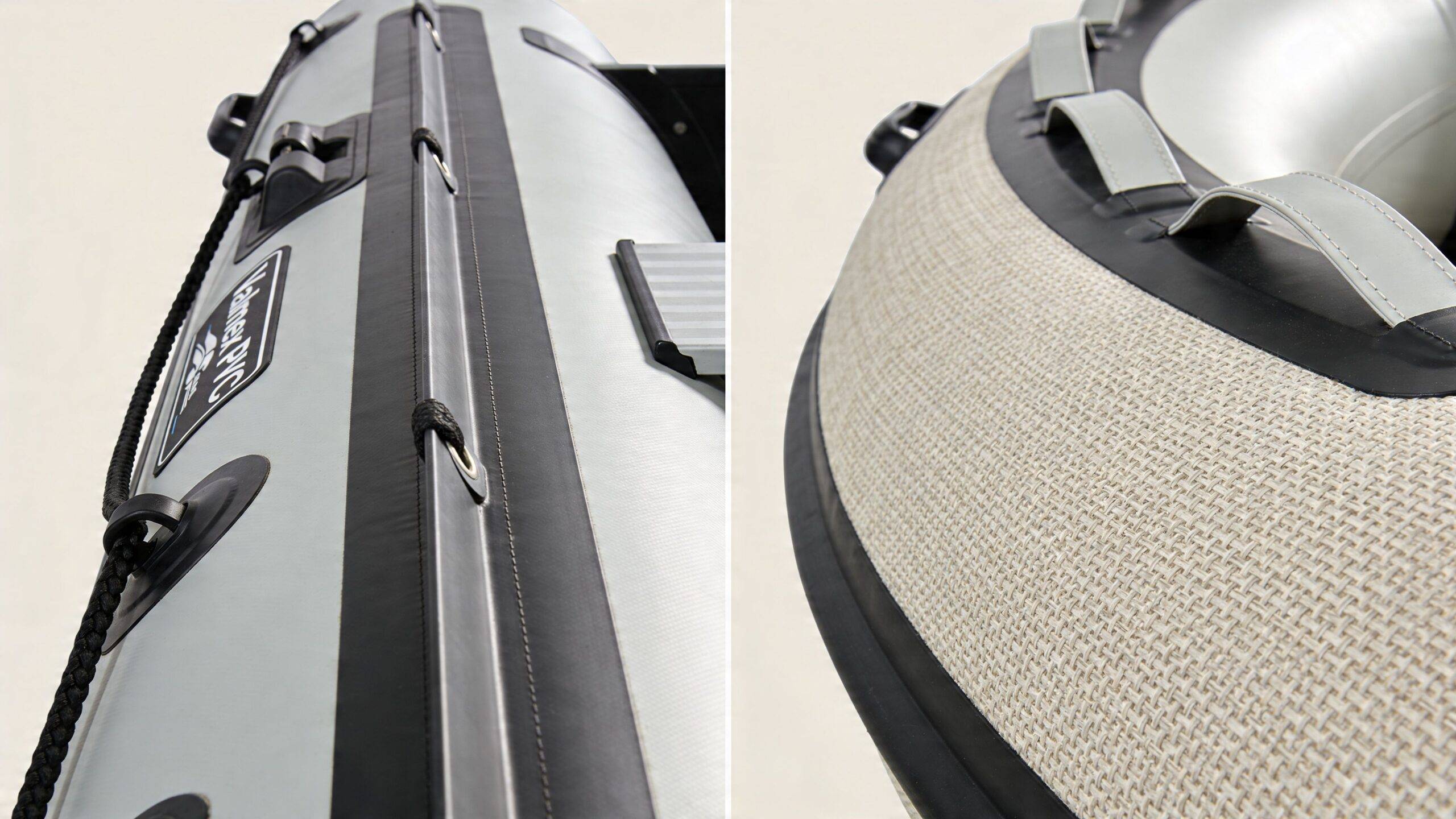
For most recreational buyers, the core question isn’t which material is universally superior. It’s which material fits your use. A family using the boat on weekends has different needs from someone leaving it exposed around marinas or using it heavily year-round.
Where Valmex PVC makes sense
German Valmex PVC suits many Australian buyers because it balances toughness, cost, and practical ownership. A well-made PVC boat with thermo-welded seams can handle common recreational use very well, especially if the owner cleans it properly, stores it out of harsh exposure when not in use, and keeps inflation pressures right.
That’s why many buyers looking at catamaran inflatables or sports tenders end up leaning this way. It’s a sensible fit for beach launching, fishing, camping trips, and family use without stepping into a higher premium category that not everyone needs.
Where Hypalon earns its place
Hypalon tends to appeal to buyers who expect more severe long-term exposure. If the boat will spend more of its life in hard sun, around salt, on a yacht, or in more constant service, the premium can make sense.
That doesn’t mean PVC is the budget compromise by default. It means the use case decides the answer. A carefully built PVC boat can outperform a poorly finished Hypalon one in real ownership terms.
For a closer material breakdown, this comparison on Hypalon versus German Mehler 1.2mm PVC material is worth reading before you buy.
Don’t ignore seam construction and floor feel
A lot of shoppers focus on tube fabric and forget the rest. Seams, floor structure, and transom construction all affect how solid the boat feels under load.
A rigid high-pressure air deck changes the experience. Instead of feeling like you’re standing on a soft inflatable surface, you get a firmer platform that behaves more like a boat floor should. That matters when you’re stepping aboard from a beach, moving around with tackle, or balancing a child on and off.
This walkthrough gives a useful visual on what better inflatable construction looks like in practice.
The right material choice is rarely about status. It’s about how often the boat will sit in UV, how rough your launch conditions are, and whether you want recreational value or heavier-duty longevity.
A practical material shortlist
- Choose Valmex PVC if: you want a durable recreational boat for regular family use, fishing trips, and portable ownership.
- Choose Hypalon if: the boat will see harsher ongoing exposure or more demanding service conditions.
- Avoid buying on fabric alone: poor floor support and weak transom design can undo the benefit of good tube material.
- Check how the boat is finished: seam quality and fittings matter as much as the fabric name.
The Best Inflatable Boat for Your Australian Lifestyle
The right boat depends on where and how you’ll use it. Buyers often ask for the single best option, but that’s not how this category works. The better question is which hull, size, and layout suit your routine.
One family wants beach days and easy packing. Another buyer wants a stable casting platform. A traveller wants compact storage. A yacht owner needs a dependable tender that doesn’t feel flimsy when loaded.
The family adventurer
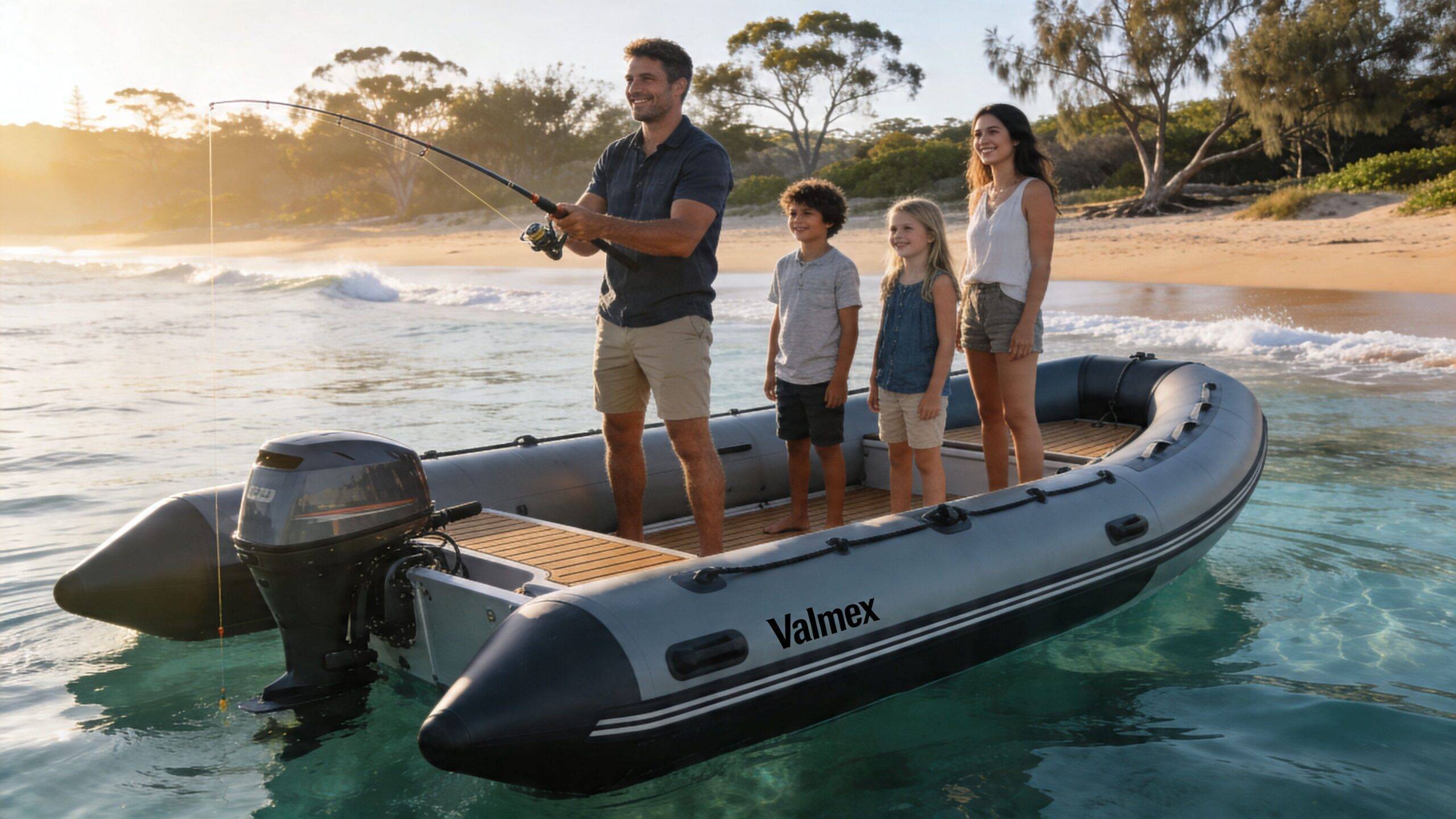
If your weekends involve kids, towels, snorkel gear, a picnic bag, and the possibility that someone will stand up at the wrong moment, stability matters more than outright speed. A catamaran-style inflatable in the small to mid-size range usually makes more sense than a lighter, narrower monohull.
During their search, buyers often compare broad recreational brands and discover that the feel underfoot varies a lot. Waverunner-style sports inflatables can appeal because they look familiar and can suit general use, but families who value steadiness often end up preferring a twin-hull approach because movement onboard feels calmer.
The passionate angler
Fishing exposes a boat’s weaknesses quickly. Someone leans over one tube. Someone else shifts aft. A lure box slides. You turn to cast and the floor tells you immediately whether the hull is planted or nervous.
A catamaran inflatable is often the better answer here because the platform supports side-to-side movement with less drama. Viper and Aerowave catamaran layouts are particularly relevant in this conversation because they’re aimed at buyers who want a more stable fishing base rather than a basic tender-first shape.
If your main use is lure casting or bait fishing with two people aboard, don’t choose the narrowest hull that technically fits your budget. Choose the hull that stays composed when both of you move at once.
The RV and 4WD traveller
This buyer values simplicity. Storage space matters. Weight matters. Setup effort matters. You want something that packs down neatly, launches without needing a formal ramp, and doesn’t take over the whole vehicle.
A compact inflatable with a rigid-feeling floor and sensible motor pairing usually suits this lifestyle well. The trick is avoiding the ultra-light boat that stores beautifully but feels too compromised once loaded with real gear.
The yacht owner
Tender duty sounds easy until the boat is carrying people, bags, fuel, and groceries in changeable conditions. This use case rewards durable tubes, strong fittings, and a stern that handles repeated boarding and motor use without fuss.
For yacht owners, durability and confidence at low speed matter as much as top-end performance. A well-built catamaran or serious tender design often feels more secure than a bargain inflatable that’s only comfortable in ideal conditions.
Inflatable Boat Model Selector
| Use Case | Recommended Size | Ideal Hull Type | Key Features (Easy Inflatables) | Example Model |
|---|---|---|---|---|
| Family beach days and sheltered coastal exploring | Mid-size | Catamaran | Air deck, stable beam, strong transom, family-friendly layout | Aerowave catamaran |
| Stand-up fishing and estuary use | Mid-size | Catamaran | Stable casting platform, durable tube material, motor-ready stern | Viper catamaran |
| RV, caravan, and 4WD travel | Compact to mid-size | Compact catamaran or light sports hull | Pack-down portability, manageable setup, practical floor rigidity | Aerowave compact model |
| Yacht tender and marina duties | Compact to mid-size | Tender-focused catamaran or RIB-style inflatable | Tough construction, easy boarding, dependable transom | Aerowave tender setup |
A useful starting point is to compare categories rather than trying to compare every individual listing. This guide to the best inflatable boat options in Australia helps frame that decision by use case.
The only product mention I’d make directly is this. Easy Inflatables offers Aerowave and Viper models that suit buyers specifically chasing catamaran-style stability, as well as more conventional inflatable formats for people who want a different trade-off.
Choosing the Right Outboard Motor for Your Inflatable
A good hull can feel poor with the wrong motor. That happens all the time. Buyers either under-power the boat and wonder why it struggles to lift, or they chase more horsepower than the transom and hull really want.
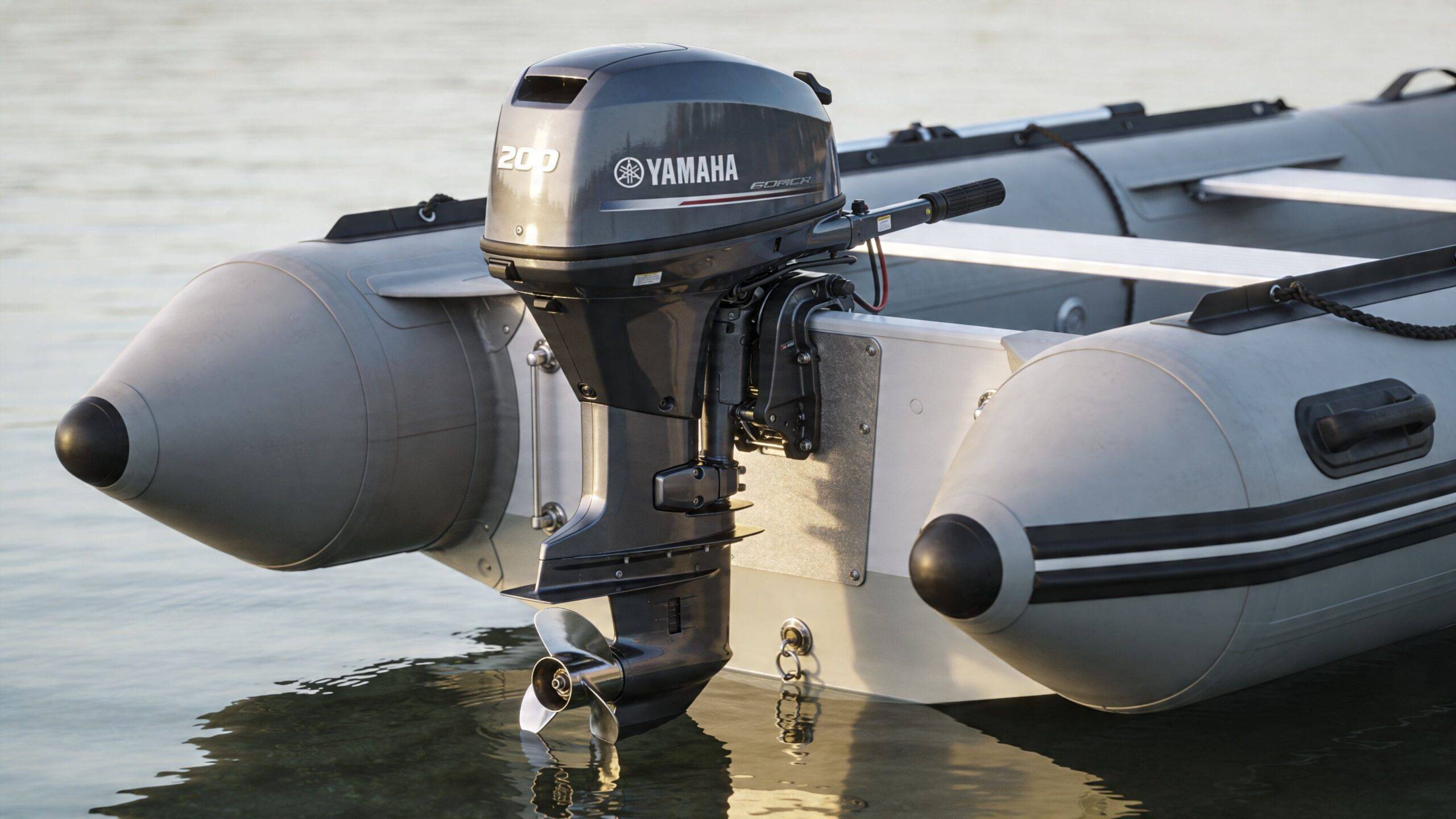
The right outboard depends on four things working together. Hull design, total onboard weight, intended use, and the boat’s transom rating all need to agree. Ignore one of them and the setup won’t feel right.
Start with the load, not the engine catalogue
Think about how the boat will be used. One person and light gear is different from two adults, a child, tackle, safety gear, and fuel. If your stable inflatable boat australia search is focused on fishing or family use, weight and balance matter more than brochure-style motor talk.
A moderate engine on the right hull often feels better than a larger engine on a hull that doesn’t support it well. Inflatables with stronger transoms and more stable underbodies cope with motor load more confidently.
Shaft length is not optional
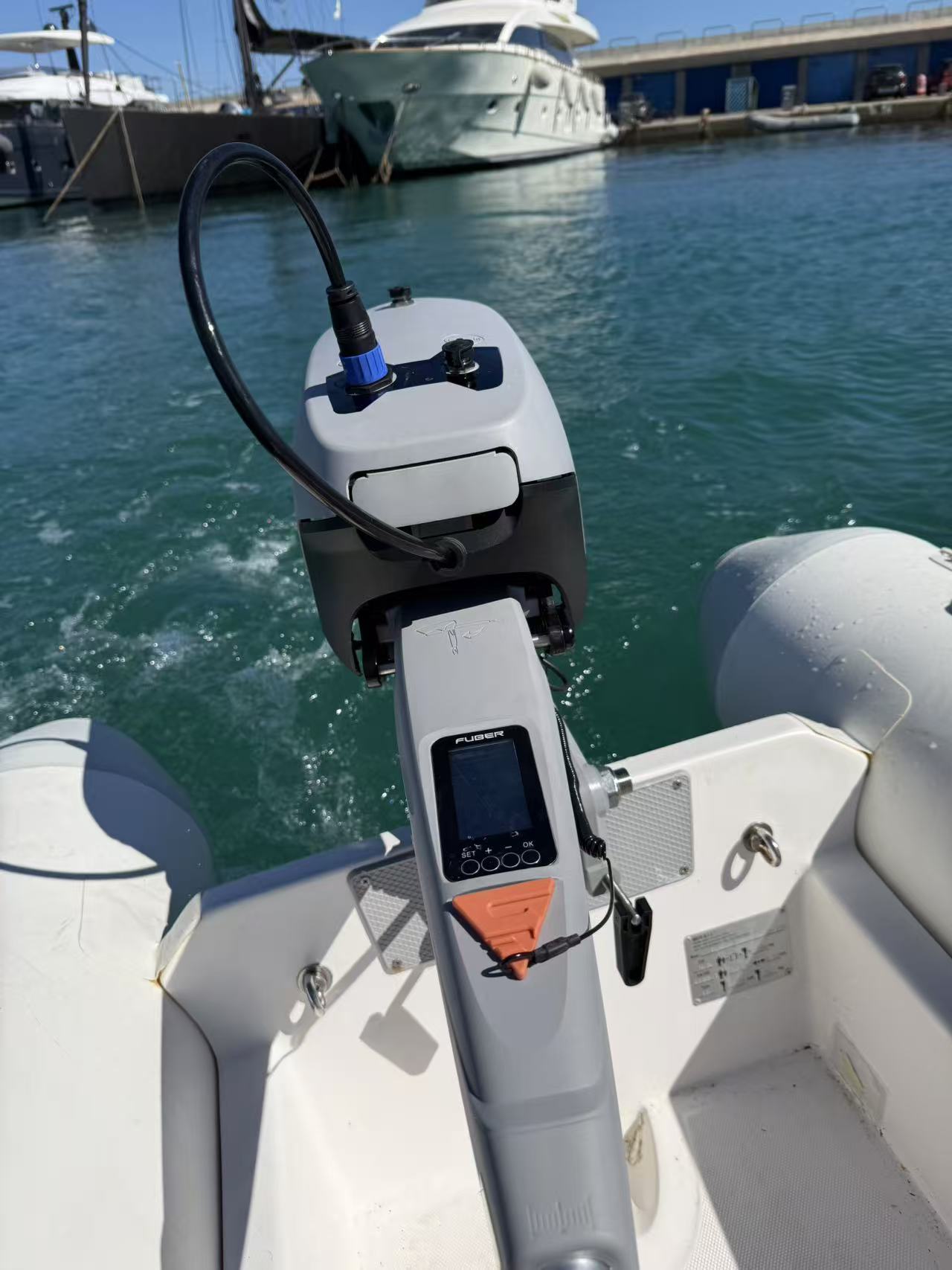
One common mistake is treating short-shaft and long-shaft motors as interchangeable. They aren’t. The shaft must match the transom height the boat is designed for. Get this wrong and the motor can ventilate poorly, drag awkwardly, or stress the stern.
This becomes especially important on inflatable boats because transom height and stern balance are tightly linked to performance. If you’re comparing packages, this guide to choosing a motor for inflatable boats is a practical place to start.
What usually works in the real world
Rather than chasing the biggest number available, match the motor to the job:
- For tender duties: keep the setup simple and easy to manage.
- For family cruising: choose smooth, predictable power over aggressive acceleration.
- For fishing loads: allow enough grunt to move the hull cleanly when gear is aboard.
- For compact travel boats: prioritise manageable weight so transport stays easy.
A boat that planes cleanly with the right load feels safer and more comfortable than a boat that’s over-engined and badly balanced.
Package thinking saves headaches
A lot of first-time buyers shop for the boat first, then try to solve the motor later. It’s usually easier to think in complete setups. That includes the outboard, fuel arrangement, mounting height, and how the total package will be transported and launched.
Hidea outboards are a common option in this category because buyers often want a practical match for recreational use without moving into a more complex purchase. The main point isn’t brand loyalty. It’s compatibility. The hull, transom, and motor should be chosen as one system.
Australian Boating Rules Maintenance and Aftercare
A stable inflatable still needs to be compliant, maintained, and stored properly. That’s what keeps ownership easy instead of frustrating. The good news is that the basics are straightforward once you know what to check.
What to look for on compliance
For inflatable boats in the relevant size range, AMSA’s Generic Equivalent Solution under Marine Order 503 requires boats to meet ISO 6185 Inflatable Boats Parts 2-4 for lengths 2.7 to 4.2m, including a minimum of 3 independent chambers and transom ratings for maximum horsepower. That framework enables certification for unsupervised use up to 4 adults/500kg, and compliance plates dictate short-shaft (15") engines on 3.6m models to prevent transom overload, according to AMSA Marine Order 503 guidance.
For buyers, the practical takeaway is simple. Look for proper compliance information, chamber layout, and clear engine ratings. If a seller can’t explain those basics, move on.
The maintenance habits that actually matter
Inflatable boats don’t need complicated care, but they do need consistent care. Most problems come from neglect, not from the design itself.
- Rinse after salt use: Salt left on fittings, seams, and transom hardware shortens service life.
- Dry before storage: Packing away a damp boat invites mildew and unpleasant odours.
- Store out of harsh exposure: Shade and clean storage help preserve fabric and fittings.
- Watch inflation pressure: A boat that’s too soft loses shape and confidence on the water.
Boat-in-a-bag ownership works best when organised
Portable inflatables are easiest to live with when you keep a simple routine. Clean the hull, check the floor, inspect the valves, and pack accessories in the same places each time. That turns setup and pack-down into habit rather than effort.
A basic pre-launch check should include your inflation state, transom hardware, drain plugs if fitted, and safety gear. If you’re new to the category, this guide to boating safety equipment for inflatable owners is useful as a practical checklist.
Buy the boat you can maintain properly. A premium model still suffers if it’s stored dirty and underinflated, while a well-kept recreational inflatable can stay enjoyable for years.
After-sales support matters more than buyers expect
A lot of cheap online boats look tempting until you need parts, warranty help, or advice on valves, floors, pumps, and motor pairing. Local support matters because inflatable ownership is hands-on. People have questions after purchase. They need replacement fittings, setup advice, and help solving ordinary issues.
That’s especially true in Australia where beach launching, coastal use, and long-distance transport put real stress on equipment. A seller with practical knowledge is often worth more than a lower upfront price from an anonymous listing.
Your Inflatable Boat Questions Answered
Should I hire first or buy straight away
Hiring can be a sensible way to learn what size and layout you like, especially if you’ve never used an inflatable before. It lets you test how much stability you want, how comfortable you are with setup, and whether your use is mostly fishing, family cruising, or tender work.
Buying starts to make more sense when you know you’ll use the boat regularly and want the convenience of having the setup ready for your own trips. Buyers often aren’t just purchasing a hull. They’re buying access. The ability to head out when the weather suits matters.
How do I compare prices properly
Don’t compare boats on headline price alone. Compare the full package.
Check what’s included in the floor setup, seat arrangement, carry bags, pump, motor compatibility, and whether the transom is built for real outboard use. Also compare support after purchase. A cheaper boat can become the expensive option if you need upgrades or repairs early.
Is a catamaran inflatable really better than a monohull
For many Australian recreational buyers, yes, especially if your priority is stand-up stability, family confidence, or fishing. A monohull can still be the right answer for some users, particularly if they want a simpler tender style or a different ride feel, but catamaran layouts usually suit buyers who want a more planted platform.
What safety features should I pay attention to first
Start with chamber layout, floor rigidity, transom integrity, grab lines, and the boat’s general boarding stability. Those basics affect safety every time the boat is used. If you want a broader safety lens beyond small inflatables, this overview of essential boat tour safety features is a useful reminder of the practical details responsible operators and owners pay attention to.
Can I use one boat for family trips and fishing
Usually, yes. Many buyers want one boat that handles both. The key is choosing a layout that doesn’t feel compromised the moment people move around with gear aboard. If you expect mixed use, stability should win over chasing the lightest or cheapest package.
What usually disappoints buyers
The wrong expectations. People buy a very light entry-level inflatable expecting it to feel like a more serious marine platform. Or they buy a large hull without thinking about storage, setup effort, or motor weight. The sweet spot is the boat you’ll use often, not the one that sounds most impressive on paper.
If you’re trying to narrow down the right setup for fishing, family use, RV travel, or tender duty, Easy Inflatables is a practical place to compare catamaran inflatables, RIBs, materials, and motor-ready packages built for Australian conditions.
Shop gear featured in this guide
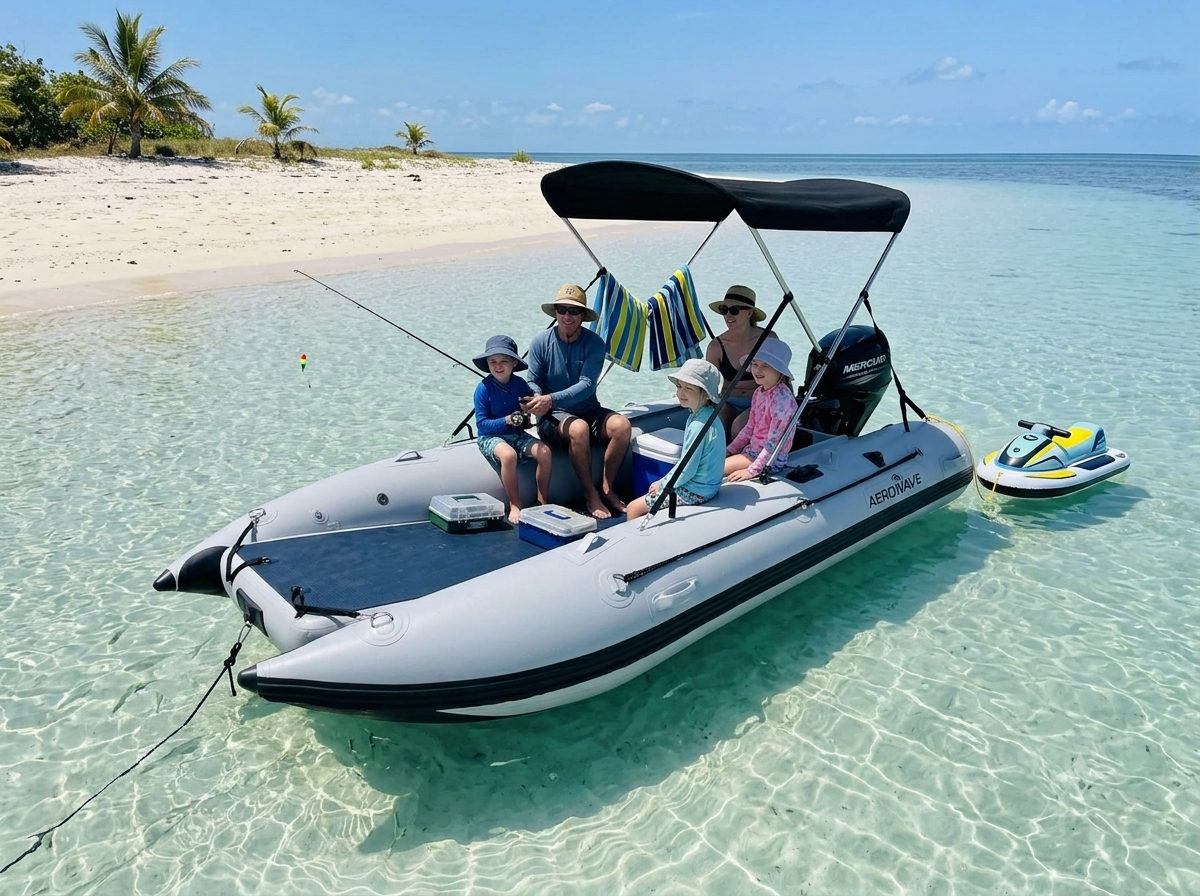
Aerowave WaveRunner 380 Series 3 Catamaran Package
The WaveRunner 380 Series 3 is a premium 3.8m inflatable catamaran package built for Australian and worldwide families, fishing, and coastal day boating — ideal for snorkeling and spearfishing — offering serious stability and premium German Valmex® construction.
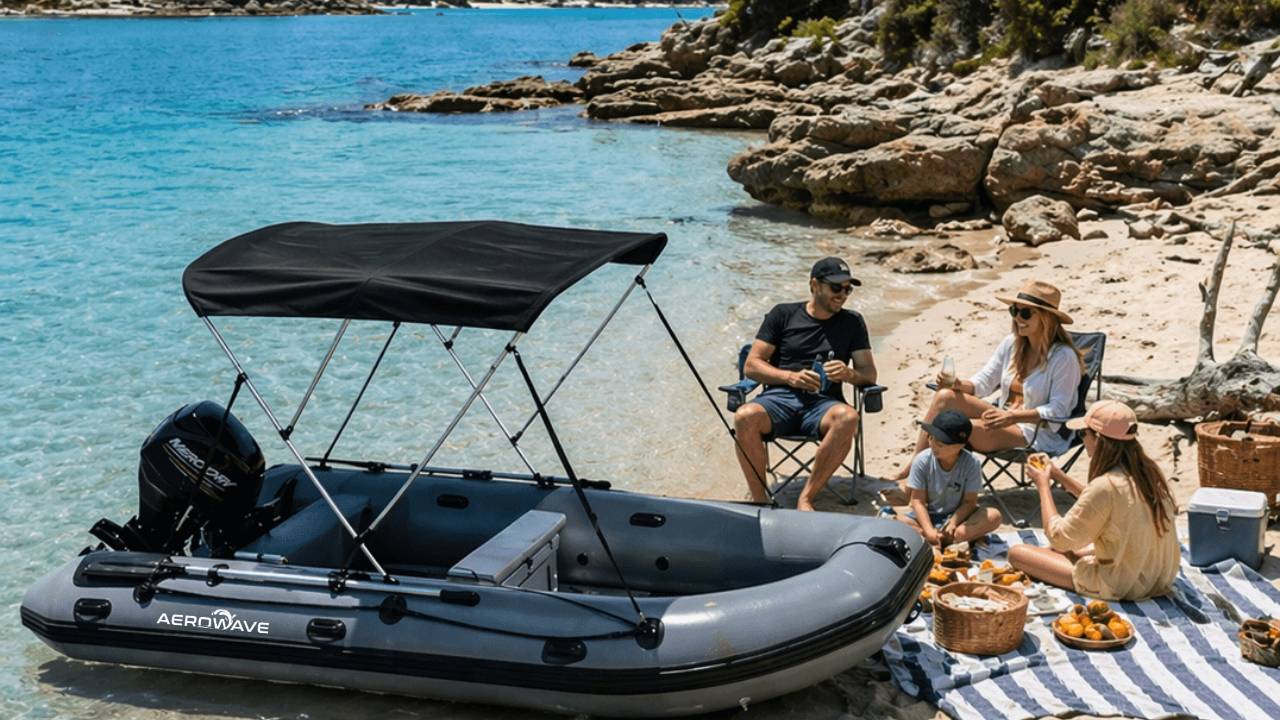
Aerowave Viper 400 Sovereign
Flagship 4m enclosed-bow inflatable catamaran. German VALMEX® 7321 Heavy Plus 1.2mm commercial-grade fabric, 10 PSI high-pressure drop-stitch air deck floor with VALMEX non-slip surface, LockPro wheels, full Bimini and FREE express delivery Australia-wide delivery included. Winter special — save $1,000 until 31 August 2026.
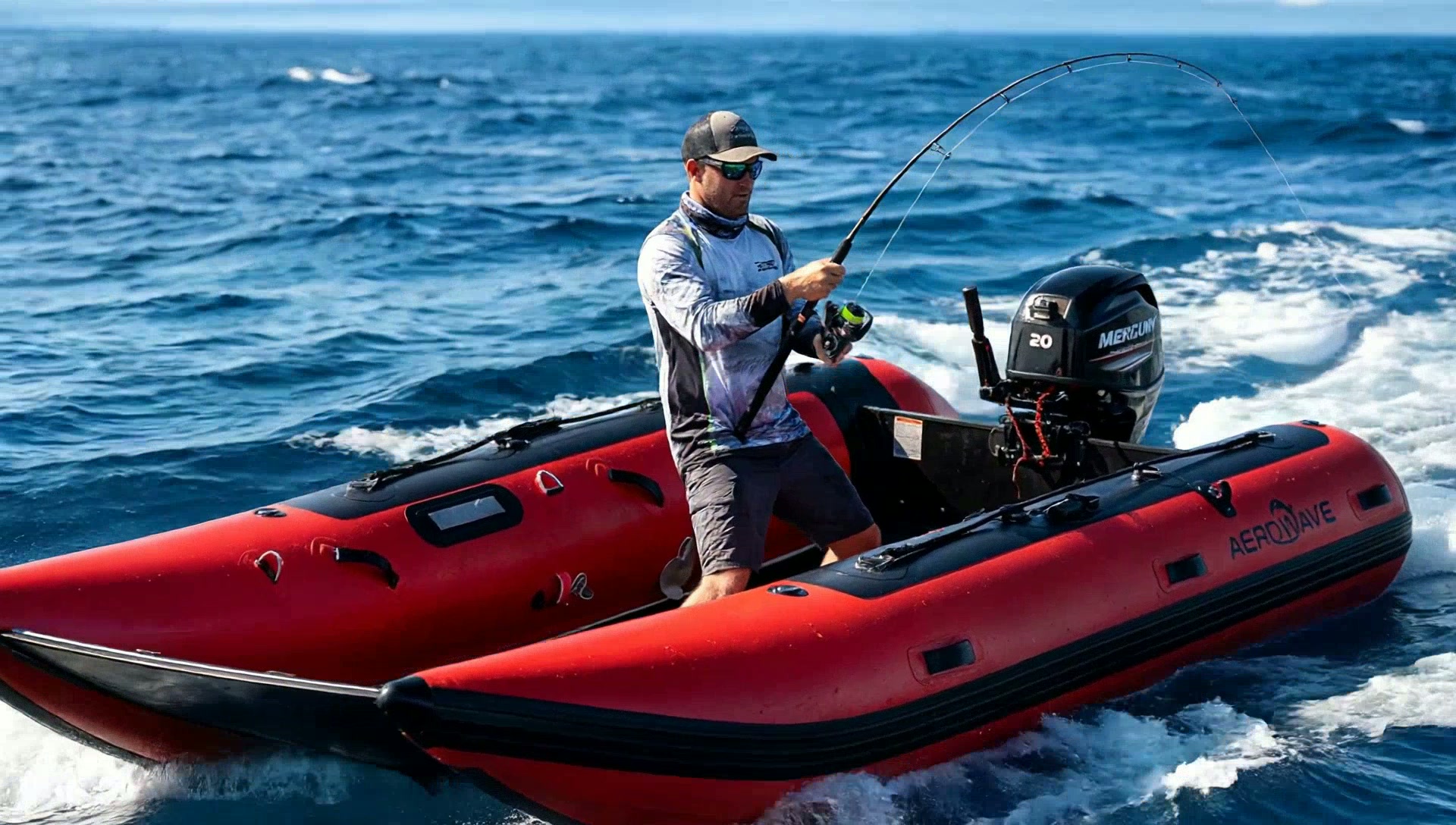
AeroWave AeroCat 360 Inflatable Catamaran
Same proven hull design, shape and look as our flagship Aerowave Viper catamarans — built lighter using 0.9mm Valmex® fabric instead of the Viper's 1.2mm. The AeroWave AeroCat 360 is our 3.6m inflatable catamaran built from 0.9mm Valmex® fabric — intentionally lighter than our 1.2mm Viper hulls so it folds smaller, packs lighter and is easy to handle solo. Twin-hull stability, 5-Year Warranty with global support and priced ~$500 below comparable 0.9mm imports.
Not sure which suits you? Talk to a real boat owner.
Ready to set sail?
Premium German-fabric inflatable catamarans with FREE Sea Freight or Express Air Delivery — your choice at cart. Talk to our team or browse the fleet.
Like this guide? Get the next one in your inbox.
Owner-tested tips, gear deep-dives and Aussie boating know-how — no spam.