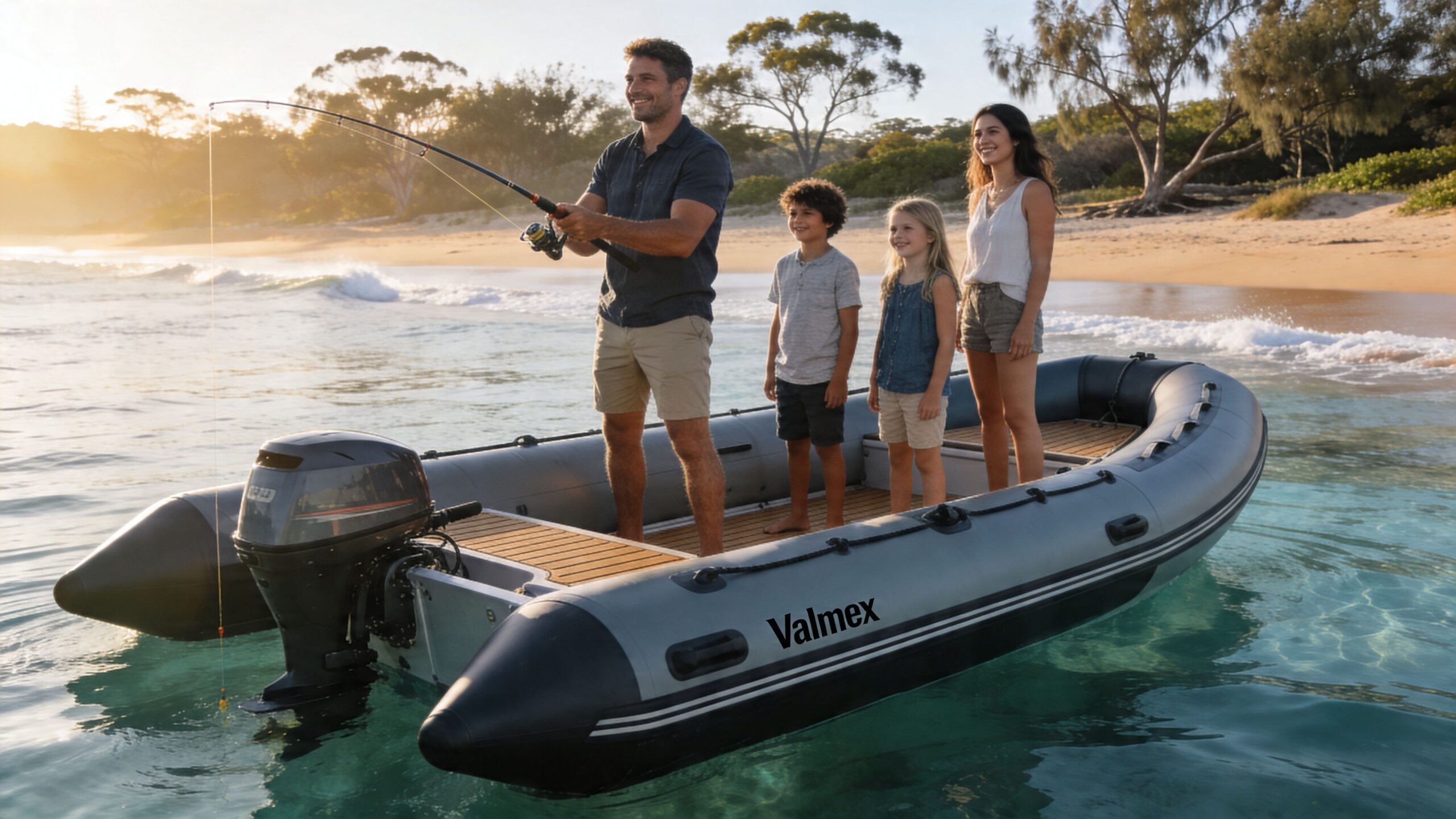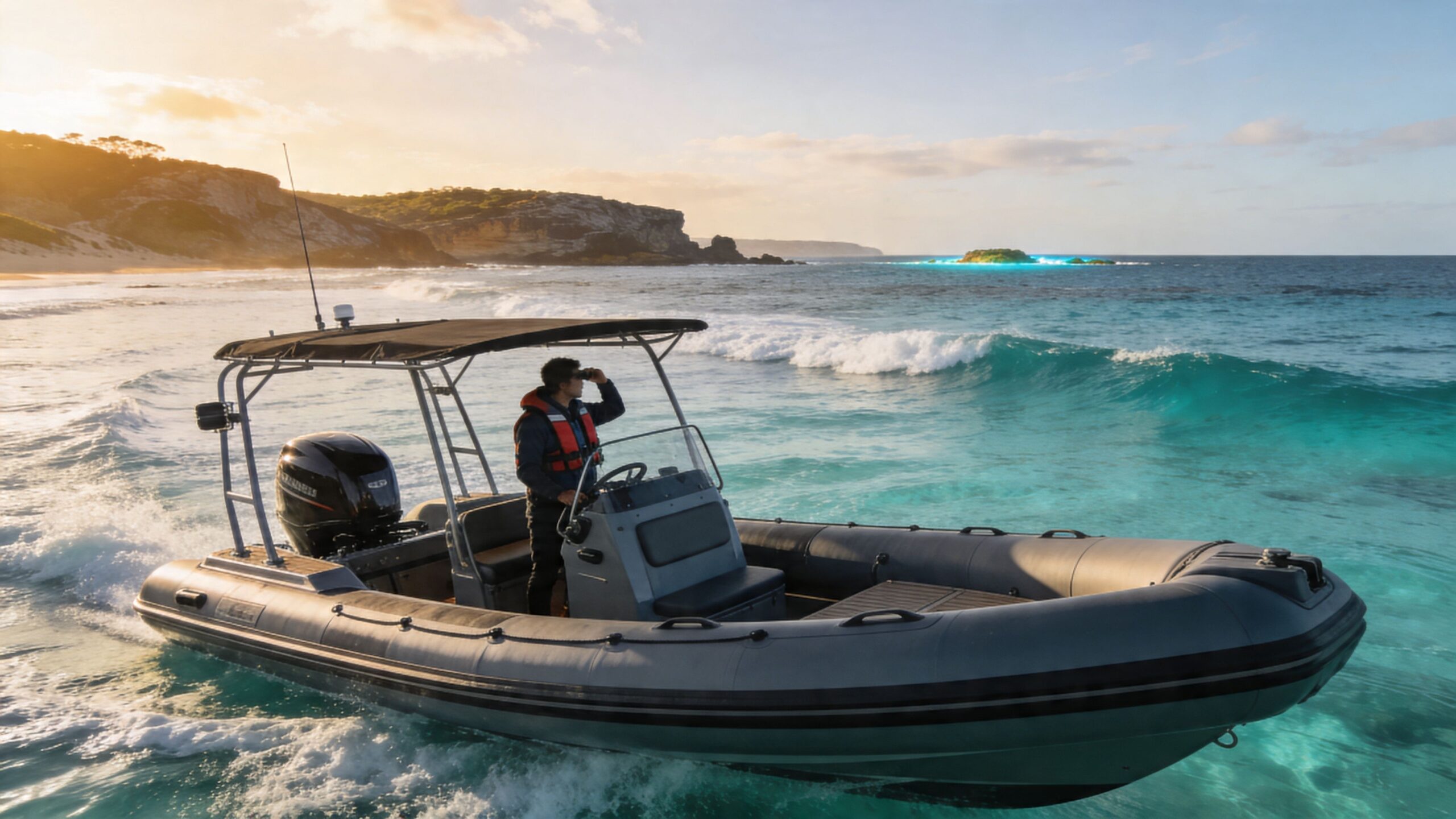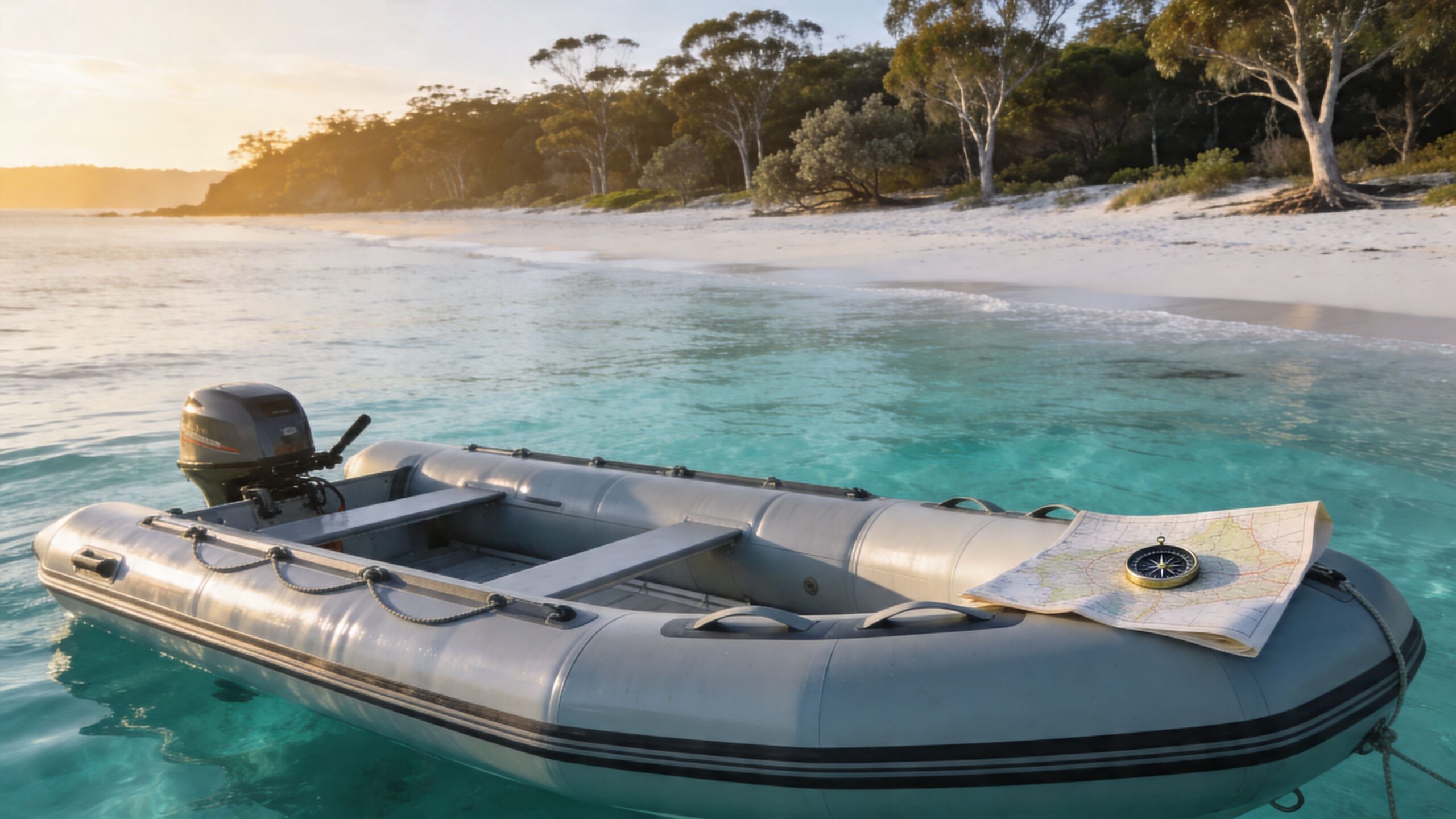
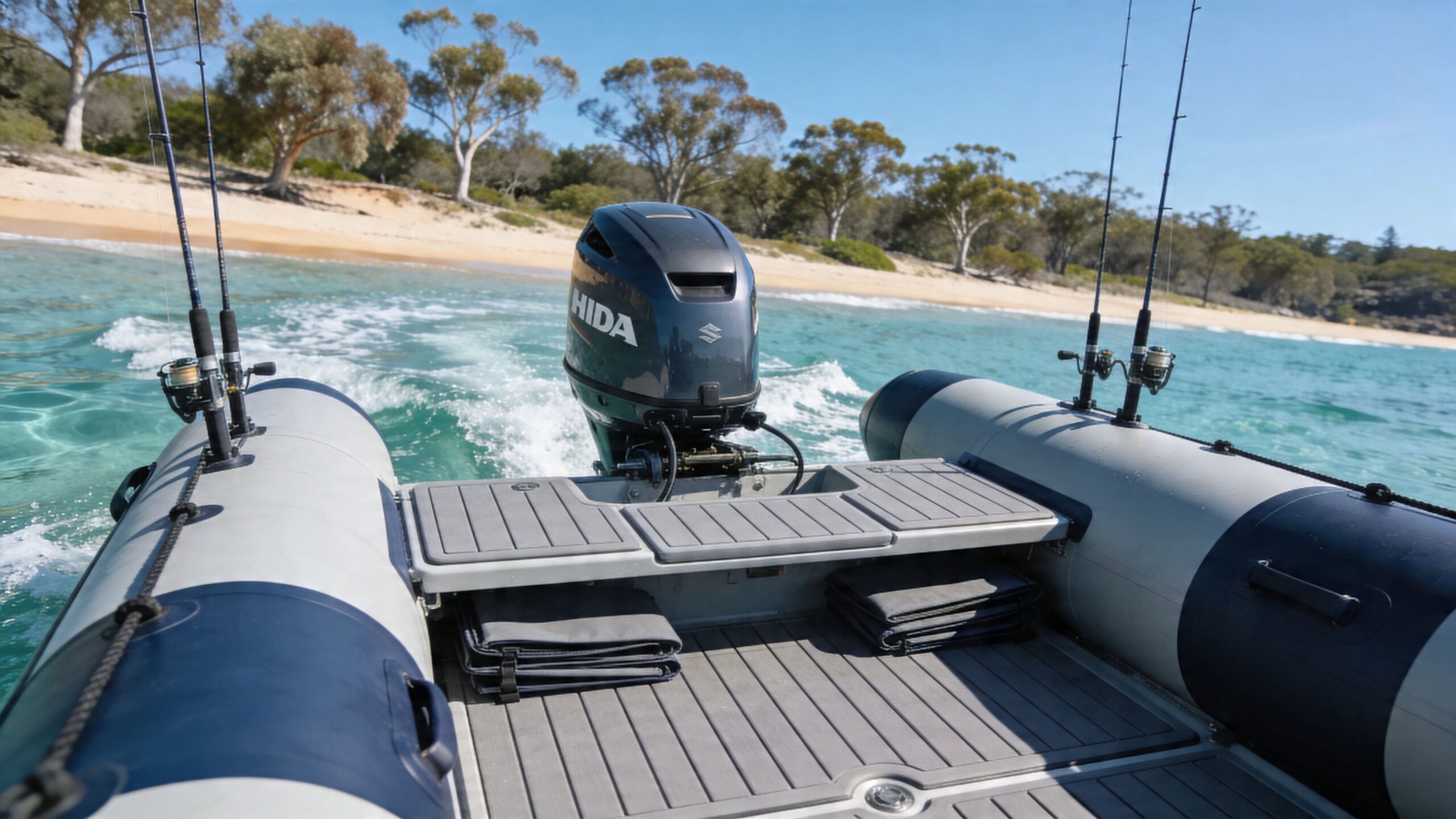

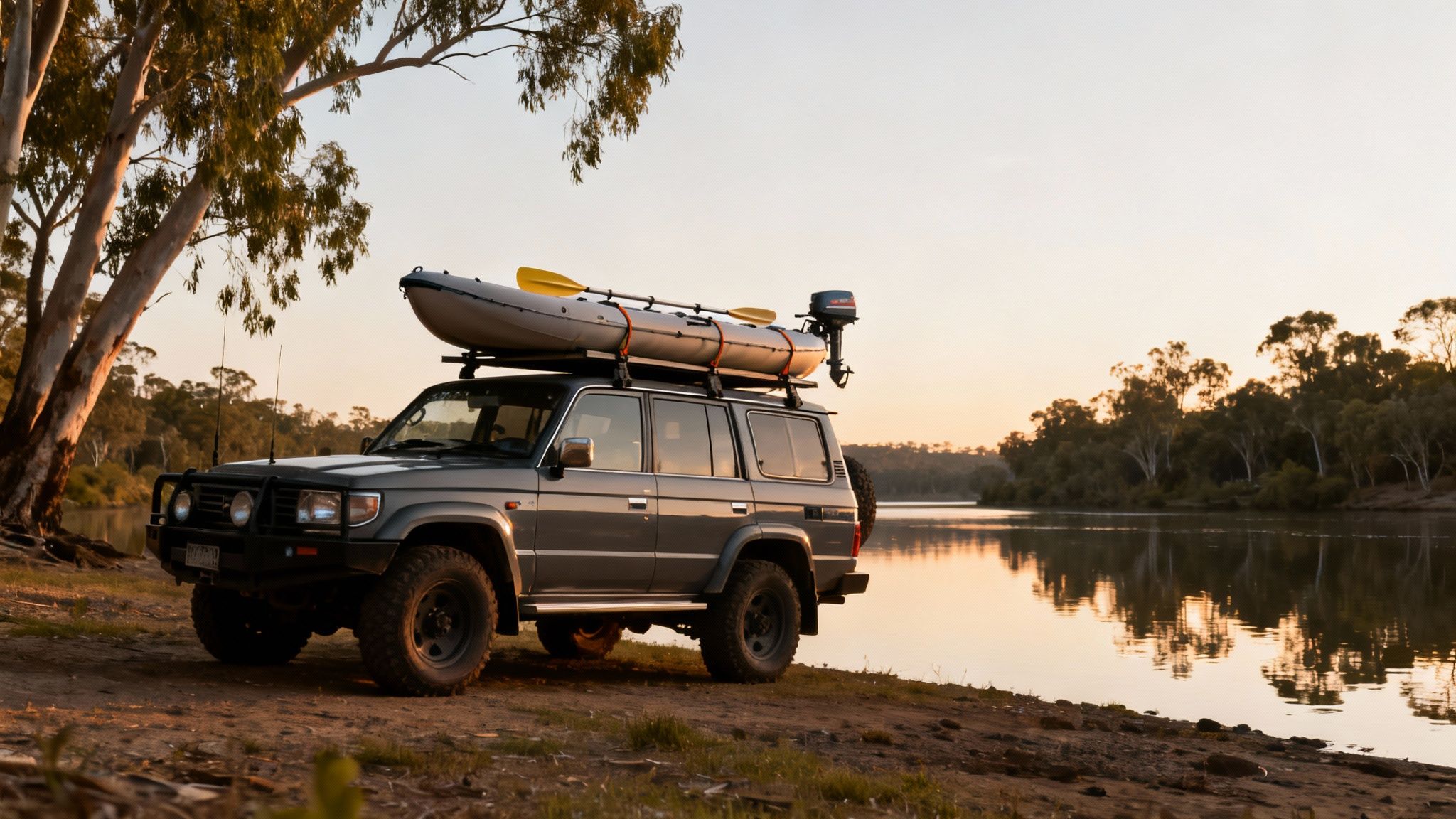
A car topper tinny is just a fancy name for a lightweight boat you can chuck on the roof of your car instead of hauling it on a trailer. Simple, right? But that simple idea is your golden ticket to exploring places that are completely off-limits to regular trailer boats. Think hidden creeks, untouched fishing spots, and secluded beaches that most people never get to see.
Imagine this: it’s a sunny Saturday, and you get the sudden urge to go fishing. Instead of messing around with a clunky trailer, you just load the boat onto the roof, pack the car, and you’re off. That’s the real magic of a car topper tinny.
It’s more than just a boat; it’s a portable gateway to adventure that turns your 4WD, SUV, or even your RV into a go-anywhere exploration machine. It completely changes how you can experience Australia’s incredible coastlines and inland river systems.
For years, the word “tinny” probably made you picture a classic, rigid aluminium boat. They do the job, but they can be heavy, a real pain for one person to handle, and they seem to attract dings and dents like nobody’s business. Today, the game has changed. High-performance inflatable boats have arrived, offering a far better alternative for rooftop travel.
The reasons for choosing a modern inflatable car topper are pretty clear, and they resonate with all sorts of outdoor lovers across Australia.
Let’s take a quick look at why modern inflatable car toppers are turning heads for Aussie adventurers.
| Feature | Primary Benefit |
|---|---|
| Lightweight Build (Under 45kg) | Effortless one-person loading, unloading, and launching. |
| Compact Pack-Down Size | Fits in a car boot or caravan, freeing up roof space. |
| No Trailer Required | Huge savings on registration, insurance, and maintenance. |
| Superior On-Water Stability | A safe, steady platform for fishing, family, and fun. |
| Durable PVC Construction | Resists dings, dents, and punctures better than aluminium. |
| Quick Inflation/Deflation | Go from car to water in under 10 minutes. |
Ultimately, inflatables offer a level of convenience and performance that traditional tinnies just can’t match.
A car topper tinny opens up a world of possibilities that trailer-bound boaters can only dream of. It’s about simplifying the process so you can spend less time preparing and more time on the water, creating memories.
The demand for versatile vehicles that can carry this kind of gear is massive in Australia. While specific sales data on “car topper tinnies” is hard to come by, a quick look at the Australian automotive market shows a huge appetite for adventure-ready transport. This trend highlights a growing desire for gear that supports an active, outdoor lifestyle.
By choosing a modern inflatable, you’re picking the smartest, most convenient way to get out on the water. To see what this looks like in practice, you can explore a curated selection of exceptional car top boats designed specifically for Australian conditions.
When it comes to choosing a car topper, you’re really facing one big decision: stick with a classic aluminium tinny or jump into a modern, high-performance inflatable? This choice shapes everything—how you travel, how you launch, and how your boat handles on the water. It’s the ultimate showdown between old-school rigidity and new-school flexibility.
Most of us picture a clunky, rigid tinny when we think of a boat on a roof rack. They’ve been around for decades, but their flaws become painfully obvious the second you try to lift one. They’re heavy, awkward for one person to manage, and seem to attract dents and dings that can mess with the hull over time.
A modern inflatable car topper, on the other hand, is a totally different beast. These boats are built for true portability and toughness, smashing all the old myths about durability.
This little flowchart sums up the thinking perfectly for anyone dreaming of more freedom on the water.
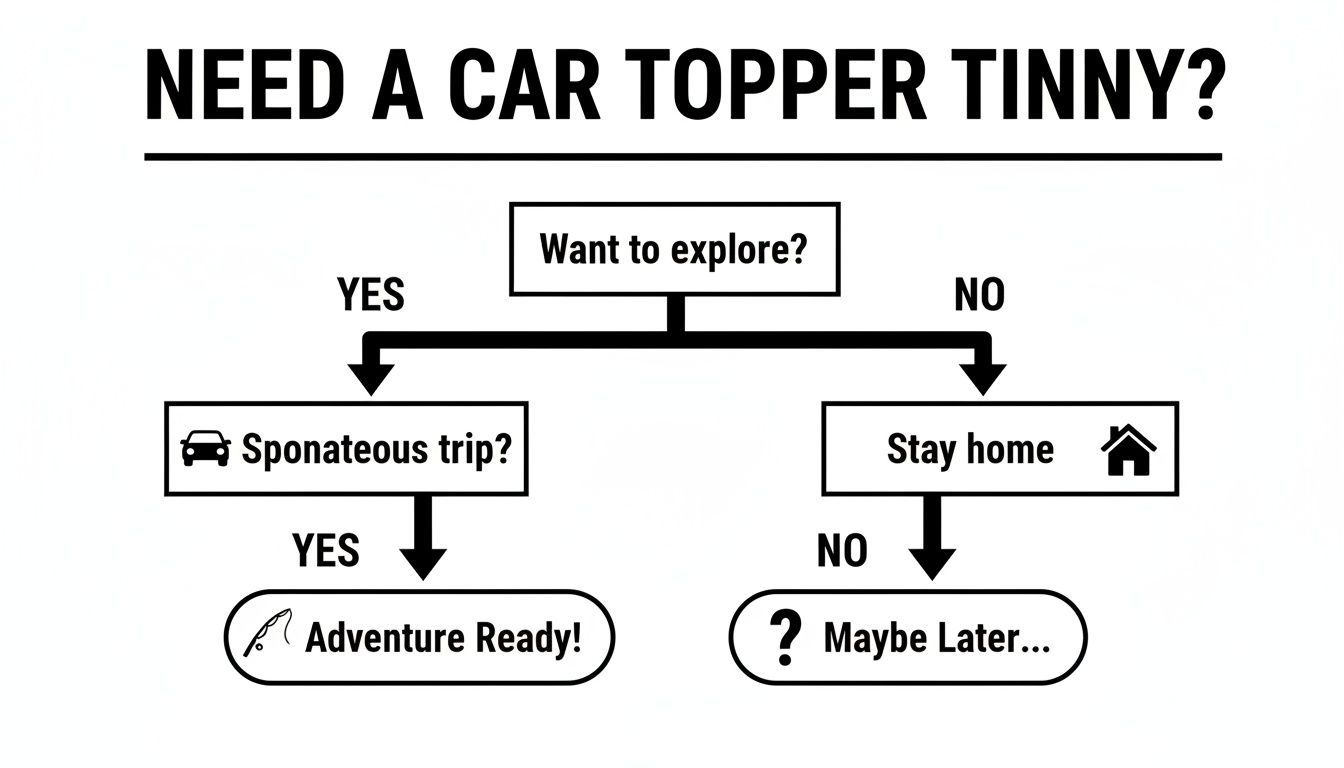
As you can see, it all comes down to wanting spontaneous, easy-access adventures. That’s what car toppers are all about.
To help you decide, let’s put these two boat types head-to-head on the factors that really matter out in the real world.
This table breaks down the key differences, showing why modern inflatables are quickly becoming the go-to choice for adventurers across Australia.
| Attribute | Modern Inflatable Boat | Traditional Aluminium Tinny |
|---|---|---|
| Weight | Lightweight (30–45kg). Easily managed by one person, perfect for solo trips. | Heavy (60–70kg+). Often requires two strong people to lift safely. |
| Portability | Excellent. Can be deflated and packed into a boot, freeing up roof rack space. | Poor. Bulky and rigid, requiring a dedicated roof rack and secure tie-downs. |
| Durability | High. Flexes and bounces off impacts. Commercial-grade PVC resists punctures. | Moderate. Prone to dents, dings, and cracks from sharp impacts. |
| Stability | Exceptional. Large air tubes create a wide, stable platform that’s hard to tip. | Good. Flat bottom provides stability but can feel “tippy” when moving around. |
| On-Water Comfort | Excellent. Air tubes absorb chop, delivering a smooth and quiet ride. | Poor to Fair. Slaps against waves, resulting in a noisy, jarring ride. |
| Storage | Simple. Packs down into a bag, easily stored in a garage, shed, or cupboard. | Difficult. Requires significant space in a garage or yard. |
| Setup | Fast. Inflates in under 10 minutes with a good pump. | Minimal. Just needs to be unloaded and launched. |
While tinnies have their place, the advantages of a modern inflatable in terms of weight, comfort, and sheer convenience are hard to ignore.
The single biggest game-changer is weight. A comparable aluminium tinny can easily tip the scales at over 60-70kg. That’s a two-person job, minimum, and makes the idea of a quick, spontaneous trip feel like a whole lot of work.
An inflatable boat completely flips the script. Most car-topper models weigh between 30kg and 45kg. This massive difference means one person can often handle the entire process, especially with a simple helper like a roof rack roller. Suddenly, solo trips are back on the table.
But portability is more than just kilograms. An inflatable can be deflated, rolled up, and thrown in the boot of your car or the storage bay of your caravan. This is a level of versatility a tinny can only dream of, freeing up your roof for swags, kayaks, or anything else your adventure demands.
Let’s tackle the elephant in the room: the idea that inflatables are fragile. With today’s materials, that couldn’t be further from the truth. High-quality inflatables are made from incredibly tough, commercial-grade fabrics like German Valmex PVC with thermo-welded seams that are stronger than the material itself.
Think of it like this: an aluminium tinny is like an eggshell—rigid, but it cracks and dents under sharp impact. A premium inflatable is like a high-performance car tyre—it flexes and absorbs impacts, bouncing off rocks and logs that would leave a permanent mark on metal.
This built-in resilience makes inflatables a surprisingly tough choice for exploring rocky Aussie coastlines and snag-filled rivers. If you want to get into the nitty-gritty of the materials, you can learn more about the benefits of Hypalon vs German Mehler PVC material in our detailed guide.
Out on the water, the differences are just as clear. An aluminium tinny typically has a flat or shallow-V hull that slaps hard against the water, sending jarring vibrations right through you. In anything but glassy conditions, the ride is loud and uncomfortable.
Inflatable boats deliver a far better experience.
For families, anglers, and anyone who values a secure and comfortable feel on the water, the inflatable is the clear winner. The stability and soft ride make it a safer, more enjoyable, and far more practical choice for all kinds of Aussie adventures.
Putting together the perfect car topper setup is a bit like a puzzle. Every piece—the boat, the motor, and your vehicle—has to fit just right for the whole thing to be safe, legal, and stress-free. Nail this combination, and your adventures will be smooth from the moment you pull out of the driveway.
The heart of this puzzle is weight. Everything you put on top adds to the total load your vehicle’s roof can handle, and ignoring those limits is a recipe for trouble. At best, you risk damaging your car; at worst, you’re looking at a dangerously unstable vehicle on the road and some hefty fines.
Before you even start dreaming about boats, you need one critical piece of information: your vehicle’s roof load limit. You’ll find this number in your car’s owner’s manual. It’s the absolute maximum weight the manufacturer has certified the roof to carry, and it is non-negotiable. This is the figure that all your other calculations will be based on.
To work out your total load, you need to add up the weight of every single thing you plan to put on the roof. It’s simple maths, but it’s surprisingly easy to get wrong if you forget one of the components.
Here’s what you need to tally up:
Let’s run the numbers for this common setup: 10kg (racks) + 42kg (boat) + 27kg (motor) = 79kg total load.
Now, you compare that total to your vehicle’s capacity. Take a popular adventure vehicle like a Toyota Prado, which often has a roof load limit between 80kg and 100kg. In this case, our 79kg package fits comfortably, leaving a little wiggle room for tie-down straps and other bits and pieces.
Always, always double-check your vehicle’s specific roof load rating. Never guess or assume. This one number dictates what size boat and motor combination you can safely and legally carry.
This real-world example shows just how easily a capable and powerful car topper package can be matched with a standard family SUV or 4WD.
Once you’ve got your weight limits sorted, you can turn your attention to the motor. The aim here is to strike the perfect balance between on-water performance and off-water portability. A bigger motor gives you more grunt to punch through currents and chop, but it also means more weight you have to lift onto the roof.
For most inflatable car toppers in the 3m to 3.8m range, a 5hp or 6hp outboard really is the sweet spot. It provides enough power to get the boat planing with one or two people aboard and can handle typical coastal or river conditions without being a back-breaker to lift.
If your main priority is keeping things as light and portable as possible, then a smaller 2.5hp to 4hp motor is a fantastic option. These engines are incredibly lightweight and easy to handle, but they might struggle to get the boat on the plane, especially when you’ve got extra gear or passengers.
Ultimately, the right motor comes down to how you plan to use your boat. For a much deeper dive into picking the perfect power plant, check out our comprehensive guide on choosing the right engine for your inflatable boat. It covers every detail you need to make a confident choice.
Getting these elements matched up correctly is what transforms your vehicle into a seamless adventure rig. It’s the key to making sure you’re not just ready for the water, but that you can get there and back safely, every single time.
Getting a boat onto your car roof might seem like a handful, but with the right technique, it’s a simple, confident process. A modern inflatable car topper is designed for one person to handle easily. We’ll break down the whole operation into three clear stages: loading, securing, and launching, so you can get on the water faster and with zero stress.
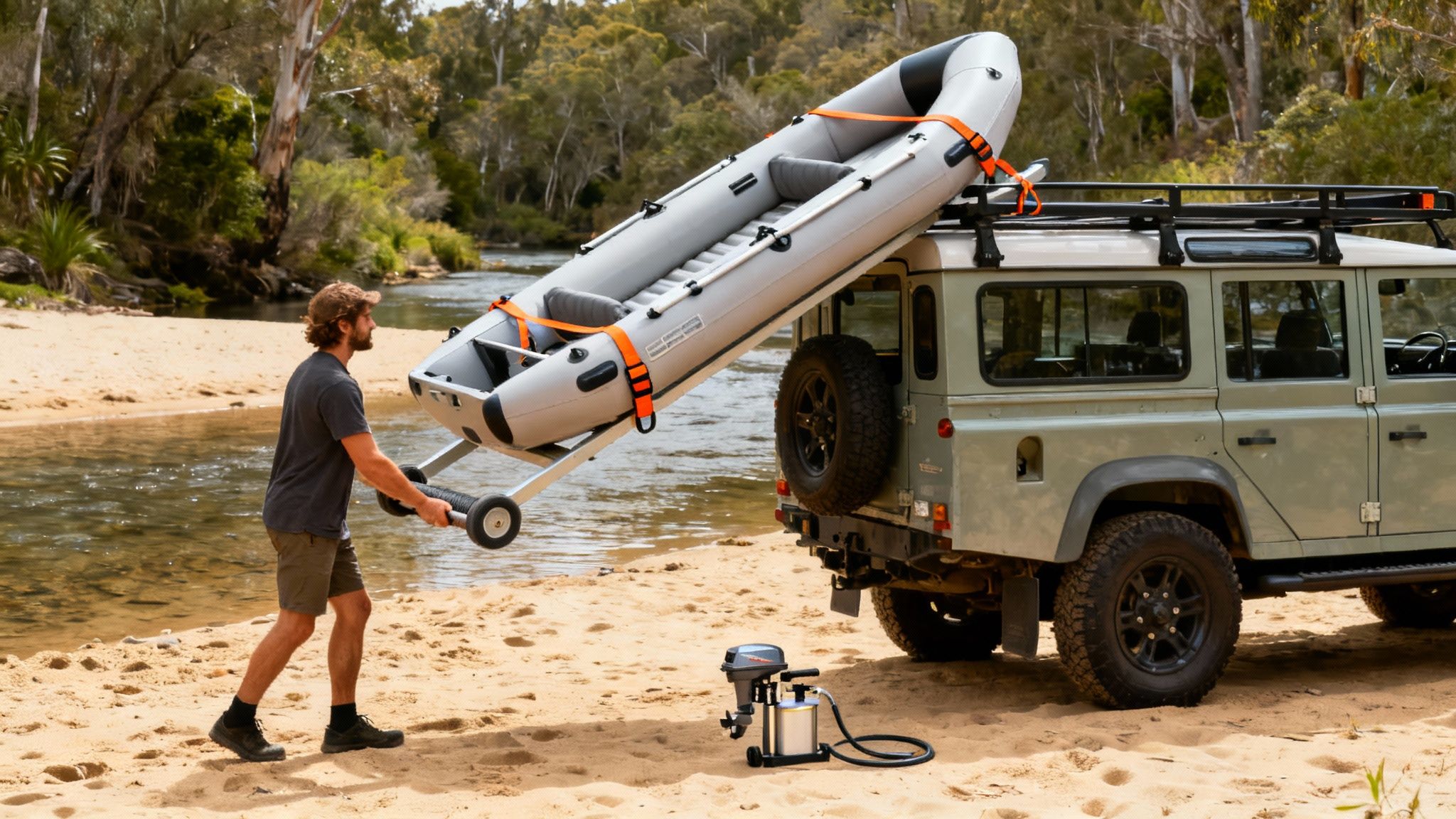
Forget struggling with a heavy, awkward hull. With a lightweight inflatable, the entire process is streamlined, especially when you’ve got the right tools for the job.
The days of needing a mate to help you hoist your boat onto the roof are long gone. The secret to easy solo loading is a simple, affordable accessory like a roof rack roller. These clever devices attach to your rear crossbar, letting you lift just the bow of the boat onto the roller, then easily push it forward into place.
Here’s how simple it is:
This method pretty much eliminates the strain, turning a two-person struggle into a quick and easy solo job. It’s one of the biggest wins a lightweight inflatable has over a traditional aluminium tinny.
Once your boat is up on the roof, tying it down correctly is non-negotiable for road safety. The goal is to make sure it doesn’t move an inch, whether you’re cruising on the M1 or bouncing down a dusty track to a hidden fishing spot.
The best tools for this are cam buckle straps, not ratchet straps. It’s way too easy to overtighten ratchet straps, which can damage your boat’s seams or even your roof racks. Cam buckles let you pull the strap hand-tight, giving you plenty of tension without the risk of cranking it down too hard.
Never, ever skip the bow and stern lines. These extra tie-downs run from the boat’s front and back down to solid points on your vehicle’s chassis. They’re crucial for fighting off crosswinds and stop the boat from lifting at high speeds—a scary issue known as “bow lift.”
For a complete rundown of best practices, you can check out our essential inflatable boat setup tips for safety, which covers all of this in more detail.
You’ve made it to the water’s edge—now for the fun part. Unloading is just loading in reverse. Simply pull the boat backwards over the roller until you can lift the bow and set it on the ground. Once it’s off the car, you’re just a few simple steps from hitting the water.
This whole process, from pulling up at the ramp to being out on the water, can take as little as 15 minutes. It’s a simple, repeatable system that makes those spontaneous trips a reality, taking all the hassle out of a great day on the water.
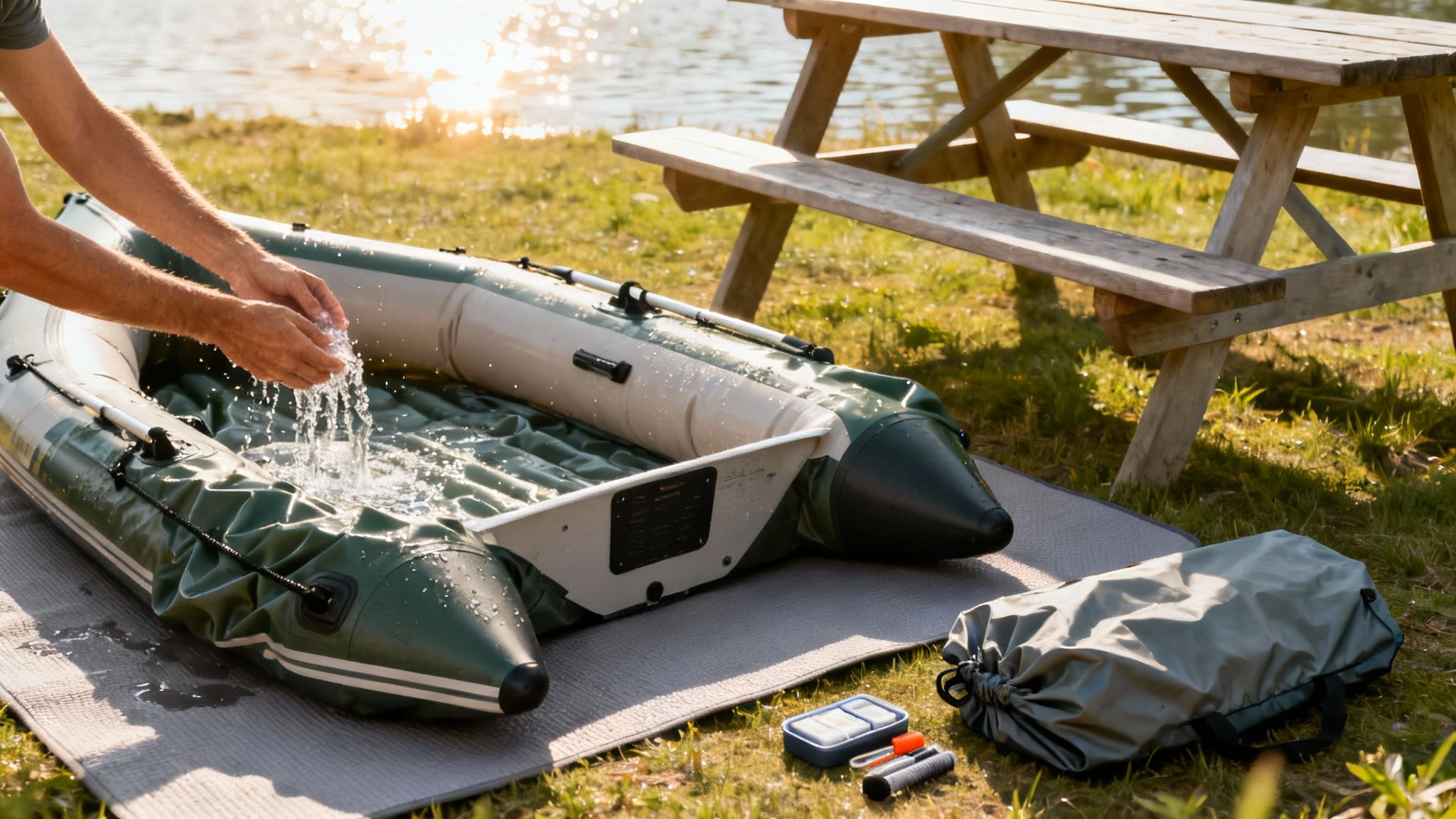
A quality inflatable boat is a serious investment in your future adventures, and with just a little bit of care, it’ll serve you faithfully for years. Proper maintenance isn’t complicated, but it’s absolutely crucial for protecting your boat from the harsh Aussie elements and making sure it’s always ready for that next spontaneous trip.
Think of it like any other piece of important outdoor gear. You wouldn’t pack away a wet tent or leave a fishing reel caked in salt. The same simple principles apply here, guaranteeing your boat’s longevity and performance.
After every single outing, a quick clean-up is your best defence against long-term damage. It only takes a few minutes but adds years to your boat’s life by tackling its two biggest enemies: salt and sun.
This simple ritual is your most powerful tool.
How you store your inflatable car topper between adventures is just as important as how you clean it. Folding it the wrong way can create permanent creases that weaken the material, while leaving it in the sun will slowly cook the fabric over time.
For a deeper dive into protecting your vessel, our guide on simple inflatable boat maintenance offers even more detailed tips. It’s a fantastic resource for any new owner.
Storing your boat clean and dry is the single most effective way to protect your investment. A few minutes of care after each trip prevents the vast majority of common wear-and-tear issues down the line.
When it’s time to pack it away, follow a logical process to avoid any headaches later.
Deflating and folding your boat the right way prevents stress on the seams and avoids creating sharp, damaging creases.
Searching for the right boat can feel like a maze. When you’re trying to compare prices and features of inflatable boats in my area, the endless models and accessories can be overwhelming. This is why a complete ‘turnkey’ package from a trusted Australian supplier is the smartest way to get on the water without the fuss.
A turnkey package is exactly what it sounds like: everything you need, bundled into one fully integrated and tested rig. Imagine a high-quality inflatable boat arriving at your door, already perfectly matched with the right outboard motor, a high-speed electric pump, and all the essential gear. It completely removes the guesswork and, better yet, saves you a fair bit of money compared to buying it all separately.
Not all package deals are created equal. If you’re looking for the best inflatable boats for recreational use available near me, you need to look beyond just the boat in the box to ensure you’re getting real value and a setup that won’t let you down.
Here’s what a top-tier package should always include:
Choosing a bundled package from a reputable Australian company is the most efficient and hassle-free path to boat ownership. It ensures every component works perfectly together, backed by local support you can count on.
While traditional V-hull inflatable boats are fantastic, don’t overlook the incredible performance of inflatable catamarans. Often available in similar car-topper packages, these designs offer next-level stability and efficiency thanks to their twin-hull structure.
An inflatable catamaran package can be a brilliant choice if you’re after a rock-solid platform for fishing or a family outing where stability is key. And if you’re not ready to buy, you can always look to hire inflatable boats for a family outing from a local provider to test the waters first.
Ultimately, a comprehensive package simplifies the entire buying process. You get a fully optimised setup, real cost savings, and the confidence that comes from a rig designed to work perfectly from day one.
Making the jump to a car topper tinny is a big step, and it’s smart to have a few questions before you commit. We get calls and emails from Aussie adventurers every day, so we’ve put together the most common queries right here.
Think of this as the final chat over the counter before you unlock a whole new world of exploration. Let’s get those last few questions sorted.
Absolutely. This is probably the biggest myth we hear, but modern inflatables are built tough. Forget flimsy pool toys; we’re talking about commercial-grade materials like German Valmex PVC, which is seriously resistant to punctures, UV rays, and abrasion from sand and rocks.
Their secret weapon is flexibility. Where a rigid aluminium tinny would dent or ding on a rock, a high-quality inflatable simply bounces off. This makes them surprisingly resilient when you’re nosing into rocky shorelines or navigating snag-filled estuaries.
This is where inflatables truly shine. Most models designed as a car topper tinny weigh between 30-45kg, making them perfectly manageable for one person. It’s a game-changer for solo adventurers.
When you pair this light weight with a simple accessory like a roof rack roller, loading becomes almost effortless. It’s a world away from trying to wrestle a heavy, awkward aluminium hull by yourself. Plus, when deflated, the boat packs into a bag you can easily lift into your vehicle, offering a level of freedom you just can’t get with a hard boat.
This all comes down to your state’s regulations and the size of the motor you’re running. In many parts of Australia, you don’t need a boat licence or registration for a vessel powered by a motor of 6hp or less.
But, the rules can vary between states, so it is essential to check with your local maritime authority for the specific requirements in your area. Regardless of licensing, you are always required to carry mandatory safety gear, like life jackets for every person on board.
The convenience of potentially skipping the licensing and registration process with a smaller motor is a massive drawcard for many car topper owners. It just simplifies everything and gets you on the water with less red tape.
Definitely. In fact, a lot of keen anglers are making the switch. The large outer tubes on an inflatable create an exceptionally stable platform—a huge advantage when you’re standing up to cast or moving around the boat.
A high-pressure air-deck floor becomes surprisingly rigid underfoot, giving you a firm and confident footing. Their portability also means you can sneak into remote fishing spots that are completely out of reach for trailer boats, giving you a real edge. Whether you’re chasing bream in a quiet creek or exploring coastal flats, an inflatable makes a fantastic and stealthy fishing craft.
Ready to find the perfect package for your adventures? At Easy Inflatables, we specialise in creating turnkey boat and motor packages that are tested, reliable, and delivered right to your door, anywhere in Australia. Explore our range and get on the water sooner. https://easyinflatables.com.au