
Choosing the Best Electric Trolling Engine: 2026 Guide
Find the perfect electric trolling engine for your inflatable boat. Our 2026 guide covers thrust, batteries, and maintenance for Australian waters.
Our recommendation
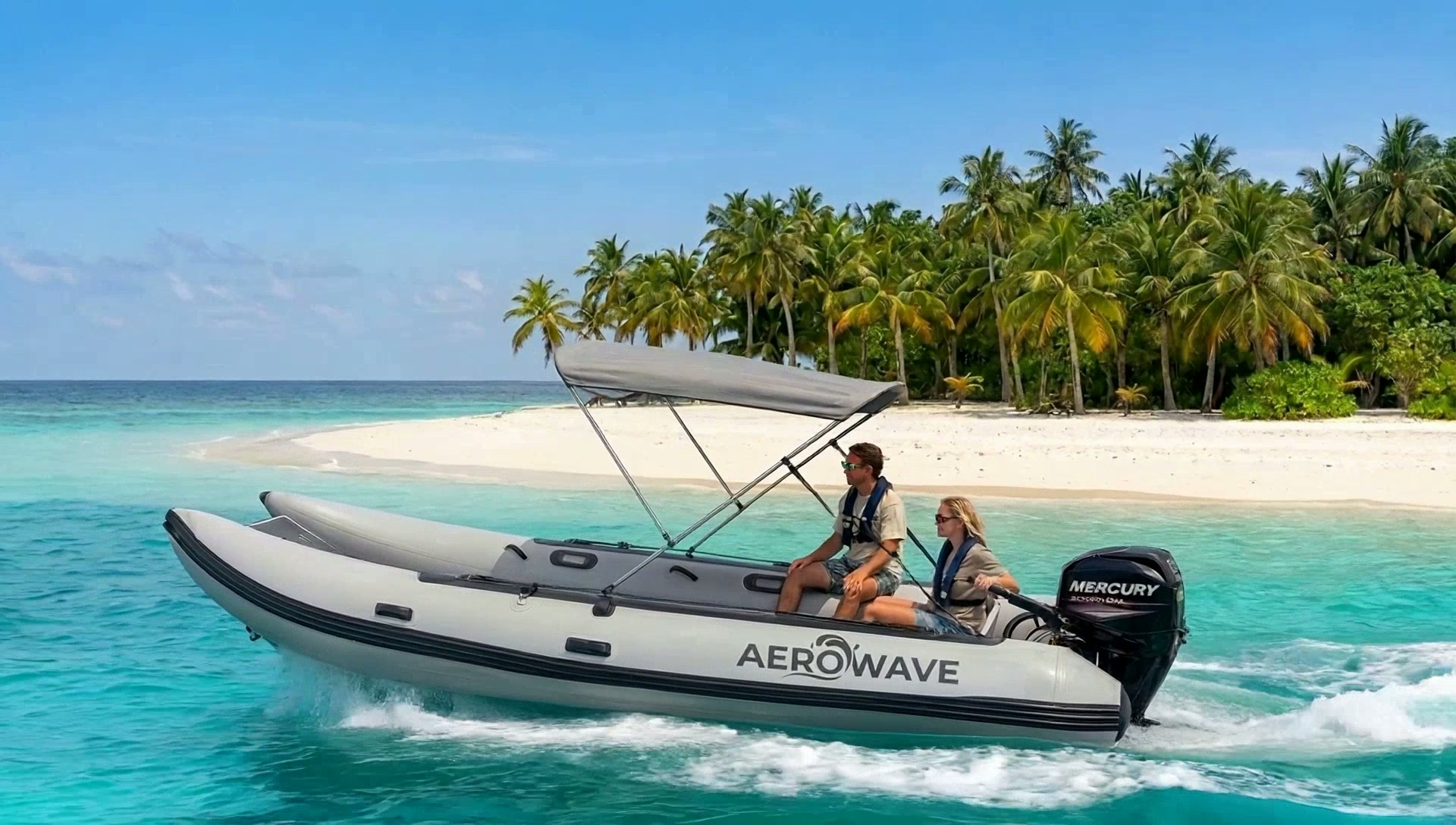
Aerowave Viper 400 Open Bow — Sports Package
Length
4.0m / 13'1"
Beam
1.80m / 71"
Tube Diameter
50cm
Bare Boat Weight (without Bimini & wheel kit)
~56kg / 123lbs
You’re probably in the exact spot most first-time buyers hit. You’ve got an inflatable boat, you want more control than paddles give you, and you don’t want the weight, noise, fuel smell, and hassle of a small petrol outboard for every trip. You want something you can lift into the car, clamp on at the ramp, and use to slip along an estuary without announcing yourself to every fish and every person on the shoreline.
That’s where an electric trolling engine makes sense.
For inflatable boats, especially the portable styles Australians use for family fishing, yacht tender duties, camping trips, and short coastal runs, electric power suits the job better than many people realise. It’s quiet. It’s simple. It’s easy to store. And if you match the motor, battery, and boat properly, it feels far more capable on the water than it looks in the box.
The Silent Revolution in Boating for Inflatable Owners
Dawn on an estuary tells you quickly whether your setup works for the way you like to boat. If the motor starts with a bark, leaves fumes hanging around the stern, and makes every small correction feel clumsy, the whole trip feels heavier than it should. In a lightweight inflatable, that mismatch stands out even more.
An electric trolling engine changes the mood of the boat straight away. You push off, lower the motor, and move with a low hum instead of a roar. That matters when you’re edging into a bream bank, drifting along mangroves, or taking the kids somewhere calm where noise and fuss ruin the point of being out there.
Why inflatables suit electric power so well
Inflatable boats already lean toward portability and simplicity. They pack down, launch easily, and don’t ask much from the tow vehicle or storage space. An electric motor fits that same logic.
Three things make the pairing work:
- Low fuss at launch means no fuel mixing, priming, or pull-start routine.
- Quiet approach helps anglers and wildlife watchers get closer without disturbance.
- Manageable gear keeps the whole rig realistic for one person to handle.
Practical rule: If your boating style is short trips, precise positioning, and easy transport, electric usually feels more natural on an inflatable than petrol.
That doesn’t mean electric replaces every outboard in every use case. It doesn’t. If you need long-distance speed, heavy-load punching power, or offshore transit capability, petrol still has a clear place. But for sheltered bays, rivers, creeks, tender work, and controlled fishing, the electric option often ends up being the one people use more often because it’s easier to live with.
The Australian use case is straightforward
Most new buyers aren’t trying to turn a small inflatable into a high-speed rig. They want reliable low-speed propulsion, clean handling, and enough endurance for a proper day on the water. That’s why this category keeps making sense for portable boats.
What Exactly Is an Electric Trolling Engine
Think of an electric trolling engine as an underwater electric fan with steering attached. It pushes water to move the boat, but it does it in a controlled, quiet way that makes slow manoeuvring easy. That’s why anglers love them, and it’s also why inflatable boat owners get so much value from them.
The idea isn’t new. The electric trolling motor was invented in 1934 by O.G. Schmidt in Fargo, North Dakota, using a Ford Model A starter motor, a development that led to the founding of Minn Kota, according to the history of the trolling motor.
If you want a quick background on how a permanent magnet DC motor works, E & I Sales DC motor expertise gives useful context without overcomplicating it.
The four parts that matter
Most beginners overthink the technology. In practice, there are only a few parts you really need to understand.
| Part | What it does on the boat |
|---|---|
| Control head | Gives you steering and speed control through the tiller or head unit |
| Shaft | Connects the controls to the motor unit and sets prop depth in the water |
| Motor unit | Houses the electric motor underwater where the thrust is produced |
| Propeller | Pushes water backward so the boat moves forward or in reverse |
The control head is the part you interact with most. On inflatable boats, simple tiller control is usually the most practical option because it’s direct and easy to understand. Twist or click the speed setting, point the tiller where you want to go, and the boat responds immediately.
The shaft matters more than many first-time buyers expect. On an inflatable, the wrong shaft length can make the prop pop out in chop or sit too deep and drag. You don’t need to become a marine engineer, but you do need to treat shaft length as a fit issue, not a minor spec.
How the system works together
Once the battery sends power to the motor, the propeller spins and creates thrust. The motor doesn’t need to rev like a petrol outboard to become useful. It works best in the slow-to-moderate range where control matters more than speed.
That’s the key mindset shift. An electric trolling engine is built for:
- Boat positioning around structure, banks, or moorings
- Stealth in shallow water
- Easy low-speed movement with less physical effort
- Controlled reverse and turning in tight spaces
If you’re shopping specifically for paddle craft and very small inflatables, this guide to electric trolling motors for kayaks is useful because many of the same fitting principles carry across.
A good electric setup doesn’t feel dramatic. It just makes the boat easier to place exactly where you want it.
Why Your Inflatable Boat Needs an Electric Motor
A lightweight inflatable boat exposes every bad gear choice quickly. Too much engine weight and the boat becomes awkward at the ramp. Too much complexity and it stops being the easy weekend option you bought it for in the first place. That’s why an electric motor often makes more sense than buyers expect.
For fishing, quiet is a real advantage
On an inflatable, you’re already closer to the water and often working shallower ground. Noise matters. With an electric trolling engine, you can creep along a drop-off, hold near structure, or adjust your line without the constant interruption of engine note and exhaust.
That’s not marketing language. It’s a practical difference in how you fish. You make smaller corrections, spend less time restarting or idling, and can focus on lure presentation instead of engine management.
If you’re comparing styles and layouts, Better Boat has a useful overview of best electric motors for trolling that helps frame what features matter for different small craft.
Families and casual users benefit even more
An inflatable often gets used by people who don’t want boating to feel technical. They want to launch, cruise, and head home without dealing with fuel cans, carburettor issues, or a heavy outboard hanging off the transom.
That simplicity matters when you’re:
- Launching with children and want fewer moving parts
- Using the boat on short trips where petrol setup feels excessive
- Loading from an SUV or caravan and every kilogram matters
The primary benefit isn’t just that electric is lighter to handle. It’s that the whole day becomes calmer. Less noise at the ramp. Less mess in the car. Less chance of someone new to boating feeling intimidated by the setup.
Restricted waters and tender work
Many inflatable owners don’t need speed. They need access. Lakes, quiet creeks, marina work, and short tender runs all reward controlled electric propulsion. In those situations, a trolling motor stops being a fishing-only accessory and becomes the motor you use most often.
Here’s a closer look at how these motors behave on the water:
FOX Inflatable Boat and 65lb Electric Motor - YouTube
Tap to unmute
FOX Inflatable Boat and 65lb Electric Motor Bushwacker Man
Bushwacker Man31.9K subscribers
A portable inflatable with electric drive also suits the boat-in-a-bag lifestyle better than many compact petrol setups. You can store the boat, battery, and motor separately, move them in manageable pieces, and assemble everything at the water instead of wrestling one heavy system.
Choosing Your Motor A Simple Guide to Specs
A small inflatable reacts very differently to motor size than a heavier tinnie or fibreglass boat. Get the specs right and the boat feels light, quiet, and easy to place around pontoons, weed edges, and shallow banks. Get them wrong and you end up with a setup that cavitates in chop, squats at the stern, or chews through battery faster than expected.
For an inflatable boat, three specs matter most. Thrust, shaft length, and voltage.
Start with thrust
Thrust is the motor’s pushing power, and for portable inflatables it needs to match the boat as you use it, not as it sits empty in the garage. A hull that feels light on land can become a very different load once you add a battery, one or two adults, tackle, safety gear, and a full esky.
The Minn Kota trolling motor buying guide gives a useful starting rule of at least 2 lbs of thrust per 45kg of boat weight. That’s a good baseline, but in Australian conditions I’d treat it as the minimum, especially if you fish estuaries with afternoon breeze, run against tidal flow, or carry camping gear.
A lot of first-time buyers undersize the motor because they only count hull weight. Loaded weight is what matters on the water.
What that feels like on an inflatable
For many lightweight inflatable boats, a 12V motor in the mid-thrust range is the practical sweet spot. It keeps the package portable and usually gives enough control for sheltered bays, canals, creeks, and electric-only waters.
A lighter solo setup can get away with less thrust if the motor is mainly for short positioning work. Add a second person, extra gear, or regular use in wind and chop, and the need for more thrust shows up quickly. The boat still moves, but steering correction becomes constant and battery use climbs because the motor spends more time at higher settings.
Easy Inflatables owners usually do better by sizing for a typical day out, not the calmest possible one. If you want a plain-English sizing reference, this guide to trolling motor power for inflatable boats is a useful checkpoint before you buy.
Shaft length affects control more than buyers expect
Shaft length is easy to overlook. On an inflatable, it should not be.
These boats are light, they trim differently depending on where the battery sits, and the stern can lift and fall more sharply in chop than a heavier hull. If the shaft is too short, the prop comes too close to the surface and loses bite just when you need steady control. If it is too long, you add drag and make the motor more awkward to handle at the ramp and during pack-down.
Measure from the mounting point on the transom to the waterline in normal loaded trim. Do that with the battery and usual gear in place, because a lightly loaded inflatable and a fishing-ready inflatable can sit very differently in the water.
Voltage decides how portable the whole setup stays
Most inflatable owners are best served by 12V. The reason is simple. A 12V setup is easier to carry, easier to wire, and easier to fit into a small boat without turning a portable package into a heavy one.
Higher-voltage systems have a place. A 24V system can push thrust to 80 lbs and cut amp draw by nearly 50%, extending runtime. The trade-off is extra battery complexity, more weight, and more gear to transport and store. For a larger inflatable or a boat that is regularly loaded hard, that can make sense. For a compact boat that gets launched off the beach, from a caravan park, or from the back of an SUV, it often does not.
That is the part many general boating guides miss. On a portable inflatable, the best motor is not the biggest one you can mount. It is the one that gives enough control and range without spoiling the boat’s biggest advantage, which is easy transport and setup.
A simple buying order
Use this order and you’ll avoid most expensive mistakes:
- Work out loaded boat weight, not empty hull weight
- Choose enough thrust for your usual crew, gear, wind, and current
- Match shaft length to your actual transom height and trim
- Stay with the lowest-voltage system that still performs well
That approach suits how inflatables are really used in Australia. Short launches, changing loads, mixed conditions, and a strong preference for gear that is easy to move and quick to rig.
Powering Your Adventure Battery and Wiring Essentials
Battery selection determines whether an inflatable remains portable or becomes a heavy small barge. I see first-time buyers choose the correct motor, then compromise the entire setup by picking a battery that is difficult to lift, slow to recharge, or too small for the way they fish.
That matters more in an inflatable than it does in a tinny or glass boat. You are usually packing the battery into the car, carrying it to the launch spot, and placing it in a compact hull where weight placement affects trim straight away. In Australian conditions, add wind, tide, chop, and summer heat, and battery planning stops being a paperwork exercise. It becomes part of whether you get a relaxed session or an early trip home.
AGM or lithium
For lightweight inflatables, the battery is never just a power source. It is also one of the heaviest things you will handle all day.
| Battery type | What usually works well | What catches buyers out |
|---|---|---|
| AGM deep-cycle | Lower entry cost, simple charging, familiar for occasional use | Heavy to carry, slower to recharge, performance drops if you drain it too hard too often |
| Lithium | Much easier to lift, better usable capacity for its size, suits frequent portable use | Higher upfront cost and you need to match it with a suitable charger |
AGM still makes sense for short local trips and tighter budgets. If the battery mostly lives near home and only gets moved a short distance, the weight penalty is easier to live with.
Lithium suits the way many inflatable owners use their boats. Solo launches, beach launches, camping trips, and repeated pack-up and pack-down all get easier when the battery is lighter. On a small boat, that lower weight also helps with trim at the stern.
Runtime planning for real trips
The simple mistake is planning runtime from the battery label and assuming calm-water figures. Real runtime depends on throttle use, passenger weight, current, windage, and how well the boat is trimmed.
A practical way to plan is to ask two questions:
- How long will the motor be pushing, not just switched on?
- What reserve do you want for the run back, a tide change, or a headwind in the afternoon?
For an inflatable used for estuary fishing, lure casting, or quiet lake work, a battery sized for a half-day session with reserve is usually the safer call than trying to squeeze every last minute out of a smaller unit. If you regularly fish exposed water or spend long periods correcting drift in wind, step up your battery plan early. Inflatable boats are light, but that also means they get pushed around more.
A good rule on the water is simple. If you expect four hours, buy for more than four hours.
Wiring that stays reliable
Small boats punish untidy wiring. Cables get stepped on, tackle snags them, and batteries move if they are not secured properly.
Keep the setup clean and short. Use marine-grade cable and connectors, fit the correct fuse or breaker close to the battery, and secure the battery box so it cannot slide when the crew shifts position. A loose battery in an inflatable is more than annoying. It upsets trim and can damage terminals or wiring.
Charging matters too. A poor charger shortens battery life faster than many owners realise, especially if the boat sits between trips. If you are matching components from scratch, these marine battery and charger options are worth checking as a package so the motor, battery, and charger all suit the same job.
For owners mixing boating with off-grid camping or solar charging, DLG Electrical solar battery advice is useful background reading before you build a recharge plan around a caravan, ute, or portable panel setup.
Simple Installation and Maintenance Tips
Most inflatable owners don’t need a workshop setup to fit an electric trolling engine. A standard aluminium transom makes the job fairly direct if you stay tidy and don’t rush the basics.
Fitting it to the transom
Clamp the motor to the transom squarely and tighten it firmly by hand. The shaft should sit straight, and the head should land in a position you can steer from comfortably without leaning awkwardly over the stern. Then place the battery low and stable so the boat keeps sensible trim.
A clean install usually follows this checklist:
- Check the clamp bite so the bracket sits flat and secure on the transom face.
- Set prop depth properly before launch instead of adjusting endlessly on the water.
- Secure the battery box so it won’t shift when passengers move.
- Run cables neatly where feet, hooks, and tackle won’t catch them.
- Use proper protection such as the correct fuse or breaker for the motor circuit.
Saltwater care is where lifespan is won or lost
A trolling motor that sees salt and gets ignored won’t stay healthy for long. The routine is simple.
- Rinse the lower unit with fresh water after every saltwater trip.
- Wipe the shaft and control head to remove salt residue.
- Inspect the prop for fishing line, weed, and grit around the hub.
Rinse first. Store second. Most corrosion problems start because the boat got packed away wet and salty after a long day.
This category isn’t niche anymore. The global electric trolling motor market was valued at US$583.0 million in 2023 and is projected to reach US$850.8 million by 2034, according to Fact.MR’s electric trolling motors market report. The reason is easy to understand on a practical level. More boaters want quiet, low-hassle propulsion that suits modern small-craft use.
If your use leans toward compact fishing craft, this kayak trolling motor guide also helps with installation habits because many of the cable management and battery placement principles overlap.
Pairing Your Motor with Easy Inflatables Boats
You launch before sunrise, slide off the beach with one mate and a small tackle bag, and the whole setup only works because the boat and motor suit each other. On a lightweight inflatable, that pairing matters more than on a heavier hull. A motor that feels fine on paper can make a small boat sit stern-heavy, wander in crosswind, or chew through battery faster than expected.
Easy Inflatables boats suit electric trolling motors well because portability is already part of the brief. Their catamarans, tenders, and small rigid-inflatable styles each have different strengths, and the smart choice is to match the motor to the job rather than chase the biggest thrust number you can afford.
A stable inflatable catamaran is a very different fishing platform from a compact tender.
Catamarans and wider fishing-focused inflatables give you better balance at low speed, cleaner tracking, and more confidence when one person shifts weight to cast or net a fish. That makes quiet electric control useful, especially on estuaries, rivers, and protected bays. Small tenders are simpler. With an electric motor fitted properly, they stop being just a shuttle and become practical little boats for marina runs, creek exploring, and short sessions close to camp.
The usual mismatch looks like this:
- Fishing inflatables pair best with a motor that gives fine speed control and enough runtime for repeated repositioning.
- Tender-style boats suit a lighter, simpler setup that is easy to remove, carry, and store.
- Family leisure inflatables benefit most from predictable handling and low fuss, not extra motor size.
Australian conditions make this decision more practical than theoretical. A setup that feels generous on a calm freshwater dam can feel average once you add chop, tide, current, gear, and a hot day that shortens real battery endurance. Lightweight inflatables respond well to electric power, but they also show poor weight distribution quickly. Get the match right and the boat feels easy. Get it wrong and you spend the day correcting it.
If you are comparing motor types, transom limits, and boat size before you buy, Easy Inflatables’ engine options for inflatable boats make that comparison easier. It helps you decide whether your inflatable is better served by electric-only use, a petrol outboard, or a mixed setup where the electric handles quiet positioning and the main motor covers longer runs.
Explore the Aerowave range
Finance this boat from $25/week
Estimate only — powered by Australian Motorcycle & Marine Finance (AMMF).
Deposit (AUD)
$560
10% of price
Term
5 years
60 monthly repayments
Comparison rate
9.95% p.a.
Subject to AMMF approval
Weekly
$25
Monthly
$107
Amount financed
$5,035
Indicative only. Actual repayments depend on your AMMF credit assessment, term, fees and the balloon you select. Talk to AMMF for a personalised quote on Aerowave Viper 400 Open Bow — Sports Package.
Like this guide? Get the next one in your inbox.
Owner-tested tips and Aussie boating know-how — no spam.
Ready when you are
Build your Viper 400 Open Bow — Sports Package in under 3 minutes.
1500 GSM / 1.2 mm VALMEX® hull. Five-year limited hull warranty plus two years of extended limited structural hull cover, subject to conditions. Free freight to United States · local taxes payable on arrival.
delivered to your door
See it for yourself
Real boats. Real owners. Real people behind them.
Plenty of what you read online these days is generated. Check us out properly — the factory, the reviews and the owners are all one click away. Why we use AI, and how to check we’re real
How our boats are built
Walk the production line: thermo-welded seams, 1.2 mm VALMEX Heavy Plus hulls, over-pressure relief valves on every chamber.
See the buildGoogle Maps reviews
Real Australian owners, five stars, published on our Google Business Profile with the map — read them there, not just on our own site.
Open Google Maps reviewsOwner stories
Boats in use — offshore, on rivers, on rescue duty. Photos and words from the people who actually own them.
Read owner stories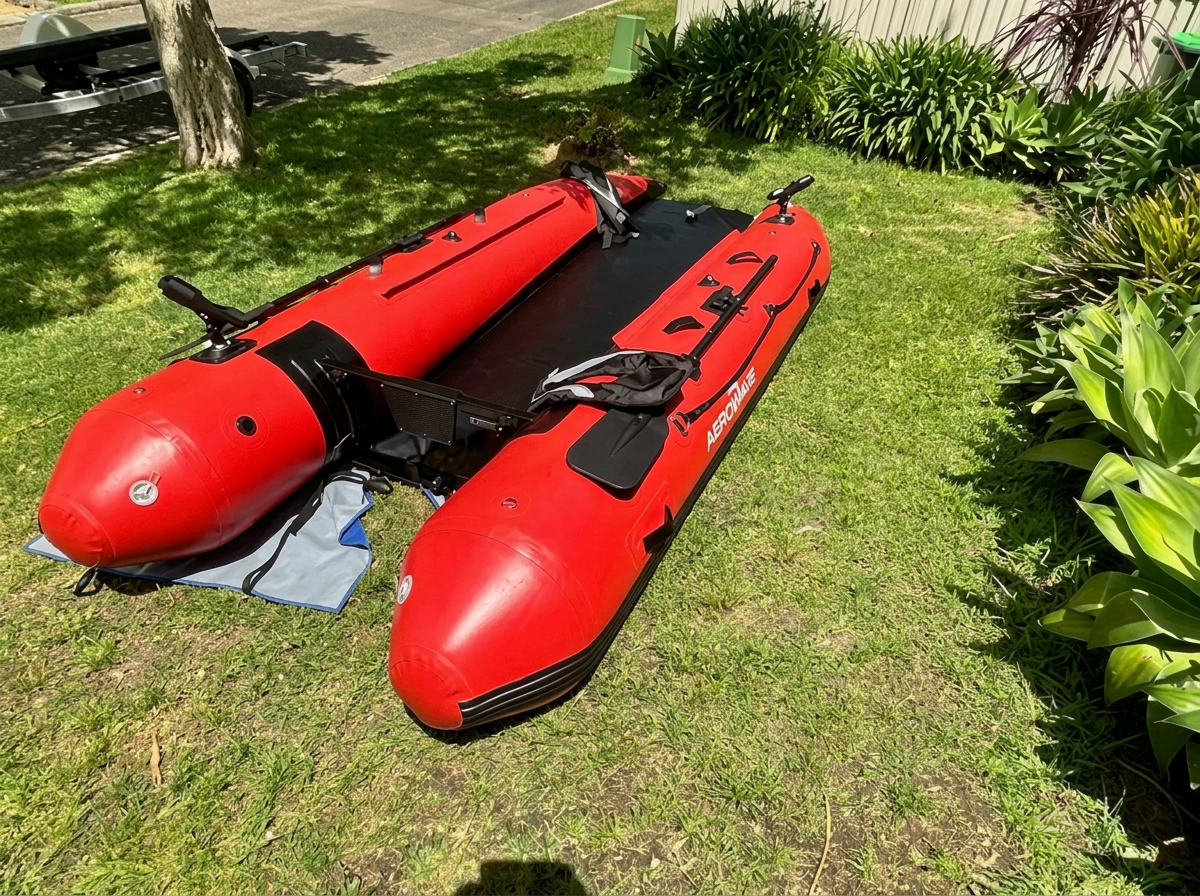
Aerowave Viper 400 Open Bow — Sports Package
US$3,139 USD · delivered to your door