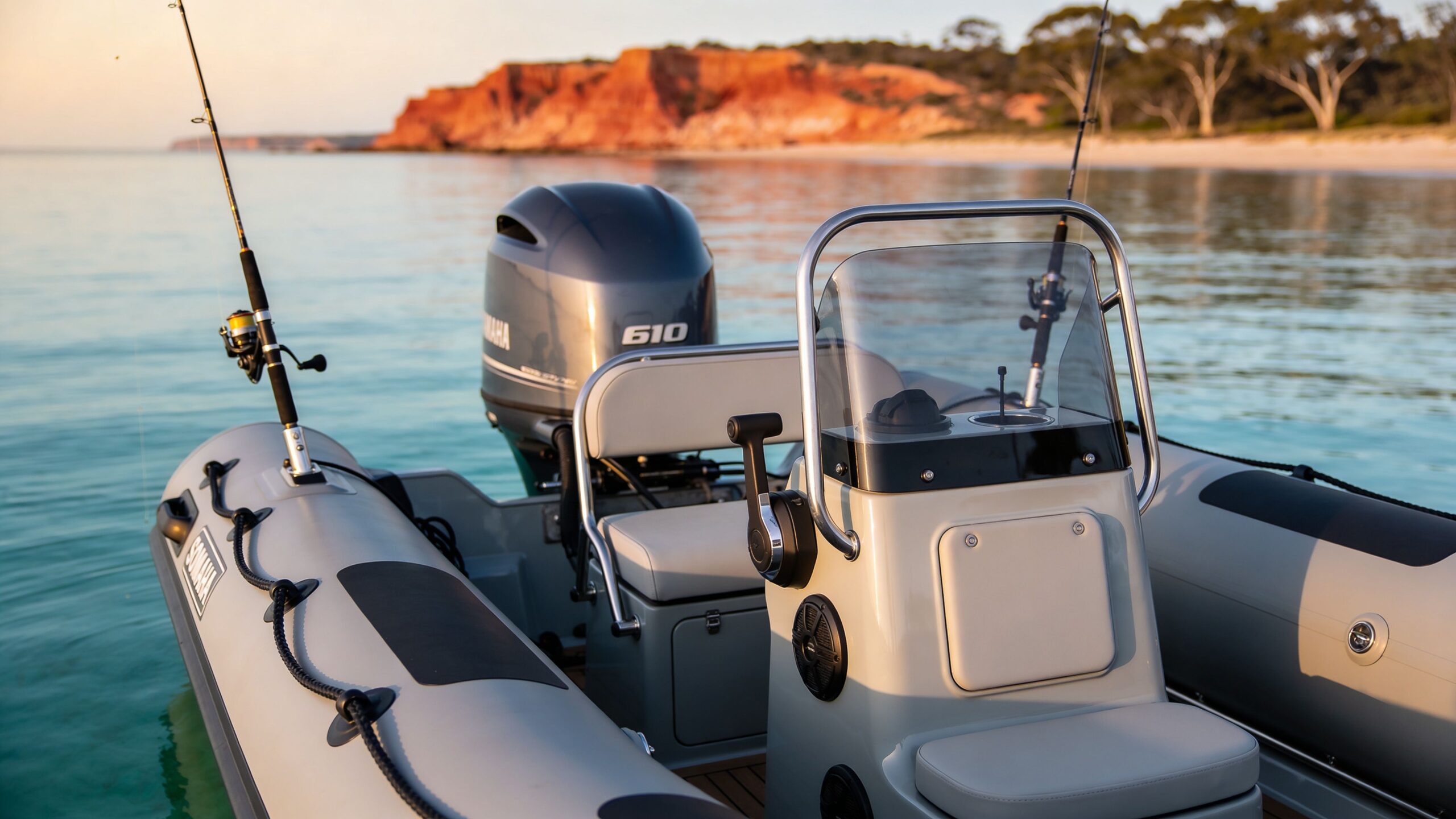

You’re probably here because you want a boat that gives you freedom without the usual nonsense. You want to reach a quiet creek mouth before sunrise, run a tender off the yacht without wrestling a trailer, or take the family across to a sheltered beach without owning a bulky fibreglass hull that dominates the driveway.
That’s exactly where modern inflatable boats make sense in Australia. The good ones aren’t pool toys, and they aren’t a compromise. They’re engineered watercraft built for portability, stability, and real use in harsh coastal conditions. If you choose the right hull, the right material, and the right setup, an inflatable can be one of the smartest boating purchases you’ll make.
I’ll be blunt. Most buyers look at the wrong things first. They focus on price, or they get distracted by generic online listings that tell them nothing about fabric quality, seam construction, floor pressure, or offshore behaviour. That’s how people end up with a boat that looks acceptable in the garage and feels disappointing on the water.
A lot of Australians want the same thing from a boat. They want access. Access to estuaries the trailer crowd can’t be bothered launching for. Access to beach camps, island day trips, shallow river systems, and simple family boating that doesn’t become a project every weekend.
That’s why inflatable boats australia is no longer a niche search. Buyers want a vessel that can live in the back of a 4WD, in the caravan, or in the garage, then be deployed fast when the conditions line up. They also want a boat that feels safe and planted once it hits the water.
Modern inflatable design solves that problem well. Large buoyancy tubes create natural stability. Premium fabrics handle abuse better than bargain materials. High-pressure floors and rigid hull options deliver far more performance than most first-time buyers expect. For anglers, campers, yacht owners, and coastal explorers, the category has matured into a serious boating option.
Good inflatable boats remove friction from boating. You use them more because they’re easier to own.
If you’re a beginner, that means less complexity. If you’re already experienced, it means more efficient access to the water and less compromise on storage, towing, and setup.
The rise isn’t hard to explain. Australia suits inflatable boating almost perfectly. We’ve got long coastlines, estuaries, rivers, beach camps, suburban homes with limited storage, and a huge culture around fishing, camping, and getting outdoors.
The market data reflects that. In 2023, Australia reported sales exceeding 120,000 units of soft hull inflatable boats specifically for water sports, a figure tied to demand from beach camping, fishing, and family outings according to inflatable boat market reporting. That’s not a fringe category. That’s mainstream boating demand.
The practical reasons matter more than the marketing.
That flexibility fits how Australians use recreational gear. People don’t want equipment that limits where they go. They want equipment that expands options.
A traditional boat works well if you’ve got permanent storage, ramp access, and the patience for towing. Plenty of owners do. But a lot of buyers don’t want that commitment. They want a craft they can deploy for a weekend trip, then pack away again without rearranging their life.
Soft hull inflatables answer that neatly. The lighter end of the category is especially useful for caravanners, SUV travellers, beach campers, and yacht owners. You can move the boat to the water without needing formal infrastructure. That matters in a country where some of the best boating starts well away from polished ramps and marina systems.
Practical rule: If your boating plans involve camping, touring, or remote access, portability isn’t a convenience feature. It’s part of the boat’s core performance.
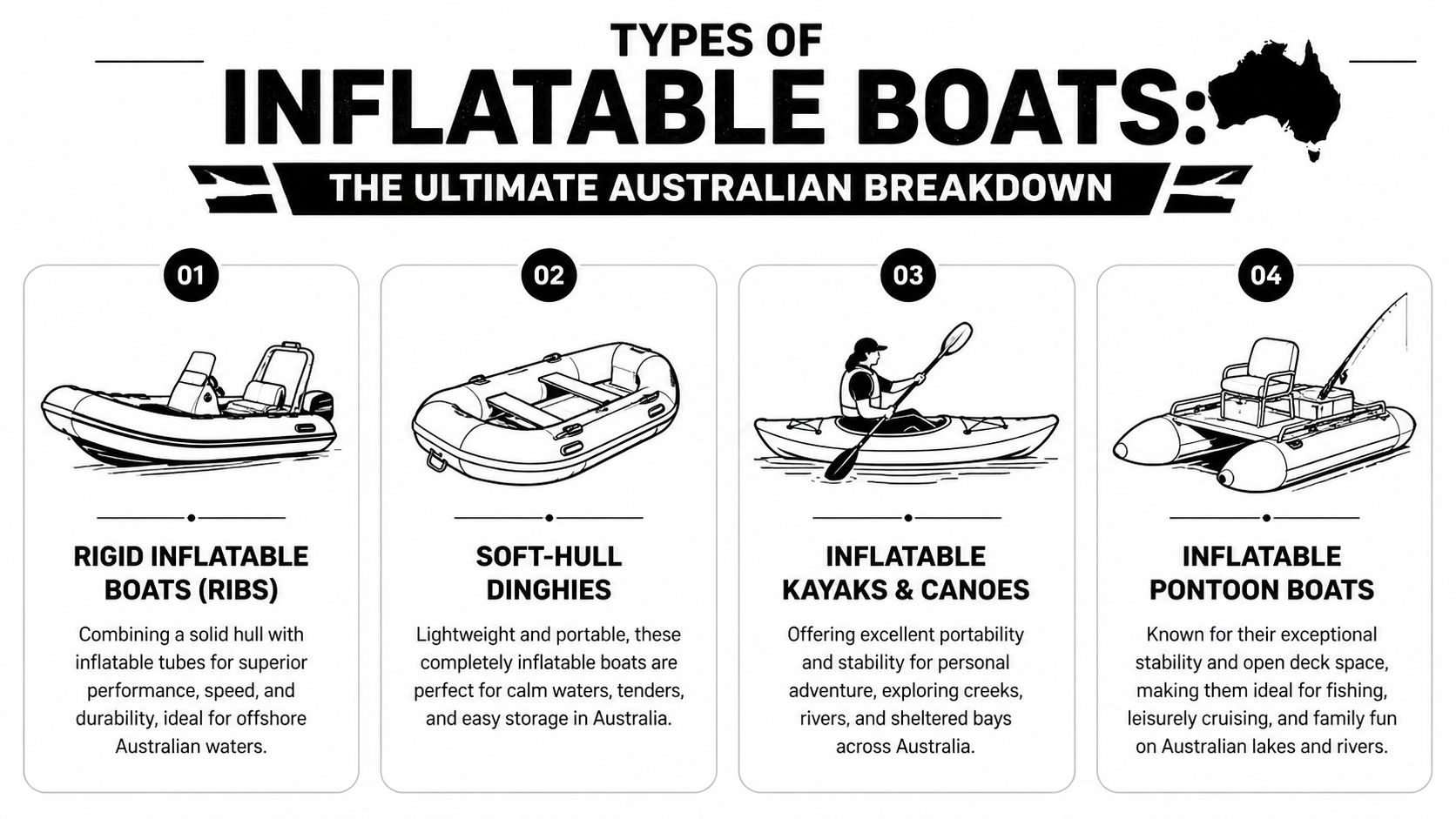
Most buyers shouldn’t ask, “What’s the best inflatable boat?” They should ask, “Which inflatable design suits how I boat?” The answer changes fast if you fish, run offshore, carry the family, or want a tender that packs down neatly.
For fishing, stability at rest matters as much as ride quality underway. You need a hull that doesn’t feel nervous when someone shifts weight, reaches for gear, or stands to cast.
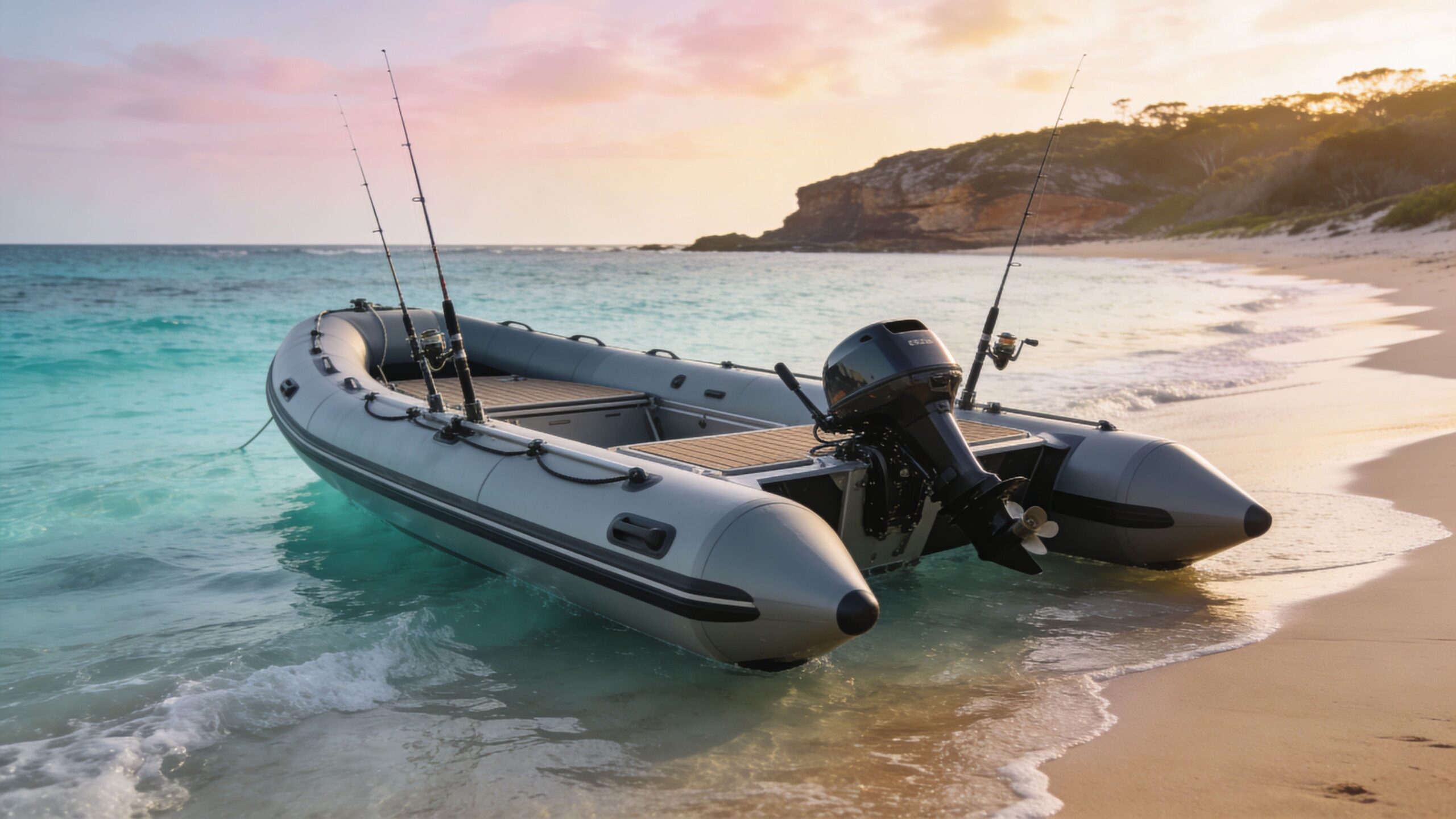
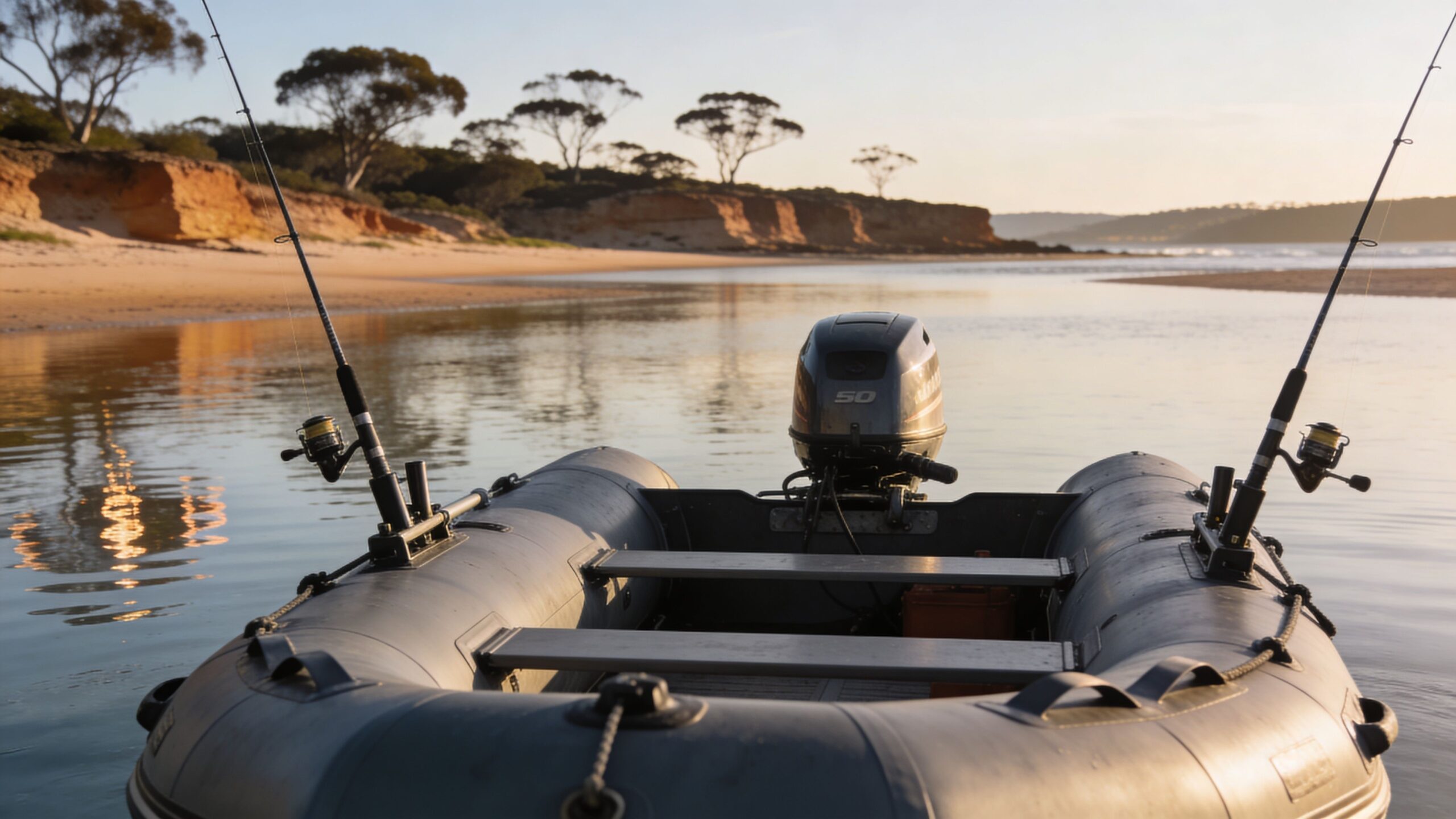
Soft inflatable fishing boats suit anglers who value easy transport and quick setup. They’re practical for estuaries, rivers, sheltered bays, and impoundments. Add a sensible outboard, rod holders, and a clean deck layout, and you’ve got a very efficient fishing rig.
What matters most here is usable space and setup speed. If the boat is too fiddly to launch, you’ll use it less. If it’s unstable, you’ll stop trusting it when conditions get messy.
Permit me to express a strong opinion. For many Australian buyers, inflatable catamarans are the standout design.
Twin hulls create a wider footprint on the water. That gives you a platform that feels calmer underfoot, more settled when passengers move around, and more confidence-inspiring in chop. For anglers, that’s a major advantage. For families, it’s even more important.
Catamarans also make sense in the Australian mix of estuary work, inshore runs, and rougher afternoon conditions. They don’t just float well. They behave well. If your priority is stability, they deserve serious attention before you buy any monohull inflatable.
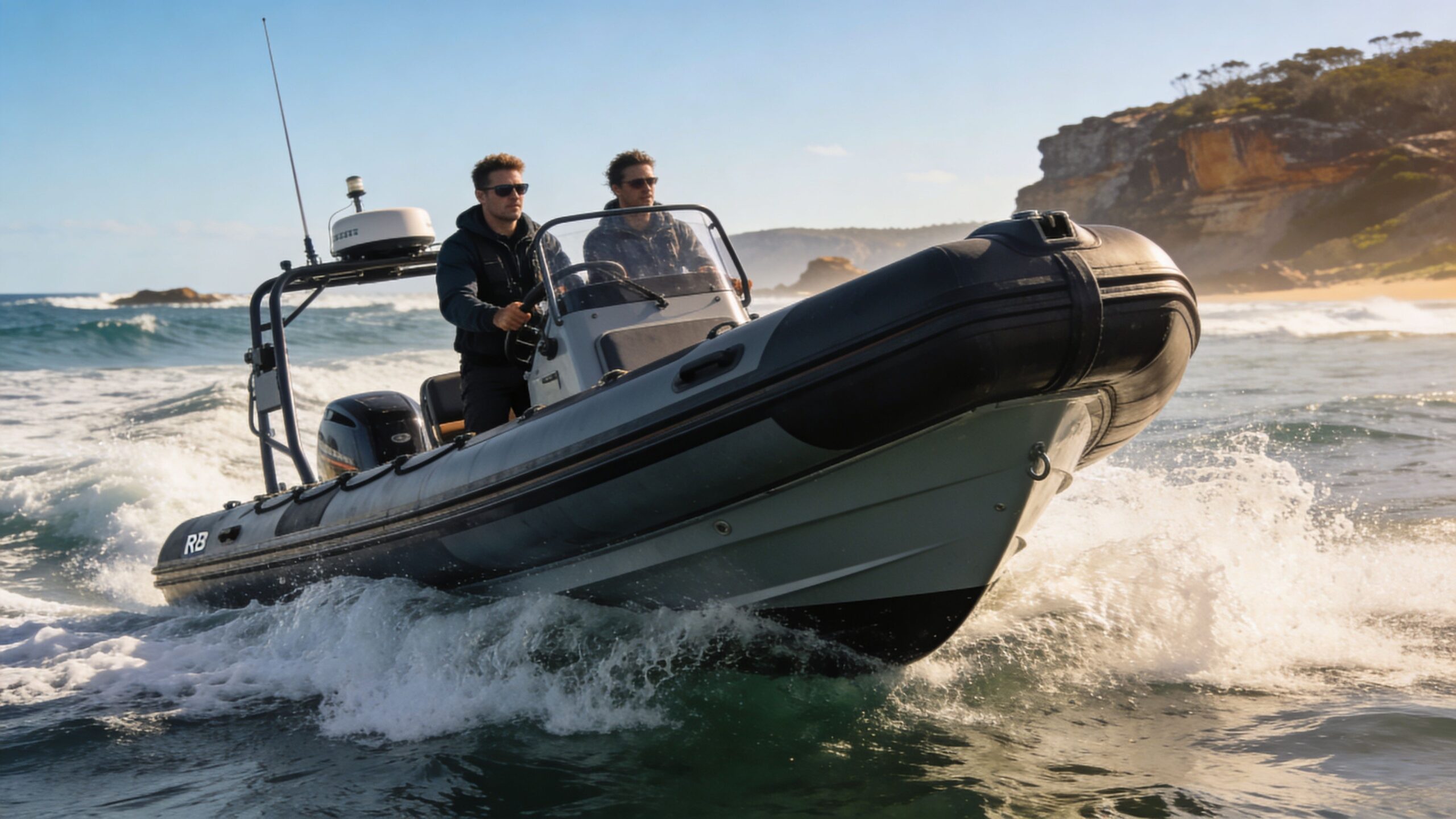
A proper offshore inflatable is not just a soft boat with a motor bolted on. It needs the right floor structure, sound construction, and a hull that can carry load without becoming sloppy in messy water.
Look for high-pressure air deck systems or rigid hull formats, a properly reinforced transom, and materials that won’t punish you later through wear, UV damage, or seam failure. Offshore suitability starts with design, not marketing language.
These boats suit buyers who want more than sheltered-water use. Coastal exploration, island runs, and exposed waterways all demand a more serious setup. If that’s your world, choose accordingly.
RIBs are the bridge between traditional boating and inflatable technology. You get a rigid hull, usually aluminium or fibreglass, combined with inflatable tubes that add buoyancy and stability.
They feel more familiar to buyers coming from aluminium or fibreglass boats. They also appeal to people who want stronger offshore manners and a more traditional helm-and-hull experience. If you want to compare configurations, it’s worth reviewing rigid hull inflatable options before narrowing the shortlist.
| Boat type | Best suited to | Main strength | Main trade-off |
|---|---|---|---|
| Soft inflatable fishing boat | Estuaries, rivers, camping trips | Portability and easy setup | Less suited to sustained rough-water work |
| Inflatable catamaran | Fishing, family boating, mixed conditions | Outstanding stability | Wider format may pack less neatly |
| Offshore inflatable | Coastal runs and exposed use | Stronger capability in rougher water | Requires more careful setup selection |
| RIB | Buyers wanting a traditional boating feel | Hull performance with inflatable buoyancy | Less portable than soft hull designs |
Most mistakes happen before the boat ever touches water. Buyers choose by appearance, or they compare the wrong specifications. In Australia, the shortlist should start with material quality, floor design, motor compatibility, load handling, and warranty clarity.
If you launch off beaches, scrape around jetties, or operate in places with sand, shell, rock, and salt, the tube fabric matters enormously. Premium 1.2mm 2000D German Valmex PVC resists abrasion 40% better than standard 1100D polyester-coated PVC according to Easy Inflatables’ commercial inflatable boat material guide.
That’s exactly why I push serious buyers away from cheap fabric. Australian conditions are rough on boats. UV, abrasion, salt, and repeated packing wear down inferior materials fast. Better fabric isn’t a luxury upgrade. It’s protection against premature disappointment.
Floor construction decides a lot about the boat’s personality.
The right choice depends on your use. If you’re carrying the boat in a vehicle and launching often, portability matters more. If you’re chasing a firm platform for regular fishing or rougher use, rigidity moves up the priority list.
Don’t guess on horsepower. Match the engine to the transom rating, hull style, and expected load. An underpowered boat is frustrating. An oversized motor can create handling and structural problems.
If you’re comparing packages, look carefully at outboard options for inflatable boats and make sure the engine suits the hull rather than merely sounding impressive on paper.
A good inflatable balances manageable transport weight with useful carrying capacity. That balance matters more than headline specs. A boat that carries the load but is miserable to move won’t suit a lot of Australian owners. A boat that’s easy to carry but too cramped for your actual crew will annoy you every trip.
Warranty also matters. I treat it as a confidence signal. If a seller is vague about warranty terms, parts, repairs, or local support, walk away. And if you’re comparing complete purchase costs online, a complete guide to online shopping savings can help buyers think more clearly about total-value purchasing rather than just headline price.
Buy the boat for the conditions you’ll actually face, not the calm-water fantasy you tell yourself in the showroom.
Yes. If they’re designed properly.
That qualification matters because offshore capability isn’t automatic. Plenty of inflatable boats are ideal for sheltered water and tender work. That doesn’t make every inflatable an offshore tool. But well-designed offshore inflatables absolutely belong in Australian coastal boating.
The biggest mistake buyers make is treating all inflatable hulls as basically the same. They aren’t. Hull geometry decides how the boat enters chop, settles at rest, and responds when crew weight shifts.
That’s why catamaran inflatables stand out. Twin-hull inflatable catamaran designs reduce roll by up to 50% compared to monohulls, which gives family boaters and anglers a major stability advantage in dynamic sea states according to this Australian catamaran stability guide.
For offshore and inshore coastal work, that reduction in roll translates to confidence. The boat feels less twitchy. Crew movement feels less dramatic. Time on the water becomes less fatiguing.
Inflatable boats also have a built-in safety advantage that traditional hard boats don’t replicate the same way. Large air tubes provide strong buoyancy and help keep the craft settled. Multiple air chambers add redundancy. If the boat is properly built and maintained, that’s a serious design asset.
That doesn’t remove the need for common sense. You still need to choose weather properly, load the boat sensibly, and carry the right safety equipment. If you operate in exposed areas, adding gear like an ACR rescue beacon is part of boating responsibly, not an optional extra.
If offshore use is on your list, buy for offshore from day one. Don’t buy a sheltered-water boat and hope it somehow grows into the job. Choose a hull with real stability, strong materials, and a floor or rigid structure that keeps the boat composed when conditions turn ordinary.
Traditional boats still suit plenty of owners. But for a large group of Australian buyers, inflatables are the smarter tool.
They’re easier to store, easier to transport, and easier to launch. That sounds simple because it is simple. You don’t need to overcomplicate it. If ownership friction is low, you use the boat more.
They also open up use cases that aluminium and fibreglass boats make awkward. Beach launches, camping trips, caravan touring, and compact home storage all favour inflatables heavily.
Aluminium and fibreglass boats give buyers a familiar format and, in many cases, more permanent onboard layout. If you want fixed seating, larger consoles, or a hull that lives on a trailer full-time, that may suit you better.
But don’t assume “traditional” automatically means “more capable”. A well-built inflatable can be surprisingly serious on the water, and often more stable at rest than many buyers expect.
| Comparison point | Inflatable boat | Aluminium or fibreglass boat |
|---|---|---|
| Storage | Compact and flexible | Requires dedicated space |
| Transport | Often easier, sometimes no trailer | Usually trailer-dependent |
| Launching | Suits beach and remote access | Best from formal ramps |
| Ownership friction | Lower for many users | Higher for casual users |
If your boating life is occasional, mobile, and mixed-use, a traditional hard boat can be more burden than benefit.
A lot of boats are bought for one purpose and end up being awkward for everything else. Inflatable boats work well in Australia because they don’t force that trade-off as hard. They can fit fishing, camping, family outings, and remote exploration without demanding a full-time boating lifestyle.
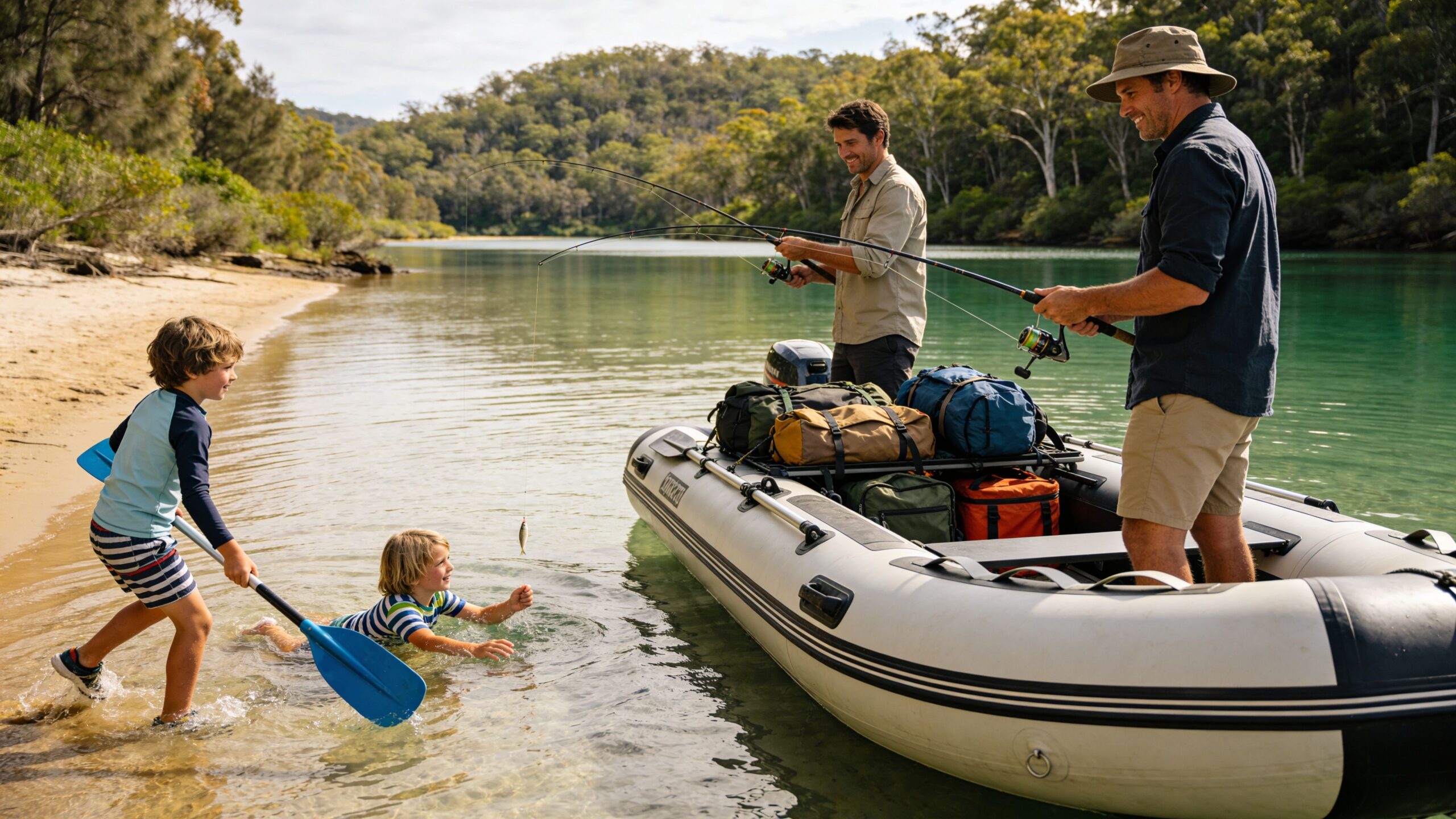
An angler with a portable inflatable can leave the ramp queues behind and launch closer to the water they prefer to fish. That means quiet estuary edges, narrow access points, and smaller waterways where bulkier boats become a hassle.
This shift matches broader boating participation. Boat licence registrations in Australia rose 29% from 2019 to 2024, and 1 in 10 Australians now hold a licence, according to Grand Boats Australia’s summary of BIA industry data. More Australians are boating, and many of them want flexible platforms for fishing, family fun, and coastal exploration.
For that use, a dedicated inflatable fishing boat makes more sense than many people realise.
For campers and touring families, the appeal is obvious. You don’t need a second logistics chain to bring a boat. You pack it with the rest of the gear, inflate on site, and open up a whole new part of the trip.
That’s especially useful for beach campers, island hoppers, and caravan travellers. A compact inflatable gives you access to the water without forcing you into a trailer-based touring setup. And if your camping plan includes cooking on shore, a look at essential outdoor cooking gear is useful for building a more complete camp-and-boat system.
There’s also a practical side to package buying. One supplier example is Easy Inflatables, which offers inflatable catamarans, tenders, RIBs, and bundled motor packages designed around Australian use cases.
A quick look at a compact setup in action helps make the appeal obvious.
Families often want a boat, but they don’t want boating to become an administrative hobby. That’s where inflatables shine. They deliver the fun part without requiring oversized storage, trailer management, or the cost and hassle of a more permanent rig.
Australian conditions are brutal on inflatable boats. Sun, salt, sand, and heat don’t forgive neglect. If you want your boat to last, treat maintenance as routine ownership, not as an occasional clean-up when the boat starts looking tired.
The need for this is stronger than most buyers realise. Sydney Harbour boating reports indicate 15% of inflatables fail prematurely due to neglect, and Australian waters average 35.5ppt salinity, as noted in Easy Inflatables’ discussion of maintenance gaps in Australian boating content.
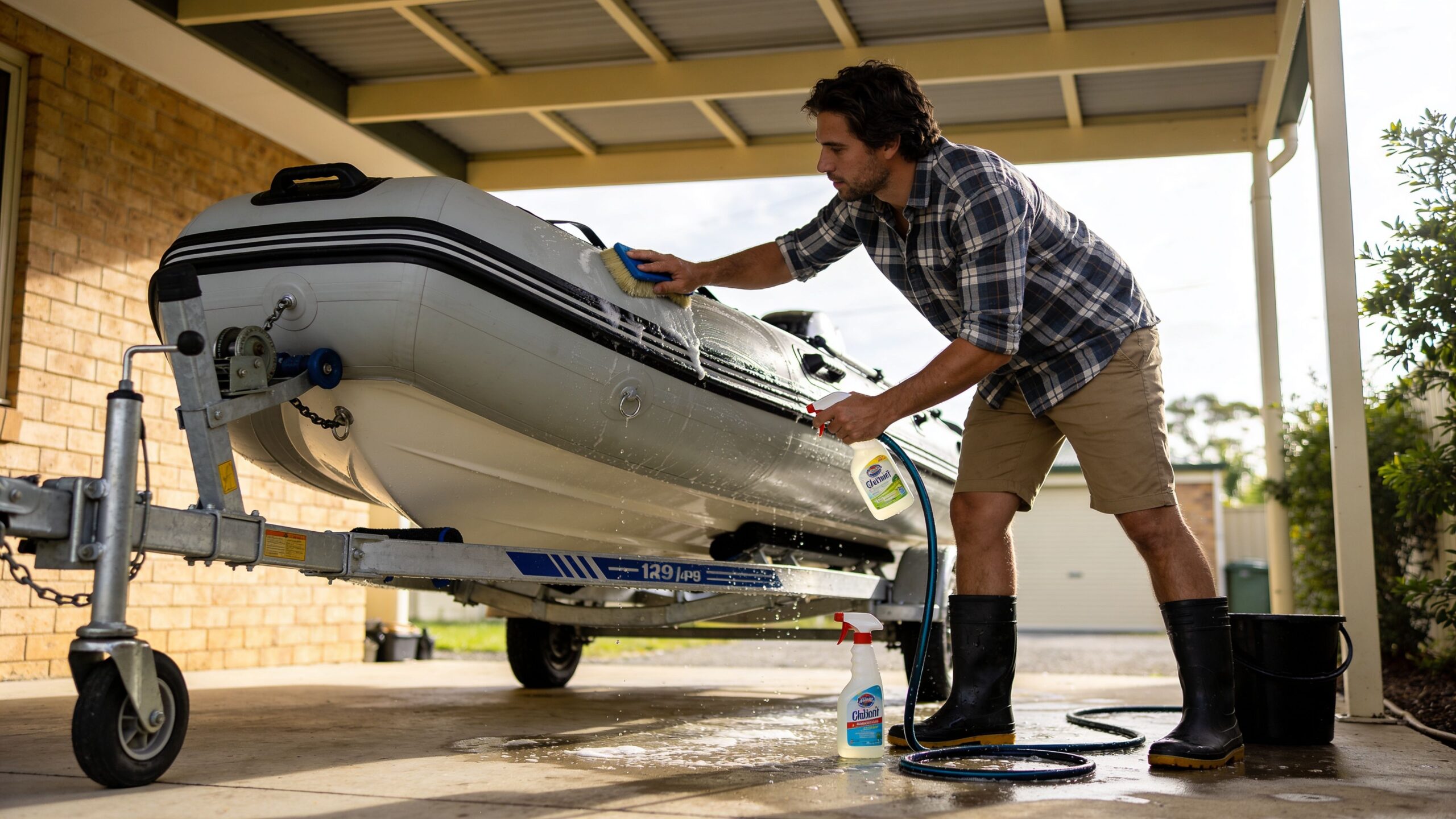
Salt left on the tubes, fittings, and transom is asking for trouble.
A lot of owners are careful on the water and lazy at home. That’s backwards. Most preventable ageing happens during storage and post-trip neglect.
Run a consistent inspection routine instead of waiting for obvious damage.
Boats rarely “suddenly” fail. Owners miss the warning signs, then call the failure sudden.
Keep the boat out of direct sunlight whenever possible. Store it clean, dry, and protected. If it stays inflated, avoid unnecessary pressure stress in heat. If it’s packed down, don’t crush it under heavy gear or leave it baking in a vehicle for extended periods.
That discipline is what separates boats that age gracefully from boats that look old well before they should.
Buying from a specialist supplier in Australia solves problems that generic marketplaces create. That’s the core reason.
A specialist can help you match the hull, floor, and motor to your actual use. A generic seller often can’t. That means fewer mistakes, fewer compatibility issues, and fewer situations where the buyer discovers the package doesn’t quite suit the way they boat.
It also matters after the sale. If you need parts, warranty support, or guidance on setup and maintenance, local support saves time and frustration.
A curated package often beats assembling a boat from unrelated listings. Boat, motor, pump, bag, fishing accessories, and transport gear should work together. The more serious your intended use, the more important that becomes.
Australian delivery is another practical advantage. Buyers want clarity on shipping, duties, and timing. Specialist suppliers usually handle that process more cleanly than offshore marketplace sellers.
If you’re buying a throwaway toy for a sheltered holiday lake, generic listings might be enough. If you’re buying a premium inflatable for fishing, offshore use, touring, or family boating, they usually aren’t. This category rewards informed buying.
Yes, quality inflatable boats are safe when they’re designed properly, loaded correctly, and used within their intended conditions. Their buoyancy is a major strength, and multi-chamber construction adds an extra margin of security.
The key is to stop thinking of all inflatables as equal. Cheap, poorly made boats and premium marine inflatables are not the same category in practice.
Lifespan depends on material quality, seam construction, UV exposure, storage discipline, and general care. A premium inflatable that’s cleaned, dried, and stored properly will last far longer than a neglected budget boat.
If you want long service life, buy better fabric first and become fussy about maintenance second. Those two decisions matter more than almost anything else.
Yes, but only if the boat is designed for offshore use and equipped appropriately. Hull design, structural integrity, material quality, and safety gear all matter.
For many Australian buyers, catamaran inflatables and properly configured RIBs are the strongest options when offshore capability is part of the brief.
Start with your real crew count, not your optimistic one. Then think about how you use the boat.
A cramped boat gets old quickly. Buyers usually regret going too small more often than going slightly larger.
If you’re comparing options and want a serious boat built for Australian conditions, start with Easy Inflatables. Browse the range, compare hull styles, and request a quote based on how you plan to fish, camp, tour, or run offshore. That’s the fastest way to narrow the field and buy with confidence.