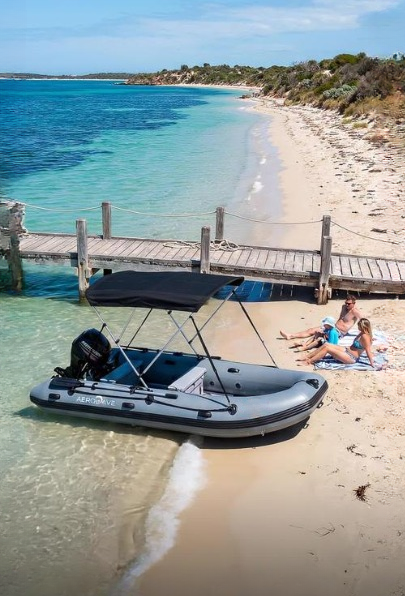
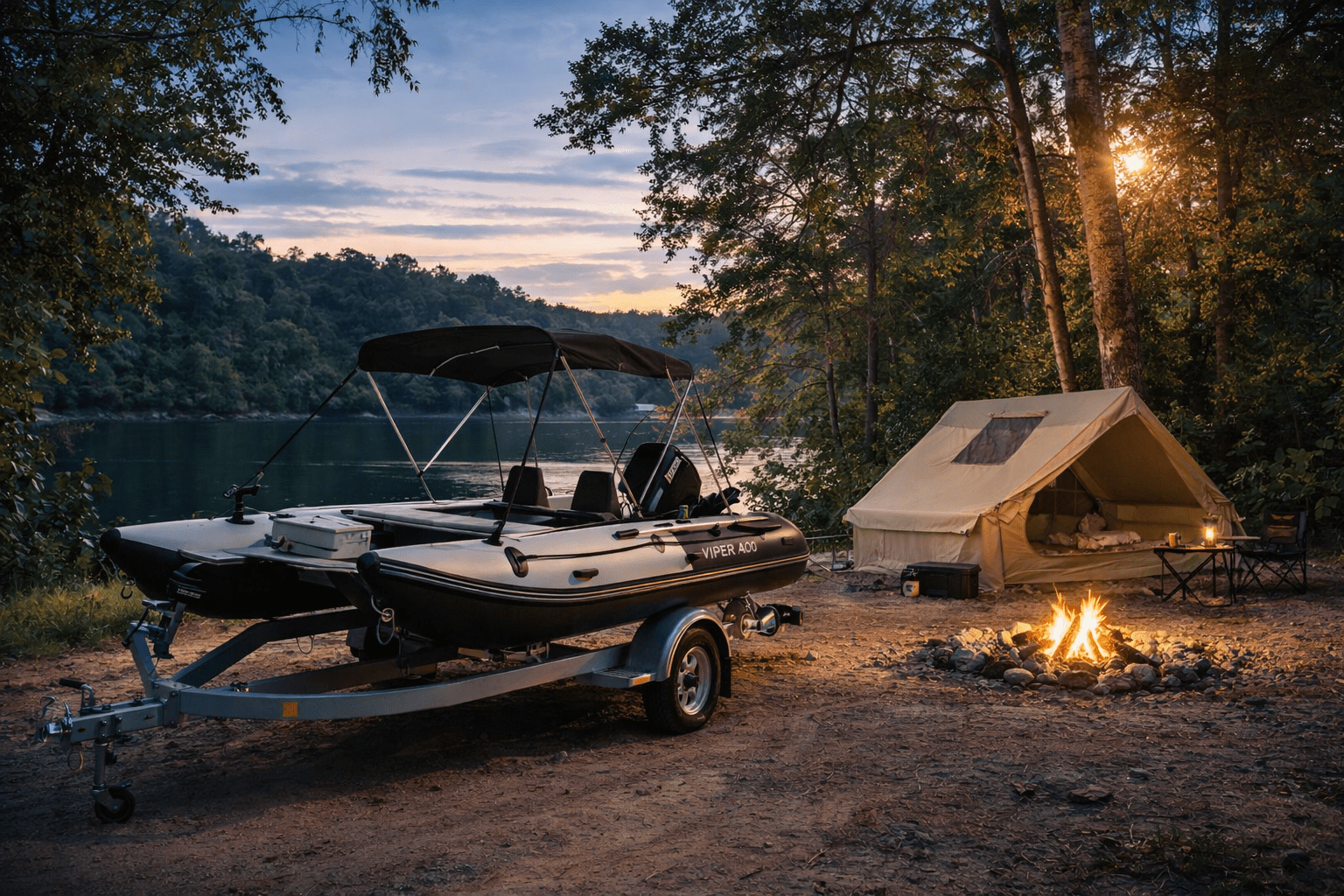

You’re probably in one of two camps right now. Either you’re tired of trailers, ramps, rego hassles, and trying to store a hard boat at home, or you want a boat that suits the way Australians use the water. Quick beach launches, estuary sessions, family afternoons, camping trips, and those spontaneous detours when you find a quiet creek or sheltered bay.
That’s where the inflatable catamaran makes sense. Not as a compromise, but as a smarter tool for local conditions. A good inflatable catamaran australia setup gives you stability that feels far bigger than the boat’s packed size suggests, plus the kind of portability that changes how often you get on the water.
The biggest mistake buyers make is looking only at length, price, or motor size. In practice, hull design and fabric quality decide whether the boat feels planted, holds its shape, and survives Australian sun, sand, salt, and repeated beach work. That’s why serious buyers keep circling back to cat hulls and commercial-grade PVC rather than cheaper, lighter builds that look fine in a showroom and age badly outside it.
A lot of Australian boating starts with a simple idea. Load the car, head to the coast or river, inflate on the sand, and go. No trailer queue. No awkward storage problem at home. No need to commit to a full hard-boat setup just to spend a few hours fishing, exploring, or pulling the kids onto a quiet beach.
That shift isn’t theoretical. In 2023, Australia recorded over 120,000 soft hull inflatable boat sales, and those boats represented 82% of all inflatable sales in Oceania, with the 3.3m to 4.0m range driving much of that demand for families and anglers, according to Australian inflatable boat market analysis.
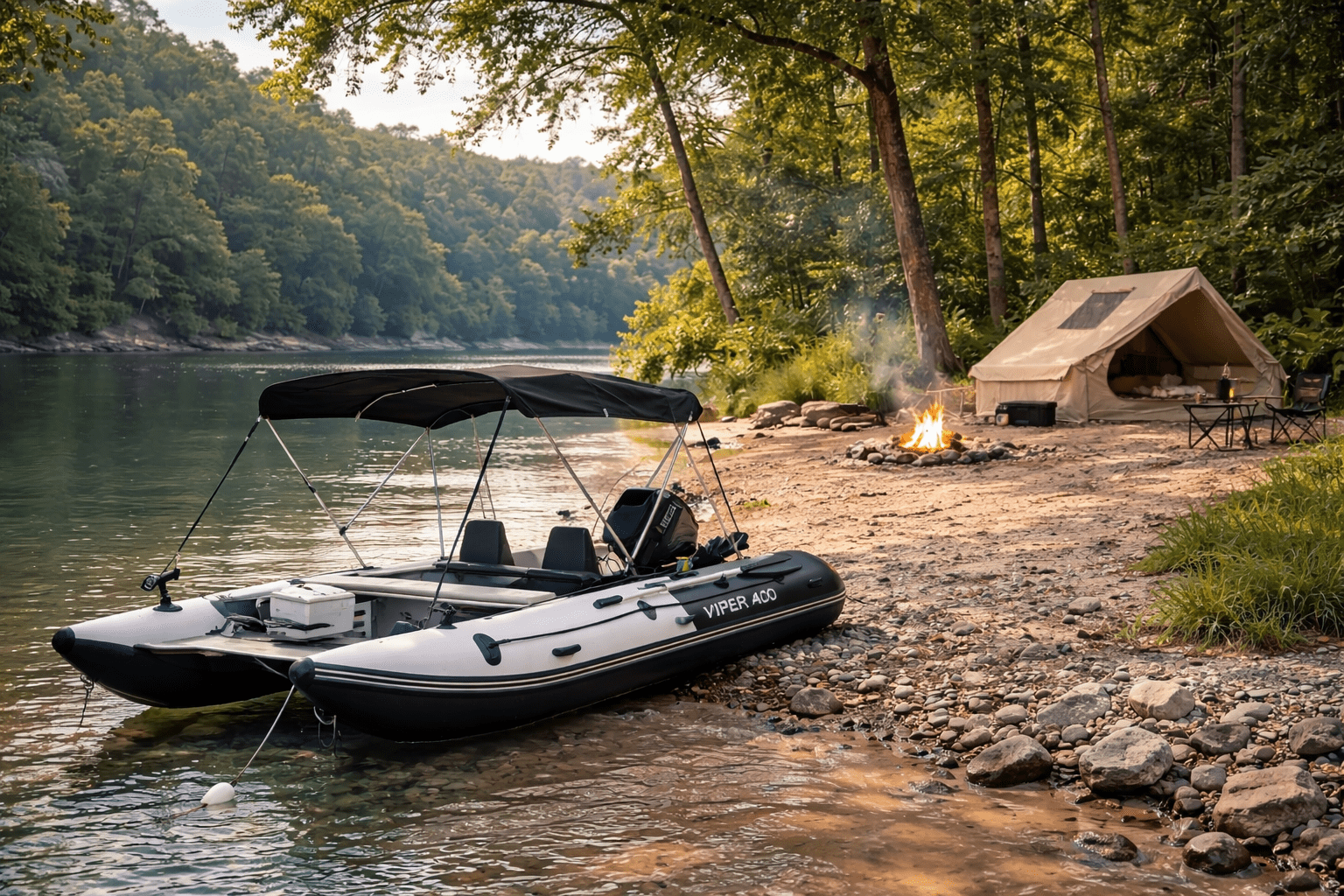
Australian buyers don’t just want a boat that floats. They want one that works from a beach, a caravan park, a riverbank, a yacht deck, or the back of an SUV. That’s why inflatable catamarans keep gaining ground over traditional small boats that need more gear, more storage, and more patience.
Three use cases come up again and again:
Practical rule: The boat you use often is the boat that fits your transport, storage, and launch routine. That’s where inflatable catamarans win.
A lot of buyers assume a small tinny is the default answer. It often isn’t. Tinnies are fine, but they bring the trailer, the parking, the noise on the hull, and the storage headache. A cheap inflatable solves the portability issue, but many don’t solve comfort or durability.
A well-built inflatable catamaran sits in the middle. It gives you the pack-down convenience people want, with far better on-water behaviour than bargain inflatables. For many households, that’s the point where boating starts feeling easier instead of more complicated.
The main reason people switch to a cat hull is stability. Not brochure stability. Real stability. The kind you notice when someone climbs aboard from the beach, when a child shifts sides, or when you stand to cast in light chop.
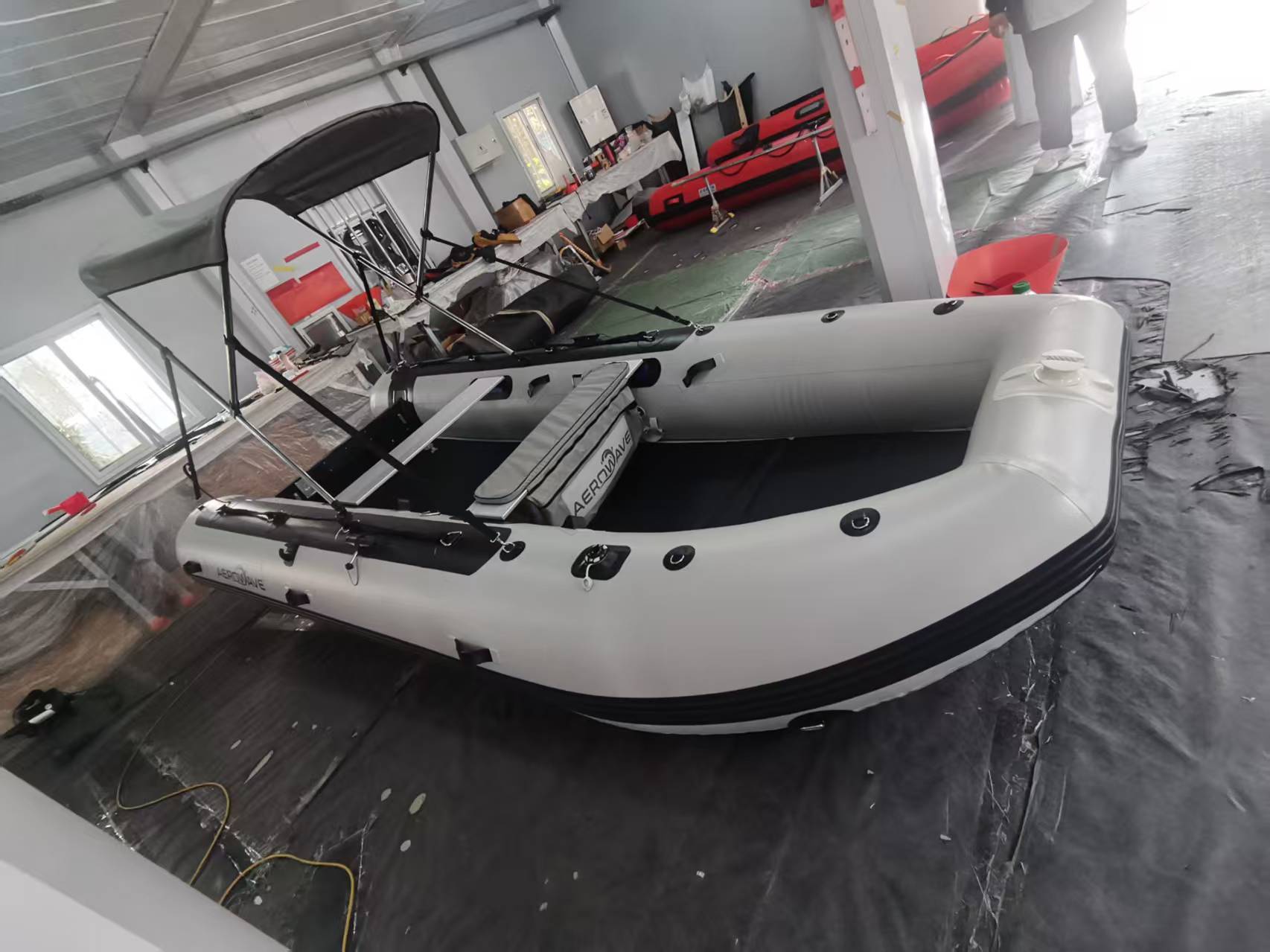
The easiest way to understand it is this. A monohull inflatable balances on one central running surface. A catamaran spreads that support across two separated pontoons. That wider stance changes how the boat reacts to side movement, beam chop, and shifting load.
The measurable result is strong. The tunnel hull design used in inflatable catamarans can reduce roll by up to 50% compared with traditional monohull inflatables, because lift is spread across two pontoons instead of one central hull, as outlined in this guide to stable inflatable boat design in Australia.
That’s the engineering version. The practical version is simpler. The boat resists that annoying side-to-side wobble that makes small inflatables tiring.
Australian coastal and estuary conditions rarely stay glassy for long. Afternoon sea breeze comes up. Ferry wash rolls through. Chop reflects off rock walls and pontoons. That’s where the cat hull earns its keep.
Instead of slapping and rocking around every little disturbance, the twin-hull layout settles the boat. You feel more support underfoot and less nervous movement through the deck. It’s one of the main reasons fishers like these boats, and why families trust them once they’ve used one properly.
Here’s a closer look at how that hull shape works in practice:
No hull is magic. Catamarans aren’t designed to pretend rough open water doesn’t exist. If you overload them, underinflate them, or power them badly, they won’t feel right. And if your boating is mostly long offshore runs in ugly conditions, you’ll assess the boat differently than someone using bays, rivers, lakes, and inshore coast.
But for the way many users employ a portable boat in Australia, the trade-off is favourable.
| On-water factor | Inflatable catamaran | Typical monohull inflatable |
|---|---|---|
| At rest | More planted | More roll-sensitive |
| When passengers move | Better weight distribution | More noticeable lean |
| In light chop | Slices and settles | More sway and slap |
| Standing to fish | More confidence underfoot | Usually less forgiving |
A good inflatable catamaran should feel boring in the best possible way. No drama when people move, no constant correction, no fighting the boat all day.
If you want a deeper technical breakdown of how these hulls behave, this overview of stable inflatable boat options is useful because it focuses on the actual design principles rather than generic sales talk.
Most buyers look at shape first. Experienced owners look at fabric and seams first.
That’s because Australian conditions punish poor materials quickly. UV is relentless. Sand gets everywhere. Beach launches grind the underside. Salt sits in seams and fittings. If the fabric is average and the seam construction is weak, the boat won’t age gracefully no matter how nice the layout looks on day one.
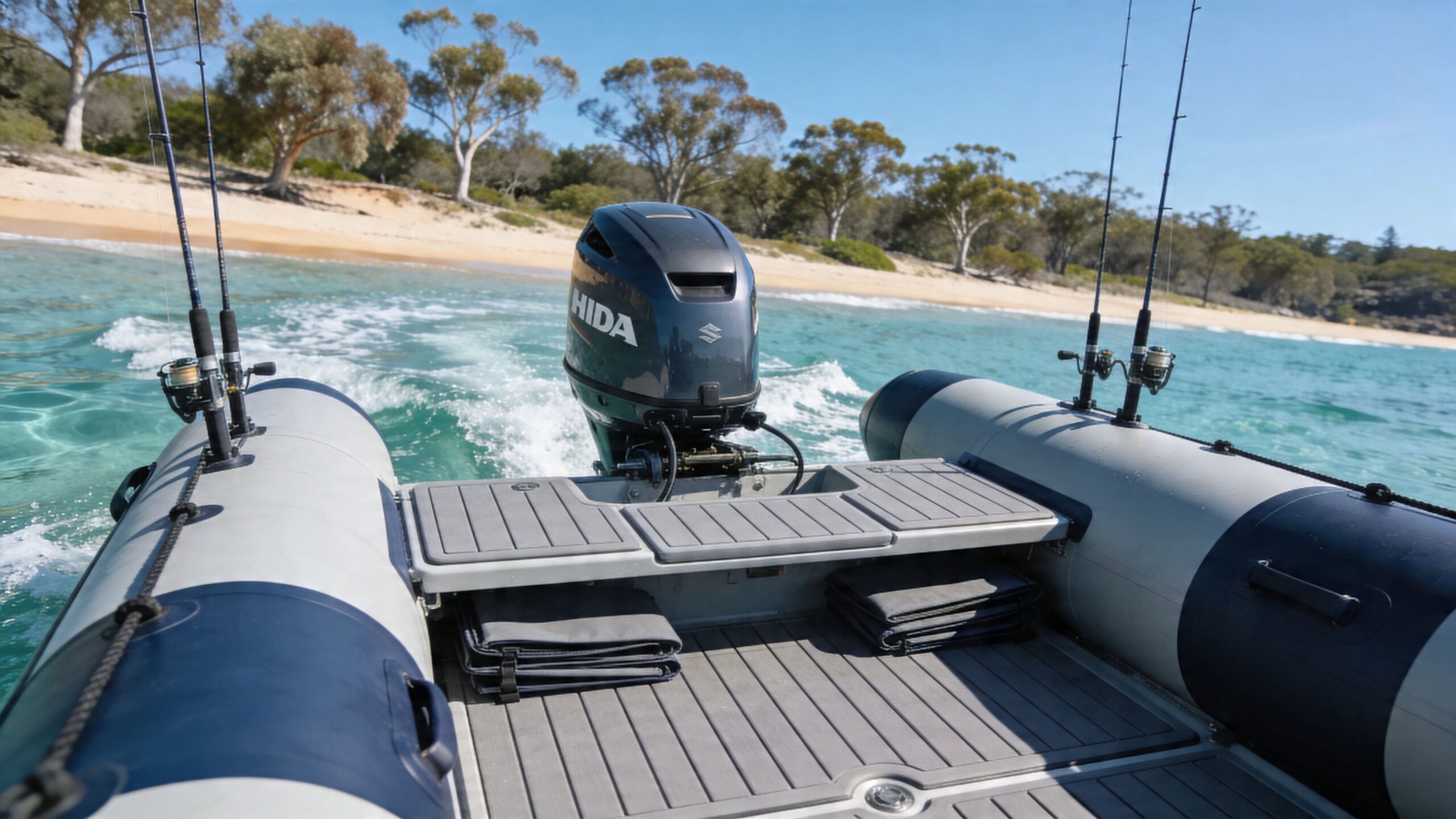
When you see 1.2mm 2000D German Valmex PVC, those numbers matter. They aren’t decorative. They describe the thickness and fabric grade behind the boat’s skin, which directly affects puncture resistance, abrasion tolerance, shape retention, and long-term structural feel.
Premium 1.2mm 2000D German Valmex PVC delivers 40% superior abrasion resistance over standard 1100D fabrics, and tensile strength exceeds 3000 N/5cm, while thermo-welded seams are better suited than glued seams for Australia’s high UV exposure and high-pressure air decks, according to this technical reference on premium inflatable catamaran materials.
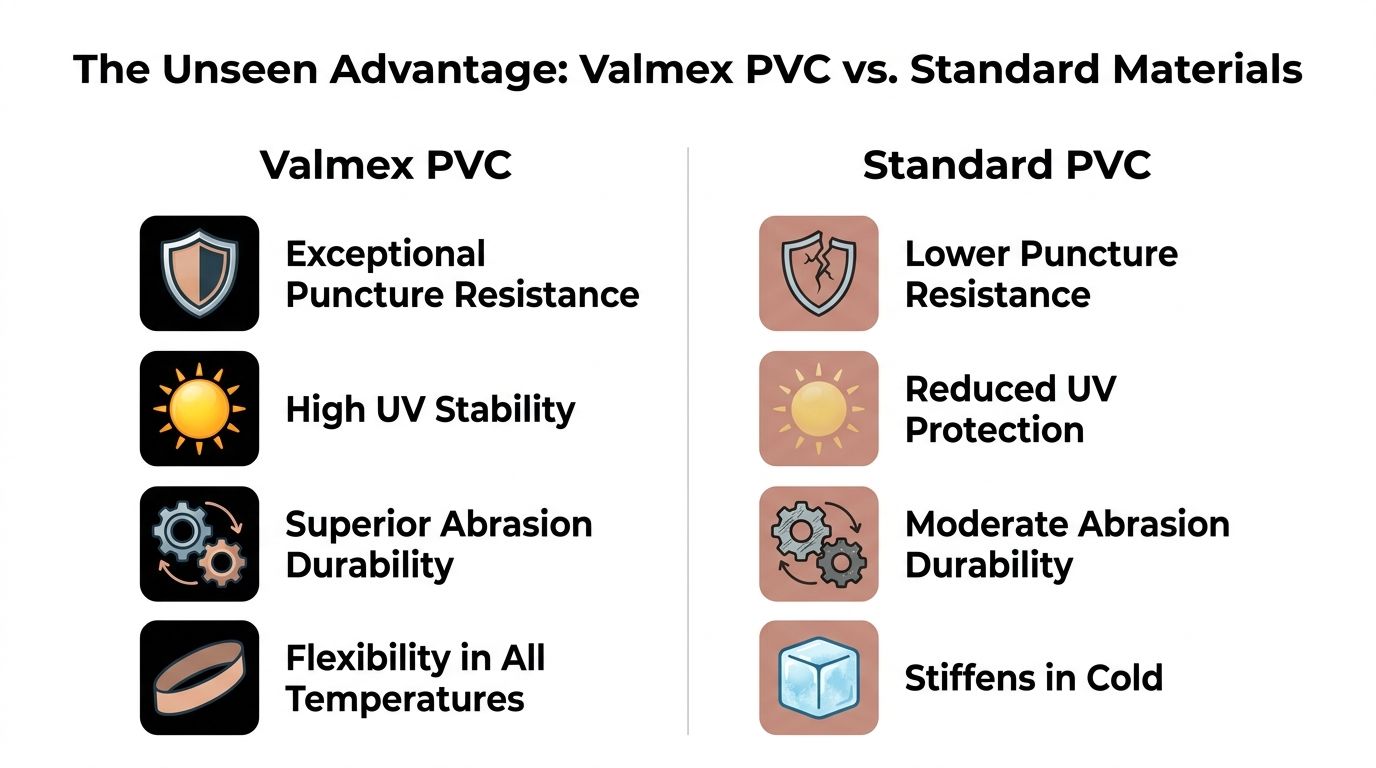
What often catches many buyers is that two boats can look similar online yet use very different construction methods.
A glued seam depends on adhesive staying healthy through heat cycles, flex, salt exposure, and storage conditions. A thermo-welded seam fuses materials together more like a manufactured structure than a bonded join. In hard Australian service, that difference matters.
Here’s the short version:
Workshop note: Buyers often think durability is just about punctures. It isn’t. Shape retention, seam integrity, and UV tolerance decide how the boat feels after seasons of use.
Aerowave and Viper inflatable catamarans are aimed at buyers who want a more durable build for regular Australian use. That’s a different philosophy from lighter catamarans that prioritise minimum carry weight above everything else. Boats from brands such as True Kit and Takacat have their place, especially where low weight and easy handling ashore are the top priorities, but lighter fabric always comes with a trade-off.
That trade-off usually shows up in one of four places:
| Decision area | Heavier commercial-grade Valmex build | Lighter build approach |
|---|---|---|
| Abrasion tolerance | Better for repeated beach contact | Usually less forgiving |
| Hull stiffness under load | More shape retention | More likely to feel soft |
| Long-term wear | Better suited to harsh coastal use | Often optimised for portability |
| Carrying and pack-down | Slightly more effort | Easier to handle ashore |
That doesn’t mean every buyer needs the heaviest fabric available. It means you should match the material to your use. If the boat will live a gentle life on calm inland water, you can accept more compromise. If it’s going to see sun, salt, sand, and frequent launching, better fabric pays for itself in less hassle and a longer useful life.
For buyers comparing premium materials, this article on German Mehler PVC and other premium inflatable fabrics helps frame what the material choice means on the water.
The right inflatable catamaran australia setup depends less on the catalogue and more on how you spend your weekends. Buyers get into trouble when they buy for a fantasy use case. Buy for the trip you’ll do most often.
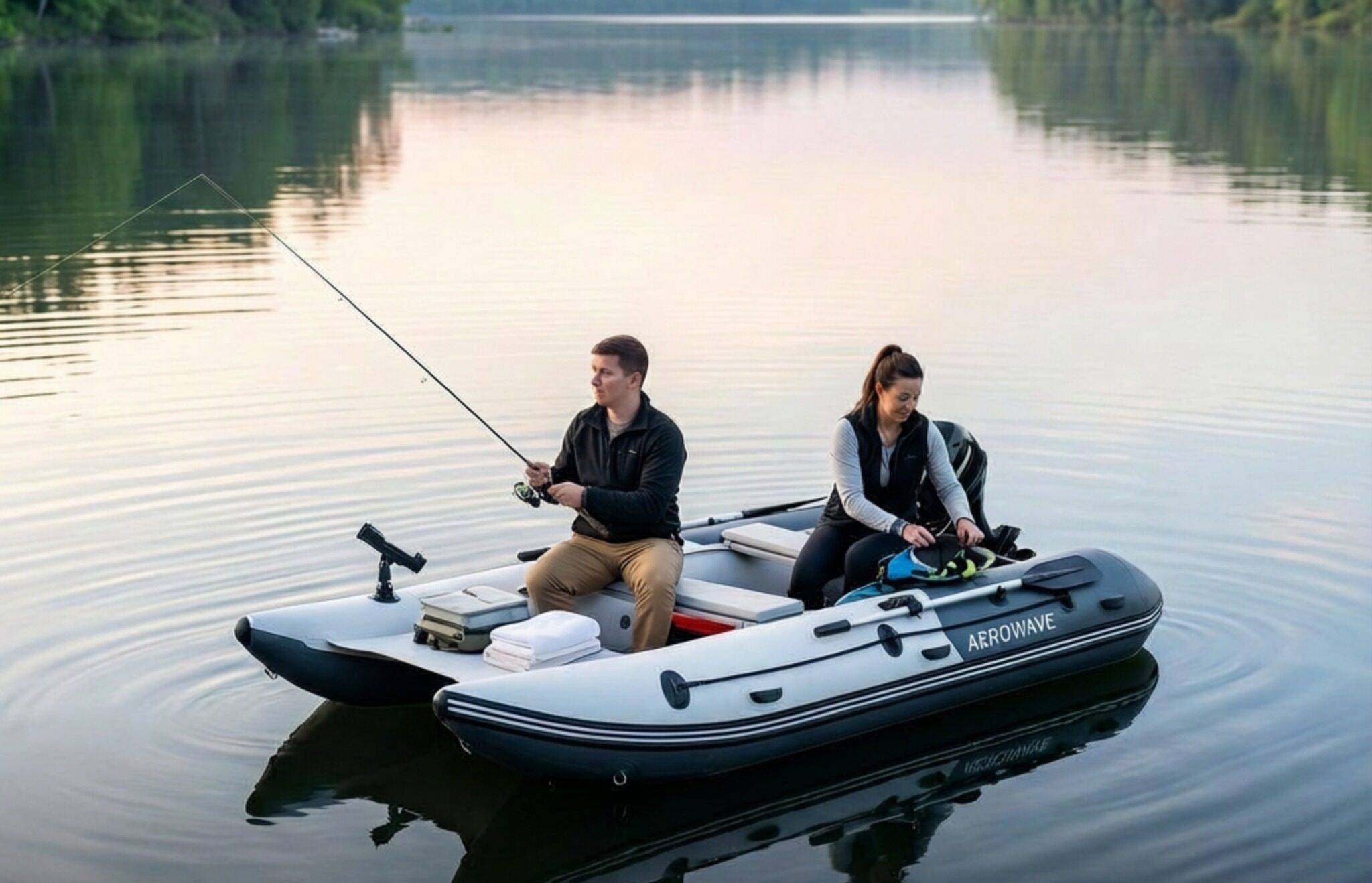
If your focus is lure casting, estuary work, or sneaking into shallow water, prioritise deck stability, open space, and a layout that doesn’t fight you. Open bows and uncluttered floors matter more than flashy trim. You want room for tackle, a net, and one clean movement when the fish turns.
For that style of use, a mid-size catamaran is often the sweet spot. Big enough to carry gear cleanly, small enough to launch without fuss. If fishing is your main use, these notes on choosing a fishing inflatable boat are worth reading because they focus on layout rather than generic boat talk.
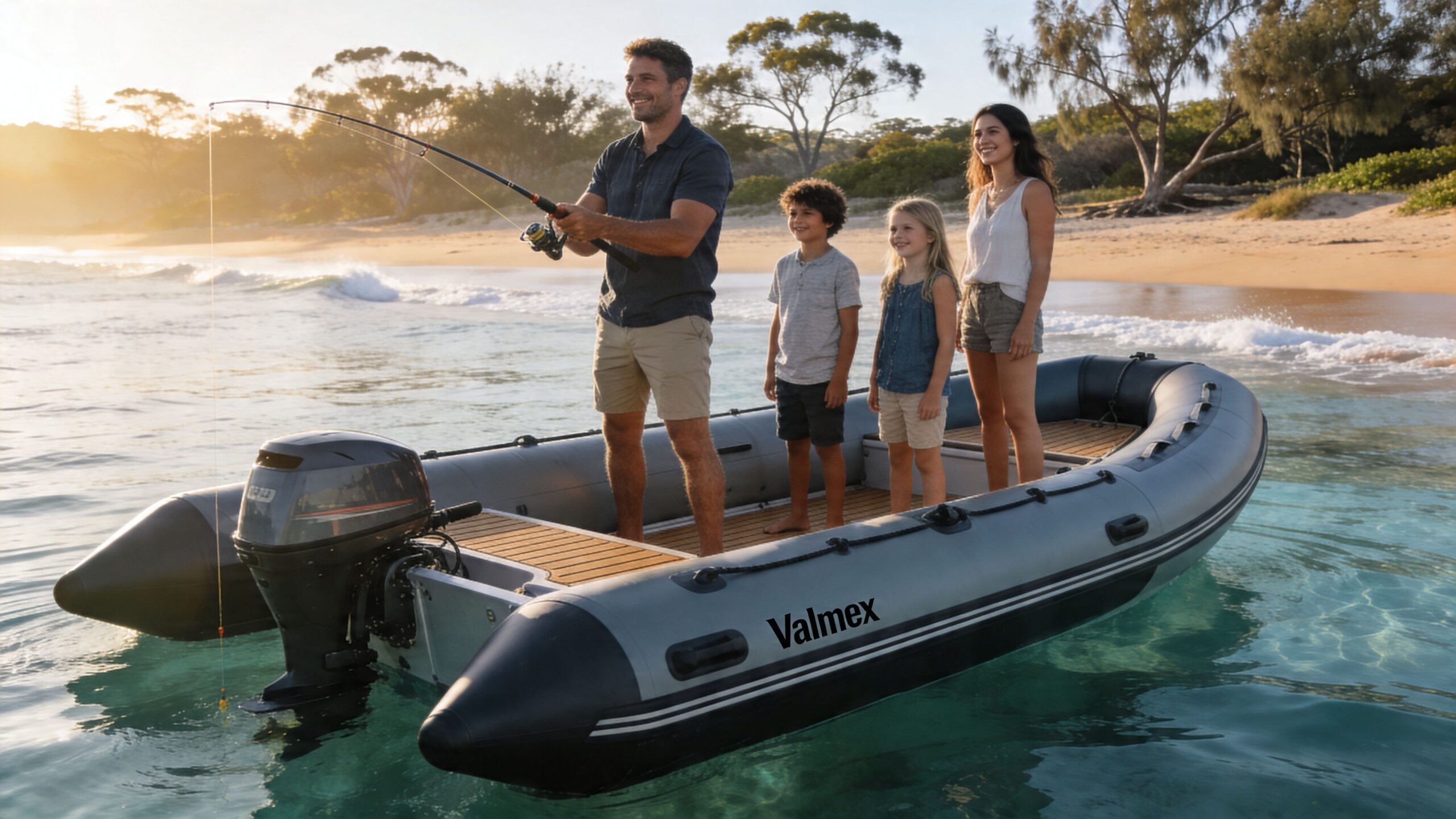
Families should buy for stability first, then boarding ease, then carrying space. Children don’t move like experienced boaters. They shuffle, stand in the wrong place, sit on tubes, and change sides without warning. A catamaran forgives that better than a lot of small boats.
Look for these traits:
For family use, the best small boat is usually the one that feels least dramatic when everyone moves at once.
If you travel with a caravan, camper, or yacht, your priorities change. Storage shape, bag size, drying routine, and inflation time become part of the ownership experience.
For touring, the boat needs to pack neatly, inflate without drama, and tolerate frequent setup cycles. For tender use, it needs to handle dinghy duties without feeling fragile around pontoons, shorelines, and gear transfers.
A useful way to think about it is this:
The right choice isn’t the biggest model. It’s the one you can launch, load, clean, and store without turning the trip into work.
Registration rules for inflatable boats aren’t identical across Australia. They vary by state and usually depend on hull length, engine power, and how the boat is used. That’s why smart owners check their local authority before first launch rather than relying on what a mate says at the ramp.
The practical approach is simple. Treat registration and safety gear as part of the package, not an afterthought. If you buy the boat and motor first and ask questions later, you risk ending up with the wrong assumptions about compliance.
Use this as a working checklist:
A few minutes of checking saves a lot of grief.
Some owners treat safety equipment like a box-ticking exercise. That’s the wrong mindset with small portable boats. The whole point of a compact boat is that it gives you access to more places. More access means more exposure to changing weather, isolation, and shallow hazards.
At a minimum, think in categories:
| Safety area | What to think about |
|---|---|
| Personal flotation | Correct PFD for every person aboard |
| Emergency signalling | What your state requires for your boating area |
| Basic recovery gear | Means to bail, paddle, and secure the boat |
| Communication | Waterproof phone setup or other suitable option |
| Sun and hydration | More important than many first-time owners expect |
Small boats reward preparation. The trip is better when the safety kit is already packed and you don’t have to think about it at the shoreline.
A lot of safety comes from setup, not just equipment. Keep the floor clear. Store gear low and secure. Balance weight evenly. Don’t overload the stern with too much motor, fuel, and baggage. Inflate to the correct pressure. Most handling complaints in inflatable boats trace back to poor setup rather than bad design.
For a practical checklist of what to carry and how to think about compliance, this guide to boating safety equipment is a good reference point.
The purchase price of an inflatable catamaran is only half the story. The bigger question is what the boat looks like after repeated summers, beach launches, and time packed away damp after a rushed trip home.
Australian conditions are hard on inflatables. UV exposure is the biggest long-term killer, and too many buyers still treat maintenance and warranty support as minor details.
A 2025 Marine Safety Australia report noted that 28% of inflatable boat failures in coastal regions such as QLD and NSW stem from UV degradation within 2 years, and only 15% of owners report smooth local warranty support, according to this discussion of inflatable catamaran durability and warranty issues in Australia.
That matters because UV damage often doesn’t announce itself dramatically at first. The boat can still look acceptable from a distance while the surface, seam areas, or high-stress folds start ageing faster than the owner expected.
Long-term care isn’t complicated. It just needs consistency.
Those habits matter more than fancy cleaning products.
A warranty only has real value if the process is practical. That means local contact, clear terms, and support from someone who understands marine use in Australian conditions. Imported boats bought on price alone can leave owners stuck in long email chains, vague fault assessments, and arguments over what counts as normal wear.
After-sales support effectively becomes part of the product.
| Ownership factor | What works | What usually causes frustration |
|---|---|---|
| Claim process | Local contact and clear documentation | Overseas delays and unclear responsibilities |
| Durability expectations | Realistic guidance for UV and salt use | Generic promises with no local context |
| Parts and repairs | Accessible advice and practical solutions | Long waits and poor communication |
The cheapest boat can become the most expensive one you own if the warranty is hard to use and the fabric ages early.
One practical option for buyers who want to review what support looks like before purchase is the Easy Inflatables warranty policy. The important part isn’t the marketing. It’s whether the terms, coverage period, and support path make sense for Australian ownership.
A good inflatable catamaran solves three problems at once. It gives you a stable platform on the water, a compact package in the vehicle, and a practical ownership path at home. That’s why this format keeps winning over families, anglers, travellers, and tender owners who are tired of overcomplicated boating.
The strongest setups in this category don’t rely on one feature. They combine the right hull shape, the right fabric, and the right hardware. That’s why Aerowave and Viper catamarans stand out in practical comparisons. They’re built around the idea that Australian buyers need more than easy pack-down. They need a boat that can cope with local use without feeling disposable.
A boat-only purchase often creates extra work. You still need to match an outboard, pump, bag setup, accessories, and transport plan. Done badly, that gives you a rig that’s awkward, underpowered, or mismatched.
Done properly, a turnkey package is simpler:
That’s especially important for first-time buyers who don’t want to build a boat package through guesswork.
Aerowave and Viper inflatable catamarans make the most sense for buyers who want one boat to do several jobs well. They suit the family that wants a beach-launch day boat. They suit the angler who values stability and low draft. They suit the RV traveller who needs a real boat in a packed vehicle. They also suit tender owners who want durable materials and practical deck access.
The common thread is simple. These buyers aren’t shopping for novelty. They want a small boat that behaves predictably and lasts.
If you strip away brand noise, the decision usually comes down to this table:
| What you prioritise | What to look for |
|---|---|
| Stability | Twin-hull catamaran design |
| Durability | 1.2mm 2000D German Valmex PVC and thermo-welded seams |
| Convenience | Boat-in-a-bag portability and sensible setup |
| Ownership confidence | Local warranty path and matched package components |
That’s the reason many experienced buyers stop comparing inflatable catamarans by price alone. Price matters, but how the boat wears, carries load, and handles repeated use matters more.
If you want the short version, this is it. For Australian water, a well-built inflatable catamaran is one of the smartest small-boat choices available. And if you want that design paired with commercial-grade fabric rather than lighter, more compromise-heavy construction, Aerowave and Viper are the names worth serious attention.
If you’re ready to compare real-world inflatable catamaran options, matched outboard packages, and locally supported warranties, have a look at Easy Inflatables. Their range covers portable catamarans, tenders, and bundled setups built around Australian conditions, with practical product details that make it easier to choose the right rig for fishing, family use, or travel.