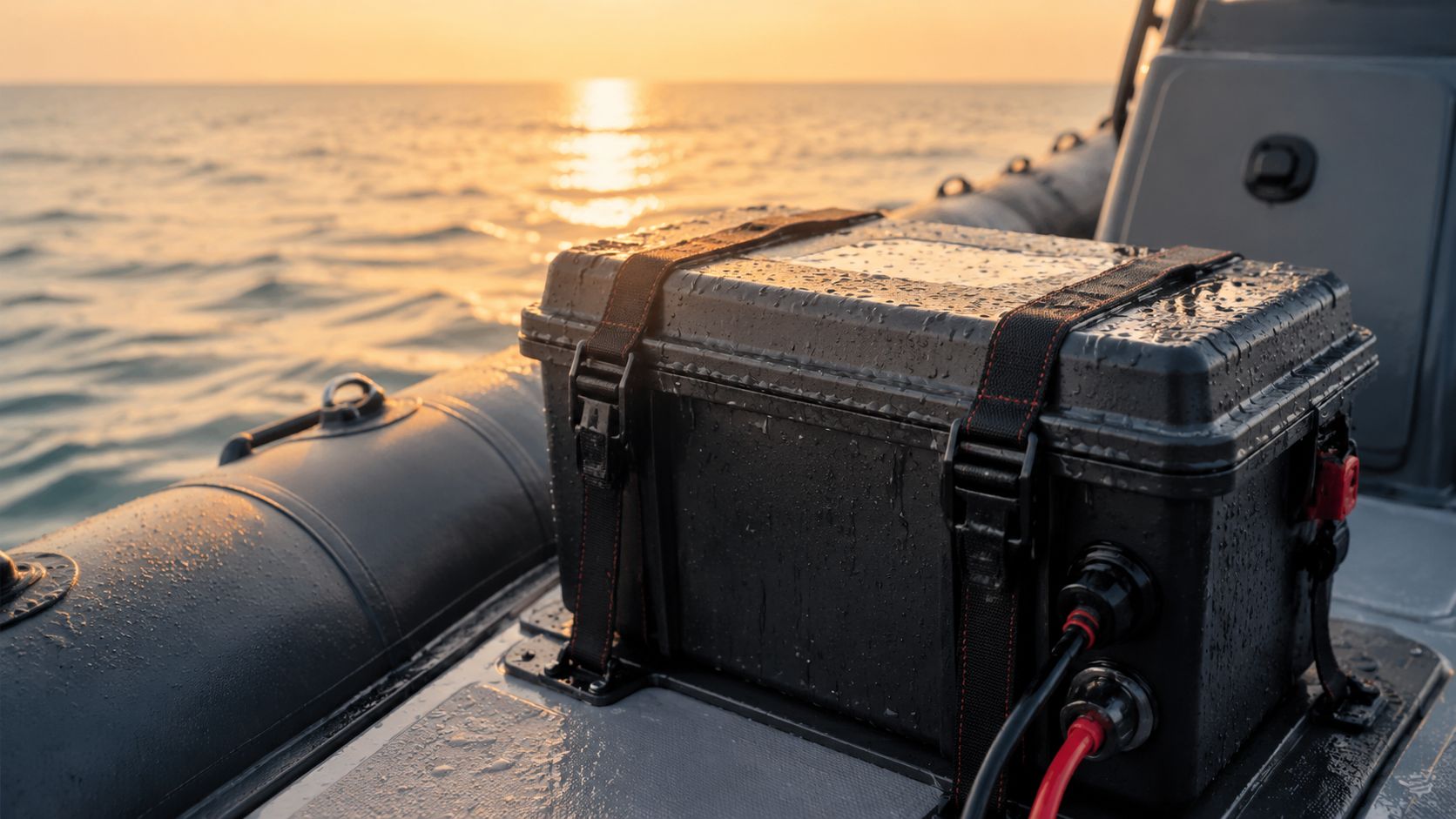

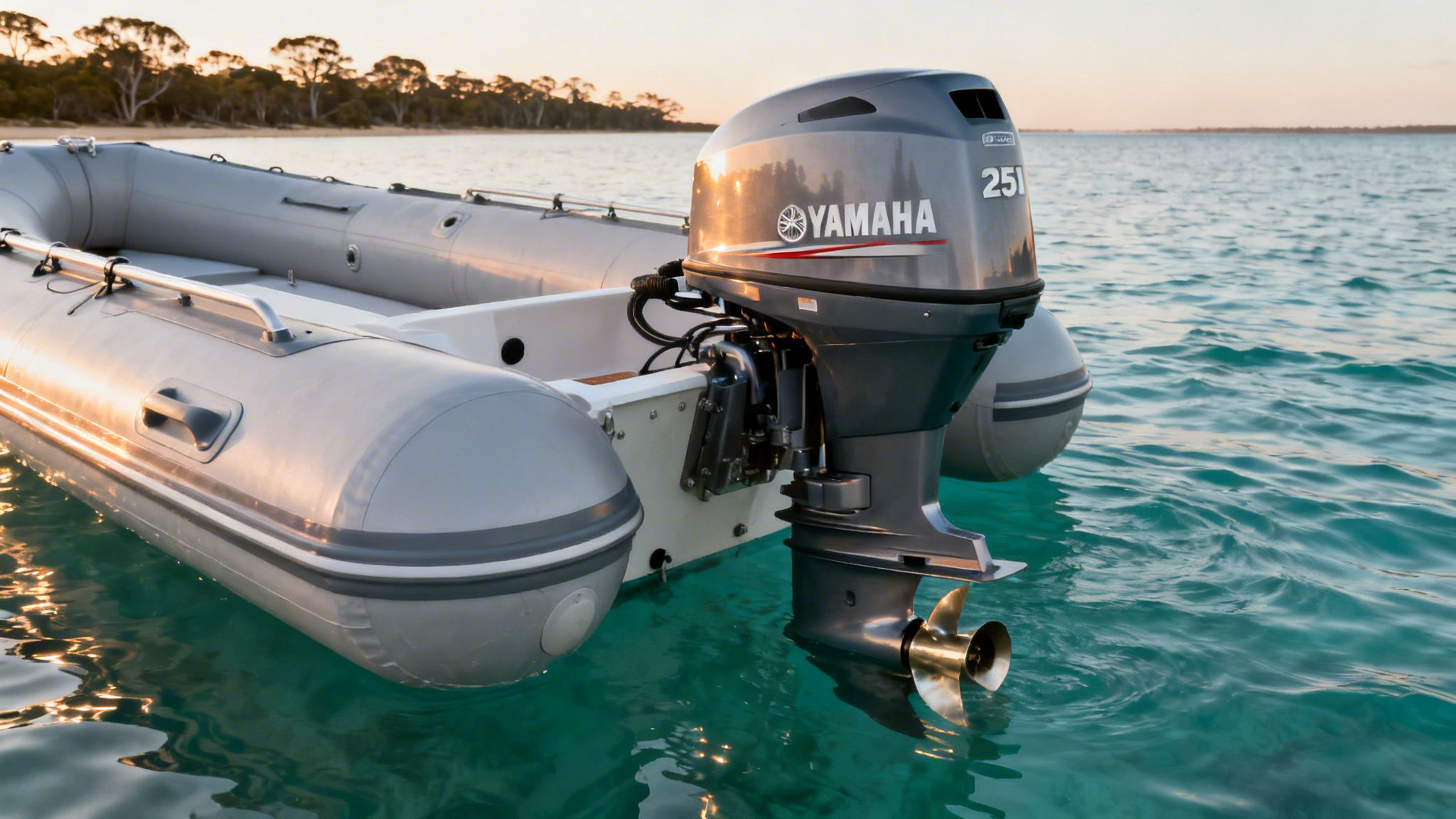
Picture the perfect day out on the water in Australia. Your inflatable is slicing through the waves, powered by an engine you can count on. For years, the Yamaha 25 HP outboard engine has been that benchmark—a true legend among boaties for its reliability and punch. We’re using it as our yardstick to explore what really makes a great outboard.
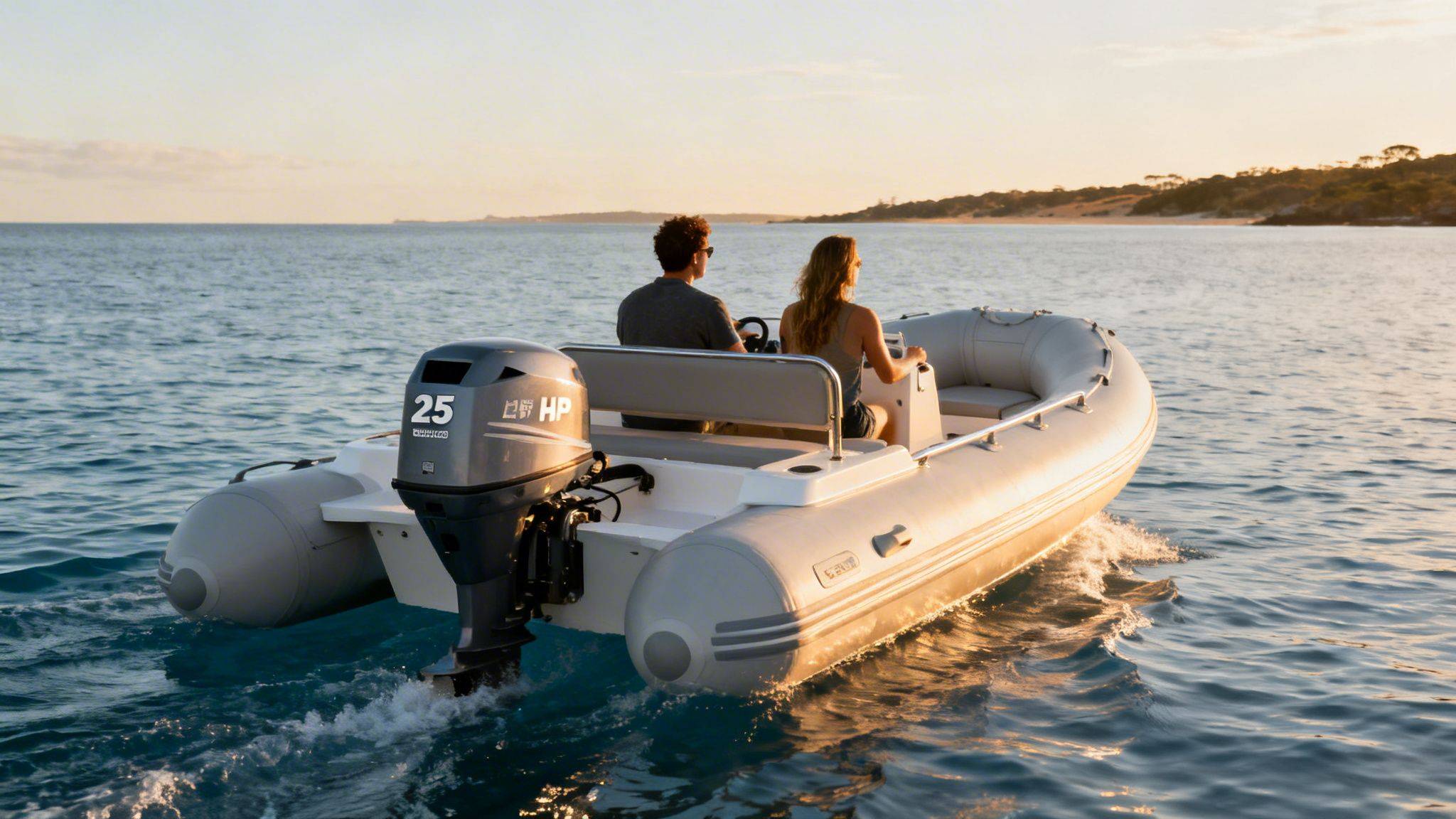
Here at Easy Inflatables, our mission is to deliver powerful, high-value boating packages. We’ll show you how a challenger brand like Hidea, with its 20 HP and 30 HP 4-stroke models, delivers awesome performance that goes up against the big names, often without the premium price tag. Whether you’re comparing prices and features of inflatable boats in your area or looking for the best recreational options available near you, this guide is all about helping you make a smart, informed choice.
Getting this right is what separates a good day from a great one, especially if you’re running an inflatable catamaran or just enjoying a weekend on the water.
In Australia, all new outboards must meet strict government emission standards, which is why clean and efficient 4-stroke engines are the only option—we don’t do 2-strokes here. While the Yamaha brand has a strong grip on the Aussie market, making the Yamaha 25 HP outboard engine a common reference point, it’s not the only player.
Yamaha’s reputation was earned through years of trusted performance. Its market leadership is clear, holding an 8.4% brand search share in Australia as of Q3 2025. With around 26,000 outboards sold Down Under each year, the F25 became a cornerstone after its 2017 redesign won an IBEX Award for being the lightest 25hp outboard available.
Choosing the right motor isn’t just about horsepower; it’s about finding the perfect balance of power, weight, and value for your specific boat, ensuring countless days of fun on the water.
While Yamaha sets a high bar, savvy boaters know it’s not the only game in town. It’s smart to stack it up against other awesome options that offer incredible value. Hidea doesn’t just meet the benchmarks but often beats them in key areas like power-to-price ratio.
This guide helps you compare prices and features of inflatable boats in your area. Our goal is to make sure you get an engine that’s a perfect match for your adventures, whether you’re fishing, enjoying a family outing, or looking to hire inflatable boats for a day. Let’s dig in and see why the Hidea 20 HP and 30 HP 4-stroke models are the awesome choice for savvy Aussie boaters.
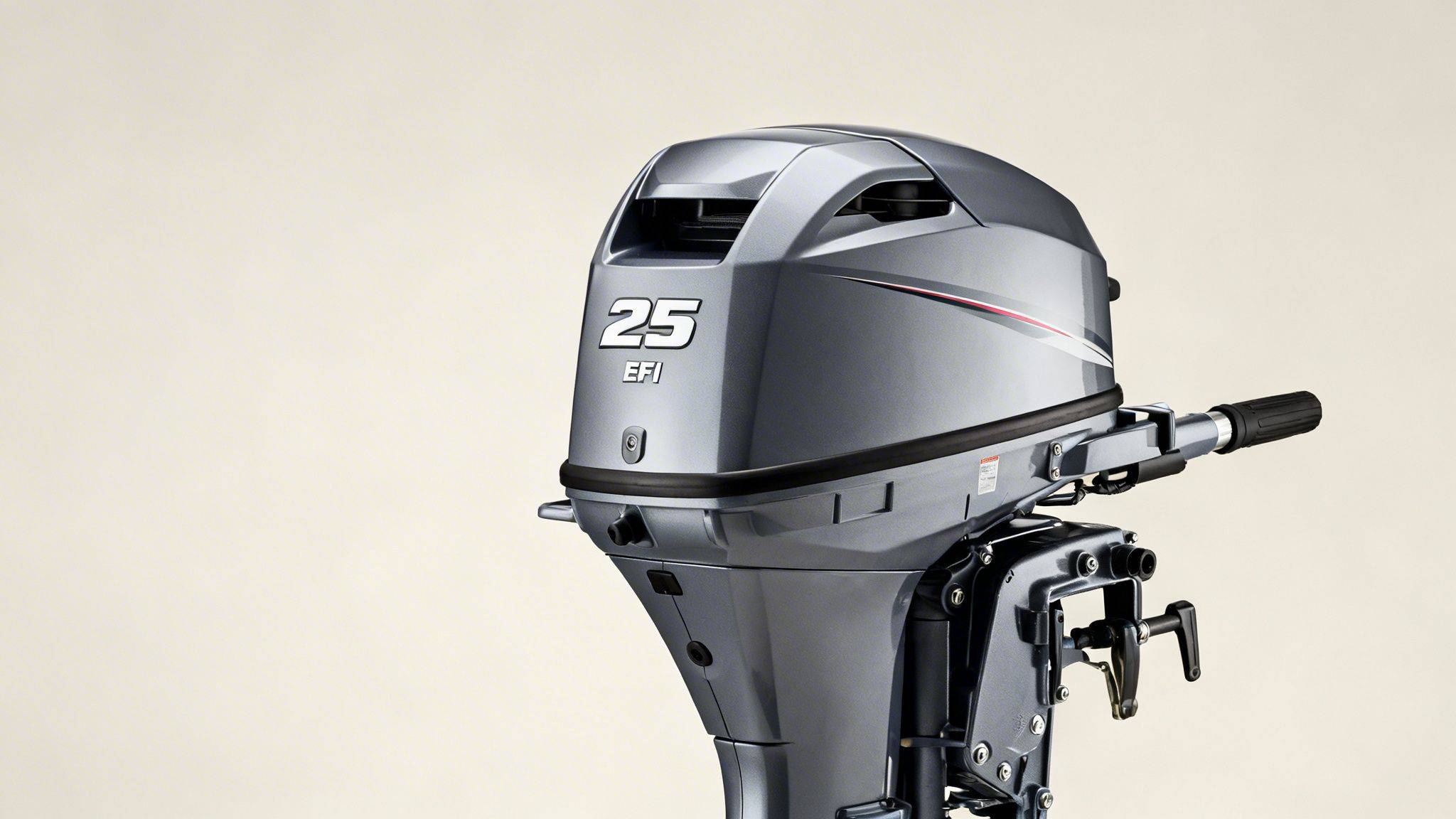
For years, if you asked an Aussie boatie about the best all-round outboard, one name would come up time and time again: the Yamaha 25 hp. The F25 model, in particular, earned a legendary reputation not from fancy ads, but from sheer on-water performance.
It became the gold standard for a reason. Its blend of power, surprisingly low weight, and rock-solid reliability is what owners of inflatables and small tinnies came to expect. It set the bar for what a portable engine could, and should, do.
To help you understand what makes a great outboard, let’s take a look at the technical details and real-world performance of the popular F25 model.
This table breaks down the core specs that made the Yamaha F25 a class-leader, giving you a quick reference for its key capabilities.
| Specification | Details |
|---|---|
| Engine Type | 2-Cylinder, 4-Stroke, SOHC |
| Displacement | 432 cc |
| Bore x Stroke | 65 x 65.1 mm |
| Recommended Max RPM | 5000 – 6000 |
| Fuel Induction System | Electronic Fuel Injection (EFI) |
| Weight | From 56 kg (Short Shaft, Manual Start) |
| Starting System | Manual, Electric, or Manual/Electric |
| Shaft Length | 15″ (Short), 20″ (Long) |
| Steering | Tiller Handle or Remote Control |
| Alternator Output | 16 Amp (Electric Start models) |
These specs show a well-rounded engine, but it’s the smart engineering behind these numbers that really tells the story.
When Yamaha released the F25, it genuinely shook up the portable outboard market. It was celebrated for being the lightest and most powerful 25 hp four-stroke of its time, with long shaft models weighing in at an impressive 56-64 kg. This was a huge deal, offering punchy acceleration with the quiet, clean, and fuel-sipping performance of a modern four-stroke, all compliant with Australian emission standards. You can dive deeper into the specs and model history on the Yamaha Marine Australia website.
Here’s what really made it a favourite among boaties:
Specs on a page are one thing, but the on-water experience is what truly cemented the Yamaha 25 hp outboard engine’s reputation. Owners consistently rave about its quiet and smooth operation, which makes a huge difference on a long day of fishing or exploring.
It’s an engine that just starts and runs, trip after trip. That dependability gives you the confidence to head out further, knowing you’ll get home safely.
The true test of an outboard isn’t just horsepower. It’s the confidence it gives you every time you turn the key or pull the cord, knowing it’s ready for the day’s adventure.
This level of trust is exactly what every boat owner deserves. As we explore alternatives, we use these same benchmarks to show how modern engines like the Hidea 20hp and 30hp not only meet these standards but can offer an even smarter, more awesome package for your money.
And if your boat is a bit smaller, it’s worth checking out its little brother. We cover it in detail in our guide on the Yamaha 15hp outboard.
While the Yamaha 25 HP outboard engine has a long-standing reputation, savvy Australian boaties know that awesome performance and value aren’t always found in the biggest brand names. It’s time we talked about the intelligent choice for your inflatable boat: Hidea 4-stroke outboards.
Let’s get one thing straight: choosing Hidea doesn’t mean you compromise. Hidea brings modern engineering, serious power, and incredible efficiency that stacks up directly against—and often surpasses—the premium brands. We’re talking about getting more grunt for your dollar, without giving up an inch of the reliability you need on the water.
Hidea outboards aren’t just another motor; they’re engineered specifically for our demanding conditions. These motors are built tough, using high-quality, corrosion-resistant materials designed to handle Australia’s harsh saltwater environment. This commitment to durability is exactly why we confidently back them.
Crucially, every Hidea 4-stroke model is fully compliant with Australia’s strict government emission standards. This means you get a clean, quiet, and environmentally friendly engine that delivers a smooth ride, whether you’re exploring a quiet estuary or gunning it out to your favourite fishing spot.
The smartest purchase isn’t always the most expensive one. It’s the one that delivers maximum performance, reliability, and enjoyment for every dollar spent. Hidea embodies this principle, offering an awesome advantage to savvy boaters.
At the core of the Hidea lineup are the 20 HP and 30 HP 4-stroke EFI models. These engines are the real deal, showcasing modern outboard technology that proves Hidea isn’t just a budget alternative—it’s a seriously powerful choice that goes up against the big names and wins on value.
The Hidea 20 HP EFI is a masterclass in efficiency and lightweight power. It’s the perfect partner for smaller inflatable boats and inflatable catamarans, offering punchy acceleration, effortless starts, and fantastic fuel economy. It gives you all the power you need for day trips and fishing, without the extra weight or cost.
For those wanting a serious power upgrade, the Hidea 30 HP EFI is an awesome game-changer. This engine gives you a significant boost in horsepower, letting you carry heavier loads, pull a water toy, or just enjoy the thrill of higher top speeds. The best part? It often comes in at a price point that directly competes with the smaller Yamaha 25 HP outboard engine, giving you 20% more power for your money.
Both the 20 HP and 30 HP models are loaded with features that make your life on the water easier. Electronic Fuel Injection (EFI) guarantees turnkey starting, whether the engine is hot or cold, and automatically optimises the fuel-to-air ratio for peak performance and efficiency. This is the same tech you find in the big-name motors, but Hidea makes it accessible for everyone.
At Easy Inflatables, we’ve seen firsthand how these motors perform on our Aerowave inflatable boats. The on-water experience is nothing short of impressive, proving that robust engineering and smart value really can go hand-in-hand. To see the full range and find out which model is right for you, learn more about our lineup of Hidea outboards.
When you’re powering an inflatable, every detail matters—from weight and horsepower to price. While the Yamaha 25 HP outboard has long been a familiar name on Australian waters, a closer look at Hidea’s 20 HP and 30 HP four-stroke models shows where the real value and awesome performance lie for savvy boaties.
Let’s move past the brand names and look at the numbers that actually impact your day on the water.
This chart gives you a quick snapshot of why Hidea is turning heads, delivering big on the things that count: power, reliability, and especially value for your dollar.
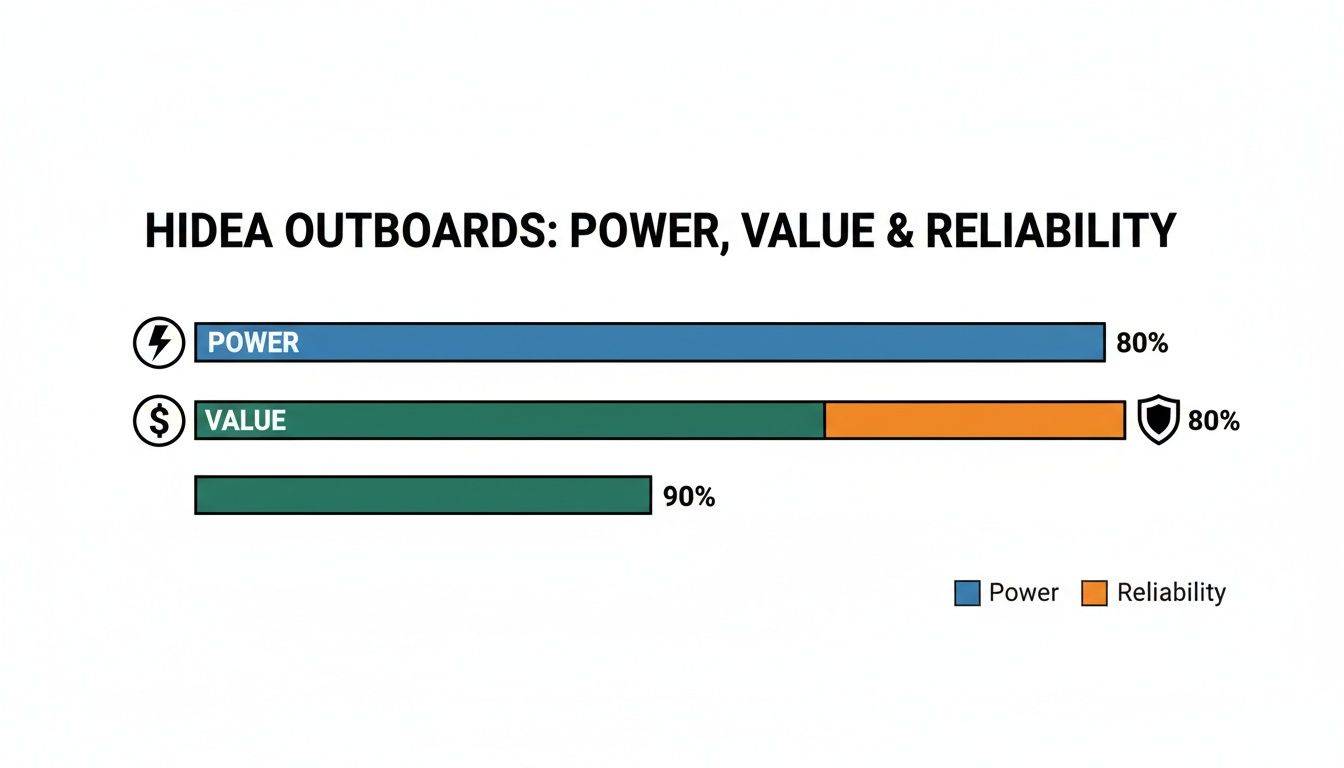
It’s clear that Hidea isn’t just competing; it’s offering a smarter, more valuable package for anyone looking to power their inflatable boat.
Putting the specs side-by-side makes the choice even clearer. This table cuts through the marketing and gets straight to the facts, showing you exactly what you get for your money with each motor.
| Feature | Hidea 20 HP 4-Stroke | Yamaha 25 HP 4-Stroke | Hidea 30 HP 4-Stroke |
|---|---|---|---|
| Power Output | 20 HP | 25 HP | 30 HP |
| Engine Type | 2-Cylinder, 4-Stroke, SOHC | 2-Cylinder, 4-Stroke, SOHC | 2-Cylinder, 4-Stroke, SOHC |
| Displacement | 362cc | 432cc | 498cc |
| Weight | 49 kg | From 56 kg | From 53 kg |
| Fuel System | Electronic Fuel Injection (EFI) | Electronic Fuel Injection (EFI) | Electronic Fuel Injection (EFI) |
| Trim/Tilt | Manual or Electric Tilt | Manual or Power Trim/Tilt | Manual or Power Trim/Tilt |
| Warranty | 3 Years | 3 Years | 3 Years |
| Approx. Price | $3,500 – $4,000 | $5,500 – $6,500 | $4,500 – $5,500 |
| Value Proposition | Ultimate lightweight efficiency | Proven premium performance | More Power for Your Dollar |
When you lay it all out, it’s hard to ignore the compelling advantages Hidea brings to the table, especially when it comes to weight and price.
The data tells two very different but equally powerful stories. First up is the Hidea 20 HP EFI. Weighing in at just 49 kg, it’s a full 7 kg lighter than the lightest Yamaha 25 HP. For smaller inflatables, that weight difference is huge, making for easier transport and better performance on the water. It gives you modern, dependable EFI technology at a price point that Yamaha simply can’t match.
We’ve gone into more detail about this impressive lightweight motor right here: Hidea 20 HP EFI 4-Stroke.
The Hidea 30 HP doesn’t just rival the Yamaha 25 HP; it offers a substantial power upgrade for a similar—or even lower—price. This represents a clear win in performance and value.
The second story is even more exciting for boaties who crave more grunt. The Hidea 30 HP delivers a massive 20% horsepower increase over the Yamaha 25 HP, powered by a larger displacement engine that gives you more torque to get on the plane faster. Amazingly, you get all that extra muscle for a price that’s on par with the smaller Yamaha.
It’s a simple case of getting more power for your money. You get a bigger engine, more horsepower, and the same modern features and 3-year warranty without the premium price tag.
For anyone wanting to carry extra gear, tackle bigger waves with confidence, or just feel that extra kick when you open the throttle, the choice is clear. Hidea delivers a winning formula of modern performance and unbeatable value, making it the smart choice for powering your adventures on Australian waters.
Getting the motor right is the final piece of the puzzle. This is where the boat comes to life, and getting the pairing right ensures your inflatable performs exactly how you need it to—safely, efficiently, and with plenty of power on tap. It’s about more than just horsepower; it’s about creating a perfectly balanced rig ready for any Aussie adventure.
It’s no secret that Yamaha has a huge footprint in Australia. In fact, with an 8.4% search share in the outboard market, the Yamaha 25 hp outboard engine is often the first motor people think of. You’ll see them everywhere, and it’s easy to see why. Retailers like Brisbane Yamaha have sold over 10,000 engines, which is a massive milestone in a country where around 26,000 outboards are sold each year. You can get a closer look at what makes this model popular over at AR Engines.
But just because it’s popular doesn’t mean it’s automatically the best choice for your inflatable.
Two things are absolutely critical when matching an engine: transom height and your boat’s maximum ratings. Getting these wrong isn’t just a performance issue; it’s a major safety risk.
Let’s talk specifics using our recommended Hidea outboards, which are fully compliant with Australian government emission standards, so we don’t do 2-strokes.
For a smaller boat like an Aerowave tender, the nimble Hidea 20 HP EFI is a brilliant match. At just 49 kg, it’s light enough to handle easily but still provides that zippy performance you want for exploring or getting to your fishing spot fast. It complements the boat without overpowering it.
Now, if you’ve got a larger inflatable catamaran or you’re planning family trips with more people and gear, the Hidea 30 HP EFI is a much smarter move. It gives you a serious power boost—often for a price that competes with smaller brand-name motors—letting you get on plane quickly and effortlessly handle heavier loads.
Knowing how these combinations work in the real world gives you the confidence to make the right call. For a deeper dive into this, our complete guide on choosing the right engine for an inflatable boat is a great next step.
While the Yamaha 25 hp outboard has certainly earned its reputation, we believe there’s a better, smarter way for our customers to get out on the water. At Easy Inflatables, we’ve chosen to pair our boats with Hidea motors because they deliver an unbeatable combination of modern performance, reliability, and outstanding value.
When you choose a Hidea package from us, you’re getting much more than just an engine. You’re getting the confidence of a complete, ready-to-go rig backed by our local expertise. Every Hidea motor we sell comes with a comprehensive 3-year warranty and dedicated Australian-based after-sales support, so you’re never left guessing.
It’s not just about saving money. It’s about getting a brand-new motor with modern features, powerful performance, and a team of local experts ready to support you. That’s the real advantage.
We invite you to explore our Hidea-powered inflatable boat and inflatable catamaran packages online. If you need a hand figuring out the perfect setup, just get in touch with our team. We’re here to make sure you get the right rig for your adventures, backed by the performance, quality, and value that Easy Inflatables is known for.
When you’re looking at outboards, it’s natural to have a few questions. We get it. Here are some straightforward answers to the most common queries we hear, helping you feel confident you’re getting the right motor for your inflatable.
Absolutely. We wouldn’t sell them if they weren’t. Hidea motors are built from the ground up with high-quality, corrosion-resistant materials specifically to stand up to Australia’s harsh saltwater environments.
Here at Easy Inflatables, we stand behind their durability. That’s why we back every Hidea motor with a comprehensive 3-year warranty and full local after-sales support, giving you total peace of mind for years of adventure.
This one comes down to getting more grunt for your dollar. For a price that’s often very similar to the Yamaha 25 hp outboard engine, the Hidea 30 HP gives you a full 20% power increase.
What does that mean on the water? It means better performance with a heavy load of gear and people, a faster hole shot to get you on the plane quicker, and a higher top speed. It’s a brilliant upgrade for anyone wanting that extra capability without a big jump in cost.
The real value isn’t just in the price tag; it’s in getting a more powerful, modern engine that will better serve your needs, whether you’re carrying the whole family or just want that extra bit of performance for yourself.
For the vast majority of our Aerowave inflatable boats and inflatable catamarans, you’ll need a short shaft (15-inch) outboard. This is the industry standard for most portable inflatables.
This specific length ensures the propeller sits at the perfect depth in the water for peak performance and fuel efficiency. When you buy a boat and motor package from us, we always double-check to make sure you have the perfect match.
Yes, without a doubt. As your dedicated Australian Hidea dealer, Easy Inflatables provides full after-sales support right here in Australia.
This means we handle all warranty claims directly, provide regular servicing to keep your motor in top shape, and have a complete inventory of spare parts on hand. You can hit the water confident that reliable, local support is always just a phone call away.
Ready to find the perfect power for your boating adventures? Explore our curated boat and motor packages at Easy Inflatables today. Get more power, modern features, and unbeatable value with a Hidea outboard. Discover your perfect package now