
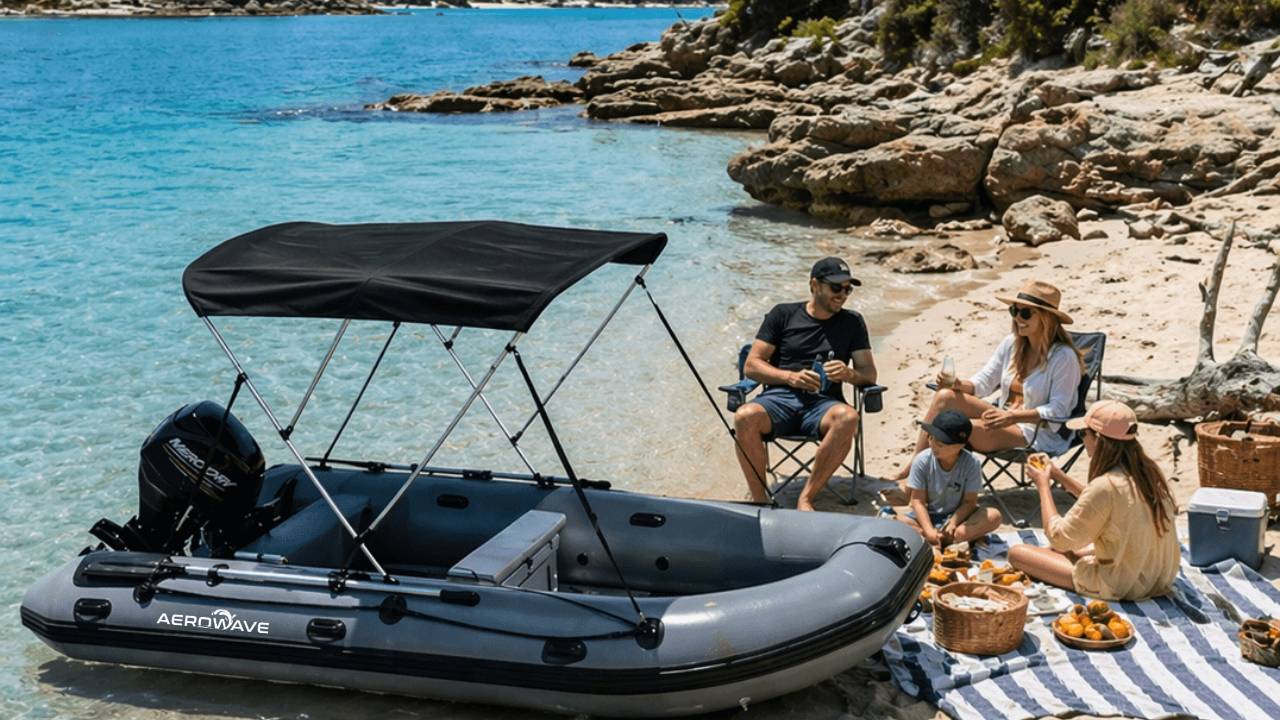
Sea Trail Boat Trailers A Complete Australian Guide
You've got the boat sorted. It fits the way Australians use the water. Easy to store, light enough for family trips, capable enough for fishing, beach runs, estuary exploring, or carrying as part of a caravan setup. Then…
Our recommendation
Aerowave Viper 400 Sovereign
Length
4.0m / 13'1"
Beam
1.80m / 71"
Tube Diameter
51cm
Bare Boat Weight (without Bimini & wheel kit)
66kg / 145lbs
You've got the boat sorted. It fits the way Australians use the water. Easy to store, light enough for family trips, capable enough for fishing, beach runs, estuary exploring, or carrying as part of a caravan setup. Then the question turns up in the driveway, not at the shoreline. What are you going to tow it on?
That's where plenty of inflatable owners get it wrong. They buy a trailer as an afterthought, then spend the next season fighting poor hull support, awkward launch angles, tube rub, bouncing on corrugations, and rust starting where nobody looked. A good inflatable boat setup isn't just about the boat and outboard. The trailer decides how easy the whole day feels.
Sea Trail boat trailers matter because they sit in the middle of the ownership experience. They affect towing, launching, retrieval, storage, registration, and long-haul reliability. For modern RIBs, yacht tenders, inflatable catamarans, and portable fishing boats, the match has to be deliberate. Generic trailer advice usually focuses on fibreglass hulls. Inflatable boats need more care around support points, winch position, transom loading, and keeping pressure off the tubes.
Your Gateway to Adventure Why a Great Trailer Matters
A typical Australian trip starts early. The SUV is loaded, kids are half awake, rods are in the back, and the plan is simple. Beat the traffic, get to the ramp, launch fast, and spend the day on the water instead of fiddling with gear in a queue.
Inflatables make that lifestyle easier. They suit beach camping, family boating, fishing, and trips where storage space matters. They're also a smart fit for people who don't want the size and weight of a larger hard boat. But once the boat gets used regularly, packed transport gives way to something more practical. You want it rigged, secured, and ready to launch.
That's why trailer quality matters so much. A poor trailer turns a portable boat into a chore. A well-matched one keeps the hull supported properly, tracks straight, launches cleanly, and doesn't punish you after repeated saltwater use.
Sea Trail has been part of that picture for a long time. Seatrail Trailers was established in 2005 and has produced and sold tens of thousands of units across Australia and the Pacific, which is why many Australian buyers see it as a proven name in recreational boating and trailer supply, as outlined on Seatrail's company background page.
Why inflatable owners need to think differently
An inflatable boat isn't supported like a pressed tinny or a heavier fibreglass runabout. The hull shape, transom weight, tube clearance, and launch style all change what “good support” looks like.
A trailer that works well for a small hard boat can still be wrong for a RIB or inflatable catamaran if:
- The bunks sit too high or too narrow and contact the wrong part of the hull
- The winch post is set badly and drags the bow into an awkward angle
- The rear support is too harsh and shocks the transom on rough roads
- The frame geometry ignores tube flare and makes loading harder than it should be
Practical rule: If the trailer only “fits” when you force the boat into place, it doesn't fit.
Buyers looking at compact options often start with a small boat trailer for inflatable boats because it gives a clearer idea of what a lightweight, practical setup should look like before moving into larger RIB or catamaran trailer choices.
What separates a useful trailer from a frustrating one
The right trailer doesn't call attention to itself. You back down, launch, retrieve, strap down, and head home without drama. The wrong one creates a list of little annoyances that add up fast.
What works in Australian conditions is simple:
- Corrosion resistance that holds up near salt
- A frame that doesn't flex awkwardly on rough roads
- Adjustability for different inflatable hull profiles
- Stable towing behind common family vehicles
- Hardware you can inspect and maintain without guesswork
That's the standard inflatable owners should be aiming for.
Built Tough for Aussie Inflatables The Sea Trail Difference
Sea Trail trailers make sense for inflatable boats because the frame construction addresses a problem many owners don't notice until damage appears later. A trailer can look fine in the yard and still be a poor long-term platform if the tube, crossmembers, and support geometry don't cope with repeated road shock.
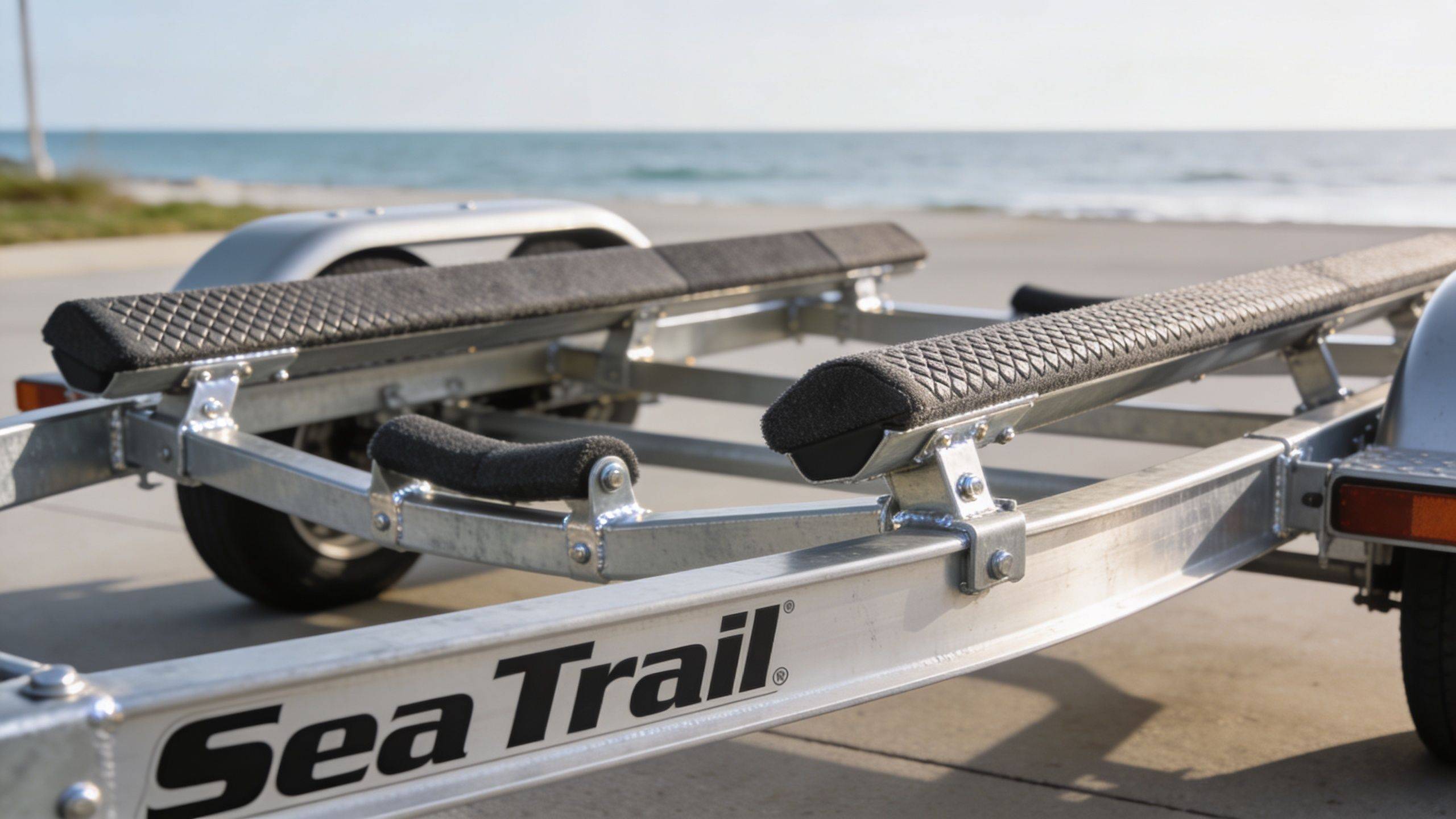
Sea Trail trailers use mandrel tube bending, which keeps the tube shape more consistent during manufacturing and helps avoid kinking or wall-thinning. According to Seatrail QLD, that method enhances fatigue resistance by an estimated 20 to 30% in cyclic loading tests compared with standard bending. For inflatable owners, that matters because a trailer frame that stays true gives more predictable hull support over time.
Why that matters on real roads
Australian towing rarely happens on perfect roads. Even when you're only heading to a local ramp, you still deal with speed humps, patched bitumen, driveways, rough shoulders, and the occasional pothole. Add salt spray, boat washdown, and long periods parked between trips, and weak points show up quickly.
Inflatable boats benefit from a trailer that behaves calmly under those loads. The hull itself is lighter than many hard boats, but that doesn't mean trailer quality matters less. In many cases it matters more, because lighter boats can bounce if the trailer is poorly balanced or oversprung.
Three things usually separate a strong setup from a weak one:
- Consistent frame shape keeps bunks and rollers aligned as intended
- Galvanised steel construction suits marine exposure better than painted trailer logic borrowed from general utility trailers
- Proper dynamic support reduces the repeated shock that can work against a transom, floor, or keel line
What works for inflatables and what doesn't
For RIBs and inflatable catamarans, the trailer shouldn't clamp the boat into submission. It should support it naturally.
What usually works well:
- Bunks adjusted to the hull's true contact areas
- Winch alignment that draws the bow straight
- Support that carries the transom cleanly without stern sag
- Enough trailer stiffness to avoid odd flex under load
What usually doesn't:
- Hard point loading under soft sections
- Roller layouts copied from another boat style
- Too much pressure near the tubes
- An overbuilt trailer that tows harshly behind a lighter vehicle
A trailer for an inflatable should support the hull, not argue with it.
Salt, storage, and long ownership
A trailer in Australia spends a lot of time in the harshest part of boating. It gets submerged, parked wet, hit with road grime, and left in coastal air. People often focus on the boat fabric and outboard service, then ignore the trailer until bearings, lights, or frame corrosion become expensive.
That's one reason sea trail boat trailers stay in the conversation with experienced owners. The construction method isn't just a brochure point. It affects how the trailer copes with repeated use, especially when the boat is launched often and towed over mixed road surfaces.
For inflatable setups, that's the key difference. A suitable trailer protects the convenience that made you buy an inflatable in the first place.
How to Choose the Right Sea Trail Trailer Model
Most trailer mistakes happen because buyers think only about boat length. Length matters, but it's only one part of the decision. For inflatable boats, you need to consider hull style, loaded weight, transom weight, launch method, and how often you're towing long distances.
The first job is to define the boat properly. A compact tender with a small outboard has very different trailer needs from a larger RIB used for offshore fishing, and both differ again from an inflatable catamaran with twin-hull geometry.
Start with boat type, not brochure labels
A practical way to choose is to sort your boat into one of three use cases.
Small tender or portable inflatable
These setups are usually prioritising simplicity, low tow weight, and easy handling by one person. You want quick launching, easy storage, and minimal fuss.
Mid-size RIB
Trailer fit becomes more sensitive at this stage. The boat is still portable in boating terms, but the hull shape and motor weight mean support position matters much more.
Large inflatable or inflatable catamaran
Here, stability and hull-specific support become the priority. A catamaran layout or a larger RIB often benefits from more careful bunk placement and, in many cases, a more substantial trailer platform.
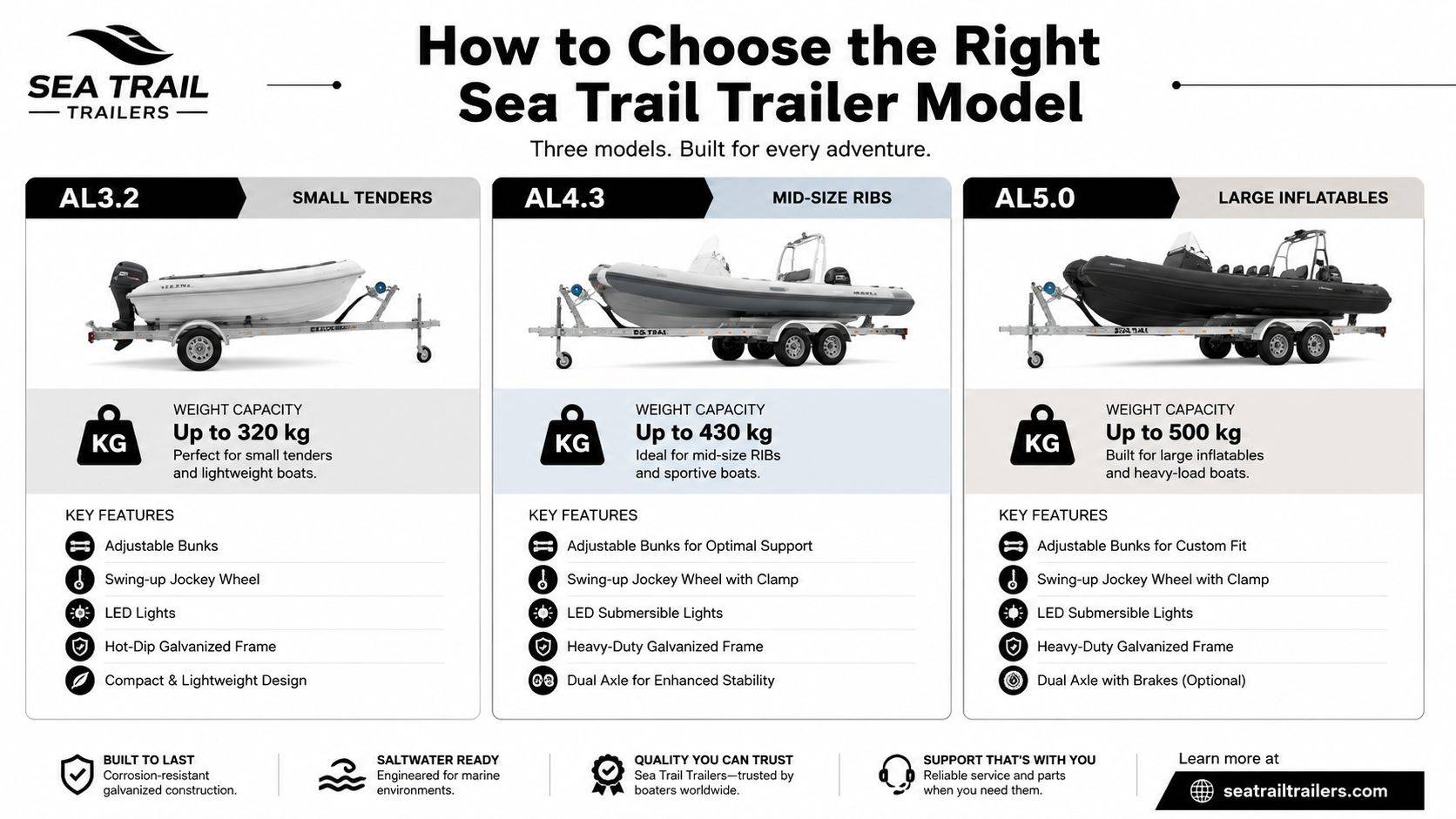
Comparison table for common model choices
The model names below are useful starting points for discussions with a dealer or trailer fitter.
| Sea Trail Trailer Models for Inflatable Boats | Max Boat Size | Aggregate Trailer Mass (ATM) | Trailer Tare Weight | Ideal For |
|---|---|---|---|---|
| AL3.2 | Small tender size | Qualitatively suited to lighter inflatable setups | Qualitatively lighter trailer class | Compact tenders, yacht tenders, portable inflatables |
| AL4.3 | Mid-size RIB size | Depends on exact build and fitout | Depends on configuration | Recreational RIBs, family inflatables, fishing setups |
| AL5.0 | Large inflatable size | Depends on exact specification | Depends on configuration | Larger RIBs, inflatable catamarans, heavier rigged boats |
Because model-specific figures vary by configuration and the verified data set here doesn't include published specs for these exact models, treat the table as a matching framework rather than a registration document. Confirm the compliance plate and supplier paperwork before purchase.
How to think about weight properly
The biggest buying error isn't choosing too small a boat trailer by length. It's forgetting everything that gets added after the brochure photo.
Your trailer must account for the full boating package:
- Boat hull
Start with the bare hull or package weight for the inflatable itself. - Outboard
Motor weight changes the balance of the whole rig, especially on smaller inflatables where stern load is a larger proportion of total mass. - Fuel and battery
Portable tanks, built-in tanks, and accessory batteries all count. - Safety gear and anchors
The gear that lives in the boat most of the time still rides on the trailer. - Fishing gear, esky, covers, and extras
Owners often ignore these until they weigh a real-world setup.
Buyer check: Match the trailer to how you actually travel, not how the boat leaves the showroom.
Single axle or tandem for inflatables
For many inflatable boats, a single axle setup is the practical sweet spot. It's simpler, easier to move by hand, and suits smaller rigs well. It also tends to be easier for people towing with SUVs or using a trailer in tighter storage spaces.
A tandem setup starts to make more sense when the boat gets longer, carries more gear, or sees frequent highway towing. The extra axle can help the trailer feel more settled, particularly with larger RIBs or inflatable catamarans that need a broader support base.
The trade-off is straightforward:
- Single axle is usually easier to manoeuvre and maintain
- Tandem usually gives a more planted feel with bigger, heavier combinations
Roller, bunk, or a hybrid approach
This decision matters more for inflatables than many first-time owners realise.
Bunk-focused support often suits RIBs well because it spreads contact more naturally along the hull. Done correctly, it supports the boat without concentrating load in small points.
Rollers can make ramp work easier, especially for some launch conditions, but they need to be arranged carefully. Poor roller placement can create pressure where an inflatable owner doesn't want it.
Hybrid layouts can work well when the goal is easy retrieval combined with stable support for storage and towing.
If you're considering a compact storage solution, a folding boat trailer for inflatable boats can make sense where garage length or caravan travel is part of the ownership picture.
Matching common inflatable categories
A simple working guide looks like this:
- Yacht tender or small portable inflatable
Prioritise ease of launch, light tow weight, and simple support adjustment. - Family RIB for estuary and bay use
Focus on stable towing, proper transom support, and hull-centred bunks. - Fishing inflatable with larger outboard
Pay close attention to stern load and winch post positioning. - Inflatable catamaran
Don't force a mono-hull trailer logic onto a twin-hull shape. The support layout needs to suit the boat's geometry.
What to inspect before you commit
Before buying any trailer for an inflatable, inspect these points in person if possible:
- Bow stop and winch height
The boat should load in a straight line without forcing the bow down unnaturally. - Bunk or roller adjustability
You need enough adjustment range to suit the hull, not just a nominal length. - Tube clearance at full load
Check the likely tube position when the boat is fully down on the trailer. - Transom support
The stern shouldn't hang awkwardly or rely on one narrow contact point. - Launch angle at your typical ramps
A trailer that looks fine in a yard can be annoying at a shallow ramp.
That's the difference between buying a trailer that merely carries the boat and choosing one suited to it.
Navigating Australian Towing and Registration Rules
Buying the right trailer is only half the job. The other half is making sure the combination is legal, stable, and properly documented before it goes anywhere near the highway.
Australian trailer rules vary by state in the finer details, but the broad principles are consistent. The trailer has to be correctly rated, correctly loaded, and correctly registered. The tow vehicle also has to be suitable for the trailer and boat combination you're putting behind it.
Know the key terms before you sign
Two terms matter immediately when you're looking at compliance and suitability.
ATM, or Aggregate Trailer Mass, is the total permissible mass of the trailer when loaded. In practical terms, it's the trailer plus the boat plus everything carried on it, measured when the trailer is not coupled to the tow vehicle.
GTM, or Gross Trailer Mass, is the mass carried by the trailer's wheels when coupled to the vehicle. Buyers often mix these terms up, and that leads to poor decisions about brakes, loading, and legal tow limits.
If you're comparing a complete package, it helps to review a general boat and trailer setup guide before registration and first use so you understand how the parts of the rig work together.
Brakes, lights, and basic compliance
One rule catches a lot of first-time owners. Trailer brakes are mandatory over 750kg GTM in Australia. If your inflatable package is growing from “small and simple” into “fully rigged with motor, fuel, and gear”, check this point carefully before purchase.
The safe approach is to confirm:
- The trailer's compliance details match the intended use
- The braking setup suits the loaded trailer
- The lights and reflectors are road legal and functioning
- The coupling and safety chain arrangement are correct for the trailer class
- The tow vehicle rating exceeds what you're towing
Road legality starts in the driveway. If the plate, brakes, and load don't match, the trip is wrong before you move.
Registration across states
If you buy a trailer in one state and register it in another, check the receiving state's requirements before collection. The paperwork, inspection process, and proof of ownership requirements can differ. That's especially important for buyers sourcing a trailer interstate to match a specific inflatable boat model.
The practical method is simple:
- Contact your state road authority before paying a deposit.
- Confirm what documents they'll accept for a new or unregistered trailer.
- Ask whether an inspection is required after arrival.
- Verify any temporary movement permit requirements if towing it home.
Don't forget towing behaviour on public roads
A compliant trailer can still become a hazard if the driver treats it like an empty box trailer. Boat trailers change braking distances, turning paths, reversing behaviour, and how you enter roundabouts or intersections. Drivers who are rusty should refresh the road rules before towing through busy suburban areas or regional towns. A useful refresher is this guide to right-of-way rules in Victoria, especially if your launch route includes urban traffic and roundabouts.
Good towing is calm towing. Leave space, brake early, and avoid last-second lane changes. Inflatable boats are often lighter than hard boats, but that doesn't give you permission to be casual.
Loading and Securing Your Inflatable Boat Correctly
Most inflatable damage related to trailers doesn't happen at highway speed. It happens in the slow, ordinary moments. Pulling the boat on crooked. Over-tightening straps. Letting the transom sit unsupported. Dragging a tube against a guard. Rushing the retrieval because other people are waiting at the ramp.
Loading properly starts before the trailer touches the water. The boat should meet the trailer in a straight line, the winch should pull from the correct angle, and the support points should match the hull.
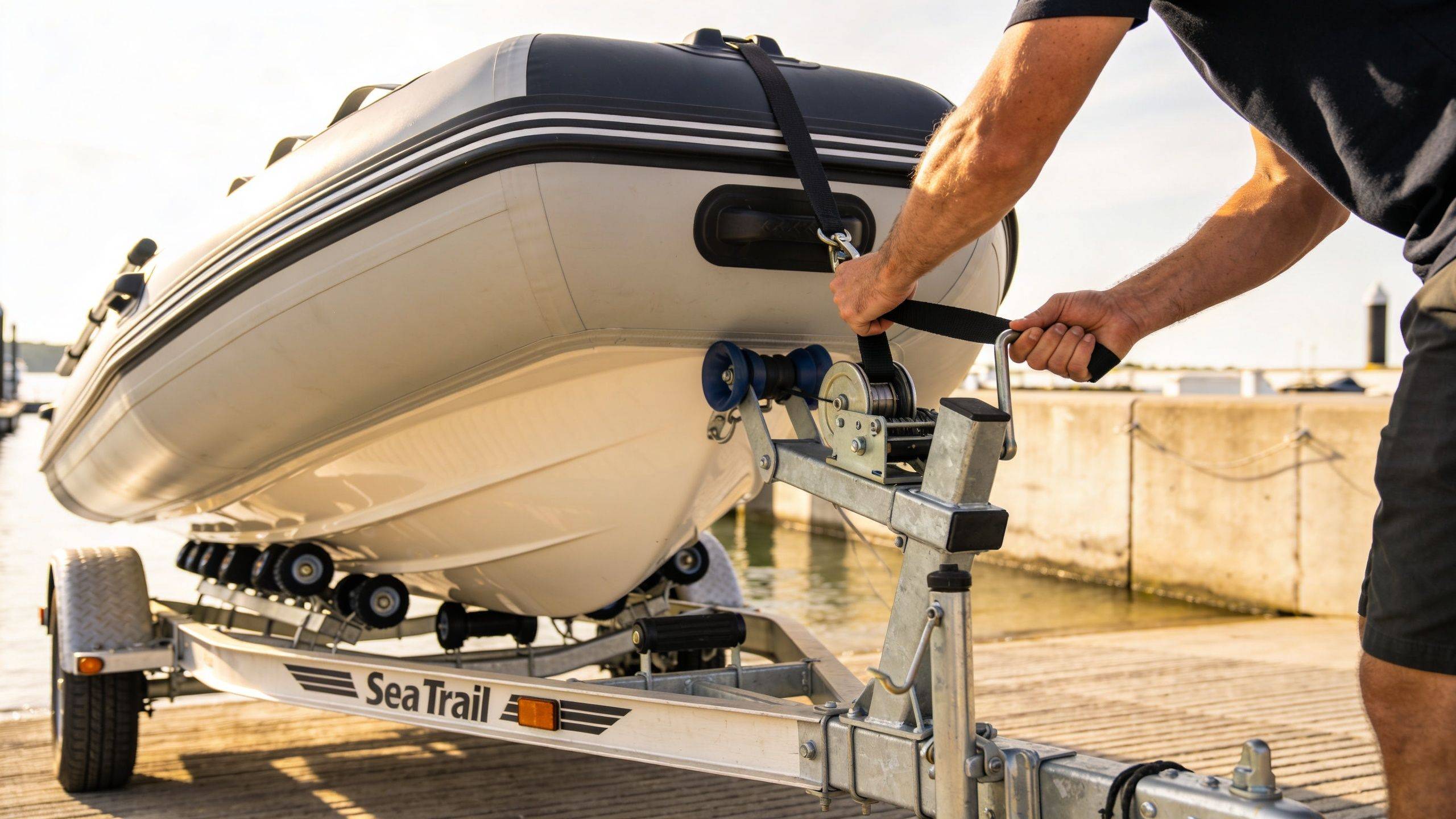
The correct loading sequence
A calm sequence prevents most problems.
- Prepare before you queue
Fit straps, remove covers, sort the winch strap, and load gear away from the ramp so you're not improvising under pressure. - Back the trailer to the right depth
Too deep and the boat floats off alignment. Too shallow and you drag the hull on retrieval. The right depth lets the boat centre itself while still meeting the support structure properly. - Bring the boat in straight
Inflatables are forgiving on the water, but they still load badly if the angle is wrong. A crooked approach often leads to tube contact or a skewed hull position. - Winch the bow firmly into position
Don't use brute force to fix a bad trailer setup. If the last part of the pull feels wrong every time, adjust the trailer rather than muscling through it.
Securing without damaging the boat
Trailer straps should restrain the boat, not crush it. Inflatable owners need to be more careful than owners of many hard boats.
Use these principles:
- Bow restraint first
The bow eye and winch line hold the boat forward. Make sure the bow is seated properly before adding stern straps. - Stern straps low and even
Attach them so they hold the transom down without dragging tubes inward. - Avoid strap placement across inflatable tubes where possible
If a strap path contacts the tube, protect the surface and check that tension is not distorting the boat. - Check transom movement
Grab the motor or transom area and test for excessive bounce before departure.
Too much strap tension is just as wrong as too little. If the tube shape changes noticeably, back it off.
Bunks versus rollers at the ramp
Bunk trailers usually reward consistency. Once the trailer is set correctly for the hull, they tend to retrieve cleanly and support the boat well on the road. They often suit RIBs and many family inflatables because they spread support more evenly.
Rollers can be handy at some ramps and for some retrieval styles, but they need careful adjustment. If a roller is bearing where it shouldn't, the issue might not be obvious until the boat has spent hours travelling on it.
A lot of owners benefit from visual setup guides before the first few launch days. This boat guides for boat trailer resource is useful for checking alignment habits and launch positioning.
A practical walk-through helps if you want to compare what correct loading looks like in motion.
Beach launches need a different mindset
Beach launching changes the routine because the surface is softer, the angle is less predictable, and corrosion risk rises.
For beach work:
- Reduce tyre pressure only if you understand the effect on towing and recovery
- Avoid burying the trailer deeper than necessary
- Rinse everything immediately afterwards
- Watch where the tubes sit during side-loading on uneven sand
- Keep recovery gear ready before you start
Final pre-drive check
Before pulling away from the ramp or beach access:
- Winch locked
- Safety chain attached
- Bow seated correctly
- Stern straps tensioned evenly
- Motor secured for transport
- Lights reconnected and checked
This routine only takes a minute. It saves far more than a minute later.
Essential Maintenance to Protect Your Trailer Investment
A boat trailer lives hard. It gets dunked in saltwater, towed while wet, parked for stretches, then expected to run faultlessly at highway speed. Owners who maintain the boat but ignore the trailer usually learn the lesson on the side of the road.
Sea trail boat trailers reward steady maintenance. Not complicated maintenance. Just regular checks done before small issues become expensive ones.
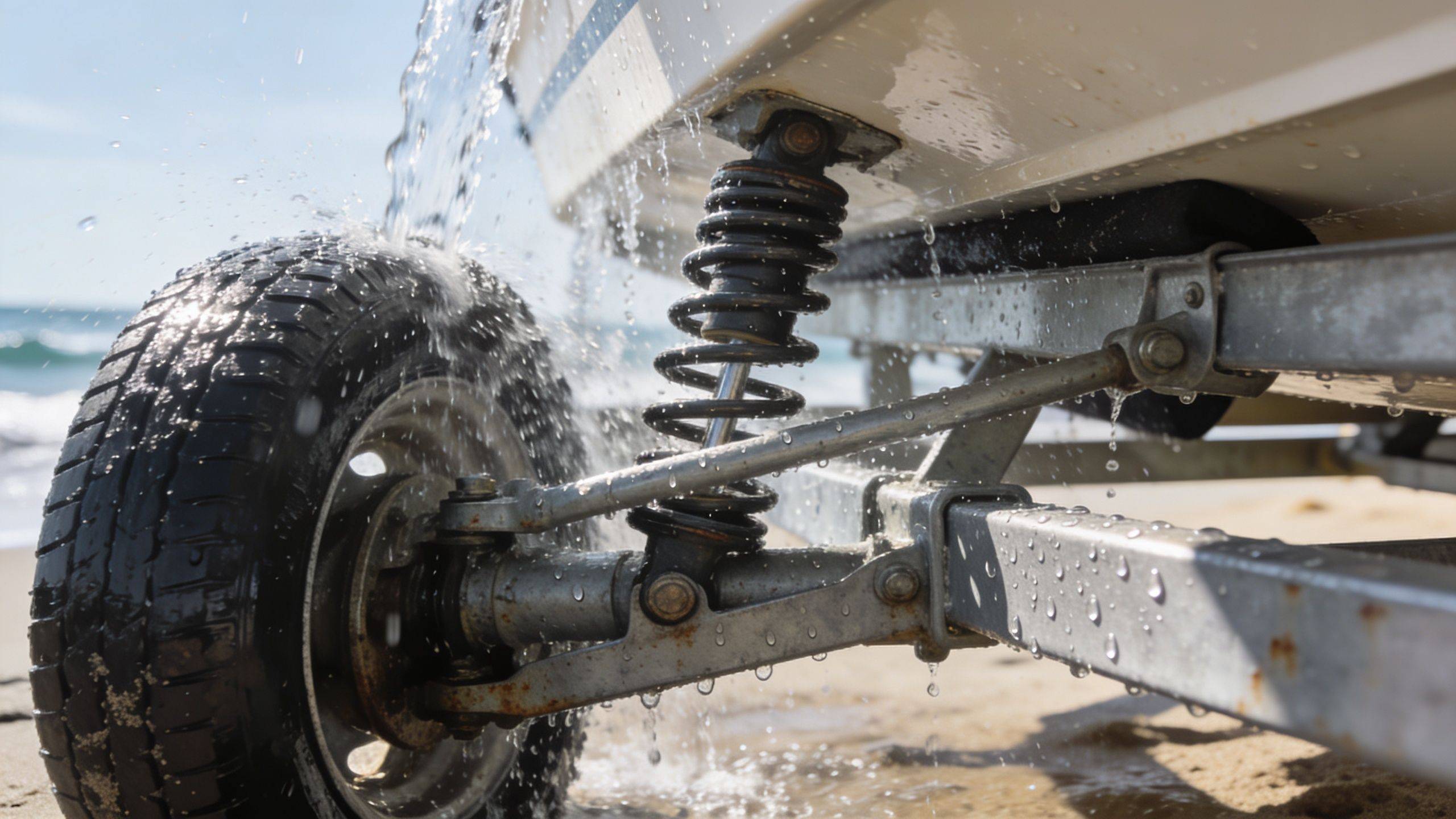
The post-trip routine that matters most
If you launch in saltwater, rinse the trailer thoroughly after every trip. Don't just spray the guards and call it done. Get into the springs, axle areas, rollers, winch stand, coupling, and light mounts.
Pay special attention to:
- The brake components if fitted
- Fasteners and adjustment points
- Inside edges of the frame where salt collects
- The winch and strap
- Crossmembers and support hardware
A proper rinse is basic, but it's one of the biggest differences between a trailer that stays serviceable and one that starts looking tired too soon.
Seasonal inspection checklist
At least seasonally, give the trailer a slower, hands-on inspection.
- Wheel bearings
Listen for noise, feel for heat after a run, and check for play in the wheel. If you're unsure about service intervals or replacement signs, a wheel bearing replacement guide is worth reviewing before a longer towing season. - Tyres
Check condition, wear pattern, and age-related cracking. Trailer tyres can look fine at a glance and still be ready for replacement. - Lights and wiring
Water, vibration, and connector corrosion cause intermittent faults. Test them before trips, not after dark at the ramp. - Winch strap and hook
Fraying, rust, or a sticky ratchet all deserve attention early. - Bunks, rollers, and brackets
Check for wear, seized parts, loose fittings, or carpet damage that could mark the hull.
Common issues and the likely cause
A few trailer faults appear repeatedly.
| Problem | Likely cause | First thing to check |
|---|---|---|
| Flickering lights | Corroded plug or poor earth | Clean connections and inspect wiring joins |
| Noisy wheel | Bearing wear or lack of lubrication | Check heat and free play before next trip |
| Boat sitting crooked | Bunk or roller misalignment | Recheck support adjustment on level ground |
| Winch hard to operate | Corrosion or worn mechanism | Inspect strap, gears, and lubrication points |
Neglected trailers rarely fail all at once. They usually warn you first with noise, heat, movement, or intermittent electrics.
What owners often miss
The hidden wear points are usually the expensive ones later.
Look at:
- The underside of support hardware
- The point where the bow stop contacts the boat
- The transom support area
- Any moving joint that's exposed to sand or salt
- The spare wheel mount and retaining hardware
It also helps to compare your habits against a broader maintenance checklist. Boat Juice's boat trailer maintenance guide is a solid reference for owners who want a more systematic inspection routine between major services.
Storage habits that extend trailer life
Storage changes how a trailer ages. If possible, park it where water can drain and where tyres aren't sitting for long periods in soft ground or constant moisture. If the boat stays on the trailer, recheck strap tension from time to time rather than leaving everything cinched down indefinitely.
Good maintenance isn't glamorous. It's what lets the trailer do its job without becoming the reason a boating trip gets cancelled.
Frequently Asked Questions About Sea Trail Trailers
Can a Sea Trail trailer be set up for an inflatable catamaran
Yes, but it needs the right support layout. An inflatable catamaran has a different underside to a typical mono-hull inflatable or RIB, so the trailer should be adjusted around the actual hull contact points. The mistake is assuming any trailer that matches overall length will automatically suit the twin-hull shape.
Are sea trail boat trailers suitable for small inflatables as well as larger RIBs
Yes. The key is matching the trailer size and support arrangement to the boat's real use. Small tenders need simplicity and easy handling. Larger RIBs usually need more attention around transom support, balance, and highway stability.
Is a bunk trailer better than a roller trailer for an inflatable boat
Often, yes, especially when the bunks are adjusted correctly to the hull. Bunks generally provide more even support. Rollers can still work well, but poor roller placement is less forgiving on inflatable hulls and trailer-stored boats.
Can I buy a trailer in one state and register it in another
Usually yes, but the paperwork and inspection requirements can vary between states and territories. Check with the registering authority before purchase so you know what proof of sale, compliance information, or inspection documents you'll need.
What spare parts should I carry for longer trips
For remote or regional towing, carry the basics that stop a small issue from ending the trip. That usually means a spare wheel in usable condition, light connection spares if appropriate, and the tools needed for wheel or coupling-related checks. Owners heading a long way from metro areas should also know the condition of their bearings before they leave.
Can one trailer handle multiple inflatable boats
Sometimes, if the boats are similar in size and hull form. In practice, a trailer set precisely for one inflatable will usually do a better job than a compromise setup meant to cover very different boats. This is especially true when moving between a tender, a deeper-V RIB, and an inflatable catamaran.
If you're matching a trailer to a RIB, tender, or inflatable catamaran and want a setup that suits Australian towing and launch conditions, Easy Inflatables offers inflatable boats, trailer-related resources, and practical product options that can help you narrow down the right combination before you buy.
Explore the Aerowave range
Finance this boat from $26/week
Estimate only — powered by Australian Motorcycle & Marine Finance (AMMF).
Deposit (AUD)
$585
10% of price
Term
5 years
60 monthly repayments
Comparison rate
9.95% p.a.
Subject to AMMF approval
Weekly
$26
Monthly
$112
Amount financed
$5,260
Indicative only. Actual repayments depend on your AMMF credit assessment, term, fees and the balloon you select. Talk to AMMF for a personalised quote on Aerowave Viper 400 Sovereign.
Like this guide? Get the next one in your inbox.
Owner-tested tips and Aussie boating know-how — no spam.
Ready when you are
Build your Viper 400 Sovereign in under 3 minutes.
1500 GSM / 1.2 mm VALMEX® hull. Five-year limited hull warranty plus two years of extended limited structural hull cover, subject to conditions. Free freight to United States · local taxes payable on arrival.
delivered to your door
See it for yourself
Real boats. Real owners. Real people behind them.
Plenty of what you read online these days is generated. Check us out properly — the factory, the reviews and the owners are all one click away. Why we use AI, and how to check we’re real
How our boats are built
Walk the production line: thermo-welded seams, 1.2 mm VALMEX Heavy Plus hulls, over-pressure relief valves on every chamber.
See the buildGoogle Maps reviews
Real Australian owners, five stars, published on our Google Business Profile with the map — read them there, not just on our own site.
Open Google Maps reviewsOwner stories
Boats in use — offshore, on rivers, on rescue duty. Photos and words from the people who actually own them.
Read owner stories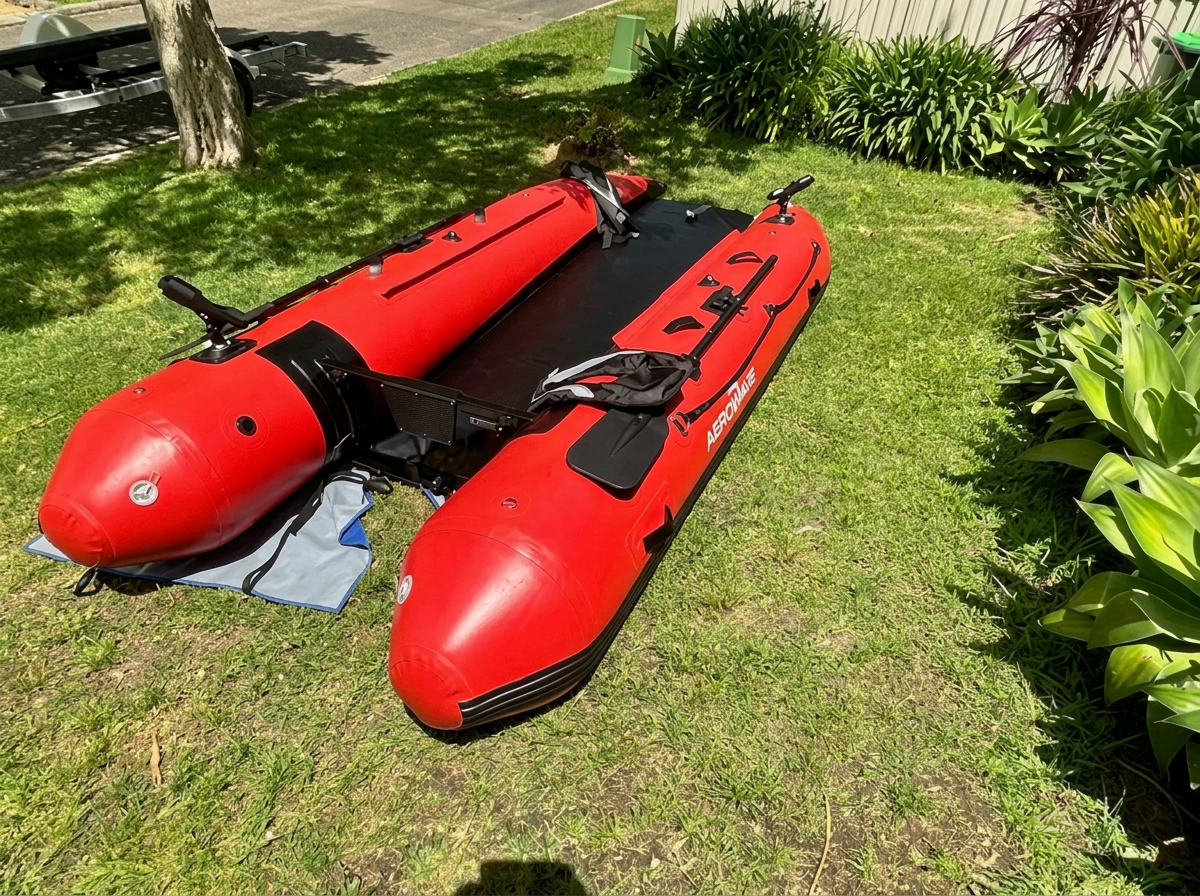
Aerowave Viper 400 Sovereign
US$3,279 USD · delivered to your door