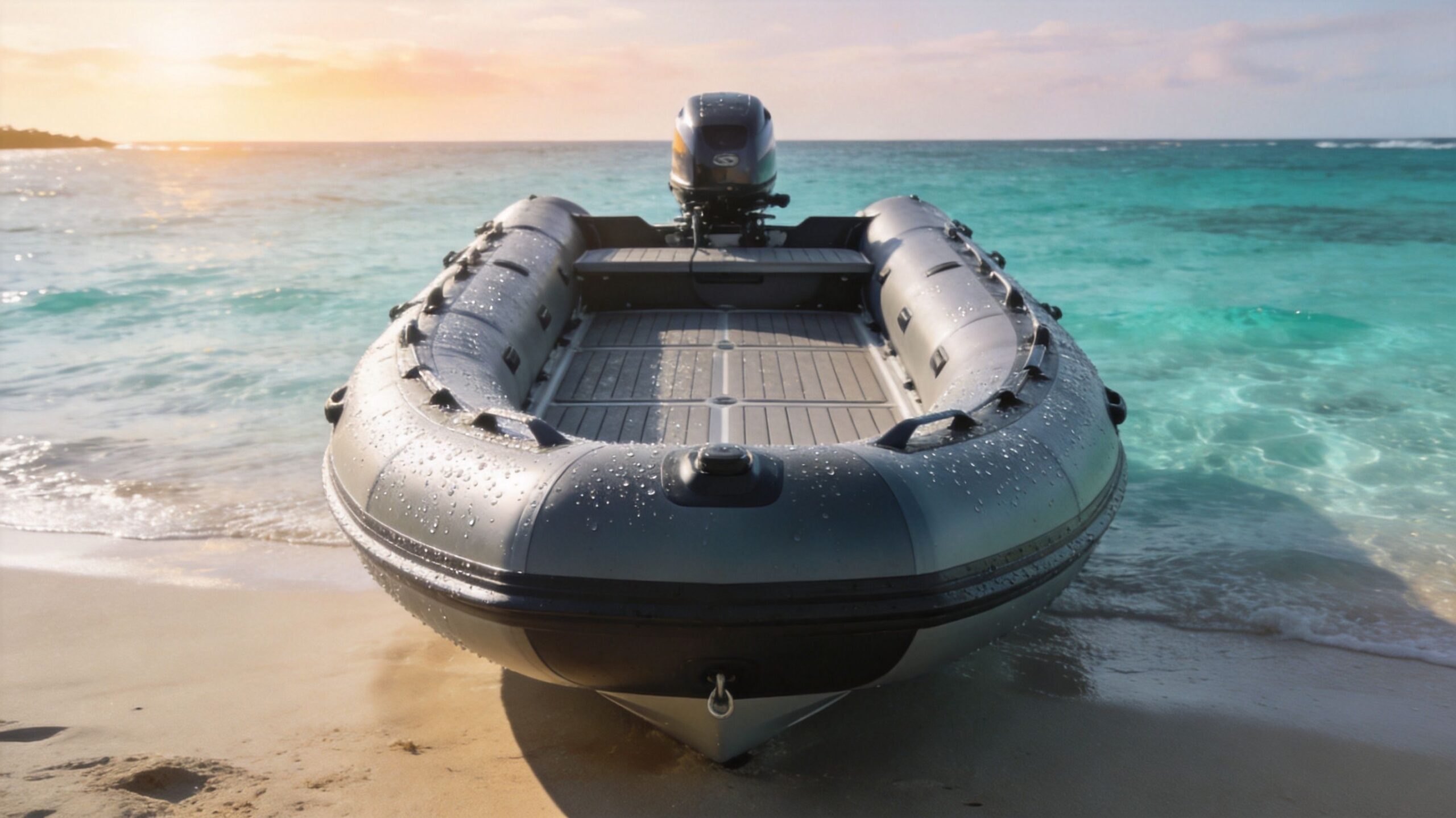

You're probably here because a full-size tinnie or fibreglass runabout feels like too much boat for the way you get on the water. You want something you can store at home, throw in the car, take with the caravan, or keep as a practical tender without dealing with trailer queues, marina costs, or awkward storage.
That's exactly where a good boat inflatable earns its place. A modern inflatable isn't a compromise if you buy the right type for the way you boat. It's a different tool. For plenty of Australian owners, it's the tool that gets used more often because it's easier to own, easier to launch, and easier to take to places a larger boat never reaches.
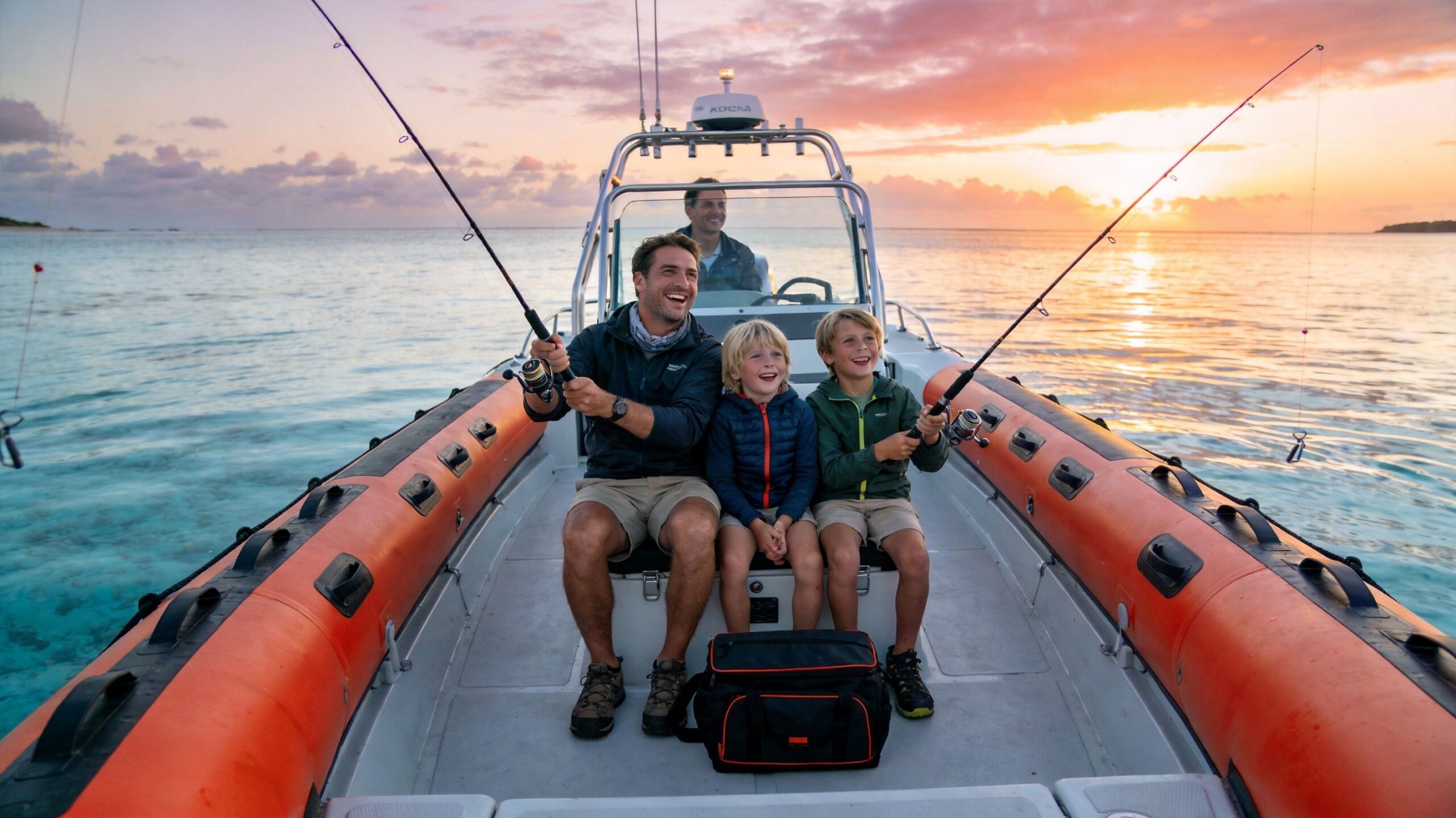
Families use them for sheltered beach days. Anglers use them to reach quiet estuary edges and reef fringes. RV travellers use them because they pack down small and don't hijack the whole trip. Yacht owners use them because a dependable tender has to work every time, not just look good on a brochure.
Interest in that kind of portability is growing. The global inflatable boat market is projected to grow from $2.07 billion in 2024 to $3.04 billion by 2034 according to Fact.MR's inflatable boat market outlook. That lines up with what many buyers already know from experience. If a boat is simpler to transport, store, and launch, it often sees far more water time.
A common Australian boating story starts the same way. Someone wants a boat for family weekends, a bit of fishing, or easy exploring while travelling. Then reality kicks in. The trailer needs space. The launch ramp gets busy. The annual upkeep starts to feel bigger than the actual use.
That's why inflatables have moved well beyond the “backup boat” category. For a lot of owners, they're now the first choice because they remove friction. A well-made inflatable can live in the garage, ride in the back of an SUV, or pack alongside camping gear in a van. You spend less time organising the day and more time getting afloat.
The appeal isn't abstract. It's simple:
A family heading to a calm inlet doesn't need a heavy hull and a trailer headache. An RV couple stopping near a river mouth wants something compact and reliable. A solo angler wants a stable platform that doesn't take all morning to prepare.
That's the practical edge. Inflatable boats lower the barrier between “we should go boating sometime” and “let's go now”.
Practical rule: The best boat is the one you'll actually launch often. Convenience matters more than many buyers admit.
If you're weighing up whether this style of boating suits your weekends, it helps to look at the benefits of buying an inflatable boat in day-to-day ownership terms, not just brochure features.
A serious inflatable boat has more in common with a compact working vessel than a beach toy. The shape, internal structure, and motor mounting all matter. If you understand those basics, it becomes much easier to sort clever design from cheap shortcuts.
The side tubes are the most obvious feature, but buoyancy is only part of their job. They also add stability at rest, soften contact at docks and beaches, and create reserve flotation if conditions get untidy.
Modern boats use multiple air chambers rather than one single cavity. That matters because it gives a layer of safety and helps the boat keep shape under load. A boat with well-built chambers feels more planted, especially when passengers shift their weight.
Floor design is where many first-time buyers notice the difference between budget and well-sorted gear.
A basic soft floor can be enough for occasional sheltered use. But once you fish, carry gear, stand up, or run in a chop, the floor system becomes central to comfort and control. High-pressure air decks feel firmer underfoot and create a much more usable platform. Aluminium or rigid floor systems also have their place, particularly if you want a solid feel and don't mind extra setup.
Here is the simplest way to view the situation:
| Component | What it does | What to watch for |
|---|---|---|
| Tubes | Provide buoyancy and side stability | Chamber layout, fabric quality, seam finish |
| Floor | Affects rigidity, comfort, and handling | Soft floor vs air deck vs rigid floor |
| Transom | Carries the outboard and transfers load | Strength, fit, and corrosion resistance |
A transom isn't just a flat board for hanging a motor. It's the structural point that takes engine thrust and transfers it into the boat. If it's weak, poorly bonded, or badly aligned, the whole rig suffers.
That's why buyers looking at powered inflatables should pay attention to transom quality, not just tube diameter or colour. A good transom supports cleaner handling, safer engine mounting, and longer service life.
Cheap inflatables usually look acceptable in photos. The shortcuts show up when the floor flexes, the transom strains, or the seams age early.
If you want to see how this changes once a rigid hull is added, the rigid hull inflatable overview is worth comparing against standard soft inflatable layouts.
Materials decide how an inflatable boat ages. In Australia, that matters more than many buyers expect. Heat, UV, salt, beach abrasion, and repeated packing all punish weak fabric and average seam work.
A boat inflatable can look impressive on day one and still become a poor buy if the fabric, seam method, or reinforcement choice doesn't suit local conditions. Many low-price comparisons fall apart at this stage.
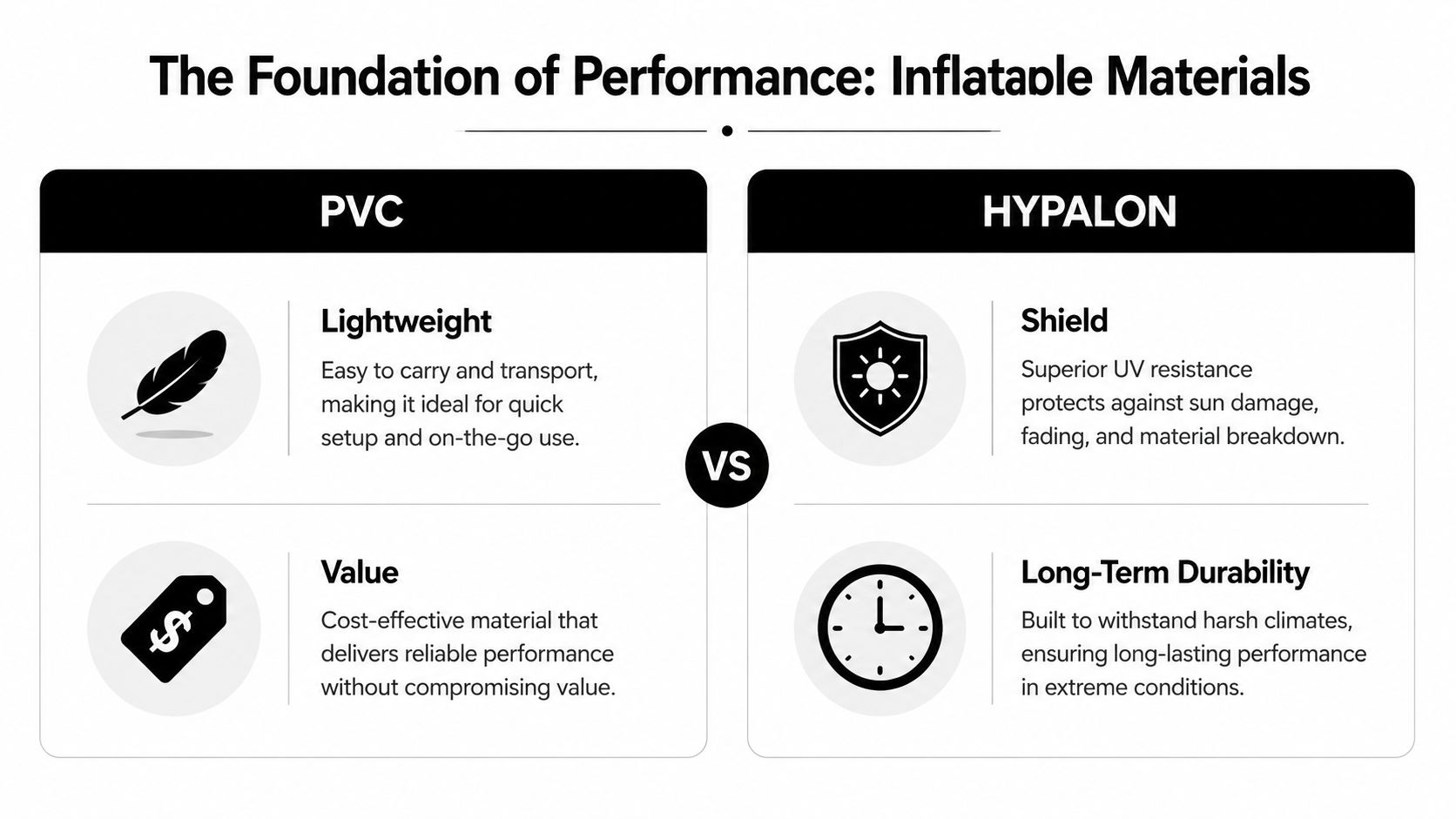
Most buyers end up choosing between PVC and Hypalon. Both can work. Neither is automatically right for everyone.
PVC suits owners who want lower weight, easier handling, and sharper upfront value. For occasional use, sheltered trips, and careful storage, good PVC can be a sensible option. But quality matters a lot. Not all PVC builds are equal, and cheap fabric paired with poor seams usually shows its age quickly.
Hypalon is the material many experienced owners look at when the boat will spend more time in hard sun, salt, and rougher service. In Australian conditions, that can be a meaningful advantage. According to HRIBOATS on rigid inflatable construction, premium French Hypalon retains 95% of its tensile strength after five years of exposure, while PVC can degrade to 70% in the same period.
That doesn't make PVC “bad”. It means your material choice should reflect how hard you'll use the boat and how long you expect to keep it.
| Feature | PVC (Polyvinyl Chloride) | Hypalon (CSM/Neoprene) |
|---|---|---|
| Weight | Generally lighter and easier to handle | Usually heavier |
| Upfront cost | More budget-friendly | Higher initial cost |
| UV resistance | Varies with quality and finish | Strong choice for harsh sun exposure |
| Saltwater durability | Suitable with proper care | Well suited to long-term saltwater use |
| Repairability | Common and practical | Also repairable, often chosen for long service life |
| Best fit | Casual use, travel, lighter setups | Frequent use, demanding coastal conditions |
Buyers often focus on brand names and skip over the actual fabric specification. That's a mistake. Fabric denier tells you about the base cloth strength. In plain terms, it helps indicate how tough the material is before coating and finishing are added.
For beach launching, loading gear, and repeated packing, stronger fabric makes a difference. It won't make the boat indestructible, but it gives you a better margin when the boat gets dragged, bumped, or exposed to repeated use.
A heavy-duty PVC build can still be a strong practical choice. Likewise, not every Hypalon boat is automatically premium if the rest of the construction is average. Fabric is only one part of the story.
Seam construction is where quality becomes obvious over time. Boats that rely on poor bonding or rushed assembly often develop issues slowly. A valve starts to seep. A join begins to lift. Small failures turn into annoying ownership.
Look for:
One Australian-owned option in this category is Easy Inflatables' guide to Hypalon vs German Mehler 1.2mm PVC material, which compares these material choices in the context of local use.
Buy for your conditions, not your wish list. If the boat will live through harsh sun, reef edges, and repeated beach launches, pay for fabric and seams first. Fancy add-ons can come later.
The right inflatable boat depends less on what looks good online and more on where you'll use it, how many people come along, and whether you value portability or rough-water performance first.
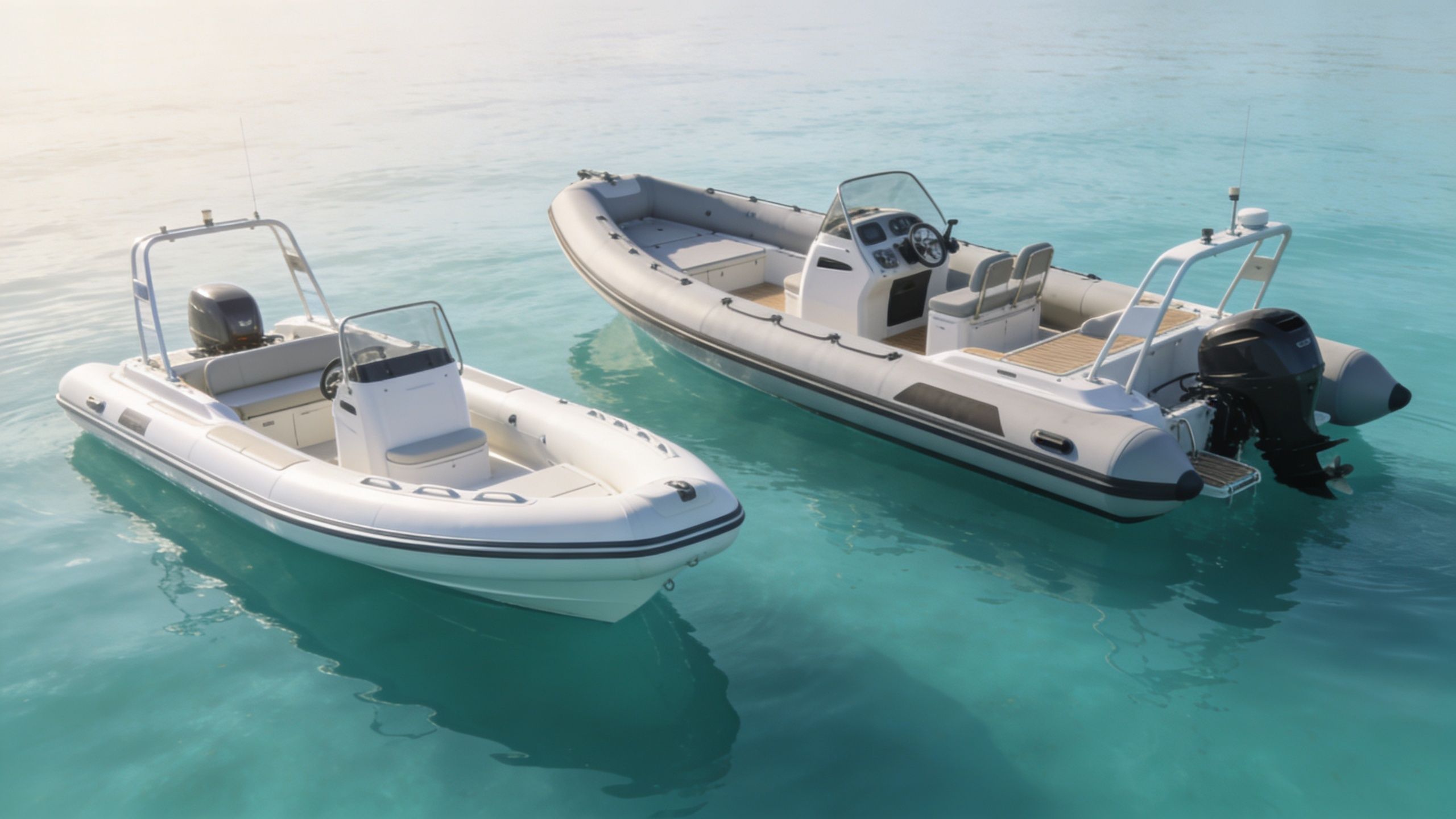
A Rigid Inflatable Boat, or RIB, combines inflatable tubes with a solid hull. That hull changes everything. The ride is firmer, tracking is better, and the boat handles chop with much more confidence than a soft-bottom inflatable.
That's why RIBs make sense for coastal users, yacht tenders that work hard, and anyone who regularly runs exposed water. The benchmark here is clear. RIBs with deep-V hulls, often used by the Royal Australian Navy for tenders, are engineered to slice through 1.5m waves at over 40 knots when paired with a 40HP Hidea motor, as noted earlier from the cited construction source.
A RIB isn't the most compact option and it won't pack into a bag. But if your boating includes harbour chop, tidal flow, and longer runs, the trade-off often makes sense.
Inflatable catamarans are one of the smartest choices for anglers and families who want a stable platform. Their layout gives them a settled feel on the water, and that extra deck usefulness is something owners notice immediately.
For lure casting, taking kids out, or loading picnic gear, a cat hull can feel less twitchy than narrower designs. You're not buying them for ultimate compactness. You're buying them because they stay composed and make the usable space count.
That's a big reason inflatable catamaran and inflatable catamarans keep attracting attention from practical buyers. They fit the way many Australians use a small boat. Fishing, estuary runs, beach launch days, and family outings where stability matters more than bragging rights.
Soft inflatables are the classic boat-in-a-bag choice. They suit caravan travel, occasional use, sheltered waters, and owners who care most about compact storage.
They're also common as yacht tenders, especially when the main goal is getting ashore without fuss. The right tender is simple to deploy, easy to stow, and light enough that one or two people can manage it without drama.
What they don't do as well is imitate a larger hard-hull boat in rougher conditions. That's not a flaw. It's just knowing the category.
This walkaround helps if you want to see how different inflatable layouts behave on the water:
Not everyone wants an outboard setup. Inflatable kayaks still have a strong place for solo exploration, light exercise, and easy transport. They suit protected water and travellers who want the smallest footprint possible.
They won't replace a powered inflatable for carrying a family or running gear-heavy fishing trips. But for one or two paddlers keeping things simple, they remain a very practical category.
A lot of buying mistakes happen when people shop by category label alone. Start with the trip you want to do most often, then choose the hull style that fits it.
Once you've narrowed down the type of boat, the next question is whether it will perform properly with your load, your motor, and your usual conditions. At this point, many buyers either underspec the boat or overspec the engine.
Hull shape changes the whole personality of an inflatable. A flatter setup can feel stable at rest and stay easy to launch, but it won't soften chop the same way a deeper hull will. A catamaran layout often gives strong side-to-side stability and useful deck confidence. A deep-V style is usually better when the water gets messy.
Floor design plays into that too. According to Ship Chandlers' explanation of inflatable boat construction, high-pressure air decks inflated to 7 to 10 PSI can reduce the risk of capsizing by up to 40% in 1 to 2 metre seas common to Australian coastal waters. That's a meaningful difference for buyers who want portability but still need a solid, predictable platform.
A boat rated for a certain number of people can still feel cramped or sluggish if everyone brings gear. Fishing tackle, safety equipment, fuel, an esky, and kids' gear all take space and weight.
Use a more practical filter:
If you're deciding between two lengths, the slightly larger option is often the better ownership decision if your storage and transport allow it.
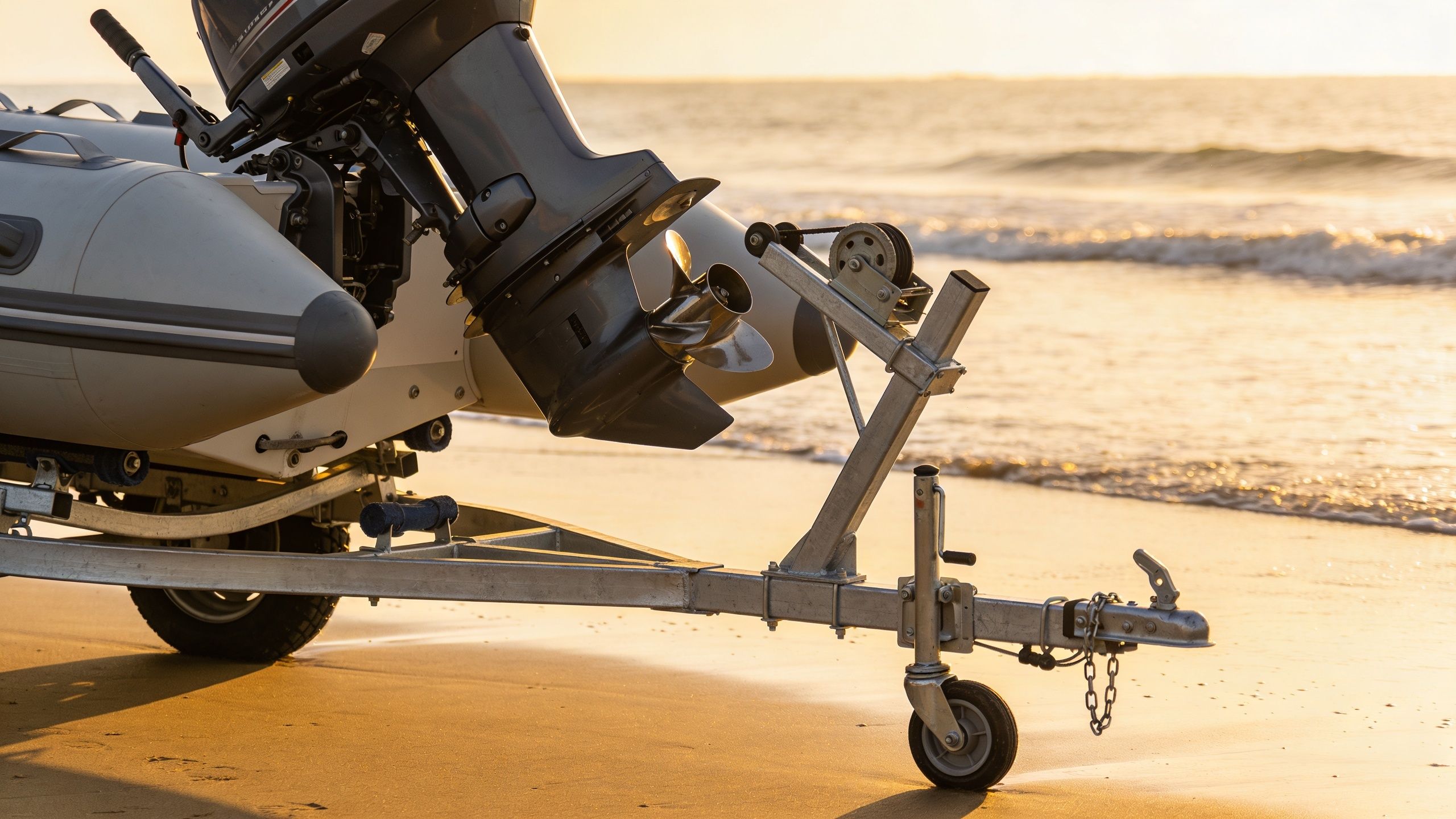
Outboard choice should support the way the hull is designed to run. A small tender used for short shore hops doesn't need the same setup as a fishing inflatable that has to plane with two adults and gear.
A balanced pairing means:
Too little power can leave the boat labouring and inefficient. Too much can make the rig feel wrong, stress the transom, and create handling issues.
If you're trying to match a hull with the right outboard, this engine for inflatable boat guide is a practical place to compare setups before you buy.
A good inflatable earns its keep because it adapts to different trips without asking for much in return. That's the part generic buying guides often miss. People don't buy a boat inflatable for a spec sheet. They buy it for a specific kind of day.
For estuary lure casting, creek work, and short coastal sessions, a stable inflatable can be a far more sensible tool than a larger trailer boat. Anglers want room to move, enough deck confidence to cast comfortably, and a setup that doesn't turn a quick morning session into a major operation.
An inflatable catamaran suits this well because stability matters when you're shifting around with rods and tackle. A compact RIB can also work if you often launch in rougher harbour conditions and want stronger tracking.
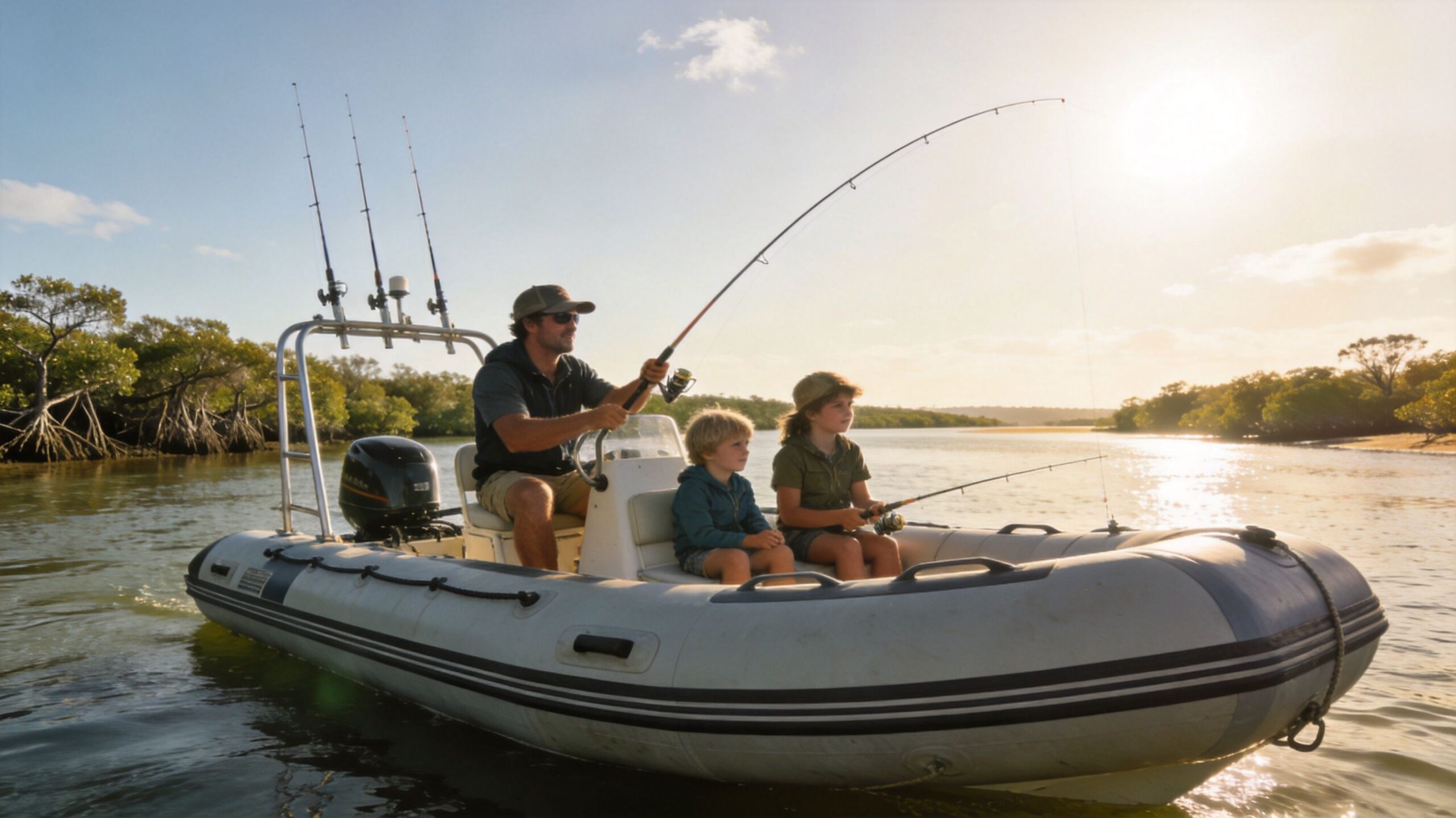
Families usually don't need maximum speed. They need a boat that's easy to board, forgiving around the beach, and straightforward to pack up when the outing is over.
That's where a soft inflatable or stable cat-style layout makes sense. Kids can climb in without banging against a hard gunwale, and parents don't have to overcomplicate the outing. A sheltered cove, a picnic, a swim stop, then back onshore without the usual trailer circus. That's a good use case.
Travellers are often the quickest to understand the value of an inflatable. Space matters. Weight matters. Storage access matters. A rigid trailer boat can dominate the trip before the holiday even starts.
An inflatable that packs down properly gives you another option at camp. You can stop near a river, lake, or protected coastal spot and use the water rather than just camp beside it.
The practical wins are obvious:
Tender owners are often the least interested in marketing and the most interested in reliability. They want a boat that starts, rows if needed, carries loads safely, and stands up to repeated use.
Quality materials and clean construction are essential. Repeated dock contact, salt, and sun expose weaknesses quickly. Some buyers in this category look at practical local suppliers. For example, Easy Inflatables offers yacht tenders, inflatable catamarans, RIBs, and packaged outboard setups for Australian buyers, alongside accessories and after-sales support.
The right inflatable doesn't just save space. It opens up trips you'd otherwise skip because taking a conventional boat wouldn't be worth the effort.
A well-built inflatable still needs to be operated within the rules. Often, casual owners get caught out. They assume a smaller boat means fewer obligations. That's not how it works once you head offshore or carry the wrong gear.
Australian rules vary depending on where and how you use the boat, but one point is clear. AMSA mandates specific safety equipment for offshore use, and a Boating Industry Association survey found that 68% of coastal adventurers beach-launch without full compliance checks, risking fines of over $10,000, according to True Kit's coastal inflatable safety article.
That should push buyers toward a simple habit. Check the legal side before you plan the trip, not at the ramp.
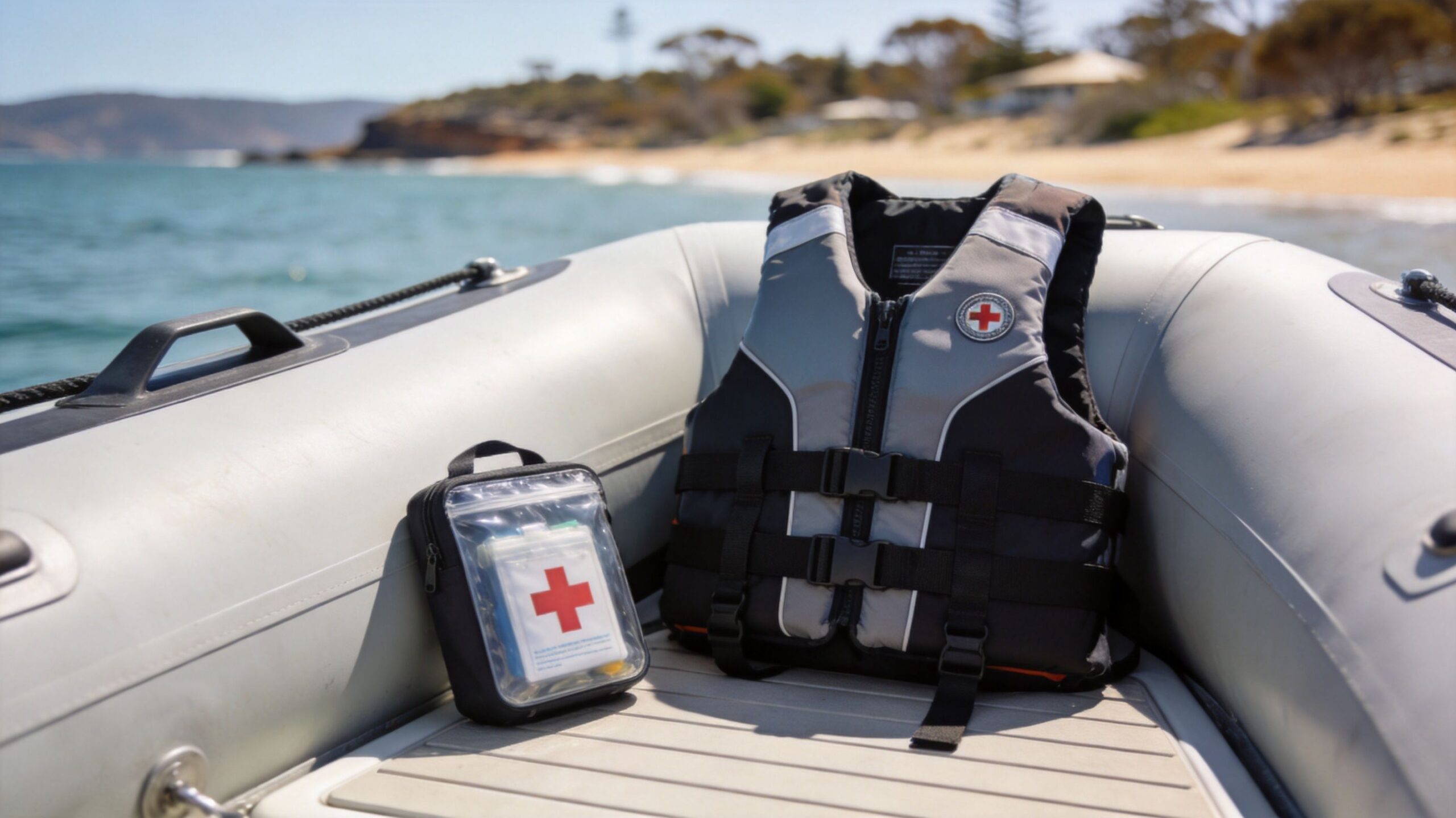
For practical ownership, focus on these basics:
A cheap or poorly made boat increases the chance that legal compliance and actual safety drift apart. You might technically carry the gear, but if the hull itself isn't trustworthy, you're still exposed.
Most problems are caught before the boat touches the water. A proper check takes only a few minutes.
If you need a starting point for what to carry, this boating safety equipment checklist is useful for setting up a repeatable routine.
Good safety practice isn't paranoia. It's what lets you relax once you're on the water.
Most owners find the routine becomes quick after a few uses. The main difference comes down to the boat type, floor system, and how much gear you keep packed together. A simple tender is quicker than a larger fishing setup with seats, electronics, and an outboard.
The easiest owners are the ones who store the boat, pump, safety gear, and repair kit in one organised system. If every trip starts with hunting for parts, setup always feels longer than it needs to.
A warranty matters because inflatable boats rely on bonded or welded structure, valves, accessories, and transom integration. If there's a manufacturing issue, you want local support and a clear process. It's also worth reading whether the warranty differs across fabrics or boat categories.
A longer warranty is helpful, but support quality matters just as much. Fast answers, spare parts access, and realistic repair guidance count for a lot in ownership.
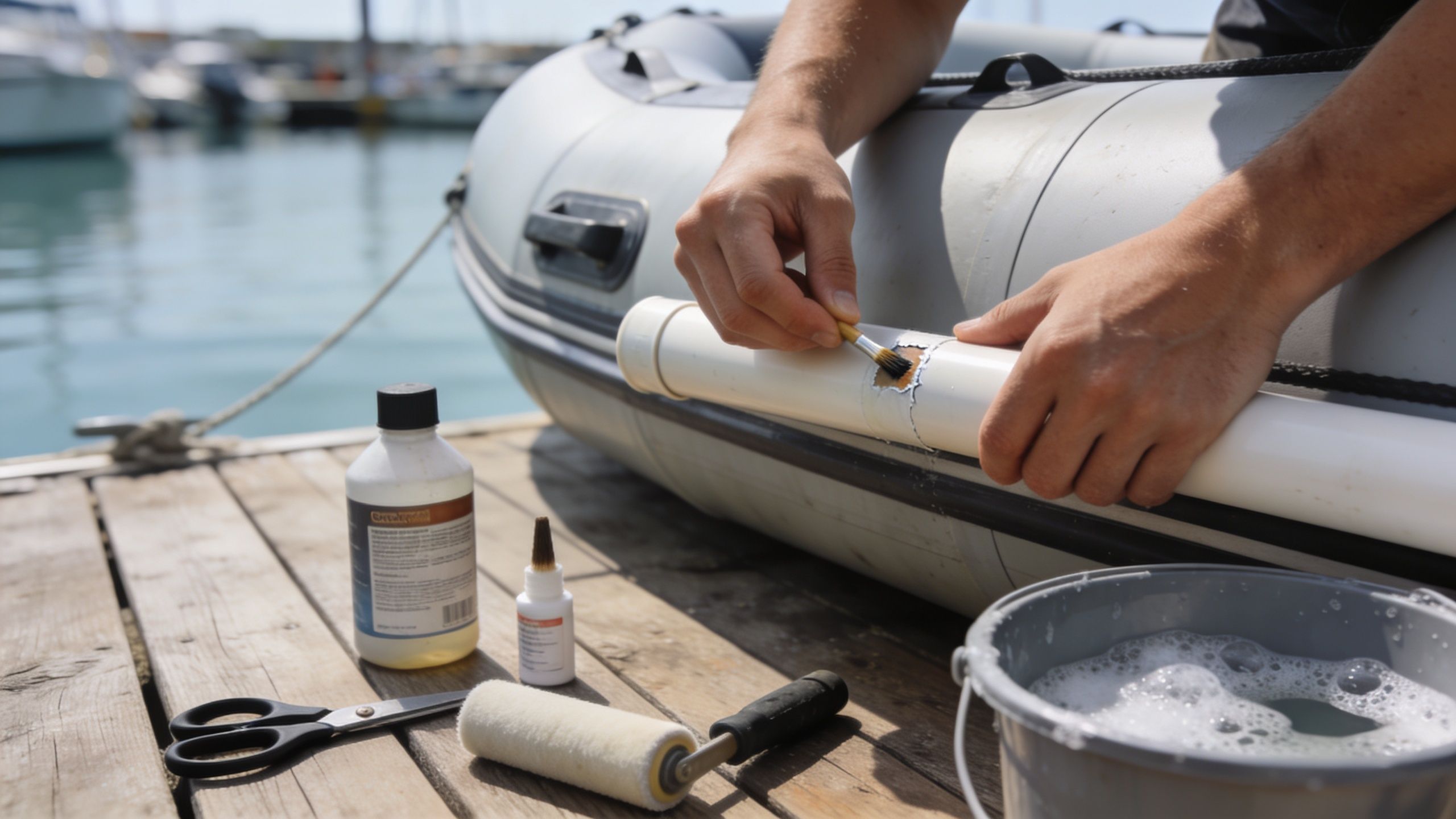
Small punctures are often manageable if you have the correct repair materials and follow the right process. Clean preparation matters more than rushing. Some owners are comfortable doing basic patch work themselves. Others prefer professional help, especially when the damage is near a seam, transom, or high-stress area.
If the boat loses pressure repeatedly and the source isn't obvious, don't guess. A proper inspection is faster than chasing the same leak over and over.
Packages suit buyers who want a straightforward path to getting on the water. They reduce the chance of mismatched parts and usually make ownership simpler from day one. Custom setups make more sense when you know exactly how you'll use the boat and you want specific accessories, seating, storage, or motor pairing.
Neither is automatically better. The right answer depends on whether you value convenience first or fine-tuning first.
This is one of the most common mistakes. If you're already wondering whether the smaller size will be enough, it often won't be once you add gear, weather, and real movement on board.
Think about your most common trip, then your heaviest realistic trip. If the boat only suits the lightest version of your plans, it's probably undersized.
If you're weighing up a boat inflatable for fishing, family use, RV travel, or tender duty, Easy Inflatables is an Australian option where you can compare catamarans, RIBs, tenders, kayaks, outboards, and accessories in one place, with local support and practical guidance on matching the setup to how you'll use it.