Inflatable Boat Guide for Australia 2026
Your ultimate guide to buying an inflatable boat in Australia. Compare types, materials, and find the perfect model for fishing, family, or travel.
At a glance
Your ultimate guide to buying an inflatable boat in Australia. Compare types, materials, and find the perfect model for fishing, family, or travel.
- The New Wave of Australian Boating Freedom
- From emergency craft to everyday boating
- Why the format suits Australian life
- Roll-Ups RIBs and Catamarans Explained
What we'd put you in
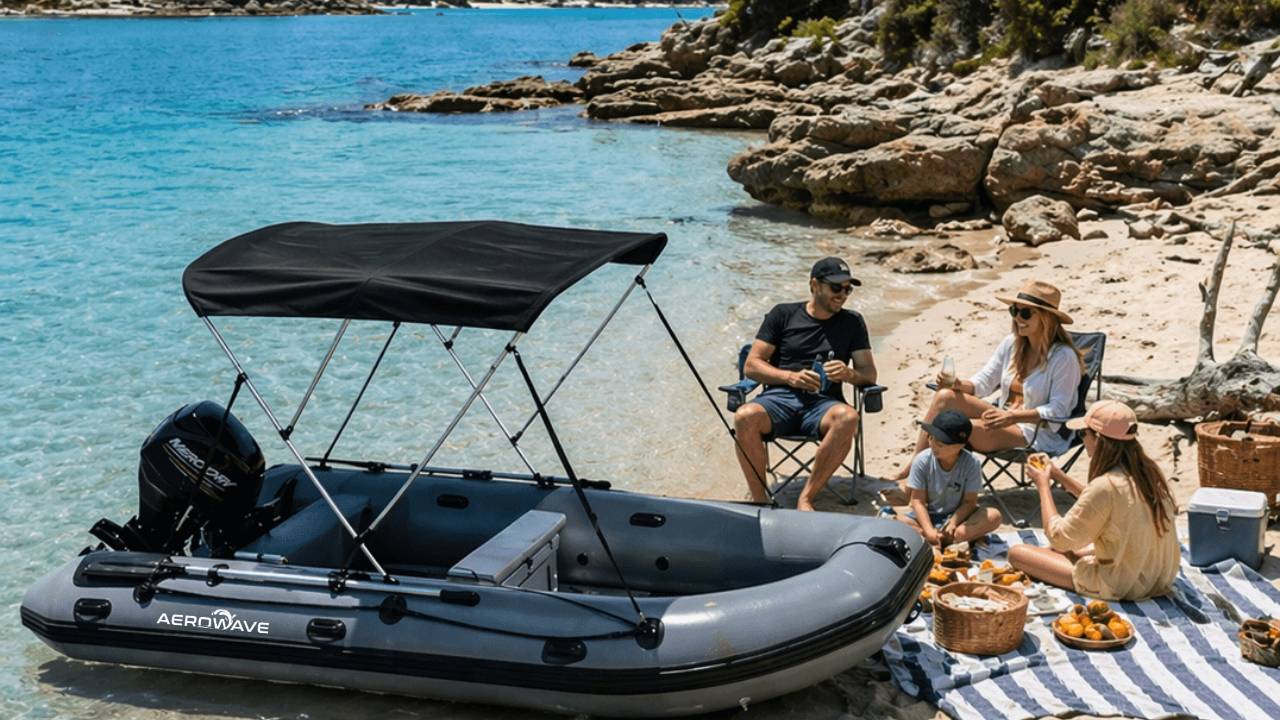
Aerowave Viper 400 Sovereign
Our best-selling boat: 4.0 m, 1.2 mm VALMEX hull, 7-year hull warranty.
US$3,167 USD
Delivered to your door, today's rate
- Free freight to United States · local taxes payable on arrival
- 7-year hull warranty
🇺🇸 Shipping to United States · landed price quoted in writing
Yes — we ship the Aerowave Viper 400 Sovereign to United States. Here's the landed price.
Our best-selling boat: 4.0 m, 1.2 mm VALMEX hull, 7-year hull warranty.
Written for Australian readers — but the boat ships to you. We are an Australian builder and this article is written from Australian waters. That changes nothing about what you can order: the same hull, the same 7-year warranty and the same certification go out to United States every week.
Aerowave Viper 400 Sovereign
- Boat package (export price)
- US$3,726
- 15% tariff relief credit
- − US$559
- Express air freight to United States
- Included
- Import duty, taxes & customs clearance
- Payable on arrival
- Estimated landed, USD
- US$3,167
Indicative, converted at today's rate, before local duty and tax on arrival. Ask below and we'll put a fixed figure in writing, valid 30 days.
- 7-year hull warranty
- 1500 GSM / 1.2 mm VALMEX® Heavy Plus hull
- CE certified to ISO 6185-3 and EU Directive 2013/53/EU
- Door-to-door, tracked the whole way
Your price, delivered to your door — freight included.
We email the full PDF quote (spec, freight, finance, WavePay) to your inbox in under 60 seconds. No spam — one quote, one follow-up.
See it for yourself
Real boats. Real owners. Real people behind them.
Plenty of what you read online these days is generated. Check us out properly — the factory, the reviews and the owners are all one click away. Why we use AI, and how to check we’re real
How our boats are built
Walk the production line: thermo-welded seams, 1.2 mm VALMEX Heavy Plus hulls, over-pressure relief valves on every chamber.
See the buildGoogle Maps reviews
Real Australian owners, five stars, published on our Google Business Profile with the map — read them there, not just on our own site.
Open Google Maps reviewsOwner stories
Boats in use — offshore, on rivers, on rescue duty. Photos and words from the people who actually own them.
Read owner storiesYou’re probably here because you want a boat that fits the way Australians use the water. Not a marina toy. Not a heavy fibreglass hull that needs a permanent trailer spot and a patient queue at the ramp. You want something you can pack for a weekend away, drag onto a beach, run across a harbour as a tender, or launch for a quick fish after work.
That’s where a good inflatable boat changes the equation. The old stereotype of inflatables as soft, flimsy, temporary craft is badly out of date. Modern designs range from compact roll-ups that live in the back of an SUV to serious RIBs and inflatable catamarans built for coastal use, family boating, fishing, and yacht tender duty.
For Australia, that matters. Our boating isn’t one thing. It’s estuaries, beach launches, exposed bays, river systems, reefs, harbour moorings, and remote camping tracks that end at the waterline. A boat that works here has to be portable enough to use often, tough enough to handle salt and sun, and stable enough that you don’t spend the whole day adjusting your body weight to keep it happy.
The New Wave of Australian Boating Freedom
A lot of buyers start with the same realisation. They don’t really need a big hard boat. They need a boat they’ll use.
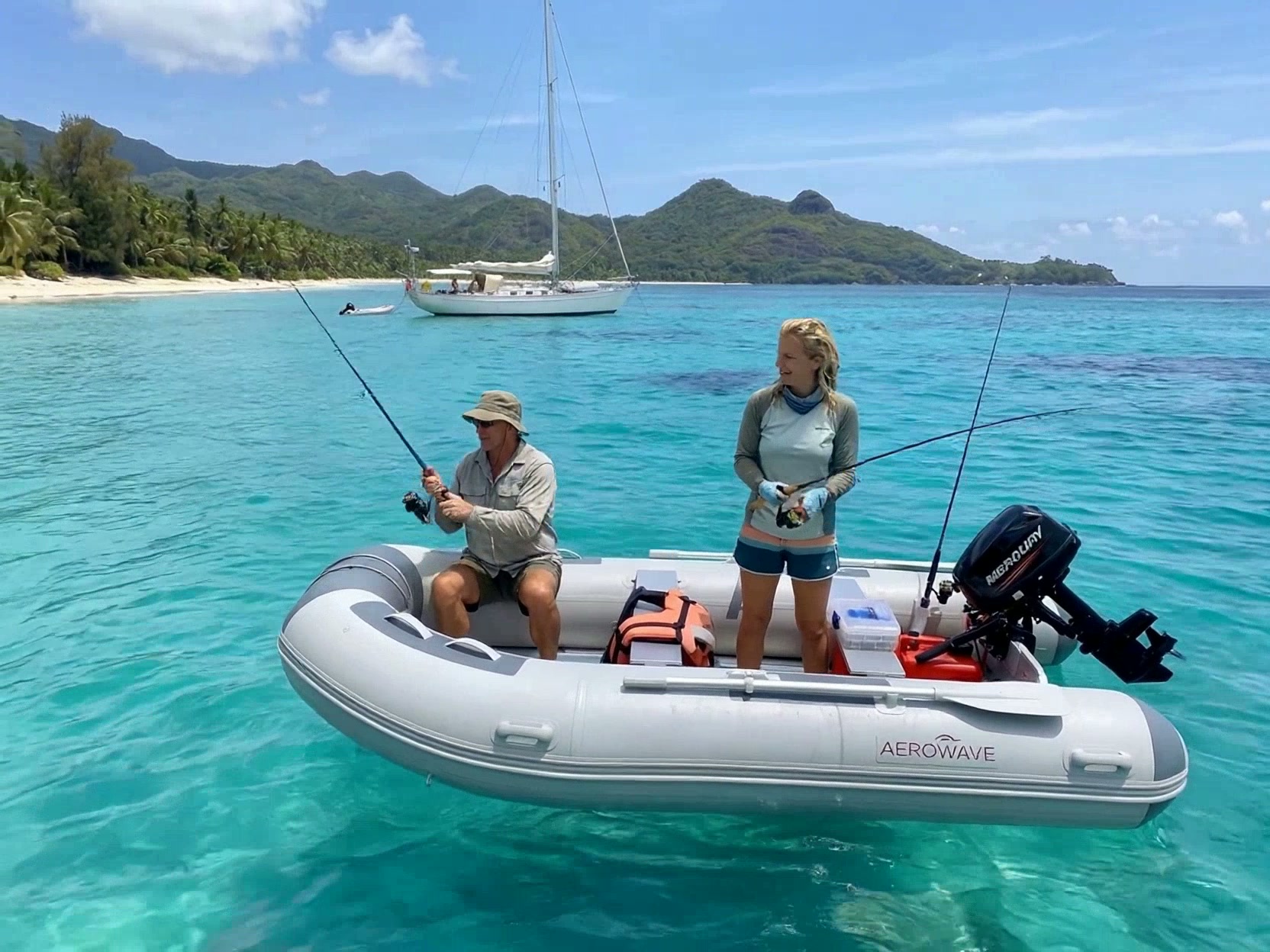
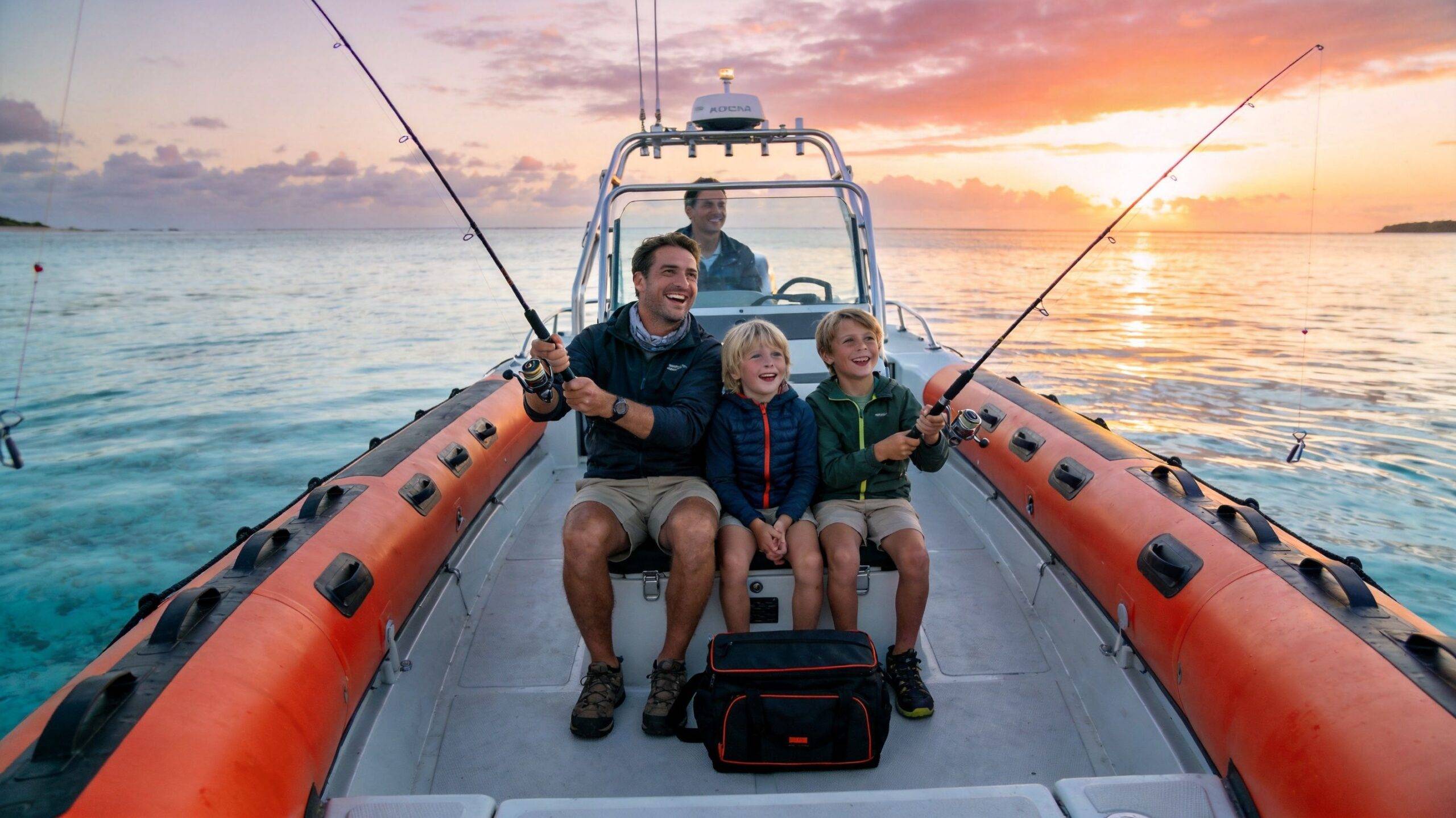
That might mean a father taking two kids out for a sunset fish on flat water. It might mean a couple carrying a tender from the yacht mooring to shore without wrestling with dead weight. It might mean pulling into a beachside camp, inflating the boat, clipping on an outboard, and being on the water before the coffee has gone cold.
The reason that’s now possible is simple. Materials, hull design, seam technology, and floor construction have improved so much that today’s inflatable boats sit in a very different category from the cheap soft boats many people still picture.
From emergency craft to everyday boating
The modern inflatable boat didn’t arrive by accident. Its roots sit in practical problem-solving. The technology grew from early developments by Zodiac in France in 1934 and Reginald Foster Dagnall’s RFD in England, which used rubber-coated fabrics from airship materials. By the 1960s, these designs had been licensed globally and adopted by organisations such as the RNLI, shaping rescue and recreational craft suited to coastlines like Australia’s, as outlined in this history of inflatable boats and RIBs.
That rescue heritage matters because the best inflatable boats still reflect the same priorities. They need to launch quickly, stay buoyant, track cleanly, and tolerate rougher water than their appearance suggests.
A useful inflatable boat isn’t just easy to store. It removes friction from boating, which means you go more often.
Why the format suits Australian life
Australia rewards simple gear. If a boat is hard to launch, hard to store, or expensive to keep, people use it less. Inflatables solve that for a wide spread of owners:
- Families who want low-stress outings on calm bays, estuaries, and rivers.
- Anglers chasing shallow access and beach launches.
- Travellers who need a boat-in-a-bag setup that fits around camping gear.
- Yacht owners who care about weight, stowage, and reliable ship-to-shore runs.
If you like seeing how other boating destinations package easy on-water experiences, these top San Diego boat excursions are a useful reference point. Different coastline, same appeal. Boating is better when access is simple.
Roll-Ups RIBs and Catamarans Explained
Not all inflatable boats solve the same problem. Buyers get into trouble when they compare them as if they do.
A roll-up soft-floor inflatable, a RIB, and an inflatable catamaran can all be excellent. They just excel in different jobs. If you match the wrong format to the way you boat, the weaknesses show up fast.
Inflatable boat types at a glance
| Boat Type | Best For | Portability | Performance (Chop) | Stability |
|---|---|---|---|---|
| Roll-up | Camping, yacht tender use, occasional family trips | High | Moderate | Good |
| RIB | Coastal runs, tenders, fishing, faster travel | Moderate | Strong | Good to very good |
| Inflatable catamaran | Fishing, family use, shallow access, stable platforms | Moderate | Good in suitable conditions | Very high |
Roll-up inflatable boats
The roll-up is the most portable version of the inflatable boat. It is often cited as the model for a “boat-in-a-bag”. Deflate it, pack it, and it disappears into the garage, caravan compartment, or wagon.
Some use slatted floors. Others use a high-pressure air deck. The better ones feel much more rigid underfoot than buyers expect.
What works:
- Storage and transport are easy.
- Launching alone is realistic.
- Tender duty is where they shine.
- Casual estuary and river use suits them well.
What doesn’t:
- Rough chop exposes their limits.
- Higher horsepower use isn’t their game.
- Load sensitivity can be noticeable if everyone moves at once.
RIBs
A RIB, or rigid inflatable boat, adds a solid hull under the inflatable tubes. Usually that means aluminium or fibreglass. This changes the ride dramatically. The boat tracks better, lands softer, and carries speed more cleanly in broken water.
If you want a plain-language breakdown of the format, this guide on what a RIB boat is is worth reading.
RIBs make sense when you want:
- Better handling in chop.
- Cleaner planing with an outboard.
- A more secure platform for regular coastal use.
- A tender that doesn’t feel compromised.
The trade-off is obvious. You gain performance, but you lose some of the pure pack-away convenience that makes roll-ups attractive.
Practical rule: If you’ll regularly cross exposed water instead of hugging sheltered shorelines, a RIB is usually the smarter buy.
Inflatable catamarans
Inflatable catamarans don’t get enough attention in mainstream buying guides. They deserve more. Their twin-hull style layout gives them a very stable footprint, which is exactly why anglers and families often take to them quickly.
They’re especially appealing when:
- someone wants a steadier casting platform
- shallow water access matters
- deck feel and side-to-side stability matter more than outright speed
Their trade-off is that they’re more specialised. They can be the right answer, but usually for buyers who already know the kind of water and activity they care about.
Decoding Inflatable Boat Materials and Construction
A boat can look tidy on a showroom floor and still be the wrong build for Australian use. The difference shows up six months later, after hot ramps, salt spray, corrugations on the way to a remote launch spot, and repeated pack-downs in the sun.
Material and construction decide whether an inflatable stays firm, tracks properly, and keeps its shape over time. For a Sydney Harbour tender, that might mean UV resistance and easy daily handling. For a 4WD camping setup headed north, it usually means abrasion resistance, better seam quality, and a floor that does not go soft halfway through the trip.
PVC and Hypalon in Australian conditions
Most buyers compare PVC and Hypalon, and they should. Both are proven materials, but they suit different ownership patterns.
Quality PVC, especially 1.2mm 2000D PVC, makes sense for many Australian owners because it keeps weight and price under control. That matters if the boat is going in and out of a ute, onto a roof rack, or into caravan storage. Modern PVC boats also come a long way from the soft, short-life inflatables many people still picture.
Hypalon suits harder service. If the boat will live inflated for long stretches, spend serious time in strong UV, or be used regularly around rough jetties and beach landings, Hypalon usually earns its higher price. It costs more up front and often adds weight, but it gives long-term buyers a bigger margin in harsh conditions.
For a direct local comparison, this guide to Hypalon vs German Mehler 1.2mm PVC material explains where each material makes sense in Australian use.
Warranty matters too, but it is not the whole story. A longer warranty is useful only if the fabric weight, coating quality, and seam method are good enough to support it.
Seams are where cheap boats reveal themselves
Tube fabric gets the attention. Seams deserve more of it.
In practice, seam construction is often the line between a boat that stays tight and one that slowly becomes a frustration. For local conditions, I would look for multiple isolated air chambers, clear pressure ratings, and thermo-welded seams on PVC boats where available. Good chamber separation gives you redundancy. Good seams hold pressure, resist creep, and cope better with repeated inflation cycles. Well-made air decks and seams can handle 10,000+ pressure cycles at 0.3 to 0.4 bar without significant seam creep, according to this air deck construction guide .
That matters more than marketing copy. A boat used as a tender in sheltered water can get away with a simpler build. A boat that will be dragged onto sand, inflated every weekend, or sent across breezy estuaries needs better joining methods and better reinforcement around hard points.
Check for these details before buying:
- Thermo-welded seams or a clearly specified joining method, not vague claims about premium construction
- Three or more isolated chambers rather than the bare minimum layout
- Reinforcement patches around towing eyes, transom joints, handles, and rubbing points
- Quality valves that hold pressure and are easy to service
- Floor stiffness that supports standing, boarding, and gear weight without excessive flex
Hull shape and transom strength
On a RIB, hull design changes the ride more than many first-time buyers expect. Tube size helps stability, but the hull decides how the boat lands, turns, and holds its line in chop.
For Australian harbour and coastal use, a deeper-V hull generally gives a softer ride and better directional control once conditions get messy. The trade-off is that deeper hulls usually need more power to lift cleanly and can feel less stable at rest than flatter hulls. That is a fair trade for owners crossing open stretches, running home in an afternoon breeze, or carrying two adults and gear regularly.
The transom also deserves a hard look. A weak transom flexes under load, which affects steering feel, planing efficiency, and long-term reliability. Better boats use well-braced marine-grade aluminium or properly laid fibreglass transoms with clean bonding to the hull and tube structure. HIBO’s rigid hulled inflatable boat guide gives a useful overview of how hull form and power setup affect real performance.
Buy the structure first. Accessories are easy to add later.
Why drop-stitch floors matter
Drop-stitch floors made portable inflatables far more capable. They use thousands of internal threads to hold the top and bottom layers apart under pressure, which creates a much stiffer platform than old low-pressure floors.
You feel that difference straight away. Boarding from a beach is easier. Kids move around with less wobble. Standing to cast or sort gear feels more controlled. On a boat that gets packed into a 4WD for inland trips, that extra stiffness gives you much of the confidence of a rigid floor without the same transport headache.
It is still a trade-off. An air deck is easier to pack and lighter to manage, but a rigid floor can feel more planted under heavy loads. For many Australian owners, especially those balancing storage, setup time, and mixed-use boating, a good drop-stitch floor is the sensible middle ground.
Choosing the Right Inflatable for Your Aussie Adventure
The right inflatable boat depends less on catalogue categories and more on how you’ll use it on an ordinary Saturday. Not the fantasy trip. The normal one.
Some buyers need a family boat for protected water. Some need something that can live in a caravan setup. Others want a yacht tender that starts every time, stores cleanly, and doesn’t punish them on a windy harbour run.
For the Australian family
Family buyers should start with stability, forgiving handling, and low setup stress. You want high sides, a non-slip floor, sensible grab points, and enough room that people aren’t climbing over one another.
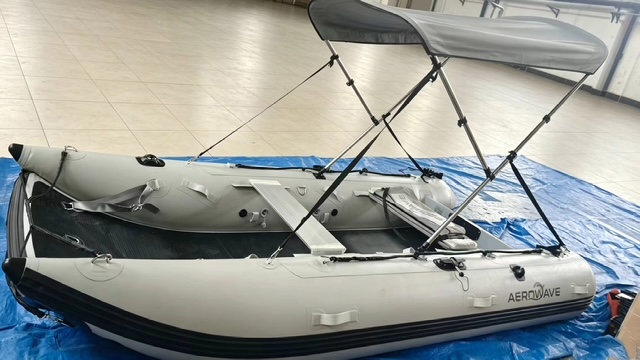
A compact roll-up works if outings are mainly calm rivers, estuaries, and sheltered bays. A small RIB suits families better if they regularly deal with harbour chop or short coastal hops. Sun protection also matters more than many first-time buyers admit, so bimini compatibility is worth checking early rather than as an afterthought.
What usually works well:
- Air-deck or rigid-floor stability for kids moving about
- Simple boarding from shore or a swim stop
- A forgiving ride over outright speed
- Storage bags and launch wheels that reduce setup friction
For the keen angler
Fishing changes the brief. You care less about the cleanest folded package and more about fishable space, deck confidence, and how the hull behaves when weight shifts to one side.
Inflatable catamarans become very compelling. They offer a broad, steady feel that suits casting, lure work, and family fishing days. RIBs also make sense if you need better chop performance on exposed bays or reef edges.
Key trade-offs are practical:
- Hooks and knives demand better habits around tubes.
- Oyster-covered shallows and rough beach edges punish poor material choice.
- Rod holder placement, bag layout, and floor grip matter more than glossy trim.
For RV and 4WD travel
Portable boating has become much more relevant to camping and overland travel. The rise of RV and 4WD camping in Australia has driven a 30% increase in demand for portable boat solutions, with buyers needing to think about puncture resistance against oyster shells and whether a lithium pump can reliably hold 22 PSI in 40°C outback heat, according to this inflatable boat market projection and camping trend note.
That’s a real Australian use case. A traveller doesn’t want a boat that performs well only in a brochure. They want one that packs compactly, inflates without drama, and handles abrasive launch spots, heat, and repeat packing.
A boat-in-a-bag setup is often the right answer here. Keep the layout simple. Prioritise manageable carry weight, a decent pump, and hardware that won’t rattle loose after corrugated roads.
A practical product range for this kind of buyer is the inflatable boat collection from Easy Inflatables, which includes roll-ups, tenders, RIBs, and catamaran-style options.
Here’s a useful walkaround before you narrow your shortlist.
Inflatable Boat Setup Guide | SIB Unboxing & Step-by-Step Assembly - YouTube
Tap to unmute
Inflatable Boat Setup Guide | SIB Unboxing & Step-by-Step Assembly Oban on the water
Oban on the water12.4K subscribers
For yacht owners and tender duty
Tender buyers make the mistake of focusing only on folded size or only on ride quality. You need both.
If your tender mostly moves people and groceries from mooring to shore in moderate conditions, a compact roll-up can be the cleanest solution. If you want quick trips, better directional control, and more confidence when the afternoon breeze gets up, a small RIB is usually worth the extra structure.
The best tender is the one you can deploy quickly and trust when the weather turns slightly worse than planned.
Essential Accessories and Outboard Motor Pairing
A mismatched inflatable setup usually shows its problems at the worst time. You are dragging the boat down a soft beach, the esky is full, the breeze is pushing side-on, and the motor either feels too heavy on the transom or too weak to lift the hull properly. That is not a hull problem alone. It is a package problem.
The boat needs to be specified as a working system for the way Australians use them, whether that means tender runs across Sydney Harbour, fishing estuaries with two aboard, or carrying gear into a remote camp after hours on corrugations.
Accessories that earn their place
Good accessories solve real handling and storage problems. Cheap extras just add clutter.
- High-pressure pump. Air-deck boats only work properly at the right pressure. An underinflated floor feels soft underfoot, rows poorly, and can make the hull ride flatter and wetter than it should.
- Launch wheels. These matter for solo operators, beach launches, and camping trips where there is no formal ramp. They also save the transom and your back.
- Boat cover. UV, road grime, and salt shorten the life of fabric, valves, and fittings. A proper cover pays for itself in storage and during towing.
- Bimini top. In Australian sun, shade is not a luxury on family runs or long harbour trips. It is part of staying comfortable enough to keep using the boat.
- Rod mounts and storage bags. A clean deck is safer, especially in smaller inflatables where loose gear ends up under feet fast.
Match the motor to the hull
Motor pairing decides how the boat feels every time you use it. Too much motor adds weight, cost, fuel burn, and extra load on the transom. Too little motor leaves the boat struggling to plane with a normal crew and gear load.
Construction quality still matters here. For open-water safety, a quality inflatable should have multiple independent air chambers, and the better boats use seam construction that stands up to repeated inflation, heat, and chop. On RIBs and cat-style hulls, the hull shape also affects the right motor choice. A deeper V can improve ride comfort in harbour chop and coastal slop, but it usually needs more power than a flatter, lighter hull carrying the same load.
A sensible pairing usually looks like this:
- Small tenders suit lighter portable outboards where low weight and easy removal matter more than top speed.
- Larger RIBs need enough horsepower to lift onto the plane cleanly with fuel, safety gear, and passengers aboard.
- Fishing setups benefit from crisp low and mid-range response, because predictable handling around ramps, pontoons, and structure matters more than chasing the biggest number on the cowl.
If you are comparing package options, this guide to choosing a motor for inflatable boats is a useful starting point.
What a good pairing feels like
A well-matched rig is obvious on the water.
- It planes cleanly with a normal load and without everyone shuffling forward.
- It tracks properly instead of wandering or feeling nervous in turns.
- The transom stays settled with no obvious flex, shudder, or cavitation through chop.
- Throttle input feels progressive so docking, beach landings, and short course corrections stay controlled.
If the stern feels overloaded, the bow rides high for too long, or the boat only performs when lightly loaded, the setup is off. In Australian conditions, where a calm morning can turn into a windy run home, that margin matters more than showroom specs.
The Easy Inflatables Advantage Your Australian Partner
Buying an inflatable boat isn’t just a product decision. It’s also a support decision.
That matters more than many buyers expect. An inflatable boat has materials, pressure systems, transom loads, optional accessories, and state-based boating requirements to think through. If you buy from a generic seller, especially an offshore one, you may save time at checkout and lose it later when questions start.
Local support changes the ownership experience
After-sales support is often the difference between a smooth ownership experience and a frustrating one. If you need warranty help, replacement advice, setup clarification, or motor pairing guidance, local contact matters.
For Australian buyers, practical ownership details also count. The publisher notes 3 to 5 year warranties, free Australia-wide shipping, all import duties and GST included for residents, in-stock delivery in 7 to 10 days, and custom builds in 30 to 35 days. Those aren’t glamorous points, but they remove common buying friction.
Why specialist retailers matter
Specialists are usually better at handling the details that trip buyers up:
- Boat type selection based on actual use, not broad categories
- Material choice when deciding between PVC and Hypalon
- Accessory fit such as biminis, bags, rod holders, and covers
- Outboard matching so the boat performs as intended
- Registration guidance and ownership basics
A broad marketplace might list an inflatable boat. A specialist usually helps you avoid buying the wrong one.
When a buyer says they want “something near me”, they usually mean something they can get delivered locally, supported locally, and sorted locally if there’s a problem.
Custom versus in-stock
There isn’t one right answer here. In-stock suits buyers who want to get on the water fast and are happy with a proven package. Custom makes sense when you know exactly what you want in layout, size, or accessories.
That’s especially relevant for:
- yacht tender owners with storage constraints
- anglers who want particular rigging points
- families who already know their preferred layout
- buyers matching the boat to a specific tow vehicle or travel setup
If you want background on the product line behind those configurations, the Aerowave inflatables overview gives a clearer sense of the construction approach and model range.
Your Inflatable Boat Questions Answered
Can an inflatable boat really handle Australian coastal conditions
Yes, if you choose the right type and construction for the job. Sheltered estuary use, yacht tender work, beach launches, and many coastal applications are well within the capability of a quality inflatable boat.
The mistake is assuming all inflatables are interchangeable. A compact roll-up for calm water and a deep-V RIB for chop are not the same tool. Match the hull style and build quality to the water you run.
Are inflatable catamarans worth considering
They are, especially for buyers who value stability over speed-first performance. Families often like the steady platform. Anglers often like the fishability and confidence when shifting their weight around.
They aren’t automatically the right answer for every buyer. But if your priority is deck stability, shallow access, and a relaxed on-water feel, they deserve a serious look.
What should I check before buying an inflatable boat near me
Look past the sales wording and inspect the fundamentals:
- Tube layout with multiple independent chambers
- Seam construction that clearly states thermo-welded or equivalent quality
- Floor type and whether it suits your use
- Transom strength for the motor you plan to run
- Material choice based on sun, storage, and frequency of use
- Included accessories so you know what the package really contains
If you can’t get clear answers on those points, keep shopping.
Do I need to think about registration and safety gear
Yes. The exact requirements depend on the state, the size of the boat, where you operate, and how far offshore you go. Inflatable boats don’t sit outside normal boating responsibilities just because they’re portable.
Check the current rules for your state before use. That includes lifejackets, signalling gear, and any registration or licensing requirements that apply to your setup.
How much maintenance does an inflatable boat need
Less than many hard-boat owners expect, but more attention than buyers sometimes assume. Rinse salt off. Dry the boat before long storage. Protect the material from unnecessary UV exposure. Keep the correct pressure. Inspect seams, valves, and fittings regularly.
Most problems start when owners leave the boat dirty, underinflated, or baking in the sun without a cover.
Is a soft-floor inflatable enough, or should I go straight to a RIB
That depends on your water and your tolerance for compromise. A soft-floor or air-deck boat can be ideal if portability is the main goal. It’s hard to beat for camping, occasional tender work, and simple family use on sheltered water.
A RIB becomes the better choice when you want cleaner handling, more confident chop performance, and a more substantial ride with an outboard. If you’ll use the boat often in mixed conditions, buyers rarely regret stepping up to a well-built RIB.
If you’re narrowing down the right inflatable boat for family trips, fishing, tender work, or travel, Easy Inflatables is a practical place to compare boat types, materials, accessories, and outboard-ready packages for Australian conditions.
Share the post now
Set Sail with Easy Inflatables
Experience the ultimate freedom on the water with our top-quality inflatable boats and accessories. Easy Inflatables is your trusted partner, providing everything you need for a safe and unforgettable adventure.
Categories
- Accessories & Gear (84)
- Adventure Destinations (63)
- Boat Accessories & Setup (25)
- Boat Comparisons (7)
- Boat Trailers (12)
- Boating Safety Gear (5)
- Catamaran Boats (12)
- Customer Stories & Experiences (4)
- Inflatable Boat Guides (47)
- Inflatable Boats & Kayaks (149)
- Inflatable Catamarans (12)
- Maintenance & Care (114)
- Outboard Motors (53)
- Outdoor Activities (26)
- Product Comparisons & Reviews (108)
- Setup & Safety Tips (52)
- Special Offers & Promotions (2)
- Sustainability Tips (13)
- Types of Boats (47)
Related Post
Your Guide to the Best Waterproof Battery Box of 2026
Sea Trail Boat Trailers A Complete Australian Guide
Choosing the Best Electric Trolling Engine: 2026 Guide
Inflatable Motorised Boat A Buyer’s Guide for Australia
Stay Connected
Join our community of water adventure enthusiasts! Sign up for Easy Inflatables' monthly newsletter for exclusive tips, product updates, and insights to make the most of your outdoor adventures.
Explore the Aerowave range
Weekend-Proof Score 17 questions · about 2 minutes
Will the boat you're about to buy survive an Australian summer?
Seventeen straight questions about where you'll use it, what you'll ask of it and the boat you're weighing up. You get a score out of 100, the exact weak points in your plan, and the one boat that genuinely fits.
Free · your result shows on screen · no email required
So which one is yours?
Pick how you'll actually use it and we'll take you straight to the right hull.
I want to fish it
Open bow, rod holders, deck space you can stand and cast from.
Viper Sport 400Family, diving and the beach
3.8 m Series 3 catamaran — low bow to climb back in wearing fins or a tank.
WaveRunner 380Tender / one-person launch
3.3 m hard-floor boat that packs into a bag and still takes a beach landing.
Viper 330Shop gear featured in this guide
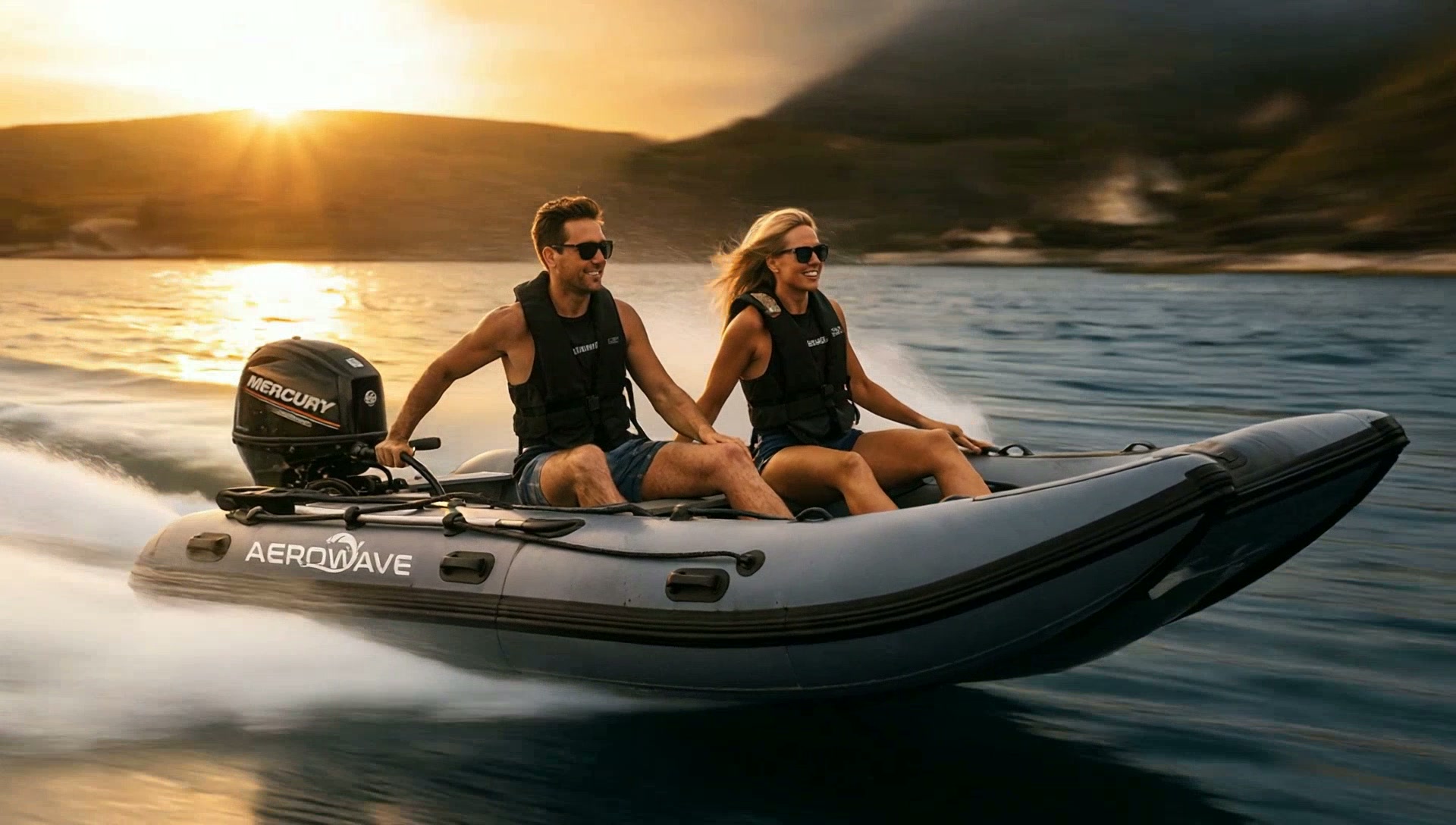
Aerowave WaveRunner 380 Series 3 Catamaran Package
The WaveRunner 380 Series 3 is a premium 3.8m inflatable catamaran package built for Australian and worldwide families, fishing, and coastal day boating — ideal for snorkeling and spearfishing — offering serious stability and premium German Valmex® construction.
Free freight to United States · local taxes payable on arrival
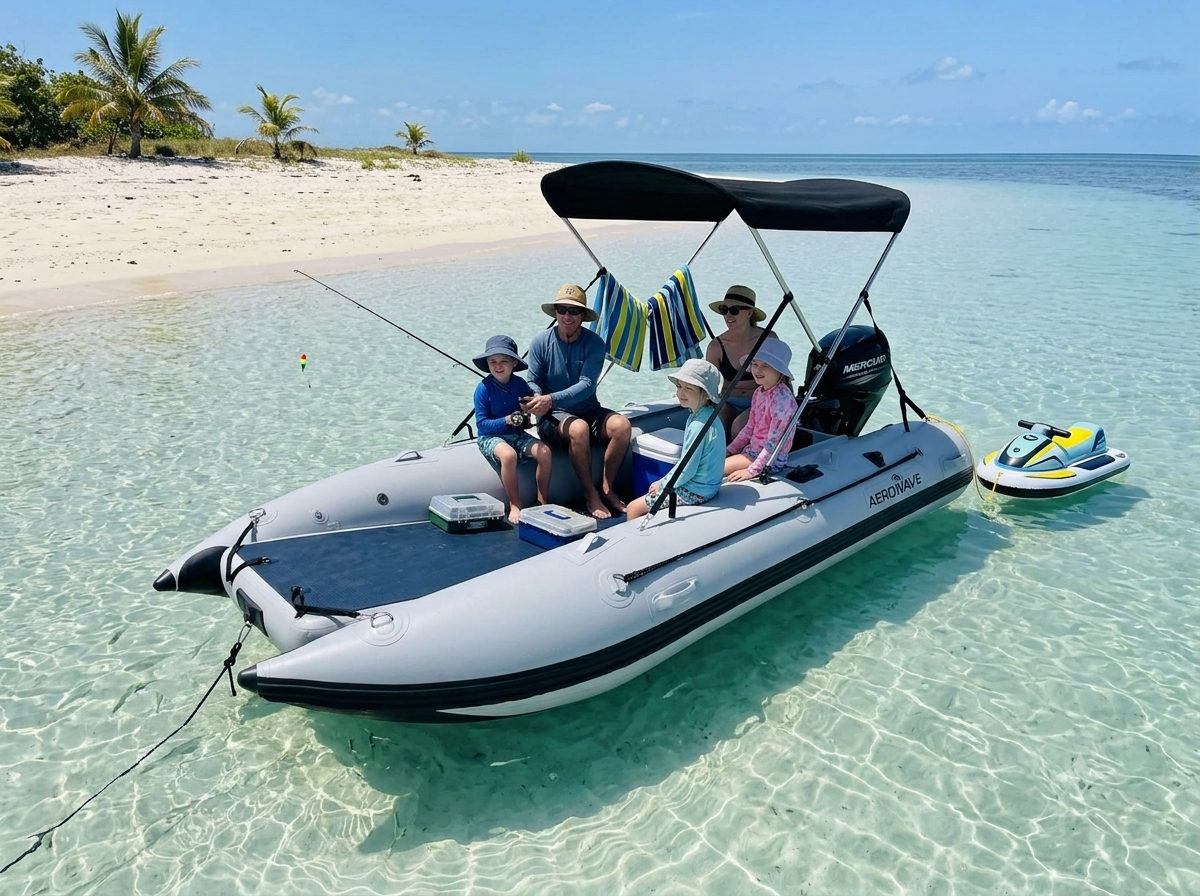
Aerowave Viper 400 Sovereign
Flagship 4m enclosed-bow inflatable catamaran. German VALMEX® 7321 Heavy Plus 1.2mm commercial-grade fabric, 10 PSI high-pressure drop-stitch air deck floor with VALMEX non-slip surface, LockPro wheels, full Bimini and FREE express delivery Australia-wide included. Winter special — save $1,000 until 31 August 2026.
Free freight to United States · local taxes payable on arrival
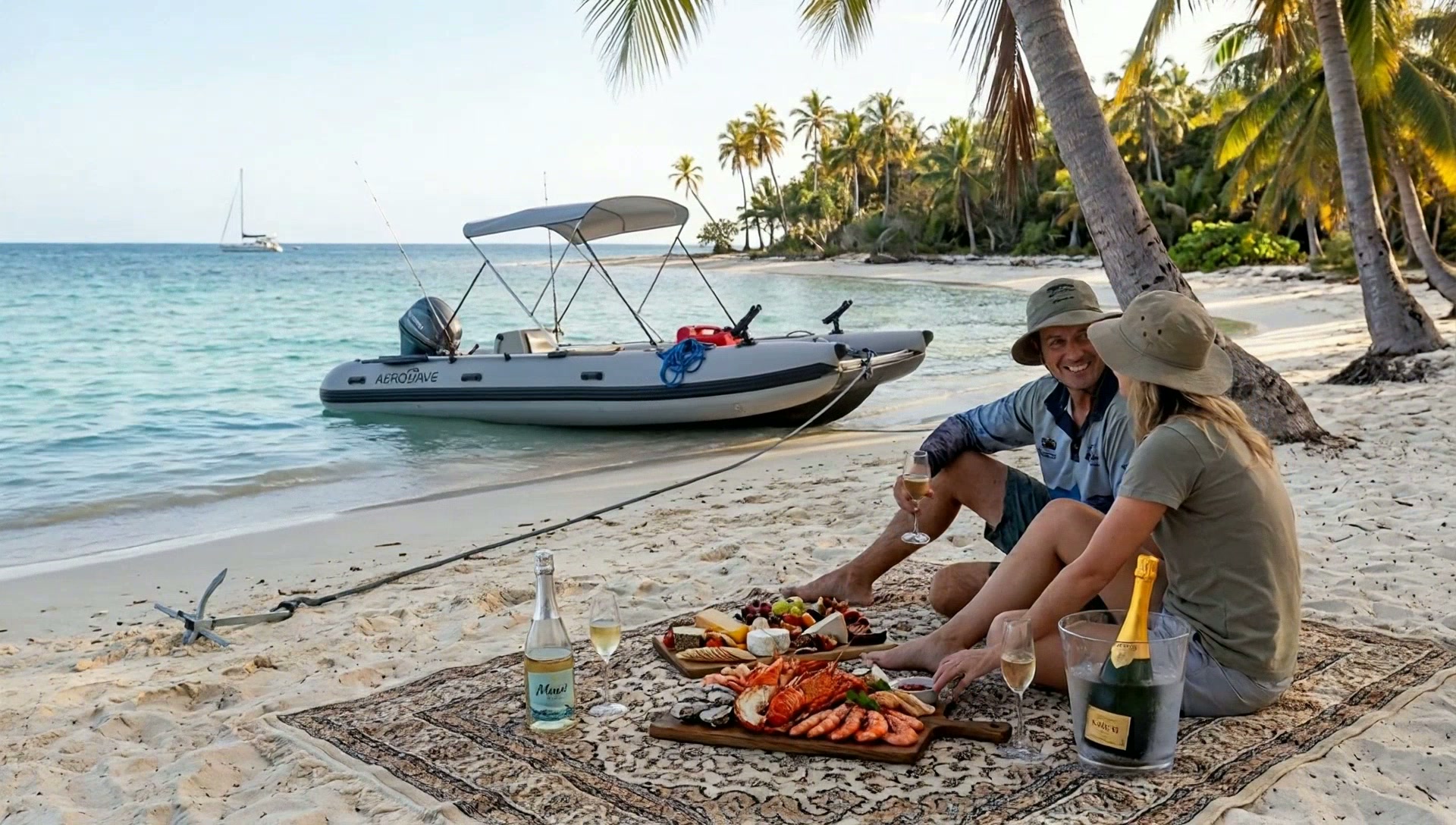
Aerowave Viper 365 Open Bow
Premium 3.65m Inflatable catamaran — built the same way as our flagship Viper 400 sports boat, just 35cm shorter. German VALMEX® 7321 Heavy Plus 1.2mm commercial-grade fabric, 10 PSI high-pressure drop-stitch air deck floor with VALMEX non-slip surface, LockPro wheels, full Bimini and FREE express delivery Australia-wide included.
Free freight to United States · local taxes payable on arrival
Not sure which suits you? Talk to a real boat owner.
Before you spend a cent
Buying from Australia, delivered to United States
You have never heard of us, we are on the other side of the world, and the internet is full of fakes. Fair enough. Here is everything you would need to check us out, in one place — no forms, no chat bot.
Australian designed business
Easy Inflatables, Avoca Beach NSW 2251. ABN 96 856 548 613. International orders ship from our Hong Kong hub.
222 owner reviews, 4.8 average
Read them in full, good and bad, on our reviews page.
CE certified, 7-year hull warranty
ISO 6185-3 and EU Directive 2013/53/EU. Warranty honoured worldwide.
Tracked, insured, door to door
FREE freight to United States · local tax/duty on arrival.
- Who am I actually buying from?
- Easy Inflatables, Avoca Beach NSW 2251, Australia. ABN 96 856 548 613. Sean is the owner and skipper, Gary Stewart handles sales on +61 2 4335 1603, Karen Matthews handles email. The boats are Australian designed; international orders ship from our Hong Kong dispatch hub so your landed price stays competitive. Phone us before you pay a cent — a real person answers.
- Is this really an Australian product?
- Yes — Australian designed and engineered on the NSW Central Coast. Manufacturing is done offshore to our spec, and international orders ship direct from our Hong Kong dispatch hub. If we routed every boat through Australia first, the freight alone would roughly double or triple your cost for the same hull.
- What do I pay, and what is not included?
- The delivery and import terms depend on your country. EU, UK, New Zealand and named Asia/Pacific lanes include duty and tax; US freight is free but US buyers pay import charges on arrival. Other destinations show their terms before payment.
- How do I pay safely?
- Card through Stripe (Visa, Mastercard, Amex, Apple Pay, Google Pay) or bank transfer. Card payments carry your bank's own dispute protection. We never ask for crypto, gift cards or payment to a personal account.
- What if it arrives damaged?
- Every boat ships fully tracked and insured door to door. Photograph the carton and the boat on arrival and email us — transit damage is claimed and replaced through us, not left with you and the courier.
- Is the warranty real outside Australia?
- Yes. The 7-year hull warranty on 1.2 mm VALMEX Heavy Plus and Orca Hypalon hulls applies wherever you are. Replacement parts are held in Australia and at our overseas hub and go out by express courier to your door.
- Is the boat actually certified?
- All Aerowave catamarans are CE certified to ISO 6185-3 and EU Directive 2013/53/EU. Certification paperwork is supplied with the boat — ask and we will send it before you order.
Ready to set sail?
Premium German-fabric inflatable catamarans, built to order and delivered to your door. Talk to our team or browse the fleet.
Like this guide? Get the next one in your inbox.
Owner-tested tips, gear deep-dives and Aussie boating know-how — no spam.