Your 2026 Guide to Inflatable Boats in Australia
Discover the best inflatable boats in Australia with our 2026 guide. Compare types, materials, costs for fishing, family, offshore use to buy smart.
🇺🇸 Boats shipping to United States
See landed prices in USD before you bounce.
Door-to-door delivery to United States in 7–14 days. Choose a boat, see local-currency pricing, or request a fixed landed quote from the sales team.
Most advice about buying an inflatable boat in Australia is too soft. It tells people to start cheap, “see how you go”, and upgrade later. In Australian conditions, that often turns into buying twice.
Sun cooks weak fabric. Salt attacks every fitting it can reach. Morning glass turns into afternoon chop faster than many first-time buyers expect. A boat that feels fine in a showroom or on a flat freshwater dam can feel very different after a season of beach launches, tidal runs, and long days left inflated in the heat.
That matters because inflatable boats in Australia aren’t a niche purchase anymore. Over 120,000 soft hull inflatable boats have been sold in Australia, and 1 in 10 Australians now hold a boat licence, according to inflatable boat market data. Plenty of people are getting on the water. Not all of them are buying boats built for the way Australians use them.
The hard lesson is simple. Not all inflatable boats are built the same. Cheap boats can look similar online, but they don’t age the same, they don’t ride the same, and they definitely don’t hold up the same once they meet UV, sand, oyster-covered ramps, and coastal slop.
A smart buy isn’t just about sticker price. It’s about what the boat will still be doing after repeated launches, pack-downs, and rough afternoons when you need the hull to behave properly.
Inflatable Boats Australia Best Options for Fishing, Offshore & Family Use (2026 Guide)
If you’re searching for inflatable boats Australia, the first question isn’t brand. It’s use. A boat for a caravan trip on calm inland water isn’t the same boat you’d trust around a wind-against-tide estuary mouth or a rough beach landing.
That’s where many buyers go wrong. They compare length, included seats, or the headline price, but ignore the conditions the boat will face. In Australia, the environment does the testing. Heat exposes weak seams. Salt finds poor hardware. Chop punishes hulls that looked acceptable on paper.
Practical rule: Buy for the hardest conditions you’re realistically going to use, not the easiest day you hope to have.
The right inflatable should suit how you launch, where you store it, and who comes aboard. Family use demands stability and easy boarding. Fishing demands room to move and confidence at rest. Offshore use demands better hull behaviour, better materials, and better judgement from the owner.
That’s why the search for the best inflatable boats Australia has less to do with marketing categories and more to do with trade-offs. Portable boats are easier to store and travel with, but not all of them handle chop well. RIBs ride better in ugly water, but they’re heavier and less forgiving to own if portability matters. Inflatable catamaran boats sit in a useful middle ground for many Australian buyers because they can offer a steadier platform without the bulk of a full rigid setup.
Types of Inflatable Boats in Australia
Most buyers end up choosing between three broad styles. They all float, but they solve different problems.
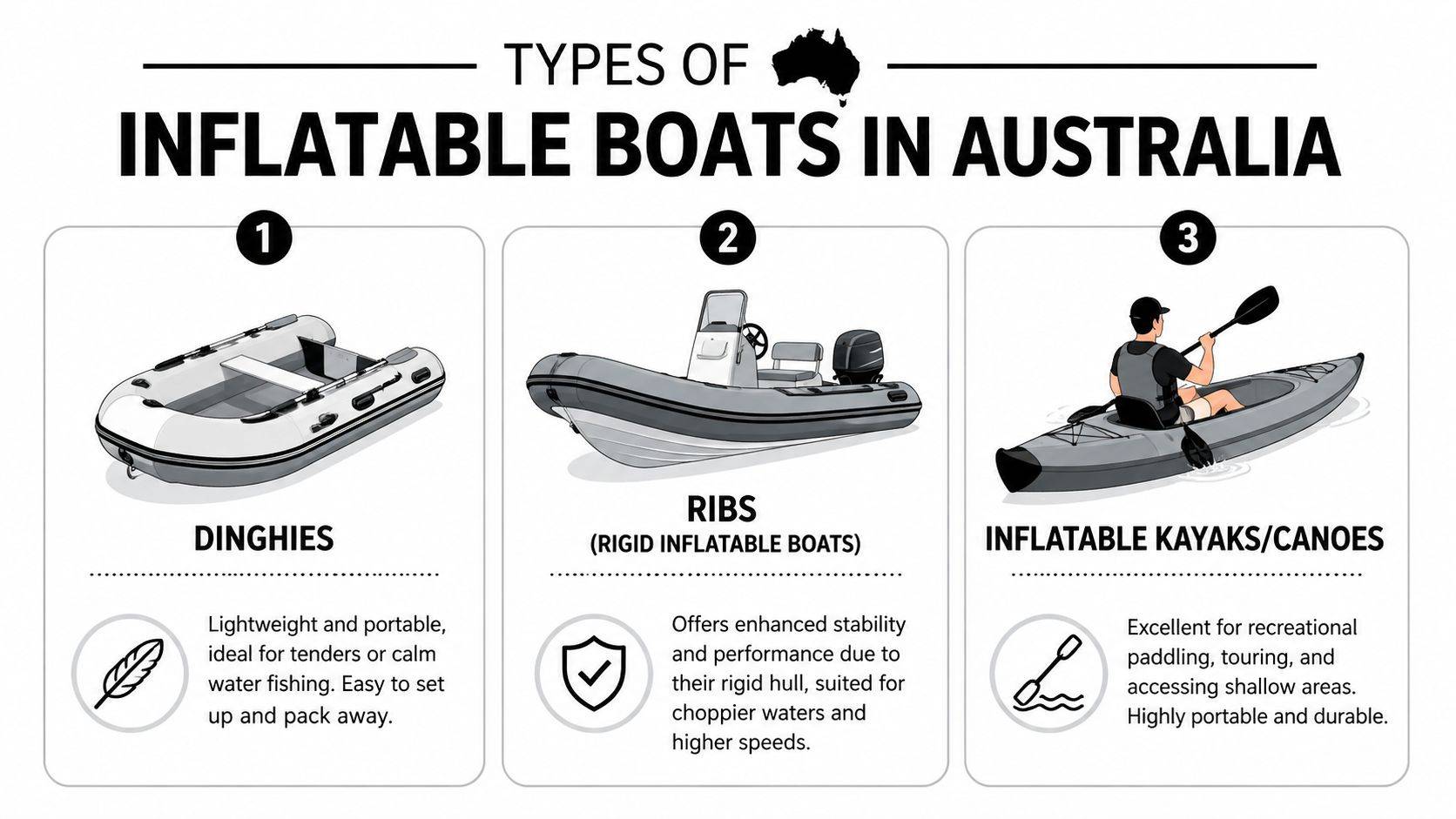
Standard soft inflatables
These are the classic roll-up dinghy style boats. They’re popular because they’re simple to transport, easy to store, and don’t demand a trailer in many setups.
They suit protected water, yacht tender duties, camping trips, and casual use where portability matters more than speed or rough-water comfort. If you mostly fish sheltered rivers, run across a mooring, or want a compact boat-in-a-bag setup, a soft inflatable can work well.
Their weakness is obvious once the weather turns. A basic monohull soft inflatable can slap, flex, and feel underdone in short chop. That doesn’t make them bad. It means they need to be matched to the job.
RIB boats
Rigid Inflatable Boats combine inflatable tubes with a rigid hull, usually designed to improve handling and ride quality. They’re popular for a reason. RIBs accounted for about 62% of units shipped globally in 2023 and hold a 71.6% market share, according to this RIB market overview.
In real use, that popularity comes from how they behave on the water. They track better, carry speed more confidently, and usually give a firmer, drier ride than a standard soft inflatable. That’s why a lot of buyers looking at rigid hull inflatable options end up drawn to them for estuary and offshore work.
The downside is ownership friction. RIBs are heavier, bulkier, and less portable. If you want something you can stow in an SUV, motorhome, or yacht locker, a RIB may be the wrong answer even if the on-water ride is excellent.
Inflatable catamarans
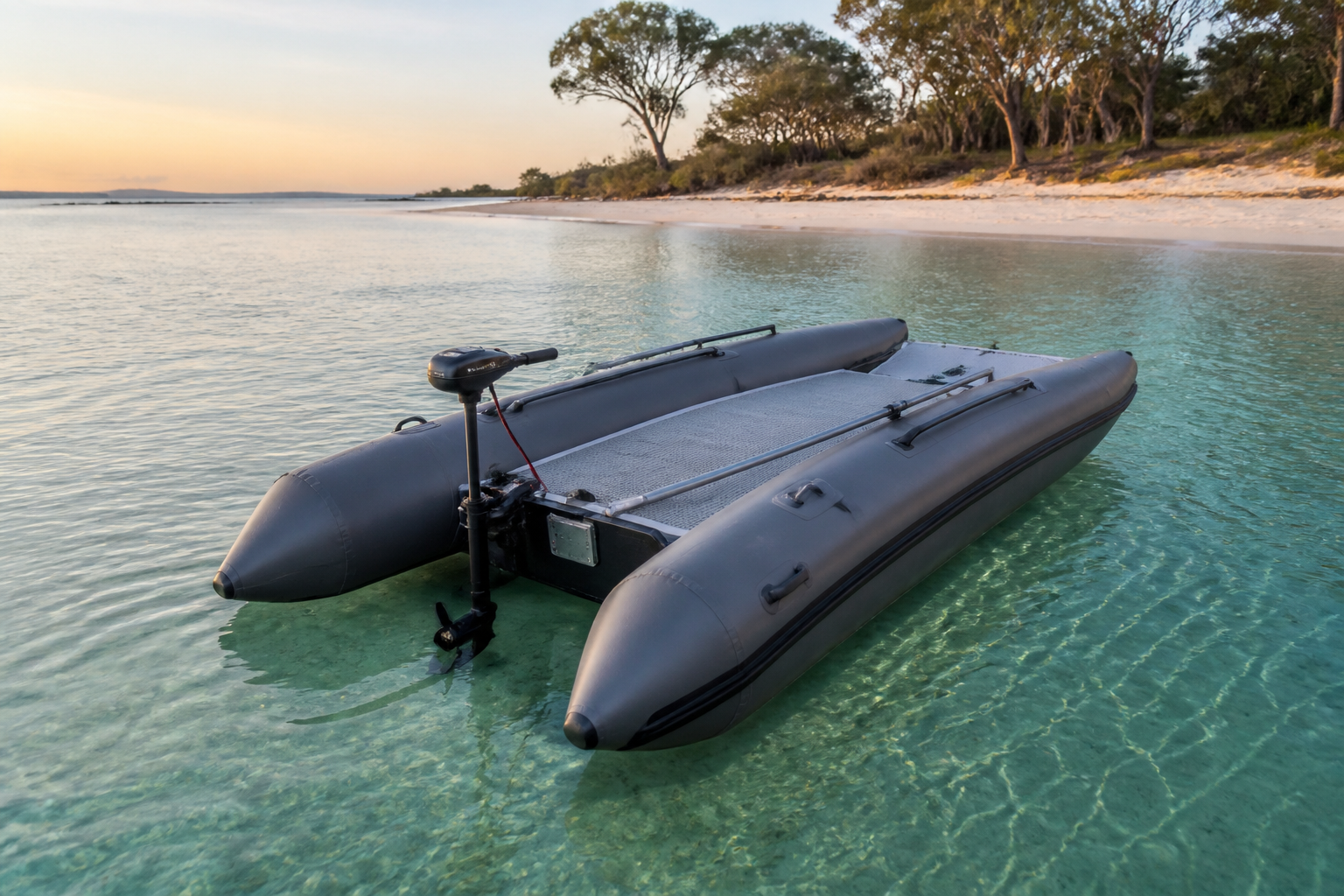
This is the category many buyers overlook until they step aboard one. Inflatable catamaran boats use twin hulls to create a wider, steadier platform. That matters when you’re standing to cast, loading kids over the side, or punching through messy inshore water.
They often make sense for buyers who want more stability than a basic soft inflatable without stepping into the weight and storage burden of a rigid-hull package. A Viper-style catamaran setup is a good example of where this design shines. More deck confidence, better balance at rest, and broad capability for fishing, family use, and coastal exploring.
If you want one inflatable boat for rivers, estuaries, beach camping, and the occasional offshore weather window, catamaran designs deserve a serious look.
What to Look for in an Inflatable Boat for Australia
A decent inflatable can give years of use in Australia. A poor one starts ageing from day one. The specs that matter aren’t cosmetic. They’re the things that decide whether the boat stays tight, tracks cleanly, and survives local conditions.
Material and fabric quality
Premium boats using 1.2mm 2000D German Valmex PVC with thermo-welded seams offer tensile strength above 3000 N/5cm and 40% better abrasion resistance than standard PVC, based on this Australian buyer guide on material construction.
That’s the sort of detail worth caring about. Buyers comparing fabric options should understand the difference between lighter material and a heavier-duty build intended for harsh use. A helpful starting point is this guide on Hypalon vs German Mehler 1.2mm PVC material.
What matters in practice:
- Thicker outer skin: Better for beach launches, gear abrasion, and repeated folding.
- Higher-grade base cloth: Better resistance to distortion when the boat is heavily loaded or left inflated for longer periods.
- UV resilience: Critical if the boat will spend any time in the sun, even if it’s covered between trips.
Seams and floor pressure
Seams are where cheap inflatables often start telling the truth. Glued seams can be fine on a lightly used budget tender. They’re less reassuring when the boat lives in heat, sees sustained pressure, or gets packed damp and re-used often.
Look for:
- Thermo-welded seams: These remove glue as the primary failure point.
- High-pressure floors: A firm air deck changes how the boat feels underfoot and underway.
- Consistent rigidity: A boat that holds shape better is easier to steer, easier to balance in, and less tiring over a long session.
Hull shape and stability
Not all instability shows up at speed. Some boats are tolerable underway but annoying at rest. That’s a major issue for fishing and family use.
A quick buyer’s checklist helps:
| Feature | Why it matters in Australia |
|---|---|
| Monohull shape | Fine for simple tender work and calm water, but can feel livelier in chop |
| Catamaran hull | Better platform stability and a calmer feel when moving around onboard |
| Rigid hull layout | Better ride in rougher water, but with less portability |
| Heat-resistant build quality | More important than many buyers realise during long summer storage and use |
Don’t get distracted by accessories before you’ve sorted the fundamentals. Rod holders and seat bags are easy to add. Good fabric, sound seams, and the right hull shape aren’t.
What Most Inflatable Boat Buyers Get Wrong
The first mistake is buying on price alone. A cheap inflatable can seem sensible when you’re not sure how much you’ll use it. Then the handles loosen, the floor never feels quite right, the seams start to worry you, and the “starter boat” becomes wasted money.
They buy the cheap boat first
This happens constantly. Someone wants a tender or fishing platform, finds a bargain online, and tells themselves they’ll upgrade later if they enjoy it.
The problem is that a bad first boat often creates the wrong lesson. It teaches the owner that inflatable boats are flimsy, wet, unstable, or high-maintenance, when the issue stemmed from their purchase of a weak one.
They ignore construction details
Material thickness and seam type don’t sound exciting. They matter more than colour, included oars, or whatever accessory bundle is in the listing.
A lot of buyers never compare how production boats differ from custom builds. This breakdown of production boats vs custom inflatable boats is useful because it highlights the actual differences buyers live with later, not just the ones they notice on day one.
They underestimate stability
This is the mistake that shows up on the first proper fishing trip or family outing. One person shifts weight, another reaches for a bag, a child leans over the tube, and suddenly “good enough” doesn’t feel good enough at all.
The wrong boat usually feels acceptable at the ramp and annoying on the water.
Stability affects safety, comfort, and how often you’ll use the boat. If you want to fish standing, carry kids, or operate in variable conditions, a steadier platform isn’t a luxury. It changes the whole ownership experience.
Inflatable Boats for Fishing in Australia
Fishing exposes every weakness in a boat. You notice poor stability when you lean to net a fish. You notice bad layout when tackle ends up under your feet. You notice a harsh hull when the run home gets lumpy.
For that reason, the best inflatable boat for fishing Australia usually isn’t the cheapest or the lightest. It’s the one that stays settled while you move around and gives enough space to fish properly without turning the deck into clutter.
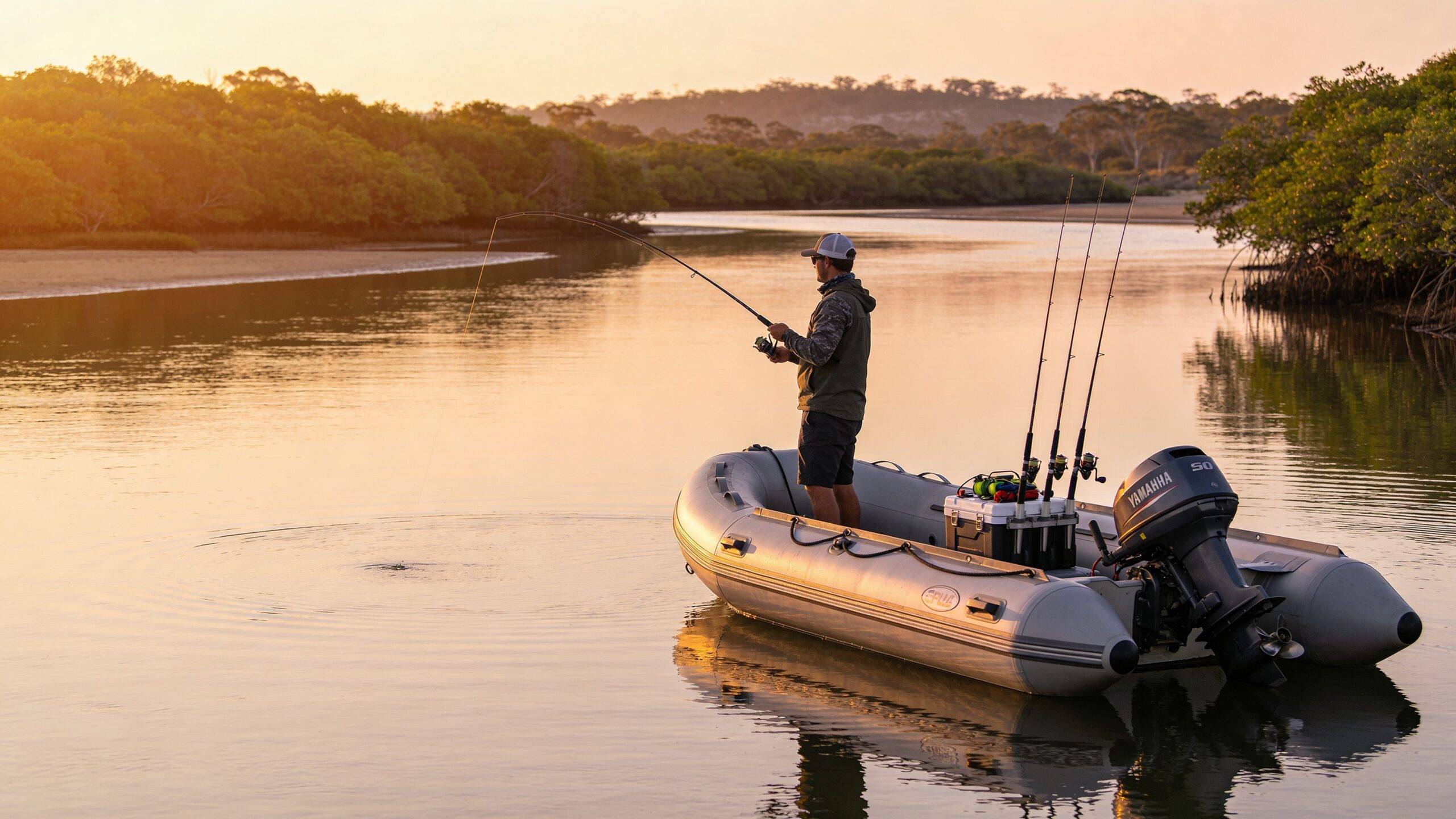
Stability at rest matters more than brochure speed
Many anglers don’t need a fast boat. They need a platform that doesn’t feel twitchy when they cast, retie, shift an esky, or bring a fish alongside.
That’s why fishing inflatable boat setups with practical deck space and stronger floor support tend to suit serious use better than bare-bones tender layouts. A boat that feels planted lets you concentrate on the water instead of your footing.
Features worth having for fishing
You don’t need every bolt-on extra. You do need the basics sorted.
- Rod holder capacity: Useful if it’s fitted properly and doesn’t get in the way.
- Space for tackle and an esky: Crowding makes small boats feel smaller.
- Reliable transom and floor support: Important once you add motor weight, gear, and passengers.
- Predictable drift and balance: More important than people think when working structure or bait.
Why catamarans suit anglers
Inflatable catamarans are increasingly popular among anglers because they feel steadier at rest and often provide a more usable fishing platform than a similarly sized monohull. That’s especially helpful in estuaries, shallow bays, and inshore reef edges where you’re moving around often.
For inflatable fishing boats Australia, this is the practical dividing line. If you just want to paddle a bait out on flat water, many boats will do. If you want a portable boat that can fish properly in varied conditions, the hull design becomes the whole game.
Choosing a Boat for Offshore vs Estuary Use
The question isn’t whether a boat can float offshore. The question is whether it’s suited to the conditions, the load, and the operator’s judgement. Australian water changes fast, and the boat that feels pleasant in a river can feel exposed in open water.
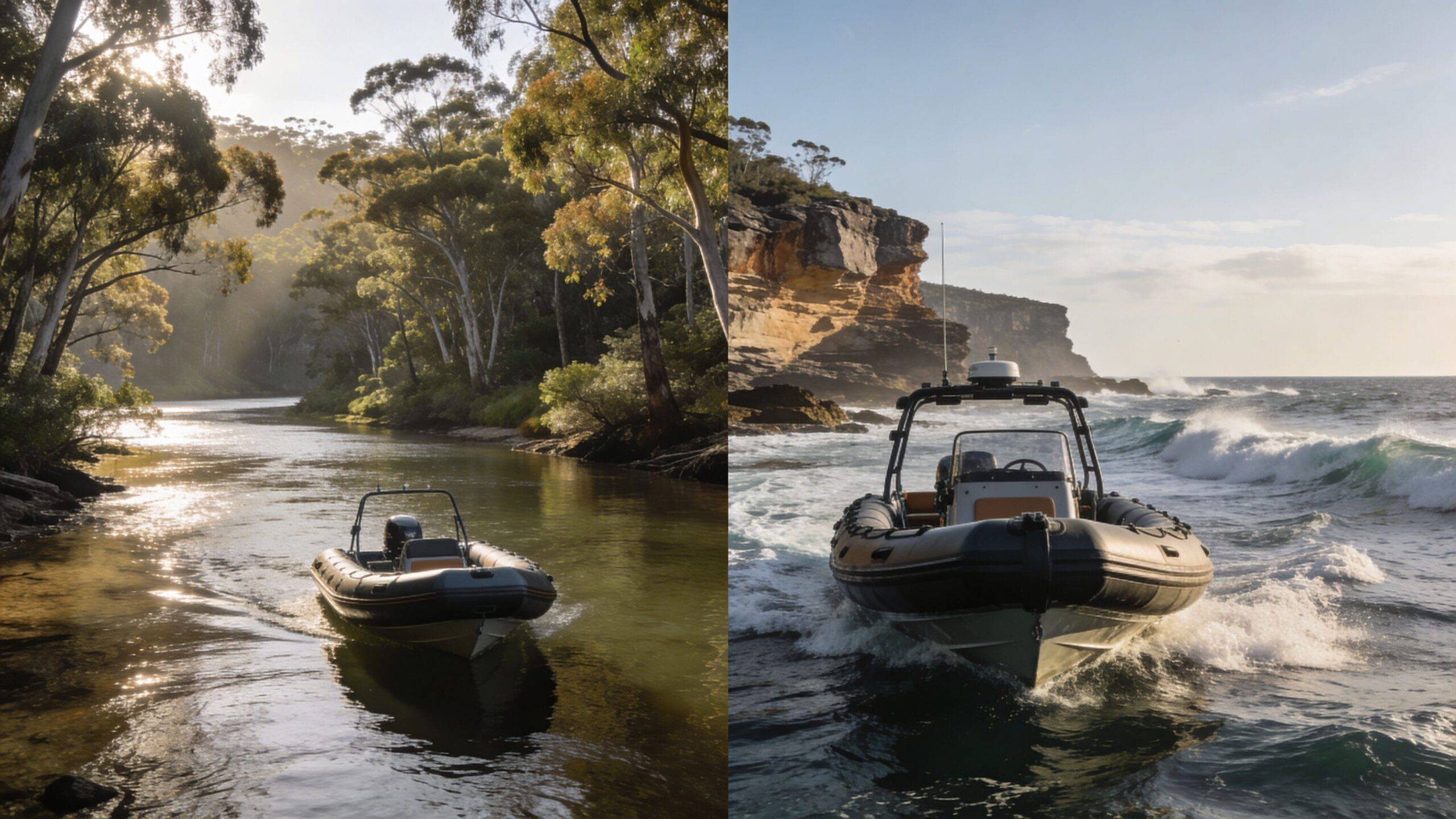
Rivers and calm inland water
In protected water, portability usually wins. Soft inflatables make a lot of sense here because they’re easy to transport, launch, and pack away. If your boating is mostly inland, a simpler boat can be the right tool.
That said, even inland buyers benefit from a proper floor and decent materials. Calm water doesn’t protect a boat from UV, dragging, or poor storage habits.
Estuaries and coastal inlets
In such situations, compromise starts getting expensive. Estuaries can look benign, but they often deliver confused chop, boat wake, tidal movement, and shallow sections that punish a poor hull.
A boat used here needs more than just buoyancy. Buyers looking at RIB boat options for rougher use often do so because they want more control and a more settled ride in mixed conditions. Inflatable catamarans also make a lot of sense in this space because they offer strong stability with easier storage than a full rigid setup.
Offshore use
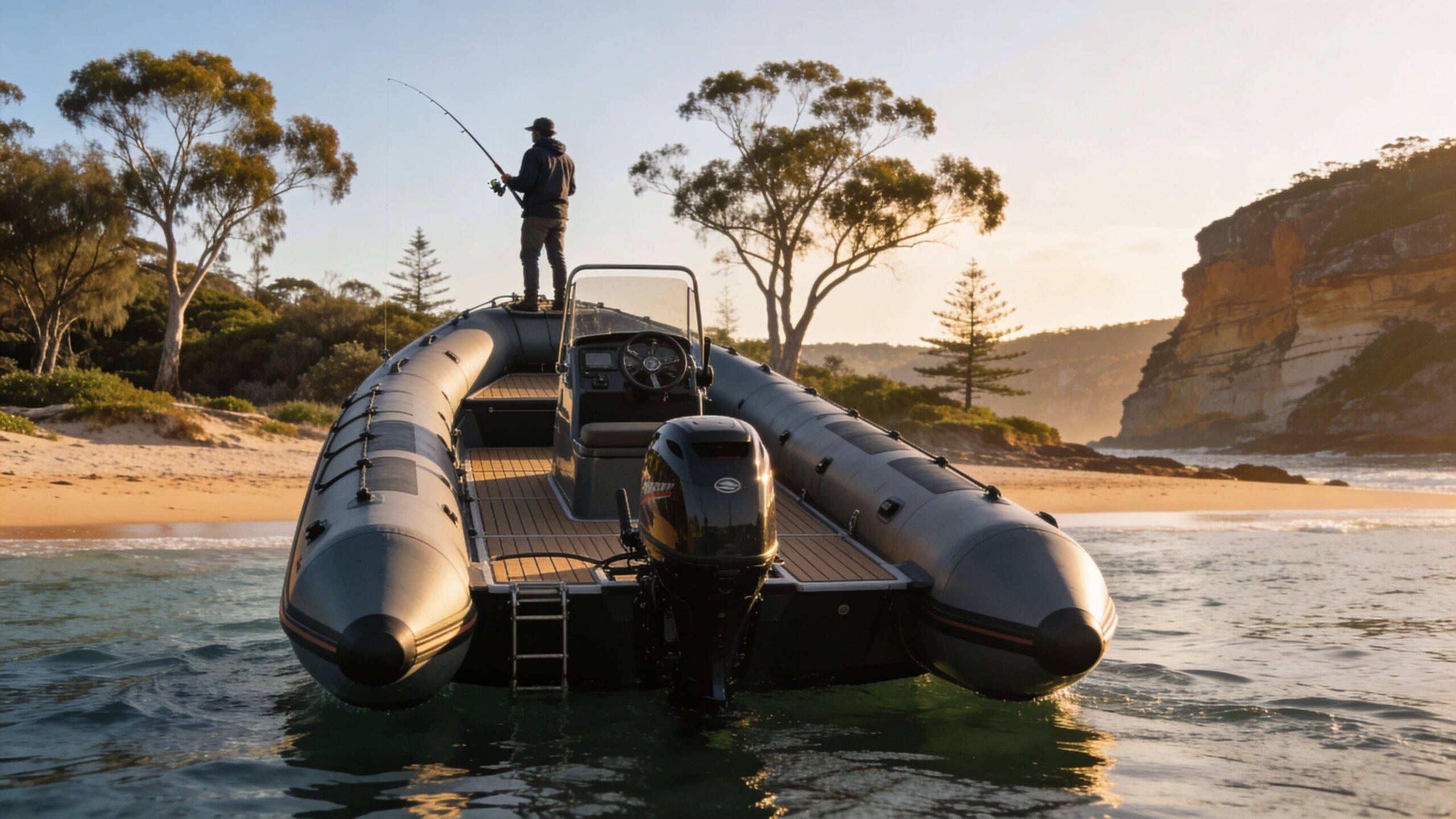
For offshore inflatable boats, build quality and hull behaviour stop being preferences and become essentials. The Royal Australian Navy’s 7.2m Jet RHIB gives a useful benchmark. It can achieve 40 knots with a 1,400 kg payload, according to the Royal Australian Navy RHIB capability page. Civilian boats are obviously different, but the lesson holds. Offshore boats need reinforced hulls, strong buoyancy collars, and proper stability in rough water.
Offshore capability starts with boat choice, but it ends with restraint. A good hull helps. Good decisions matter more.
If you want one inflatable boat for rivers, estuaries, and selective offshore use, a well-built catamaran such as a Viper-style design is one of the few layouts that can span all three without feeling badly compromised.
The Real Cost of Owning an Inflatable Boat in Australia
Cheap inflatables in Australia usually fail on the second price, not the first. The ticket looks sharp. The ownership bill shows up later in repairs, replacements, wasted weekends, and a boat you stop trusting.
Australian conditions are hard on inflatable boats. UV cooks fabric and fittings. Salt gets into everything. Short chop exposes weak hulls, poor seam work, and bargain hardware very quickly. A cheap boat can survive a few calm runs on sheltered water. That does not mean it is a good buy for regular use here.
Sticker price is only the opening number
A low advertised price often leaves out the parts that make the boat usable and supportable. Freight, handling, assembly, replacement accessories, and basic setup items can close the gap to a better-built boat faster than buyers expect.
The bigger cost is buying the wrong boat once.
If the hull pounds, the floor feels soft, the fittings corrode early, or the tubes start losing pressure after a summer outside, the original saving disappears. Owners either spend money trying to improve a poor platform or sell at a loss and buy again.
A practical cost check looks like this:
- Upfront purchase: The listed boat price, plus the motor and trailer if required.
- Delivered and equipped cost: Freight, handling, pump, bag, seat, oars, mounts, safety gear, and any hardware the listing left out.
- Service and parts: How easy it is to get valves, fittings, patches, and warranty support in Australia.
- Useable life: How long the fabric, seams, floor, transom, and fittings stay dependable in sun, salt, and regular chop.
- Resale value: Whether the boat still has a market after a few seasons.
Cheap maintenance is rarely cheap for long
Budget inflatables hurt owners through small leaks, dodgy valves, loose fittings, tired glue, fabric that hates UV, and accessories that break under normal use, all of which create a steady stream of nuisance costs. Each problem looks minor on its own. Together they turn a cheap boat into a high-maintenance one.
Downtime matters too. If setup is awkward, inflation takes too long, or the boat always feels one trip away from another repair, it gets used less. That is a hidden ownership cost many buyers miss. A boat that stays in the shed because nobody wants the hassle is poor value, no matter what it cost.
Long-term value comes from construction, not marketing
For Australian buyers, value usually sits with a boat that is built for repeated punishment and backed locally. Better fabric thickness, better seam construction, better hardware, and a hull that handles chop properly all reduce the number of expensive surprises later.
That is why premium layouts such as a Viper-style inflatable catamaran make financial sense for many owners. The upfront spend is higher. The payoff is a drier, more stable ride, less pounding, better load carrying, and fewer compromises if the boat sees mixed conditions. Over time, that matters more than saving money on day one.
Easy Inflatables is one example of a local supplier offering inflatables, catamarans, RIBs, and packaged setups with after-sales support. That sort of local support has real value when a fitting fails, a replacement part is needed, or a buyer wants a boat configured properly from the start.
A very cheap inflatable can still suit occasional use on protected water with realistic expectations. For fishing, family use, beach launches, and regular Australian conditions, cheap often means buying twice.
Why Not All Inflatable Boats Are Built the Same
Two inflatable boats can look similar in photos and behave very differently after a season in Australia. Therefore, buyers need to stop thinking in terms of “inflatable” as one category and start thinking about construction choices.
The material decision
A lighter, thinner skin might be acceptable on a lightly used tender that lives under cover and only sees calm water. It’s a poor fit for repeated beach launches, roof-rack transport, fishing gear abrasion, and long exposure to heat.
That’s why the gap between 0.9mm and 1.2mm class material matters in real ownership. One is easier for budget listings to hit. The other is closer to what many Australian users require.
The seam decision
Seams are one of the clearest dividing lines between disposable-feeling boats and durable ones. Glued construction can save cost upfront. It also introduces a weakness many owners only discover after heat cycles, pressure, and time.
Thermo-welded seams are a stronger answer for Australian use because they remove that dependence on glue as the primary bond. That doesn’t mean every welded boat is good. It does mean a serious buyer should treat welded construction as a major positive.
A boat doesn’t need to fail completely to be disappointing. If it slowly loses pressure, feels soft under load, or keeps asking for repairs, it’s already failing the job.
The hull decision
A poor hull can make a strong material package feel ordinary. This is why the “what works” question can’t stop at fabric and seams.
Here’s the practical comparison:
| Build choice | What usually happens on the water |
|---|---|
| Cheap soft monohull | Fine in calm water, less composed in chop, more movement at rest |
| Rigid inflatable layout | Better ride and control, more storage and transport burden |
| Inflatable catamaran hull | Strong stability and broad versatility for mixed Australian use |
For many buyers, especially those looking for inflatable boat for offshore use Australia or fishing flexibility, catamaran hulls solve the right problem. They give better stability than a basic monohull without forcing every owner into a full rigid-hull trailer package.
Best Inflatable Boats Australia (2026 Picks)
No single boat is right for everyone. The right pick depends on where you launch, how often you use it, whether you fish, and how much portability matters once the trip is over.
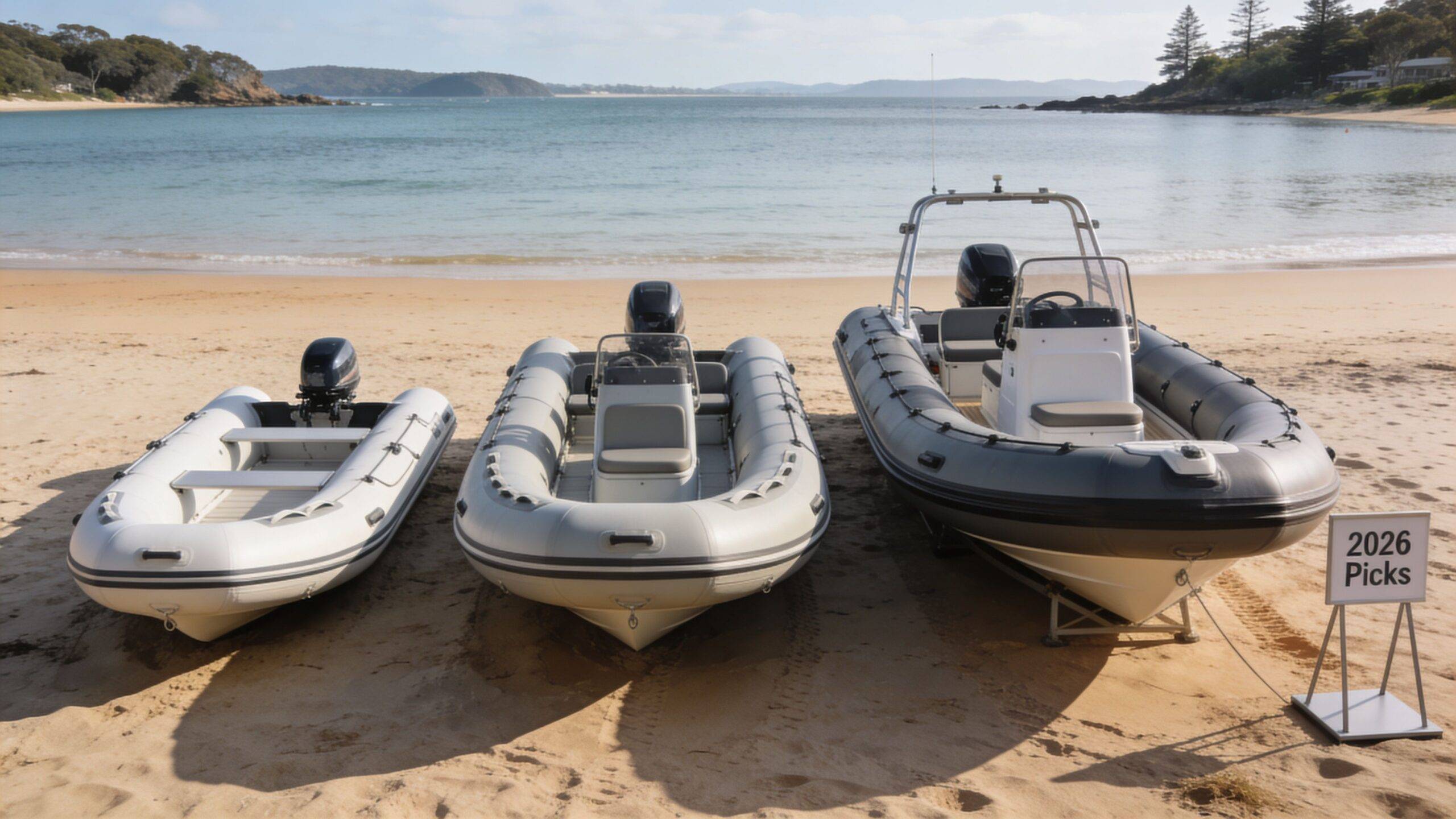
Best entry-level choice
A small, well-built soft inflatable is still a smart buy for protected water. This suits buyers who want a tender, a caravan-friendly boat, or a simple platform for rivers and calm estuaries.
A good entry boat should prioritise fabric quality, reliable seams, and a floor that feels solid enough for regular use. Don’t obsess over extras. Get the base structure right.
This tier also suits buyers searching terms like 3.3m inflatable boat Australia but who haven’t yet decided if they really need offshore capability. Many don’t.
Best all-round value
For mixed use, a mid-sized inflatable with a stronger floor and a more stable hull shape usually offers the best balance. This is the category where portability and real capability start meeting in a useful way.
A smaller catamaran often sits here. It gives far more confidence for fishing and family use than many entry monohulls, while still remaining easier to own than a heavy rigid setup. If the goal is one boat for camping trips, estuary fishing, beach runs, and sheltered coastal exploring, a smaller catamaran is often what many sensible buyers should focus on.
A closer look at compact on-water behaviour helps. The Viper 330 is the sort of layout worth considering if stability and portability need to live together in the same package.
For buyers who want to see how these boats behave under power and load, this walkthrough is useful:
Why Buy a True Kit Inflatable Boat? - YouTube
Tap to unmute
Why Buy a True Kit Inflatable Boat? TRUE KIT INFLATABLES

TRUE KIT INFLATABLES6.47K subscribers
Best premium performer
If you want the most convincing all-round answer for fishing, family use, and wider Australian conditions, Viper catamarans are the standout premium option.
Why they make sense:
- Stability: Better confidence at rest and underway.
- Versatility: More capable across inland, estuary, and selective offshore use.
- Long-term ownership: Better suited to buyers who don’t want to outgrow the boat quickly.
The Viper 400 is the stronger choice for buyers wanting more room, more carrying confidence, and a bigger platform for serious use. If your boating overlaps with overnight trips or vehicle-based adventures, a camping package for inflatable boating makes practical sense because it bundles the boat into a use-ready setup rather than leaving the owner to piece everything together later.
For broad browsing, the inflatable boat category page is the easiest place to compare layouts and sizes side by side.
The premium choice isn’t about bragging rights. It’s about avoiding the cycle of buying something cheap, discovering its limits, and replacing it once your use gets more serious.
Frequently Asked Questions about Inflatable Boats
Are inflatable boats good for ocean use
Some are. Some aren’t.
Ocean use depends on hull design, material quality, load, motor setup, weather, and operator judgement. A cheap tender built for sheltered water is not automatically suitable for exposed coastline. A stronger RIB or catamaran design can be suitable for selective offshore use in the right conditions, but that still doesn’t remove the need for conservative decision-making.
How long do inflatable boats last in Australia
It depends mostly on construction and care. The Australian environment is hard on boats. UV, salt, sand, and poor storage habits shorten life quickly.
A better-built inflatable that’s cleaned, dried, protected from long sun exposure, and stored properly will usually outlast a bargain boat by a wide margin. The bigger difference is often not just lifespan, but how long the boat remains pleasant and trustworthy to use.
What thickness PVC is best for an inflatable boat
For harsh Australian use, heavier-duty material is the safer bet. Buyers looking at premium construction often prefer 1.2mm class material over lighter alternatives because it’s better suited to abrasion, repeated use, and rougher conditions.
Thickness isn’t everything, though. The fabric base, seam method, and overall design matter just as much. A thick boat with weak seams is still a poor buy.
Are inflatable boats safe in Australia
They can be very safe when they’re well built, correctly loaded, properly maintained, and used within their limits. Large buoyancy tubes give inflatables a safety advantage in many situations. Stability also matters, especially with children, anglers, or anyone moving around onboard.
The unsafe part usually isn’t the concept. It’s the mismatch between boat and use. A lightly built estuary dinghy used like an offshore boat is unsafe. A quality inflatable used sensibly can be an excellent Australian boating option.
Do I need to register an inflatable boat in Australia
Australian rules aren’t one-size-fits-all. Vessels compliant with ISO 6185 have clearer pathways under Marine Order 503, while many smaller recreational inflatables can sit in a grey area for survey and registration requirements, according to AMSA guidance on Marine Order 503 and related standards.
That means you should check the rules that apply in your state before buying or using a motorised inflatable. Registration, safety gear, and licence requirements can vary depending on the boat, the motor, and where you operate it. Don’t rely on generic advice from a marketplace listing.
If you’re weighing up portable tenders, fishing rigs, RIBs, or inflatable catamaran boats for real Australian conditions, Easy Inflatables is a practical place to compare complete options, materials, and package setups before you buy.
Share the post now
Set Sail with Easy Inflatables
Experience the ultimate freedom on the water with our top-quality inflatable boats and accessories. Easy Inflatables is your trusted partner, providing everything you need for a safe and unforgettable adventure.
Categories
- Accessories & Gear (84)
- Adventure Destinations (63)
- Boat Accessories & Setup (25)
- Boat Comparisons (7)
- Boat Trailers (12)
- Boating Safety Gear (5)
- Catamaran Boats (12)
- Customer Stories & Experiences (4)
- Inflatable Boat Guides (47)
- Inflatable Boats & Kayaks (149)
- Inflatable Catamarans (12)
- Maintenance & Care (114)
- Outboard Motors (53)
- Outdoor Activities (26)
- Product Comparisons & Reviews (108)
- Setup & Safety Tips (52)
- Special Offers & Promotions (2)
- Sustainability Tips (13)
- Types of Boats (47)
Related Post
Your Guide to the Best Waterproof Battery Box of 2026
Sea Trail Boat Trailers A Complete Australian Guide
Choosing the Best Electric Trolling Engine: 2026 Guide
Inflatable Motorised Boat A Buyer’s Guide for Australia
Stay Connected
Join our community of water adventure enthusiasts! Sign up for Easy Inflatables' monthly newsletter for exclusive tips, product updates, and insights to make the most of your outdoor adventures.
Shop gear featured in this guide
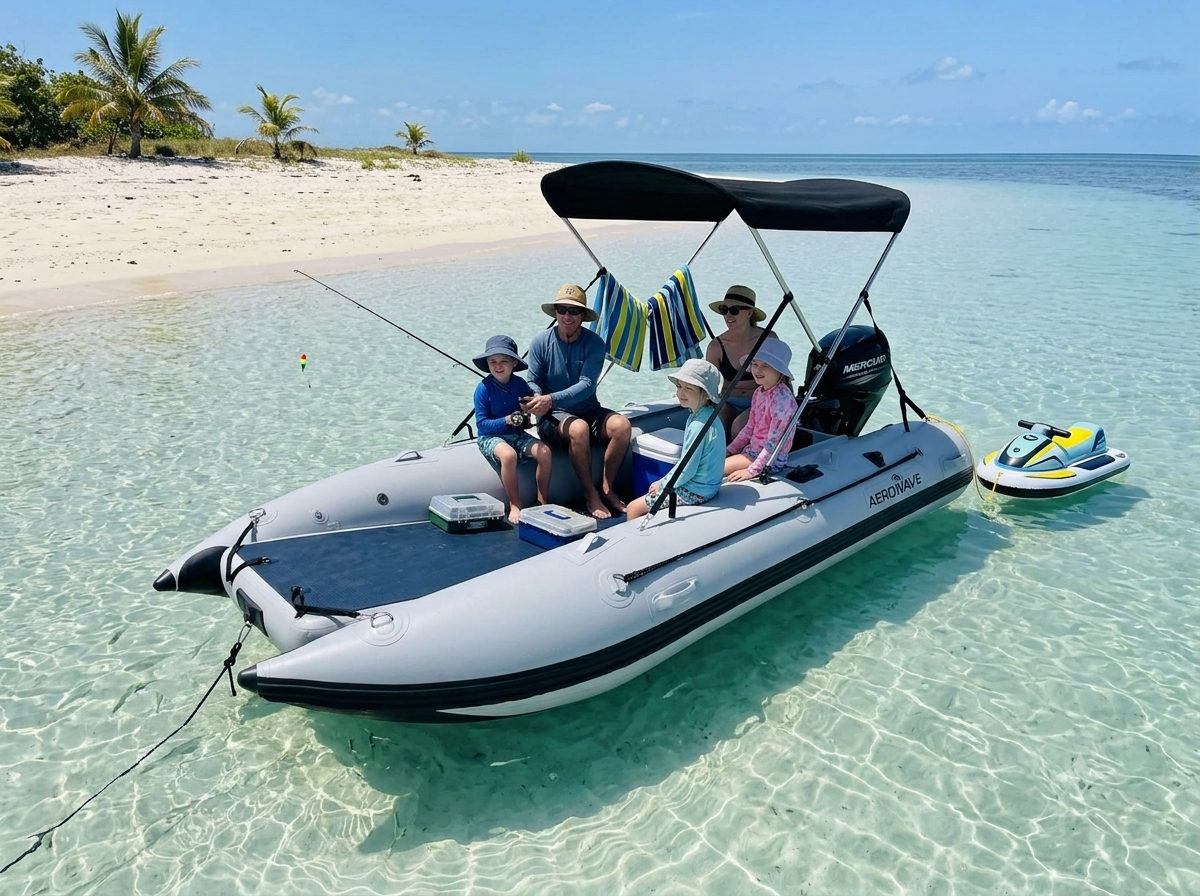
Aerowave WaveRunner 380 Series 3 Catamaran Package
The WaveRunner 380 Series 3 is a premium 3.8m inflatable catamaran package built for Australian and worldwide families, fishing, and coastal day boating — ideal for snorkeling and spearfishing — offering serious stability and premium German Valmex® construction.
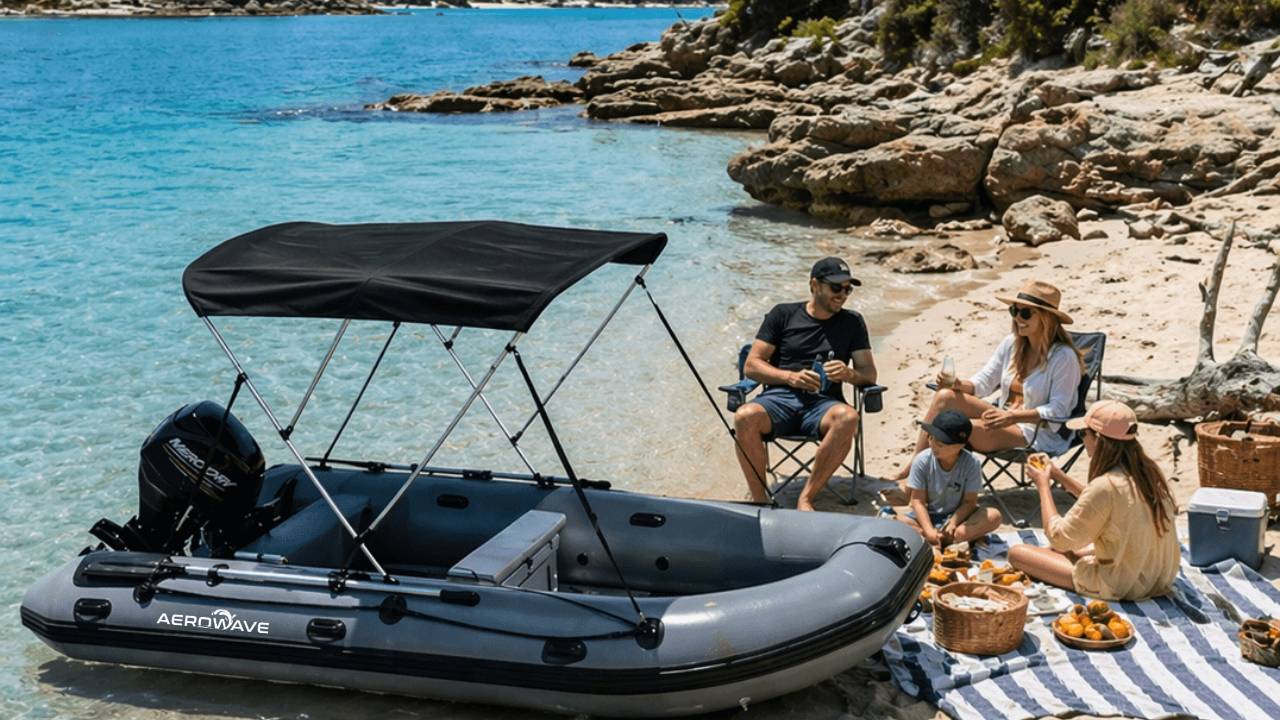
Aerowave Viper 400 Sovereign
Flagship 4m enclosed-bow inflatable catamaran. German VALMEX® 7321 Heavy Plus 1.2mm commercial-grade fabric, 10 PSI high-pressure drop-stitch air deck floor with VALMEX non-slip surface, LockPro wheels, full Bimini and FREE express delivery Australia-wide delivery included. Winter special — save $1,000 until 31 August 2026.
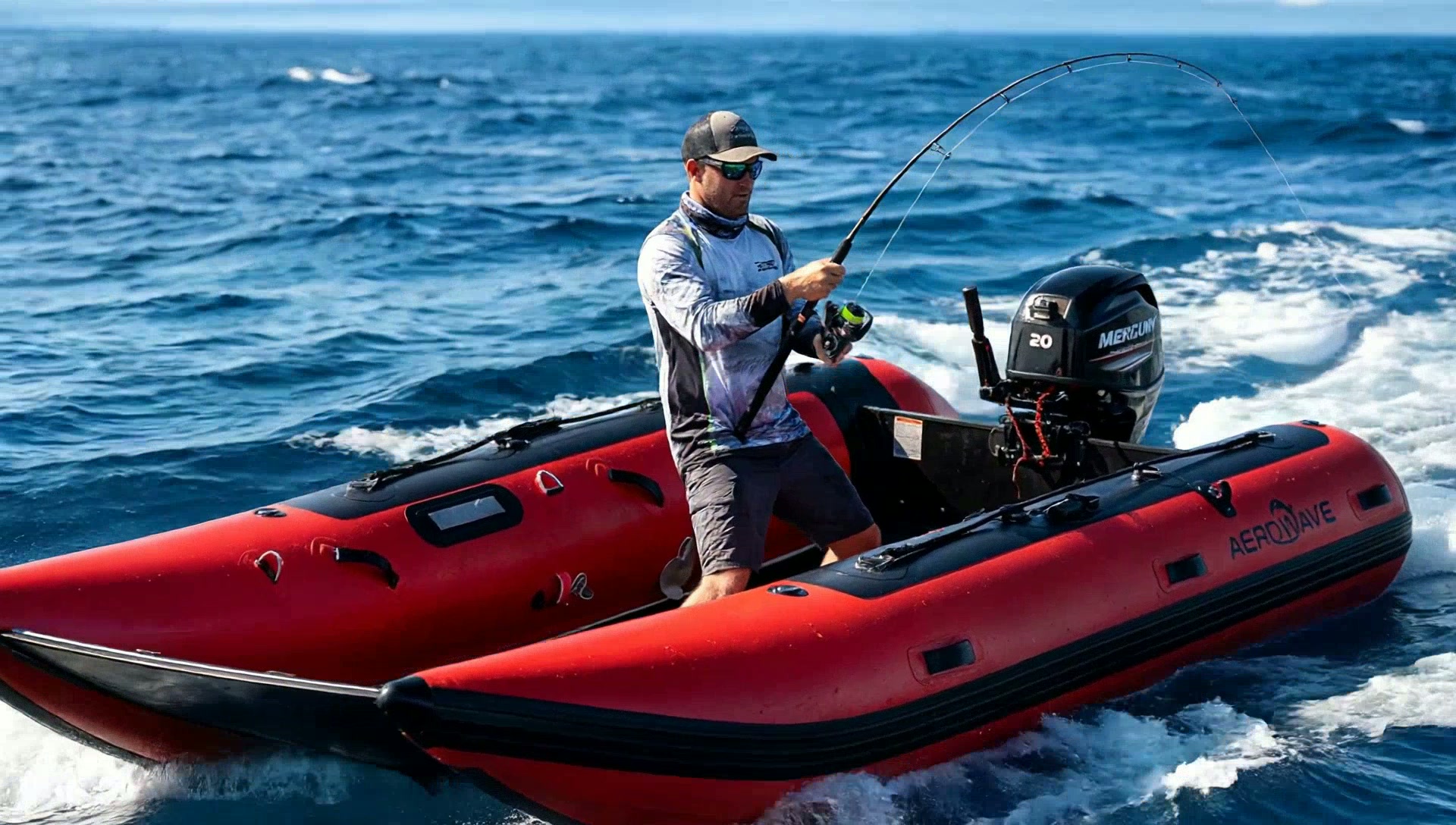
AeroWave AeroCat 360 Inflatable Catamaran
Same proven hull design, shape and look as our flagship Aerowave Viper catamarans — built lighter using 0.9mm Valmex® fabric instead of the Viper's 1.2mm. The AeroWave AeroCat 360 is our 3.6m inflatable catamaran built from 0.9mm Valmex® fabric — intentionally lighter than our 1.2mm Viper hulls so it folds smaller, packs lighter and is easy to handle solo. Twin-hull stability, 5-Year Warranty with global support and priced ~$500 below comparable 0.9mm imports.
Not sure which suits you? Talk to a real boat owner.
Ready to set sail?
Premium German-fabric inflatable catamarans with FREE Sea Freight or Express Air Delivery — your choice at cart. Talk to our team or browse the fleet.
Like this guide? Get the next one in your inbox.
Owner-tested tips, gear deep-dives and Aussie boating know-how — no spam.