
Shop · The Aerowave Lineup
Inflatable Boats for Sale in Australia
Choose the boat by what you need it to do. Each range lists its own fabric and warranty, and every boat is delivered Australia-wide.
Warranty by range
Viper hulls: 5 + 2 years. Other current boats: 5 years. Conditions apply.
CE-certified, sea-tested
ISO 6185-3 + EU 2013/53. Commercial-grade construction.
Verified landed pricing
Freight and duty responsibility shown before payment.
Adam, Gary & Craig, direct
Real humans on +61 2 4335 1603. No call centre.
Why choose Easy Inflatables
Four reasons owners pick us — and stay.
Every question a serious buyer asks, answered in one place. No sales pitch, no small print.
1.2 mm German VALMEX® — built to last 10–12 years
Most inflatables ship in 0.9 mm PVC that gives 3–7 years before the seams give up. Our hull fabric is a full 30% thicker, welded in a commercial-grade plant.
10–12 year fabric life · 7-year hull warranty
Factory-direct — no dealer markup
You're buying the same boat the dealers buy, minus the middleman. Every dollar you don't spend on a dealer network goes into 1.2 mm fabric, a commercial-spec transom and a 7-year hull warranty.
470+ boats delivered · Direct from the yard
Delivered to 40+ countries, door-to-door
Express courier — DHL Express, FedEx or UPS — about three weeks to build, then up to two weeks to your door, delivery included in the price. Duty and GST handled up-front: the price you see is the price you pay at your door.
Delivery included · Worldwide landed pricing
You talk to Adam, Gary or Craig — not a call centre
One phone, one email. Adam and Gary handle sales, Craig handles technical. Real people who own these boats and know every seam.
+61 2 4335 1603 · sales@easyinflatables.com.au
The Weekend-Proof Score · 17 questions · about 2 minutes
Not sure which boat suits you?
Tell us where you'll go, who you'll take and what matters on the water. Get a score out of 100, the weak points in your plan and a boat recommendation that fits your weekends.
Free · result on screen · no email required
Shipping to United States?
Buy direct in USD. Exact delivery and duty status shown before checkout.
No trailer. No boat park.
Every catamaran here packs into two bags and rides in the boot.
Quick starting point
What matters most to you?
Looking for gear? Visit Accessories.
Built · Boxed · Ready to ship
In stock now — no build wait
These listed Vipers are already built and ready to go. Available quantities are shown on each boat. Other configurations are built to order.
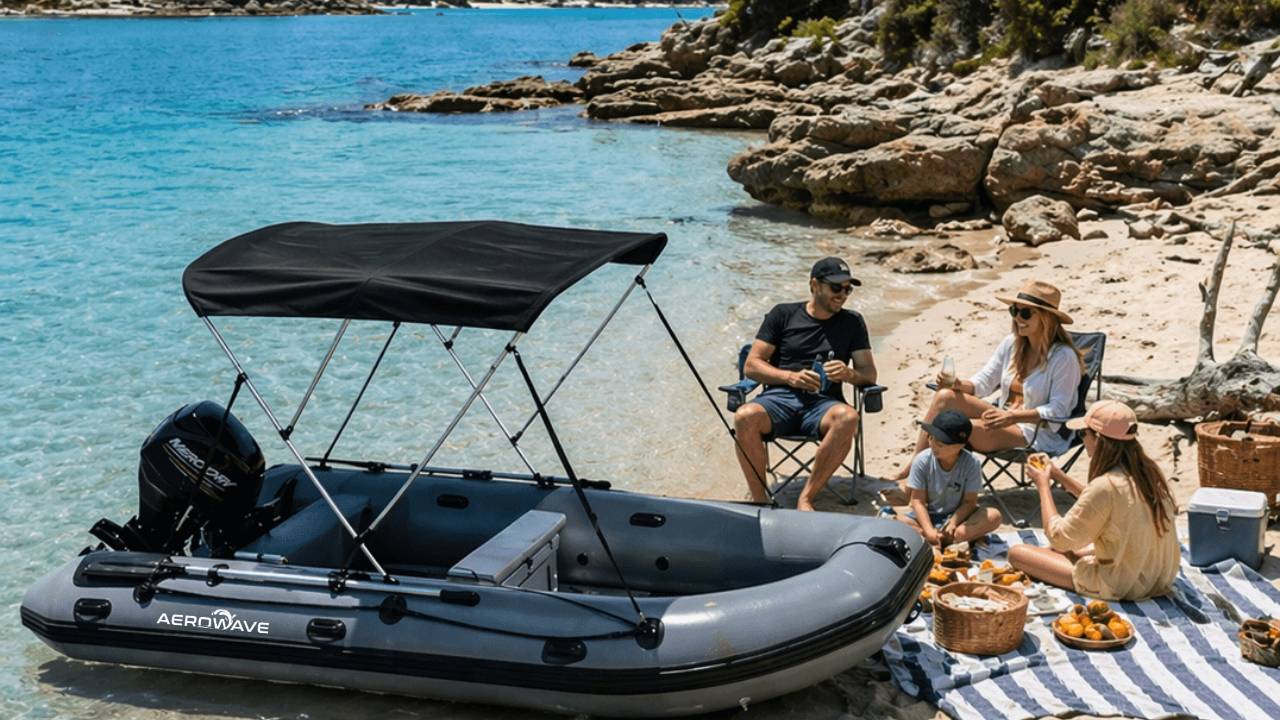 3 in stock now — ready to go
Aerowave Viper 400 Sovereign
Flagship 4m enclosed-bow inflatable catamaran. German VALMEX® 7321 Heavy Plus 1.2mm commercial-grade fabric, 10 PSI high-pressure drop-stitch air deck floor with VALMEX non-slip surface, LockPro wheels, full Bimini and FREE express delivery Australia-wide included. Winter special — save $1,000 until 31 August 2026.
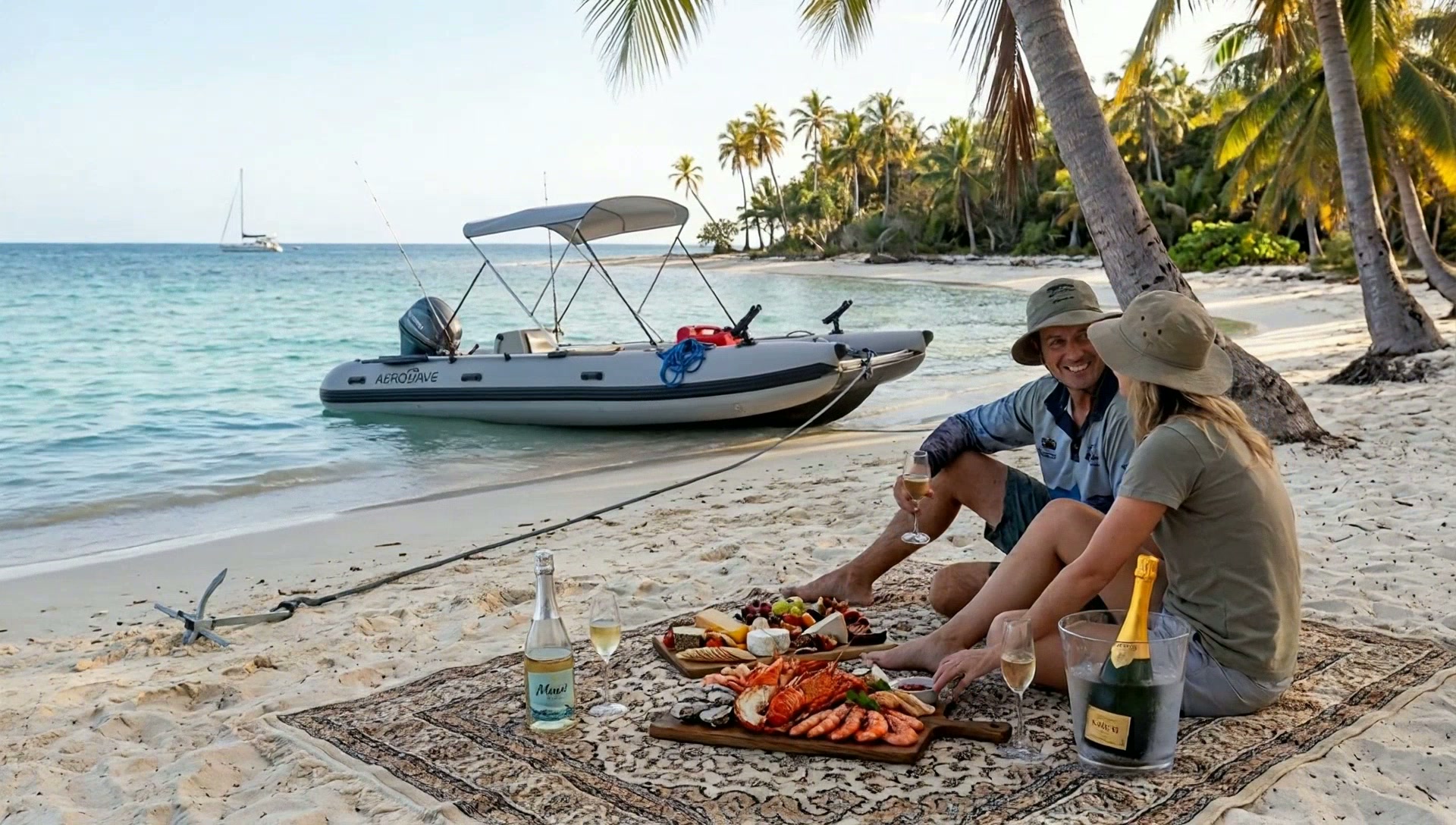 2 in stock now — ready to go
Aerowave Viper 365 Open Bow
Premium 3.65m Inflatable catamaran — built the same way as our flagship Viper 400 sports boat, just 35cm shorter. German VALMEX® 7321 Heavy Plus 1.2mm commercial-grade fabric, 10 PSI high-pressure drop-stitch air deck floor with VALMEX non-slip surface, LockPro wheels, full Bimini and FREE express delivery Australia-wide included.
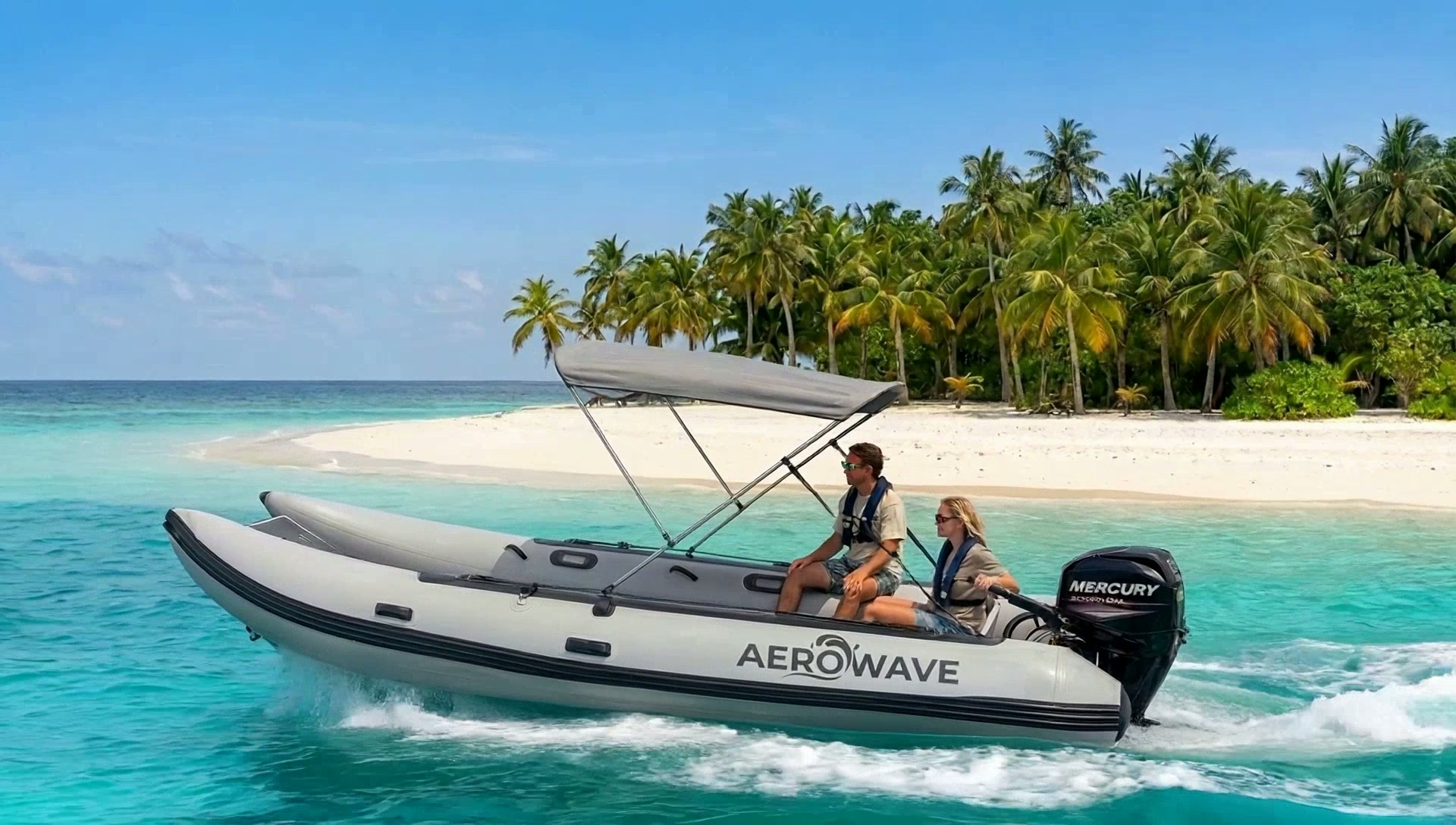 1 in stock now — ready to go
Aerowave Viper 400 Open Bow — Sports Package
The premium 4m inflatable catamaran package built for Australian and worldwide families, fishos and coastal adventure buyers who want stability, strength and real long-term value. Includes Full Grey Bimini, LockPro Plus Wheels, German VALMEX® 1.2mm fabric, 10 PSI high-pressure drop-stitch air deck floor with VALMEX non-slip surface and FREE express delivery Australia-wide.
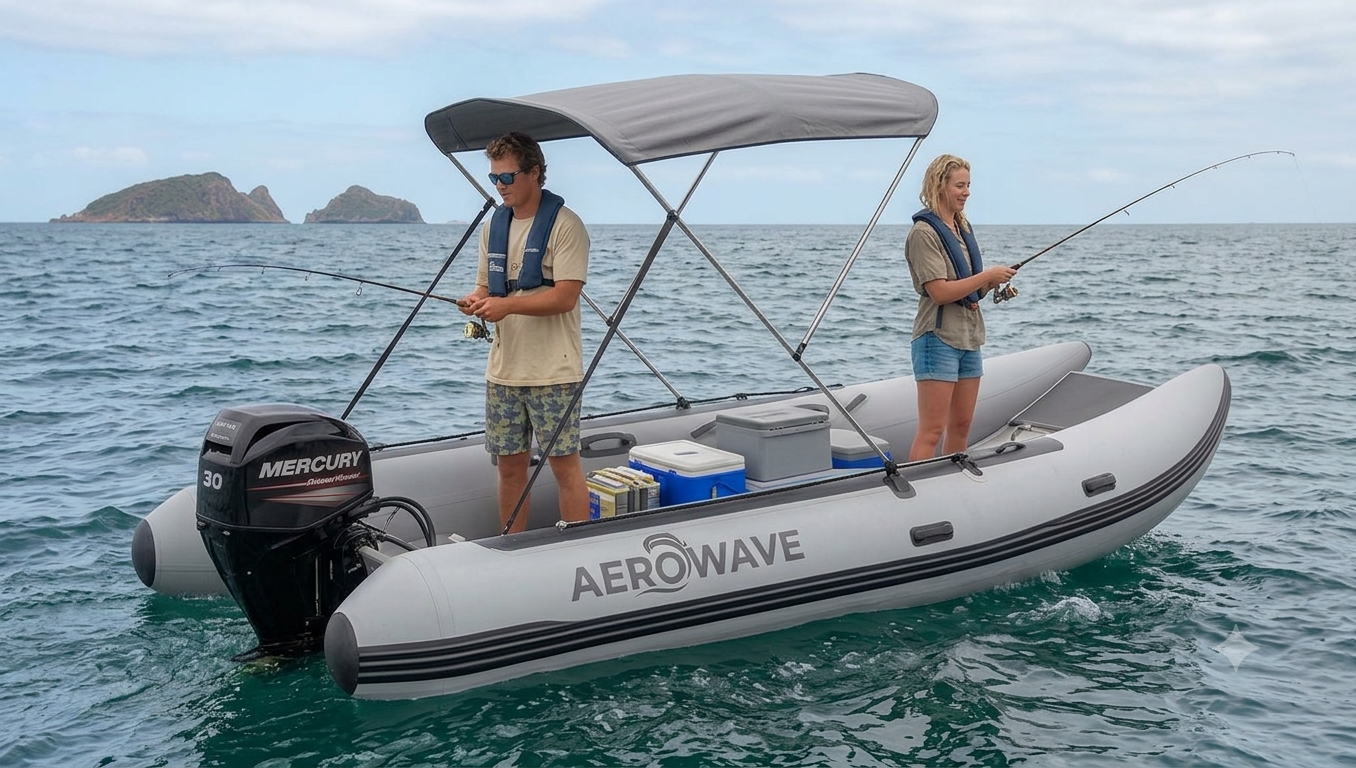 1 in stock now — ready to go
Aerowave Viper 430 Open Bow — Sports Package
The premium 4m inflatable catamaran package built for Australian and worldwide families, fishos and coastal adventure buyers who want stability, strength and real long-term value. Includes Full Grey Bimini, LockPro Plus Wheels, German VALMEX® 1.2mm fabric, 10 PSI high-pressure drop-stitch air deck floor with VALMEX non-slip surface and FREE express delivery Australia-wide.
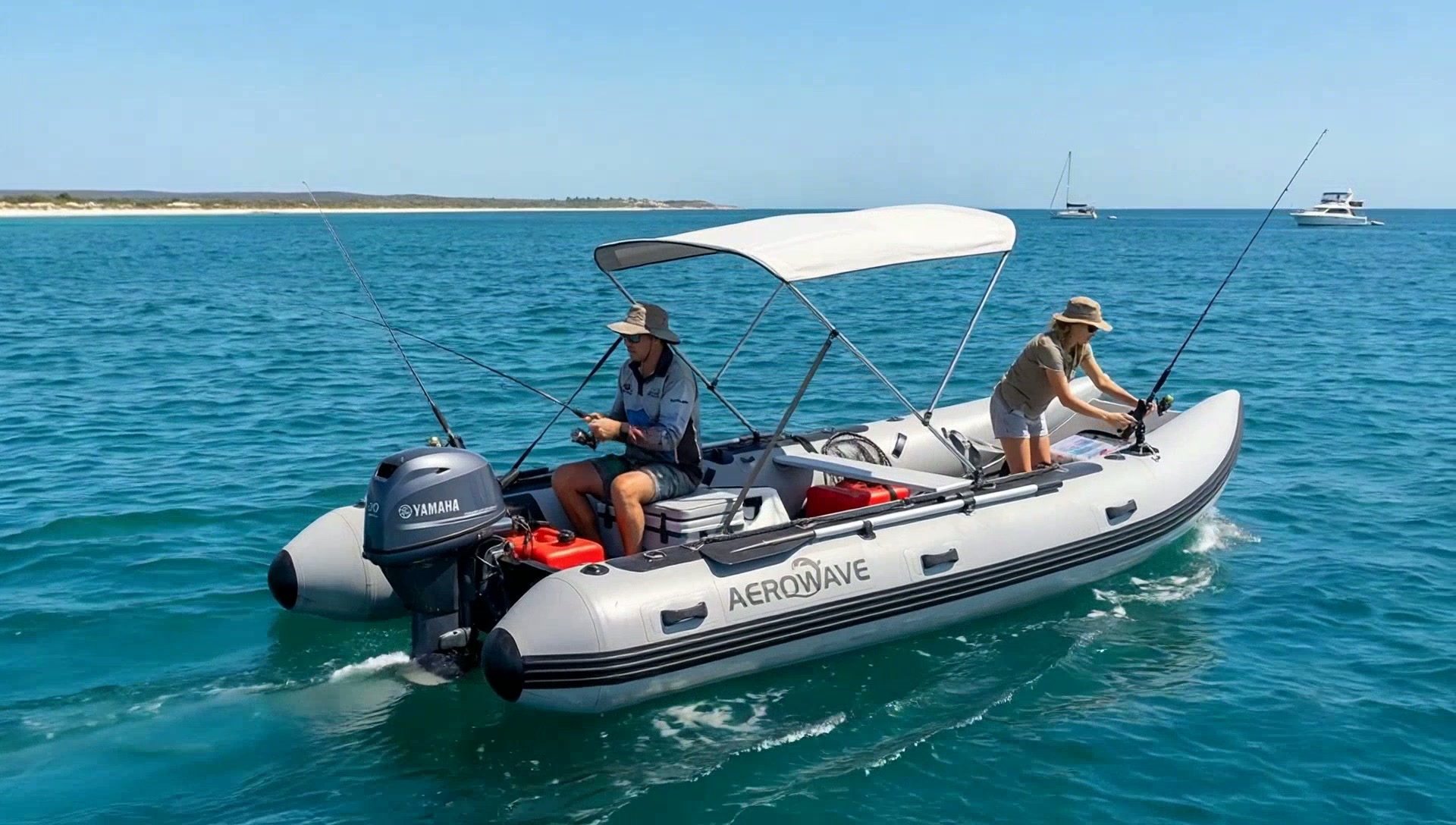 4 in stock now — ready to go
Aerowave Viper 330
The compact premium Viper catamaran package built for buyers who want serious stability, easy transport, premium materials and real global support in a 3.3m boat. German VALMEX® 1.2mm fabric, 10 PSI high-pressure drop-stitch air deck floor with VALMEX non-slip surface, 5–7 year hull warranty and FREE express delivery Australia-wide.
The Aerowave Viper range
Premium open-bow sports catamarans — 1500 GSM / 1.2 mm VALMEX® Heavy Plus, 7-year hull warranty. Also available in Orca Hypalon.
4 in stock now — ready to goAerowave Viper 330
The compact premium Viper catamaran package built for buyers who want serious stability, easy transport, premium materials and real global support in a 3.3m boat. German VALMEX® 1.2mm fabric, 10 PSI high-pressure drop-stitch air deck floor with VALMEX non-slip surface, 5–7 year hull warranty and FREE express delivery Australia-wide.
2 in stock now — ready to goAerowave Viper 365 Open Bow
Premium 3.65m Inflatable catamaran — built the same way as our flagship Viper 400 sports boat, just 35cm shorter. German VALMEX® 7321 Heavy Plus 1.2mm commercial-grade fabric, 10 PSI high-pressure drop-stitch air deck floor with VALMEX non-slip surface, LockPro wheels, full Bimini and FREE express delivery Australia-wide included.
1 in stock now — ready to goAerowave Viper 400 Open Bow — Sports Package
The premium 4m inflatable catamaran package built for Australian and worldwide families, fishos and coastal adventure buyers who want stability, strength and real long-term value. Includes Full Grey Bimini, LockPro Plus Wheels, German VALMEX® 1.2mm fabric, 10 PSI high-pressure drop-stitch air deck floor with VALMEX non-slip surface and FREE express delivery Australia-wide.
1 in stock now — ready to goAerowave Viper 430 Open Bow — Sports Package
The premium 4m inflatable catamaran package built for Australian and worldwide families, fishos and coastal adventure buyers who want stability, strength and real long-term value. Includes Full Grey Bimini, LockPro Plus Wheels, German VALMEX® 1.2mm fabric, 10 PSI high-pressure drop-stitch air deck floor with VALMEX non-slip surface and FREE express delivery Australia-wide.
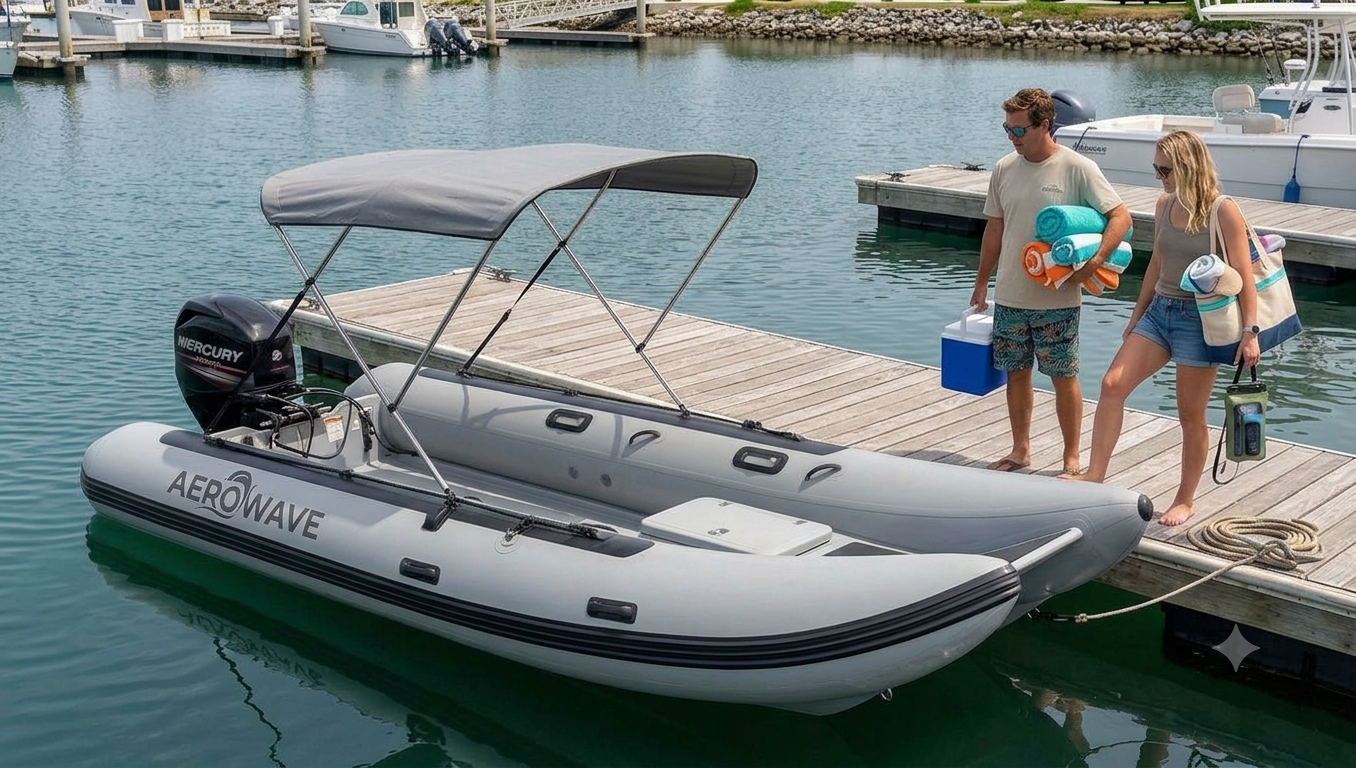 From $1,586 today · WavePay
Aerowave Viper 450 Open Bow — Sports Package
The premium 4m inflatable catamaran package built for Australian and worldwide families, fishos and coastal adventure buyers who want stability, strength and real long-term value. Includes Full Grey Bimini, LockPro Plus Wheels, German VALMEX® 1.2mm fabric, 10 PSI high-pressure drop-stitch air deck floor with VALMEX non-slip surface and FREE express delivery Australia-wide.
3 in stock now — ready to goAerowave Viper 400 Sovereign
Flagship 4m enclosed-bow inflatable catamaran. German VALMEX® 7321 Heavy Plus 1.2mm commercial-grade fabric, 10 PSI high-pressure drop-stitch air deck floor with VALMEX non-slip surface, LockPro wheels, full Bimini and FREE express delivery Australia-wide included. Winter special — save $1,000 until 31 August 2026.
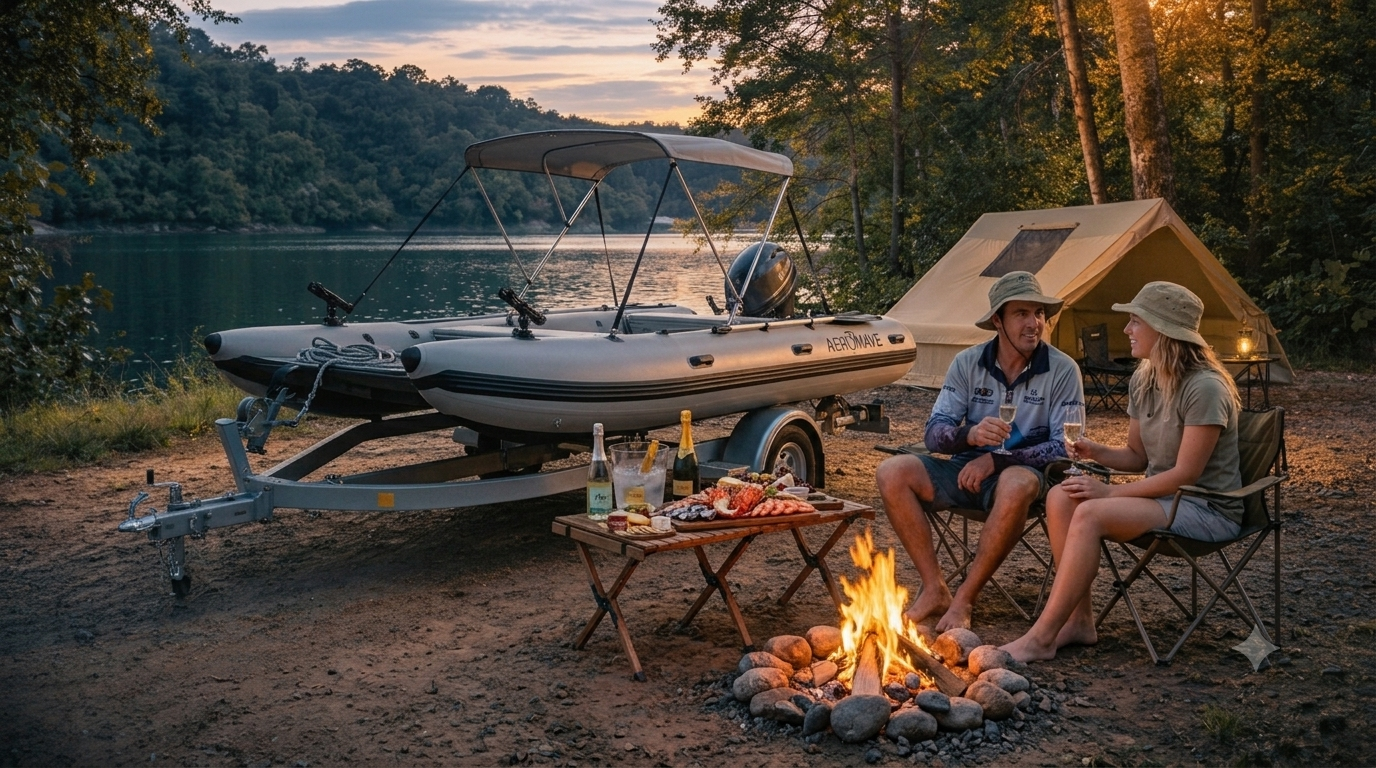 From $1,668 today · WavePay
Aerowave Expedition Camping Package
Our Expedition Camping Package pairs the Aerowave Adventure Air Tent and full camping kit with the Viper or AeroCat of your choice, from the 3.35 m AeroCat right up to the Viper 400 Sovereign.
The Aerowave AeroCat range
Lighter-weight 1100 GSM / 0.9 mm VALMEX® catamarans — the accessible way into a twin-hull.
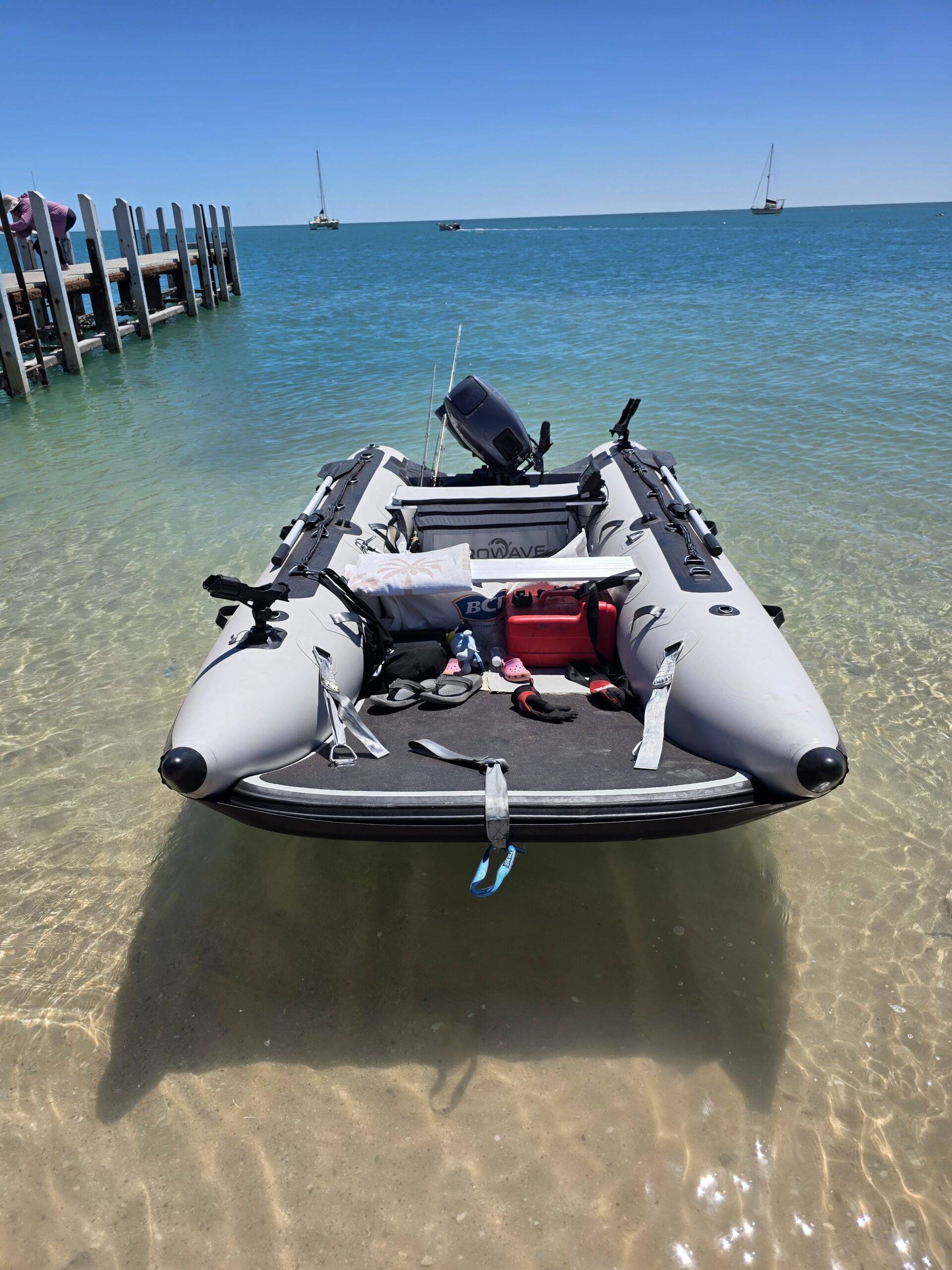 From $1,049 today · WavePay
AeroWave AeroCat 335 — Ready-to-Fish Pack
The AeroCat 335 Ready-to-Fish Pack — our 3.35m twin-hull inflatable catamaran in 0.9mm German VALMEX®, bundled with everything you need on the water: LockPro Plus stainless wheel kit, 22 PSI 12V lithium electric pump, 2 × padded under-seat storage bags, 2 × rod holders + 2 × deck rod-holder mounts, aluminium transom, oars, bridle and repair kit. One price. Nothing extra to buy. Backed by our 5-Year Hull Warranty and Australia-wide support.
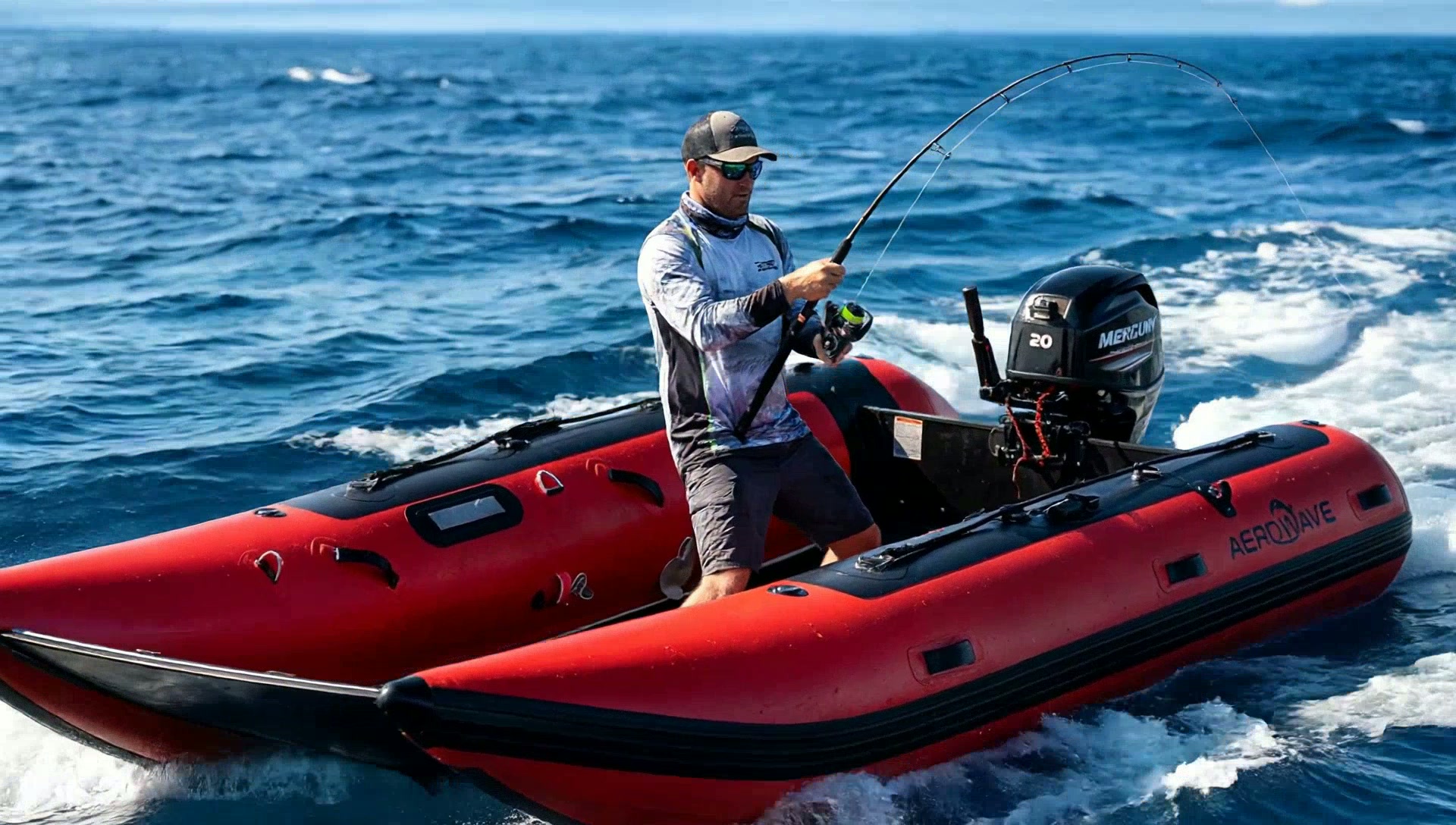 From $1,199 today · WavePay
AeroWave AeroCat 365 Inflatable Catamaran
Same proven hull design, shape and look as our flagship Aerowave Viper catamarans — built lighter using 0.9mm Valmex® fabric instead of the Viper's 1.2mm. The AeroWave AeroCat 365 is our 3.65m inflatable catamaran built from 0.9mm Valmex® fabric — intentionally lighter than our 1.2mm Viper hulls so it folds smaller, packs lighter and is easy to handle solo. Twin-hull stability, 5-Year Warranty with global support and priced ~$500 below comparable 0.9mm imports.
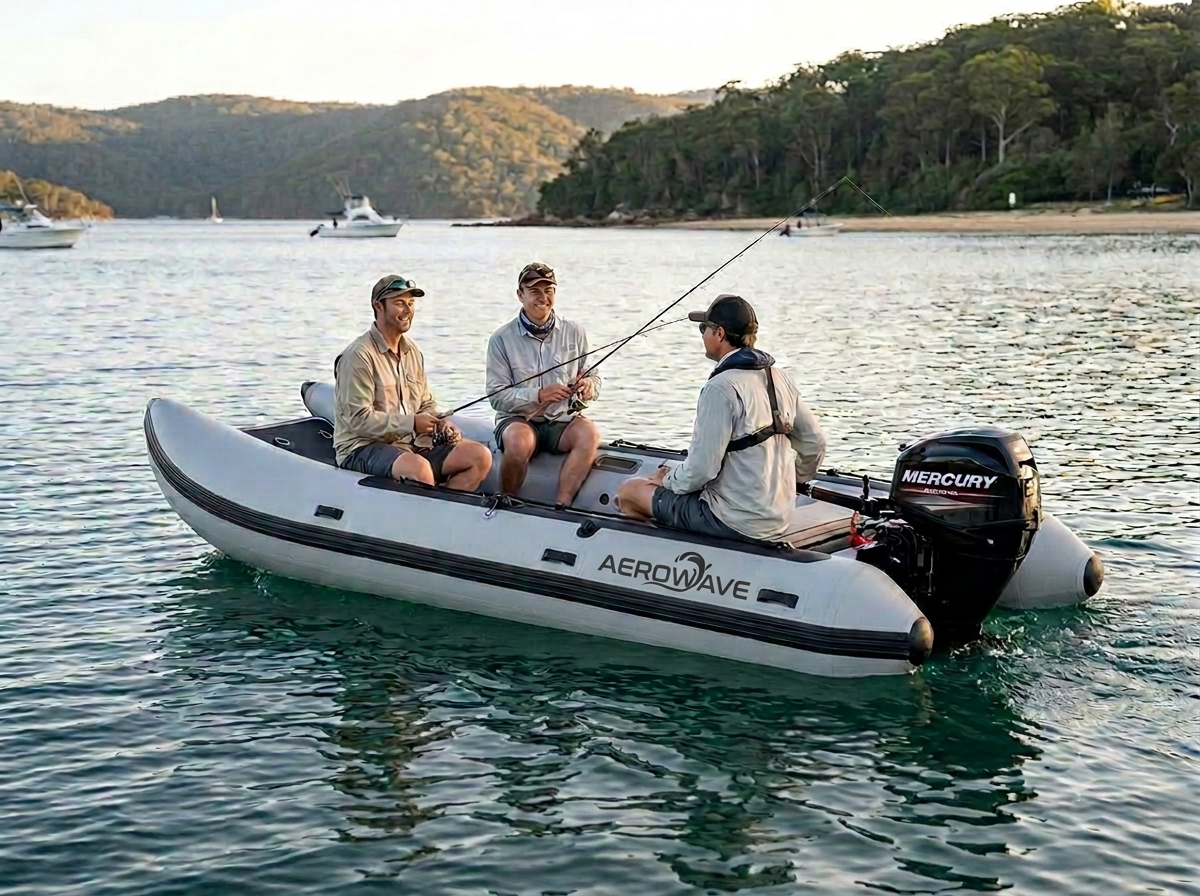 From $1,143 today · WavePay
AeroWave AeroCat 380 Inflatable Catamaran
Same proven hull design, shape and look as our flagship Aerowave Viper catamarans — built lighter using 0.9mm Valmex® fabric instead of the Viper's 1.2mm. The AeroWave AeroCat 380 is our 3.8m inflatable catamaran built from 0.9mm Valmex® fabric — intentionally lighter than our 1.2mm Viper hulls so it folds smaller, packs lighter and is easier to load and launch. Twin-hull stability, 5-Year Warranty with global support and priced ~$500 below comparable 0.9mm imports.
From $1,309 today · WavePayAeroWave AeroCat 400 Inflatable Catamaran
Same proven hull design, shape and look as our flagship Aerowave Viper catamarans — built lighter using 0.9mm Valmex® fabric instead of the Viper's 1.2mm. The AeroWave AeroCat 400 is our 4.0m inflatable catamaran built from 0.9mm Valmex® fabric — intentionally lighter than our 1.2mm Viper hulls so it folds smaller, packs lighter and is easier to load and launch. Twin-hull stability, 5-Year Warranty with global support and priced ~$500 below comparable 0.9mm imports.
The Aerowave WaveRunner range
Our biggest catamaran platform — 3.8 m of deck, Bimini sun top included. 1500 GSM / 1.2 mm VALMEX® Heavy Plus,
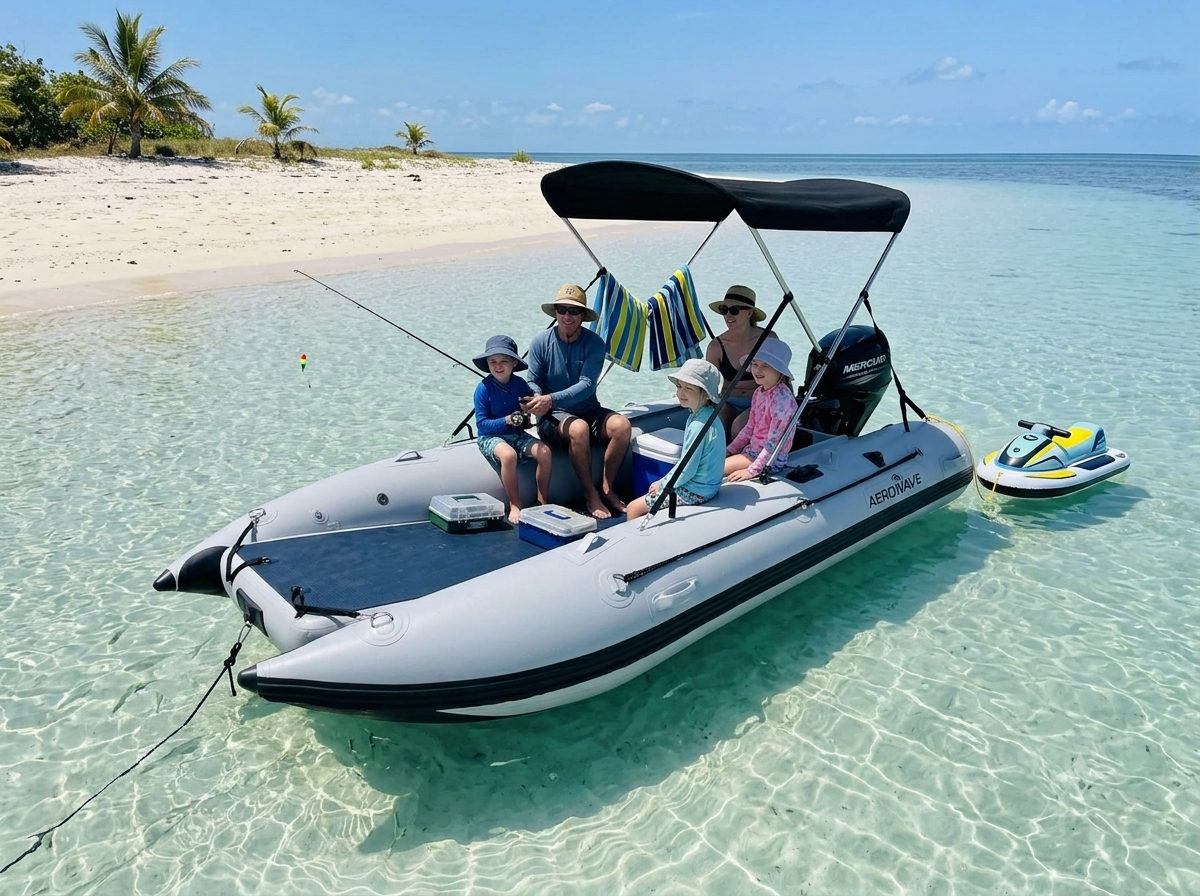
The Aerowave Swift Tender range
Sports monohull yacht tenders — 2.3 m, 2.7 m and 2.9 m with high-pressure air deck floors, built with 1500 GSM / 1.2 mm VALMEX® Heavy Plus.
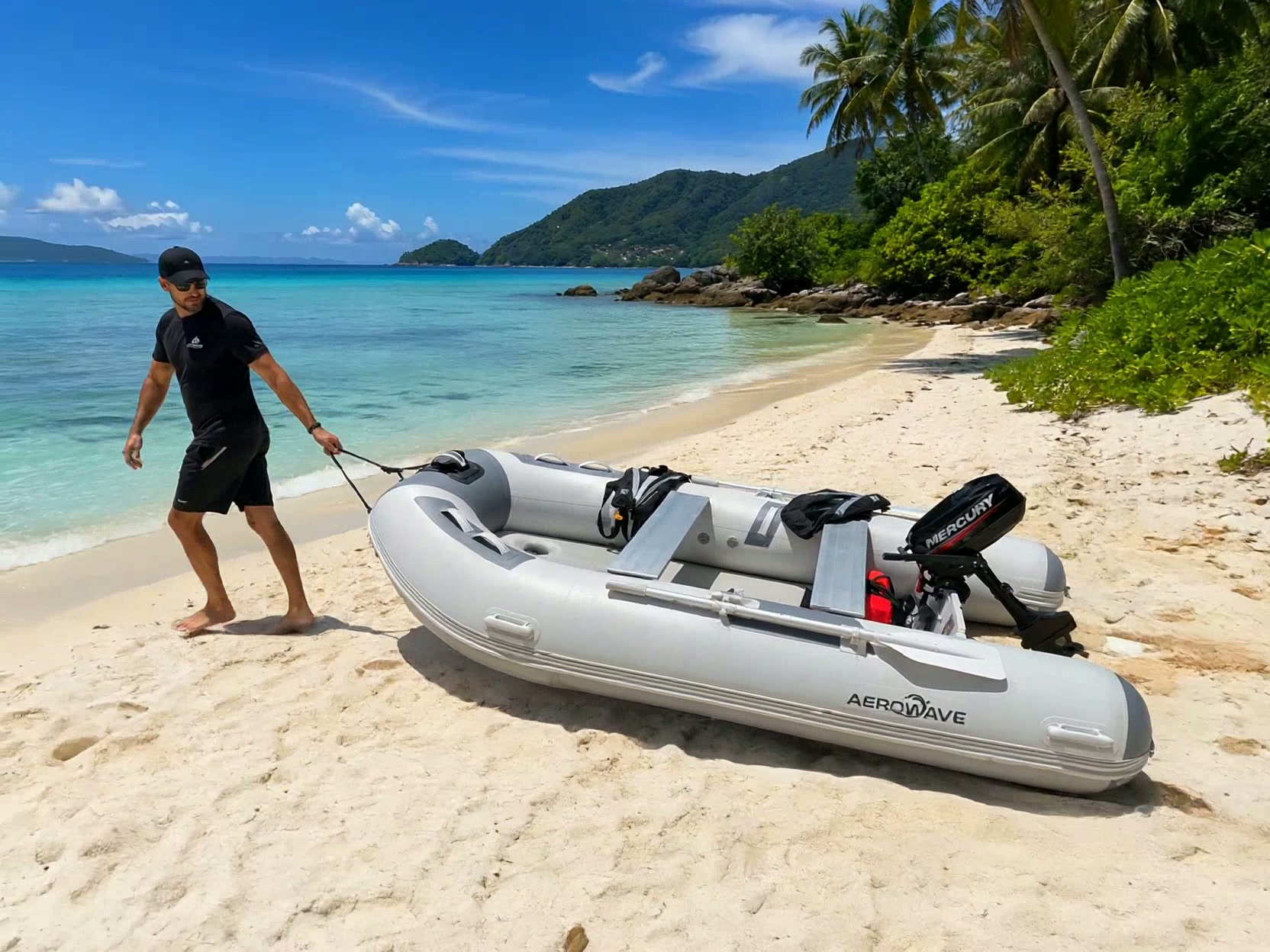 From $813 today · WavePay
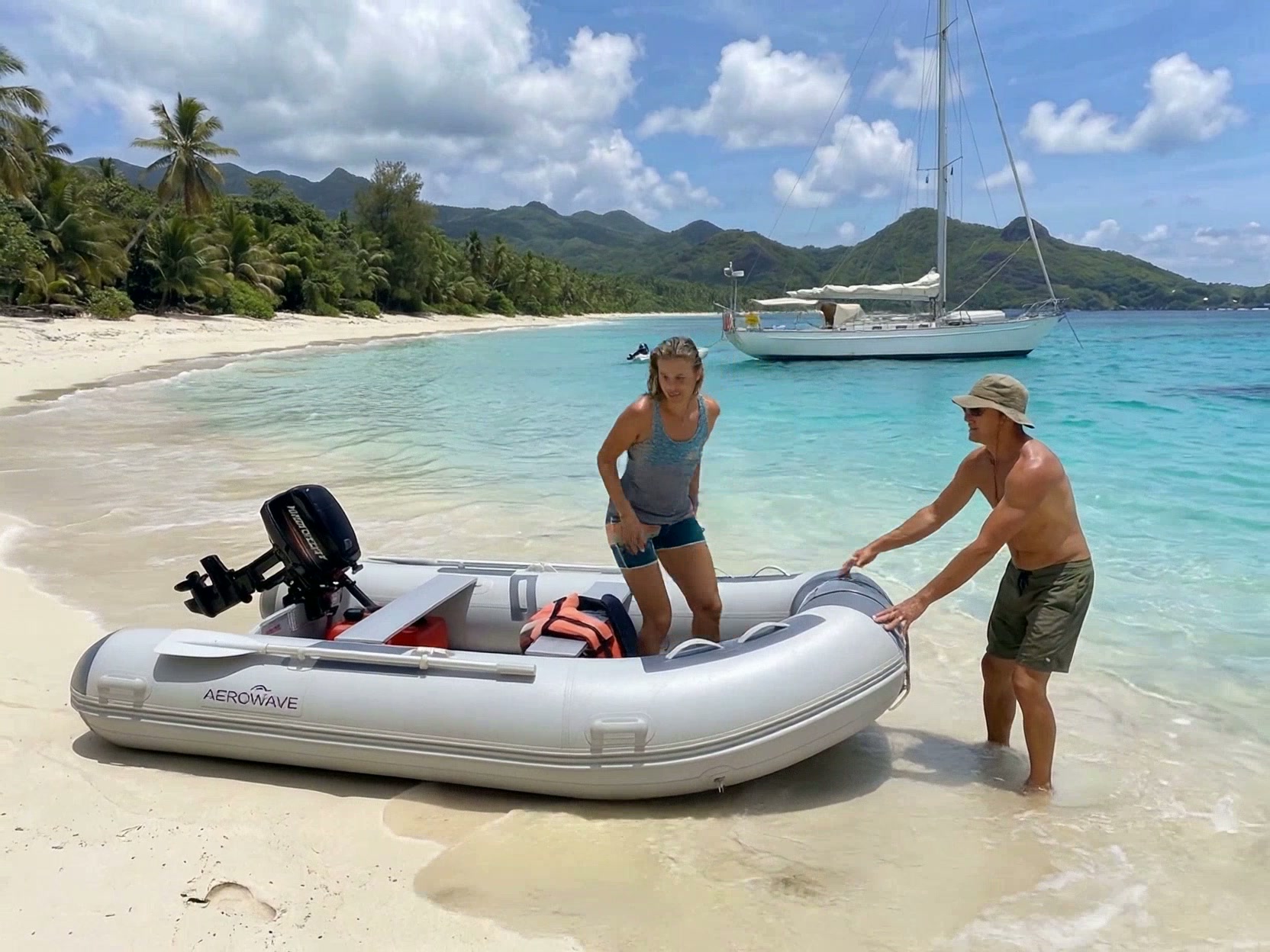
Aerowave Swift Tender 230 SI
Ultra-compact 2.3m sports monohull tender. High-pressure woven air deck floor, 1.2mm German VALMEX® PVC hull, up to 4HP. Built for yachts, dinghy runs and calm coastal use.
 From $863 today · WavePay
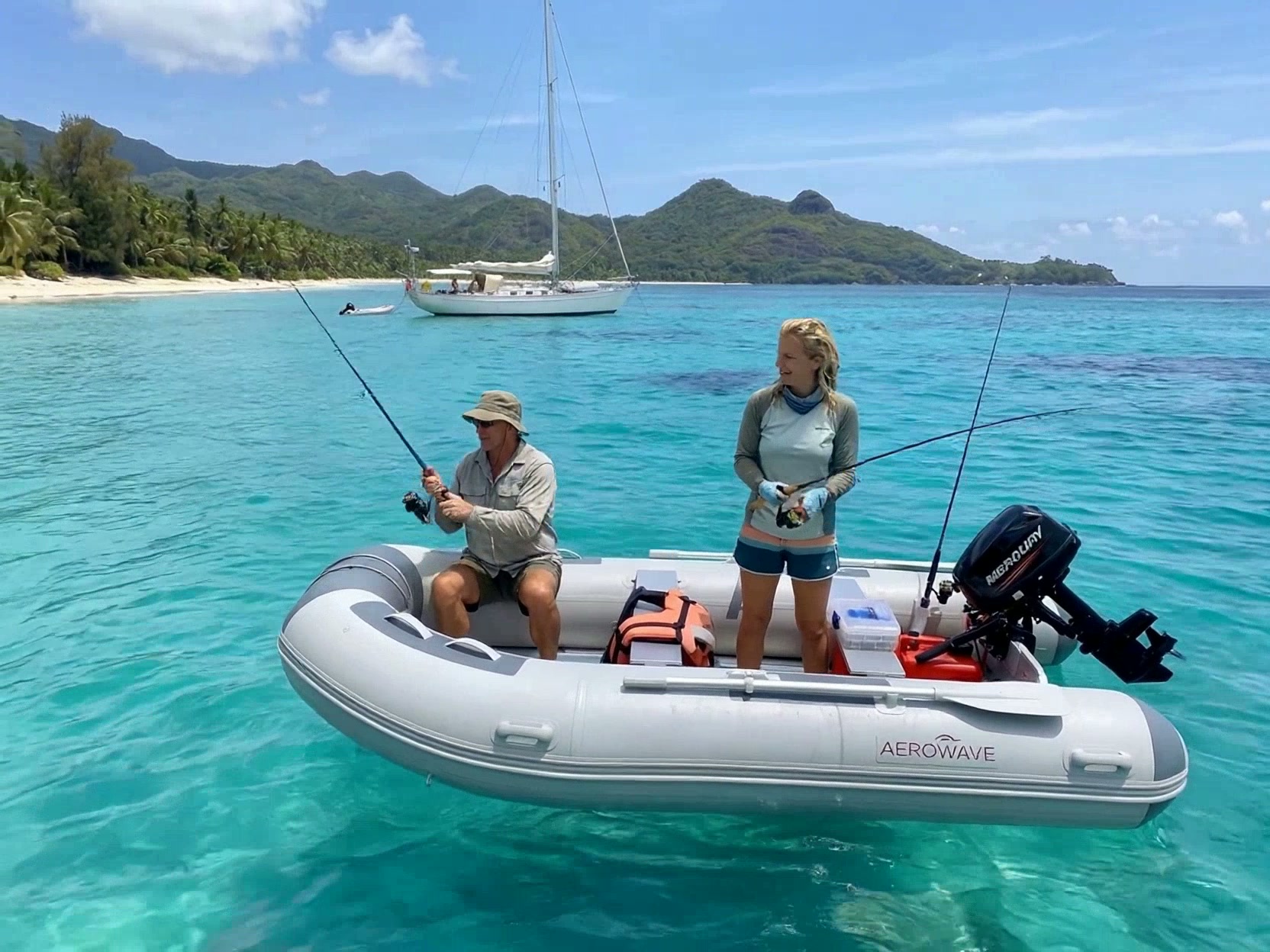
Aerowave Swift Tender 270 SI
Compact 2.7m sports monohull. High-pressure woven air deck floor, 1.2mm VALMEX® PVC hull, up to 10HP. The everyday tender-plus for short runs, fishing and diving.
 From $937 today · WavePay
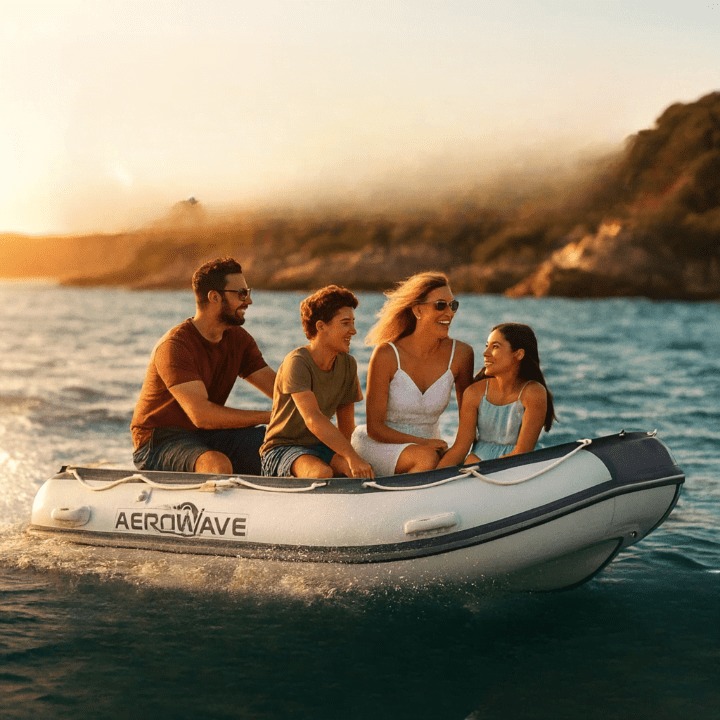
Aerowave Swift Tender 290 SI
Full-size 2.9m sports monohull tender. High-pressure woven air deck floor, 1.2mm VALMEX® PVC hull, up to 15HP, seats 4. The largest of the Tender Series.
The Aerowave Sprint range
Sprint RIB tenders — aluminium-hulled rigid inflatables in 1500 GSM / 1.2 mm VALMEX® or Orca Hypalon.
 From $1,625 today · WavePay
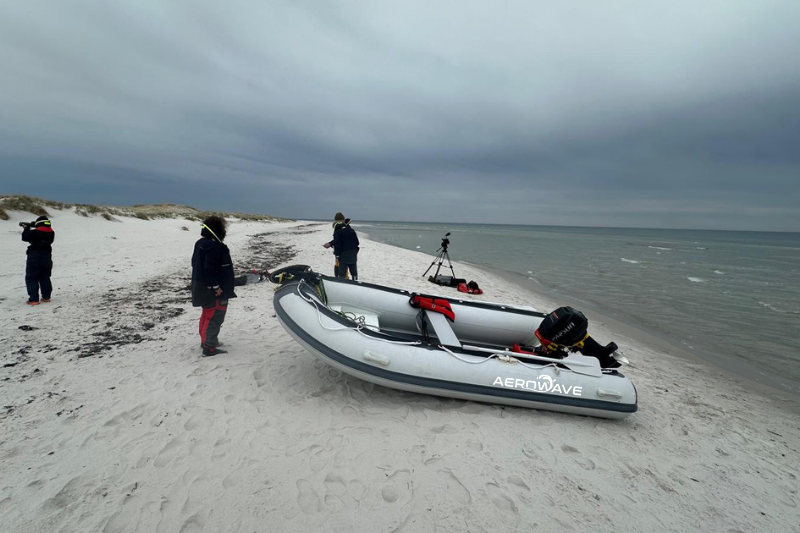
Aerowave Sprint 330 RIB
Premium 3.3m deep-V aluminium-hull RIB — lightweight 52kg, 20HP capable, German VALMEX® 1.2mm tubes, anchor locker, non-skid floor, two aluminium seats. Built for serious boaties, families and superyacht tenders.
 From $1,748 today · WavePay
Aerowave Sprint 350 RIB
Premium 3.5m deep-V aluminium-hull RIB — bigger, stronger, adventure-ready. German VALMEX® 1.2mm tubes, 25HP capable, bow anchor locker, davits & towing eyes, two aluminium seats. Families, fishing, diving and superyacht-tender duty.
Still deciding?
Tell us where and how you will use it.
Gary can narrow the range without pushing you into the most expensive model.
Outside Australia?
Buy in your own currency
Open any boat and the price switches to your currency with freight included.
See landed pricesConfigure yours
Build your boat your way — colours, wheels, outboard, accessories.
Live pricing. WavePay-ready. 60 seconds from idea to checkout.
Where we sit — measured, not claimed
How an Aerowave measures up against the two boats
you are probably cross-shopping.
Hull thickness, warranty term, certification, transom height and the price that lands at your door — ours against theirs, taken from their own published spec pages.
Landed-cost comparison of all three 3.8–4.0 m packages — boat, the accessories you would need to match our package, and delivery to Australia. No adjectives, no opinions — just the published specs, prices and warranty terms.
3.65–3.8 m packages
Viper 365
A$5,495
complete and delivered
Takacat 380LX
A$6,296
+ delivery
You save at least A$801 with Aerowave
The A$6,296 comparison includes its published bimini, wheels, electric pump and rod holders. Delivery and an equivalent second seat and under-seat bag are still extra or unpriced, so the final saving is higher.
4.0 m packages
Viper 400
A$5,595
complete and delivered
Discovery 4.0
A$6,781
estimated landed
You save about A$1,186 with Aerowave
The A$6,781 matched-equipment estimate starts with the current A$4,562 Discovery Package, then adds the published bimini, rod holders and seat bag, an A$279 electric-pump benchmark, captured NSW freight, estimated import GST and A$65 handling.
- Boat and high-pressure air deck
- 4 mm powder-coated aluminium transom
- Bimini sun top
- LockPro Plus launch wheel kit
- 22 PSI lithium electric pump
- High-pressure manual pump required to finish the AirDeck at 8–10 PSI
- 2 rod holder mounts and 2 heavy-duty rod holders
- 2 aluminium seats
- 2 under-seat bags
- Oars, 700 gsm rip-stop boat carry bag and repair kit
- GST and free delivery into Australia
- 7-year hull warranty
- Boat and air deck
- Large bimini — A$579 extra
- Quick Connect wheels — A$299 extra
- 12 V electric pump — A$279 extra
- Rod-holder pair — A$149 extra
- One inflatable seat
- Manual pump, oars, carry bags and repair kit
- Delivery and an equivalent second seat and under-seat bag not included in A$6,296
- Discovery 4.0 boat and floor
- Removable wheels, sideports and bow bridle
- Large bimini — A$775 extra
- 2 rod holders — A$70 extra
- Second premium seat bag — A$195 extra
- Electric pump — A$279 comparison allowance; no equivalent price published by this maker
- Captured NSW freight, estimated import GST and handling included in the A$6,781 estimate
Competitor figures taken from their own published spec pages and price lists on 1 October 2026, and reviewed quarterly. See the full line-by-line comparison.
Buyer's guide
How to choose an inflatable boat in Australia
Australian conditions are hard on boats. Ramp gravel, oyster-crusted pylons, UV that never lets up, sand in every seam and a two-hour tow home in salt air. Most inflatable boats sold here are built to a price — a 1100 decitex / 0.9 mm hull is the market benchmark, and it works fine on flat water. The problem shows up in year four, when the fabric has gone chalky and the seams start weeping.
Every Aerowave Viper and WaveRunner hull is built from 1500 GSM / 1.2 mm VALMEX® Heavy Plus, the same German fabric family used in commercial and rescue craft. It costs us more, it packs slightly firmer, and it is the single reason we can put a 7-year hull warranty on the Viper range. Premium VALMEX fabric has a working lifespan of 10–12 years. That is the whole argument: buy once, use it for a decade.
Below is the practical version of the decision — size, hull type, fabric, power and what it actually costs landed at your door.
1. Start with length, not price
2.4 – 3.0 m suits a yacht tender or a two-person dinghy: light enough to lift solo, small enough to live in a locker. See the Tender range.
3.3 – 3.6 m is the sweet spot for estuaries, harbours and sheltered bays with two adults and gear — the AeroCat and smaller Viper hulls live here.
3.8 – 4.5 m is what you want if you cross open water, fish offshore or carry three or four people. The extra waterline is what stops the boat slamming.
2. Pick the hull type
Catamarans give you a flat, stable deck and a dry ride on less horsepower. RIBs give you a rigid vee that cuts chop but weighs more and needs a trailer more often. Tenders trade both for pack size.
| Range | Hull | Sizes | Fabric | Best for |
|---|---|---|---|---|
| Aerowave Viper | Catamaran | 3.3 – 4.5 m | 1500 GSM / 1.2 mm VALMEX® | Offshore fishing, big water, families who want the toughest hull we build |
| Aerowave AeroCat | Catamaran | 3.3 – 3.8 m | 1100 decitex / 0.9 mm VALMEX® | Estuary and harbour work at the sharpest catamaran price |
| Aerowave WaveRunner | Catamaran | 3.3 – 3.8 m | 1500 GSM / 1.2 mm VALMEX® | Fast, dry ride with a 380 mm transom that keeps the prop buried |
| Aerowave Sport & Sprint | RIB / monohull | 3.0 – 3.9 m | 1.2 mm VALMEX® on an alloy or RIB floor | Buyers who want a traditional RIB feel and a rigid deck |
| Aerowave Tender & Swift | Tender | 2.4 – 3.0 m | 1.2 mm VALMEX® | Yacht tenders, dinghies and anyone tight on storage |
3. Match the outboard
A 3.3 m catamaran planes happily on 9.9 hp. A 3.8 m hull is best at 15 hp, and the 4.0 – 4.5 m Vipers take up to 40 hp with a 380 mm transom that keeps the prop buried instead of ventilating every time you cross your own wake. Electric is now genuinely viable for estuary use — see the outboard range for matched petrol and electric options, or buy a boat-and-motor bundle above and skip the guesswork.
4. Understand the landed price
Roughly speaking, the Australian market splits three ways: budget import hulls around A$3,000, Aerowave between A$3,500 and A$6,000, and traditional dealer brands from A$7,000 up. We sit in the middle deliberately — dealer-grade fabric and warranty without the showroom margin.
Express delivery inside Australia is included in the boat price, with no hidden import fees on arrival. True remote postcodes attract a flat A$300 remote delivery fee — our own charge, not a courier surcharge. Remote postcodes may add a road leg, which the calculator on each product page shows you before you commit. You can also split any boat into four interest-free instalments with WavePay, or apply for marine finance from about $35 a week.
Shipping outside Australia? We ship worldwide — request an international quote with your nearest port and we'll come back with freight and insurance included.
Keep researching
FAQ
Inflatable boat questions, answered
What is the best inflatable boat in Australia?
It depends on where you boat. For open water and offshore fishing, a 3.8–4.5 m inflatable catamaran built from 1500 GSM / 1.2 mm VALMEX® — such as the Aerowave Viper — gives the driest, most stable ride. For estuaries and harbours, a 3.3–3.6 m catamaran is easier to handle and cheaper to run. For a yacht tender, a 2.4–3.0 m hull is the practical limit.
How much does a good inflatable boat cost in Australia?
Budget import hulls sit around A$3,000, Aerowave boats run from about A$3,500 to A$6,000, and traditional dealer brands start near A$7,000. Aerowave prices are landed, with express delivery inside Australia included and no hidden import fees on arrival.
How long does an inflatable boat last?
Premium VALMEX® fabric has a working lifespan of 10–12 years with normal care. Thinner 0.9 mm hulls typically show UV chalking and seam fatigue much earlier. Every Aerowave Viper hull carries a 7-year hull warranty.
Do I need to register an inflatable boat in Australia?
Registration rules are set by each state and generally depend on engine power rather than hull type. Most states require registration once the boat is powered above a set horsepower threshold. Our registration and boat coding guide covers the requirements state by state.
Do I need a trailer for an inflatable catamaran?
No. Every Aerowave catamaran packs into two bags that fit in a car boot, so there is no trailer, no boat park and no annual trailer registration. Setup takes roughly 15 minutes with the supplied 22 PSI hand pump.
How long does delivery take?
Boats in stock ship promptly; custom builds take about three weeks to build. Australian delivery is included in the boat price, with the A$300 remote delivery fee shown before you order.
Are inflatable catamarans safe offshore?
Aerowave catamarans are CE certified to ISO 6185-3 and EU Directive 2013/53/EU, with multiple independent air chambers so the boat stays afloat even if one chamber is compromised. Australian state boat-code certification is a separate step handled by the owner.