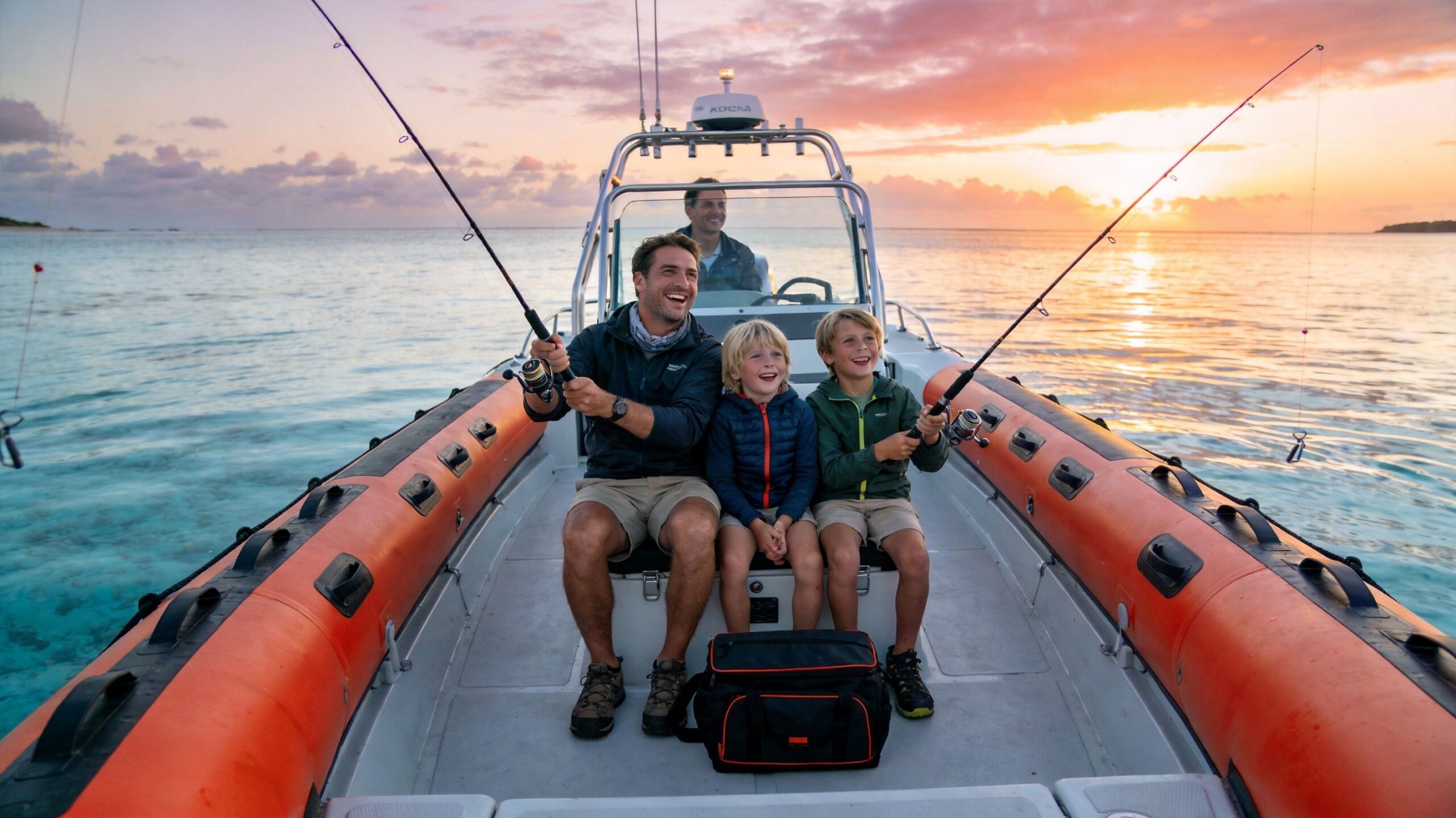

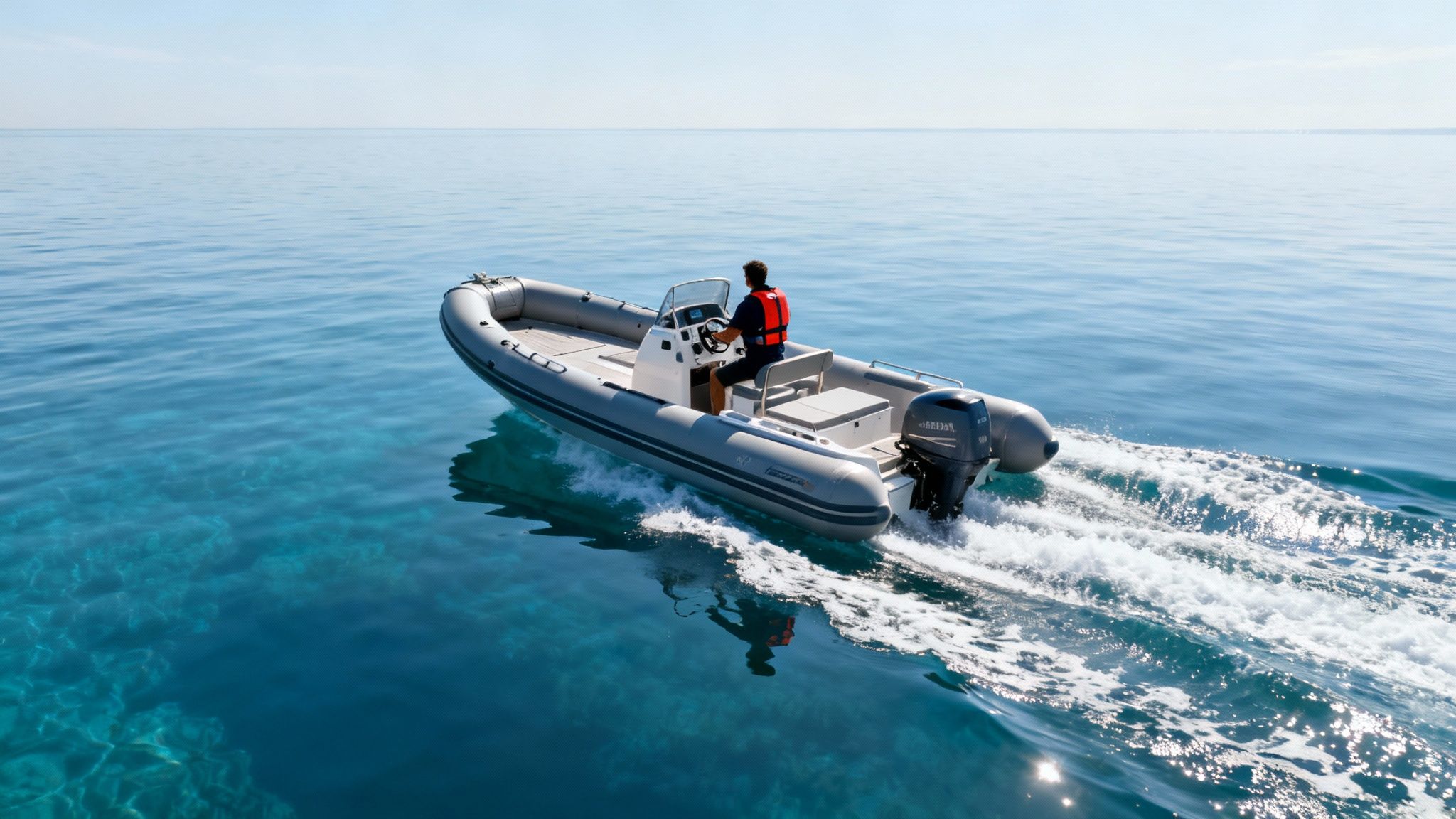
Ever wondered why so many boaters are choosing rigid inflatable boats for their adventures on the water? It’s simple, really: they deliver the best of both worlds. By combining a tough, wave-slicing hull with buoyant inflatable tubes, these boats give you a unique mix of stability, safety, and thrilling performance that most traditional boats just can’t match. If you’re looking to compare prices and features of inflatable boats in your area, this guide will give you the essential information you need.
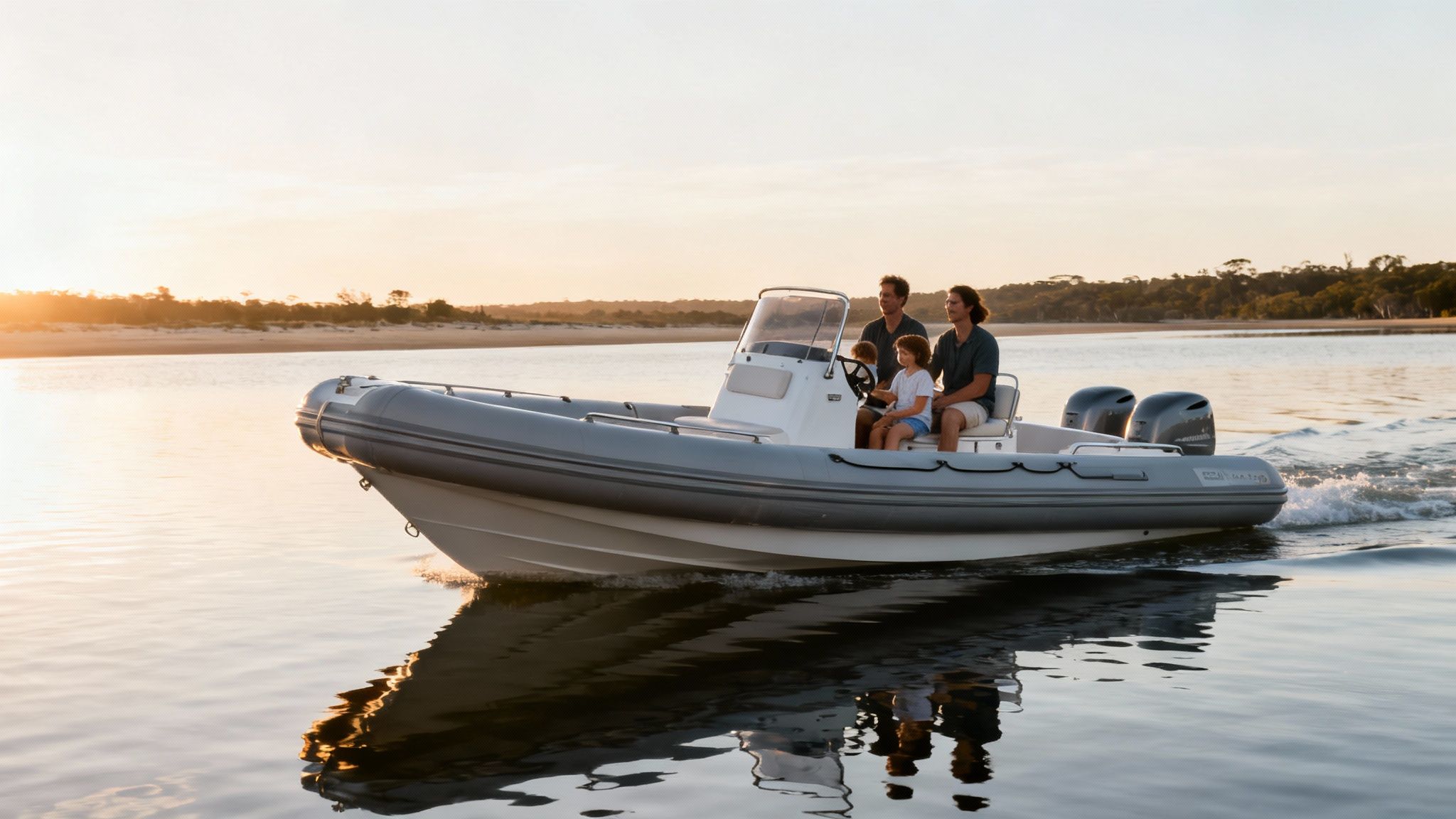
If you’re looking for a boat that’s as versatile as your weekend plans, a rigid inflatable boat (RIB) seriously deserves your attention. Think of it as a clever hybrid—you get the steadfast, water-slicing power of a conventional fibreglass or aluminium hull fused with the shock-absorbing buoyancy of inflatable tubes.
This smart combination makes RIBs exceptionally well-suited for Australian waters. They handle chop with ease, stay incredibly stable when you’re stopped, and are super forgiving when you’re pulling up to a dock. That inherent stability also makes them a fantastic choice for families with kids or anyone who just wants to feel secure out on the water. For an even deeper look, check out our guide on what defines a RIB boat.
The popularity of rigid inflatable boats isn’t just a hunch; it’s a fast-growing part of the marine industry. In fact, the local Australian market was valued at USD 16.25 million and is tipped to grow at a strong rate of 8.7% annually through to 2032. This trend is driven by Australia’s massive coastline and our deep-seated boating culture, where a RIB’s efficiency and nimbleness are a perfect match for our diverse conditions.
This guide is designed to give you a complete picture of what makes these boats so special. We’ll walk you through everything you need to know, including:
By the end, you’ll have the confidence to decide if a RIB is the right vessel to fuel your adventures.
At its heart, a rigid inflatable boat is a brilliant fusion of two different boating worlds. It takes the best of both and blends them into a vessel that’s far greater than the sum of its parts. To really get why these boats perform so well, we need to look at how they’re built, focusing on the two core components that give them their unique character.
This isn’t about getting bogged down in technical jargon. It’s about understanding the real-world benefits that come from this clever design. Once you see how a RIB is put together, you’ll instantly understand why it offers such a stable, safe, and exciting ride on the water.
The “rigid” part of the name comes from the boat’s solid hull, which acts as its structural backbone. This is the component that does all the heavy lifting, giving the boat its strength and defining how it cuts through the water. Think of it as the chassis of a high-performance car; it provides the solid platform that everything else is built upon.
Hulls are typically made from one of two materials:
Whatever the material, the hull is what gives a RIB its confident, predictable handling. It allows the boat to carve through turns and track straight at speed, much like a traditional hard-sided boat.
The second key component is the set of inflatable tubes—often called collars or sponsons—attached to the upper edges of the hull. These are far more than just glorified pool toys; they’re the secret sauce that gives a RIB its most famous advantages. The tubes provide immense buoyancy and stability, effectively acting like built-in outriggers.
This dual-component design is what makes a RIB feel so incredibly secure on the water. The rigid hull provides the performance and wave-cutting ability, while the inflatable tubes deliver a level of stability and shock absorption that is simply unmatched by conventional boats of a similar size.
This design makes the boat exceptionally difficult to capsize. The air-filled tubes also act as giant shock absorbers, dampening the impact of waves and reducing stress on both the boat and its passengers. As a bonus, they serve as a practical, built-in fender, protecting the hull when docking or coming alongside other vessels.
The material used for the inflatable tubes is one of the most important factors determining a RIB’s durability, lifespan, and price. The two main options are PVC and Hypalon, and each has its own distinct personality.
It’s a bit like choosing an outdoor jacket. PVC is like a high-quality rain jacket—it’s effective, affordable, and perfectly suited for most conditions. It’s a strong, versatile material that offers excellent value and performance for the majority of recreational boaters.
Hypalon, on the other hand, is the expedition-grade, all-weather gear. It’s a synthetic rubber famous for its incredible resistance to UV radiation, extreme temperatures, chemicals, and abrasion. For a boat that will live under the intense Australian sun or see heavy-duty use, Hypalon is the premium choice for longevity.
Here’s a quick breakdown to help you decide:
| Feature | PVC (Polyvinyl Chloride) | Hypalon (CSM/Neoprene) | Best For |
|---|---|---|---|
| Durability | Good resistance to abrasion and punctures. | Excellent resistance to abrasion, chemicals, and impacts. | Hypalon for commercial or heavy-duty use. |
| UV Resistance | Good, but can degrade over long-term sun exposure. | Exceptional. Highly resistant to UV rays, ideal for hot climates. | Hypalon for boats stored outdoors in sunny regions like Australia. |
| Lifespan | Typically 10-15 years with proper care. | Typically 15-25+ years with proper care. | Hypalon for long-term investment. |
| Cost | More affordable, offering great value for money. | Premium material, comes at a higher price point. | PVC for recreational users and tighter budgets. |
| Maintenance | Requires regular cleaning and UV protectant application. | Lower maintenance, but still benefits from regular cleaning. | Hypalon for easier long-term care. |
| Repairability | Can be easily patched with adhesive (thermo-welded seams). | Requires a more complex two-part gluing process. | PVC for simpler DIY repairs. |
Ultimately, your choice depends on how you plan to use your boat and your budget. To dive deeper, you can learn more about the benefits of Hypalon vs German Mehler 1.2mm PVC material and see which is the right fit for your needs. This decision directly impacts how you’ll enjoy and maintain your boat for years to come.
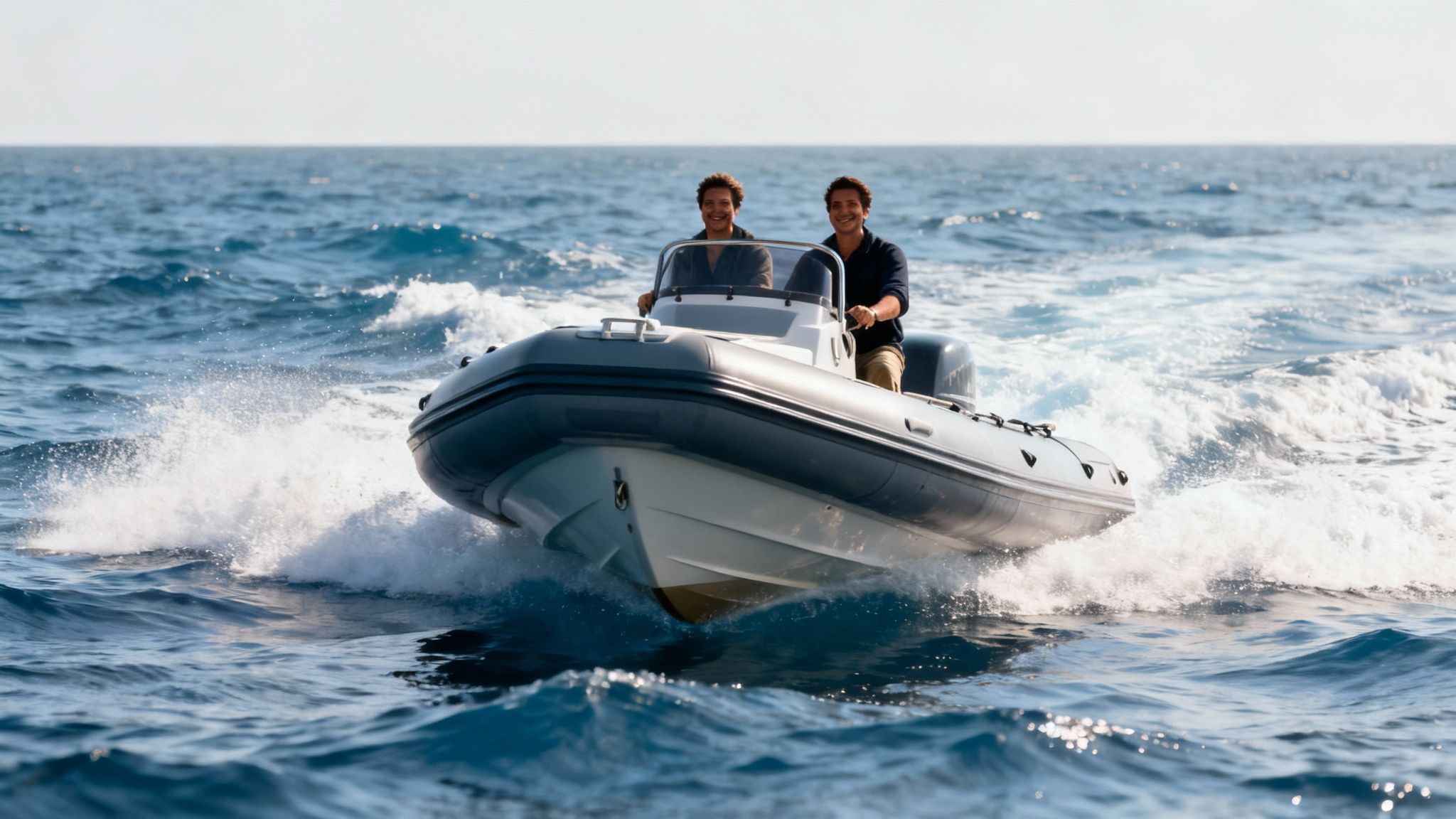
You can talk about materials and construction all day, but the true magic of a rigid inflatable boat happens the moment you push the throttle forward. This is where the specs turn into a real feeling on the water—a unique mix of raw power and reassuring security that has won over so many Aussie boaters. It’s a combination of thrilling capability and rock-solid stability that very few other boats can even come close to matching.
One of the first things you’ll notice is the incredible stability, whether you’re anchored up for a swim or zipping across open water. This steadiness comes from the RIB’s low centre of gravity, working together with the wide, buoyant tubes that act like perfectly balanced outriggers. This design drastically reduces roll, making everyone on board feel safe and comfortable, even when the conditions get a bit choppy.
The lightweight nature of rigid inflatable boats translates directly into thrilling acceleration and nimble, responsive handling. Because there’s less boat to push through the water, they get up to exhilarating speeds with smaller, more fuel-efficient engines. It means you not only get a more exciting ride but also spend less at the fuel pump.
This efficiency is a massive drawcard. In fact, a RIB’s smart design can lead to 20-30% better fuel efficiency compared to a hard-sided boat of a similar size. That’s a huge deal in Australia, where boating is a top pastime for 32% of boaters, and rising fuel costs are always on our minds. To get a better handle on your options, check out our guide on choosing the right engine for your inflatable boat.
The performance perks of a RIB are undeniable:
But performance is only half the story; peace of mind is the other. The safety that’s inherently designed into every rigid inflatable boat is a major reason people choose them. The multi-chamber construction of the tubes makes the boat virtually unsinkable, even if one chamber somehow gets compromised.
The tubes aren’t just for stability; they’re your first line of defence. They act like natural, full-length fenders, protecting the hull from bumps and scrapes when docking or pulling alongside another boat, which makes maneuvering in tight marinas a breeze.
This built-in safety is why organisations like coastal patrols and rescue services are increasingly relying on RIBs, citing their massive load capacity and unsinkable design. This fusion of exciting performance, sharp agility, and fundamental safety is what the RIB experience is all about. It’s what gives you the confidence to push further and explore more, all while feeling completely secure on the water.
To really get why a rigid inflatable boat is such a game-changer, you have to see how they fit into the real lives of boaties across Australia. The clever design isn’t just theory; it translates into serious practical advantages on our unique coastlines and inland waterways. From chilled-out family arvos to serious fishing missions, RIBs prove their worth time and time again.
By looking at these real-world uses, you can start to imagine how a RIB could transform your own time on the water. It’s not just about owning a boat; it’s about unlocking new adventures, whether that’s finding a hidden cove or just making your boating life a whole lot easier.
For any yacht owner, a tender is more than just a little ferry—it’s an essential bit of kit. This is where rigid inflatable boats truly shine. Their lightweight build makes them a breeze to launch and retrieve, and those big inflatable tubes act like a built-in fender, preventing heartbreaking scratches and scrapes against the yacht’s hull.
They’re also incredibly stable, giving you a solid platform for getting guests, pets, and supplies from ship to shore. That stability means you can load up the groceries or step aboard with confidence, even when there’s a bit of swell. A great tender needs to be reliable, easy to handle, and tough—all qualities baked into the DNA of a well-made RIB.
For countless Aussie families, a RIB is the key to a perfect day on the water. They are some of the best inflatable boats for recreational use and are a fantastic choice if you want to hire inflatable boats for a family outing. Their built-in safety and stability bring peace of mind, letting everyone from the little ones to the grandparents feel secure. The soft, forgiving tubes also double as comfy and safe seating, especially when you’re on the move.
But it’s the sheer versatility of a rigid inflatable boat that makes it a family favourite. They’re perfect for:
A RIB becomes more than just a boat; it’s a floating base camp for adventure. It gives you the freedom to explore coastlines, discover quiet estuaries, and create memories with family and friends that will last a lifetime.
Fishing fanatics are quickly cottoning on to the advantages of a RIB. That exceptional stability means you can stand and cast with confidence, even with a few mates moving around the boat. Better yet, the tubes dampen noise, letting you sneak up on flighty fish in the shallows.
The open, customisable layout of many rigid inflatable boats is another huge win for anglers. You can easily add rod holders, bait boards, and fish finders to create a clean, efficient fishing machine. Plus, the ability to handle choppy offshore conditions safely opens up a wider range of fishing grounds that might be too risky for other boats of a similar size. For ideas on where to take your new rig, check out our guide on the top destinations for inflatable boating in Australia.
While traditional RIBs are the ultimate all-rounders, another design is gaining serious traction for those who need maximum space and even greater stability: inflatable catamarans. By using two parallel hulls (the tubes), these boats offer a massive, flat deck area that a single-hull boat just can’t match.
This makes an inflatable catamaran an outstanding choice for things like scuba diving, where you need heaps of room for gear, or for entertaining larger groups without feeling cramped. Their twin-hull design provides phenomenal stability when you’re stopped, creating a solid, reliable platform for almost any activity. They’re a fantastic option for anyone who puts deck space and rock-solid steadiness at the very top of their list.
Alright, this is where the fun begins. Moving from thinking about a rigid inflatable boat to actually owning one is an exciting step. It’s all about turning your daydreams of being on the water into a real, practical vessel that fits your life perfectly. The process starts by asking a few simple questions to zero in on what you need, and ends with the satisfaction of kitting out a boat to make it truly your own.
First things first: size. Before you even think about colours or cool accessories, you need to be realistic about how you’ll use it. Will it just be you and a mate heading out for a fish, or are you planning to load up the whole family for a day trip? Just as important is where you’ll keep it. Does it need to fit in a garage, live on a trailer, or will it be docked at a marina? Answering these questions first will point you straight to the right length and model.
This little decision tree can help you nail down your main goal, which is a fantastic starting point for choosing the right size and setup.
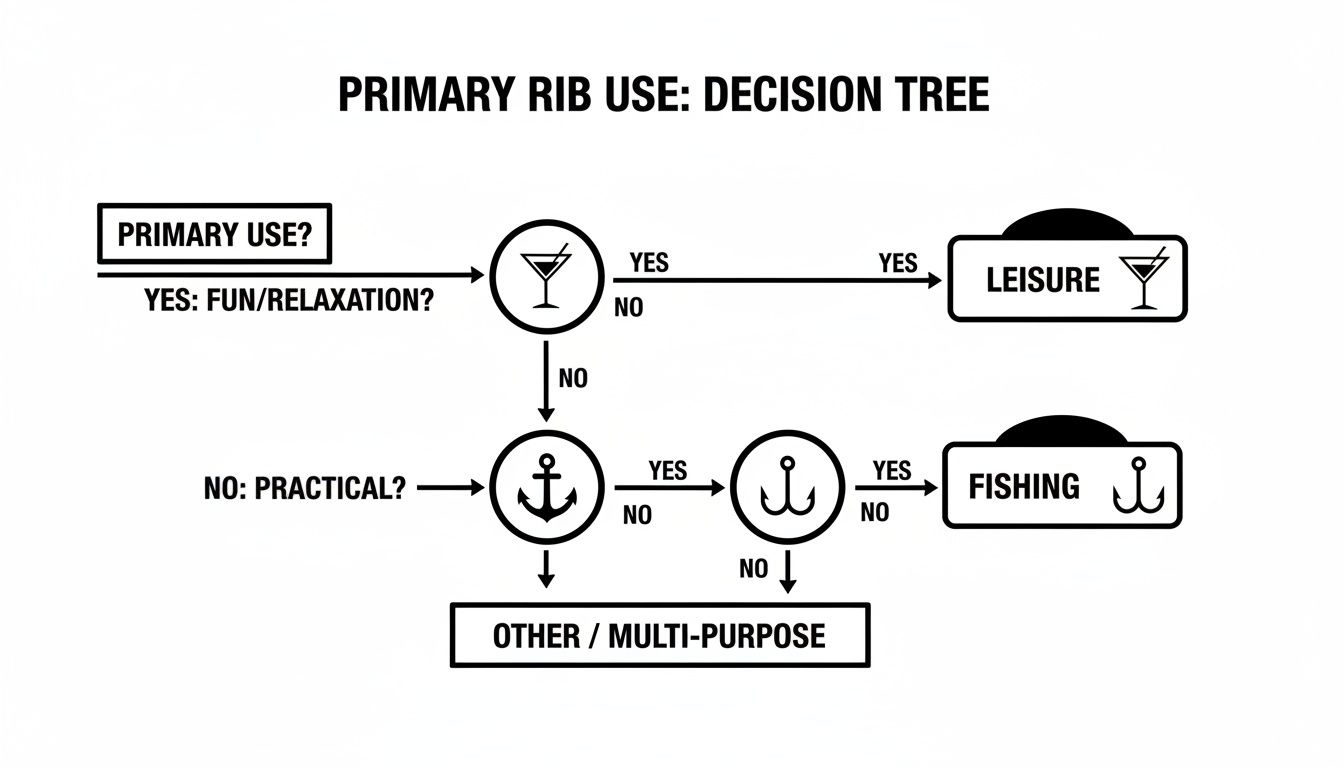
As you can see, your priorities—whether that’s relaxed family cruises or serious fishing expeditions—will guide you toward very different RIB configurations.
Once you’ve settled on a size, the next crucial step is pairing it with the right outboard motor. This is what brings your RIB to life. Every hull has a recommended horsepower range, and hitting that sweet spot is key to getting the performance you expect. An underpowered boat will feel sluggish and fight to get on the plane, while an overpowered one can be a real handful and even dangerous to handle.
The aim is to find that perfect balance. You want crisp acceleration when you need it, good fuel economy at cruising speed, and enough grunt to handle a full load of people and gear without straining the engine. Get this right, and you’re guaranteed a safe, efficient, and enjoyable day on the water, every single time.
Now we get to the best bit—turning a standard boat into your boat. The smartest way to get a purpose-built vessel without the massive price tag of a full custom build is to start with a proven, high-quality base model and then add the features you actually need.
A perfect example is our Sprint RIB range. These boats are an affordable and custom-built starting point. They are purpose-built and come in 330 and 350 sizes, which makes them an ideal platform for a huge variety of Aussie boaters who want something reliable and versatile.
The Sprint 330 and 350 models offer a solid, affordable foundation for customisation. Here’s a quick look at what makes them a popular choice for boaters who want to create their perfect vessel.
| Model | Length (cm) | Max Persons | Recommended HP | Key Features |
|---|---|---|---|---|
| Sprint 330 | 330 | 4 | 15 HP | Compact, agile, and perfect for tenders or solo fishing trips. Easy to handle and store. |
| Sprint 350 | 350 | 5 | 25 HP | More space for family or gear. Excellent stability for coastal runs and small group outings. |
With a great base like the Sprint, you can start thinking about tailoring it to your adventures. From there, the possibilities are almost endless. You can begin to think about:
Customisation lets you focus on what really matters to you. A dedicated angler will want a clean, clutter-free casting deck, while a family might prioritise comfy seating and a ski pole. The freedom to make these choices is what elevates a good boat into a great one. And to make sure that investment lasts, it’s worth looking at protective treatments. For example, a quality marine ceramic coating can provide a flexible, durable shield for your hull and tubes, protecting them from the harsh Aussie elements.
The real value of customisation is building a boat that removes friction from your day on the water. When everything has a place and the layout works for you, you spend less time managing your gear and more time enjoying the adventure.
Choosing between a standard production model and a personalised one comes down to balancing immediate availability with your specific needs. For a more detailed look, check out our insights on production boats vs custom inflatable boats to help decide which path is right for you. This approach ensures you end up with a rigid inflatable boat that feels like it was made just for you, ready for whatever adventure you have in mind.
Alright, you’ve done the research and you’re ready to make a move. This isn’t just a purchase; it’s an investment in years of fun on the water. To make sure you get it right, we’ve boiled everything down into a simple, practical checklist.
Think of this as your roadmap to finding the perfect RIB. It’ll give you the confidence to walk into a dealership, ask the right questions, and choose a boat that you’ll love for seasons to come.
Before you even start looking at boats, it’s worth spending a bit of time getting clear on what you truly need. Answering these questions honestly will save you a ton of time and help you zero in on the right models straight away.
Once you’re out there looking at rigid inflatable boats, it’s time to get into the nitty-gritty. A good dealer will be happy to answer your questions—if they’re not, that’s a red flag. When you want to compare prices and features of inflatable boats in your area, asking the right questions is key. A great way to start the conversation is to ask about our purpose-built Sprint RIBs in the 330 and 350 sizes, which are perfect for customisation.
Here are the key questions you can’t afford to skip:
A quick pro tip: Always ask about lead times, especially if you’re customising. Knowing if a boat is in stock or needs a 30-35 day order period helps you plan your season and avoids any surprises.
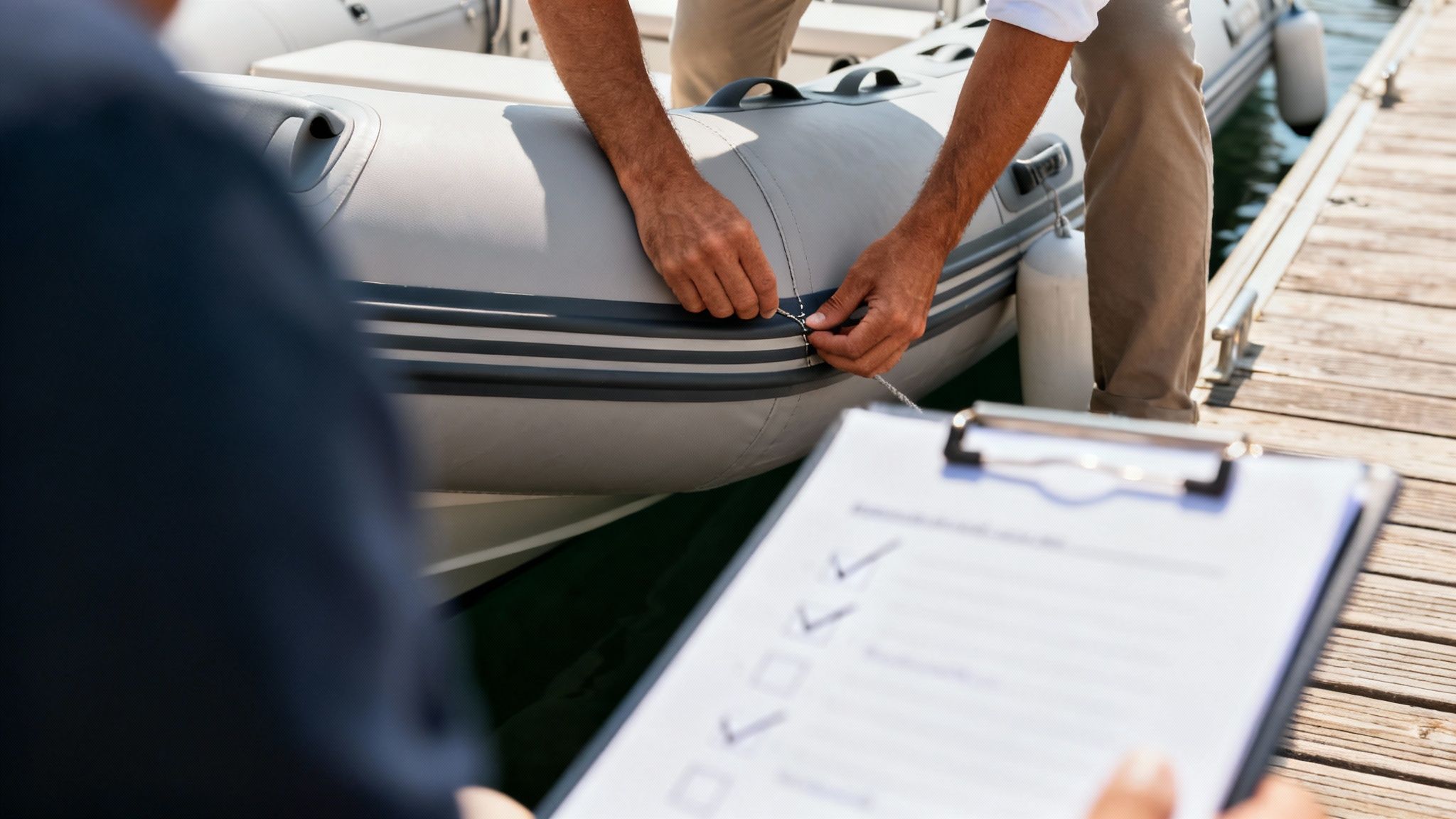
Nothing beats seeing a boat in the flesh. This is where you can really feel the difference between a quality build and something that might let you down. Get hands-on and check the details.
Your Inspection Checklist:
Following these steps methodically ensures you cover all your bases. It lets you compare different boats fairly and, most importantly, helps you invest in a quality RIB with total confidence.
Thinking about making the switch to a rigid inflatable boat? It’s a great move, but we know you’ve probably got a few questions first. To make things easier, we’ve gathered the most common queries we hear from boaties all over Australia and answered them right here.
Absolutely. In fact, this is where they truly shine. RIBs are legendary for their incredible performance and safety when the water gets choppy. It all comes down to their clever design.
The deep-V rigid hull is built to slice cleanly through waves, not bounce over them. At the same time, the large inflatable tubes on either side act like giant shock absorbers, soaking up the impact and providing a massive amount of buoyancy. This combination gives you a ride that’s much softer and drier than many traditional boats.
They also have a very low centre of gravity and a wide beam, which makes them ridiculously stable and incredibly difficult to capsize. It’s no accident that coast guard and rescue teams around the world rely on them day in, day out.
How long your RIB lasts really boils down to two things: the tube material and how well you look after it.
A high-quality Hypalon RIB that’s properly cared for—rinsed after use, covered to protect it from harsh UV, and stored correctly—can easily last 15-20 years, sometimes even longer. We’ve seen plenty of old classics still going strong.
PVC boats, on the other hand, generally have a lifespan closer to 10-15 years. While modern PVC is tough, it’s just more susceptible to long-term sun degradation, especially under the fierce Australian sun. The bottom line? A little bit of simple, consistent maintenance is the best way to get the most out of any RIB.
Yes, and that’s one of their biggest strengths. Most people start with a great base model and then add features to build their perfect boat. For example, our affordable, custom-built Sprint RIB range, available in the 330 and 350 sizes, was designed from the ground up to be a blank canvas for customisation.
Want a dedicated fishing rig? No problem. It’s easy to add rod holders, a bait board, and even a fish finder. Need something for comfortable family days out? Just add different seating options and a bimini top for sun protection. This flexibility lets you create a boat that’s a perfect match for your lifestyle, not the other way around.
Ready to design your perfect vessel? Explore our customisable range at Easy Inflatables and get a boat built just for you. Visit our website to see the possibilities.