
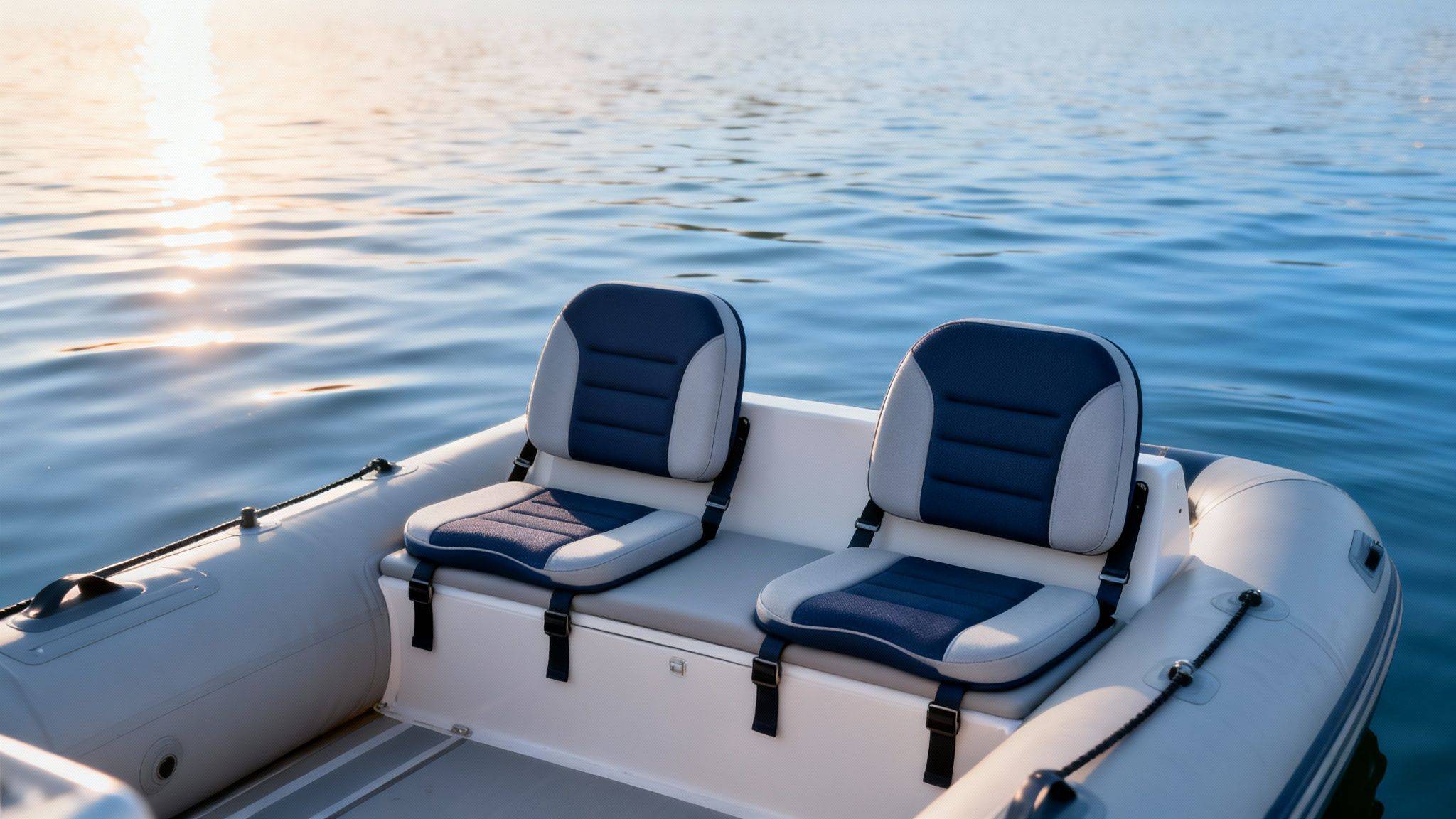
That jarring, bone-rattling feeling of hitting a wave on a hard bench seat? It’s a sensation every Australian boater knows all too well. Investing in high-quality boat seat pads turns that rough, tiring ride into hours of pure comfort and lets you stay out on the water longer, whether you’re using inflatable catamarans or a classic dinghy.
Picture the perfect family fishing day: the sun’s out, the tackle’s stowed, and excitement is high. Yet an hour in, the kids are restless, your back is screaming, and every tiny wake feels like a mini earthquake under your seat. That unforgiving inflatable bench has cut the fun short and nudged you back to shore far too soon. For those looking to compare prices and features of inflatable boats in your area, comfort should be a key consideration.
Upgrading to cushioned seating isn’t just a nice-to-have—it directly boosts your stamina, keeps everyone safer, and makes every outing more enjoyable. For more context on how this fits into a complete boating setup, see our range of inflatable boats in Australia.
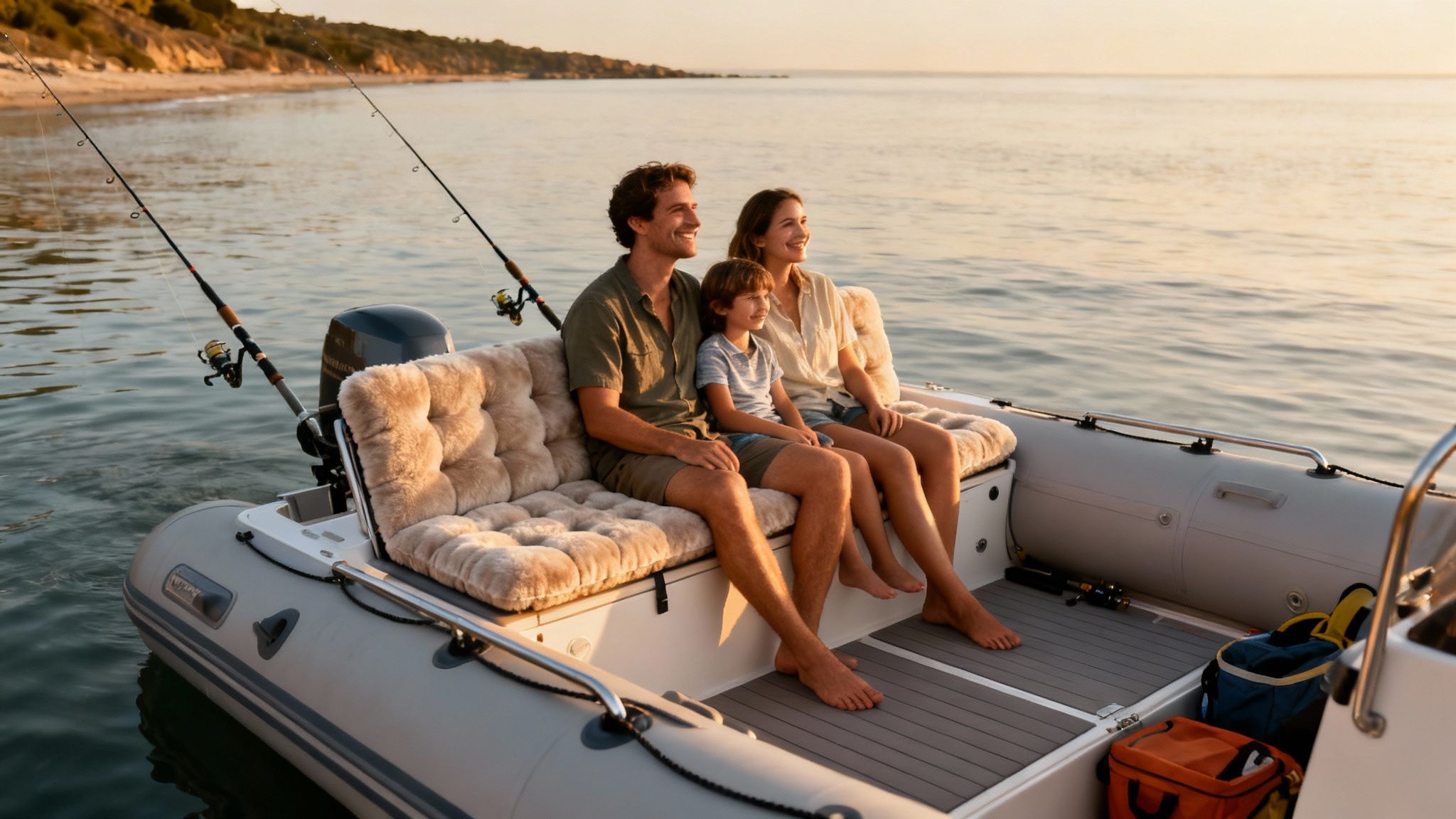
Think of premium seat pads as the suspension system for your body. Every ripple and chop that once shot straight to your spine now feels more like a gentle sway.
Key benefits include:
Modern seat pads—especially those in the Aerowave range—are built for Australia’s harsh marine climate. They blend shock-absorbing foam with PVC or Hypalon covers that resist UV, mildew, and abrasion.
On top of comfort, they deliver vital ergonomic support to ease strain on your back and joints. And when you add clever accessories like the Aerowave Underseat bags, which are great to put gear in, a basic bench transforms into an organised command centre—complete with storage for rods, tackle, and snacks.
Not all foam and fabric are created equal, especially when you’re up against the harsh Australian sun and constant saltwater spray. The materials that make up your boat seat pads are the difference between a one-season wonder and a long-term investment in comfort. Getting this right is key to choosing a pad that protects both you and your inflatable catamaran or boat.
The two most critical parts are the outer cover and the inner foam core. Each one has a specific job to do, and together they deliver the durability and support you need out on the water.
The cover is what faces the elements directly, so it absolutely has to be tough. Marine-grade materials are specifically engineered to withstand conditions that would destroy standard fabrics in a heartbeat.
For boat seat pads, the ability to handle moisture and heavy use is non-negotiable. It’s a bit like choosing good waterproof seating protection for your couch at home—you want something that lasts. Ultimately, the right cover safeguards the precious inner foam and prevents abrasion against your boat’s sensitive PVC or Hypalon tubes.
To help you weigh your options, here’s a quick comparison of the most common materials used for boat seat pads in Australia.
| Material | UV Resistance | Water Resistance | Best For | Durability |
|---|---|---|---|---|
| Marine Vinyl | Excellent | Excellent | All-around use, easy cleaning | Very High |
| Marine Canvas | Good-Excellent | Good (treated) | Humid climates, breathability | High |
| Polyester | Good | Good | Budget-friendly, casual use | Medium |
| Neoprene | Excellent | Excellent | High-impact use, watersports | Very High |
This table gives you a snapshot, but remember the real magic happens when the outer cover is paired with the right foam core.
Think of the foam inside your seat pad like a wetsuit versus a kitchen sponge. One is designed for the water, while the other will quickly become a soggy, heavy mess. This all comes down to its cellular structure.
The core of a quality boat seat pad is its foam. Choosing the right type determines not just comfort, but the pad’s lifespan and its ability to resist becoming a waterlogged breeding ground for mould and mildew.
Closed-cell foam is the undisputed gold standard for anything marine. Its cells are completely sealed off from each other, which makes it inherently waterproof. It simply won’t absorb moisture, provides firm and lasting support without compressing over time, and is an absolute must-have for any serious boater.
On the other hand, open-cell foam acts just like that kitchen sponge. Its interconnected cells soak up water like a magnet, making the pad heavy, prone to mould, and quick to break down. It might be cheaper, but it’s a terrible choice for the marine environment.
A truly great boat seat pad brings these materials together in harmony. The vinyl or canvas cover shields the closed-cell foam from the sun, while the foam provides the buoyant, water-repellent structure needed for a comfortable ride. This synergy is crucial for inflatable boats, where protecting the tubes is just as important as your own comfort.
Your choice of boat material—whether it’s robust PVC or premium Hypalon—also plays a part in finding the ideal pad. You can learn more about the differences between Hypalon and PVC in our detailed guide.
This focus on quality materials is something we’re seeing across the board. The Oceania marine seats market, led by Australia, is showing strong growth, especially for components like cushions and pads in recreational boating. In fact, a whopping 70% of Aussie boaters cite comfort as a top upgrade priority, so the market is definitely shifting away from basic benches toward more ergonomic, durable seating solutions. This is part of a global trend, with the marine seats market expected to grow from US$1.8 billion in 2023 to US$2.95 billion by 2033. You can find more insights on marine seat market trends at Fact.MR.
The best boat seat pads aren’t just comfortable—they’re designed for your specific adventure. What works for a solo angler chasing flathead is completely different from what a family needs for a fun day out. If you’re wondering, “What are the best inflatable boats for recreational use available near me?” the answer often depends on having the right accessories for comfort.
Think of it like choosing tyres for your car. You wouldn’t put slick racing tyres on a 4WD heading into the bush, and you wouldn’t use heavy-duty off-road treads for a city runabout. The same logic applies here; your boat’s seating needs to be perfectly suited for the journey ahead.
Anglers demand performance and practicality. When you’re casting lines and battling a catch, the last thing you want is a soft, squishy cushion that makes you lose your balance. A stable, firm base is crucial.
That’s why pads with high-density, closed-cell foam are the top choice—they offer excellent support that won’t compress under pressure. An easy-to-clean surface is also non-negotiable. Marine-grade vinyl is perfect, as it lets you wipe away bait, scales, and saltwater spray in seconds.
For more tips on setting up the ultimate fishing vessel, check out our guide on choosing a fishing inflatable boat.
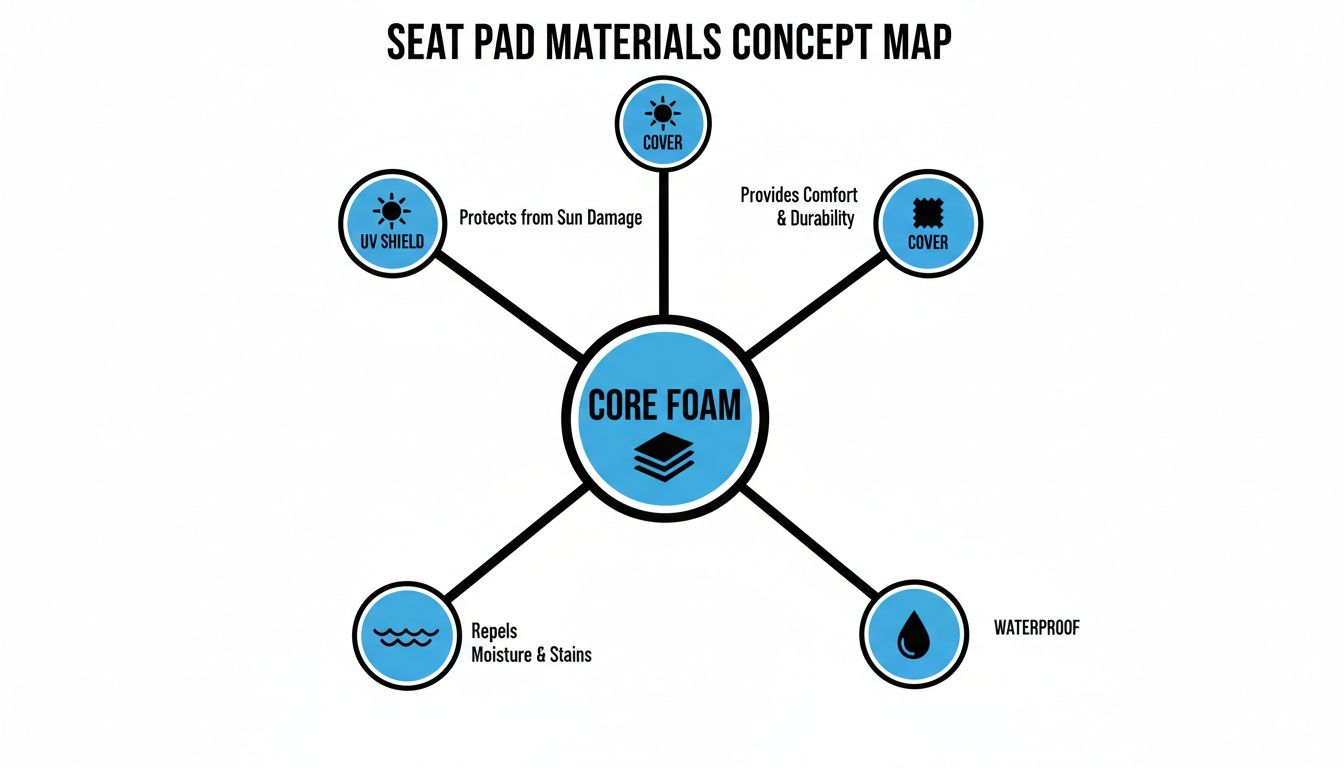
As you can see, the core foam, protective cover, and waterproof qualities all work together to create a durable, comfortable, and practical seat pad built for real-world conditions.
When the whole family is on board, plush comfort and durability take centre stage. Days spent cruising, swimming, and picnicking call for a softer, more forgiving cushion that keeps everyone happy for hours on end. A slightly thicker pad with a medium-density foam core usually hits that perfect sweet spot between support and softness. If you’re looking to hire inflatable boats for a family outing in Australia, ask if they come with cushioned seating.
Durability is another massive factor. The material needs to handle everything from spilled drinks and sunscreen to excited kids climbing all over the seats. Look for marine-grade vinyl or treated canvas with reinforced stitching that can handle the wear and tear of a fun-filled family adventure.
The right seat pad transforms a simple boat bench into a comfortable lounge, making every moment on the water more relaxing and enjoyable for passengers of all ages.
Portability and light weight are everything for those who take their boat on the road or use it as a yacht tender. You need boat seat pads that are easy to pack away, don’t add much weight, and can be set up in a flash.
Look for streamlined designs that offer good cushioning without being bulky. Pads with quick-release buckles are ideal, letting you attach and remove them in seconds. The focus here is on efficient comfort—a simple upgrade that makes a world of difference without complicating your travel plans.
To make things even clearer, we’ve put together a table to help you match your boating style with the right gear.
| Boating Style | Recommended Pad Features | Key Accessory | Why It Works |
|---|---|---|---|
| Dedicated Angler | High-density foam, marine-grade vinyl cover | Rod Holders | Provides a stable, non-slip base for casting and an easy-to-clean surface for a mess-free fishing trip. |
| Family Cruising | Medium-density foam, thick cushion, reinforced stitching | Bimini Top | Maximises comfort for long hours on the water and withstands the wear and tear of kids and gear. |
| RV Traveller/Tender | Lightweight, compact design, quick-release buckles | Boat Wheels | Easy to transport, store, and install, adding comfort without sacrificing precious space or adding weight. |
Ultimately, choosing the right pad comes down to how you use your boat. By matching the features to your adventures, you’ll get more enjoyment out of every single trip.
A comfortable boat seat pad is a must-have for long days on the water, but smart organisation is what really takes your boating experience to the next level. Pairing your new seat pad with a quality underseat storage bag is the secret to turning a simple bench into a functional command centre for all your gear. The Aerowave Underseat bags are great to put gear in, keeping it dry and accessible.
This combination is a genuine game-changer for inflatable boats, where every square centimetre of deck space is prime real estate.
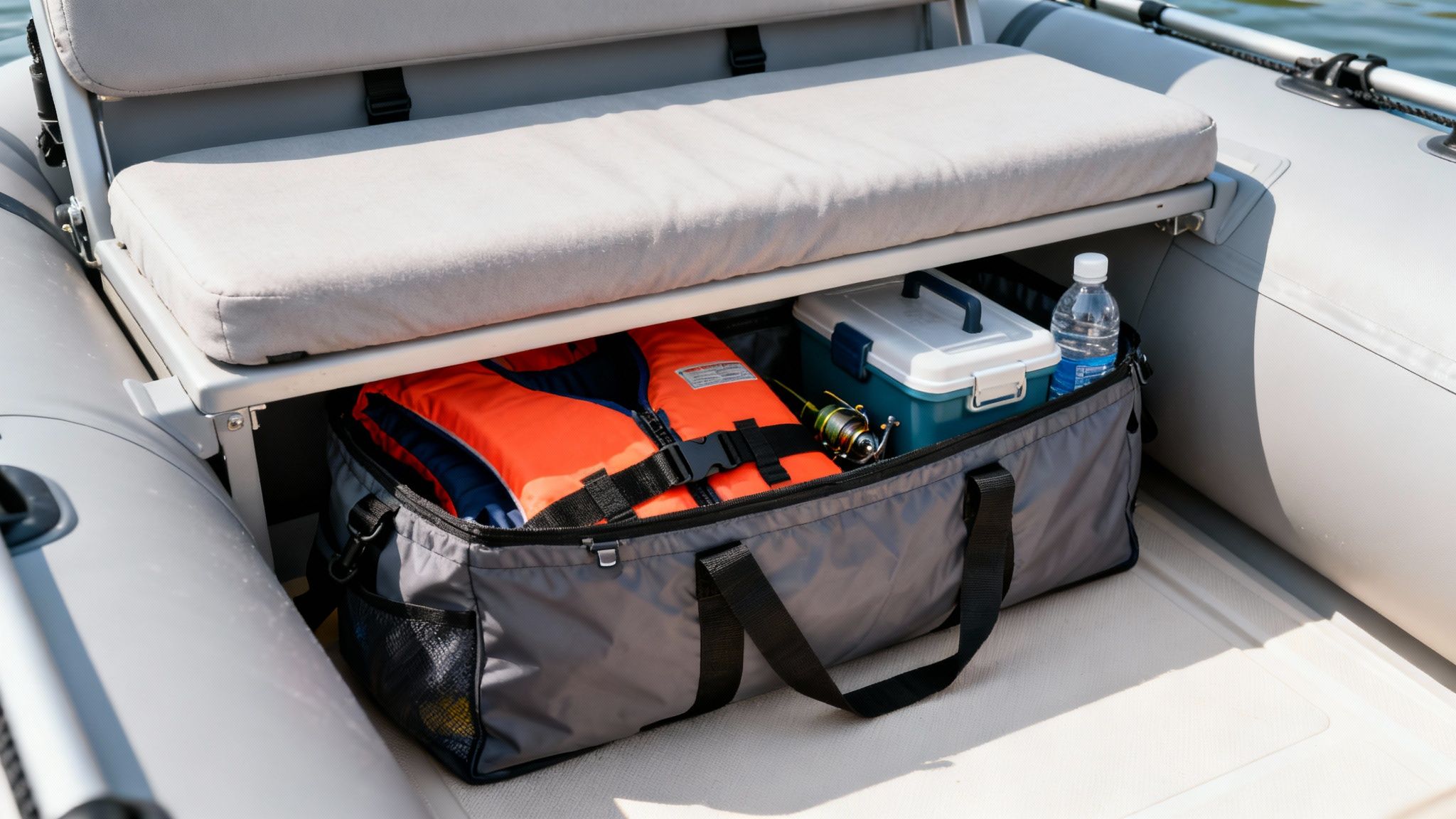
Imagine having instant, waterproof access to your safety gear, tackle boxes, or snacks without tripping over bags and equipment scattered across the floor. A clear deck isn’t just about looking tidy—it’s a critical safety measure that ensures you can move freely and react quickly when you need to.
By tucking storage directly beneath your seating, you reclaim valuable floor space, making your boat feel bigger and work smarter. This setup keeps your essentials secure, dry, and right where you need them, when you need them.
For Aussie families and anglers, adding a premium seat pad can make long fishing trips far more comfortable, reducing fatigue by up to 30%. This makes underseat storage even more practical, keeping everything you need for a long day on the water neatly organised. It’s also a huge plus for beach campers and RV travellers who need their gear stable and secure on choppy coastal waves.
The best systems are the ones designed to work together from the start. Our Aerowave underseat bags are engineered to fit perfectly with our range of boat seat pads, creating a unified and incredibly practical solution.
Here’s what makes this combination so effective:
The principles of using tough, accessible storage apply universally, which is why adventurers also rely on things like durable duffle bags to keep their gear organised.
This clever combination of comfort and storage is simple yet incredibly effective. By equipping your inflatable with the right accessories, you’re setting yourself up for a smoother, safer, and more organised adventure every time you head out. Check out our purpose-built Aerowave inflatable boats under-seat bag to complete your setup.
Your new boat seat pads have arrived, and you’re ready to transform your comfort on the water. Now for the important part: getting them set up right and making sure they last. A little effort here goes a long way in protecting your pads from the harsh Australian marine environment, ensuring they deliver comfort for years to come.
Most seat pads for inflatables are designed for a quick, tool-free setup. They use adjustable straps and sturdy buckles that wrap around the bench seat, giving you a snug fit that won’t slide around, even in choppy conditions.
A secure fit is more than just a convenience—it’s a safety feature. A pad that shifts during a sharp turn or when hitting a wave can be a real hazard. The goal is to make the pad feel like it’s part of the seat itself.
Here’s a straightforward process for getting it right:
Your seat pads live in a tough world of sun, salt, and moisture. A simple maintenance routine is your best defence against premature wear, mould, and fading, keeping them looking and feeling great season after season.
The aftermarket for seat pads is booming, with 40% of sales targeting upgrades for existing inflatables, driven by anglers and yacht owners. For coastal adventurers, particularly those looking for inflatable boats for sale, pads that can handle tough conditions are essential. They provide critical vibration dampening on extended trips, significantly cutting down on fatigue. Find out more about how the marine seating market is growing at MarketsandMarkets.com.
A little preventative care is all it takes to preserve the life of your pads.
A common mistake is storing pads while they are still damp, especially inside an underseat bag or a rolled-up boat. This creates the perfect breeding ground for mildew, which can be a real headache to remove once it takes hold.
For those wanting a deeper dive into overall boat care, our guide on inflatable boat maintenance made simple offers more great tips. By following these easy steps, your boat seat pads will remain a comfortable and valuable part of your setup for countless adventures to come.
An ill-fitting boat seat pad is more of a liability than a luxury. Picture this: you make a sharp turn or hit a bit of chop, and your cushion slides out from under you. It’s annoying at best and downright dangerous at worst, completely undermining the stability you were looking for in the first place. The secret to unlocking real comfort and safety is getting that perfect, snug fit that feels like it was custom-made for your inflatable.
Taking just a few moments to measure your seat properly is probably the single most important step you can take. It’s what ensures your pad performs as it should, prevents premature wear and tear, and guarantees your investment pays off with the support and security you expect. A proper fit isn’t just a nice-to-have; it’s non-negotiable for a great day on the water.
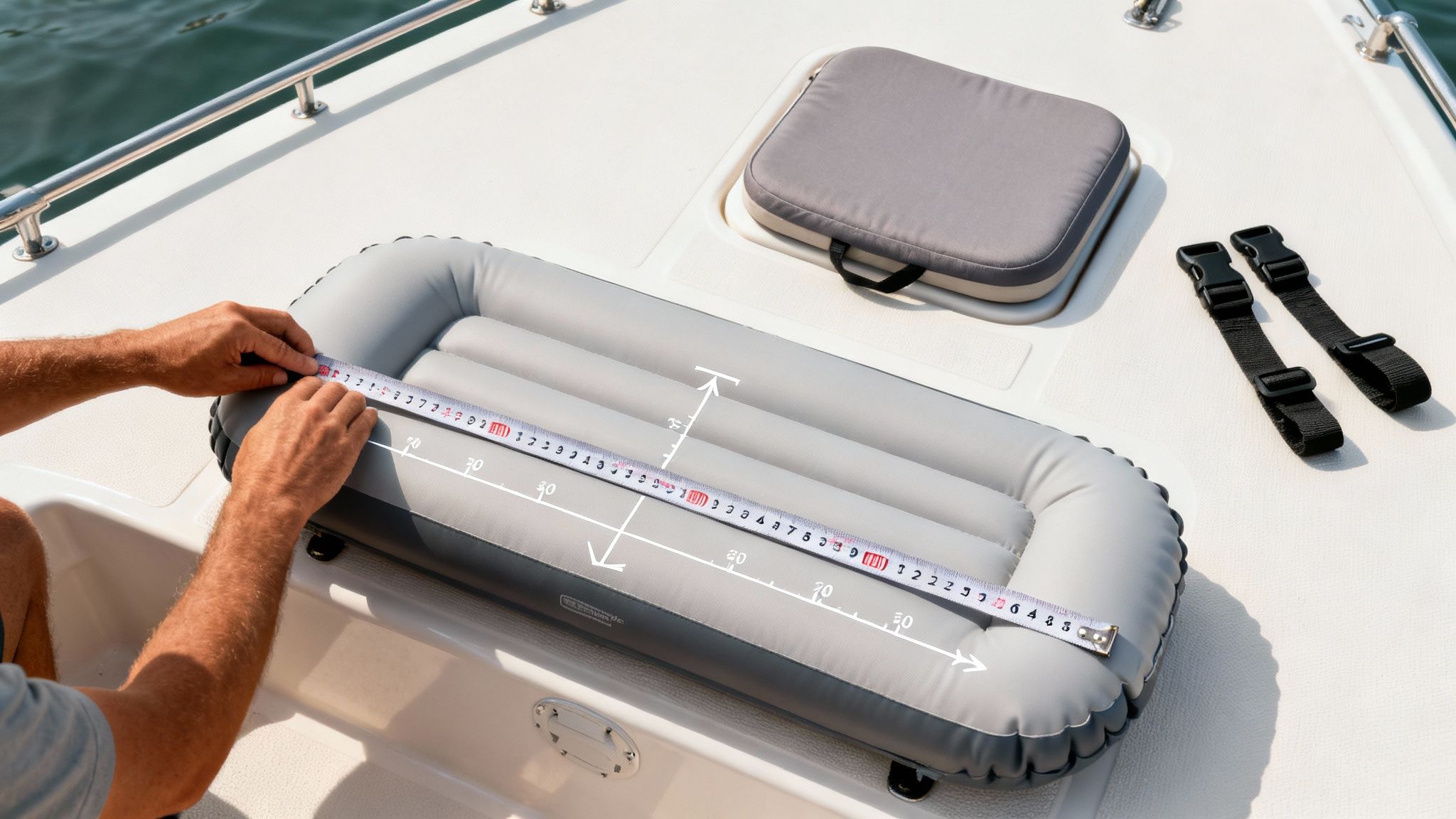
Getting precise measurements is far easier than you might think. All you need is a tape measure and a couple of minutes to make sure your new pad fits like a glove.
Here’s a foolproof process to follow:
Jot these numbers down. With the exact length and width of your bench, you can easily compare it to the product specs and find a pad that gives you edge-to-edge comfort without any awkward overhang.
Once you’ve got your measurements sorted, the next decision is how you’ll secure the pad to your boat. This choice really comes down to your personal preference for convenience versus maximum stability, as each method has its own clear advantages.
Think about how you use your boat. Do you need to pop the pad off regularly for cleaning and storage? Or are you more of a “set and forget” type who wants it locked down, no matter what?
Common Attachment Options
The right attachment system is crucial for both safety and function. A well-secured cushion stays put, preventing dangerous slips and ensuring that any integrated storage, like an Aerowave Underseat Bag, remains stable and anchored.
By combining accurate measurements with the ideal attachment style for your boating life, you can choose a boat seat pad that integrates seamlessly with your inflatable. This little bit of prep work guarantees a secure, custom-feel fit that makes every moment on the water better.
We get a lot of questions about how to choose and use boat seat pads, especially from inflatable boat owners across Australia. To help you make the right call, we’ve pulled together the most common queries and given you some straight-up, practical answers.
While it might be tempting to grab any pad off the shelf, it’s best to choose one designed specifically for inflatables. The real difference is in the attachment method; you need non-abrasive straps that won’t chafe or damage the PVC or Hypalon fabric of your boat’s tubes.
A snug fit is also crucial for staying stable out on the water. Our Aerowave pads are engineered to wrap perfectly around inflatable boat benches, guaranteeing a secure, non-slip ride every time.
Keeping moisture in check is absolutely essential, particularly if you’re boating in humid coastal areas. The golden rule is to always wipe your pads dry with a towel after each use, especially after copping some saltwater spray or rain.
When you’re done for the day, store them in a dry, well-ventilated spot. Never leave them damp inside a storage bag or rolled up with the boat, as that’s just asking for mildew. For extra peace of mind, a quick wipe-down with a marine-grade cleaner that has mould inhibitors works wonders.
Not at all. The quality and density of the foam inside are far more important than sheer thickness. A thick pad made from cheap, low-density foam will just compress flat under your weight (a problem known as ‘bottoming out’) and will soak up water like a sponge.
A moderately thick pad made from high-density, closed-cell marine foam provides far superior, lasting support. It gives you the comfort you need without becoming a heavy, waterlogged problem. It’s what’s on the inside that truly counts.
Absolutely, and it’s a brilliant way to maximise your storage. The Aerowave Underseat bags are specifically designed to work hand-in-hand with our range of boat seat pads.
The bag’s straps are long enough to loop around the entire bench seat, fitting securely underneath the pad itself. This creates a clever, integrated system where your comfy seat also anchors your storage, keeping your deck clear and your gear right where you need it. It’s the perfect setup for stashing everything from tackle to safety equipment.
Ready to transform your comfort and upgrade your adventures on the water? Explore the full range of durable, high-performance boat seat pads and accessories at Easy Inflatables. Discover the perfect fit for your inflatable boat today by visiting us at https://easyinflatables.com.au.