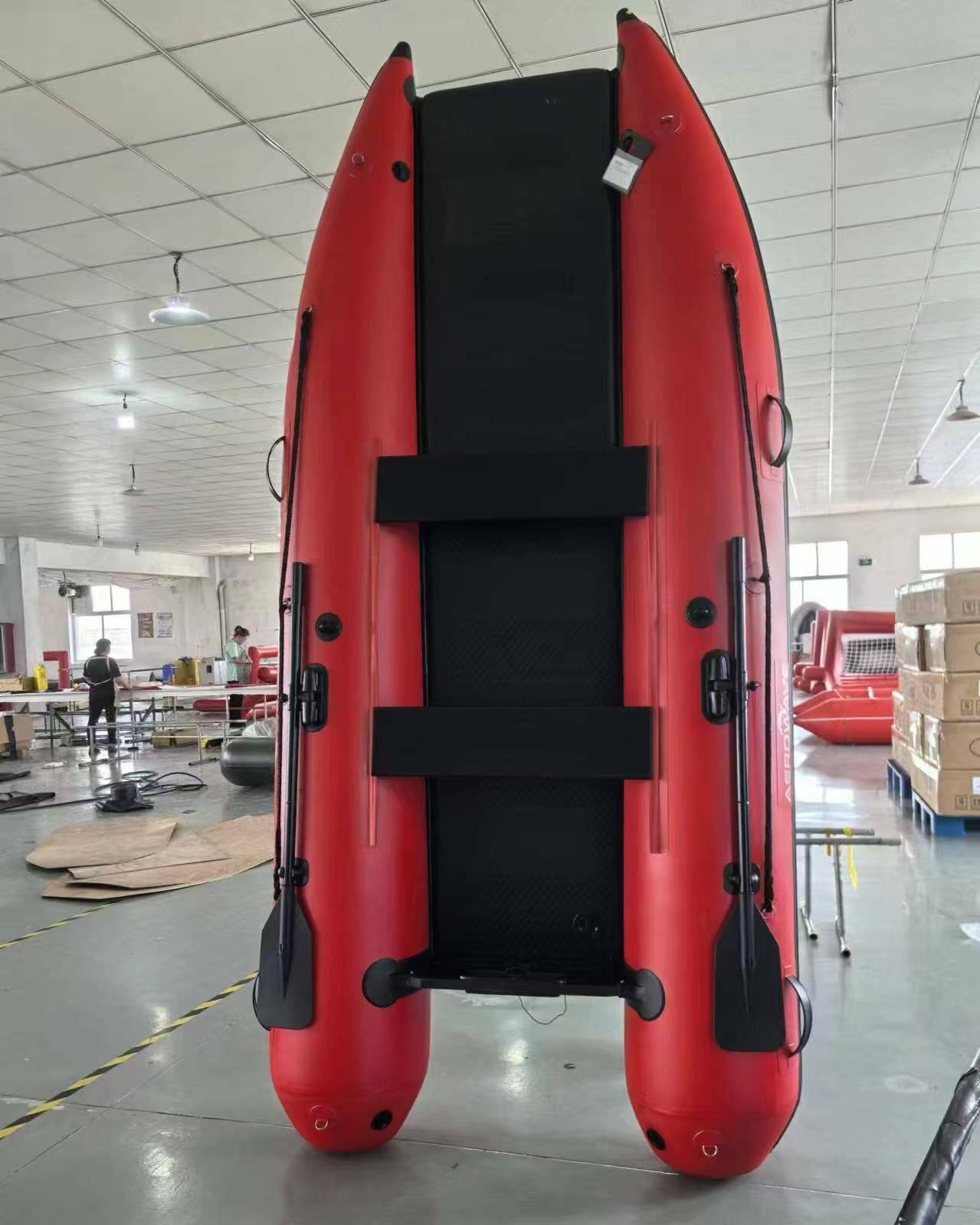
Every Aerowave inflatable boat we deliver is engineered, tested and equipped to be genuinely safe in Australian conditions — from sheltered estuaries to offshore fishing runs. This page explains the standards we build to and the responsibilities you take on as an operator.
CE certified — ISO 6185-3 & EU Directive 2013/53/EU
AMSA-aligned safety equipment guidance
Independent multi-chamber buoyancy
5–7 year hull warranty (years 1–5 comprehensive, 6–7 major structural)
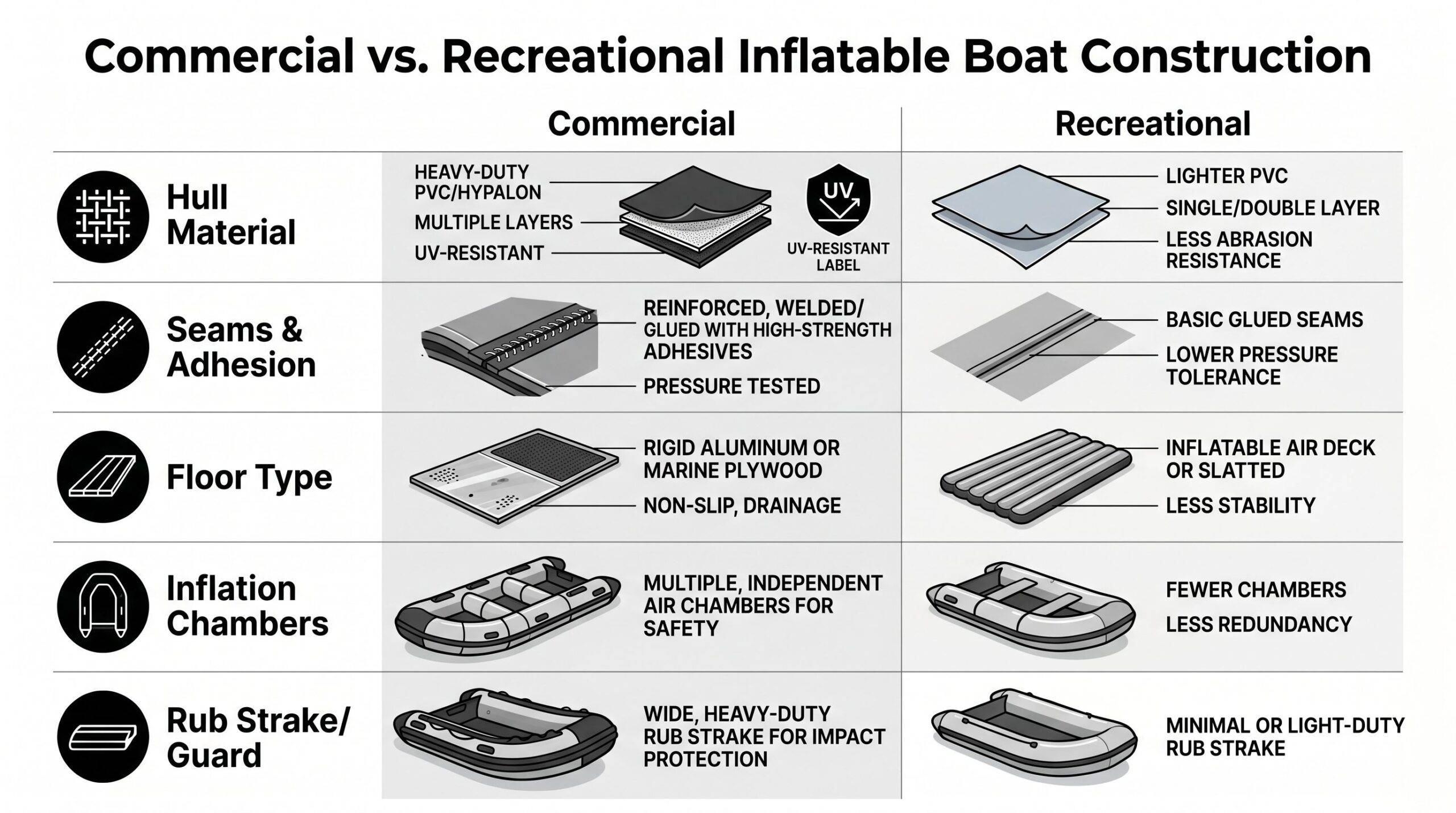
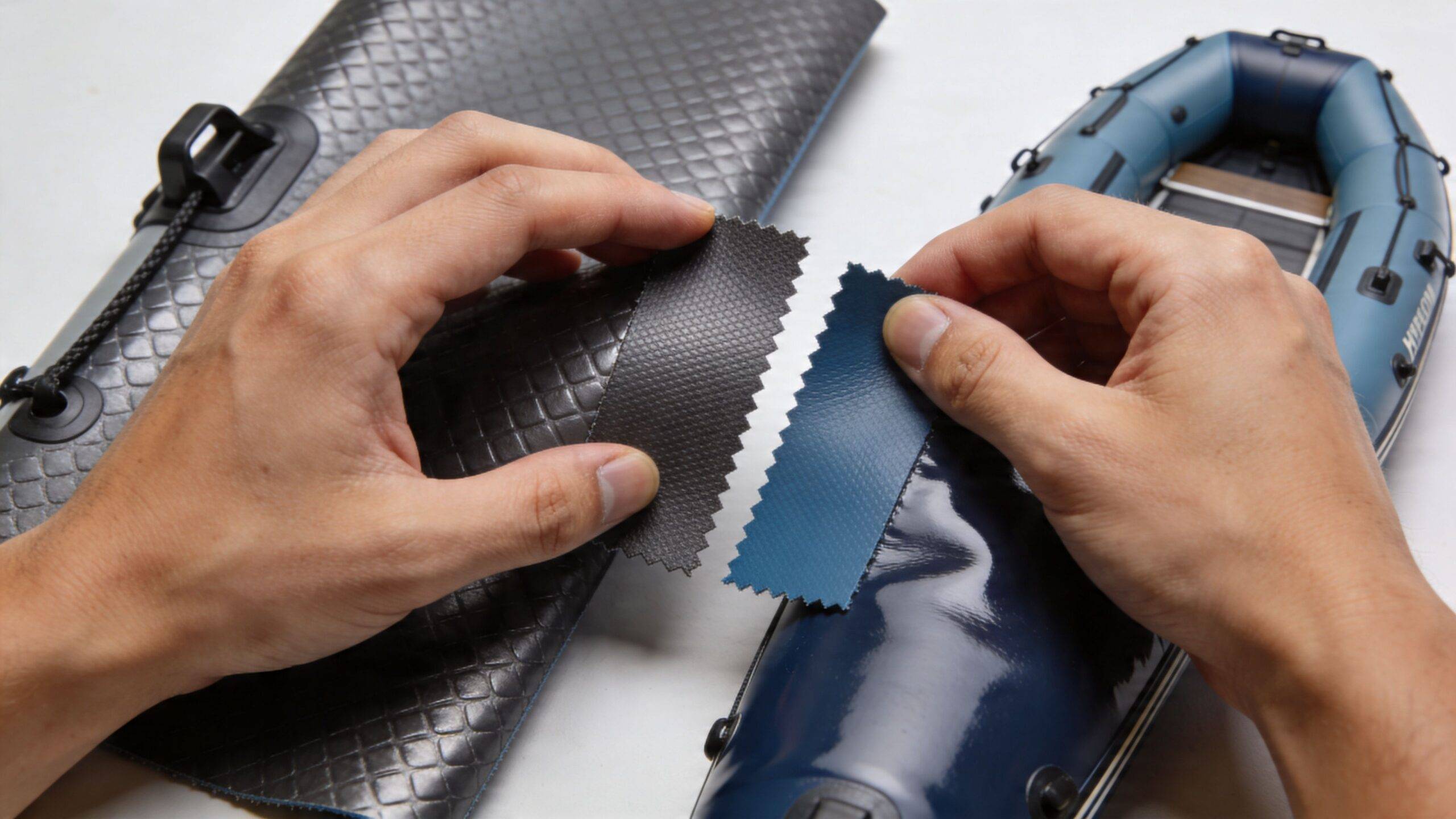
German VALMEX® Heavy Plus 1.2mm commercial-grade tube fabric, double-coated air-deck floors and reinforced rub-strakes — the same material class used on professional rescue and patrol RIBs. We also offer 1100 D-Tex VALMEX® for our recreational range.
Multi-chamber buoyancy
Independent air chambers with isolation valves. Loss of pressure in one chamber still leaves the boat afloat, stable and recoverable to shore.
Tested in real Australian conditions
Hull, transom and floor performance is validated by AMSA-registered commercial skippers — chop, surf launches, beach landings and long fuel runs.
Engineered transom & towing points
Reinforced ply transom, bonded D-rings and stainless tow eyes rated for the boat's maximum recommended horsepower and load.
From the fabric roll to the ramp — what marine-grade actually looks like.
A look at the construction methods, materials and safety equipment that sit behind every Aerowave inflatable boat we deliver.
Commercial-grade construction
Bonded seams, reinforced rub-strakes and marine-grade transom layups.
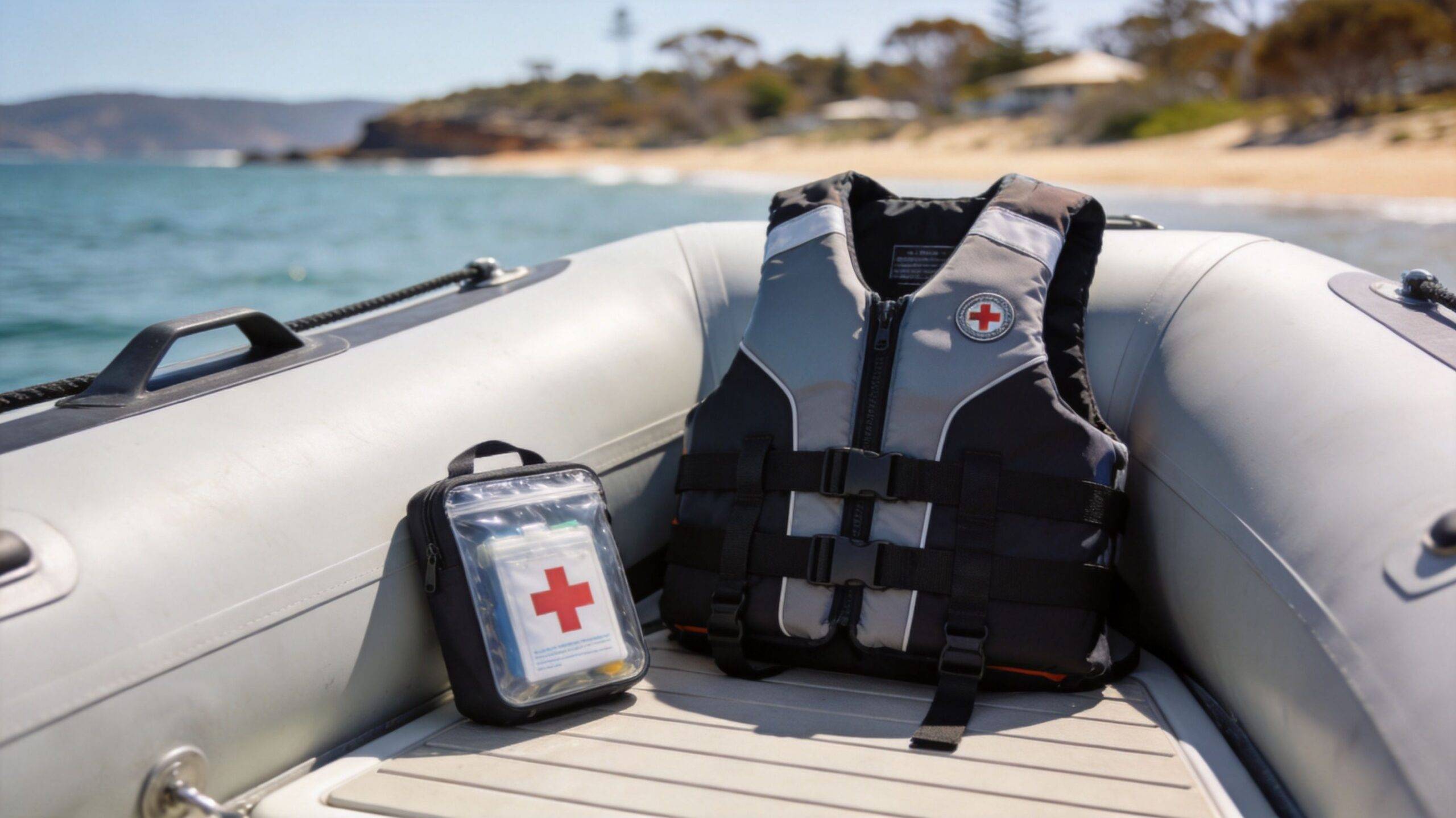
AMSA-aligned safety gear
Every boat shipped with guidance on PFDs, EPIRBs, flares and VHF.
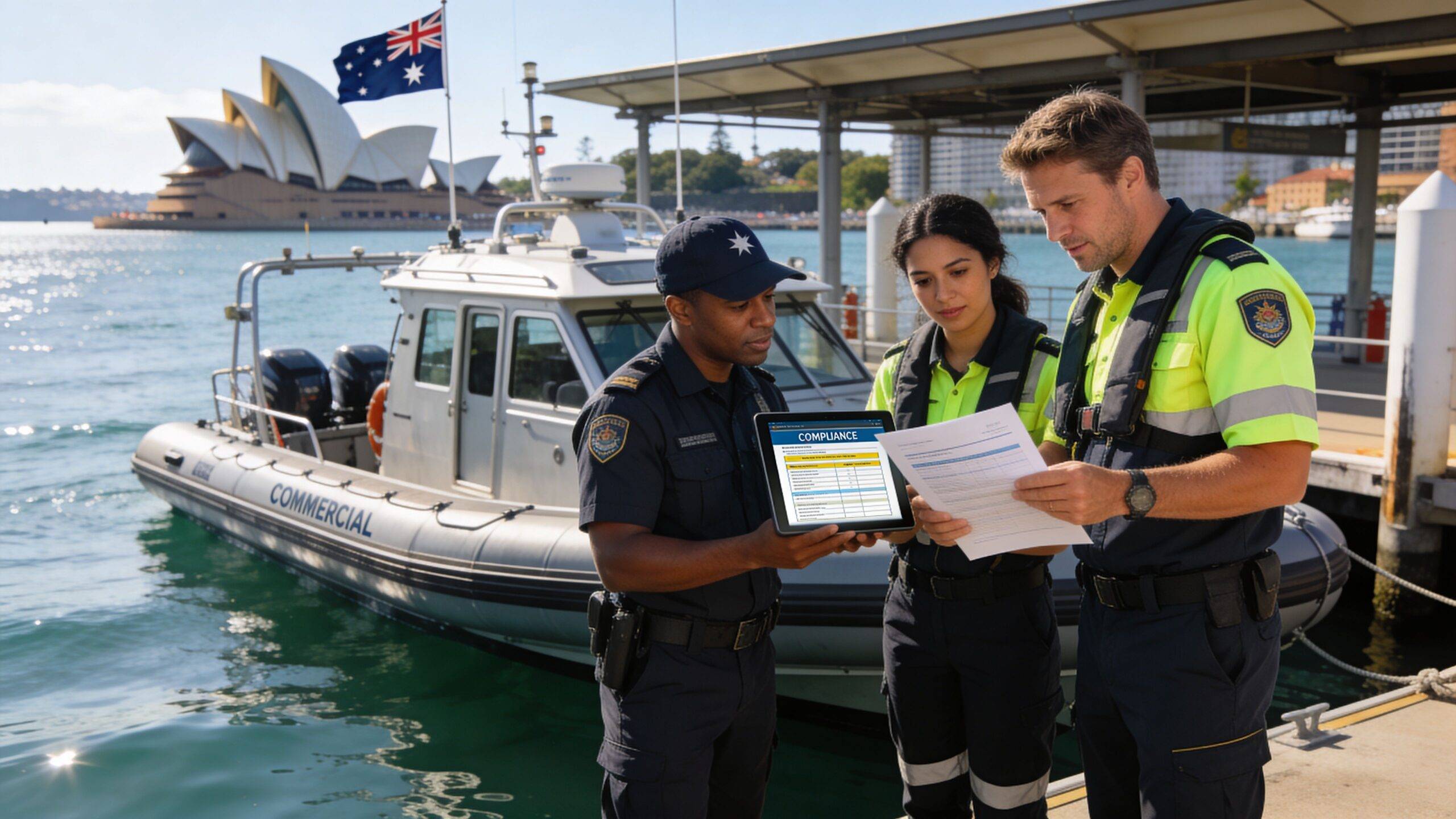
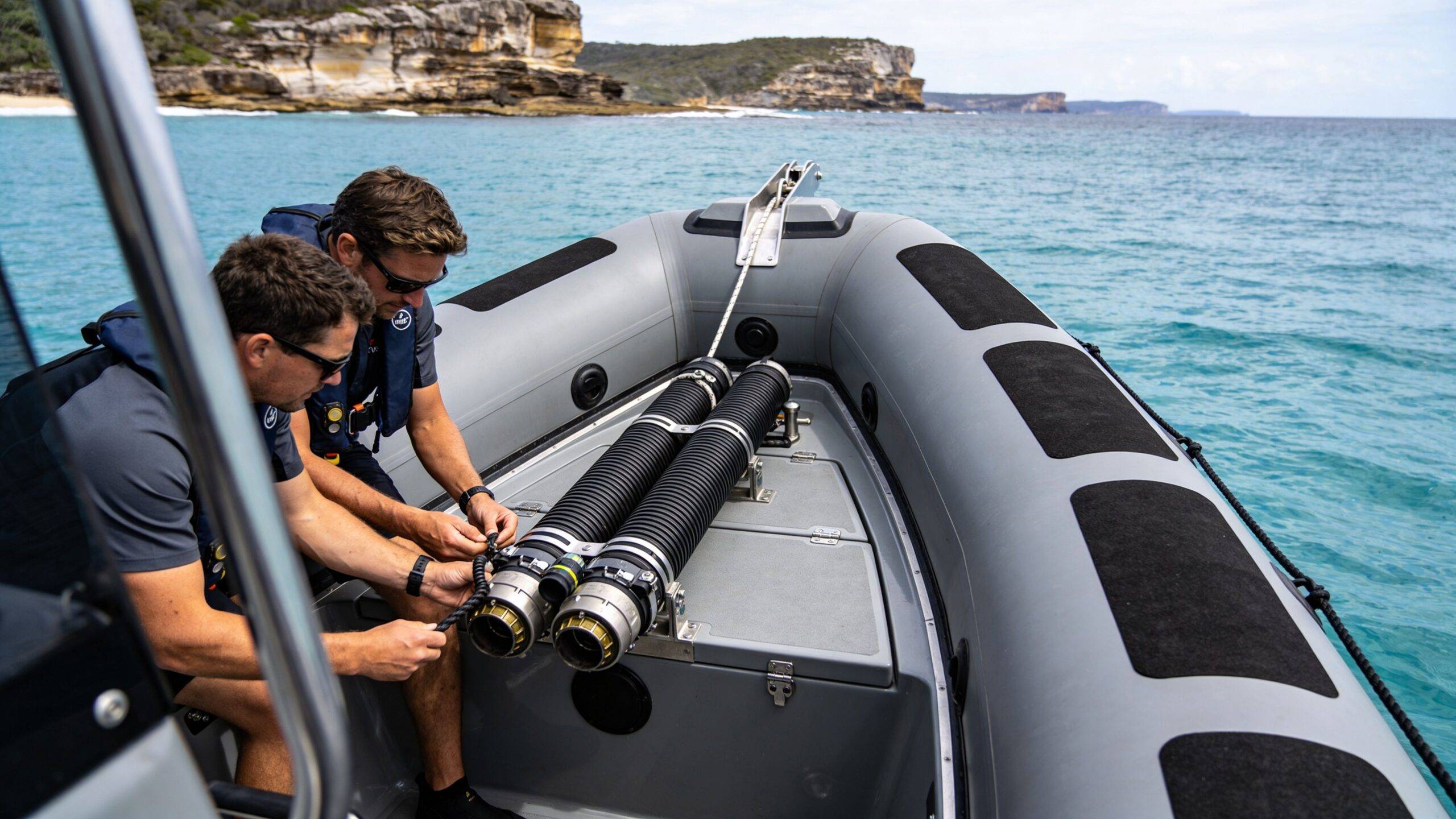
Inspected before delivery
Pre-delivery checks signed off by AMSA-registered commercial skippers.
German VALMEX® Heavy Plus 1.2mm
Commercial-grade fabric — same class used on professional rescue and patrol RIBs. 1100 D-Tex VALMEX® also available on our recreational range.
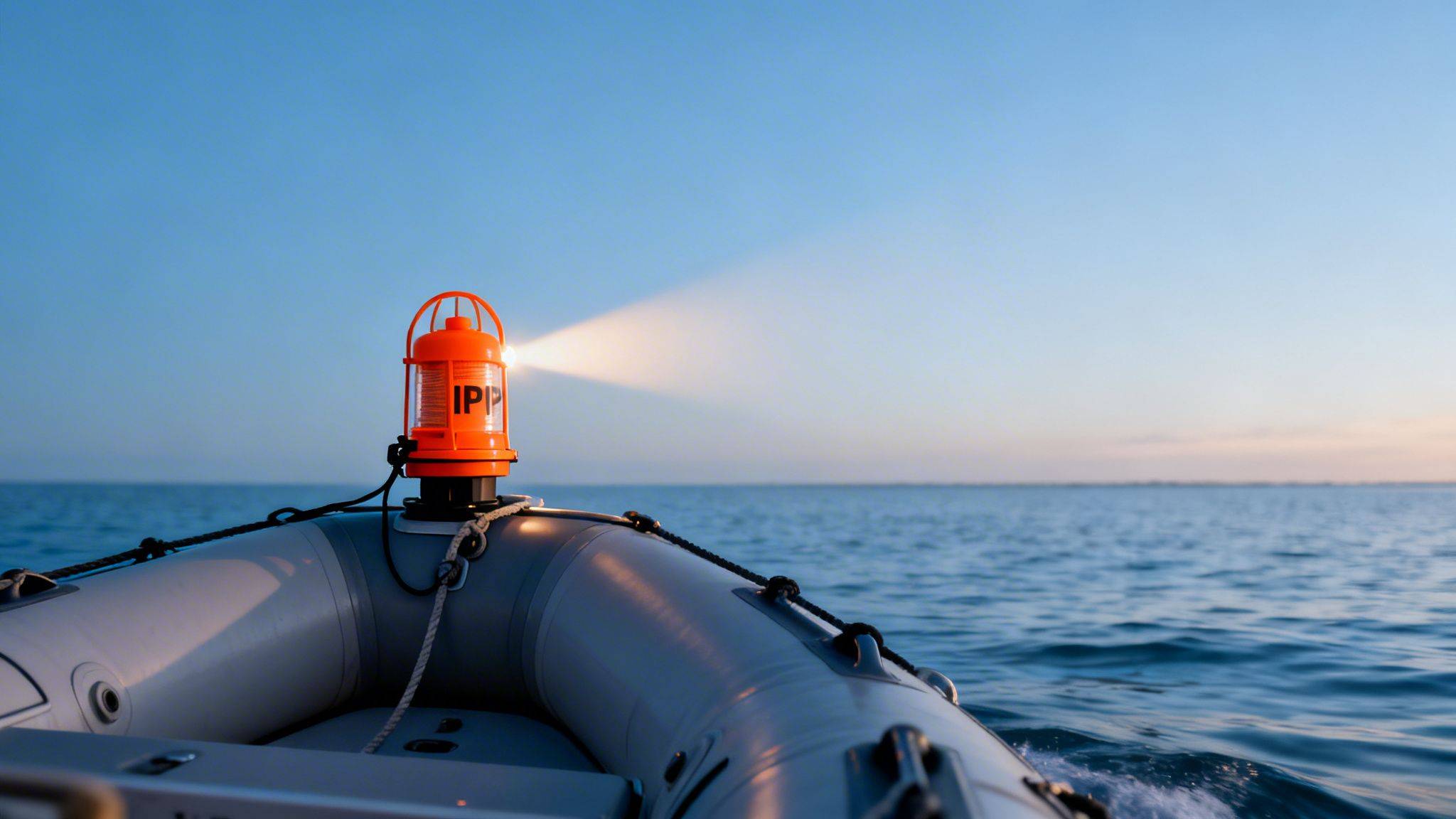
EPIRB-ready offshore
406 MHz beacon guidance for serious offshore and bar-crossing work.
Long-term ownership
Maintenance guidance to keep tubes, valves and seams in service for years.
Standards we build to
Aligned with the standards Australian operators trust.
Recreational inflatable boats are not currently subject to a single mandatory certification scheme in Australia. We choose to align our designs and equipment guidance with the leading international and AMSA-aligned standards so owners can buy with confidence.
ISO 6185-3 certified construction
Aerowave inflatable catamarans and monohulls are built to comply with ISO 6185-3 — the international standard for inflatable boats — covering buoyancy chambers, stability, transom, fittings and seam integrity for craft with motors over 15 kW.
EU Directive 2013/53/EU (Recreational Craft)
Construction also complies with the EU Recreational Craft and Personal Watercraft Directive 2013/53/EU. Every boat ships with a CE plate (HIN, builder, max load, rated outboard) and a Statement of Conformity from the manufacturer.
AMSA-aligned safety gear lists
Every boat package ships with guidance for the safety equipment required by the Australian Maritime Safety Authority (AMSA) and state-based recreational boating regulators.
Australian Builders Plate — exempt
Under the National Standard for the Australian Builders Plate, inflatable boats carrying a plate certifying compliance with EU Directive 2013/53/EU are specifically excluded from the application of the ABP Standard. Every Aerowave carries that plate, plus the manufacturer's Declaration/Statement of Conformity showing vessel identification, capacity, engine and compliance information.
Australian Boat Code (state-level)
CE certification is the build standard. In NSW and some other states, a separate Boat Code Certificate / HIN check is also required for registration — typically $92–$150 via a mobile certifier. The certifier checks the CE plate and Statement of Conformity, then issues the certificate. It's a one-time inspection at first registration — unlike a car pink slip, you do not repeat it every year. We supply every supporting document you need.
Australian Consumer Law
Boats are supplied with the statutory consumer guarantees set out in the Australian Consumer Law, in addition to our 5–7 year hull warranty.
Hidea outboard compliance
All factory-supplied Hidea outboards meet emissions and noise standards required for sale in Australia, with full manufacturer documentation.
Recommended safety equipment
Confirm exact requirements with your state regulator — they vary by operating area (enclosed waters, open waters, offshore).
Lifejacket (PFD Type 1) for every person on board
EPIRB (406 MHz) registered with AMSA — required offshore
V-sheet, flares and waterproof torch for the relevant operating area
Bailer or bilge pump and paddle/oars
Fire extinguisher when carrying petrol or cooking equipment
Marine VHF radio for offshore and bar-crossing work
Anchor with chain and adequate rode for depth and conditions
Compass, GPS or chartplotter and updated charts
Pre-departure checklist
A 5-minute pre-launch check prevents most on-water incidents. Run through this every trip.
1Check tube pressure — within the recommended PSI range for the day's temperature
2Inspect valves, D-rings, seams and rub-strakes for damage
3Confirm transom bolts, kill-switch lanyard and steering operation
4Test bilge pump, navigation lights and battery state
5Review weather, swell, tide and bar conditions before launch
6File a trip plan with a shore contact and expected return time
7Confirm every person has a fitted PFD before leaving the ramp
Operator responsibilities
The owner/operator is responsible for holding the correct licence, observing local speed and load limits, carrying the safety equipment required for the operating area, and operating within the boat's rated horsepower and load capacity. Never operate under the influence of alcohol or drugs. Do not exceed manufacturer-rated inflation pressure — extreme heat can over-pressurise tubes and damage seams.
Engineering details
The build choices behind the safety story.
Hull & transom
Marine-grade plywood transom encapsulated and bonded to the tube assembly. High-pressure air-deck or aluminium floors create the rigid running surface.
Fuel & fire
Sealed fuel-tank locations, vented design and clearance from electrical connections. Boats with petrol on board must carry an appropriate fire extinguisher.
Electrical & comms
Battery isolators, fused circuits and waterproof connections. Marine VHF and EPIRB recommended for offshore work and bar crossings.
How to register your Aerowave
Boat Code Certificate & state registration — step by step.
Every Aerowave is already CE certified to ISO 6185-3 & EU Directive 2013/53/EU — that's the international build standard. To put an outboard on it and register it with your state authority (NSW Transport, Maritime Safety QLD, Transport Safety Victoria, etc.), most states require a Boat Code Certificate — a one-time inspection that confirms the boat matches its documentation and has a unique Hull Identification Number (HIN). Think of it as the pink slip for first registration. You only do it once. All the certifier needs from us is the Boat Code Certificate paperwork, our Statement of Conformity and your tax invoice.
Australian Builders Plate (ABP)
Our inflatable boats are manufactured and certified in accordance with the European Recreational Craft Directive 2013/53/EU and applicable EN ISO 6185-3 requirements.
Under the National Standard for the Australian Builders Plate, inflatable boats carrying a plate certifying compliance with EU Directive 2013/53/EU are specifically excluded from the application of the ABP Standard.
Each boat is supplied with the manufacturer's European compliance plate and Declaration/Statement of Conformity, providing the relevant vessel identification, capacity, engine and compliance information.
Customers should retain this documentation with their vessel's permanent records. A Boat Code certificate is still required for state registration — the Boat Code certifier checks the CE plate and the Statement of Conformity, then issues the certificate ("pink slip") you take to your state authority.
What Easy Inflatables supplies
CE plate riveted to the transom (HIN, builder, max load, rated outboard HP)
Manufacturer's Statement of Conformity (ISO 6185-3 & 2013/53/EU)
Original commercial invoice showing you as the owner
Owner's manual with capacity plate details and hull specs
Photos of the CE plate / HIN location on request (for mobile certifiers)
We email this pack the day your boat lands. Print it, or forward it to your certifier — that's everything they need from us.
What the Boat Code operator does
Physically inspects the boat, tubes, transom & fittings
Verifies the HIN on the CE plate matches your paperwork
Confirms capacity, maximum horsepower and buoyancy on the CE certification plate
Confirms the boat conforms to EU Directive 2013/53/EU (Recreational Craft)
Issues the pink Boat Code Certificate (a signed PDF / certificate number)
Lodges the certificate with your state maritime authority; you also lodge your copy with state registration services
Typical cost: $92–$150 for a standard inflatable. One-time fee. Never repeated (unlike a car pink slip).
Option 1 — Drive-in inspection station
Take the boat (on its trolley, wheels or trailer) to an authorised inspection station. Cheapest option, but you need to transport the boat inflated or set it up on site. Book ahead — most stations want 30–60 minutes.
Option 2 — Mobile Boat Code operator
A certifier comes to your driveway. You inflate the boat on the lawn, they inspect, photograph the HIN and issue the certificate on the spot. Usually $20–$60 more than drive-in, but no towing and no queue. Search "mobile boat code inspector [your state]" — every capital city has several.
The full process, start to finish
1
Boat arrives
Your Aerowave lands with the CE plate fitted and the compliance pack in your inbox.
2
Book a certifier
Choose a drive-in inspection station or a mobile Boat Code operator in your state.
3
Forward paperwork
Send the certifier the Statement of Conformity, invoice and HIN photo we supplied.
4
Inspection (30–60 min)
They check the hull, HIN, CE plate and capacity details. Nothing invasive — no drilling, no cutting.
5
Certificate issued
You receive the signed Boat Code Certificate and reference number. Keep the PDF.
6
Register with the state
Take the certificate + your ID + proof of purchase to your state maritime authority (or their online portal) and pay the annual rego fee. They issue your registration numbers.
Do you actually need to register? Anything over 3 hp / 4.5 kW generally needs registration in most Australian states. Under that (electric trolling motors, small tenders used within 200 m of shore) is often exempt — always check your state regulator's current thresholds below.
Stuck? Call sales on +61 2 4335 1603 or email sales@easyinflatables.com.au. To find a Boat Code certifier in your state, search online for a mobile Boat Code inspector in your area, or call your local state maritime authority — they'll point you at the certifiers operating locally. We'll forward the compliance pack straight to whichever certifier you choose.
Australia-wide guide
Registration & the Australian Builders Plate — state by state.
Your Aerowave / Easy Inflatables boat is supplied with its European CE / RCD compliance plate and EU Declaration of Conformity. Because the boat is an inflatable boat covered by ISO 6185 and carries the qualifying European 2013/53/EU compliance plate, the Australian Builders Plate Standard contains a specific exemption for this type of vessel.
The ABP exemption is not a registration exemption.
The ABP exemption does not automatically remove state registration or vessel-identification requirements. Each state has its own registration process. Depending on where you live, you may still need a HIN, Boat Code certificate, inspection or other identification documentation.
European compliance
CE / RCD plate + Declaration of Conformity we supply.
Australian Builders Plate
A build-information plate. Qualifying inflatables are excepted.
HIN / Boat Code
Vessel identification. Separate requirement — not an ABP.
State registration
Your state's own process, with its own document list.
A Boat Code certificate is not an Australian Builders Plate, and holding one does not mean the vessel needs an ABP.
Australian Builders Plate position, HIN, Boat Code and registration requirements by state and territory for qualifying EU 2013/53/EU inflatable boats
State / Territory
ABP position (qualifying EU 2013/53/EU inflatables)
HIN required?
Boat Code / inspection?
Where to register
What to take
New South Wales
Qualifying inflatable boats carrying the EU Directive 2013/53/EU compliance plate are treated separately from the general ABP requirement under the National Standard's inflatable-boat exception.
Yes — NSW requires a HIN (NSW calls it Boatcode) to register, renew or transfer a vessel.
Yes. If the boat does not already carry an acceptable HIN, an authorised NSW Boatcode Agent validates/affixes it and issues the HIN (Boatcode) certificate. This is vessel identification only — it is not an Australian Builders Plate.
Service NSW (on behalf of Transport for NSW / NSW Maritime)Official page
Proof of identity
Proof of purchase / acquisition (our tax invoice)
Completed vessel registration application
HIN / Boatcode certificate
Boat details and engine details
Our European CE / RCD compliance plate details
EU Declaration / Statement of Conformity
Victoria
Qualifying EU 2013/53/EU inflatable boats should be considered separately from the ABP requirement under the same national inflatable-boat exception.
Victoria does not make a HIN mandatory for registration. If a HIN is already fitted to the vessel it must be supplied as part of the registration information — ours is on the CE plate.
Victoria does not operate the NSW Boatcode agent scheme. Do not assume a Boat Code certificate is required in Victoria unless current Victorian government guidance asks for one.
VicRoads (registering agent) — regulator is Safe Transport VictoriaOfficial page
Proof of purchase
Identification
Vessel details and engine details
CE / RCD compliance plate information
EU Declaration / Statement of Conformity
HIN information (ours is fitted, so supply it)
Queensland
Maritime Safety Queensland administers the national ABP scheme. The inflatable-boat exception for vessels plated to Directive 2013/53/EU sits in that national framework — confirm your specific boat with MSQ at the time of registration.
Queensland runs its own registration and vessel identification arrangements. Confirm the current identification requirement with MSQ — do not assume NSW Boatcode applies.
No NSW-style Boatcode agent network. MSQ manages registration and any supporting evidence it requires directly.
Maritime Safety Queensland (Department of Transport and Main Roads)Official page
Proof of identity
Proof of purchase / acquisition
Vessel and engine details
CE / RCD compliance plate details
EU Declaration / Statement of Conformity
Western Australia
Expressly exempt. WA Department of Transport guidance states an inflatable boat needs an ABP unless it has a plate attached certifying it meets Directive 2013/53/EU. Every Aerowave carries that plate.
Yes — WA requires a HIN certificate to register a recreational vessel.
Yes. HIN allocation/verification is carried out by an Accredited BoatCode Provider (or accepted as manufacturer-affixed). DoT requires the original pink HIN certificate — photocopies are not accepted.
Department of Transport (Marine), Western AustraliaOfficial page
Original (pink) HIN certificate
Proof of acquisition — our tax invoice / bill of sale
Completed New Boat Registration Application form
CE / RCD compliance plate details (this is what supports the ABP exception)
EU Declaration / Statement of Conformity
South Australia
Expressly recognised. The SA Harbors and Navigation Regulations exclude an inflatable boat to which ISO 6185 applies, where the boat bears a plate attached in accordance with the European Recreational Craft Directive, from the Australian Builders Plate requirement.
Yes — a HIN is required to register a boat in South Australia.
Yes. A DIT-appointed boat code agent examines the vessel, verifies or issues the HIN and certifies the vessel details to DIT. Vessel identification only — not an ABP.
Service SA (Department for Infrastructure and Transport)Official page
SA driver's licence or proof of age card
Proof of ownership — our tax invoice
HIN / boat code certification from an appointed agent
Vessel and engine details
CE / RCD compliance plate details
EU Declaration / Statement of Conformity
Tasmania
MAST does not publish a Tasmania-specific inflatable/EU-Directive statement. The national ABP framework and its inflatable-boat exception apply — confirm the position with MAST when you register.
MAST registration and ownership declaration forms carry a HIN field. Ours is on the CE plate — supply it. MAST does not publish a standalone mandatory-HIN rule the way WA and SA do.
No published NSW/SA-style third-party hull inspection scheme. Registration is form, identity and proof-of-ownership based.
Marine and Safety Tasmania (MAST) / Service TasmaniaOfficial page
Application for Registration of a Recreational Vessel
Evidence of identity
Proof of ownership — our tax invoice
Vessel and engine details (HIN from the CE plate)
EU Declaration / Statement of Conformity
Northern Territory
The NT Marine (General) Regulations exempt an inflatable boat to which ISO 6185 applies where a plate is attached in accordance with the European Recreational Craft Directive certifying compliance. The NT text still names the predecessor Directive 94/25/EC, applied 'as in force from time to time' — 2013/53/EU is its successor.
Not applicable — there is no recreational vessel registration scheme to attach one to.
None. No registration, so no identification inspection process for recreational vessels.
No registration required — recreational boats in the NT do not need to be registered and no licence is required to operate them.Official page
Keep your tax invoice, CE / RCD plate details and EU Declaration of Conformity with the vessel's permanent records
Australian Capital Territory
The ACT has no vessel plating regime of its own. Where you register in NSW, the NSW position on the national inflatable-boat exception applies.
Follows NSW where the vessel is registered in NSW — a HIN (Boatcode) is then required.
Follows the NSW Boatcode process where NSW registration applies. Access Canberra regulates use on ACT lakes only, not vessel registration.
No dedicated ACT vessel registration. Access Canberra licenses boating on ACT lakes; Googong Reservoir is NSW water managed by the ACT, where NSW rules apply. ACT residents generally register through Service NSW.Official page
As per NSW — identity, proof of purchase, HIN / Boatcode certificate, boat and engine details
CE / RCD compliance plate details and EU Declaration / Statement of Conformity
New South Wales
ABP position
Qualifying inflatable boats carrying the EU Directive 2013/53/EU compliance plate are treated separately from the general ABP requirement under the National Standard's inflatable-boat exception.
HIN required?
Yes — NSW requires a HIN (NSW calls it Boatcode) to register, renew or transfer a vessel.
Boat Code / inspection?
Yes. If the boat does not already carry an acceptable HIN, an authorised NSW Boatcode Agent validates/affixes it and issues the HIN (Boatcode) certificate. This is vessel identification only — it is not an Australian Builders Plate.
Where to register
Service NSW (on behalf of Transport for NSW / NSW Maritime)
Qualifying EU 2013/53/EU inflatable boats should be considered separately from the ABP requirement under the same national inflatable-boat exception.
HIN required?
Victoria does not make a HIN mandatory for registration. If a HIN is already fitted to the vessel it must be supplied as part of the registration information — ours is on the CE plate.
Boat Code / inspection?
Victoria does not operate the NSW Boatcode agent scheme. Do not assume a Boat Code certificate is required in Victoria unless current Victorian government guidance asks for one.
Where to register
VicRoads (registering agent) — regulator is Safe Transport Victoria
Maritime Safety Queensland administers the national ABP scheme. The inflatable-boat exception for vessels plated to Directive 2013/53/EU sits in that national framework — confirm your specific boat with MSQ at the time of registration.
HIN required?
Queensland runs its own registration and vessel identification arrangements. Confirm the current identification requirement with MSQ — do not assume NSW Boatcode applies.
Boat Code / inspection?
No NSW-style Boatcode agent network. MSQ manages registration and any supporting evidence it requires directly.
Where to register
Maritime Safety Queensland (Department of Transport and Main Roads)
Expressly exempt. WA Department of Transport guidance states an inflatable boat needs an ABP unless it has a plate attached certifying it meets Directive 2013/53/EU. Every Aerowave carries that plate.
HIN required?
Yes — WA requires a HIN certificate to register a recreational vessel.
Boat Code / inspection?
Yes. HIN allocation/verification is carried out by an Accredited BoatCode Provider (or accepted as manufacturer-affixed). DoT requires the original pink HIN certificate — photocopies are not accepted.
Where to register
Department of Transport (Marine), Western Australia
What to take
Original (pink) HIN certificate
Proof of acquisition — our tax invoice / bill of sale
Completed New Boat Registration Application form
CE / RCD compliance plate details (this is what supports the ABP exception)
Expressly recognised. The SA Harbors and Navigation Regulations exclude an inflatable boat to which ISO 6185 applies, where the boat bears a plate attached in accordance with the European Recreational Craft Directive, from the Australian Builders Plate requirement.
HIN required?
Yes — a HIN is required to register a boat in South Australia.
Boat Code / inspection?
Yes. A DIT-appointed boat code agent examines the vessel, verifies or issues the HIN and certifies the vessel details to DIT. Vessel identification only — not an ABP.
Where to register
Service SA (Department for Infrastructure and Transport)
What to take
SA driver's licence or proof of age card
Proof of ownership — our tax invoice
HIN / boat code certification from an appointed agent
MAST does not publish a Tasmania-specific inflatable/EU-Directive statement. The national ABP framework and its inflatable-boat exception apply — confirm the position with MAST when you register.
HIN required?
MAST registration and ownership declaration forms carry a HIN field. Ours is on the CE plate — supply it. MAST does not publish a standalone mandatory-HIN rule the way WA and SA do.
Boat Code / inspection?
No published NSW/SA-style third-party hull inspection scheme. Registration is form, identity and proof-of-ownership based.
Where to register
Marine and Safety Tasmania (MAST) / Service Tasmania
What to take
Application for Registration of a Recreational Vessel
The NT Marine (General) Regulations exempt an inflatable boat to which ISO 6185 applies where a plate is attached in accordance with the European Recreational Craft Directive certifying compliance. The NT text still names the predecessor Directive 94/25/EC, applied 'as in force from time to time' — 2013/53/EU is its successor.
HIN required?
Not applicable — there is no recreational vessel registration scheme to attach one to.
Boat Code / inspection?
None. No registration, so no identification inspection process for recreational vessels.
Where to register
No registration required — recreational boats in the NT do not need to be registered and no licence is required to operate them.
What to take
Keep your tax invoice, CE / RCD plate details and EU Declaration of Conformity with the vessel's permanent records
The ACT has no vessel plating regime of its own. Where you register in NSW, the NSW position on the national inflatable-boat exception applies.
HIN required?
Follows NSW where the vessel is registered in NSW — a HIN (Boatcode) is then required.
Boat Code / inspection?
Follows the NSW Boatcode process where NSW registration applies. Access Canberra regulates use on ACT lakes only, not vessel registration.
Where to register
No dedicated ACT vessel registration. Access Canberra licenses boating on ACT lakes; Googong Reservoir is NSW water managed by the ACT, where NSW rules apply. ACT residents generally register through Service NSW.
What to take
As per NSW — identity, proof of purchase, HIN / Boatcode certificate, boat and engine details
CE / RCD compliance plate details and EU Declaration / Statement of Conformity
1Book an authorised NSW Boatcode Agent to validate the HIN and issue the Boatcode certificate.
2Apply for registration through Service NSW with ID, our tax invoice, the Boatcode certificate and the boat/engine details.
3Keep the CE plate details and EU Declaration of Conformity with the vessel records.
Victoria
1Register through VicRoads with proof of purchase, ID and the vessel/engine details.
2Supply the HIN from the CE plate as part of the vessel information.
3Keep the CE plate details and EU Declaration of Conformity with the vessel records.
Queensland
1Apply through Maritime Safety Queensland (qld.gov.au) and confirm the vessel identification evidence MSQ wants for an imported inflatable.
2Supply proof of purchase, boat and engine details.
3Have the CE plate details and EU Declaration of Conformity ready if asked.
Western Australia
1Arrange the HIN certificate through an Accredited BoatCode Provider (bring the original pink certificate — no photocopies).
2Lodge the New Boat Registration Application with WA Department of Transport plus proof of acquisition.
3The 2013/53/EU plate is what supports your ABP exception — keep it and the Declaration of Conformity.
South Australia
1Have a DIT-appointed boat code agent verify the HIN and certify the vessel details.
2Register at Service SA with your SA licence or proof of age card and proof of ownership.
3Keep the CE plate details and EU Declaration of Conformity with the vessel records.
Tasmania
1Complete the MAST Application for Registration of a Recreational Vessel.
2Provide evidence of identity, proof of ownership and the HIN from the CE plate.
3Confirm with MAST whether any further vessel identification evidence is wanted.
Northern Territory
1No registration required for recreational vessels.
2Keep the CE plate details, EU Declaration of Conformity and tax invoice with the vessel's permanent records.
Registration rules are set by each state and territory and can change. Always confirm the current requirement with the relevant authority linked above before you lodge. We supply the CE / RCD compliance plate details and the manufacturer's EU Declaration / Statement of Conformity for every boat — ask us any time and we will send them straight through.
State & national regulators
Always check the rules for your operating area.
Licensing, registration, lifejacket requirements and offshore equipment lists are set by your state regulator. Use these official links to confirm what applies to you.
Our team are AMSA-registered commercial skippers. We're happy to walk you through gear lists, rigging and operating advice for your conditions before you buy.