Are Inflatable Boats Worth the Money? A Real Buyer's Guide (2026)
The honest answer, from a builder. What separates a A$1,500 throwaway inflatable from a A$5,000 boat that lasts 10 years — and how to tell if the one you're looking at is actually worth the money.
Are inflatable boats worth the money? The honest answer
Short version: a cheap inflatable is almost never worth the money. A properly built inflatable — welded seams, 1100–1500 GSM VALMEX® fabric, a real transom and a full warranty — is one of the highest value-per-dollar boats you can own in Australia. It launches anywhere, stores in a garage, tows behind a hatchback, and outlives most fibreglass tinnies in real-world abuse.
The question isn't "inflatable yes or no" — it's which inflatable, and what you'll actually use it for.
What you're really paying for
The gap between a A$1,500 online-marketplace inflatable and a properly engineered A$5,000 boat isn't the badge. It's five things:
- Fabric weight and thickness. Budget boats run ~0.7–0.9 mm PVC. Serious boats use 1.1–1.5 mm VALMEX® — 30–60% thicker fabric that shrugs off oyster racks, rock ramps, sand, UV and dragged trailers. Fabric lifespan on VALMEX® is 10–12 years; cheap PVC is often 2–4.
- Seam construction. Hot-air welded seams (what we build) don't peel. Glued seams do, especially in Aussie sun. This is the single biggest reason cheap inflatables fail early.
- Transom and floor. A stitched-in marine ply transom with a real motor mount is not the same as a moulded plastic transom. Aluminium or high-pressure air-deck floors mean the boat stays rigid at speed.
- Warranty you can actually claim. 5–7 year hull warranty from an Australian-based team is worth thousands the first time something goes wrong. Grey-import warranties often mean shipping the boat back overseas.
- Support after the sale. Parts held in AU + HK. DHL Express to your door. A phone number that a human answers.
Where inflatables win vs a tinny or glass boat
There are jobs an inflatable does better — not just cheaper:
- Launching. Beach launches, no-ramp lakes, oyster leases, rocky bays. You carry, drag or wheel it in.
- Storage. Deflated into a bag, or stored inflated under a cover. No trailer rego, no marina fee.
- Towing. A packed 4.0m catamaran fits in most SUV boots. Fuel bill drops accordingly.
- Weight in the boat. 1.5–2m tubes act as giant fenders. Kids fall into them, not out of them.
- Shallow draft. Skinny water fishing, reef work, sandbars — places a glass hull can't go.
Where they don't win
Be honest about it:
- Serious offshore chop past 10–15 nautical miles isn't the game for a soft-hull inflatable — that's what our Sprint RIBs and larger catamarans are for.
- Long-term hard commercial use (charter operators running daily) — a rigid hull still wins on abrasion life.
For the 90% of Australians who fish, tender, dive, camp, cruise the harbour, run rivers, or teach kids to boat, a properly built inflatable is genuinely the better tool.
What "worth it" actually costs in 2026
Ballpark, delivered to your door, boat only:
| Boat class | Realistic price band | Best for |
|---|---|---|
| Small tender 2.3–2.9 m | A$1,800 – A$3,500 | Yacht tender, dinghy, kids' boat |
| Sports inflatable 3.3 m | A$3,500 – A$4,500 | Rivers, bays, first family boat |
| Inflatable catamaran 3.6–4.0 m | A$4,500 – A$6,500 | Fishing, camping, expedition |
| Sprint RIB 3.3–3.5 m | A$5,500 – A$7,500 | Rougher offshore, higher speeds |
Add outboard (Hidea 4-stroke 6–20HP is the sweet spot for most Aussies), wheels, bimini, cover — and finance it fortnightly with our in-house WavePay or through AMMF weekly finance from A$29/week. That's the honest total-cost picture.
Five signs the inflatable you're looking at is not worth the money
- Seller can't tell you the fabric GSM and thickness in mm.
- No welded-seam claim, or worse — visible stitching.
- Warranty under 2 years, or based overseas.
- No CE or ISO 6185-3 certification.
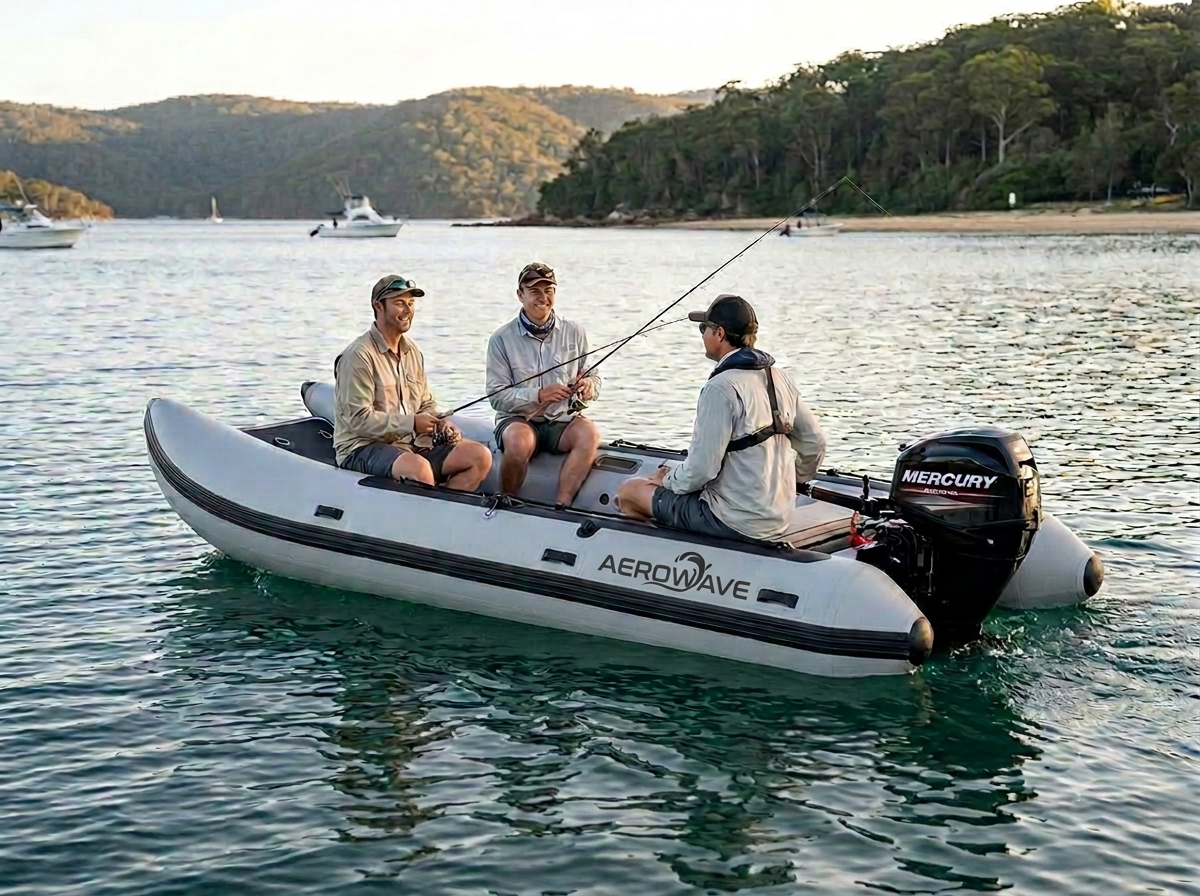
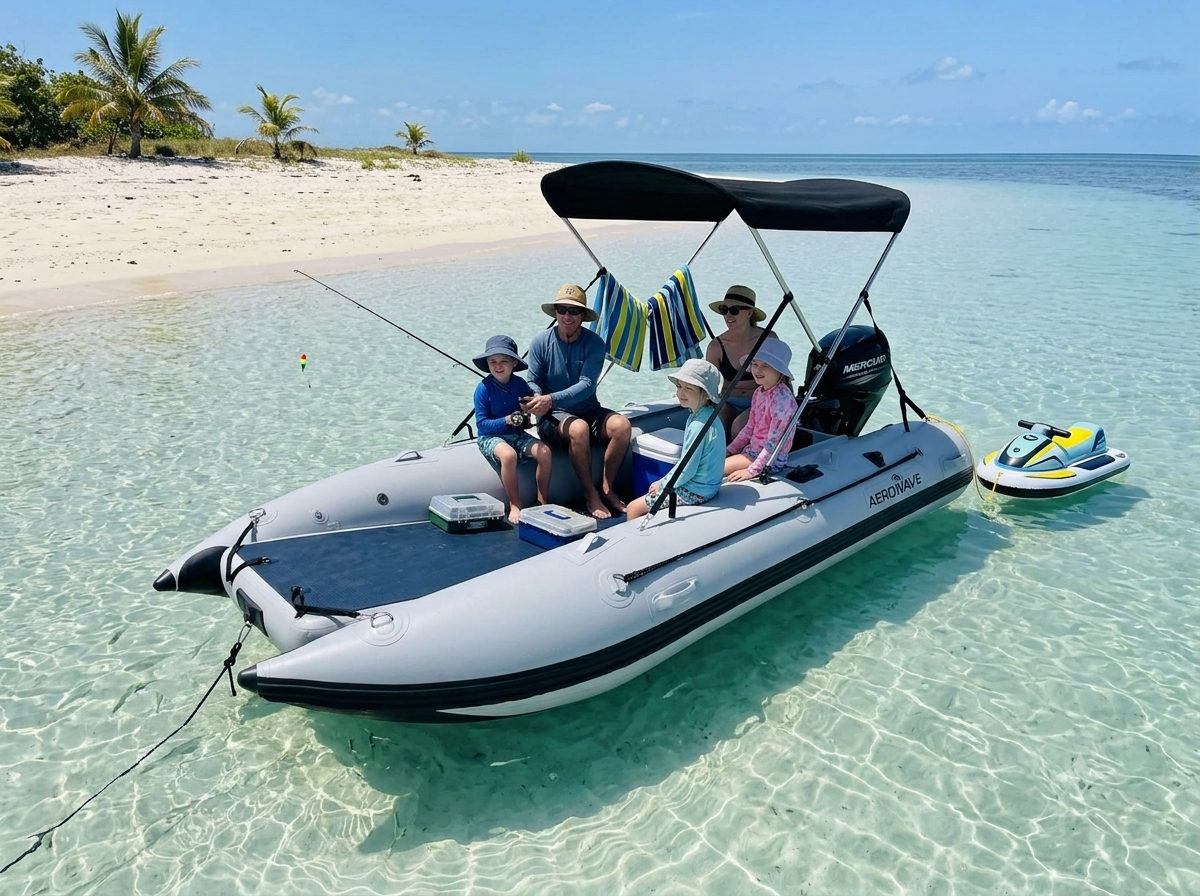
- Photos are stock renders, not real Australian owners.
If it fails those, walk. Doesn't matter how cheap it is — you'll replace it inside 3 summers.
Our take
We build the boats we sell. Every hull is CE certified to ISO 6185-3 + EU Directive 2013/53/EU, welded, 1100–1500 GSM VALMEX®, and backed by 5–7 year warranty plus parts held in Australia. That's what "worth the money" looks like in a category that is, unfortunately, full of throwaway product.
Start with the boats: /products. Not sure which one? Take the Find Your Boat quiz — takes 90 seconds.
Related reading
Shop gear featured in this guide

Aerowave WaveRunner 380 Series 3 Catamaran Package
The WaveRunner 380 Series 3 is a premium 3.8m inflatable catamaran package built for Australian and worldwide families, fishing, and coastal day boating — ideal for snorkeling and spearfishing — offering serious stability and premium German Valmex® construction.
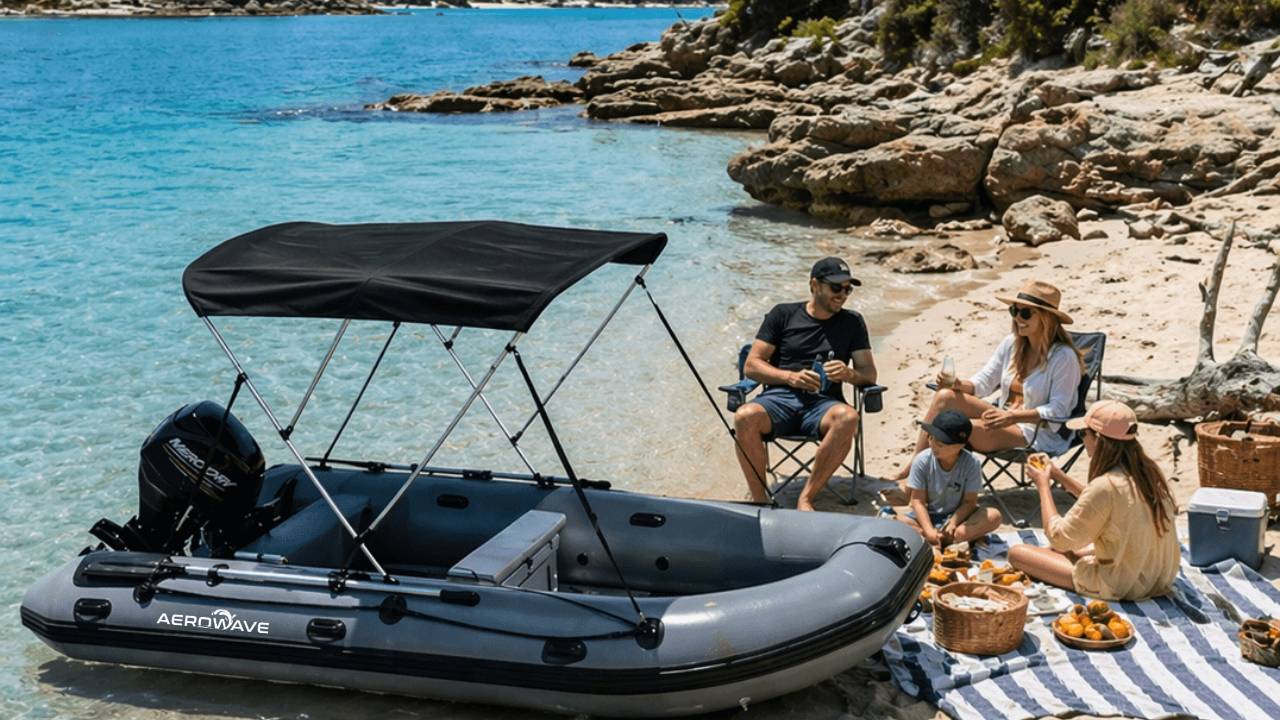
Aerowave Viper 400 Sovereign
Flagship 4m enclosed-bow inflatable catamaran. German VALMEX® 7321 Heavy Plus 1.2mm commercial-grade fabric, 10 PSI high-pressure drop-stitch air deck floor with VALMEX non-slip surface, LockPro wheels, full Bimini and FREE express delivery Australia-wide delivery included. Winter special — save $1,000 until 31 August 2026.
Aerowave Viper 365 Open Bow
Premium 3.65m Inflatable catamaran — built the same way as our flagship Viper 400 sports boat, just 35cm shorter. German VALMEX® 7321 Heavy Plus 1.2mm commercial-grade fabric, 10 PSI high-pressure drop-stitch air deck floor with VALMEX non-slip surface, LockPro wheels, full Bimini and FREE express delivery Australia-wide delivery included.
Not sure which suits you? Talk to a real boat owner.
Frequently asked questions
- Are cheap inflatable boats worth buying?
- Rarely. Sub-A$2,000 inflatables typically use 0.7–0.9 mm PVC with glued seams and last 2–4 summers. A properly built 1100–1500 GSM VALMEX® welded-seam inflatable lasts 10–12 years and costs less per year of use.
- How long does a quality inflatable boat last in Australia?
- With VALMEX® fabric (1100–1500 GSM, 0.9–1.2 mm) and welded seams, expect 10–12 years of active use. Store out of direct UV, rinse after saltwater, and it will outlast most fibreglass tinnies of the same era.
- Are inflatable boats safe for offshore use?
- Inflatable catamarans and RIBs certified to ISO 6185-3 handle bay, estuary and near-coastal conditions confidently. For 10+ nautical miles offshore, size up to a 4.0 m catamaran or a Sprint RIB. Soft-hull SIBs are best kept inshore.
- How much does a decent inflatable boat cost in 2026?
- Realistic price bands: small tenders A$1,800–3,500; 3.3 m sports SIBs A$3,500–4,500; 3.6–4.0 m inflatable catamarans A$4,500–6,500; Sprint RIBs A$5,500–7,500. All ex-outboard, delivered.
- Do I need to register an inflatable boat in Australia?
- Boat registration depends on your state and the motor size, not the hull type. In most states, any inflatable with a motor over ~4 kW / 5.4 HP requires registration. Check your state's maritime authority.
- Inflatable vs aluminium tinny — which is worth more?
- For beach, oyster-lease, camping and shallow work, a quality inflatable wins on launching, weight-in-boat safety and storage. A tinny wins on abrasion life for commercial daily use. For the average Australian buyer, a welded 1500 GSM inflatable is the higher-value choice.
- What warranty should a good inflatable have?
- 5–7 years on the hull, 1 year on accessories, and Australian-held parts. Anything under 2 years or based overseas is a red flag.
Ready to set sail?
Premium German-fabric inflatable catamarans with FREE Sea Freight or Express Air Delivery — your choice at cart. Talk to our team or browse the fleet.
Like this guide? Get the next one in your inbox.
Owner-tested tips, gear deep-dives and Aussie boating know-how — no spam.