Inflatable Catamaran vs Traditional Inflatable Boat: Which Should You Buy?
Both are inflatables. Both fit in the garage. That's where it ends. Side-by-side on stability, speed, fuel, price and storage — with a 60-second decision framework at the end.
Inflatable catamaran vs traditional inflatable boat: which should you buy?
Both are inflatables. Both fit in the garage. That's where the similarity ends. A traditional inflatable (single-hull SIB) and an inflatable catamaran (twin-hull cat) behave like completely different boats on the water — and once you understand why, the choice usually makes itself.
Here's the honest side-by-side, from a builder who sells both.
The one-line difference
- Traditional SIB — single V or flat hull, two tubes around the outside. Cheaper, lighter, faster to inflate.
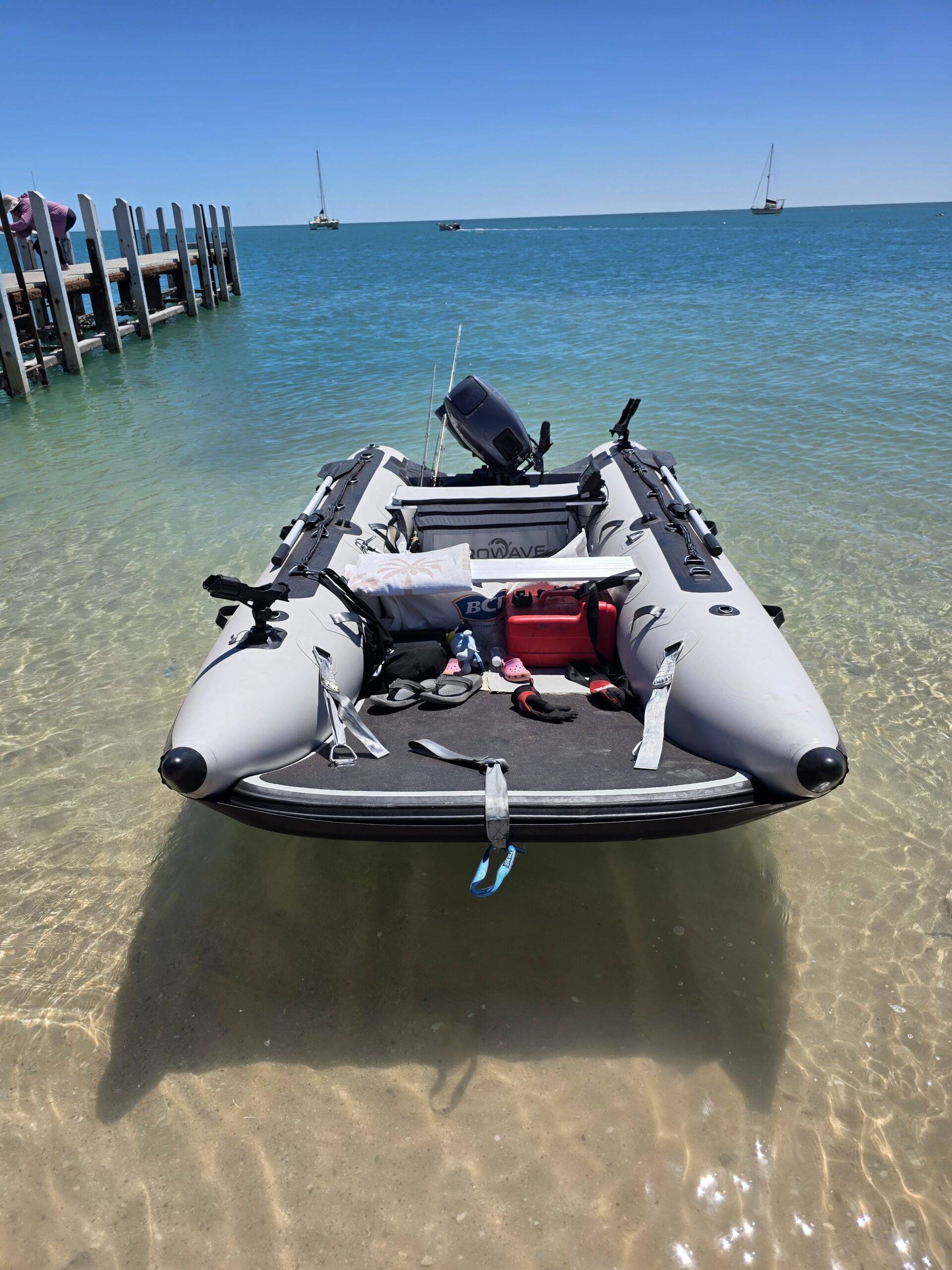
- Inflatable catamaran — two parallel torpedo hulls with a tensioned deck between them. Wider, drier, more stable, faster on plane with less horsepower.
If you've only ever been in a SIB, stepping into a cat feels like standing on a pontoon. That stability is the whole reason people upgrade.
Where each one wins
Traditional inflatable boat — best for:
- Yacht tenders where deflated storage size matters most.
- Very small motors (2.5–6 HP), short river runs, calm water.
- Buyers under A$3,500 who need something now and will upgrade later.
- One or two people with no serious gear.
Inflatable catamaran — best for:
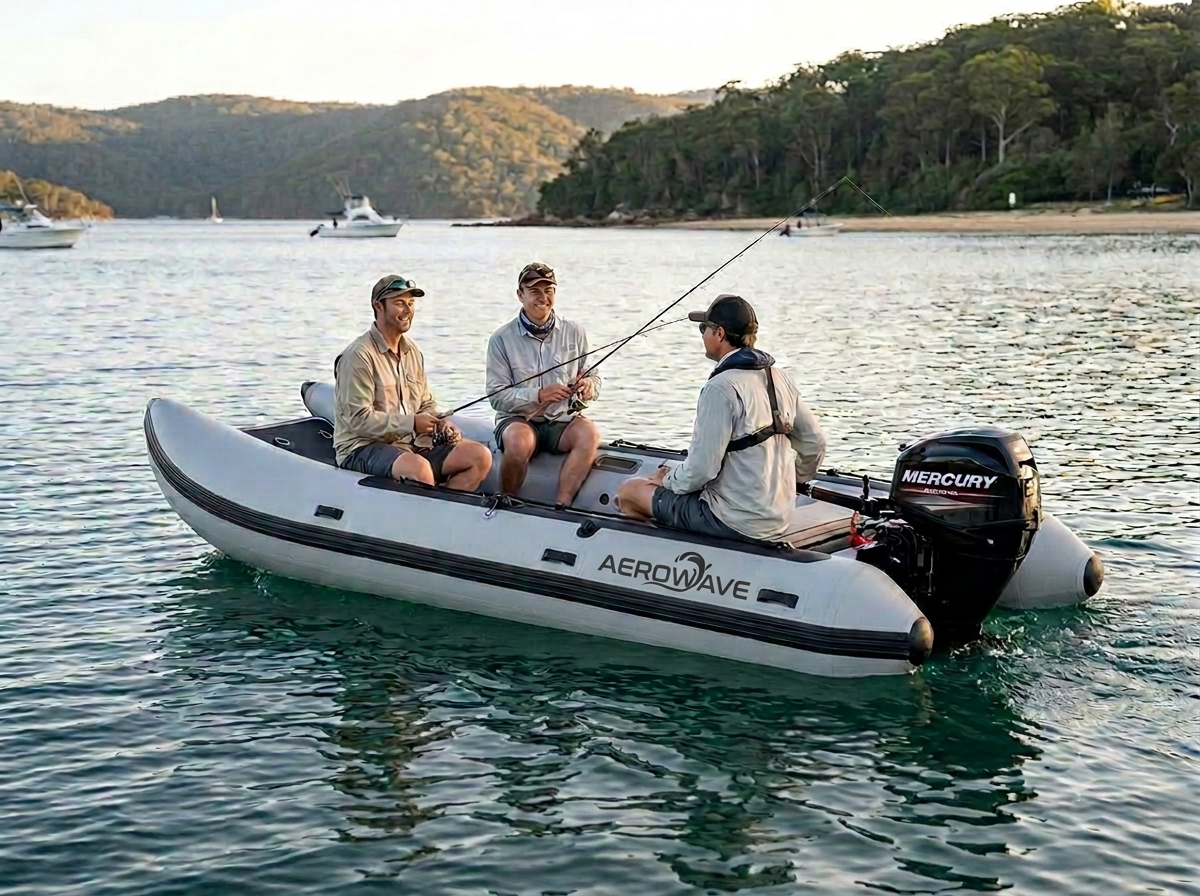
- Fishing — the flat deck between the hulls is a genuine casting platform. Kids and adults move around without the boat leaning.
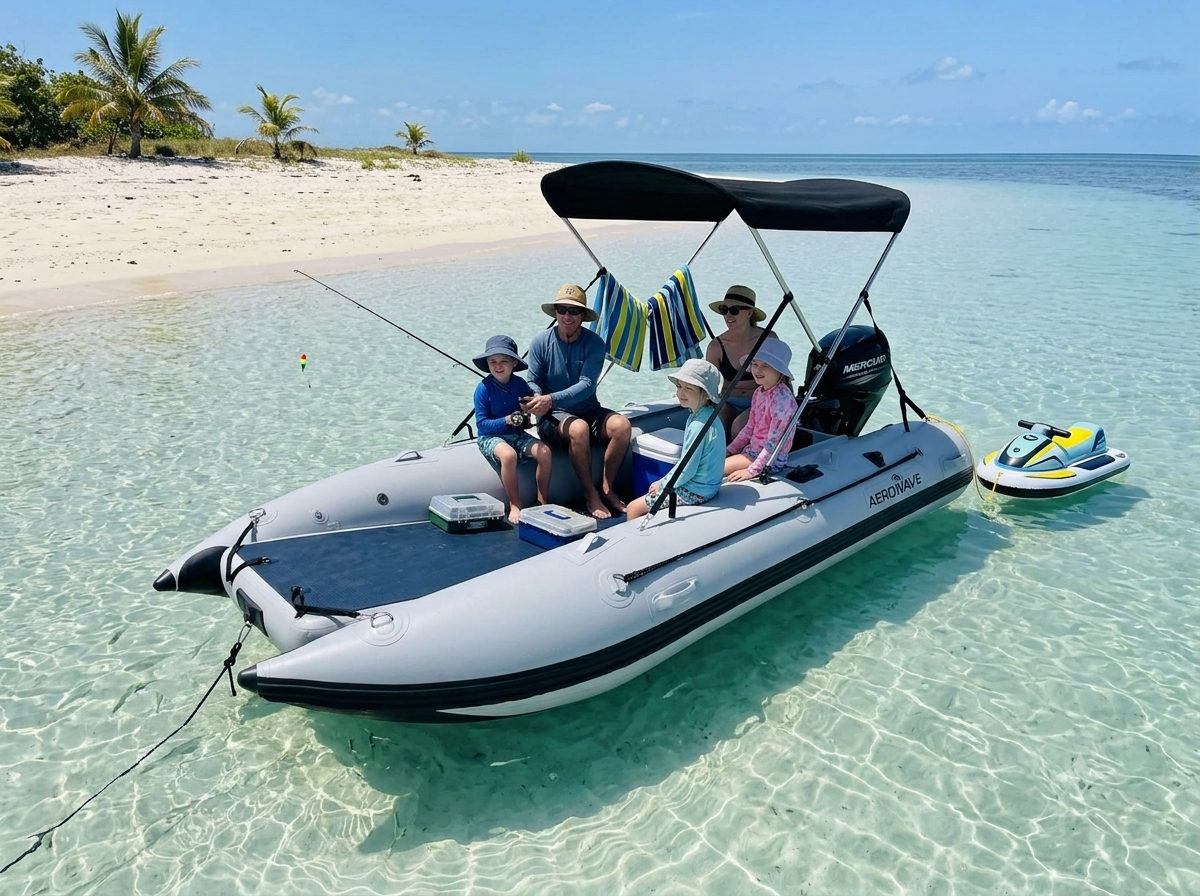
- Family use — 4–6 people comfortably, kids can sit anywhere without tipping the trim.
- Camping and expedition — carry a tent, esky, jerry cans, two 25L water containers, no problem.
- Getting on the plane with less HP — a 3.6 m cat with 15 HP planes with 4 adults. A single-hull the same size struggles.
- Rough water — twin hulls part chop instead of slamming through it. Dry ride, no spine-jarring.
Speed and fuel, in plain numbers
A 3.6 m inflatable catamaran with a Hidea 15 HP 4-stroke: 4 adults on plane at ~18 knots, sipping around 4–5 L/hr. A 3.3 m single-hull SIB with the same motor: 2 adults on plane at ~15 knots, 5–6 L/hr, wet ride if there's any wind chop. Same motor. Different boat. Different day out.
That efficiency is the reason we push most Aussie buyers toward a cat unless they specifically need a small tender.
Stability — the safety story
The single most repeated line we hear from cat owners:
"My wife/kids finally feel safe on it."
A twin-hull inflatable doesn't lean when you stand up. It doesn't lean when a fish jumps or when someone steps on the gunwale. That changes who's willing to go with you — and how often you actually use the boat, which is the real definition of value.
Storage and transport
Both roll into a bag. But be realistic:
- A 2.7 m single-hull SIB deflates to ~140 × 60 × 40 cm and lives in a car boot.
- A 4.0 m catamaran deflates to two hull bags plus a deck bag. Fits an SUV boot easily; sits on a small trailer permanently if you prefer.
If you'll launch weekly, keep the cat inflated on a lightweight trailer or under a cover. If you'll use it a few times a year, both pack away.
Price comparison, 2026
| Class | Length | Realistic price (boat only) |
|---|---|---|
| Traditional SIB (tender) | 2.3–2.9 m | A$1,800 – A$3,500 |
| Traditional SIB (family) | 3.3 m | A$3,500 – A$4,500 |
| Inflatable catamaran (entry) | 3.3–3.6 m | A$4,500 – A$5,500 |
| Inflatable catamaran (premium) | 4.0 m | A$5,500 – A$6,500 |
The catamaran premium is real — you're paying for two hulls, more fabric, a proper deck system. But because you plane on less HP, fuel and outboard cost go down. Most buyers we track break even inside three seasons.
The decision, in 60 seconds
Choose a traditional inflatable if:
- You need the smallest, lightest, cheapest option.
- It's a yacht tender or a kids' boat.
- Budget is firm under A$3,500 boat-only.
Choose an inflatable catamaran if:
- Fishing, family, camping, or diving is the primary use.
- Stability and dry ride matter.
- You want the boat to still feel right in 5 years.
- You'd like to plane with a smaller, lighter, cheaper outboard.
For most Australian buyers with kids, gear, or serious fishing plans, the cat is the correct answer. That's why our Viper, AeroCat and WaveRunner ranges are the volume sellers.
Have a look
- Traditional SIBs: Swift Tender 230 / 270 / 290 SI, Sport Series
- Inflatable catamarans: Viper 330, Viper 365 Open Bow, Viper 400 Sovereign, AeroCat 330 / 360 / 380, WaveRunner 380 Series 3
Not sure? Take the Find Your Boat quiz — 90 seconds, tells you exactly which hull suits your use case.
Related reading
Shop gear featured in this guide
Aerowave WaveRunner 380 Series 3 Catamaran Package
The WaveRunner 380 Series 3 is a premium 3.8m inflatable catamaran package built for Australian and worldwide families, fishing, and coastal day boating — ideal for snorkeling and spearfishing — offering serious stability and premium German Valmex® construction.
Aerowave Viper 400 Sovereign
Flagship 4m enclosed-bow inflatable catamaran. German VALMEX® 7321 Heavy Plus 1.2mm commercial-grade fabric, 10 PSI high-pressure drop-stitch air deck floor with VALMEX non-slip surface, LockPro wheels, full Bimini and FREE express delivery Australia-wide delivery included. Winter special — save $1,000 until 31 August 2026.
Aerowave Viper 365 Open Bow
Premium 3.65m Inflatable catamaran — built the same way as our flagship Viper 400 sports boat, just 35cm shorter. German VALMEX® 7321 Heavy Plus 1.2mm commercial-grade fabric, 10 PSI high-pressure drop-stitch air deck floor with VALMEX non-slip surface, LockPro wheels, full Bimini and FREE express delivery Australia-wide delivery included.
Not sure which suits you? Talk to a real boat owner.
Frequently asked questions
- What's the main difference between an inflatable catamaran and a traditional inflatable boat?
- A traditional inflatable (SIB) has a single hull with tubes around it; an inflatable catamaran has two parallel torpedo hulls with a tensioned deck between them. Cats are far more stable, drier, and plane with less horsepower.
- Are inflatable catamarans more stable than single-hull SIBs?
- Yes — dramatically. The twin-hull layout means the boat doesn't lean when you stand up or move around. This is the single biggest reason families and fishers upgrade from a SIB to a cat.
- Which is faster on the same motor — catamaran or single-hull?
- An inflatable catamaran planes with less horsepower and stays on plane with more people aboard. A 3.6 m cat on 15 HP will out-perform a 3.3 m SIB on 15 HP with 4 adults aboard, and burn less fuel doing it.
- Is a traditional inflatable boat ever the right choice?
- Yes — as a yacht tender, a kids' boat, a small river runner, or when budget is firmly under A$3,500 boat-only. In those cases a well-built SIB from 2.3–2.9 m is the correct tool.
- Is an inflatable catamaran good for fishing?
- Yes — it's arguably the best inflatable format for fishing in Australia. The flat deck between the hulls is a genuine casting platform, the boat doesn't lean when you stand, and shallow draft opens up skinny water most tinnies can't reach.
- How much more does an inflatable catamaran cost?
- Typically A$1,000–2,000 more than a comparable single-hull SIB, boat-only. That premium is usually recovered inside three seasons through lower outboard HP, better fuel economy, and longer usable life.
- Can I tow an inflatable catamaran behind a small car?
- Yes. Most 3.6–4.0 m inflatable catamarans on a light trailer sit well under 400 kg total, well within a small SUV's braked or unbraked tow rating. Deflated, a 4.0 m cat fits an SUV boot in two hull bags plus a deck bag.
Ready to set sail?
Premium German-fabric inflatable catamarans with FREE Sea Freight or Express Air Delivery — your choice at cart. Talk to our team or browse the fleet.
Like this guide? Get the next one in your inbox.
Owner-tested tips, gear deep-dives and Aussie boating know-how — no spam.

