Welded vs Glued Seams: The Unseen Detail That Makes or Breaks an Inflatable Boat
Discover why a hot air welded inflatable boat offers superior strength and longevity over cheaper glued alternatives. An essential guide for any serious boat buyer in Australia.
🇺🇸 Boats shipping to United States
See landed prices in USD before you bounce.
Door-to-door delivery to United States in 7–14 days. Choose a boat, see local-currency pricing, or request a fixed landed quote from the sales team.
A boat is only as strong as its weakest point. For most inflatables, that point is the seams.
When you’re looking at a gleaming new inflatable boat, your eyes are naturally drawn to the big things: the sleek lines of the hulls, the robustness of the transom, the promise of adventure it holds. You might consider the fabric, the floor, or the included accessories. But the single most critical component determining whether your boat will last three seasons or thirty is one you might not even notice: the seams.
The seams are what hold the pressurised air that gives the boat its form and function. They are under constant stress from inflation pressure, the chop of the water, UV radiation, and the general rigours of boating life. Get the seam technology wrong, and you don’t just have a leak; you have a catastrophic failure waiting to happen. The market is flooded with craft held together by nothing more than glorified glue, and for the discerning Australian buyer, understanding the profound difference between this method and modern thermal welding is the most important lesson in inflatable boat ownership.
This isn't just a minor technical detail. It's the fundamental divide between a disposable water toy and a serious, long-term marine vessel. It’s the difference between anxiety on the water and complete peace of mind. Let's dive deep into why a hot air welded inflatable boat isn't just an option—it's the only standard you should accept.
What Exactly Are Inflatable Boat Seams?
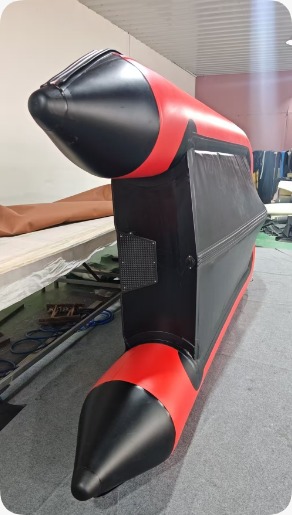
Before we contrast the methods, let's establish what we're talking about. An inflatable boat is constructed from multiple panels of specialised fabric, precision-cut to form the tubes, floor, and other chambers. These panels must be joined together in a way that is not only perfectly airtight but also incredibly strong, capable of withstanding immense and varied forces.
These joints are the seams. They run the length of the tubes and across bulkheads (the internal walls that create separate air chambers for safety). The seam's job is to be stronger than the fabric itself. If the seam is weaker, it becomes the predetermined point of failure for the entire structure. A pinhole leak from a scuff on the fabric is an easy patch. A seam that lets go under pressure, particularly when you're kilometres from the ramp, is a genuine emergency.
Think about the forces at play. An air deck floor on a premium boat like our WaveRunner 380 is inflated to a rock-solid 8-10 PSI. The main tubes, while at a lower pressure (around 3.6 PSI), have a massive surface area. The cumulative force pushing outwards on these seams is immense. Add the dynamic stress of pounding through waves, the thermal expansion and contraction from a hot Aussie sun, and the relentless attack of UV rays and saltwater, and you begin to appreciate why seam integrity is paramount.
The Glued Seam Compromise: Fast, Cheap, and Fated to Fail
The vast majority of budget inflatable boats, particularly the cheap PVC imports you see flooding online marketplaces, use glued seams. The process, known technically as cold chemical adhesion, is exactly what it sounds like: the fabric panels are overlapped and stuck together with a powerful adhesive.
This method is popular with mass manufacturers for one reason: it's fast and cheap. It requires less specialised machinery and less skilled labour than welding. You can set up a production line and churn out hundreds of boats a day. However, this efficiency comes at a staggering cost to the end-user in terms of durability and safety.
The problem is that glue is a separate, foreign agent. It's a chemical bond, not a physical one. Over time, this bond is destined to break down. Here’s why:
Chemical Degradation
The adhesives used are complex chemical cocktails. When exposed to the elements, they degrade. UV radiation from the Australian sun is the primary culprit, acting as a catalyst that breaks down the molecular chains in the adhesive, making it brittle and weak. Saltwater accelerates this process, and so do temperature extremes. A boat left inflated on a trailer in the summer sun can see its seam temperature soar, softening the glue and allowing the high-pressure air inside to slowly peel the seam apart from within. This is why you often see older, glued boats with seams that look 'creepy' or are starting to peel back at the edges.
Incompatibility with Modern Fabrics
Glued seams are most often found on boats made from cheaper Polyvinyl Chloride (PVC) fabric. While PVC itself can be a viable material, the combination of budget PVC and chemical adhesives is a recipe for a short lifespan. The plasticisers in the PVC can 'migrate' over time, reacting with the adhesive and weakening the bond. High-end fabrics like the German-made VALMEX® used in our Aerowave and AeroCat ranges are specifically engineered with a thermoplastic polyurethane (TPU) coating designed for thermal welding, not gluing. Using glue on such a fabric would be a complete waste of its potential.
The Failure Cascade
Glued seam failure is rarely a single, dramatic event. It's a slow, insidious process. It might start with a tiny, hard-to-find leak. As one section of the seam weakens, it places additional stress on the adjacent sections, leading to a domino effect. By the time you notice the edges of the seam tape lifting, the structural integrity of the entire bond is likely compromised. Repairing a glued seam is also notoriously difficult. You're trying to re-adhere a new layer of glue onto old, degraded surfaces contaminated with salt, dirt, and UV-damaged material. It's a temporary fix at best.
In the harsh Australian climate, a glued boat might look good for a season or two. But owners often find that by year three or four, they are constantly chasing leaks. By year five, the boat is often unusable and irreparable, destined for landfill.
The Gold Standard: Hot Air Welded Inflatable Boat Seams
If gluing is the cheap and cheerful compromise, hot air welding is the pinnacle of inflatable boat construction. This is the method used by military, coast guard, and commercial operators, and it's the only method we use for the main tube construction on our entire Easy Inflatables range.
Hot air welding, also known as thermo-bonding, is a process that physically fuses the fabric panels together, creating a single, monolithic piece of material. There is no glue. There is no separate chemical agent to break down. The weld is, in every sense of the word, permanent.
How Hot Air Welding Works: A Molecular Bond
The process is elegant in its simplicity and effectiveness. A specialised machine directs a precise jet of extremely hot air (hundreds of degrees Celsius) at the overlapping edges of the two fabric panels. This intense heat melts the thermoplastic coating on the fabric to a molten state. Immediately, high-pressure rollers pass over the join, pressing the two molten surfaces together.
As they cool, the polymer chains from both panels intermingle and cross-link, reforming into a single, continuous layer of fabric. The result is a seam that is not stuck together, but fused. A correctly executed weld is actually stronger than the original fabric itself. If you were to try and pull a welded seam apart with enough force, the fabric would tear beside the weld before the weld itself gave way. This is the definition of a perfect join.
The Material Matters: Why VALMEX® is Built for Welding
You cannot achieve this level of quality with just any fabric. The process relies on a material with a thermoplastic coating that can be melted and re-fused without losing its properties. This is why we exclusively use premium German VALMEX® fabric.
- For the Aerowave Viper series: We use the formidable 1.2mm thick, 1500 GSM (grams per square metre) VALMEX® Heavy Plus. This incredibly tough, polyester-based fabric has a specialised polyurethane (TPU) coating purpose-built for thermal welding, offering unmatched abrasion and UV resistance.
- For the AeroCat series: We use the still-premium 0.9mm thick, 1100 GSM VALMEX® fabric, which shares the same weldable TPU coating technology in a lighter-weight package perfect for portable catamarans.
The lifespan of this fabric is conservatively rated at 10-12 years, even in challenging conditions. By using hot air welding, we ensure that the seams will last just as long, allowing the boat to reach its full potential lifespan. A glued seam on the same fabric would fail long before the material itself ever showed signs of wear.
Welded vs. Glued Seams: A Head-to-Head Comparison
Let's break down the differences in a clear, side-by-side format. For any prospective buyer, this table should make the choice obvious.
| Feature | Hot Air Welded Seams (e.g., Easy Inflatables) | Glued Seams (e.g., Budget Imports) |
|---|---|---|
| Bond Type | Molecular Fusion (Thermo-bond) | Chemical Adhesion (Cold-bond) |
| Strength | Stronger than the parent fabric itself. | Weaker than the fabric. The bond is the failure point. |
| Longevity | Lasts the full 10-12 year lifespan of the VALMEX® fabric. | Degrades in 3-5 years, especially in high UV/heat. |
| Failure Mode | Extremely rare. Fabric will tear first. | Delamination, peeling, slow leaks, catastrophic rupture. |
| Consistency | Machine-controlled process ensures perfect, repeatable joins. | Highly dependent on worker skill, humidity, and temperature. |
| Appearance | Clean, neat, uniform, and almost invisible. | Often messy, with visible glue residue and uneven edges. |
| Repairability | Simple to patch with a heat gun or a proper patch kit. | Difficult and often unreliable. New glue doesn't stick well to old. |
| Construction | The defining feature of a hot air welded inflatable boat. | The defining feature of a budget, mass-produced boat. |
How to Spot the Difference: A Buyer's Checklist
When you're comparing boats online or in a showroom, it can be hard to tell the construction method at a glance. Many sellers of glued boats will conveniently omit this detail from their specifications. Here’s a checklist to empower you as a buyer:
- Check the Seam Edges: Look closely at where the fabric overlaps. A welded seam will be incredibly neat and clean, with a very fine, precise edge. A glued seam will often have a slightly wider, less-defined edge, and you may even see a small amount of yellowing or shiny residue from squeezed-out adhesive.
- Look for Seam Tape: Most boats have exterior seam tape for reinforcement and UV protection. On a glued boat, this tape is just another glued layer. Try to see if the edges of the tape are perfectly bonded or if they look like they could be peeled back. On a welded boat, this tape is also thermally fused.
- Read the Fine Print: Scour the manufacturer’s website and product specifications. If a boat is welded, the seller will shout it from the rooftops because it’s a major mark of quality. If they don't mention the seam construction method, or use vague terms like "quadruple overlapped seams" without specifying how they are joined, you should assume they are glued.
- Ask Directly: Send an email or call the supplier. Ask a simple, direct question: "Are the main tube seams on this boat constructed using hot air welding or are they glued?" A reputable seller of welded boats will give you a clear, confident "welded." A seller of glued boats may try to evade the question.
- Consider the Warranty: A long warranty is a manufacturer's vote of confidence in their own product. Our 7-year warranty on the Viper Sovereign series is only possible because we know our welded seams, built from 1.2mm VALMEX®, will not fail. A 1- or 2-year warranty on a budget boat tells you everything you need to know about the manufacturer's expectations for its glued seams.
The Lifespan Equation: Why a Welded Seam Boat is a Better Investment
A boat is an investment. It's an investment in your lifestyle, your family's enjoyment, and your time on the water. Buying a cheap, glued boat is a false economy. You might save a thousand dollars upfront, but you are buying a product with a built-in expiration date. When those seams inevitably fail in a few years, you're left with nothing but a pile of plastic and a frustrating experience. The boat has zero resale value and a high environmental cost as it heads to the tip.
A premium hot air welded inflatable boat like an Aerowave Viper or AeroCat is a completely different proposition. You are investing in a vessel designed to last a decade or more. The higher initial cost reflects superior materials like German VALMEX® fabric, superior construction techniques like welding, and a far superior ownership experience.
When you factor in the cost over the lifespan of the boat, the welded option is vastly cheaper. A $5,995 Viper 400 Sovereign Full Package that gives you 12 years of flawless service costs you about $500 per year. A $2,500 glued boat that lasts four years costs you $625 per year, not to mention the constant worry, repair costs, and the need to buy a whole new boat afterwards. The maths is simple.
This confidence is why we can offer a 7-year warranty on our flagship Viper and a 5-year warranty on the WaveRunner 380. We stand behind our welds because we know they are the strongest part of the boat.
Beyond the Seams: A Culture of Quality
The commitment to hot air welding is indicative of a broader philosophy of quality that extends to every part of the boat. A manufacturer willing to invest in welding is also likely to invest in:
- Superior Fabric: Using thick, high-tensile VALMEX® (1.2mm/1500 GSM on the Viper, 0.9mm/1100 GSM on the AeroCat) instead of no-name PVC.
- High-Pressure Floors: Engineering a high-pressure (8-10 PSI) drop-stitch air deck that provides near-rigid performance, rather than a floppy, low-pressure floor.
- Robust Transoms: Using a solid, 380mm transom designed to properly handle the torque and weight of modern four-stroke outboards like our recommended Hidea range.
- Premium Components: Including high-quality valves, D-rings, and accessories that won't corrode or fail.
- Exceptional Service: Backing the product with a comprehensive warranty and transparent, expert advice. It also includes ensuring your investment arrives safely and quickly, which is why express courier delivery (7-14 days via DHL, FedEx, or UPS) is included in the price of every boat we sell. No waiting months for sea freight, no hidden charges.
When you see hot air welded in the specifications, you're not just buying a feature. You're buying into a complete ecosystem of quality.
The Bottom Line
Don't let your boating dreams deflate because of a bad seam. While other suppliers may push cheaper, glued alternatives, the evidence is clear: for durability, safety, and long-term value in the harsh Australian marine environment, nothing beats the molecular bond of a hot air welded seam. It’s the difference between a temporary boat and a permanent investment in quality time on the water.
If you're serious about boating, demand welded seams. If you have any more questions about our construction process or which boat is right for you, contact our expert team on +61 2 4335 1603 or at sales@easyinflatables.com.au. We're boaties, and we're here to help.
Related
Shop gear featured in this guide
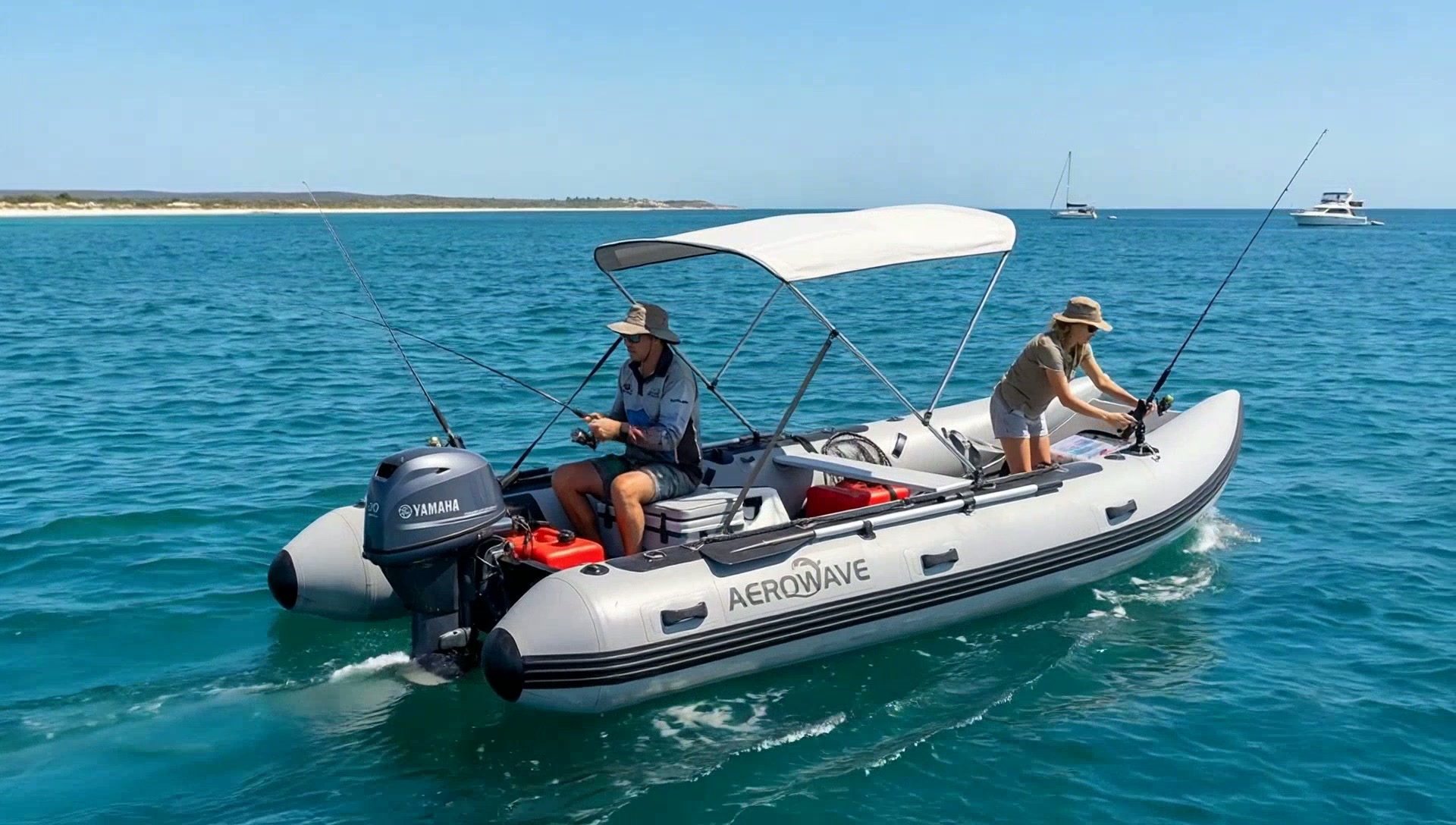
Aerowave Viper 330
The compact premium Viper catamaran package built for buyers who want serious stability, easy transport, premium materials and real global support in a 3.3m boat. German VALMEX® 1.2mm fabric, 10 PSI high-pressure drop-stitch air deck floor with VALMEX non-slip surface, 5-year warranty and FREE express delivery Australia-wide delivery.

Aerowave Viper 400 Sovereign
Flagship 4m enclosed-bow inflatable catamaran. German VALMEX® 7321 Heavy Plus 1.2mm commercial-grade fabric, 10 PSI high-pressure drop-stitch air deck floor with VALMEX non-slip surface, LockPro wheels, full Bimini and FREE express delivery Australia-wide delivery included. Winter special — save $1,000 until 31 August 2026.
Not sure which suits you? Talk to a real boat owner.
Frequently asked questions
- Are all VALMEX® fabric boats welded?
- Not necessarily. While premium VALMEX® fabric is engineered for hot air welding, a budget manufacturer could still choose to use cheaper glueing methods. It's crucial to confirm both the fabric type and the seam construction method. At Easy Inflatables, all our VALMEX® boats feature hot air welded seams for maximum longevity.
- Can a glued seam be repaired?
- Yes, but it's often a temporary and frustrating fix. The main challenge is that the new adhesive doesn't bond well to the old, degraded glue and UV-damaged fabric. Welded seams, on the other hand, are much easier to patch permanently as you're bonding new fabric to a clean, stable surface.
- How can I tell if my current inflatable boat has glued or welded seams?
- Look for signs of excess glue along the seam edges, which may look shiny or have a yellowish tint. Welded seams are typically much neater and cleaner, with a very precise, narrow bond line. If the seam tape is starting to lift or peel at the corners, it's almost certainly a glued boat.
- Is a hot air welded inflatable boat more expensive?
- Yes, the initial purchase price is typically higher than a comparable glued boat. This reflects the cost of the superior materials, specialised machinery, and skilled labour required. However, over the full lifespan of the vessel, a welded boat is a far better investment due to its vastly superior durability and longevity.
- Why don't all companies use welded seams?
- It comes down to cost and production speed. Gluing is faster and requires less capital investment in machinery, allowing for mass production of cheaper boats. Companies that prioritise quality and durability, like us, choose welding as it produces a fundamentally superior and more reliable product.
- Does the warranty reflect seam quality?
- Absolutely. A long warranty is a manufacturer's financial guarantee of their build quality. Our 7-year warranty on the Aerowave Viper Sovereign is possible only because we use the best materials and hot air welded seams. A short 1 or 2-year warranty on a budget boat suggests the manufacturer doesn't expect it to last.
- What's the difference between PVC and VALMEX® fabric?
- PVC is a common material for budget boats, but it can become brittle with UV exposure and doesn't weld as well. Our German-made VALMEX® is a polyester base fabric with a special TPU coating that is highly resistant to UV, abrasion, and chemicals, and is specifically designed for the hot air welding process.
Ready to set sail?
Premium German-fabric inflatable catamarans with express courier delivery included in the price — 7–14 days door-to-door. Talk to our team or browse the fleet.
Like this guide? Get the next one in your inbox.
Owner-tested tips, gear deep-dives and Aussie boating know-how — no spam.