Aerowave Sport Series Offshore: When a Deep-V Monohull Beats a Catamaran
In the world of premium inflatables, catamarans get all the attention. But for serious offshore work in rough water, the Aerowave Sport Series Offshore monohull has a powerful case to make.
🇺🇸 Boats shipping to United States
See landed prices in USD before you bounce.
Door-to-door delivery to United States in 7–14 days. Choose a boat, see local-currency pricing, or request a fixed landed quote from the sales team.
Everyone thinks catamarans rule the waves. They're often right. But not always.
For the last decade, the inflatable boat world has been rightfully captivated by the catamaran design. The stability, efficiency, and incredibly soft ride offered by twin hulls trapping a cushion of air is a genuine game-changer. At Easy Inflatables, our Aerowave Viper and AeroCat ranges are testament to this, setting the benchmark for performance and quality in Australia. We are, unapologetically, huge proponents of the inflatable catamaran.
But expertise isn’t about dogma. It’s about nuance. It’s about understanding that for certain demanding applications, a different tool is required for the job. While the catamaran is the master of many domains, there are specific, challenging offshore conditions where the classic, battle-proven deep-V monohull, executed to the highest standard, still reigns supreme. This is the domain of the Aerowave Sport Series Offshore boats, headlined by our WaveRunner 380.
This isn't an article about which design is 'better' in a general sense. This is a deep, technical dive for the serious boatie who ventures far from the harbour, who faces confused seas and unpredictable chop, and who demands absolute predictability and control from their vessel. It's about when to choose the surgical precision of a knife over the broad impact of a hammer.
The Physics of Chop: Monohull Knife vs. Catamaran Pillow
To understand why you might choose one hull over the other, you first need to appreciate the fundamental physics at play when a boat interacts with a rough water surface. It’s a tale of two entirely different approaches to managing energy.
The Inflatable Catamaran's Cushion
An inflatable catamaran, like our Viper or AeroCat series, presents two relatively narrow, sharp sponsons to the water. As the boat moves forward, the tunnel between these sponsons traps air. When the boat encounters a wave, this trapped pocket of air and water compresses, creating a pneumatic and hydraulic cushion. The impact is absorbed and softened before it’s transferred to the deck and its occupants. It’s an exceptionally comfortable ride, particularly in predictable, rolling swell. The boat lands flat and level, dissipating the shock across a wide area. Think of it as landing on a giant, firm pillow. The broad stance also gives it phenomenal initial stability at rest, making it a dream platform for casting, family days, or simply relaxing at anchor.
The Deep-V Monohull's Cleave
A deep-V monohull, the foundation of the Aerowave Sport Series Offshore design, takes a completely different tack. It doesn’t try to cushion the blow; it slices through it. The pronounced 'V' shape of the hull acts like a blade, cleaving the water and parting it. Instead of landing flat, the boat uses its sharp entry to penetrate the wave face, maintaining forward momentum and tracking a true line.
In confused, choppy seas—the kind of messy, unpredictable water you find when wind is against tide or around coastal headlands—this slicing action is a significant advantage. Where a catamaran can sometimes be 'pushed' sideways by a wave hitting one sponson, the deep-V monohull digs in and holds its course. It leans into turns like a motorbike, providing constant, predictable feedback to the person at the tiller. It's a more connected, tactile experience. The trade-off? A sharper, more direct impact. You feel the water more, but you also have more authority over it.
Anatomy of the Aerowave Sport Series Offshore: The WaveRunner 380
The WaveRunner 380 is the embodiment of the heavy-duty inflatable monohull philosophy. It's not designed to be the lightest or the fastest to assemble; it's engineered for strength, rigidity, and seaworthiness when conditions deteriorate. Let's break down its core components.
The Hull: A True Deep-V
Unlike many budget inflatables that have a nearly flat bottom, the WaveRunner 380 features a genuine deep-V profile. This is created by an inflatable keel tube running down the centreline, beneath the floor. When inflated to high pressure, this keel pushes the fabric hull down into a sharp 'V' shape. This is the boat's primary tool for cutting through chop and ensuring it tracks straight in crosswinds and currents. It's a feature that’s absolutely non-negotiable for serious offshore use.
Oversized Tubes
The boat features substantial tube diameter. This serves three critical purposes. Firstly, it provides immense buoyancy and load-carrying capacity. Secondly, it increases freeboard—the distance from the waterline to the top of the tube—making for a much drier ride in spray and slop. Thirdly, the large tubes act as massive shock absorbers themselves, taking the sting out of lateral waves and contributing to the boat's excellent stability, especially when underway.
The Transom: The Heart of Power Transfer
The transom on the WaveRunner 380 is a beast. It's built from reinforced marine-grade plywood, expertly sealed, and bonded to the tubes with an uncompromising strength. It's designed to handle the torque and thrust of powerful 4-stroke outboards up to 25hp without a hint of flex. The 380mm height is the industry standard for short-shaft (S) outboards, ensuring optimal propeller depth for maximum efficiency and reduced cavitation. This solid connection between engine and hull is vital for performance in rough water.
The Rigid Aluminium Floor: A Game-Changing Difference
If the deep-V hull is the soul of the Aerowave Sport Series Offshore, the rigid aluminium floor is its backbone. This is arguably the single biggest point of difference compared to our inflatable catamarans, which use high-pressure air decks.
Many boaties are surprised to learn that a premium inflatable can have a hard floor. Modern high-pressure air decks, like the ones in our AeroCat range which inflate to a rock-solid 8-10 PSI, are brilliant pieces of engineering. They are light, comfortable underfoot, and surprisingly rigid. For 90% of boating applications, they are the ideal solution.
However, for the 10% that involves heavy-duty work, a rigid floor is superior. Here's why:
Unmatched Rigidity and Power Transfer
No matter how high the pressure, an air floor will always have some infinitesimal amount of flex. An interlocking, sectional aluminium floor has none. It creates a completely rigid structure from transom to bow. This means that every ounce of thrust from your outboard is transferred directly into forward motion. The boat feels more responsive, more direct. In a following sea, where you're constantly on and off the throttle to stay on the back of a wave, this instant response is a massive confidence booster.
Superior Point Load Capability
This is where the aluminium floor really shines. Imagine dropping a 20kg dive tank or a heavy anchor onto the deck. On an air floor, the impact is absorbed, but it can create a 'trampoline' effect, and a sharp edge could theoretically damage the surface. On an aluminium floor, there's no give. It’s a solid work platform. You can stand a heavy Esky, dive tanks, or cray pots anywhere on the deck without a second thought. For divers and spearos, this is a non-negotiable feature. The floor becomes a solid, dependable workbench, not just a surface to stand on.
Durability and Longevity
An aluminium floor is exceptionally tough. It's resistant to abrasion from sand and grit, impervious to fish hooks, and won't be damaged by fuel or oil spills. While our German VALMEX fabric is incredibly durable, having a metal floor in the highest traffic area of the boat adds another layer of bomb-proof reliability for commercial operators or hard-core recreational users. It's a floor designed for work boots, not bare feet.
When the Monohull Excels: Specific Use Cases
So, when should you seriously consider the Aerowave Sport Series Offshore WaveRunner 380 over an inflatable catamaran?
- Offshore Diving & Spearfishing: When you're dealing with heavy cylinders, weight belts, and spearguns, the solid platform and point-load capability of the aluminium floor are invaluable. The predictable leaning of the monohull when kitting up on the side of the boat is also preferred by many divers over the flatter motion of a cat.
- Navigating Treacherous Inlets: For crossing bars or navigating tight channels with confused, reflecting waves, the deep-V's ability to cleave the water and hold a precise line provides a superior level of control and predictability.
- Punching into Head Seas: When you have no choice but to motor directly into steep, short-interval chop, the slicing action of the monohull can be more effective and maintain better headway than the cushioning action of a catamaran, which can sometimes lead to 'hobby horsing' in very specific conditions.
- Heavy Load Carrying in Rough Water: While both designs carry huge loads, the rigid floor and deep-V hull combination provides a more solid and predictable feel when the boat is loaded to capacity in challenging seas.
- Launching and Retrieving in Surf: The monohull's keel helps the boat track straight during the critical moments of launching or landing on a surf beach, reducing the risk of broaching.
Checklist: Is the Aerowave Sport Series Offshore For You?
- Do you frequently boat offshore, far from protected waters?
- Is your primary use diving, spearfishing, or another activity involving heavy, hard gear?
- Do you often face short, steep chop rather than long, rolling swell?
- Do you prioritise directional tracking and predictable handling over the softest possible ride?
- Are you comfortable with a slightly heavier boat and a more involved assembly process in exchange for ultimate rigidity?
- Does your gear include heavy items like dive tanks, cray pots, or large anchors?
- Do you need a boat that can serve as a rugged work platform?
If you ticked most of these boxes, a high-quality deep-V monohull like the WaveRunner 380 deserves your serious consideration.
Monohull vs. Inflatable Catamaran: Head-to-Head
Let's distil the differences into a direct comparison table, using our WaveRunner 380 and the similarly sized AeroCat 380 as examples.
| Feature | Aerowave Sport Series Offshore (WaveRunner 380) | Inflatable Catamaran (AeroCat 380) |
|---|---|---|
| Primary Hull Shape | Inflatable Keel Deep-V Monohull | Twin Sponson / Tunnel Hull |
| Floor System | Sectional Aluminium (Rigid) | High-Pressure Drop-Stitch Air Deck (8-10 PSI) |
| Ride in Chop | Slices through waves; more direct feedback | Cushions impacts on trapped air; exceptionally soft |
| Ride in Swell | Excellent; stable and predictable | Unmatched; smooths out long-period waves |
| Turning Style | Carves like a solid boat, leans into turns | Turns flatter, pivots with minimal lean |
| Stability at Rest | Very good due to large tubes | Exceptional, best-in-class |
| Deck Space | Very good, but V-shape in floor affects flat area | Maximised; completely flat from tube to tube |
| Best For | Heavy gear (diving), rough water precision, Aerowave Sport Series Offshore missions | Family cruising, fishing, fuel efficiency, overall comfort |
| Assembly | More complex; floor sections must be fitted | Simpler and faster; unroll and inflate |
| Weight | Heavier due to aluminium floor | Significantly lighter |
Powering and Performance
A great hull is nothing without the right power plant. The WaveRunner 380 is rated for outboards up to 25hp. The rigid hull and transom structure mean it can use this power effectively. Paired with a modern, reliable 4-stroke like those from Hidea, you get a package with outstanding performance.
For general use, a 15hp outboard provides ample power to get the boat on the plane with a couple of people and gear. For those regularly carrying heavy loads or looking for more exhilarating performance, a 20hp or 25hp motor will transform the boat into a true sports machine. The key is the short-shaft (380mm) configuration, which perfectly matches the transom height for clean water flow to the propeller.
The deep-V and rigid floor mean the boat gets on the plane cleanly, with minimal bow rise, and stays there at lower speeds than many flatter-bottomed inflatables. This is a huge benefit in rough water, where you want to stay on the plane for control but can't maintain high speeds.
Build Quality That Inspires Confidence
Choosing a different design philosophy doesn't mean compromising on quality. The WaveRunner 380 is built to the same exacting standards as our flagship catamaran models. The tubes are constructed from premium German VALMEX® fabric, a material renowned for its exceptional durability, UV resistance, and air-holding properties, with a proven lifespan of 10 to 12 years in harsh Australian conditions.
Unlike budget PVC imports that use weaker, glued seams, all our boats feature thermo-welded or advanced adhesive seams for maximum strength and longevity. You simply cannot compromise on seam integrity when you're miles from shore. This commitment to quality is backed by a comprehensive 5-year warranty on the WaveRunner 380. When you invest in an Aerowave series boat, you're investing in peace of mind.
Your boat arrives via express courier like DHL, FedEx or UPS, typically within 7-14 days, with the shipping cost included in the price. There are no hidden fees or long waits for sea freight. It's a premium product with premium service.
The Bottom Line
The inflatable catamaran remains the undisputed champion for ride comfort, stability, and all-around family fun. Our Aerowave Viper 400 Sovereign and AeroCat series are, we believe, the finest examples available.
However, for the dedicated offshore adventurer whose missions prioritise strength, predictability in challenging seas, and the ability to carry heavy, hard equipment, the classic deep-V monohull with a rigid aluminium floor is not obsolete—it's perfected. The Aerowave Sport Series Offshore WaveRunner 380 is a specialised tool for a demanding job. It's for the boatie who, when the weather turns, wants to feel the solid, reassuring bite of a blade, not the cushion of a pillow.
If you're unsure which hull design best suits your unique needs, give our expert team a call on +61 2 4335 1603 or email us at sales@easyinflatables.com.au. We're boaties first, and we'd rather sell you the right boat than just any boat.
Related
Shop gear featured in this guide
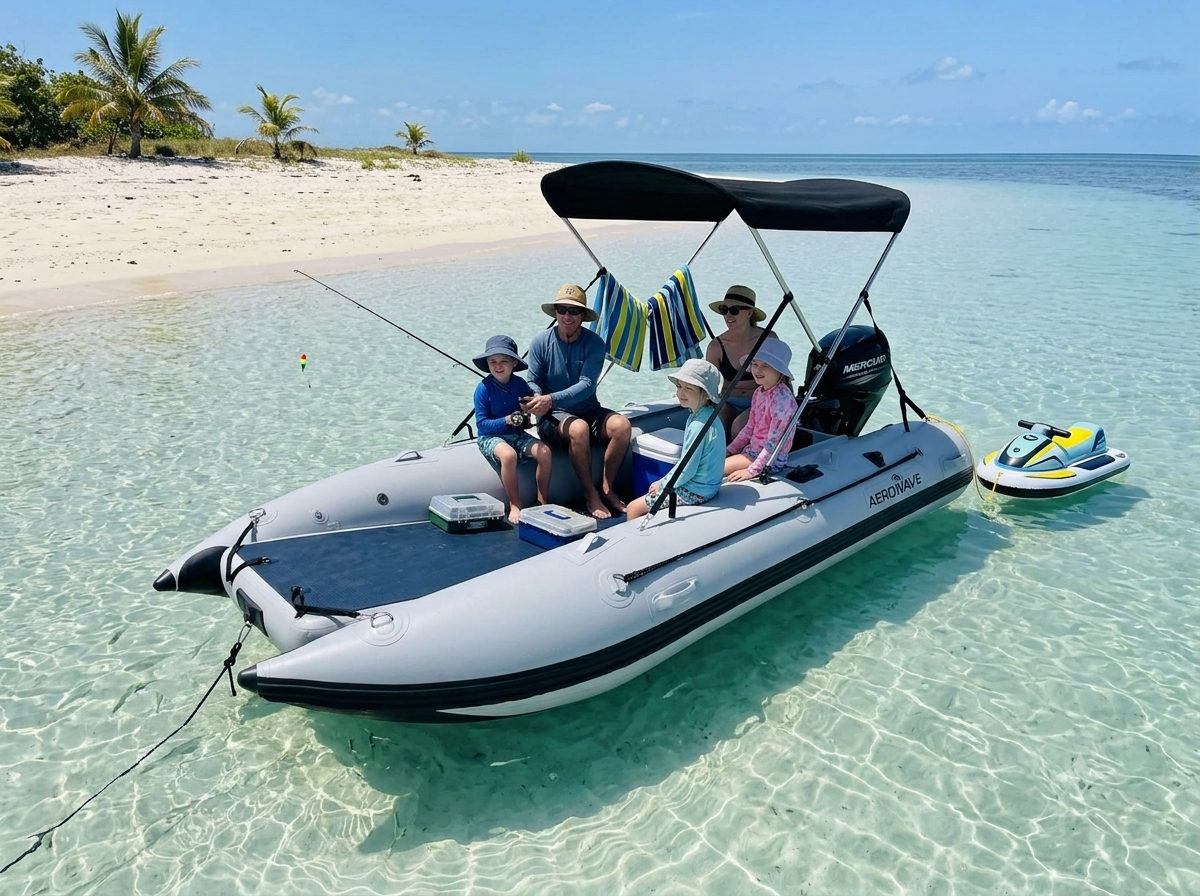
Aerowave WaveRunner 380 Series 3 Catamaran Package
The WaveRunner 380 Series 3 is a premium 3.8m inflatable catamaran package built for Australian and worldwide families, fishing, and coastal day boating — ideal for snorkeling and spearfishing — offering serious stability and premium German Valmex® construction.
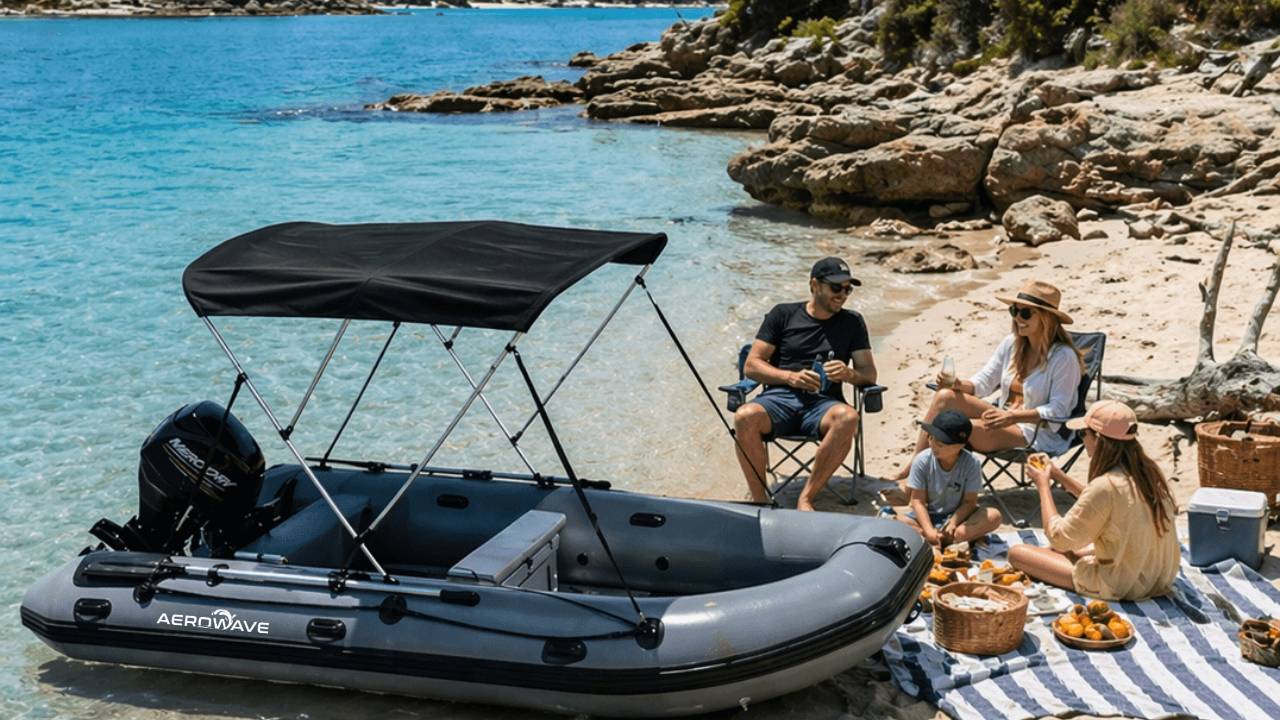
Aerowave Viper 400 Sovereign
Flagship 4m enclosed-bow inflatable catamaran. German VALMEX® 7321 Heavy Plus 1.2mm commercial-grade fabric, 10 PSI high-pressure drop-stitch air deck floor with VALMEX non-slip surface, LockPro wheels, full Bimini and FREE express delivery Australia-wide delivery included. Winter special — save $1,000 until 31 August 2026.
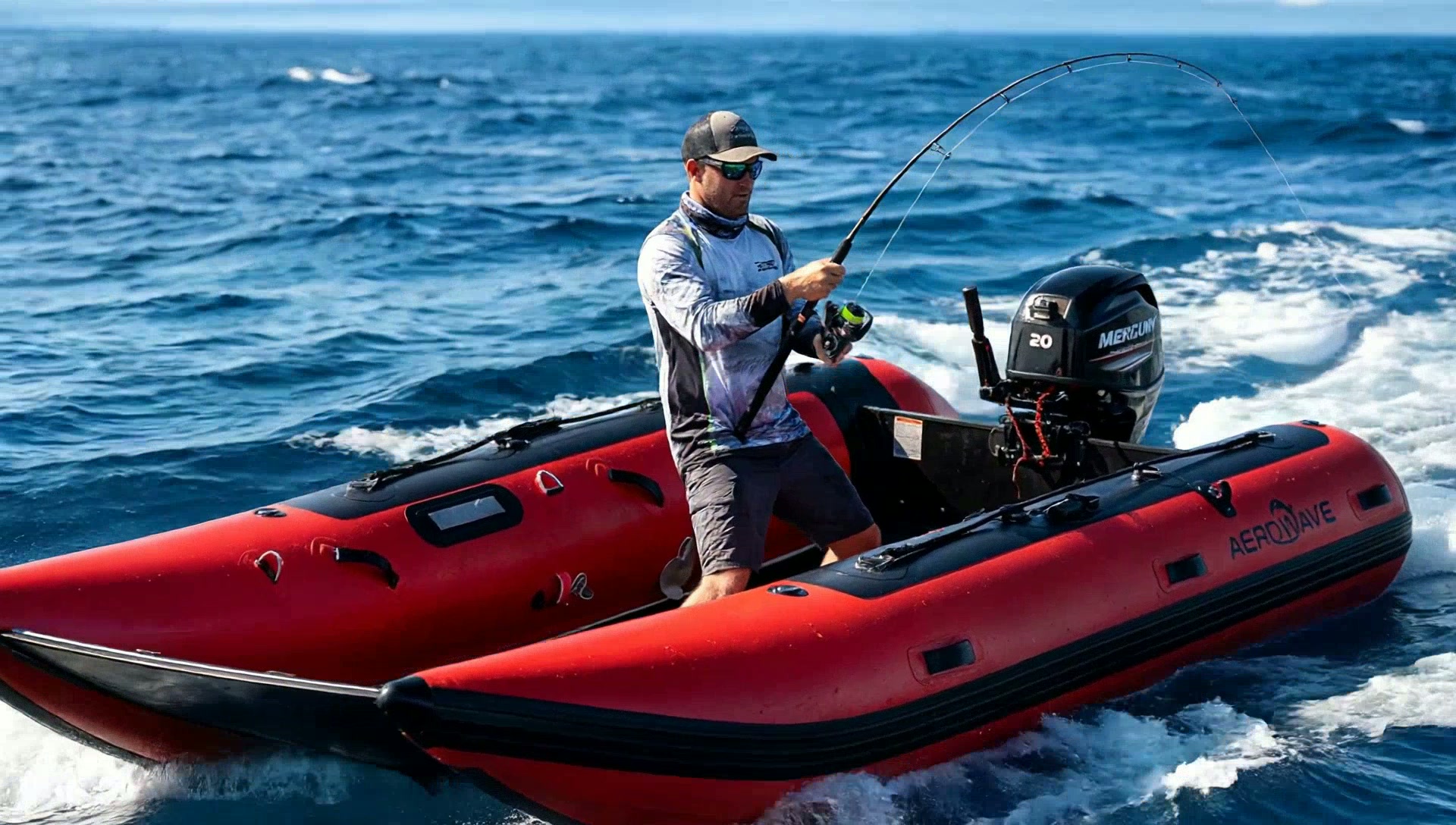
AeroWave AeroCat 360 Inflatable Catamaran
Same proven hull design, shape and look as our flagship Aerowave Viper catamarans — built lighter using 0.9mm Valmex® fabric instead of the Viper's 1.2mm. The AeroWave AeroCat 360 is our 3.6m inflatable catamaran built from 0.9mm Valmex® fabric — intentionally lighter than our 1.2mm Viper hulls so it folds smaller, packs lighter and is easy to handle solo. Twin-hull stability, 5-Year Warranty with global support and priced ~$500 below comparable 0.9mm imports.
Not sure which suits you? Talk to a real boat owner.
Frequently asked questions
- Is an aluminium floor uncomfortable or slippery?
- The aluminium floor panels have a non-slip, textured finish for excellent grip even when wet. While not as soft underfoot as a high-pressure air deck, many owners place EVA foam matting or marine carpet on top for added comfort and sound dampening.
- Can I still roll up and transport a boat with an aluminium floor?
- Yes, absolutely. The floor is made of several interlocking sections that are removed before deflation. The hull is then rolled up as normal, and the floorboards and stringers are packed into a separate bag, allowing for easy transport in a car or ute.
- What's the main difference between the WaveRunner 380 and the AeroCat 380?
- The WaveRunner 380 is a deep-V monohull with a rigid aluminium floor, designed for slicing through chop and carrying heavy gear. The AeroCat 380 is an inflatable catamaran with a high-pressure air deck, designed for maximum stability, fuel efficiency, and a soft ride.
- How does the WaveRunner 380 handle compared to a small aluminium tinny?
- It offers a significantly better ride in chop than a tinny. The inflatable tubes act as massive shock absorbers, eliminating the slapping and pounding associated with aluminium hulls. It's also far more stable at rest and has much higher inherent buoyancy.
- Is the WaveRunner 380 self-bailing?
- Yes, it features a transom with a one-way drain plug, often called a 'bailer' or 'scupper'. When underway, any water in the boat can be drained by opening the plug, which prevents water from coming back in.
- What is VALMEX fabric and why is it important?
- VALMEX® is a high-tech PVC material made in Germany, considered the gold standard for premium inflatable boats. It has superior tensile strength, abrasion resistance, and UV stability compared to generic PVC used on budget imports, ensuring a lifespan of 10-12 years or more.
- How long does delivery take for a WaveRunner 380?
- All our boats, including the WaveRunner 380, are shipped via express air courier (like DHL Express or FedEx) at no extra charge. Delivery is typically door-to-door within 7 to 14 days anywhere in Australia.
Ready to set sail?
Premium German-fabric inflatable catamarans with express courier delivery included in the price — 7–14 days door-to-door. Talk to our team or browse the fleet.
Like this guide? Get the next one in your inbox.
Owner-tested tips, gear deep-dives and Aussie boating know-how — no spam.
