Hydrofoils and Permatrims for Inflatable Catamarans: The Honest Guide to Stopping Cavitation and Aeration on Short-Shaft Outboards
Two cheap upgrades — a $50 hydrofoil or a $250 Permatrim plate — fix slow plane times, bow lift and prop aeration on inflatable catamarans and short-shaft outboards. Here's the honest, unbiased rundown of which one to buy.
At a glance
Two cheap upgrades — a $50 hydrofoil or a $250 Permatrim plate — fix slow plane times, bow lift and prop aeration on inflatable catamarans and short-shaft outboards. Here's the honest, unbiased rundown of which one to buy.
- What's the difference between a hydrofoil and a Permatrim?
- Why your inflatable catamaran needs one (and why a tinnie often doesn't)
- Cavitation vs aeration — and why it matters for cats
- The honest list of benefits
Ships to United States 🇺🇸 · tracked door to door
The motor for your inflatable — petrol or electric, in stock now.
Hidea 4-strokes from 2.5 to 20 hp, plus the Haswing Ultima 3.0HP and Fuber Global 1.5 electric outboards. Every one of them is matched to a soft-transom inflatable.
- Hidea 4-stroke range: 2.5, 5, 6, 8, 9.9, 15 and 20 hp — carby or EFI
- Haswing Ultima 3.0HP and Fuber Global 1.5 electric — quiet, no fuel, no service
- Shaft length, transom height and thrust matched to our hulls before it ships
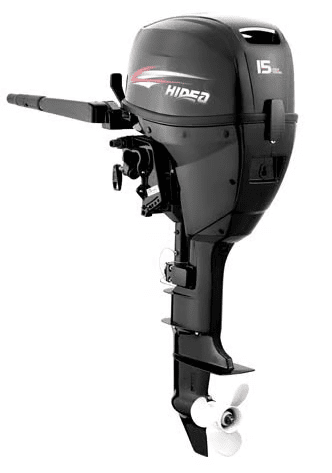 Hidea 15HP 4-Stroke OutboardUS$2,801 · in stock, ships now
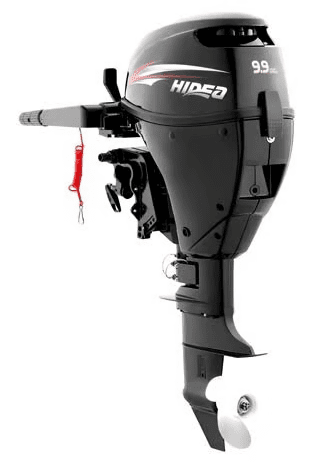 Hidea 9.9HP 4-Stroke OutboardUS$2,508 · in stock, ships now
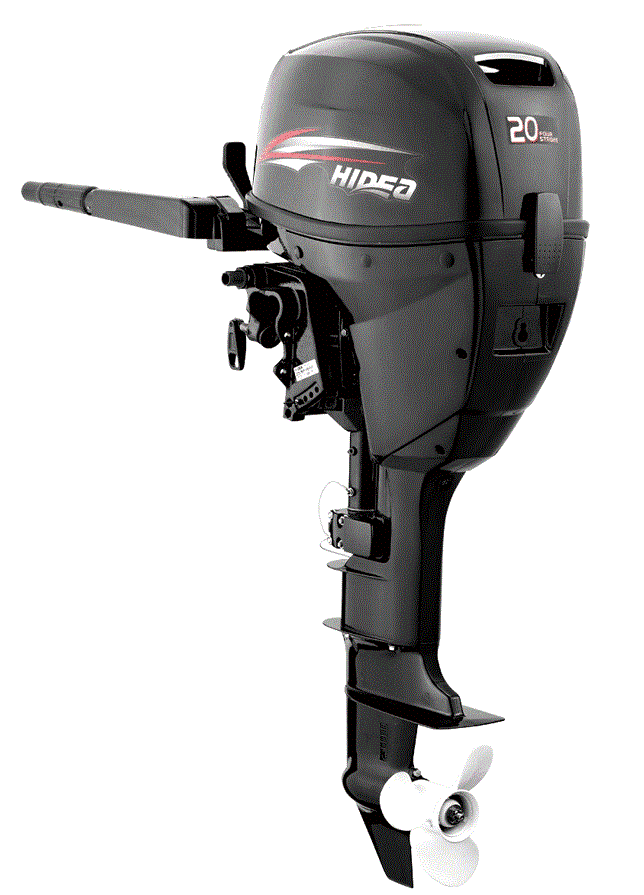 Hidea 20HP Carburettor 4-Stroke Outboard — Short Shaft, Electric StartUS$2,640 · in stock, ships now
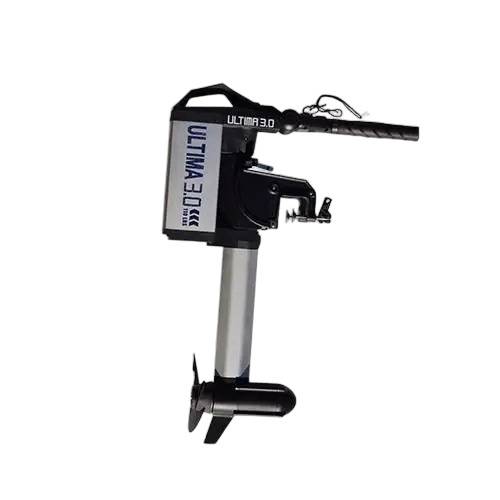 Haswing Ultima 3.0HP Electric OutboardUS$1,947 · in stock, ships now
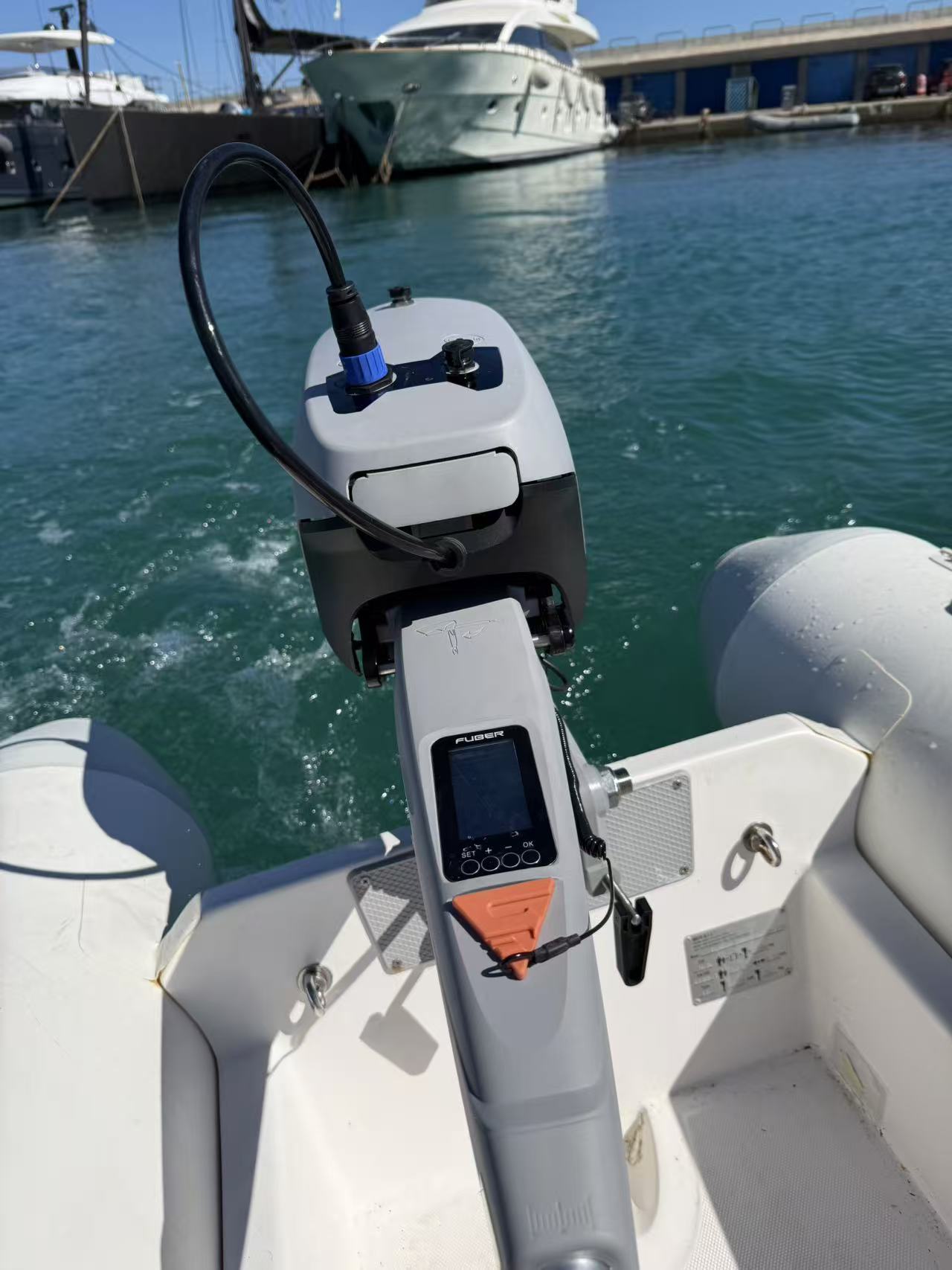 Fuber Global 1.5 Electric Outboard — Short ShaftUS$2,475 · in stock, ships now
Or replace the boat entirely
Aerowave Viper 400 Sovereign
Delivered to United States — freight included in the figure below.
US$3,167landed, USD
- 7-year hull warranty
- CE certified to ISO 6185-3 and EU Directive 2013/53/EU
- Door-to-door, tracked the whole way
See it for yourself
Real boats. Real owners. Real people behind them.
Plenty of what you read online these days is generated. Check us out properly — the factory, the reviews and the owners are all one click away. Why we use AI, and how to check we’re real
How our boats are built
Walk the production line: thermo-welded seams, 1.2 mm VALMEX Heavy Plus hulls, over-pressure relief valves on every chamber.
See the buildGoogle Maps reviews
Real Australian owners, five stars, published on our Google Business Profile with the map — read them there, not just on our own site.
Open Google Maps reviewsOwner stories
Boats in use — offshore, on rivers, on rescue duty. Photos and words from the people who actually own them.
Read owner stories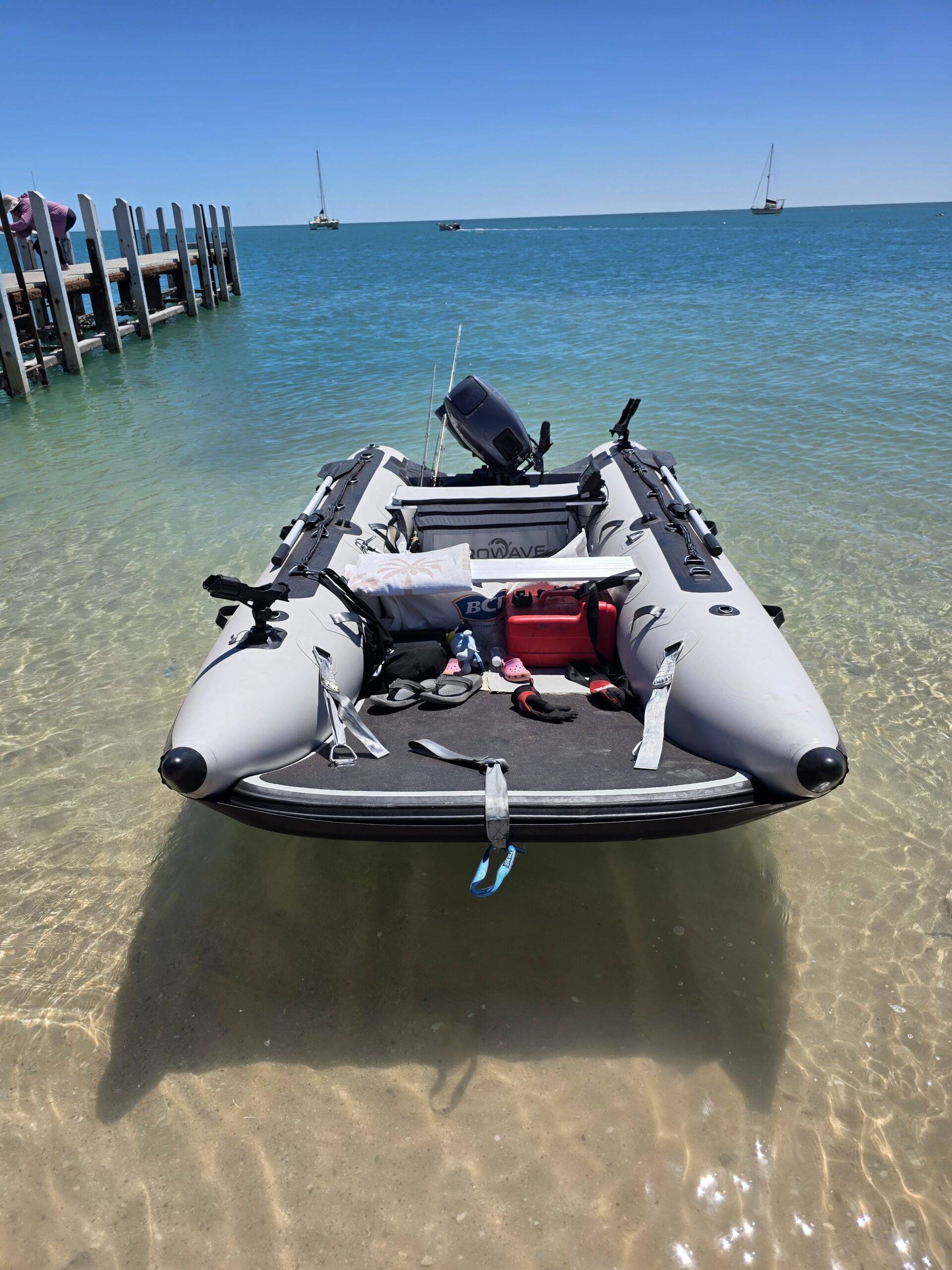
If you run an inflatable catamaran or a monohull tender with a short-shaft outboard, there are two cheap upgrades that change how the boat behaves more than anything else you can bolt on for under three hundred bucks: a hydrofoil stabiliser and a Permatrim plate. Both sit just above the propeller on the outboard's cavitation plate, both stop the prop spinning air instead of biting water, and both turn a tail-happy, slow-to-plane setup into something that gets up cleanly and tracks straight.
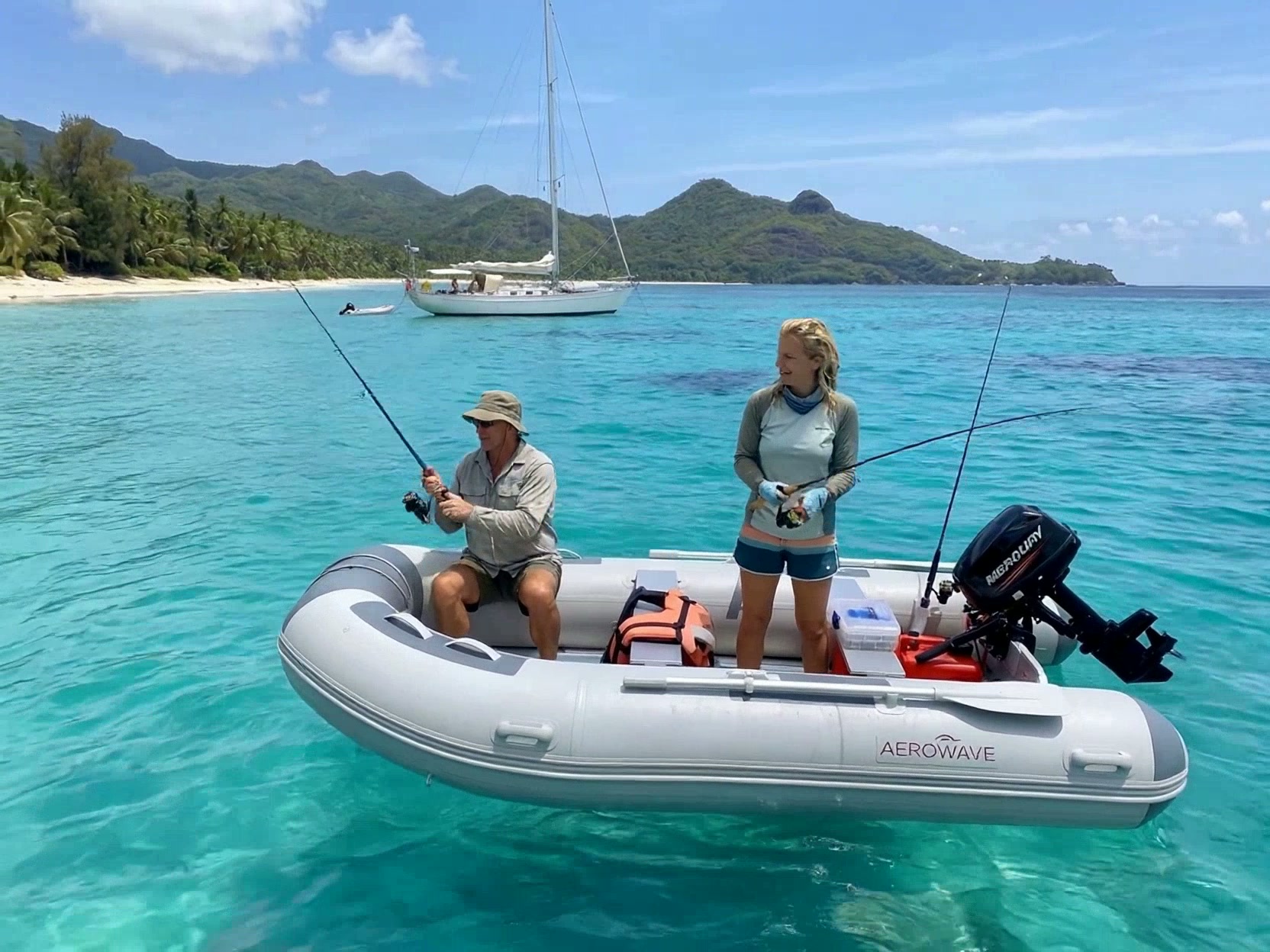
We get asked about these almost every week — usually after someone has fitted a 9.9 or 15hp short shaft to a 3.3–3.8m inflatable cat and noticed the bow is up in the sky for the first 50 metres and the prop is whining instead of pushing. Below is the honest, unbiased version: what they actually do, when they're worth it, and where they don't help.
What's the difference between a hydrofoil and a Permatrim?
They look similar from the boat ramp but they're built for slightly different jobs.
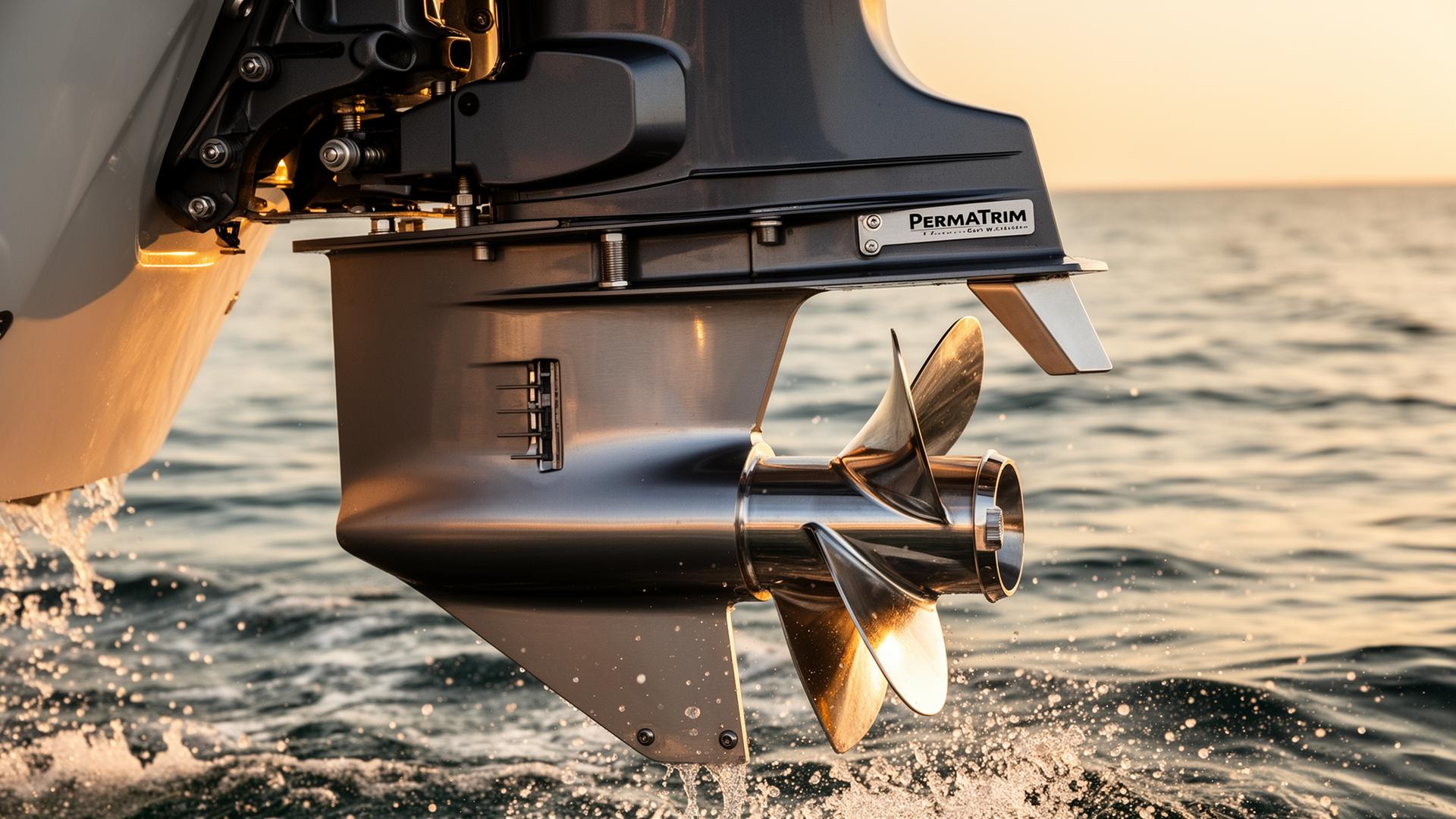
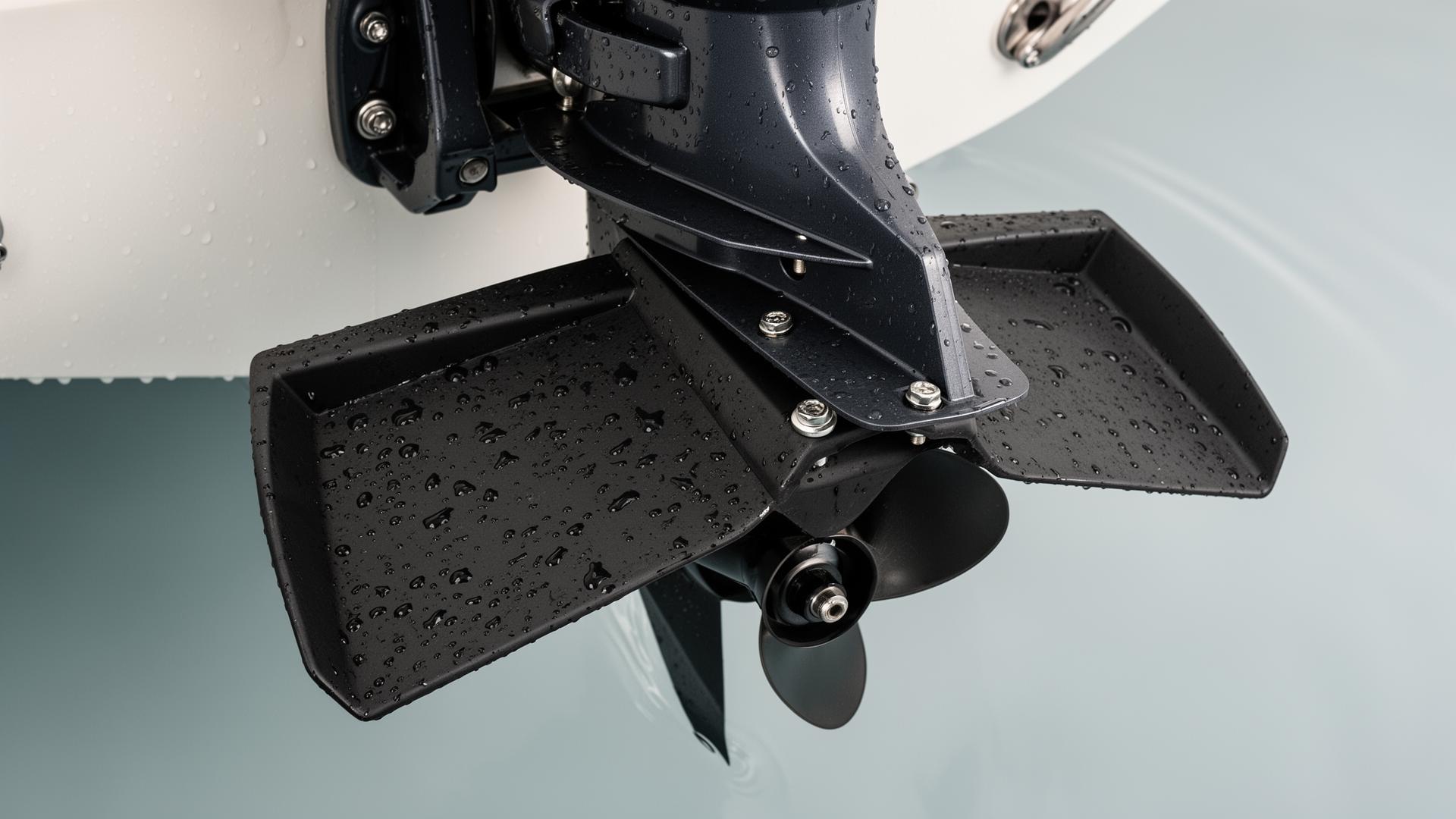
Hydrofoil stabilisers — usually moulded plastic or composite wings that bolt to the top of the cavitation plate and extend outwards either side of the gearcase. They generate lift at the back of the outboard, which pushes the stern up, drops the bow, and gets the boat onto the plane faster. Cheap, cheerful, and start around AUD $50 at most Aussie tackle shops for the no-name versions, $90–$140 for the better-known brands (Doel-Fin, StingRay, SE Sport).
Permatrim — a New Zealand-designed CNC-machined aluminium plate that bolts to the underside of your cavitation plate, extending the plate's surface area rearward and outward. It's a single piece of solid aluminium, no wings, no flex, and it's model-specific (they make a different plate for every common Yamaha, Tohatsu, Mercury, Suzuki and Honda short and long shaft). Prices in Australia sit between $220 and $300 depending on motor size.
Hydrofoils give you a bigger visual change. Permatrims give you a more refined, factory-feeling result with no flex and no cracking failure mode.
Why your inflatable catamaran needs one (and why a tinnie often doesn't)
A glass-hulled tinnie with a long-shaft 30hp sits low at rest, has a deep V to bite the water, and the prop is well submerged the whole time. It planes by itself.
An inflatable catamaran is a completely different animal:
- The hulls are light. A loaded 3.6m cat with two adults and gear sits around 350–400 kg total. The transom is short, the tubes are buoyant, and the stern lifts easily.
- Most owners run a short-shaft (S) outboard — 15 inches — because the transom height suits it. That puts the cavitation plate fractionally higher in the water than a long-shaft setup.
- The wide, flat deck and twin-hull buoyancy mean the bow points to the sky on initial throttle. Until you're on the plane, the prop is partially exposed and gulping air.
That's the textbook scenario where a foil or a Permatrim earns its money on day one.
Cavitation vs aeration — and why it matters for cats
People use the words interchangeably. They aren't the same.
- Cavitation is when low pressure on the back side of a spinning prop blade turns water into vapour bubbles. Those bubbles collapse against the blade and over time pit the metal. You hear it as a sudden over-rev with no thrust gain.
- Aeration ("ventilation") is air from the surface getting sucked down into the prop because the cavitation plate is too high or the bow is angled too far up. Same symptom as the operator — engine revs climb, boat doesn't accelerate — but the cause is air, not vapour.
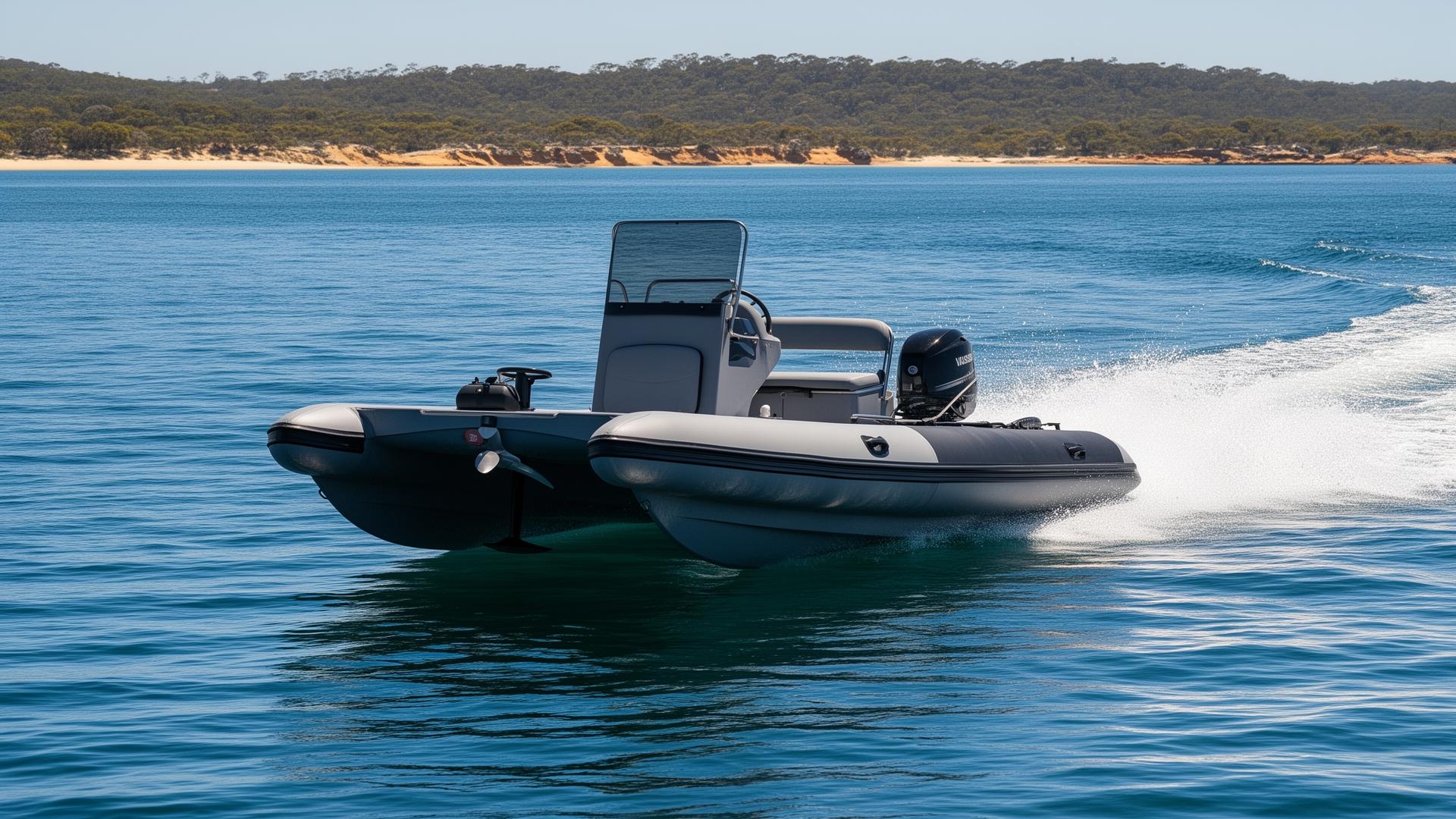
On a light inflatable cat with a short-shaft motor, aeration is the bigger problem. Every time you punch the throttle from rest, the stern squats slightly, the bow lifts, and the cavitation plate breaks the surface. Air rolls under it, hits the prop, and you lose drive until the boat finally levels out and the plate buries again.
A hydrofoil or Permatrim fixes this by physically extending the surface area above the prop. More plate area = harder for air to find its way down to the blades = the prop keeps biting water through the hole-shot.
The honest list of benefits
We sell boats, not foils, so there's no incentive to oversell these. Here's what genuinely changes after fitting one:
- Plane time drops — typically from 4–6 seconds down to 2–3 seconds on a 3.6m cat with a 15hp short shaft. Big visible difference.
- Bow stays lower in the hole-shot, so you can see over it. Big safety win, especially with kids on the bow seats.
- Less aeration on tight turns — turning hard with a light cat used to lift the inside hull and air the prop. Plate area kills that almost completely.
- More stable at low planing speeds — the boat will sit on the plane at 13–15 km/h instead of needing 18 km/h to stay up there. That's better fuel economy and a softer ride in chop.
- Slightly better reverse control in tight spaces (more plate area, less prop air-bite when backing).
What they won't do:
- Add top-end speed. Most setups lose 1–2 km/h at WOT because the plate creates a small amount of drag.
- Fix a chronically over-propped engine. If your motor can't reach its top of rev range, the prop is wrong — a foil won't save you.
- Compensate for a transom that's the wrong height for the motor. Get the shaft length right first.
Hydrofoil or Permatrim — which one should you actually buy?
Honest answer: it depends on budget and how often you take the boat off the trailer.
- Weekend recreational use, 9.9–15hp short shaft, casual fishing and family runs — a $50–$140 hydrofoil is perfectly fine. They work, they're cheap, the worst-case is a wing snaps off in a strike and you fit a new one. We've seen the StingRay Junior and SE Sport 200 last years on cats.
- Charter, hire-fleet, working boat, or 20hp+ four-stroke — go straight to a Permatrim. The aluminium plate doesn't crack, doesn't flex, doesn't fatigue at the bolt holes. It's the one we recommend to commercial operators because it'll outlast the motor.
- You re-prop or change motors every couple of years — hydrofoils are universal-fit; Permatrims are model-specific. If you're swapping motors, a foil moves over more easily.
If the budget runs to it, our recommendation across the board for an inflatable catamaran or monohull tender is the Permatrim. The build quality is a noticeable step up, there's no flex through the plate, and the planing characteristics are more linear — no twitchy bow-drop, just a smooth lift onto the plane. The Kiwi mob that builds them have been at it for decades and the product reflects it.
Fitment — what's actually involved
Both are bolt-on. Both take 20–30 minutes the first time, 10 minutes after that.
- Hydrofoil — 4 stainless bolts through the cavitation plate, washers either side, marine sealant on the holes. Some models use clamps with no drilling at all.
- Permatrim — uses the existing cavitation plate's threaded holes if your motor has them (most do), or drills 4 small holes. The kit includes stainless bolts, washers and a fitting guide for your motor model.
Things to actually check before drilling:
- Make sure you have at least 25mm clearance between the new plate's trailing edge and the anti-ventilation (cavitation) plate's existing rear edge.
- Don't fit a foil to a motor that already has a high-performance prop and is running on the limit of its rev range — the extra drag will pull you under the rev band.
- Always use stainless fasteners with marine sealant. Galv bolts will rust through inside a season in saltwater.
- For aluminium Permatrims, use the supplied stainless bolts with the supplied nylon isolation washers to prevent galvanic corrosion between the aluminium plate and the gearcase.
Common questions
Will a hydrofoil void my outboard warranty? In Australia, no — fitting a hydrofoil to the cavitation plate is not considered a modification of the engine's serviceable parts under most manufacturer warranty terms. Tohatsu Australia, Yamaha and Mercury all have public statements confirming aftermarket foils do not void warranty unless they cause measurable damage. Permatrims similarly. Always check your dealer's written warranty if you're unsure.
Does it work on a long-shaft motor too? Yes — same principle, slightly less dramatic improvement because long-shaft motors are already running the prop deeper. Still worth fitting on any inflatable.
Will it help my electric outboard / trolling motor? No. These are designed around prop pitch and shaft length for displacement-speed operation. A foil adds drag with no planing benefit at trolling speeds.
Can I run a hydrofoil and a Permatrim together? No. They both occupy the same real estate above the prop and you'd just create turbulence. Pick one.
Where do I buy them in Australia? Hydrofoils — any major chandler (BCF, Whitworths, Marine Deals) or eBay AU. Permatrims — the manufacturer in NZ ships direct to Australia, and a handful of Australian dealers carry stock for the popular Yamaha, Tohatsu and Mercury short-shaft models. Allow 5–10 days delivery.
Our recommendation
If you own an inflatable catamaran or a monohull tender running anything from a 6hp short shaft up to a 30hp four-stroke, fit one of these. It's the single best-value upgrade you can make. Plane time drops, the bow comes down, aeration on the hole-shot disappears, and your fuel economy at cruising RPM improves.
For most owners: start with a $50–$140 hydrofoil and you'll feel the difference on the first run.
For commercial operators, charter fleets, or anyone who runs the boat hard several times a week: spend the $250–$300 on a Permatrim and forget about it for the life of the motor.
If you'd like a hand picking the right one for your specific motor and boat combo, drop us a line through the chat or our contact page — we run these on our own demo boats and we'll tell you straight which option suits your setup.
Explore the Aerowave range
2026 setup check: diagnose the cause before adding a foil
A hydrofoil can improve planing behaviour, but it should not be used to hide an incorrect setup. Before fitting one, check the transom height, outboard shaft length, engine mounting position, trim angle, propeller condition, load distribution and tube pressure. If the propeller is drawing air because the anti-ventilation plate sits too high, adding more lift may not solve the underlying geometry.
Cavitation and ventilation are not the same fault
Ventilation occurs when surface air or exhaust reaches the propeller, often during acceleration or cornering. Cavitation is local vapour formation caused by low pressure around the propeller blades and can be associated with blade damage, unsuitable propeller geometry or excessive loading. The symptoms can feel similar, but the remedy may be different.
A practical test order
- Set correct tube and floor pressure before every comparison run.
- Test with a consistent load and record where passengers, fuel and equipment sit.
- Inspect the propeller for damage and confirm the specified shaft length and mounting height.
- Adjust trim one step at a time and note planing time, steering effort, spray and engine speed.
- Fit a foil only after the baseline setup is sound, then repeat the same test route and load.
What to measure after fitting
Judge the result by repeatable outcomes rather than feel alone: time to plane, minimum planing speed, engine speed at wide-open throttle within the manufacturer's range, steering load, fuel use and whether the propeller loses bite in turns. If engine speed rises suddenly without matching acceleration, stop and diagnose ventilation before continuing.
Aerowave WaveRunner-series boats use a 380 mm transom to place more propeller in the water for stronger bite and reduced ventilation risk. Always confirm the correct shaft specification for the particular boat and outboard combination rather than assuming one setup fits every inflatable.
Compare the inflatable catamaran range, see how the boats are built, or review safety, registration and compliance before finalising an outboard setup.
Weekend-Proof Score 17 questions · about 2 minutes
Will the boat you're about to buy survive an Australian summer?
Seventeen straight questions about where you'll use it, what you'll ask of it and the boat you're weighing up. You get a score out of 100, the exact weak points in your plan, and the one boat that genuinely fits.
Free · your result shows on screen · no email required
So which one is yours?
Pick how you'll actually use it and we'll take you straight to the right hull.
I want to fish it
Open bow, rod holders, deck space you can stand and cast from.
Viper Sport 400Family, diving and the beach
3.8 m Series 3 catamaran — low bow to climb back in wearing fins or a tank.
WaveRunner 380Tender / one-person launch
3.3 m hard-floor boat that packs into a bag and still takes a beach landing.
Viper 330Shop gear featured in this guide
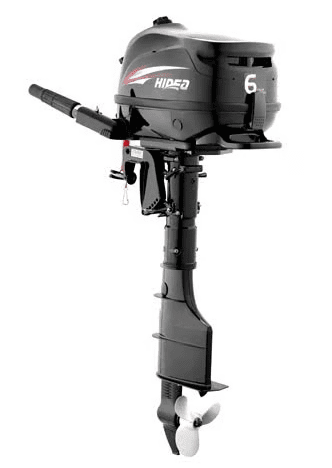
Hidea 6HP 4-Stroke Outboard
The 6HP 4-Stroke is built for tenders, skiffs and smaller inflatable boats. Quiet, easy to handle and reliable everyday power.
Australia-only item or unlisted country — ask for a price
Hidea 9.9HP 4-Stroke Outboard
Twin-cylinder smoothness for dinghies, inflatables and small aluminium boats. A confident step-up from 6HP.
Australia-only item or unlisted country — ask for a price
Hidea 15HP 4-Stroke Outboard
Strong, dependable mid-range power for bigger inflatables, tenders and small runabouts.
Australia-only item or unlisted country — ask for a price
Not sure which suits you? Talk to a real boat owner.
Before you spend a cent
Buying from Australia, delivered to United States
You have never heard of us, we are on the other side of the world, and the internet is full of fakes. Fair enough. Here is everything you would need to check us out, in one place — no forms, no chat bot.
Australian designed business
Easy Inflatables, Avoca Beach NSW 2251. ABN 96 856 548 613. International orders ship from our Hong Kong hub.
222 owner reviews, 4.8 average
Read them in full, good and bad, on our reviews page.
CE certified, 7-year hull warranty
ISO 6185-3 and EU Directive 2013/53/EU. Warranty honoured worldwide.
Tracked, insured, door to door
FREE freight to United States · local tax/duty on arrival.
- Who am I actually buying from?
- Easy Inflatables, Avoca Beach NSW 2251, Australia. ABN 96 856 548 613. Sean is the owner and skipper, Gary Stewart handles sales on +61 2 4335 1603, Karen Matthews handles email. The boats are Australian designed; international orders ship from our Hong Kong dispatch hub so your landed price stays competitive. Phone us before you pay a cent — a real person answers.
- Is this really an Australian product?
- Yes — Australian designed and engineered on the NSW Central Coast. Manufacturing is done offshore to our spec, and international orders ship direct from our Hong Kong dispatch hub. If we routed every boat through Australia first, the freight alone would roughly double or triple your cost for the same hull.
- What do I pay, and what is not included?
- The delivery and import terms depend on your country. EU, UK, New Zealand and named Asia/Pacific lanes include duty and tax; US freight is free but US buyers pay import charges on arrival. Other destinations show their terms before payment.
- How do I pay safely?
- Card through Stripe (Visa, Mastercard, Amex, Apple Pay, Google Pay) or bank transfer. Card payments carry your bank's own dispute protection. We never ask for crypto, gift cards or payment to a personal account.
- What if it arrives damaged?
- Every boat ships fully tracked and insured door to door. Photograph the carton and the boat on arrival and email us — transit damage is claimed and replaced through us, not left with you and the courier.
- Is the warranty real outside Australia?
- Yes. The 7-year hull warranty on 1.2 mm VALMEX Heavy Plus and Orca Hypalon hulls applies wherever you are. Replacement parts are held in Australia and at our overseas hub and go out by express courier to your door.
- Is the boat actually certified?
- All Aerowave catamarans are CE certified to ISO 6185-3 and EU Directive 2013/53/EU. Certification paperwork is supplied with the boat — ask and we will send it before you order.
Frequently asked questions
- What is the difference between propeller ventilation and cavitation?
- Ventilation is air or exhaust reaching the propeller from the surface. Cavitation is vapour forming in low-pressure areas around the blades. They can produce similar loss-of-bite symptoms but may require different fixes.
- Should I fit a hydrofoil before checking outboard height?
- No. First confirm shaft length, mounting height, trim, propeller condition, load distribution and inflation pressure. A foil should refine a correct setup, not mask an incorrect one.
- How should I test whether a hydrofoil improved my inflatable boat?
- Repeat the same route with the same load and record planing time, minimum planing speed, engine speed, steering effort and any ventilation in turns.
- Can a Permatrim or hydrofoil fix every planing problem?
- No. Poor pressure, excessive stern load, incorrect shaft length, damaged propellers and unsuitable mounting height must be corrected independently.
- What transom height does the WaveRunner series use?
- The WaveRunner-series transom is 380 mm, designed to put more propeller in the water for stronger bite and reduced ventilation risk. Confirm the matching shaft specification for your exact outboard.
Ready to set sail?
Premium German-fabric inflatable catamarans, built to order and delivered to your door. Talk to our team or browse the fleet.
Like this guide? Get the next one in your inbox.
Owner-tested tips, gear deep-dives and Aussie boating know-how — no spam.