Inflatable Catamaran vs RIB: Which One Is Right for You? (2026 Guide)
Straight comparison of inflatable catamarans and RIBs — stability, offshore handling, pack size, launch, load capacity, and speed. Which is right for fishing, tender use, and grey nomad travel in 2026.
Our recommendation
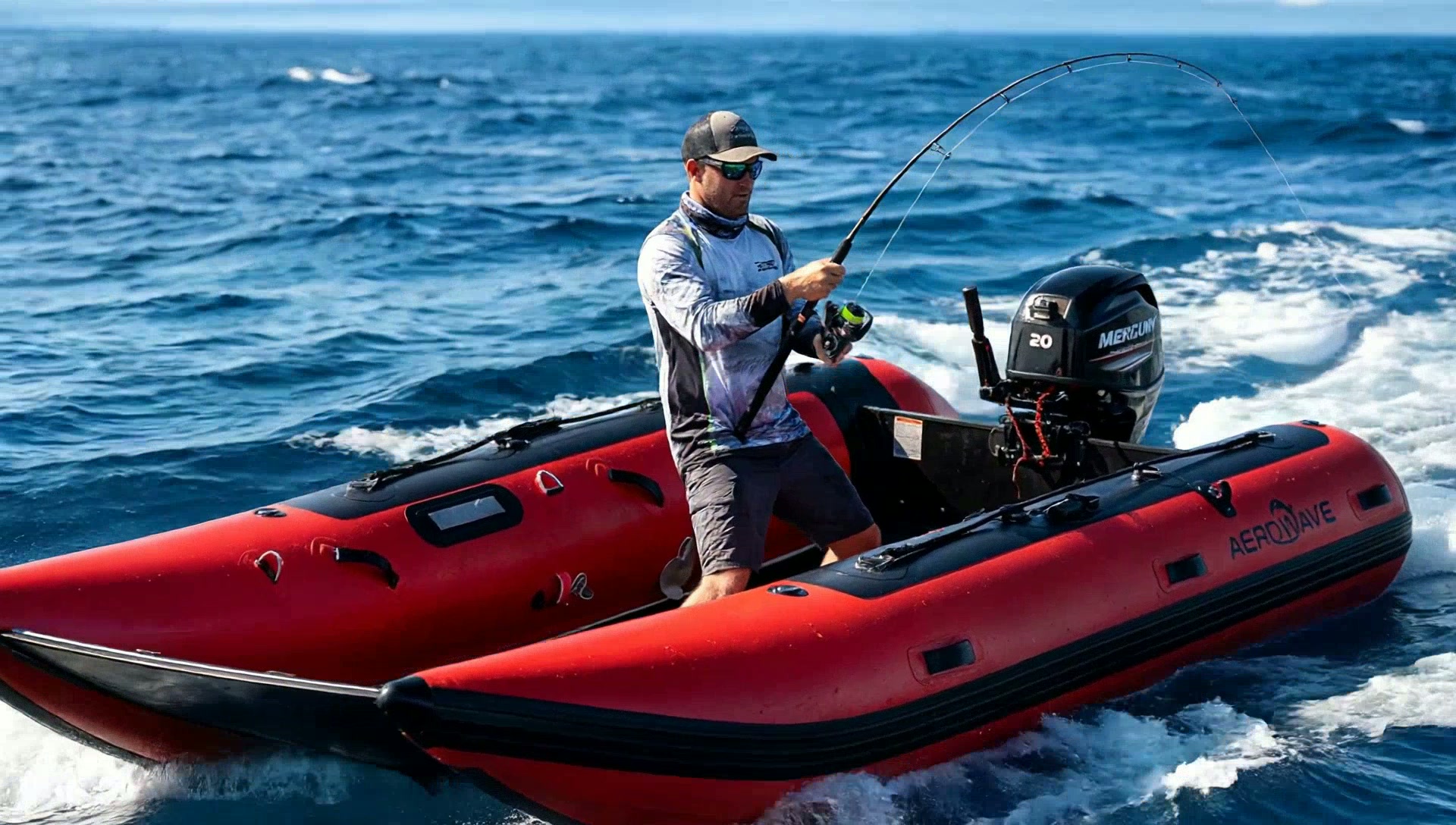
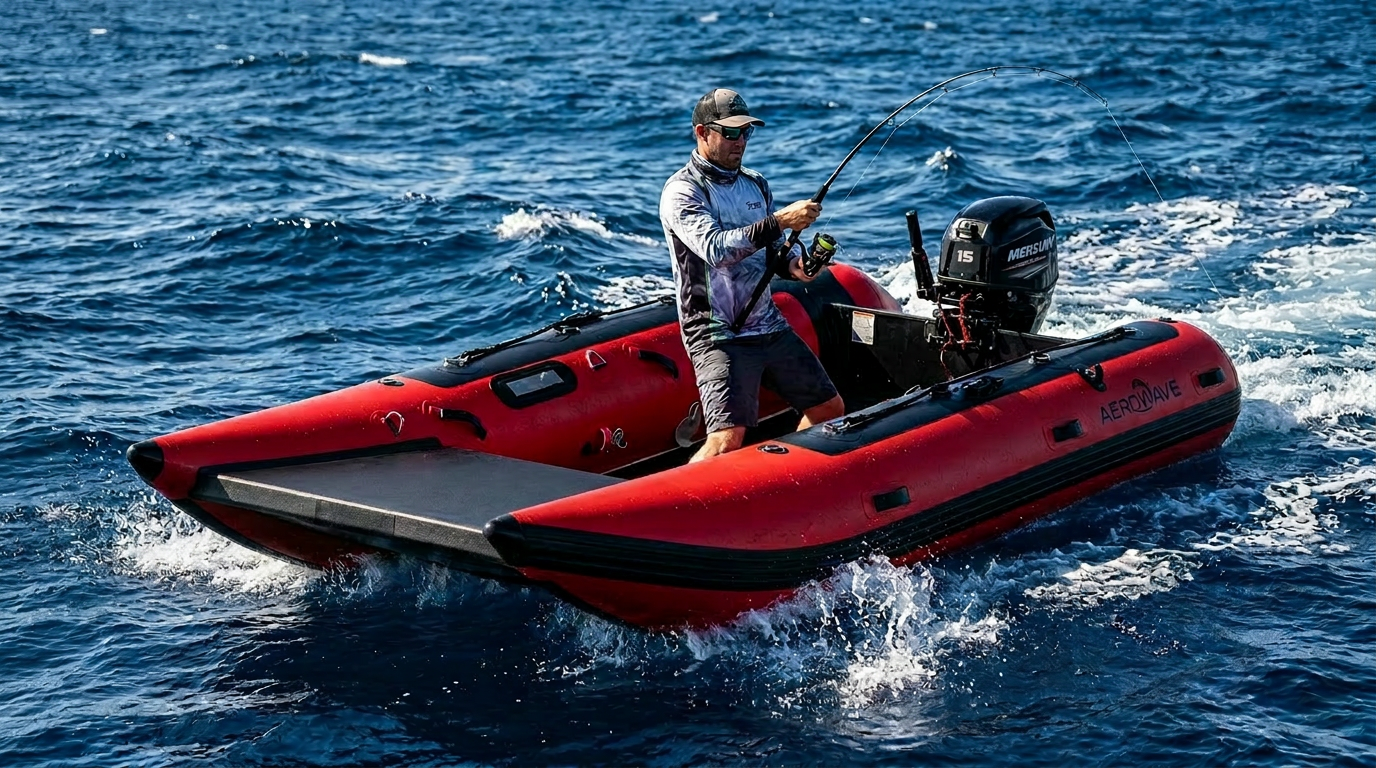
AeroWave AeroCat 360 Inflatable Catamaran
Length
3.60m / 11'10"
Beam
1.72m / 67"
Tube Diameter
51cm
Bare Boat Weight (without Bimini & wheel kit)
~40kg / 88lbs
You've narrowed it down to two types of inflatable boat. Both pack down small, both take a motor, and both cost a fraction of a fibreglass hull. But they're built around completely different design philosophies — and picking the wrong one will frustrate you every time you're on the water.
Here's a straight comparison of the inflatable catamaran and the RIB so you can make a confident call before you spend a dollar.
What Is an Inflatable Catamaran?
An inflatable catamaran runs two parallel inflatable tubes from bow to stern, with a rigid or fabric deck bridging the gap between them. That twin-hull layout creates a wide, stable platform that sits on top of the water rather than cutting through it.
The open deck between the hulls drains naturally — which is why "self-bailing" shows up as a feature on most models. That matters when you're fishing in chop or punching through a shore break.
Models like the AeroCat 360 and the Aerowave Viper 400 Sovereign are purpose-built around this layout. They're motor-ready, rated for outboards, and constructed from German VALMEX commercial-grade fabric at 1.2mm thickness. Every Aerowave vessel carries CE certification to ISO 6185-3 — the international standard for inflatable boats with rigid transoms.
What Is a RIB?
A RIB (rigid inflatable boat) pairs a fibreglass or aluminium hull with inflatable tubes along the sides. The rigid hull gives it a sharper entry into waves and a more predictable ride at speed.
There's a reason coast guards, dive operators, and harbour pilots use them. RIBs handle rough water well, accelerate quickly, and feel closer to a conventional powerboat underfoot.
The trade-off is weight and pack size. The rigid hull doesn't compress. You need a trailer or a roof rack with serious load capacity, and launching without a boat ramp becomes a much bigger exercise.
Easy Inflatables carries the Aerowave Sprint 330 RIB and Sprint 350 RIB for buyers who want the RIB format with inflatable tube construction rather than a fully rigid hull.
Head-to-Head: The Key Differences
Stability on the Water
The twin-hull catamaran wins this one. Two parallel hulls create a wide stance that resists rolling even when passengers shift weight or fish from the side. A single-tube RIB has a narrower beam and can feel unsettled when weight moves off-centre.
If you're fishing, photographing wildlife, or using the boat as a yacht tender where people are constantly stepping on and off, that stability is a genuine advantage — not just a spec sheet claim.
Handling in Rough Conditions
A RIB with a rigid hull cuts through chop more cleanly. The V-shaped hull deflects water downward rather than riding over it, which makes a real difference in open ocean or exposed coastal water at speed.
An inflatable catamaran handles moderate chop well, and the self-bailing deck keeps water from pooling underfoot. But it's not designed to match the offshore performance of a deep-V RIB.
Pack Size and Portability
This is where the inflatable catamaran pulls away. Both tubes deflate and fold down. The whole boat fits into a carry bag that slides into the back of an SUV, a caravan storage bay, or a yacht's locker.
A traditional RIB with a rigid hull needs a trailer and a registered tow vehicle. That's a different lifestyle commitment entirely.
Launch and Recovery
No trailer, no ramp, no registration in most states. An inflatable catamaran inflates on a beach, a boat ramp, or a marina pontoon in under 20 minutes with a quality pump. Drive to the water's edge, inflate, motor out, and reverse the process when you're done.
For grey nomads, caravan travellers, or yacht owners at anchor, that simplicity is the whole point.
Load Capacity and Deck Space
Inflatable catamarans carry surprising loads relative to their pack size. The open deck between the hulls gives you a flat working platform for gear, a cooler, a dive tank, or a couple of rods in rod holders. RIBs have less usable flat deck space — the rigid hull takes up the central floor area.
Speed
A RIB with a rigid V-hull and a matched outboard will generally reach higher top speeds than an inflatable catamaran of similar length. If speed is your primary goal, the RIB has the edge.
For most fishing, diving, and tender use cases, that speed difference is irrelevant. A 15HP outboard on a 3.6m inflatable catamaran gets you where you need to go.
Which Use Cases Suit Each Boat?
| Use case | Inflatable catamaran | RIB |
|---|---|---|
| Fishing in calm to moderate water | Strong fit | Moderate fit |
| Offshore or open ocean running | Moderate fit | Strong fit |
| Yacht tender | Strong fit | Moderate fit |
| Caravan / grey nomad travel | Strong fit | Poor fit (rigid hull) |
| Dive boat | Strong fit | Strong fit |
| Speed and performance focus | Moderate fit | Strong fit |
| Storage without a trailer | Strong fit | Poor fit |
What About a Soft Inflatable RIB?
There's a middle category worth naming. An inflatable RIB uses an inflatable hull rather than rigid fibreglass — lighter and more packable than a traditional RIB, but without the hull stiffness that gives a true RIB its performance edge.
The Sprint RIB Series at Easy Inflatables sits in this space. You get the RIB tube layout and a motor-ready transom without the weight and storage demands of a rigid hull. It's a practical option if you like the RIB format but need the boat to fit in a caravan bay.
The Case for an Inflatable Catamaran in 2026
For most Australian recreational buyers, the inflatable catamaran makes more practical sense than a RIB.
Twin-hull stability is better for fishing. The self-bailing deck keeps things dry. The boat packs into a bag, launches without a ramp, and stores in a caravan or the back of an SUV. German VALMEX commercial-grade fabric at 1.2mm carries a stated lifespan of 10 to 12 years — you're not replacing it every few seasons like a cheap PVC import.
CE certification to ISO 6185-3 is independent proof that the construction meets international standards. Not a marketing claim.
If you want to configure your own vessel before buying, the custom boat designer takes under 10 minutes and shows you exactly what you're getting before you commit.
The Case for a RIB
Choose a RIB if you regularly run in exposed offshore conditions, prioritise top-end speed, or already have a trailer and tow vehicle and don't mind the setup.
A rigid hull handles steep chop better than any inflatable design. If you're running 10 nautical miles offshore in a swell, that matters.
The Sprint RIB Series is worth a look if you want the RIB format without committing to a rigid hull. Pair it with a Hidea 4-stroke outboard — available from 2.5HP to 20HP EFI — and you have a capable, motor-ready setup that ships to your door in 7 to 14 days via DHL Express, FedEx, or UPS.
Buying from Outside Australia
If you're reading this from the US, UK, or EU, the same range ships internationally. Easy Inflatables provides a full USD landed-price quote within 24 hours, duties and freight included, so there are no surprise costs at the border. Request an international quote directly through the site.
Start with a $300 Discount
Sign up with your email at easyinflatables.com.au and you'll receive a $300 discount voucher toward your first order. Payment options include Afterpay, Klarna, Zip, and more — see the full list at checkout.
The Bottom Line
If you want stability, portability, and a boat that fits your life without a trailer, the inflatable catamaran is the stronger choice for most recreational buyers. If offshore performance and speed are what matter most, a RIB earns its place.
Most people reading this will be better served by the catamaran. Browse the full range and configure your own vessel at easyinflatables.com.au.
Frequently asked questions
Finance this boat from $19/week
Estimate only — powered by Australian Motorcycle & Marine Finance (AMMF).
Deposit (AUD)
$430
10% of price
Term
5 years
60 monthly repayments
Comparison rate
9.95% p.a.
Subject to AMMF approval
Weekly
$19
Monthly
$82
Amount financed
$3,865
Indicative only. Actual repayments depend on your AMMF credit assessment, term, fees and the balloon you select. Talk to AMMF for a personalised quote on AeroWave AeroCat 360 Inflatable Catamaran.
Like this guide? Get the next one in your inbox.
Owner-tested tips and Aussie boating know-how — no spam.
Ready when you are
Build your AeroCat 360 Inflatable Catamaran in under 3 minutes.
Premium 1.2mm German VALMEX® hull. 5-year warranty. Free major metro freight or express air. WavePay pay-in-4 available at checkout.
or $21/week over 60 months

AeroWave AeroCat 360 Inflatable Catamaran
$4,295 · or $21/wk