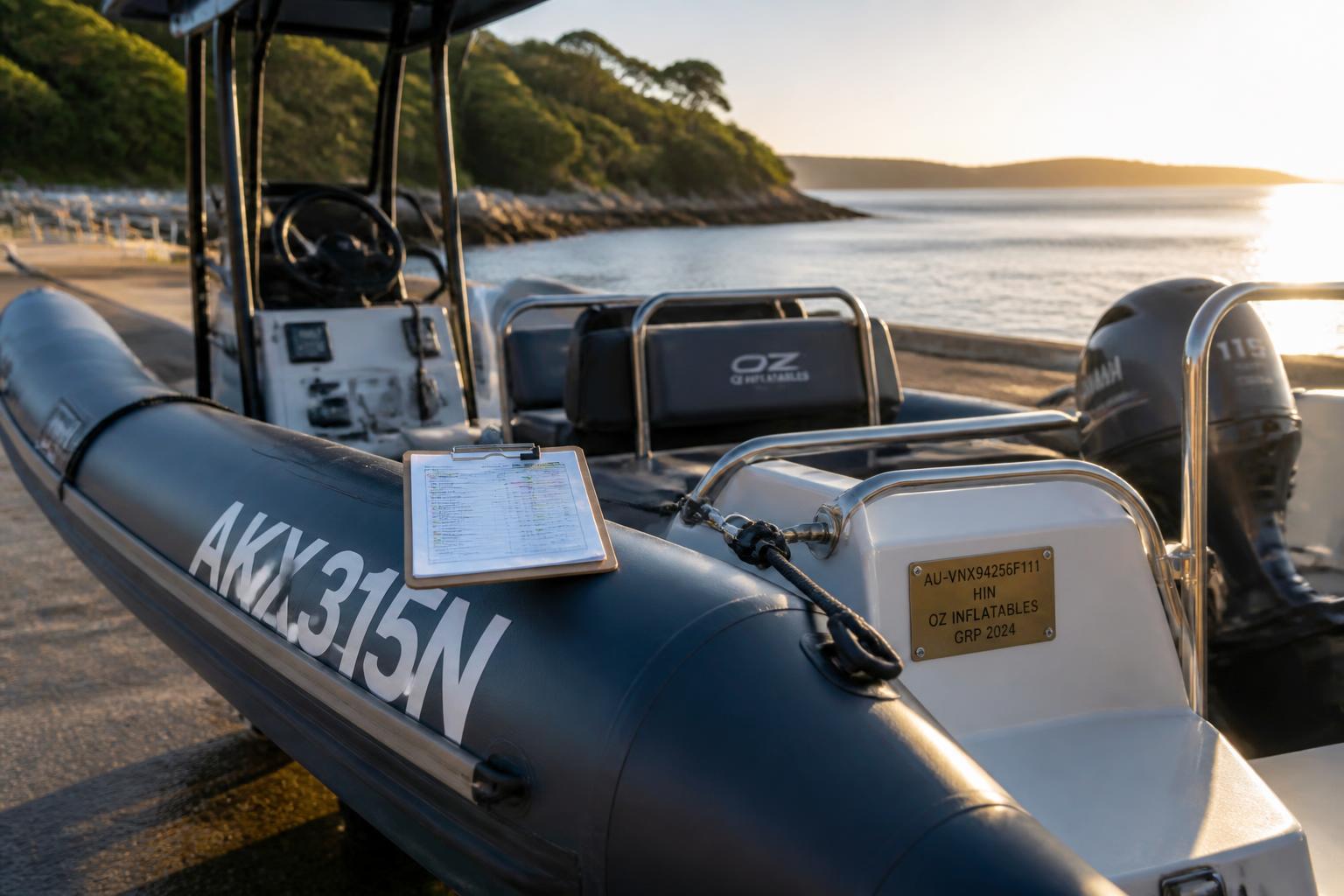
Inflatable catamaran on a slipway at golden hour with rego numbers and Boat Code Certificate clipboard
Owner's guide · Updated 2026

Boat Registration & Boat Code Certificate

State-by-state fees, length thresholds and the Boat Code "pink slip" inspection — everything you need to put your Aerowave on the water legally, in every Australian state and territory.

Every Aerowave arrives almost registration-ready — CE-plated, HIN-stamped and compliant with ISO 6185-3 + EU Directive 2013/53/EU. The last step is your state's first-rego inspection: the Boat Code Certificate.

Australia doesn't have one boat licence. Each state and territory runs its own registration office, sets its own fees and decides which vessels need a first-rego inspection. Below is the plain-English version, plus a printable Boat Code checklist you can take to the inspector on the day.

State by state

Registration in every Australian state & territory

Fees and rules change yearly — always confirm with the linked authority before you pay. These figures reflect the 2026 schedules at time of writing.

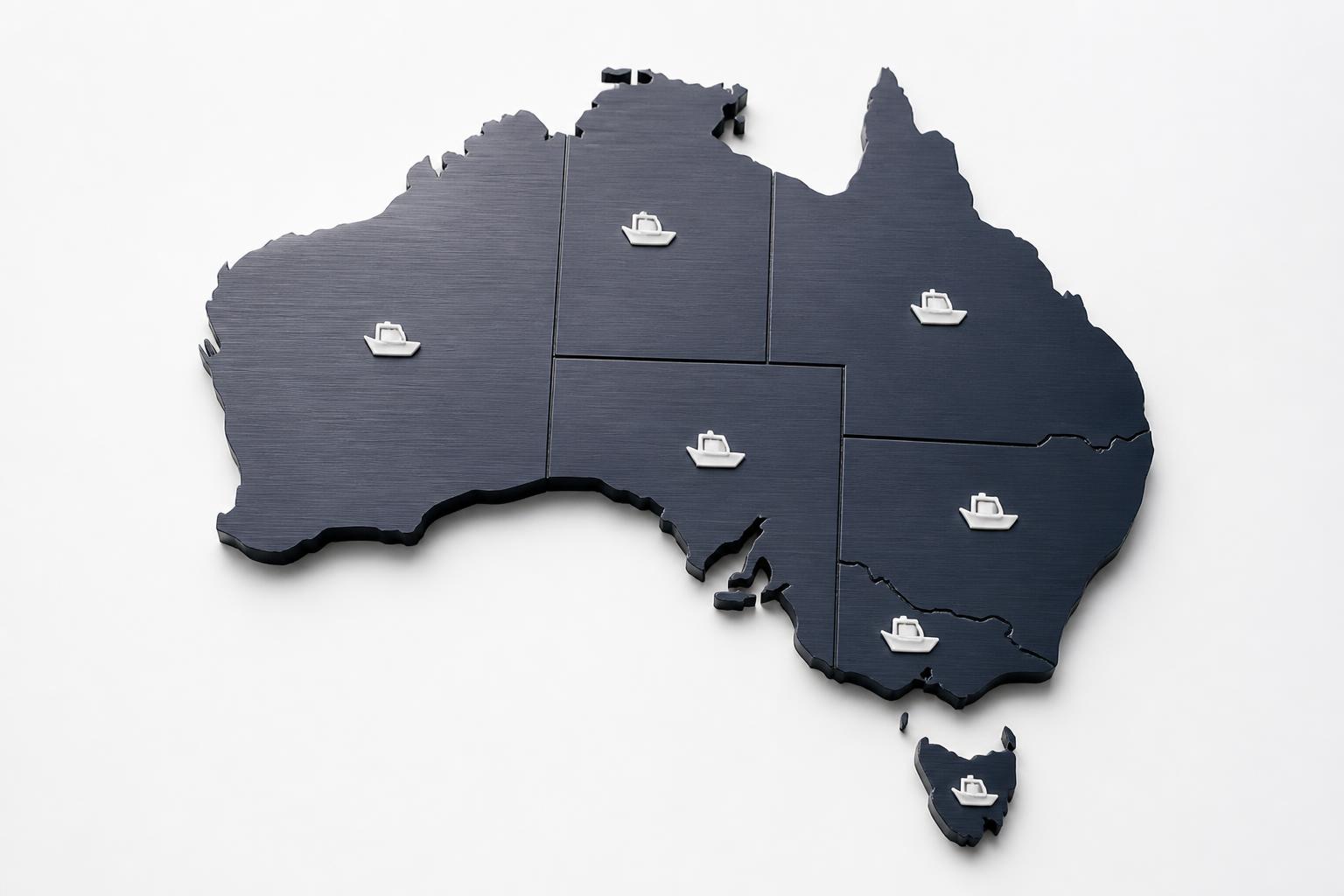
Brushed navy map of Australia with a registration marker on each state
NSW

New South Wales

Transport for NSW — Maritime
Threshold
Any powered vessel, regardless of length
Fee guide
≈ $74–$220/yr (length-based)
Boat Code
Pink-slip style inspection required for first-time rego of a homebuilt or imported hull. Use a Transport for NSW-approved Boat Code certifier.
Official NSW registration page →
VIC

Victoria

Transport Safety Victoria (Maritime Safety Victoria)
Threshold
Any powered vessel
Fee guide
≈ $130–$260/yr (length-based)
Boat Code
Imported or amateur-built vessels need a Recreational Vessel (RV) Inspection from an approved AMSA / TSV inspector before first registration.
Official VIC registration page →
QLD

Queensland

Maritime Safety Queensland (TMR)
Threshold
Powered vessels — any HP
Fee guide
≈ $46 admin + $2.40/kW (annual)
Boat Code
MSQ Boat Code survey required for first registration of an imported or owner-built vessel. Mobile surveyors operate Brisbane → Cairns.
Official QLD registration page →
WA

Western Australia

Department of Transport WA (DoT)
Threshold
Powered vessels with a motor ≥ 4 hp (or any motor used on certain waters)
Fee guide
≈ $98–$220/yr (length-based)
Boat Code
DoT-accepted survey ('plate') required for imported / homebuilt — usually carried out by an accredited marine surveyor in Perth, Bunbury or Geraldton.
Official WA registration page →
SA

South Australia

Service SA — Recreational Boating
Threshold
Powered vessels — any HP
Fee guide
≈ $87–$185/yr (length-based)
Boat Code
AS 1799.1 compliance inspection for new imports without CE/AU plate. Use a Marine Surveyors Australia (MSA) member.
Official SA registration page →
TAS

Tasmania

Marine and Safety Tasmania (MAST)
Threshold
Powered vessels — any HP
Fee guide
≈ $77–$170/yr
Boat Code
MAST 'New Vessel Declaration' required. Imported hulls need a surveyor's HIN inspection before first rego.
Official TAS registration page →
NT

Northern Territory

MVR / NT Marine Safety
Threshold
Powered vessels — any HP
Fee guide
≈ $40–$130/yr
Boat Code
First-rego inspection for imports — done by NT Marine Safety inspectors or an approved surveyor in Darwin.
Official NT registration page →
ACT

Australian Capital Territory

Access Canberra
Threshold
Powered vessels — any HP
Fee guide
≈ $90–$170/yr
Boat Code
ACT accepts a NSW or VIC Boat Code certificate. Most owners book an inspection in Queanbeyan or Sydney.
Official ACT registration page →
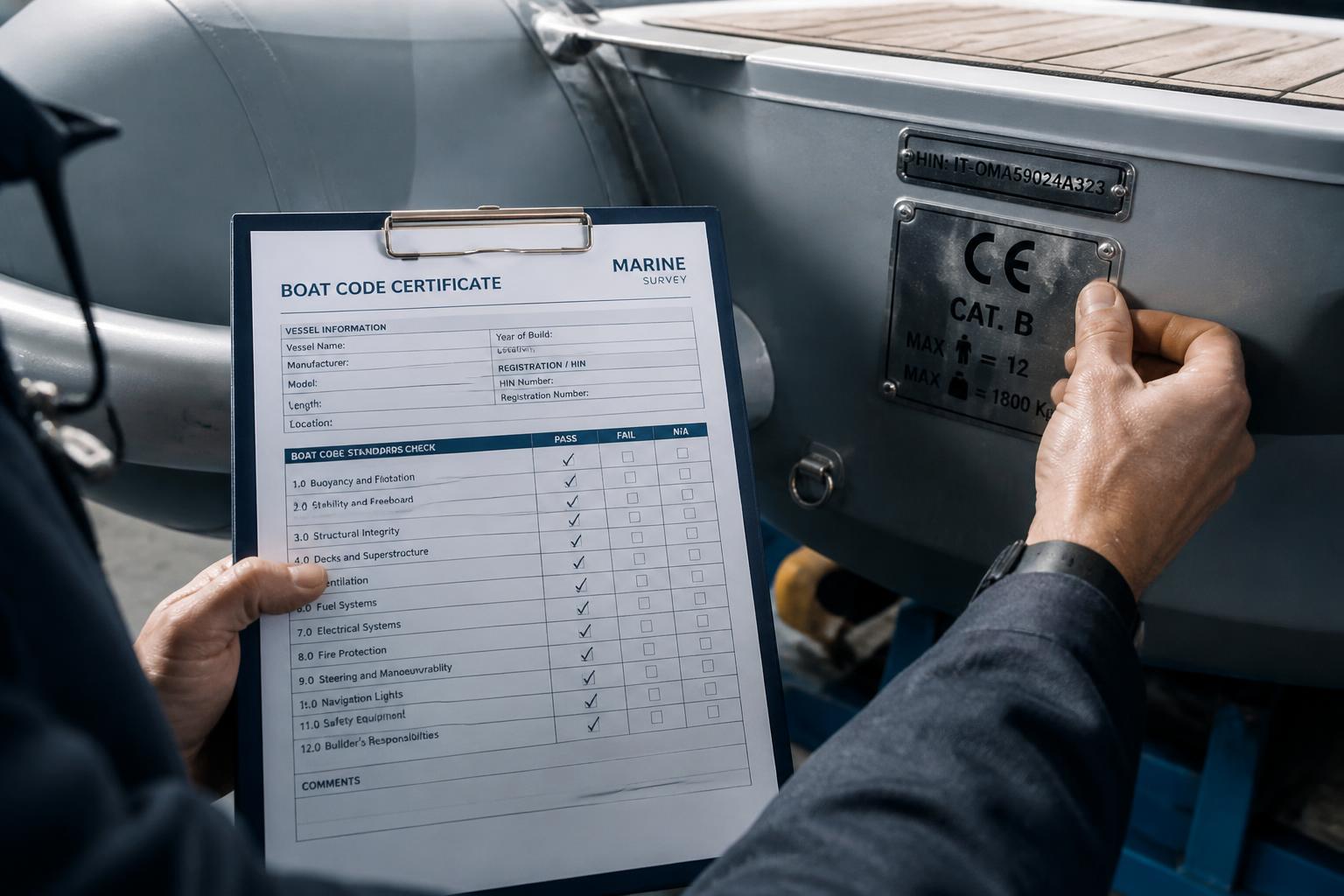
Marine surveyor inspecting the HIN and CE plate on an inflatable catamaran transom
Pink-slip explained

What a Boat Code Certificate actually is

The Boat Code is Australia's national standard for verifying the identity and safety of a recreational vessel before its very first registration. Think of it as the boating equivalent of a pink slip on a car — but unlike a pink slip, it's a one-time inspection, not annual.

  • Verifies the Hull Identification Number (HIN) is real, unique and recorded with the state.
  • Confirms the CE / builder's plate matches the hull and isn't tampered with.
  • Checks capacity (people + load) is plausible for the hull and matches the plate.
  • Spot-checks required safety gear — lifejackets, anchor, lights, EPIRB if applicable.

Typical cost: $120–$180 for a mobile certifier, or free with a workshop service. Allow 30–45 minutes on the day.

Printable checklist

Boat Code inspection — what to bring on the day

Print this page and put it in your boat bag. Tick each item before the surveyor arrives — most failed inspections fail on missing paperwork, not the hull.

Documents

  • Tax invoice from Easy Inflatables (proof of ownership)
  • Photo of the HIN stamped on the transom
  • Photo of the CE / builder's plate
  • Driver's licence or photo ID
  • Outboard receipt and serial number
  • Trailer compliance plate photo (if registering trailer too)

Safety gear on board

  • Lifejackets — one approved PFD per person onboard
  • Anchor + rope appropriate for hull length
  • Bailer or bilge pump (most states require both)
  • Waterproof torch + spare batteries
  • Sound signal (whistle or air horn)
  • Paddle or oar (mandatory under 6 m)
  • V-sheet, red hand flares & EPIRB if going offshore
Who to call

Mobile certifier vs marine workshop

Two ways to get your Boat Code Certificate. Both are equally valid — pick whichever fits your weekend.

 Mobile Boat Code certifierMarine workshop / chandlery
Cost$120–$180 (call-out fee included)Often free with a service or accessory fit
WhereComes to your drivewayYou tow / carry the boat to them
Boat stateCan inspect deflated & baggedUsually inflated on a trailer
Lead time1–2 weeks in metro areasSame week if you're booked for service
How to findSearch your state's marine authority website for 'approved surveyors'Any chandlery that fits outboards or services trailers can usually refer you

Tip: most mobile certifiers will inspect an Aerowave while it's still bagged on the trailer — saves you a 20-minute inflation just for the paperwork.

Next step

Apply your 150 mm rego numbers

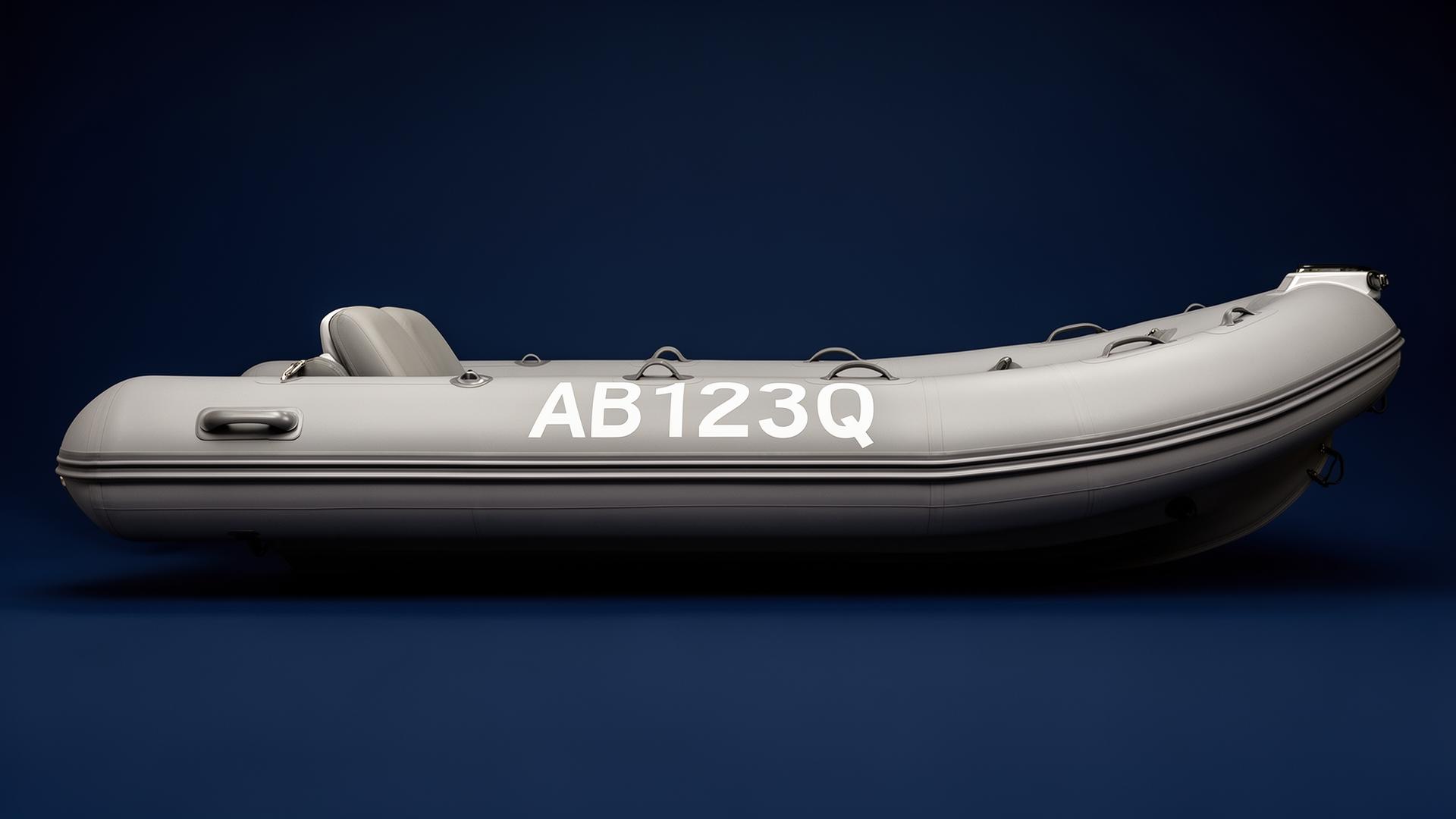
Once the Boat Code Certificate is signed and your state has issued an AKX-style number, you've got three ways to put it on the tube: vinyl decals, DIY PVC spray stencil, or a professional sign writer. Step-by-step photos in our companion guide.

Read the rego-numbers guide →
Grey inflatable catamaran with white 150 mm vinyl registration numbers

Not sure which surveyor to call in your state?

We keep a running list of trusted Boat Code certifiers in every capital city. Ring us and we'll text you two or three contacts within an hour.

Call +61 2 4335 1603
SAVE A$300