Astrophotography from an Inflatable Catamaran: A Field Guide to Australia's Darkest Anchorages
Stable, shallow-draft and silent — an inflatable catamaran is one of the best Milky Way photography platforms in Australia. Anchorages, gear, settings and the safety setup that actually works after dark.
At a glance
Stable, shallow-draft and silent — an inflatable catamaran is one of the best Milky Way photography platforms in Australia. Anchorages, gear, settings and the safety setup that actually works after dark.
- Why an inflatable catamaran is the right astro platform
- Reading a dark-sky map before you launch
- Five underrated Australian anchorages for Milky Way work
- Camera setup that works on a small inflatable
What we'd put you in
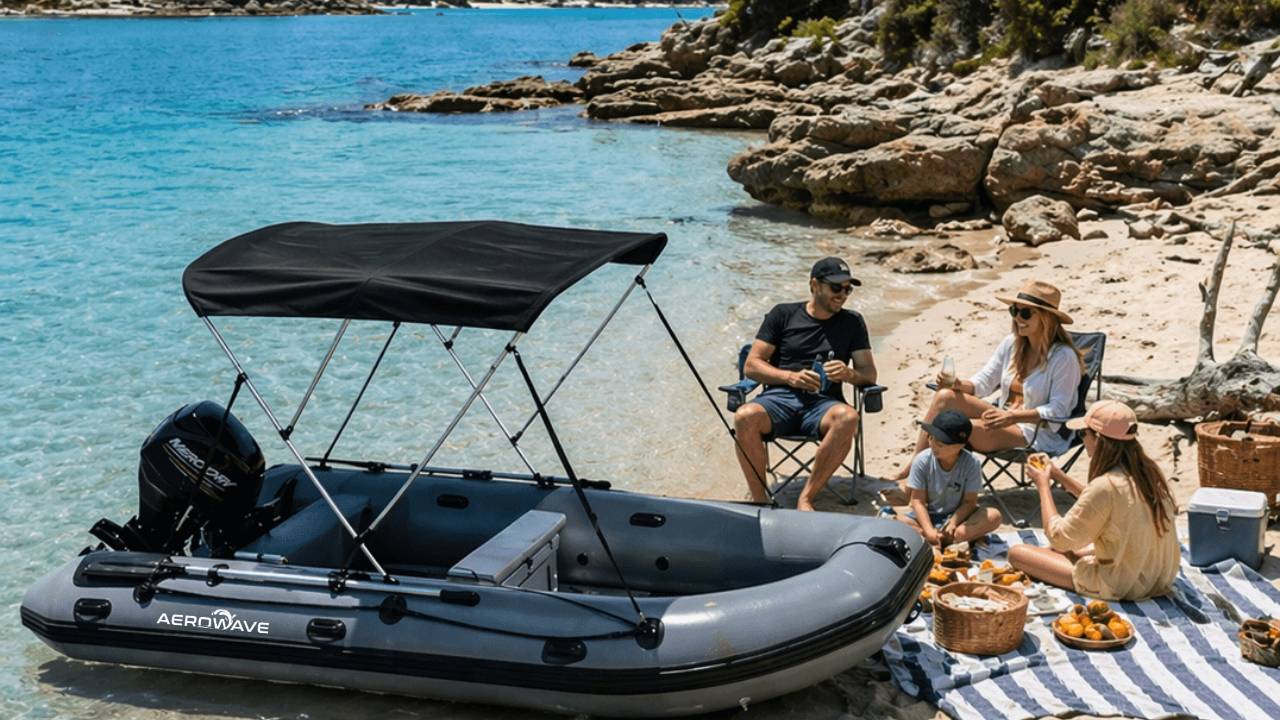
Aerowave Viper 400 Sovereign
If you're reading about catamarans, this is the one we build most of.
US$3,167 USD
Delivered to your door, today's rate
- Free freight to United States · local taxes payable on arrival
- 7-year hull warranty
Ships to United States 🇺🇸 · tracked door to door
One person, one launch. No trailer.
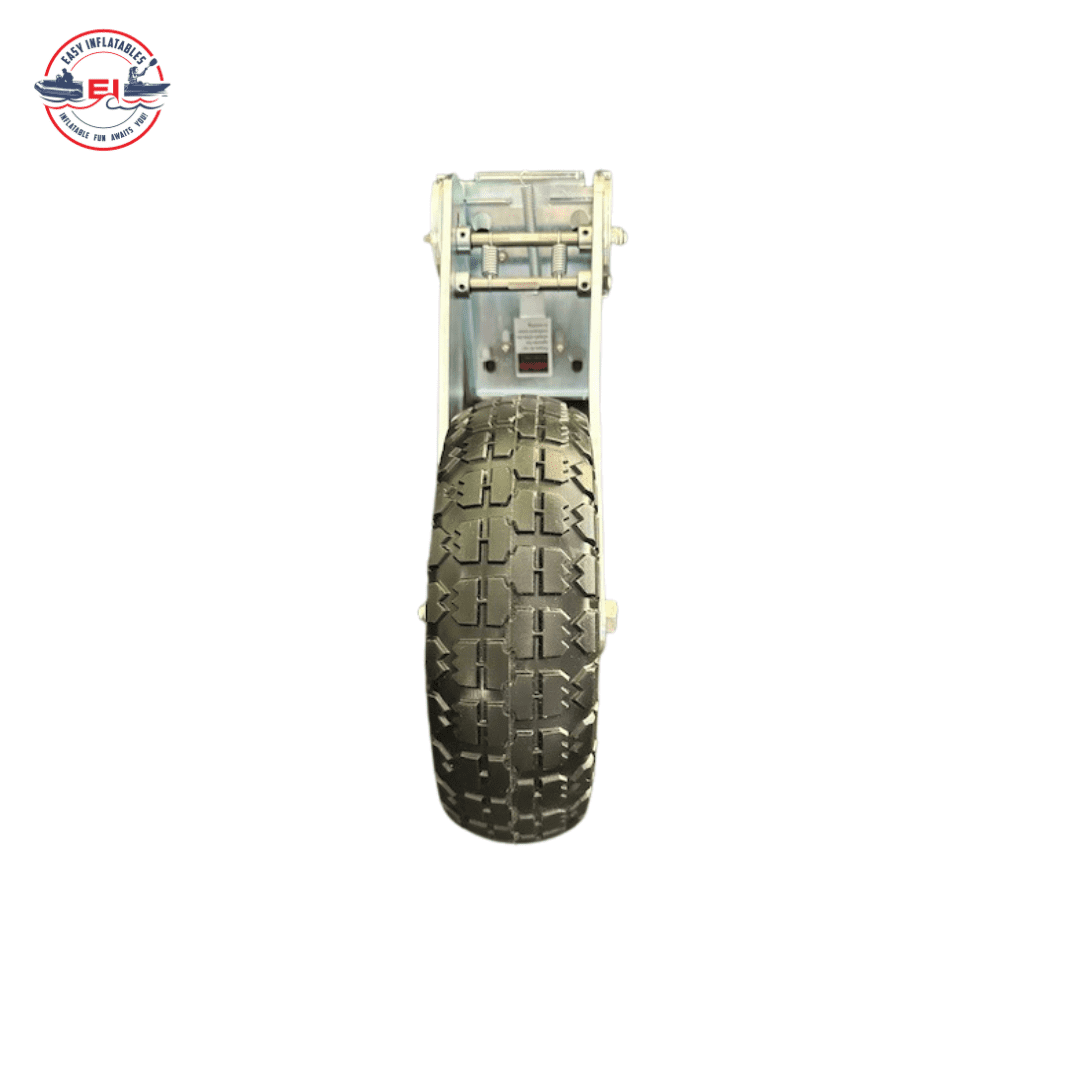
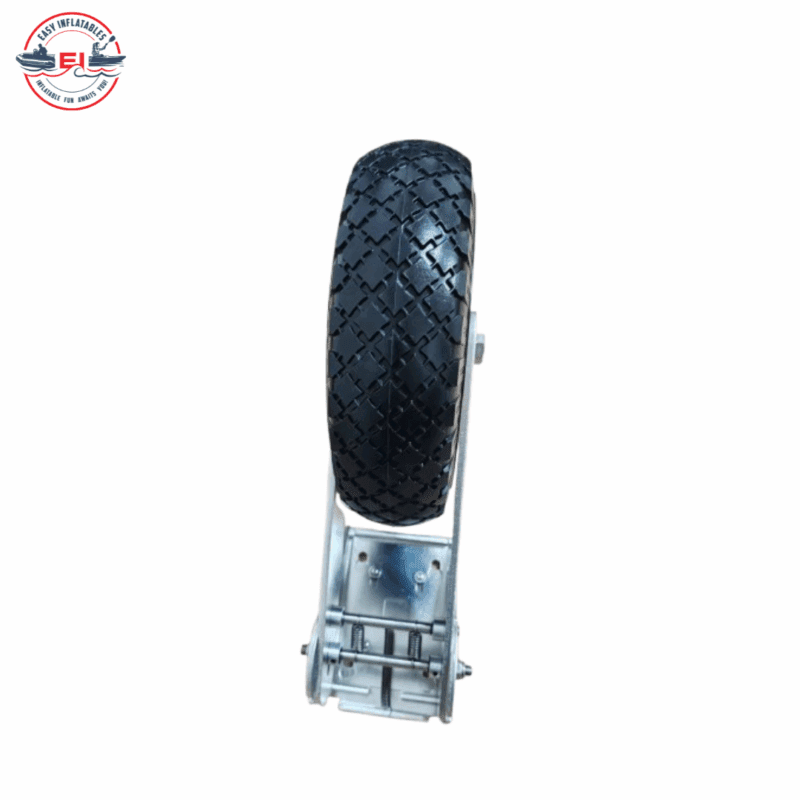
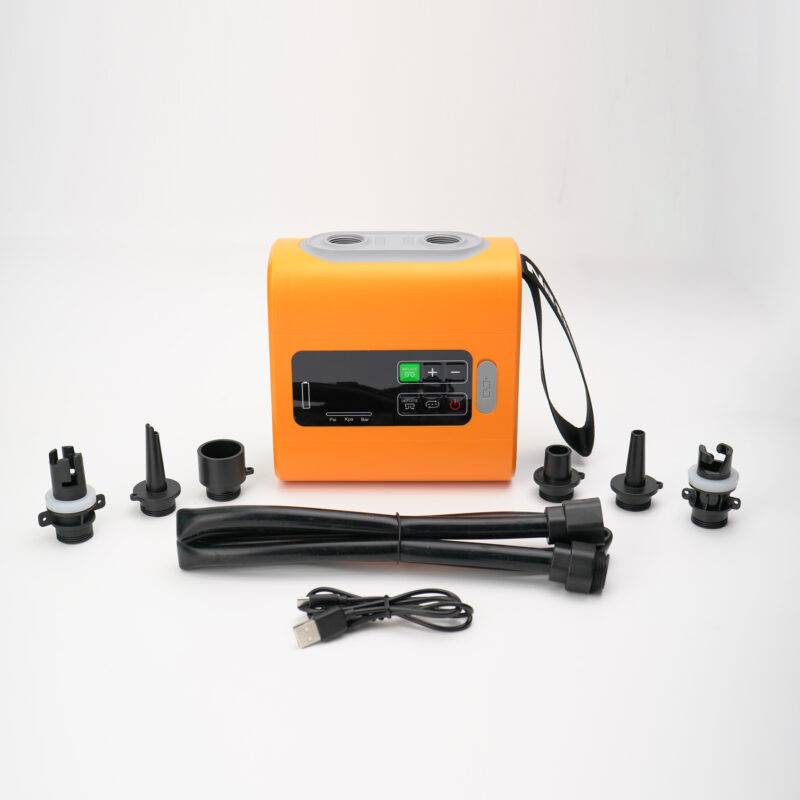
LockPro Plus transom wheels and the 22 PSI lithium pump — the two things that decide whether the boat gets used.
- Transom wheels rated for a loaded 4 m boat over soft sand
- 22 PSI lithium pump for the tubes; use it on the AirDeck only to approximately 2–2.5 PSI, then finish the floor to 8–10 PSI with the manual pump
- Ships worldwide, tracked door to door
Or replace the boat entirely
Aerowave Viper 400 Sovereign
Delivered to United States — freight included in the figure below.
US$3,167landed, USD
- 7-year hull warranty
- CE certified to ISO 6185-3 and EU Directive 2013/53/EU
- Door-to-door, tracked the whole way
See it for yourself
Real boats. Real owners. Real people behind them.
Plenty of what you read online these days is generated. Check us out properly — the factory, the reviews and the owners are all one click away. Why we use AI, and how to check we’re real
How our boats are built
Walk the production line: thermo-welded seams, 1.2 mm VALMEX Heavy Plus hulls, over-pressure relief valves on every chamber.
See the buildGoogle Maps reviews
Real Australian owners, five stars, published on our Google Business Profile with the map — read them there, not just on our own site.
Open Google Maps reviewsOwner stories
Boats in use — offshore, on rivers, on rescue duty. Photos and words from the people who actually own them.
Read owner stories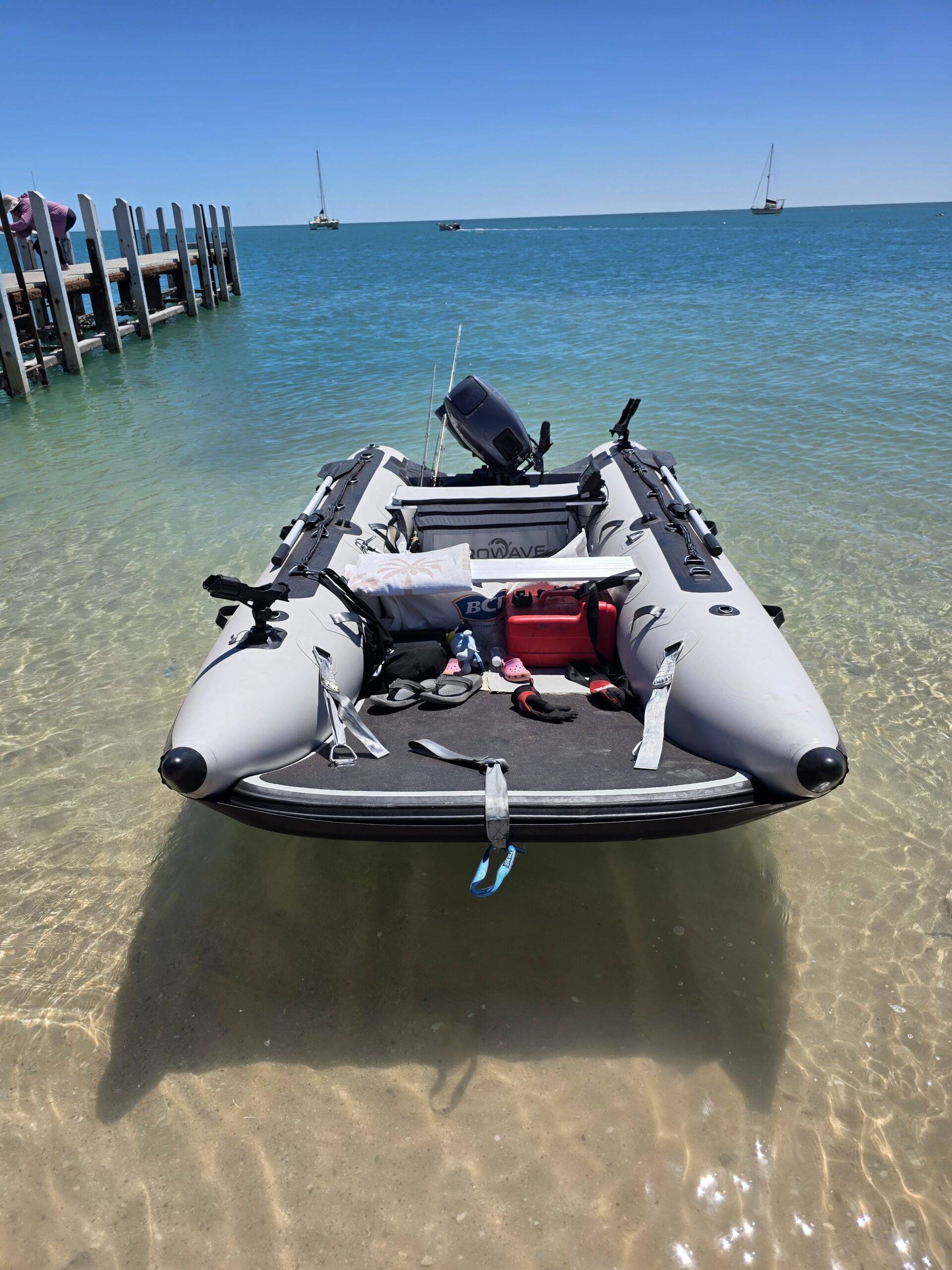
Astrophotography from an Inflatable Catamaran: A Field Guide to Australia's Darkest Anchorages
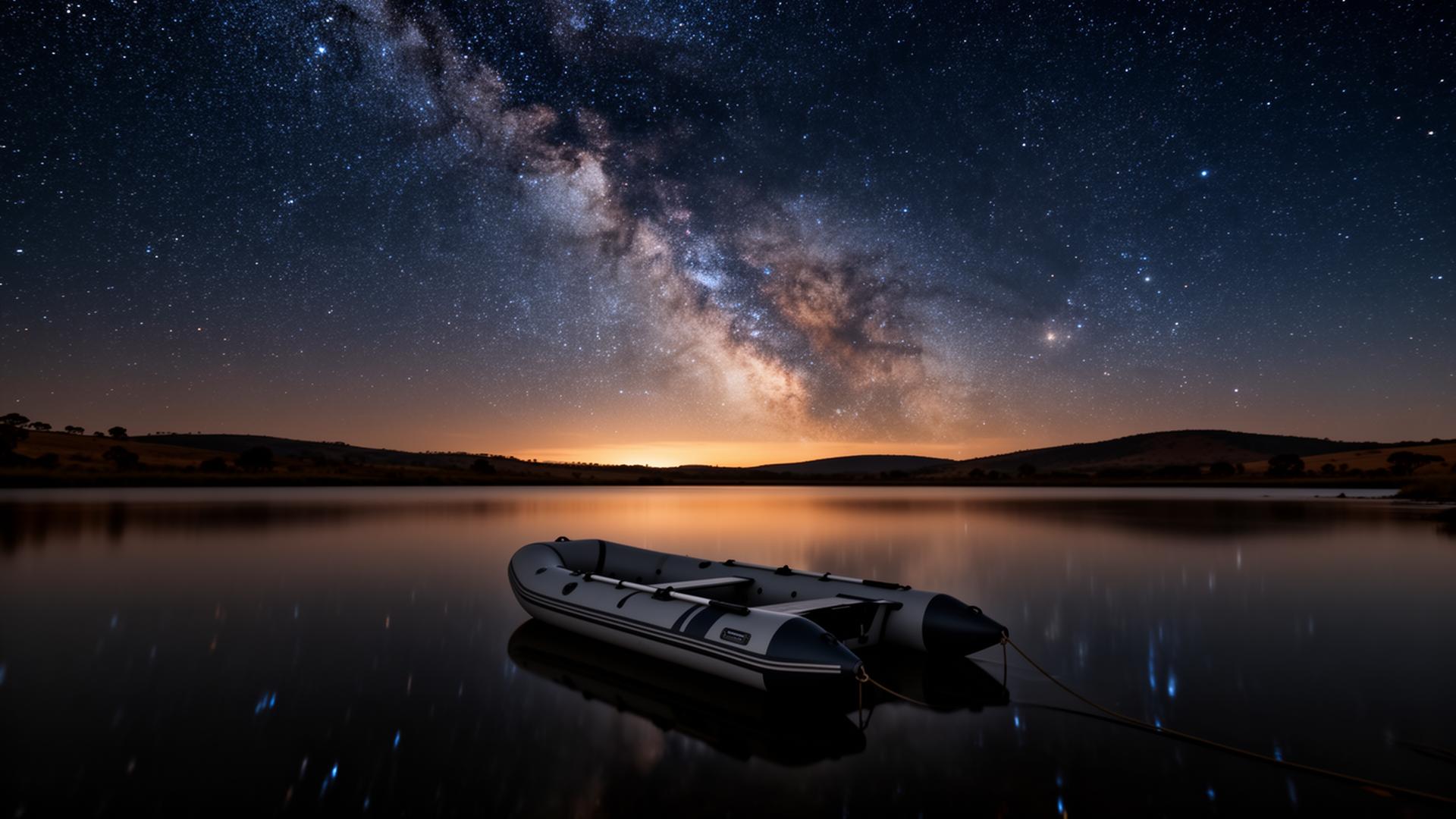
Most boating content treats the day as the main event and the night as the drive home. We want to flip that. Few platforms on the planet beat a stable, shallow-draft inflatable catamaran for chasing the Milky Way over silent water — no marina light spill, no headlights, no fence to climb. Drop anchor in a dark-sky cove, kill the nav lights for the exposure, and the southern sky does the rest.
This is a working field guide for boaters who want to bring a camera home with frames worth printing. Australian conditions, real anchorages, and the setup tweaks that make a difference on an inflatable platform.
Why an inflatable catamaran is the right astro platform
A rigid mono rolls. A kayak twitches. A pontoon catamaran with two large-diameter tubes and a rigid air-deck or aluminium floor is the closest thing to a floating tripod you'll get without paying mooring fees. Three things matter for night photography on the water:
- Roll period. Twin hulls dampen the short, sharp roll that smears stars. You can shoot 8–15 second exposures at anchor in protected water without star trails.
- Draft. 200–300 mm of draft lets you tuck behind a sandbar or into a mangrove cut where there's zero swell and zero light.
- Deck stability for a tripod. A firm air-deck or aluminium floor takes a carbon tripod with rubber feet. Place it over a tube join, not mid-span.
Add the silence of a swung-up outboard and you're working in conditions a land-based shooter would drive four hours to find.
Reading a dark-sky map before you launch
Astrophotography lives or dies on the Bortle scale (1 = pristine, 9 = inner city). Coastal Australia has more Bortle 1–2 water than almost anywhere on earth, but you have to get away from town glow over the horizon, not just out of direct light.
A practical rule for boaters: you need roughly 15 nautical miles of open water or uninhabited shoreline between your anchor and the nearest town of 5,000+ people for true Bortle 2 conditions. Inland estuaries with low hills between you and the coast often beat exposed beaches because the hills block the glow dome.
Free tools worth bookmarking before any trip:
- Light pollution overlay maps (lightpollutionmap.info) — filter to VIIRS 2023 for the freshest data.
- Stellarium Web — plan exactly where the galactic core will rise for your launch date.
- Willyweather marine — cross-check swell under 0.5 m and wind under 8 knots for the anchor window.
- Moon phase calendar — you want the new moon ± 4 nights. Anything brighter than a 30% waxing crescent washes out the core.
Five underrated Australian anchorages for Milky Way work
These aren't the Instagram spots. They're picked for boat access, low Bortle reading, and protected anchoring on an inflatable platform.
- Myall Lakes, NSW (Bortle 2). The northern arm past Bombah Point. Glass water on most winter nights, galactic core rises over Mungo Brush from April to October.
- Coorong, SA (Bortle 1). The lagoon system south of Salt Creek. Some of the darkest coastal water in the country. Bring fuel — services are thin.
- Hinchinbrook Channel, QLD (Bortle 2). Anchor on the lee side of Goold Island. Tropical air means the core sits almost directly overhead in June and July.
- Walpole Inlet, WA (Bortle 2). Karri forest blocks Denmark's glow to the east. Sheltered enough for a 4 m cat in any conditions.
- Bathurst Harbour, TAS (Bortle 1). Genuinely world-class. Requires planning and the right weather window, but the southern sky from here is the benchmark.
Camera setup that works on a small inflatable
You don't need a $10,000 astro rig. You need fast glass and a body that doesn't cook its sensor at high ISO.
- Lens: 14–24 mm at f/2.8 or wider. A Samyang 14 mm f/2.8 is the budget sweet spot.
- Body: any modern full-frame mirrorless. APS-C works — just crop tighter and accept more noise.
- Tripod: carbon, with rubber feet, not spikes. Pad the deck under each foot with a 5 mm neoprene square to kill vibration through the floor.
- Settings starting point: ISO 3200, f/2.8, 13 seconds, white balance 3800K. Adjust from there.
- Remote release or 2-second timer. Never touch the shutter at anchor — even small movement transfers through the tripod.
The single biggest mistake first-timers make is leaving the nav light on for the exposure. Switch to a red headlamp for everything on deck, and only flick the masthead light back on when you're moving.
The anchor setup that actually keeps stars sharp
Stars become trails when the boat swings. To minimise yaw at anchor:
- Two-point anchor — bow and stern, lines tight. A single bow anchor lets the cat weathervane 30° either way, which is enough to elongate stars in a 10-second exposure.
- Mud or sand bottom only. Weed lets the boat drift even on a tight line.
- Anchor before the breeze drops. Set the anchors in daylight if you can. Re-setting at 9pm in the dark is how gear goes overboard.
- Wait 15 minutes after the outboard cuts for the hulls to fully settle before the first exposure.
In a sheltered cove with a two-point set, an air-deck cat will hold star-shape in exposures up to about 15 seconds at 14 mm. Past that you need a tracker, which is a different blog.
Post-trip: the workflow nobody talks about
Boat astro frames pick up more sensor noise than land frames because the ambient temperature on water is humid and the camera body retains heat. Two adjustments:
- Shoot 20+ frames of the same composition and stack in Sequator (free, Windows) or Starry Landscape Stacker (Mac). Stacking divides noise by roughly the square root of your frame count.
- Always shoot 10 dark frames at the end of the session — same settings, lens cap on. They subtract the sensor's thermal pattern from your light frames.
A stacked, dark-subtracted 14 mm f/2.8 frame from a stable inflatable catamaran will hold up next to anything shot from land.
A note on safety after dark
This is the bit that gets skipped on photography blogs and matters most on boats.
- File a float plan with someone onshore — anchor coordinates and expected return.
- PFDs stay on for the whole session. Hypothermia on a winter estuary is the real risk, not the camera.
- Anchor lights on between exposures. Other boats are rare at 2am but they do exist and they're moving fast.
- VHF on channel 16, volume up. A handheld is fine for protected water.
- Phone in a dry bag, headtorch with red mode, spare batteries warm in an inside pocket.
None of this is exotic gear. Most of it is already in your boat for daytime use. The shift is just being deliberate about it for a longer, colder, darker session.
Why we wrote this
Inflatable boats get sold as fishing platforms, dive tenders, and family runabouts. Almost nobody talks about them as photography platforms, even though they're the cheapest way in Australia to put a tripod over genuinely dark water. We'd rather see more frames like that on the internet and fewer of the same drone shot from the same headland.
If you take a serious astro frame from one of our cats, send it through. We'll feature the best ones in next month's owners' gallery.
Related
- Aerowave Viper 400 Sovereign — stable 4.0m platform for night-shoot setups.
- AeroCat 380 — lighter cat, easy to haul to dark-sky anchorages.
- Adventure Air Tent — shelter for overnight astro sessions.
Weekend-Proof Score 17 questions · about 2 minutes
Will the boat you're about to buy survive an Australian summer?
Seventeen straight questions about where you'll use it, what you'll ask of it and the boat you're weighing up. You get a score out of 100, the exact weak points in your plan, and the one boat that genuinely fits.
Free · your result shows on screen · no email required
So which one is yours?
Pick how you'll actually use it and we'll take you straight to the right hull.
I want to fish it
Open bow, rod holders, deck space you can stand and cast from.
Viper Sport 400Family, diving and the beach
3.8 m Series 3 catamaran — low bow to climb back in wearing fins or a tank.
WaveRunner 380Tender / one-person launch
3.3 m hard-floor boat that packs into a bag and still takes a beach landing.
Viper 330Shop gear featured in this guide
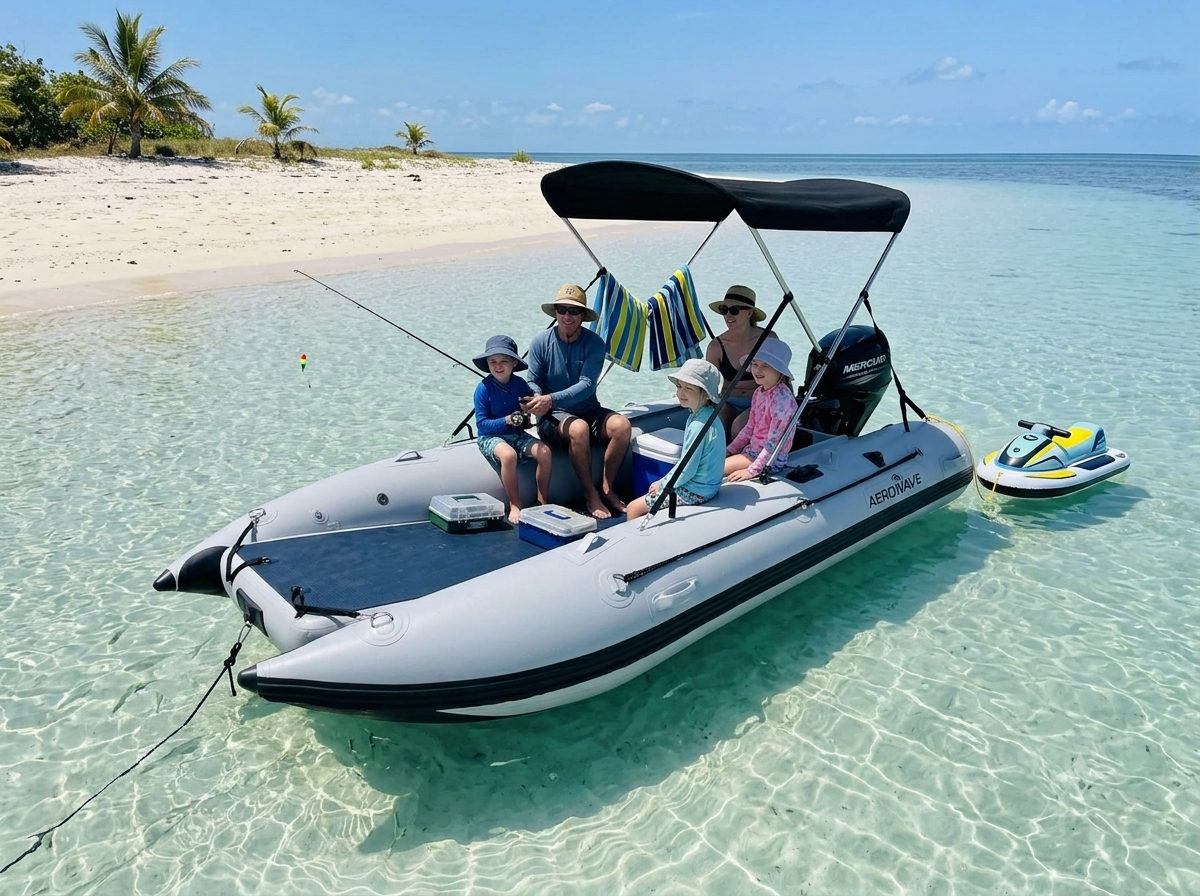
Aerowave WaveRunner 380 Series 3 Catamaran Package
The WaveRunner 380 Series 3 is a premium 3.8m inflatable catamaran package built for Australian and worldwide families, fishing, and coastal day boating — ideal for snorkeling and spearfishing — offering serious stability and premium German Valmex® construction.
Free freight to United States · local taxes payable on arrival
Aerowave Viper 400 Sovereign
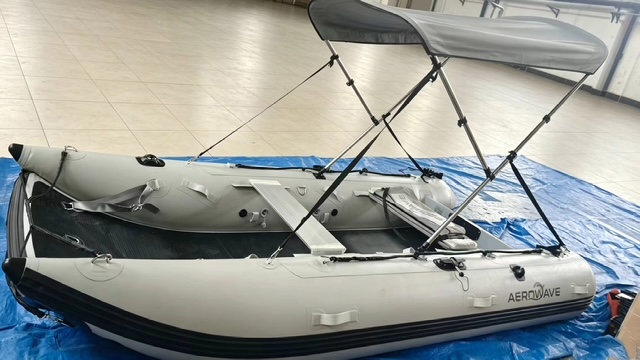
Flagship 4m enclosed-bow inflatable catamaran. German VALMEX® 7321 Heavy Plus 1.2mm commercial-grade fabric, 10 PSI high-pressure drop-stitch air deck floor with VALMEX non-slip surface, LockPro wheels, full Bimini and FREE express delivery Australia-wide included. Winter special — save $1,000 until 31 August 2026.
Free freight to United States · local taxes payable on arrival
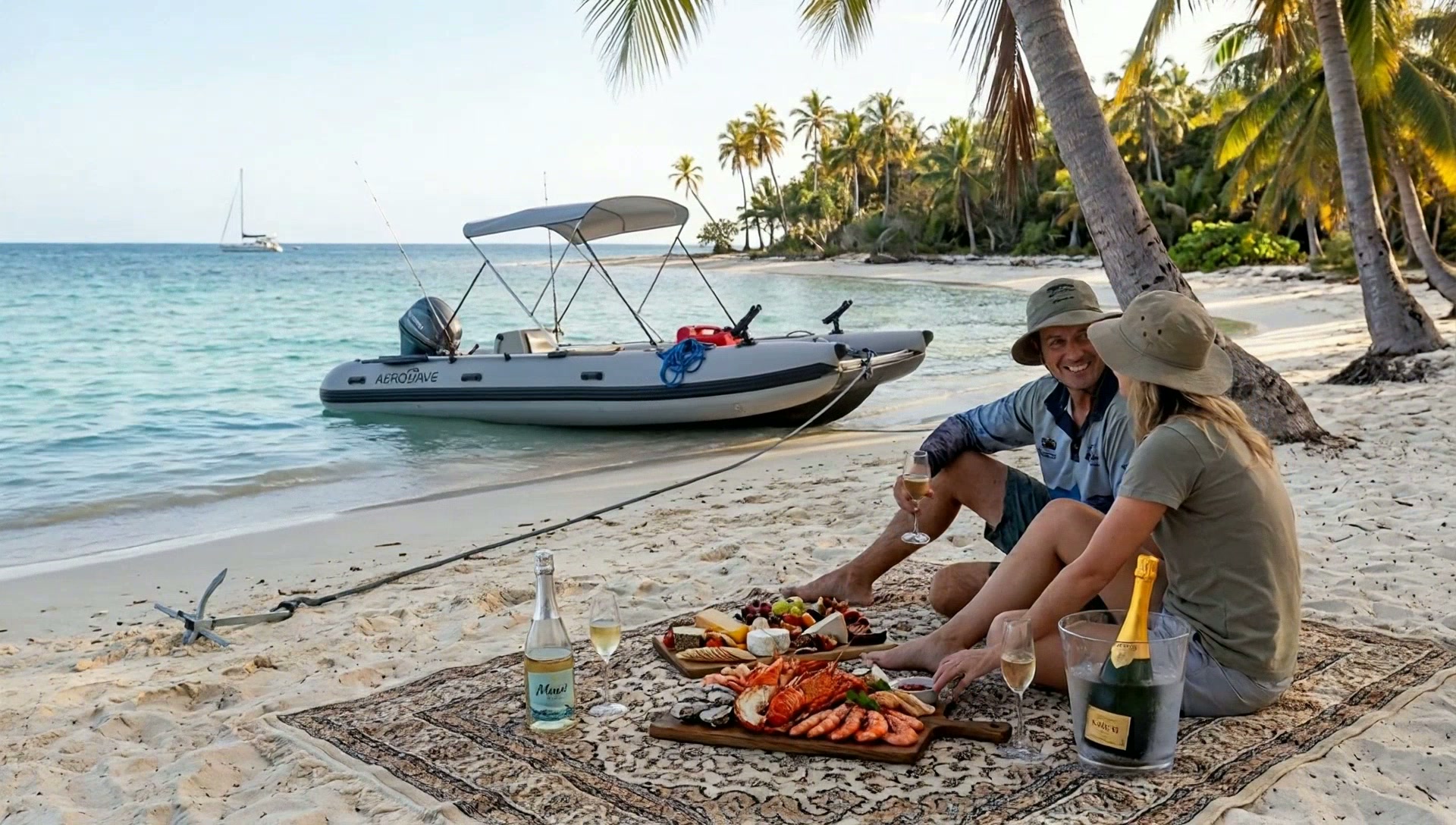
Aerowave Viper 365 Open Bow
Premium 3.65m Inflatable catamaran — built the same way as our flagship Viper 400 sports boat, just 35cm shorter. German VALMEX® 7321 Heavy Plus 1.2mm commercial-grade fabric, 10 PSI high-pressure drop-stitch air deck floor with VALMEX non-slip surface, LockPro wheels, full Bimini and FREE express delivery Australia-wide included.
Free freight to United States · local taxes payable on arrival
Not sure which suits you? Talk to a real boat owner.
Before you spend a cent
Buying from Australia, delivered to United States
You have never heard of us, we are on the other side of the world, and the internet is full of fakes. Fair enough. Here is everything you would need to check us out, in one place — no forms, no chat bot.
Australian designed business
Easy Inflatables, Avoca Beach NSW 2251. ABN 96 856 548 613. International orders ship from our Hong Kong hub.
222 owner reviews, 4.8 average
Read them in full, good and bad, on our reviews page.
CE certified, 7-year hull warranty
ISO 6185-3 and EU Directive 2013/53/EU. Warranty honoured worldwide.
Tracked, insured, door to door
FREE freight to United States · local tax/duty on arrival.
- Who am I actually buying from?
- Easy Inflatables, Avoca Beach NSW 2251, Australia. ABN 96 856 548 613. Sean is the owner and skipper, Gary Stewart handles sales on +61 2 4335 1603, Karen Matthews handles email. The boats are Australian designed; international orders ship from our Hong Kong dispatch hub so your landed price stays competitive. Phone us before you pay a cent — a real person answers.
- Is this really an Australian product?
- Yes — Australian designed and engineered on the NSW Central Coast. Manufacturing is done offshore to our spec, and international orders ship direct from our Hong Kong dispatch hub. If we routed every boat through Australia first, the freight alone would roughly double or triple your cost for the same hull.
- What do I pay, and what is not included?
- The delivery and import terms depend on your country. EU, UK, New Zealand and named Asia/Pacific lanes include duty and tax; US freight is free but US buyers pay import charges on arrival. Other destinations show their terms before payment.
- How do I pay safely?
- Card through Stripe (Visa, Mastercard, Amex, Apple Pay, Google Pay) or bank transfer. Card payments carry your bank's own dispute protection. We never ask for crypto, gift cards or payment to a personal account.
- What if it arrives damaged?
- Every boat ships fully tracked and insured door to door. Photograph the carton and the boat on arrival and email us — transit damage is claimed and replaced through us, not left with you and the courier.
- Is the warranty real outside Australia?
- Yes. The 7-year hull warranty on 1.2 mm VALMEX Heavy Plus and Orca Hypalon hulls applies wherever you are. Replacement parts are held in Australia and at our overseas hub and go out by express courier to your door.
- Is the boat actually certified?
- All Aerowave catamarans are CE certified to ISO 6185-3 and EU Directive 2013/53/EU. Certification paperwork is supplied with the boat — ask and we will send it before you order.
Frequently asked questions
- Do I need a tracking mount for astrophotography from a boat?
- No, not for wide-angle work. With a 14 mm lens at f/2.8 and a two-point anchor in sheltered water, exposures up to 13–15 seconds will hold star-shape. Trackers are a separate problem on a moving platform and rarely worth the complexity for boat-based shooting.
- What's the best time of year for Milky Way photography in Australia?
- The galactic core is visible from late February to late October. Peak visibility is May to August when the core is high overhead after dark. Always shoot within ±4 nights of the new moon.
- Will sea spray damage my camera?
- Salt spray is the real risk, not splash. Shoot from a dry, anchored deck — not while underway — and wipe the lens front element with a microfibre between sets. A cheap rain cover or freezer bag with a hole for the lens handles humidity. Rinse the tripod in fresh water after the trip.
- Can I do this on a smaller inflatable boat too?
- Yes, but stability drops sharply below about 3.3 m. A pontoon catamaran in the 3.3–4.0 m range is the sweet spot — small enough to anchor anywhere, stable enough to hold a tripod. Single-hull SIBs work in dead-calm conditions but limit your exposure length.
Ready to set sail?
Premium German-fabric inflatable catamarans, built to order and delivered to your door. Talk to our team or browse the fleet.
Like this guide? Get the next one in your inbox.
Owner-tested tips, gear deep-dives and Aussie boating know-how — no spam.