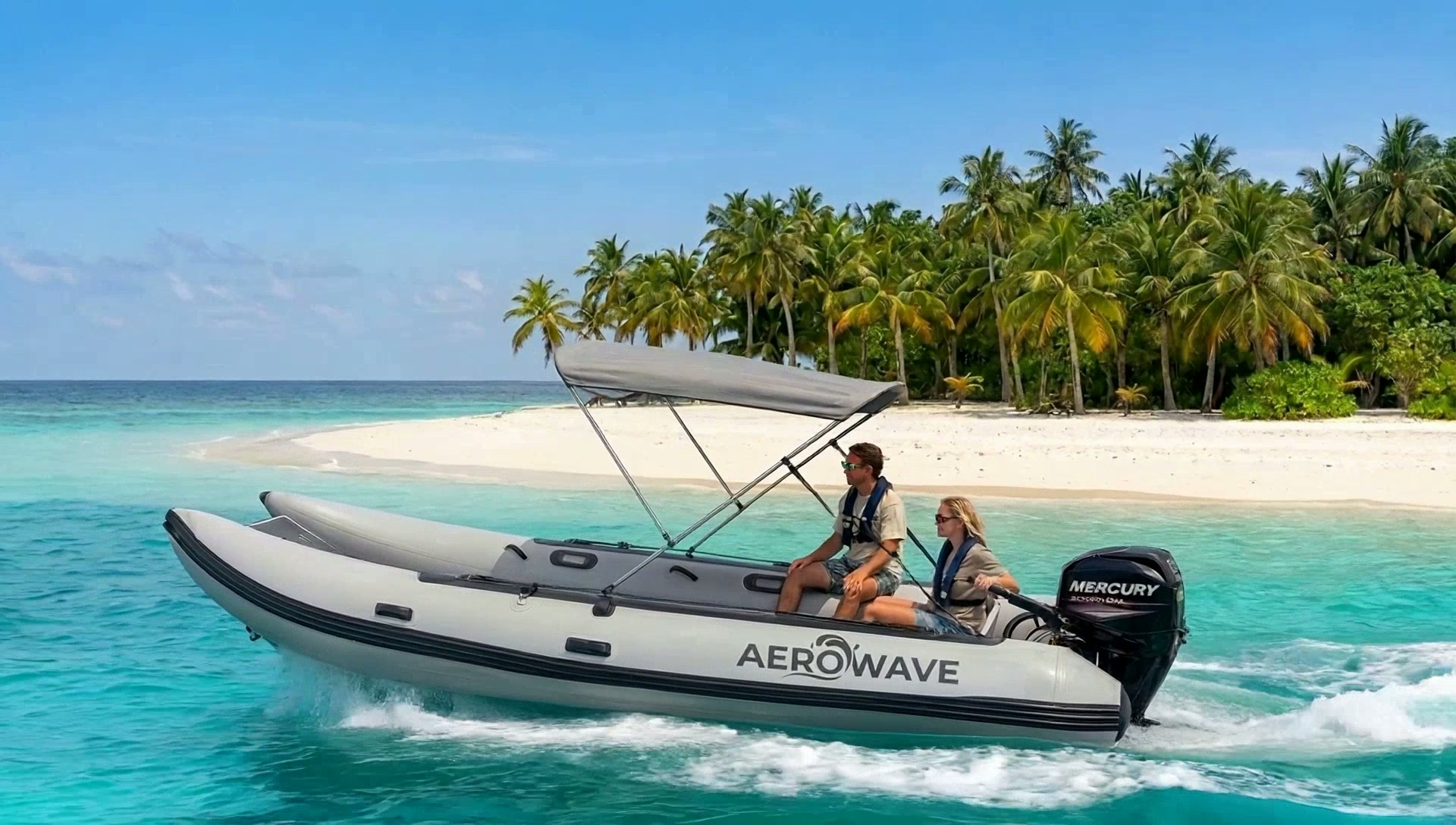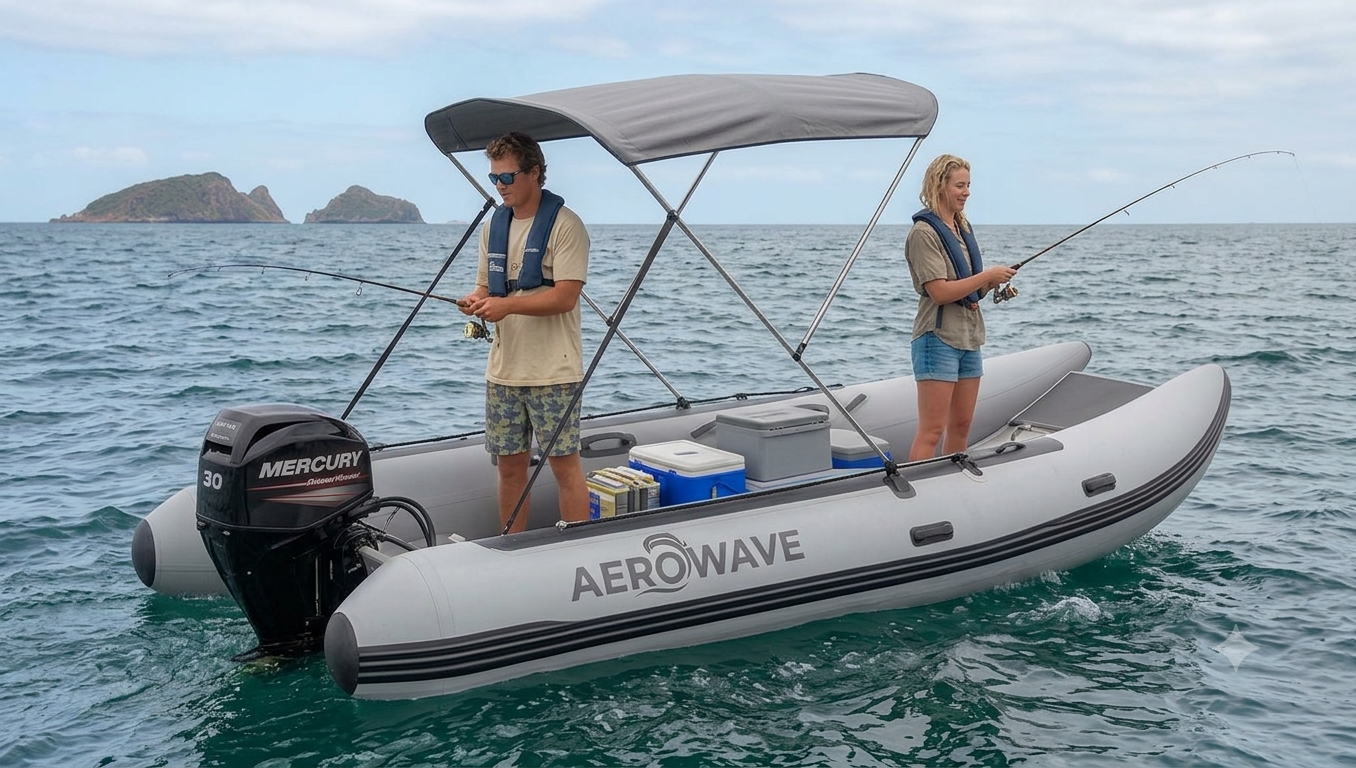
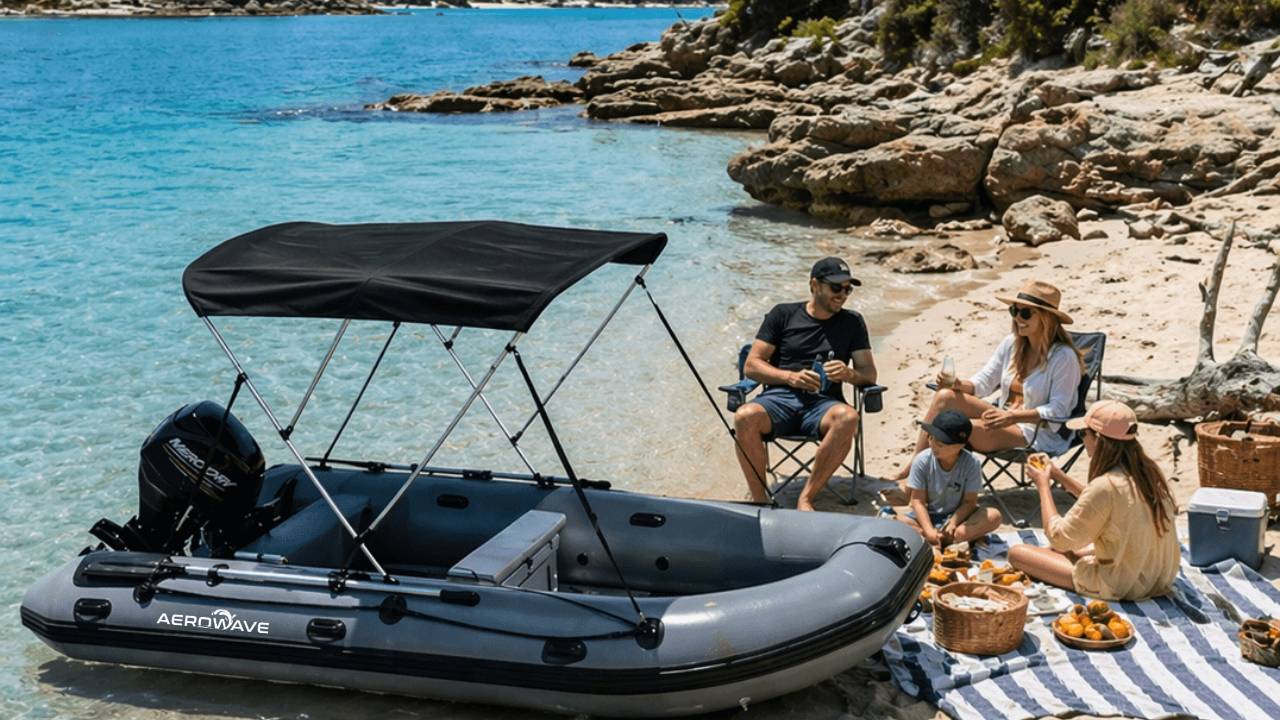
The Ultimate Buyer's Guide to Australian Inflatable Boat Brands
Don't buy an inflatable boat in Australia until you've read this. Our expert checklist covers fabric, construction, warranties, and the real cost of ownership.
🇺🇸 Boats shipping to United States
See landed prices in USD before you bounce.
Door-to-door delivery to United States in 7–14 days. Choose a boat, see local-currency pricing, or request a fixed landed quote from the sales team.
Buying an inflatable boat is a 10-year decision. Your checklist needs to be tougher than the boat itself.
The Australian market for inflatable boats has never been more crowded. A quick search reveals a dizzying array of options, from suspiciously cheap packages on marketplace websites to sophisticated, high-performance craft from established names. They often look similar in photos—grey or black tubes, a small outboard, promises of adventure. But beneath the surface, the differences are vast, and choosing incorrectly can lead to disappointment, premature failure, and a vessel that simply isn't suited to our unique and often harsh marine environment.
This is not a decision to be taken lightly. The right inflatable boat is a gateway to years of hassle-free enjoyment on the water. The wrong one is a liability. This guide is designed to be the single most comprehensive resource for anyone considering joining the ranks of Australian inflatable boat brands owners. We'll cut through the marketing jargon and arm you with the critical knowledge you need to compare apples with apples, focusing on the five pillars of a smart purchase: fabric technology, construction quality, performance design, after-sales support, and true long-term value.
Beyond the Sticker Price: What 'Value' Really Means
It's tempting to sort search results by 'Price: Low to High'. We’ve all done it. But with inflatable boats, this is the fastest route to a poor investment. The initial saving on a budget boat is almost always erased by a drastically shorter lifespan, frequent repairs, and poor performance. True value lies in the Total Cost of Ownership (TCO) over the vessel's entire life.
A $1,500 boat that uses low-grade PVC, slapped together with cheap glue, might give you two or three seasons of light use before the Australian sun causes the seams to fail and the material to become brittle. When it fails, it has zero resale value and limited repair options. In contrast, a $3,500 boat built from premium German VALMEX® fabric with welded seams has a proven fabric lifespan of 10 to 12 years. Over a decade, the premium boat costs you $350 per year. The 'cheap' boat costs you $500-$750 per year, and you have to buy a new one every few years.
The market can be broken down into three rough tiers:
- Budget PVC Imports ($5,000): At this level, you are buying the absolute best in materials and construction. These boats are designed for discerning owners and demanding applications. Our Aerowave Viper 400 Sovereign Full Package ($5,995) exemplifies this tier, featuring an incredibly robust 1.2mm / 1500 GSM VALMEX® Heavy Plus fabric and an extensive 7-year warranty.
Understanding these tiers is the first step. The next is to learn why these price differences exist, and it all starts with the fabric.
The Fabric of Success: PVC vs. VALMEX® vs. Hypalon
No single component has a greater impact on your boat's longevity, durability, and safety than the fabric it's made from. In Australia's high-UV environment, this is not a place to compromise.
Budget PVC: The Hidden Costs of 'Cheap'
Standard Polyvinyl Chloride (PVC) is the material used in the vast majority of budget inflatable boats, pool toys, and air mattresses. Its main—and only—advantage is its extremely low cost. However, for a boat hull, its disadvantages are severe. The plasticisers that make PVC flexible are vulnerable to UV radiation. Over time, the sun's rays break them down, causing the material to become stiff, chalky, and brittle. This leads to cracks, particularly along fold lines, and a high likelihood of seam failure as the glue gives way from the degrading material.
In the Australian sun, a boat made from low-grade PVC may only last 2-4 years before becoming unreliable. They are, for all intents and purposes, disposable items. If your budget absolutely cannot stretch, and you plan to store it indoors and use it only a handful of times a year, it might suffice. For everyone else, it's a false economy.
The Gold Standard: German-Made VALMEX®
This is where things get interesting. VALMEX® is also a PVC-based material, but comparing it to generic PVC is like comparing a high-performance car tyre to one on a wheelbarrow. VALMEX® is a specific, high-tech, multi-layered fabric engineered and produced by Mehler Technologies in Germany, a world leader in technical textiles. It's designed from the ground up for extreme marine environments.
What makes it different? Its proprietary formula includes significantly higher concentrations of elite UV inhibitors. Its base fabric has a much higher thread count for tear resistance, and its outer layers are formulated for superior abrasion resistance and air retention. This is why we can confidently state a 10-12 year fabric lifespan for our boats.
Fabric is measured by thickness (mm) and density (grams per square metre, or GSM). A higher number generally means a more robust fabric. Our AeroCat range uses a formidable 0.9mm / 1100 GSM VALMEX®, which is more than tough enough for serious recreational use. Our flagship Viper series steps this up to a commercial-grade 1.2mm / 1500 GSM VALMEX® Heavy Plus, offering extreme puncture and abrasion resistance for the most demanding adventurers.
Hypalon: The Old Champion?
Hypalon (a brand name for chlorosulfonated polyethylene rubber, or CSM) was long considered the pinnacle of inflatable boat fabrics. It has exceptional resistance to UV, chemicals, and extreme temperatures. For decades, it was the default choice for military and commercial RIBs (Rigid Inflatable Boats).
However, technology has moved on. Modern, premium PVC composites like VALMEX® now match or even exceed Hypalon's functional lifespan for recreational use, while offering several advantages. Hypalon is significantly heavier and more expensive. Crucially, it cannot be thermally welded; it must be painstakingly hand-glued. While skilled workers can create strong seams, it introduces a greater potential for human error compared to the automated, molecular-bond perfection of a welded seam. Today, Hypalon is mostly reserved for large, expensive rigid-hull inflatables, and for many, it represents an unnecessary expense for a portable, soft-hull inflatable boat.
Construction & Design: Decoding Seams, Floors, and Transoms
A great fabric is just the starting point. How the boat is assembled and designed dictates its performance, rigidity, and reliability.
Welded vs. Glued Seams
This is arguably the most critical construction detail. The seams are where the panels of fabric join together to form the airtight tubes.
-
Glued Seams: This is the traditional method, used on all Hypalon boats and all budget PVC boats. An adhesive is applied to overlapping fabric panels. The weakness is the glue itself. Over time, heat and UV exposure can cause the adhesive to degrade, leading to slow leaks or, in a worst-case scenario, catastrophic failure. On a low-quality boat, the seams will almost always fail before the fabric does.
-
Thermally Welded Seams: High-end PVC fabrics like VALMEX® are designed to be welded. This process uses high frequency (HF) or hot air to melt the material surfaces together, fusing them into a single, continuous piece of fabric. The resulting seam is actually stronger than the fabric around it. It creates a permanent, molecular bond that is impervious to degradation from heat or age. All Easy Inflatables boats feature thermally welded seams for maximum durability and peace of mind.
Air Deck vs. Aluminium Floor
The floor of an inflatable has to provide rigidity to the entire structure.
-
High-Pressure Air Deck: Modern inflatable boats, including our entire range, use what's called a 'drop-stitch' floor. This consists of two layers of fabric joined by thousands of tiny, high-tensile threads. When inflated to a high pressure—typically 8-10 PSI—it becomes incredibly rigid, almost like a solid board. The benefits are enormous: it's lightweight, comfortable to stand on, forgiving on your knees, and allows the entire boat, floor and all, to be rolled up into a compact bag. This is the ultimate solution for portability and ease of use.
-
Aluminium or Plywood Floor: Older designs and some heavy-duty workboats use removable floorboards made of aluminium or wood. While they provide excellent rigidity, they come with significant drawbacks. They are heavy, cumbersome to transport, and take much longer to assemble. They can get punishingly hot in the sun, are noisy, and aluminium can corrode in a saltwater environment. For a recreational portable boat, the high-pressure air deck is a far superior technology.
The Transom: The Heart of Your Boat
The transom is the flat, solid board at the back of the boat where the outboard motor is mounted. It's a high-stress area that transfers all the engine's thrust to the hull. A weak or poorly designed transom is a major safety concern.
Look for a transom made from thick, high-quality marine-grade plywood that has been thoroughly sealed against water ingress. It should be securely bonded and braced to the inflatable tubes. One critical, often overlooked specification is the transom height. The standard for portable outboards is 'short shaft', which requires a transom height of around 15 inches, or 380mm. All our boats, from the AeroCat to the Viper, feature a standard 380mm transom, ensuring perfect compatibility with short-shaft outboards like the Hidea 4-stroke range. Using the wrong shaft length for a given transom height will ruin your boat's performance, causing either excessive spray or poor handling.
A Closer Look at Australian Inflatable Boat Brands
When comparing the different options in the Australian market, it helps to categorise them. Without naming specific competitors, here is how the landscape generally breaks down. This table provides a clear summary of what to expect at different price points.
| Feature | Budget PVC Importer | Mid-Range Retailer | Premium Specialist (Easy Inflatables) |
|---|---|---|---|
| Main Fabric | Generic Chinese/Korean PVC | Quality Korean PVC or VALMEX® | German-Made VALMEX® (0.9mm - 1.2mm) |
| Fabric Lifespan (AU) | 2-4 Years | 5-8 Years | 10-12 Years |
| Seam Construction | Glued | Glued or Welded | Thermally Welded |
| Floor Type | Low-pressure air / Slats | High-Pressure Air Deck (8 PSI) | High-Pressure Air Deck (8-10 PSI) |
| Warranty | 1-2 Years (Limited) | 3-5 Years | 5-7 Years (Comprehensive on Fabric) |
| Local Support | Email only, slow response | Phone/Email, stocks some parts | Expert phone & email, full parts inventory |
| Price Guide (3.8m boat) | $1,200 - $2,000 | $2,500 - $4,000 | $3,480 - $5,995 (AeroCat 380 / Viper 400) |
| Guide for Australian inflatable boat brands | Short-term, disposable use | Smart choice for regular users | Investment grade for enthusiasts |
The Engine Equation: Matching Your Outboard to Your Boat
The most common mistake we see is boaters overpowering their inflatable. Bigger isn't always better. The boat and engine must be viewed as a single, integrated system.
2-Stroke vs. 4-Stroke
For years, 2-stroke outboards were the standard due to their simple design and excellent power-to-weight ratio. However, the game has changed. Modern 4-stroke outboards are now the clear choice for almost every application.
-
4-Stroke Advantages: They are significantly quieter, produce far fewer emissions (making them legal on all Australian waterways), are more fuel-efficient, and generate smooth, reliable torque without the need to pre-mix oil and fuel. Brands like Hidea have perfected the portable 4-stroke, offering lightweight, reliable power that is the ideal partner for a quality inflatable.
-
2-Stroke Disadvantages: While lighter, they are noisy, smoky, and an environmental headache. Many older 2-strokes are now banned from sensitive estuaries and harbours across Australia. Unless you have a specific need for the absolute lightest possible motor and are operating in an unrestricted area, a 4-stroke is the superior choice.
Sizing Your Power
Every boat has a maximum horsepower rating plaque on the transom—never exceed this. However, the optimal horsepower is often well below the maximum. Hull design plays a huge role. Twin-hull inflatable catamarans, like our AeroCat and Viper models, are exceptionally efficient. They trap a cushion of air between the hulls, lifting the boat and reducing drag. This means they achieve fantastic performance with smaller, lighter, and more fuel-efficient engines.
For example, an AeroCat 330 catamaran is a joy to use with a lightweight 5hp or 6hp Hidea 4-stroke, easily planing with one or two people aboard. A traditional V-hull monohull of the same size might need an 8hp or 10hp motor to achieve the same speed, adding weight and cost. Our largest model, the Viper 400, is rated for up to 20hp for high-speed runs, but performs brilliantly for cruising and fishing with just a 15hp. We can provide expert advice to help you perfectly match a Hidea outboard to your chosen boat and intended use.
Warranty & After-Sales Support: Your Safety Net
A long warranty is a manufacturer's vote of confidence in their own product. When you're comparing Australian inflatable boat brands, the warranty tells you a lot about the expected quality and lifespan of the vessel. But not all warranties are created equal.
Here’s a checklist of questions to ask any potential supplier:
- How long is the warranty specifically on the fabric and seams? This is what matters. A 5-year warranty that only covers accessories for 1 year is not a true 5-year warranty. Our warranties are clear: 7 years on the Viper Sovereign’s fabric and seams, 5 years on the WaveRunner’s.
- Is the warranty supported in Australia? Many online sellers are just drop-shippers. If something goes wrong, you could be left trying to negotiate with an overseas factory. We are an Australian company; your warranty claim is handled by us, right here.
- What is excluded? Read the fine print. Punctures, normal wear and tear, and commercial use are standard exclusions. Look for sneaky clauses that might void your cover.
- Can I speak to someone? A business that truly supports its products is happy to talk to its customers. You can call us on +61 2 4335 1603 and speak to an expert who actually uses these boats.
- Do you stock spare parts? Losing an oarlock or damaging a valve shouldn't mean your boat is out of action for weeks. We carry a full inventory of spare parts for immediate dispatch.
Unpacking the Logistics: The Real Cost of Ownership
How your boat gets from the factory to your door has a big impact on the final price.
Traditional boat dealerships have massive overheads—showrooms, large staff, floor stock. These costs are passed on to you, the customer. The direct-to-consumer model, which we use at Easy Inflatables, cuts out that expensive middle layer. By managing our own importation and selling directly to you, we can provide a premium-quality boat for the price of a mid-range boat from a dealership.
This model does, however, involve shipping. We believe in being completely transparent about this. To cater to different needs and budgets, we offer two clear options for our customers:
-
FREE Economy Sea Freight: For the planner who wants the absolute best value. Your boat is shipped via sea, with a typical transit time of 30-40 days to your nearest major port. There is no shipping cost to you.
-
Express Air Delivery: For the eager adventurer who wants to get on the water without delay. We can fly your boat to you in just 7-14 days. Due to the high cost of air freight for bulky items, we ask for a customer contribution of A$600 towards this expedited service.
This flexibility allows you to decide whether time or budget is your main priority, giving you full control over the final cost.
The Bottom Line
Choosing the right inflatable boat in Australia is an exercise in looking beyond the sticker price and understanding the fundamentals of material science, construction, and long-term value. A cheap boat is rarely a good deal, and an overpriced boat isn't necessarily better.
Your ideal vessel is one that uses a proven, UV-resistant fabric like German VALMEX®, is assembled with strong, welded seams, and is backed by a multi-year, Australian-based warranty from a company you can actually talk to. It should be paired with a modern, reliable 4-stroke outboard that is correctly sized for its efficient hull design.
At Easy Inflatables, this is our entire philosophy. We've curated a range of boats, from the accessible AeroCat to the formidable Viper, that tick every box on the discerning buyer's checklist. We encourage you to explore our models, compare our specifications, and give us a call on +61 2 4335 1603. We're confident you'll find they represent the smartest investment for your future on the water.
Related
Shop gear featured in this guide
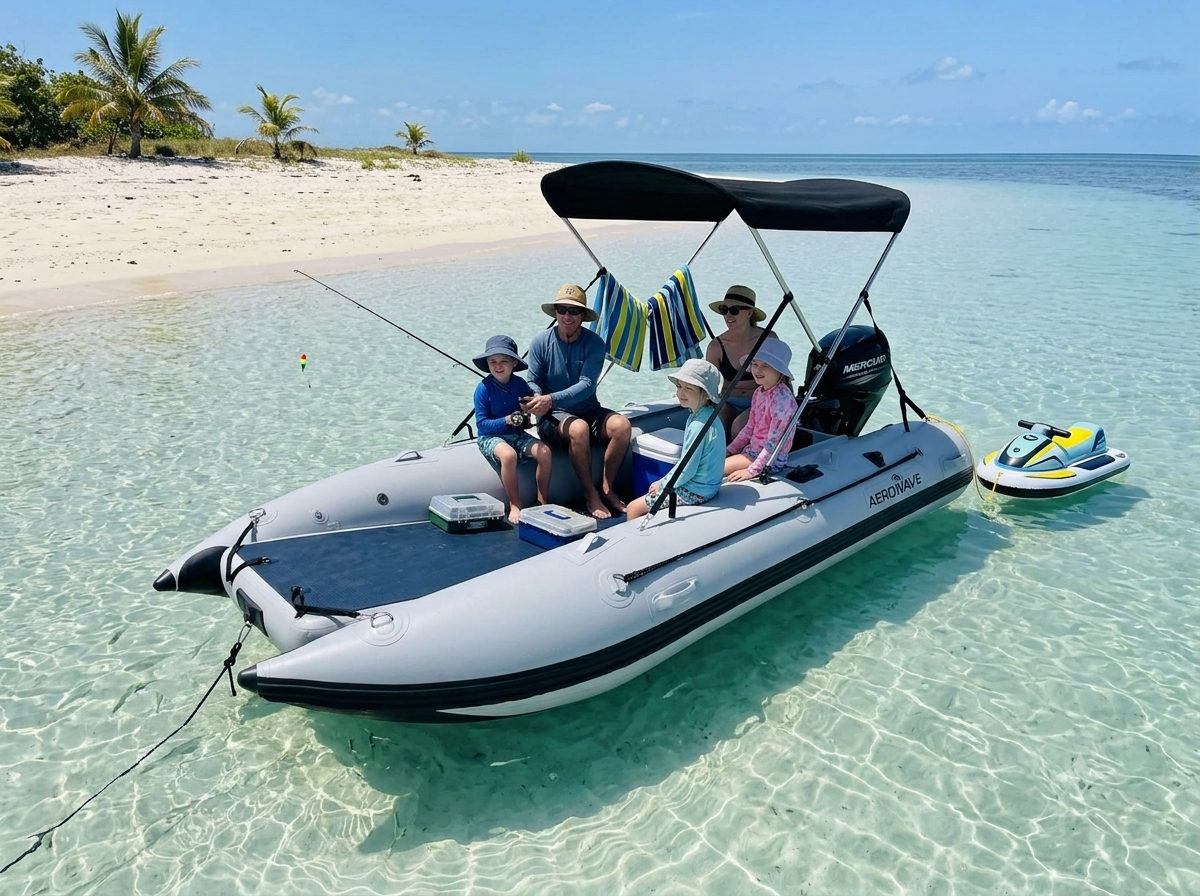
Aerowave WaveRunner 380 Series 3 Catamaran Package
The WaveRunner 380 Series 3 is a premium 3.8m inflatable catamaran package built for Australian and worldwide families, fishing, and coastal day boating — ideal for snorkeling and spearfishing — offering serious stability and premium German Valmex® construction.

Aerowave Viper 400 Sovereign
Flagship 4m enclosed-bow inflatable catamaran. German VALMEX® 7321 Heavy Plus 1.2mm commercial-grade fabric, 10 PSI high-pressure drop-stitch air deck floor with VALMEX non-slip surface, LockPro wheels, full Bimini and FREE express delivery Australia-wide delivery included. Winter special — save $1,000 until 31 August 2026.
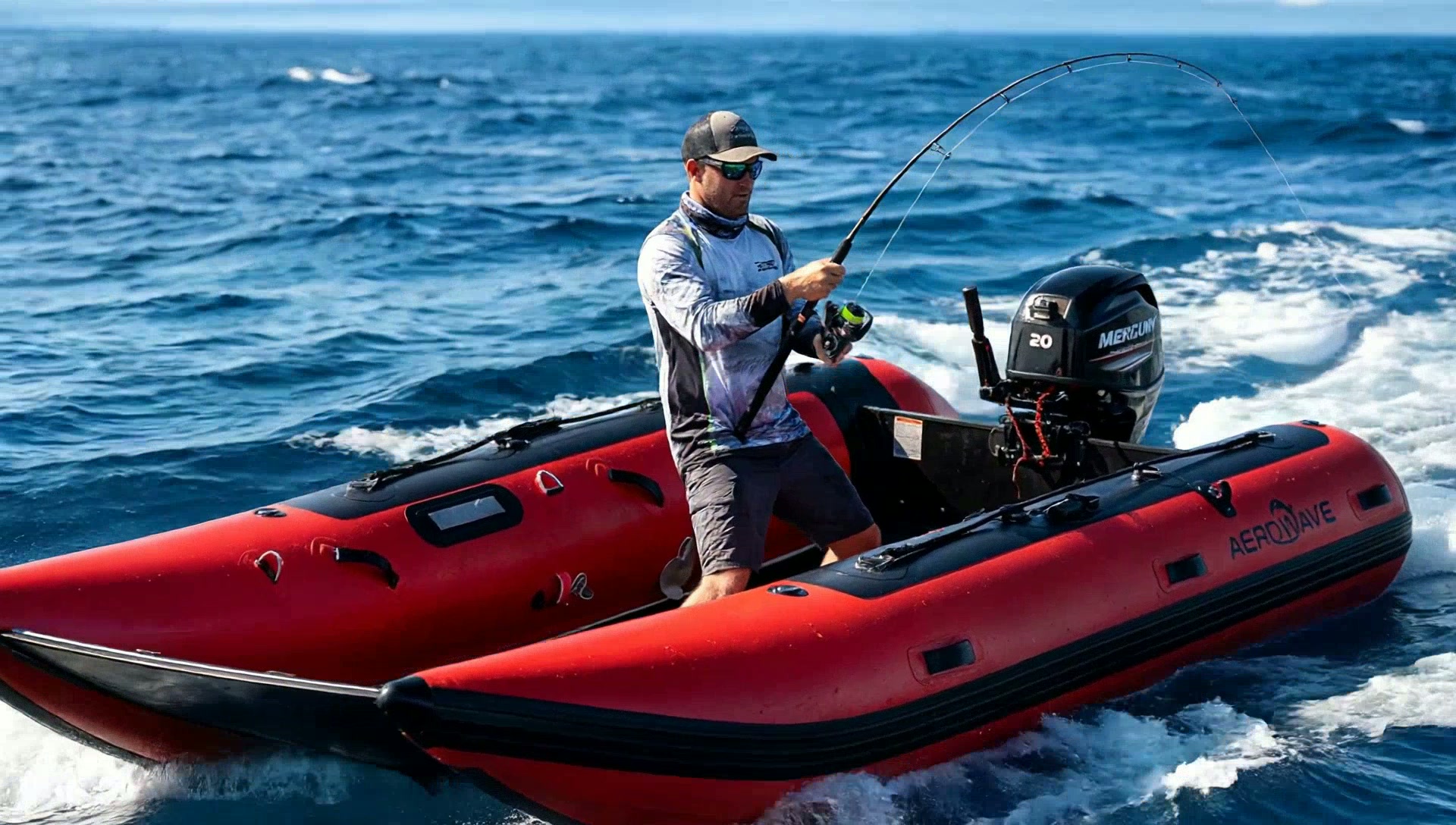
AeroWave AeroCat 360 Inflatable Catamaran
Same proven hull design, shape and look as our flagship Aerowave Viper catamarans — built lighter using 0.9mm Valmex® fabric instead of the Viper's 1.2mm. The AeroWave AeroCat 360 is our 3.6m inflatable catamaran built from 0.9mm Valmex® fabric — intentionally lighter than our 1.2mm Viper hulls so it folds smaller, packs lighter and is easy to handle solo. Twin-hull stability, 5-Year Warranty with global support and priced ~$500 below comparable 0.9mm imports.
Not sure which suits you? Talk to a real boat owner.
Frequently asked questions
- What is the best inflatable boat material?
- For the best balance of durability, UV resistance, portability, and value in Australian conditions, premium German-made VALMEX® is the top choice. It offers a 10-12 year lifespan and can be thermally welded for superior seam strength. Budget PVC has a very short life in our sun, while Hypalon is excellent but often too heavy and expensive for portable boats.
- Are inflatable catamarans better than monohulls?
- For stability and efficiency, yes. Inflatable catamarans like our AeroCat and Viper provide a remarkably stable platform, cut through chop for a smoother ride, and get on a plane with less horsepower. Traditional monohull tenders can be slightly lighter in the smallest sizes, making them excellent ship-to-shore vessels.
- How long do inflatable boats really last in Australia?
- This depends entirely on the fabric. A cheap, generic PVC boat might only last 2-4 seasons in the harsh Aussie sun. In contrast, a well-maintained boat made from our premium German VALMEX® fabric has a proven lifespan of 10-12 years, making it a far better long-term investment.
- Should I buy a boat online or from a dealer?
- Buying direct from a specialist importer like Easy Inflatables cuts out the dealer markup, offering superior value. The crucial factor is to ensure the online brand provides a strong Australian-based warranty and expert phone support, which is a cornerstone of our business.
- Is a 1.2mm fabric much better than 0.9mm?
- Our 0.9mm VALMEX® fabric is exceptionally tough and more than adequate for almost all recreational boating. The 1.2mm VALMEX® Heavy Plus on our Viper range provides an extra level of commercial-grade puncture and abrasion resistance for the most demanding users or those wanting ultimate peace of mind.
- Can I leave my inflatable boat in the sun?
- While our German VALMEX® fabric has the best UV inhibitors available, no material is completely immune to the sun. To maximise its 10-12 year lifespan, we always recommend covering your boat or storing it in the shade when not in use for extended periods.
- What size outboard do I need?
- Less than you might think, especially with our efficient catamaran hulls. An AeroCat 330 runs beautifully on just a 5-6hp outboard, while the larger WaveRunner 380 is perfectly powered by a 9.9hp or 15hp. Contact us with your needs and we can recommend the perfect Hidea 4-stroke pairing.
- How hard is it to repair a small puncture?
- It's a straightforward DIY job. The high-quality repair kits supplied with our boats contain everything you need for a permanent patch. The toughness of the VALMEX® fabric also means punctures are very rare in the first place.
Ready to set sail?
Premium German-fabric inflatable catamarans with FREE Sea Freight or Express Air Delivery — your choice at cart. Talk to our team or browse the fleet.
Like this guide? Get the next one in your inbox.
Owner-tested tips, gear deep-dives and Aussie boating know-how — no spam.