
Best Portable Fish Finders for Inflatable Boats (2026 Australian Guide)
Battery-powered and castable fish finders that bolt onto a seat, run for a full day on AA, D-cell or built-in lithium, and won't blow the budget. Tested picks for Australian inflatable boat skippers.
Our recommendation
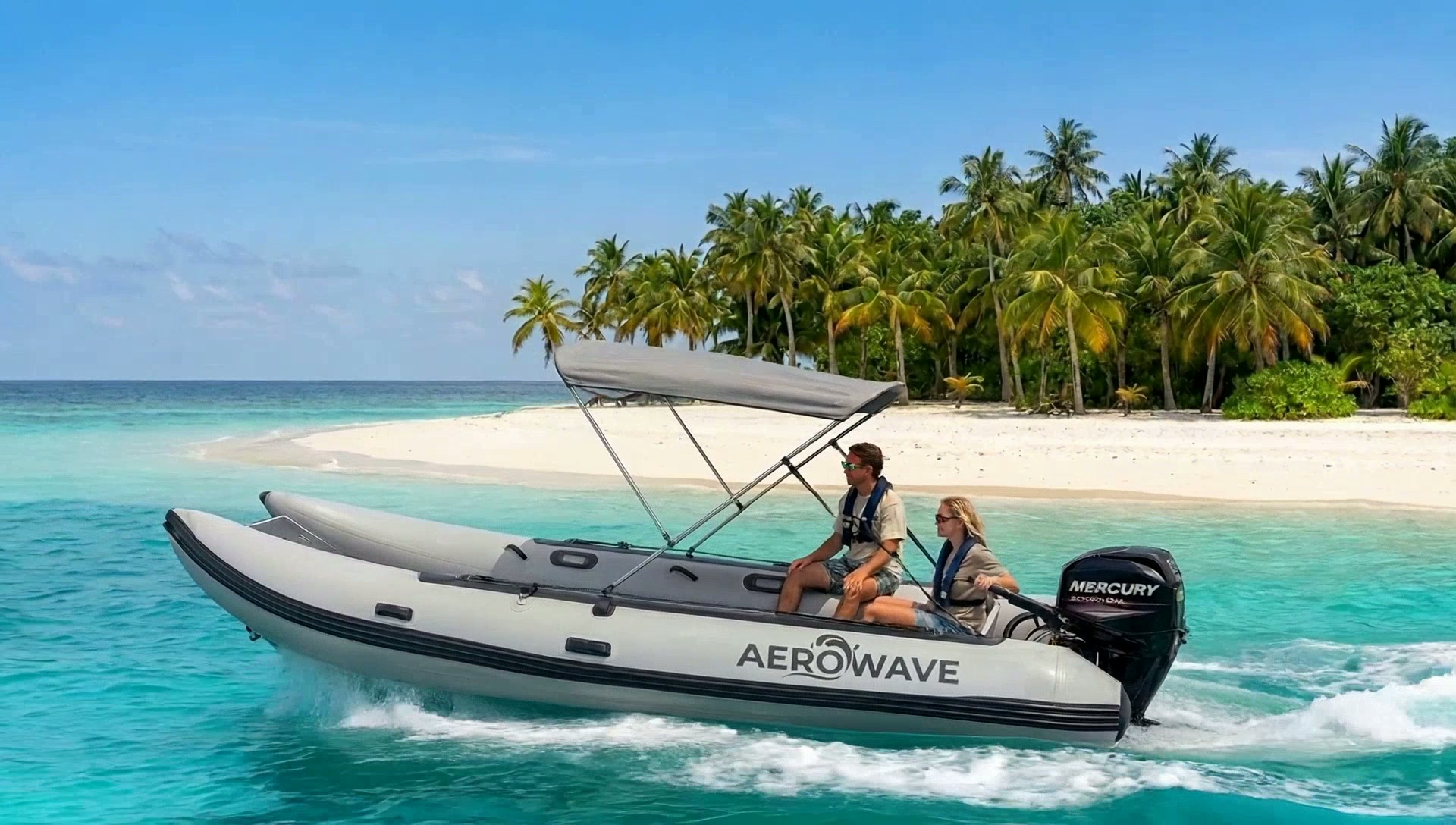
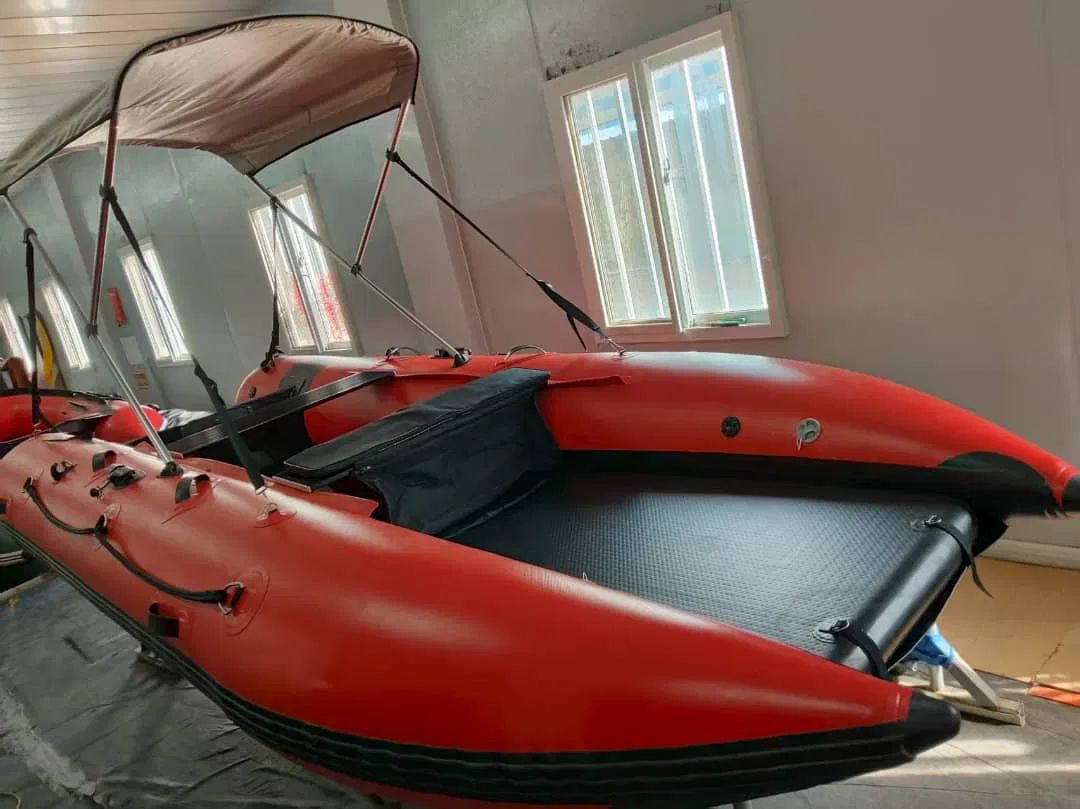
Aerowave Viper 400 Open Bow — Sports Package
1.2 mm fabric is about 33% thicker than common 0.9 mm fabric: more material between your boat and the water for everyday rubbing and knocks during beach launches. Careful handling still matters.
Length
4.0m / 13'1"
Beam
1.80m / 71"
Tube Diameter
50cm
Bare Boat Weight (without Bimini & wheel kit)
~56kg / 123lbs
Why a portable fish finder is the right call on an inflatable
If you run an inflatable — tender, RIB, catamaran or sport hull — you don't want to be running a 12 V battery box, a transducer through-hull bracket and a tangle of wiring just to see what's under the boat. The whole point of an inflatable is set up in 10 minutes, fish all day, deflate and drive home.
That's where portable, battery-operated fish finders earn their place. The good ones:
- Run on AA, C, D-cell or a built-in rechargeable lithium battery — no separate marine battery, no cabling.
- Clamp, screw or strap onto a seat, oarlock or transom — no drilling into your hull (which you can't do on an inflatable anyway).
- Pack down into a single small case so you can pull them out, hose them off, and store them in a cupboard.
- Cost A$150 – A$900 rather than A$1,500+ for a fixed marine sounder + battery setup.
This guide is the shortlist we'd actually hand to a customer walking off a Viper 400 Sovereign or AeroCat 380 asking "what should I bolt to my seat?"
The 5 best portable fish finders for inflatable boats in 2026
1. Deeper CHIRP+ 2 — best overall castable (A$649 – A$749)
The Deeper CHIRP+ 2 is the unit most serious anglers end up with. It's a tennis-ball-sized castable sonar pod with built-in GPS that pairs over Wi-Fi to your phone — no separate screen, no head unit, no wiring.
- Power: Built-in lithium battery, ~15 hours per charge, USB-C.
- Depth: 100 m, three CHIRP frequencies (narrow / mid / wide).
- Mounting: Cast from the boat, troll behind, or drop straight over the side of an inflatable tube — no hull contact needed.
- Why it suits an inflatable: Zero installation. Nothing to drill. Nothing to plug in. Throw it in a dry bag.
- Best for: Bay fishing, estuary, reef edges, exploring new ground.
2. Garmin Striker 4 Portable Kit — best dedicated screen (A$329 – A$429)
If you want a real sounder screen at the helm but still no battery bank, Garmin sells the Striker 4 as a portable kit with a sealed 7 Ah lithium pack, suction-cup transducer and carry bag.
- Power: Self-contained rechargeable lithium, ~10 hours.
- Depth: ~480 m freshwater, ~240 m salt; CHIRP + built-in GPS.
- Mounting: Suction-cup transducer onto a transom plate or hangs over the side; head unit straps to a seat.
- Why it suits an inflatable: All-in-one zip case. Drop it on the seat of a Viper, clip the transducer arm, you're fishing.
3. Lucky FF718LiC-W Wireless — best budget pick (A$129 – A$179)
The Lucky FF718LiC is the unit you buy if you just want to know "is there water under me and is there fish in it?" without spending a fortune.
- Power: Built-in lithium, USB charging, ~5 hours per charge — or buy the AAA-battery sensor pod and never charge again.
- Depth: 45 m, wireless sonar pod (no cable to the screen).
- Mounting: Clip the screen to the seat strap; float the sensor on the surface or cast it on a line.
- Why it suits an inflatable: Cheapest serious option, splash-proof, no cables.
4. Humminbird Fishin' Buddy MAX DI — best clamp-on (A$549 – A$649)
Old-school in the best way. The Fishin' Buddy is a vertical pole-style sounder you clamp directly to the gunwale or a seat post — the transducer is at the bottom of the pole, the screen sits at hand height.
- Power: 8 × AA batteries in the head unit — yes, off-the-shelf alkalines, perfect for remote trips where charging isn't an option.
- Depth: ~30 m with Down Imaging.
- Why it suits an inflatable: Clamps onto an inflatable tube mount, seat frame or rowlock in seconds. No transducer arm, no suction cup, no wiring.
5. ReelSonar iBobber Wireless — best ultra-light backup (A$129 – A$149)
The iBobber is the size of a bobber float. Toss it overboard, pair to your phone over Bluetooth, get a 41 m depth read.
- Power: Built-in rechargeable, ~10 hours, USB.
- Mounting: None. It floats.
- Why it suits an inflatable: Lives in your tackle box. Perfect second-unit for a tender or for fishing the dinghy off a bigger boat.
What to actually look for
When you're shopping, ignore the marketing and check these five things:
- Power source. AA / C / D-cell wins for remote trips; built-in lithium wins for convenience. Avoid anything that needs a 12 V battery.
- Mounting. On an inflatable you cannot drill, through-bolt or glue. You need a clamp, strap, suction cup or castable pod.
- Depth range. Most Australian inshore work — bays, estuaries, the first 5 km offshore — never goes past 60 m. You don't need a 600 m unit.
- Screen vs phone. A dedicated screen reads better in sun; a phone app is one less thing to charge. Pick what matches how you fish.
- Saltwater rating. IPX7 minimum. Hose-off after every trip, regardless.
Mounting on an inflatable — the actual setup
A few practical tips we give every customer at handover:
- Use the existing seat hardware. Every Aerowave seat has stainless screws on the underside — a Railblaza StarPort or Scotty mount bolts straight to those without touching the hull.
- Cast the pod, don't drop it under the boat. Castable units (Deeper, iBobber, Lucky) read cleanest when they're 5–10 m away from the hull and the outboard.
- For transom-mount transducers (Garmin Striker), use a clip-on starboard plate that hooks over the transom — never glue a bracket to the PVC or Hypalon.
- Keep the battery / head unit out of the splash zone. Under-seat bag or a small dry pouch on the centre seat works perfectly.
What about the big-name fixed sounders?
Lowrance HOOK Reveal, Garmin echoMAP, Simrad Cruise — all great units, all designed for rigid hulls with a 12 V system. On an inflatable they're overkill: you'd spend more on the battery box and wiring than on the screen, and you'd still be packing it all up at the end of the day.
If you eventually fit out a Viper 400 Sovereign or AeroCat 380 with a console and battery, sure — go fixed. For everyone else, the five above will out-fish what you need 99% of the time.
Kit it out
Building a fishing setup on an inflatable? Start here:
- Aerowave Viper 400 Sovereign — 4.0m catamaran with the stable casting platform serious anglers want.
- Aerowave AeroCat 380 — lighter, lower-cost catamaran for bay and estuary fishing.
- Inflatables accessories — under-seat bags, rod holders, dry storage and the mounts that bolt your sounder to the seat.
Frequently asked questions
- Do I need a separate 12V battery for a portable fish finder?
- No. Every unit in this guide runs on AA/C/D-cell alkalines or a built-in rechargeable lithium battery. That is the whole point of choosing portable — you avoid carrying a marine battery on an inflatable.
- Can I mount a fish finder on an inflatable boat without drilling?
- Yes. Use a clamp-on bracket (Humminbird Fishin Buddy), a suction-cup transducer (Garmin Striker portable kit), a castable wireless pod (Deeper, Lucky, iBobber) or a Railblaza StarPort bolted to the existing stainless screws under your seat. Never drill, glue or bolt anything to the inflatable tubes themselves.
- What is the best castable fish finder in Australia in 2026?
- The Deeper CHIRP+ 2 is the strongest all-rounder — three CHIRP frequencies, built-in GPS, 15-hour battery and 100 m depth — and is widely stocked in Australia between A$649 and A$749.
- How deep can a portable fish finder read?
- Castable Wi-Fi pods read to about 80–100 m. Transducer-on-arm units like the Garmin Striker portable kit read to 240 m in saltwater. For inshore Australian fishing anything past 60 m is more than you need.
- Will a portable fish finder work in saltwater?
- Yes — every model in this list is IPX7 rated and designed for saltwater. Rinse the unit and transducer with fresh water after every trip to maximise life.
Finance this boat from $26/week
Estimate only — powered by Australian Motorcycle & Marine Finance (AMMF).
Paid upfront (AUD)
$587
10% of price
Term
5 years
60 monthly repayments
Comparison rate
9.95% p.a.
Subject to AMMF approval
Weekly
$26
Monthly
$112
Amount financed
$5,282
Indicative only. Actual repayments depend on your AMMF credit assessment, term, fees and the balloon you select. Talk to AMMF for a personalised quote on Aerowave Viper 400 Open Bow — Sports Package.
Like this guide? Get the next one in your inbox.
Owner-tested tips and Aussie boating know-how — no spam.
Ready when you are
Build your Viper 400 Open Bow — Sports Package in under 3 minutes.
1500 GSM / 1.2 mm VALMEX® hull. Five-year limited hull warranty plus two years of extended limited structural hull cover, subject to conditions. Free freight to United States · taxes included, nothing to pay on arrival.
delivered to your door
See it for yourself
Real boats. Real owners. Real people behind them.
Plenty of what you read online these days is generated. Check us out properly — the factory, the reviews and the owners are all one click away. Why we use AI, and how to check we’re real
How our boats are built
Walk the production line: thermo-welded seams, 1.2 mm VALMEX Heavy Plus hulls, over-pressure relief valves on every chamber.
See the buildGoogle Maps reviews
Real Australian owners, five stars, published on our Google Business Profile with the map — read them there, not just on our own site.
Open Google Maps reviewsOwner stories
Boats in use — offshore, on rivers, on rescue duty. Photos and words from the people who actually own them.
Read owner stories
Aerowave Viper 400 Open Bow — Sports Package
US$4,472 USD · delivered to your door