How Much Weight Can an Inflatable Boat Hold? The Honest Australian Capacity Guide
Real load numbers for 2.7 m to 4.6 m inflatable boats and catamarans — what the capacity plate means, how to count people plus gear, and the safe-loading rules Australian skippers actually follow.
At a glance
Real load numbers for 2.7 m to 4.6 m inflatable boats and catamarans — what the capacity plate means, how to count people plus gear, and the safe-loading rules Australian skippers actually follow.
- The short answer by boat size
- What the capacity plate actually means
- How to count your real load (the 60-second method)
- Why inflatable catamarans carry more than single-hull inflatables
What we'd put you in
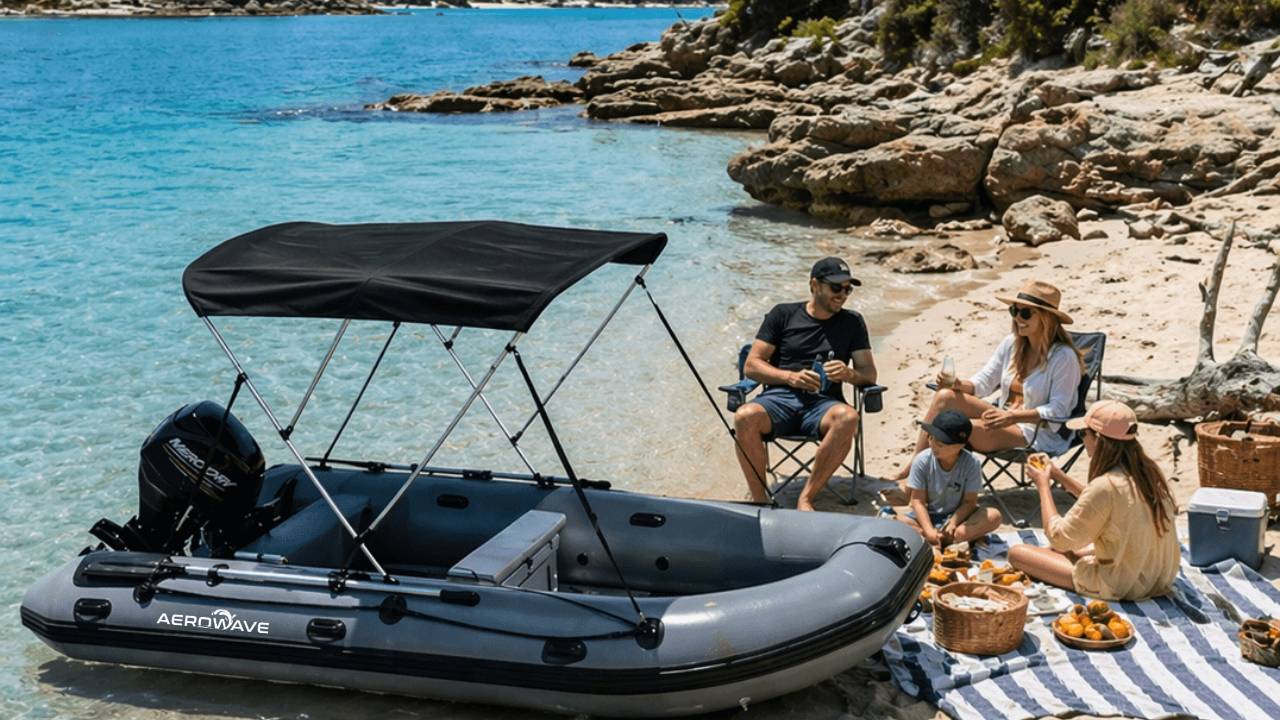
Aerowave Viper 400 Sovereign
Our best-selling boat: 4.0 m, 1.2 mm VALMEX hull, 7-year hull warranty.
US$3,167 USD
Delivered to your door, today's rate
- Free freight to United States · local taxes payable on arrival
- 7-year hull warranty
🇺🇸 Shipping to United States · landed price quoted in writing
Yes — we ship the Aerowave Viper 400 Sovereign to United States. Here's the landed price.
Our best-selling boat: 4.0 m, 1.2 mm VALMEX hull, 7-year hull warranty.
Written for Australian readers — but the boat ships to you. We are an Australian builder and this article is written from Australian waters. That changes nothing about what you can order: the same hull, the same 7-year warranty and the same certification go out to United States every week.
Aerowave Viper 400 Sovereign
- Boat package (export price)
- US$3,726
- 15% tariff relief credit
- − US$559
- Express air freight to United States
- Included
- Import duty, taxes & customs clearance
- Payable on arrival
- Estimated landed, USD
- US$3,167
Indicative, converted at today's rate, before local duty and tax on arrival. Ask below and we'll put a fixed figure in writing, valid 30 days.
- 7-year hull warranty
- 1500 GSM / 1.2 mm VALMEX® Heavy Plus hull
- CE certified to ISO 6185-3 and EU Directive 2013/53/EU
- Door-to-door, tracked the whole way
Your price, delivered to your door — freight included.
We email the full PDF quote (spec, freight, finance, WavePay) to your inbox in under 60 seconds. No spam — one quote, one follow-up.
See it for yourself
Real boats. Real owners. Real people behind them.
Plenty of what you read online these days is generated. Check us out properly — the factory, the reviews and the owners are all one click away. Why we use AI, and how to check we’re real
How our boats are built
Walk the production line: thermo-welded seams, 1.2 mm VALMEX Heavy Plus hulls, over-pressure relief valves on every chamber.
See the buildGoogle Maps reviews
Real Australian owners, five stars, published on our Google Business Profile with the map — read them there, not just on our own site.
Open Google Maps reviewsOwner stories
Boats in use — offshore, on rivers, on rescue duty. Photos and words from the people who actually own them.
Read owner storiesHow Much Weight Can an Inflatable Boat Hold? The Honest Australian Capacity Guide
It is the single most-Googled question about soft inflatable boats in Australia, and most of the answers online are wrong by a factor of two. People copy the marketing brochure, the brochure copies the manufacturer's gross capacity, and almost nobody explains the gap between what the boat will float and what you should actually put in it.
This is the honest version. The numbers below are for soft inflatable boats — pontoon RIBs, sport tenders and inflatable catamarans in the 2.7 m to 4.6 m range — not hard-cabin runabouts. We'll cover the capacity plate, how to count people plus gear, what changes the number, and the safe-loading rules Australian skippers actually use day-to-day.
The short answer by boat size
Use this as a starting point. Read the rest before you load up.
| Boat length | Typical max persons | Gross load (people + gear + fuel) | Realistic working load |
|---|---|---|---|
| 2.7 m sport tender | 3 adults | 350–400 kg | 250–280 kg |
| 3.0 m sport tender | 3–4 adults | 420–480 kg | 320–360 kg |
| 3.3 m sport / RIB | 4 adults | 500–560 kg | 380–420 kg |
| 3.6 m sport / catamaran | 4–5 adults | 600–680 kg | 460–520 kg |
| 4.0 m catamaran | 5 adults | 750–850 kg | 580–650 kg |
| 4.6 m catamaran | 6 adults | 900–1,000 kg | 720–800 kg |
"Gross" is the number the manufacturer prints on the plate. "Working load" is what experienced skippers actually run — typically 70–80% of gross — because the gross figure assumes flat water, no fuel, no eskies, no battery, no anchor and no margin for a wave.
What the capacity plate actually means
Every CE-certified inflatable boat carries a permanent capacity plate, normally bonded to the inside of the transom or the front of a tube. On an Australian-imported, ISO 6185-3 / EU 2013/53/EU compliant hull you'll see four numbers that matter:
- Maximum persons — a head count, not a weight. The manufacturer assumes 75 kg per adult.
- Maximum load (kg) — the total dry weight the hull is certified to carry. This includes people, fuel, batteries, anchor, eskies, outboard if portable, oars, and the dog.
- Maximum motor power (kW or hp) — the largest outboard the transom is engineered for.
- Design category — usually C ("inshore") or D ("sheltered waters") for soft inflatables. This caps the wind and sea state the boat is certified in, which in turn caps how much load is safe.
The single biggest mistake is treating "maximum persons" as the operating limit and forgetting the load number. Four 95 kg blokes plus two 25 kg eskies, 20 L of fuel and a 15 kg battery is 460 kg — that's above the rated load on a 3.0 m boat even though "4 persons" is fine on paper.
How to count your real load (the 60-second method)
Stand on the ramp with a notebook and add it up honestly:
- People — actual weight, not the optimistic version. Add the kids.
- Outboard — only if it's portable and you carry it on board. A 9.9 hp four-stroke is 35–42 kg.
- Fuel — petrol is 0.74 kg per litre. A full 25 L tank is 18.5 kg of petrol plus 4 kg for the tank.
- Battery — a 100 Ah AGM is 28–32 kg. LiFePO4 is 12–14 kg.
- Eskies — a loaded 50 L esky with ice is 35–45 kg. A 25 L is 18–22 kg.
- Anchor and rode — 5–8 kg for inshore, 10–15 kg if you're overnighting.
- Safety kit + bags — PFDs worn don't count, but bags, bailer, throw rope and tackle add 10–20 kg quickly.
- Pets and dive gear — a tank is 17 kg, a Labrador is 30 kg.
If the total is inside the working load in the table above, you're fine. If it's between working and gross, you're into a calm-water-only day. Above gross, leave a person or an esky ashore.
Why inflatable catamarans carry more than single-hull inflatables
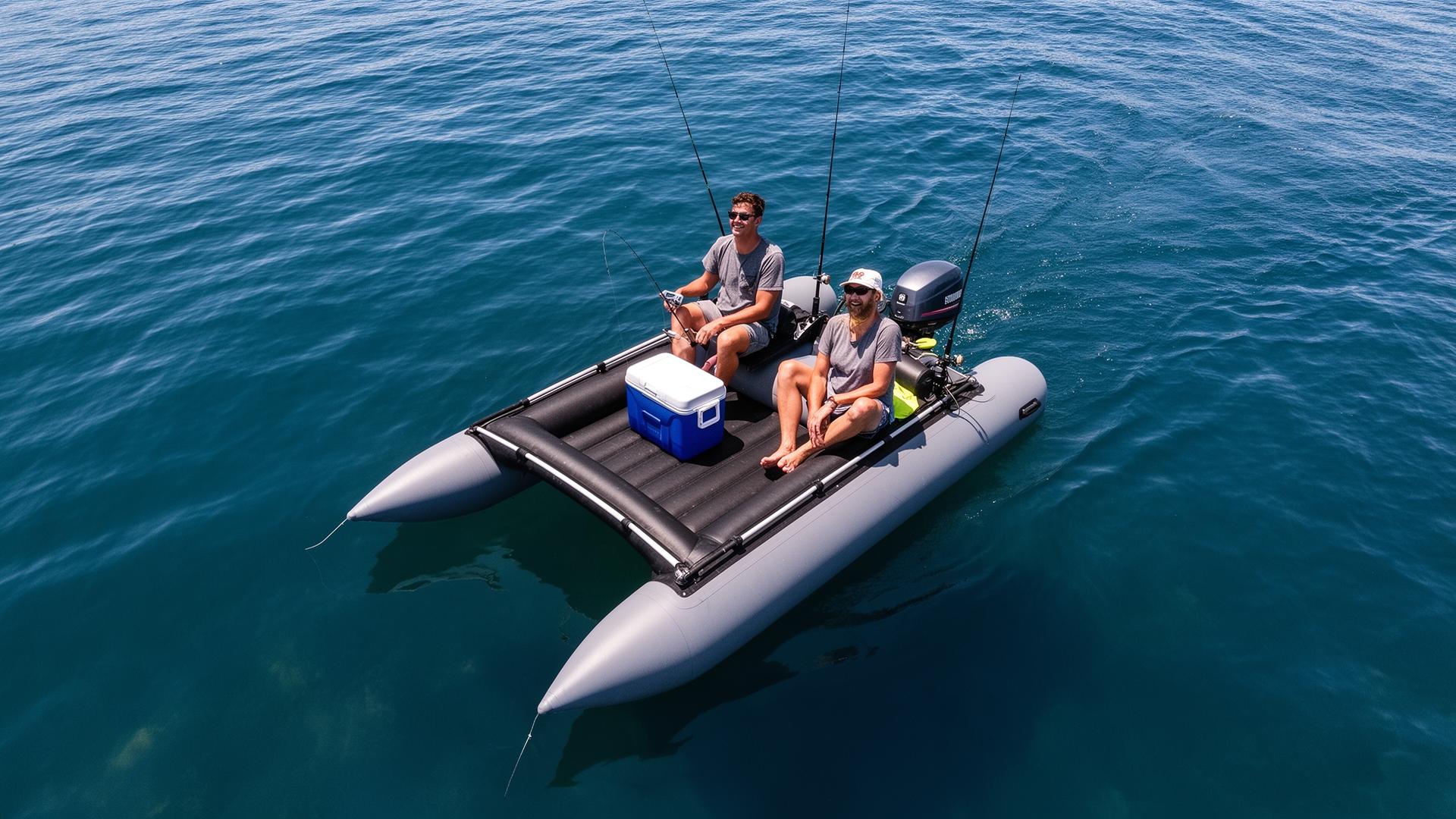
A pontoon hull and a catamaran hull look similar from the dock, but the load behaviour is very different. A single-tube inflatable carries weight in a U-shape — the deeper you push it, the harder it pushes back, but the freeboard at the bow drops quickly under load. A catamaran spreads the same weight across two pontoons with a deck spanning the gap, so:
- Displacement increases more linearly with load — the boat sinks less per kilo added.
- Trim stays flatter because the load sits between the hulls, not on top of a V.
- Freeboard at the bow is preserved further into the working-load range.
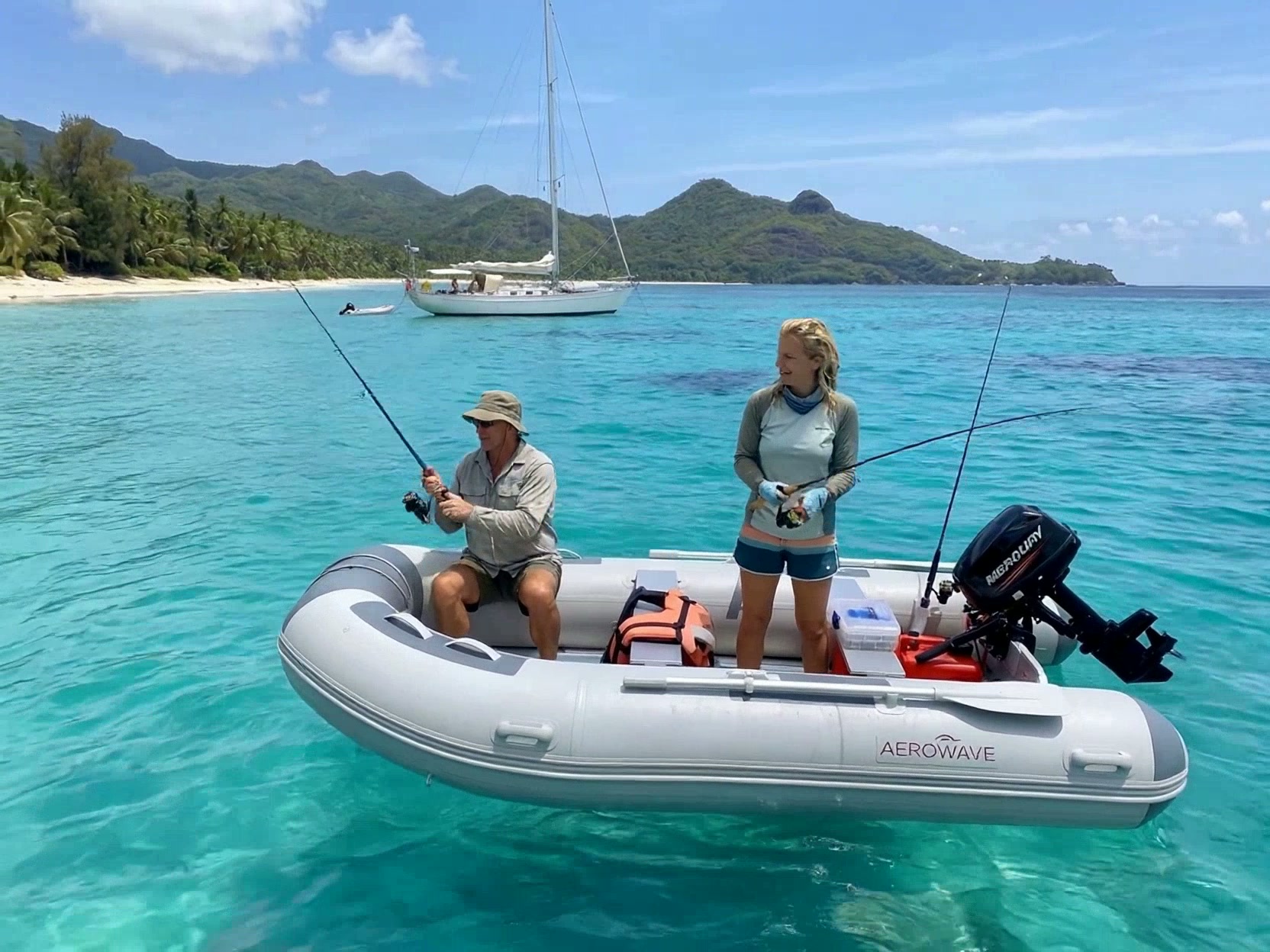
In practical terms, a 4.0 m inflatable catamaran (around 1.95 m beam) will carry the same five-adult party more comfortably than a 4.3 m single-hull inflatable of the same rating. That's why most Australian commercial operators running whale-watch, dive support and tour tenders have moved to catamaran inflatables in the 3.6–4.6 m range.
The four things that quietly reduce your real capacity
The plate number assumes textbook conditions. Out on the water, these four factors eat into your usable load:
1. Sea state
A boat at gross load in 5 kts of breeze and 0.2 m chop is fine. The same boat in 15 kts and 0.6 m chop is taking water over the bow. Drop one passenger per 0.3 m of chop above flat — it's the rule of thumb most experienced inflatable skippers use.
2. Tube pressure
Soft tubes inflated to 0.20–0.25 bar (3–3.6 psi) flex under load and the boat sits deeper. Premium hulls in the VALMEX 1.2 mm class are designed to run at 0.25 bar and only deliver their rated buoyancy at that pressure. If you've been launching half-pressure to be gentle on the seams, you're losing 10–15% of effective capacity. Pump them up.
3. Weight distribution
A 200 kg payload sitting on the back bench beside the outboard will dunk the transom and lift the bow. The same 200 kg spread across the boat (one on the bow tube, one on each side bench, gear amidships) keeps the boat level and adds usable capacity. Trim matters more than the absolute number.
4. Outboard size
A 15 hp outboard at the back of a 3.3 m boat adds 40 kg of metal exactly where you don't want it. That's 40 kg less for people and gear and it shifts the centre of gravity aft. Sizing the engine to the boat — not the maximum the plate allows — is one of the easiest ways to keep real capacity high.
Loading rules that keep you within the limit
A short list of habits that work on every inflatable in the 2.7–4.6 m range:
- Heavy gear amidships. Batteries, fuel tanks and eskies sit between the front and rear seats, low on the floor, never on a bench.
- Passengers spread fore-and-aft. One forward, one or two amidships, one at the helm. Not all four on the rear bench.
- Fuel goes in before people. It's the only way to gauge how much freeboard you have left.
- Top up the tubes at the ramp. Tubes inflated cold in the driveway lose 10–15% of pressure once they warm up in the sun and the boat sinks accordingly — check pressure on the trailer or after launching.
- Leave 50 mm of freeboard at the lowest point of the tube. If water is within two fingers of the top of the tube, you're over.
- One esky per person, max. It's a surprisingly good real-world cap on weight that prevents most overloads.
Australian rules: persons capacity vs marine safety
Most Australian states (NSW, QLD, VIC, WA, SA, TAS) require recreational boats to carry the builder's plate persons number, and treat exceeding it as the offence — not the kilogram total. If your boat is plated for four persons, the fine for carrying five is the same whether they're children or adults. The kilogram limit is enforced indirectly via the manufacturer's rating and via the "overloaded vessel" provisions in marine safety regulations.
For commercial use (charter, hire, dive support, training), surveyors apply additional load and stability tests on top of the plate, and the operating limits are usually stricter than the recreational rating.
The simplest test for any recreational skipper: if the plate says four, take four. If you need to take five, you need a bigger boat — and on the soft-inflatable side, that means stepping up from a 3.3 m sport hull to a 3.6 m or 4.0 m catamaran. The cost difference is small. The safety margin difference is enormous.
What a "right-sized" boat looks like for the common use cases
A few practical pairings from the Australian usage data we see most often:
- Solo / couple, tender to a houseboat — 2.7 m sport tender, 2.5–3.5 hp four-stroke, 250 kg working load. Fits in the boot.
- Family of four, dam and estuary fishing — 3.3 m sport or 3.6 m catamaran, 9.9–15 hp four-stroke, 380–460 kg working load. Carries the kids, two rods each, eskies and lunch.
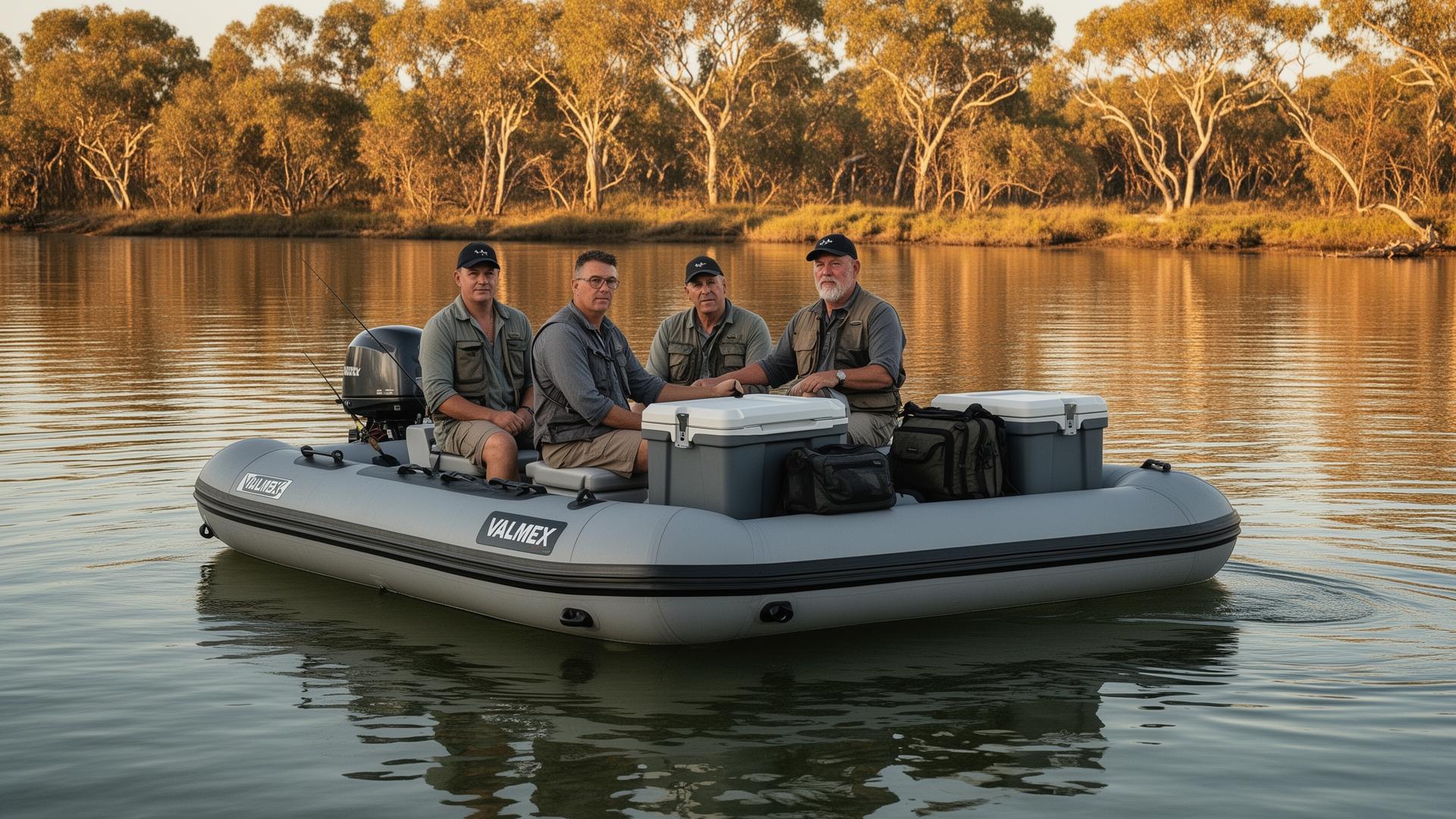
- Four mates chasing snapper inshore — 4.0 m inflatable catamaran, 20–30 hp four-stroke, 580–650 kg working load. Handles four adults, fuel, ice and a full tackle kit with margin.
- Charter / tour operator — 4.6 m inflatable catamaran, surveyed, 720–800 kg working load. Six paying passengers plus skipper, kit and safety gear.
In every case the rule is the same: pick the boat for the working load, not the gross. That way you have a real safety margin the day the wind comes up.
How Easy Inflatables rates its hulls
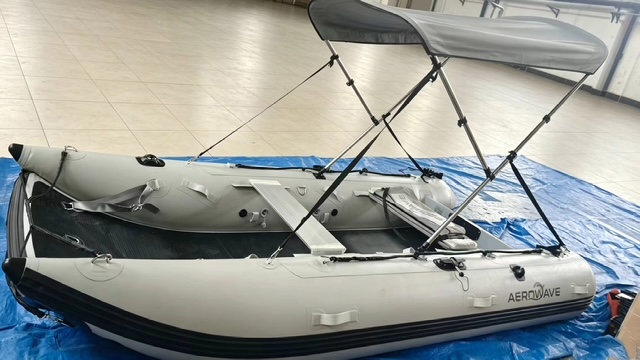
Every Aerowave hull we sell is CE certified to ISO 6185-3 + EU Directive 2013/53/EU, built in the premium VALMEX 1.2 mm fabric class with thermo-welded seams, and supplied with a permanent capacity plate that matches the certification. The numbers we publish on each product page are the certified persons and load figures — there is no "marketing" capacity. Tube pressure is specified at 0.25 bar, which is the pressure the certification was achieved at, and the included electric pump shuts off at that exact figure. With proper care, the fabric carries a 10–12 year working life, so the capacity rating you buy is the capacity you have a decade later.
If you're between two sizes — and you'll know, because everyone is — go up. The cost gap between a 3.3 m sport and a 3.6 m catamaran is small. The capacity gap is roughly an extra adult and an extra esky. On the day the wind picks up an hour from home, that's the difference between a story and an incident.
Pick the boat for the loaded weight you actually put on the water. Then enjoy the rest of the deck.
Related
- Aerowave Viper 400 Sovereign — highest payload in the Viper range.
- Aerowave WaveRunner 380 Series 3 — high-capacity catamaran package with Bimini.
- AeroCat 380 — generous capacity at a lower price point.
Weekend-Proof Score 17 questions · about 2 minutes
Will the boat you're about to buy survive an Australian summer?
Seventeen straight questions about where you'll use it, what you'll ask of it and the boat you're weighing up. You get a score out of 100, the exact weak points in your plan, and the one boat that genuinely fits.
Free · your result shows on screen · no email required
So which one is yours?
Pick how you'll actually use it and we'll take you straight to the right hull.
I want to fish it
Open bow, rod holders, deck space you can stand and cast from.
Viper Sport 400Family, diving and the beach
3.8 m Series 3 catamaran — low bow to climb back in wearing fins or a tank.
WaveRunner 380Tender / one-person launch
3.3 m hard-floor boat that packs into a bag and still takes a beach landing.
Viper 330Shop gear featured in this guide
Aerowave WaveRunner 380 Series 3 Catamaran Package
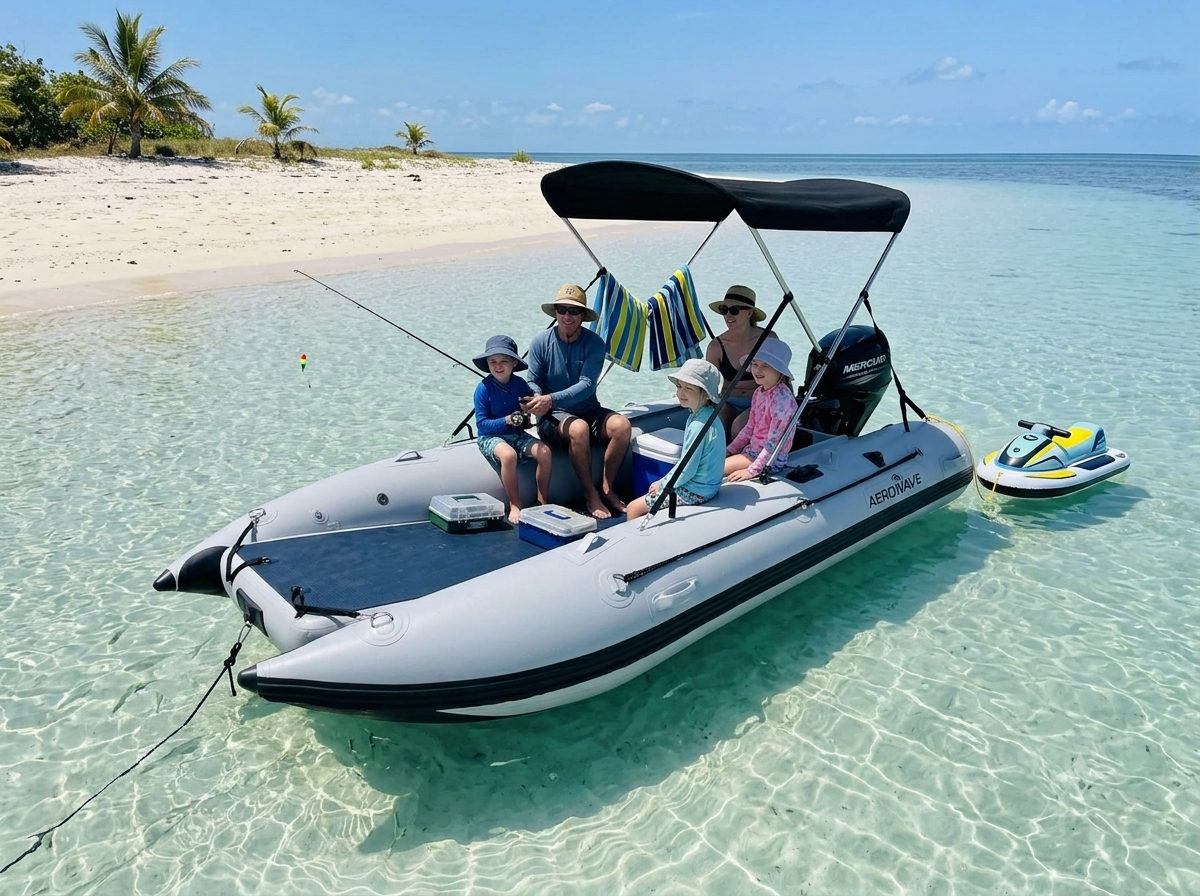
The WaveRunner 380 Series 3 is a premium 3.8m inflatable catamaran package built for Australian and worldwide families, fishing, and coastal day boating — ideal for snorkeling and spearfishing — offering serious stability and premium German Valmex® construction.
Free freight to United States · local taxes payable on arrival
Aerowave Viper 400 Sovereign
Flagship 4m enclosed-bow inflatable catamaran. German VALMEX® 7321 Heavy Plus 1.2mm commercial-grade fabric, 10 PSI high-pressure drop-stitch air deck floor with VALMEX non-slip surface, LockPro wheels, full Bimini and FREE express delivery Australia-wide included. Winter special — save $1,000 until 31 August 2026.
Free freight to United States · local taxes payable on arrival
Aerowave Viper 365 Open Bow
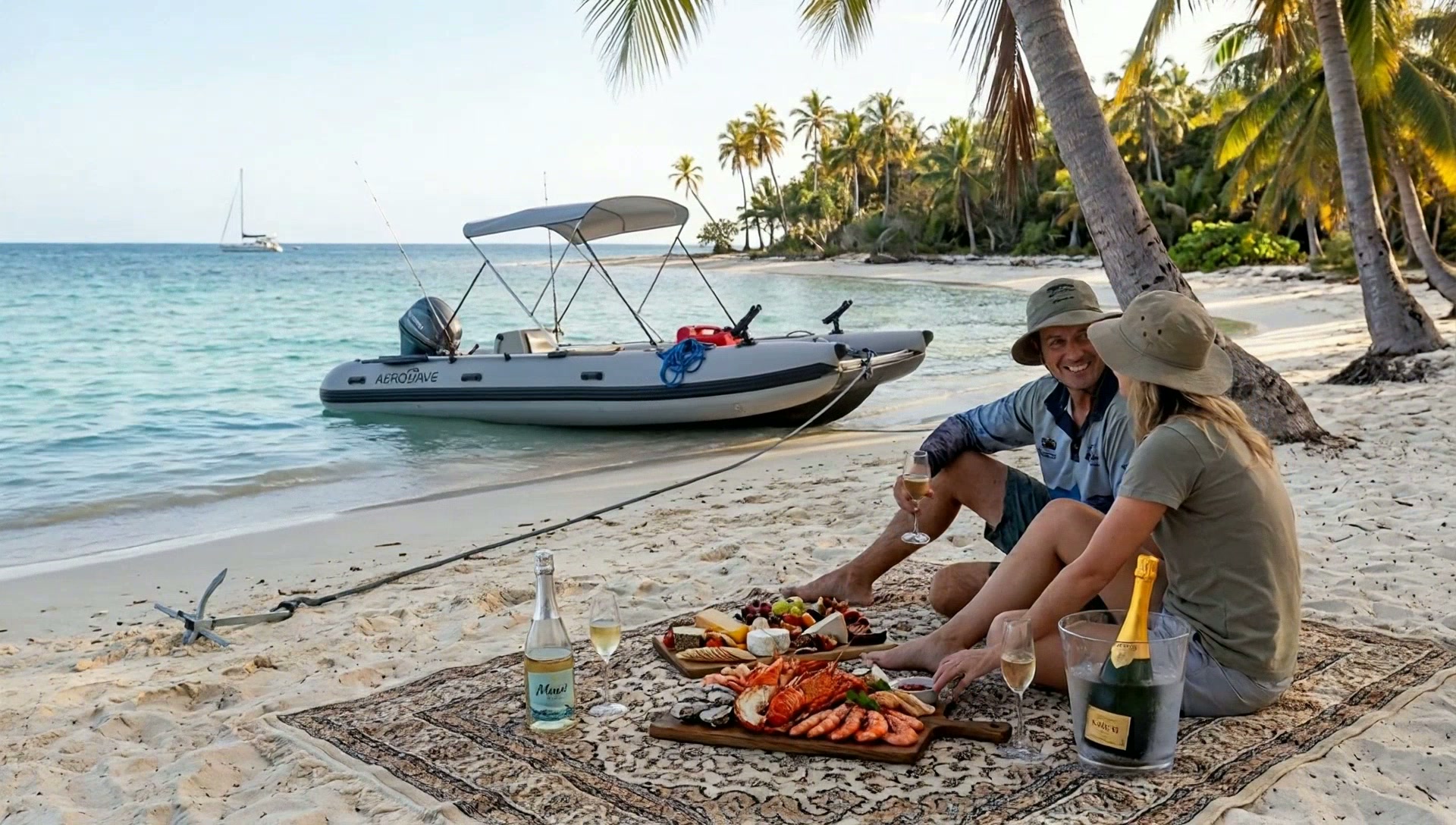
Premium 3.65m Inflatable catamaran — built the same way as our flagship Viper 400 sports boat, just 35cm shorter. German VALMEX® 7321 Heavy Plus 1.2mm commercial-grade fabric, 10 PSI high-pressure drop-stitch air deck floor with VALMEX non-slip surface, LockPro wheels, full Bimini and FREE express delivery Australia-wide included.
Free freight to United States · local taxes payable on arrival
Not sure which suits you? Talk to a real boat owner.
Before you spend a cent
Buying from Australia, delivered to United States
You have never heard of us, we are on the other side of the world, and the internet is full of fakes. Fair enough. Here is everything you would need to check us out, in one place — no forms, no chat bot.
Australian designed business
Easy Inflatables, Avoca Beach NSW 2251. ABN 96 856 548 613. International orders ship from our Hong Kong hub.
222 owner reviews, 4.8 average
Read them in full, good and bad, on our reviews page.
CE certified, 7-year hull warranty
ISO 6185-3 and EU Directive 2013/53/EU. Warranty honoured worldwide.
Tracked, insured, door to door
FREE freight to United States · local tax/duty on arrival.
- Who am I actually buying from?
- Easy Inflatables, Avoca Beach NSW 2251, Australia. ABN 96 856 548 613. Sean is the owner and skipper, Gary Stewart handles sales on +61 2 4335 1603, Karen Matthews handles email. The boats are Australian designed; international orders ship from our Hong Kong dispatch hub so your landed price stays competitive. Phone us before you pay a cent — a real person answers.
- Is this really an Australian product?
- Yes — Australian designed and engineered on the NSW Central Coast. Manufacturing is done offshore to our spec, and international orders ship direct from our Hong Kong dispatch hub. If we routed every boat through Australia first, the freight alone would roughly double or triple your cost for the same hull.
- What do I pay, and what is not included?
- The delivery and import terms depend on your country. EU, UK, New Zealand and named Asia/Pacific lanes include duty and tax; US freight is free but US buyers pay import charges on arrival. Other destinations show their terms before payment.
- How do I pay safely?
- Card through Stripe (Visa, Mastercard, Amex, Apple Pay, Google Pay) or bank transfer. Card payments carry your bank's own dispute protection. We never ask for crypto, gift cards or payment to a personal account.
- What if it arrives damaged?
- Every boat ships fully tracked and insured door to door. Photograph the carton and the boat on arrival and email us — transit damage is claimed and replaced through us, not left with you and the courier.
- Is the warranty real outside Australia?
- Yes. The 7-year hull warranty on 1.2 mm VALMEX Heavy Plus and Orca Hypalon hulls applies wherever you are. Replacement parts are held in Australia and at our overseas hub and go out by express courier to your door.
- Is the boat actually certified?
- All Aerowave catamarans are CE certified to ISO 6185-3 and EU Directive 2013/53/EU. Certification paperwork is supplied with the boat — ask and we will send it before you order.
Frequently asked questions
- What is the average weight capacity of a 3.3 m inflatable boat?
- A CE-rated 3.3 m soft inflatable in the VALMEX 1.2 mm class is typically certified to 500–560 kg gross load and 4 persons. A realistic working load — the figure most Australian skippers operate to — is 380–420 kg, which gives you a usable margin for fuel, esky, battery and a wave.
- Can I exceed the persons rating if everyone is under 75 kg?
- No. Australian state marine regulations enforce the persons number on the builder's plate, not the kilogram total. Four 60 kg adults still count as four persons. The kg rating exists alongside the persons rating — you must stay under both, not either one.
- Does an inflatable catamaran really carry more than a single-hull inflatable of the same length?
- Yes, and meaningfully so. Twin pontoons with a deck between them spread the load further from the centreline, so displacement scales more linearly and the bow stays drier under load. A 4.0 m inflatable catamaran will out-carry a 4.3 m single-hull RIB in comfort, freeboard and trim.
- How do I know if my boat is overloaded on the water?
- Three signs: less than 50 mm (two fingers) of freeboard at the lowest point of the tube, water washing over the transom when the boat sits still, or the bow lifting noticeably when you accelerate even on calm water. Any one of those means stop, redistribute weight, or offload an esky.
- Does tube pressure affect capacity?
- Significantly. A soft inflatable run at 0.15–0.18 bar instead of the certified 0.25 bar loses 10–15% of its effective load capacity because the tubes flex deeper into the water. Top up tube pressure at the ramp after the boat warms up in the sun — never just in the driveway.
- Is the outboard weight included in the maximum load on the plate?
- Only if the outboard is portable and removed for transport. Permanent transom-mounted outboards are accounted for separately in the certification. Check the plate wording — most soft inflatables list both a max load (people + gear + portable items) and a separate max motor weight.
Ready to set sail?
Premium German-fabric inflatable catamarans, built to order and delivered to your door. Talk to our team or browse the fleet.
Like this guide? Get the next one in your inbox.
Owner-tested tips, gear deep-dives and Aussie boating know-how — no spam.