Inflatable Catamaran vs Tinny: Which Is Right for Australian Fishing?
Aluminium tinny or inflatable catamaran? A no-spin comparison on stability, storage, towing, launching, running costs and what each one is genuinely better at.
🇺🇸 Boats shipping to United States
See landed prices in USD before you bounce.
Door-to-door delivery to United States in 7–14 days. Choose a boat, see local-currency pricing, or request a fixed landed quote from the sales team.
Two very different answers to the same question
The tinny is the default Australian small boat, and for good reason. It is cheap to buy second-hand, it is hard to kill, and every ramp in the country has three of them on it. So why would anyone spend similar money on an inflatable catamaran?
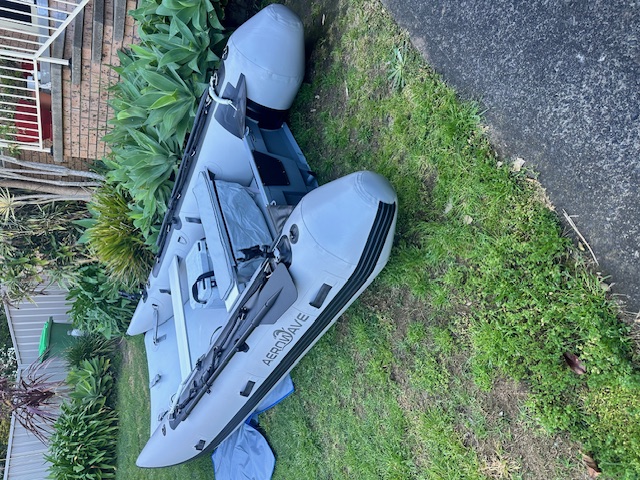
Because the tinny solves the boat problem and creates a life problem. It needs a trailer, the trailer needs registration and a garage or a side gate, and the whole rig needs a car that can tow it. The inflatable catamaran solves the life problem — it lives in a bag in the shed and travels in the boot — and then has to prove it can still fish properly.
This article is about whether it does.
Stability: the one that surprises people
A 3.7 m tinny is a shallow-V or flat-bottom hull with a narrow waterline beam. Stand up on one gunwale and it leans. That is not a defect, it is just physics — one hull, one centre of buoyancy.
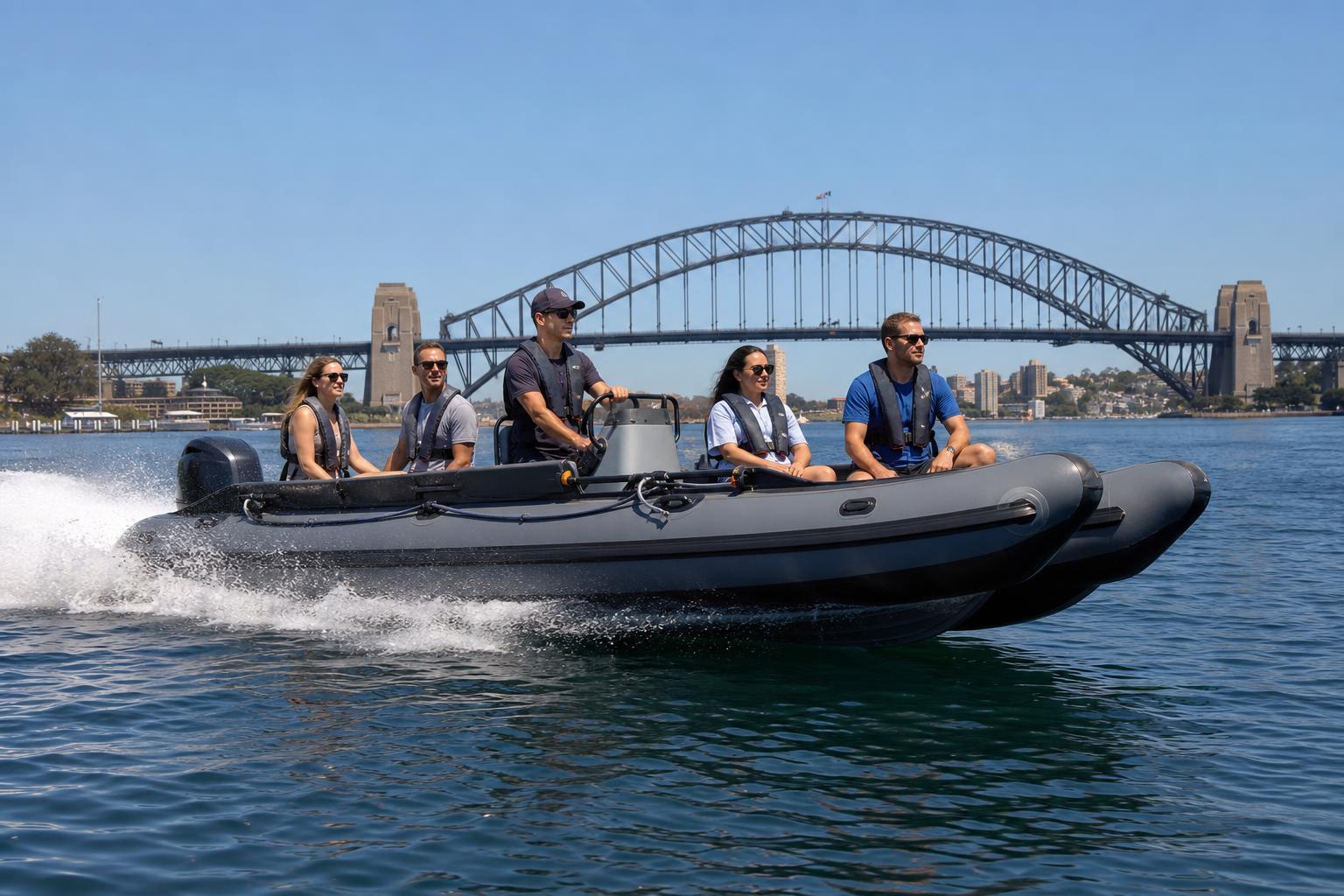
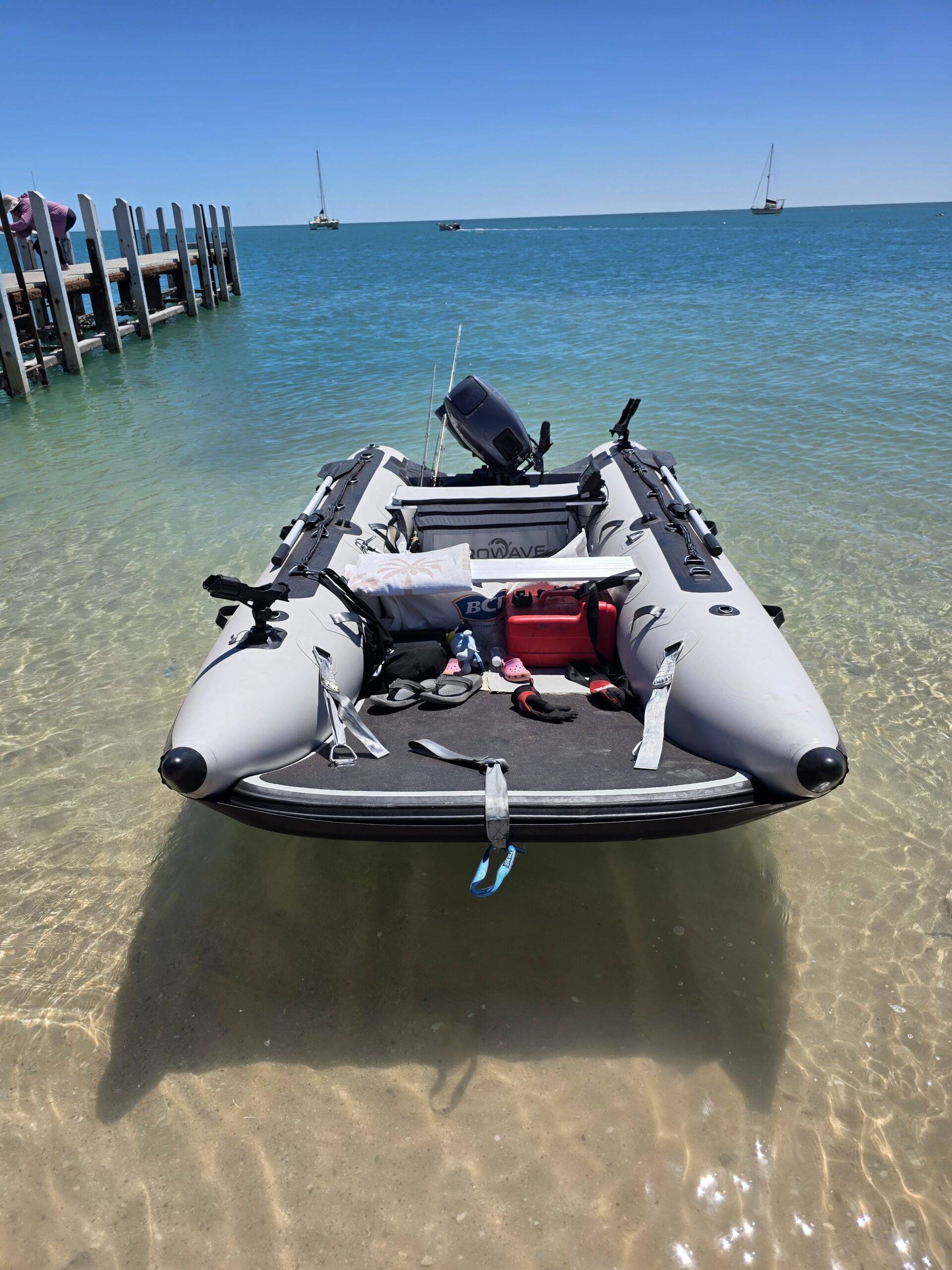
An inflatable catamaran has two separate hulls set wide apart with a tunnel between them. Stand on one side and the far hull resists the lean. This is the single most-remarked-on thing by owners who come across from a tinny: you can stand and cast off the side without the boat rolling under you.
It also matters at rest. Anchored up with three people all leaning the same way to net a fish, a cat stays flat. A tinny does not.
Ride and noise
A tinny in chop is loud. Aluminium slaps, and it transmits every hit straight up through your knees. The tunnel on a catamaran traps a cushion of air between the hulls, which softens the landing considerably and dulls the noise. The inflated tubes themselves are a shock absorber the tinny simply does not have.
Where the tinny wins: short steep chop at speed. A deep-V aluminium hull will cut through it more cleanly than a cat, which sits on top of the water rather than slicing into it. If you routinely run 10 km offshore into a stiff southerly, that matters. For estuary, bay, harbour, lake and inshore work — which is where most Australian small boats actually get used — the cat is more comfortable.
Storage and transport — the real reason people switch
| Tinny | Inflatable catamaran | |
|---|---|---|
| Storage footprint | ~5 m on a trailer | Two bags, ~1200 x 650 x 370 mm each |
| Needs a trailer | Yes | No |
| Trailer rego + maintenance | Yes, ongoing | None |
| Fits in an SUV | No | Yes |
| Fits in a caravan boot | No | Yes |
| Setup time | Reverse down the ramp | 10-15 minutes with a high-pressure pump |
That table is why most of our owners switched. Not performance — logistics. Apartment dwellers, grey nomads towing a van, and anyone whose garage is already full simply cannot own a tinny without also owning somewhere to put it.
Launching
A tinny needs a ramp. An inflatable catamaran needs a beach, a bank, a boat ramp, or the back of a van. With beach wheels fitted, one person can walk a fully rigged cat down soft sand and float it. No reversing a trailer, no queue, no ramp fees, no salt water over the wheel bearings.
This opens up water that trailer boats cannot reach: closed-off beaches, remote camp spots, island hops from a rented shack.
Durability — the fabric question
The fair criticism of inflatables is puncture risk. This is where the fabric grade decides everything.
Cheap marketplace inflatables use around 0.9 mm / 1100 GSM PVC. That is a real fabric with a real service life of roughly 3-7 years in Australian UV. Our premium hulls use 1.2 mm / 1500 GSM German VALMEX Heavy Plus — commercial-grade material with a 10-12 year fabric life. It is the same class of material used in professional marine applications, not a recreational pool-toy laminate.
Against an oyster-encrusted rock, aluminium still wins. Against ten years of sun, salt, sand and being dragged up a beach, a 1.2 mm hull holds up far better than most people assume — and unlike aluminium, it can be patched in the field in twenty minutes.
Running costs over five years
Tinny: hull + trailer + trailer rego (~$60-$120/yr) + bearings and tyres + antifoul or hull wash + ramp fees + the fuel cost of towing.
Inflatable catamaran: hull + motor + a pump. No trailer, no rego, no ramp fees, no towing fuel penalty. Rinse it, dry it, roll it.
Over five years the gap is usually in the low thousands, in favour of the cat.
Where each one genuinely wins
Choose the tinny if you:
- Have a garage or yard and a tow vehicle already
- Run consistently offshore in steep chop
- Beach-launch onto sharp oyster and rock
- Want the cheapest possible second-hand entry point
Choose the inflatable catamaran if you:
- Have nowhere to park a trailer
- Travel with a caravan or fly-drive
- Fish standing up, or with kids and non-boaters aboard
- Want to launch off a beach without a ramp
- Want a boat that fits into your life, not one that reorganises it
The bottom line
A tinny is a better boat for a narrow set of conditions. An inflatable catamaran is a better ownership experience for most Australians, most of the time — more stable underfoot, quieter, no trailer, and it lives in the shed instead of the driveway.
If you know where you fish and how often, tell us and we will point you at the right size rather than the biggest one.
Shop gear featured in this guide
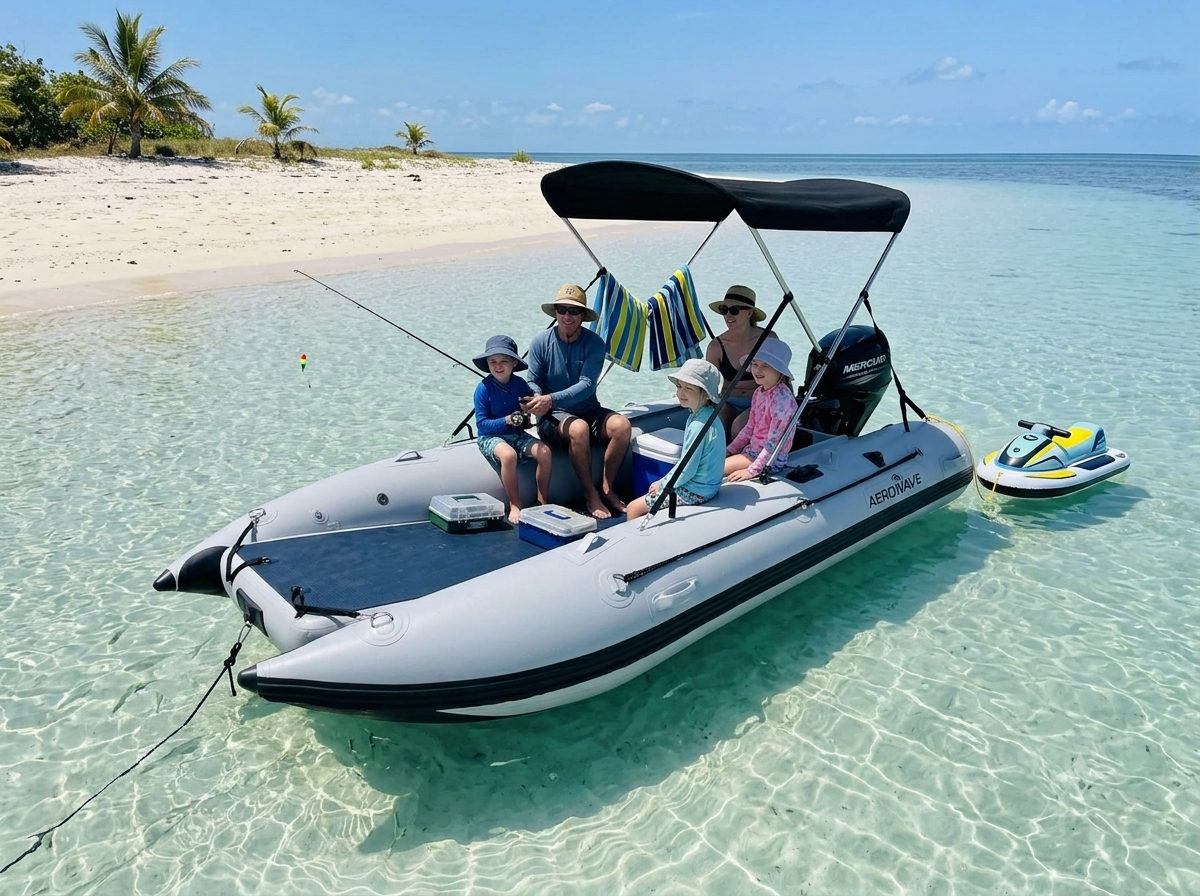
Aerowave WaveRunner 380 Series 3 Catamaran Package
The WaveRunner 380 Series 3 is a premium 3.8m inflatable catamaran package built for Australian and worldwide families, fishing, and coastal day boating — ideal for snorkeling and spearfishing — offering serious stability and premium German Valmex® construction.
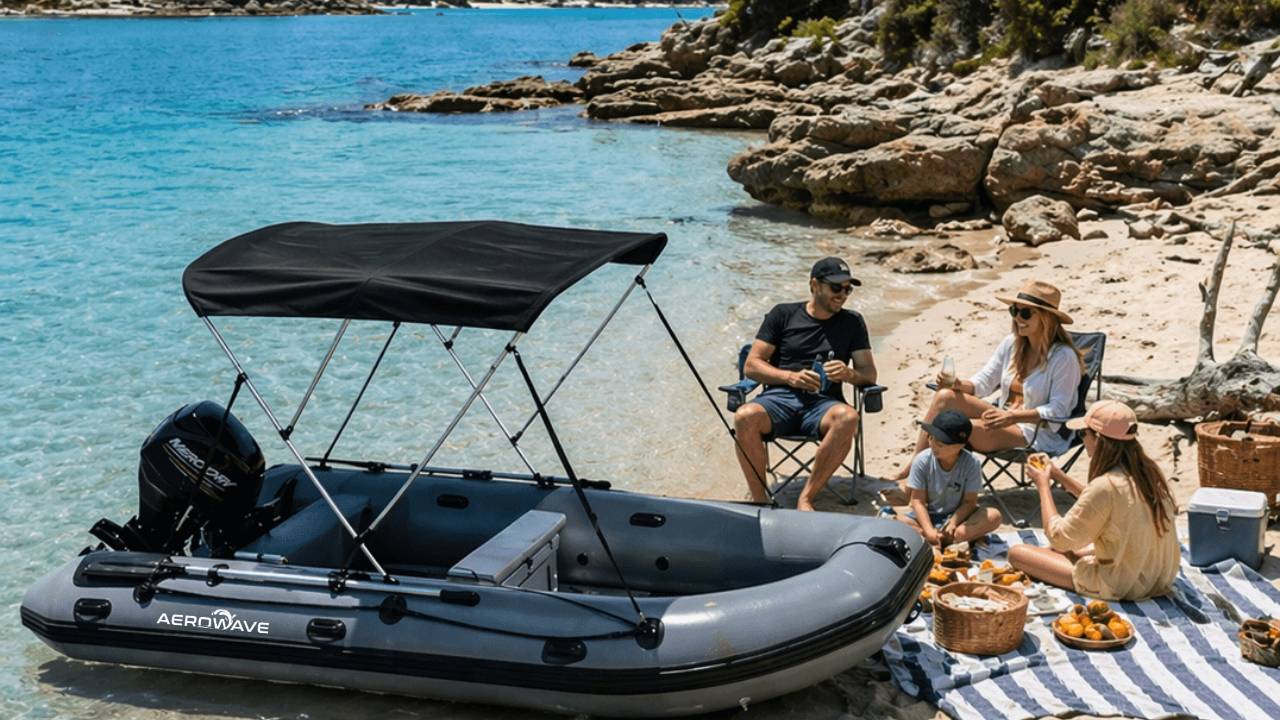
Aerowave Viper 400 Sovereign
Flagship 4m enclosed-bow inflatable catamaran. German VALMEX® 7321 Heavy Plus 1.2mm commercial-grade fabric, 10 PSI high-pressure drop-stitch air deck floor with VALMEX non-slip surface, LockPro wheels, full Bimini and FREE express delivery Australia-wide delivery included. Winter special — save $1,000 until 31 August 2026.
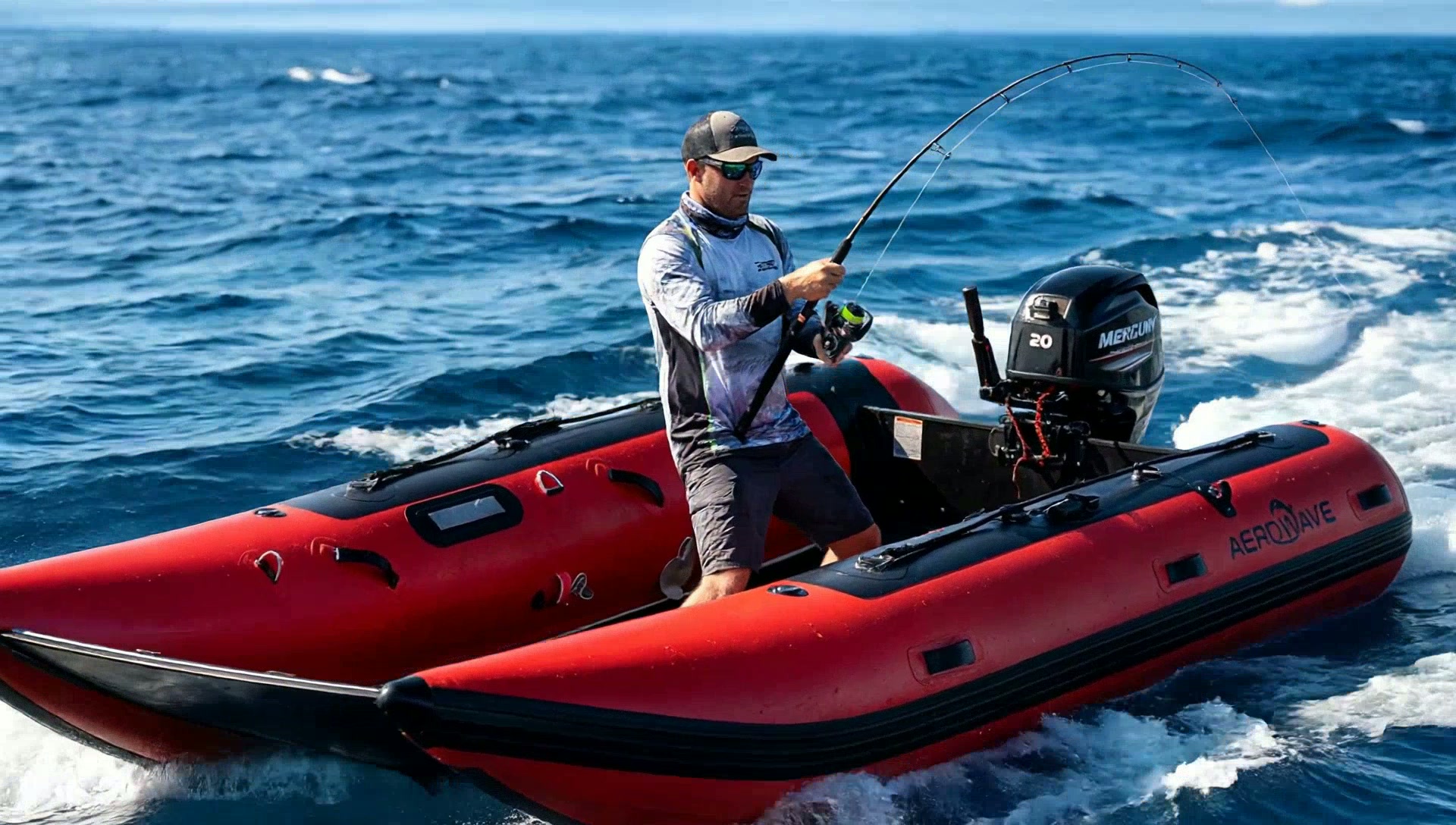
AeroWave AeroCat 360 Inflatable Catamaran
Same proven hull design, shape and look as our flagship Aerowave Viper catamarans — built lighter using 0.9mm Valmex® fabric instead of the Viper's 1.2mm. The AeroWave AeroCat 360 is our 3.6m inflatable catamaran built from 0.9mm Valmex® fabric — intentionally lighter than our 1.2mm Viper hulls so it folds smaller, packs lighter and is easy to handle solo. Twin-hull stability, 5-Year Warranty with global support and priced ~$500 below comparable 0.9mm imports.
Not sure which suits you? Talk to a real boat owner.
Frequently asked questions
- Is an inflatable catamaran as stable as a tinny?
- More stable at rest and under a side load. Two hulls set wide apart resist leaning in a way a single narrow aluminium hull cannot, which is why owners can stand and cast off the side.
- Will an inflatable catamaran handle offshore conditions?
- Inshore, bay, harbour and estuary work is where it excels. In consistently steep offshore chop, a deep-V aluminium hull cuts through more cleanly. Match the boat to where you actually fish.
- Can you puncture an inflatable catamaran?
- It is possible, but 1.2 mm / 1500 GSM VALMEX is commercial-grade fabric, not a pool-toy laminate. Hulls are multi-chamber, so a single puncture will not sink the boat, and field repairs take about twenty minutes.
- Do I need a trailer?
- No. The boat packs into two bags roughly 1200 x 650 x 370 mm and fits in an SUV or a caravan boot. With beach wheels, one person can launch it off sand.
- How long does setup take?
- Ten to fifteen minutes from bag to water using the included high-pressure hand pump, or faster with a 22 PSI lithium pump.
Ready to set sail?
Premium German-fabric inflatable catamarans with FREE Sea Freight or Express Air Delivery — your choice at cart. Talk to our team or browse the fleet.
Like this guide? Get the next one in your inbox.
Owner-tested tips, gear deep-dives and Aussie boating know-how — no spam.