
Engineering & Safety
Over-Pressurisation Safety Valves
The small plastic safety valves — finished in grey or black to match your tubes — fitted to every chamber of every Easy Inflatables boat: what they are, what they look like, why they matter, and why we believe no inflatable should leave a factory without them.
What is an over-pressurisation valve?
An over-pressurisation valve (also called an over-inflation safety valve, pressure-relief valve or PRV) is a small, spring-loaded plastic valve — grey or black to match the tube — installed permanently into each inflatable air chamber. It sits flush with the tube and is normally closed and sealed — you can't tell it's working until it needs to.
Inside the body is a calibrated stainless spring holding a sealing disc shut. When the internal chamber pressure exceeds the valve's calibrated set point above the chamber's marked working pressure, the disc lifts and a measured stream of air is vented to atmosphere. The moment pressure drops back into the safe range, the spring re-seats the disc and the chamber is sealed again. It is fully passive — no electronics, no batteries, nothing for the owner to operate.
Always armed
Sealed by default, opens only when pressure exceeds the safe limit, then re-seals automatically.
Calibrated
Set above the hull tube's marked working pressure — typically around 3.5 PSI — so it does not vent during normal use.
Maintenance-free
Tough plastic body, stainless spring, sealed-for-life. Inspect at service intervals, replace only if damaged.
What does it look like on your boat?
On a finished Easy Inflatables boat, each over-pressurisation valve appears as a small round disc — roughly the size of an Australian 20-cent coin (about 28 mm across) — bonded flush into the upper face of the tube near the rear of each chamber. The visible side is a moulded plastic cap (grey or black to match your tubes) with a small central vent slot. It sits flat against the tube fabric so it can't snag on lines, fenders or covers, and the cap is colour-matched so it's discreet against both grey and black tubes.
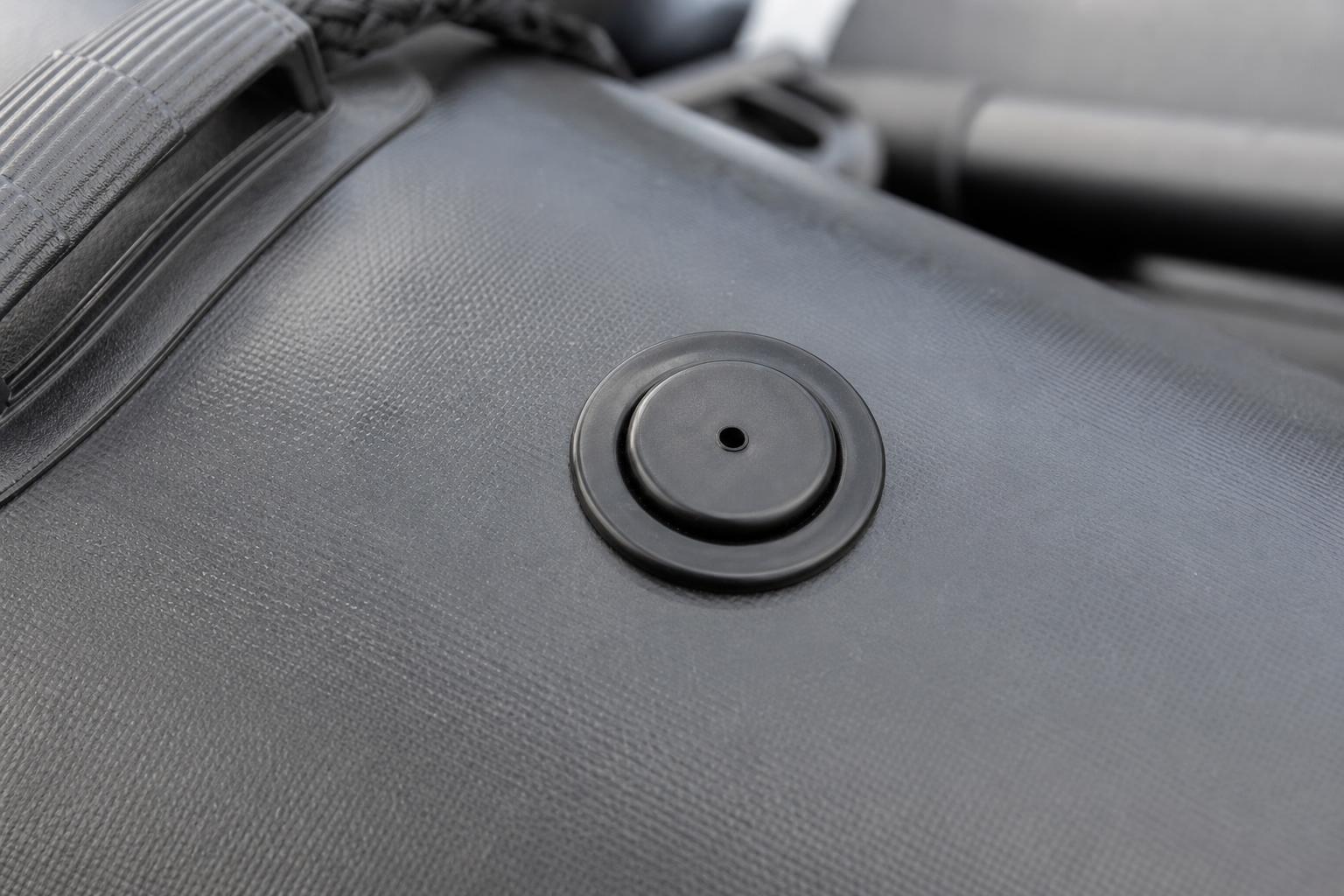
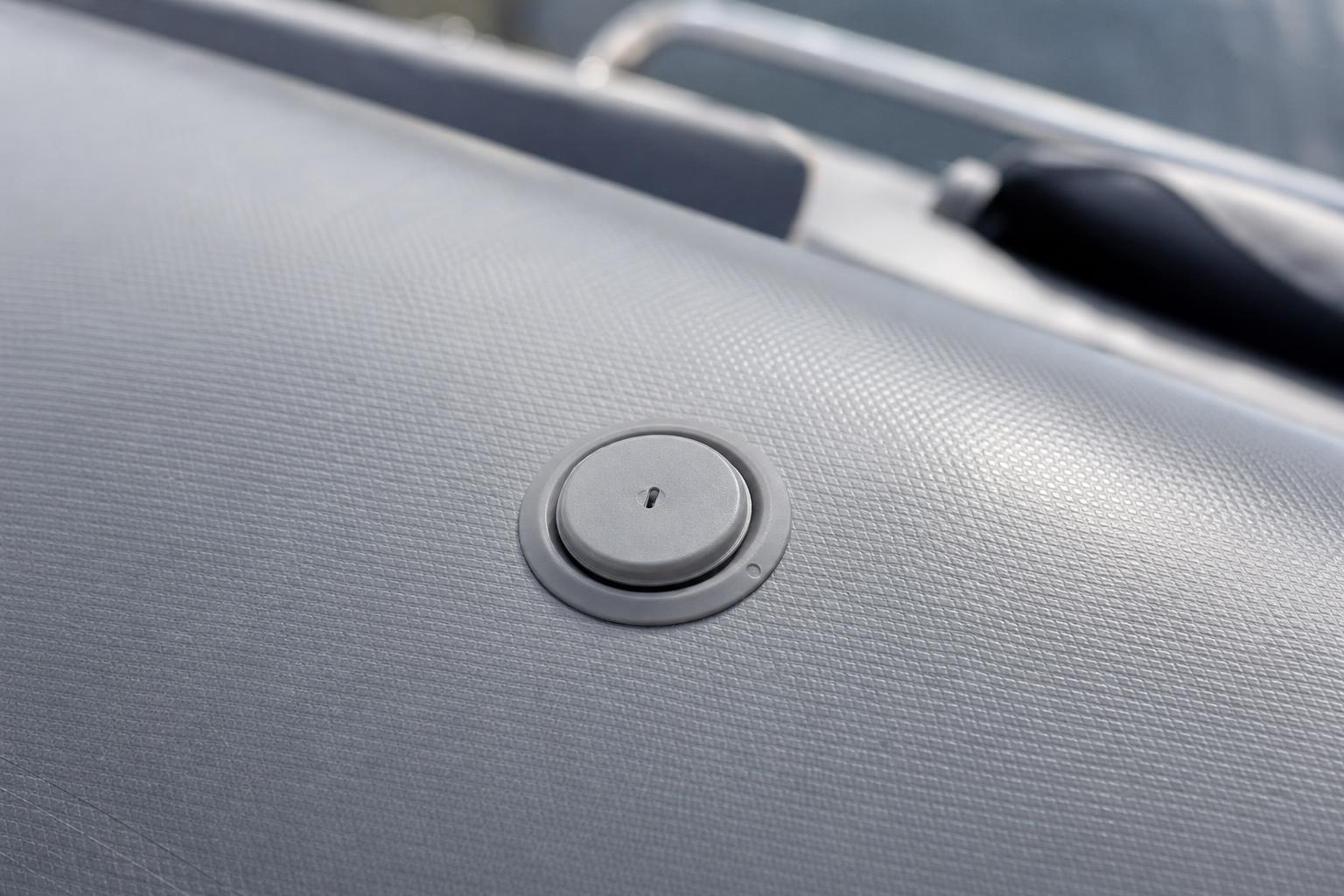
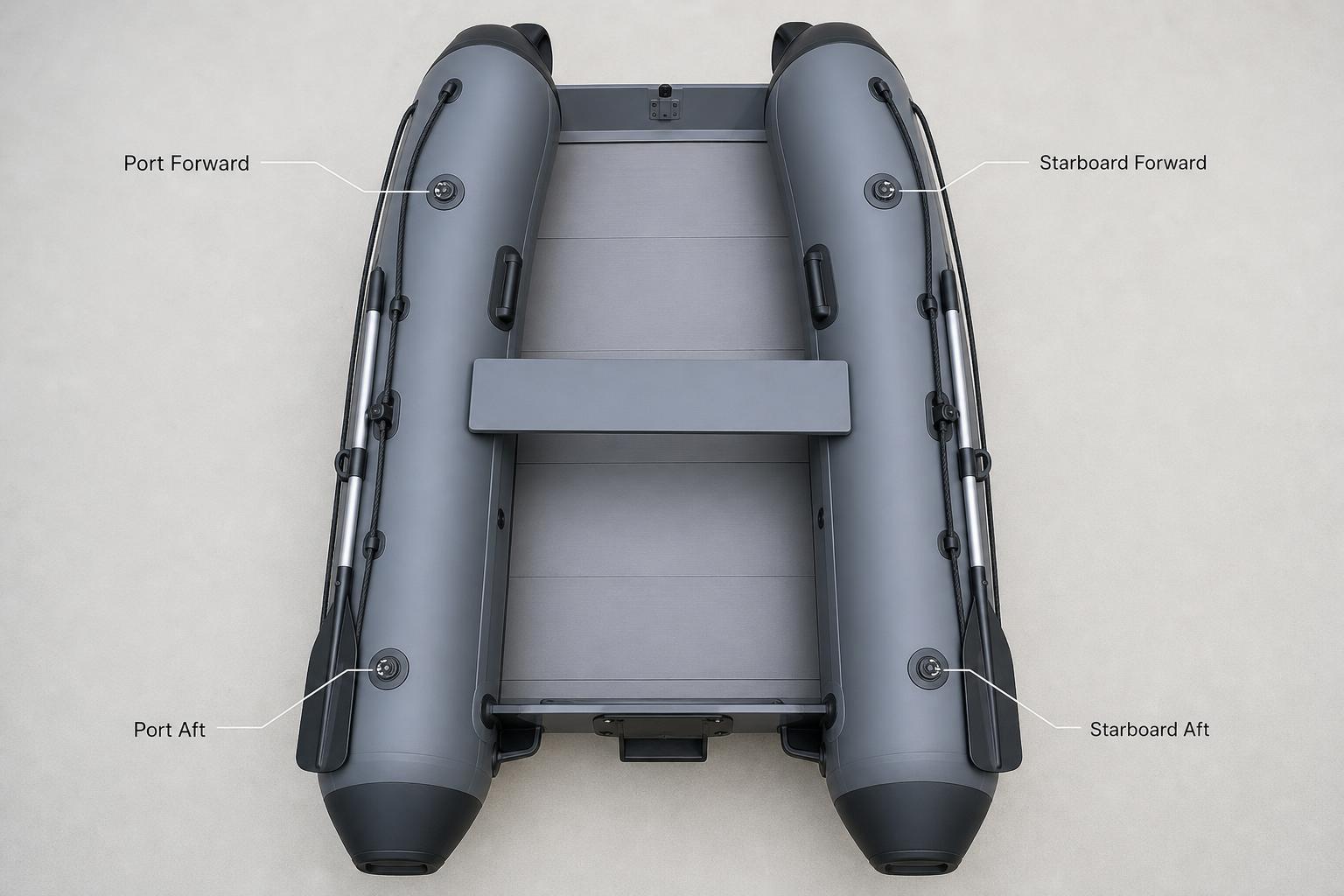
You'll find one on each of the four independent chambers — port forward, port aft, starboard forward, starboard aft on a monohull; and an equivalent layout on the AeroCat catamarans, where each hull and bow tube has its own dedicated valve.
If you ever hear a soft hiss from your boat on a very hot day on the trailer or beach, that's the valve doing exactly what it's designed to do — releasing the small amount of expanded air created by the sun heating the tubes, then re-sealing once the temperature stabilises.
Why every Easy Inflatables boat is fitted with them
The short answer: the Australian sun. The long answer is a combination of physics, ownership reality, and a refusal to leave one of the most damaging failure modes of an inflatable boat up to the owner's diligence alone.
Heat raises tube pressure — fast
The air inside an inflated tube obeys basic gas law: as temperature rises, pressure rises. A hull tube inflated to its marked working pressure — typically around 3.5 PSI — can rise further when the boat is left in strong sun. The safety valves are there to relieve a heat-driven pressure spike before it damages the tube.
Real-world ownership
Boats sit on trailers in driveways. They sit on beaches between launches. They sit on moorings and pontoons for weeks at a time. The owner is not always standing next to the boat with a gauge — but the sun keeps working.
What over-pressure damages
Sustained over-pressure stresses tube seams, the transom-to-tube glue line, baffles between chambers, valve bases and floor/keel attachments. Catastrophic failure is rare; quiet, accumulated damage that shortens the life of the boat is common.
A permanent fail-safe
A safety valve fitted to every chamber means the boat protects itself, every day, with no input from you. It's the same engineering philosophy as a pressure-relief valve on a hot-water cylinder or a compressed-air receiver — a non-negotiable safety device, not an accessory.
How it works, step by step
- 1
You inflate to the recommended working pressure
Use the value marked on the chamber — typically around 3.5 PSI for the hull tubes. The 8–10 PSI range applies only to the separate hard AirDeck floor, not the tubes. The valve is closed and sealed.
- 2
The boat is left in the sun
Solar heating raises the temperature of the air trapped inside each chamber. Pressure climbs predictably with temperature.
- 3
Pressure reaches the valve's set point
At the valve's calibrated relief point above the chamber's marked working pressure, the internal spring is overcome and the sealing disc lifts a fraction of a millimetre.
- 4
A controlled amount of air vents
Air bleeds to atmosphere through the cap's vent slot. You may hear a soft hiss. Only enough air is released to bring pressure back into the safe range.
- 5
The valve re-seats and seals
As pressure normalises, the spring closes the disc against its seat and the chamber is sealed again. No leak, no top-up required from you on the next outing beyond a normal pressure check.
A point of difference most competitors skip
Over-pressurisation valves add cost. They add an additional welded fitting per chamber, and a calibrated mechanical part that has to be sourced and tested. Most imported inflatables — including some well-known brands sold in Australia — fit none, or share a single valve across the boat. The owner is expected to monitor pressure manually and to deflate slightly when the boat is left in the sun.
We don't think that's good enough for a boat that's expected to last 10–12 years in Australian conditions. Every Easy Inflatables boat is fitted with four independent over-pressurisation valves — one per chamber — so each chamber is individually protected, and the boat as a whole continues to function safely even if you forget about it for a fortnight on the trailer.
| Spec | Easy Inflatables | Typical imported brand |
|---|---|---|
| Over-pressurisation valves | 4 (one per chamber) | 0, or 1 shared |
| Set point | Calibrated above the marked tube working pressure | N/A |
| Reliance on owner monitoring | Backed up by the valves | Entirely on the owner |
| Protection while parked in the sun | Yes — automatic | No |
Owner questions we get every week
Will the valves leak air during normal use?
No. The set point is above the hull tube's marked working pressure — typically around 3.5 PSI. They only open when the chamber is genuinely over-pressurised. In normal conditions you'll never hear them operate.
Do they replace the need for a pressure gauge?
No. The valves are a safety device, not a replacement for correct inflation. Always inflate to the chamber's marked pressure with the supplied gauge before launching. The valves protect you from heat spikes after that.
What if I hear one venting?
Nothing to do. The valve has detected an over-pressure event and is releasing the small amount of expanded air. Once pressure normalises it will re-seat. Re-check pressure with your gauge before your next outing.
Can the valves be serviced?
They're sealed-for-life plastic units. We inspect them at service intervals and replace any that show UV damage or wear. Replacement is a fast workshop job.
Are they covered by warranty?
Yes — like every fitting on the boat, the over-pressurisation valves are covered by the Easy Inflatableswarranty.