Stealth Fishing from an Inflatable Catamaran: Why Quiet Hulls Out-Fish Tinnies in Australian Estuaries
Tinnies clang, alloy hulls drum, and big bream bolt. Here's why an inflatable catamaran is the quietest fishing platform you can launch in an Australian estuary — and how to rig one to land more bream, flathead and whiting from skinny water the rest of the fleet can't reach.
At a glance
Tinnies clang, alloy hulls drum, and big bream bolt. Here's why an inflatable catamaran is the quietest fishing platform you can launch in an Australian estuary — and how to rig one to land more bream, flathead and whiting from skinny water the rest of the fleet can't reach.
- Why noise is the silent killer of estuary catch rates
- Why the inflatable catamaran wins on stealth
- The Australian estuaries where this matters most
- How to rig an inflatable catamaran for serious estuary fishing
What we'd put you in
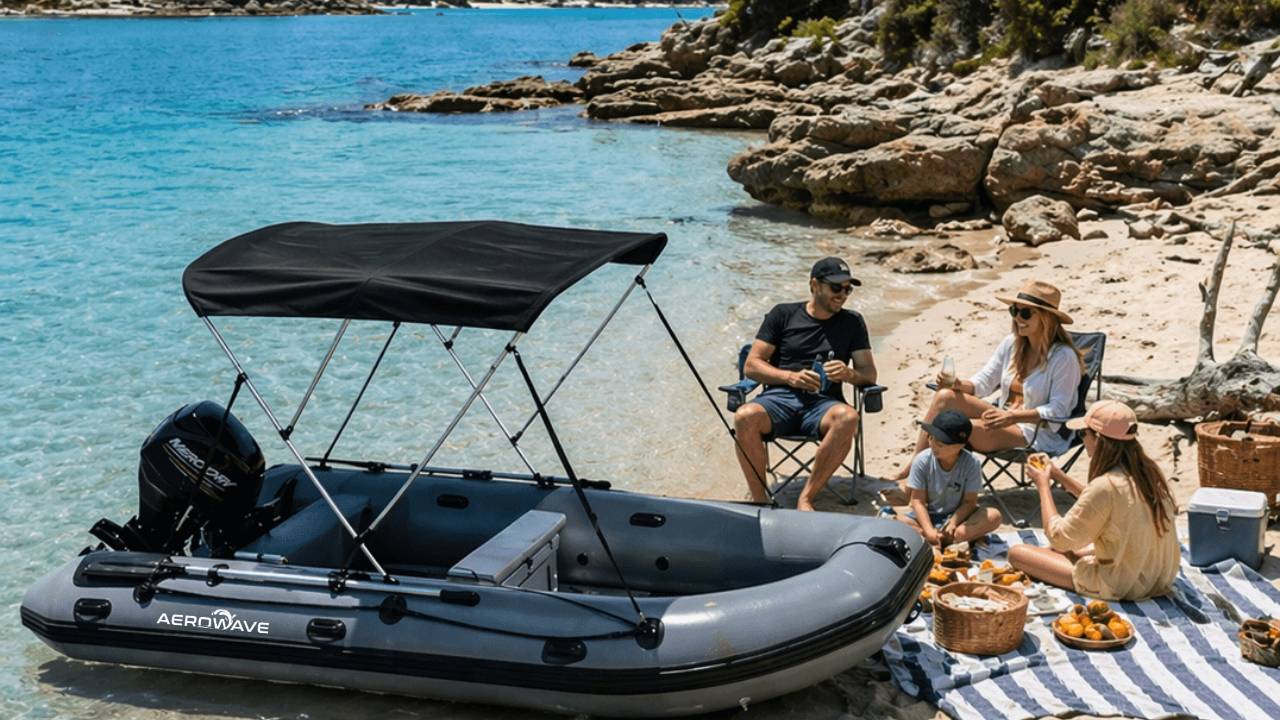
Aerowave Viper 400 Sovereign
If you're reading about catamarans, this is the one we build most of.
US$3,167 USD
Delivered to your door, today's rate
- Free freight to United States · local taxes payable on arrival
- 7-year hull warranty
🇺🇸 Shipping to United States · landed price quoted in writing
Yes — we ship the Aerowave Viper 400 Sovereign to United States. Here's the landed price.
If you're reading about catamarans, this is the one we build most of.
Written for Australian readers — but the boat ships to you. We are an Australian builder and this article is written from Australian waters. That changes nothing about what you can order: the same hull, the same 7-year warranty and the same certification go out to United States every week.
Aerowave Viper 400 Sovereign
- Boat package (export price)
- US$3,726
- 15% tariff relief credit
- − US$559
- Express air freight to United States
- Included
- Import duty, taxes & customs clearance
- Payable on arrival
- Estimated landed, USD
- US$3,167
Indicative, converted at today's rate, before local duty and tax on arrival. Ask below and we'll put a fixed figure in writing, valid 30 days.
- 7-year hull warranty
- 1500 GSM / 1.2 mm VALMEX® Heavy Plus hull
- CE certified to ISO 6185-3 and EU Directive 2013/53/EU
- Door-to-door, tracked the whole way
Your price, delivered to your door — freight included.
We email the full PDF quote (spec, freight, finance, WavePay) to your inbox in under 60 seconds. No spam — one quote, one follow-up.
See it for yourself
Real boats. Real owners. Real people behind them.
Plenty of what you read online these days is generated. Check us out properly — the factory, the reviews and the owners are all one click away. Why we use AI, and how to check we’re real
How our boats are built
Walk the production line: thermo-welded seams, 1.2 mm VALMEX Heavy Plus hulls, over-pressure relief valves on every chamber.
See the buildGoogle Maps reviews
Real Australian owners, five stars, published on our Google Business Profile with the map — read them there, not just on our own site.
Open Google Maps reviewsOwner stories
Boats in use — offshore, on rivers, on rescue duty. Photos and words from the people who actually own them.
Read owner stories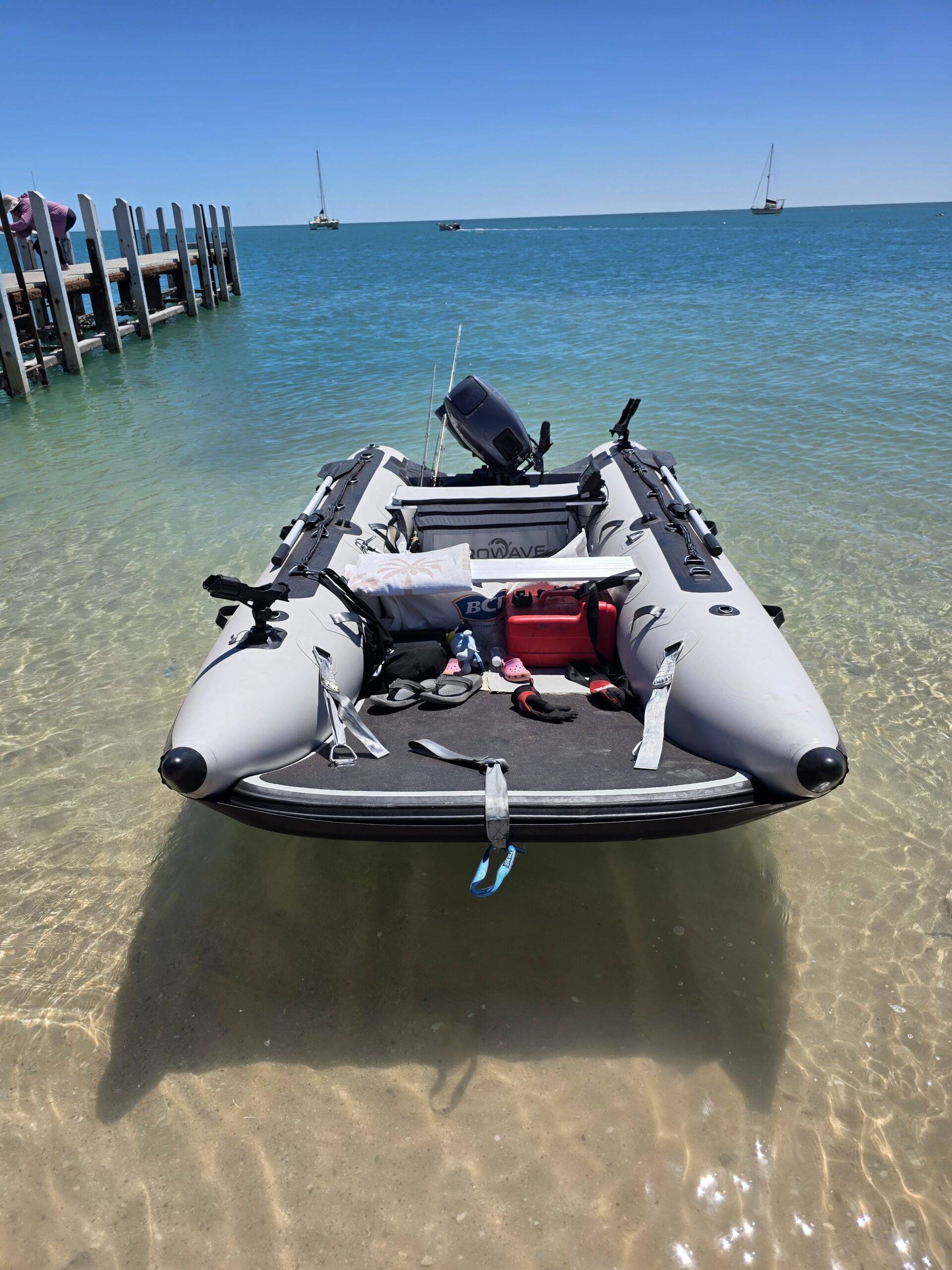
The single biggest reason serious estuary anglers are quietly switching to inflatable catamarans isn't fashion — it's that the fish don't hear them coming.
Ask any old bream fisherman why he stopped catching big fish from his tinnie and you'll get the same answer: noise. The slap of waves on aluminium, a tackle box dropped on a metal floor, the drumming of bare feet on a thin alloy hull — every one of those sounds travels into the water at four times the speed it travels through air. In a quiet estuary at first light, a 40 cm bream knows you're coming from sixty metres away.
This is the conversation no Australian tinnie dealer wants to have, but it explains exactly why the blokes who win club rounds month after month are quietly switching to inflatable catamarans.
Why noise is the silent killer of estuary catch rates
Sound behaves very differently in water than it does in air. Underwater, low-frequency thuds — the exact frequency band that aluminium hulls produce — propagate enormously well and trigger the lateral-line response in fish like bream, flathead, whiting, mulloway and bass.
The lateral line is essentially a pressure-and-vibration sensor that runs the length of a fish's body. It's how a flathead lying on the sand knows a prawn just twitched three metres away. It's also how that same flathead knows a 3.5 m alloy punt is drifting towards it at idle.
The CSIRO and several Australian universities have studied this for decades in the context of seismic survey and ship noise. The findings are consistent: hull-radiated noise from rigid metal craft causes a measurable flight response in inshore species, and the response distance is dramatically larger than most anglers imagine.
We've had reports from skippers who couldn't catch a flathead from a tinnie in a stretch of Pittwater they'd been fishing for twenty years — but caught seven in a session from a quiet inflatable, on the same tide, in the same hour.
Why the inflatable catamaran wins on stealth
Three things make a quality inflatable catamaran like the Aerowave AeroCat 330 the quietest fishing platform you can buy in this price bracket:
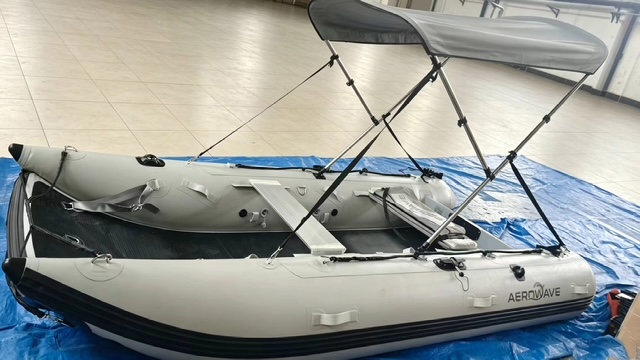
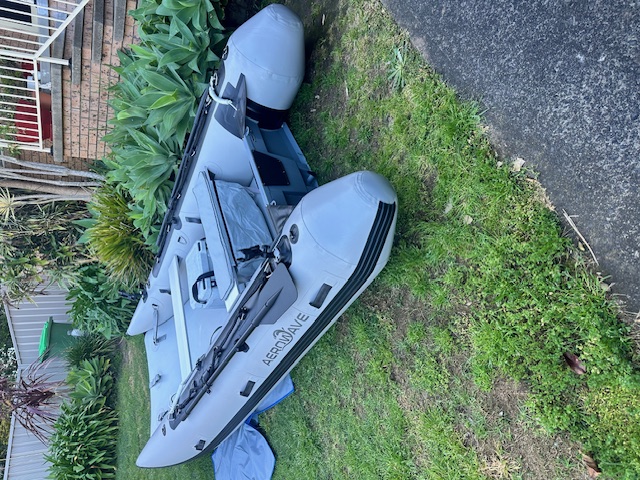
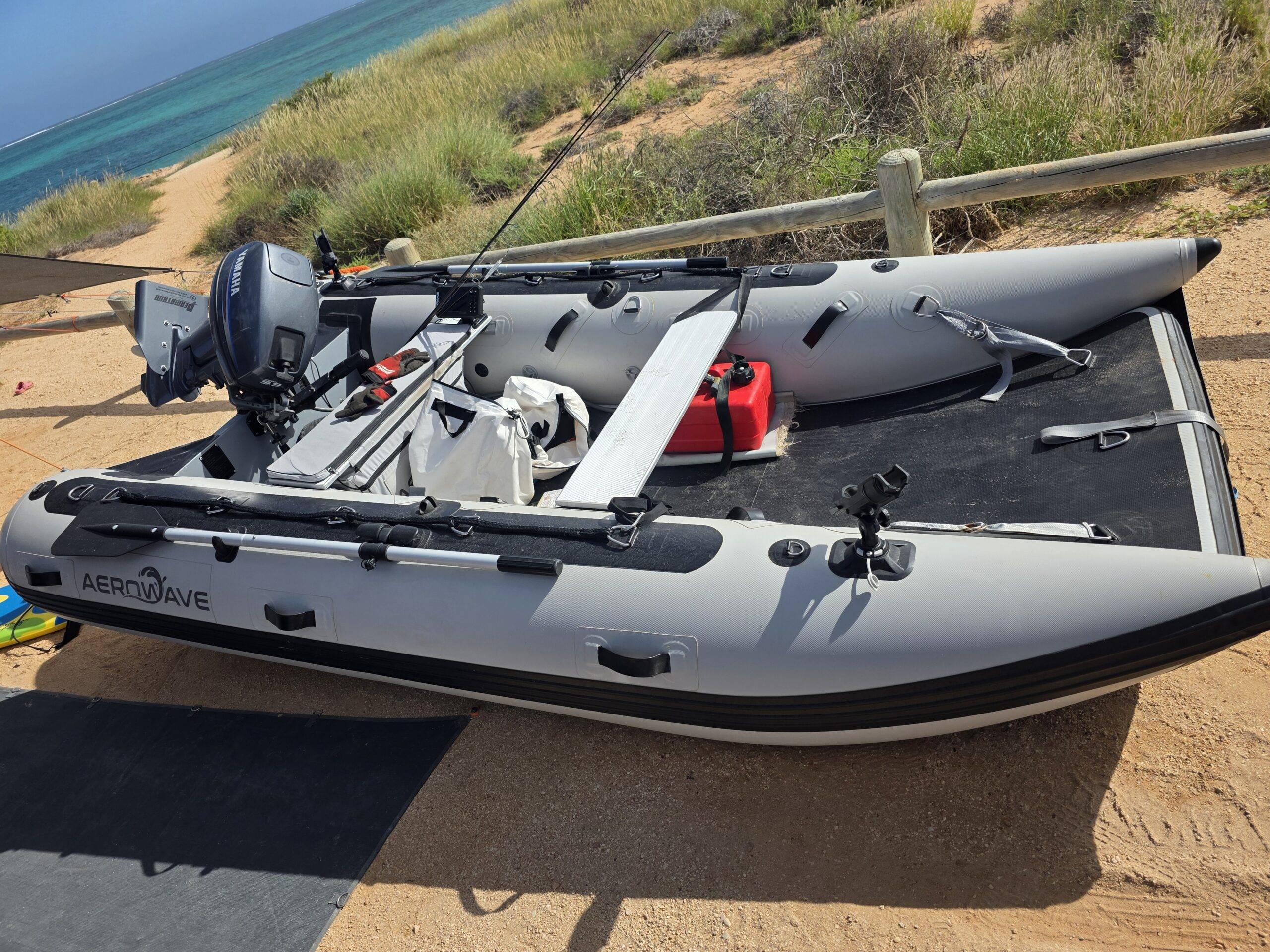
- The tubes are 0.9 mm VALMEX — a dense, energy-absorbing fabric that doesn't ring or drum. Drop a tackle box on the air deck and you'll hear a soft thud; do the same on aluminium and you'll hear it from the next bay.
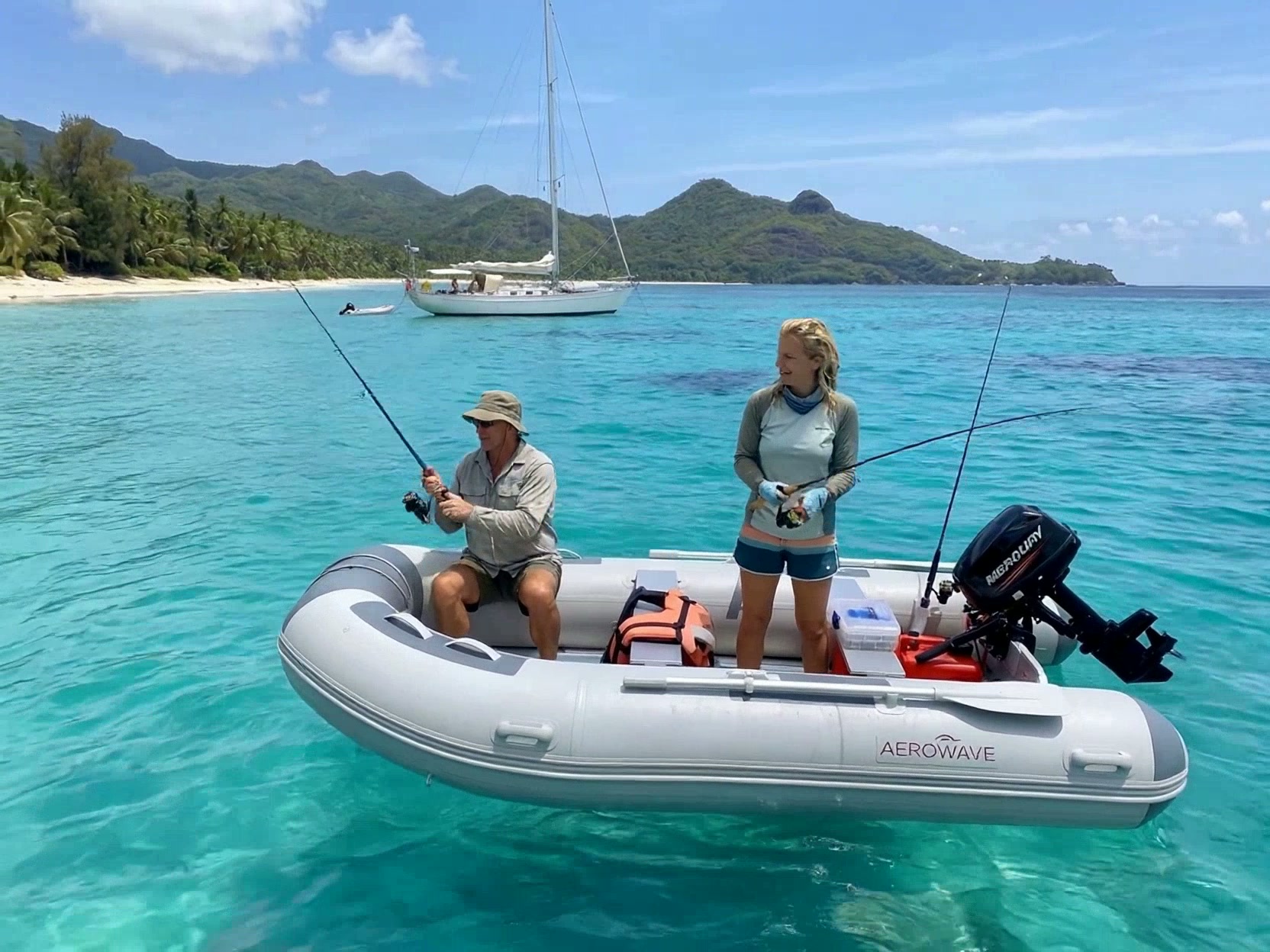
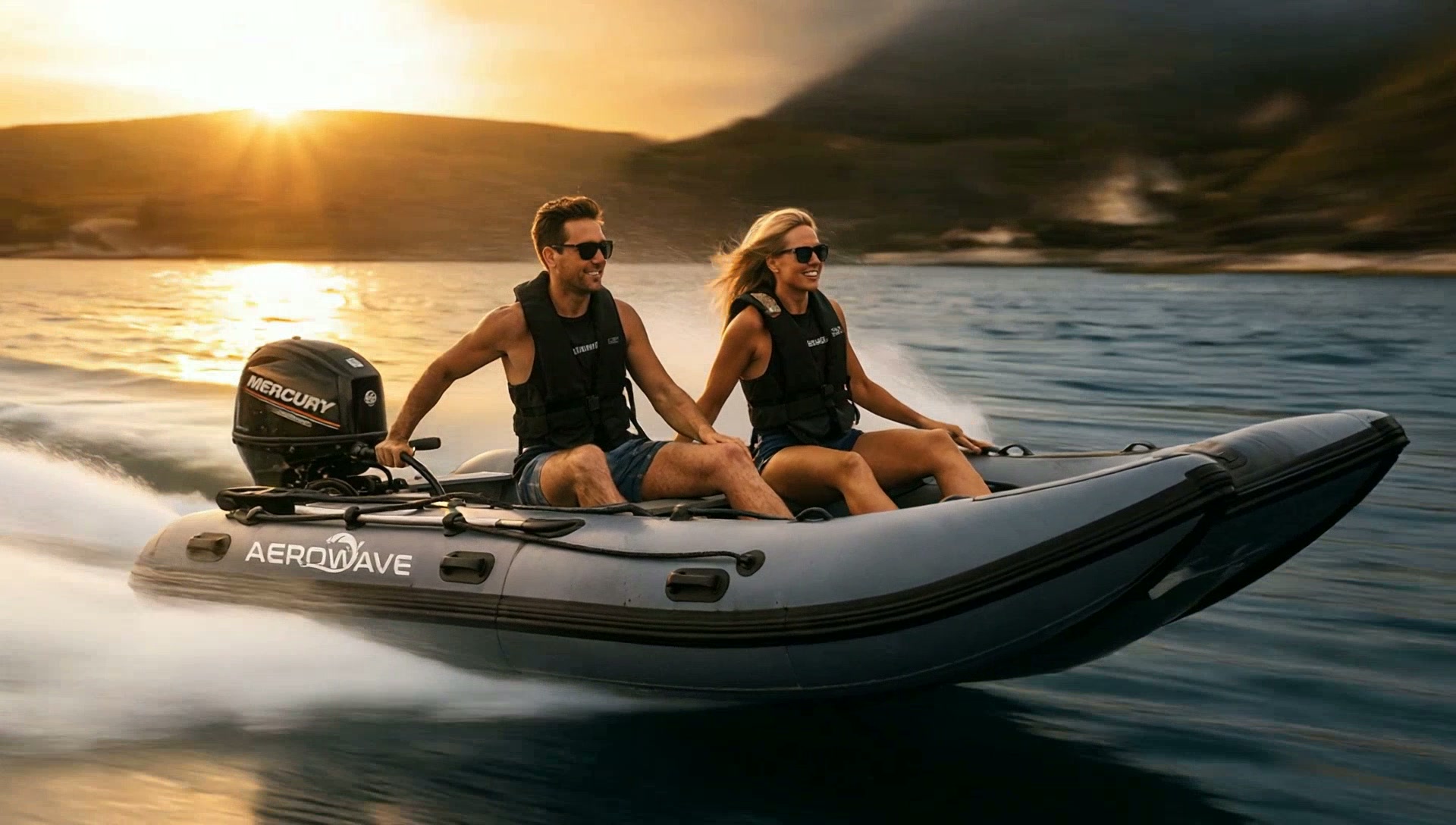
- Twin sponson hulls part the water silently. There's no slap. Even at 15 knots, the bow wake whispers rather than thumps. At idle in skinny water you can creep within two rod-lengths of a tailing bream without it spooking.
- Shallow draft. An AeroCat 330 floats in around 18 cm of water fully loaded. That opens up the back of every estuary in Australia — the flats, the oyster leases, the mangrove drains — water a 4 m tinnie simply can't enter without sounding like a tin can rolling down stairs.
The Australian estuaries where this matters most
Some Australian systems reward stealth more than others. If you fish any of these, the difference between an alloy hull and an inflatable cat is the difference between a quiet morning and a session you talk about for years:
- Hawkesbury, Pittwater & Brisbane Water (NSW) — pressured oyster-lease bream that have heard every tinnie on the coast.
- Wallis Lake & Forster (NSW) — flats whiting that bolt at the first prop wash.
- Noosa River, Maroochy & Pumicestone Passage (QLD) — flathead on the skinny sand banks where draft is everything.
- Gippsland Lakes (VIC) — bream and mulloway in deep weed where a quiet drift outfishes anchoring every time.
- Swan River (WA) — pressured bream in glassy summer conditions where a tinnie's footfall echoes for hundreds of metres.
- Tamar & Derwent (TAS) — bream on rock walls where stealth and a shallow approach let you cast tight to structure no one else can reach.
How to rig an inflatable catamaran for serious estuary fishing
The platform is quiet out of the box, but a few small choices make it tournament-quiet.
1. Lose the metal-soled deck shoes
Wear soft EVA or boat shoes. The air deck is already silent — don't undo it by stomping around in hiking boots.
2. Use soft-sided tackle storage
A Plano hardcase dropped on the floor is the loudest sound on the boat. Soft tackle bags eliminate the issue and stow neatly under the seats.
3. Run a 6 hp four-stroke as your stealth outboard
A modern four-stroke at idle through a quiet hull is borderline undetectable. Our Hidea four-stroke range pairs beautifully with the AeroCat — quiet enough that you can troll a Cranka Crab right past a tailing bream and watch it engage rather than spook.
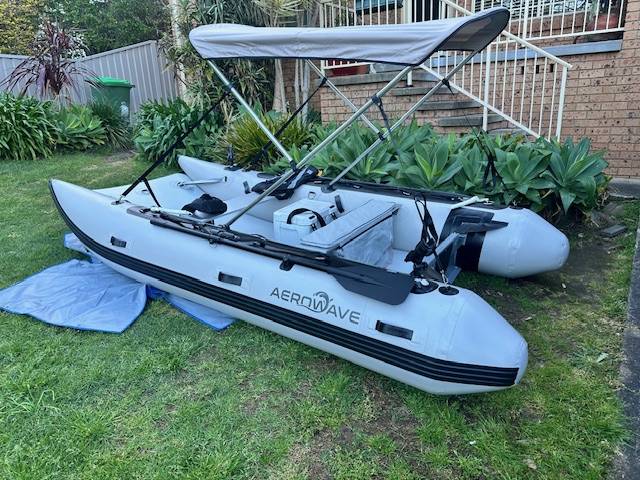
4. Add an electric trolling motor on the bow
For the last hundred metres on a sight-fished flat, kill the petrol and walk in on 30 lb of thrust. The catamaran hull tracks beautifully on electric — none of the side-slip you get with a single-hull RIB.
5. Carry an anchor — but use the drift first
The biggest mistake estuary anglers make is over-anchoring. A drifting catamaran covers more water silently than an anchored tinnie ever will. Save the anchor for current lines and known holes.
What about wind?
The honest answer: a catamaran has more freeboard than a tinnie, so on really windy days you'll drift faster. That's a fair trade for the stealth advantage — and if you're serious, a small drogue (sea anchor) tucked in the dry bag fixes it in two minutes. The flats anglers in the US have been doing this for thirty years on shallow-draft skiffs; the same trick works perfectly on an AeroCat.
The real cost-vs-tinnie maths
A new 3.7 m welded alloy punt plus a 15 hp outboard, trailer and NSW rego will set you back around A$13,000–A$16,000 on the road.
An AeroCat 330 Full Package plus a 6 hp Hidea four-stroke comes in well under that, packs into the back of a Forester, needs no trailer rego, and launches off any beach in Australia without a ramp.
Add the fact that you'll genuinely catch more fish in pressured water, and the numbers stop being close.
Who this is NOT for
We're not going to pretend an inflatable catamaran is the right answer for everyone. If you fish the open ocean off Sydney Heads or run 20 nautical miles offshore from Mooloolaba chasing pelagics, you want a glass boat.
The inflatable catamaran is purpose-built for the calm-to-moderate inshore game — estuaries, lakes, sheltered bays, river systems. That's where it's genuinely class-leading.
Where to go from here
If you're serious about quietening up your estuary game, start with the model the local guides keep buying: the AeroCat 330. If you fish two or three up regularly, step up to the AeroCat 360 for the extra deck space.
Either way you're fishing a 0.9 mm VALMEX hull that'll outlast three tinnies and stay invisible to fish the whole time.
And if you want to talk through your home estuary specifically — what tide stage, what outboard, what trolling motor — give us a ring on +61 2 4335 1603. Half our team fishes these things every weekend; we're happy to nerd out about your local system.
Related
- AeroCat 380 — quiet twin-hull layout that excels in estuaries.
- Rod holder mount — bolt-on rod mount that suits stealth fishing setups.
- Aerowave Viper 365 Open Bow — mid-size open-bow cat with a stable casting platform.
Weekend-Proof Score 17 questions · about 2 minutes
Will the boat you're about to buy survive an Australian summer?
Seventeen straight questions about where you'll use it, what you'll ask of it and the boat you're weighing up. You get a score out of 100, the exact weak points in your plan, and the one boat that genuinely fits.
Free · your result shows on screen · no email required
So which one is yours?
Pick how you'll actually use it and we'll take you straight to the right hull.
I want to fish it
Open bow, rod holders, deck space you can stand and cast from.
Viper Sport 400Family, diving and the beach
3.8 m Series 3 catamaran — low bow to climb back in wearing fins or a tank.
WaveRunner 380Tender / one-person launch
3.3 m hard-floor boat that packs into a bag and still takes a beach landing.
Viper 330Shop gear featured in this guide
Aerowave WaveRunner 380 Series 3 Catamaran Package
The WaveRunner 380 Series 3 is a premium 3.8m inflatable catamaran package built for Australian and worldwide families, fishing, and coastal day boating — ideal for snorkeling and spearfishing — offering serious stability and premium German Valmex® construction.
Free freight to United States · local taxes payable on arrival
Aerowave Viper 400 Sovereign
Flagship 4m enclosed-bow inflatable catamaran. German VALMEX® 7321 Heavy Plus 1.2mm commercial-grade fabric, 10 PSI high-pressure drop-stitch air deck floor with VALMEX non-slip surface, LockPro wheels, full Bimini and FREE express delivery Australia-wide included. Winter special — save $1,000 until 31 August 2026.
Free freight to United States · local taxes payable on arrival
Aerowave Viper 365 Open Bow
Premium 3.65m Inflatable catamaran — built the same way as our flagship Viper 400 sports boat, just 35cm shorter. German VALMEX® 7321 Heavy Plus 1.2mm commercial-grade fabric, 10 PSI high-pressure drop-stitch air deck floor with VALMEX non-slip surface, LockPro wheels, full Bimini and FREE express delivery Australia-wide included.
Free freight to United States · local taxes payable on arrival
Not sure which suits you? Talk to a real boat owner.
Before you spend a cent
Buying from Australia, delivered to United States
You have never heard of us, we are on the other side of the world, and the internet is full of fakes. Fair enough. Here is everything you would need to check us out, in one place — no forms, no chat bot.
Australian designed business
Easy Inflatables, Avoca Beach NSW 2251. ABN 96 856 548 613. International orders ship from our Hong Kong hub.
222 owner reviews, 4.8 average
Read them in full, good and bad, on our reviews page.
CE certified, 7-year hull warranty
ISO 6185-3 and EU Directive 2013/53/EU. Warranty honoured worldwide.
Tracked, insured, door to door
FREE freight to United States · local tax/duty on arrival.
- Who am I actually buying from?
- Easy Inflatables, Avoca Beach NSW 2251, Australia. ABN 96 856 548 613. Sean is the owner and skipper, Gary Stewart handles sales on +61 2 4335 1603, Karen Matthews handles email. The boats are Australian designed; international orders ship from our Hong Kong dispatch hub so your landed price stays competitive. Phone us before you pay a cent — a real person answers.
- Is this really an Australian product?
- Yes — Australian designed and engineered on the NSW Central Coast. Manufacturing is done offshore to our spec, and international orders ship direct from our Hong Kong dispatch hub. If we routed every boat through Australia first, the freight alone would roughly double or triple your cost for the same hull.
- What do I pay, and what is not included?
- The delivery and import terms depend on your country. EU, UK, New Zealand and named Asia/Pacific lanes include duty and tax; US freight is free but US buyers pay import charges on arrival. Other destinations show their terms before payment.
- How do I pay safely?
- Card through Stripe (Visa, Mastercard, Amex, Apple Pay, Google Pay) or bank transfer. Card payments carry your bank's own dispute protection. We never ask for crypto, gift cards or payment to a personal account.
- What if it arrives damaged?
- Every boat ships fully tracked and insured door to door. Photograph the carton and the boat on arrival and email us — transit damage is claimed and replaced through us, not left with you and the courier.
- Is the warranty real outside Australia?
- Yes. The 7-year hull warranty on 1.2 mm VALMEX Heavy Plus and Orca Hypalon hulls applies wherever you are. Replacement parts are held in Australia and at our overseas hub and go out by express courier to your door.
- Is the boat actually certified?
- All Aerowave catamarans are CE certified to ISO 6185-3 and EU Directive 2013/53/EU. Certification paperwork is supplied with the boat — ask and we will send it before you order.
Frequently asked questions
- Is an inflatable catamaran really quieter than a tinnie?
- Yes — measurably so. Aluminium hulls radiate low-frequency noise that the lateral line of fish like bream, flathead and whiting detects from tens of metres away. A 1.2 mm VALMEX inflatable catamaran absorbs that same energy rather than transmitting it. Real-world result: you can drift within a rod-length of feeding fish that would have bolted from a tinnie.
- What's the draft of an AeroCat 330 fully loaded?
- Around 18 cm fully loaded with two anglers and gear. That's shallower than almost any 3.5 m alloy punt and opens up flats, oyster leases and mangrove drains that the rest of the fleet can't fish.
- Can I run a trolling motor on an inflatable catamaran?
- Yes — and it's an excellent setup. A 30–55 lb thrust electric on a bow mount tracks beautifully on twin sponson hulls without the side-slip you get on a single-hull RIB. Pair with a 4–6 hp petrol outboard on the transom for the run to the spot.
- How does an AeroCat handle wind on open estuaries?
- More freeboard than a tinnie means a faster drift in strong wind. A small drogue (sea anchor) in the dry bag completely solves it. On most fishing days in the systems we listed above you won't need one.
- What's the package price for a fishing-ready AeroCat 330?
- The AeroCat 330 Full Package — boat, high-pressure pump, LockPro wheel kit and bimini — is currently A$3,890 with FREE sea-freight shipping Australia-wide. Add a Hidea 6 hp four-stroke for a complete, ramp-free fishing rig.
Ready to set sail?
Premium German-fabric inflatable catamarans, built to order and delivered to your door. Talk to our team or browse the fleet.
Like this guide? Get the next one in your inbox.
Owner-tested tips, gear deep-dives and Aussie boating know-how — no spam.