The Ultimate Guide to Inflatable Catamarans in Australia (2024)
Don't get caught out by cheap imports. This definitive guide covers everything you need to know about buying a premium inflatable catamaran in Australia, from fabric grades to welded seams.
At a glance
Don't get caught out by cheap imports. This definitive guide covers everything you need to know about buying a premium inflatable catamaran in Australia, from fabric grades to welded seams.
- What Defines a 'Marine-Premium' Inflatable Catamaran?
- The Heart of the Hull: Decoding Inflatable Boat Fabrics
- PVC vs. German-Engineered VALMEX®: A Gulf in Quality
- Fabric Thickness and Density: The Numbers That Matter
What we'd put you in
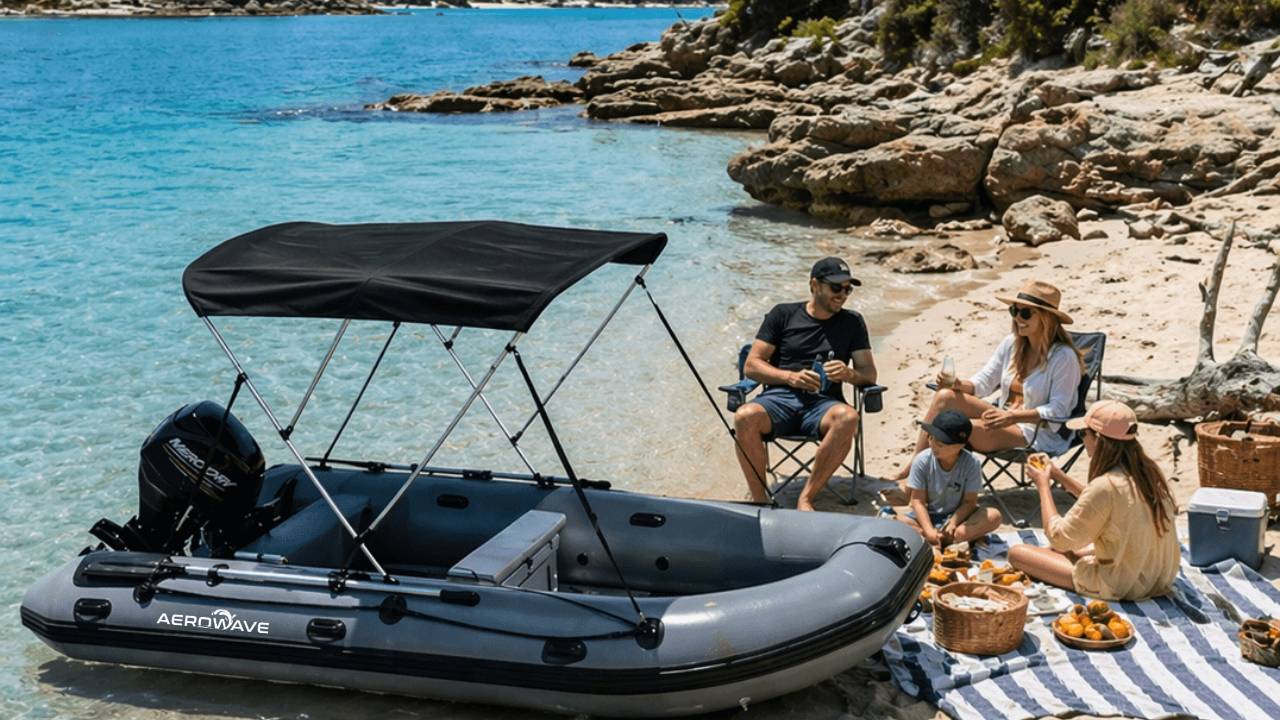
Aerowave Viper 400 Sovereign
If you're reading about catamarans, this is the one we build most of.
US$3,167 USD
Delivered to your door, today's rate
- Free freight to United States · local taxes payable on arrival
- 7-year hull warranty
🇺🇸 Shipping to United States · landed price quoted in writing
Yes — we ship the Aerowave Viper 400 Sovereign to United States. Here's the landed price.
If you're reading about catamarans, this is the one we build most of.
Written for Australian readers — but the boat ships to you. We are an Australian builder and this article is written from Australian waters. That changes nothing about what you can order: the same hull, the same 7-year warranty and the same certification go out to United States every week.
Aerowave Viper 400 Sovereign
- Boat package (export price)
- US$3,726
- 15% tariff relief credit
- − US$559
- Express air freight to United States
- Included
- Import duty, taxes & customs clearance
- Payable on arrival
- Estimated landed, USD
- US$3,167
Indicative, converted at today's rate, before local duty and tax on arrival. Ask below and we'll put a fixed figure in writing, valid 30 days.
- 7-year hull warranty
- 1500 GSM / 1.2 mm VALMEX® Heavy Plus hull
- CE certified to ISO 6185-3 and EU Directive 2013/53/EU
- Door-to-door, tracked the whole way
Your price, delivered to your door — freight included.
We email the full PDF quote (spec, freight, finance, WavePay) to your inbox in under 60 seconds. No spam — one quote, one follow-up.
See it for yourself
Real boats. Real owners. Real people behind them.
Plenty of what you read online these days is generated. Check us out properly — the factory, the reviews and the owners are all one click away. Why we use AI, and how to check we’re real
How our boats are built
Walk the production line: thermo-welded seams, 1.2 mm VALMEX Heavy Plus hulls, over-pressure relief valves on every chamber.
See the buildGoogle Maps reviews
Real Australian owners, five stars, published on our Google Business Profile with the map — read them there, not just on our own site.
Open Google Maps reviewsOwner stories
Boats in use — offshore, on rivers, on rescue duty. Photos and words from the people who actually own them.
Read owner stories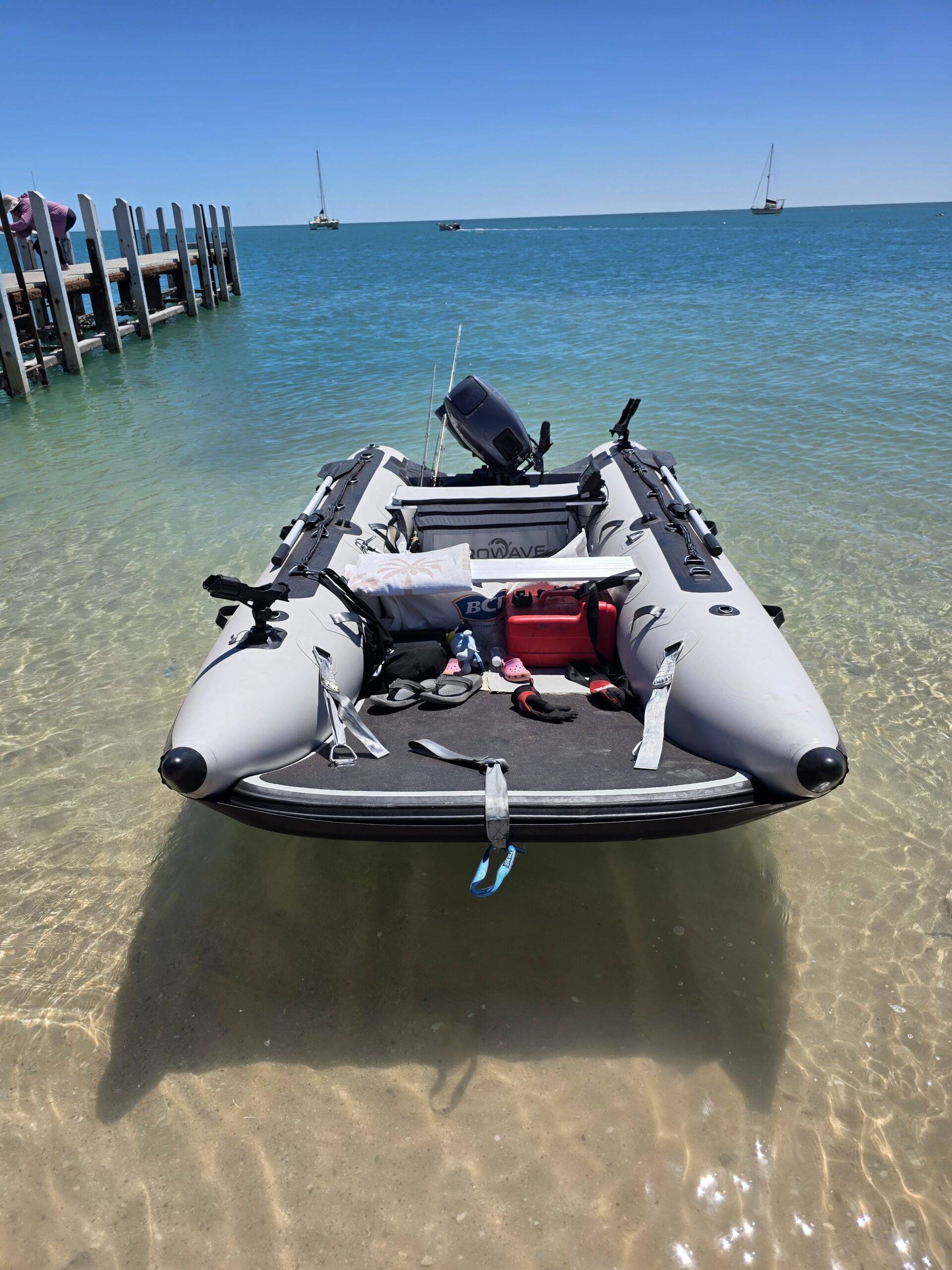
The decision to buy an inflatable boat isn't about compromise; it's about choosing a smarter, more versatile way to get on the water.
Australia's waterways are the envy of the world. From the sheltered estuaries of New South Wales to the coral cays of Queensland and the winding rivers of Western Australia, the call to explore is undeniable. For many, the dream of boat ownership is tempered by the practical realities of trailers, boat ramps, storage, and maintenance. This is where the modern inflatable boat enters the picture, not as a flimsy pool toy, but as a serious, high-performance vessel. Yet, the market for an inflatable catamaran Australia-wide is a minefield of confusing claims and wildly varying quality.
On one end, you have budget imports that look the part online but quickly succumb to our harsh UV rays, their glued seams failing after a season or two. On the other, you have rigid-hull alternatives that, while capable, sacrifice the very portability and convenience that make inflatables so appealing. There exists, however, a 'marine-premium' category: meticulously engineered inflatable catamarans built not just to last, but to excel. These boats offer the stability of a much larger vessel, the performance to rival a traditional tinny, and the portability to be stored in a cupboard and transported in the back of a car.
This guide is your definitive resource for navigating that choice. We'll cut through the marketing jargon and focus on the five pillars of a truly exceptional inflatable boat: fabric technology, construction integrity, hull design, long-term value, and real Australian support. This is what separates a weekend of frustration from a decade of adventure.
What Defines a 'Marine-Premium' Inflatable Catamaran?
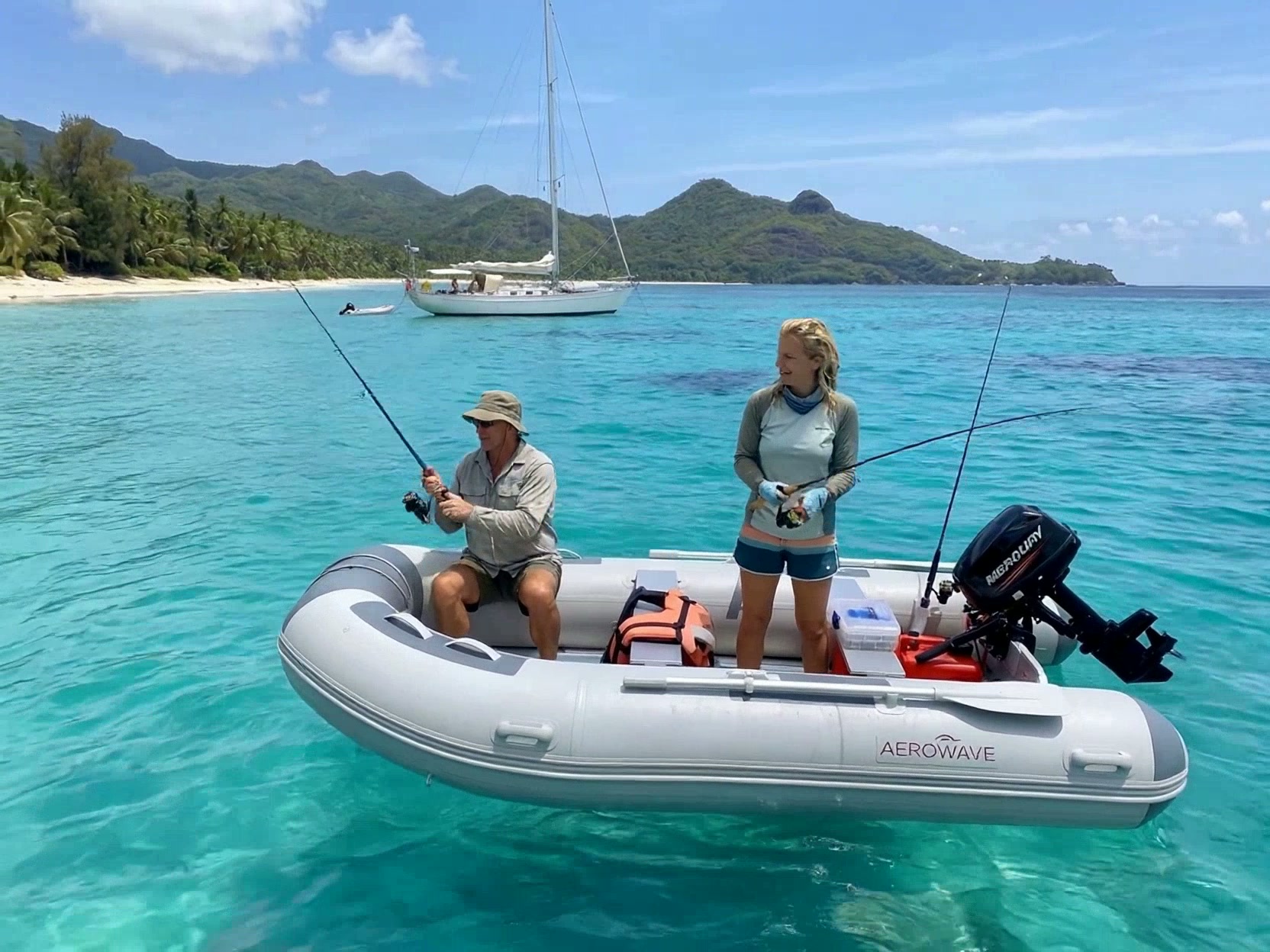
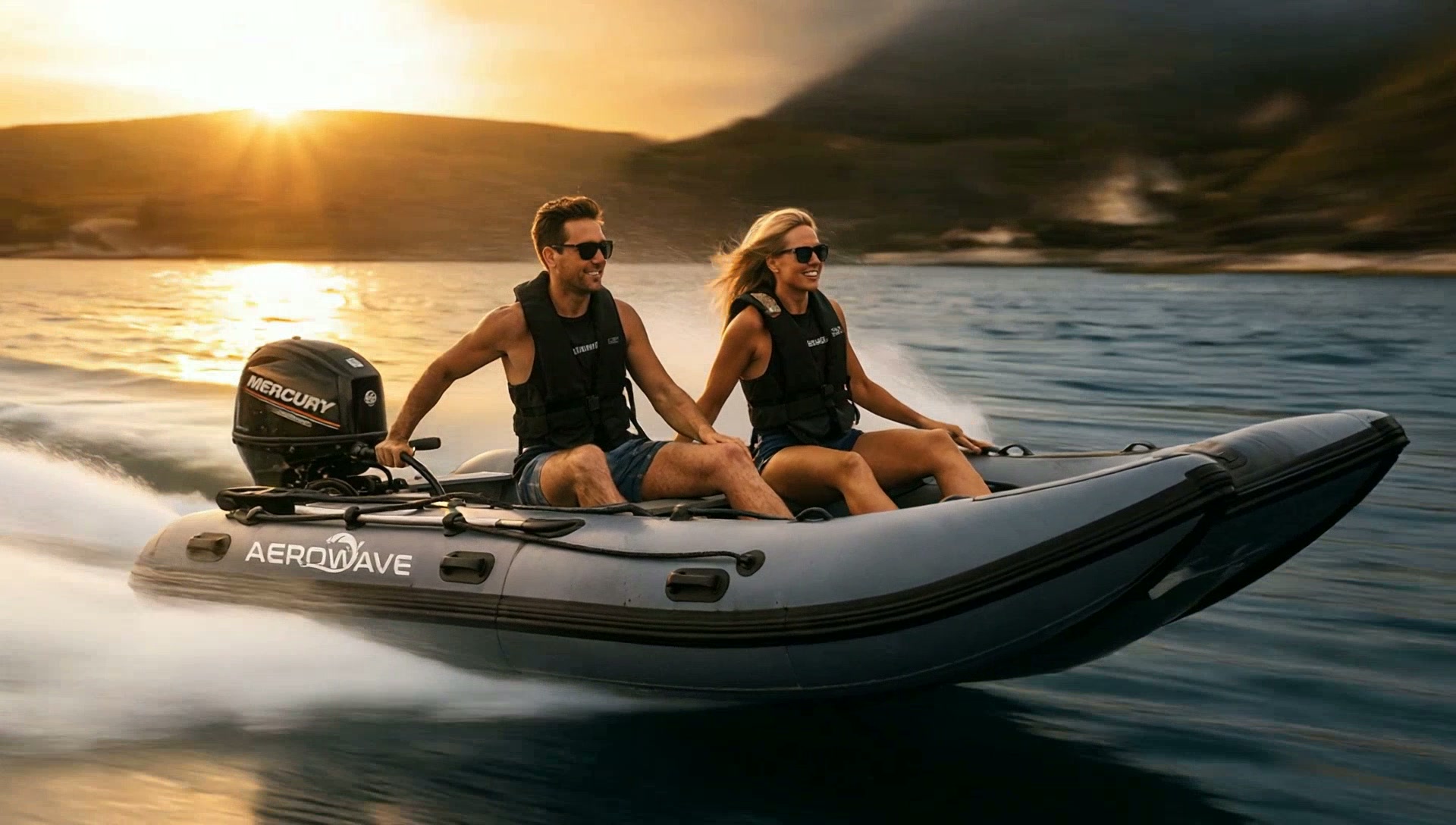
Before we dive into the technical specifics, let's define the category. A premium inflatable catamaran is not simply a tender or a cheap folding boat. It is a sophisticated watercraft designed as a primary vessel for a range of activities. It’s a stable fishing platform, a family day-tripper, a dive boat, a remote camping explorer, and a reliable ship-to-shore tender all in one.
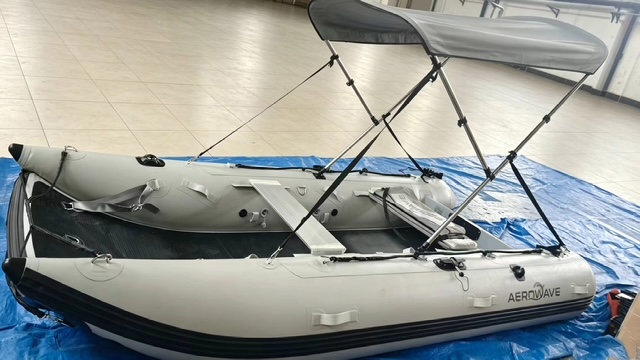
The core design philosophy centres on a twin-hull (catamaran) configuration connected by a raised, high-pressure air-deck floor and a solid transom. This structure provides a level of stability at rest that monohull boats, whether inflatable or rigid, simply cannot match. You can have multiple adults moving around, casting fishing lines, or climbing back aboard after a swim without the unnerving tipping sensation common in conventional dinghies.
Furthermore, these boats are engineered for performance. The catamaran hulls create a tunnel effect, trapping a cushion of air that helps the boat lift onto the plane with remarkable efficiency, even with a smaller, more fuel-efficient outboard. This translates to a smoother, drier ride in choppy conditions and impressive top-end speed. When you combine this performance with the ability to pack it all down into a couple of bags, you unlock a level of boating freedom that is simply unattainable with a rigid boat and trailer.
The Heart of the Hull: Decoding Inflatable Boat Fabrics
A boat's fabric is its skin. It's the primary barrier against punctures, abrasion, and the relentless Australian sun. In the world of inflatables, the fabric choice is the single most important indicator of quality, durability, and lifespan.
PVC vs. German-Engineered VALMEX®: A Gulf in Quality
The vast majority of budget inflatable boats are made from generic Polyvinyl Chloride (PVC). While PVC is cheap to produce, it has significant drawbacks in a marine environment. It's notoriously susceptible to UV degradation; the plasticisers that keep it flexible leach out over time, leaving the material brittle and prone to cracking. It also becomes stiff in the cold and overly soft in the heat. A cheap PVC boat left out in the Australian sun may only last a few seasons before becoming unreliable.
In stark contrast, premium manufacturers use advanced, multi-layered polymer fabrics. At Easy Inflatables, our Aerowave and AeroCat boats are constructed exclusively from VALMEX®, a world-renowned material engineered in Germany. This isn't just a brand name; it's a completely different technology. VALMEX® is a high-tech textile with a woven polyester scrim core, coated on both sides with multiple layers of a specialised polymer blend. This construction provides exceptional tear strength, dimensional stability, and air retention.
Crucially, it's formulated for extreme UV and weather resistance. Where PVC fades and perishes, VALMEX® maintains its integrity and colour. The expected lifespan of a well-maintained VALMEX® hull is 10 to 12 years, compared to just 2-3 years for a typical budget PVC import. It’s the difference between a disposable item and a long-term investment.
Fabric Thickness and Density: The Numbers That Matter
Beyond the base material, the thickness and density of the fabric are critical. You'll see two key metrics: thickness in millimetres (mm) and weight in grams per square metre (GSM).
-
Standard Premium (AeroCat): Our AeroCat series uses a robust 0.9mm, 1100 GSM VALMEX® fabric. This is a substantial, high-quality material that provides excellent durability and rigidity for a wide range of recreational uses, from estuary fishing to family fun in the harbour.
-
Heavy Duty Commercial Grade (Viper): The flagship Aerowave Viper 400 Sovereign steps up to an even more impressive specification: 1.2mm, 1500 GSM VALMEX® Heavy Plus. This is an exceptionally thick and dense fabric, typically reserved for commercial, rescue, or military applications. It offers an unparalleled level of puncture and abrasion resistance, making it the ideal choice for adventurers tackling rocky shorelines, oyster leases, or carrying heavy, sharp equipment like dive tanks and cray pots.
This extra thickness doesn't just add toughness; it contributes to the boat's overall rigidity when inflated, improving handling and performance on the water.
Construction Integrity: Why Welded Seams Outclass Glue
If the fabric is the boat's skin, the seams are its skeleton. A boat is only as strong as its weakest point, and on budget inflatables, that point is invariably the glued seams.
The Inevitable Failure of Glued Seams
Lower-end manufacturers use adhesives to join the panels of fabric together. This is a fast, cheap, and labour-intensive process that is highly prone to failure. In Australia's climate of intense heat and UV exposure, this adhesive breaks down. It can soften and peel in the summer sun, leading to catastrophic seam failure, often far from shore. Anyone who has owned a budget inflatable for more than a couple of years has likely experienced or seen a dreaded peeling seam. It is, without question, the number one killer of cheap inflatable boats.
The Molecular Bond of High-Frequency Welding
Premium boats, including the entire Aerowave and AeroCat range, use a technologically superior process called High-Frequency (HF) Welding or Thermo-welding. This process uses high-frequency electromagnetic energy to fuse the fabric panels together at a molecular level. The two pieces of VALMEX® literally become one, creating a permanent, airtight bond.
A welded seam is stronger than the fabric itself. You can try to tear it apart, and the fabric will rip before the seam gives way. This method is impervious to heat, UV, and chemicals. It will not peel, leak, or degrade over time. It is the gold standard in inflatable boat construction and a non-negotiable feature for any vessel you intend to rely on. When you're considering an inflatable catamaran in Australia, asking whether the seams are glued or welded is the most important question you can ask. If the answer is 'glued', walk away.
Stability Redefined: The Inherent Advantage of an Inflatable Catamaran in Australia
One of the most astonishing characteristics of an inflatable catamaran is its rock-solid stability. This is not an incremental improvement over a monohull; it's a complete paradigm shift in how a small boat feels on the water.
Twin Hulls and a Raised Deck
The stability comes from the two widely spaced inflatable tubes (sponsons) that form the hulls. This broad footprint provides immense primary stability, meaning the boat resists tipping when at rest. You can stand on the outer edge of one tube, and the boat will barely list. This makes it an incredibly safe and comfortable platform for activities where you're moving around the boat:
- Fishing: Stand up to cast, land a big fish, and pull up crab pots without feeling like you're on a tightrope.
- Family: Kids and pets can move about freely. Getting back into the boat after a swim via a rope ladder is easy and safe.
- Diving: Kit up on the side of the boat and roll into the water with confidence.
The floor of the catamaran is a separate, raised air deck, stitched between the main hulls. This design keeps the deck well clear of the water, ensuring a dry ride for passengers and gear. It also contributes to the boat's phenomenal performance, which we'll touch on next.
The High-Pressure Air Deck Advantage
Forget the squishy, bouncy floors of old-style inflatables. Modern premium boats use a high-pressure 'air deck' floor. This is constructed using 'drop-stitch' technology, where tens of thousands of fine polyester threads connect the top and bottom surfaces inside the floor panel. When inflated to a high pressure—typically 8–10 PSI—these threads are held in tension, creating a surface that is astonishingly rigid, almost like a sheet of plywood.
This rigid platform is the key to the boat's versatility. It gives you a firm, stable surface to stand on, mount an esky or tackle box, and feel connected to the vessel. It's the feature that transforms the boat from a simple dinghy into a true, multi-purpose platform. When combined with the catamaran hulls, you get a package that offers the stability of a pontoon boat with the portability of a kayak.
Performance, Portability, and an Australian Focus
An inflatable catamaran's unique design delivers more than just stability; it creates a vessel that is efficient, exhilarating to drive, and supremely practical for the Australian lifestyle.
Getting on the Plane with Less Power
The tunnel created between the two hulls and the raised deck is a masterpiece of hydrodynamic efficiency. As the boat moves forward, this tunnel traps a cushion of air. This reduces drag and helps the boat lift onto the plane with much less power than a comparable V-hull boat. This means you can achieve excellent performance with a smaller, lighter, and more fuel-efficient outboard motor. A 9.9hp or 15hp Hidea 4-stroke outboard is often all that's needed to get an AeroCat 380 flying along with two adults and gear.
All our boats feature a solid, marine-grade transom with a standard 380mm height, perfect for short-shaft outboards, which are the most common and affordable type in the 5-25hp range. This thoughtful design ensures you're not locked into sourcing an expensive or hard-to-find long-shaft motor.
The Ultimate Portable Adventure Rig
This is where an inflatable catamaran in Australia truly shines. Despite their size and capability on the water, these boats pack down into one or two carry bags that can be stored in a garage, a spare room, or an apartment balcony. They fit comfortably in the back of a station wagon, SUV, or ute. No trailer required. No boat ramp queues. No expensive marina fees or storage yard costs.
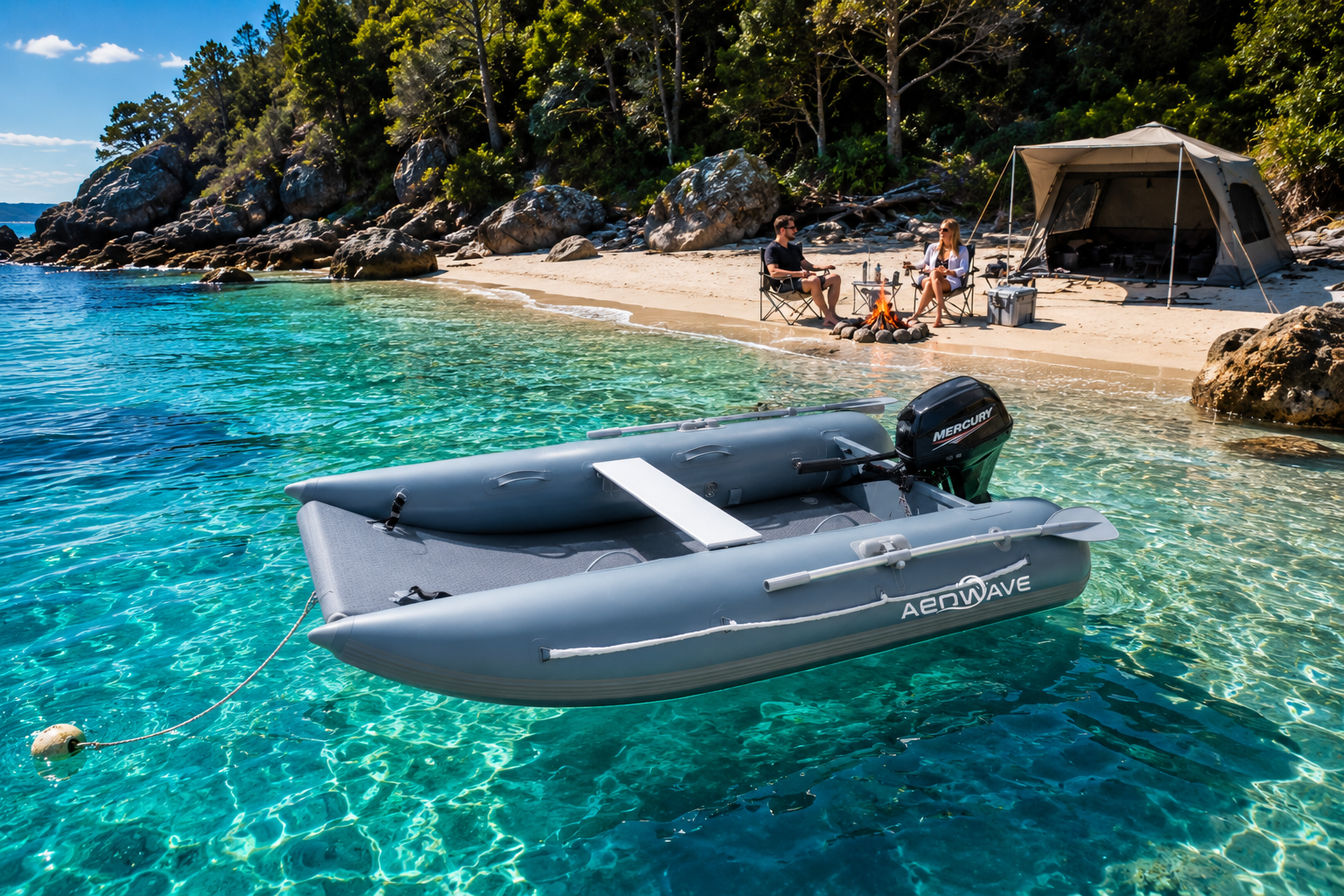
This portability opens up a world of possibilities. Launch from a secluded beach. Explore waterways that are inaccessible to trailered boats. Take your boat with you on a camping trip or a caravanning holiday around the country. Setup is straightforward, taking around 15-20 minutes with a good electric pump. This 'boat-in-a-bag' concept redefines spontaneous boating.
Real-World Scenarios: Which Premium Inflatable is Right for You?
Choosing the right model depends on your primary use case, crew size, and desired level of performance. Here's a comparison of our core models to help you decide.
| Model | Best For | Fabric Specification | Length | Price (Hull Only) |
|---|---|---|---|---|
| AeroCat 330 | Couples, solo fishos, tender use | 0.9mm / 1100 GSM VALMEX® | 3.3m | $2,910 |
| AeroCat 360 | Small families, versatile fishing | 0.9mm / 1100 GSM VALMEX® | 3.6m | $3,195 |
| AeroCat 380 | All-rounder, spacious for 4 | 0.9mm / 1100 GSM VALMEX® | 3.8m | $3,480 |
| WaveRunner 380 | Traditional tender, stable monohull | 0.9mm / 1100 GSM VALMEX® | 3.8m | $4,000 |
| Aerowave Viper 400 | Serious adventurers, divers, heavy loads | 1.2mm / 1500 GSM VALMEX® Heavy Plus | 4.0m | $5,995 (Sovereign Pkg) |
The AeroCat series (330, 360, 380) represents the perfect balance of performance, portability, and value. They are the ideal choice for most recreational boaters looking for a stable, capable, and easy-to-handle vessel.
The WaveRunner 380 offers a premium monohull option for those who prefer a more traditional layout, but still demand the highest quality materials and a 5-year warranty.
The Aerowave Viper 400 Sovereign Full Package is the pinnacle. Its commercial-grade 1.2mm fabric, extra reinforcement, and generous 4-metre length make it the ultimate tool for serious exploration. It's for the person who wants to push the limits, venture further offshore, and carry more gear, all with the peace of mind of an industry-leading 7-year warranty.
The Unseen Value: Warranty, Support, and Express Delivery
When you buy from other inflatable boat suppliers, especially drop-shippers or marketplace resellers, the transaction often ends the moment your payment clears. Getting after-sales support can be a nightmare of unreturned emails and international phone calls.
We believe Australian support is paramount. When you contact Easy Inflatables, you're talking to a real person in Australia who understands the boats and our local boating conditions. You can call us on +61 2 4335 1603 or email sales@easyinflatables.com.au and get expert advice. This local support is backed by a robust manufacturer's warranty—7 years on the Viper Sovereign, 5 years on the WaveRunner—a testament to the build quality and our confidence in the products.
Furthermore, we've streamlined the delivery process. The price you see for our boats includes express courier delivery via trusted carriers like DHL Express, FedEx, or UPS. There are no hidden sea freight charges or long waits. Your new boat arrives at your door, anywhere in Australia, within 7–10 days. This is a level of service designed to get you on the water faster and with zero hassle.
Your Pre-Launch Checklist
Once you've chosen your boat, having the right gear is essential for a safe and enjoyable day. Here's a basic checklist:
- Correctly fitting PFDs (Life Jackets) for everyone on board
- A suitable anchor with chain and rope
- A bailer or bucket
- A high-volume, dual-action hand pump or a 12V electric pump
- A spare paddle
- Basic first-aid kit
- A reliable, premium inflatable catamaran from a trusted Australian supplier
- Waterproof bag for phones, keys, and wallets
- Drinking water and sun protection (hat, sunscreen, sunglasses)
- For coastal use, consider a VHF radio and an EPIRB
The Bottom Line
Investing in a marine-premium inflatable catamaran is an investment in freedom, versatility, and quality time on the water. While the initial outlay is higher than a budget import, the return on investment is measured in years of reliable service, superior performance, enhanced safety, and the peace of mind that comes from a vessel built to last. The choice isn't just about glued vs. welded seams or PVC vs. VALMEX®; it's about choosing a dependable partner for your aquatic adventures. By focusing on the core principles of quality construction and backing it with genuine Australian support, you ensure your boat is a source of joy, not a source of frustration.
Related
Weekend-Proof Score 17 questions · about 2 minutes
Will the boat you're about to buy survive an Australian summer?
Seventeen straight questions about where you'll use it, what you'll ask of it and the boat you're weighing up. You get a score out of 100, the exact weak points in your plan, and the one boat that genuinely fits.
Free · your result shows on screen · no email required
So which one is yours?
Pick how you'll actually use it and we'll take you straight to the right hull.
I want to fish it
Open bow, rod holders, deck space you can stand and cast from.
Viper Sport 400Family, diving and the beach
3.8 m Series 3 catamaran — low bow to climb back in wearing fins or a tank.
WaveRunner 380Tender / one-person launch
3.3 m hard-floor boat that packs into a bag and still takes a beach landing.
Viper 330Shop gear featured in this guide
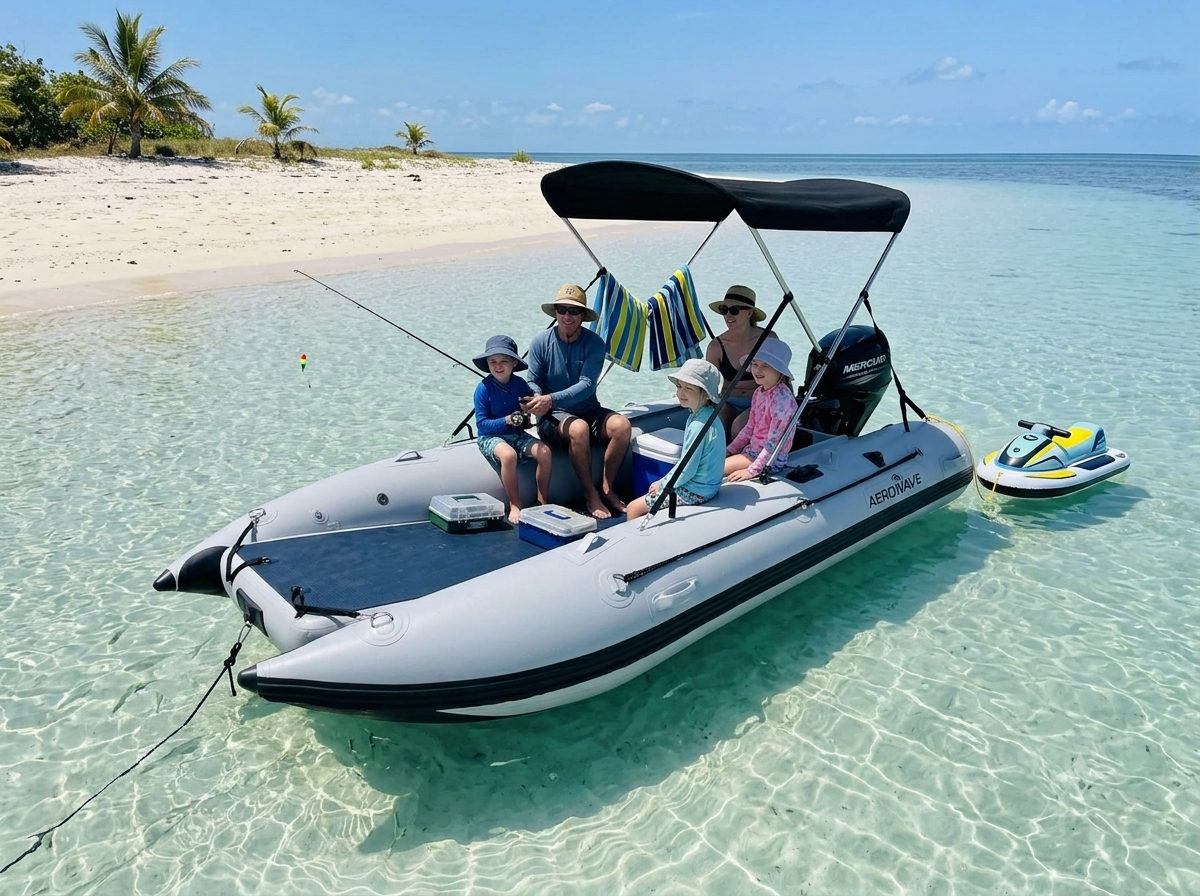
Aerowave WaveRunner 380 Series 3 Catamaran Package
The WaveRunner 380 Series 3 is a premium 3.8m inflatable catamaran package built for Australian and worldwide families, fishing, and coastal day boating — ideal for snorkeling and spearfishing — offering serious stability and premium German Valmex® construction.
Free freight to United States · local taxes payable on arrival
Aerowave Viper 400 Sovereign
Flagship 4m enclosed-bow inflatable catamaran. German VALMEX® 7321 Heavy Plus 1.2mm commercial-grade fabric, 10 PSI high-pressure drop-stitch air deck floor with VALMEX non-slip surface, LockPro wheels, full Bimini and FREE express delivery Australia-wide included. Winter special — save $1,000 until 31 August 2026.
Free freight to United States · local taxes payable on arrival
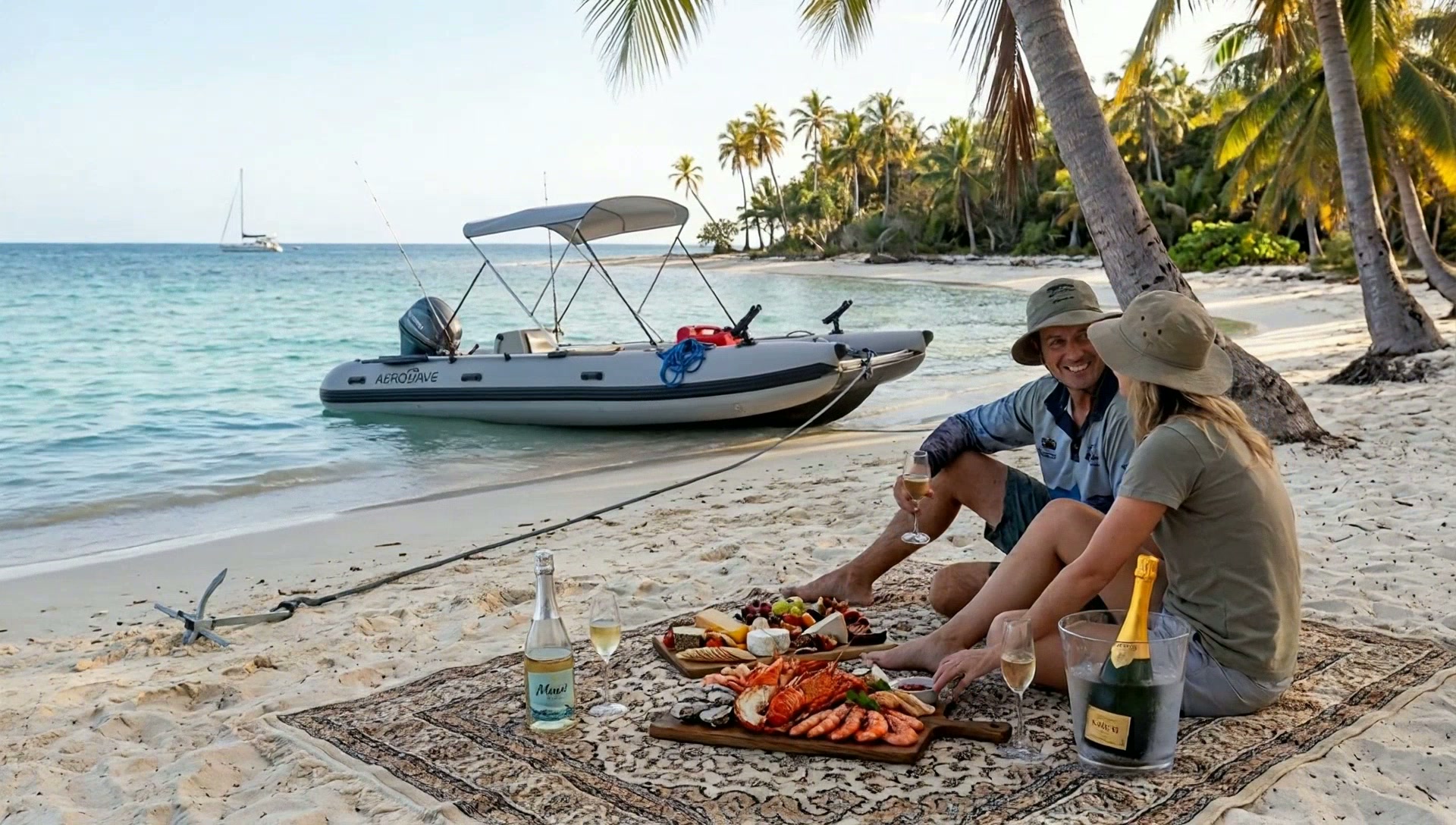
Aerowave Viper 365 Open Bow
Premium 3.65m Inflatable catamaran — built the same way as our flagship Viper 400 sports boat, just 35cm shorter. German VALMEX® 7321 Heavy Plus 1.2mm commercial-grade fabric, 10 PSI high-pressure drop-stitch air deck floor with VALMEX non-slip surface, LockPro wheels, full Bimini and FREE express delivery Australia-wide included.
Free freight to United States · local taxes payable on arrival
Not sure which suits you? Talk to a real boat owner.
Before you spend a cent
Buying from Australia, delivered to United States
You have never heard of us, we are on the other side of the world, and the internet is full of fakes. Fair enough. Here is everything you would need to check us out, in one place — no forms, no chat bot.
Australian designed business
Easy Inflatables, Avoca Beach NSW 2251. ABN 96 856 548 613. International orders ship from our Hong Kong hub.
222 owner reviews, 4.8 average
Read them in full, good and bad, on our reviews page.
CE certified, 7-year hull warranty
ISO 6185-3 and EU Directive 2013/53/EU. Warranty honoured worldwide.
Tracked, insured, door to door
FREE freight to United States · local tax/duty on arrival.
- Who am I actually buying from?
- Easy Inflatables, Avoca Beach NSW 2251, Australia. ABN 96 856 548 613. Sean is the owner and skipper, Gary Stewart handles sales on +61 2 4335 1603, Karen Matthews handles email. The boats are Australian designed; international orders ship from our Hong Kong dispatch hub so your landed price stays competitive. Phone us before you pay a cent — a real person answers.
- Is this really an Australian product?
- Yes — Australian designed and engineered on the NSW Central Coast. Manufacturing is done offshore to our spec, and international orders ship direct from our Hong Kong dispatch hub. If we routed every boat through Australia first, the freight alone would roughly double or triple your cost for the same hull.
- What do I pay, and what is not included?
- The delivery and import terms depend on your country. EU, UK, New Zealand and named Asia/Pacific lanes include duty and tax; US freight is free but US buyers pay import charges on arrival. Other destinations show their terms before payment.
- How do I pay safely?
- Card through Stripe (Visa, Mastercard, Amex, Apple Pay, Google Pay) or bank transfer. Card payments carry your bank's own dispute protection. We never ask for crypto, gift cards or payment to a personal account.
- What if it arrives damaged?
- Every boat ships fully tracked and insured door to door. Photograph the carton and the boat on arrival and email us — transit damage is claimed and replaced through us, not left with you and the courier.
- Is the warranty real outside Australia?
- Yes. The 7-year hull warranty on 1.2 mm VALMEX Heavy Plus and Orca Hypalon hulls applies wherever you are. Replacement parts are held in Australia and at our overseas hub and go out by express courier to your door.
- Is the boat actually certified?
- All Aerowave catamarans are CE certified to ISO 6185-3 and EU Directive 2013/53/EU. Certification paperwork is supplied with the boat — ask and we will send it before you order.
Frequently asked questions
- How long does it take to set up an inflatable catamaran?
- With a good quality 12V electric pump, you can inflate the main tubes and the high-pressure air deck in about 10-15 minutes. The total setup time from taking the boat out of the bag to being ready to launch is typically around 20 minutes for one person.
- What size outboard motor do I need for an inflatable catamaran?
- Thanks to their efficient hull design, inflatable catamarans perform well with smaller outboards. A 6-8hp motor is great for a solo user on a smaller model, while a 9.9hp to 20hp motor on a 3.8m or 4.0m boat will provide excellent planning performance with multiple people and gear. All our boats use a standard short-shaft (380mm) transom.
- Are inflatable boats safe in choppy water?
- Yes, their design makes them exceptionally safe. The large, buoyant tubes and wide catamaran stance provide incredible stability. The tunnel hull also traps air, creating a cushioning effect that softens the ride in chop, often providing a smoother and drier experience than a comparably sized aluminium tinny.
- How do I repair a puncture in a VALMEX® boat?
- Premium boats come with a professional repair kit. Repairing a small puncture is a simple DIY job that involves cleaning the area, applying a specific adhesive, and pressing on a fabric patch. Due to the extreme toughness of 1.2mm VALMEX®, punctures are very rare and usually only occur from significant impacts with sharp objects.
- Can I leave my inflatable boat inflated all summer?
- While VALMEX® fabric is highly UV resistant, we always recommend storing your boat under cover or using a fitted boat cover if leaving it inflated for extended periods. This protects it from the harshest midday sun and keeps it clean, prolonging the fabric's 10-12 year lifespan even further.
- How does an inflatable catamaran compare to a traditional tinny?
- An inflatable cat offers far superior stability at rest, is significantly more portable, and often provides a smoother, drier ride in chop. While a tinny may be more resistant to certain types of abrasion, a premium inflatable is far more comfortable, versatile, and convenient for most recreational users.
- Is the express courier delivery really included in the price?
- Yes, absolutely. The price listed for our boats is the total price delivered to your door anywhere in Australia via a premium express courier like DHL, FedEx, or UPS. There are no surprise shipping fees or import duties to worry about.
Ready to set sail?
Premium German-fabric inflatable catamarans, built to order and delivered to your door. Talk to our team or browse the fleet.
Like this guide? Get the next one in your inbox.
Owner-tested tips, gear deep-dives and Aussie boating know-how — no spam.