
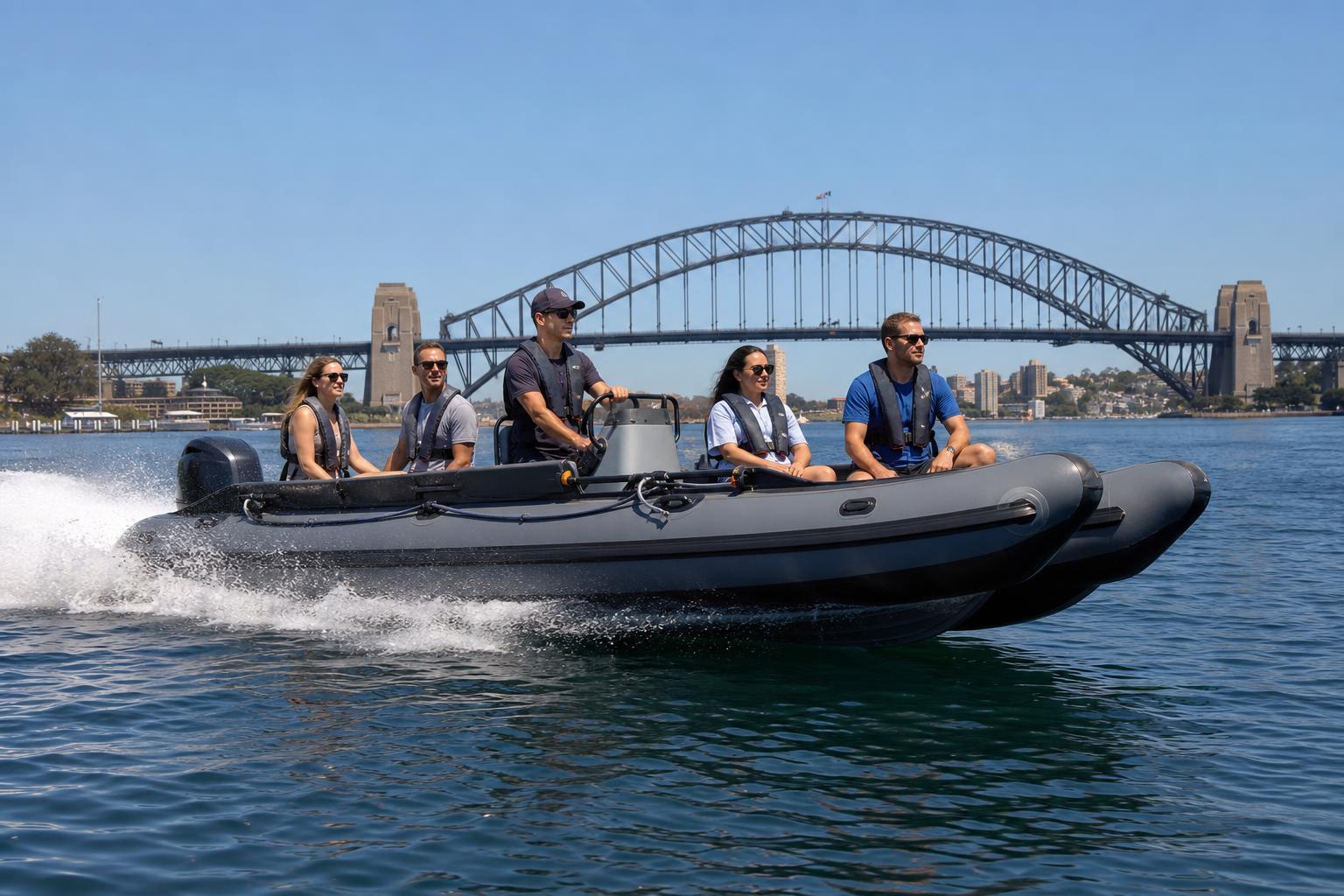
Catamarans in choppy water
Your catamaran rides on top of the water, not through it. That's why it's fast in chop — and why the ride is bouncy. Here's what's going on, and how to calm it down.
A catamaran sits on the water. A monohull sits in it.
A single-hull boat pushes one V-shape down into the water and slices through each wave. Your Aerowave catamaran is a completely different configuration: two narrow pontoon hulls with a deck slung between them. Those hulls have very little volume below the waterline, so the boat rides on top of the water rather than in it.
In choppy conditions that is a genuine advantage — the boat skims across the tops of the waves and covers ground quickly, where a monohull of the same size is busy punching into every crest. The trade-off is the ride feel: because the hulls are sitting on the surface instead of being cushioned inside it, you feel each wave top as a bump. The ride is bouncy — not a calm ride — and that is completely normal for any catamaran, inflatable or not. It is the hull doing exactly what it was designed to do, not a fault in your boat.
Three ways to take the bounce out
Every one of these works by getting the bow down and keeping it there. The less the bow sits up out of the water, the less the boat can bounce.
Fit an Aerofoil or Permatrim
An Aerowave Aerofoil — or a Permatrim or hydrofoil — bolts to the outboard's cavitation plate and generates lift at the stern, which drives the bow down. With the bow held down, the boat stops sitting up out of the water and the bounce is minimised. It's the single most effective add-on for chop.
Fuel tank as far forward as possible
A full fuel tank is one of the heaviest single items on a small boat. Move it as far forward as it will safely go — that weight over the bow helps hold the nose down and settles the ride noticeably.
Keep weight out of the stern
The more weight in the back of the boat, the bouncier it will be. Passengers, eskies and gear stowed aft lift the bow and amplify every wave top. Bring heavy items forward of centre and the boat flattens out.
The short version
- Catamarans ride on top of the water; monohulls slice through it. Different configuration, different feel.
- In chop a catamaran is fast — it skims across wave tops — but the ride is bouncy. That's normal, not a fault.
- An Aerowave Aerofoil, Permatrim or hydrofoil pulls the bow down and minimises the bounce.
- Fuel tank as far forward as possible; heavy gear forward of centre.
- Weight in the stern = more bounce. Move it forward before you touch the throttle.
See it for yourself
Real boats. Real owners. Real people behind them.
Plenty of what you read online these days is generated. Check us out properly — the factory, the reviews and the owners are all one click away. Why we use AI, and how to check we’re real
How our boats are built
Walk the production line: thermo-welded seams, 1.2 mm VALMEX Heavy Plus hulls, over-pressure relief valves on every chamber.
See the buildGoogle Maps reviews
Real Australian owners, five stars, published on our Google Business Profile with the map — read them there, not just on our own site.
Open Google Maps reviewsOwner stories
Boats in use — offshore, on rivers, on rescue duty. Photos and words from the people who actually own them.
Read owner storiesMore on inflatable catamarans
The rest of our inflatable catamaran guides — sizing, hull fabric, portability and the full Australian range.