Dinghy for Sale: The Ultimate 2026 Buyer's Guide AU
You’ve probably started with the same thought most Australian buyers do. You want easy access to the water, but you don’t want the hassle of a full size trailer boat, permanent storage headaches, or a purchase that looks…
At a glance
You’ve probably started with the same thought most Australian buyers do. You want easy access to the water, but you don’t want the hassle of a full size trailer boat, permanent storage headaches, or a purchase that looks…
- Your Gateway to Australia's Waterways
- Why inflatable dinghies suit modern Australian boating
- What separates a worthwhile buy from a cheap mistake
- Decoding Dinghy Types for Aussie Waters
What we'd put you in
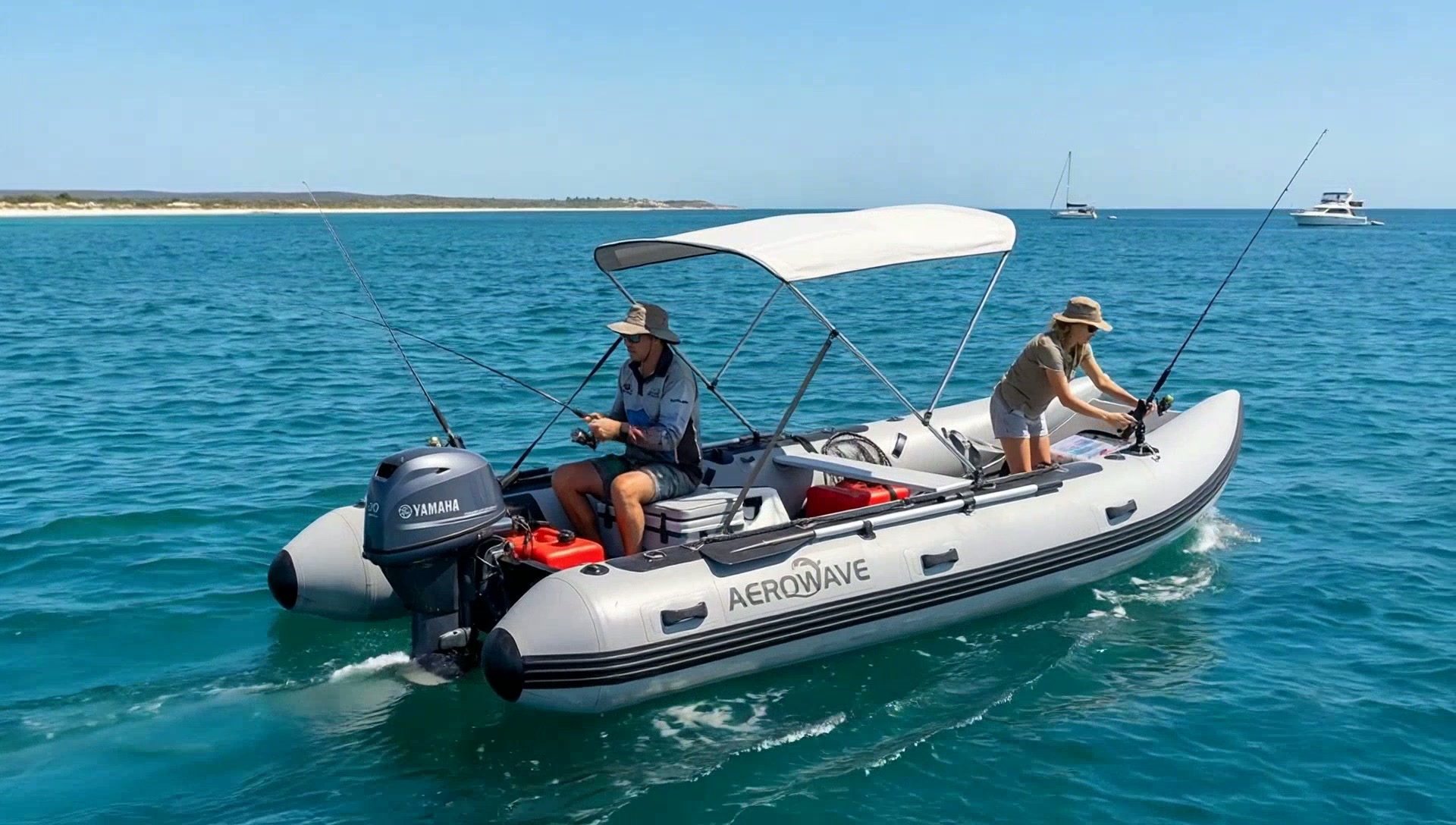
Aerowave Viper 330
Packs into a bag, inflates to a 3.3 m hard-floor boat — the tender that doesn't sulk.
US$2,774 USD
Delivered to your door, today's rate
- Free freight to United States · local taxes payable on arrival
- 7-year hull warranty
🇺🇸 Shipping to United States · landed price quoted in writing
Yes — we ship the Aerowave Viper 330 to United States. Here's the landed price.
Packs into a bag, inflates to a 3.3 m hard-floor boat — the tender that doesn't sulk.
Aerowave Viper 330
- Boat package (export price)
- US$3,264
- 15% tariff relief credit
- − US$490
- Express air freight to United States
- Included
- Import duty, taxes & customs clearance
- Payable on arrival
- Estimated landed, USD
- US$2,774
Indicative, converted at today's rate, before local duty and tax on arrival. Ask below and we'll put a fixed figure in writing, valid 30 days.
- 7-year hull warranty
- 1500 GSM / 1.2 mm VALMEX® Heavy Plus hull
- CE certified to ISO 6185-3 and EU Directive 2013/53/EU
- Door-to-door, tracked the whole way
Your price, delivered to your door — freight included.
We email the full PDF quote (spec, freight, finance, WavePay) to your inbox in under 60 seconds. No spam — one quote, one follow-up.
See it for yourself
Real boats. Real owners. Real people behind them.
Plenty of what you read online these days is generated. Check us out properly — the factory, the reviews and the owners are all one click away. Why we use AI, and how to check we’re real
How our boats are built
Walk the production line: thermo-welded seams, 1.2 mm VALMEX Heavy Plus hulls, over-pressure relief valves on every chamber.
See the buildGoogle Maps reviews
Real Australian owners, five stars, published on our Google Business Profile with the map — read them there, not just on our own site.
Open Google Maps reviewsOwner stories
Boats in use — offshore, on rivers, on rescue duty. Photos and words from the people who actually own them.
Read owner storiesYou’ve probably started with the same thought most Australian buyers do. You want easy access to the water, but you don’t want the hassle of a full-size trailer boat, permanent storage headaches, or a purchase that looks good online and falls apart after a few hard summers.
That’s where the search for the right dinghy for sale gets interesting. A dinghy can be a simple tender, a compact fishing platform, a family runabout, or a proper boat-in-a-bag setup that lives in the back of an SUV or caravan locker until you need it.
In Australia, the difference between a good dinghy and a bad one shows up fast. Salt, sun, beach launches, roof loading, estuary chop, and long drives all expose weak materials and poor design. Buyers who focus only on headline price usually learn that the hard way. Buyers who match the boat to their actual use get far more time on the water and far fewer regrets.
Your Gateway to Australia's Waterways
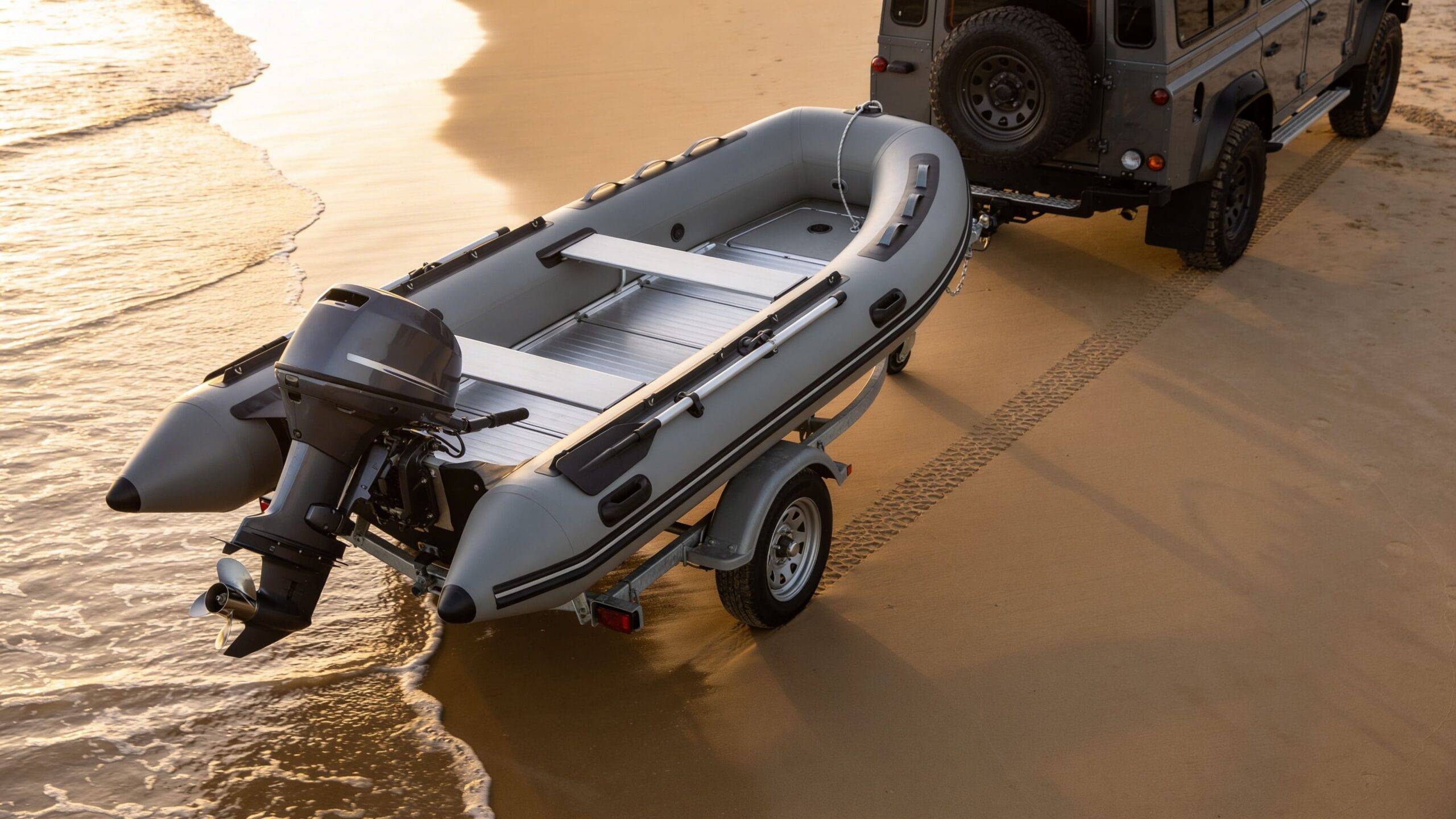
You leave the caravan at a coastal park, pull a bagged dinghy from the rear of the SUV, and half an hour later you’re crossing an estuary for a fish or running the kids across to a quiet beach. That is the appeal for a lot of Australian buyers. They want access to the water without trailer storage, marina fees, or the hassle that comes with a larger boat.
That style of boating has grown well beyond the old tender market. Across Australia, more buyers want a boat that lives in a garage, in a caravan tunnel boot, or behind the back seat until the trip starts. For RV travellers, SUV-based campers, yacht owners, and families who only boat on weekends, a good dinghy is often the most practical way to get on the water.
A guide to the different types of boats you can buy helps frame the bigger market, but dinghies deserve their own discussion because Australian conditions punish poor choices quickly. Harsh UV cooks cheap fabric. Salt finds every weak fitting. Beach launches, roof loading, and long highway runs expose problems that are easy to miss in online listings.
Why inflatable dinghies suit modern Australian boating
Inflatable dinghies fit the way many Australians use boats.
They store easily, launch from more places, and make sense for owners who do not want a dedicated trailer setup. That matters in real life. A family in the suburbs may only have room in the garage. A grey nomad may want a true boat-in-a-bag setup that travels with the van. A yacht owner needs something dependable for repeated shore runs, not a rigid tender that becomes a storage problem.
They also cover a wide spread of uses without asking the owner to commit to a full-size boat purchase.
- For family trips: soft tubes are easier around pontoons, knees, and shallow beach landings.
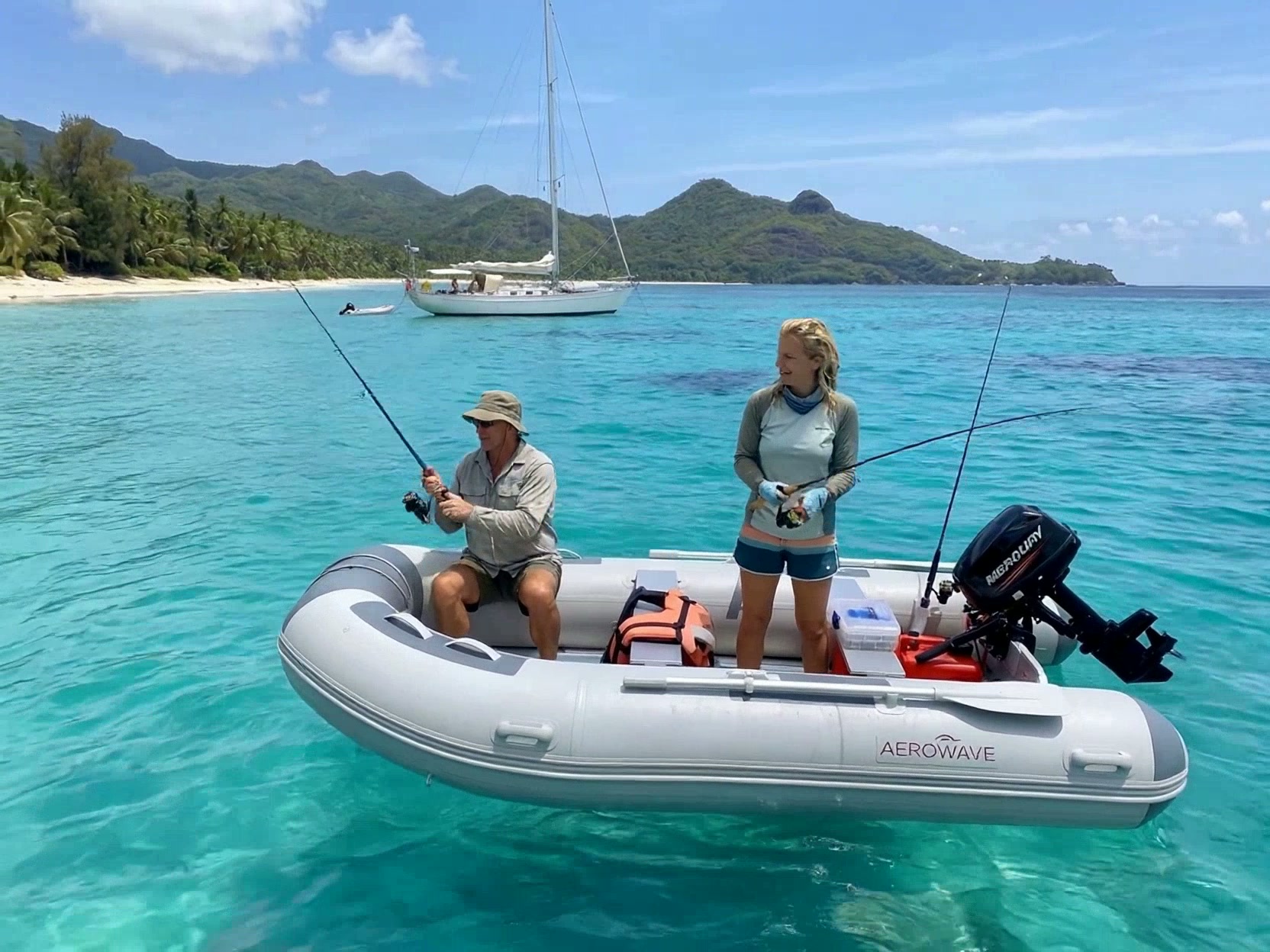
- For anglers: a compact dinghy can reach creeks, small ramps, and estuary edges that are awkward with bigger hulls.
- For RV travellers: packability matters just as much as on-water performance.
- For yacht owners: low weight and easy stowage often matter more than outright speed.
Practical rule: Buy for the way you will store, carry, and launch the boat every trip. Then match it to the water you actually use.
What separates a worthwhile buy from a cheap mistake
Shoppers often start with length, horsepower rating, and sticker price. Fair enough. Those are easy numbers to compare.
The difference shows up later. In Australia, a dinghy has to handle sun exposure, salt, regular pack-down, and rough treatment at ramps and beaches. A cheap boat can look fine in photos and still become hard work after one summer of UV, sticky valves, flexing floors, and fittings that start to corrode.
A better buying check starts with four questions:
- Will the materials hold up in Australian UV and saltwater?
- Can one or two people move, pack, and launch it without turning a quick trip into a chore?
- Does the hull and floor setup suit your local water, from sheltered creeks to choppy bays?
- Are you comparing a bare hull, or a package with the motor and gear you will need?
Get those answers right and the value usually becomes much clearer than the headline price.
Decoding Dinghy Types for Aussie Waters
The word dinghy covers a lot of territory. Some are compact tenders. Some are hard-working fishing boats. Some are built for portability. Others are built to punch through rougher water with more confidence.
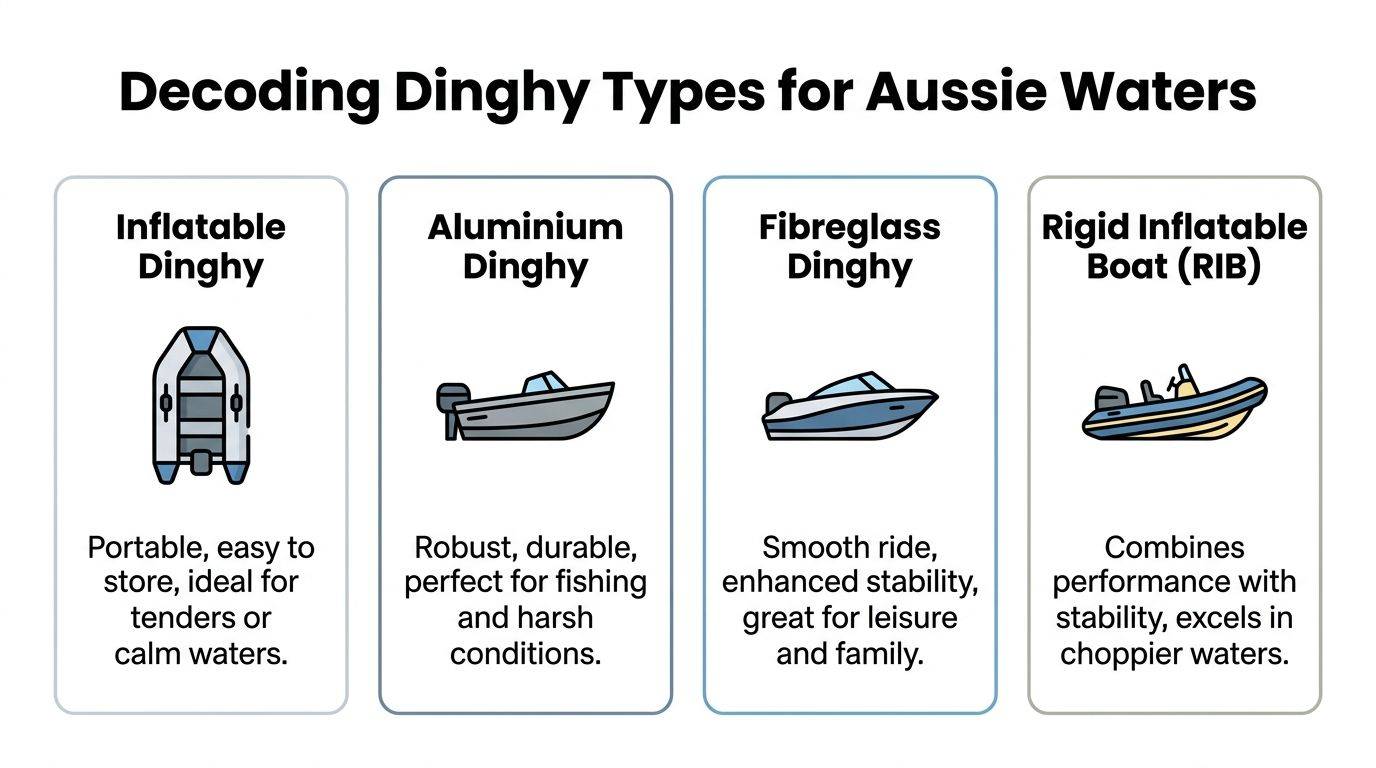
If you’re weighing options, this guide to different types of boats you can buy is a useful starting point. On the ground, most buyers end up choosing between four broad dinghy styles.
Inflatable dinghies
A standard inflatable dinghy is the easiest option to live with day to day.
It’s the boating equivalent of a solid touring setup. Not flashy, not overcomplicated, but very practical. You get soft tubes, relatively low weight, and easy storage. For tenders, sheltered waterways, family use, and casual fishing, they make a lot of sense.
What works well:
- Storage convenience: they suit garages, apartments, tow vehicles, and caravans.
- Beach friendliness: soft tubes handle landing and boarding well.
- Versatility: they cover a wide range of uses without becoming difficult to own.
What doesn’t:
- Not every inflatable likes rough, exposed water. Hull design and floor choice matter.
- Budget construction often fails early. Material quality becomes obvious in Australian conditions.
Aluminium dinghies
An aluminium dinghy is the work boot of the category.
They’re durable, straightforward, and well suited to owners who value toughness over compact storage. Anglers often like them because they feel familiar, simple, and hard wearing around gear, hooks, and rough ramp use.
Trade-offs are clear.
- Best for: repeated fishing use, hard knocks, basic ownership.
- Less ideal for: buyers who want soft ride comfort, compact packing, or easy roof and caravan integration.
They can also feel harsher underway in short chop. That’s not a fault. It’s just the nature of the hull.
Fibreglass dinghies
Fibreglass dinghies often appeal to buyers who want a cleaner ride and a more traditional small-boat feel.
They can track nicely and present well. For leisure users, they often feel more polished than a basic tinnie. As tenders, they can be excellent if you have fixed storage and don’t need the boat to disappear into a bag or vehicle.
Their downside is practical, not theoretical. They’re harder to transport, harder to store, and less forgiving when your launch day includes beach sand, a steep bank, or limited room.
RIBs and inflatable catamarans
A Rigid Inflatable Boat, or RIB, pairs inflatable tubes with a rigid hull. This gives you a sharper, more planted ride than a roll-up tender while keeping the stability benefits of tubes.
For Australian buyers, a RIB is often the closest thing to a compact offshore-capable package without jumping to a much larger vessel. In chop, they usually feel more composed than a basic inflatable. They’re a strong fit for coastal runs, fishing, and buyers who want more confidence at speed.
Then there’s the inflatable catamaran category, which deserves more attention than it usually gets.
For fishing and family use, inflatable catamarans can be excellent because stability is often the deciding factor in whether a boat gets used often or left at home. A steady deck matters when someone is moving around, pulling gear, helping kids onboard, or standing to cast.
A dinghy that feels stable at rest gets used more often than one that looks good on paper but makes every movement feel awkward.
Here’s a practical comparison:
| Type | Best use | Main strength | Main trade-off |
|---|---|---|---|
| Inflatable dinghy | Tender, family use, easy storage | Portability | Less suited to harder coastal work |
| Aluminium dinghy | Fishing, rough handling | Toughness | Harsher ride, less compact |
| Fibreglass dinghy | Leisure, tender use | Smooth feel | Storage and transport burden |
| RIB or inflatable catamaran | Chop, fishing, mixed coastal use | Stability and performance | More boat to manage than a simple roll-up |
If you’re unsure, think less about category labels and more about your actual trip. Quiet estuary. Beach camp. Yacht tender. Caravan touring. Inshore fishing. The right answer usually becomes obvious once the use case is honest.
The Hull Truth Materials Built for Australian Sun
A dinghy’s real quality isn’t in the brochure photo. It’s in the fabric, seams, and hardware that have to hold up after repeated UV exposure, salt spray, hot storage, and beach abrasion.
That’s why material specification isn’t a detail. It’s the whole game.
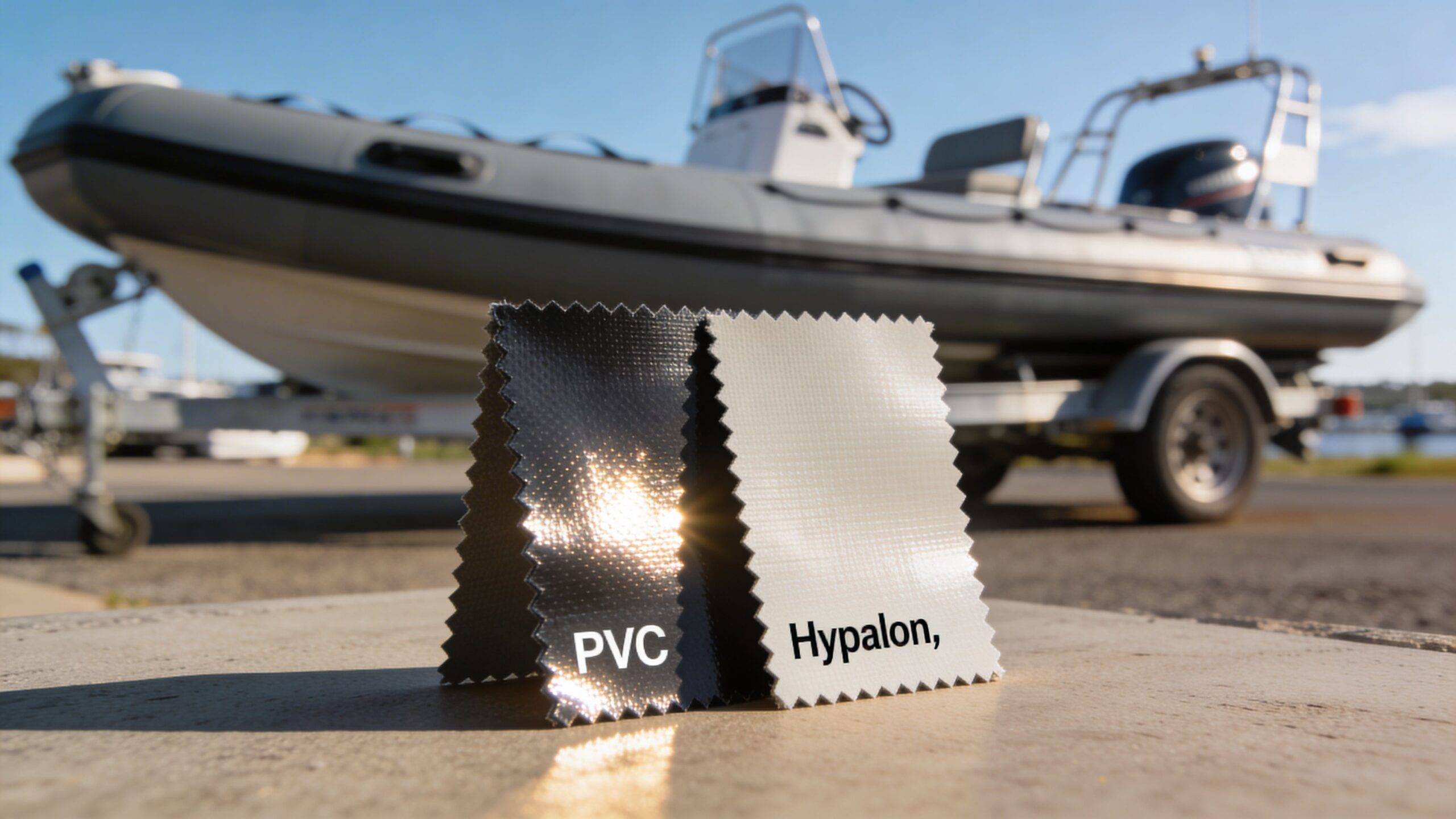
PVC versus Hypalon in real ownership
Most serious inflatable buyers eventually compare PVC and Hypalon.
That comparison only helps if you’re looking at premium-grade material, not generic labels. According to this breakdown of Hypalon vs German Mehler 1.2mm PVC, premium Australian inflatable boat manufacturers use 1.2mm commercial-grade German PVC or French Hypalon with thermo-welded seams, which is approximately 33% thicker than typical 0.9mm recreational-grade alternatives. The same source states that this construction delivers 40-60% fewer seam failures in Australian saltwater environments.
Those figures line up with what experienced owners look for. Not branding hype. Actual material weight, seam method, and resistance to the conditions we boat in.
Why seam construction matters more than many buyers realise
A lot of cheap inflatables look acceptable when new. The weak point usually isn’t obvious at delivery. It shows up later, after heat cycles, salt residue, folding, inflation changes, and regular use.
That’s why thermo-welded seams matter. Welding creates a stronger bond than the sort of construction that relies heavily on adhesives. Add double-stitched air-decks and multi-chamber safety architecture, and you’ve got a boat built with redundancy instead of optimism.
Here’s what to check on any dinghy for sale listing:
- Fabric spec: ask whether the boat uses commercial-grade material or lighter recreational-grade fabric.
- Seam method: confirm whether seams are thermo-welded.
- Chamber design: multiple chambers are a practical safety feature, not a marketing extra.
- Transom build: the transom has to cope with repeated outboard load, not just static showroom weight.
Workshop note: If the seller avoids specific material and seam details, assume the construction is one of the corners they’ve cut.
What survives Australian conditions
Australian conditions are harsh on inflatables for predictable reasons. Salt sits in seams and fittings. UV punishes exposed fabric. Launching on sand, shell grit, and rough edges wears the underside and tube contact points. Hot days followed by cooler water and night storage put stress on joins and pressure.
That’s why the best buys tend to share the same construction priorities:
- Commercial-grade fabric
- Welded seams
- Quality air-deck design
- A reinforced aluminium transom
- Straightforward repair and after-sales support
A buyer who skips those checks may still get a cheap boat. They usually don’t get a cheap long-term ownership experience.
The practical material decision
If you want the short version, it’s this.
Choose premium PVC when you want strong value, portability, and durability for broad recreational use. Choose Hypalon when your priority is premium long-term performance in punishing sun and salt conditions.
Both can be excellent. Thin, bargain-grade material usually isn’t.
Sizing Your Adventure Capacity Floors and Transoms
Size is where a lot of buyers get tripped up. They either buy too small because they want the easiest package to carry, or too large because they picture their busiest possible day instead of their normal one.
The right size is the smallest dinghy that still lets you boat comfortably with your usual crew, gear, and launch style.
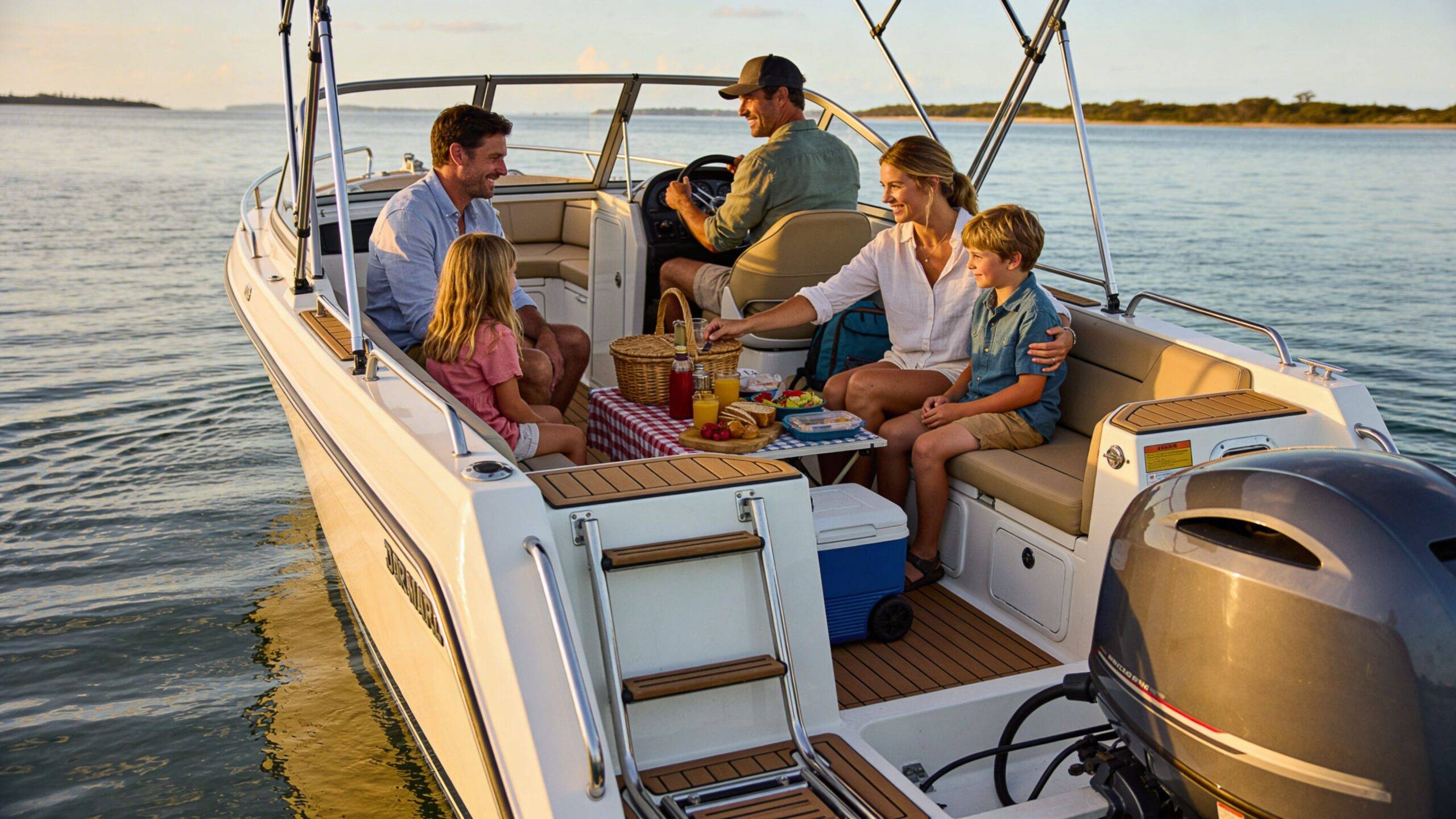
Capacity starts with your real use
A solo angler doesn’t need the same setup as a family heading out with bags, snacks, tow lines, spare clothes, and beach gear.
The easiest way to choose is to build from your most common trip, not your rarest one.
- Solo fishing or tender use: prioritise low weight, quick setup, and room to move around one position.
- Couples boating: add enough floor space for comfort, not just legal capacity.
- Family use: kids don’t weigh much, but their gear takes space and changes how people move onboard.
- Camping and touring trips: allow for dry bags, safety equipment, and the fact that packed gear always spreads.
The usable size of a dinghy is about deck layout as much as length. A cramped boat becomes annoying quickly. An oversized one can become a burden to launch and repack.
Floor choice changes the whole feel of the boat
Floor construction is one of the least understood buying decisions, but it shapes almost everything.
Air-deck floors
An air-deck floor suits buyers who care most about portability and fast setup.
It packs smaller. It keeps the boat lighter. It’s usually the better choice for caravan owners, SUV travellers, and anyone who needs the whole package to fit in a tight storage footprint.
Air-decks also work well for general recreation because they’re comfortable underfoot and easier to handle than rigid floor panels.
They’re a smart choice when:
- Storage space is limited
- The boat will be packed and unpacked often
- You want a true boat-in-a-bag setup
Aluminium floors
An aluminium floor creates a more rigid platform.
That matters for anglers who stand regularly, divers who want a firmer base, or owners who prefer the feel of a more planted floor under load. The trade-off is obvious. More structure means more pieces, more weight, and more setup effort.
For many buyers, aluminium floors are worth it. For others, they become the reason the boat gets left at home.
Stability isn’t just about width
A lot of people judge stability by eye. That’s only part of the story.
According to Dinghy World’s discussion of premium dinghy stability design, premium dinghy designs use a low centre of gravity and large shock-absorbing tubes, reducing wave-impact G-forces by 30-50% compared to rigid-hulled boats in identical sea states. That matters in Australia because short coastal chop wears people out fast, especially in compact boats.
A stable dinghy doesn’t only feel safer. It also fishes better, boards more easily, and causes less fatigue.
In practical terms, the most comfortable small boat is usually the one that keeps people relaxed enough to stay out longer.
That matters even more for portable boats. The same source notes that contemporary portable dinghies can maintain effective stability across 60-120kg payload ranges while weighing only 25-40kg dry. That combination is a big reason compact inflatable setups suit touring lifestyles so well.
A simple way to consider this is:
| Buyer type | Best floor priority | Main size priority |
|---|---|---|
| RV or SUV traveller | Air-deck | Packed convenience |
| Casual family user | Air-deck or soft portable setup | Boarding room |
| Serious angler | Firmer floor feel | Working deck space |
| Yacht tender owner | Lightweight portability | Easy stowage |
Don’t overlook the transom
The transom carries more responsibility than many first-time buyers realise. It supports the outboard, transfers thrust into the hull, and affects how the boat holds its shape under power.
A weak transom flexes. When that happens, the engine doesn’t stay planted properly and the whole package feels worse than it should.
The practical answer is a reinforced aluminium transom. In premium models, these are built to handle outboard loads without the flex that causes poor running attitude and a less settled feel on the water. If you’re shopping for a dinghy for sale and the transom spec is vague, ask direct questions.
A useful setup video can help you picture how all these choices come together on the water.
Powering Your Dinghy Motor Choices and Bundles
You are packed for a long weekend on the coast. The dinghy fits in the SUV, the kids are ready, the fishing gear is loaded, and the only thing that can spoil the plan is a motor that is too heavy to handle or too weak once the breeze comes up.
That is the critical motor decision for Australian buyers. It is not about buying the biggest outboard you can bolt on. It is about choosing a setup that starts easily, carries the load you run, and copes with chop, current, salt, and long days in harsh sun.
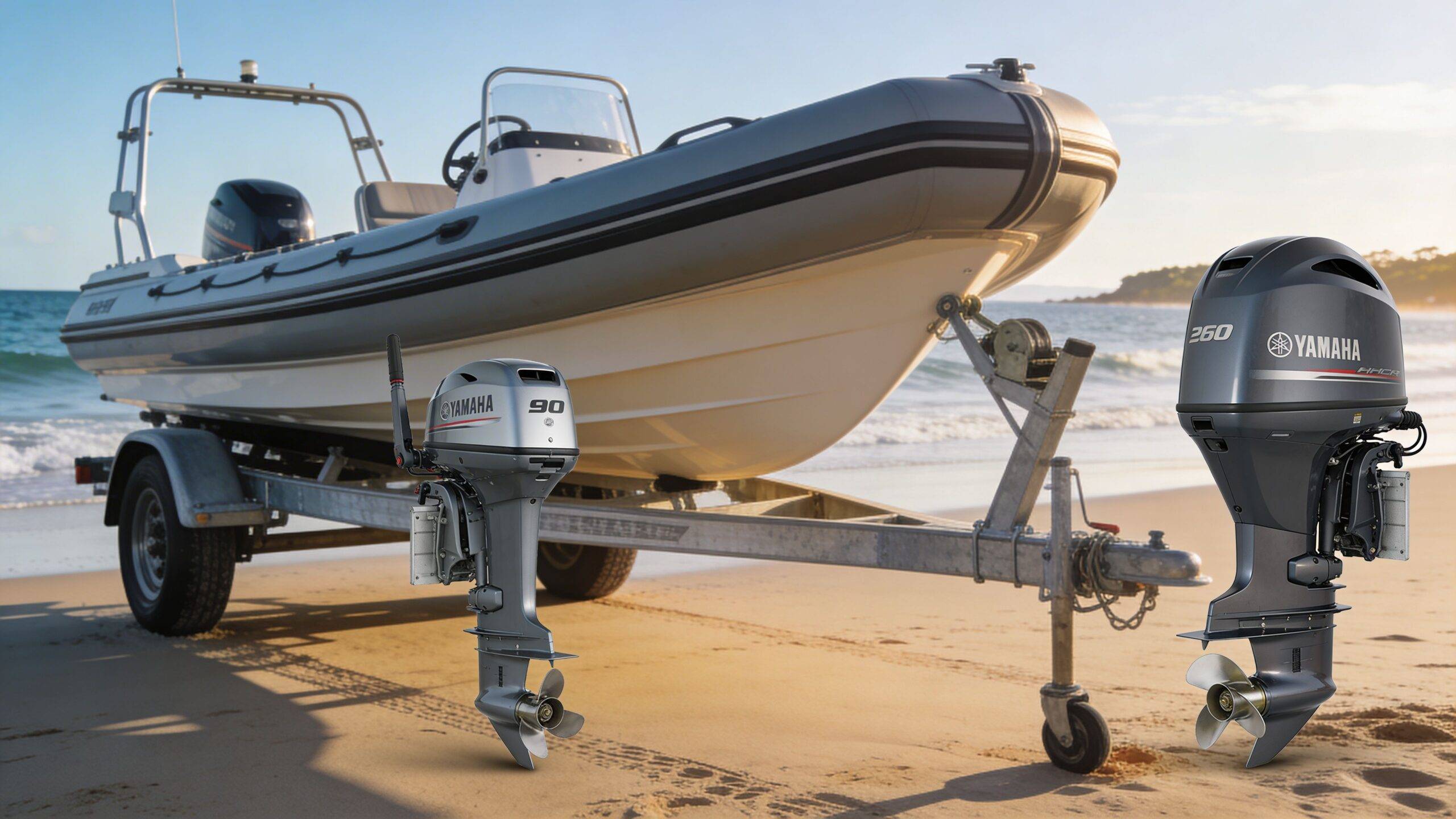
Match power to purpose
A tender used for short hops from caravan park to shoreline needs a different motor from a fishing setup running creeks, estuaries, or exposed bays.
Small outboards suit owners who care most about low carry weight, quick setup, and easy storage in an RV, ute canopy, or wagon. More power makes sense once the boat gets longer, the load gets heavier, or the job includes extra passengers, camping gear, crab pots, or regular use in open water. The sweet spot is a balanced package that planes cleanly without making the transom hard to manage on land.
That matters even more in the boat-in-a-bag market. A portable inflatable loses its appeal fast if the engine is so bulky that one person dreads lifting it.
Four-stroke or two-stroke
For many Australian buyers, a modern four-stroke is the practical choice. They are quiet, fuel-efficient, and well suited to family use, trolling, and steady low-speed work around ramps and moorings.
Two-strokes still appeal to some owners because they are lighter for their output and easier to move around camp or stow in a touring rig. The trade-off is ownership style. Buyers need to be comfortable with the maintenance requirements, fuel mixing where applicable, and the support available for the brand they choose.
The better question is simple. Who will use the motor, how often, and how far from help?
For family boating and regular fishing trips, buyers usually want:
- Easy starting
- Stable low-speed handling
- Straightforward servicing
- Parts and dealer support in Australia
Why bundles often make more sense
A matched boat and motor package removes a lot of guesswork. Shaft length, transom fit, weight balance, and control setup are sorted together, which reduces the chance of buying parts twice or chasing faults between separate sellers.
That is good value for first-time buyers. It also suits experienced owners who would rather spend Saturday on the water than in the driveway adjusting motor height and trying to fix poor trim.
A proper package usually gives you:
- Better compatibility: the outboard suits the hull and intended load
- Cleaner setup: mounting, controls, and basic rigging are matched from the start
- Clearer warranty support: one supplier handles the package
- Less wasted spend: fewer add-ons discovered after delivery
If you are weighing up options, this guide to choosing a motor for inflatable boat is a useful place to compare portable tender motors against more capable fishing and RIB setups.
Buy for the load and conditions you will use most often. A dinghy that runs well with your normal crew, fuel, and gear is worth far more than one that only feels right when it is lightly loaded on a calm day.
Understanding Your Investment Packages and Pricing
You find a dinghy for sale at a price that looks sharp. Then the full bill starts. Freight is extra, the bag is basic, the pump struggles with a high-pressure floor, and warranty support means emailing an overseas seller at odd hours.
That pattern is common in Australia, especially for buyers chasing a portable setup for camping, RV touring, or an SUV-based fishing trip. A low sticker price can still turn into poor value if the boat is hard to pack, slow to rig, or costly to sort out after delivery.
Price only matters in context. A compact tender for short beach runs sits in a different bracket from a full package built for family outings, estuary fishing, or regular use in harsh sun and salt. UV-resistant material, a proper transom, a usable floor system, and local after-sales support all affect what a package is really worth.
A better way to compare is to look at complete inflatable boats for sale in Australia and check what the money buys.
What adds real value
The better packages usually include the gear owners end up needing within the first few trips, not just the hull.
That often means:
- A pump that suits the floor pressure: especially important with air-deck and high-pressure setups
- Decent carry bags: important for boat-in-a-bag owners loading into caravans, utes, and SUVs
- Useful seating and storage layout: practical for fishing gear, kids, or a day’s supplies
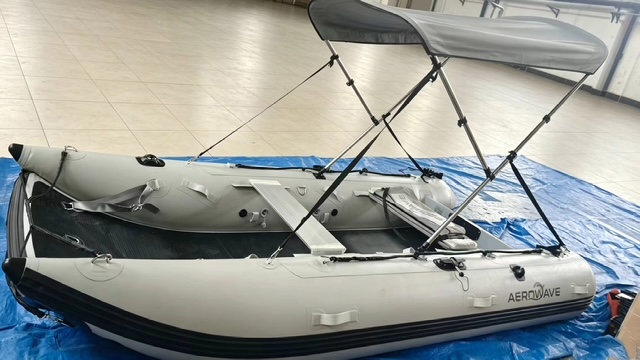
- Shade options such as a fitted Bimini: helpful for family boating in Australian sun
- Clear warranty cover: specific terms beat vague promises every time
Some value is less obvious on the quote. Good support saves money. If a valve fails, a floor needs replacing, or you need the right accessory for your transom and motor, local help matters more than a small saving upfront.
I see this often with touring buyers. They do not need a marina-based setup with every add-on under the sun. They need a package that packs down properly, survives corrugated travel, handles repeated inflation, and is ready to launch without turning the campsite into a workshop.
How to compare offers properly
Ask direct questions before you buy:
- What is included in the package price?
- Is freight included, and to which postcode?
- Who handles warranty claims in Australia?
- Are there any extra costs for GST, setup items, or accessories needed to make it usable?
- Will this package suit how you boat, or is it cheap because key parts have been left out?
A package can cost more and still be the better buy.
That is usually the case when the boat is built for Australian conditions, backed locally, and matched to the way people here use dinghies. Fishing creeks, ferrying gear from a caravan park, towing the kids in calm water, or carrying two adults and camping gear from an SUV all place different demands on the boat.
Buy for use, not just price
The best value package is the one that gets used often and holds up over time. A cheaper boat that is awkward to carry, slow to set up, or poorly suited to our UV and salt can become dead money fast.
A well-chosen package earns its keep every trip.
Your Buying Checklist and Final Questions Answered
By the time most buyers are ready to commit, the choice is usually down to two or three boats. That’s when a simple checklist helps more than another hour of scrolling.
A practical pre-purchase checklist
Run through these points before buying any dinghy for sale:
- Confirm the material spec: ask for the exact fabric and seam construction, not just “heavy duty”.
- Check the floor style: make sure it matches your storage and setup tolerance.
- Inspect the transom design: if you’re using an outboard, this isn’t optional.
- Review portability: can you lift it, pack it, and deploy it with your actual vehicle and crew?
- Look at the package contents: pumps, bags, mounts, and shade gear all affect value.
- Read the warranty terms: know what’s covered and who handles claims.
- Ask about local support: accessories and repairs are easier when the seller is reachable.
- Review your safety gear list: this boat safety equipment checklist is a good prompt before first launch.
Why RV and SUV buyers should think differently
Portable boating is still under-served in mainstream dinghy content. That’s a mistake because touring buyers don’t shop like marina buyers.
The portable segment matters precisely because it solves a different problem. As noted by Boats.com’s category context and market gap, the intersection of RV and SUV travel with compact boating remains largely ignored by traditional sales channels, even though buyers in that segment value low weight, compact packed dimensions, and rapid deployment.
For caravan and touring buyers, the questions change:
- Will it fit where it needs to fit?
- Can it be launched without a dedicated trailer routine?
- Is setup quick enough that you’ll use it on short stops?
- Can two people handle it comfortably after a day on the road?
The best touring dinghy is the one that turns a stop by the water into a launch, not a project.
Common questions
Is an inflatable dinghy good for fishing in Australia?
Yes, if the hull and floor suit the job. Anglers usually do best with a stable layout, enough room to move, and a transom that supports the motor without flex.
Is a RIB better than a standard inflatable?
Sometimes. A RIB is often the better option for buyers dealing with more chop or wanting a firmer, more performance-oriented ride. A standard inflatable is usually easier to store and transport.
Are inflatable catamarans worth considering?
Absolutely. They’re especially appealing for family boating and fishing because stability at rest is one of their strongest practical advantages.
What’s the biggest mistake first-time buyers make?
They buy for a hypothetical big day rather than their normal use. The next most common mistake is treating all inflatable materials as equal.
What should I do after every trip?
Rinse the boat, let it dry properly, and store it clean. Keep an eye on wear points, seams, fittings, and the transom area. Basic care makes a visible difference over time.
If you’re ready to find a dinghy for sale that’s built for Australian sun, salt, family boating, fishing, and touring, take a look at Easy Inflatables. They’re an Australian-owned specialist offering durable tenders, inflatable catamarans, RIBs, and boat-in-a-bag setups with premium materials, complete packages, and local support that makes ownership simpler.
Explore the Aerowave range
Weekend-Proof Score 17 questions · about 2 minutes
Will the boat you're about to buy survive an Australian summer?
Seventeen straight questions about where you'll use it, what you'll ask of it and the boat you're weighing up. You get a score out of 100, the exact weak points in your plan, and the one boat that genuinely fits.
Free · your result shows on screen · no email required
So which one is yours?
Pick how you'll actually use it and we'll take you straight to the right hull.
I want to fish it
Open bow, rod holders, deck space you can stand and cast from.
Viper Sport 400Family, diving and the beach
3.8 m Series 3 catamaran — low bow to climb back in wearing fins or a tank.
WaveRunner 380Tender / one-person launch
3.3 m hard-floor boat that packs into a bag and still takes a beach landing.
Viper 330Shop gear featured in this guide
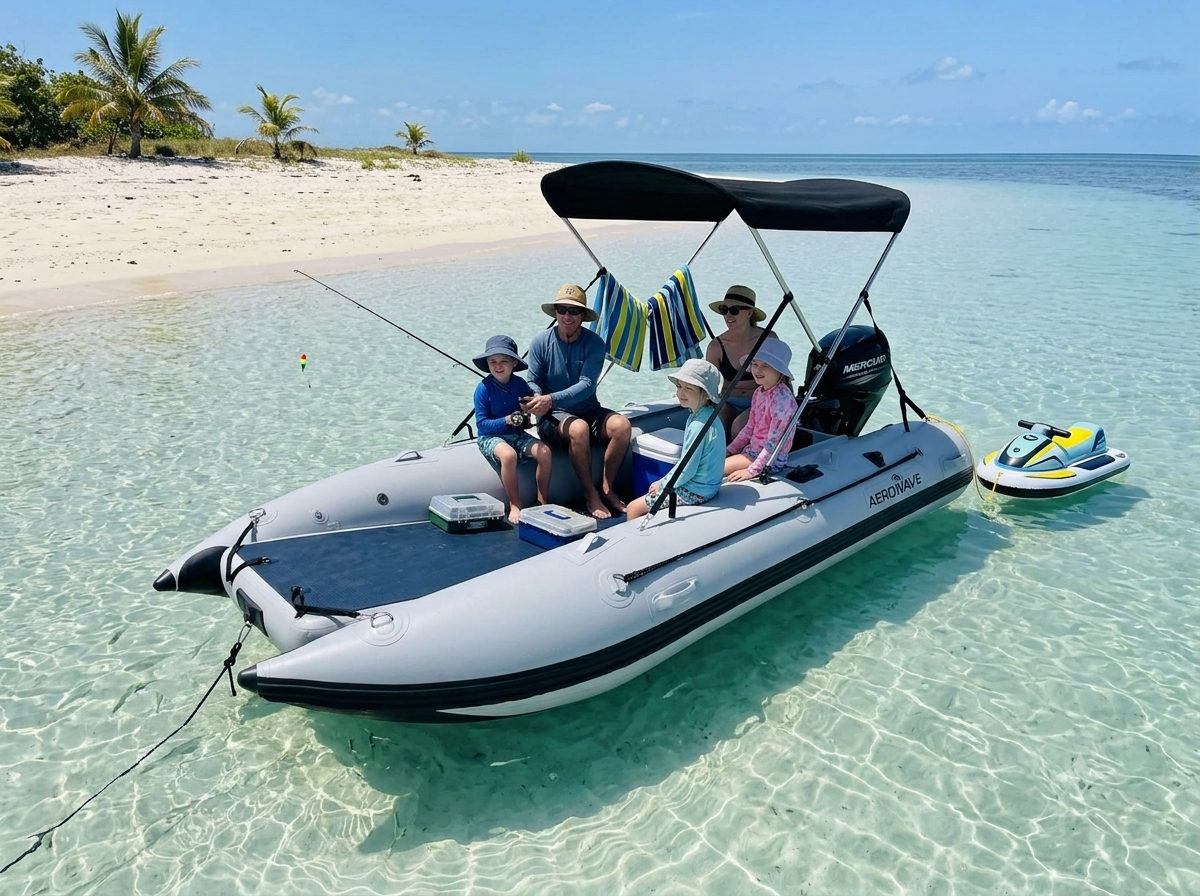
Aerowave WaveRunner 380 Series 3 Catamaran Package
The WaveRunner 380 Series 3 is a premium 3.8m inflatable catamaran package built for Australian and worldwide families, fishing, and coastal day boating — ideal for snorkeling and spearfishing — offering serious stability and premium German Valmex® construction.
Free freight to United States · local taxes payable on arrival
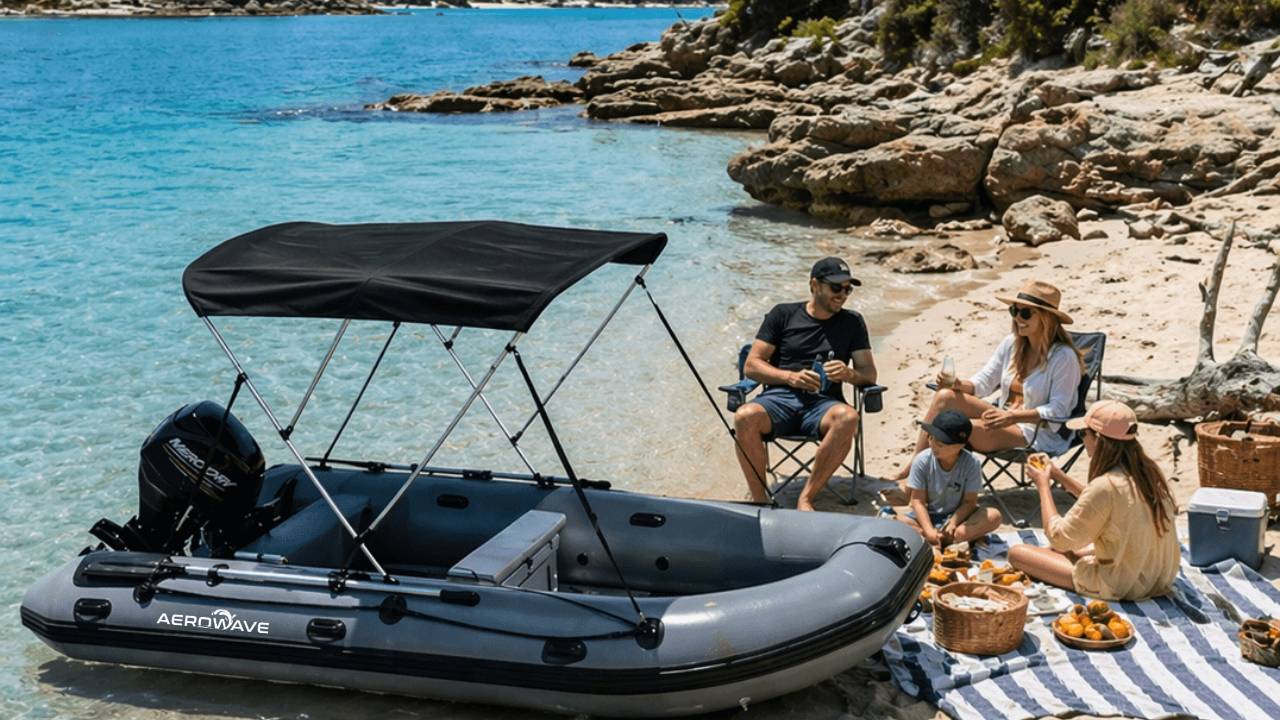
Aerowave Viper 400 Sovereign
Flagship 4m enclosed-bow inflatable catamaran. German VALMEX® 7321 Heavy Plus 1.2mm commercial-grade fabric, 10 PSI high-pressure drop-stitch air deck floor with VALMEX non-slip surface, LockPro wheels, full Bimini and FREE express delivery Australia-wide included. Winter special — save $1,000 until 31 August 2026.
Free freight to United States · local taxes payable on arrival
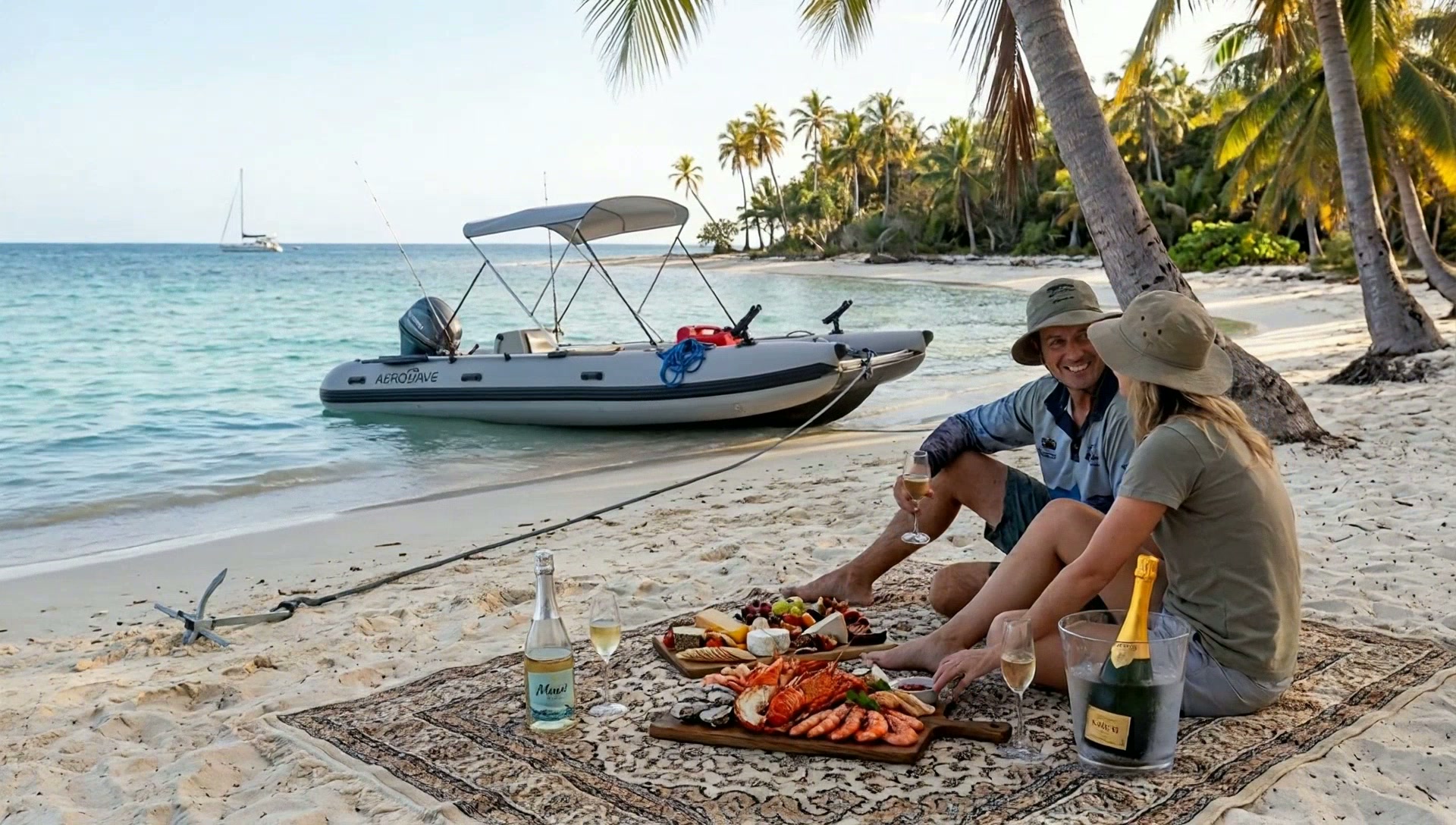
Aerowave Viper 365 Open Bow
Premium 3.65m Inflatable catamaran — built the same way as our flagship Viper 400 sports boat, just 35cm shorter. German VALMEX® 7321 Heavy Plus 1.2mm commercial-grade fabric, 10 PSI high-pressure drop-stitch air deck floor with VALMEX non-slip surface, LockPro wheels, full Bimini and FREE express delivery Australia-wide included.
Free freight to United States · local taxes payable on arrival
Not sure which suits you? Talk to a real boat owner.
Before you spend a cent
Buying from Australia, delivered to United States
You have never heard of us, we are on the other side of the world, and the internet is full of fakes. Fair enough. Here is everything you would need to check us out, in one place — no forms, no chat bot.
Australian designed business
Easy Inflatables, Avoca Beach NSW 2251. ABN 96 856 548 613. International orders ship from our Hong Kong hub.
222 owner reviews, 4.8 average
Read them in full, good and bad, on our reviews page.
CE certified, 7-year hull warranty
ISO 6185-3 and EU Directive 2013/53/EU. Warranty honoured worldwide.
Tracked, insured, door to door
FREE freight to United States · local tax/duty on arrival.
- Who am I actually buying from?
- Easy Inflatables, Avoca Beach NSW 2251, Australia. ABN 96 856 548 613. Sean is the owner and skipper, Gary Stewart handles sales on +61 2 4335 1603, Karen Matthews handles email. The boats are Australian designed; international orders ship from our Hong Kong dispatch hub so your landed price stays competitive. Phone us before you pay a cent — a real person answers.
- Is this really an Australian product?
- Yes — Australian designed and engineered on the NSW Central Coast. Manufacturing is done offshore to our spec, and international orders ship direct from our Hong Kong dispatch hub. If we routed every boat through Australia first, the freight alone would roughly double or triple your cost for the same hull.
- What do I pay, and what is not included?
- The delivery and import terms depend on your country. EU, UK, New Zealand and named Asia/Pacific lanes include duty and tax; US freight is free but US buyers pay import charges on arrival. Other destinations show their terms before payment.
- How do I pay safely?
- Card through Stripe (Visa, Mastercard, Amex, Apple Pay, Google Pay) or bank transfer. Card payments carry your bank's own dispute protection. We never ask for crypto, gift cards or payment to a personal account.
- What if it arrives damaged?
- Every boat ships fully tracked and insured door to door. Photograph the carton and the boat on arrival and email us — transit damage is claimed and replaced through us, not left with you and the courier.
- Is the warranty real outside Australia?
- Yes. The 7-year hull warranty on 1.2 mm VALMEX Heavy Plus and Orca Hypalon hulls applies wherever you are. Replacement parts are held in Australia and at our overseas hub and go out by express courier to your door.
- Is the boat actually certified?
- All Aerowave catamarans are CE certified to ISO 6185-3 and EU Directive 2013/53/EU. Certification paperwork is supplied with the boat — ask and we will send it before you order.
Ready to set sail?
Premium German-fabric inflatable catamarans, built to order and delivered to your door. Talk to our team or browse the fleet.
Like this guide? Get the next one in your inbox.
Owner-tested tips, gear deep-dives and Aussie boating know-how — no spam.