
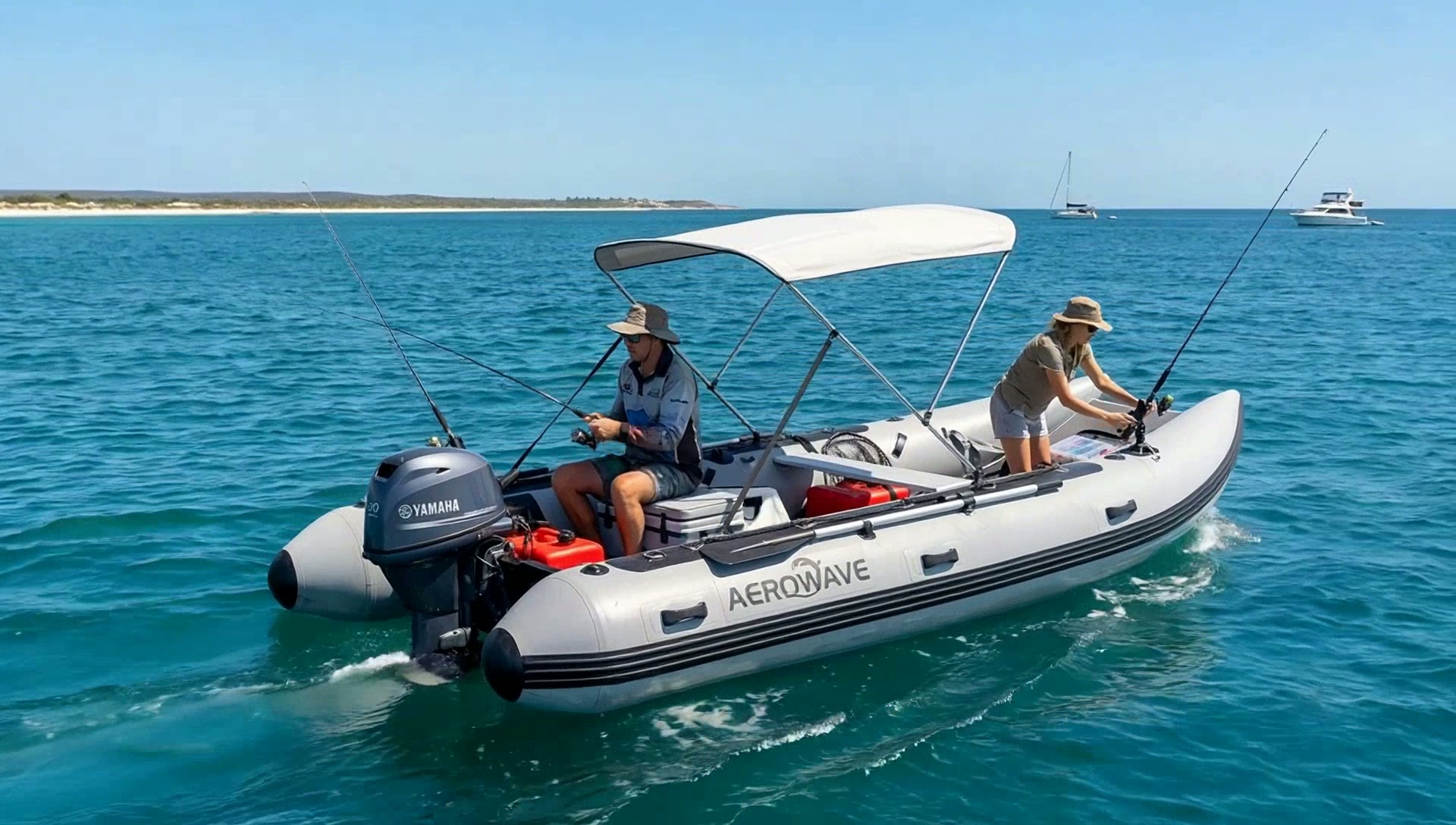
AeroCat vs Viper Inflatable Catamaran: 0.9 mm vs 1.2 mm Hull Compared
Lighter and easier to carry, or a thicker heavy-duty hull? A plain-English comparison of the Aerowave AeroCat and Viper inflatable catamarans.
Our recommendation
Aerowave Viper 330
Length
330cm / 10'9"
Beam
165cm / 65"
Inside Beam
69cm / 27"
Tube Diameter
50cm / 19"
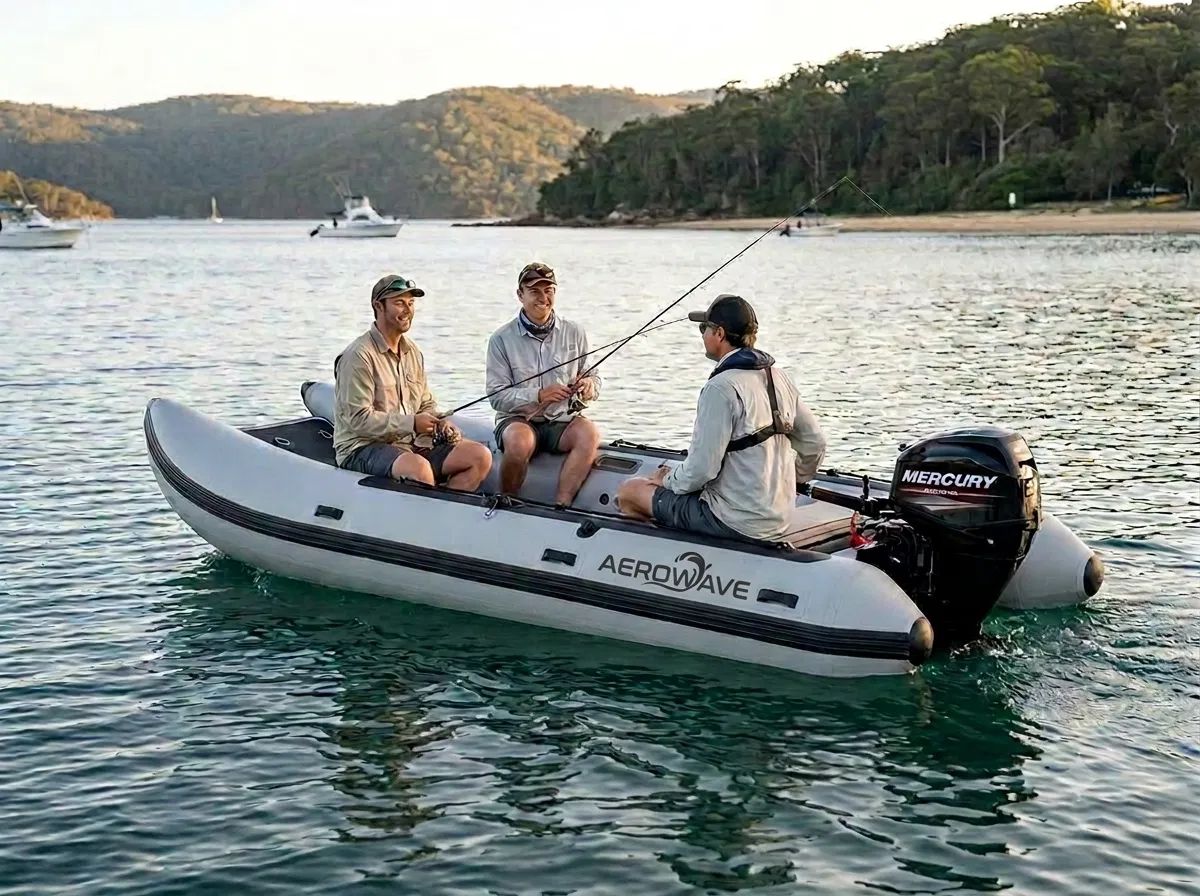
Choosing between the AeroCat and Viper isn’t about picking a “good” boat and a “better” one. Both are soft-hull inflatable catamarans with thermo-welded seams, high-pressure air-deck floors and automatic pressure-relief valves. The key decision is how you balance carrying weight and portability against a thicker, more heavy-duty hull.
In simple terms, the AeroCat is for buyers who want a practical, lighter inflatable catamaran that’s easier to transport and store. The Viper is for boaters who put a higher priority on hull toughness and regular use in demanding conditions.
AeroCat vs Viper at a glance
| Feature | AeroCat Series | Viper Series |
|---|---|---|
| Model range | AeroCat 335, 365, 380 and 400 | Viper 330 to 450 |
| Hull fabric | 0.9 mm / 1100 decitex German VALMEX | 1.2 mm / 1500 GSM German VALMEX Heavy Plus |
| Main advantage | Lower weight and easier handling | Heavier-duty hull and greater abrasion resistance |
| Seam construction | Thermo-welded | Thermo-welded |
| Floor | High-pressure air deck | High-pressure air deck |
| Pressure protection | Automatic pressure-relief valves | Automatic pressure-relief valves |
| Hull warranty | 5 years | 5 years plus 2 years of extended structural cover, subject to terms |
| Best suited to | Portability-first outings and lighter handling | More demanding use and durability-first buyers |
The ranges share Aerowave’s catamaran design approach and construction features, but their hull fabrics are different. That’s the practical trade-off to focus on.
The real difference is the fabric
The AeroCat uses 0.9 mm, 1100 decitex German VALMEX. It’s a considered choice for boaters who want a more manageable package: lighter to handle, easier to pack away and typically more affordable than a Viper.
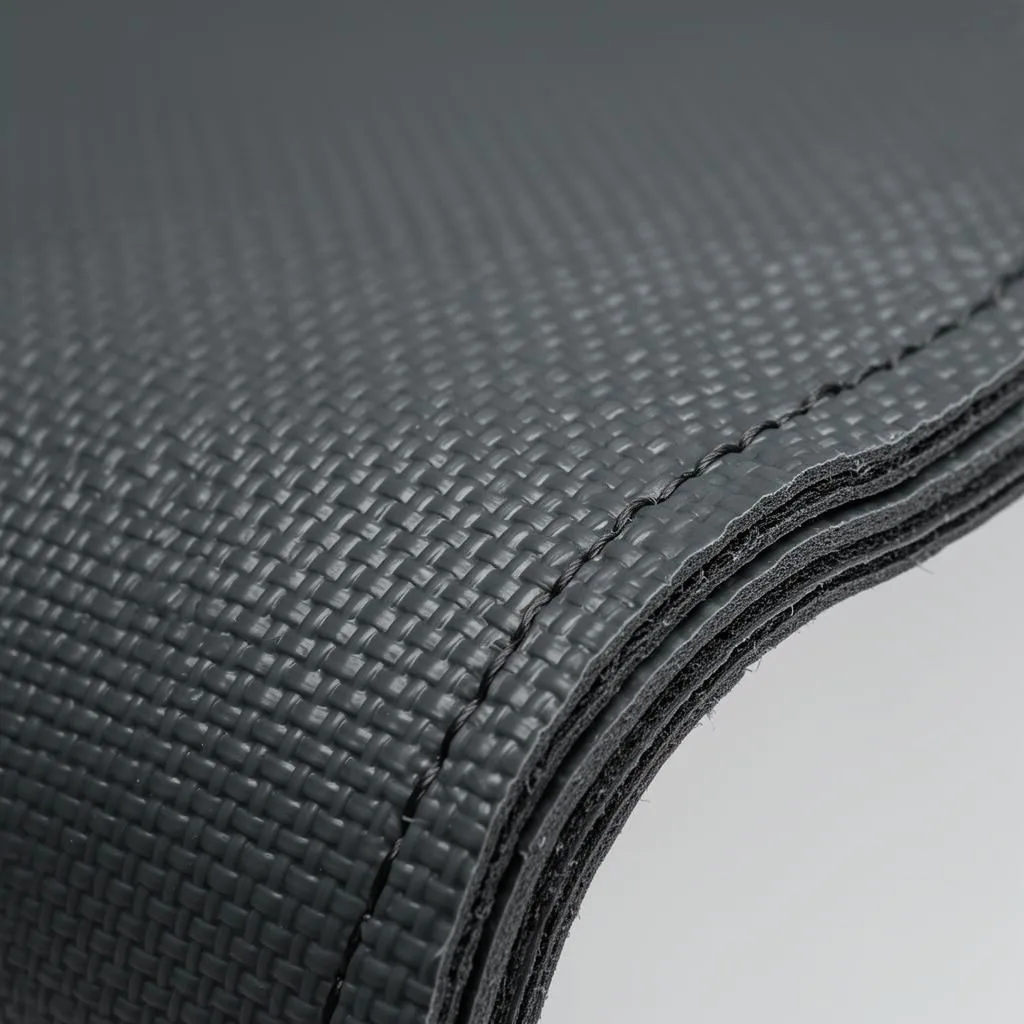
The Viper steps up to 1.2 mm, 1500 GSM VALMEX Heavy Plus. That thicker fabric is designed for greater resistance to abrasion and punctures. If you boat often, land on beaches regularly or spend a lot of time on the water, the added material may be worth the extra weight and cost.
Neither fabric makes the boat immune to damage. Good handling, sensible launch choices and rinsing and drying the boat after use still matter. The decision is about choosing a suitable level of hull material for the places and frequency you boat.
How much do the boats weigh?
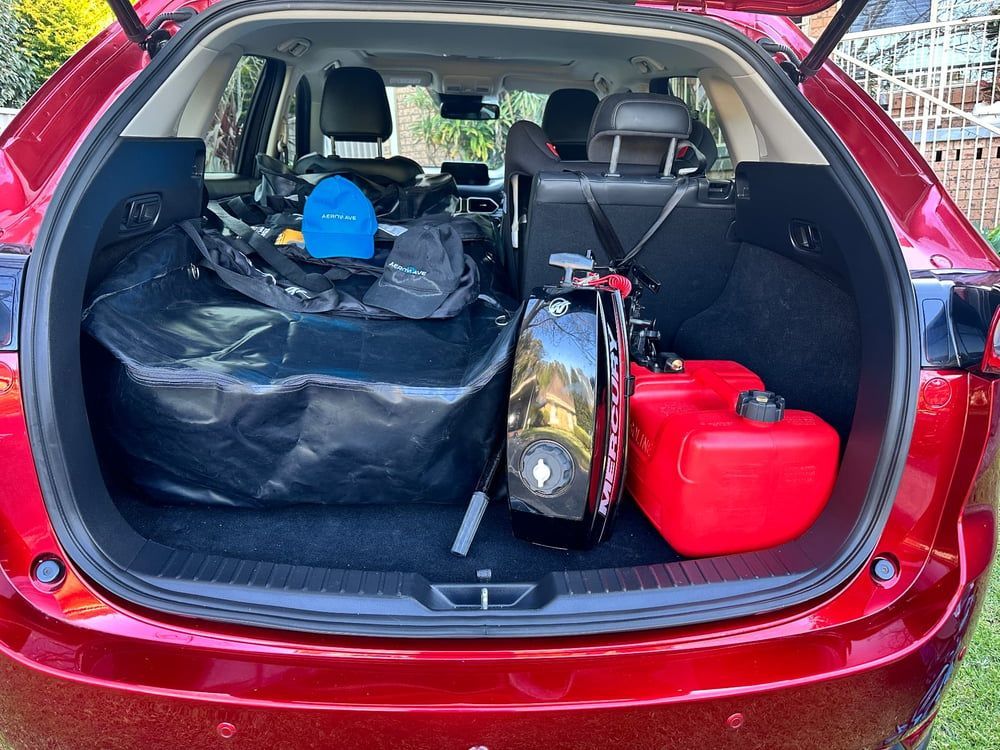
Weight is often the deciding factor for someone searching for an easy to carry inflatable boat. The AeroCat’s thinner fabric makes it the lighter choice size for size. Check each model page for the current bare-boat weight, which excludes items such as the Bimini and wheel kit.
Compare the exact model’s current boat weight, packed dimensions and inclusions before ordering. Include the floor, seats, motor and accessories when planning vehicle payload and handling.
Who should choose the AeroCat?
Choose an AeroCat if easy handling and storage are central to how you’ll use your boat. It suits buyers who want the stability and open deck of a twin-hull inflatable but don’t want to make every outing a heavy lifting job.
It can be a strong match for:
- Camping and touring: pack the boat away between trips instead of reserving space for a trailer.
- Caravan and 4WD travel: make a portable boat part of the trip, subject to checking your vehicle’s available space and payload.
- Calmer-water fishing and exploring: take the boat to bays, rivers, lakes and sheltered coastal spots.
- Yacht owners: use a lighter inflatable catamaran for ship-to-shore trips where stowage and handling matter.
- Buyers watching overall value: the AeroCat offers a lower-cost way into the Aerowave catamaran range, while retaining core features such as welded seams and pressure-relief valves.
The AeroCat Series includes the 335, 365, 380 and 400, so you can choose a size that fits your crew and storage plans. As the model grows, so does its weight: the larger sizes are not a one-person lift for everyone, particularly with accessories packed alongside. Check the model’s packed dimensions and consider how you’ll move it from vehicle to water.
Who should choose the Viper?
Choose a Viper if durability comes before minimising weight. Its thicker VALMEX Heavy Plus fabric is intended for buyers who expect more frequent use, rougher handling or more demanding launch and landing conditions.
Vipers are worth considering for:
- Family adventure boating: choose a size that gives your passengers and gear room without exceeding your vehicle or handling limits.
- Regular fishing trips: a stable platform and practical deck layout can make it easier to fish with rods and equipment aboard.
- Rougher shore access: thicker fabric offers an extra measure of abrasion and puncture resistance, although care is still essential.
- Boaters who plan to use their boat often: a heavier-duty hull may better suit a higher-use routine.
- Buyers who value longer structural cover: the Viper has a five-year warranty plus two extended structural years, subject to the warranty terms.
The Viper Series runs from the compact Viper 330 through to the 450. A larger model may offer more room and a more substantial platform, but it will also take more space and effort to move. Choose based on your actual crew, storage and launch plan, not just the biggest number in the range.
What both ranges have in common
AeroCat versus Viper is not a choice between basic and fully featured. Both ranges share several practical construction details:
- Thermo-welded seams, where compatible material seams are fused with heat rather than relying on adhesive alone.
- Automatic pressure-relief valves to help release excess pressure as air inside the tubes warms.
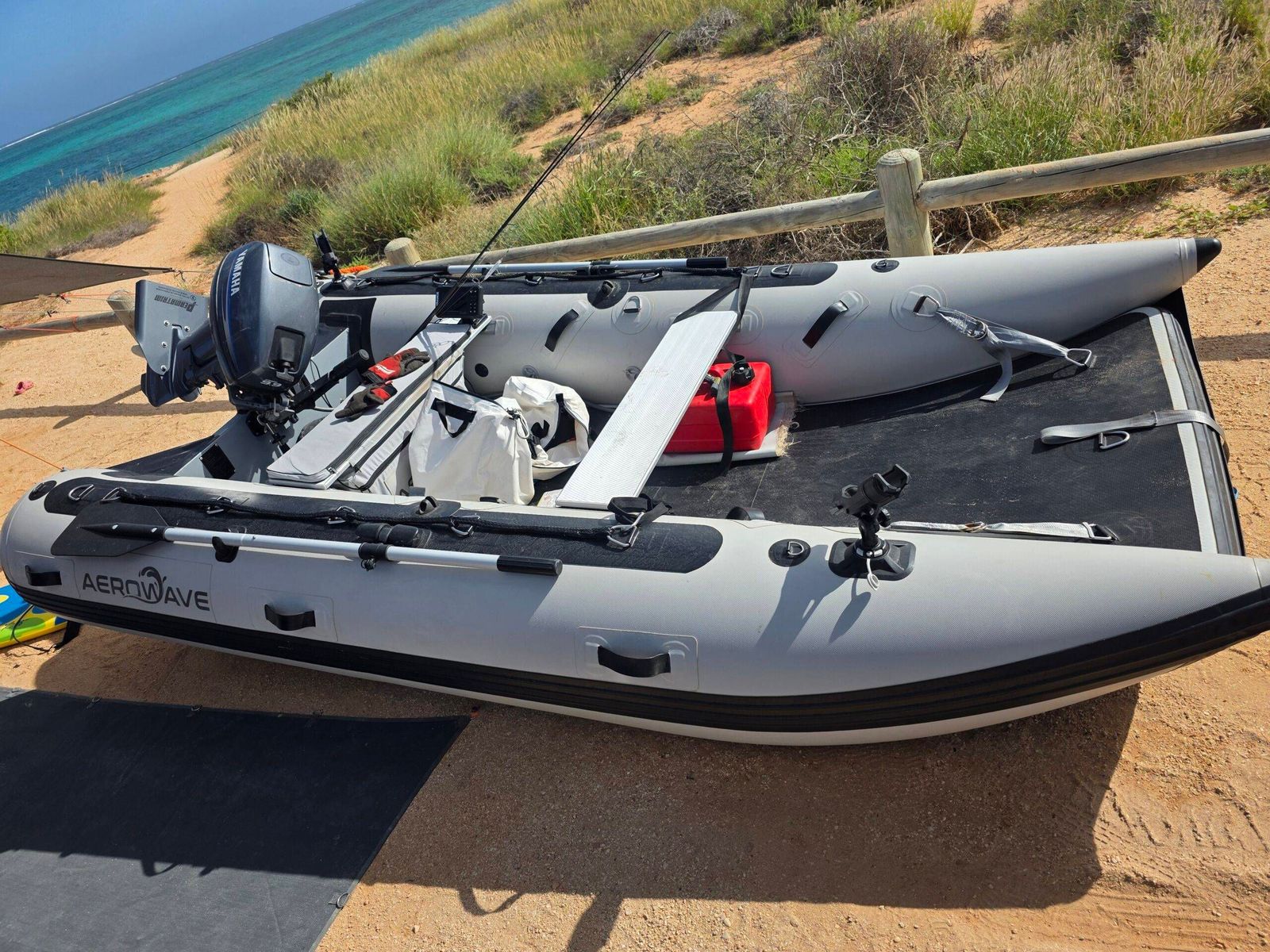
- High-pressure air-deck floors for a firm, supportive surface underfoot when inflated to the specified pressure.
- Catamaran hull layouts designed to provide a stable platform for recreational use.
Both require sensible care. Follow the owner’s manual for inflation, use the recommended pressures, and inspect the tubes and fittings before heading out. Setup takes approximately 15 minutes, depending on conditions, experience and the package being assembled. Allow time for checks and loading your safety gear too.
Which Aerowave series suits how you boat?
If you’ll carry your boat often, travel with it or store it in a compact space, start with the AeroCat. It’s the more portability-oriented choice, and its 0.9 mm VALMEX hull keeps weight and price in check.
If your priority is a tougher hull for more demanding use, consider the Viper. Its thicker 1.2 mm fabric is the clear distinction, with additional weight as the trade-off.
Still weighing up model sizes and features? Use the boat comparison tool, request a written Australian quote, or take the Weekend-Proof Score assessment to think through your storage, transport and boating conditions before you choose.
The best boat is the one that matches your real weekends: where you launch, how you carry it and what conditions you expect to encounter.
Frequently asked questions
- What is the main difference between the AeroCat and the Viper?
- The hull fabric. AeroCat uses 0.9 mm / 1100 decitex German VALMEX for lighter handling; Viper uses 1500 GSM / 1.2 mm VALMEX Heavy Plus for more abrasion and puncture resistance.
- Which is easier to carry?
- The AeroCat. Its thinner 0.9 mm fabric keeps weight down, which suits caravan, 4WD, camping and yacht-tender use.
- What warranty do they have?
- AeroCat has a 5-year limited hull warranty. Viper has 5 years plus 2 years of extended structural hull cover, subject to terms. Australian Consumer Law rights apply in addition.
- How long does setup take?
- About 15 minutes once you are familiar with the process, depending on conditions and the package.
- Which AeroCat and Viper models are available?
- AeroCat 335, 365, 380 and 400, and Viper 330 through to 450, including the Viper 400 Sovereign.
Finance this boat from $24/week
Estimate only — powered by Australian Motorcycle & Marine Finance (AMMF).
Paid upfront (AUD)
$550
10% of price
Term
5 years
60 monthly repayments
Comparison rate
9.95% p.a.
Subject to AMMF approval
Weekly
$24
Monthly
$105
Amount financed
$4,945
Indicative only. Actual repayments depend on your AMMF credit assessment, term, fees and the balloon you select. Talk to AMMF for a personalised quote on Aerowave Viper 330.
Like this guide? Get the next one in your inbox.
Owner-tested tips and Aussie boating know-how — no spam.
Ready when you are
Build your Viper 330 in under 3 minutes.
1500 GSM / 1.2 mm VALMEX® hull. Five-year limited hull warranty plus two years of extended limited structural hull cover, subject to conditions. Free freight to United States · taxes included, nothing to pay on arrival.
delivered to your door
See it for yourself
Real boats. Real owners. Real people behind them.
Plenty of what you read online these days is generated. Check us out properly — the factory, the reviews and the owners are all one click away. Why we use AI, and how to check we’re real
How our boats are built
Walk the production line: thermo-welded seams, 1.2 mm VALMEX Heavy Plus hulls, over-pressure relief valves on every chamber.
See the buildGoogle Maps reviews
Real Australian owners, five stars, published on our Google Business Profile with the map — read them there, not just on our own site.
Open Google Maps reviewsOwner stories
Boats in use — offshore, on rivers, on rescue duty. Photos and words from the people who actually own them.
Read owner stories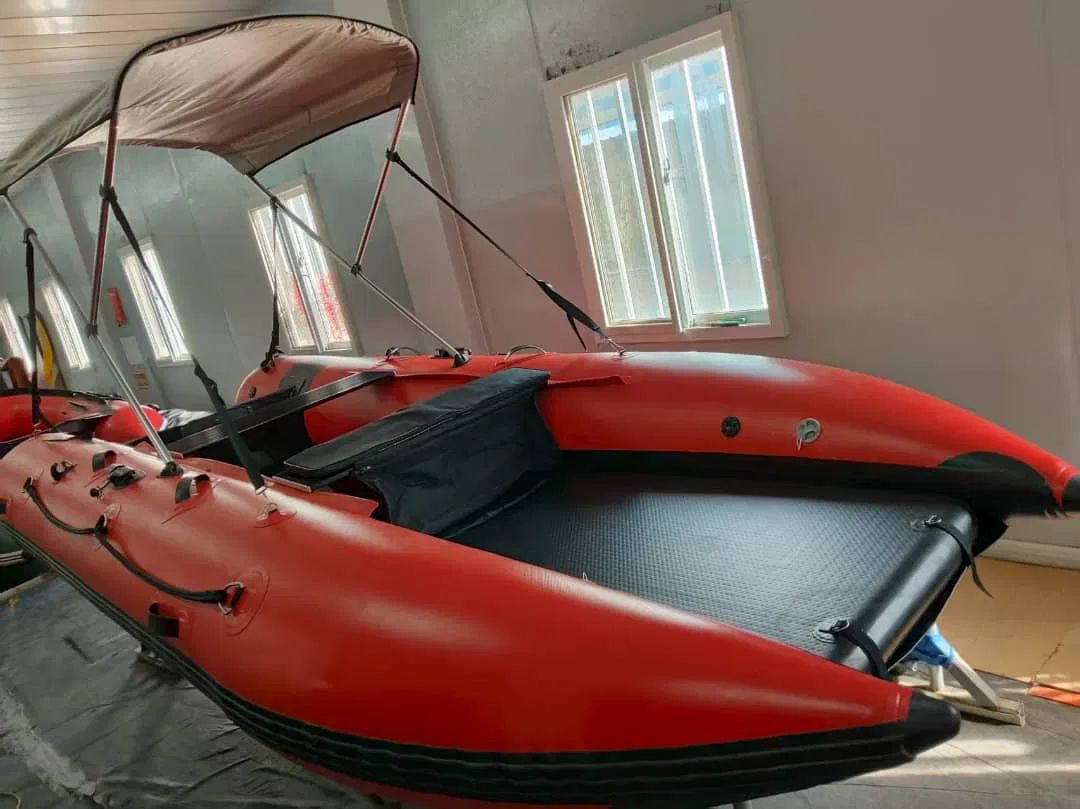
Aerowave Viper 330
US$3,915 USD · delivered to your door