
D-Rings, Handles and Straps Peeling Off? Here's Why
Glued-on fittings are the most common inflatable boat failure in Australia, and they are usually the part the warranty excludes. Why they let go, how to re-bond one properly, and what to ask before you buy.
Our recommendation
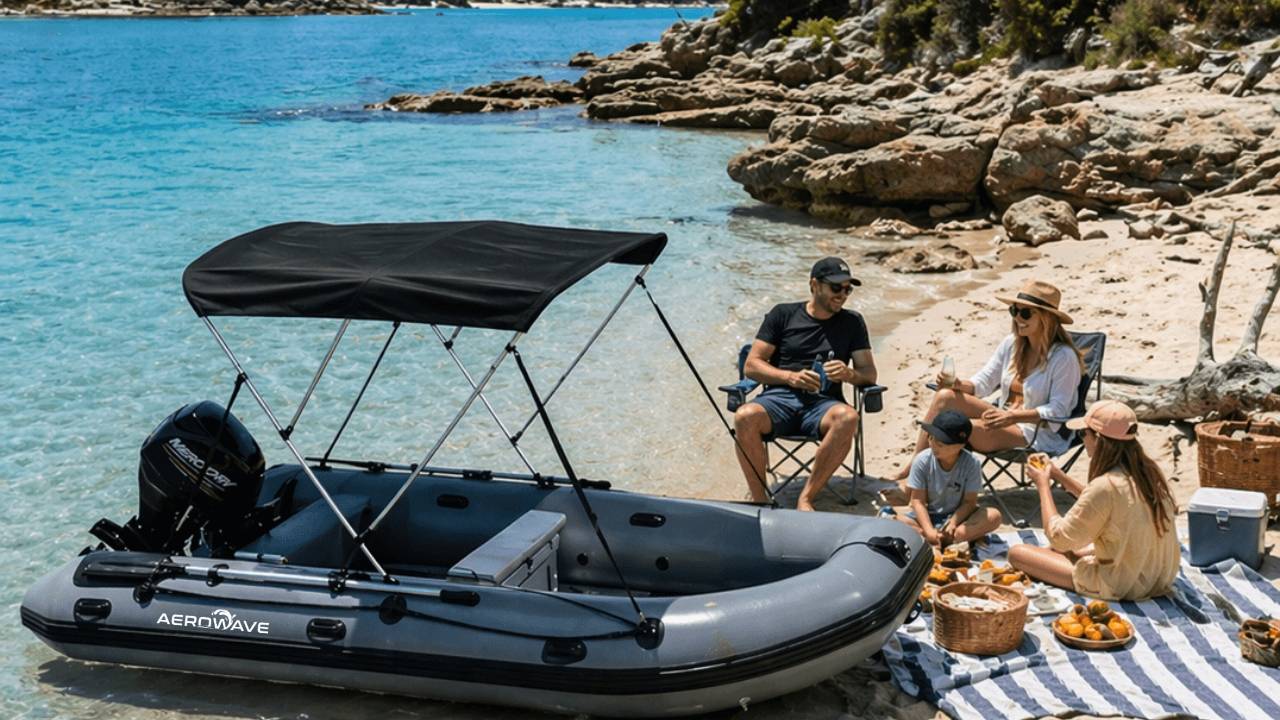
Aerowave Viper 400 Sovereign
1.2 mm fabric is about 33% thicker than common 0.9 mm fabric: more material between your boat and the water for everyday rubbing and knocks during beach launches. Careful handling still matters.
Length
4.0m / 13'1"
Beam
1.80m / 71"
Tube Diameter
51cm
Bare Boat Weight (without Bimini & wheel kit)
66kg / 145lbs
The part most likely to fail on an inflatable is not the hull. It is the 40-cent fitting bonded to the outside of it.
Nobody buys a boat thinking about D-rings. Then a tow strap comes away at the bow mid-retrieve, a lifting handle lets go with a leg over the tube, or the floor tab holding the seat strap peels back and the seat starts sliding.
It is the most common inflatable boat complaint in Australia, and there is a reason it is also the most frustrating one: on many boats the fittings sit under a shorter accessory warranty than the hull, so the part most likely to fail is the part least likely to be covered.
Why glued fittings let go
Every external fitting on an inflatable — D-rings, handles, oar clips, floor tabs, rubbing strake — is bonded to the tube. That bond faces four loads at once:
- Peel. A tow strap or handle pulls at an angle, not straight out. Peel loading is the weakest direction any bond has.
- Heat. A dark tube on a trailer in the sun runs well above air temperature, and adhesive softens as it heats.
- UV. Australian UV degrades the exposed edge of the bond first, so failure always starts at the perimeter and works inward.
- Shock. Anchoring, towing and beach retrieves put snatch loads through a patch the size of a coaster.
Two summers of that and you get a lifted edge. Nobody notices a lifted edge — until the day it becomes a full detachment under load.
The five-minute inspection that prevents it
Before every trip, walk the boat with the tubes at full pressure and check:
- Every fitting edge. Push a fingernail gently at the perimeter. Any lift, any gap, any dark line is a bond starting to go.
- The bow tow D-rings first. Highest load, worst peel angle, most consequence.
- Handles. Grab and pull sideways, not just up. Sideways is the direction that reveals a failing bond.
- Floor tabs and seat straps. These fail quietly and let seats shift, which then loads the next fitting incorrectly.
- Rubbing strake ends. Where the strake terminates is the first place it lifts.
Re-bond a fitting with 5 mm of lift and it is a workshop-bench job. Re-bond one that has torn off mid-retrieve and you are also patching the fabric it took with it.
Fixing a lifted fitting properly
If the fitting is intact and the lift is small, this is repairable at home:
- Deflate that chamber completely. Never work a bond under pressure.
- Remove the fitting fully. Half-bonded is worse than unbonded; peel it back with heat and patience rather than tearing fabric.
- Clean both faces back to bare PVC with the solvent supplied in the repair kit. Old adhesive left behind is a release layer.
- Two thin coats of two-part PVC adhesive, each flashed off until tacky. Thick single coats are the classic DIY mistake.
- Press hard, roll from the centre outward, and leave it clamped and unloaded for a full 24 hours minimum.
- Pressure-test at spec before the next trip, not on the ramp.
If you are not confident, call us before you start — we would rather post you the right adhesive and a correct part than clean up a rushed repair.
The warranty question nobody asks in the showroom
Plenty of boats carry a long hull warranty alongside a much shorter term on floors, valves and accessories. That structure is common, and it means the failure you are statistically most likely to experience is the one covered for the least time.
Ask three questions before you buy anything:
- How long are fittings and valves covered — not the hull, the fittings?
- Can I buy the individual part in twelve months, or only a whole new boat?
- Does the remaining warranty transfer if I sell the boat?
How we build and back this
- Thermo-welded seams on the hull rather than glued, so the structural joins are fused fabric, not adhesive.
- Reinforced fitting patches bonded to 1.2 mm / 1500 GSM VALMEX® Heavy Plus on the Viper hulls, with the load spread over a larger footprint.
- Parts on the shelf — D-rings, handles, valves, floors and fabric patches held in Australia and at our overseas hub, dispatched by express courier to your door.
- Repair first. You will not be told a boat is a write-off because a fitting failed.
- Transferable hull warranty — 5 + 2 years on every Viper (a 5-year hull warranty plus 2 years of extended structural cover), 5 years on our other ranges, 12 months on accessories — and the remaining cover follows the boat to the next owner.
The whole position is set out on the Aerowave Owner Promise page, and the reasoning behind our pricing is on why cheap inflatables cost more.
The short version
A boat is not judged by how it looks on day one. It is judged the first time a fitting is under real load with a full boat behind it.
Have a look at the Viper 400 Sovereign or the AeroCat 380, or ring the crew on +61 2 4335 1603 and ask us anything about fittings, parts and cover before you spend a dollar.
Frequently asked questions
- Why did the D-ring come off my inflatable boat?
- External fittings are bonded to the tube and that bond faces peel loading, heat, UV and shock at the same time. The perimeter of the bond degrades first, lifts, and then detaches under load — usually in year two or three.
- Can I re-glue a D-ring myself?
- Yes, if the fitting is intact. Deflate the chamber, remove the fitting fully, clean both faces back to bare PVC, apply two thin coats of two-part PVC adhesive, press and roll from the centre out, and leave it 24 hours unloaded before pressure testing.
- What glue should I use on inflatable boat fittings?
- A two-part PVC adhesive intended for marine PVC, applied in two thin flashed-off coats. Contact cement and single thick coats are the two most common causes of a repair that fails again within a season.
- Are D-rings and handles covered by warranty?
- It varies by brand and is worth asking directly. On our boats every Viper carries a 5-year hull warranty plus 2 years of extended structural cover, our other current boats a 5-year hull warranty, with D-rings and handles covered inside the hull warranty and accessories at 12 months — and we hold the individual parts in stock rather than only selling complete boats.
- Can I buy replacement D-rings and handles in Australia?
- Yes. We hold D-rings, handles, valves, floors and fabric patches in stock in Australia and at our overseas hub, dispatched by express courier. Call +61 2 4335 1603 with your model and we will identify the right part.
- How often should I inspect inflatable boat fittings?
- Before every trip, with the tubes at full pressure. Run a fingernail around each fitting edge — any lift, gap or dark line means the bond has started to go and should be re-bonded before it fails under load.
Finance this boat from $27/week
Estimate only — powered by Australian Motorcycle & Marine Finance (AMMF).
Paid upfront (AUD)
$617
10% of price
Term
5 years
60 monthly repayments
Comparison rate
9.95% p.a.
Subject to AMMF approval
Weekly
$27
Monthly
$118
Amount financed
$5,552
Indicative only. Actual repayments depend on your AMMF credit assessment, term, fees and the balloon you select. Talk to AMMF for a personalised quote on Aerowave Viper 400 Sovereign.
Like this guide? Get the next one in your inbox.
Owner-tested tips and Aussie boating know-how — no spam.
Ready when you are
Build your Viper 400 Sovereign in under 3 minutes.
1500 GSM / 1.2 mm VALMEX® hull. Five-year limited hull warranty plus two years of extended limited structural hull cover, subject to conditions. Free freight to United States · taxes included, nothing to pay on arrival.
delivered to your door
See it for yourself
Real boats. Real owners. Real people behind them.
Plenty of what you read online these days is generated. Check us out properly — the factory, the reviews and the owners are all one click away. Why we use AI, and how to check we’re real
How our boats are built
Walk the production line: thermo-welded seams, 1.2 mm VALMEX Heavy Plus hulls, over-pressure relief valves on every chamber.
See the buildGoogle Maps reviews
Real Australian owners, five stars, published on our Google Business Profile with the map — read them there, not just on our own site.
Open Google Maps reviewsOwner stories
Boats in use — offshore, on rivers, on rescue duty. Photos and words from the people who actually own them.
Read owner stories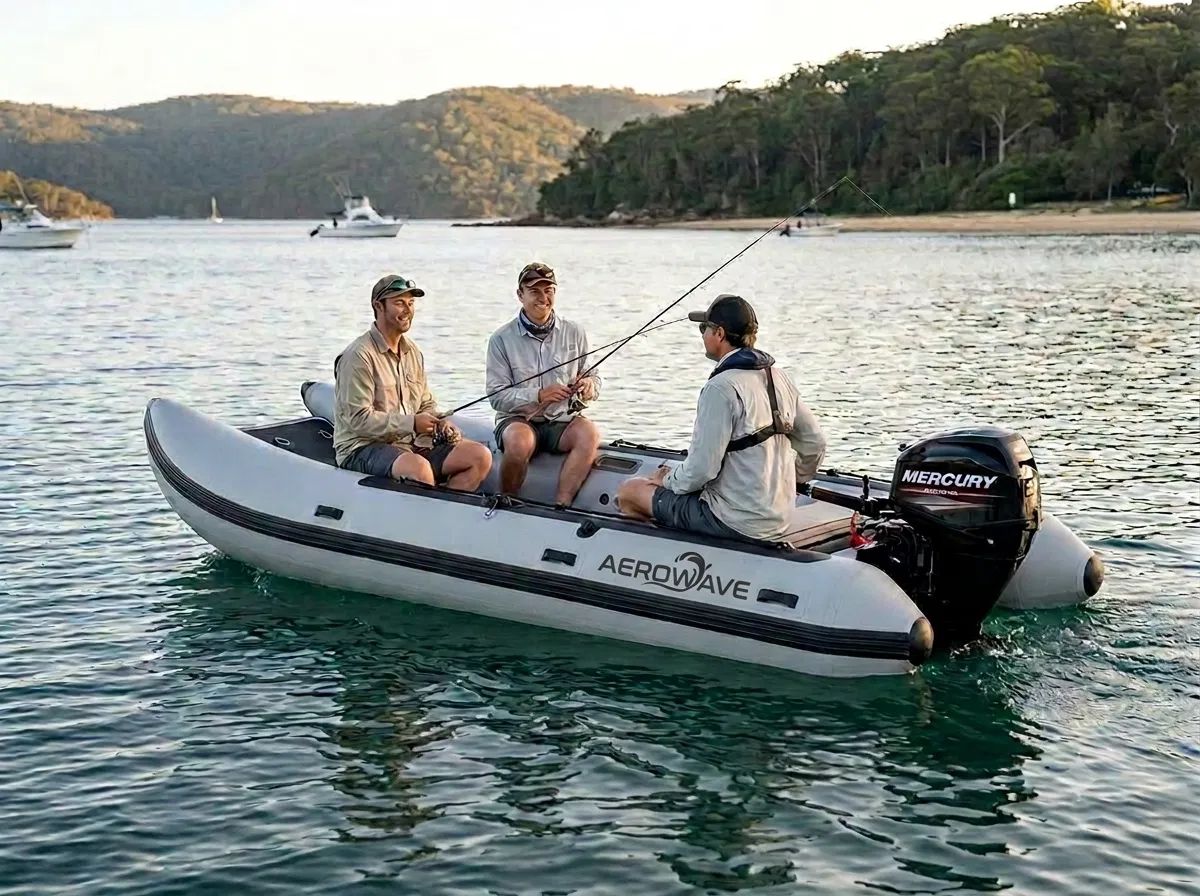
Aerowave Viper 400 Sovereign
US$4,701 USD · delivered to your door