Best Inflatable Fishing Boats Australia 2026
Remote estuaries, shallow creeks, beach launches with no ramp, and those awkward trips where you’ve got an SUV full of camping gear but still want a proper fishing platform. That’s often when anglers consider inflatable…
At a glance
Remote estuaries, shallow creeks, beach launches with no ramp, and those awkward trips where you’ve got an SUV full of camping gear but still want a proper fishing platform. That’s often when anglers consider inflatable…
- The Modern Angler's Secret Weapon for Australian Waters
- Why an Inflatable Boat is Your Ticket to Adventure
- Portability that actually changes how often you fish
- Stability where it matters
What we'd put you in
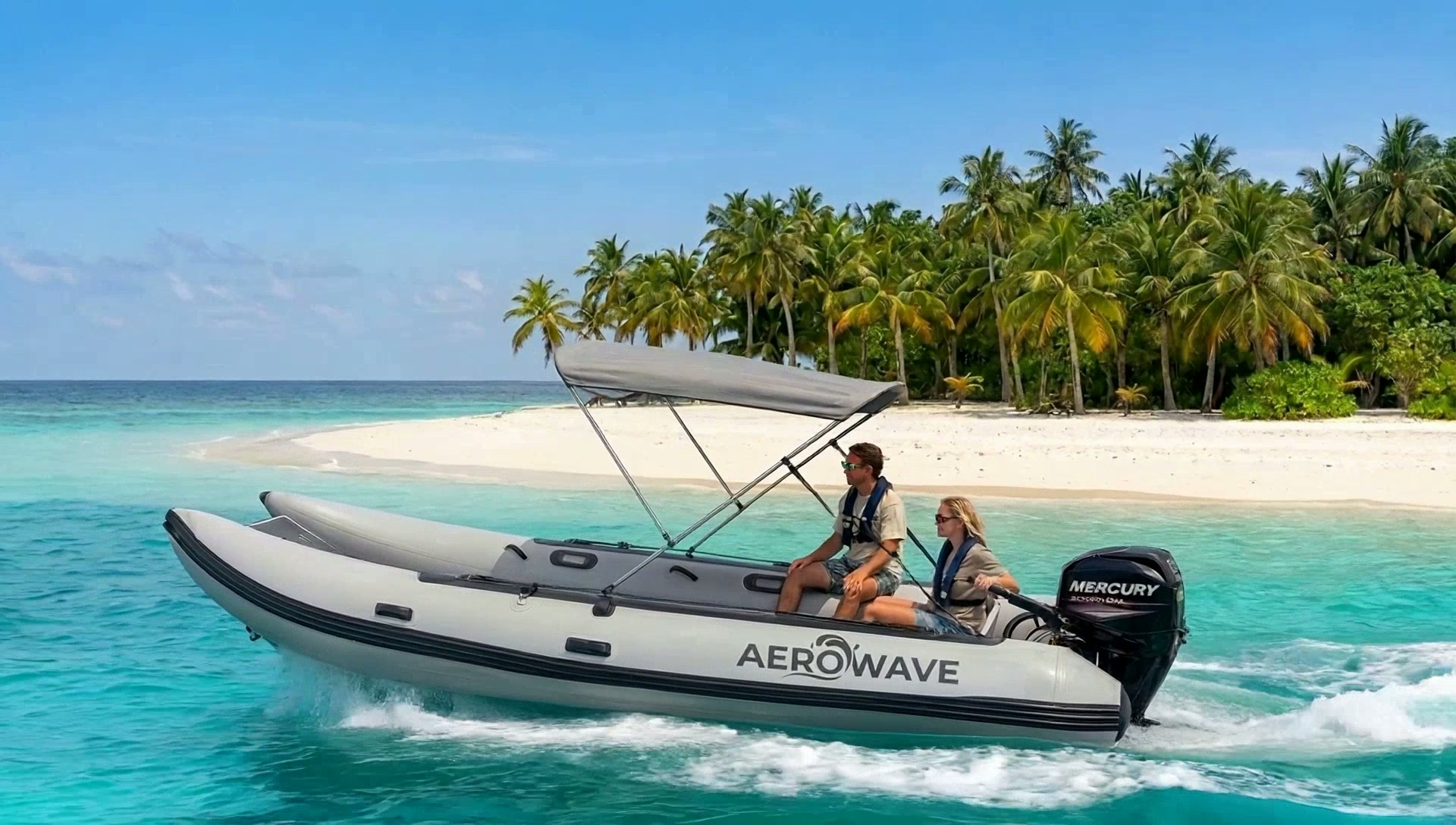
Aerowave Viper 400 Open Bow — Sports Package
Open bow, heavy-duty rod holders, and deck space you can actually fish from.
US$3,027 USD
Delivered to your door, today's rate
- Free freight to United States · local taxes payable on arrival
- 7-year hull warranty
🇺🇸 Shipping to United States · landed price quoted in writing
Yes — we ship the Aerowave Viper 400 Open Bow — Sports Package to United States. Here's the landed price.
Open bow, heavy-duty rod holders, and deck space you can actually fish from.
Written for Australian readers — but the boat ships to you. We are an Australian builder and this article is written from Australian waters. That changes nothing about what you can order: the same hull, the same 7-year warranty and the same certification go out to United States every week.
Aerowave Viper 400 Open Bow — Sports Package
- Boat package (export price)
- US$3,561
- 15% tariff relief credit
- − US$534
- Express air freight to United States
- Included
- Import duty, taxes & customs clearance
- Payable on arrival
- Estimated landed, USD
- US$3,027
Indicative, converted at today's rate, before local duty and tax on arrival. Ask below and we'll put a fixed figure in writing, valid 30 days.
- 7-year hull warranty
- 1500 GSM / 1.2 mm VALMEX® Heavy Plus hull
- CE certified to ISO 6185-3 and EU Directive 2013/53/EU
- Door-to-door, tracked the whole way
Your price, delivered to your door — freight included.
We email the full PDF quote (spec, freight, finance, WavePay) to your inbox in under 60 seconds. No spam — one quote, one follow-up.
See it for yourself
Real boats. Real owners. Real people behind them.
Plenty of what you read online these days is generated. Check us out properly — the factory, the reviews and the owners are all one click away. Why we use AI, and how to check we’re real
How our boats are built
Walk the production line: thermo-welded seams, 1.2 mm VALMEX Heavy Plus hulls, over-pressure relief valves on every chamber.
See the buildGoogle Maps reviews
Real Australian owners, five stars, published on our Google Business Profile with the map — read them there, not just on our own site.
Open Google Maps reviewsOwner stories
Boats in use — offshore, on rivers, on rescue duty. Photos and words from the people who actually own them.
Read owner storiesRemote estuaries, shallow creeks, beach launches with no ramp, and those awkward trips where you’ve got an SUV full of camping gear but still want a proper fishing platform. That’s often when anglers consider inflatable fishing boats australia, and usually for the same reason. A hard boat solves one problem and creates three more. You need a trailer, more storage, more setup time, and a lot more effort for quick sessions.
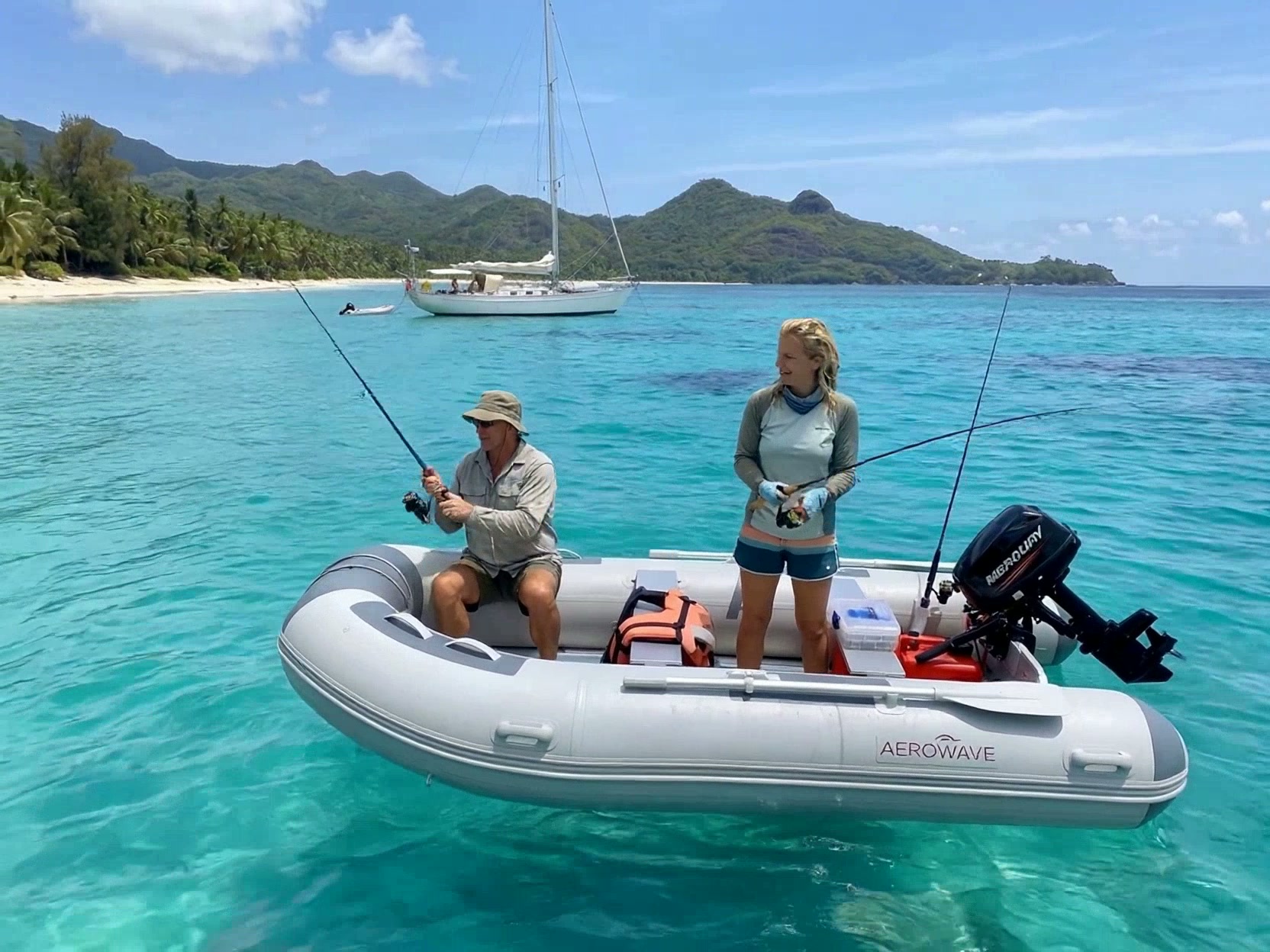
Modern fishing inflatables changed that. They’re no longer an afterthought for tenders or holiday use. The right hull, the right floor, and the right fabric turn an inflatable into a serious platform for bream in skinny water, flathead on the drift, or snapper missions close inshore when conditions allow.
The biggest mistake buyers make is assuming all inflatables are roughly the same. They’re not. A cheap soft hull built around basic PVC behaves very differently from a purpose-built catamaran or a well-made RIB with a rigid floor and a proper transom. In Australian conditions, those differences show up fast. Salt, sun, abrasive beach launches, and long drives into remote country punish weak seams and flexible floors.
That’s why the conversation has to start with how you’ll use the boat. Solo estuary lure casting is one thing. Carrying a mate, rods, safety gear, and a small outboard into exposed bays is another. Material quality, deck rigidity, and hull shape decide whether your boat feels confident under you or constantly compromises the day.
The Modern Angler's Secret Weapon for Australian Waters
A lot of anglers want the same thing. They want to fish water that bigger boats don’t reach easily, and they want to do it without turning every trip into a towing exercise.
That usually means places like back creeks off tidal rivers, shallow flats behind a sand spit, or a quiet stretch of coastline where carrying a boat down the beach makes more sense than queuing at a ramp. A conventional tinny can do some of that. It just asks more from you every step of the way.
An inflatable fishing boat suits the way many Australians boat now. Pack it into the vehicle, launch where access is practical, fish skinny water, and stow it again without needing a dedicated trailer setup parked at home. That matters for caravanners, families with limited garage space, and anglers who prefer short, spontaneous sessions over elaborate planning.
What surprises most first-time buyers is how capable a modern setup feels once it’s on the water. The tube design gives a reassuring platform at rest. The right floor gives you something solid underfoot. A proper transom lets you run an outboard without the stern feeling vague or overloaded.
Some of the most productive fishing water in Australia is the water that rewards portability more than raw speed.
For Australian use, that portability only works if the boat is built for local punishment. Beach sand, oyster racks, salt residue, and harsh sun expose weak construction quickly. A well-designed inflatable isn’t a novelty. It’s a practical tool for anglers who want access first, simplicity second, and enough stability to fish properly once they arrive.
Why an Inflatable Boat is Your Ticket to Adventure
The appeal isn’t hard to understand. You can keep an inflatable in the car, in the caravan, or on the roof setup for a trip and decide on the day whether you’re launching from a ramp, a sandy edge, or a remote shoreline.
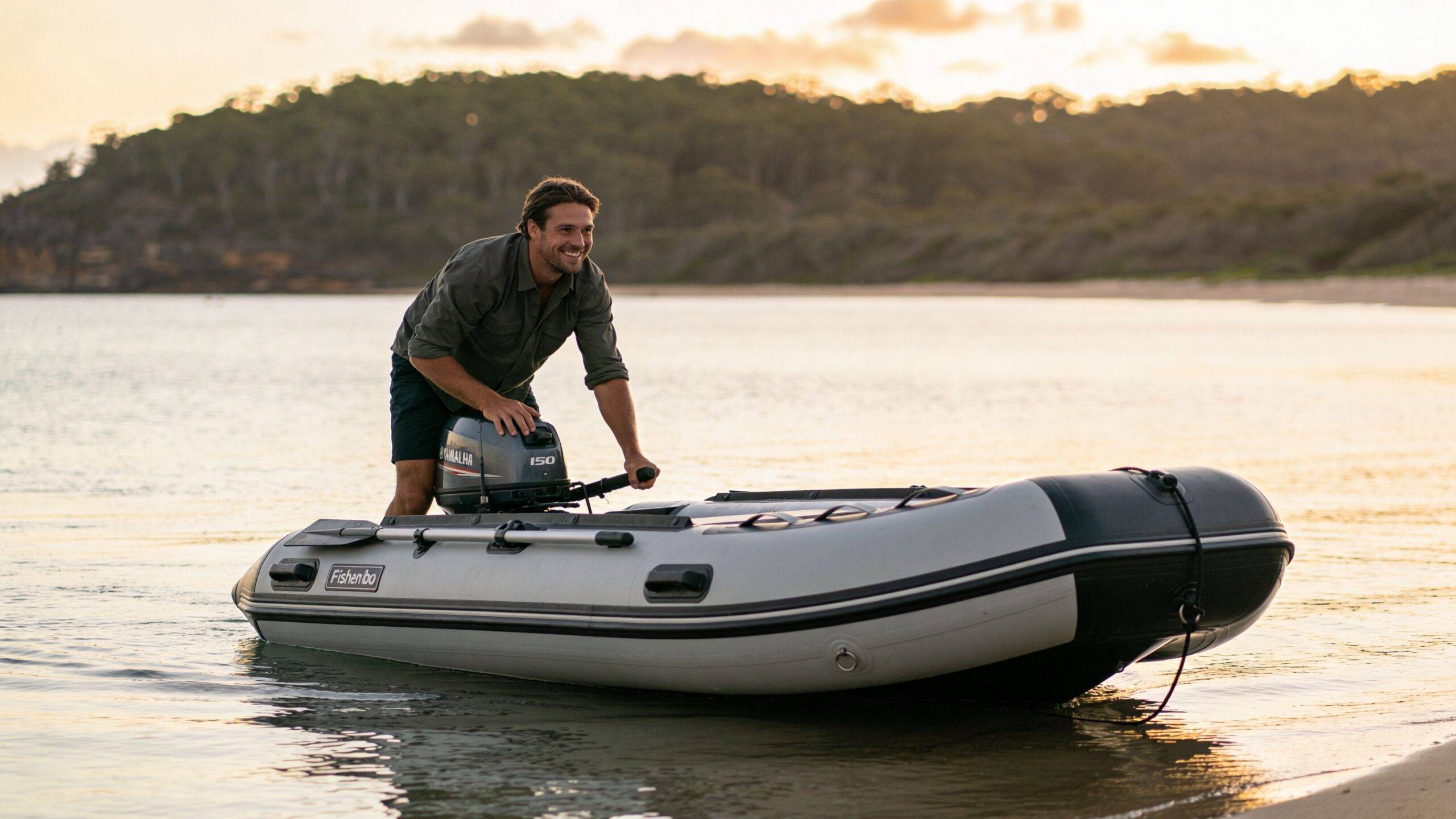
That flexibility suits the Australian boating pattern well. Boating is the top recreational water activity in Australia, chosen by 32% of boaters, with fishing close behind at 29%, and a typical 4-metre RIB weighs just 50 to 80kg, about half the weight of a comparable tinnie according to Grand Boats Australia’s look at why RIBs are growing in local use. For anyone travelling by SUV or RV, that weight difference changes what’s practical.
Portability that actually changes how often you fish
A trailer boat can become a commitment. You think about parking, reversing, bearings, wash-down, and whether the trip is worth the hassle for a short session. An inflatable cuts that friction down.
Three real advantages stand out:
- Less storage stress: You can keep many inflatable setups in bags or compact storage spaces instead of dedicating a driveway or side access area to a trailer.
- Easier transport: Lightweight hulls suit travellers who already carry camping or touring gear and don’t want another bulky item behind the vehicle.
- Faster launches: Carrying the boat to the water or setting up near the shoreline opens spots that don’t have formal ramps.
Stability where it matters
A fishing platform doesn’t need to be fast first. It needs to feel settled when you shift your weight, reach for gear, or stand to cast. That’s where modern inflatable layouts earn their place.
Large tubes create buoyancy out wide, so the boat feels forgiving at rest. For lure fishing, bait fishing, or simple family use, that translates into less rocking when people move around. In calm estuaries that’s comfortable. In light coastal chop it’s often the difference between fishing well and bracing all day.
A short on-water example helps show what that looks like in practice:
Access that hard boats often can’t match
The other strength is where these boats can go. Shallow creeks, narrow drains, and beach-launched sessions are all easier when draft stays low and total weight stays manageable.
Practical rule: If your fishing plan depends on reaching awkward water rather than running long distances fast, portability and shallow access matter more than top-end speed.
That’s why inflatable fishing boats australia buyers often lean toward them after years of owning something larger. They’re not trying to replace every type of boat. They’re choosing the boat that gets used more often.
Choosing Your Hull Monohull vs Inflatable Catamaran
Hull choice decides how the boat feels under you. Not how it looks on a product page. Not how it sounds in a sales pitch. How it behaves when a mate shifts across the deck, when a breeze hits the beam, or when you’re drifting and trying to stay balanced while working a lure.
How the two designs differ on the water
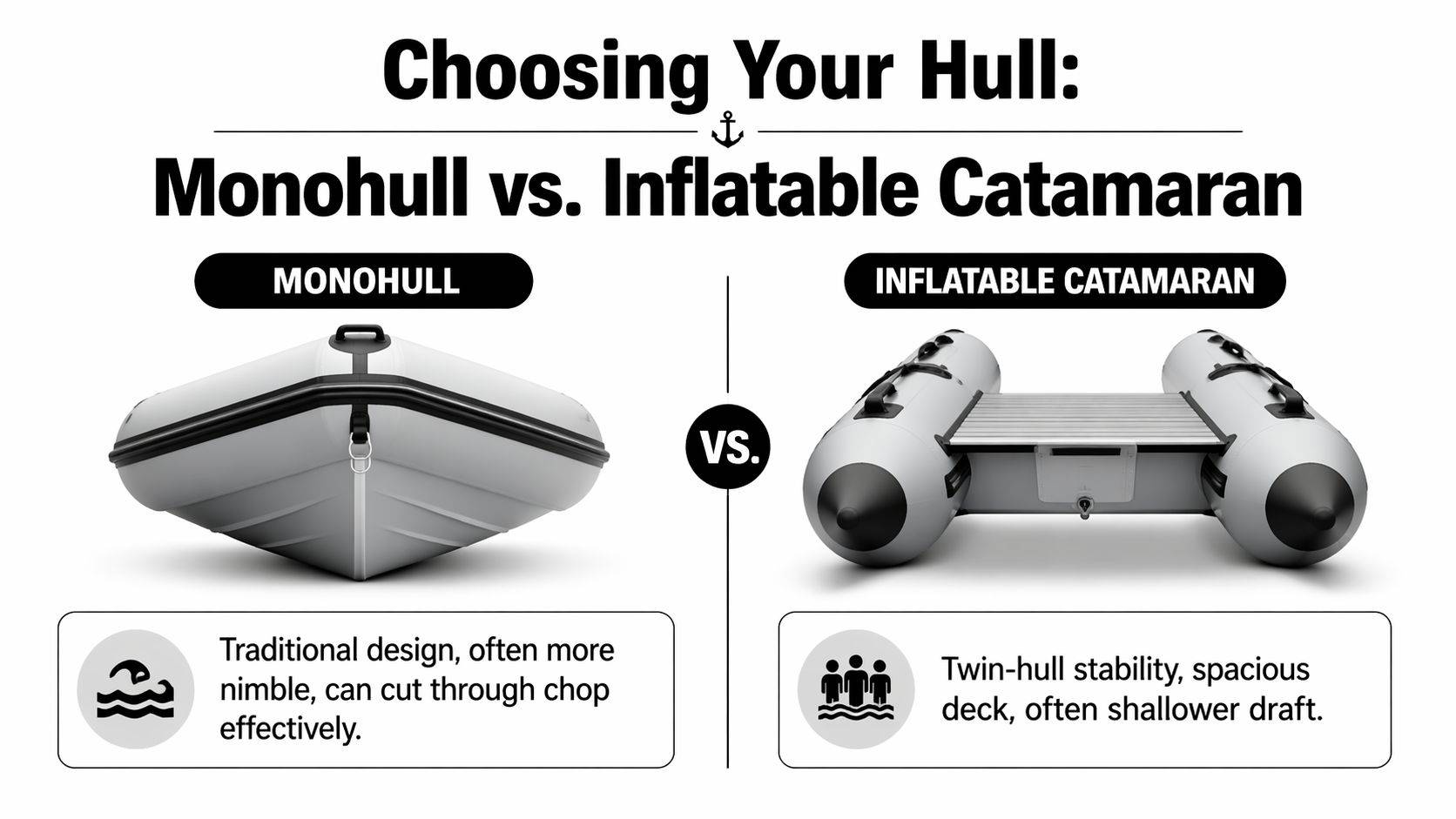
A monohull inflatable uses a single main hull shape. In V-hull form, it tends to cut into chop more traditionally and can feel nimble underway. That can suit buyers who value straightforward handling and compact packing.
An inflatable catamaran uses twin hulls with a tunnel between them. It rides on a broader footprint, spreads load differently, and usually feels calmer laterally when people move.
Here’s the practical difference.
| Hull type | What it tends to suit | Main trade-off |
|---|---|---|
| Monohull inflatable | General-purpose boating, simpler layout, buyers who want familiar handling | More side-to-side movement at rest |
| Inflatable catamaran | Fishing, drifting, standing casts, carrying gear with less roll | Wider platform can feel less compact in storage and handling ashore |
Why catamarans suit fishing so well
For anglers, lateral stability matters more than many first-time buyers realise. You notice it when one person leans to lip a fish, when you both stand on the same side, or when the drift picks up over broken ground.
Inflatable catamaran designs such as the 3.6m Aerowave series reduce roll by up to 50% compared with monohull inflatables, and they can maintain less than 5° of heel under a 300kg offset load compared with more than 15° for V-hulls, as outlined in Skip Inflatables’ technical comparison. On the water, that means a platform that stays calmer while you cast, re-rig, or move around.
That’s the reason serious inshore anglers often prefer twin-hull layouts. The boat sits on the water with less tendency to pivot around one centreline. In wind-against-tide conditions, that extra steadiness is noticeable straight away.
What works for estuaries and what works offshore
Not every fishing job asks the same thing from the hull.
- Estuary and river work: Catamarans are hard to ignore if stability, shallow draft, and standing room are the priority.
- General family and mixed use: A monohull can still make sense if the boat needs to serve as an all-rounder first and a fishing platform second.
- Nearshore coastal sessions: Either can work if matched properly to conditions, load, and motor, but anglers who drift and cast usually appreciate the catamaran’s steadier stance.
For buyers comparing layouts, inflatable catamaran options in Australia are worth examining side by side with traditional monohull designs because the hull form changes the fishing experience more than most accessories ever will.
A stable hull doesn’t just feel nicer. It lets you fish better because you spend less attention balancing and more attention reading the water.
If your main goal is casting, drifting, lure work, or carrying family and gear without constant side roll, the catamaran layout is usually the more convincing fishing tool.
Decoding Materials and Construction for Aussie Conditions
A boat can look fine in a showroom and still be the wrong boat for Australian use. The stress here isn’t theoretical. It’s beach sand grinding under the hull, hot surfaces in summer, salt drying into every fold, and regular inflation cycles that expose weak seam work.
Fabric quality decides how long the boat stays convincing
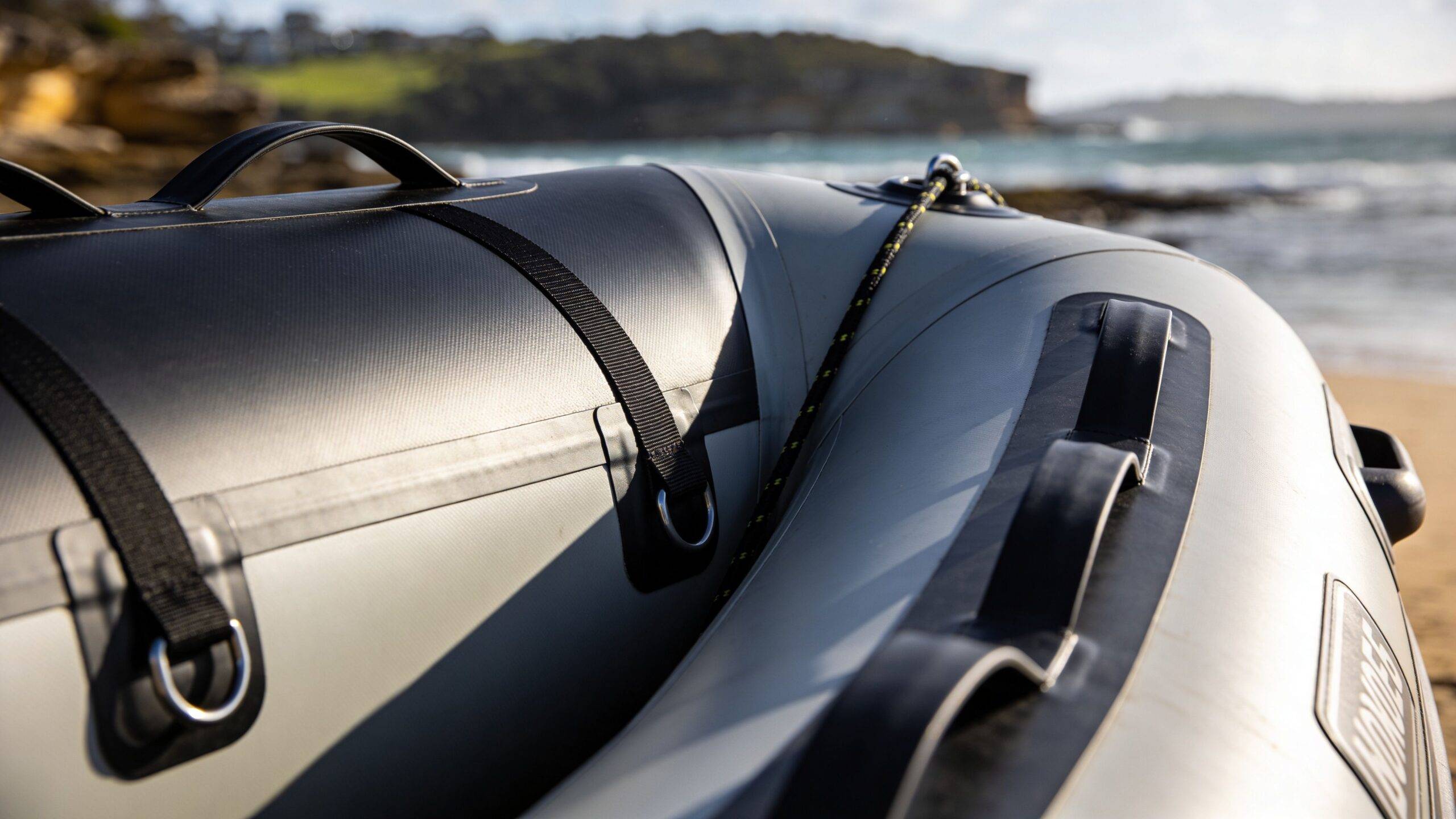
Not all PVC is equal. Denier, coating quality, and thickness all affect how the hull resists abrasion, flex, and long-term wear. For fishing boats, that matters because rods, tackle, sinkers, beach launches, and rough shorelines create more punishment than casual tender use.
In Aerowave designs, 1.2mm 2000D German Valmex PVC with thermo-welded seams delivers tensile strength exceeding 3000 N/5cm and 40% better abrasion resistance than standard PVC, while maintaining rigidity under 22 PSI air deck pressure according to Easy Inflatables’ guide to motor-ready inflatable setups. In plain terms, that means a hull that resists wear better and a floor system that feels firmer underfoot.
If you’re comparing premium PVC against Hypalon, this breakdown of Hypalon vs German Mehler 1.2mm PVC material helps clarify where each fabric makes sense.
Why seam construction matters more than people think
Most buyers look at tube size and ignore seams. That’s backwards. Seams often decide longevity.
Here’s the practical hierarchy:
- Thermo-welded seams: Better suited to repeated inflation cycles and heat exposure. They remove a common weak point found in lower-grade builds.
- Well-reinforced high-pressure floors: More rigidity means less flex when anglers stand, shift weight, or lean over one side.
- Solid transom construction: A proper aluminium transom gives the motor a stable mounting point and reduces stern flex.
A cheap hull with a soft floor can still float. It just won’t fish well. You feel that first through foot movement, then through boat trim, then through confidence.
What to inspect before you buy
A buyer doesn’t need to be an engineer. You just need to inspect the parts that fail first on poor-quality inflatables.
| What to check | Why it matters on the water |
|---|---|
| Tube fabric and underside reinforcement | Handles abrasion from sand, ramps, and rough shoreline contact |
| Seam finish | Weak seam work shortens lifespan and increases maintenance headaches |
| Air deck pressure capability | Higher rigidity improves footing and overall stability |
| Transom design | Supports the outboard securely and helps preserve handling |
In Australian boating, construction quality isn’t a luxury upgrade. It’s what stops a portable boat becoming a short-term purchase.
For inflatable fishing boats australia buyers, the material conversation isn’t marketing fluff. It’s the difference between a boat that still feels tight and dependable after regular use, and one that starts feeling tired far too early.
Essential Features for the Australian Angler
Fishing performance comes from how the parts work together. A hull might be stable, but if the deck flexes, the transom feels soft, and your gear has nowhere sensible to go, the boat won’t feel properly set up.
The features that actually improve fishing
Some upgrades are cosmetic. Some change the whole session.
A rigid-feeling floor is one of them. For drifting, lure casting, and sight-fishing in the shallows, you want a surface that doesn’t feel spongy every time you reposition. Inflatable fishing boats also suit drifting techniques because two anglers can stand and fish simultaneously due to their stability, while soft inflatables sit at $500 to $2,000 and coastal-ready RIBs and catamarans range from $2,000 to $20,000 with support for 20 to 50hp motors, as explained in Social Fishing’s look at inflatable boat drifting.
The rest of the package should support that stable base:
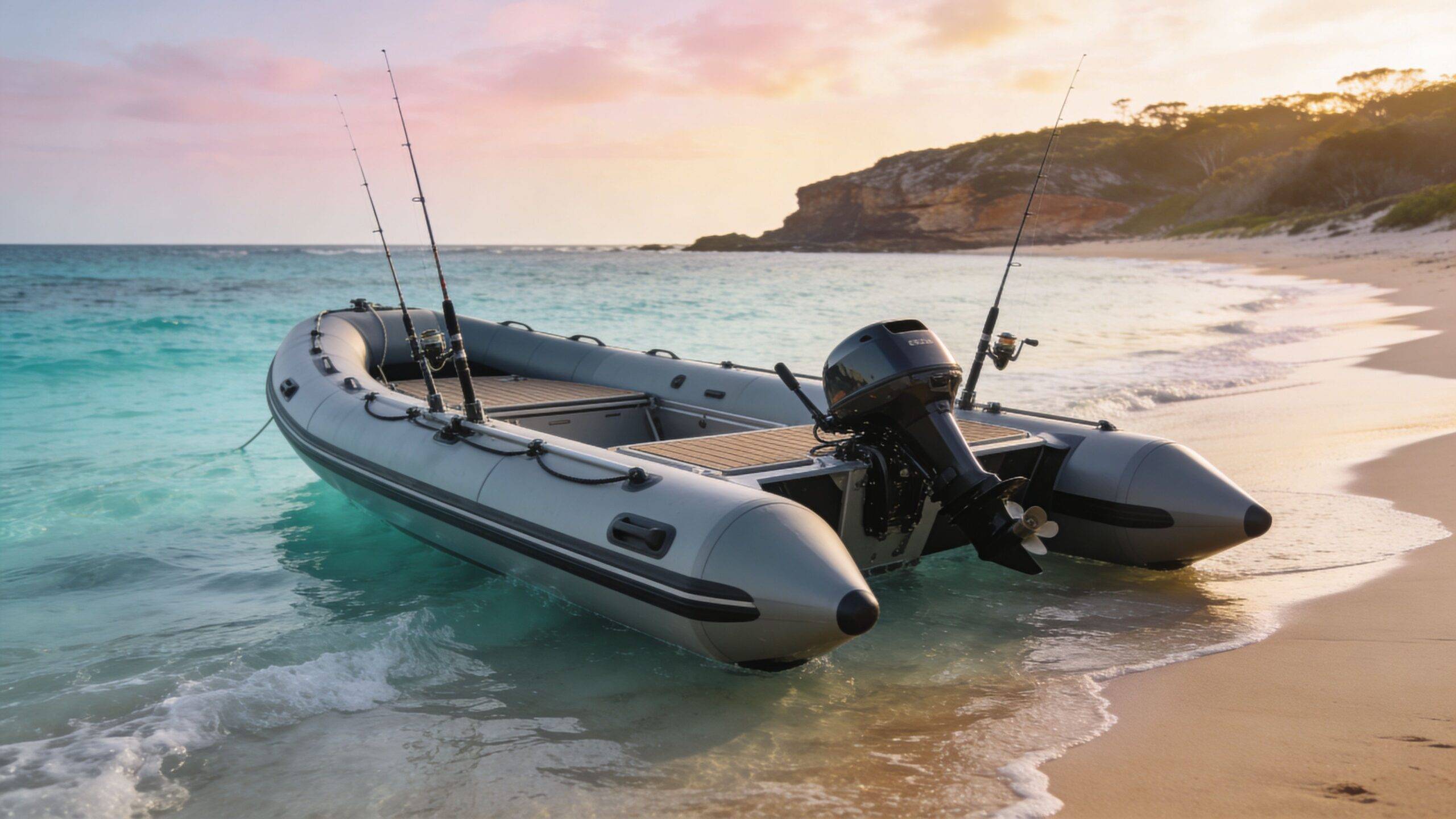
- Rod holders: Fixed in practical positions so rods stay out of the floor and clear of feet.
- Attachment points and storage bags: Important for tackle, safety gear, and keeping the deck uncluttered.
- A proper transom: Necessary if you want clean motor response rather than stern flex.
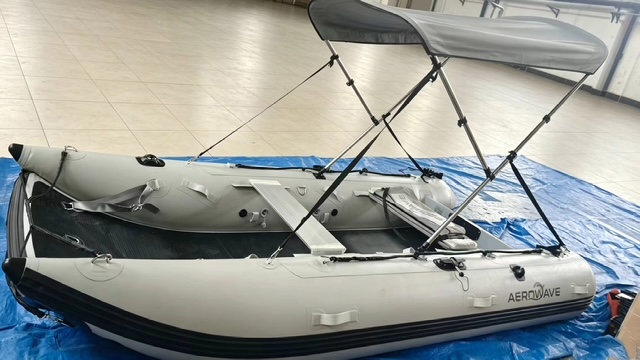
- Bimini compatibility: Worth considering for long summer sessions when shade becomes part of endurance, not comfort.
A good fishing layout reduces small frustrations
A poor layout wastes time. You’re stepping over tackle trays, moving rods to reach the fuel line, and trying not to stand on gear while the current pushes you past the edge you meant to fish.
A better layout feels obvious once you use it. Rods are secure. The deck stays clear enough to cast. The floor supports your feet. The sonar and gear sit where you can read and reach them.
For buyers looking at purpose-built packages, fishing inflatable boat options show the kind of configuration that suits actual angling use rather than generic recreation.
Safety gear needs to match the platform
Portable boats still need proper safety thinking. Compact doesn’t mean casual. One of the simplest upgrades is using correctly fitted inflatable life jackets when space and comfort matter, especially if you’re casting, moving often, or fishing warmer conditions where bulky PFDs tend to get ignored.
The best fishing accessory is the one that stays out of your way until you need it.
In practical use, the strongest setups are the ones that combine a stable hull, a firm floor, secure rod storage, and enough deck discipline that two anglers can fish without constantly reorganising the boat around them.
Sizing Your Boat Motor and Navigating Legal Waters
Boat size gets chosen badly when buyers shop by ambition instead of use. A bigger platform sounds safer, but if it’s too awkward to transport, inflate, launch, or store, it won’t see enough water time to justify itself.
Match the size to the way you fish
A compact boat suits solo lure work, quick sessions, and tight storage. A larger boat starts to make more sense when you regularly carry a second angler, extra tackle, camping gear, or family passengers.
The right questions are practical:
- How many people will be aboard most trips? Buy for normal use, not the once-a-year scenario.
- What gear always comes with you? Batteries, safety gear, rods, anchor, tackle, and fuel add up quickly.
- Where will you launch? Remote hand-launch spots favour lighter, more manageable packages.
Load capacity matters as much as length. A boat that feels fine with one angler can become cramped and less predictable once you add another person and a full fishing load.
Motor choice should respect the hull
Outboards need to match the transom rating, shaft length, and the kind of work the boat will do. More horsepower isn’t automatically better. Too little and the boat struggles to lift and carry properly. Too much and the stern can feel heavy, trim suffers, and you move beyond what the hull was designed to handle well.
Some practical pairings stand out from the verified data. Short-shaft outboards in the 2.5 to 15HP range suit smaller 3 to 3.6m inflatable setups, particularly where short transoms are used, as noted in Easy Inflatables’ engine pairing guidance. For fishing applications, that usually means choosing enough power to plane efficiently with your real load, not the light-load fantasy version of it.
On-water habit: Choose the smallest motor that comfortably handles your usual crew and gear in the conditions you actually fish.
Registration and legal checks matter before launch day
Australian boating law varies by state, and portable boats don’t get a free pass because they roll into a bag. Motor power often triggers registration requirements, and the threshold changes depending on where you boat.
Verified examples in the source material show NSW requiring registration above 5.4HP and Queensland above 4HP, with those notes appearing in the relevant product and hull guidance already cited earlier in the article. Beyond registration, the essentials remain straightforward. Check your local state authority before launch, confirm whether your motor setup requires registration or a licence, and carry the safety gear required for your operating area.
A simple pre-launch check should include:
- Life jackets for everyone aboard
- Anchor and line suited to the area
- Communication and signalling gear where required
- A repair kit and inflation method
- Fuel, battery, and motor mounting inspection
The legal side isn’t complicated once you deal with it early. It only becomes painful when buyers assume a portable fishing boat sits outside the usual rules.
Maintenance Accessories and Turnkey Packages
Inflatables are easy to live with if you stay on top of the simple stuff. Most of the maintenance burden comes from neglect, not complexity.
The routine that keeps the boat healthy
Salt and UV are the main enemies. Rinse the boat after use, let it dry properly, and don’t bake it in direct sun for long periods when it’s not being used. Pay attention to the floor, seams, valves, and transom area because those are the places that tell you early whether the boat is ageing well.
The local environment makes this more important than many buyers expect. The Australian inflatable boat market reached $25M in 2024 and grew 7.3%, while premium materials like Hypalon can last 10 to 15 years, but intense Australian UV can degrade fabrics 20 to 30% faster than in Europe, according to Easy Inflatables’ discussion of inflatable boat longevity and local conditions. That’s why local warranty support and UV-aware maintenance matter.
Accessories that make ownership easier
The most useful accessories aren’t flashy. They remove setup friction and protect the boat.
A sensible shortlist includes:
- High-pressure pumps: Especially useful when the boat relies on a firm air deck for fishing stability.
- Covers and storage protection: Helpful if the boat spends time packed for travel or stored between trips.
- Extra rod mounts and bags: Keep the deck cleaner and reduce clutter around your feet.
- Repair and care items: Good to have before you need them, not after.
Buyers comparing add-ons can look through essential inflatable boat accessories to see what belongs in a practical ownership kit.
Why turnkey packages make sense for many buyers
There’s a reason complete packages appeal to first-time owners and experienced boaters alike. When the hull, motor, pump, and core accessories are selected to work together, setup is simpler and fewer mistakes happen at purchase.
That matters with portable fishing boats. A mismatched package can leave you with the wrong shaft length, the wrong pump, poor deck organisation, or accessories that don’t suit your fishing use. A well-built turnkey rig avoids that and gets you on the water faster with fewer loose ends.
Frequently Asked Questions about Inflatable Boats
Can I hire an inflatable boat in Australia before I buy?
In some areas, yes, but availability varies a lot by region and the type of boat you want to trial. Hire fleets often focus on general recreation rather than purpose-built fishing inflatables, so a hire experience won’t always reflect what a properly configured angling setup feels like. If you can’t hire the exact style you want, compare hull type, floor rigidity, and layout closely before drawing conclusions.
How does the price compare with a small tinny setup?
Entry price is one reason many buyers move toward inflatables. Verified price ranges put soft inflatables at $500 to $2,000, with coastal-ready RIBs at $2,000 to $20,000, and used options appearing lower depending on condition in the sources cited earlier. The practical comparison isn’t just purchase price, though. You also need to think about trailer costs, storage, launch convenience, and whether the boat gets used often enough to justify the whole setup.
Are inflatable boats reliable enough for Australian salt and sun?
They can be, but only if the materials and seam construction are up to the job and the owner keeps up basic care. Cheap inflatables often disappoint because corners were cut in the fabric, seams, or floor. Better materials, proper rinsing, drying, and sensible storage make a major difference over time in local conditions.
What should I ask before ordering one?
Start with the important questions, not the cosmetic ones.
- What fabric is used and how are the seams made?
- What motor shaft length suits the transom?
- What load will the boat handle in real fishing use?
- How firm is the floor underfoot?
- What warranty and after-sales support are available in Australia?
Those answers will tell you far more than colour, branding, or brochure language ever will.
If you’re narrowing down inflatable fishing boats australia and want a setup that matches how you fish, browse the range at Easy Inflatables. Focus on hull type, deck rigidity, materials, motor compatibility, and the accessories you’ll use every trip. That approach leads to a boat that gets launched often, handles properly, and keeps earning its place in the shed or the back of the car.
Explore the Aerowave range
Weekend-Proof Score 17 questions · about 2 minutes
Will the boat you're about to buy survive an Australian summer?
Seventeen straight questions about where you'll use it, what you'll ask of it and the boat you're weighing up. You get a score out of 100, the exact weak points in your plan, and the one boat that genuinely fits.
Free · your result shows on screen · no email required
So which one is yours?
Pick how you'll actually use it and we'll take you straight to the right hull.
I want to fish it
Open bow, rod holders, deck space you can stand and cast from.
Viper Sport 400Family, diving and the beach
3.8 m Series 3 catamaran — low bow to climb back in wearing fins or a tank.
WaveRunner 380Tender / one-person launch
3.3 m hard-floor boat that packs into a bag and still takes a beach landing.
Viper 330Shop gear featured in this guide
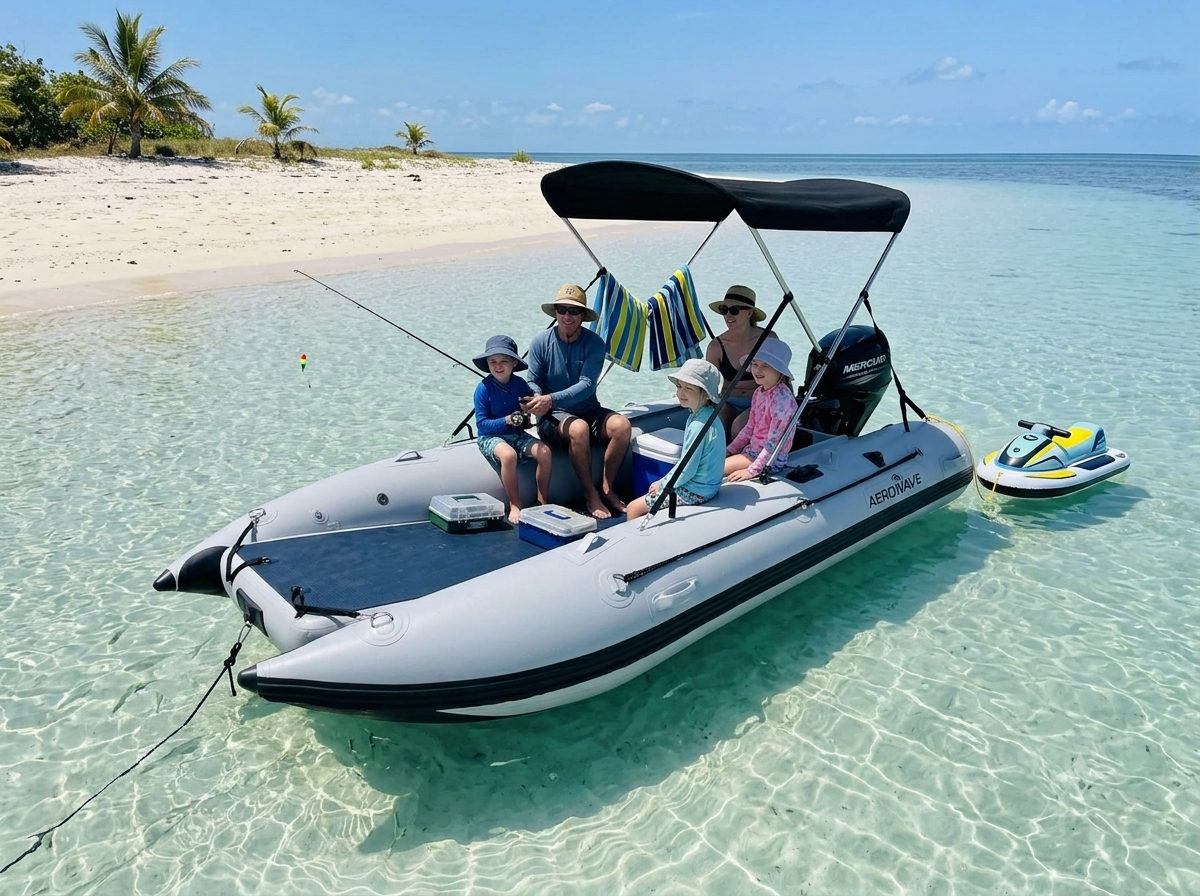
Aerowave WaveRunner 380 Series 3 Catamaran Package
The WaveRunner 380 Series 3 is a premium 3.8m inflatable catamaran package built for Australian and worldwide families, fishing, and coastal day boating — ideal for snorkeling and spearfishing — offering serious stability and premium German Valmex® construction.
Free freight to United States · local taxes payable on arrival
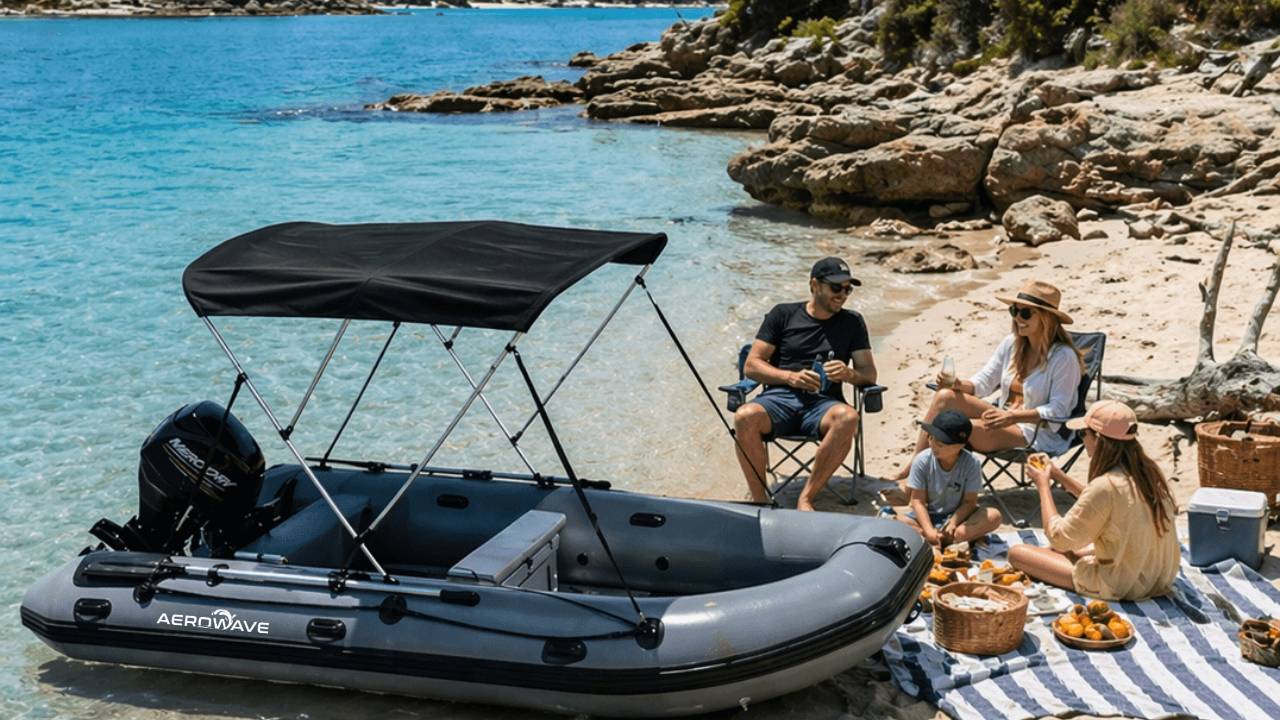
Aerowave Viper 400 Sovereign
Flagship 4m enclosed-bow inflatable catamaran. German VALMEX® 7321 Heavy Plus 1.2mm commercial-grade fabric, 10 PSI high-pressure drop-stitch air deck floor with VALMEX non-slip surface, LockPro wheels, full Bimini and FREE express delivery Australia-wide included. Winter special — save $1,000 until 31 August 2026.
Free freight to United States · local taxes payable on arrival
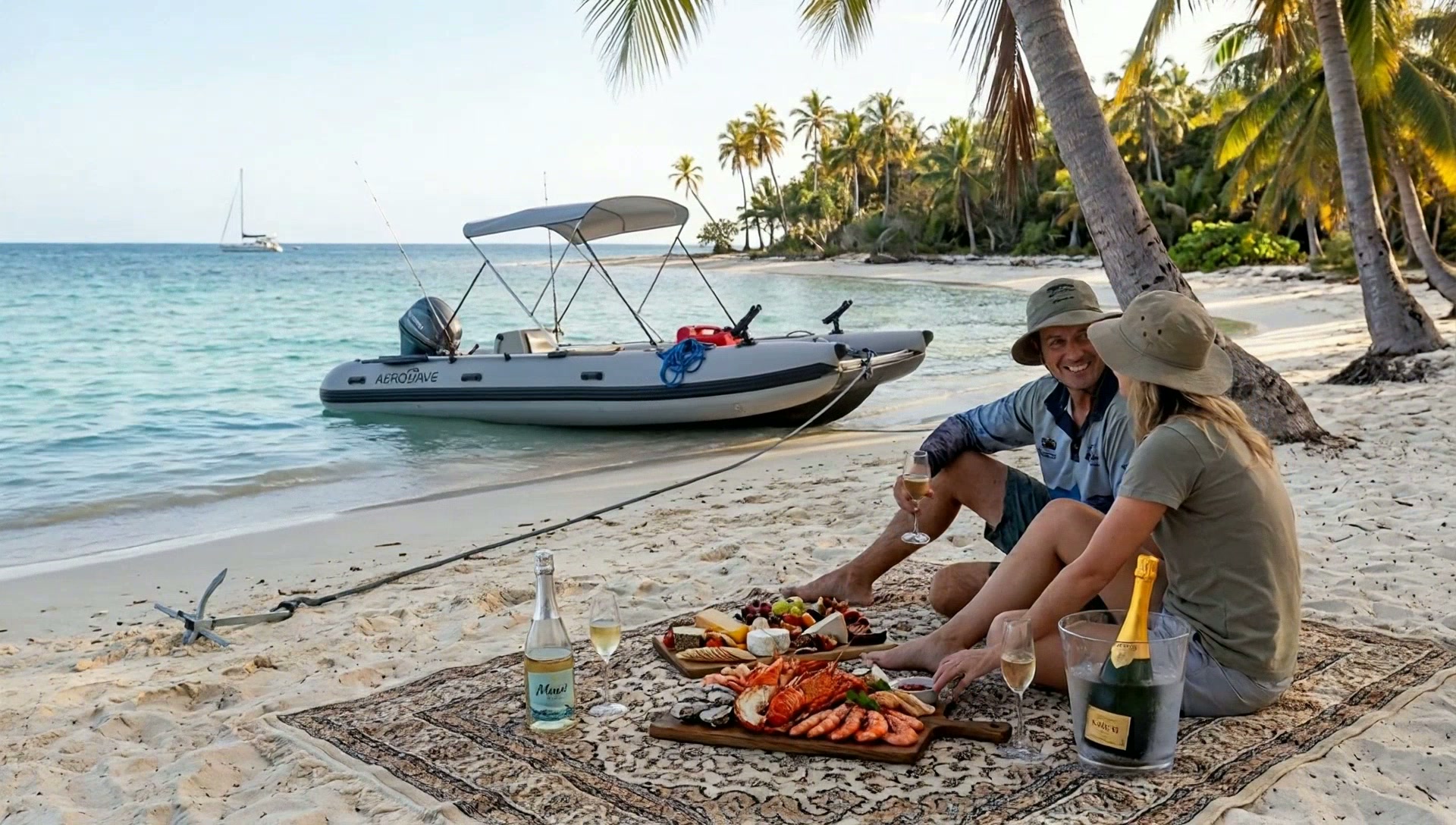
Aerowave Viper 365 Open Bow
Premium 3.65m Inflatable catamaran — built the same way as our flagship Viper 400 sports boat, just 35cm shorter. German VALMEX® 7321 Heavy Plus 1.2mm commercial-grade fabric, 10 PSI high-pressure drop-stitch air deck floor with VALMEX non-slip surface, LockPro wheels, full Bimini and FREE express delivery Australia-wide included.
Free freight to United States · local taxes payable on arrival
Not sure which suits you? Talk to a real boat owner.
Before you spend a cent
Buying from Australia, delivered to United States
You have never heard of us, we are on the other side of the world, and the internet is full of fakes. Fair enough. Here is everything you would need to check us out, in one place — no forms, no chat bot.
Australian designed business
Easy Inflatables, Avoca Beach NSW 2251. ABN 96 856 548 613. International orders ship from our Hong Kong hub.
222 owner reviews, 4.8 average
Read them in full, good and bad, on our reviews page.
CE certified, 7-year hull warranty
ISO 6185-3 and EU Directive 2013/53/EU. Warranty honoured worldwide.
Tracked, insured, door to door
FREE freight to United States · local tax/duty on arrival.
- Who am I actually buying from?
- Easy Inflatables, Avoca Beach NSW 2251, Australia. ABN 96 856 548 613. Sean is the owner and skipper, Gary Stewart handles sales on +61 2 4335 1603, Karen Matthews handles email. The boats are Australian designed; international orders ship from our Hong Kong dispatch hub so your landed price stays competitive. Phone us before you pay a cent — a real person answers.
- Is this really an Australian product?
- Yes — Australian designed and engineered on the NSW Central Coast. Manufacturing is done offshore to our spec, and international orders ship direct from our Hong Kong dispatch hub. If we routed every boat through Australia first, the freight alone would roughly double or triple your cost for the same hull.
- What do I pay, and what is not included?
- The delivery and import terms depend on your country. EU, UK, New Zealand and named Asia/Pacific lanes include duty and tax; US freight is free but US buyers pay import charges on arrival. Other destinations show their terms before payment.
- How do I pay safely?
- Card through Stripe (Visa, Mastercard, Amex, Apple Pay, Google Pay) or bank transfer. Card payments carry your bank's own dispute protection. We never ask for crypto, gift cards or payment to a personal account.
- What if it arrives damaged?
- Every boat ships fully tracked and insured door to door. Photograph the carton and the boat on arrival and email us — transit damage is claimed and replaced through us, not left with you and the courier.
- Is the warranty real outside Australia?
- Yes. The 7-year hull warranty on 1.2 mm VALMEX Heavy Plus and Orca Hypalon hulls applies wherever you are. Replacement parts are held in Australia and at our overseas hub and go out by express courier to your door.
- Is the boat actually certified?
- All Aerowave catamarans are CE certified to ISO 6185-3 and EU Directive 2013/53/EU. Certification paperwork is supplied with the boat — ask and we will send it before you order.
Ready to set sail?
Premium German-fabric inflatable catamarans, built to order and delivered to your door. Talk to our team or browse the fleet.
Like this guide? Get the next one in your inbox.
Owner-tested tips, gear deep-dives and Aussie boating know-how — no spam.