Inflatable Sports Boats in Australia: The Definitive Guide
What separates a simple tender from a high-performance inflatable sports boat? Explore the critical differences in hull design, transom strength, floor systems, and outboard pairing.
At a glance
What separates a simple tender from a high-performance inflatable sports boat? Explore the critical differences in hull design, transom strength, floor systems, and outboard pairing.
- What is an Inflatable Sports Boat?
- Hull Shape: The Foundation of Performance
- Tender Hulls: Stability at a Standstill
- The Inflatable Catamaran Advantage: Speed and Stability
What we'd put you in
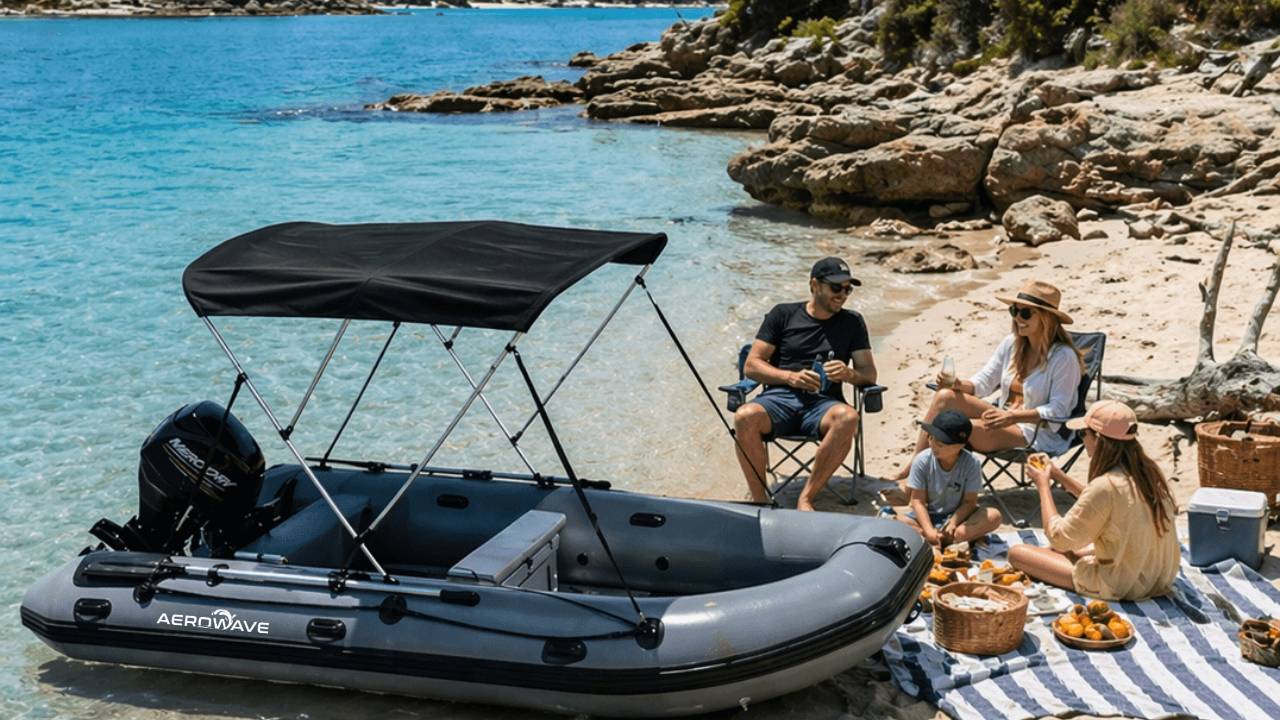
Aerowave Viper 400 Sovereign
Our best-selling boat: 4.0 m, 1.2 mm VALMEX hull, 7-year hull warranty.
US$3,167 USD
Delivered to your door, today's rate
- Free freight to United States · local taxes payable on arrival
- 7-year hull warranty
🇺🇸 Shipping to United States · landed price quoted in writing
Yes — we ship the Aerowave Viper 400 Sovereign to United States. Here's the landed price.
Our best-selling boat: 4.0 m, 1.2 mm VALMEX hull, 7-year hull warranty.
Written for Australian readers — but the boat ships to you. We are an Australian builder and this article is written from Australian waters. That changes nothing about what you can order: the same hull, the same 7-year warranty and the same certification go out to United States every week.
Aerowave Viper 400 Sovereign
- Boat package (export price)
- US$3,726
- 15% tariff relief credit
- − US$559
- Express air freight to United States
- Included
- Import duty, taxes & customs clearance
- Payable on arrival
- Estimated landed, USD
- US$3,167
Indicative, converted at today's rate, before local duty and tax on arrival. Ask below and we'll put a fixed figure in writing, valid 30 days.
- 7-year hull warranty
- 1500 GSM / 1.2 mm VALMEX® Heavy Plus hull
- CE certified to ISO 6185-3 and EU Directive 2013/53/EU
- Door-to-door, tracked the whole way
Your price, delivered to your door — freight included.
We email the full PDF quote (spec, freight, finance, WavePay) to your inbox in under 60 seconds. No spam — one quote, one follow-up.
See it for yourself
Real boats. Real owners. Real people behind them.
Plenty of what you read online these days is generated. Check us out properly — the factory, the reviews and the owners are all one click away. Why we use AI, and how to check we’re real
How our boats are built
Walk the production line: thermo-welded seams, 1.2 mm VALMEX Heavy Plus hulls, over-pressure relief valves on every chamber.
See the buildGoogle Maps reviews
Real Australian owners, five stars, published on our Google Business Profile with the map — read them there, not just on our own site.
Open Google Maps reviewsOwner stories
Boats in use — offshore, on rivers, on rescue duty. Photos and words from the people who actually own them.
Read owner storiesA tender gets you to the fun; an inflatable sports boat is the fun.
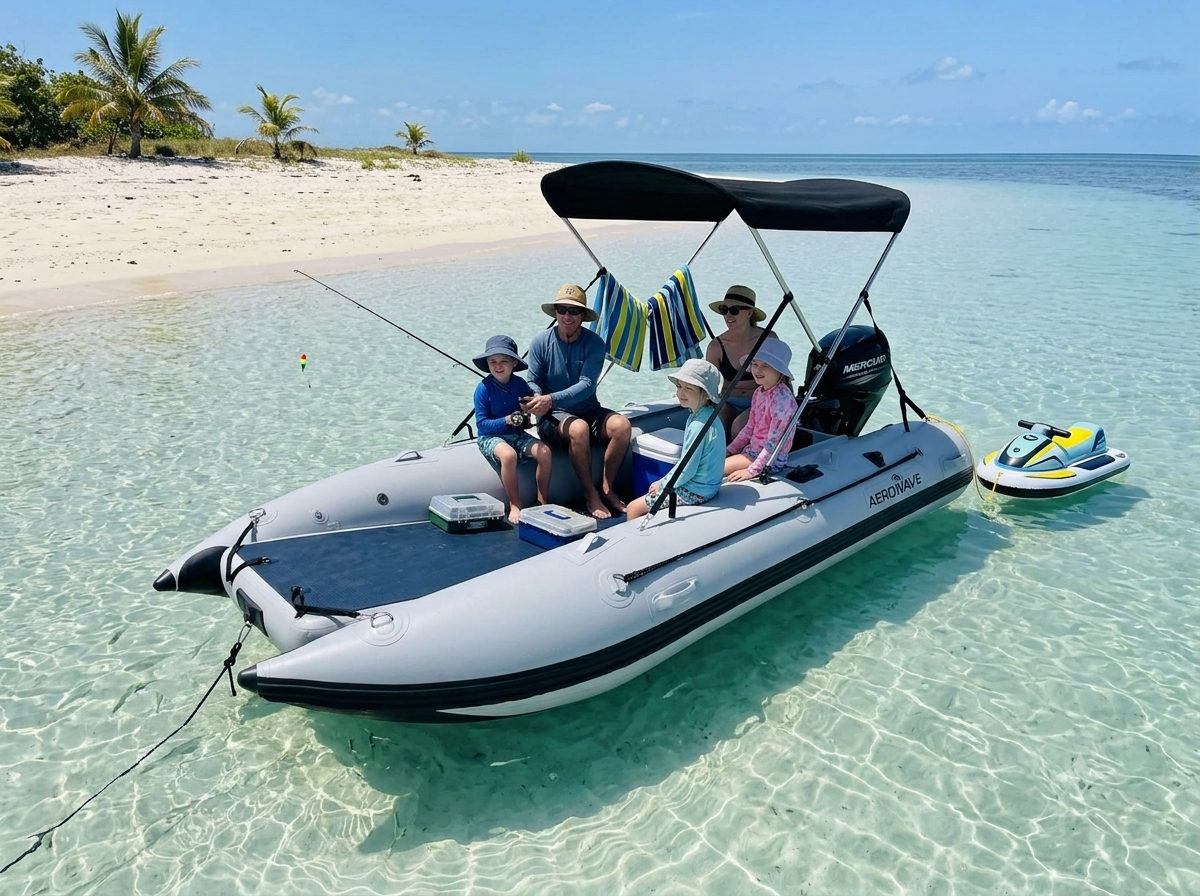
Across Australia’s harbours, estuaries, and coastlines, a quiet revolution is taking place. The humble inflatable boat, once relegated to the role of a simple ship-to-shore ferry, has evolved. Today, a new class of vessel has emerged: the inflatable sports boat (SIB). These are not your average tenders. They are sophisticated, high-performance craft engineered for speed, stability, and serious fun, blurring the lines between inflatables and their rigid-hull counterparts.
But what truly separates a purpose-built inflatable sports boat from a standard tender? The difference is far more profound than just bolting on a larger outboard. It's a fundamental distinction in design philosophy, materials, and engineering, from the shape of the hull that meets the water to the construction of the transom that holds the power. Understanding these differences is the key to choosing a boat that doesn't just meet your expectations, but completely transforms your time on the water.
This guide is the definitive resource for Australian boaters considering a high-performance inflatable. We’ll dissect the core components—hull dynamics, transom integrity, floor systems, and engine pairing—to reveal why a true sports inflatable is an entirely different beast. Whether you’re exploring the Whitsundays or fishing the Gippsland Lakes, this is the knowledge you need to make an informed choice.
What is an Inflatable Sports Boat?
An inflatable sports boat is a soft-hulled vessel specifically designed and engineered for performance at speed, superior handling in varied conditions, and greater versatility than a standard tender. Its primary purpose is recreation—coastal exploring, fishing, diving, and watersports—rather than simply low-speed, short-distance transport.
Unlike a basic tender, which prioritises portability and stability at rest, an inflatable sports boat is built around a performance-oriented hull, such as a deep V-shape or, increasingly, a catamaran design. This is paired with a heavily reinforced transom rated for a more powerful outboard and a high-pressure floor system that provides the rigidity needed to handle the dynamic forces of speed and cornering. The materials are also a step above, typically using high-tensile, heavy-duty fabrics like German-made VALMEX® to ensure longevity and resilience against the stresses of high-speed use.
In essence, while a tender is a utility craft, an inflatable sports boat is a primary vessel, offering an exhilarating and capable boating experience in its own right.
Hull Shape: The Foundation of Performance
The single most important factor defining an inflatable sports boat is its hull. The shape of the tubes and the structure between them dictates how the boat interacts with the water, affecting speed, stability, comfort, and safety. A tender's hull is built for one job, a sports boat's for another entirely.
Tender Hulls: Stability at a Standstill
Most conventional inflatable tenders feature a flat bottom or a very shallow V-hull. This design offers excellent initial stability, making it easy to board from a larger boat or a jetty. It requires minimal power to get moving and can plane relatively easily in calm water.
However, this design has significant drawbacks once you introduce speed and chop. A flat bottom slaps against the waves, creating a jarring, uncomfortable, and very wet ride. It lacks a defined keel to cut through the water, resulting in poor tracking and a tendency to slide sideways in turns. It’s a design optimised for displacement speeds in sheltered harbours, not for performance in open water.
The Inflatable Catamaran Advantage: Speed and Stability
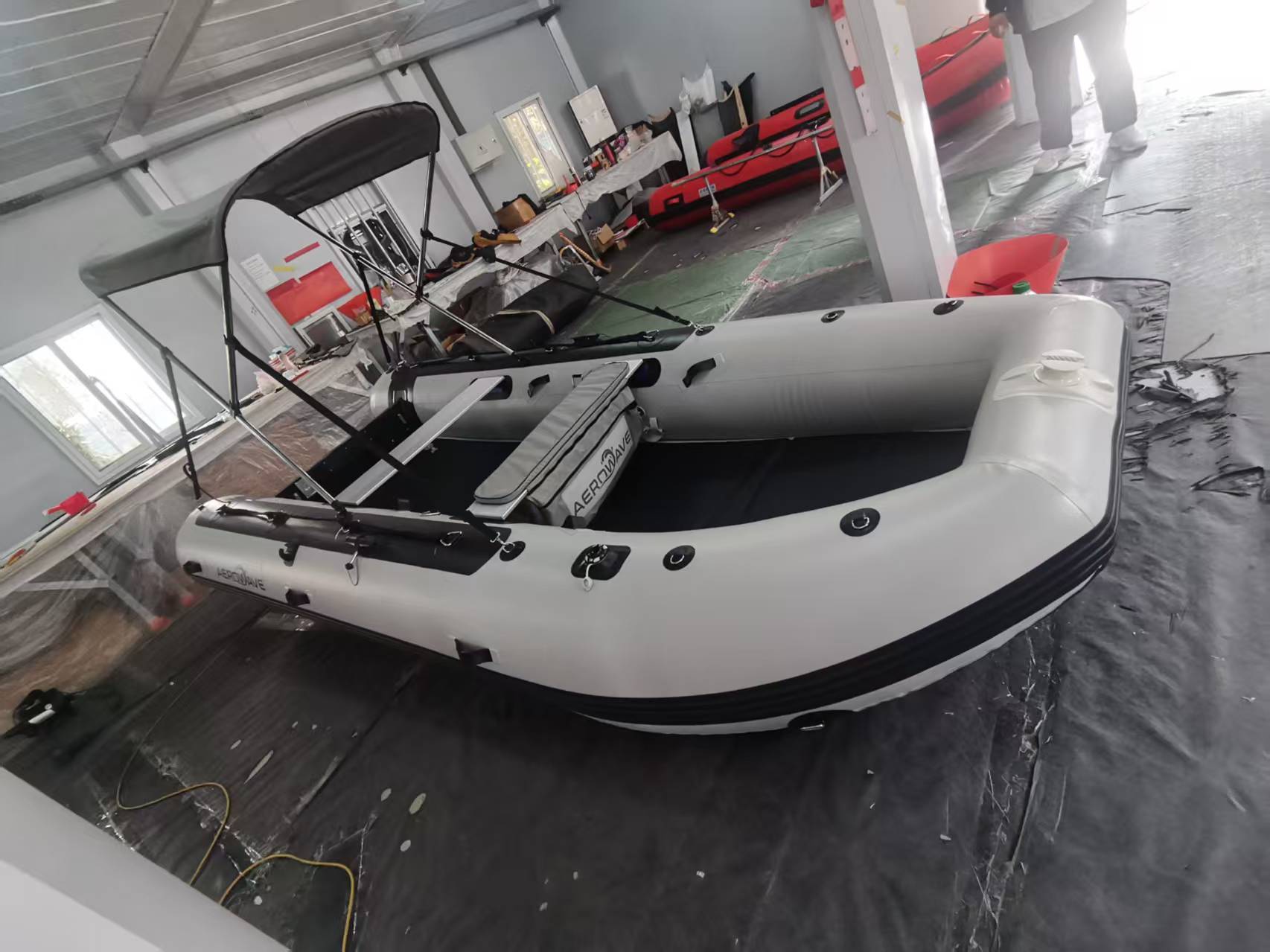
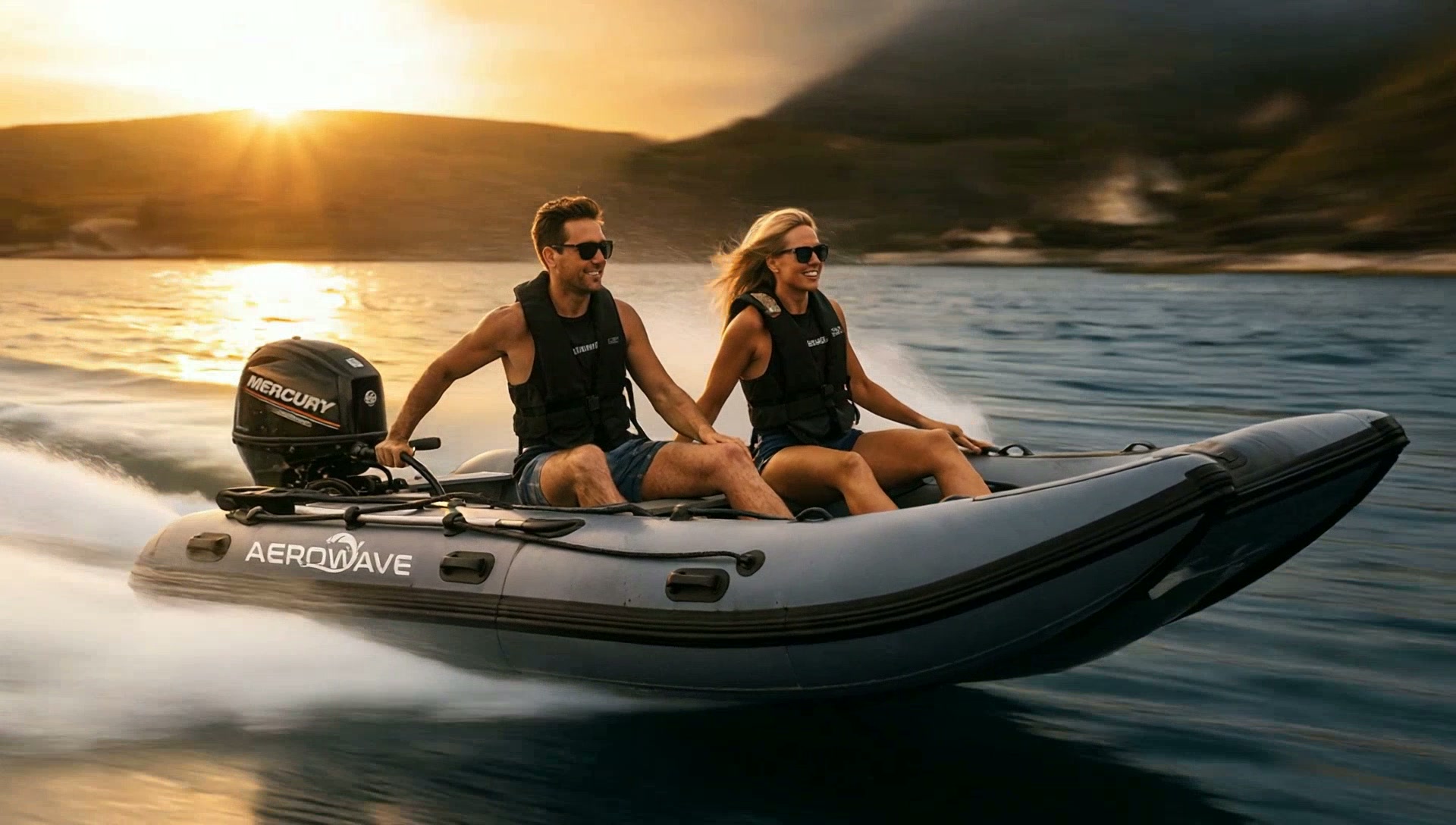
The pinnacle of modern inflatable sports boat design is the catamaran hull, as seen in the Aerowave Viper and AeroCat series. Instead of a single hull, it features two distinct, deep sponsons (the main tubes) separated by a central tunnel with a high-pressure air deck.
This design fundamentally changes the boat's behaviour:
- Aerodynamic Lift: As the boat moves forward, the tunnel between the sponsons traps a cushion of air. This cushion lifts the hull, reducing wetted surface area and, therefore, drag. The result is higher top speeds, quicker acceleration, and significantly better fuel efficiency from your outboard.
- Superior Ride in Chop: The air cushion also acts as a natural shock absorber. Instead of slapping down on waves like a flat-bottomed boat, the catamaran’s tunnel softens the impact, delivering a remarkably smooth and dry ride, even in choppy conditions.
- Incredible Stability: With two widely spaced points of contact on the water, a catamaran hull possesses immense lateral stability. It doesn't lean into turns like a monohull; it stays almost perfectly flat, gripping the water like it's on rails. This provides a huge confidence boost for passengers and skipper alike, especially at speed or in a swell.
The Aerowave Viper, built with ultra-tough 1500 GSM / 1.2 mm VALMEX® fabric, exemplifies this design. Its sharp, deep sponsons cut cleanly through the water while the reinforced tunnel provides the lift and cushioning that sets it apart as a true offshore-capable sports machine.
Deep V-Hull Monohulls: The Classic Performer
The other common sports boat design is the deep V-hull, found on models like the Aerowave Sport Series. This is a more traditional performance shape where the inflatable keel creates a pronounced 'V' that runs down the centreline of the boat.
This design’s primary strength is its ability to slice through waves. The sharp entry of the V-hull cuts through chop rather than riding over it, providing a smooth, predictable ride in rougher seas. In turns, it behaves like a conventional rigid boat, leaning into the corner. While it may not have the same outright top-end speed or the unique air-cushioned ride of a catamaran for the same horsepower, the deep V-hull is a proven, confident, and capable design for all-round coastal use.
The Transom: More Than Just an Engine Mount
The transom is the flat, rigid board at the back of the boat where the outboard motor is mounted. In a sports inflatable, it's one of the most critical structural components, and its design is a dead giveaway of the boat's intended purpose.
Why Can't I Put a Bigger Motor on My Tender?
This is a common question, and the answer lies in the transom's rating. A tender's transom is built to handle the low power and weight of a small outboard, typically in the 2.5 to 6 HP range. It’s relatively thin and lightly braced.
An inflatable sports boat, designed for engines from 15 HP up to 30 HP or more, requires a far more substantial transom. Look at the transom on an Aerowave Viper or WaveRunner 380—it's thicker, taller (often around 380 mm), and features extensive reinforcement where it joins the inflatable tubes. It’s engineered to withstand three major forces:
- Thrust: The immense forward pressure from a high-power outboard trying to push the boat through the water.
- Torque: The twisting force of the propeller, which tries to contort the transom.
- Weight: The static weight of a heavier 4-stroke engine, which can be double that of a small tender motor.
Overpowering a tender's transom is incredibly dangerous. The transom can flex, crack, or even completely detach from the tubes, leading to a catastrophic failure at speed. A true sports boat is built with this power in mind from the very first design sketch.
Air Deck vs. Rigid Floor: The Critical Link
The floor of an inflatable provides the longitudinal stiffness required to stop the boat from flexing like a banana at speed. Early inflatables used cumbersome wooden or aluminium panels, but modern sports boats have embraced a far superior technology.
The Modern High-Pressure Air Deck
The gold standard for a modern inflatable sports boat is a high-pressure drop-stitch air deck. This isn't a simple air mattress. It’s constructed from tens of thousands of fine polyester threads stretching between the top and bottom surfaces. When inflated to a high pressure—typically 8 to 10 PSI—these threads hold the surfaces perfectly parallel, creating a flat panel that is astonishingly rigid.
The benefits are transformative:
- Rigidity without Weight: It offers rigidity comparable to aluminium panels but at a fraction of the weight, improving the boat's power-to-weight ratio and overall performance.
- Comfort and Quiet: The air-filled floor absorbs vibration and is much quieter and more comfortable underfoot than a hard floor.
- Simplicity and Portability: The entire boat, including the floor, can be deflated, rolled up, and stored in a bag. Assembly is as simple as unrolling and inflating, taking minutes, not the 20-30 minutes of wrestling with heavy, sharp-edged floor panels.
All high-performance Aerowave models, from the AeroCat to the Viper, use this technology. It’s the key that unlocks a boat's ability to be both a high-performance vessel and a truly portable one.
The Problem with Slatted and Low-Pressure Floors
Budget inflatables often use a 'slatted floor' (a few wooden planks in pockets) or a low-pressure air floor. Slatted floors offer zero longitudinal rigidity, allowing the boat to flex and shudder, robbing it of performance. Low-pressure air floors, which only inflate to 3-4 PSI, are soft and spongy. Pushing them to planing speeds is inefficient and feels unstable. For sports boat performance, a high-pressure (8+ PSI) air deck is non-negotiable.
Sizing Your Outboard for Performance
Choosing the right outboard is about finding the sweet spot for your chosen hull. It’s not simply about maxing out the power rating.
How much horsepower does an inflatable sports boat need?
For optimal performance, aim for an outboard that is around 70-80% of the boat's maximum horsepower rating. This provides ample power to get on the plane quickly with passengers and gear, maintain high cruising speeds efficiently, and have reserve power when you need it, without adding excessive weight to the transom.
An underpowered boat will struggle to plane, leading to poor fuel economy and a frustrating experience. An overpowered boat can be dangerously unstable and puts undue stress on the hull and transom. The manufacturer's rating is a maximum, not a recommendation.
Consider these excellent pairings from the Easy Inflatables range:
- Aerowave WaveRunner 380 + Hidea 15HP Package ($8,189): A superb all-rounder. The 15HP Hidea 4-stroke has more than enough power to make the 3.8m WaveRunner catamaran fly, offering an exhilarating ride for 2-3 people while remaining lightweight and efficient.
- Aerowave Viper 400 Open Bow + Hidea 20HP Package ($9,385): This is a true performance package. The 4.0m Viper hull is designed to handle the extra power of the 20HP engine, delivering breathtaking acceleration and top speeds in excess of 20 knots, making it ideal for coastal adventures and towing water toys.
The Anatomy of a True Sports Inflatable
Let's put it all together. The differences between a basic tender and a premium sports boat are stark when compared side-by-side.
| Feature | Typical Tender | Premium Inflatable Sports Boat (e.g., Aerowave Viper) |
|---|---|---|
| Hull Design | Flat or shallow V-hull | Inflatable Catamaran or Deep V-hull |
| Fabric | Basic 0.7-0.9mm PVC | Premium German VALMEX® (1.2mm / 1500 GSM on Viper) |
| Seam Construction | Glued | Thermowelded for maximum strength and air retention |
| Transom Rating | 2.5–6 HP | 15–30+ HP, heavily reinforced marine plywood |
| Floor System | Slats or low-pressure air floor | High-pressure (8-10 PSI) drop-stitch air deck |
| Max Speed (Typical) | 8–12 knots | 20–25+ knots |
| Handling in Chop | Bumpy, wet ride, slaps on waves | Smooth, dry, and stable at speed, cuts through waves |
| Primary Purpose | Ship-to-shore, calm harbour use | Coastal exploring, fishing, watersports, thrill-seeking |
| Certification | Often unrated | CE Certified (e.g., Category C) to ISO 6185-3 standards |
What to Look For When Buying an Inflatable Sports Boat
When you're ready to invest in a high-performance inflatable, use this checklist to ensure you're getting a quality vessel built for Australian conditions.
- Premium Fabric: Don't settle for generic PVC. Insist on brand-name, high-tensile fabric like German VALMEX®. Check the specs: 1100 GSM / 0.9 mm (like on the AeroCat) is excellent, while 1500 GSM / 1.2 mm (on the Viper) is top-tier heavy-duty construction. This is the difference between a 3-5 year boat and a boat with a 10-12 year lifespan.
- Welded Seams: Ask if the seams are thermowelded or glued. Welded seams are fused together for a permanent, airtight bond that is stronger than the fabric itself. Glued seams can degrade over time with heat and UV exposure.
- Substantial Transom: Visually inspect the transom. It should be thick marine-grade plywood, securely bonded and braced. Check the boat's data plate for the maximum engine HP and weight rating.
- High-Pressure Air Deck: Confirm the recommended inflation pressure for the floor. If it's not at least 8 PSI (0.55 bar), it is not a true performance air deck.
- CE Certification: Look for a CE mark and category rating. Category C is suitable for inshore, coastal waters, indicating the boat meets stringent European design and safety standards (ISO 6185-3).
- Comprehensive Warranty: A long warranty is a sign of a manufacturer's confidence in their product. The Aerowave range comes with a 5-year warranty on fabric and seams (extended to a 5+2 year warranty on the premium Viper range), which is a leader in the Australian market.
- Local Australian Support: Can you pick up the phone and speak to an expert in Australia? Post-sales support for questions, accessories, and warranty claims is invaluable. You can reach the Easy Inflatables team at +61 2 4335 1603.
The Bottom Line
An inflatable sports boat is not an overpowered tender. It is a purpose-engineered vessel where the hull, transom, floor, and fabric work in harmony to deliver a fast, safe, and exhilarating on-water experience. The stability and soft ride of an inflatable catamaran like the Aerowave Viper or the wave-cutting ability of a deep-V Aerowave Sport Series offer performance that rivals, and in many ways exceeds, that of traditional rigid boats of a similar size.
If your ambition is to explore further, fish more remote spots, or simply enjoy the thrill of speed on the water, investing in a true inflatable sports boat is the right choice. Assess your needs, check the specs, and you’ll find a vessel that offers a world of adventure in a bag.
For personalised advice on choosing the right inflatable sports boat for your needs, contact our Australian-based team at sales@easyinflatables.com.au or call us on +61 2 4335 1603.
Related
Weekend-Proof Score 17 questions · about 2 minutes
Will the boat you're about to buy survive an Australian summer?
Seventeen straight questions about where you'll use it, what you'll ask of it and the boat you're weighing up. You get a score out of 100, the exact weak points in your plan, and the one boat that genuinely fits.
Free · your result shows on screen · no email required
So which one is yours?
Pick how you'll actually use it and we'll take you straight to the right hull.
I want to fish it
Open bow, rod holders, deck space you can stand and cast from.
Viper Sport 400Family, diving and the beach
3.8 m Series 3 catamaran — low bow to climb back in wearing fins or a tank.
WaveRunner 380Tender / one-person launch
3.3 m hard-floor boat that packs into a bag and still takes a beach landing.
Viper 330Shop gear featured in this guide
Aerowave WaveRunner 380 Series 3 Catamaran Package
The WaveRunner 380 Series 3 is a premium 3.8m inflatable catamaran package built for Australian and worldwide families, fishing, and coastal day boating — ideal for snorkeling and spearfishing — offering serious stability and premium German Valmex® construction.
Free freight to United States · local taxes payable on arrival
Aerowave Viper 400 Sovereign
Flagship 4m enclosed-bow inflatable catamaran. German VALMEX® 7321 Heavy Plus 1.2mm commercial-grade fabric, 10 PSI high-pressure drop-stitch air deck floor with VALMEX non-slip surface, LockPro wheels, full Bimini and FREE express delivery Australia-wide included. Winter special — save $1,000 until 31 August 2026.
Free freight to United States · local taxes payable on arrival
Aerowave Viper 365 Open Bow
Premium 3.65m Inflatable catamaran — built the same way as our flagship Viper 400 sports boat, just 35cm shorter. German VALMEX® 7321 Heavy Plus 1.2mm commercial-grade fabric, 10 PSI high-pressure drop-stitch air deck floor with VALMEX non-slip surface, LockPro wheels, full Bimini and FREE express delivery Australia-wide included.
Free freight to United States · local taxes payable on arrival
Not sure which suits you? Talk to a real boat owner.
Before you spend a cent
Buying from Australia, delivered to United States
You have never heard of us, we are on the other side of the world, and the internet is full of fakes. Fair enough. Here is everything you would need to check us out, in one place — no forms, no chat bot.
Australian designed business
Easy Inflatables, Avoca Beach NSW 2251. ABN 96 856 548 613. International orders ship from our Hong Kong hub.
222 owner reviews, 4.8 average
Read them in full, good and bad, on our reviews page.
CE certified, 7-year hull warranty
ISO 6185-3 and EU Directive 2013/53/EU. Warranty honoured worldwide.
Tracked, insured, door to door
FREE freight to United States · local tax/duty on arrival.
- Who am I actually buying from?
- Easy Inflatables, Avoca Beach NSW 2251, Australia. ABN 96 856 548 613. Sean is the owner and skipper, Gary Stewart handles sales on +61 2 4335 1603, Karen Matthews handles email. The boats are Australian designed; international orders ship from our Hong Kong dispatch hub so your landed price stays competitive. Phone us before you pay a cent — a real person answers.
- Is this really an Australian product?
- Yes — Australian designed and engineered on the NSW Central Coast. Manufacturing is done offshore to our spec, and international orders ship direct from our Hong Kong dispatch hub. If we routed every boat through Australia first, the freight alone would roughly double or triple your cost for the same hull.
- What do I pay, and what is not included?
- The delivery and import terms depend on your country. EU, UK, New Zealand and named Asia/Pacific lanes include duty and tax; US freight is free but US buyers pay import charges on arrival. Other destinations show their terms before payment.
- How do I pay safely?
- Card through Stripe (Visa, Mastercard, Amex, Apple Pay, Google Pay) or bank transfer. Card payments carry your bank's own dispute protection. We never ask for crypto, gift cards or payment to a personal account.
- What if it arrives damaged?
- Every boat ships fully tracked and insured door to door. Photograph the carton and the boat on arrival and email us — transit damage is claimed and replaced through us, not left with you and the courier.
- Is the warranty real outside Australia?
- Yes. The 7-year hull warranty on 1.2 mm VALMEX Heavy Plus and Orca Hypalon hulls applies wherever you are. Replacement parts are held in Australia and at our overseas hub and go out by express courier to your door.
- Is the boat actually certified?
- All Aerowave catamarans are CE certified to ISO 6185-3 and EU Directive 2013/53/EU. Certification paperwork is supplied with the boat — ask and we will send it before you order.
Frequently asked questions
- Can I use an inflatable sports boat as a tender?
- Yes, absolutely. A sports inflatable makes for an exceptionally capable and stable tender. Its superior handling and power mean you can cover distances from your mooring to the shore or a restaurant much faster and more safely, especially if conditions turn choppy.
- Are inflatable catamarans better than V-hull boats?
- It's a matter of preference as both are excellent performance designs. Inflatable catamarans generally offer superior lateral stability, a drier ride, and better fuel efficiency. Deep V-hulls provide a more traditional ride that cuts through waves and leans into turns like a rigid boat.
- How fast does an inflatable sports boat go?
- Speed depends on the hull design, outboard power, load, and conditions. A well-designed 3.8m to 4.3m inflatable sports boat with a 15HP or 20HP outboard can typically reach speeds of 20-25 knots (37-46 km/h) or more with a light load.
- What is the lifespan of a quality inflatable boat?
- The lifespan is almost entirely dependent on the fabric quality. A premium boat made from German VALMEX® fabric, like the Aerowave range, has a typical lifespan of 10 to 12 years with proper care, including cleaning and storing it out of direct UV light when not in use.
- Is a high-pressure air floor as good as a hard floor?
- Yes. A modern drop-stitch air floor inflated to the correct pressure (8-10 PSI) offers rigidity comparable to aluminium or plywood panel floors. However, it is significantly lighter, more comfortable, quieter, and allows the entire boat to be packed away for transport or storage.
- Are inflatable boats safe in choppy water?
- A well-designed inflatable sports boat is exceptionally safe and capable in chop. The inflatable tubes provide immense buoyancy, and performance hulls like catamarans or deep-Vs are specifically designed to provide a stable, predictable, and surprisingly dry ride in conditions that would challenge many rigid boats of a similar size.
- Do I need a boat licence for an inflatable sports boat?
- Yes. In all Australian states and territories, if you are operating a vessel powered by any size of motor, you are required to hold a current marine licence. Speed and power restrictions for unlicensed drivers are extremely low (typically under 10 knots), making a licence essential for a sports boat.
- How long does it take to get an Aerowave boat?
- Our boats are custom-built to order. The build process typically takes about three weeks (up to four for Hypalon models). Once your boat passes quality control, delivery within Australia can take up to two weeks. Delivery is included for all Australian customers.
Ready to set sail?
Premium German-fabric inflatable catamarans, built to order and delivered to your door. Talk to our team or browse the fleet.
Like this guide? Get the next one in your inbox.
Owner-tested tips, gear deep-dives and Aussie boating know-how — no spam.