🇺🇸Shipping to United States · Full US$ landed-price quote same day, within 12 hours
My USD quote
🇺🇸FREE freight to United States — on every boatWe pay the air freight. Local duty/VAT still payable to the carrier on arrival.
Language

Knowledge hub · owners and buyers

The four problems we set out to fix — and exactly how we fixed each one

The homepage says what we changed. This page says why, in detail: what causes each failure, what it looks like on your own boat before it happens, and the engineering answer behind it. Useful whether you already own an Aerowave or you are still deciding.

Inflatable boat sinking on the water after a seam failure
Problem 01Reliability

A glued seam peels apart on the water

What causes it

A glued seam is two pieces of coated fabric held together by adhesive. Adhesive is a consumable: heat cycles it, UV degrades it, and internal pressure works at it every single day the boat is inflated. Failures usually start as a small lift at the edge of an overlap, often somewhere you cannot see, and finish as an open tube.

What to look for on your own boat

A ridge or bubble along a seam line, adhesive discolouration, a chamber that needs topping up more often than it used to, or a faint hiss at the tube joint when the boat is at working pressure.

What we changed

Every Aerowave seam is thermo-welded — heat and pressure fuse the coated fabric into one continuous piece, so there is no glue line to fail. Because the Viper and Sovereign hulls are 1.2 mm rather than 0.9 mm, the weld also has around a third more material to bite into.

Thermo-welded seams · 1.2 mm weld depth

Full guide: why seams fail
Long tear down the side of an inflatable boat hull
Problem 02Durability

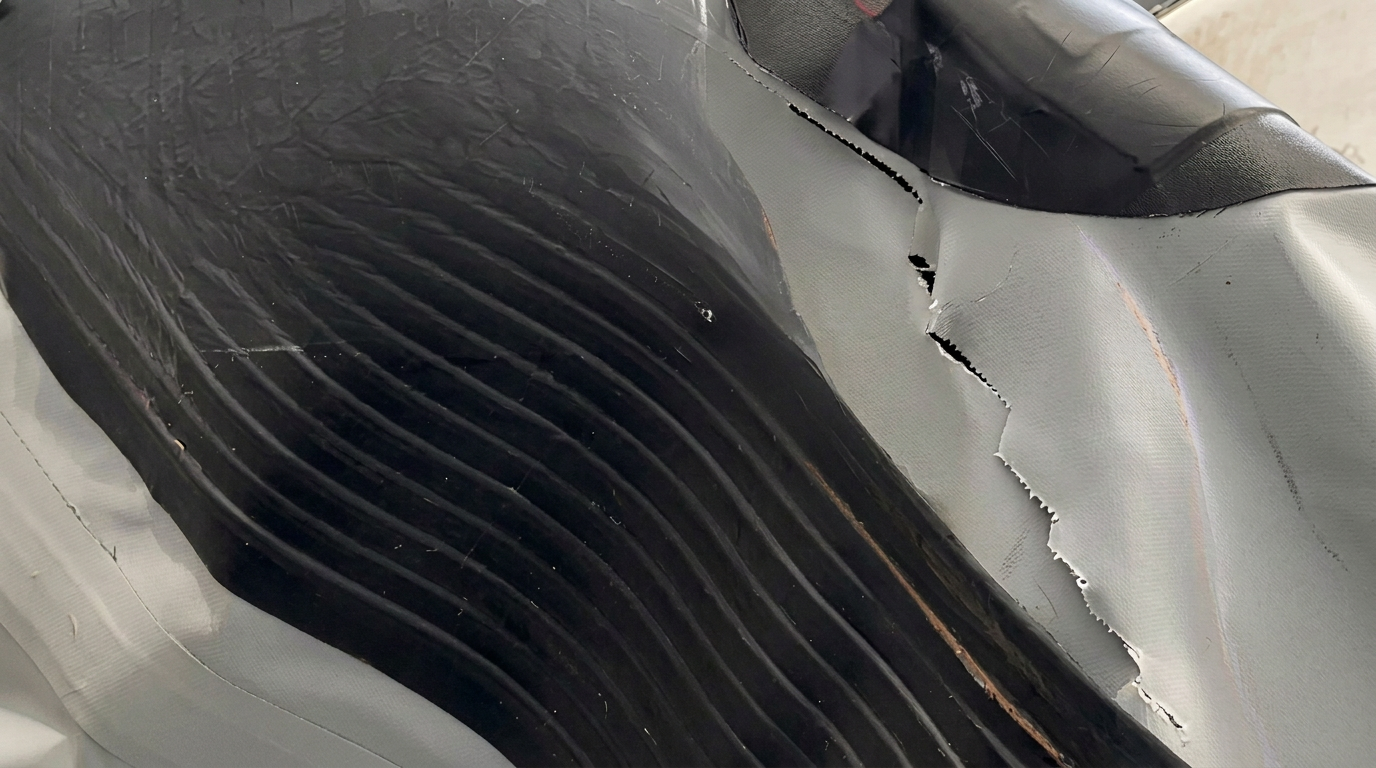
Hull fabric thin enough to end a boat in a few summers

What causes it

Abrasion, not impact, is what kills inflatable hulls. Gravel ramps, shell grit in the sand, oyster edges, mooring piles with growth on them and eight summers of UV on a pontoon. Each one takes a little coating off; eventually the scrim is exposed and a tear finds it.

What to look for on your own boat

Chalky or dull patches on the tube shoulders, scuffing along the keel and rubbing strake, colour fade on the sun side, and coating that feels dry rather than slightly waxy.

What we changed

1500 GSM / 1.2 mm German VALMEX Heavy Plus on every Viper and Sovereign hull, with an extra protection layer bonded under the tubes and keel, and a realistic 10–12 year fabric life under Australian UV. The AeroCat range uses genuine 1100 decitex / 0.9 mm VALMEX and we say so on the page. ORCA Hypalon is available on any boat as a A$1,900 upgrade.

1.2 mm VALMEX Heavy Plus · 10–12 year fabric life

Full guide: where hulls wear out
Inflatable boat collapsed flat on a beach after losing air
Problem 03Safety

A blowout while the boat sits in the sun

What causes it

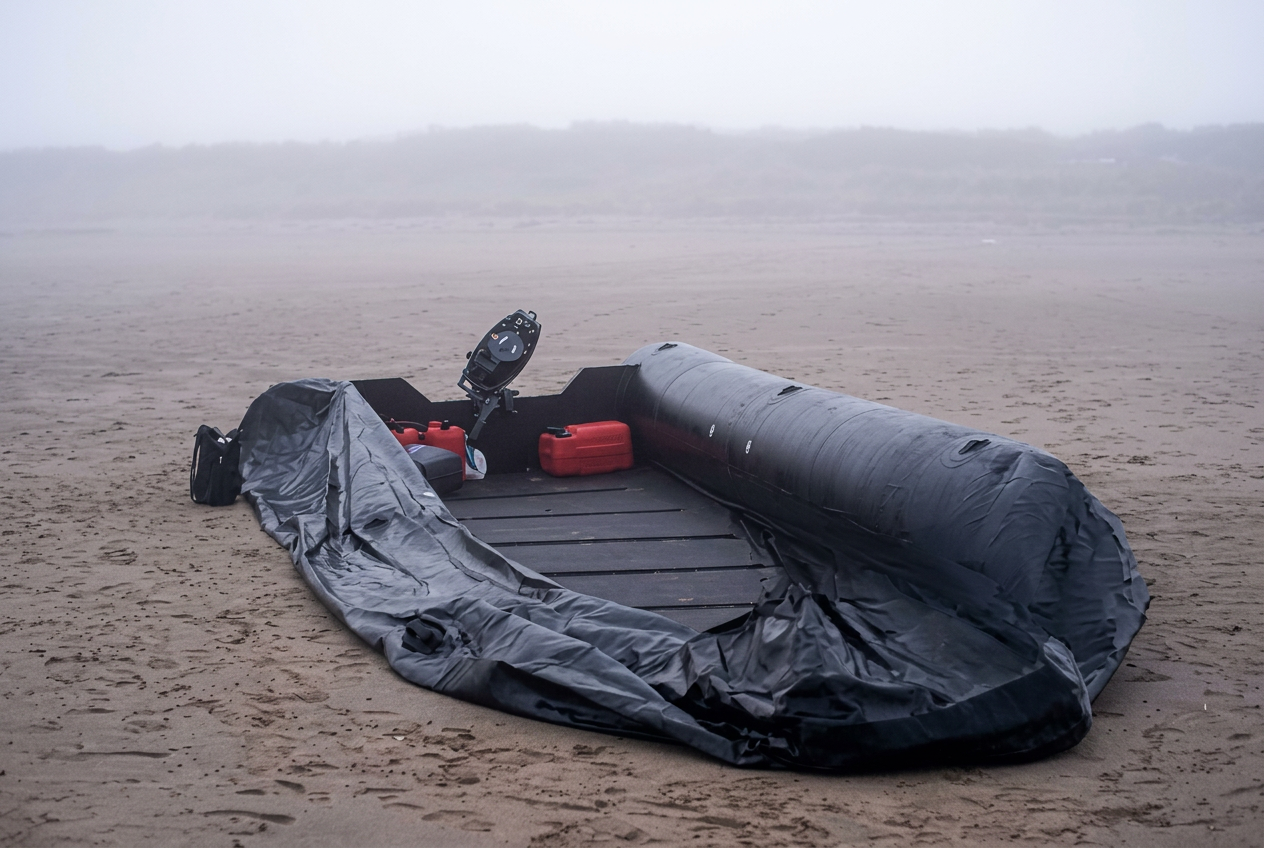
Air expands when it is heated. A boat inflated to working pressure at 8am on a cool ramp can be well above it by midday on hot sand or a dark trailer. The chamber does not care that nobody is aboard — the weakest point simply gives.

What to look for on your own boat

Drum-tight tubes you cannot press in with a thumb, valve caps that pop when you crack them, and a boat that reads high on the pressure gauge after sitting in sun.

What we changed

Over-pressure relief valves are fitted as standard on every Aerowave chamber. They bleed excess pressure off automatically while the boat sits there, so heat expansion never reaches the seams. Combined with welded seams, the hot-day blowout is designed out rather than managed.

Relief valves standard on every chamber

Full guide: relief valves explained
Outboard propeller ventilating in a cloud of bubbles underwater
Problem 04Performance

A prop that ventilates every time the chop picks up

What causes it

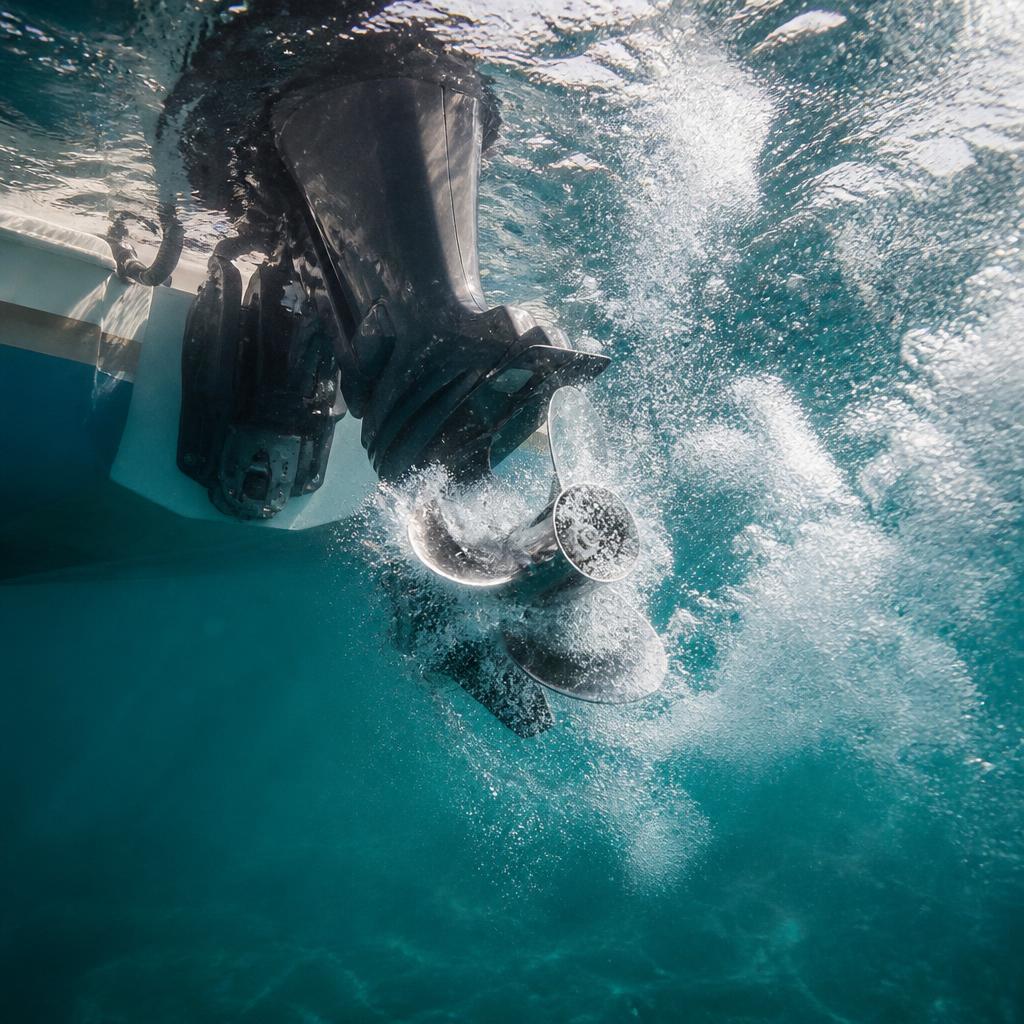
When the transom is tall relative to the hull, the anti-ventilation plate rides too high and the prop draws air from the surface. The motor revs, thrust disappears, and the boat slows and gets wetter. People blame the outboard; it is nearly always geometry.

What to look for on your own boat

Revs climbing without speed, especially turning or crossing chop; a motor that surges when a passenger moves aft; and a wake full of aerated water behind the leg.

What we changed

We dropped the transom to 380 mm across the WaveRunner, Viper and AeroCat series, so more prop stays in the water and the boat bites instead of ventilating. The transom itself is reinforced commercial grade to keep vibration out of the hull.

380 mm transom · reinforced commercial grade

Full guide: cavitation and aeration

Straight answers

What actually goes wrong with inflatable boats?
In our experience it is almost always one of four things: a glued seam letting go, hull fabric too thin to survive abrasion, a chamber over-pressurising in the sun, or an outboard ventilating because the transom is too tall for the hull. Everything else is maintenance.
Are welded seams really better than glued seams?
A thermo-welded seam fuses the two pieces of coated fabric into one continuous material, so there is no adhesive layer to be beaten by heat, UV and pressure over time. Glue is a consumable bond; a weld is not. Every Aerowave seam is welded.
Why do inflatable boats deflate or burst in the sun?
Air inside a sealed chamber expands as it heats. On a hot Australian day a boat left inflated on a beach or trailer can pass its rated working pressure with nobody near it. Over-pressure relief valves bleed the excess off automatically. They are fitted as standard on every Aerowave chamber; many boats in this class have none.
Why does my outboard scream and lose drive in chop?
The prop is coming out of the water — ventilation. It is usually a transom height and shaft length mismatch rather than a faulty motor. We dropped the transom to 380 mm across the WaveRunner, Viper and AeroCat series so more of the prop stays submerged.
Can these problems be fixed after I have bought the boat?
Partly. Valves can sometimes be retrofitted and props can be changed. Hull fabric cannot be upgraded — it is the one part of an inflatable you buy once. That is why we tell people to settle the fabric question before they pay a deposit.

Own one already, or still deciding?

Owners: bring us a photo of anything on this page and we will tell you straight whether it needs attention. Buyers: ask us the same questions you would ask anyone else, and we will answer them in writing.

Keep reading

WARRANTY BY RANGE