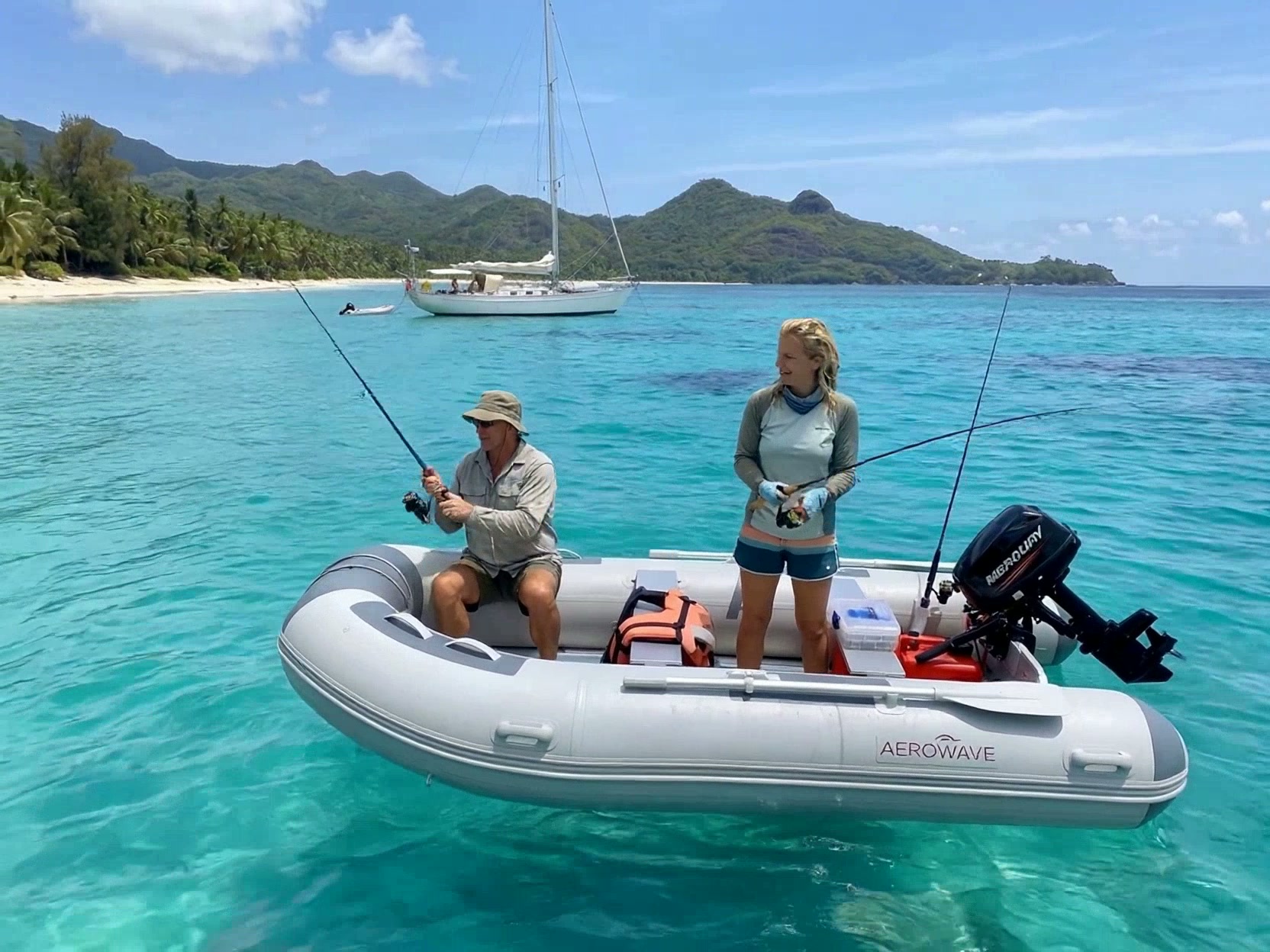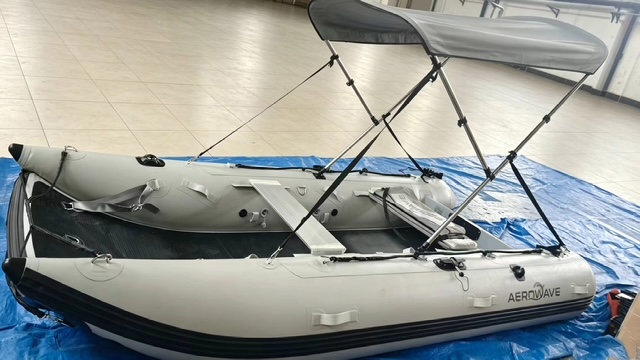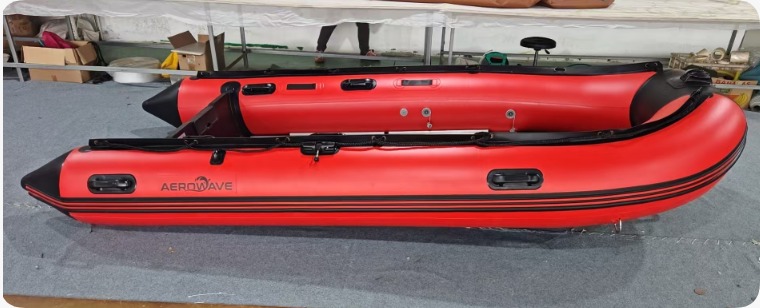
Aerowave Sport Series Offshore: When a Deep-V Monohull Beats a Catamaran
Discover why the Aerowave Sport Series Offshore, with its deep-V hull and rigid aluminium floor, excels in choppy seas where even the best catamarans struggle. A deep dive into monohull superiority.
At a glance
Discover why the Aerowave Sport Series Offshore, with its deep-V hull and rigid aluminium floor, excels in choppy seas where even the best catamarans struggle. A deep dive into monohull superiority.
- The Unseen Force: Understanding Hull Dynamics
- The Deep-V Monohull: A Surgical Instrument for Chop
- Where a Catamaran Excels (and Where It's Challenged)
- The Rigid Foundation: Why an Aluminium Floor is Non-Negotiable
What we'd put you in
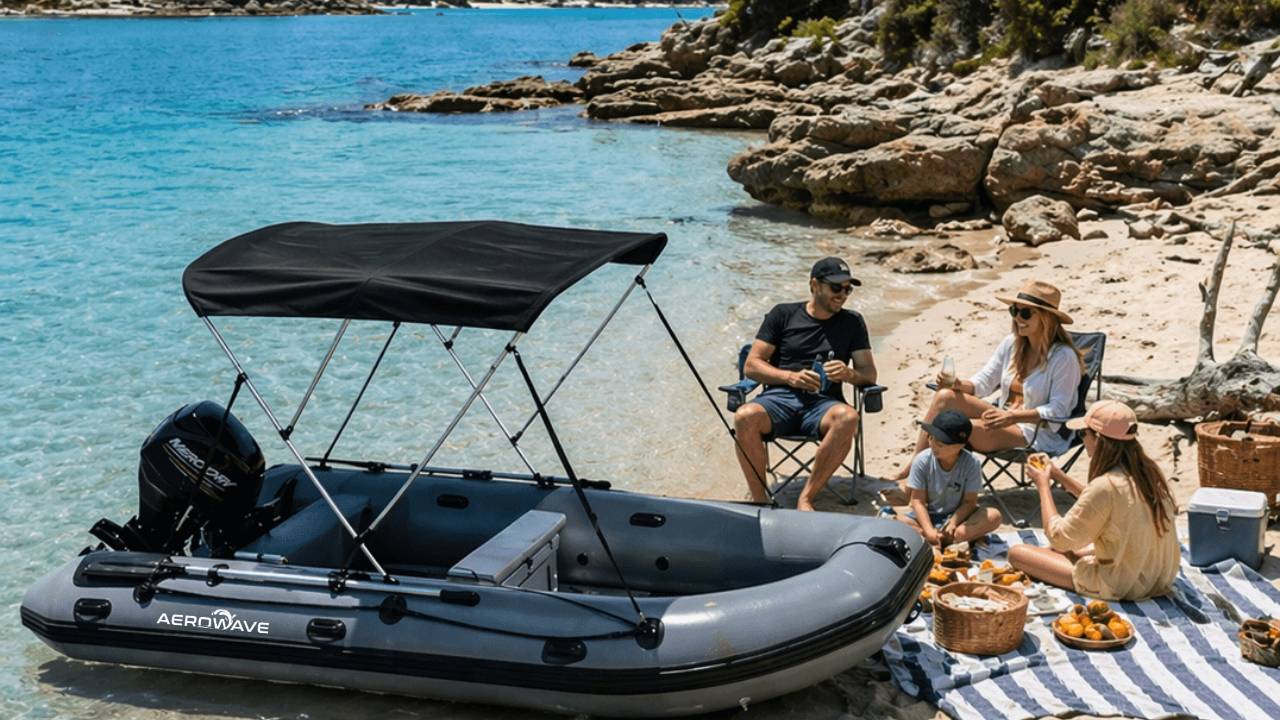
Aerowave Viper 400 Sovereign
If you're reading about catamarans, this is the one we build most of.
US$3,167 USD
Delivered to your door, today's rate
- Free freight to United States · local taxes payable on arrival
- 7-year hull warranty
🇺🇸 Shipping to United States · landed price quoted in writing
Yes — we ship the Aerowave Viper 400 Sovereign to United States. Here's the landed price.
If you're reading about catamarans, this is the one we build most of.
Aerowave Viper 400 Sovereign
- Boat package (export price)
- US$3,726
- 15% tariff relief credit
- − US$559
- Express air freight to United States
- Included
- Import duty, taxes & customs clearance
- Payable on arrival
- Estimated landed, USD
- US$3,167
Indicative, converted at today's rate, before local duty and tax on arrival. Ask below and we'll put a fixed figure in writing, valid 30 days.
- 7-year hull warranty
- 1500 GSM / 1.2 mm VALMEX® Heavy Plus hull
- CE certified to ISO 6185-3 and EU Directive 2013/53/EU
- Door-to-door, tracked the whole way
Your price, delivered to your door — freight included.
We email the full PDF quote (spec, freight, finance, WavePay) to your inbox in under 60 seconds. No spam — one quote, one follow-up.
See it for yourself
Real boats. Real owners. Real people behind them.
Plenty of what you read online these days is generated. Check us out properly — the factory, the reviews and the owners are all one click away. Why we use AI, and how to check we’re real
How our boats are built
Walk the production line: thermo-welded seams, 1.2 mm VALMEX Heavy Plus hulls, over-pressure relief valves on every chamber.
See the buildGoogle Maps reviews
Real Australian owners, five stars, published on our Google Business Profile with the map — read them there, not just on our own site.
Open Google Maps reviewsOwner stories
Boats in use — offshore, on rivers, on rescue duty. Photos and words from the people who actually own them.
Read owner storiesIn the world of inflatable boats, the catamaran is king... until the chop gets serious. Then, you need a different kind of weapon.
For years, the inflatable boat market has rightly celebrated the incredible stability and efficiency of the catamaran design. At Easy Inflatables, our own AeroCat and Viper series are testaments to this, offering superb platforms for everything from calm estuary fishing to family days on the harbour. But there's a point where the conditions turn, where the short, sharp chop of an exposed bay or a coastal run becomes relentless. It's in these moments that a different design philosophy doesn't just compete, but excels: the deep-V monohull with a rigid floor, embodied by our Aerowave Sport Series Offshore boats.
This isn't about one design being universally 'better' than the other. That kind of thinking is for slick marketing departments, not serious boaters. This is a deep dive into hydrodynamics, construction, and real-world application. It’s for the skipper who needs to cross a windswept harbour with confidence, the diver heading to an offshore reef, or the fisherman who won't let a 20-knot southerly ruin their weekend. We'll explore precisely when and why the focused, wave-piercing capability of a high-pressure deep-V inflatable monohull, anchored by the unyielding foundation of a sectional aluminium floor, becomes the superior choice.
The Unseen Force: Understanding Hull Dynamics
To appreciate why the Aerowave Sport Series Offshore thrives in rough water, we first need to look beyond the inflatable tubes and understand what’s happening at the waterline. The performance of any boat is dictated by the shape of its hull and how it interacts with water. This is where the deep-V monohull and the catamaran take fundamentally different approaches to the same problem: moving efficiently and comfortably through a fluid medium.
The Deep-V Monohull: A Surgical Instrument for Chop
Imagine the hull of an Aerowave Sport Series Offshore boat. It features a pronounced V-shape that runs from the bow and tapers towards the stern. The 'deadrise' is the angle of that V. A deeper V means a sharper entry point. When this hull encounters a wave, it doesn't slap against the surface like a flat-bottomed boat, nor does it try to ride over the top of two separate points like a catamaran. Instead, it does something far more elegant: it cleaves.
The sharp, high-pressure keel acts like a knife, slicing cleanly through the face of the wave. This action parts the water, pushing it aside and downwards along the length of the hull. The benefits are immediate and profound:
- Reduced Pounding: The primary advantage is a dramatic reduction in slamming and pounding. Instead of the boat's full weight crashing down after cresting a wave, the V-hull provides a more cushioned, progressive re-entry into the water. For anyone who's endured a long, bumpy ride in a lesser boat, the difference in comfort and reduced fatigue is monumental.
- Superior Tracking: In a crosswind or following sea (when waves are coming from behind), the deep keel acts like the fletching on an arrow. It gives the boat immense directional stability, resisting the tendency to broach or wander. You'll find yourself making fewer steering corrections, holding your course with an ease that tunnel hulls can sometimes struggle with in messy, confused seas.
- Predictable Handling: A monohull banks into turns in a way that feels intuitive to anyone who has ever ridden a bike or driven a conventional powerboat. This inward lean is a natural, stable motion that carves a predictable arc. While a catamaran turns flat, which can feel skittish to the uninitiated, the monohull's lean feels secure and locked-in, especially at speed.
Where a Catamaran Excels (and Where It's Challenged)
An inflatable catamaran, like our AeroCat or Viper series, generates lift from the tunnel of air between its two hulls. This creates an incredibly efficient, stable, and fast platform in calm to moderate conditions. The wide stance provides phenomenal stability at rest—a dream for casting or having kids on board. However, in short, steep chop, its primary strengths can become weaknesses. The wide-set hulls can sometimes strike two different wave faces simultaneously, leading to a 'sneeze' of spray out the front of the tunnel and a quicker, sometimes jerky motion. Its very stability can work against it, as it tries to follow the surface of every small wave rather than cleaving through them.
This isn't a flaw; it's a different design for a different purpose. For 80% of boating days, the catamaran is an unbeatable package. But for that challenging 20%, the specialist tool for the job is the deep-V monohull.
The Rigid Foundation: Why an Aluminium Floor is Non-Negotiable
The hull shape is only half the story. A deep-V keel is useless if the boat's structure flexes and twists around it. To make the V-hull work offshore, it must be paired with an uncompromisingly rigid floor system. This is where the sectional aluminium floor of the Aerowave Sport Series Offshore becomes its defining feature, setting it worlds apart from high-pressure air deck alternatives.
The Problem with Air Decks in Chop
A modern high-pressure air deck, inflated to 8–10 PSI, is a marvel of engineering. It's lightweight, comfortable underfoot, and astonishingly rigid for its weight. For most applications, it's the perfect solution. However, when you start punching into a sharp 1-metre chop, the immense, repetitive forces involved can find the limits of even the best air floors. A minuscule amount of flex, imperceptible in calm water, can occur between the keel and the floor. This tiny movement dissipates some of the energy that should be going into cleaving the wave, leading to a slightly less precise and more jarring ride. The floor is doing its job, but it's absorbing impact rather than transferring it to the hull's cutting edge.
Aluminium: The Unyielding Backbone
A sectional marine-grade aluminium floor changes the entire dynamic. When locked into place with its integrated stringers, it creates a single, unified, and incredibly stiff chassis. It effectively makes the floor and the hull one cohesive unit.
- Direct Force Transfer: All the forces from wave impacts are transferred directly through the floor, to the stringers, and into the hull structure. This ensures the high-pressure keel maintains its perfect, rigid V-shape at all times, allowing it to slice through water with maximum efficiency. There is no energy lost to floor flex. The boat feels more 'connected' to the water, more direct in its response.
- Superior Load Distribution: For carrying heavy gear—think dive tanks, full Eskies, or heavy fishing tackle—an aluminium floor is unmatched. It distributes weight perfectly across the boat's structure, preventing any single point from being overloaded. You can stand, move, and stow gear with the confidence that you're on a solid, unmoving platform.
- Durability and Longevity: While our VALMEX® fabric is tough, an aluminium floor provides an extra layer of armour. Dropped sinkers, dive weights, or the claws of a big mud crab are of no concern. It’s easy to clean, impervious to fuel or oil spills, and won't be damaged by UV rays. Over the 10-12 year lifespan of the VALMEX® tubes, an aluminium floor will look and perform as good as new.
Some might argue a timber floor offers similar rigidity. While true to an extent, marine plywood is heavy, susceptible to rot if the protective coating is compromised, and can become slippery and degraded over time. Aluminium is lighter, stronger, and offers lifetime durability, making it the only serious choice for a boat designed for offshore work.
Built for Australia: Deconstructing the Aerowave Sport Series Offshore
A boat is more than its hull shape and floor. It's a system of materials and construction techniques that must work in harmony. The Aerowave Sport Series Offshore, exemplified by our WaveRunner 380 model, is engineered from the ground up to handle the harsh realities of the Australian marine environment.
The Heart of the Boat: German-Made VALMEX® Fabric
Many budget imports use generic PVC fabrics from China or Korea. While functional for light, occasional use, they simply don't have the chemistry or construction to withstand years of brutal Australian sun and salt. That's why we specify only Mehler Texnologies VALMEX® from Germany.
The WaveRunner 380, the cornerstone of the Sport Series, uses a heavy-duty 0.9mm VALMEX® with a density of 1100 GSM (grams per square metre). To put this in perspective, our top-of-the-line Viper 400 Sovereign catamaran uses an even heavier 1.2mm / 1500 GSM VALMEX® Heavy Plus, but the 1100 GSM on the WaveRunner is a significant step up from the fabric found on many competing monohulls and provides an exceptional balance of toughness and manageable weight. This fabric isn't just thick; its base cloth and coating are specifically formulated for extreme UV resistance, abrasion resistance, and dimensional stability, ensuring it holds its shape and pressure year after year. It's the reason we can confidently state a 10-12 year fabric lifespan and back the WaveRunner with a comprehensive 5-year warranty.
Construction That Inspires Confidence
- Thermo-Welded Seams: The seams are the most critical part of an inflatable boat. Glued seams, common on cheaper boats, can degrade and fail under intense heat and UV exposure—a major problem in our climate. All our boats, including the Aerowave series, feature thermo-welded seams. This process uses heat to fuse the fabric panels together, creating a permanent, molecular bond that is stronger than the fabric itself. It simply will not fail.
- Heavy-Duty Transom: The transom has to handle the immense torque and thrust of an outboard motor, plus the jarring impacts of rough water. Our transoms are crafted from thick, marine-grade timber, fully encased in protective coatings and sealed into the boat's structure with multiple, heavy-duty attachments. The 380mm short-shaft transom height is perfectly matched to a wide range of modern four-stroke outboards, like the reliable Hidea series we offer.
- Reinforcements Everywhere: Look closely at an Aerowave boat and you'll see the details. Heavy-duty rubbing strakes along the sides and bottom, extra layers of fabric on high-wear areas, and robust fittings for lifelines and accessories. These aren't afterthoughts; they are integral to a design intended for hard use.
Monohull vs. Catamaran: The Tactical Decision Matrix
Choosing between an Aerowave Sport Series Offshore monohull and an inflatable catamaran like an AeroCat or Viper isn't about emotion. It's a tactical choice based on your primary boating location, style, and priorities.
| Feature / Condition | Aerowave Sport Series Offshore (Monohull) | Inflatable Catamaran (e.g., AeroCat/Viper) |
|---|---|---|
| Short, Steep Chop | Excellent. Cleaves through waves with a sharp V-keel for a softer ride. | Good. Can be jarring as wide-set hulls hit wave faces differently. |
| Stability at Rest | Good. Very stable for a monohull, but will have some roll. | Exceptional. The definitive platform for casting, diving prep, and stability. |
| Tracking in Crosswind | Excellent. Deep keel resists being pushed sideways. | Good. Low profile helps, but large, flat sides can catch the wind. |
| High-Speed Turning | Excellent. Banks inward for secure, predictable, carved turns. | Good. Turns very flat, which can feel less intuitive and 'skittish' to some. |
| Internal Layout | Traditional. Deep, secure, open-plan floor space. Great for gear. | Unique. Open bow/transom design offers easy water access. Floor space is long and narrow. |
| Floor System | Rigid Aluminium. Uncompromising stiffness for offshore performance. | High-Pressure Air Deck. Lightweight, comfortable, and fantastically rigid for most uses. |
| Shallow Water Draft | Very Good. The keel draws slightly more water than the tubes. | Excellent. Extremely shallow draft allows access to very skinny water. |
As the table shows, the monohull's strengths come to the fore when the conditions deteriorate. Its ability to maintain comfort and directional stability in a messy seaway is its trump card.
Powering Your Deep-V: Matching the Motor
The most common mistake we see is overpowering or underpowering a boat. The Aerowave Sport Series Offshore (like the WaveRunner 380) is designed for efficiency and does not require a massive engine. Its 380mm (15-inch) short-shaft transom is perfectly matched to modern, lightweight 4-stroke outboards from 9.9hp to 20hp.
A Hidea 15hp or 20hp 4-stroke is an ideal partner. This combination provides:
- Effortless Planing: The efficient hull gets on the plane quickly, even with two or three people and gear.
- Excellent Fuel Economy: You don't need to run at full throttle to maintain a good cruising speed, saving fuel and extending your range.
- Optimal Balance: These motors provide enough power without adding excessive weight to the transom, which can negatively affect handling and trim.
When setting up the motor, ensure the anti-cavitation plate is sitting level with, or just slightly below, the bottom of the hull. This prevents the propeller from ventilating (sucking in air) during turns or in choppy water, ensuring a constant bite and consistent thrust. Our team at Easy Inflatables can provide expert advice on motor selection and setup. Give us a call on +61 2 4335 1603.
Checklist: Is an Aerowave Sport Series Offshore Boat Right For You?
Answer these questions honestly to determine if this specialist boat fits your needs:
- Do you frequently boat in open bays, large harbours, or coastal waters known for wind-driven chop?
- Is a smooth, soft ride in rough conditions more important to you than absolute stability at rest?
- Do you prioritise directional stability and predictable handling in crosswinds and following seas?
- Do you often carry heavy or hard-edged gear like dive tanks, crab pots, or large fishing Eskies?
- Are you looking for a boat that feels more like a traditional rigid-hull powerboat in its handling characteristics?
- Do you value extreme durability and a 'no-nonsense' workhorse platform over the last word in portability and light weight?
- Is your primary use case serious fishing, diving, or utility transport rather than just calm-water family cruising?
If you answered 'yes' to three or more of these, the Aerowave Sport Series Offshore should be at the very top of your consideration list. It is purpose-built for the very challenges you face.
The Bottom Line
The choice is clearer than ever. For flat-water stability, unparalleled efficiency in calm conditions, and easy water access, the inflatable catamaran remains a champion. But when the wind picks up and the water gets confused and angry, the focused, wave-cleaving power of a deep-V monohull with a rigid aluminium floor is the superior tool. It's a boat built not for the ideal day, but for the real day. It is the confidence to head out when others are heading in.
To discuss how the WaveRunner 380 or another model from the Aerowave Sport Series Offshore can transform your boating, contact our expert team. We don't do hard sells, just honest advice. Reach us at sales@easyinflatables.com.au or on +61 2 4335 1603. We offer free Economy Sea Freight (30-40 days) or Express Air Delivery (7–14 days, with a customer contribution) Australia-wide.
Related
Weekend-Proof Score 17 questions · about 2 minutes
Will the boat you're about to buy survive an Australian summer?
Seventeen straight questions about where you'll use it, what you'll ask of it and the boat you're weighing up. You get a score out of 100, the exact weak points in your plan, and the one boat that genuinely fits.
Free · your result shows on screen · no email required
So which one is yours?
Pick how you'll actually use it and we'll take you straight to the right hull.
I want to fish it
Open bow, rod holders, deck space you can stand and cast from.
Viper Sport 400Family, diving and the beach
3.8 m Series 3 catamaran — low bow to climb back in wearing fins or a tank.
WaveRunner 380Tender / one-person launch
3.3 m hard-floor boat that packs into a bag and still takes a beach landing.
Viper 330Shop gear featured in this guide
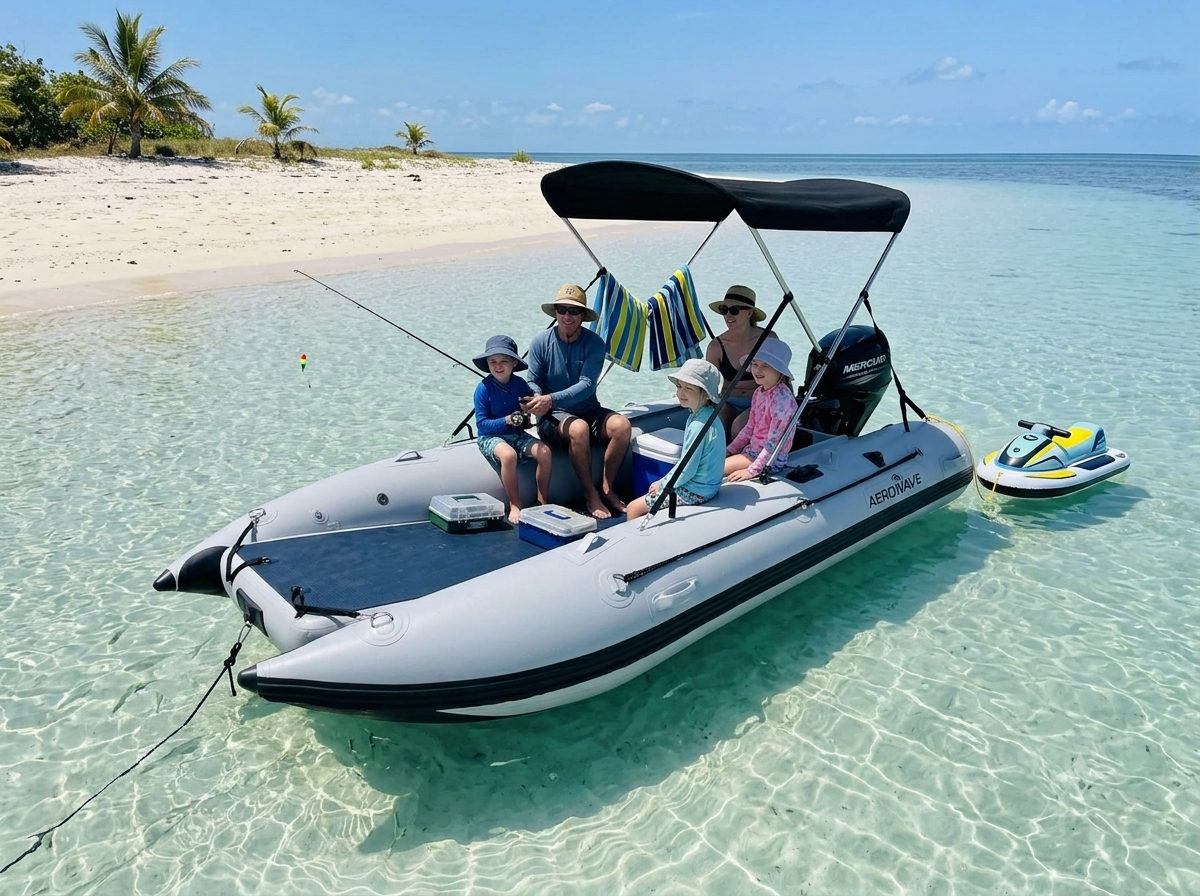
Aerowave WaveRunner 380 Series 3 Catamaran Package
The WaveRunner 380 Series 3 is a premium 3.8m inflatable catamaran package built for Australian and worldwide families, fishing, and coastal day boating — ideal for snorkeling and spearfishing — offering serious stability and premium German Valmex® construction.
Free freight to United States · local taxes payable on arrival
Aerowave Viper 400 Sovereign
Flagship 4m enclosed-bow inflatable catamaran. German VALMEX® 7321 Heavy Plus 1.2mm commercial-grade fabric, 10 PSI high-pressure drop-stitch air deck floor with VALMEX non-slip surface, LockPro wheels, full Bimini and FREE express delivery Australia-wide included. Winter special — save $1,000 until 31 August 2026.
Free freight to United States · local taxes payable on arrival
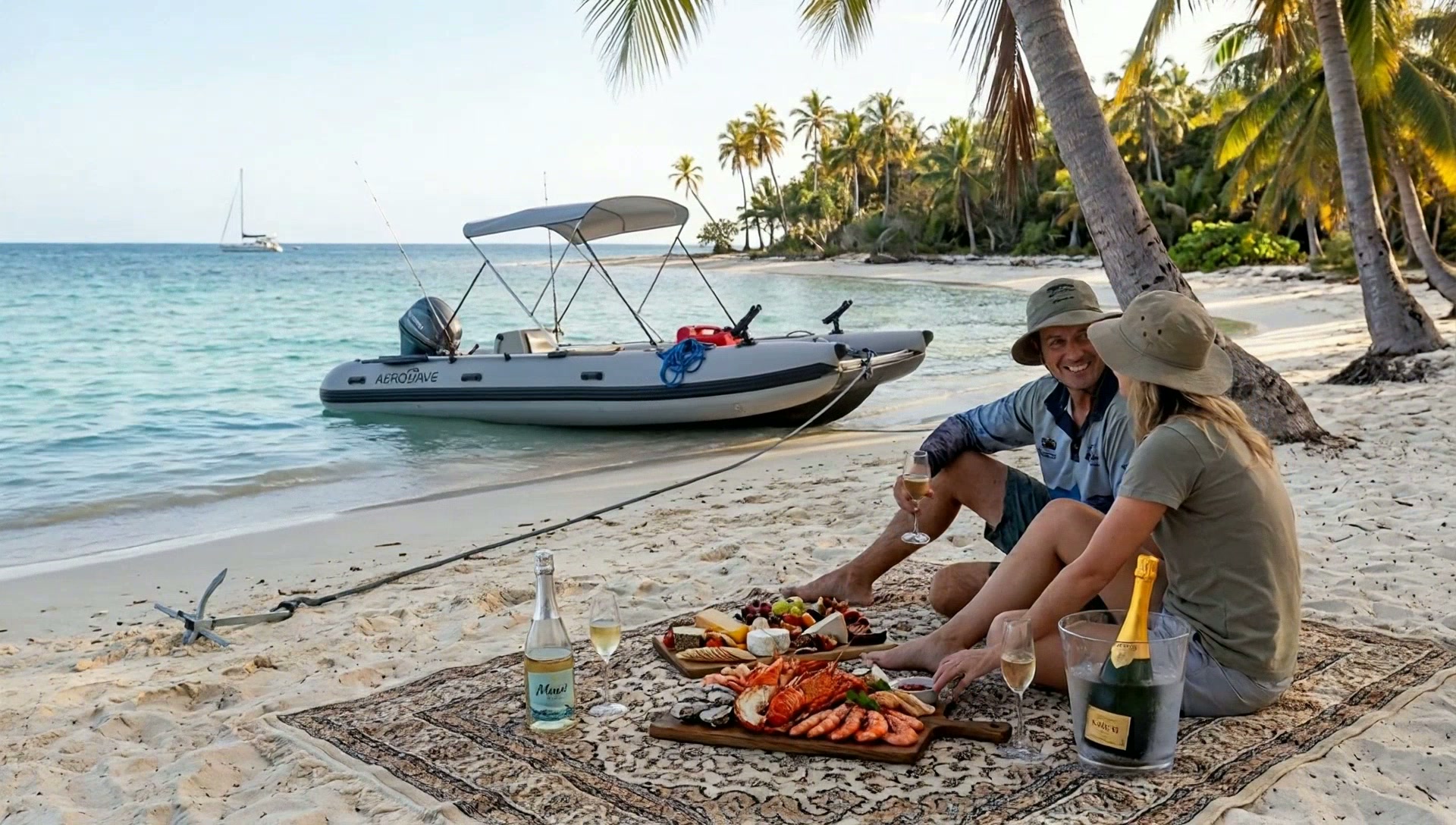
Aerowave Viper 365 Open Bow
Premium 3.65m Inflatable catamaran — built the same way as our flagship Viper 400 sports boat, just 35cm shorter. German VALMEX® 7321 Heavy Plus 1.2mm commercial-grade fabric, 10 PSI high-pressure drop-stitch air deck floor with VALMEX non-slip surface, LockPro wheels, full Bimini and FREE express delivery Australia-wide included.
Free freight to United States · local taxes payable on arrival
Not sure which suits you? Talk to a real boat owner.
Before you spend a cent
Buying from Australia, delivered to United States
You have never heard of us, we are on the other side of the world, and the internet is full of fakes. Fair enough. Here is everything you would need to check us out, in one place — no forms, no chat bot.
Australian designed business
Easy Inflatables, Avoca Beach NSW 2251. ABN 96 856 548 613. International orders ship from our Hong Kong hub.
222 owner reviews, 4.8 average
Read them in full, good and bad, on our reviews page.
CE certified, 7-year hull warranty
ISO 6185-3 and EU Directive 2013/53/EU. Warranty honoured worldwide.
Tracked, insured, door to door
FREE freight to United States · local tax/duty on arrival.
- Who am I actually buying from?
- Easy Inflatables, Avoca Beach NSW 2251, Australia. ABN 96 856 548 613. Sean is the owner and skipper, Gary Stewart handles sales on +61 2 4335 1603, Karen Matthews handles email. The boats are Australian designed; international orders ship from our Hong Kong dispatch hub so your landed price stays competitive. Phone us before you pay a cent — a real person answers.
- Is this really an Australian product?
- Yes — Australian designed and engineered on the NSW Central Coast. Manufacturing is done offshore to our spec, and international orders ship direct from our Hong Kong dispatch hub. If we routed every boat through Australia first, the freight alone would roughly double or triple your cost for the same hull.
- What do I pay, and what is not included?
- The delivery and import terms depend on your country. EU, UK, New Zealand and named Asia/Pacific lanes include duty and tax; US freight is free but US buyers pay import charges on arrival. Other destinations show their terms before payment.
- How do I pay safely?
- Card through Stripe (Visa, Mastercard, Amex, Apple Pay, Google Pay) or bank transfer. Card payments carry your bank's own dispute protection. We never ask for crypto, gift cards or payment to a personal account.
- What if it arrives damaged?
- Every boat ships fully tracked and insured door to door. Photograph the carton and the boat on arrival and email us — transit damage is claimed and replaced through us, not left with you and the courier.
- Is the warranty real outside Australia?
- Yes. The 7-year hull warranty on 1.2 mm VALMEX Heavy Plus and Orca Hypalon hulls applies wherever you are. Replacement parts are held in Australia and at our overseas hub and go out by express courier to your door.
- Is the boat actually certified?
- All Aerowave catamarans are CE certified to ISO 6185-3 and EU Directive 2013/53/EU. Certification paperwork is supplied with the boat — ask and we will send it before you order.
Frequently asked questions
- Is the aluminium floor difficult to assemble?
- It's surprisingly straightforward. The floor comes in numbered sections that slide together and are locked in place by side stringers. The first time might take you 15-20 minutes, but with practice, most owners can assemble it in under 10 minutes. It creates an incredibly rigid and secure platform.
- How does the Aerowave Sport Series Offshore handle compared to a rigid aluminium 'tinny'?
- It offers a significantly softer and drier ride. The inflatable tubes act as massive shock absorbers, cushioning the impact of waves in a way a rigid tinny cannot. This results in far less pounding and a more comfortable experience in chop, with the added benefit of superior stability at rest.
- What is the real-world top speed with a 15hp or 20hp motor?
- With a 15hp outboard and one person, you can expect speeds around 30-35 km/h. With a 20hp, you could see speeds approaching 40 km/h in ideal conditions. Performance varies with load, water conditions, and motor trim, but it is a very efficient and slippery hull.
- Can I beach the Aerowave Sport Series Offshore on sand or rocks?
- Beaching on sand is perfectly fine. The heavy-duty VALMEX® fabric and keel protection are designed for it. We advise caution on sharp rocks or oysters, as with any inflatable. The advantage over a catamaran is that only the central keel and rear of the tubes make primary contact, reducing the area exposed to abrasion.
- Why choose VALMEX® fabric over other PVC materials?
- German-made VALMEX® is a premium, multi-layered PVC fabric known for its exceptional UV resistance, tensile strength, and air retention. Unlike cheaper alternatives, it's specifically formulated to withstand the harsh Australian sun and saltwater for over a decade, and its seams are thermo-welded for a bond that's stronger than the material itself.
- What's the difference between the WaveRunner 5-year warranty and the Viper's 7-year warranty?
- The WaveRunner 380 (part of our Sport Series) comes with a comprehensive 5-year warranty on the VALMEX® fabric and construction. Our premium Viper Sovereign catamarans use an even heavier grade 1.2mm VALMEX® fabric and feature additional reinforcements, allowing us to back them with an extended 7-year warranty.
- Is a monohull harder to inflate and set up than a catamaran?
- The process is very similar. You inflate the main tubes and the high-pressure keel. The main difference is the installation of the aluminium floor, which adds a few minutes compared to simply inflating a catamaran's air deck. Overall setup time from bag to water is comparable, typically around 20-25 minutes.
Ready to set sail?
Premium German-fabric inflatable catamarans, built to order and delivered to your door. Talk to our team or browse the fleet.
Like this guide? Get the next one in your inbox.
Owner-tested tips, gear deep-dives and Aussie boating know-how — no spam.