Best Inflatable Catamaran for Fishing in Australia
For anglers right across Australia, from chasing bream in estuaries to targeting snapper on coastal reefs, the best inflatable catamaran for fishing is the one that gives you rock solid stability, goes wherever you go, a…
At a glance
For anglers right across Australia, from chasing bream in estuaries to targeting snapper on coastal reefs, the best inflatable catamaran for fishing is the one that gives you rock solid stability, goes wherever you go, a…
- Why Inflatable Catamarans Are Popping Up Everywhere in Australia
- The Aussie Love for Stability and Access
- What Makes a Great Inflatable Fishing Catamaran?
- A Stable Casting Deck is Everything
What we'd put you in
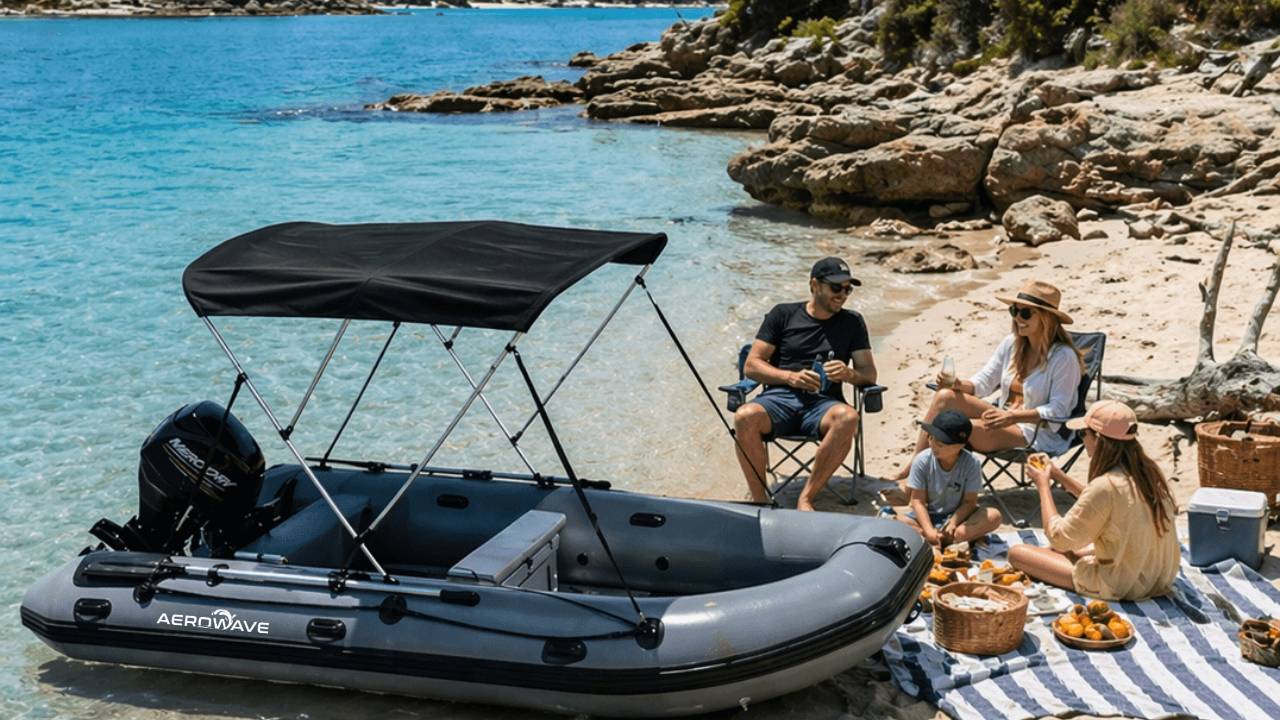
Aerowave Viper 400 Sovereign
If you're reading about catamarans, this is the one we build most of.
US$3,167 USD
Delivered to your door, today's rate
- Free freight to United States · local taxes payable on arrival
- 7-year hull warranty
🇺🇸 Shipping to United States · landed price quoted in writing
Yes — we ship the Aerowave Viper 400 Sovereign to United States. Here's the landed price.
If you're reading about catamarans, this is the one we build most of.
Written for Australian readers — but the boat ships to you. We are an Australian builder and this article is written from Australian waters. That changes nothing about what you can order: the same hull, the same 7-year warranty and the same certification go out to United States every week.
Aerowave Viper 400 Sovereign
- Boat package (export price)
- US$3,726
- 15% tariff relief credit
- − US$559
- Express air freight to United States
- Included
- Import duty, taxes & customs clearance
- Payable on arrival
- Estimated landed, USD
- US$3,167
Indicative, converted at today's rate, before local duty and tax on arrival. Ask below and we'll put a fixed figure in writing, valid 30 days.
- 7-year hull warranty
- 1500 GSM / 1.2 mm VALMEX® Heavy Plus hull
- CE certified to ISO 6185-3 and EU Directive 2013/53/EU
- Door-to-door, tracked the whole way
Your price, delivered to your door — freight included.
We email the full PDF quote (spec, freight, finance, WavePay) to your inbox in under 60 seconds. No spam — one quote, one follow-up.
See it for yourself
Real boats. Real owners. Real people behind them.
Plenty of what you read online these days is generated. Check us out properly — the factory, the reviews and the owners are all one click away. Why we use AI, and how to check we’re real
How our boats are built
Walk the production line: thermo-welded seams, 1.2 mm VALMEX Heavy Plus hulls, over-pressure relief valves on every chamber.
See the buildGoogle Maps reviews
Real Australian owners, five stars, published on our Google Business Profile with the map — read them there, not just on our own site.
Open Google Maps reviewsOwner stories
Boats in use — offshore, on rivers, on rescue duty. Photos and words from the people who actually own them.
Read owner stories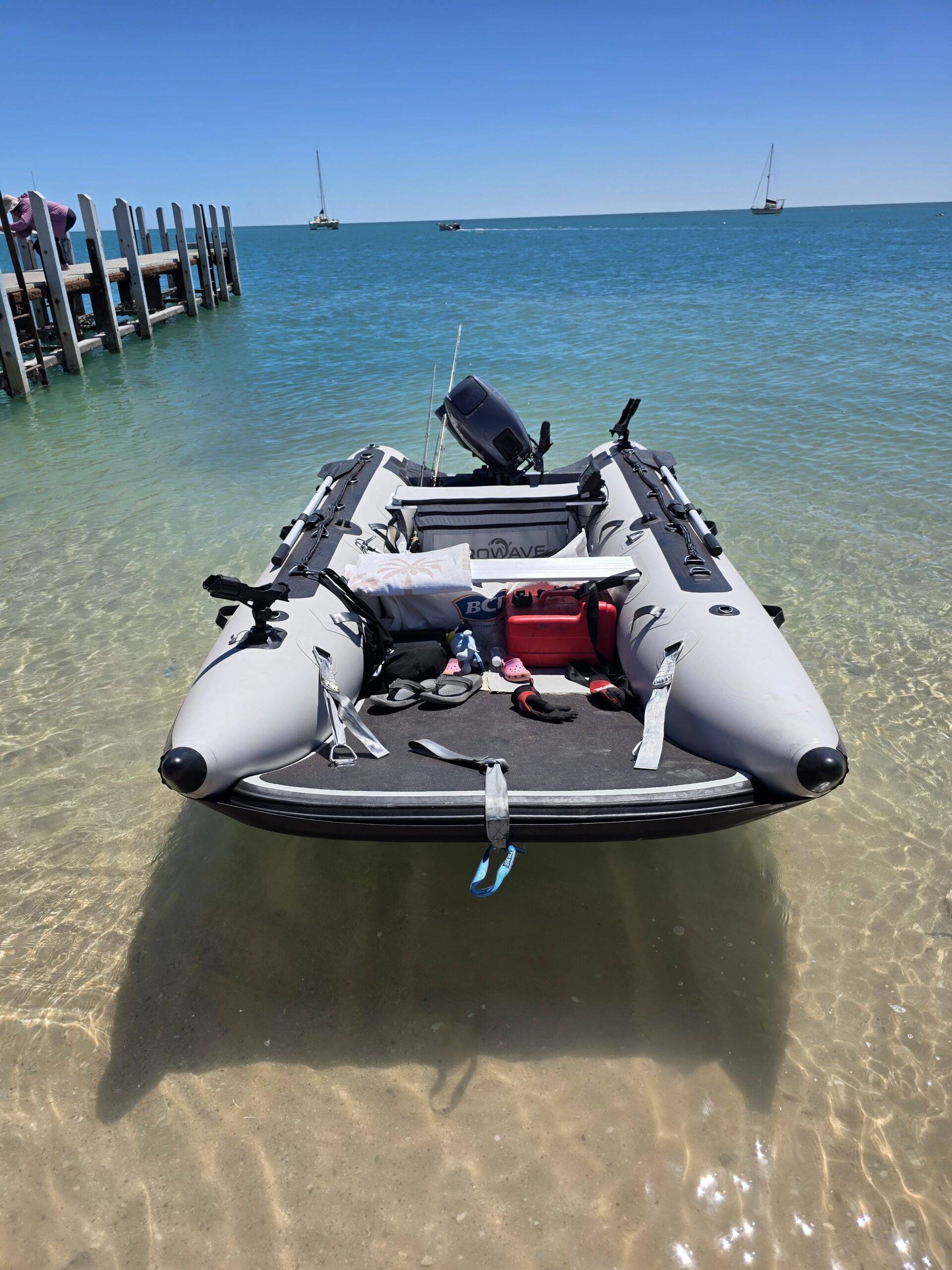
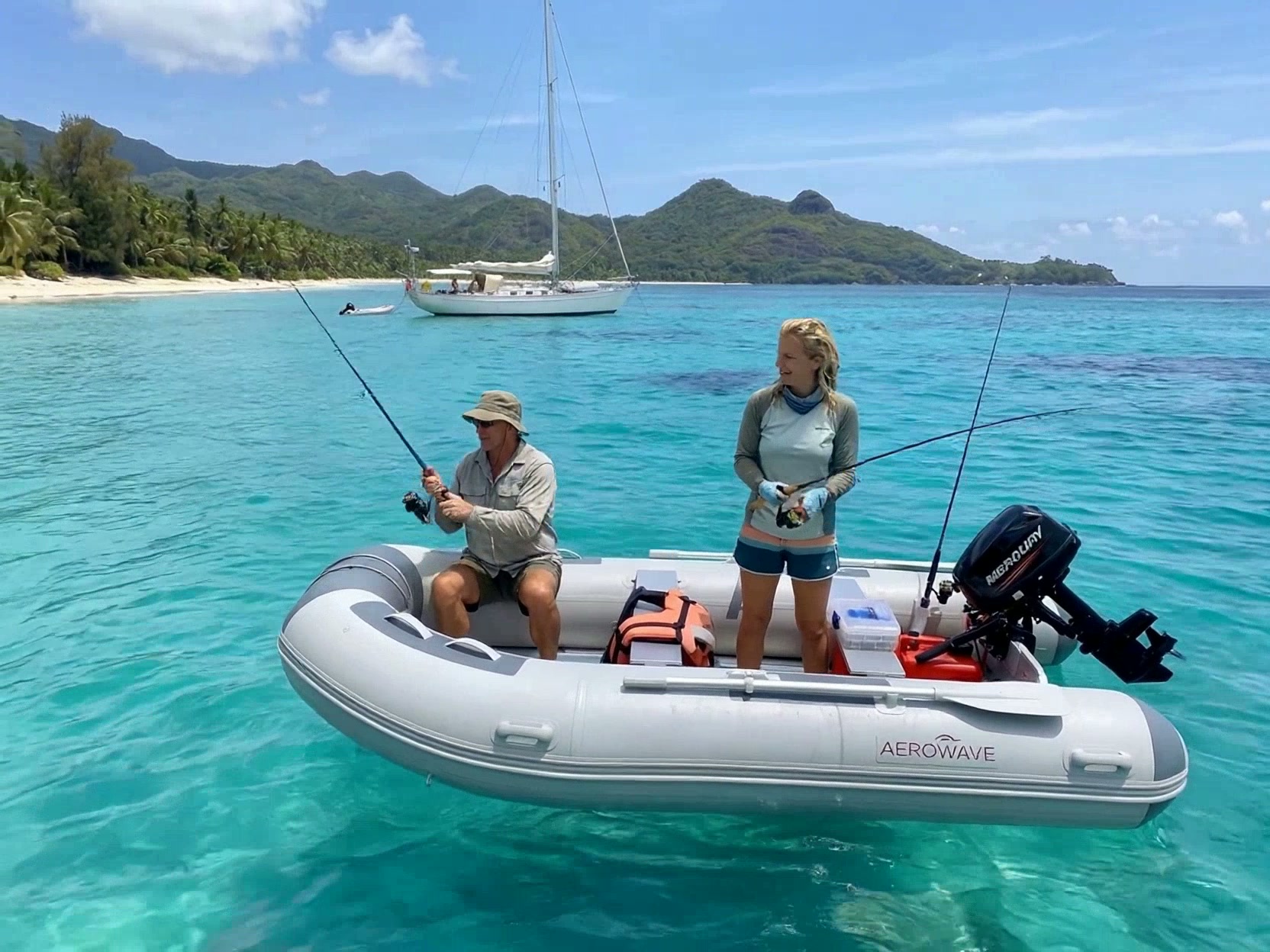
For anglers right across Australia, from chasing bream in estuaries to targeting snapper on coastal reefs, the best inflatable catamaran for fishing is the one that gives you rock-solid stability, goes wherever you go, and gets you into those prime, hard-to-reach spots. These 'boat-in-a-bag' setups are fast becoming the go-to choice for recreational fishers, grey nomads, and families alike, offering a seriously practical alternative to a classic tinny or monohull. Whether you're looking for an inflatable boat for recreational use or a dedicated fishing machine, Inflatable Catamarans are a top contender.
Why Inflatable Catamarans Are Popping Up Everywhere in Australia
Aussies are getting smarter about how they hit the water. Forget the hassle of heavy, awkward boats and the constant need for a trailer—more and more people are switching to the clever advantages of an inflatable catamaran. Their popularity isn't just a fleeting trend; it’s a direct answer to what we need for Australia’s incredibly diverse waterways, and why sales of the Inflatable Catamaran are booming.
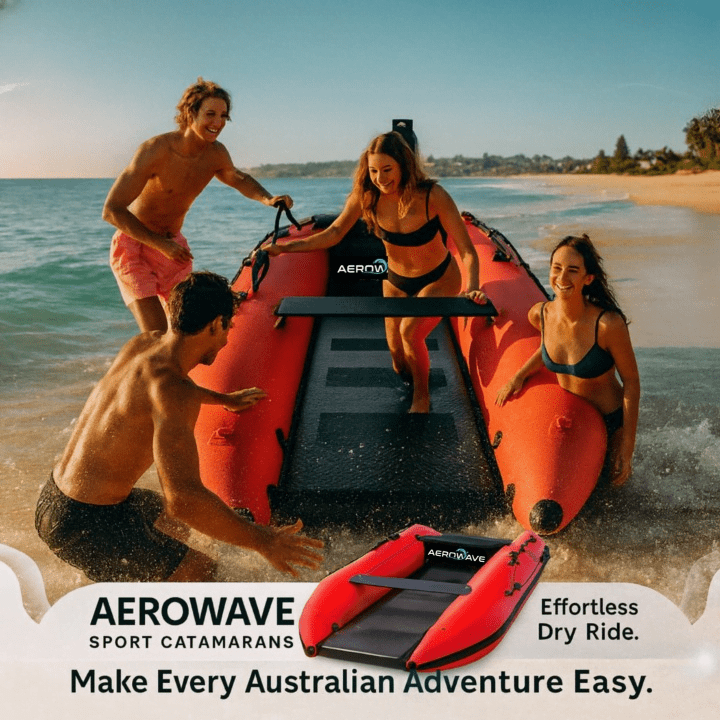
The real magic is in the twin-hull design. While a standard single-hull boat can rock and roll, feeling pretty unsteady underfoot, a catamaran spreads its footprint across two separate hulls. This creates a much wider, more stable platform that’s just perfect for fishing.
For anglers, this design delivers a few key wins:
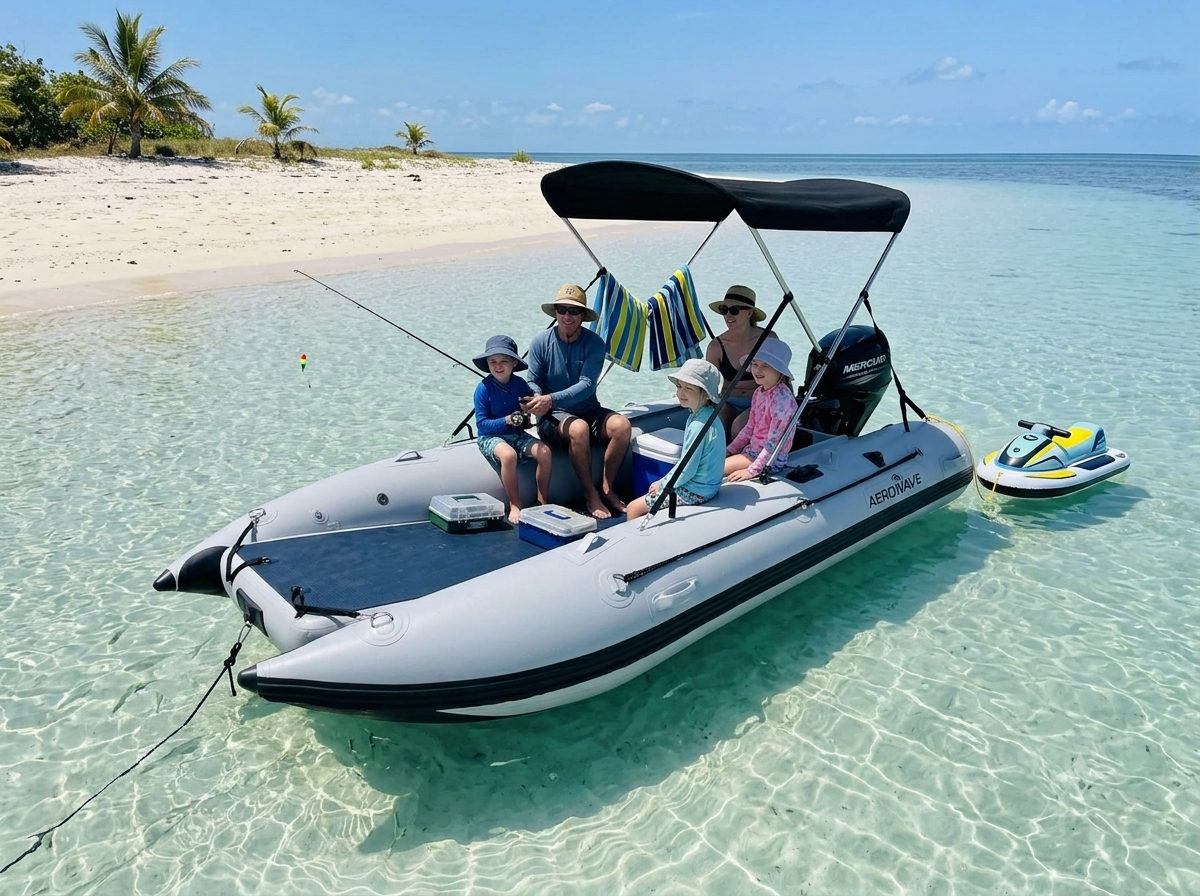
- Superior Stability When Casting: You can stand, cast, and land that prize fish with total confidence. The reduced rocking makes for a safer and way more comfortable day out, especially when you’re moving around the boat.
- Shallow Water Access: Because they’re so lightweight with a shallow draft, you can sneak into creeks, estuaries, and flats that are completely off-limits to heavier boats.
- Unbeatable Portability: An inflatable catamaran can be deflated, rolled up, and chucked in the back of your car, caravan, or 4WD. This "boat-in-a-bag" freedom opens up a whole world of new spots, perfect if you are looking to hire inflatable boats for a family outing or take your own on an adventure.
The Aussie Love for Stability and Access
This love for inflatables is especially strong Down Under. Australia’s passion for inflatable catamarans is absolutely massive, making up a huge 82% of all inflatable vessel sales across Australia and Oceania. Why? Because with a massive 25,760 km coastline and thousands of beaches, we need boats that can handle it all.
Local anglers know that catamarans offer 30% better balance than monohulls in choppy water, making them ideal for chasing snapper off the Sydney coast or wrestling with barramundi up in the NT. If you're keen to learn more, you can discover the advantages of these versatile boats that feel tailor-made for Australian conditions.
Ultimately, the "best" inflatable catamaran is the one that fits your plans. The right model comes down to your fishing style, what you're targeting, and where you'll be—whether that’s calm estuaries, coastal bays, or even exploring offshore suitability.
Getting your head around these core benefits is the first step. As we dive into the different models and features, think about how each one lines up with what you actually need on the water. Top-quality options, like our Aerowave range, set the benchmark for performance and toughness in the demanding Aussie market. You can explore the full range of Aerowave inflatable catamarans to see exactly how their features suit different fishing adventures.
What Makes a Great Inflatable Fishing Catamaran?
Before you can pick the best inflatable catamaran for your fishing trips, you need to know what separates a genuine high-performance vessel from a basic pool toy. Not all inflatables are created equal, and for Aussie conditions, you absolutely need durability and solid engineering. Knowing what to look for will help you compare prices and features of inflatable boats and judge a boat on what really matters.
The heart of any inflatable is its fabric. While many basic boats get by with standard PVC, a proper fishing catamaran needs something tougher. This is where premium materials like German Valmex PVC make a huge difference, offering far better tear resistance and air retention than the generic stuff.
Just as important is how the boat is put together. Glued seams are a major weak point, especially under the harsh Australian sun where UV rays and constant heat can cause the adhesive to fail. That’s why thermo-welded seams are a non-negotiable feature for any boat built to last. This process fuses the material together, creating a bond as strong as the fabric itself.
A Stable Casting Deck is Everything
For any angler, a wobbly floor is an absolute dealbreaker. It kills your confidence when standing to cast, making you feel unsteady and unsafe on the water. This is why the floor construction is one of the most critical features to look at. An unstable platform is useless for serious fishing, and it’s a key factor when evaluating the stability when casting.
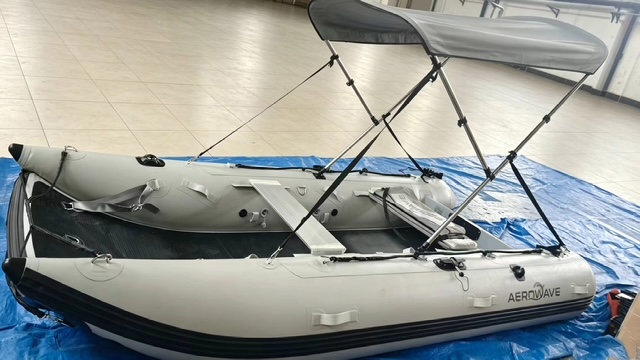
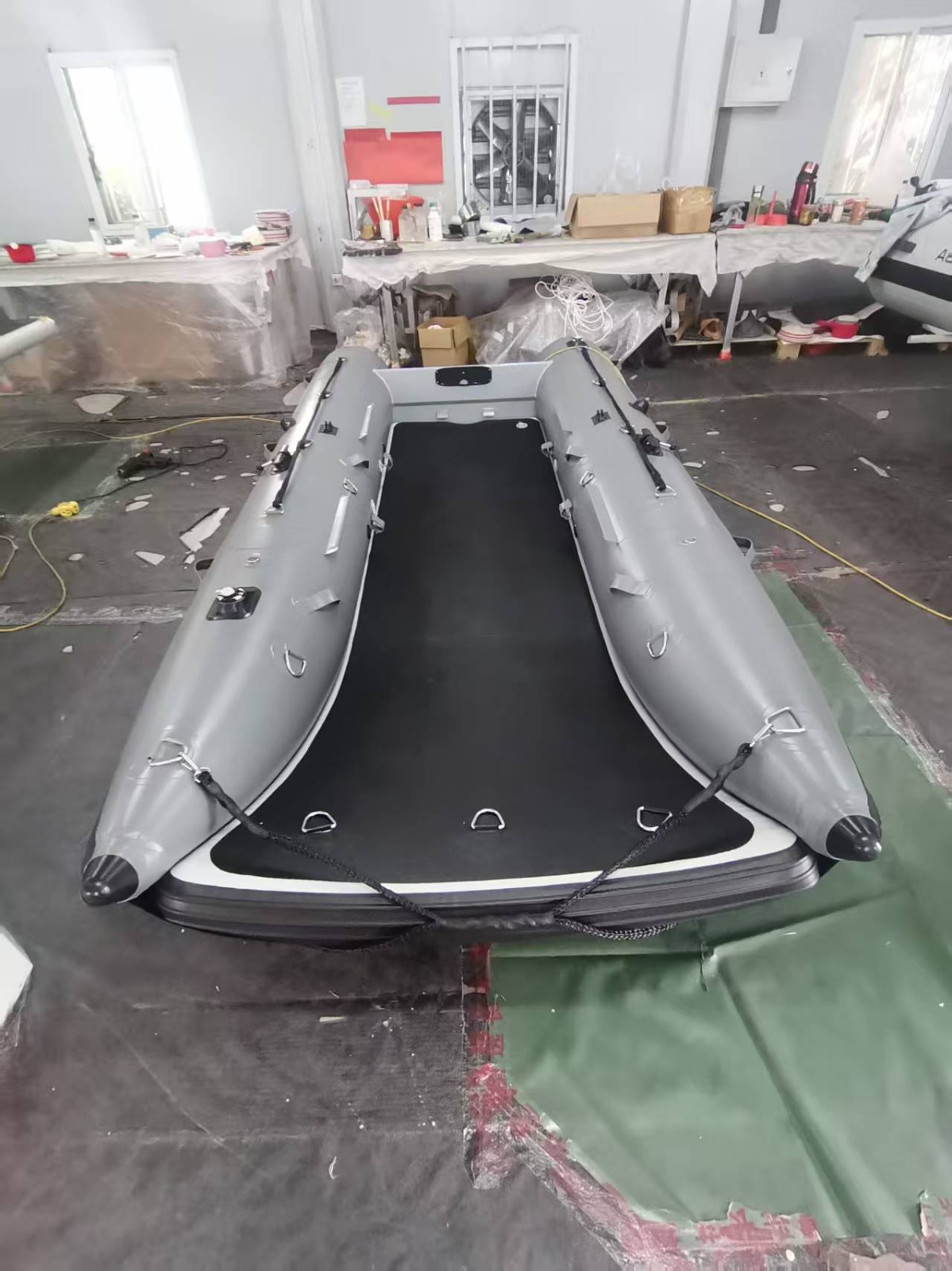
A high-pressure air-deck floor is the gold standard for portable fishing boats. When you inflate these to the correct PSI, they become incredibly rigid, giving you a firm, stable platform that feels almost like a solid deck. You can move around, brace yourself when fighting a fish, and cast with precision without the boat flexing under your feet.
This rigidity is a game-changer for a few key reasons:
- Casting Stability: It gives you a solid base to plant your feet and put power into your cast.
- Weight Distribution: A firm floor helps spread the weight of you, your esky, and all your gear evenly across the hulls, a vital aspect of proper weight distribution.
- Better Tracking: A rigid boat doesn't sag in the middle, which helps it cut through the water more efficiently and track straighter.
To give you a clearer picture of what to look for, here’s a quick comparison of the features that really count when you’re out on the water.
Key Feature Comparison for Fishing Catamarans
This table breaks down the technical features anglers need to consider, showing how premium options deliver practical benefits for fishing.
| Feature | Standard Option | Aerowave Premium Standard (Easy Inflatables) | Why It Matters for Fishing |
|---|---|---|---|
| Seam Construction | Glued Seams | Thermo-Welded Seams | Welded seams won't fail under heat or UV, ensuring your boat lasts for years in Australian conditions. |
| Floor System | Basic Inflatable Floor or Slats | High-Pressure Air-Deck | Provides a rock-solid, stable platform for standing, casting, and moving around safely. Essential for stability. |
| Transom Material | Plywood or Plastic | Solid Aluminium Transom | A strong, flex-free transom handles motor torque and provides a secure mount for accessories like rod holders. |
| Air Chambers | 2 Main Chambers | 3+ Independent Chambers (Hulls + Floor) | Crucial for safety and offshore suitability. If one chamber is punctured, the others stay inflated. |
As you can see, choosing premium features isn't just about paying more—it's about investing in a boat that is safer, performs better, and will stand up to years of serious fishing.
Transom and Hull Design for Power and Safety
The transom is the backbone of your boat’s performance. It’s where your outboard motor lives, and a weak or flimsy transom is not just a performance-killer—it's a serious safety risk. A solid aluminium transom gives you the strength needed to handle the torque of a modern outboard without flexing or failing.
This solid connection makes sure all your motor’s power is converted directly into forward motion. It also gives you a secure structure for mounting rod holders and other essential fishing gear. If you're serious about building a capable fishing rig, our guide on choosing the perfect fishing inflatable boat goes into even more detail on optimising your setup.
A critical safety feature that's often overlooked is the multi-chamber design. A proper inflatable catamaran should have at least three separate air chambers—the two main hulls and the floor. This provides essential redundancy, boosting its offshore suitability. If one chamber gets compromised, the others stay inflated, keeping the boat afloat so you can get back to shore safely.
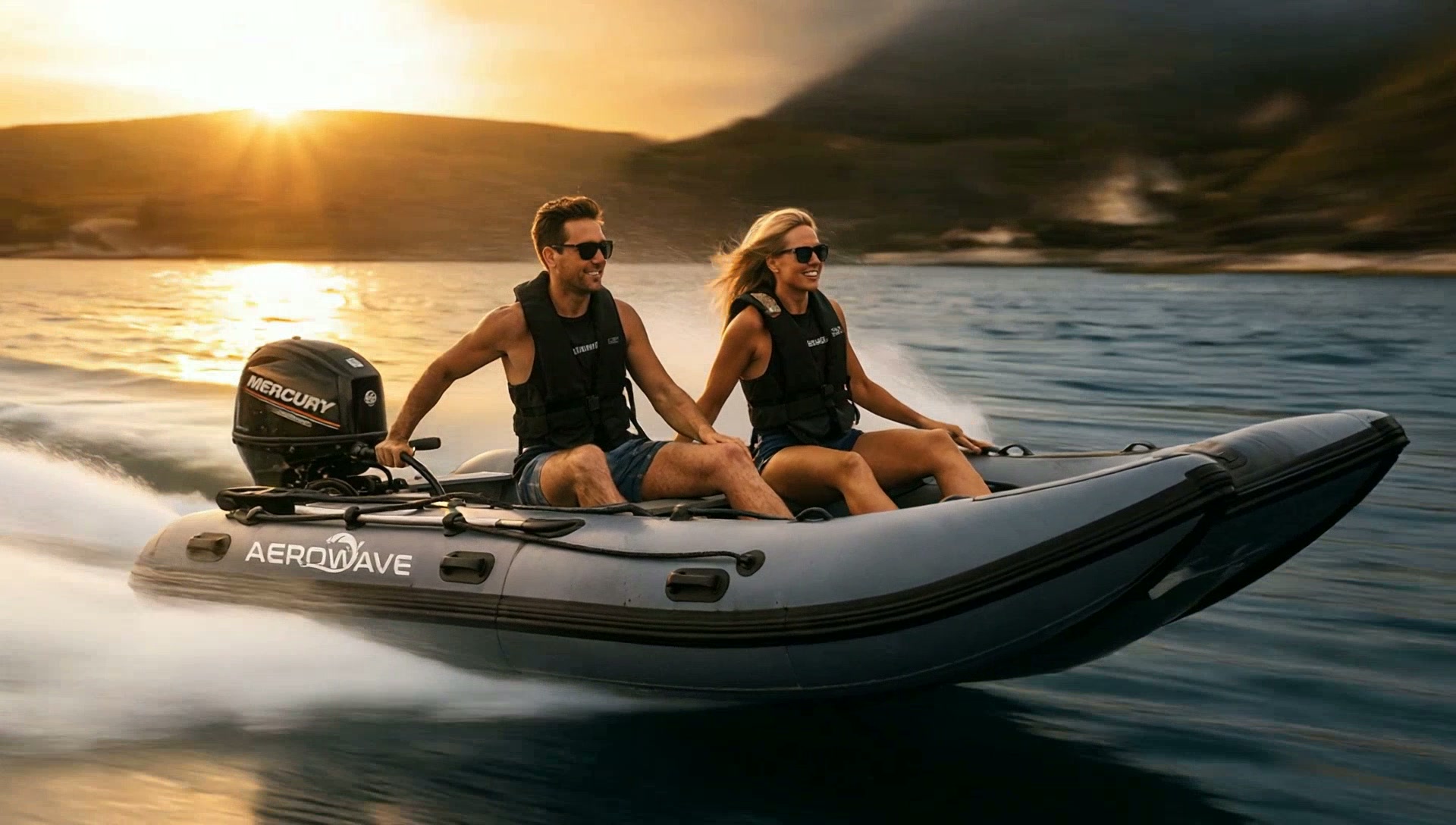
Finally, look at the overall hull design. The elevated air-deck, combined with the twin-hull structure, creates a tunnel effect. This traps a cushion of air, helping the boat lift onto a plane faster while giving you a much smoother ride over chop—a massive advantage when navigating Australia’s varied coastal waters. All these features work together to create a boat that isn't just portable, but genuinely high-performing.
For any serious angler, a boat that rocks and sways is more than just an annoyance—it can ruin your entire day. When you're trying to land a cast with precision or fight a powerful fish, stability is everything. This is where an inflatable catamaran proves its worth, giving you a rock-solid platform that lets you fish with total confidence.
The magic is in the twin-hull design. A normal monohull boat balances on a single point, like trying to stand on one foot. But a catamaran rests on two wide-set hulls, creating a broad, stable footprint on the water that actively fights against rocking and tipping.
Think about standing with your feet wide apart versus close together. The wider your stance, the harder you are to push over. It’s the same simple physics at work here. The catamaran’s wide base distributes your weight evenly, so every movement you make on board is absorbed without drama.
The Physics of a Stable Fishing Platform
When you shift your weight, cast your line, or lean over to net a fish on a single-hull boat, the whole vessel lists to that side. On an inflatable catamaran, that same movement is balanced between the two hulls. It’s an inherently stable design that means you can focus on fishing, not on keeping your balance. This superior stability when casting is what makes fishing traffic convert so well.
The tunnel between the hulls also does some heavy lifting. As you move, it traps a cushion of air that helps the boat lift and skim across the water. This not only gives you a much smoother and drier ride in choppy conditions but adds another layer of side-to-side stability when you’re stationary and casting.
From Theory to Practice: Real-World Fishing Scenarios
It's one thing to talk about physics, but it's the on-water performance that really matters. The stability of an inflatable catamaran opens up ways of fishing that would be tricky, if not downright dangerous, in a less steady boat.
Just think about these classic Aussie fishing situations:
- Sight-Casting in the Flats: You’ve spotted a big flathead sitting in the shallows. You need to stand up, get a clear view, and make a perfect cast without spooking it. A catamaran lets you stand and move without the boat shifting under you, so you can lock onto your target.
- Fighting a Kingfish: That moment a big kingy smashes your lure and starts peeling line, you need to be able to move around the boat fast. The cat's stability means you can follow the fight from bow to stern without worrying about unsettling the boat or, worse, going for a swim.
- Leaning Over to Land a Catch: Gaffing or netting a fish is the moment of truth. On many boats, leaning over the side is a recipe for disaster. But the catamaran’s wide, buoyant hulls give you a secure platform, letting you reach right over with confidence to secure your prize.
The real game-changer is the freedom to move. You and a mate can fish from the same side, stand up at the same time, or reorganise gear without the boat tipping violently. It makes for a safer, more comfortable, and ultimately more successful day on the water.
The Critical Role of a High-Pressure Air-Deck
All that stability would mean nothing if the floor felt like a wet noodle. A flimsy, sagging floor completely undermines the twin-hull advantage, which is why a high-pressure air-deck floor is non-negotiable for any serious fishing catamaran.
When inflated to its correct pressure—often up to 15 PSI—thousands of internal polyester threads lock together to create a surface that is incredibly rigid. What starts as a rolled-up mat becomes a rock-solid deck you can stand and walk on, feeling almost identical to a traditional hard-hulled boat. This rigidity stops the boat from flexing under load and ensures your weight distribution is perfect across both hulls, giving you the full benefit of the catamaran’s natural stability. It's the foundation for confident, active fishing.
Rigging Your Catamaran for Peak Fishing Performance
An unrigged boat is a blank canvas. A perfectly rigged one is a high-performance fishing machine. Turning your new inflatable catamaran into a customised angling weapon is where the real fun begins. It's about more than just bolting on accessories; it's a strategic process of creating an ergonomic, balanced, and brutally efficient fishing platform.
The key is to enhance its capabilities without compromising the boat's integrity or performance. With a bit of planning, you can easily add rod holders, fish finders, bait boards, and other essentials to create your ideal setup. Modern inflatable catamarans are designed with this in mind, often including built-in mounting points that make customisation dead simple.
Unlike a tinnie where you can drill anywhere, rigging an inflatable requires a smarter approach. The goal is to use secure, non-invasive mounting solutions that work with the boat’s design, not against it. This ensures your rig is both practical and durable for many seasons of use.
Mounting Rod Holders and Other Essentials
Your first job will likely be sorting out rod holders. The best solutions for inflatable boats use glue-on mounting bases. These create a super-strong attachment point on the PVC or Hypalon tubes without needing to drill a single hole. Once the base is set, you can attach a huge variety of accessories. This is the key to mounting rod holders effectively.
For our Aerowave models, these mounting points often come pre-fitted, saving you the hassle. This allows for a "plug-and-play" approach to rigging your vessel. You can easily add and remove accessories as needed for different types of fishing trips.
Consider these common mounting setups:
- Rod Holders: Position them for trolling, bait fishing, or simply for storing rods while you travel. Placing them near the transom and at mid-ship gives you excellent versatility.
- Fish Finders: A transducer arm can be mounted to the transom, while the head unit can be fixed to a custom console or a simple mount attached to the aluminium seating.
- Bait Boards: These can be mounted on rail systems or attached directly to pre-fitted bases, giving you a dedicated space for preparing bait and lures.
The best part is the flexibility. Your setup for chasing snapper offshore one weekend can be completely different from your estuary setup the next. It’s all about adapting the boat to your immediate needs.
The Art of Strategic Weight Distribution
Once your gear is mounted, how you distribute weight on board becomes the single most important factor for performance. An improperly balanced inflatable catamaran will be sluggish, unstable in turns, and chew through fuel. Getting the weight distribution right is crucial for both stability and getting on a plane quickly.
Think of your boat as a seesaw. The goal is to achieve a level trim when at rest and a slight bow-up angle when planing. This requires careful placement of all your heavy items.
Start by considering the heaviest components:
- You and Your Mates: Your own weight is the most significant variable. Position seating to balance the load.
- Esky and Tackle Box: Keep these heavier items centred and as low as possible.
- Fuel Tank and Battery: These are typically placed at the transom to offset weight at the bow, but their exact position can be adjusted to fine-tune your trim.
Pro Tip: For a faster, more stable ride in choppy water, shift some weight slightly forward of the centre. This helps the twin hulls cut through waves instead of bouncing over them, resulting in a smoother and drier experience. Experiment on a calm day to find the sweet spot for your specific load.
Getting this right transforms the boat's handling. It will track truer, turn more predictably, and feel much more responsive to both throttle and steering inputs. For a deeper dive into accessorising your vessel, check out our guide on selecting the best fishing gear for your inflatable boat. It's packed with tips to help you build the ultimate fishing rig. This thoughtful approach to weight distribution is what separates a good setup from a great one.
Pushing the Limits: Offshore Suitability and Motor Pairing
So, can you actually take an inflatable catamaran offshore? It's the big question every keen angler asks. The short answer is yes, absolutely—but its offshore suitability is all about understanding how the boat’s size, hull design, and motor work together to create a rig you can trust when you venture beyond the calm of the bay.
While no small inflatable is a true bluewater beast for tackling monstrous seas far from land, a well-chosen inflatable cat is brilliant for nearshore and coastal missions. We’re talking about chasing snapper on the reefs just off the coast, exploring headlands, and crossing those bigger, choppier bays. Their capability all comes down to a few key design elements that have to be in sync.
Bigger is always better when you’re dealing with open water. In our experience, inflatable catamarans in the 3.8 metre to 4.2 metre range give you the length and volume you need for a much more stable and comfortable ride in ocean swells. That extra size also means more freeboard—the distance from the waterline to the top of the tubes—which is critical for keeping you dry and stopping waves from slopping over the side.
Why Catamaran Hulls Are King in a Swell
That twin-hull design is a massive game-changer in offshore conditions. A typical monohull can get tossed around uncomfortably when waves hit its side (a beam sea), but a catamaran’s wide stance lets it ride over swells with incredible stability. The tunnel between the hulls also traps a cushion of air, which softens the ride and dramatically reduces that bone-jarring slam when you cross over waves.
This design gives you two huge performance benefits:
- In Bay Chop: Those sharp, closely-packed waves you find in a bay are sliced through cleanly, giving you a much drier and less jarring ride.
- In Ocean Swells: The longer, rolling waves of the open ocean are managed with impressive stability, as the two hulls work independently to absorb the motion.
The most crucial part? The multiple air chamber design is your ultimate safety net. With at least three separate chambers (two hulls plus the floor), the boat stays buoyant and stable even if one chamber gets compromised. That’s the kind of security you need to get back to shore safely.
Finding the Sweet Spot: Matching the Right Motor
Choosing the right motor is just as important as picking the right boat. If it's underpowered, your cat will struggle to get on a plane, especially when loaded with gear and a mate. Go too powerful, and you can put dangerous stress on the transom and make the boat unstable. The real art is finding that perfect balance of power, weight, and fuel efficiency.
As an authorised dealer, we spend a lot of time pairing our Aerowave catamarans with reliable Hidea outboards. They offer a fantastic power-to-weight ratio, which is exactly what you want. It's all about matching the horsepower to the boat’s size and how you plan to use it. A small motor on a big boat is just plain inefficient, and a heavy motor on a small boat ruins the boat's natural balance.
Getting this pairing right is what turns a good boat into a great, safe, and effective rig. If you’re trying to work out the best fit, our guide on choosing the right motor for inflatable boats breaks it down in detail to help you build a perfectly balanced package.
Juggling Power, Weight, and Fuel Economy
When you’re picking an outboard, you're always making a few trade-offs. More power gets you on a plane faster and handles bigger loads, but it also means more weight hanging off the back and more trips to the servo.
Here’s a quick guide we use for pairing Hidea outboards with our inflatable catamarans for Aussie fishing conditions:
| Catamaran Size | Recommended Hidea HP Range | What It’s Perfect For | Performance Focus |
|---|---|---|---|
| 3.0m - 3.4m | 6HP - 15HP | Solo or two-person fishing in estuaries and bays. | Awesome portability and fuel economy. Planes easily with a light load. |
| 3.5m - 3.8m | 15HP - 25HP | All-round coastal and offshore fishing for two anglers. | A fantastic balance of power for crossing choppy bays, with great efficiency for longer runs. |
| 4.0m - 4.2m | 25HP - 40HP | Offshore reef fishing with more gear and room for three. | Maximum power to tackle ocean swell and heavy loads while keeping things safe and stable. |
Don’t forget that the motor's physical weight is a massive factor. Modern four-strokes are heavier than the old two-strokes, so always check your boat's maximum engine weight rating on the compliance plate. Pushing past that limit can make the boat feel "squirelly" and unstable, especially at speed.
For most nearshore fishing, a 20HP to 25HP motor on a 3.8m inflatable catamaran really is the sweet spot. It delivers plenty of punch without being too heavy, creating a responsive, safe, and seriously capable fishing machine for Australian waters.
A Pre-Purchase Checklist for Choosing Your Ideal Package
Choosing the right inflatable catamaran isn't just about the boat—it's about building the perfect package for your adventures. Getting this right from the start means you'll have everything you need to hit the water with confidence the moment your gear arrives. If you're looking to compare prices and features of inflatable boats in your area, this is where you start.
This final checklist pulls everything together into a few simple questions. Think of it as your guide to moving from research to rigging, ensuring you invest in a setup that will serve you well for years of Aussie adventures. Let's lock in your perfect match.
Step 1: Define Your Fishing World
First up, get honest about how and where you'll be spending most of your time on the water. Answering these questions will quickly point you towards the right boat size and motor combination, cutting through the guesswork.
- Where will you fish most often? Are you exploring calm estuaries and rivers, or are you planning to punch out into open bays and chase fish on nearshore reefs? Heading offshore demands a larger, more capable boat (like a 3.8m or bigger) for handling swell safely and comfortably. This will determine its offshore suitability.
- Who are you fishing with? A solo angler can get away with a nimble, smaller setup that’s a breeze to handle alone. But if you’re usually fishing with a mate or two, you’ll need the extra space and payload of a larger cat to give everyone room to cast and to handle the extra weight.
- How will you transport and store it? The real magic of an inflatable cat is its go-anywhere portability. Double-check that the packed-down size and weight of the boat and motor will fit where you need it to, whether that’s the boot of your car or the storage bay of your caravan.
Thinking this through creates a clear picture of your needs. For example, a solo angler chasing bream in calm rivers would find the Aerowave 3.4m with a 9.8HP Hidea outboard to be a fantastic, lightweight package. In contrast, two mates targeting snapper on coastal reefs would be much better off with a 4.2m model powered by a 25HP motor for that extra grunt and stability.
Step 2: Match the Motor to Your Mission
Picking the right motor is every bit as important as choosing the boat itself. A great hull is only as good as the engine pushing it. This decision tree makes it simple, guiding you from your typical waterway to the ideal motor size.

As you can see, the more demanding your conditions and the more people you bring along, the more power you'll need to maintain performance and, most importantly, safety.
Step 3: Build Your Complete Package
Finally, it’s time to tick off the essentials that turn a boat and motor into a complete, ready-to-fish solution. A quality setup is more than just the big items; it’s a system designed to get you on the water faster and with less fuss.
A complete package should feel like it was designed to work together from day one. Don't overlook the small things that make a big difference, like a high-quality pump or properly fitted bags, as they contribute massively to your overall enjoyment and time on the water.
Your final checklist should cover these must-haves:
- A High-Pressure Pump: An electric 12V pump that can hit 15 PSI is non-negotiable. It’s the secret to getting that air-deck floor properly rigid for a rock-solid, stable platform.
- Transport and Storage Bags: Well-made, durable bags are essential. They protect your investment during transit and make carrying your boat from the car to the water’s edge so much easier.
- Essential Safety Gear: Make sure you're sorted with all the safety equipment required for your local waterways. For a detailed rundown, you might be interested in our boat safety equipment checklist.
- Shipping and Warranty: Confirm that shipping is included in the price and that your boat and motor are backed by a solid warranty. That peace of mind is priceless.
By taking a few minutes to work through these steps, you’ll build the perfect inflatable catamaran package tailored precisely to your style of fishing. You’ll be set for countless successful trips and adventures ahead.
Frequently Asked Questions About Fishing Catamarans
When you’re thinking about making the switch to an inflatable catamaran, a few questions always pop up. We get it. You want to know how these boats really perform out on the water. Here are straight answers to the most common queries from Aussie anglers just like you who are searching for the best inflatable boats for recreational use available near me.
How Durable Are These Boats in the Harsh Australian Sun?
This is a big one, and for good reason. No one wants a boat that can’t handle a bit of Aussie sun. Our inflatable catamarans are built from German-made Valmex PVC, a material specifically engineered to resist high UV exposure day in, day out.
We pair this tough fabric with thermo-welded seams. Instead of relying on glue that can perish in the heat, this process fuses the material together, creating a permanent bond. The result is a boat designed to withstand years of intense sun without the seams giving way.
What Maintenance Does a PVC Boat Need?
Honestly, it’s refreshingly simple. After any trip in saltwater, the most important thing is giving it a thorough rinse with fresh water. This gets rid of any salt crystals that can be abrasive over time.
For general upkeep, a quick clean with a specialised inflatable boat cleaner will keep the tubes free of scuffs and grime.
For a stubborn mark that just won’t budge, a magic eraser sponge paired with a proper boat cleaner works wonders. It gets the job done without damaging the PVC, keeping your boat looking sharp and extending its lifespan.
What Are Realistic Setup and Pack-Down Times?
Forget spending half your morning at the boat ramp. With a good 12V electric pump, you can have a 3.8m inflatable catamaran fully inflated in about 10-15 minutes — and that includes the high-pressure air deck.
Packing down is even faster. Once you open the valves, the air rushes out. You can have the boat deflated, rolled up, and tucked away in its bag in under 10 minutes. More time fishing, less time fiddling.
Do I Need a Boat Licence in Australia?
This depends entirely on your state and the size of your motor. The rules vary, so it’s crucial to know your local regulations.
- In NSW, QLD, and VIC, you'll need a licence if your engine is 4.0kW (5.4HP) or more.
- Over in WA, a Recreational Skipper’s Ticket is required for any boat with a motor over 6HP (4.5kW).
Always double-check your local maritime authority's website before hitting the water. It’s the only way to be sure you’re safe, legal, and ready for a great day out.
Ready to discover the perfect fishing platform? At Easy Inflatables, we specialise in creating turnkey packages that get you on the water faster. Explore our range and find your ideal setup today.
Explore the Aerowave range
Weekend-Proof Score 17 questions · about 2 minutes
Will the boat you're about to buy survive an Australian summer?
Seventeen straight questions about where you'll use it, what you'll ask of it and the boat you're weighing up. You get a score out of 100, the exact weak points in your plan, and the one boat that genuinely fits.
Free · your result shows on screen · no email required
So which one is yours?
Pick how you'll actually use it and we'll take you straight to the right hull.
I want to fish it
Open bow, rod holders, deck space you can stand and cast from.
Viper Sport 400Family, diving and the beach
3.8 m Series 3 catamaran — low bow to climb back in wearing fins or a tank.
WaveRunner 380Tender / one-person launch
3.3 m hard-floor boat that packs into a bag and still takes a beach landing.
Viper 330Shop gear featured in this guide
Aerowave WaveRunner 380 Series 3 Catamaran Package
The WaveRunner 380 Series 3 is a premium 3.8m inflatable catamaran package built for Australian and worldwide families, fishing, and coastal day boating — ideal for snorkeling and spearfishing — offering serious stability and premium German Valmex® construction.
Free freight to United States · local taxes payable on arrival
Aerowave Viper 400 Sovereign
Flagship 4m enclosed-bow inflatable catamaran. German VALMEX® 7321 Heavy Plus 1.2mm commercial-grade fabric, 10 PSI high-pressure drop-stitch air deck floor with VALMEX non-slip surface, LockPro wheels, full Bimini and FREE express delivery Australia-wide included. Winter special — save $1,000 until 31 August 2026.
Free freight to United States · local taxes payable on arrival
Aerowave Viper 365 Open Bow
Premium 3.65m Inflatable catamaran — built the same way as our flagship Viper 400 sports boat, just 35cm shorter. German VALMEX® 7321 Heavy Plus 1.2mm commercial-grade fabric, 10 PSI high-pressure drop-stitch air deck floor with VALMEX non-slip surface, LockPro wheels, full Bimini and FREE express delivery Australia-wide included.
Free freight to United States · local taxes payable on arrival
Not sure which suits you? Talk to a real boat owner.
Before you spend a cent
Buying from Australia, delivered to United States
You have never heard of us, we are on the other side of the world, and the internet is full of fakes. Fair enough. Here is everything you would need to check us out, in one place — no forms, no chat bot.
Australian designed business
Easy Inflatables, Avoca Beach NSW 2251. ABN 96 856 548 613. International orders ship from our Hong Kong hub.
222 owner reviews, 4.8 average
Read them in full, good and bad, on our reviews page.
CE certified, 7-year hull warranty
ISO 6185-3 and EU Directive 2013/53/EU. Warranty honoured worldwide.
Tracked, insured, door to door
FREE freight to United States · local tax/duty on arrival.
- Who am I actually buying from?
- Easy Inflatables, Avoca Beach NSW 2251, Australia. ABN 96 856 548 613. Sean is the owner and skipper, Gary Stewart handles sales on +61 2 4335 1603, Karen Matthews handles email. The boats are Australian designed; international orders ship from our Hong Kong dispatch hub so your landed price stays competitive. Phone us before you pay a cent — a real person answers.
- Is this really an Australian product?
- Yes — Australian designed and engineered on the NSW Central Coast. Manufacturing is done offshore to our spec, and international orders ship direct from our Hong Kong dispatch hub. If we routed every boat through Australia first, the freight alone would roughly double or triple your cost for the same hull.
- What do I pay, and what is not included?
- The delivery and import terms depend on your country. EU, UK, New Zealand and named Asia/Pacific lanes include duty and tax; US freight is free but US buyers pay import charges on arrival. Other destinations show their terms before payment.
- How do I pay safely?
- Card through Stripe (Visa, Mastercard, Amex, Apple Pay, Google Pay) or bank transfer. Card payments carry your bank's own dispute protection. We never ask for crypto, gift cards or payment to a personal account.
- What if it arrives damaged?
- Every boat ships fully tracked and insured door to door. Photograph the carton and the boat on arrival and email us — transit damage is claimed and replaced through us, not left with you and the courier.
- Is the warranty real outside Australia?
- Yes. The 7-year hull warranty on 1.2 mm VALMEX Heavy Plus and Orca Hypalon hulls applies wherever you are. Replacement parts are held in Australia and at our overseas hub and go out by express courier to your door.
- Is the boat actually certified?
- All Aerowave catamarans are CE certified to ISO 6185-3 and EU Directive 2013/53/EU. Certification paperwork is supplied with the boat — ask and we will send it before you order.
Ready to set sail?
Premium German-fabric inflatable catamarans, built to order and delivered to your door. Talk to our team or browse the fleet.
Like this guide? Get the next one in your inbox.
Owner-tested tips, gear deep-dives and Aussie boating know-how — no spam.