The Best Inflatable Catamaran Australia Guide for Solo Launching (2026)
Discover the best inflatable catamaran in Australia for solo adventurers. Our definitive guide compares the Aerowave Viper and AeroCat 330 on weight, setup, and performance for one-person handling.
At a glance
Discover the best inflatable catamaran in Australia for solo adventurers. Our definitive guide compares the Aerowave Viper and AeroCat 330 on weight, setup, and performance for one-person handling.
- Why an Inflatable Catamaran for Solo Adventures?
- The Contenders for Solo Supremacy: Viper 330 vs. AeroCat 330
- Deep Dive: Hull Weight and The 'Car-to-Water' Reality
- The Numbers Game
What we'd put you in
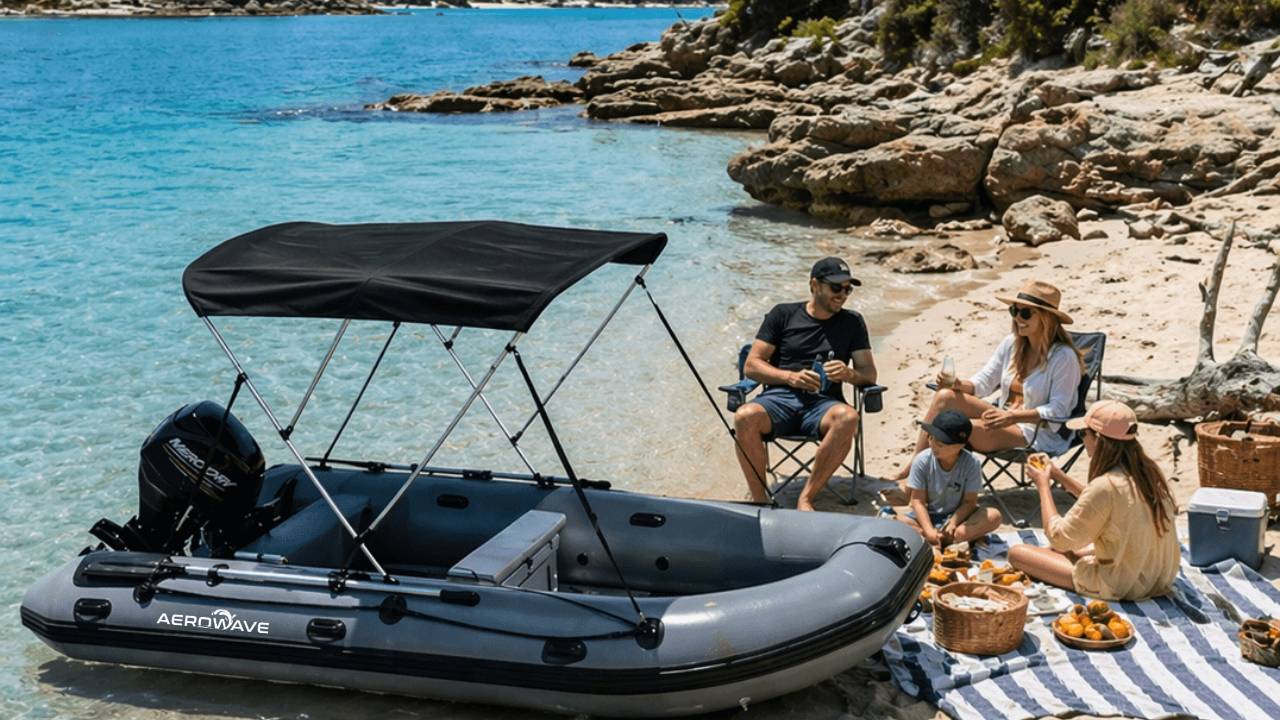
Aerowave Viper 400 Sovereign
If you're reading about catamarans, this is the one we build most of.
US$3,167 USD
Delivered to your door, today's rate
- Free freight to United States · local taxes payable on arrival
- 7-year hull warranty
🇺🇸 Shipping to United States · landed price quoted in writing
Yes — we ship the Aerowave Viper 400 Sovereign to United States. Here's the landed price.
If you're reading about catamarans, this is the one we build most of.
Written for Australian readers — but the boat ships to you. We are an Australian builder and this article is written from Australian waters. That changes nothing about what you can order: the same hull, the same 7-year warranty and the same certification go out to United States every week.
Aerowave Viper 400 Sovereign
- Boat package (export price)
- US$3,726
- 15% tariff relief credit
- − US$559
- Express air freight to United States
- Included
- Import duty, taxes & customs clearance
- Payable on arrival
- Estimated landed, USD
- US$3,167
Indicative, converted at today's rate, before local duty and tax on arrival. Ask below and we'll put a fixed figure in writing, valid 30 days.
- 7-year hull warranty
- 1500 GSM / 1.2 mm VALMEX® Heavy Plus hull
- CE certified to ISO 6185-3 and EU Directive 2013/53/EU
- Door-to-door, tracked the whole way
Your price, delivered to your door — freight included.
We email the full PDF quote (spec, freight, finance, WavePay) to your inbox in under 60 seconds. No spam — one quote, one follow-up.
See it for yourself
Real boats. Real owners. Real people behind them.
Plenty of what you read online these days is generated. Check us out properly — the factory, the reviews and the owners are all one click away. Why we use AI, and how to check we’re real
How our boats are built
Walk the production line: thermo-welded seams, 1.2 mm VALMEX Heavy Plus hulls, over-pressure relief valves on every chamber.
See the buildGoogle Maps reviews
Real Australian owners, five stars, published on our Google Business Profile with the map — read them there, not just on our own site.
Open Google Maps reviewsOwner stories
Boats in use — offshore, on rivers, on rescue duty. Photos and words from the people who actually own them.
Read owner stories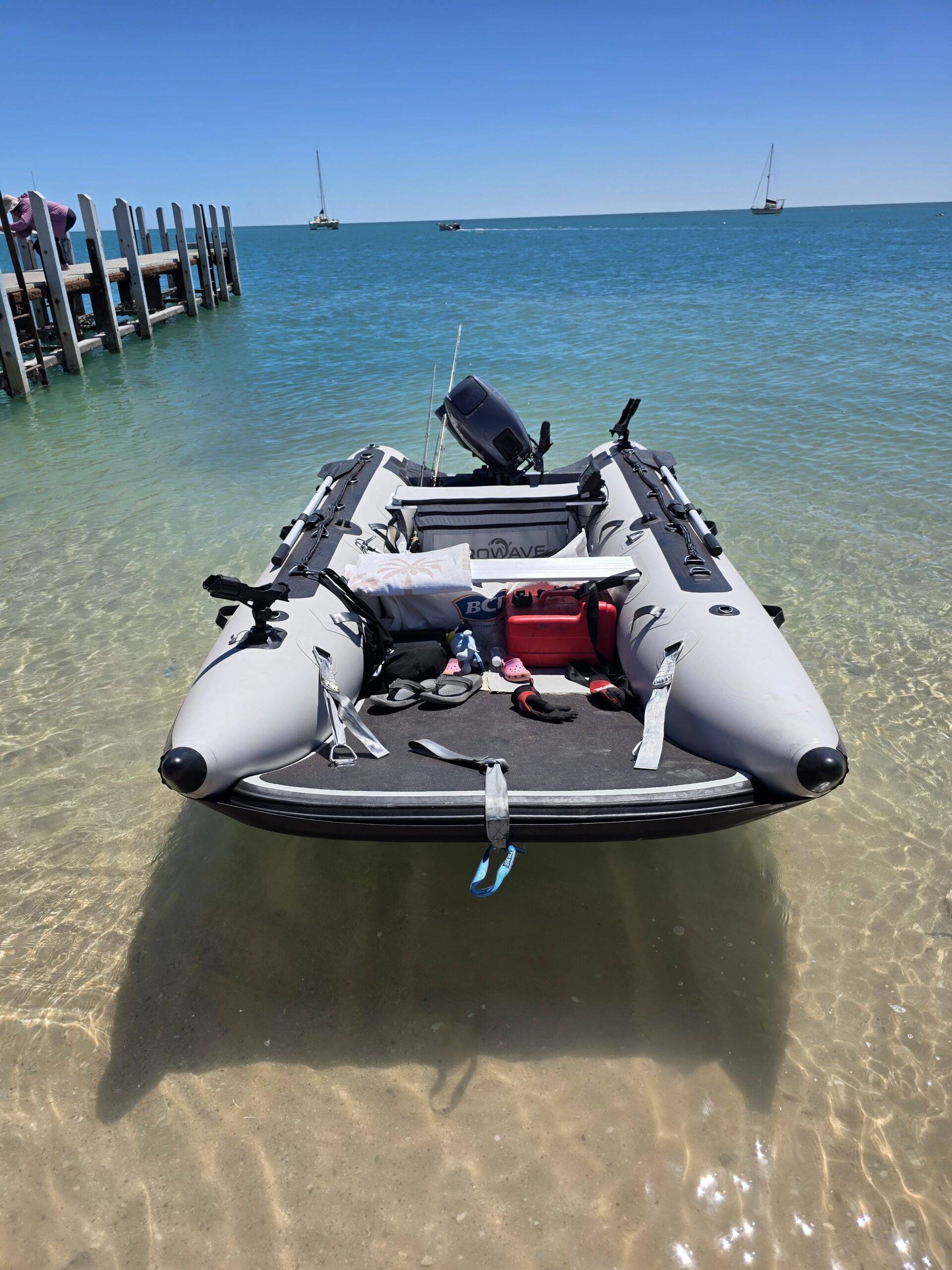
The ultimate freedom is launching your boat by yourself, whenever you want. But choosing the right vessel is everything.
For the solo adventurer, the call of the water is a powerful one. It's the promise of quiet mornings spent exploring hidden estuaries, fishing untouched spots, or simply escaping the crowds. Yet, this dream is often stalled by a frustrating reality: the logistics of boating. Traditional aluminium or fibreglass boats mean dealing with trailers, congested boat ramps, and the constant need for a second person to help launch and retrieve. It’s a barrier that keeps too many boats sitting in the driveway.
This is where the modern inflatable catamaran shines, offering a brilliant solution to the solo skipper's dilemma. These are not the flimsy beach toys of yesterday. We're talking about high-performance vessels engineered for stability, efficiency, and incredible portability. They can be stored in a cupboard, transported in the back of a car, and, crucially, launched by one person. The question is no longer if an inflatable is the answer, but which one is genuinely the best for single-handed operation.
This guide is the definitive resource for finding the best inflatable catamaran Australia has to offer for solo enthusiasts in 2026. We'll go beyond surface-level specs and dive deep into what truly matters for one-person launching: hull weight, packed dimensions, fabric characteristics, and a step-by-step workflow from car to water. We’ll compare two of Australia’s leading premium options, the ultra-durable Aerowave Viper 330 and the lightweight AeroCat 330, to help you make a truly informed choice.
Why an Inflatable Catamaran for Solo Adventures?
Before we compare models, it's essential to understand why the inflatable catamaran design is uniquely suited for the solo boater. While traditional V-hull inflatables (or 'tenders') have their place, the catamaran platform offers a suite of advantages that make it the superior choice for independent exploration.
First and foremost is stability. With two distinct hulls (or sponsons), a catamaran rests on the water with a wider, more stable footprint. For a solo skipper moving around the boat, preparing fishing gear, or leaning over the side, this stability is a game-changer. It feels less like a small boat and more like a solid platform, inspiring confidence even when you're the only one aboard. This is a stark contrast to many monohull alternatives, which can feel 'tippy' with shifting weight.
Second is efficiency. The twin-hull design with a tunnel in between traps a cushion of air, lifting the boat and reducing wetted surface area. This means less drag. For the solo boater, this translates to better performance from a smaller, lighter outboard motor. You can achieve planing speed with less horsepower, which means a lighter engine to carry, lower fuel consumption, and a quieter ride. It’s a virtuous cycle of efficiency perfect for one-person handling.
Finally, there's the shallow draft. Catamaran hulls sit high in the water, allowing you to explore skinny creeks, glide over sandbars, and nose right up to the beach in a way that would be impossible for many rigid-hull alternatives. This opens up a world of destinations inaccessible to larger vessels, turning every trip into a true adventure. Combine this with the ability to pack the entire boat into a car, and you have a vessel that offers unparalleled freedom and access.
The Contenders for Solo Supremacy: Viper 330 vs. AeroCat 330
When it comes to premium, solo-friendly inflatable catamarans, two models stand out: the Aerowave Viper 330 and the AeroCat 330. Both are crafted from high-end German VALMEX® fabric, feature high-pressure air deck floors, and are engineered for performance. However, they are designed with slightly different philosophies, making one potentially a better fit for your specific needs.
-
The Aerowave Viper 330: This is the heavy-duty champion. Built with an incredibly robust 1.2mm (1500 GSM) VALMEX® fabric, it's designed for maximum durability and rigidity. Think of it as the LandCruiser of inflatable cats—tough, uncompromising, and built to handle rugged Australian conditions, from oyster-lined estuaries to remote, rocky shorelines. This toughness comes with a slight increase in weight.
-
The AeroCat 330: This is the lightweight specialist. It uses a premium 0.9mm (1100 GSM) VALMEX® fabric, which is still vastly superior to the budget PVC used in mass-market boats but is lighter and more pliable than its 1.2mm counterpart. The AeroCat is engineered for ultimate portability and the easiest possible one-person setup and pack-down, without sacrificing the core performance and stability of the catamaran design.
This comparison isn't about which boat is 'better' overall, but which is the best for you and your solo launching ambitions. The decision hinges on a trade-off between ultimate durability and ultimate portability.
Deep Dive: Hull Weight and The 'Car-to-Water' Reality
The single most critical factor for a solo-launch boat is its weight. Not just the number on a spec sheet, but the real-world, felt weight of the hull when it’s packed in its bag. This is the weight you'll be lifting out of your car, carrying to your setup spot, and wrestling with at the end of a long day. Even a few kilograms can make a significant difference.
The Numbers Game
The primary driver of hull weight is fabric density. The Viper's 1.2mm VALMEX® Heavy Plus fabric is about 33% thicker and heavier than the AeroCat's 0.9mm VALMEX® fabric. While this might not sound like much, it adds up across the entire surface area of the boat.
A Viper 330 hull comes in at approximately 38 kilograms. An AeroCat 330 hull is lighter, at around 33 kilograms. That 5-kilogram difference is the core of your decision. Is 5kg a lot? When you’re lifting a bulky bag out of a car boot at an awkward angle, or carrying it 50 metres across soft sand, the answer is a resounding yes.
The AeroCat 330 is noticeably easier for one person to manage from a deadlift. It's less of a strain on the back and easier to manoeuvre around obstacles. The Viper 330 is still manageable for a reasonably fit individual, but it demands more respect and proper lifting technique. It feels dense and substantial, which is reassuring on the water but more demanding on land.
Comparison Table: Viper 330 vs. AeroCat 330 for the Solo Skipper
| Feature | Aerowave Viper 330 | AeroCat 330 | Solo User Implication |
|---|---|---|---|
| Hull Fabric | 1.2mm VALMEX® Heavy Plus (1500 GSM) | 0.9mm VALMEX® (1100 GSM) | Viper is tougher against abrasion; AeroCat is lighter and more flexible. |
| Approx. Hull Weight | ~38 kg | ~33 kg | The 5kg difference is very noticeable during lifting and packing. |
| Packed Dimensions | Larger, more rigid bag | Smaller, more compact bag | AeroCat is easier to fit in a small car and carry through tight spaces. |
| Floor Type | High-Pressure Air Deck (8-10 PSI) | High-Pressure Air Deck (8-10 PSI) | Both provide a firm, stable platform to stand and move on. |
| Max Recommended HP | 10 HP | 10 HP | Both can take a versatile range of motors. A 6HP is a solo sweet spot. |
| Key Advantage | Ultimate Durability & Rigidity | Best inflatable catamaran Australia for portability | Choose Viper for rugged use; AeroCat for ease of handling. |
| Warranty | 7-Year Sovereign Warranty on Hull | Standard 5-Year Warranty on Hull | The Viper's longer warranty reflects its heavy-duty build. |
The Best Inflatable Catamaran Australia Needs: Unpacking the Launch Workflow
Having the right boat is only half the battle. A smooth, repeatable workflow is what turns the dream of solo launching into a stress-free reality. Here’s a step-by-step guide to doing it right, and how the Viper and AeroCat compare at each stage.
Step 1: Unpack and Inflate
Once you've carried the bag from your car, the setup begins. With the AeroCat 330, the lighter 0.9mm fabric is noticeably more pliable. It's easier to unroll, especially on a cold morning. The Viper's 1.2mm fabric is stiffer and holds more of a 'memory' from being folded, requiring a bit more effort to lay out flat.
Inflation itself is straightforward for both. Using the included double-action hand pump or an optional electric pump, you'll inflate the two main hulls and the air deck floor. The target for the hulls is around 3.5 PSI, while the air deck needs to be inflated to a rock-solid 8-10 PSI to create the rigid platform these boats are famous for. Total inflation time for one person is typically 15-20 minutes for either model.
Step 2: Attach Transom Wheels
This is the single most important accessory for solo launching. Do not even consider going without a quality set of transom wheels. They transform the boat from a heavy, awkward object into a wheelbarrow you can effortlessly roll to the water's edge. Our optional LockPro wheels are designed for this, featuring large-diameter tyres that handle sand and gravel with ease. They attach to the transom with marine-grade stainless steel fittings before you mount the motor.
Step 3: Mount the Outboard Motor
This is often the most intimidating step for solo boaters. A modern 4-stroke outboard like a Hidea 6HP weighs around 27kg. Lifting this onto the 380mm (15-inch) short-shaft transom requires technique.
Here’s the process:
- Roll the inflated boat on its wheels so the transom is right next to your car's boot or tailgate.
- Slide the motor from your car directly onto the top of the transom. Avoid lifting it from the ground.
- Ensure the transom plate is clean and dry. Carefully align the motor's mounting clamps and tighten them down firmly. Always attach the safety lanyard from the motor to the boat.
There is no practical difference between the Viper and AeroCat in this step; both use a standard 380mm transom that pairs perfectly with common short-shaft outboards.
Step 4: The Roll to the Water
With the motor attached and all your gear (fuel tank, safety equipment, fishing rods) loaded into the boat, this is the moment of truth. Lift the bow, and the entire rig balances perfectly on the transom wheels. Now, you simply walk it down to the water. The stability of the catamaran design means it won't want to tip over as you navigate gentle slopes or uneven ground. Once you reach the water, you roll it in until the motor is deep enough, pivot the wheels up into their locked position, and you're ready to go. It's a beautifully simple, repeatable process that completely removes the need for a second person.
Fabric Showdown: 1.2mm vs. 0.9mm German VALMEX®
The choice between the Viper and AeroCat ultimately comes down to their fabric. It’s crucial to understand that both are premium options, miles ahead of the cheap, single-layer PVC found on budget imports which can degrade quickly under the harsh Australian sun.
VALMEX®, made in Germany, is a high-tech, multi-layer composite material. It consists of a high-tenacity polyester scrim base cloth, coated on both sides with multiple layers of a specialised PVC polymer. The material is then lacquered for a smooth, UV-resistant, and easy-to-clean finish. It’s renowned for its air-holding properties, abrasion resistance, and long life, with a typical lifespan of 10-12 years in Australian conditions.
The Case for 1.2mm VALMEX® Heavy Plus (Viper 330)
The Viper’s fabric is specified at 1.2 millimetres thick with a weight of 1500 grams per square metre (GSM). This is an exceptionally heavy-duty material, typically reserved for commercial vessels or serious expedition tenders. The key benefits are:
- Extreme Puncture and Abrasion Resistance: This fabric can withstand impacts, scrapes against rocks, oyster shells, and barnacles far better than lighter materials. If you launch from rugged shorelines or explore unpredictable environments, this extra toughness provides invaluable peace of mind.
- Enhanced Rigidity: The thicker material, combined with proper inflation pressure, results in a stiffer hull. In choppy conditions, a stiffer hull will flex less, providing a smoother, more predictable ride and a feeling of greater security.
This is why the Viper 330 comes with our premium 7-Year Sovereign Warranty. It's built to last and take a beating.
The Case for 0.9mm VALMEX® (AeroCat 330)
The AeroCat's 0.9mm fabric (1100 GSM) is by no means a 'light-duty' option. It is a premium, high-performance material that is more than tough enough for the vast majority of recreational boaters. Its key benefits are centred on handling:
- Reduced Weight: As discussed, this is the number one advantage for solo handling. The 5kg saving is significant.
- Increased Flexibility: The 0.9mm fabric is much easier to fold and pack away. It requires less physical effort to compress the air out and roll it into a tight bundle that fits easily into its storage bag. This is a huge advantage at the end of the day when you're tired.
For the skipper who primarily uses their boat in bays, harbours, lakes, and estuaries and launches from sand or designated ramps, the AeroCat's fabric offers the perfect balance of durability and user-friendliness.
Pack-Down: The Overlooked Solo Endurance Test
Everyone gets excited about launching, but the pack-down is where a boat's design is truly tested. After a day on the water, you're often tired, wet, and sun-baked. An easy pack-down process is not a luxury; it's a necessity for sustainable solo boating.
This is where the AeroCat 330's lighter, more pliable 0.9mm fabric pays huge dividends. Deflating is the same for both, but folding is a different story. The AeroCat's hull is simply less of a beast to wrestle with. It's easier to press the remaining air out, make the initial folds, and roll it tightly. Getting it back into the bag is a straightforward, one-person job.
The Viper 330, with its stiffer 1.2mm fabric, requires more technique and physical effort. You need to apply more body weight to squeeze the air out, and the material resists being folded tightly. It's absolutely doable for one person, but it's a more physical task. If your energy is flagging at the end of the day, this can feel like a chore.
For the dedicated solo skipper, this end-of-day experience could be the single most compelling reason to choose the AeroCat 330. It makes the whole process, from start to finish, just that little bit easier, ensuring you'll be more inclined to head out on your next spontaneous adventure.
The Bottom Line
Choosing the best inflatable catamaran for solo launching in Australia isn't about finding a single 'best' boat, but the right boat for your specific priorities. Both the Aerowave Viper 330 and the AeroCat 330 are exceptional choices, far exceeding the quality and performance of generic imports.
Your decision boils down to a simple trade-off:
Choose the AeroCat 330 if: Your absolute top priority is ease of handling. You want the lightest possible package for effortless car-to-water transport, setup, and pack-down. You primarily boat in bays, lakes, and estuaries and value portability above all else.
Choose the Aerowave Viper 330 if: Your priority is maximum durability and rigidity. You frequently launch from rugged, rocky coastlines, need a boat that can withstand heavy use and abuse, and you don't mind managing a few extra kilos in exchange for ultimate peace of mind and a 7-year warranty.
Both boats are delivered directly to your door anywhere in Australia via express courier (DHL, FedEx, or UPS) within 7-10 days, with the delivery cost included in the boat's price. If you're still undecided, our expert team is here to help. We use these boats ourselves and can provide honest, practical advice based on your personal needs. Give us a call on +61 2 4335 1603 or email sales@easyinflatables.com.au to discuss your next solo adventure.
Related
Weekend-Proof Score 17 questions · about 2 minutes
Will the boat you're about to buy survive an Australian summer?
Seventeen straight questions about where you'll use it, what you'll ask of it and the boat you're weighing up. You get a score out of 100, the exact weak points in your plan, and the one boat that genuinely fits.
Free · your result shows on screen · no email required
So which one is yours?
Pick how you'll actually use it and we'll take you straight to the right hull.
I want to fish it
Open bow, rod holders, deck space you can stand and cast from.
Viper Sport 400Family, diving and the beach
3.8 m Series 3 catamaran — low bow to climb back in wearing fins or a tank.
WaveRunner 380Tender / one-person launch
3.3 m hard-floor boat that packs into a bag and still takes a beach landing.
Viper 330Shop gear featured in this guide
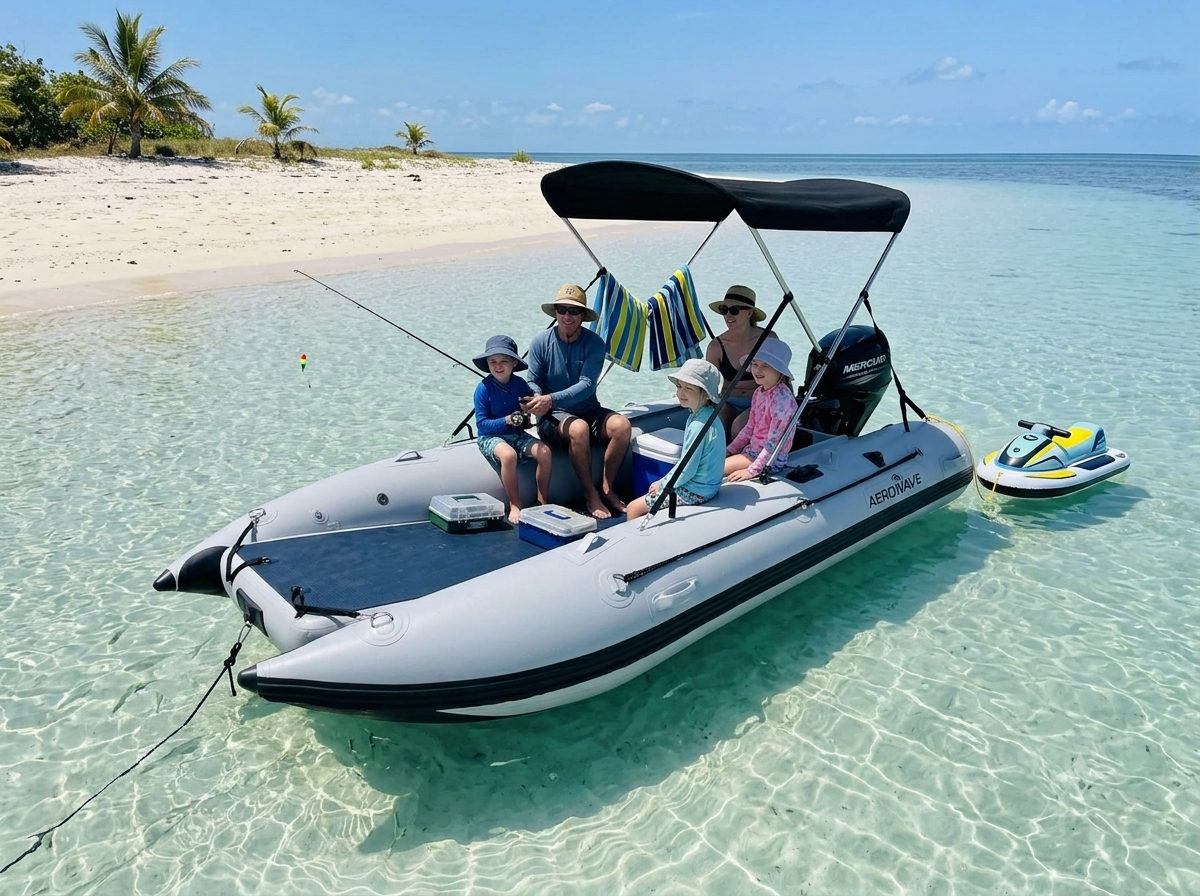
Aerowave WaveRunner 380 Series 3 Catamaran Package
The WaveRunner 380 Series 3 is a premium 3.8m inflatable catamaran package built for Australian and worldwide families, fishing, and coastal day boating — ideal for snorkeling and spearfishing — offering serious stability and premium German Valmex® construction.
Free freight to United States · local taxes payable on arrival
Aerowave Viper 400 Sovereign
Flagship 4m enclosed-bow inflatable catamaran. German VALMEX® 7321 Heavy Plus 1.2mm commercial-grade fabric, 10 PSI high-pressure drop-stitch air deck floor with VALMEX non-slip surface, LockPro wheels, full Bimini and FREE express delivery Australia-wide included. Winter special — save $1,000 until 31 August 2026.
Free freight to United States · local taxes payable on arrival
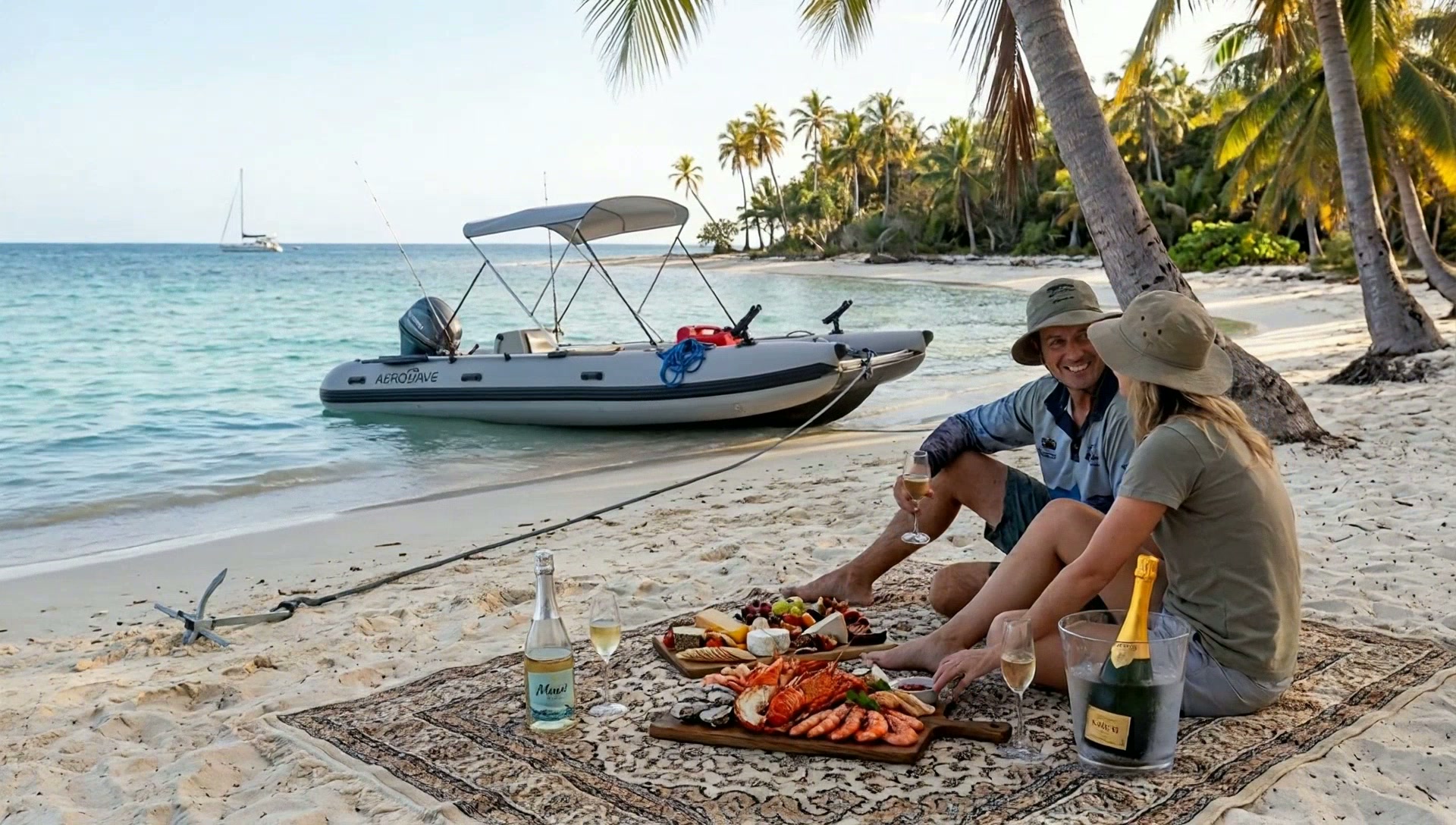
Aerowave Viper 365 Open Bow
Premium 3.65m Inflatable catamaran — built the same way as our flagship Viper 400 sports boat, just 35cm shorter. German VALMEX® 7321 Heavy Plus 1.2mm commercial-grade fabric, 10 PSI high-pressure drop-stitch air deck floor with VALMEX non-slip surface, LockPro wheels, full Bimini and FREE express delivery Australia-wide included.
Free freight to United States · local taxes payable on arrival
Not sure which suits you? Talk to a real boat owner.
Before you spend a cent
Buying from Australia, delivered to United States
You have never heard of us, we are on the other side of the world, and the internet is full of fakes. Fair enough. Here is everything you would need to check us out, in one place — no forms, no chat bot.
Australian designed business
Easy Inflatables, Avoca Beach NSW 2251. ABN 96 856 548 613. International orders ship from our Hong Kong hub.
222 owner reviews, 4.8 average
Read them in full, good and bad, on our reviews page.
CE certified, 7-year hull warranty
ISO 6185-3 and EU Directive 2013/53/EU. Warranty honoured worldwide.
Tracked, insured, door to door
FREE freight to United States · local tax/duty on arrival.
- Who am I actually buying from?
- Easy Inflatables, Avoca Beach NSW 2251, Australia. ABN 96 856 548 613. Sean is the owner and skipper, Gary Stewart handles sales on +61 2 4335 1603, Karen Matthews handles email. The boats are Australian designed; international orders ship from our Hong Kong dispatch hub so your landed price stays competitive. Phone us before you pay a cent — a real person answers.
- Is this really an Australian product?
- Yes — Australian designed and engineered on the NSW Central Coast. Manufacturing is done offshore to our spec, and international orders ship direct from our Hong Kong dispatch hub. If we routed every boat through Australia first, the freight alone would roughly double or triple your cost for the same hull.
- What do I pay, and what is not included?
- The delivery and import terms depend on your country. EU, UK, New Zealand and named Asia/Pacific lanes include duty and tax; US freight is free but US buyers pay import charges on arrival. Other destinations show their terms before payment.
- How do I pay safely?
- Card through Stripe (Visa, Mastercard, Amex, Apple Pay, Google Pay) or bank transfer. Card payments carry your bank's own dispute protection. We never ask for crypto, gift cards or payment to a personal account.
- What if it arrives damaged?
- Every boat ships fully tracked and insured door to door. Photograph the carton and the boat on arrival and email us — transit damage is claimed and replaced through us, not left with you and the courier.
- Is the warranty real outside Australia?
- Yes. The 7-year hull warranty on 1.2 mm VALMEX Heavy Plus and Orca Hypalon hulls applies wherever you are. Replacement parts are held in Australia and at our overseas hub and go out by express courier to your door.
- Is the boat actually certified?
- All Aerowave catamarans are CE certified to ISO 6185-3 and EU Directive 2013/53/EU. Certification paperwork is supplied with the boat — ask and we will send it before you order.
Frequently asked questions
- How much does a small inflatable catamaran weigh?
- A premium 3.3-metre inflatable catamaran hull typically weighs between 33kg and 38kg. The lighter AeroCat 330 (approx. 33kg) is optimised for solo handling, while the heavy-duty Viper 330 (approx. 38kg) prioritises durability.
- Can I really launch an inflatable cat by myself?
- Absolutely. With a set of quality transom wheels, the entire boat, including a small outboard, becomes as easy to move as a wheelbarrow. The process of inflating, mounting the motor, and rolling to the water is easily managed by one person in about 20 minutes.
- What size outboard do I need for solo boating on a 3.3m cat?
- A 5-6HP four-stroke outboard is the sweet spot for solo boating. It's light enough for one person to lift (around 25-27kg) but powerful enough to get the catamaran on the plane quickly and efficiently. A motor up to 10HP can be used, but the extra weight makes it more difficult to handle alone.
- How long does it take to set up an inflatable catamaran from its bag?
- For an experienced user, the entire setup process from unrolling the boat to being ready to launch takes approximately 15 to 20 minutes. This includes inflating the hulls and floor with an electric pump, and mounting the transom wheels and outboard motor.
- Is German VALMEX® fabric really better than standard PVC?
- Yes, significantly. VALMEX® is a multi-layer composite material with superior UV resistance, air-holding capability, and abrasion resistance compared to the cheap, single-layer PVC used in many budget boats. This is why VALMEX® boats have a lifespan of 10-12 years, whereas budget PVC can become brittle and fail in just a few seasons.
- How does the included express delivery work?
- The price of our boats includes door-to-door delivery anywhere in Australia via a premium express courier like DHL, FedEx, or UPS. Once shipped, your boat typically arrives within 7-10 business days, with no separate or hidden freight charges.
- What is the best inflatable catamaran in Australia for a family?
- For family use, we recommend stepping up to a larger model like the AeroCat 380 ($3,480) or the Viper 400 Sovereign Full Package ($5,995). These offer more space for passengers and gear while retaining the key benefits of stability and portability.
- Do I need a boat licence for these inflatable catamarans in Australia?
- Licensing rules vary by state. In many states like NSW and QLD, you need a licence to operate any vessel at 10 knots (about 18.5 km/h) or more. As these boats can easily exceed that speed with a 5HP motor or larger, it's highly recommended to obtain your marine licence.
Ready to set sail?
Premium German-fabric inflatable catamarans, built to order and delivered to your door. Talk to our team or browse the fleet.
Like this guide? Get the next one in your inbox.
Owner-tested tips, gear deep-dives and Aussie boating know-how — no spam.