The Ultimate Guide to Boat Camping in Australia (with an Air Tent)
Ditch the crowds and discover Australia's hidden coastlines. Our definitive guide shows how an inflatable catamaran and an air tent are your ticket to ultimate freedom.
At a glance
Ditch the crowds and discover Australia's hidden coastlines. Our definitive guide shows how an inflatable catamaran and an air tent are your ticket to ultimate freedom.
- What is Boat-to-Shore Camping? A Modern Australian Perspective
- The Gear Conundrum: Why Traditional Setups Fall Short
- The Inflatable Catamaran Advantage for Boat Camping in Australia
- Stability and Space: The Twin-Hull Difference
What we'd put you in
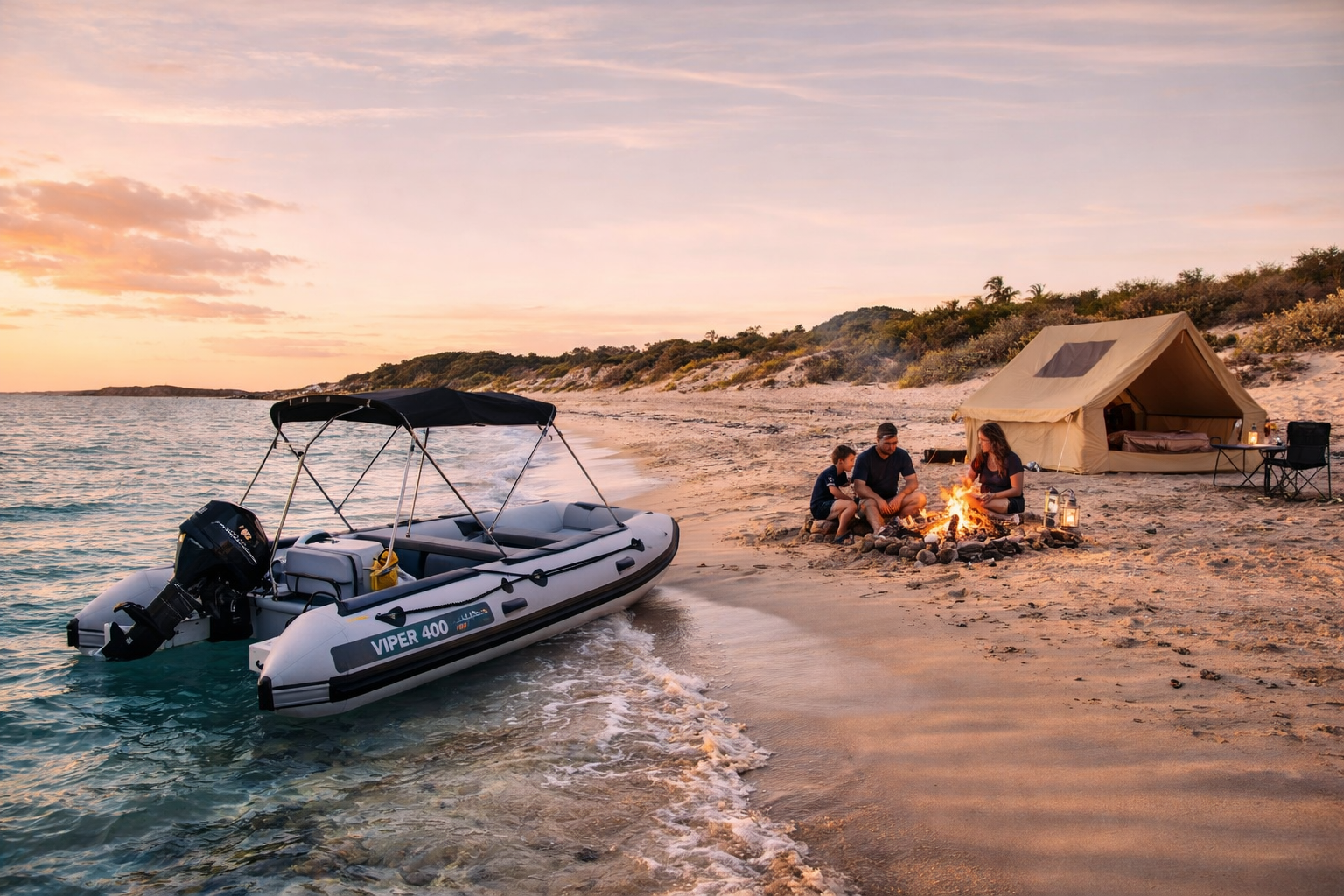
Aerowave Viper 400 Sovereign
Our best-selling boat: 4.0 m, 1.2 mm VALMEX hull, 7-year hull warranty.
US$3,167 USD
Delivered to your door, today's rate
- Free freight to United States · local taxes payable on arrival
- 7-year hull warranty
🇺🇸 Shipping to United States · landed price quoted in writing
Yes — we ship the Aerowave Viper 400 Sovereign to United States. Here's the landed price.
Our best-selling boat: 4.0 m, 1.2 mm VALMEX hull, 7-year hull warranty.
Written for Australian readers — but the boat ships to you. We are an Australian builder and this article is written from Australian waters. That changes nothing about what you can order: the same hull, the same 7-year warranty and the same certification go out to United States every week.
Aerowave Viper 400 Sovereign
- Boat package (export price)
- US$3,726
- 15% tariff relief credit
- − US$559
- Express air freight to United States
- Included
- Import duty, taxes & customs clearance
- Payable on arrival
- Estimated landed, USD
- US$3,167
Indicative, converted at today's rate, before local duty and tax on arrival. Ask below and we'll put a fixed figure in writing, valid 30 days.
- 7-year hull warranty
- 1500 GSM / 1.2 mm VALMEX® Heavy Plus hull
- CE certified to ISO 6185-3 and EU Directive 2013/53/EU
- Door-to-door, tracked the whole way
Your price, delivered to your door — freight included.
We email the full PDF quote (spec, freight, finance, WavePay) to your inbox in under 60 seconds. No spam — one quote, one follow-up.
See it for yourself
Real boats. Real owners. Real people behind them.
Plenty of what you read online these days is generated. Check us out properly — the factory, the reviews and the owners are all one click away. Why we use AI, and how to check we’re real
How our boats are built
Walk the production line: thermo-welded seams, 1.2 mm VALMEX Heavy Plus hulls, over-pressure relief valves on every chamber.
See the buildGoogle Maps reviews
Real Australian owners, five stars, published on our Google Business Profile with the map — read them there, not just on our own site.
Open Google Maps reviewsOwner stories
Boats in use — offshore, on rivers, on rescue duty. Photos and words from the people who actually own them.
Read owner storiesImagine waking up not to the sound of zippers and noisy neighbours, but to the gentle lapping of water against your hull, a kilometre from the nearest soul.
For most Australians, the dream of accessing our country's most remote and breathtaking coastlines remains just that—a dream. We see the postcard images of untouched white sand beaches, turquoise estuaries, and secluded island coves, but the reality of reaching them seems a logistical nightmare. You either need a large, expensive vessel moored at a marina, or you're stuck car-camping at crowded national park sites, peering at paradise from a distant lookout.
The core challenge has always been the gear. Traditional boats require trailers, ramps, and deep water. Traditional camping means lugging bulky tents, poles, and eskies that simply don’t fit on a small, practical craft. This friction between ambition and execution has kept true boat-to-shore camping the preserve of a dedicated few. Until now. A revolution in portable, high-performance marine design is changing the game, making genuine wilderness access simpler and more attainable than ever. The key? Pairing a purpose-built inflatable catamaran with a revolutionary air-beamed tent.
What is Boat-to-Shore Camping? A Modern Australian Perspective
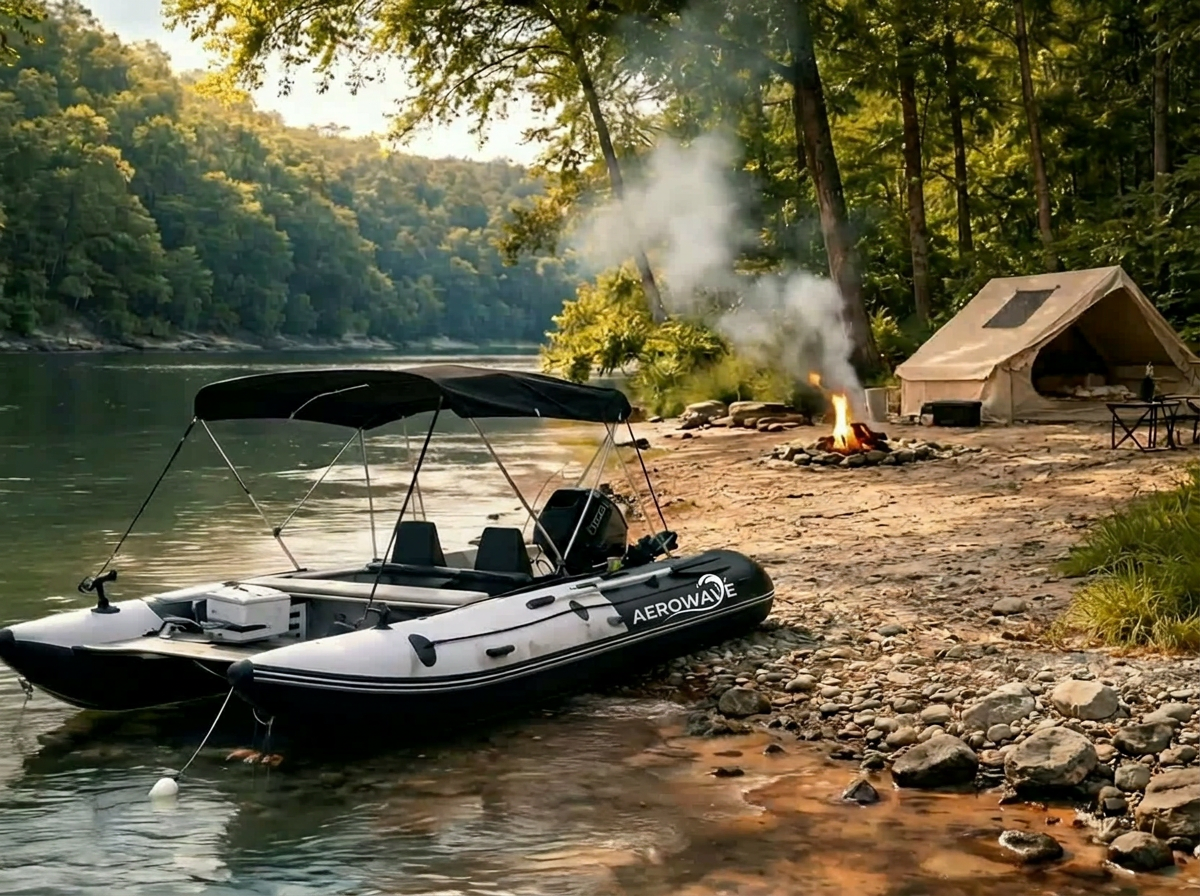
Boat-to-shore camping is the art of using a small, versatile watercraft as a mobile basecamp to access and sleep at locations unreachable by land. It’s a philosophy of travel that blends the freedom of boating with the self-sufficiency of lightweight hiking. This isn’t about pulling a 40-foot cruiser into a marina and plugging into shore power. It’s about nosing a portable craft onto a deserted beach in the Myall Lakes, anchoring in a protected Kimberley cove, or finding your own private slice of the Whitsundays far from the tourist circuit.
The modern approach prioritises portability, efficiency, and minimal impact. The goal is to carry everything you need for a multi-day expedition within the confines of a vessel that itself can be packed into the back of a car. This methodology opens up vast swathes of the Australian coast that are inaccessible to both trailer boats and 4WDs. Think of the labyrinthine waterways of the Hawkesbury, the sheltered inlets of Tasmania's Freycinet Peninsula, or the endless sand islands of Queensland. These are places where the journey is the destination, and your campsite is determined by the tides and your sense of adventure, not by a pre-booked site number.
Fundamentally, it's about trading the complexities of heavy equipment for the elegance of smart, lightweight design. It's about spending less time on logistics (launching, retrieving, cleaning a big fibreglass hull) and more time actually experiencing the wild places you came to see.
The Gear Conundrum: Why Traditional Setups Fall Short
For decades, aspiring boat campers have been forced into a series of compromises. The gear required for boating and the gear required for camping seemed fundamentally incompatible.
On one hand, you have rigid-hull alternatives like aluminium tinnies or small fibreglass runabouts. While capable on the water, they present huge logistical hurdles. They demand a trailer, a vehicle capable of towing it, and access to a boat ramp. This immediately limits your launch points. More critically, their rigid hulls and deeper draft make them risky to beach on unfamiliar shores, especially in areas with rock or coral. A single misjudgment can lead to expensive gelcoat repairs or a punctured aluminium hull. Their hull shape also means an often-uncomfortable ride in chop and limited internal space for bulky camping equipment.
On the other hand, you have the camping gear itself. A traditional family tent with its bag of poles, pegs, and guy ropes is a cumbersome beast. Setting one up on a windy beach after a day on the water is a frustrating experience many campers know all too well. Add to this a couple of large, hard-sided eskies, camp chairs, a table, and sleeping gear, and you’ve quickly exceeded the practical carrying capacity of any small, portable boat. This forces boaters to make risky second trips or to simply abandon the idea of overnighting altogether, limiting them to day trips.
Even budget inflatable boats, often made from cheaper PVC fabrics, don't solve the problem. While portable, they often lack the structural integrity, space, and durability for serious expedition use. Their flimsy air-deck floors and lower-grade materials aren't designed for the rigours of being loaded with gear and beached on Australian coastlines, which can be unforgiving. Their lifespan is significantly shorter, and they simply don't provide the stable, confidence-inspiring platform needed for remote adventures.
The Inflatable Catamaran Advantage for Boat Camping in Australia
The advent of premium inflatable catamarans, specifically those constructed from high-end German VALMEX® fabric, represents a quantum leap forward. These boats aren't pool toys; they are serious marine craft engineered to solve the exact problems that plague traditional setups.
Stability and Space: The Twin-Hull Difference
Unlike a conventional monohull boat that can roll uncomfortably at rest, an inflatable catamaran's twin hulls create a remarkably stable platform. This is immediately noticeable when loading and unloading gear, stepping on and off the boat, or simply moving around. For camping, this stability is a game-changer. It acts as a solid, predictable base from which to organise your expedition.
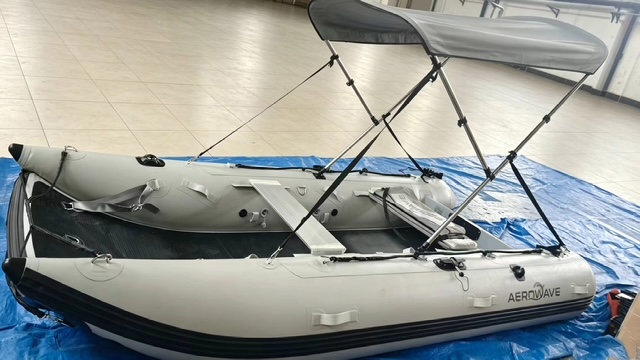
The open-transom, self-draining design of models like the Aerowave Viper and AeroCat also maximises usable deck space. There are no engine wells or moulded fibreglass inserts taking up precious real estate. This results in a huge, flat, open area perfect for stowing dry bags, swags, and other equipment. A boat like the Viper 400 offers a cavernous deck that rivals the usable space of a much larger, heavier rigid boat, allowing you to pack for multi-day trips without feeling dangerously overloaded.
Portability and Access: Go Where Others Can't
This is where the inflatable cat truly excels. The entire boat—whether it's an AeroCat 380 or the formidable Viper 400—can be deflated, rolled up, and transported in the back of a station wagon or SUV. No trailer, no registration, no boat ramp queues. You can drive to the furthest point a road will take you, inflate the boat on the riverbank or beach, and begin your journey from there. This opens up countless launch points that are simply impossible for trailer boats.
Once on the water, their shallow draft and incredibly tough hulls allow you to explore with confidence. The Aerowave Viper 400, for instance, is built from heavy-duty 1.2mm, 1500 GSM VALMEX® Heavy Plus, the same industrial-grade fabric used in commercial rescue boats. This material has an expected lifespan of 10-12 years and is incredibly resistant to abrasion and punctures. You can confidently nose it onto sand, gravel, or shell beaches to unload your gear without the fear of damage that haunts owners of rigid-hull alternatives. This ability to get right to the shore is the essence of boat-to-shore camping.
Fuel Efficiency: Exploring Further for Less
The hydrodynamic efficiency of the catamaran design is another significant benefit. The twin hulls slice through the water with minimal drag compared to a V-hull, which has to expend energy to push water out of the way. When paired with a modern, lightweight 4-stroke outboard like a Hidea 9.9hp or 15hp, the fuel economy is outstanding. This directly translates to a greater range for exploration. You can venture further into remote systems, stay longer, and carry less fuel, which in turn saves weight and space—the two most precious commodities on any expedition.
Introducing the Aerowave Adventure Air Tent: The Missing Piece
For years, the one remaining challenge was the shelter. Even with the perfect boat, you still had to find a flat, dry spot on shore and erect a conventional tent. Easy Inflatables has solved this final piece of the puzzle with the Aerowave Adventure Air Tent, a product so unique that no other Australian inflatable retailer offers a comparable, integrated system.
What is an Air Tent?
An air tent, or air-beamed tent, does away with traditional metal or fibreglass poles entirely. Instead, it uses high-pressure inflatable tubes—or 'air beams'—to create the tent's structure. You simply connect an electric pump and watch it take shape in minutes. The result is an incredibly strong, rigid, and surprisingly aerodynamic structure that's much easier to handle than a pile of confusing poles, especially in windy conditions. Our Adventure Air Tent is made from premium, waterproof materials and is specifically designed to handle the harsh Australian coastal environment.
5-Minute Setup: From Bag to Basecamp
This is where the magic happens. The synergy between an inflatable boat and an inflatable tent is undeniable. You already have an electric pump for your boat; now it does double duty. The Aerowave Adventure Air Tent can be set up in 5 to 8 minutes. You unroll it, connect the pump, and inflate. There's no fumbling with poles, no threading fabric through sleeves, no wrestling with a rain fly in a sudden downpour. This speed and simplicity cannot be overstated. After a long day on the water, you can have your shelter ready before the kettle has boiled. It transforms camping from a chore into a seamless extension of your boating adventure.
A True All-in-One System: The Viper 400 Expedition Package
While the Adventure Air Tent ($890) can be used as a standalone tent on the beach, its true genius is revealed when paired with the Aerowave Viper 400. It is designed to fit perfectly over the bow section of the boat, strapping securely to the Viper’s D-rings and pontoons. This creates a fully integrated, on-water or on-beach shelter. Imagine anchoring in a calm, protected bay and being able to sleep comfortably right on the boat, elevated off the damp sand and away from creepy crawlies. Or, if you prefer to camp on shore, the entire system can be set up in minutes, providing a spacious and weatherproof home base. The a-la-carte Viper 400 Sovereign Full Package is $5,995, and creating an expedition package with the Air Tent is a logical next step to create the ultimate boat camping Australia setup.
A Practical Guide to Planning Your First Boat Camping Trip
Having the right gear is half the battle; the other half is meticulous planning. A successful boat camping trip is a safe one, and that begins long before you get near the water.
Choosing Your Location: Research and Regulations
Australia's coastline is governed by a patchwork of state and federal regulations. Many of the most desirable locations are within National Parks or Marine Parks.
- Research Park Rules: Check the relevant Parks & Wildlife Service website. Do you need a permit to camp? Are there designated camping areas, or is dispersed camping allowed? Are there restrictions on pets or campfires?
- Study the Charts and Tides: Use nautical charts (digital or paper) to understand the area. Identify potential hazards like rocks, reefs, and sandbars. Pay close attention to the tides. A beautiful sandy beach at high tide can become a muddy, kilometre-long trap at low tide. Plan your arrivals and departures around the tidal flow.
- Check the Weather Forecast: Use multiple reliable sources (BOM, WillyWeather, Seabreeze) to get a comprehensive forecast. Look at wind speed and direction, swell height and period, and of course, rain. Be prepared to cancel or change your plans if the forecast is marginal. For your first trip, choose a location known for its protected waters, like a coastal lake or a sheltered harbour.
Essential Gear Checklist for Boat Camping in Australia
This is a foundational list. Your specific needs will vary based on location and trip duration. The key is to pack smart and light.
- Shelter & Sleeping:
- Aerowave Adventure Air Tent
- Electric pump (and power source/portable battery)
- Lightweight swag or inflatable sleeping mat
- Season-appropriate sleeping bag and pillow
- Safety Equipment (Non-negotiable):
- Personal Floatation Devices (PFDs) for everyone
- EPIRB (Emergency Position Indicating Radio Beacon) or Personal Locator Beacon (PLB)
- VHF Marine Radio (handheld or fixed)
- First-aid kit (marine specific)
- Flares, V-sheet, sound signal (horn/whistle)
- Anchor with sufficient chain and rope
- Bailing bucket and sponge
- Navigation:
- GPS/Chartplotter (a phone with a Navionics subscription is a great start)
- Paper chart and compass as a backup
- Galley & Hydration:
- High-efficiency camp stove (e.g., Jetboil) and fuel
- Lighter/fire starter
- Pot, utensils, knife, small cutting board
- Dehydrated meals or easy-to-cook food
- Water containers/bladders (allow 4-5 litres per person, per day)
- Water filter or purification tablets
- Rubbish bags (pack it in, pack it out – leave no trace)
- Personal Items:
- Headlamp with spare batteries
- Sunscreen, hat, and sunglasses
- Insect repellent
- Dry bags to waterproof all electronics, clothes, and sleeping gear
- Trowel for digging catholes (where permitted)
Packing Your Inflatable Catamaran: A Masterclass in Efficiency
Loading a small boat is an exercise in balance and organisation.
- Distribute Weight Evenly: Place heavier items like water, fuel, and eskies low and in the centre of the boat to maintain stability.
- Waterproof Everything: Do not underestimate the ability of water to get everywhere. Invest in quality dry bags. Use different colours to code your gear: red for safety, blue for clothes, green for food.
- Secure Your Load: Use the boat's D-rings and straps to secure all gear. Nothing should be able to shift or fall overboard if you hit an unexpected wave.
- Think 'Last In, First Out': Pack items you'll need first (like your anchor or a rain jacket) on top, and items you won't need until you make camp (like sleeping bags) on the bottom.
Comparing Inflatable Platforms for Camping
Easy Inflatables offers several models, each suited to different styles of boat camping. Choosing the right one depends on your crew size, destination, and trip duration.
| Feature | Aerowave Viper 400 | AeroCat 380 | WaveRunner 380 |
|---|---|---|---|
| Boat Type | Inflatable Catamaran | Inflatable Catamaran | Inflatable SIB (V-Hull) |
| Fabric | 1.2mm / 1500 GSM VALMEX® Heavy Plus | 0.9mm / 1100 GSM VALMEX® | 0.9mm / 1100 GSM VALMEX® |
| Max Load | 750 kg | 566 kg | 780 kg |
| Deck Space | Exceptional | Very Good | Good |
| Warranty | 7-Year Sovereign Warranty | N/A - Contact for details | 5-Year Warranty |
| Air Deck | 8-10 PSI High-Pressure | 8-10 PSI High-Pressure | Aluminium Floorboards |
| Ideal Use | Multi-day expeditions, heavy loads | Day trips and overnighters, packability | All-rounder tender, stable at rest |
| Air Tent Fit | Perfect, designed for bow integration | Can be used on-shore | Can be used on-shore |
| Boat Camping Australia Readiness | Ultimate Expedition Platform | Excellent Weekend Adventurer | Capable Coastal Explorer |
The Viper 400 is the flagship expedition vessel. Its superior fabric, massive load capacity, and expansive deck make it the clear choice for serious, multi-day adventures. The AeroCat 380 offers a fantastic balance of portability and capability, perfect for weekend trips where packing size might be more critical. The WaveRunner 380, with its traditional V-hull and aluminium floor, is a brilliant and incredibly stable workhorse, ideal for those who may prioritise fishing or diving but still want a robust camping tender.
Safety and Seamanship for Remote Coastal Adventures
Your most important piece of equipment is your brain. Good judgment and a conservative approach are paramount.
Weather-Wise: Reading the Conditions
Never trust a single forecast. Learn to read the sky and the water. Watch for changing cloud patterns, a rapidly falling barometer, or a sudden shift in wind direction. Understand that wind against tide can create steep, dangerous waves in otherwise calm waters. If in doubt, don't go out. Find a safe anchorage and wait.
Navigation and Communication: Your Lifelines
In remote Australia, you cannot rely on mobile phone service. A PLB is the absolute minimum for distress signalling, but a waterproof handheld VHF radio is invaluable for boat-to-boat communication and for receiving weather updates from coast guard stations. Know how to use them. Always tell someone reliable where you are going and when you expect to return (file a float plan).
Anchoring and Beaching Your Inflatable
Practice anchoring in a safe environment. You need enough 'scope' (ratio of anchor line length to water depth) for your anchor to hold—a 5:1 ratio is a good starting point, increasing to 7:1 or more in rougher conditions. When beaching, approach slowly and watch for hidden obstacles. If staying overnight on a tidal beach, pull the boat well above the high-tide mark or use a long anchor line to allow it to float off as the tide comes in.
The Bottom Line
Boat-to-shore camping represents the pinnacle of adventurous freedom in Australia. For too long, it's been perceived as complex and inaccessible. The combination of a modern, durable inflatable catamaran like the Aerowave Viper 400 and the revolutionary Aerowave Adventure Air Tent completely changes that equation.
This system removes the biggest barriers: portability, stability, and shelter. It empowers you to design expeditions limited only by your imagination, not by your equipment. You can forget trailer logistics and crowded campgrounds. Instead, you can focus on the quiet thrill of discovering a piece of the Australian coast that feels like it belongs only to you.
If you're ready to redefine what's possible and unlock a new dimension of exploration, we encourage you to look closer at this game-changing setup. You can view the full specs on our website or contact our team of passionate boaters to discuss your adventure plans. We offer free Economy Sea Freight (30–40 days) or Express Air Delivery (7–14 days for A$600) Australia-wide. Give us a call at +61 2 4335 1603 or email sales@easyinflatables.com.au. Adventure is waiting.
Related
Weekend-Proof Score 17 questions · about 2 minutes
Will the boat you're about to buy survive an Australian summer?
Seventeen straight questions about where you'll use it, what you'll ask of it and the boat you're weighing up. You get a score out of 100, the exact weak points in your plan, and the one boat that genuinely fits.
Free · your result shows on screen · no email required
So which one is yours?
Pick how you'll actually use it and we'll take you straight to the right hull.
I want to fish it
Open bow, rod holders, deck space you can stand and cast from.
Viper Sport 400Family, diving and the beach
3.8 m Series 3 catamaran — low bow to climb back in wearing fins or a tank.
WaveRunner 380Tender / one-person launch
3.3 m hard-floor boat that packs into a bag and still takes a beach landing.
Viper 330Shop gear featured in this guide
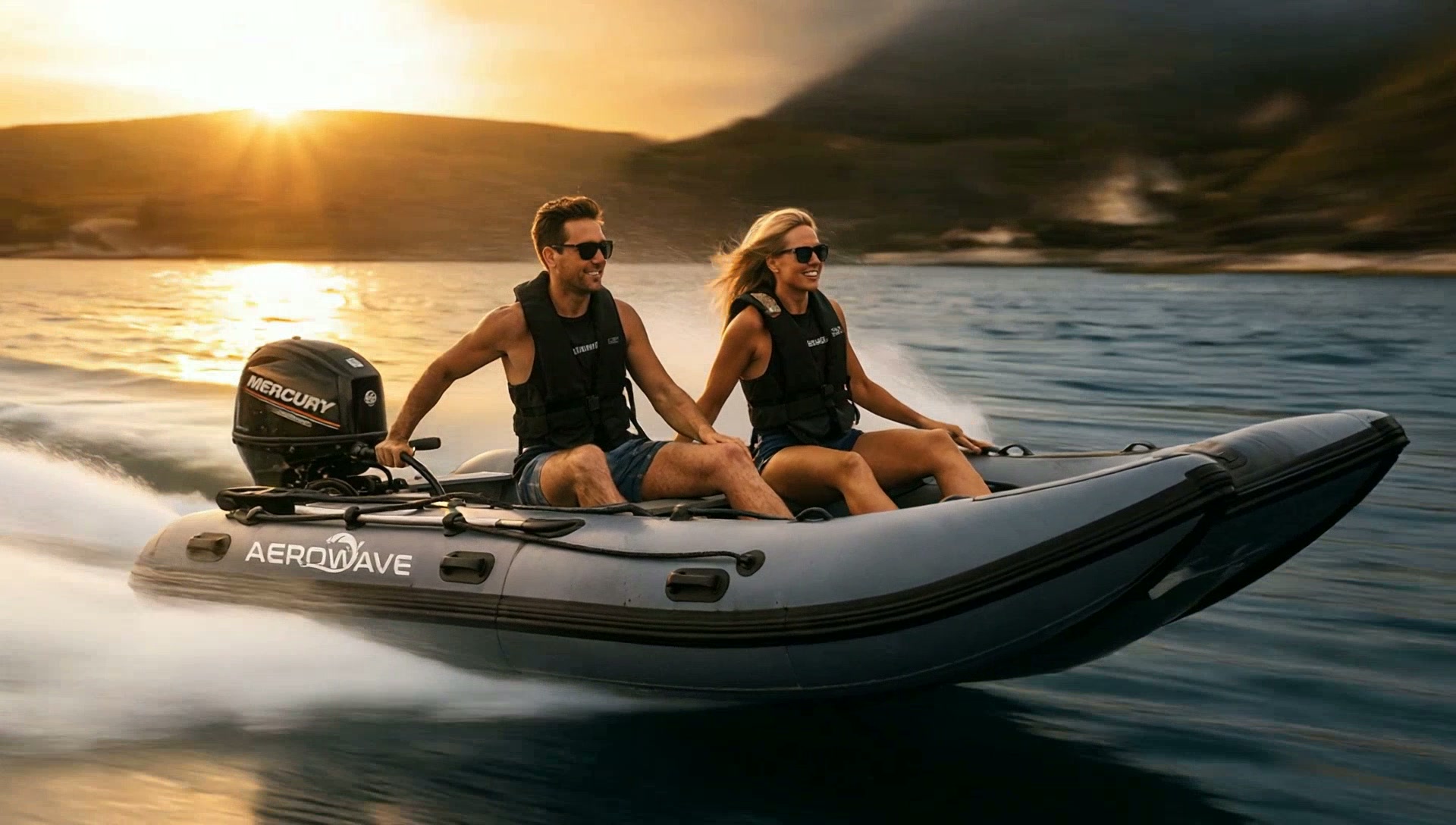
Aerowave Adventure Air Tent
Premium inflatable air tent with 5–8 minute setup, 600D Oxford fabric, 5000mm waterproofing, and a spacious 6-person design. Built for boat-based Australian adventures.
Free freight to United States · local taxes payable on arrival
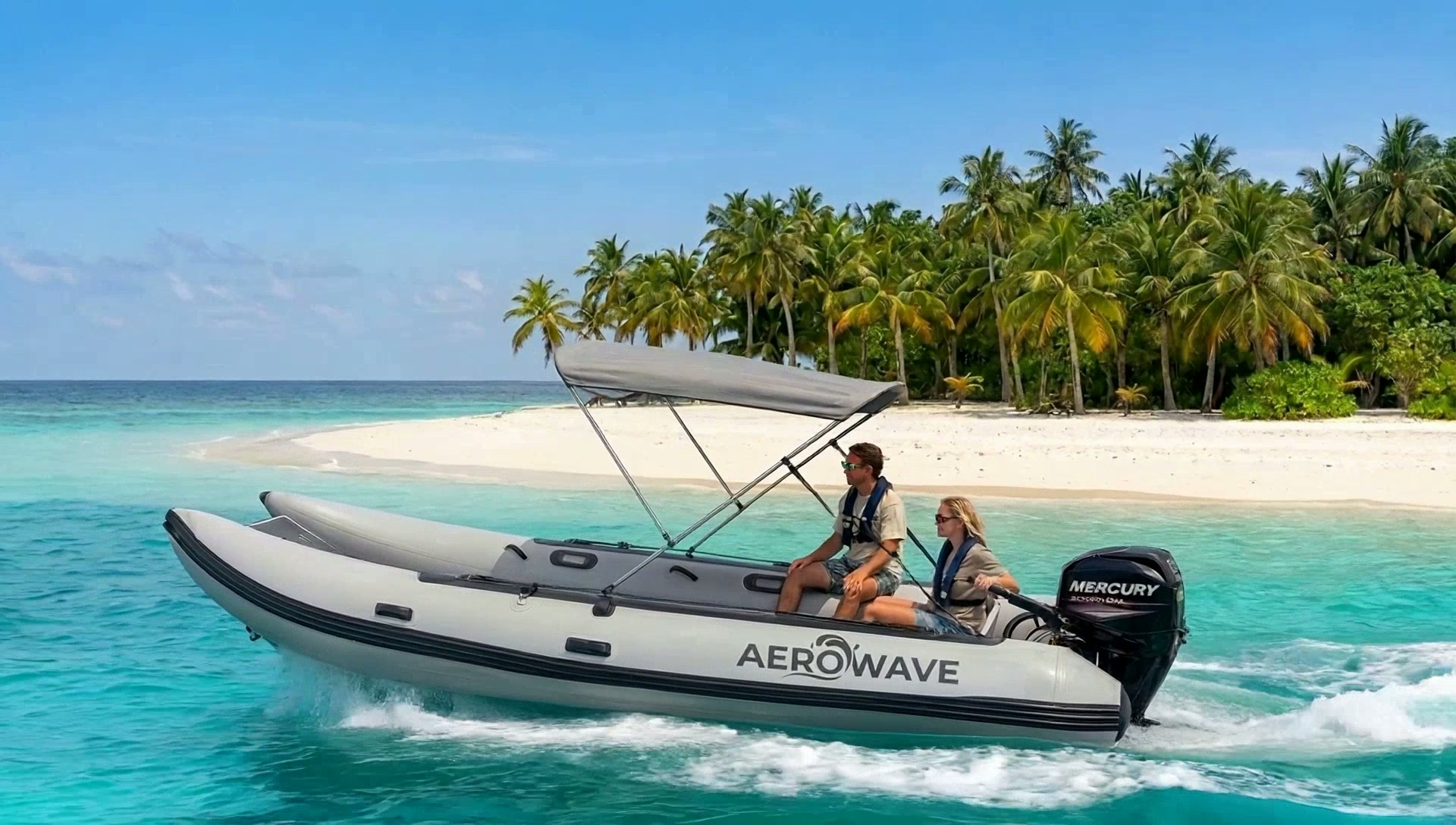
Aerowave Viper 400 Open Bow — Sports Package
The premium 4m inflatable catamaran package built for Australian and worldwide families, fishos and coastal adventure buyers who want stability, strength and real long-term value. Includes Full Grey Bimini, LockPro Plus Wheels, German VALMEX® 1.2mm fabric, 10 PSI high-pressure drop-stitch air deck floor with VALMEX non-slip surface and FREE express delivery Australia-wide.
Free freight to United States · local taxes payable on arrival
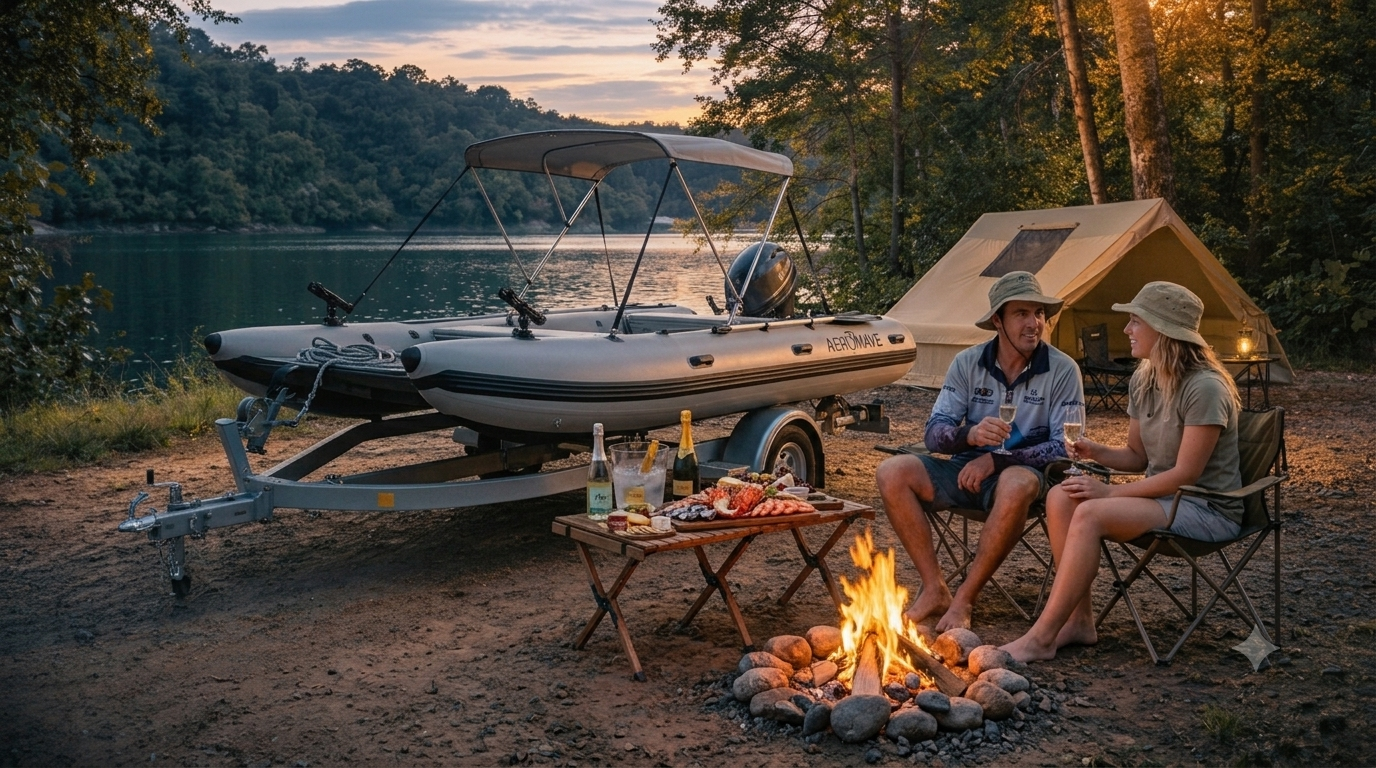
Aerowave Expedition Camping Package
Our Expedition Camping Package pairs the Aerowave Adventure Air Tent and full camping kit with the Viper or AeroCat of your choice, from the 3.35 m AeroCat right up to the Viper 400 Sovereign.
Free freight to United States · local taxes payable on arrival
Not sure which suits you? Talk to a real boat owner.
Before you spend a cent
Buying from Australia, delivered to United States
You have never heard of us, we are on the other side of the world, and the internet is full of fakes. Fair enough. Here is everything you would need to check us out, in one place — no forms, no chat bot.
Australian designed business
Easy Inflatables, Avoca Beach NSW 2251. ABN 96 856 548 613. International orders ship from our Hong Kong hub.
222 owner reviews, 4.8 average
Read them in full, good and bad, on our reviews page.
CE certified, 7-year hull warranty
ISO 6185-3 and EU Directive 2013/53/EU. Warranty honoured worldwide.
Tracked, insured, door to door
FREE freight to United States · local tax/duty on arrival.
- Who am I actually buying from?
- Easy Inflatables, Avoca Beach NSW 2251, Australia. ABN 96 856 548 613. Sean is the owner and skipper, Gary Stewart handles sales on +61 2 4335 1603, Karen Matthews handles email. The boats are Australian designed; international orders ship from our Hong Kong dispatch hub so your landed price stays competitive. Phone us before you pay a cent — a real person answers.
- Is this really an Australian product?
- Yes — Australian designed and engineered on the NSW Central Coast. Manufacturing is done offshore to our spec, and international orders ship direct from our Hong Kong dispatch hub. If we routed every boat through Australia first, the freight alone would roughly double or triple your cost for the same hull.
- What do I pay, and what is not included?
- The delivery and import terms depend on your country. EU, UK, New Zealand and named Asia/Pacific lanes include duty and tax; US freight is free but US buyers pay import charges on arrival. Other destinations show their terms before payment.
- How do I pay safely?
- Card through Stripe (Visa, Mastercard, Amex, Apple Pay, Google Pay) or bank transfer. Card payments carry your bank's own dispute protection. We never ask for crypto, gift cards or payment to a personal account.
- What if it arrives damaged?
- Every boat ships fully tracked and insured door to door. Photograph the carton and the boat on arrival and email us — transit damage is claimed and replaced through us, not left with you and the courier.
- Is the warranty real outside Australia?
- Yes. The 7-year hull warranty on 1.2 mm VALMEX Heavy Plus and Orca Hypalon hulls applies wherever you are. Replacement parts are held in Australia and at our overseas hub and go out by express courier to your door.
- Is the boat actually certified?
- All Aerowave catamarans are CE certified to ISO 6185-3 and EU Directive 2013/53/EU. Certification paperwork is supplied with the boat — ask and we will send it before you order.
Frequently asked questions
- How long does the Aerowave Adventure Air Tent really take to set up?
- With a bit of practice, the tent itself can be fully inflated and standing in 5 to 8 minutes using an electric pump. This includes unrolling it, connecting the pump, and inflating the air beams. It's a massive time-saver compared to traditional pole tents.
- Can the Air Tent be used with boats other than the Viper 400?
- Yes, the Adventure Air Tent is an excellent standalone tent for use on any beach or campsite. However, it was specifically designed and dimensioned to fit perfectly on the bow of the Aerowave Viper 400, creating a unique, integrated on-boat shelter.
- What's the main difference between the Viper and AeroCat for camping?
- The Viper 400 is our expedition-grade model, built with heavier 1.2mm VALMEX® fabric and offering more space, making it ideal for longer, gear-heavy trips. The AeroCat series uses a lighter 0.9mm VALMEX® fabric, making it more packable and lighter, which is perfect for weekend adventures and easier portaging.
- Is a special pump required for the Air Tent?
- The tent uses the same standard high-pressure electric pump that you would use for your inflatable boat's air deck. These can be powered by a portable 12V lithium battery pack or connected to your vehicle's accessory socket before you launch.
- How well does the Air Tent handle strong wind and rain?
- Very well. The aerodynamic shape and the rigidity of the high-pressure air beams make it incredibly stable in the wind, without poles that can snap or bend. The tent fabric and floor are fully waterproof with taped seams to handle heavy downpours.
- Is it safe to cook inside the Air Tent?
- No, you should never cook or use any open flame inside any tent due to fire risk and carbon monoxide buildup. Always set up your camp stove a safe distance away from the tent and your boat, preferably in a sheltered spot out of the wind.
- What size outboard do you recommend for boat camping?
- For a boat like the Viper 400 or AeroCat 380 used for camping, a 9.9hp to 15hp short-shaft 4-stroke outboard is a perfect balance. Brands like Hidea offer excellent power-to-weight ratios, are fuel-efficient for long range, and provide enough thrust to handle a fully-loaded boat.
- How does shipping work for boats and tents?
- We offer two options for our customers across Australia. You can choose FREE Economy Sea Freight, which typically takes 30–40 days. If you need your gear sooner, we offer Express Air Delivery in 7–14 days for a flat customer contribution of A$600.
Ready to set sail?
Premium German-fabric inflatable catamarans, built to order and delivered to your door. Talk to our team or browse the fleet.
Like this guide? Get the next one in your inbox.
Owner-tested tips, gear deep-dives and Aussie boating know-how — no spam.