Boat: boat steering cable Tips for Choosing, Measuring, and Installing
Think of a boat steering cable as the reins of your boat. It’s the simple but vital mechanical link that takes the turn of your steering wheel and translates it into direct, responsive control over your outboard motor. T…
At a glance
Think of a boat steering cable as the reins of your boat. It’s the simple but vital mechanical link that takes the turn of your steering wheel and translates it into direct, responsive control over your outboard motor. T…
- Understanding Your Boat Steering System
- Key Components of a Steering System
- Rotary vs Rack And Pinion Steering Systems
- Comparing Steering System Performance
What we'd put you in
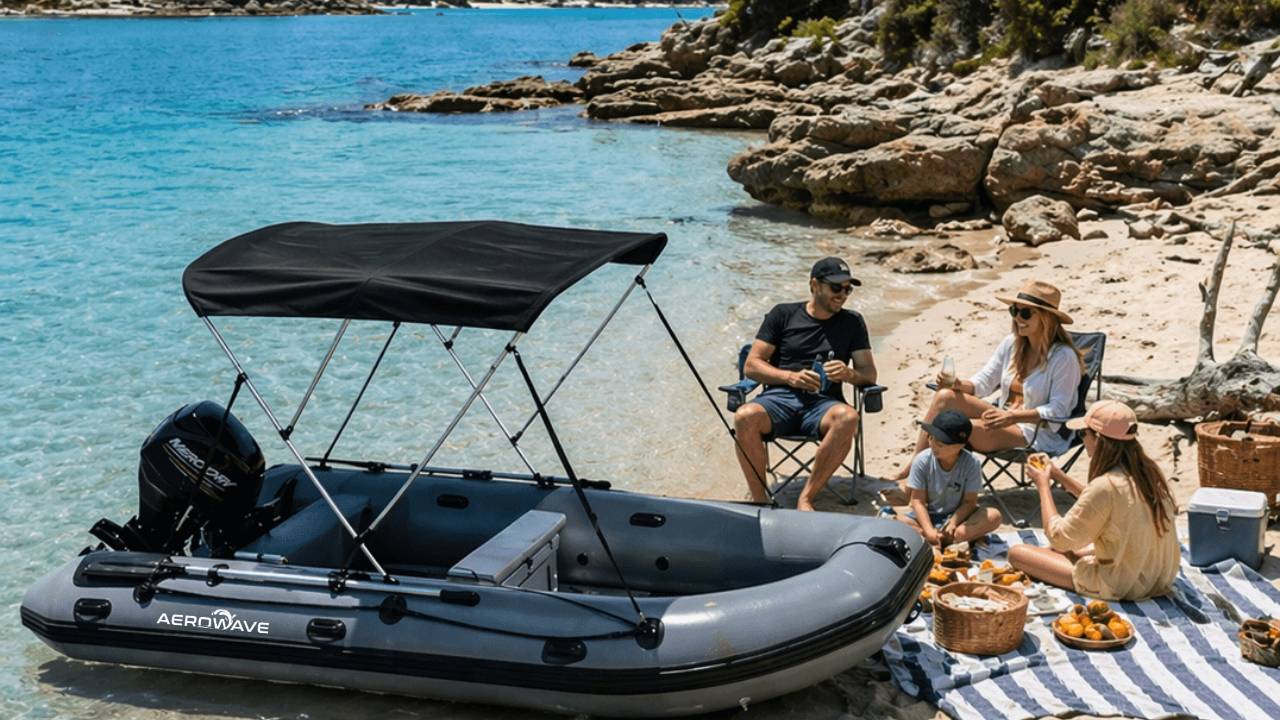
Aerowave Viper 400 Sovereign
Our best-selling boat: 4.0 m, 1.2 mm VALMEX hull, 7-year hull warranty.
US$3,167 USD
Delivered to your door, today's rate
- Free freight to United States · local taxes payable on arrival
- 7-year hull warranty
🇺🇸 Shipping to United States · landed price quoted in writing
Yes — we ship the Aerowave Viper 400 Sovereign to United States. Here's the landed price.
Our best-selling boat: 4.0 m, 1.2 mm VALMEX hull, 7-year hull warranty.
Aerowave Viper 400 Sovereign
- Boat package (export price)
- US$3,726
- 15% tariff relief credit
- − US$559
- Express air freight to United States
- Included
- Import duty, taxes & customs clearance
- Payable on arrival
- Estimated landed, USD
- US$3,167
Indicative, converted at today's rate, before local duty and tax on arrival. Ask below and we'll put a fixed figure in writing, valid 30 days.
- 7-year hull warranty
- 1500 GSM / 1.2 mm VALMEX® Heavy Plus hull
- CE certified to ISO 6185-3 and EU Directive 2013/53/EU
- Door-to-door, tracked the whole way
Your price, delivered to your door — freight included.
We email the full PDF quote (spec, freight, finance, WavePay) to your inbox in under 60 seconds. No spam — one quote, one follow-up.
See it for yourself
Real boats. Real owners. Real people behind them.
Plenty of what you read online these days is generated. Check us out properly — the factory, the reviews and the owners are all one click away. Why we use AI, and how to check we’re real
How our boats are built
Walk the production line: thermo-welded seams, 1.2 mm VALMEX Heavy Plus hulls, over-pressure relief valves on every chamber.
See the buildGoogle Maps reviews
Real Australian owners, five stars, published on our Google Business Profile with the map — read them there, not just on our own site.
Open Google Maps reviewsOwner stories
Boats in use — offshore, on rivers, on rescue duty. Photos and words from the people who actually own them.
Read owner storiesThink of a boat steering cable as the reins of your boat. It’s the simple but vital mechanical link that takes the turn of your steering wheel and translates it into direct, responsive control over your outboard motor. This single component is what gives you the confidence to navigate the water with precision, whether you're in one of the best inflatable boats for recreational use or a sturdy tinnie.
Understanding Your Boat Steering System
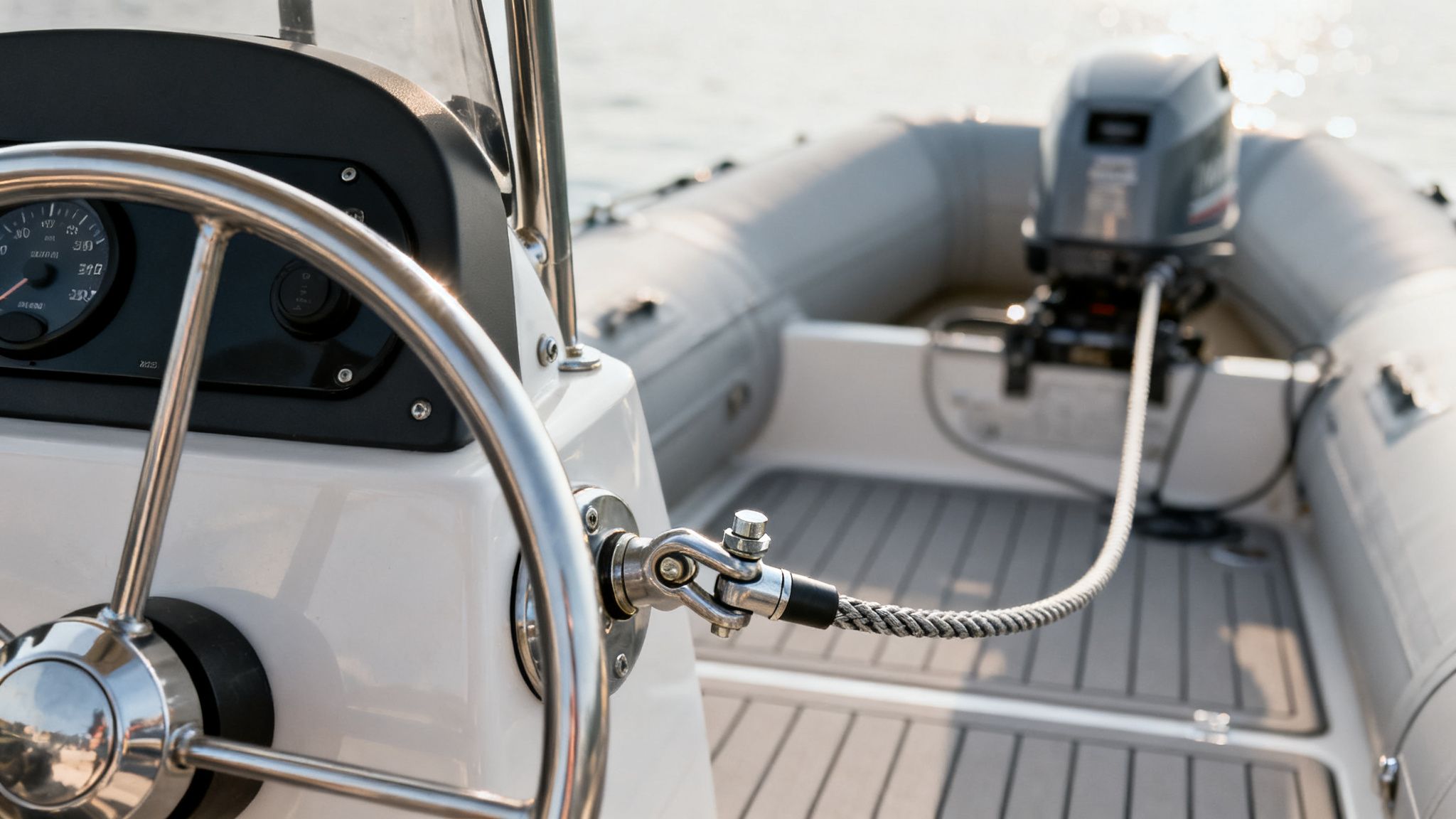
At its heart, a mechanical boat steering system is a wonderfully straightforward bit of engineering. It's a classic push-pull setup that’s built for reliability, which is why it's so popular on inflatable boats, RIBs, and the smaller vessels you see all over Australian waterways. When comparing prices and features of inflatable boats in your area, you'll find most rely on this dependable system.
When you turn the wheel, you're not just spinning a shaft—you're kicking a whole system into gear. Getting to know how these parts work together is the first step in keeping your boat in top shape and ensuring every trip out is a safe one.
Key Components of a Steering System
The real magic happens through the interplay of three core components, all working in unison to turn your steering input into the engine's output.
- The Helm: This is the gearbox sitting right behind your steering wheel. Inside, a set of gears grabs the steering cable, converting the wheel’s rotational twist into a straight-line push or pull.
- The Bezel Kit: This is simply the hardware that mounts the helm securely to your boat’s console. It provides a solid, stable base for the whole steering assembly, stopping it from wobbling or shifting while you're at the helm.
- The Steering Cable: This is the true hero of the show. It’s a tough, flexible cable with a solid inner core that runs from the helm, through the boat, all the way to the outboard motor. As the helm pushes or pulls this core, it pivots the engine and points your boat left or right.
This simple mechanical design is prized for its dependability. Unlike more complex hydraulic systems, it has far fewer points of failure, making it the perfect choice for recreational boaters who just need a system that works, every time.
Whether you're cruising a quiet river in your inflatable catamaran or navigating some coastal chop, a responsive boat steering cable is absolutely non-negotiable. It’s more than just a piece of hardware; it’s your direct line to the water, giving you the control you need for both fun and safety. If you're looking to fully kit out your vessel, you can discover other nifty inflatable boat accessories you must have in our detailed guide.
Rotary vs Rack And Pinion Steering Systems
When you're looking to rig up a new steering system on your boat, you'll quickly find it boils down to two main mechanical setups here in Australia: rotary and rack-and-pinion. Getting your head around the difference between them is key to making sure your boat handles just right, whether you're skippering a zippy inflatable catamaran or a classic little fishing tinnie.
Think of a rotary system like the volume knob on an old stereo. As you turn the helm (your steering wheel), a round gear inside winds the cable in or out in a smooth, circular motion. This design is incredibly compact and versatile, which is why it's a go-to for smaller boats where every inch of console space counts. The steering is consistently smooth, though you might find it takes a few more turns of the wheel to go from full lock one way to the other.
On the flip side, a rack-and-pinion system works more like the zoom on a camera lens. A flat, toothed bar (the rack) gets pushed from side to side by a small gear (the pinion). This direct, straight-line action gives you a really responsive and tight feel at the helm, often with fewer turns lock-to-lock. The trade-off? This system needs a bit more room behind the console for that rack to slide back and forth.
Comparing Steering System Performance
So, which one is for you? It really comes down to a trade-off between space, feel, and what you’re using the boat for. For most recreational boaters, especially those with inflatables or boats with smaller consoles, the neat and tidy design of a rotary system is the perfect fit. If you're planning a console setup, our guide on how a side console kit for an aluminum boat can completely change your layout is a great read.
A failure in either system is no joke. A snapped steering cable is a serious safety hazard out on the water, particularly in the rough coastal conditions we often get in Australia. Between 2018 and 2023, the Australian Maritime Safety Authority (AMSA) logged 1,247 boating incidents, and a worrying 14% of those involved steering malfunctions. Most of these were cable breaks on boats under 16ft.
To help you choose the right system for your pride and joy, let's break it down with a simple comparison.
Comparing Mechanical Steering Cables
Here's a quick look at the most common steering systems for recreational boats in Australia to help you decide which is best for your setup.
| System Type | Best For | Pros | Cons |
|---|---|---|---|
| Rotary | Smaller boats, inflatable catamarans, and vessels with limited console space. | Compact design, smooth operation, and versatile mounting options. | Can have more slack or "play" in the wheel; may require more turns lock-to-lock. |
| Rack and Pinion | Performance boats and setups where a direct, responsive feel is desired. | Minimal slack, quick response, and a very direct connection to the motor. | Requires more installation space behind the dash; can feel stiffer than rotary systems. |
Ultimately, both are reliable systems when installed and maintained correctly. The choice really depends on the space you have and the kind of feel you want at the helm.
The Critical Role Of Materials
No matter which system you go for, the materials used in your boat steering cable are non-negotiable, especially in our harsh saltwater environments.
Always, always choose cables with a stainless steel core and end fittings. This is your best defence against the relentless corrosion from salt and spray, ensuring your steering stays dependable for years. Cheaper galvanised options might seem like a good deal at first, but they will rust and fail, leading to dangerous—and expensive—situations out on the water. It’s one corner you just don’t want to cut.
Measuring For Your New Steering Cable
Ordering the wrong length is easily the most common—and frustrating—mistake you can make when replacing a boat steering cable. A cable that’s too short will bind up and kink, making steering feel stiff and unsafe. On the flip side, one that's too long creates sloppy, unresponsive steering and can get snagged on gear or in the water.
Getting the measurement right the first time is absolutely crucial. It’s what gets you back on the water quickly and safely.
The good news? There’s a universal formula that takes all the guesswork out of the process. Pretty much every manufacturer uses the same simple 'A + B + C' method to nail down the correct cable length. By taking three straightforward measurements, you can confidently order the right part for your specific boat, whether it’s a compact inflatable catamaran or a larger centre console.
The A+B+C Measurement Formula
To get started, all you'll need is a tape measure. The goal here is to measure the exact route the new cable will take, making sure to account for all the necessary bends from your helm to the outboard.
- Measurement A (Helm to Transom): Start at the very centre of your steering wheel (the helm). Run your tape measure along the gunwale (the side of the boat) all the way back to the transom. Make sure you follow the intended path of the cable, keeping it clear of any obstructions.
- Measurement B (Gunwale to Centre Line): This next measurement accounts for the boat's width. From where you finished Measurement A at the gunwale, measure across to the centre line of the boat, which is usually the centre of your outboard motor.
- Measurement C (The Tilt Tube Allowance): Finally, add a fixed 30 inches (76cm). This extra length is non-negotiable; it allows the cable to make a smooth, sweeping arc to the motor's connection point. Without it, you’d get sharp bends that cause friction, premature wear, and stiff steering.
Once you have these three numbers, just add them all together: A + B + C = Total Cable Length. This simple formula guarantees your new boat steering cable has plenty of length for unrestricted movement as the motor tilts and turns.
Always round up to the next available cable length. For instance, if your calculation comes out to 13 feet 8 inches, you should order a 14-foot cable. It's always better to have a little extra length for a gentle curve than to be a few inches short and risk kinking the cable.
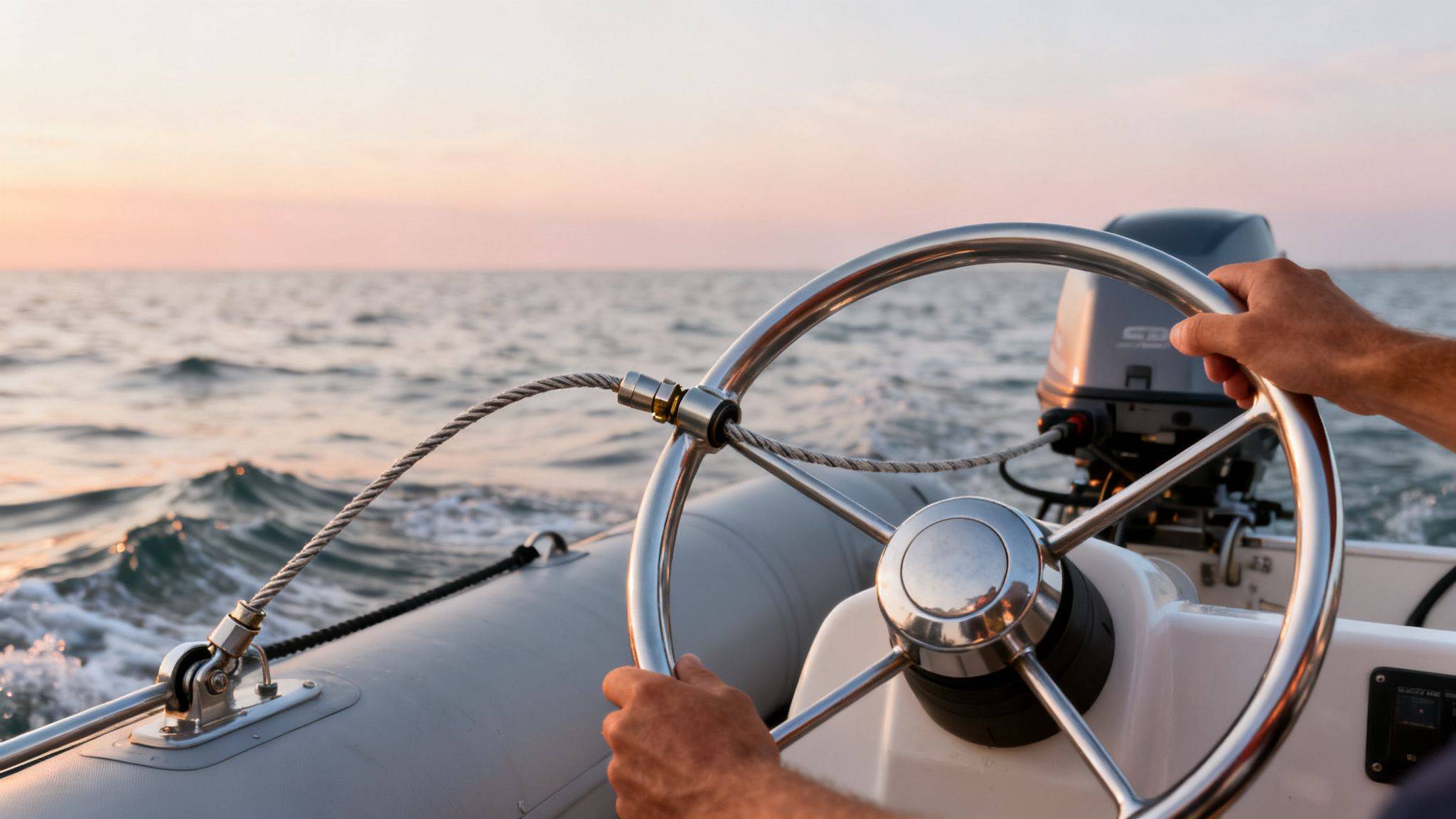
The diagram below shows how that simple turn of the wheel translates into action at the motor.
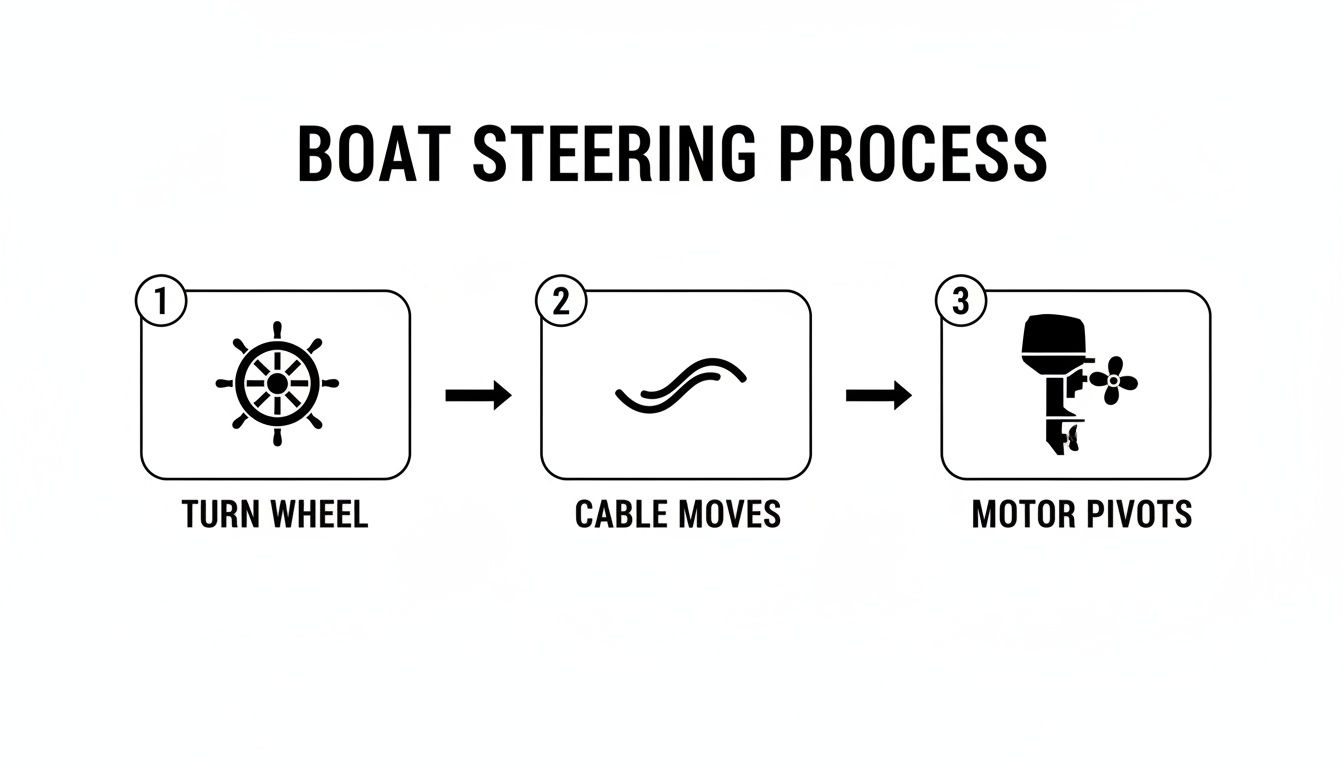
This visual really drives home the direct mechanical link between your hands at the helm and the motor's response, highlighting why a correctly sized cable is so vital for immediate control. If you’re pairing a new steering system with an outboard, our guide on selecting the right engine for an inflatable boat has some essential tips on matching power to performance. A perfectly measured cable ensures that power is channelled with precision, giving you complete and effortless command of your vessel.
Steering System Maintenance And Troubleshooting
In Australia’s tough marine environment, a bit of proactive maintenance is your best mate against a failed boat steering cable. A little attention now and then goes a seriously long way, stopping a tiny niggle from turning into a trip-ending disaster miles from shore.
Keeping your steering system in top nick is pretty straightforward, and it's absolutely essential for safe, reliable boating. Regular checks are the bedrock of good maintenance—a few times a season, just take a moment to eyeball the entire length of the cable you can see. You’re on the hunt for any early signs of trouble that could cause a headache down the track.
Your Essential Maintenance Checklist
A simple but consistent routine can dramatically extend the life of your steering gear and make sure your boat responds exactly when you need it to. Just focus on these key areas.
- Inspect for Damage: Look closely at the cable's plastic jacket for any cracks, splits, or kinking. A busted jacket is an open invitation for saltwater to get in and start corroding the inner core from the inside out.
- Check for Corrosion: Pay special attention to the end fittings and the exposed bit of the cable near your outboard. Any sign of rust or crusty corrosion is a massive red flag that the cable needs immediate attention or, more likely, replacement.
- Lubricate Moving Parts: Honestly, the single most effective thing you can do is grease the engine's tilt tube and the steering cable's output ram. A good-quality marine-grade grease keeps everything moving smoothly and creates a barrier against water getting in.
A stiff steering wheel is often the first scream for help from a neglected system. In many cases, it’s not the cable itself that’s binding, but a dry tilt tube on the outboard. Regular lubrication solves this issue over 80% of the time.
Troubleshooting Common Steering Problems
Even with the best maintenance, things can still go wrong. Knowing how to diagnose them helps you find the cause fast. Before you assume the worst (and a big bill), run through these quick troubleshooting steps to isolate the problem.
If your steering feels stiff or is a real workout to turn, the first step is a simple test. Disconnect the steering cable from the tiller arm on your outboard motor. Now, give the steering wheel a turn.
If the wheel spins freely, the problem is with the engine's pivot point—it probably just needs a good clean and grease. But if the wheel is still stiff with the cable disconnected, then the fault is inside the helm or the boat steering cable itself. A replacement is almost certainly on the cards. For those running specific setups, you might find some handy info on maintaining other key components in our guide to Mercury outboard parts.
Another common complaint is excessive "play" or slack in the steering wheel. This usually points to wear inside the helm unit or an old cable that has stretched over time. While a tiny bit of play is normal, if it feels like you have to turn the wheel a fair way before the engine even thinks about responding, it’s time to inspect the whole system for worn-out parts.
Learning these simple checks means you can catch problems early, preventing expensive repairs and keeping every trip a safe one.
How To Replace Your Boat Steering Cable
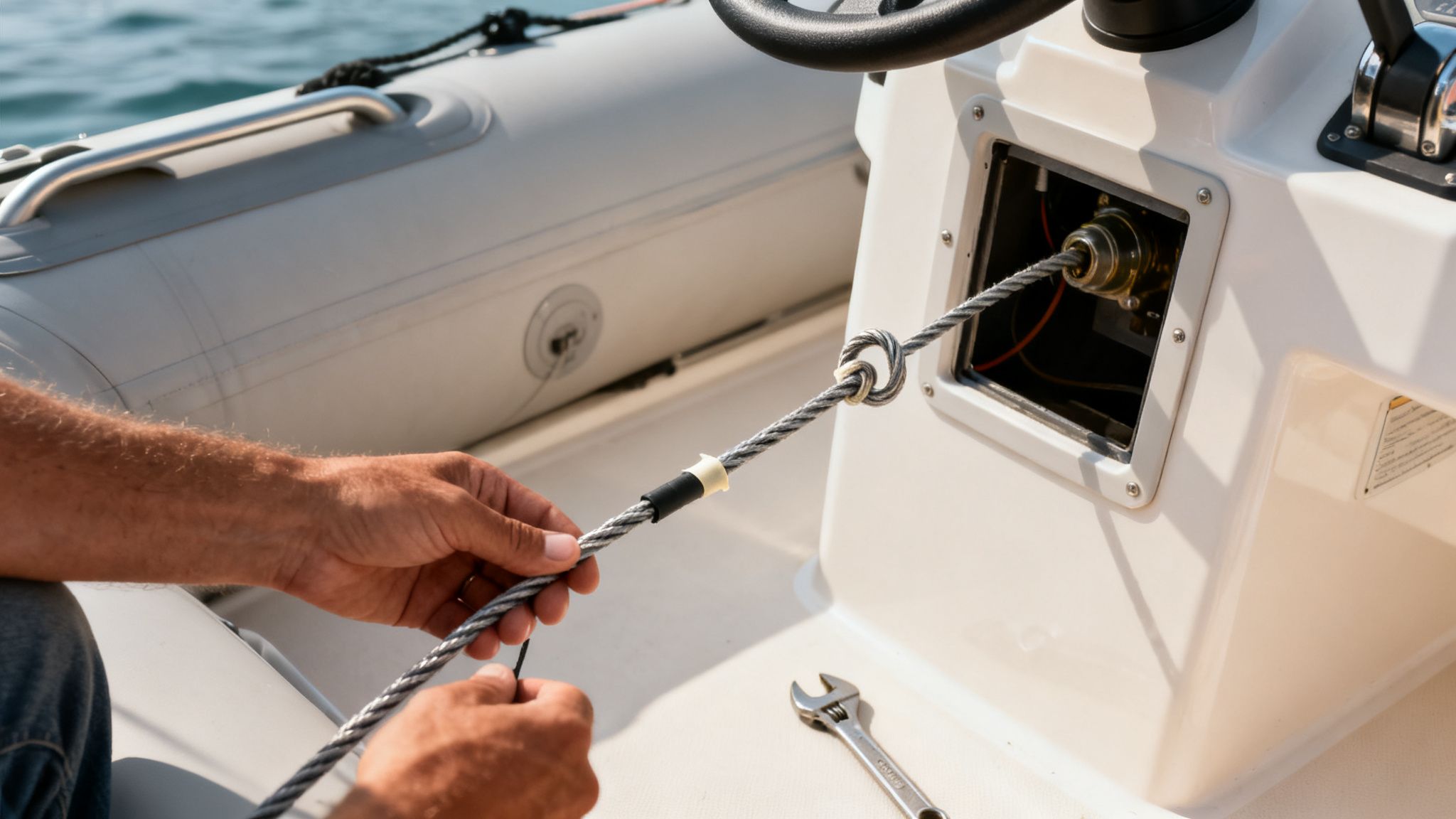
If regular lubrication just isn't cutting it anymore and your wheel feels stiff, or you've spotted some nasty corrosion on your boat steering cable, it's time for a replacement. Don't worry, this is a job well within reach for a confident DIYer, though knowing when to call in a pro is just as important. For those searching for the best inflatable boats for recreational use available near me, mastering this skill is key to long-term ownership.
A successful replacement brings back that crisp, responsive steering your boat had when it was new, which is crucial for safety and control out on the water. For owners of popular setups like Aerowave inflatables, using high-quality, compatible parts is the secret to long-term reliability.
Preparing For The Replacement
Before you even think about picking up a wrench, get everything organised. Preparation is key. You'll need the correct length and type of replacement cable, some basic hand tools like spanners and screwdrivers, a tube of marine-grade grease, and some strong tape or zip ties.
The job itself involves disconnecting the old cable at two main points: the helm (that’s the unit behind your steering wheel) and the tiller arm on your outboard motor. A great tip is to snap a few photos on your phone before you start, so you have a crystal-clear reference for how everything fits back together.
The Installation Process Step-by-Step
Replacing the cable is a methodical job. Rushing is a surefire way to end up with kinks or dodgy connections, so take your time and follow these key steps for a smooth installation.
- Disconnect the Old Cable: Start at the back. Detach the old cable from the engine's tiller arm first. Then, move to the helm, take off the steering wheel and the bezel kit, and unthread the cable from the helm unit.
- Guide the New Cable: Now for the most important trick of the trade: do not pull the old cable out yet. Securely tape the helm end of your new cable to the engine end of the old one. This turns the old cable into a perfect guide, letting you easily pull the new one through all those tight spaces, bulkheads, and rigging tubes without a fight.
- Connect and Secure: Once the new cable is routed through, connect it up to the helm first, following the manufacturer's instructions. Next, feed the output ram through the engine’s tilt tube, give it a generous coat of grease, and attach it to the tiller arm.
- Final Checks: With everything connected, turn the wheel from lock-to-lock several times. You're feeling for smooth, bind-free operation. Before putting your console and steering wheel back together, double-check that every nut and fastener is properly tightened.
This process is vital for keeping your boat performing at its best, especially for those of us who appreciate a reliable mechanical system. It's no surprise that aftermarket sales in Australia shot up by 18% in 2022, a trend largely driven by boaters replacing worn-out cables on their trusty older outboards.
A classic mistake is trying to force a cable around a tight bend. Always make sure the cable's path follows wide, sweeping curves. A sharp angle creates friction, which leads to premature wear and brings back that stiff steering you were trying to fix.
If you’re thinking about a full console upgrade for your inflatable or tinnie, you might be interested in our guide on choosing the right boat centre console kit.
Your Top Boat Steering Cable Questions Answered
When you're dealing with boat steering, a few questions always pop up, especially around how long things last and what parts work with what. We get these questions all the time from Aussie boaters, so here are some quick, no-nonsense answers to help you get it right.
How Long Should a Steering Cable Last in Saltwater?
This is the big one for anyone boating on our coasts. With proper care, a good quality, stainless steel boat steering cable should give you a solid 5 to 8 years of service.
But that’s not a guarantee. That lifespan can shrink fast if you're constantly in harsh saltwater, skip out on regular lubrication, or have the cable routed with sharp bends that put it under stress. The best defence is to give it a regular once-over, looking for any rust or stiffness. If you're looking to hire inflatable boats for a family outing in Australia, checking the steering system's condition is a crucial safety step.
Can I Use Any Brand of Cable With My Helm?
It’s tempting to think so, but it's not a great idea. While some steering cables might look interchangeable, you really need to match the new cable to your specific helm system, whether it’s a rotary or a rack-and-pinion setup.
Mixing and matching components is just asking for trouble. It can cause binding, poor steering response, and ultimately, a brand-new cable that fails way too soon. Always stick to the helm manufacturer’s recommendations before you buy a replacement.
An incompatible boat steering cable isn't just a performance issue—it's a safety one. The connection points and internal gears are engineered to work as a team. A mismatch can compromise the whole steering system.
Is My Stiff Steering Caused by the Cable or the Engine?
This is probably the most common troubleshooting question we hear. Luckily, there’s a dead-simple test you can do in a few minutes to pinpoint the problem.
Here’s how to figure it out:
- Disconnect the Cable: Head to the back of the boat and detach the steering cable from the tiller arm on your outboard motor. This takes the engine’s pivot out of the equation.
- Turn the Wheel: Now, walk back to the helm and turn the steering wheel all the way from one side to the other.
- Check the Feel: If the wheel spins freely now, your cable is fine. The stiffness is coming from the engine's pivot tube—it's probably dry and needs a good clean and a fresh coat of marine grease.
- Confirm the Cable: If the wheel is still stiff even with the engine disconnected, then the problem is either your helm or the boat steering cable itself. More often than not, the cable has just worn out and it's time for a new one.
Running this quick check can save you from replacing a perfectly good cable or from fighting with a stiff engine that just needs a bit of grease.
Ready to get that smooth, responsive steering back? At Easy Inflatables, we stock high-quality, corrosion-resistant boat steering cables and complete kits perfect for your inflatable boat, catamaran, or RIB. Find the right part for your setup and get back on the water with confidence.
Explore the Aerowave range
Weekend-Proof Score 17 questions · about 2 minutes
Will the boat you're about to buy survive an Australian summer?
Seventeen straight questions about where you'll use it, what you'll ask of it and the boat you're weighing up. You get a score out of 100, the exact weak points in your plan, and the one boat that genuinely fits.
Free · your result shows on screen · no email required
So which one is yours?
Pick how you'll actually use it and we'll take you straight to the right hull.
I want to fish it
Open bow, rod holders, deck space you can stand and cast from.
Viper Sport 400Family, diving and the beach
3.8 m Series 3 catamaran — low bow to climb back in wearing fins or a tank.
WaveRunner 380Tender / one-person launch
3.3 m hard-floor boat that packs into a bag and still takes a beach landing.
Viper 330Shop gear featured in this guide
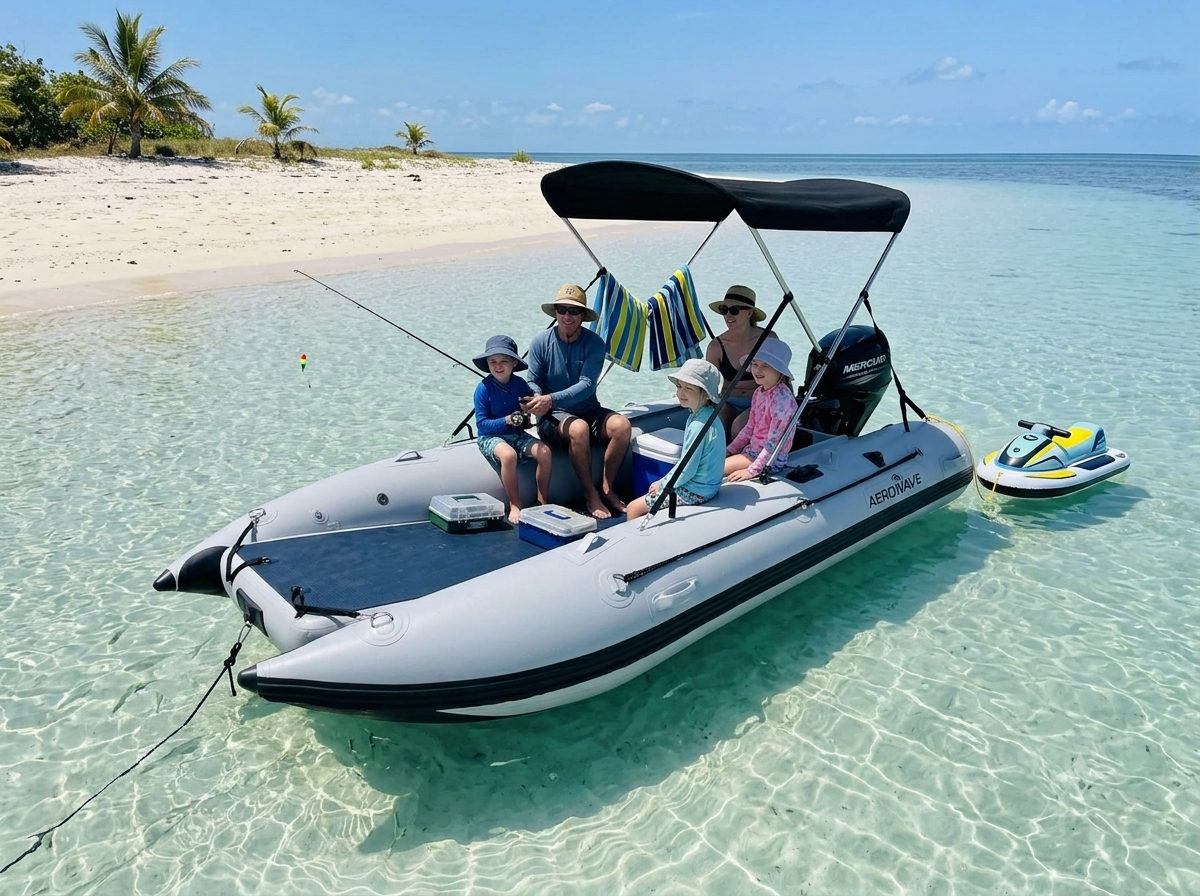
Aerowave WaveRunner 380 Series 3 Catamaran Package
The WaveRunner 380 Series 3 is a premium 3.8m inflatable catamaran package built for Australian and worldwide families, fishing, and coastal day boating — ideal for snorkeling and spearfishing — offering serious stability and premium German Valmex® construction.
Free freight to United States · local taxes payable on arrival
Aerowave Viper 400 Sovereign
Flagship 4m enclosed-bow inflatable catamaran. German VALMEX® 7321 Heavy Plus 1.2mm commercial-grade fabric, 10 PSI high-pressure drop-stitch air deck floor with VALMEX non-slip surface, LockPro wheels, full Bimini and FREE express delivery Australia-wide included. Winter special — save $1,000 until 31 August 2026.
Free freight to United States · local taxes payable on arrival
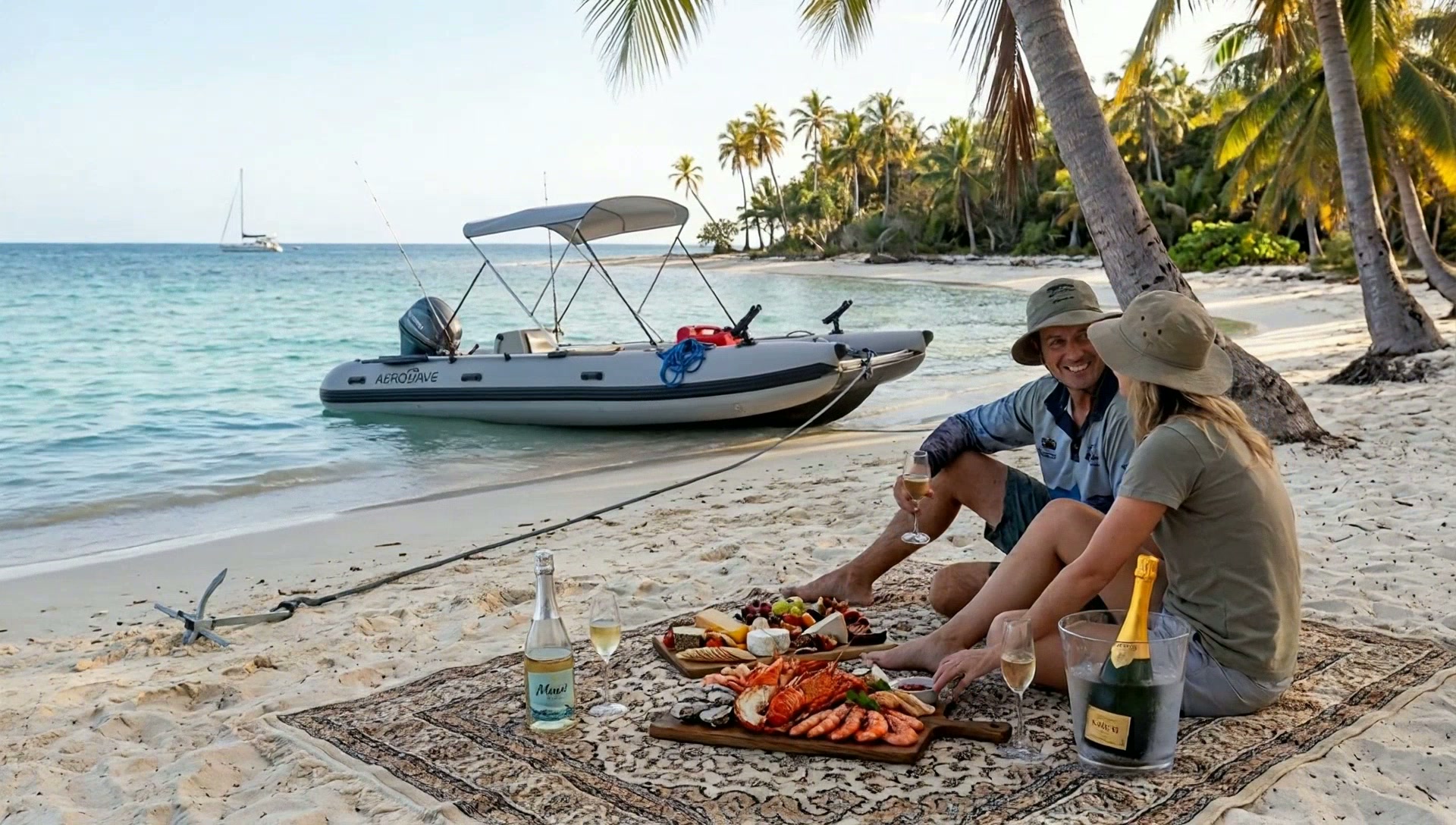
Aerowave Viper 365 Open Bow
Premium 3.65m Inflatable catamaran — built the same way as our flagship Viper 400 sports boat, just 35cm shorter. German VALMEX® 7321 Heavy Plus 1.2mm commercial-grade fabric, 10 PSI high-pressure drop-stitch air deck floor with VALMEX non-slip surface, LockPro wheels, full Bimini and FREE express delivery Australia-wide included.
Free freight to United States · local taxes payable on arrival
Not sure which suits you? Talk to a real boat owner.
Before you spend a cent
Buying from Australia, delivered to United States
You have never heard of us, we are on the other side of the world, and the internet is full of fakes. Fair enough. Here is everything you would need to check us out, in one place — no forms, no chat bot.
Australian designed business
Easy Inflatables, Avoca Beach NSW 2251. ABN 96 856 548 613. International orders ship from our Hong Kong hub.
222 owner reviews, 4.8 average
Read them in full, good and bad, on our reviews page.
CE certified, 7-year hull warranty
ISO 6185-3 and EU Directive 2013/53/EU. Warranty honoured worldwide.
Tracked, insured, door to door
FREE freight to United States · local tax/duty on arrival.
- Who am I actually buying from?
- Easy Inflatables, Avoca Beach NSW 2251, Australia. ABN 96 856 548 613. Sean is the owner and skipper, Gary Stewart handles sales on +61 2 4335 1603, Karen Matthews handles email. The boats are Australian designed; international orders ship from our Hong Kong dispatch hub so your landed price stays competitive. Phone us before you pay a cent — a real person answers.
- Is this really an Australian product?
- Yes — Australian designed and engineered on the NSW Central Coast. Manufacturing is done offshore to our spec, and international orders ship direct from our Hong Kong dispatch hub. If we routed every boat through Australia first, the freight alone would roughly double or triple your cost for the same hull.
- What do I pay, and what is not included?
- The delivery and import terms depend on your country. EU, UK, New Zealand and named Asia/Pacific lanes include duty and tax; US freight is free but US buyers pay import charges on arrival. Other destinations show their terms before payment.
- How do I pay safely?
- Card through Stripe (Visa, Mastercard, Amex, Apple Pay, Google Pay) or bank transfer. Card payments carry your bank's own dispute protection. We never ask for crypto, gift cards or payment to a personal account.
- What if it arrives damaged?
- Every boat ships fully tracked and insured door to door. Photograph the carton and the boat on arrival and email us — transit damage is claimed and replaced through us, not left with you and the courier.
- Is the warranty real outside Australia?
- Yes. The 7-year hull warranty on 1.2 mm VALMEX Heavy Plus and Orca Hypalon hulls applies wherever you are. Replacement parts are held in Australia and at our overseas hub and go out by express courier to your door.
- Is the boat actually certified?
- All Aerowave catamarans are CE certified to ISO 6185-3 and EU Directive 2013/53/EU. Certification paperwork is supplied with the boat — ask and we will send it before you order.
Ready to set sail?
Premium German-fabric inflatable catamarans, built to order and delivered to your door. Talk to our team or browse the fleet.
Like this guide? Get the next one in your inbox.
Owner-tested tips, gear deep-dives and Aussie boating know-how — no spam.